Lower Thames Crossing Tunnelling ‘To Begin In 2028’
The title of this post, is the same as that of this article on the BBC.
This is the sub-heading.
The tunnelling process for the Lower Thames Crossing is due to begin in 2028.
These three paragraphs add more detail to the story.
National Highways said negotiations to buy one of the world’s largest tunnelling machines were now under way.
It would be capable of digging 60 metres below the Thames, creating a new road link between Essex and Kent, and now enables the project to secure private sector investment to deliver the remainder of the construction.
Next summer, work on the northern tunnel entrance where the tunnel machine will begin its journey will get under way.
Hopefully, it’ll all be complete by the early 2030s.
The Elephant In The Garden Of England
This section shows the proposed route of the Lower Thames Crossing.
It as an extract of a previous post called Elizabeth Line To Ebbsfleet Extension Could Cost £3.2 Billion.
It is proposed that the new Lower Thames Crossing is built to the East of Gravesend.
This map from the Department of Transport, shows the route.
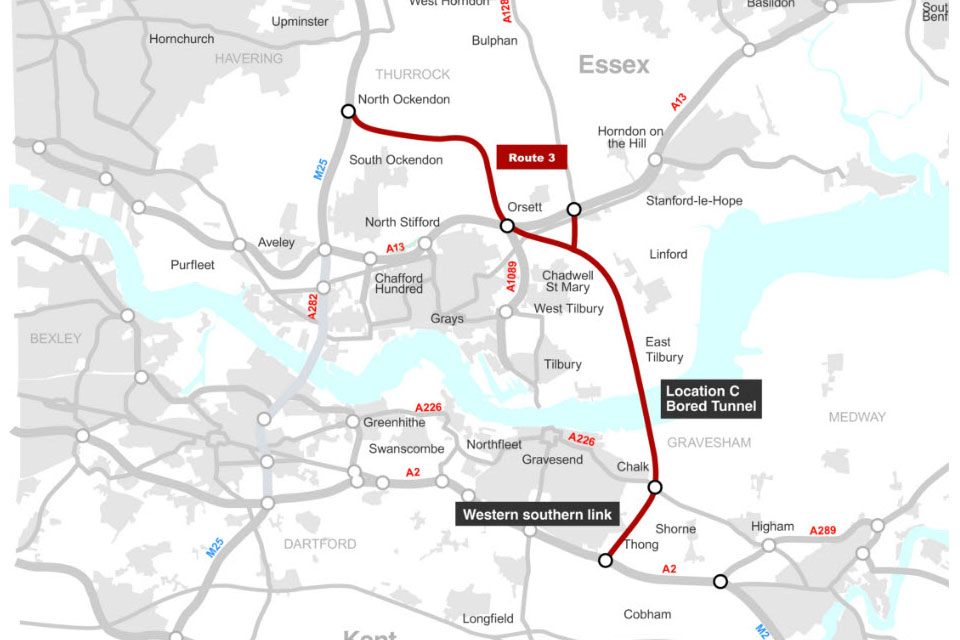
Note.
- The new crossing, which is shown in red, bypasses the Dartford Crossing on the M25.
- The A226 runs between Gravesend and Higham via a junction with the new crossing at Chalk.
- Northfleet is to the West of Gravesend.
This Google Map shows the area between Chalk and Higham.
WSMR Resubmits Formal Application To The ORR
The title of this post, is the same as that of this press release from Wrexham, Shropshire and Midlands Railway.
These three paragraphs give full details of the application.
Wrexham, Shropshire and Midlands Railway is committed to delivering the connectivity that communities across Wales and England need and deserve. Our resubmitted application reflects stakeholder feedback and demonstrates how we’ve listened to MPs and regional partners who urged us to reapply.
This application differs from our previous submission, which includes us requesting fewer train paths and offering an additional stop at Wellington, enhancing connectivity for people in Shropshire. Furthermore, by making better use of available capacity – including paths that have been released and remain unused – we aim to strengthen regional links and support economic growth.
WSMR’s new open access service will provide faster, more convenient travel options for passengers in Wrexham, Shrewsbury, Wellington, Telford, Walsall and beyond, improving access to jobs, education and leisure opportunities. We remain committed to introducing this service for the regions we serve and delivering benefits for communities along the route.
Note.
£100m ‘Global Players’ Wind Farm Deal To Create 300 Jobs
The title of this post, is the same as this article on the BBC.
This is the sub-heading.
A £100m deal which will create about 300 jobs has been agreed between the developers of two Irish Sea offshore wind farms and Belfast Harbour.
These three paragraphs add more detail.
The joint developers of the Mona and Morgan offshore wind farms will lease Belfast Harbour’s D1 terminal for the assembly and preparation of wind turbine components.
Work is being carried out to get the site ready for use from 2028.
Joe O’Neill, chief executive of Belfast Harbour, described it as a “huge deal”, not just for the harbour but for Belfast and the wider region.
Joe O’Neill seems happy with the deal, if you read the full BBC article.
This Google Map shows Belfast Harbour with the D1 Terminal in the centre.
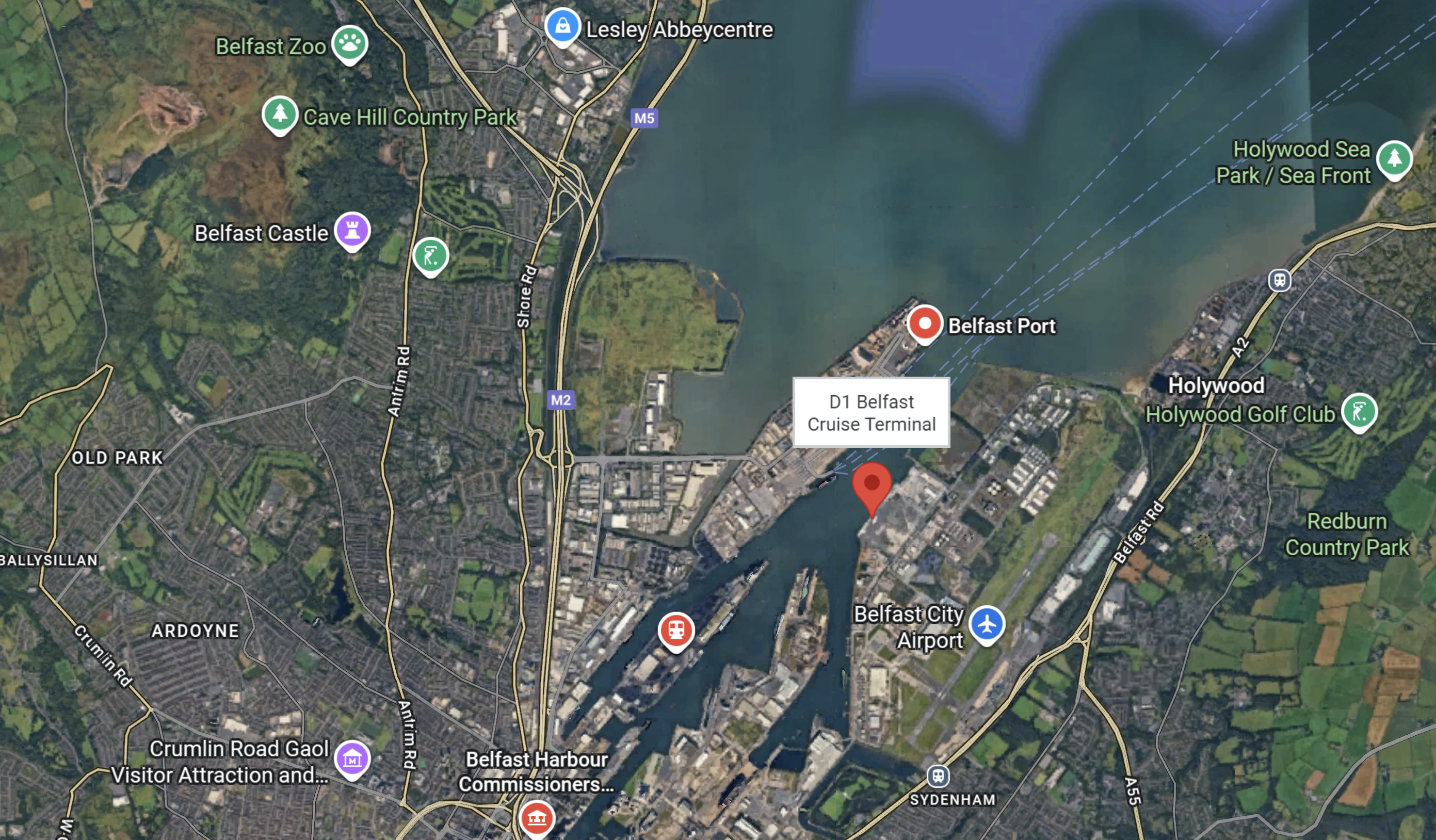
Note.
- The red arrow indicates the D1 Terminal.
- It appears to be within walking distance of Belfast City Airport.
- The harbour is not that far from the city centre.
I would expect, this could be an ideal harbour to prepare wind turbines for erection.
But Where Will The Cruise Ships Dock In Belfast, If The D1 Terminal Is Being Used To Prepare And Assemble Wind Turbines?
Google AI gave this answer to my question!
Cruise ships will dock at a new deepwater berth at Belfast Harbour’s D3 terminal starting with the 2028 cruise season. This new facility is a dual-purpose terminal being built to accommodate both the largest cruise vessels and the assembly and installation of offshore wind turbines.
Note.
- The date fits with the new site for turbine work being ready by 2028.
- The new D3 Terminal will take some of the largest cruise vessels.
- I suspect, it will be able to supply ships with suitable low-carbon fuel, as required.
- Could it also take the very large ships used to install turbines?
- It’s almost as if Belfast Harbour are making an attraction of the turbines.
Google AI gives this overview of the D3 Terminal.
The Belfast Harbour D3 cruise terminal is a new £90 million dual-purpose deepwater quay under construction, designed to accommodate the world’s largest cruise ships and support the offshore wind energy industry. Construction on the project, which is Belfast Harbour’s largest-ever investment, began in April 2025 and is expected to be operational for the 2028 cruise season. The facility will include a 340m quay and new terminal building for passengers, and will be converted for cargo handling during the cruise season.
It certainly looks like Belfast is designing a dual-purpose terminal, that will bring the maximum benefit to the city and its people.
Which Offshore Wind Projects Will Use Belfast Harbour?
Google AI gave this answer to my question!
The Mona and Morgan offshore wind farms, being developed by EnBW and JERA Nex bp, will use Belfast Harbour. The port’s D1 terminal will serve as the hub for the assembly and marshalling of wind turbine components for these projects, which are planned for the Irish Sea and are expected to be operational by 2028.
I suspect there will be others.
Manchester To London Train To Run Without Passengers
The title of this post, is the same as that of this article on the BBC.
This is the sub-heading.
A train service taking commuters from Manchester to London is to run empty for around five months following a decision by the rail regulator.
These three paragraphs add more detail.
A decision by the Office of Rail and Road (ORR), means the 07:00 GMT service operated by Avanti West Coast from Manchester Piccadilly to London will still run but will only be used to carry staff from mid-December.
An Avanti West Coast spokesperson said they were “disappointed” with the decision, which would “clearly impact those customers who already use these services”.
An ORR spokesperson said the decision was made on “robust evidence” from Network Rail to guard against possible service disruption on the West Coast Main Line.
It is a long article on the BBC and I suspect, it is one of those, that should be fully-read before commenting.
I looked up last Friday’s service and found this.
- It was an eleven-coach Class 390 train.
- The train goes via Macclesfield, Stoke-on-Trent and Stafford, but only stops to pick up passengers at Stockport.
- It left on time at 07:00.
- It arrived in London at 09:20, which was twenty-one minutes late.
I think, I’ll see this train arrive on Monday.
Could Avanti West Coast Be Planning A Fast Service From Both Liverpool and Manchester?
Consider.
- Manchester Piccadilly has a 07:00 train to Euston, that takes two hours via Stoke-on-Trent.
- The train also stops at Stockport.
- The Manchester Piccadilly train is an eleven-car Class 390 train, that is 265.3 metres long.
- Liverpool Lime Street has a 06:43 train to Euston, that takes two hours and 11 minutes via Crewe, that stops at Runcorn.
- The Liverpool Lime Street train is a seven-car Class 807 train, that is 182 metres long.
Note.
- I wonder, if at some time in the future, these two services could both be run by seven-car Class 807 trains, that joined at Crewe.
- This might not have been possible with Class 390 trains, as the pair of trains would have been very long.
- Class 390 trains may not be able to split and join.
- I don’t think any extra paths would be needed.
This would give Crewe, Liverpool, Manchester, Runcorn and Stockport, a fast early train to Euston.
Island’s Birds Thriving Decade After Railway Project
The title of this post, is the same as that of this article on the BBC.
This is the sub-heading.
An island transformed into a nature haven thanks to excavations from a major engineering project is thriving with record numbers of birds.
These two paragraphs add detail to the story.
RSPB Wallasea Island, a 740-hectare reserve at Rochford in Essex, was created using more than three million tonnes of earth, brought by boat from the tunnels and shafts created by the Crossrail scheme.
Before work began more than a decade ago there were just a small number of birds present – but almost 40,000 arrived last winter.
This Google Map shows the location of Wallasea Island.
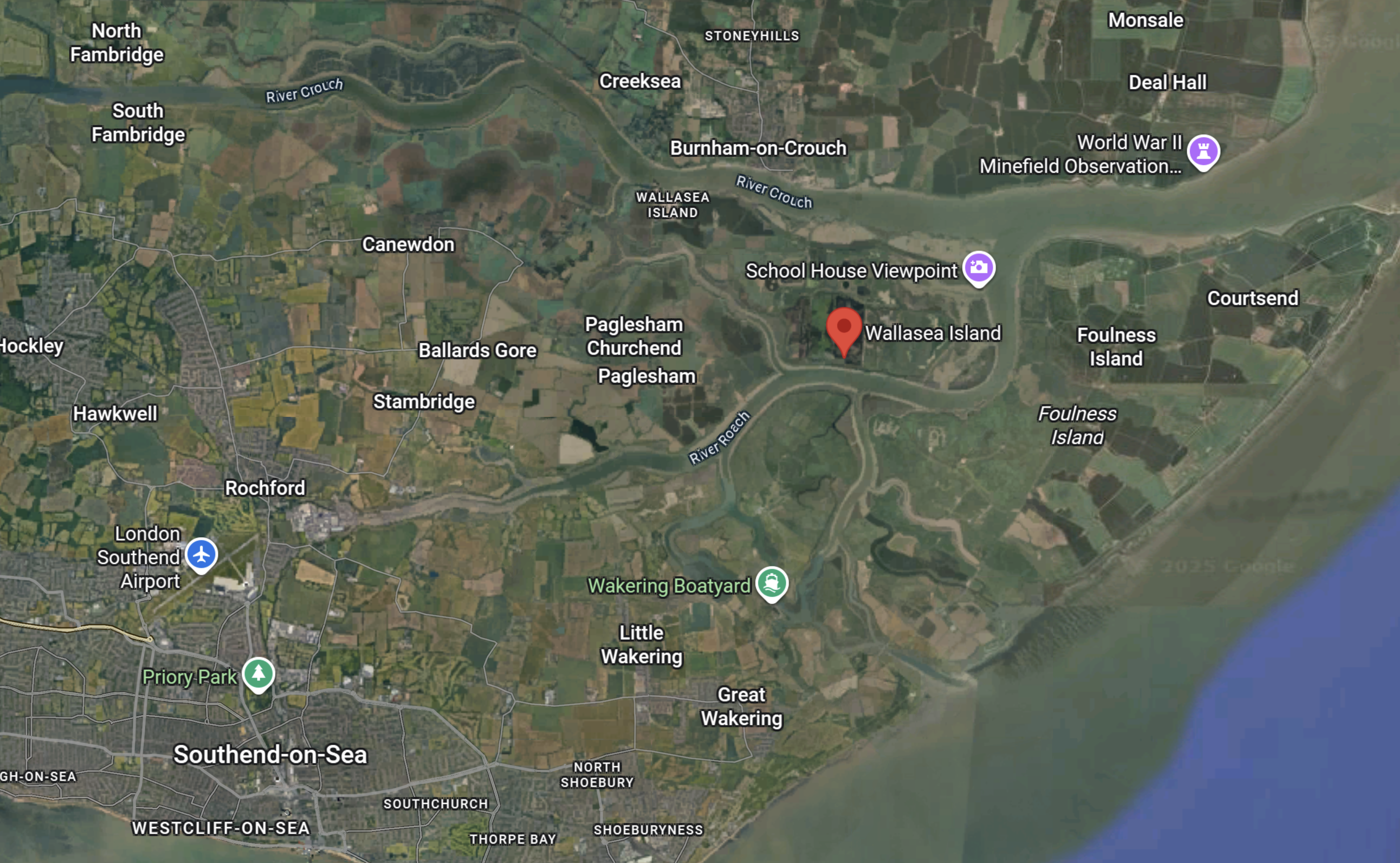
Note.
- Wallasea Island is indicated by the red arrow.
- Southend-on-Sea is in the South-West corner of the map.
- To the East of Wallasea Island is Foulness Island, which at one time was to be the location for London’s third airport.
- In the Summer, there is a ferry to Wallasea Island from Burnham-on-Crouch, where there is a railway station.
- The distance between the quay and the station loooks to be about five hundred metres.
I will make a trip.
East West Rail Unveils Next Phase For Oxford-Cambridge Growth
The title of this post, is the same as that of this press release from the UK Government.
These three bullet points act as sub-headings.
- more frequent trains on the horizon for millions of passengers between Oxford and Cambridge as multibillion pound East West Rail project confirms next steps
- new rail station set to help serve upcoming Universal theme park in Bedford, as well as improvements planned for several existing stations
- new route delivers on the government’s Plan for Change, unlocking £6.7 billion of regional economic growth and delivering up to 100,000 new homes
These two introductory paragraphs make a few general points about the overall project, housing and jobs.
Millions of people across the Oxford to Cambridge corridor are set to benefit from more frequent trains as the East West Railway Company (EWR Co) has revealed the next steps for the second phase of the project today (19 November 2025).
As one of Britain’s largest transport projects, East West Rail forms a cornerstone of the government’s Plan for Change, unlocking £6.7 billion of regional economic growth by 2050, enabling up to 100,000 new homes and supporting tens of thousands of new jobs along the route.
These sections make some more detailed points.
How Many Permanent Staff Will Be Employed At Universal Studios Bedford?
As many will want to live locally, this will surely encourage many to use the trains on the East-West Rail to travel to work, so this will be an important factor.
I asked Google AI, the question in the title of this section and received this answer.
Universal Studios plans to employ 8,000 permanent staff at its new resort in Bedford. This number is part of an overall total of approximately 28,000 jobs, which includes 20,000 jobs during the construction phase.
My project management knowledge is telling me that the station should be built before the theme park.
How Many Daily Visitors Are Expected At Universal Studios Bedford?
I asked Google AI, the question in the title of this section and received this answer.
The Universal Studios theme park in Bedford is expected to have 55,000 visitors on peak days from its launch, based on its plan to handle 8.5 million annual visitors. The project, planned to open in 2031, is expected to attract 8.5 million annual visitors in its first year, with numbers rising to 12 million within 20 years.
I would expect a large number of visitors and staff will probably be encouraged to come by train, just as they are at some Premier League football stadiums.
Will Universal Studios Bedford Be Marketed As A Low Carbon Theme Park?
I’m asking this question, as it seems, the railway is being upgraded make this easier.
I asked Google AI, the question in the title of this section and received this answer.
Yes, it appears Universal Studios Bedford will be marketed as having a low-carbon focus, as evidenced by its planning applications that highlight sustainability efforts. The project outlines include goals for water conservation, energy reduction and clean energy use, waste minimization, and the use of low-carbon materials, all of which will likely be part of the marketing narrative for the theme park, according to LinkedIn.
How Many Car Parking Spaces Will Be Provided At Universal Studios Bedford?
I asked Google AI, the question in the title of this section and received this answer.
The Universal Studios resort planned for Bedford will include a minimum of 7,106 parking spaces and 100 coach bays. The resort is also expected to have 250 cycle spaces and enough room for over 7,100 cars
That is a lot of car parking spaces. Hopefully, there will be a lot of car charging points.
Increased Train Frequency And Capacity
These two paragraphs from the press release, talk about increased train frequency and capacity.
Following extensive consultation with local communities, the multi-billion-pound project has confirmed it is exploring a series of transformative plans including increasing the proposed frequency of trains from 3 or 4 to up to 5 per hour.
These enhancements could provide up to 70% more seating across the route, easing overcrowding and speeding up boarding, as well as cutting average waiting times, improving service resilience and creating a smoother, more reliable passenger experience.
When you consider that London Overground, Merseytravel, the South Wales Metro, West Midlands Trains and other local lines in the UK consider than four trains per hour to be a minimum service, then five trains per hour is to be welcomed.
Station Improvements And New Stations
These two paragraphs from the press release, talk about station improvements and new stations..
Several other improvements across the route have also been confirmed, including new station entrances at Bletchley, Cambridge and Bedford, as well as four brand-new stations along the Marston Vale Line – the first significant investment since the 1960s.
With the current stations on the Marston Vale Line seeing some of the lowest usage in the country, the new stations will better serve local communities by providing faster, more frequent services, as well as helping to serve the upcoming Universal theme park.
I thought Bletchley, Cambridge and Bedford stations had already been substantially improved in recent years.
A New Station At Stewartby
Are the station improvements to upgrade public transport access to the Universal theme park at Stewartby station?
- An East-West Rail service between Oxford and Stansted Airport via Bletchley, Milton Keynes Central, Stewartby, Bedford and Cambridge would give the Universal theme park all-important airport access.
- Would an upgraded Bletchley station improve interchange between the West Coast Main Line and East-West Rail give better access to the theme park from London, the West Midlands and North-West for visitors?
- Would an upgraded Bedford station improve interchange between the Midland Main Line and East-West Rail give better access to the theme park from London, the East Midlands and North-East for visitors?
- An upgraded Bedford station could also be marketed as a zero-carbon route between the theme park and the Continent via St. Pancras International and Eurostar.
- Would an upgraded Cambridge station give better access to the theme park from the East of England?
In addition four new stations on the Marston Vale Line would improve access for visitors and staff, who live locally.
Will Battery-Electric Trains Be Used On The East-West Rail?
As five major East-West Rail stations; Bedford, Bletchley, Cambridge, Milton Keynes and Reading are substantially served by main line electric trains, and it is likely that more stations will be in future, I believe that East-West Rail must either be electrified or services should be run by battery-electric trains, which would enable zero-carbon rail routes to and from London and all the city’s airports, Birmingham, Liverpool, Manchester and an increasing number of cities in the North and Midlands of England, and Scotland and Wales.
I asked Google AI, the question in the title of this section and received this answer.
Yes, the East West Rail (EWR) project plans to use battery-electric trains as part of a discontinuous electrification strategy. This means trains will run on overhead electric power in sections where they are installed, and on onboard batteries in other sections of the route.
It does appear that discontinuous electrification and battery-electric trains will be used.
Electrification At Bedford Station
This OpenRailwayMap shows The East side of Bedford station.
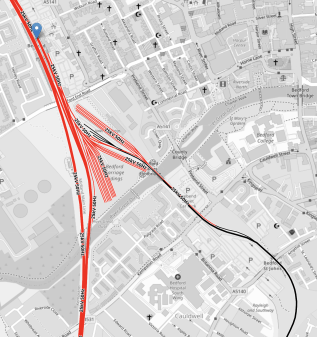
Note.
- The red tracks are electrified and black tracks are not.
- The black track looping into the station from the East is the Marston Vale Line, which will connect the East-West Rail to Bedford station.
- At the Easternmost part of the curve is Bedford St. Johns station, which serves Bedford hospital.
- The Marston Vale Line services normally connect to Platform 1A at Bedford station.
- But it also appears trains can also use Platforms 1 and 2 at Bedford station.
- It also appears that that Platforms 1A, 1 and 2 are all electrified.
This picture confirms electrification in Platforms 1A and 1.
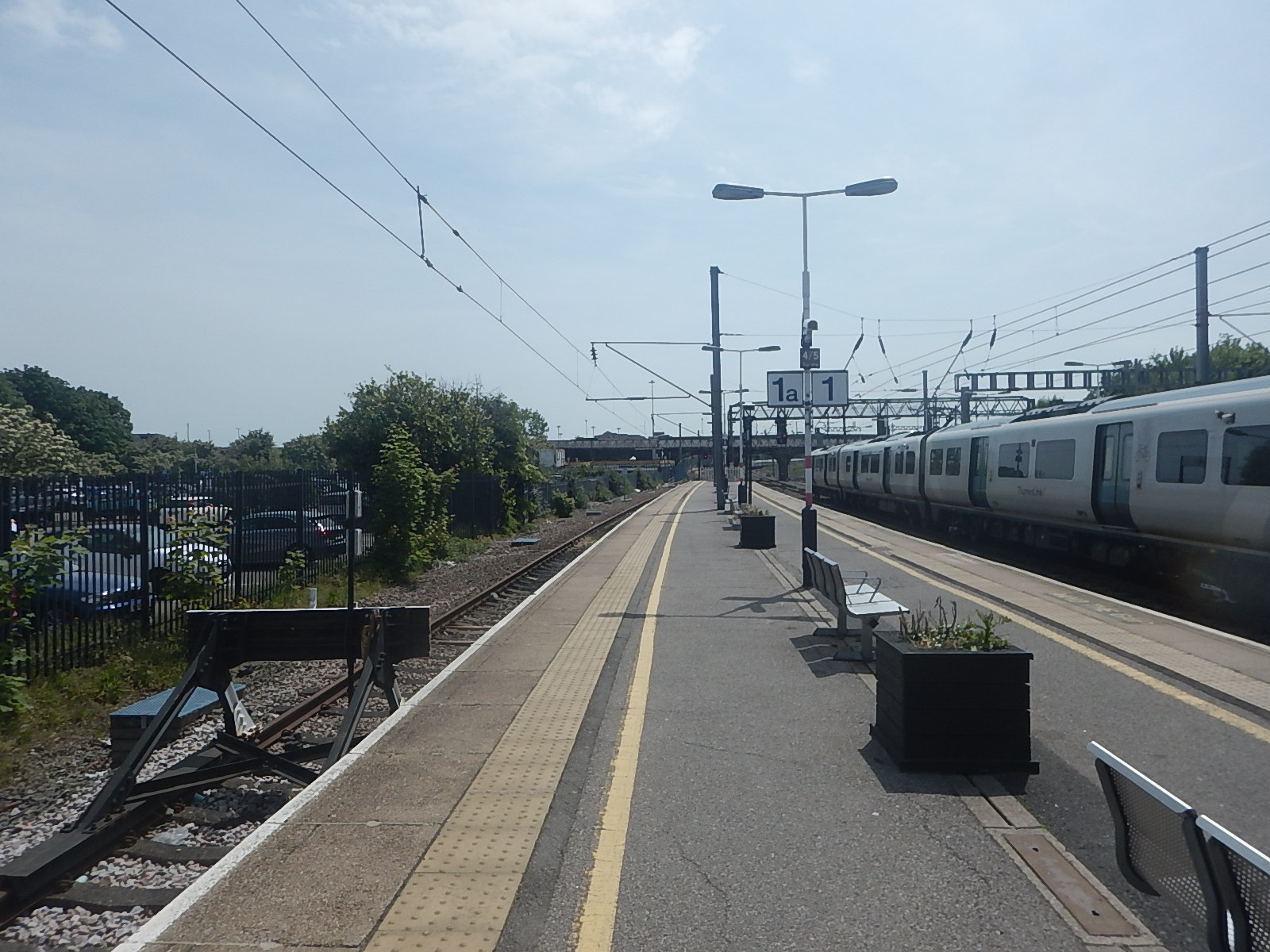
Note.
- Platform 1A is on the left.
- Platform 1 is on the right.
- The Thameslink train on the right is in Platform 2.
- Platforms 1A, 1 and 2 are all clearly electrified.
- Platform 1A is 81 metres long, so could accept a typical four-coach train.
Battery-electric trains with pantographs could certainly by charged in either of these two platforms at Bedford station.
Electrification At Milton Keynes Central Station
It would appear that East-West Rail services will use Platform 2A at Milton Keynes Central station.
This OpenRailwayMap shows Platform 2A at Milton Keynes Central station.
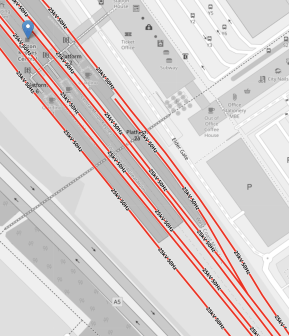
Note.
- The red tracks are electrified and black tracks are not.
- Platform 1 is the through platform on the North-East side of the station.
- Platform 2A is the bay platform tucked underneath Platform 1.
- Platform 2A is clearly electrified.
- Platform 2A is 124 metres long, so could accept a typical five or six-coach train.
These pictures show Platforms 1 and 2A at Milton Keynes Central station.
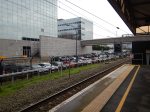

Battery-electric trains with pantographs could certainly by charged in Platform 2A at Milton Keynes Central station.
Electrification At Oxford Station
It would appear that terminating East-West Rail services will use Platform 1 or 2 at Oxford station.
This OpenRailwayMap shows the platforms at Oxford station.
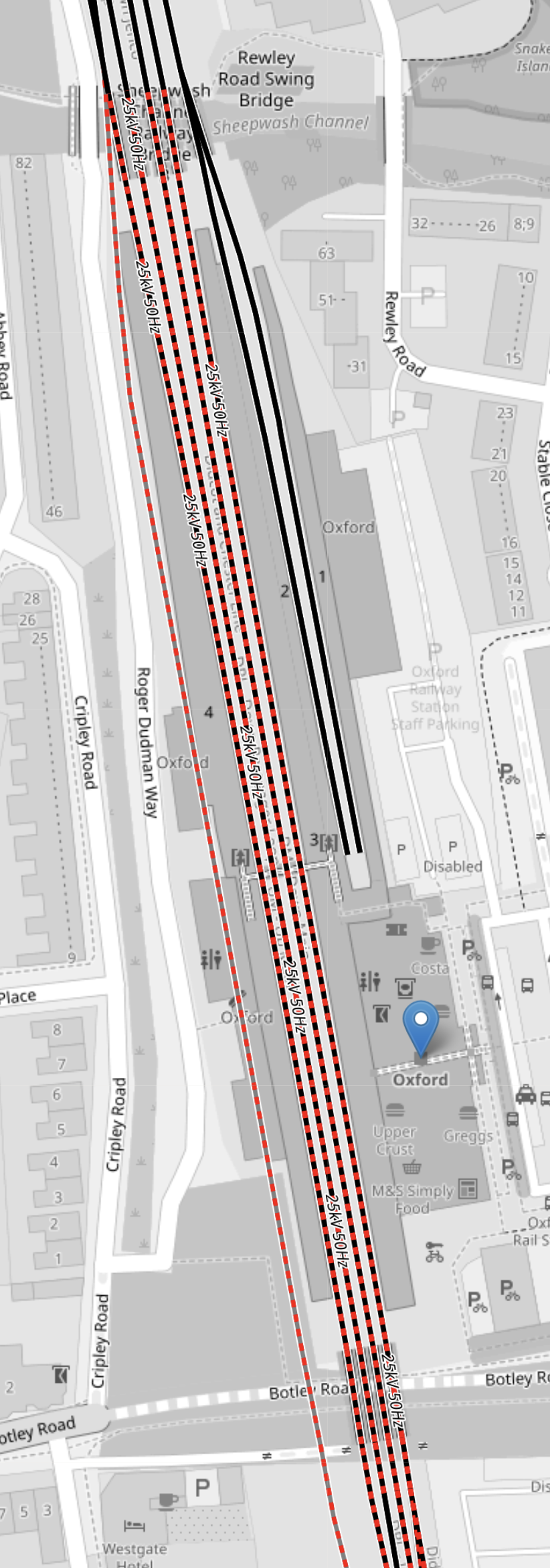
Note.
- The red and black tracks are to be electrified and black tracks are not.
- Platforms 1 and 2 are shown in black and are likely to be used by terminating East-West Rail trains.
- Platforms 1 and 2 would need to be electrified to be able to charge trains.
- Platforms 1 and 2 would also be used by Chiltern’s London services.
- Platform 1 and 2 are respectively 157 and 160 metres long, so could accept a typical five or six-coach train.
- As Oxford and Reading is to be electrified, through East-West Rail trains could use that electrification to travel to and from Reading.
These pictures show Platforms 1 and 2 at Oxford station.
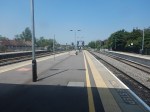
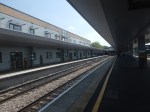
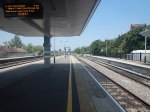
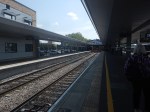
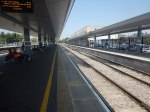



Battery-electric trains with pantographs could certainly by charged in Platform 1 and 2 at Oxford station, if the platforms were electrified.
Electrification At Reading Station
The West-facing platforms at Reading station are all electrified and longer than 120 metres, so could accept a typical four or five-coach train.
What Trains Should Be Used?
Consider.
- There is only one battery-electric train, that has been tested on the UK rail network – The Hitachi Class 802 train or similar.
- There is only one battery-electric train, that has been ordered – The Hitachi Class 802 train or similar.
- The longest distance on battery, between Reading and Bedford, is probably about thirty miles.
The Government could do a lot worse than order some more Class 802 trains, that were tailored for East-West Rail.
The Hitachi Class 802 train has five-cars, which are 26 metres long.
- It has a 125 mph operating speed.
- It has a range of 45 miles on battery power.
- The trains have been proven in service.
- The trains are made in the UK.
- The trains could handle extended routes like Birmingham and Stansted Airport or Cardiff and Cambridge.
A four-car variant of the train with a 100 mph operating speed could be an alternative.
What Will Be The Initial East-West Rail Service?
I asked Google AI, the question in the title of this section and received this answer.
The initial East West Rail service will be between Oxford and Milton Keynes/Bletchley, with passenger services delayed until at least 2026 due to a dispute over train crew roles. Freight services began in June 2025, and temporary diesel services will run until the line is electrified. The full project aims to connect Oxford and Cambridge.
Note.
- Stewartby station for Universal Studios Bedford will not be served by East-West Rail initially.
- But I suspect, that the current Marston Vale Line service will continue, with a change if needed at Bletchley or Bedford to get to Stewartby.
- Earlier I showed that Google AI is predicting 20,000 construction jobs at Universal Studios Bedford, which I am sure will need some form of high-capacity rail transport, if grid-lock is to be avoided in much of Bedfordshire.
Perhaps an initial fleet of four- or five-car Class 802 diesel-electric trains could be ordered and they would run the full route between Oxford and Bedford stations, with a reverse in Platform 2A at Milton Keynes station.
- The trains would run initially on diesel.
- By using stepping-up in Platform 2A at Milton Keynes station, I believe a two trains per hour (tph) service could surely be run.
- Hitachi could probably deliver the trains quickly, as they have not long been out of production.
- Those living locally would get a much improved train service from their local station to and from Bedford, Milton Keynes or Oxford.
- A large portion of the onward connectivity of the East-West Rail would be delivered early to the benefit of locals and visitors.
- If extra services are needed, semi-fast services could be added between Bedford and Reading with stops at Stewartby, Bletchley, Bicester Village, Oxford Parkway and Oxford stations.
When Platforms 1 and 2 at Oxford station are electrified and the trains are converted to battery-electric operation, the route could be converted to zero-carbon operation.
Virtually Nothing Is Said About The Route Of The East-West Rail Between Bedford and Cambridge South Stations Via Tempsford Station
This quote from David Hughes, CEO, East West Railway Company, is the only time, that Tempsford is mentioned in the press release.
“From a new station at Cambridge East to better access in Oxford and clear alignment through Tempsford, East West Rail is shaping the modern, sustainable transport link this region needs to thrive.”
I asked Google AI, if the proposed route of the East-West Rail between Bedford and Cambridge South stations through Tempsford is controversial and I received this reply.
Yes, the proposed route of East West Rail between Bedford and Cambridge is controversial, with opposition from some local residents and political figures who have expressed concerns about the southern alignment through Tempsford and surrounding villages. However, East West Rail Co has selected the route north of the Black Cat roundabout as the preferred alignment, citing reasons like cost-effectiveness and fewer disruptions, while also updating designs to include a southern station entrance to connect with planned growth areas around Tempsford.
Does Government or Artificial Intelligence have precedence?
Cambridge East Station Gets A First Mention
This quote from David Hughes, CEO, East West Railway Company, is the first time, that I’ve seen Cambridge East station mentioned.
“From a new station at Cambridge East to better access in Oxford and clear alignment through Tempsford, East West Rail is shaping the modern, sustainable transport link this region needs to thrive.”
In this document on the East-West Rail Consortium web site, there is extensive talk of an A14 Parkway station.
- The document dates from 2018.
- Google AI can’t find any trace of the A14 Parkway station referred to in the document.
- This article on the BBC, which was written five days ago and is entitled Additional City station Proposed By East West Rail, is the only reference on the Internet, that references Cambridge East station.
- The BBC article also says that other proposals after consultation include a new eastern entrance for Cambridge station, locating Cambourne station closer to the town and a mined tunnel for Bourn Airfield.
- I also have to assume that A14 Parkway has also morphed into Cambridge East station.
- To access all my posts, that relate to A14 Parkway, click this link.
But it does seem that consultation appears to have produced an acceptable compromise.
Between Kempston Hardwick and Tempsford Stations Through Bedford
I’ve now found that OpenRailwayMap has been updated between Bedford and Cambridge.
This first section shows the route between Kempston Hardwick and Tempsford stations through Bedford.
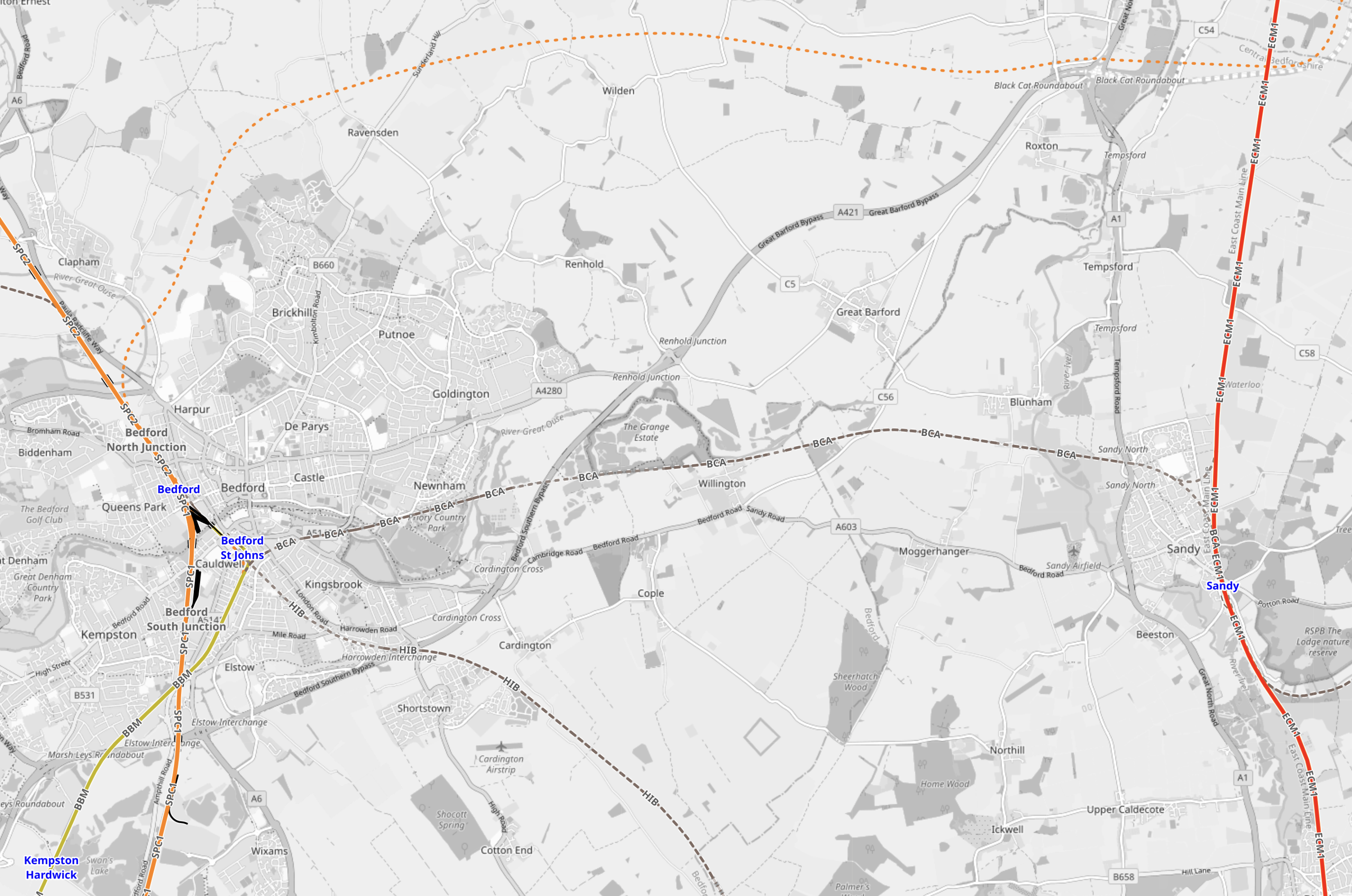
Note.
- Kempston Hardwick station is in the South-West corner of the map.
- The yellow track is the Marston Vale Line, which goes through Bedford St. Johns and Bedford stations.
- The red track on the West side of the map is the Midland Main Line.
- The red track on the East side of the map is the East Coast Main Line.
- The dotted red line across the top of the map will be the route of the East-West Rail.
- Tempsford station will be to the South-West of where the East Coast Main Line and East-West Rail cross in the North-East cornet of the map.
I hope the good people of Bedford are happier now!
Between Tempsford and Cambourne
I’ve now found that OpenRailwayMap has been updated between Bedford and Cambridge.
This second section shows the route between Tempsford and Cambourne stations.
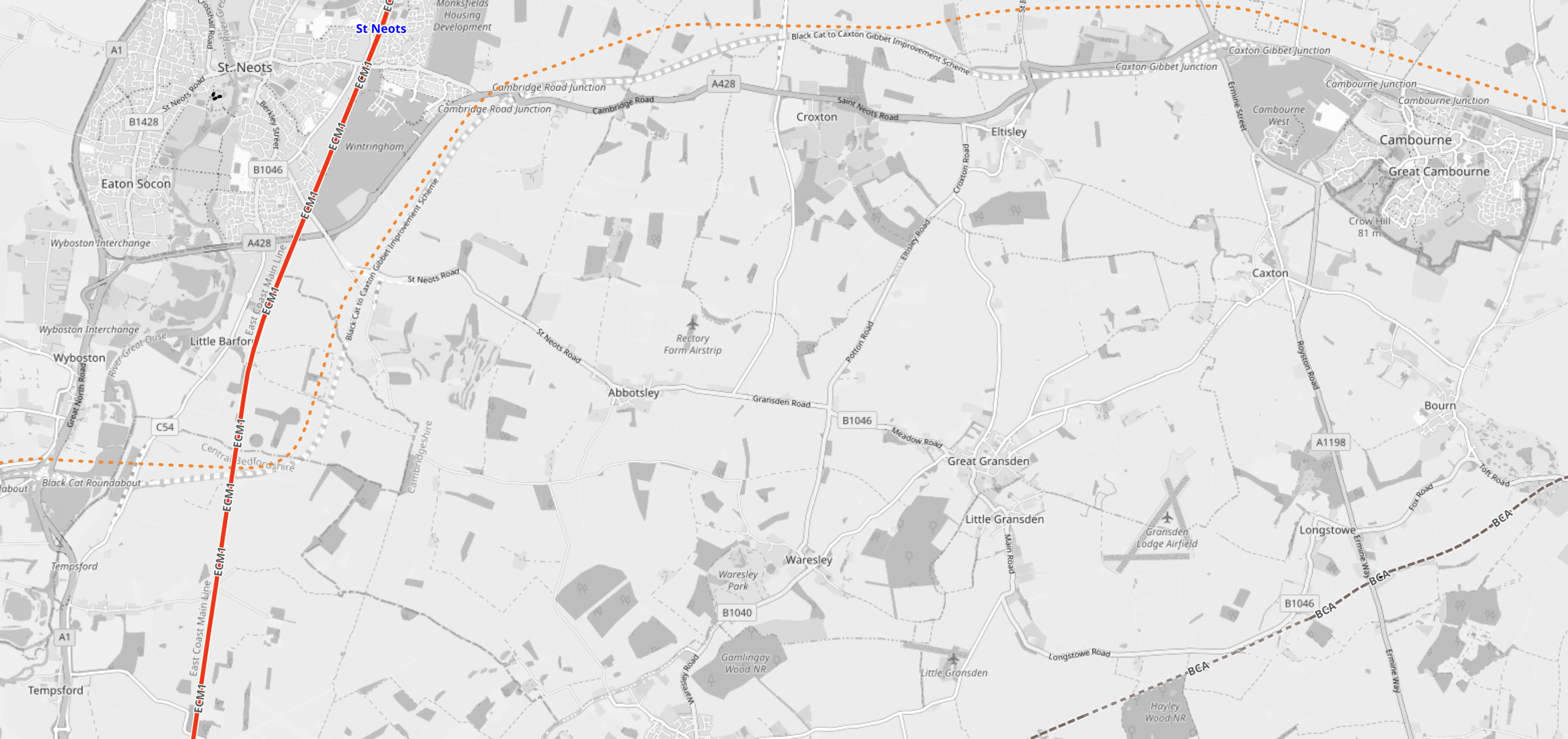
Note.
- The dotted red line across the top of the map will be the route of the East-West Rail.
- Tempsford station is in the South-West corner of the map on the route of the East-West Rail.
- The red track on the West side of the map is the East Coast Main Line.
- Cambourne is the village in the North-East corner of the map.
The Diesel-Hybrid 141 Buses Always Seem To Get Through
Today, I had an all-too-typical bus-rid back from Moorgate after breakfast and a bit of shopping.
My direct bus is a 141, which is a second-rate, Chinese BYD bus, which has a number of problems as I pointed out in My 78-Year-Old Legs Are More Reliable Than The New Chinese Buses On London’s 141 Bus Route.
- I just missed a 141, so I caught the next bus that was going my way.
- It was a New Routemaster on the 76 route, so I took a chance, that it might pass the previous 141 bus, as they often do.
- As we passed Moorfield’s Eye Hospital, we passed the 141, but it was stopped at the side of the road, with all its lights flashing.
- I decided to change two stops from home and left two stops from home, from where I could walk.
- I waited perhaps five minutes before an elderly Wrightbus diesel-hybrid arrived to take me home,
After today’s experience, I can’t help but remember the old joke!
- Question: What’s red and lies in the gutter?
- Answer: A dead bus!
Other colours are available.
East West Rail Train Door Row May See Launch Delayed
The title of this post, is the same as that of this article on the BBC.
This is the sub-heading.
The launch of a new £7bn railway faces being delayed because of a row over who will control the opening and closing of carriage doors.
These three paragraphs add more details.
The BBC understands train operator Chiltern Railways is in a standoff with the Rail, Maritime and Transport (RMT) union, which represents train guards, over how East West Rail services between Oxford and Milton Keynes will run.
The RMT said the operator wants train drivers to open and close the doors at stations, with no guards required.
Passenger trains were scheduled to start running between Oxford and Milton Keynes for the first time in nearly 60 years by the end of December.
I suspect that the unions won’t be satisfied until all trains in the UK have a crew of two.
Rolls-Royce To Power Etihad Fleet Expansion
tThe title of this post, is the same as that of this press release from Rolls-Royce.
These two paragraphs form the heart of the announcement.
Rolls-Royce (LSE: RR., ADR: RYCEY) welcomes announcement by Etihad Airways that it will expand its widebody fleet with aircraft powered by Trent 7000 and Trent XWB-97 engines.
At this week’s Dubai Airshow, the Middle Eastern carrier announced its intention to select 15 Airbus A330 Neo powered by the Trent 7000; seven Airbus A350-1000 powered by the Trent XWB-97; and 10 Airbus A350F freighter variants also powered by the Trent XWB-97.
Note.
- 32 twin-engined aircraft will need more than 64 engines, if you include spares.
- A 2014 list price of $37.9 million per Trent 7000 engine is a reference point.
- The contract would probably include a number of years of ongoing maintenance.
That is certainly what you could call a multi-billion dollar contract.
New Mersey Ferry Takes To The Water For The First Time In Historic Moment
The title of this post, is the same as that of this press release from Merseytravel.
These bullet points act as sub-headings.
- Painted in traditional colours, first sight of the new Mersey Ferry in over 60 years
- Royal Daffodil floated on the River Mersey’s incoming tide
- Vessel then towed into Cammell Laird’s basin for further work to progress
- Proud moment for Mayor Steve Rotheram and Wirral shipbuilders
These three paragraphs add more detail.
The new £26m Mersey Ferry took to the river for the first time today in an historic moment for the Liverpool City Region.
Painted in the fleet’s historic red, white and black colours and with windows fitted, the first new Mersey Ferry in more than 60 years emerged from Cammell Laird’s giant construction hall on the banks of the Mersey early Thursday morning.
In a carefully managed 24-hour operation, the Royal Daffodil was moved to the river’s edge to allow the incoming tide to slowly lift her clear and float the vessel for the very first time. She will then be tugged to the shipyard’s test basin where engineers will carry out further work ahead of full sea trials early next
I would have thought that given Merseyside’s love of the spectacular, they would have launched the ferry in more dramatic fashion.
There is though, this YouTube video of the safe and steady launch.
I have a few thoughts.
The Ferry Was Built Quickly
According to the Wikipedia entry for the Royal Daffodil, the construction dates were as follows.
- Laid Down. 10th January 2025
- Launched. 6th January 2025
It is planned to be in service next year.
Perhaps, the Scottish Government should have asked Cammell Laird to build their recent ferries?

