Keep Calm And Carry On!
I saw a superb example of this on a bus today.
The bus was fairly crowded and I was standing.
A guy gets on and it was fairly obvious that he had no arms and from his age and appearance, it looked like he could have been a victim of thalidomide.
But no-one moved to offer him a seat!
So as the bus moved off, he calmly walked up the stairs to the top deck!
Shame on all those seat-sitters!
Hope For Wisbech Line Revival
The title of this post, is the same as that of an article in the April 2021 Edition of Modern Railways.
This is the introductory paragraph.
A partnership with Network Rail will speed up plans to re-introduce passenger services to Wisbech, according to James Palmer, Mayor of Cambridgeshire & Peterborough.
These are my thoughts.
Current Plan And Status
The current plan is as follows.
- The Cambridgeshire & Peterborough Combined Authority has been developing plans on its own.
- It will now work with Network Rail.
- The initial service will be between March and Wisbech.
- Hopefully, a viable plan will emerge.
A direct Wisbech and Cambridge service is an objective, once capacity has been improved at Ely.
Long Term Objectives
These longer term objectives are indicated in the article.
- A direct Wisbech and Cambridge service.
- A two trains per hour (tph) service between Wisbech and Cambridge.
These objectives will probably need capacity to be improved at Ely.
I used to play real tennis with one of Cambridge’s foremost thinkers about the long-term future of the city and the surrounding area.
He believed that Peterborough would increasing become a satellite city to Cambridge to provide housing and manufacturing capacity.
Based on my discussions with him, I believe that there should be at least two tph connecting Cambridge South, Cambridge, Cambridge North, Ely, March and Peterborough stations.
Services Through March Station
These services go through March station.
- Greater Anglia – 1 train per two hours (tp2h) – Ipswich and Peterborough
- CrossCountry – 1 tph – Cambridge and Birmingham New Street
- East Midlands Railway – 1 tph – Norwich and Liverpool Lime Street.
Note.
- All trains stop at Ely.
- The Greater Anglia service also stops at Manea and Whittlesea.
- Greater Anglia promised to increase the frequency of the Ipswich and Peterborough service to hourly, in the new franchise agreement.
- The East Midlands Railway service does not stop at March.
In addition there are often around a succession of freight trains going to and from Whitemoor Yard and the Port of Felixstowe.
Even without major improvements at Ely, I suspect, that there could be three or even gour tph between Ely and Peterborough that stop at March, with Manea and Whittlesea served by at least one tph.
This frequency would do the following..
Improve services between Cambridge and Peterborough, if you were prepared to change at Ely, as there could be up to four tph between Ely and the three Cambridge stations.
Make it possible for a simple shuttle train to run between March and Wisbech and have good connections with services at March to both Peterborough and Cambridge.
Track Layout At March
This Google Map shows the track layout at March.
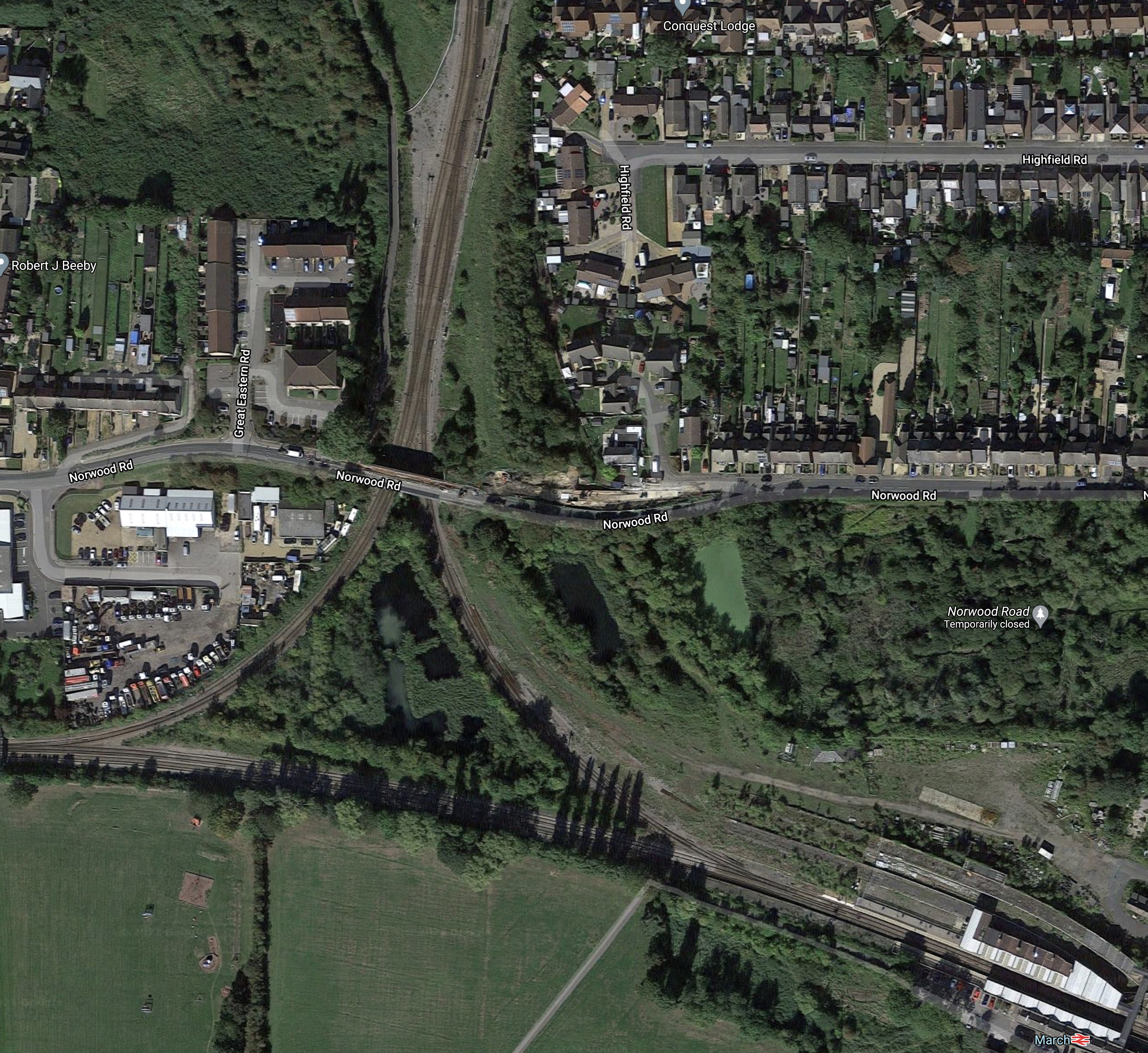
Note.
- March station is in the South-East corner of the map.
- Ely is to the East.
- Peterborough is to the West.
- Whitemoor marshalling Yard is to North.
This second Google Map shows the Northern part of the map to a larger scale.
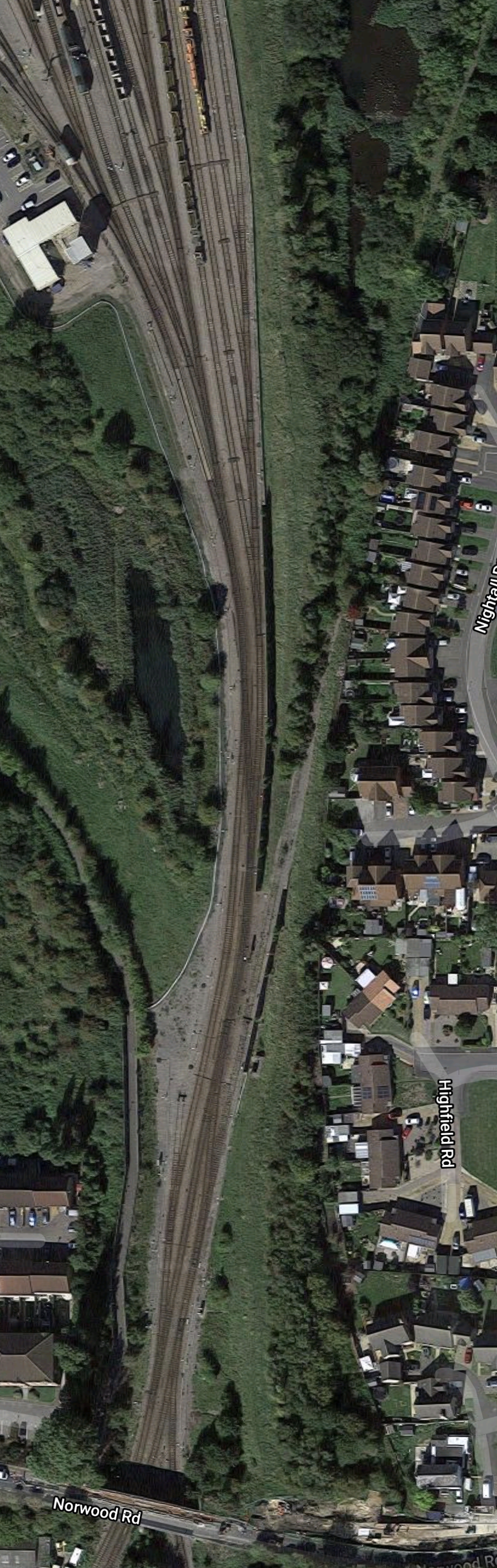
Note.
Whitemoor yard is to the North of the map.
There is a single track railway running North East from Whitemoor junction South of Whitemoor yard to the North East corner of the map. This is the disused Bramley Line between March and Wisbech, which will be reopened.
Between March And Wisbech
I have flown my virtual helicopter along the remains of the track between Whitemoor junction and Wisbech.
This Google Map shows a typical section of the line, just to the North of March.
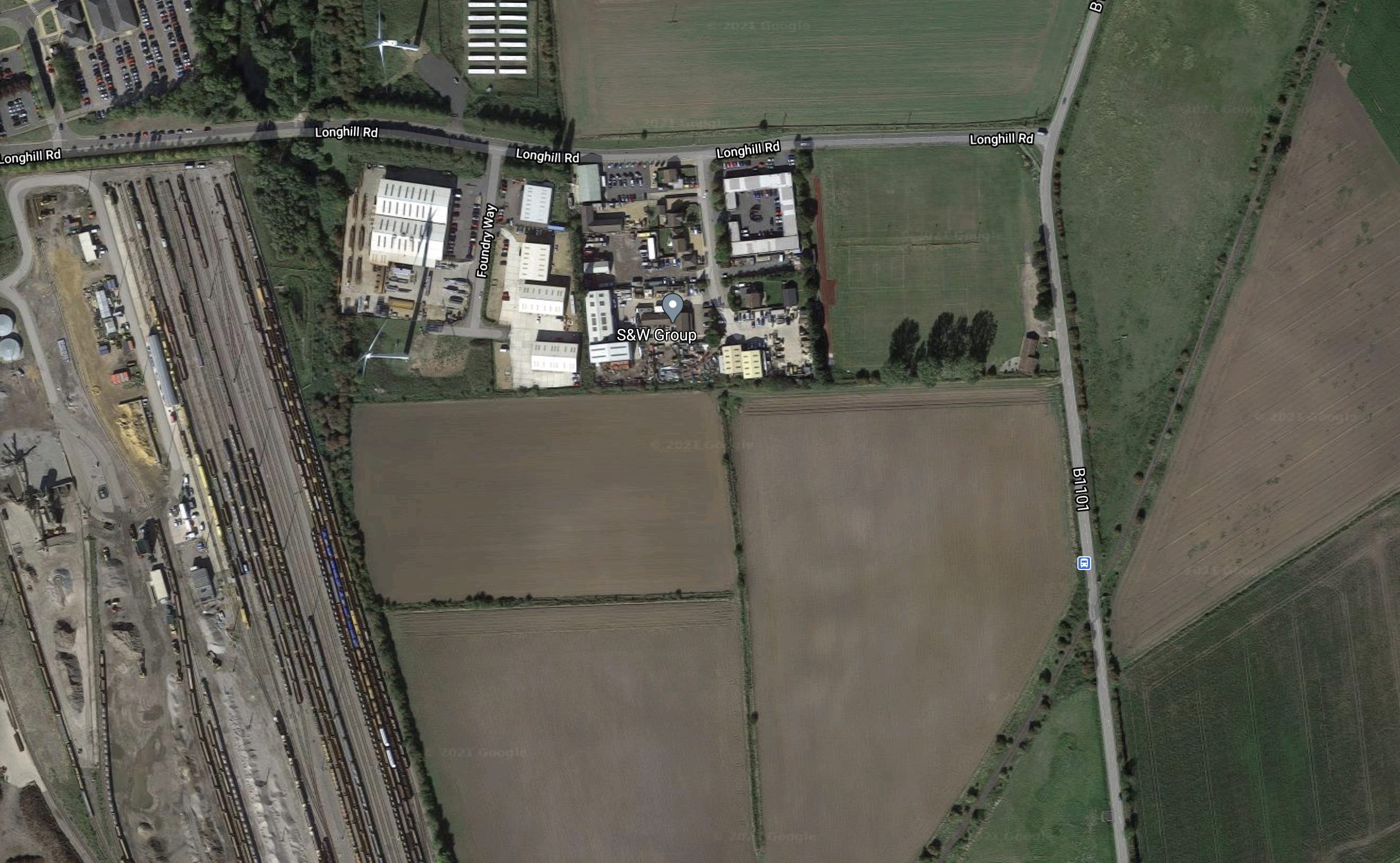
Note.
Whitemoor Yard is to the West side of the map.
The Bramley Line shows as a green scar running diagonally across the map to the North-East cornet.
The blue dot marks a bus stop on the B1101.
The next three images were taken from Google Streetview.
This one shows the Bramley Line crossing the B1101.
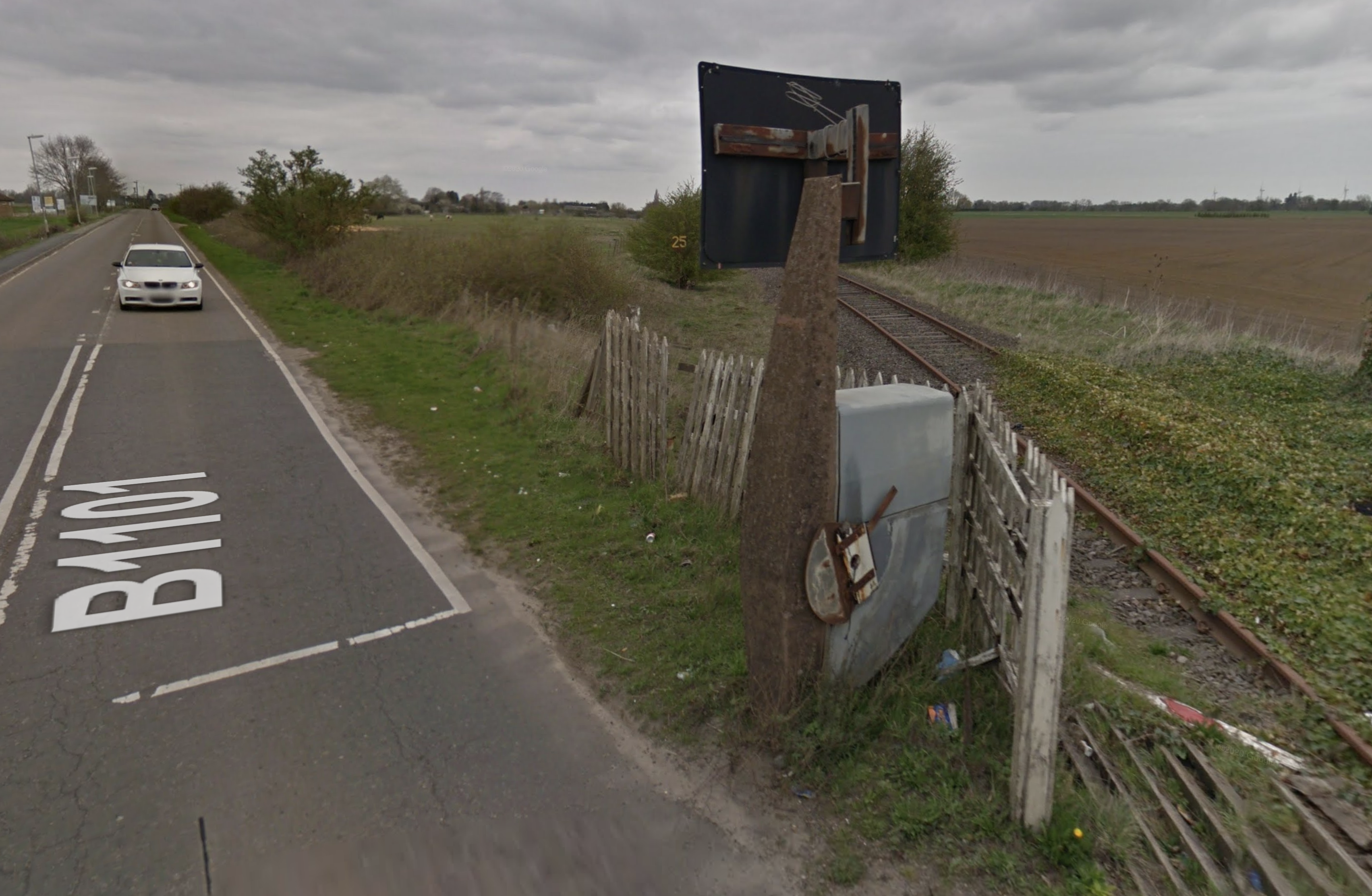
In this one, the Bramley Line is crossing Long Drove.

And here it’s crossing Redmoor Lane.
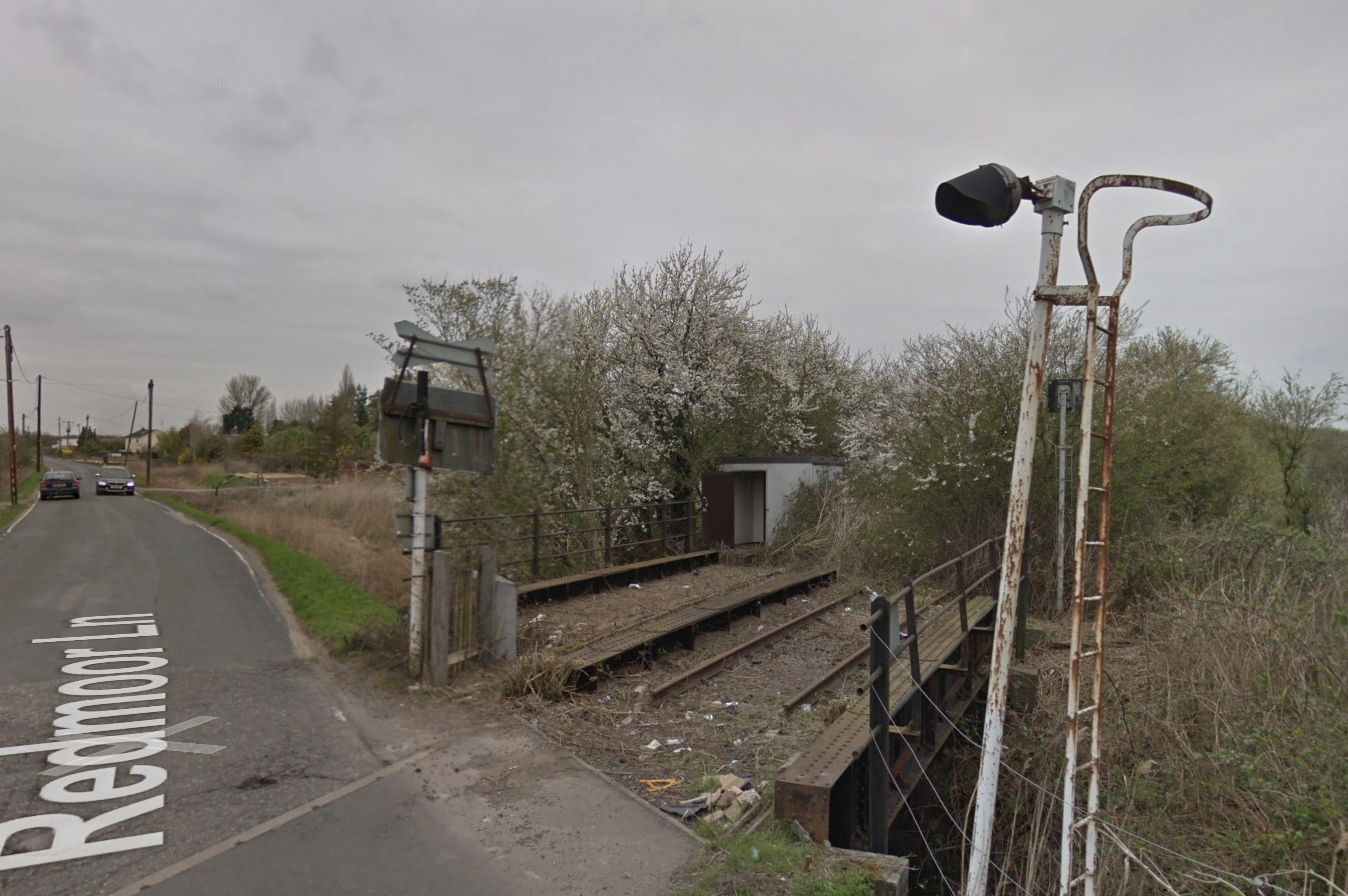
I wouldn’t have thought, that turning the Bramley Line into a railway that would be safe for one of Greater Anglia’s three-car Class 755 trains would be a challenging project.
Approaching Wisbech
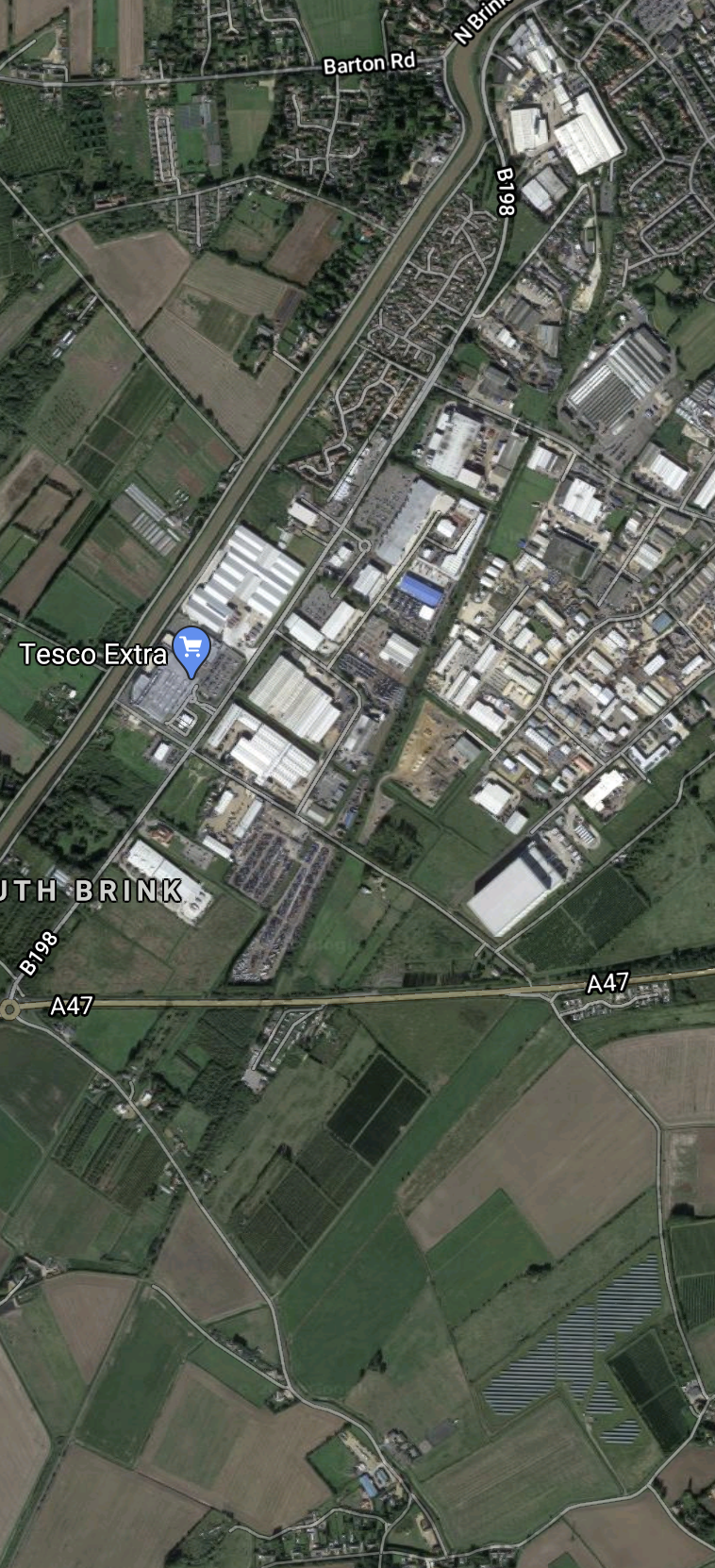
This Google Map shows how the railway approaches Wisbech.
Note.
At the Northern end of the map, there are the square white roofs of the Purina dog food factory, which appears to have been built on the site of the former Wisbech East station.
At the Southern end of the map, the railway crosses the A47.
This Google Map on a larger scale shows the Purina factory.
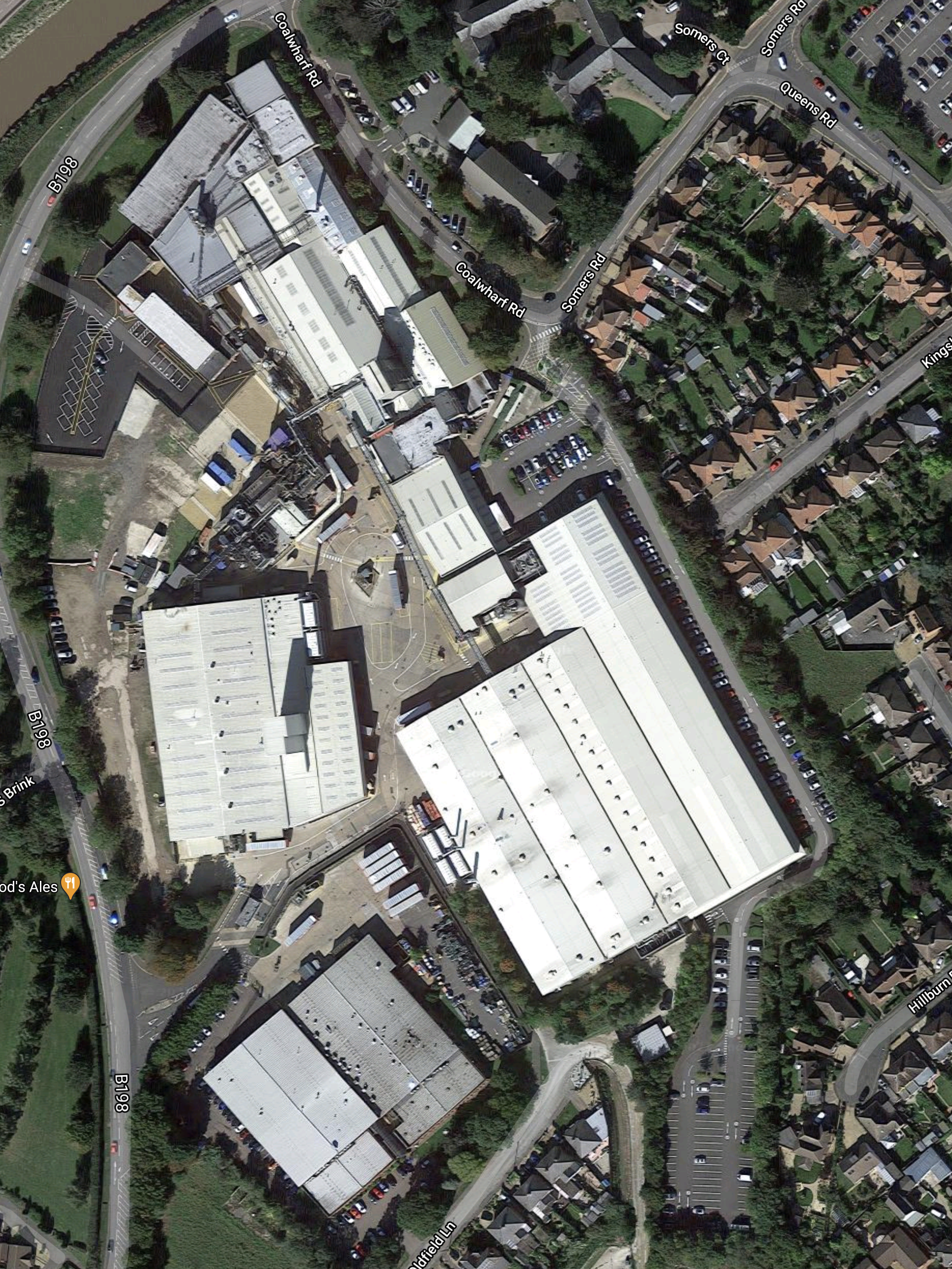
I don’t think it will be very easy to site a station in this area, without a great deal of friendly co-operation of Nestle, who own Purina.
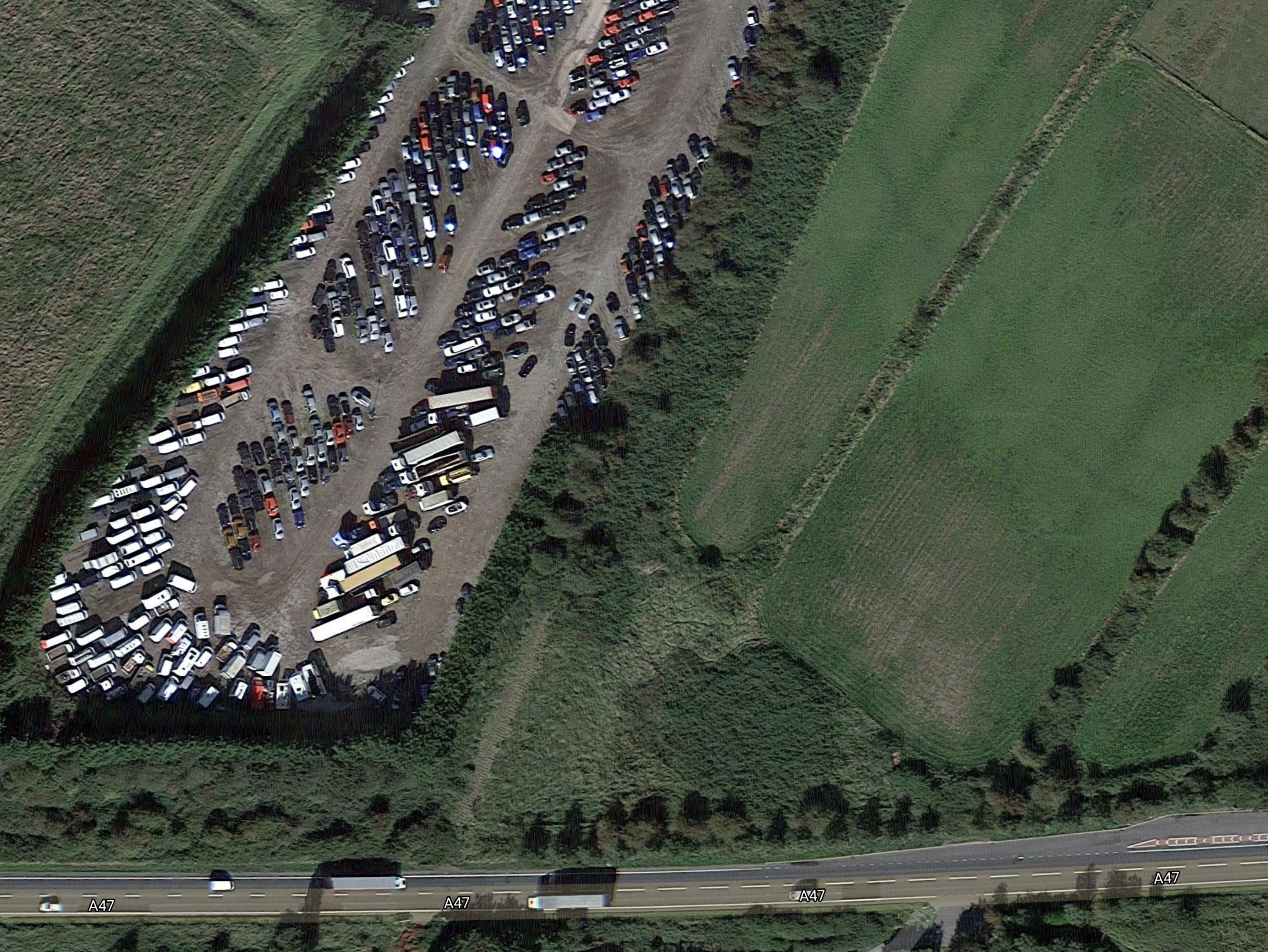
This Google Map on a larger scale shows where the Bramley Line crosses the A47.
This image looking to the North from the A47, was taken from Google Streetview.
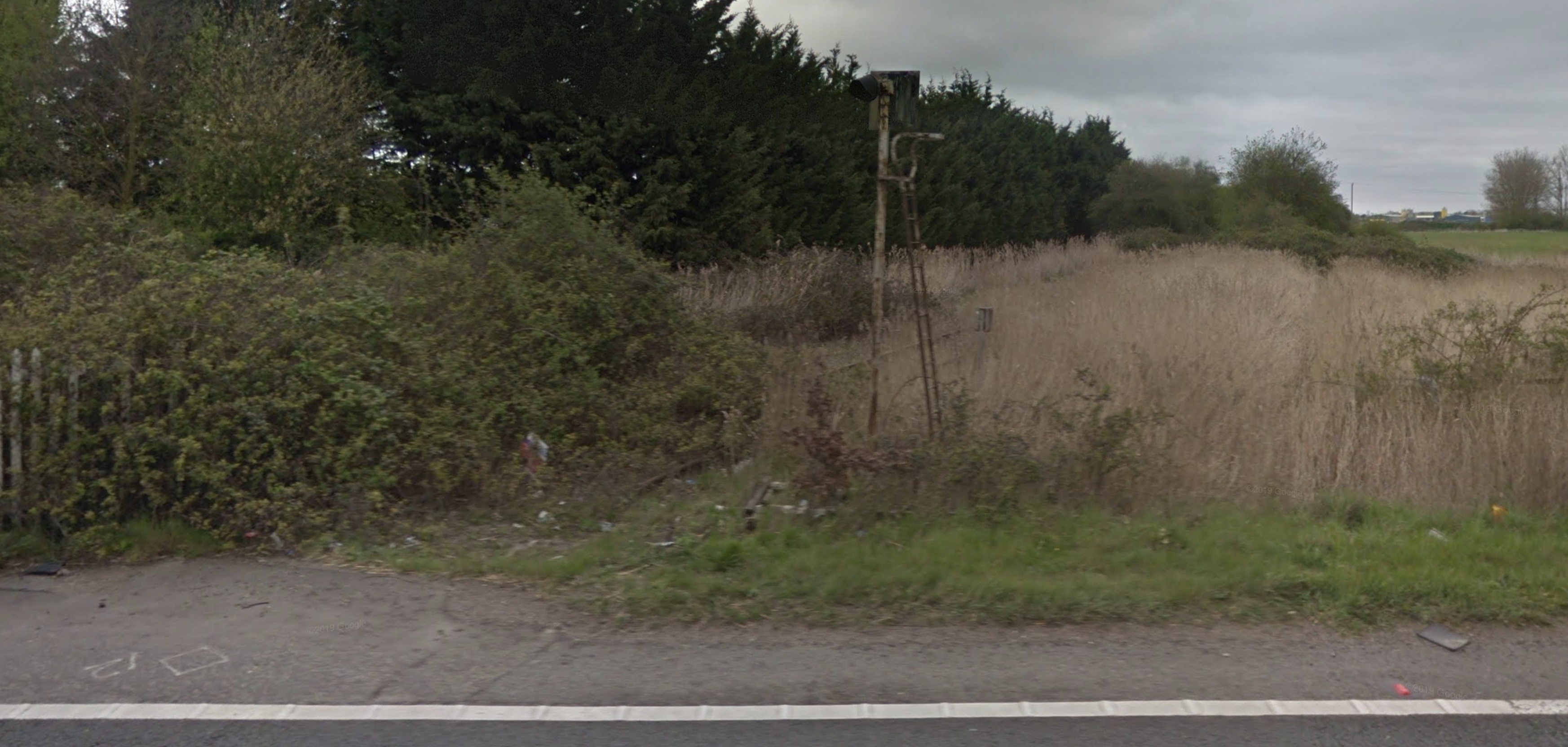
It definitely says that the Railway woz here!
This Google Map shows the A47 and what lies to the South of the road.

Note.
- The two-way A47 road across the map.
- The development to the South of the A47.
- The green scar of the former railway to the West of the development.
Looking at the route of the former railway and the A47, I must come to the conclusion that using the former route to access Wisbech would be extremely difficult and would require an expensive crossing of the A47.
A New Station At Wisbech
I think there are two solutions to providing a station for Wisbech; a Park-and-Ride station, where the former railay crossed the A 47 or find another site.
As a bridge over the A47 would be expensive, I would feel that the Park-and-Ride station could be the best option.
It could have a single platform like Felixstowe, which is shown in this image.
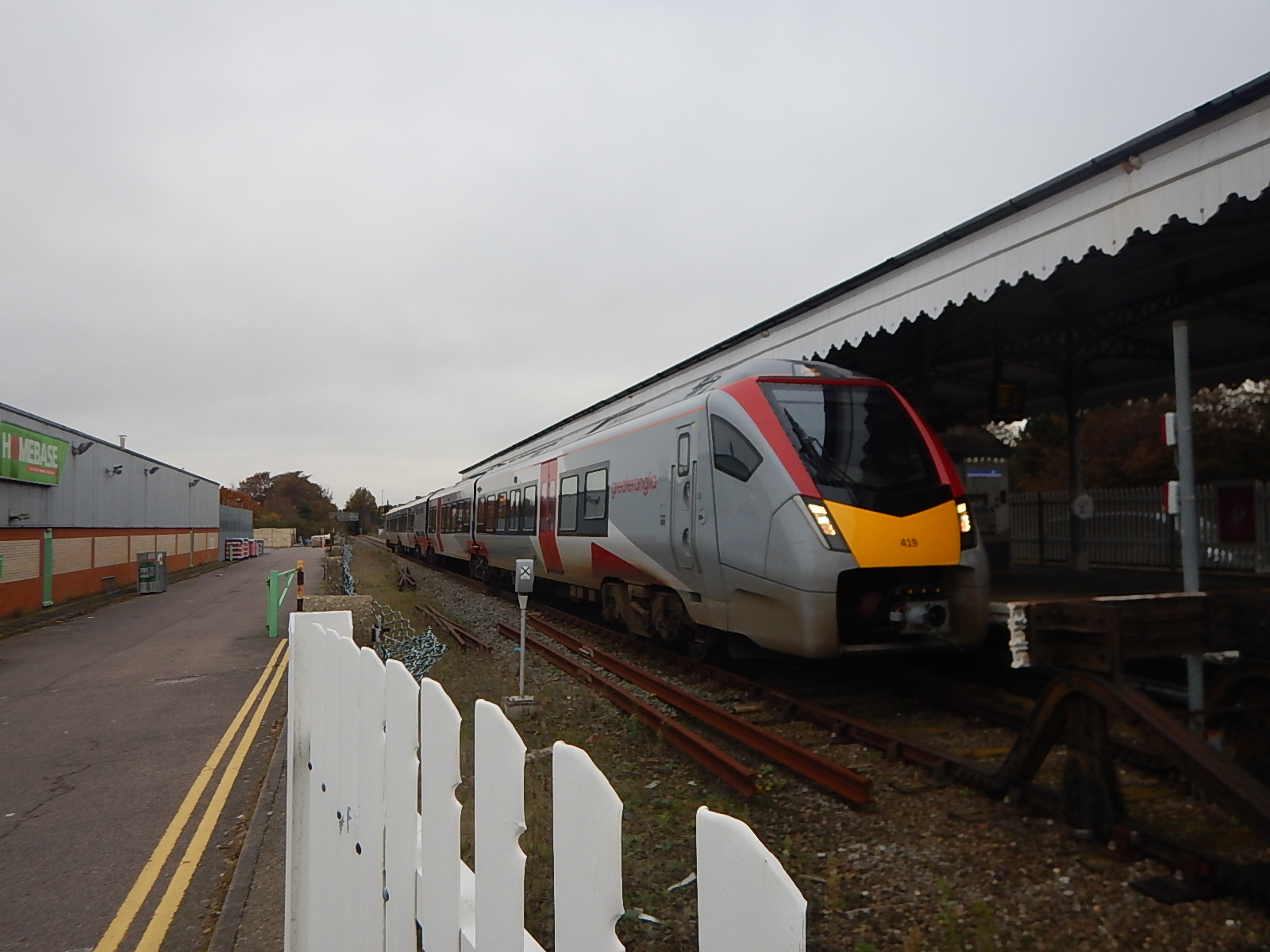
The train is one of Greater Anglia’s new Class 755 trains which would probably be used for services to Wisbech.
- Adequate car parking could be provided at the station.
- Secure bicycle parking would be provided.
- There could be an electric shuttle bus to the town centre and the the North Cambridgeshire Hospital.
The only simple alternative, would be if it were possible to dig or bore a short single-track tunnel under the A47, so that the station could be put on the town side of the A47, where a lot of the land seems to be used for parking cars that are ready for the scrapyard.
Digging it should be possible given some of the traditionally dug tunnels, that have recently been built in the UK.
Would The Bramley Line Be Single Or Double Track?
The Felixstowe Branch Line is about the same length as the Bramley Line and is effectively a single-track line with a long passing loop to support a one tph passenger service.
So to support the desired two tph between March and Wisbech, I suspect that a mainly single-track route with a passing place in the middle will be needed.
Would There Be Any Intermediate Stations?
There used to be a station at Coldham, which is about halfway. Te Wikipedia entry for the station says this.
A plan by the Bramley Line to restore the line between Wisbech and March may see trains return to Coldham in some form.
This Google Map shows the village.
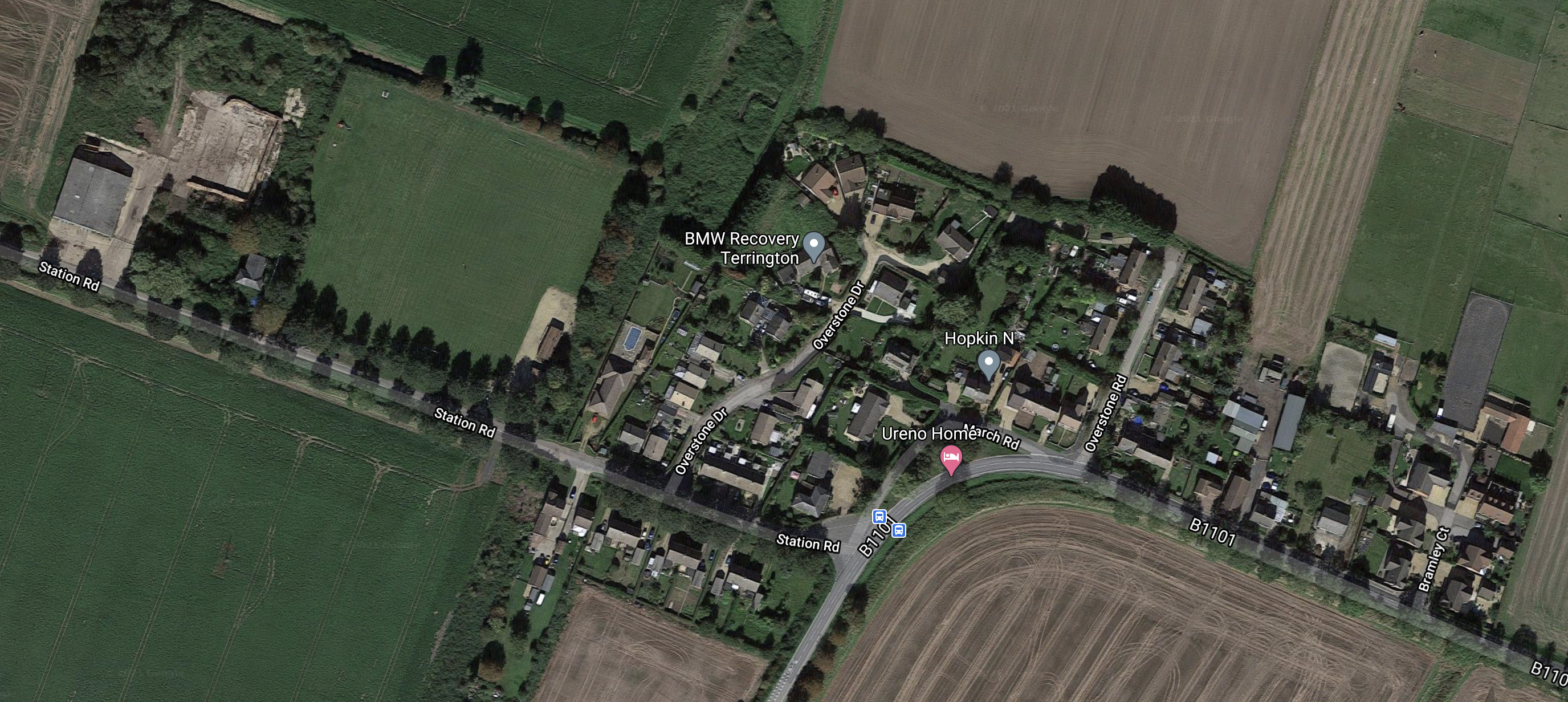
Note.
The road going to the West is called Station Road.
The green scar of the former railway can be seen passing North-South to the West of the houses.
This view from Google Streetview shows the former railway looking North from Station Road.
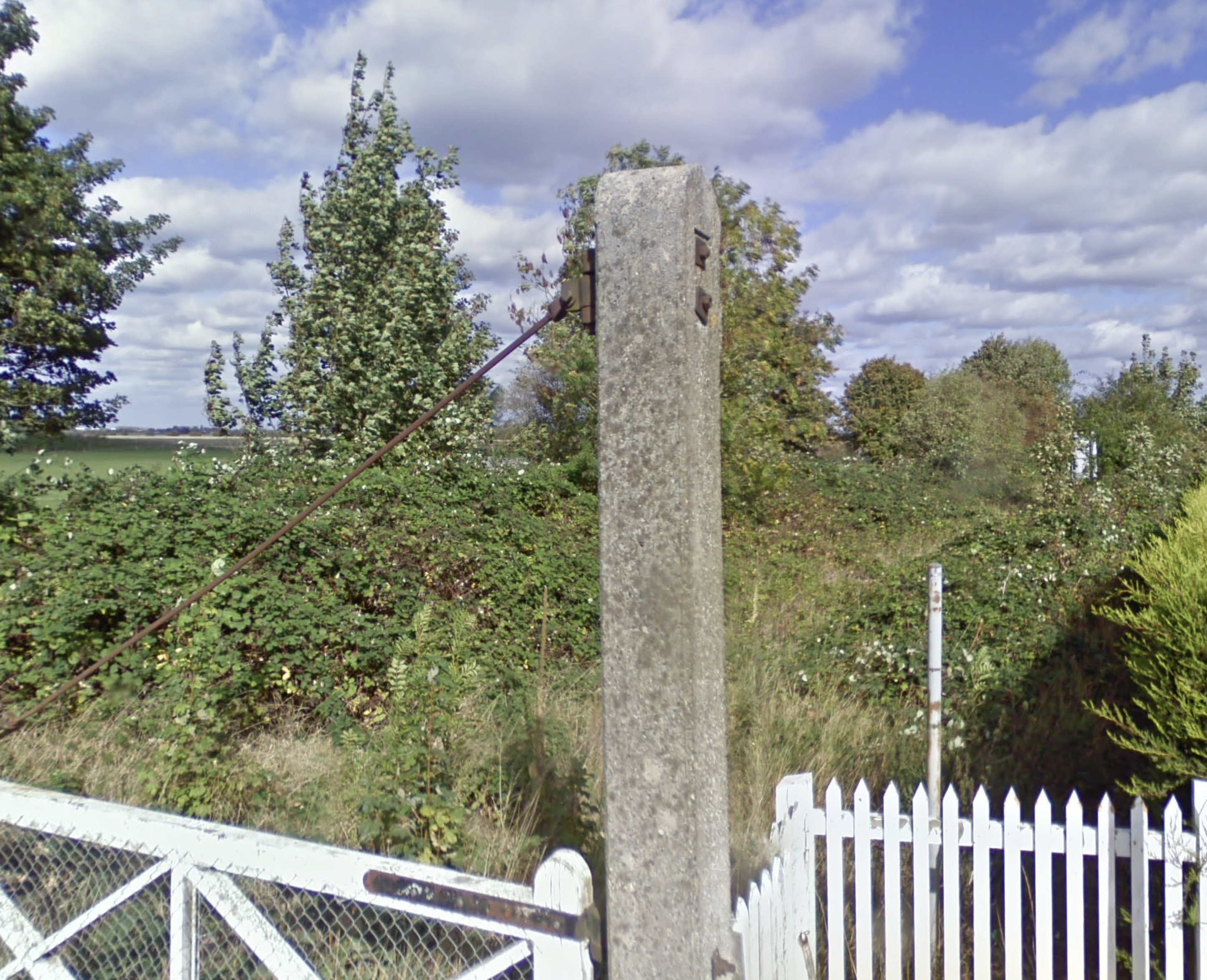
Could a double-track section be squeezed in here?
The Wikipedia entry for the Bramley Line shows two other stations, that were planned for a proposed heritage railway; March Elm Road and Waldersea.
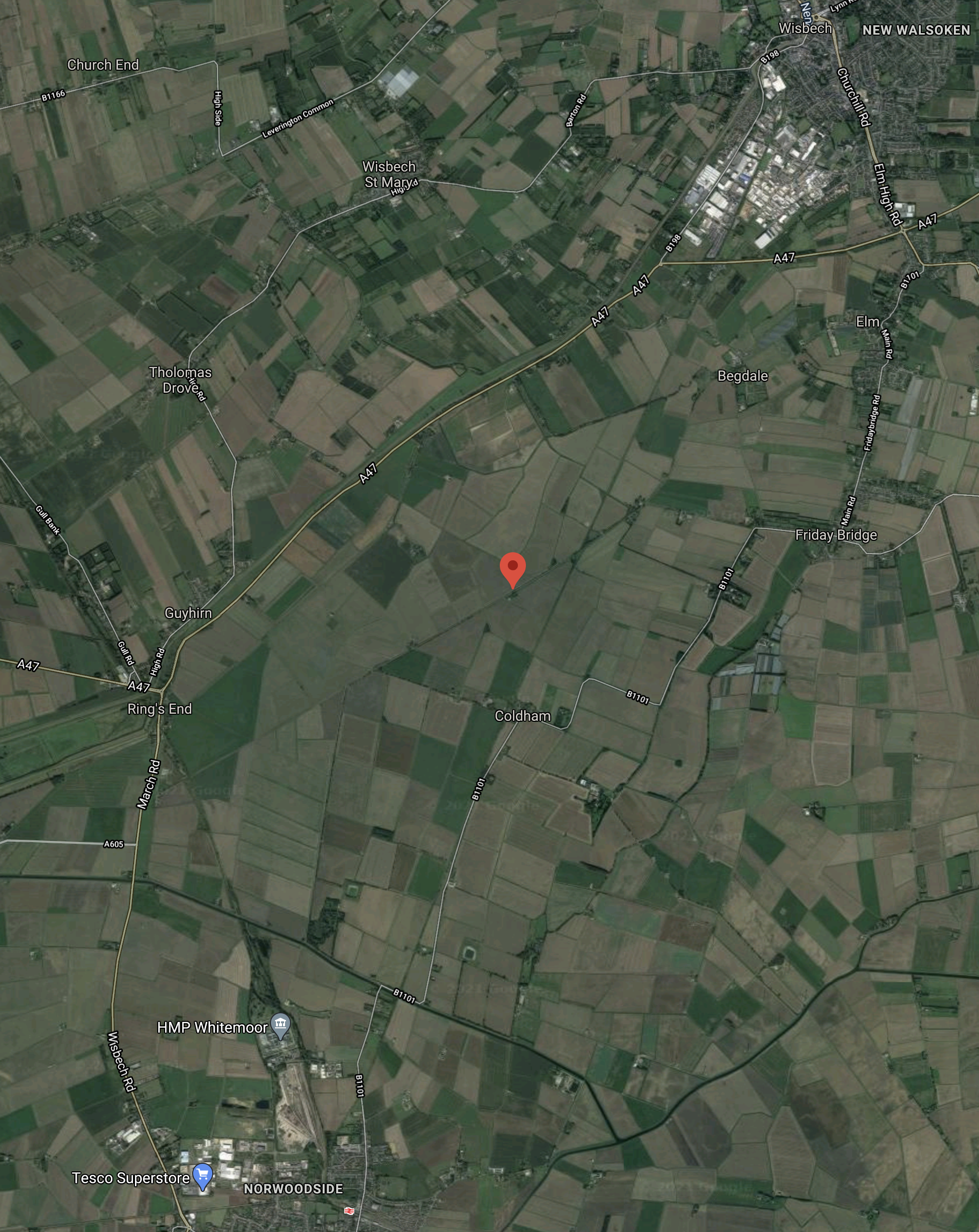
This Google Map shows the area between March and Wisbech.
Note.
- March is in the South-West corner of the map.
- Wisbech is in the North-East corner of the map.
- Waldersea is indicated by the red arrow.
- Coldham is South of the red arrow.
Although March Elm Road and Waldersea might be ideal for a heritage railway, I suspect that the old British Rail layout of just a station, where trains can pass at Coldham would be the best layout.
What Trains Would Be Used?
I have assumed that Greater Anglia will use their three-car Class 755 trains.
- They are new comfortable trains.
- They are designed to carry bicycles.
- When the route is extended to Cambridge, they would be able to use the electrification South of Ely.
I also feel that Greater Anglia planned their fleet size to include enough trains for a Wisbech service.
Could Battery Electric Trains Be Used?
The Class 755 trains are designed as modular bi-mode trains with a PowerPack in the middle, which contains diesel engines.

Stadler are building Class 756 tri-mode versions of these trains for Transport for Wales, which will have batteries and two diesel engines in the PowerPack.
In Thoughts On The Actual Battery Size In Class 756 Trains And Class 398 Tram-Trains, I stated that a three-car Class 756 train would have a 480 kWh battery capacity and the four-car would have 600 kWh. These figures came from a Freedom of Information Request. Not by me, I should add!
Batteries of these sizes would I feel give the Class 755 trains a range of up to fifty miles.
The various distances in the area are.
- March and Ely – 15 miles
- March and Peterborough – 15 miles
- March and Wisbech – 12 miles
I think that Stadler’s and Network Rail’s engineers can come up with a very affordable plan, that will enable tri-mode Class 755 trains to run the following routes.
- Cambridge and Wisbech and return.
- Ely and Peterborough
As part of the works to improve capacity at Ely, I suspect there will be some renewal and extension of the electrification in the complicated junction.
So would the electrification be extended a few miles towards March, to remove any need for charging at Wisbech station?
What would certainly ensure battery-electric services to Wisbech would be the electrification of Ely and Peterborough via March.
I feel this is an important electrification infill, that should be done sooner rather than later.
- It would be needed if it were decided, that all freight trains to and from Felixstowe were to be electric-hauled.
- It would enable direct electric passenger services between Cambridge and the North.
- It would help enable battery-electric operation between Peterborough and Norwich.
- It would allow trains from the North to use Liverpool Street as an alternative terminal during engineering works or other blockades.
It might even make it easier to widen or replace the Digswell Viaduct, as it would offer a fully-electrified diversion route via Cambridge, during the inevitable long closure of the route.
Improvements At March Station
March station will need to be improved, if it is going to be used as an interchange station.
It will probably need a bay platform to turn the Wisbech trains.
I also think that step-free access will be needed for passengers, who need to cross the tracks and can’t manage the stairs.
Conclusion
I very much feel that the Cambridgeshire & Peterborough Combined Authority and Network Rail can create a very useful branch line to Wisbech.
There is not much infrastructure to be built and upgraded.
- A new station will be built at Wisbech, which I feel is likely to be a Park-and-Ride on the A47.
- A bay platform will probably need to be reopened at March station.
- March station will need to be step-free.
- There may be a station and a passing loop at Coldham.
- Track and signalling will need to be replaced.
But the big project needed is the remodelling at Ely, which will have to be done to increase capacity, through the bottleneck.
Greater Anglia’s Class 755 trains would appear to be ideal for the branch and could operate on battery power.
Silicon Roundabout – 10th April 2021
This time the images were taken going from home to Moorgate.


There doesn’t seem to have been much progress since I wrote Silicon Roundabout – 8th March 2021.
If you compare what still exists of the old station and the visualisations of the new, there still appears to be a lot of old concrete to remove, like the big curved structure in the middle, which is shown in the last picture.
Calais – Mediterranean Rail Motorway Bids Called
This title of this post, is the same as that of this article on Railway Gazette.
This is the introductory paragraph.
The government has called for expressions of interest to operate a lorry trailer carrying service between the English Channel port of Calais and the Mediterranean port of Sète south of Montpellier. Submissions are required by May 16.
Further details include.
- It is aimed to start the service in 2022.
- Government financial help ight be available.
- In French it is called an autoroute ferroviaire.
- There is also a similar service between Perpignan and Paris.
- I would expect the service saves carbon emissions.
This certainly seems like a good idea.
I do wonder if we will eventually see trains carrying trucks running between Barking and Sete through the Channel Tunnel.
- The loading gauge will probably allow it.
- It would be electrically hauled all the way.
- Other destinations in Europe would be possible.
- It might need less drivers, who would only work in the UK or Europe.
- Would it help with Covid-19 bio-security?
If not Barking, what about to the Freeport being developed at Dagenham by the Thames?
It would
Ashington Targets 2023 Opening
The title of this post, is the same as that of an article in the April 2021 Edition of Modern Railways.
This is the sub-title.
A half-hourly service to Newcastle is planned.
The two trains per hour (tph) service and the opening date sounds just what is needed. Not just on the Northumberland Line, but in many places in the UK.
I would suggest some of the following.
- Bodmin General And Bodmin Parkway
- Camp Hill Line
- Exeter and Okehampton
- Maid Marian Line
- South Fylde Line
- Wareham and Swanage
- Wymondham and Dereham
There are also some much-needed stations, that could be added.
If we can create and manufacture a vaccine in a year, we can surely do a lot on a rail project in two years. And a lot of them! How many construction firms and workers would it keep employed?
The Modern Railways article gives a few more details.
How, Not If
This is the title of the first sub-section and sounds good to me!
It looks like Network Rail and others intend to apply good project management to deliver the project, fast and at a good price.
They haven’t been the best in the past, is all I’ll say!
Six Stations
This is said.
In summary, six new stations are proposed, at Northumberland Park (interchange with the Tyne and Wear Metro), Seaton Delaval, Newsham, Blyth Bebside, Bedlington and Ashington. An extension at the Northern end to Woodhorn is possible at a later stage.
Other points made include.
- Ashington is envisaged as the terminus.
- There are level crossing issues between Ashington and Woodhorn
- There will be a cycleway connecting Blyth Bebside with the town centre. With all those B’s, they need an Geordie equivalent to Boris bikes!
It sounds well-thought out to me.
Butterwell Freight Line
This is said.
Also for consideration at a later stage is conversion of the currently freight-only Butterwell Line to passenger use, permitting a service from Berwick-on-Tweed and Morpeth to Newcastle via Bedlington.
This Google Map shows the railway lines North of Ashington.
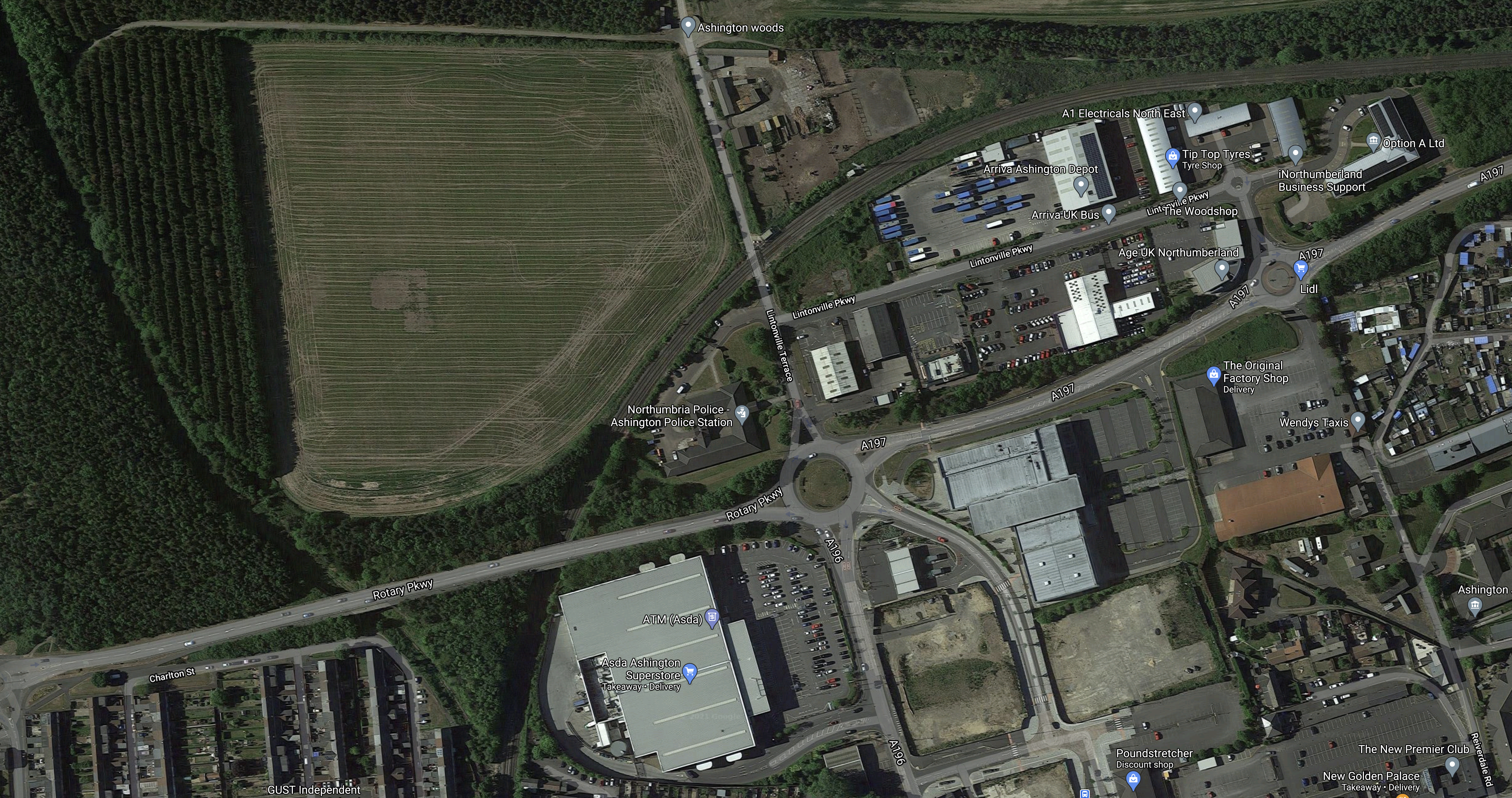
Note.
- The big grey building at the bottom of the map is Asda’s Ashington superstore.
- There is a rail junction to the West of the superstore.
- The line going South leds to Bedlington and Newcastle.
- The line going North-East goes to Woodhorn, Lynemouth Power station and the Alcan Smelter.
- The Line going North West through the trees is the Butterwell Line, which goes to the Butterwell Opencast coal mine, Widdrington station and up the East Coast Main Line to Berwick-on-Tweed.
This second Google Map shows to the North of the first one.
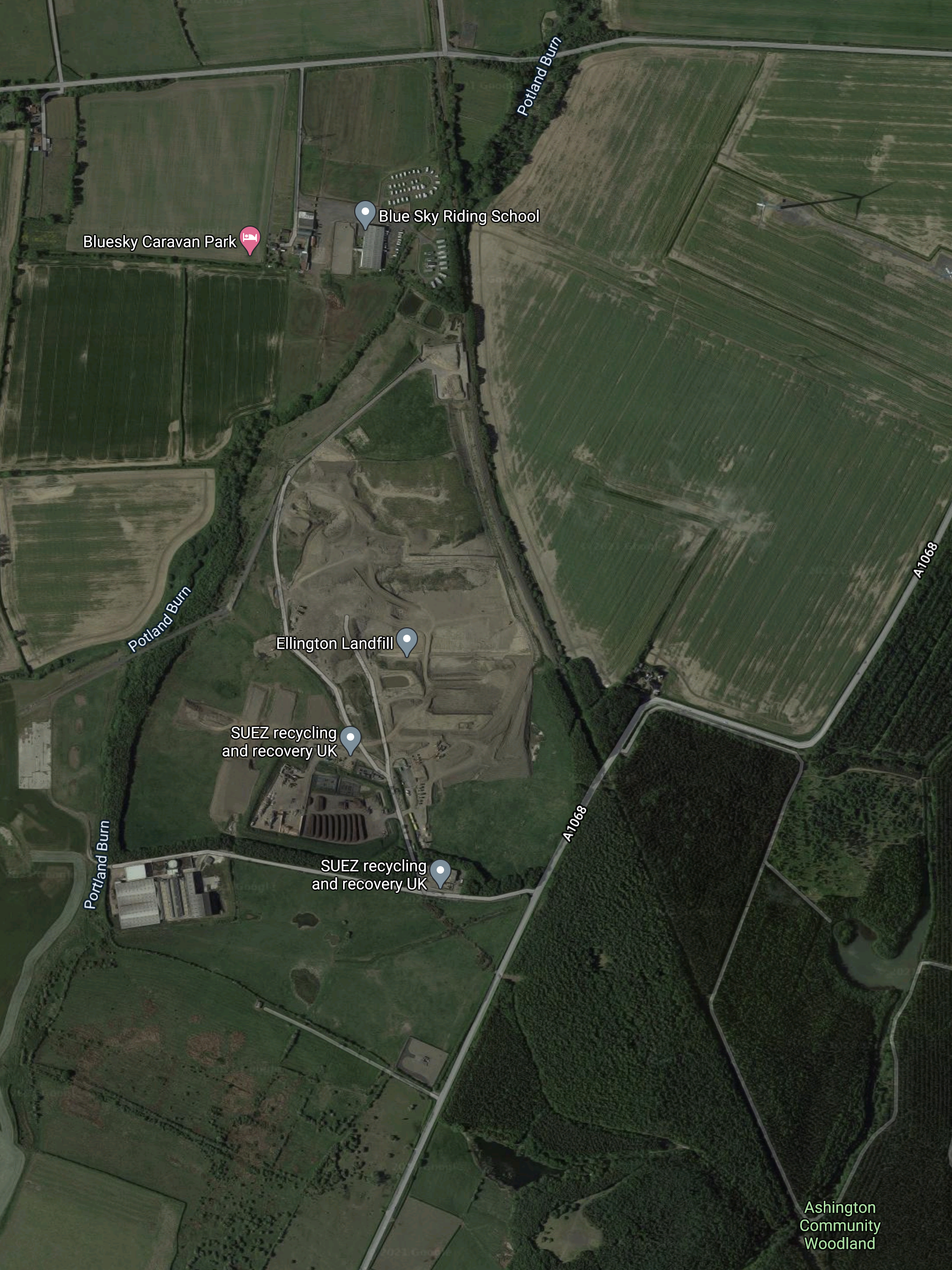
Note the Butterwell Line runs from the South East corner of the map through the woods and to the East of the Ellington landfill site.
This third Google Map shows the route of the line to the East Coast Main Line.
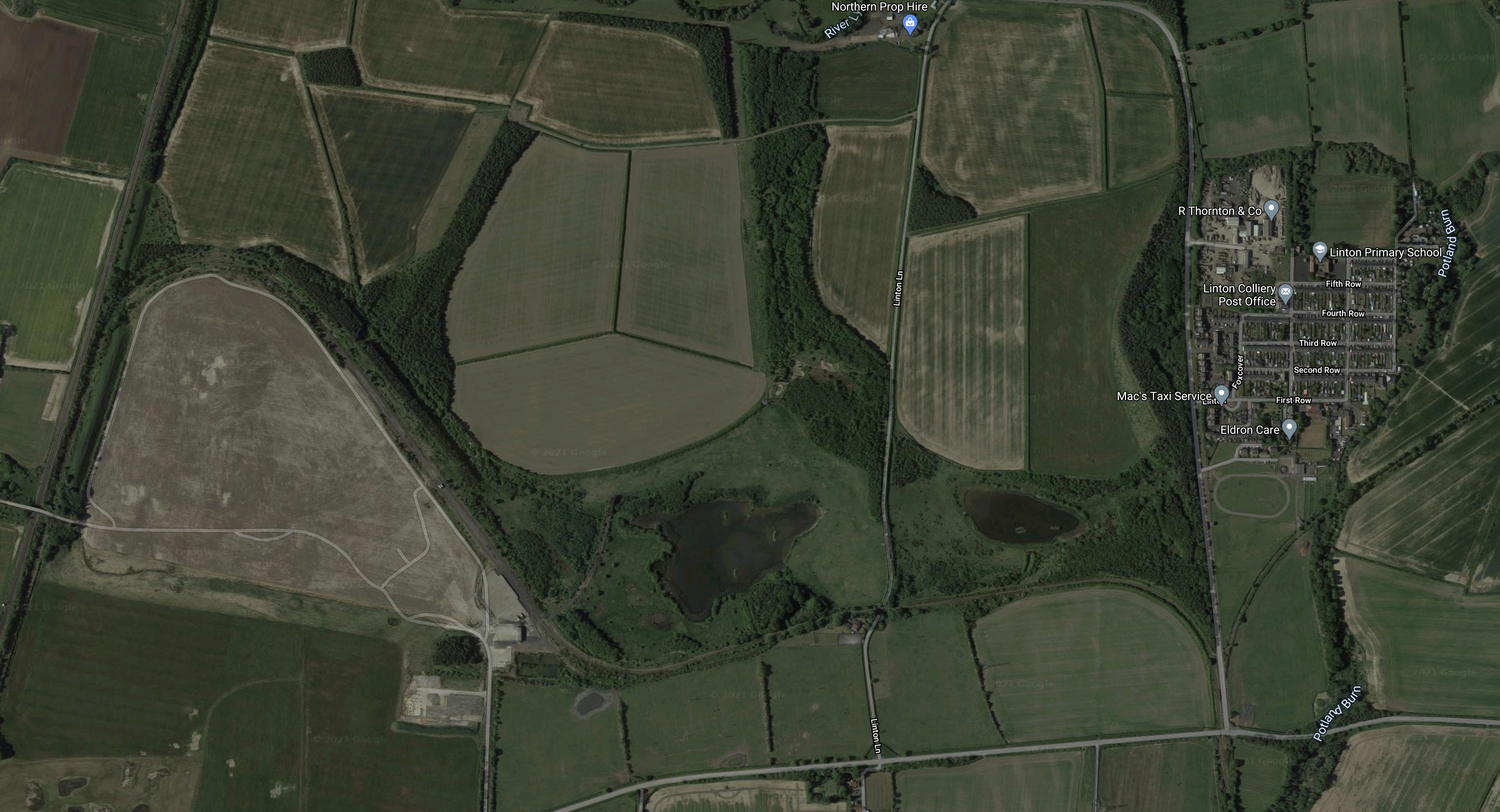
Note.
- The electrified East Coast Main Line runs North-South down the Western site of the map.
- The large fields may indicate that coal has been removed and they have been restored.
- The Butterwell Line meanders its way across the map.
- Trains would appear to be able to enter and leave the Butterwell Line to or from the East Coast Main Line to and from the South only.
- The next station to the South is Pegswood and to the North is Widdrington.
- At the East of the map, the line connects to the line to Ashington through the woods.
- The Butterwell Line appears to be a mix of single and double track.
I wonder if Network Rail and train companies have a cunning plan for train services on this section of the East Coast Main Line.
Current services on the East Coast Main Line, that use the section of the line between Newcastle and Berwick-upon-Tweed include.
- CrossCountry – 1 tph – Newcastle and Edinburgh/Glasgow – Stops irregularly at Alnmouth and Berwick-upon-Tweed.
- East Coast Trains – 5 trains per day (tpd) – Stops at Morpeth
- LNER – 1 tph – Newcastle and Edinburgh – Stops at Berwick-on-Tweed
- Northern Trains – 1 tph – Newcastle and Morpeth – Stops at Manors and Cramlington
- Northern Trains – 2 tpd – Newcastle and Chathill – Stops at Manors, Cramlington, Morpeth, Pegswood, Widdrington, Acklington and Alnmouth
- TransPennine Express – 1 tph – Newcastle and Edinburgh – Stops at Morpeth
Note.
- Morpeth and Berwick-upon-Tweed get at least one fast tph to both Newcastle and Edinburgh.
- Stations between Morpeth and Berwick-upon-Tweed get only a two tpd service.
- Stations between Newcastle and Morpeth get a 1 tph service.
- The East Coast Main Line is only two tracks and I suspect that Northern’s slow diesel multiple units are not ideal trains for the route.
The obvious improvement would surely be to run an hourly train between Newcastle and Berwick-upon-Tweed, via Bedlington.
- It would stop at Northumberland Park, Seaton Delaval, Newsham, Blyth Bebside, Bedlington, Ashington, Pegswood, Morpeth, Pegswood, Widdrington, Acklington and Alnmouth.
- There would be a reverse at Morpeth.
- It would join the East Coast Main Line between Pegswood and Widdrington stations.
- Trains could be timed, so that passengers between Cramlington and Alnmouth only waited a couple of minutes during change at Morpeth.
- Faster trains would be used to ease train pathing on the East Coast Main Line.
Current fastest times between Newcastle, Morpeth and Berwick-upon-Tweed are as follows.
- Berwick-on-Tweed and Newcastle – LNER – 67 miles – 46 minutes – 87 mph
- Berwick-on-Tweed and Morpeth – LNER – 50.2 miles – 30 minutes – 100.4 mph
- Morpeth and Newcastle – TransPennine Express- 17.5 miles – 26 minutes – 40.4 mph
It looks to me that because of the times North of Morpeth, that a high performance train or some cunning signalling will be needed.
Britishvolt’s Gigaplant
BritishVolt are building a factory to produce lithium-ion batteries at Blyth.
The Modern Railways article says this.
Recent news concerning Blyth is that it has been selected as the site for Britain’s first ‘gigaplant’ for electric car battery production, with a planning application for the 95-hectare site on the north of the river Blyth (the location of the former Blyth power station) submitted by Britishvolt in February. The £2.6billion scheme is expected to generate about 3000 jobs; if all goes well, lithium-ion batteries could be produced on the site by the end of 2023. The new factory will be about 2.5 miles from Bebside station and there has been talk of linking to the site with a shuttle bus.
I looked at Britishvolt’s web site and if I was graduating soon, I don’t think it would fire me up, unlike others in similar sectors.
We live in exciting times, so don’t have a boring web site, as it will not attract exciting and enthusiastic people.
This Google Map shows the Port of Blyth.
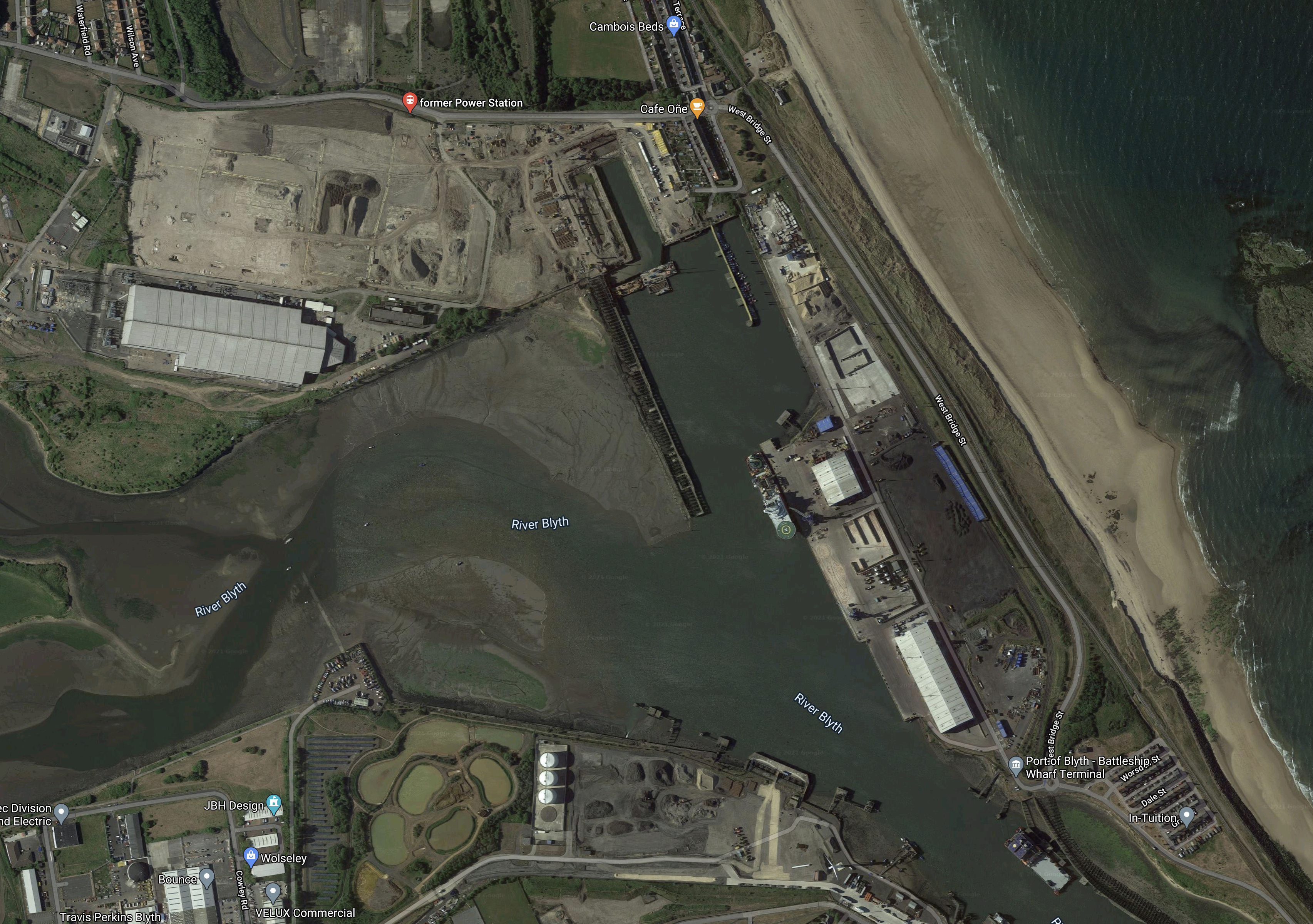
Note.
- The red arrow at the top of the map labelled as a former power station, which must be Blyth power station.
- There is certainly a large cleared site to the South of the arrow.
- The Port of Blyth is to the East.
- Because of the power station and the port the site could be rail connected fairly easily.
Britishvolt seem to be planning to use rail freight to bring in raw materials and take out finished product.
The Modern Railways article says this.
The new factory will be about 2.5 miles from Bebside station and there has been talk of linking to the site with a shuttle bus.
As there is a rail connection, at some point in the future could a shuttle train be used? Or perhaps a few trains per day between the factory and Newcastle.
A Bridge For The A1061 At Newsham
The Modern Railways article says this.
A new road bridge will be built on the A1061 to replace Newsham level crossing.
This Google Map shows where the Northumberland Line crosses the A1061 at the level crossing at Newsham.
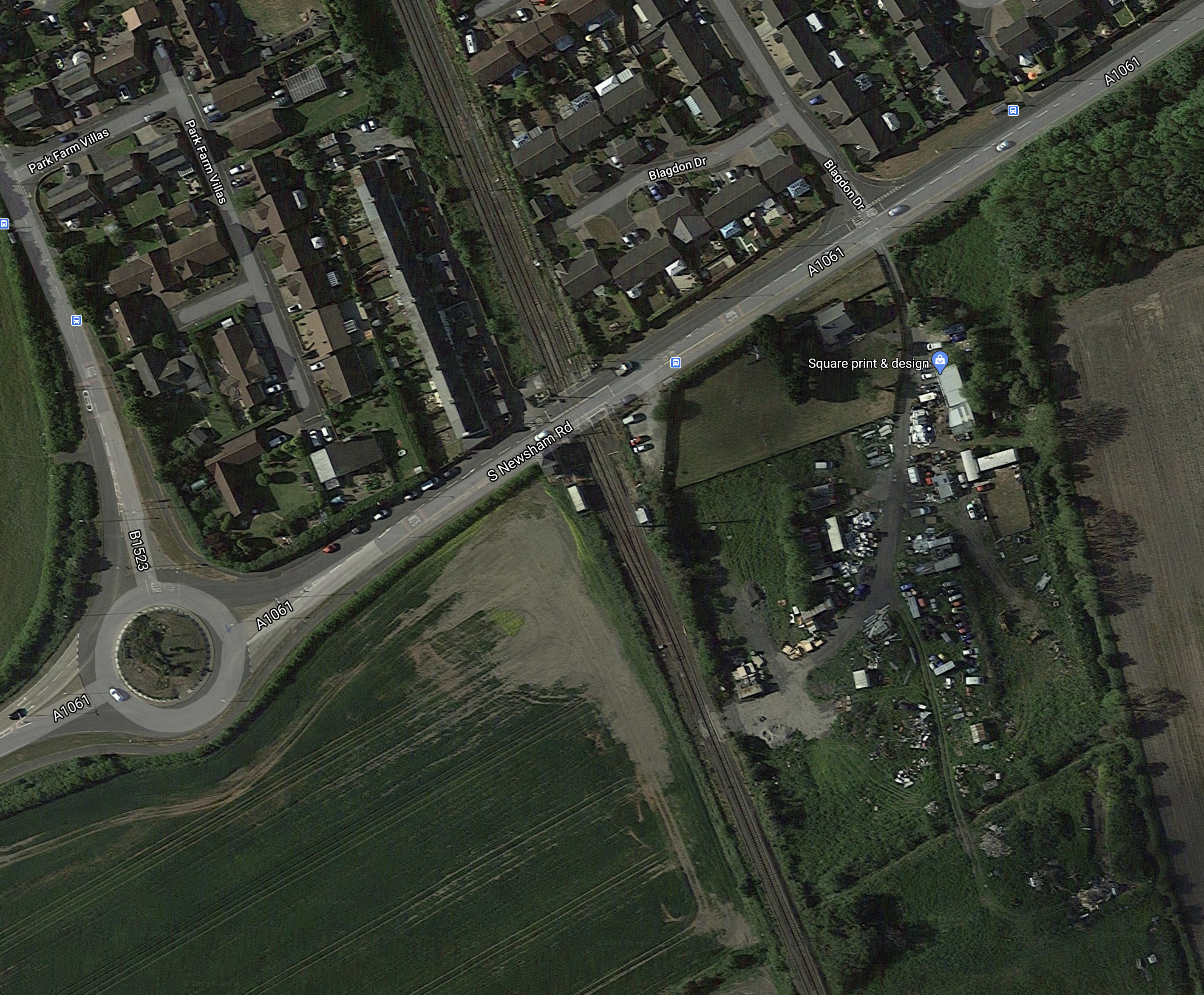
Note.
- The railway is double-track through the level crossing.
- It doesn’t appear to be a challenging project.
- A bridge could either be built along the existing route or a few metres to the South.
But as it looks like there could be more housing development in the area, would a bold design, that would allow a station to be added later be better?
Two Footbridges
The Modern Railways article says this.
In addition, there will be two new footbridges; Palmersville Dairy (replacing Palmersville foot crossing) and Chase Meadows (replacing Chase Meadows foot crossing).
This Google Map shows the Palmersville foot crossing to the West of Palmersville station on the Tyne and Wear Metro.
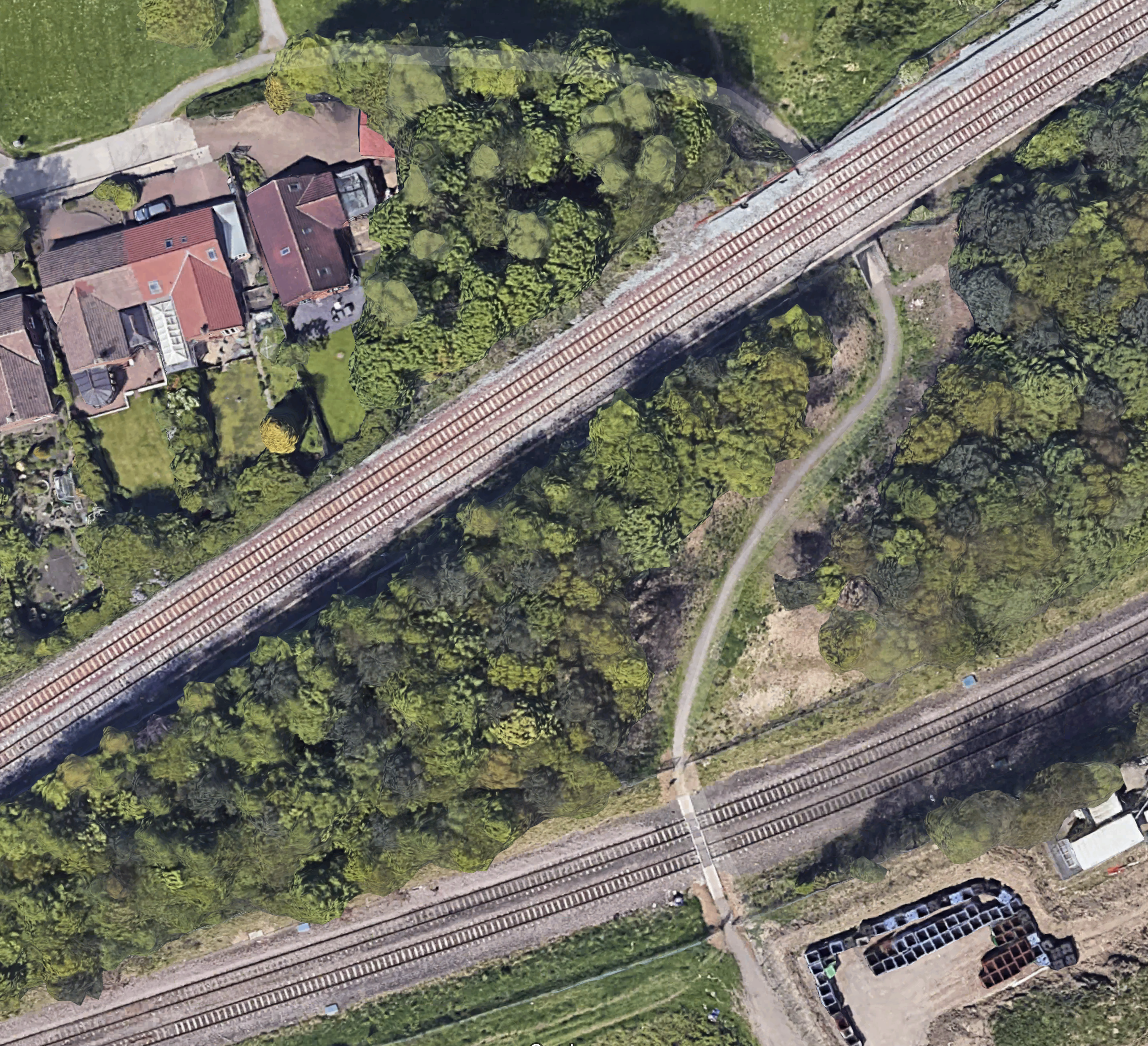
Note.
- The Northern pair of tracks are the Tyne and Wear Metro.
- The Southern pair of Tracks are the Northumberland Line.
- Palmersville and Northumberland Park stations are to the East.
- The current foot crossing is shown over the Northumberland Line.
It would appear that there is plenty of space for a footbridge.
Two Trains Per Hour
The Modern Railways article says this about infrastructure improvements to enable two trains per hour.
An extension of the double-track south from Newsham, for about 1 km in the direction of Seaton Delaval, along with a new 2.4 km passing loop between Holywell and Seghill, are in place in order to permit a half-hourly service in both directions.
From the maps, it looks like about half the route between Northumberland Park station and Seghill will be double-track.
It may even be possible to extend the double-track further South towards Northumberland Park station, if there became a need to run more trains on the Northumberland Line.
Operations
The Modern Railways article says this.
It is assumed that Class 158 DMUs will be the rolling stock for the first couple of years of service to Ashington, with three or four units required. Conversion of these trains (or replacement with new) to allow battery-electric operation is envisaged for the later years of this decade. There will be provision for two-car services at the outset with passive provision for extension to four-cars in the infrastructure works.
In Trains: £34m For Revival Of 50-Year-Old North-East Railway Line, I felt that the Hitachi Regional Battery Trains would be ideal for this route.
I said this.
I’m drawn inextricably to the conclusion, that the trains should be 100 mph battery-electric trains.
Hitachi, who have a factory in the North-East, have announced their Regional Battery Train in July 2020, which is described in this Hitachi infographic.

These trains can be based on Class 385 trains.
-
- They are 100 mph trains.
- They come in three- and four-cars lengths.
- The three-car trains have 206 seats.
- They can work in pairs.
- They can use 25 KVAC overhead electrification.
- They have a range of 90 kilometres or 56 miles on battery power.
- The batteries would be charged on the ECML between Benton North junction and Newcastle station.
- The battery packs will be designed and manufactured by Hyperdrive Innovation in Sunderland.
- They have big windows for the views.
I’m sure Hitachi, Hyperdrive and Britishvolt would like a fleet in service, just up the road from their factories.
Now that the extension to between Ashington and Berwick-upon-Tweed via Morpeth is being talked about, I suspect that battery-electric trains, will be ideal for this route.
Distances without electrification of the two routes are as follows.
- Benton North Junction and Ashington – 19 miles – 38 miles round trip
- Benton North Junction and Widdrington – 27 miles
These distances are well within the planned range of the Hitachi Regional Battery Trains and they would even be capable of working a round trip to Ashington without charging at the Northern end of the route.
Batteries can be charged on the East Coast Main Line on the following sections of the route.
- Between Benton North Junction and Newcastle.
- Between Morpeth and Berwick-upon-Tweed stations.
Their fast acceleration and 100 mph operating speed mean that it could keep out of the way of the 140 mph Hitachi trains North of Morpeth.
Calling At Manors Station
The Modern Railways article says that because the East Coast Main Line is so busy, some peak services may have to omit the call at Manors station in the suburbs of Newcastle that is envisaged for the off-peak services.
I wonder with their faster acceleration, if the Hitachi Regional Battery Trains would be able to handle the stop at Manors station for all services.
Development At Ashington
The Modern Railways article gives this quote from Network Rail’s manager for the reopening project.
For instance in the centre of Ashington there’s a rather grim 1960s tower block that is owned by the county council that could be replaced by something more appropriate to today’s needs. This is Wansbeck Square in the centre of the town; the square is in line to be remodelled to make it more attractive. The integrated station and development need to be delivered at the same time for maximum impact.
This Google Map shows the Northerland Line going through the centre of the town of Ashington.
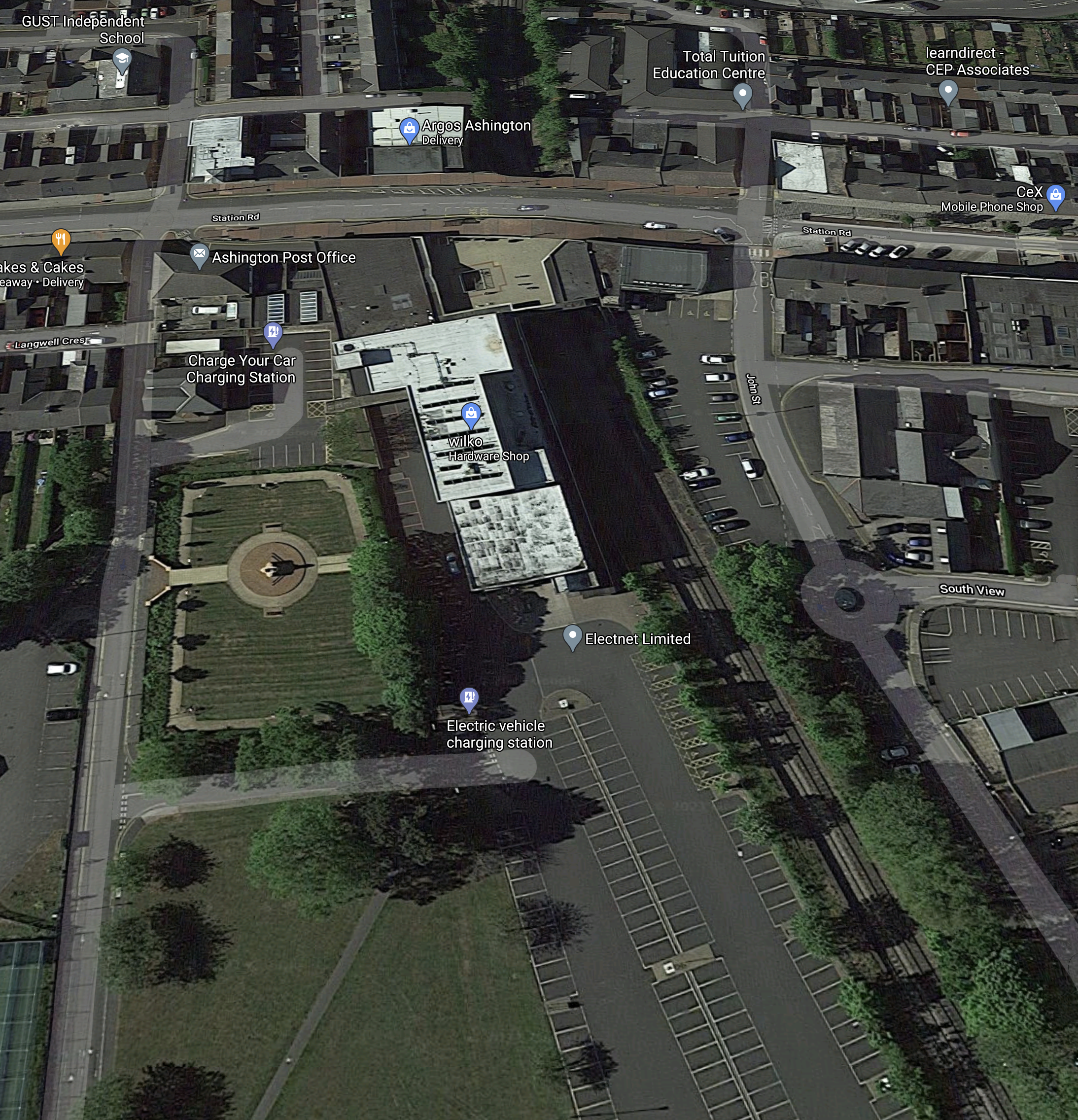
Note.
- Station Road running East-West .across the top of the map.
- The 1960s block could be to the West of the railway, especially as the Southern part is labelled Northumberland County Council.
- The site to the West of the railway does appear to be quite large.
The new station and the Wansbeck Square site does look look to have strong development potential.
€190m Order To Bring Hydrogen Trains To Regions In France
The title of this post, is the same as that of this article on H2 View.
This is the introductory paragraph.
What is believed to be the first order of dual mode electric-hydrogen trains has been made today (8th April) for the Auvergne-Rhône-Alpes, Bourgogne-Franche-Comté, Grand Est and Occitanie regions of France.
I very much hope that Alstom’s Class 600 trains for the UK are dual mode, as that surely is the best design option.
Khan Pledges To Name London Overground Lines If Re-Elected
The title of this post is the same as that of this article on News Shopper.
If this is Khan’s big policy for people who use the Overground, then it is very small thinking.
It is also another pointless waste of money.
The Overground needs expansion not a rebranding exercise.
It is successful and every user has their own names for the various lines.
I shall be voting for someone who has an expansive vision for London.
Mayor Sadiq Khan Plans to Ban London Underground Gambling Ads
The title of this post is the same as that of this article on Gambling News.
It’s probably the right thing to do, but as fast food ads have been banned and others are probably to be banned as well, where does the Mayor think he is going to get the money to run Transport for London from?
As he is going to have an enquiry into the legalisation of cannabis, which I am against, as it ruins your immune system, I shall be voting for someone else.
Thoughts On The Class 360 Trains On The London St. Pancras And Corby Route
In May the Class 360 electric trains will be introduced by East Midlands Railway on the service between St. Pancras and Corby stations.
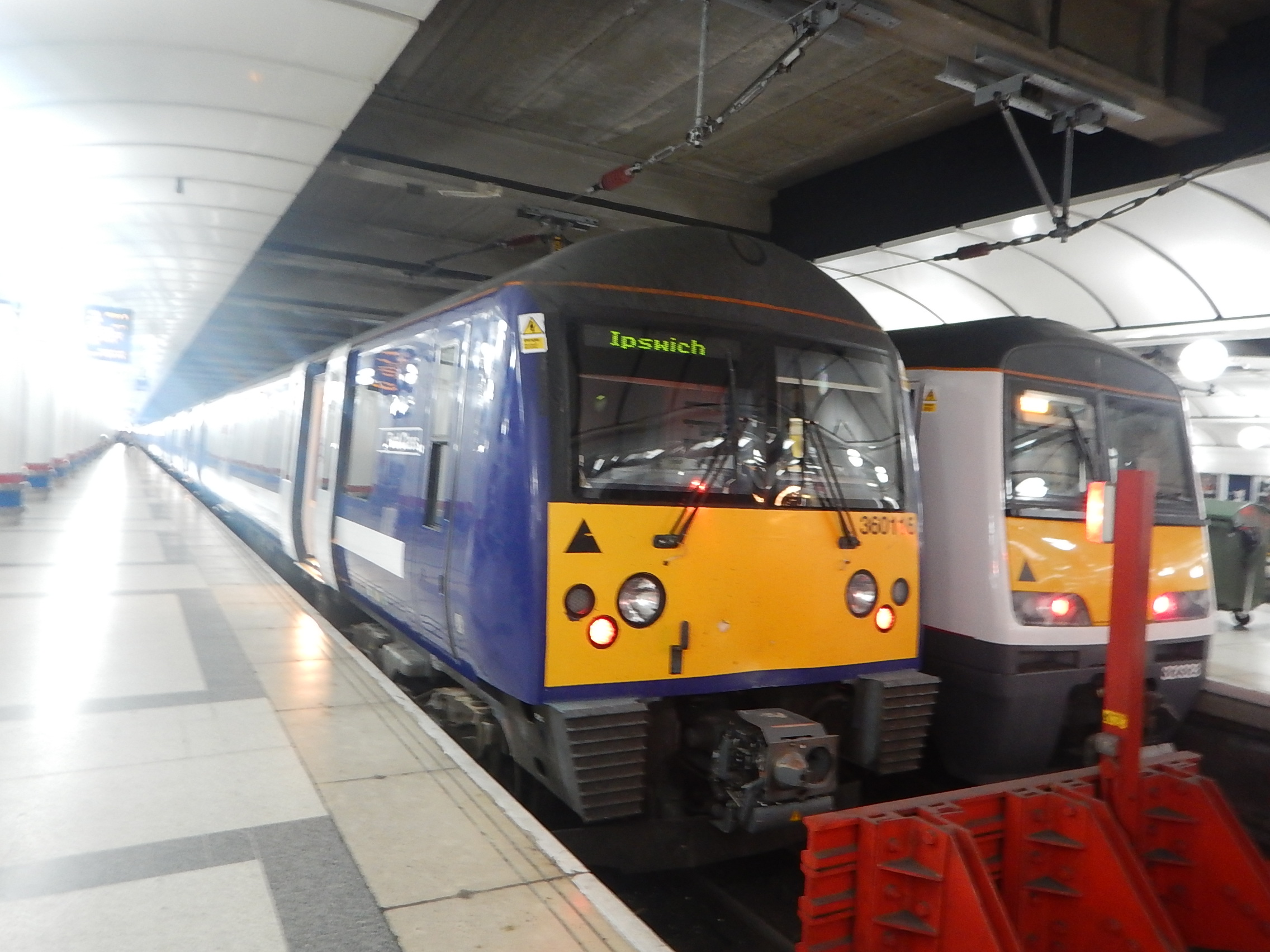
The Class 360 train is on the left.
The following data has come from Real Time Trains.
- St. Pancras and Corby are 79.3 miles apart.
- The current service stops at Kettering, Wellingborough, Bedford and Luton.
- The new electric service stops at Kettering, Wellingborough, Bedford and Luton and Luton Airport Parkway.
- Current services take between 67 and 73 minutes
- The new electric services take between 71 minutes
- Services leave St. Pancras at XX:15 and XX:45
- Services leave Corby at XX:11 and XX:40
- Turnround at St. Pancras appears to be about 23-25 minutes
- Turnround at Corby appears to be about 12-16 minutes.
- St. Albans and St. Pancras takes 14 minutes.
Note.
- The Class 222 train has a top speed of 125 mph and a maximum acceleration: of 0.80 ms-2
- The Class 360 train has a top speed of 110 mph and a maximum acceleration: of 0.98 ms-2
Looks like a case of swings and roundabouts to me!
I can deduce the following.
Average Speed
Consider.
- Assuming a trip time of seventy minutes for the Class 222 train, gives an average speed of 68 mph including stops.
- Assuming a trip time of seventy-one minutes for the Class 360 train, gives an average speed of 62 mph including stops.
These speeds don’t seem to be too difficult to achieve. Especially, as the Midland Main Line is a series of straight line between a number of stations., which are ideal for a quick dash in between.
It’s A Three Hour Round Trip
Add up the two 71 minute trips and the turnaround times and it looks to be a comfortable three hour round trip.
So for a two trains per hour (tph) service, you will need six formations of Class 360 trains.
As it looks like each formation will be twelve cars long, that will mean that eighteen of the current twenty-one trains will be needed.
The three spare trains will be very useful, whilst the trains are refurbished with new liveries and interiors.
Route Capacity
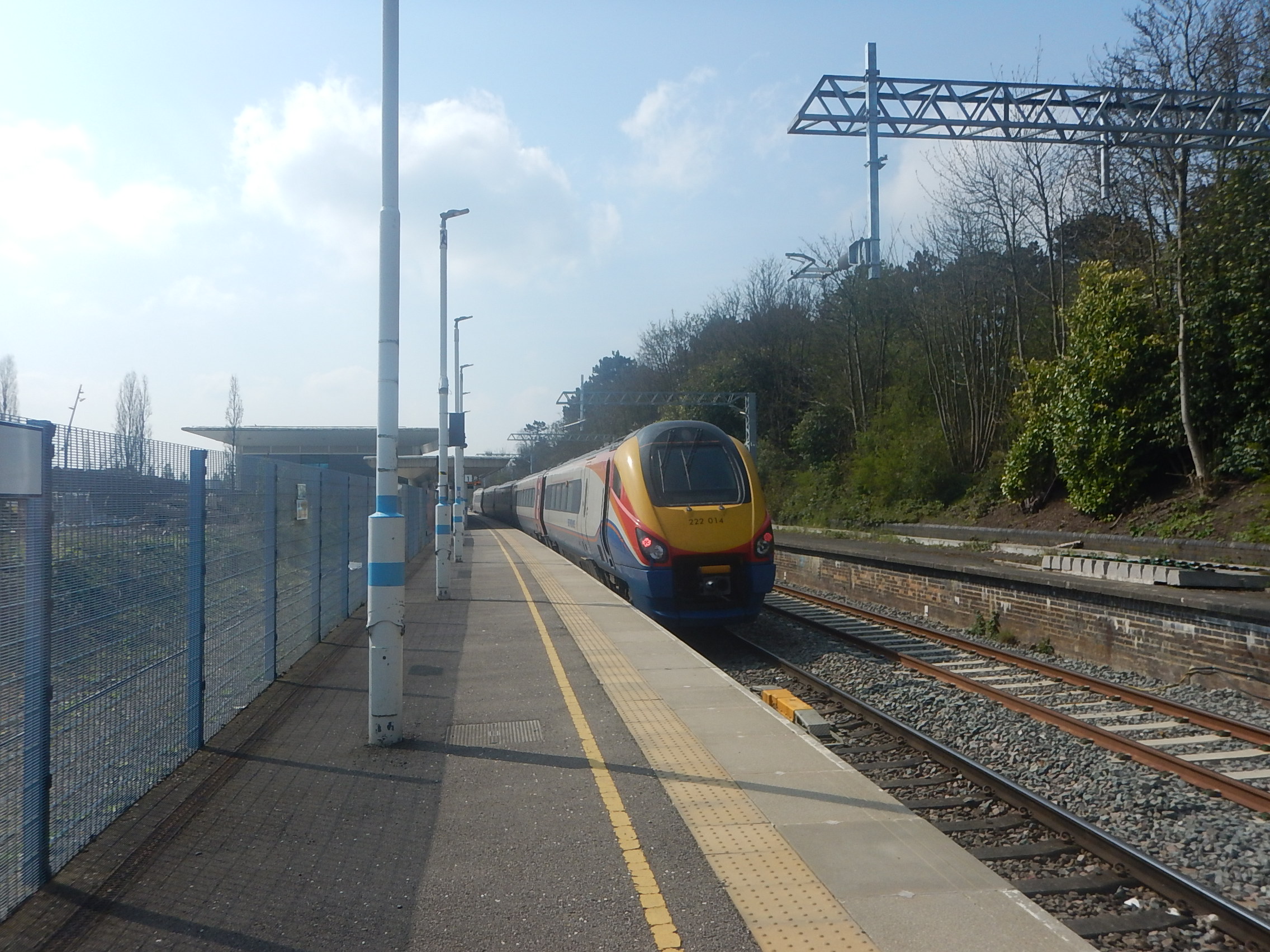
This picture shows a five-car Class 222 train at Corby station.
Consider.
- The current five-car Class 222 trains have a capacity of 50 First Class and 192 Standard Class seats
- Four-car Class 222 trains have a capacity of 33 First Class and 132 Standard Class seats.
- A four-car Class 360 train has a capacity of 16 First Class and 264 Standard Class seats.
I can do a simple calculation.
- The current one tph service, if run by a five-car Class 222 trains would have an hourly capacity of 50 First Class and 192 Standard Class seats.
- The planned two tph service if run by twelve-car 360 trains has an hourly capacity of 96 First Class and 1584 Standard Class seats.
First Class capacity on the route has doubled and Standard Class accommodation has gone up by a massive 8.25 times.
The latter figure will probably be reduced as some of the seats are to be removed for a more spacious interior with tables.
Serving Luton Airport
It looks like these trains will enable a quick journey to Luton Airport.
- The St. Pancras and Corby train will take 22 minutes between St. Pancras and Luton Airport Parkway stations.
- There will be the Luton DART connecting Luton Airport Parkway to the Airport from 2022.
- I suspect Luton Airport will be aiming for a thirty minute journey between St. Pancras and the Airport.
- The fast service will have a frequency of two tph.
It will not compare badly with rail times from London to Gatwick of 35 minutes and to Stansted of 50 minutes.
Services To Oakham And Melton Mowbray
Consider.
- Oakham and Melton Mowbray stations are on the route between Corby station and the Midland Main Line North of Leicester.
- Oakham and Melton Mowbray stations have a one train per day (tpd) in both directions to London via Corby.
- In Beeching Reversal – Increased Services To Nottingham And Leicester, via Syston And Loughborough From Melton Mowbray. I wrote about how the local MP wants better services at Melton Mowbray.
- Oakham is 11.5 miles from Corby.
- Melton Mowbray is 25.8 miles from Corby.
- Leicester is just over forty miles from Corby and could be covered in under an hour.
- A pair of Class 810 trains are the same length as a trio of Class 360 trains, so both trains would fit all platforms.
I think that there are a lot of possibilities for services through Corby.
- Class 810 trains could use Corby as a diversion, when the Midland Main Line is closed for engineering works.
- Class 810 trains could run a service between St. Pancras and Leicester via Corby, Oakham and Melton Mowbray.
- If the Class 360 trains could be fitted with batteries, they should be able to provide a service from St. Pancras to Melton Mowbray and perhaps Leicester.
It could even provide an alternative route to London, if Leicester station has to be substantially rebuilt for electrification..
Conclusion
This not the longest of electric services, but I can see it carrying a lot of passengers.
It will also give a boost to Luton Airport.
Thoughts On Faster Trains On Thameslink
The Class 700 trains used by Thameslink only have an operating speed of 100 mph.
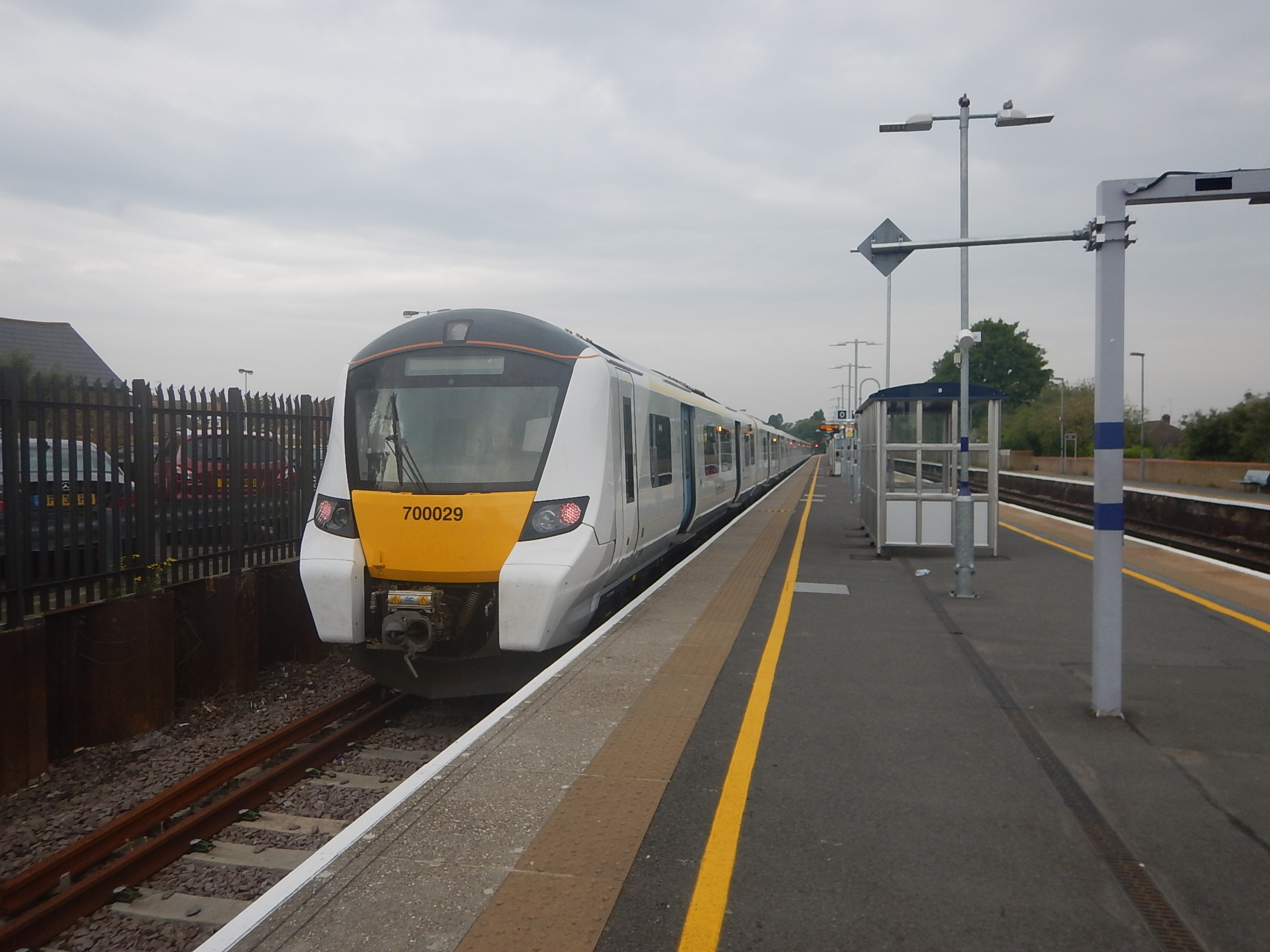
I do wonder, if that is a fast enough operating speed for all Thameslink routes.
Sharing The Midland Main Line With 125 mph Trains
A couple of years ago, I travelled back into St. Pancras with a group of East Midlands drivers in a Class 222 train.
They told me several things about the route including that the bridge at the South of Leicester station would be difficult to electrify, as it was low and the track couldn’t be lowered as one of Leicester’s main sewers was under the tracks at the bridge. Perhaps, this is one place, where discontinuous electrification could be used on the Midland Main Line.
They also told me, that sometimes the Thameslink trains were a nuisance, as because of their 100 mph operating speed, the 125 mph Class 222 trains had to slow to 100 mph.
Upgrading Of The Midland Main Line South Of Bedford
The electrification of the Midland Main Line South of Bedford is being updated, so that it is suitable for 125 mph running.
An Analysis Of Services On The Midland Main Line South Of Bedford
The current Class 222 trains are capable of 125 mph and will be replaced by Class 810 trains capable of the same speed on both diesel and electricity.
Currently, a Class 222 train is capable of doing the following on a typical non-stop run between St. Pancras and Leicester.
- Covering the 30 miles between St. Albans and Bedford in 17 minutes at an average speed of 106 mph.
- Covering the 50.3 miles between Bedford and Leicester in 30 minutes at an average speed of 100.6 mph.
- Maintaining 125 mph for long stretches of the route, once the trains is North of London commuter traffic at St. Albans
I can estimate the timings on the 79.2 miles between Leicester and St. Albans, by assuming the train runs at a constant speed.
- 100 mph – 47.5 minutes
- 110 mph – 43.2 minutes
- 125 mph – 38 minutes
- 140 mph – 34 minutes
Note.
- I have done the calculation for 140 mph, as that is the maximum operating speed of the Class 810 train with full in-cab digital signalling.
- Trains have been running at 125 mph for a couple of decades on the Midland Main Line.
- To get a St. Pancras and Leicester time add another 14 minutes, which is the current time between St. Pancras and St. Albans of a Class 222 train.
- Some Off Peak trains are timed at 62-63 minutes between St. Pancras and Leicester.
- A time of under an hour between St. Pancras and Leicester might be possible and the Marketing Department would like it.
- As Thameslink trains between Bedford and St. Albans stop regularly, they are on the slow lines of the four-track railway, to the North of St. Albans.
- South of St. Albans, Thameslink trains often run on the fast lines.
I can expect that East Midlands Railway will want to be running their new Class 810 trains as far as far South as they can at 125 mph, to speed up their services. When the signalling allows it, they’ll want to run at 140 mph.
So they won’t want to see Thameslink’s slow trains on the fast lines.
- But if you look at the Thameslink trains that do run on the fast lines between St. Albans and St. Pancras, they appear to be the four trains per hour (tph) that run to and from Bedford.
- Of these trains, two tph terminate at Brighton and two tph terminate at Gatwick Airport.
- The average speed of a Class 222 train between St. Albans and St. Pancras assuming 14 minutes for the 19.7 miles is 84.4 mph.
So it looks to me that a 100 mph Thameslink train could be able to get away without slowing the East Midland Railway expresses.
But then that is not surprising, as for many years, the Class 222 trains worked happily with 100 mph Class 319 trains.
Is There Scope For Extra And Faster Services Into St. Pancras?
I have only done a simple calculation, but I do wonder if there is scope for the following.
- Increasing the frequency of trains for both Thameslink and East Midlands Railway.
- Saving a few minutes on East Midlands Railway services.
Consider.
- The new Class 810 electric trains will probably have better acceleration and deceleration than the current Class 222 diesel trains, when working using electric power.
- East Midlands Railway is introducing Class 360 trains that were built as 100 mph trains by Siemens, who are now upgrading them to 110 mph trains.
- Can Siemens do the same for the Class 700 trains and create a sub-fleet capable of 110 mph running?
- All trains will be running under full in-cab digital signalling with a large degree of automatic train control.
I feel that if the Class 700 trains had the extra speed, they would make the planning of services South of St. Albans easier and allow the Class 810 trains to both run faster and provide more services.
Sharing The East Coast Main Line With 125 mph Trains
The following Thameslink services run up the East Coast Main Line past Stevenage.
- Cambridge And Brighton – Two tph – Stops at Royston, Ashwell and Morden (1 tph), Baldock, Letchworth Garden City, Hitchin, Stevenage, Finsbury Park, London St Pancras International, Farringdon, City Thameslink, London Blackfriars, London Bridge, East Croydon, Gatwick Airport, Three Bridges, Balcombe, Haywards Heath and Burgess Hill
- Cambridge and Kings Cross – Two tph – Stops at Foxton, Shepreth, Meldreth, Royston, Ashwell and Morden, Baldock, Letchworth Garden City, Hitchin, Stevenage, Knebworth, Welwyn North, Welwyn Garden City, Hatfield, Potters Bar and Finsbury Park
- Peterborough and Horsham – Two tph – Stops at Huntingdon, St Neots, Sandy, Biggleswade, Arlesey, Hitchin, Stevenage, Finsbury Park, London St Pancras International, Farringdon, City Thameslink, London Blackfriars, London Bridge, East Croydon, Coulsdon South, Merstham, Redhill, Horley, Gatwick Airport, Three Bridges, Crawley, Ifield, Faygate (limited) and Littlehaven
Note.
- Services are generally run by Class 700 trains, although lately the Kings Cross service seems to use Class 387 trains, which have a maximum speed of 110 mph and a more comfortable interior with tables.
- It is intended that the Cambridge and Kings Cross service will be extended to Maidstone East by 2021.
In addition there are two Cambridge Express and Fen Line services.
- Kings Cross and Ely – One tph – Stops at Cambridge and Cambridge North.
- Kings Cross and King’s Lynn – One tph – Stops at Cambridge, Cambridge North, Waterbeach, Ely, Littleport, Downham Market and Watlington
Note.
- These services are generally run by Class 387 trains.
- Cambridge and King’s Cross is timetabled at around fifty minutes.
Adding all of this together means that slower services on the East Coast Main Line are comprised of the following in both directions.
- Three tph – 110 mph – Class 387 trains
- Four tph – 100 mph – Class 700 trains
These seven trains will have to be fitted in with the 125 mph trains running services on the East Coast Main Line, for LNER, Grand Central, Hull Trains and East Coast Trains.
There are also the following problems.
- All trains must navigate the double-track section of the East Coast Main Line over the Digswell Viaduct and through Welwyn North station.
- The King’s Cross and Cambridge service stops in Welwyn North station.
- Full in-cab digital signalling is being installed on the East Coast Main Line, which could increase the speed of the expresses through the double-track section.
Could the introduction of the Class 387 trains on the Cambridge and King’s Cross service have been made, as it easier to fit in all the services if this one is run by a 110 mph train?
However, the full in-cab digital signalling with a degree of automatic train control could be the solution to this bottleneck on the East Coast Main Line.
- Trains could be controlled automatically and with great precision between perhaps Hatfield and Stevenage.
- Some expresses might be slowed to create gaps for the Cambridge and Peterborough services.
- The Hertford Loop Line is also getting full in-cab digital signalling, so will some services be sent that way?
In Call For ETCS On King’s Lynn Route, I talked about a proposal to improve services on the Fen Line. This was my first three paragraphs.
The title of this post, is the same as that on an article in Edition 849 of Rail Magazine.
The article is based on this document on the Fen Line Users Aoociation web site, which is entitled Joint Response To Draft East Coast Main Line Route Study.
In addition to ETCS, which could improve capacity on the East Coast Main Line, they would also like to see journey time reductions using trains capable of running at 125 mph or faster on the King’s Lynn to Kings Cross route.
My scheduling experience tells me that a better solution will be found, if all resources are similar.
Hence the proposal to run 125 mph trains between King’s Cross and King’s Lynn and probably Ely as well, could be a very good and logical idea.
If the Class 700 trains were increased in speed to 110 mph, the trains through the double-track section of the East Coast Main Line would be.
- One tph – 110 mph – Class 387 trains
- Four tph – 110 mph – Class 700 trains
- Two tph – 125 mph – New trains
Note.
- This would probably be an easier mix of trains to digest with the high speed services, through the double-track section.
- I like the idea of extending the Ely service to Norwich to give Thetford, Attleborough and Wymondham an improved service to London, Cambridge and Norwich.
The new trains would probably be a version of Hitachi’s Regional Battery Train.
- It would need to be capable of 125 mph on the East Coast Main Line.
- If the Ely service were to be extended to Norwich, this section would be on battery power.
There are certainly a lot of possibilities.
But as with on the Midland Main Line, it looks like for efficient operation, the operating speed of the Class 700 trains on the route needs to be increased to at least 110 mph.
Could Faster Class 700 trains Improve Services To Brighton?
These are the Thameslink services that serve Bedford, Cambridge and Peterborough, that I believe could be run more efficiently with trains capable of at running at speeds of at least 110 mph.
- Bedford and Brighton – Two tph
- Bedford and Gatwick Airport – Two tph
- Cambridge and Brighton – Two tph
- Cambridge and Maidstone East – Two tph
- Peterborough and Horsham – Two tph
Note.
- I have assumed that the Cambridge and King’s Cross service has been extended to Maidstone East as planned.
- Eight tph serve Gatwick Airport.
- Four tph serve Brighton.
The Gatwick Express services have a frequency of two tph between London Victoria and Brighton calling at Gatwick Airport is already run by 110 mph Class 387 trains.
It would appear that if the Bedford, Cambridge and Peterborough were run by uprated 110 mph Class 700 trains, then this would mean that more 110 mph trains would be running to Gatwick and Brighton and this must surely improve the service to the South Coast.
But it’s not quite as simple as that, as the Cambridge and Maidstone East services will be run by eight-car trains and all the other services by twelve-car trains.
Conclusion
There would appear to be advantages in uprating some or possibly all of the Class 700 trains, so that they can run at 110 mph, as it will increase capacity on the Brighton Main Line, East Coast Main Line and Midland Main Line.
 The Anonymous Widower