Is Sizewell The Ideal Site For A Fleet Of Small Modular Nuclear Reactors?
As someone who spent forty years in project management, the Small Modular Nuclear Reactor or SMR could be a project manager’s dream.
Suppose you were putting a fleet of SMRs alongside Sizewell B.
This Google Map shows the current Sizewell site.
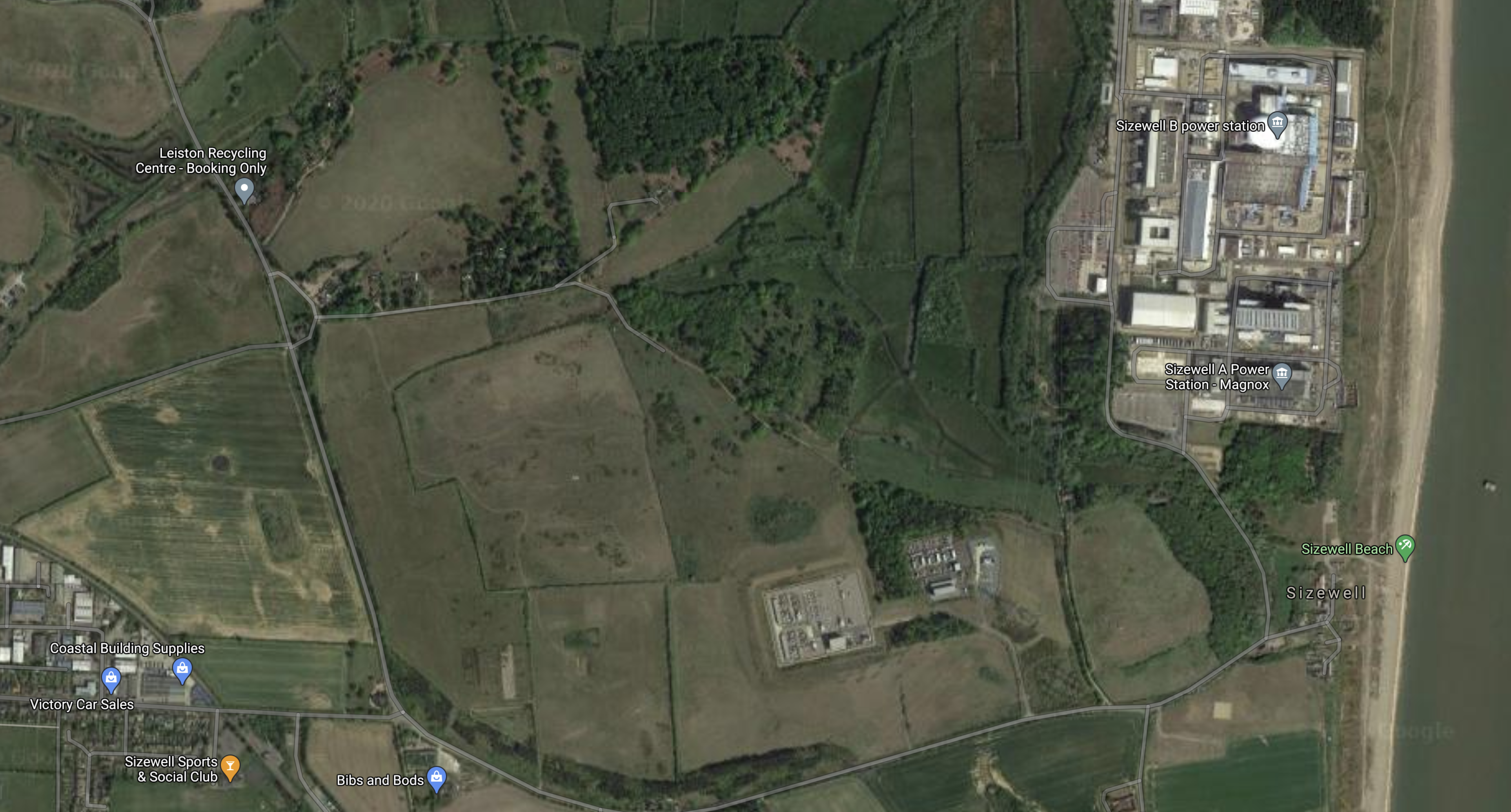
Sizewell A power station, with Sizewell B to its North, is on the coast.
This second Google Map shows the power stations to an enlarged scale.
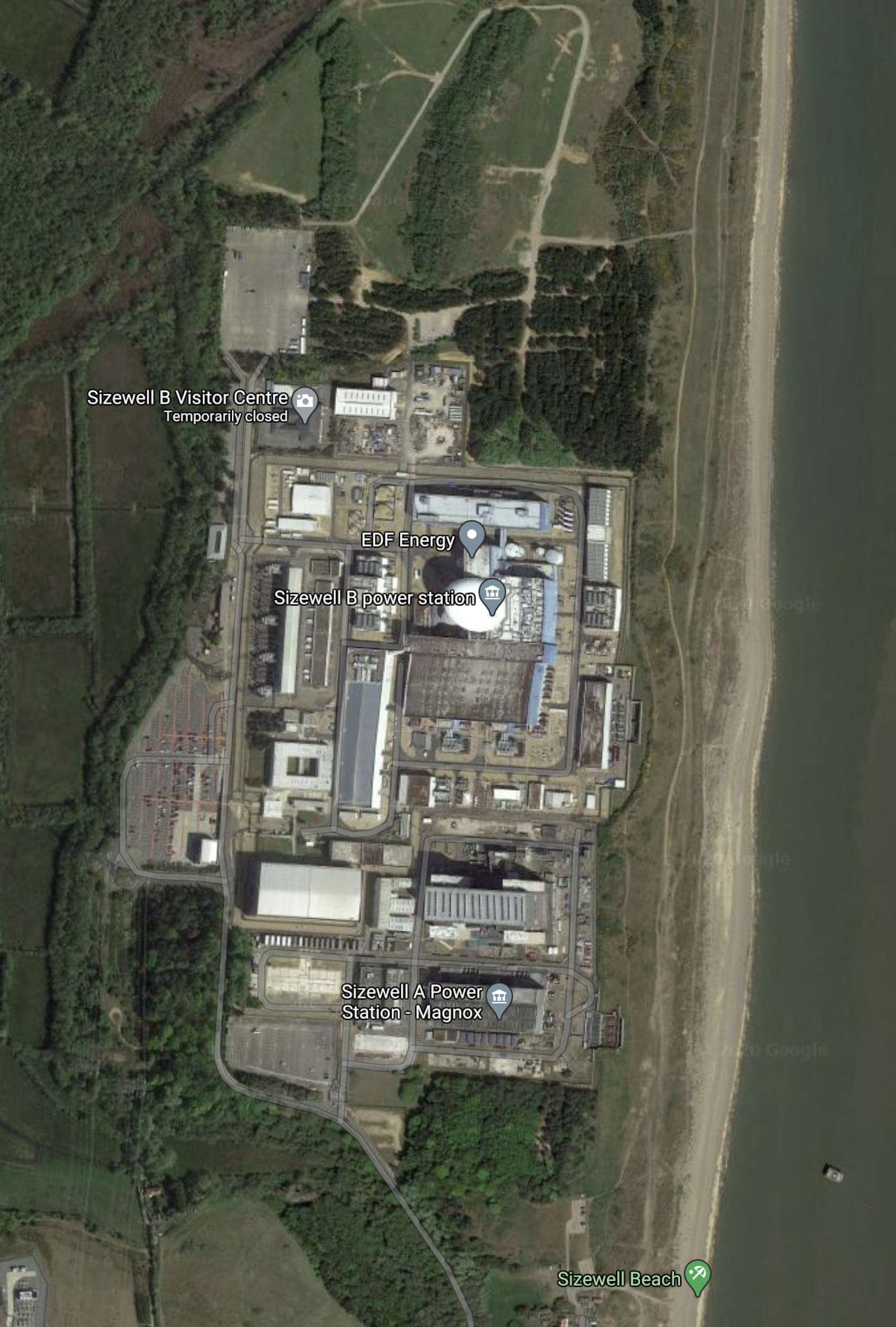
Note the white dome in the middle of Sizewell B.
Sizewell A
Sizewell A power station was shut down at the end of 2006 and is still being decommissioned, according to this extract from Wikipedia.
The power station was shut down on 31 December 2006. The Nuclear Decommissioning Authority (NDA) is responsible for placing contracts for the decommissioning of Sizewell A, at a budgeted cost of £1.2 billion. Defuelling and removal of most buildings is expected to take until 2034, followed by a care and maintenance phase from 2034 to 2092. Demolition of reactor buildings and final site clearance is planned for 2088 to 2098.
Only a few of those, reading this post, will be around to see the final end of Sizewell A.
Note that the size of the Sizewell A site is 245 acres.
It appears to me, that if any power station will be able to be built on the cleared site of Sizewell A, until the late 2080s or 2090s.
Sizewell B
Sizewell B power station opened in 1995 and was originally planned to close in 2035. The owner; EDF Energy, has applied for a twenty-year extension to 2055.
Sizewell C
Sizewell C power station is currently under discussion.
- It will be built by the French, with the help of Chinese money.
- It will have an output of 3260 MW or 3.26 GW.
- It will cost £18 billion.
- It will take twelve years to build.
This Google Map shows Sizewell B and the are to the North.
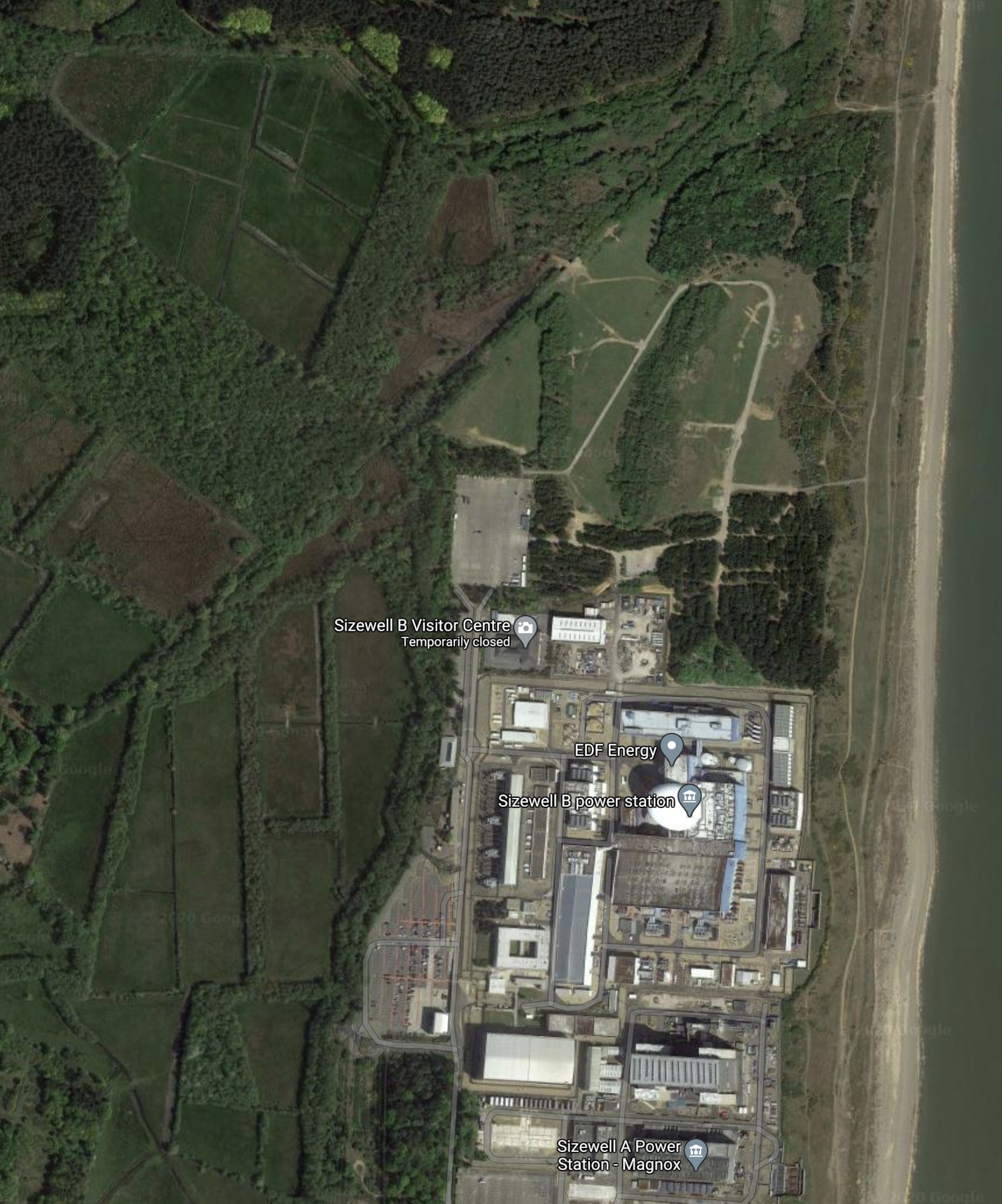
I would assume it will be built in this area.
A Fleet Of Small Modular Nuclear Reactors
These are my thoughts on building a fleet of SMRs at Sizewell instead of the proposed Sizewell C.
Land Use
In Rolls-Royce signs MoU With Exelon For Compact Nuclear Power Stations, I gave these details of the Rolls-Royce design of SMR.
- A Rolls-Royce SMR has an output of 440 MW.
- The target cost is £1.8 billion for the fifth unit built
- Each SMR will occupy 10 acres.
- Eight SMRs would need to be built to match the output of Hinckley Point C, which will occupy 430 acres.
It looks on a simple calculation, that even if the SMRs needed fifteen acres, the amount of land needed would be a lot less.
Connection To The National Grid
The transmission line to the National Grid is already in place.
This Google Map shows the sub-station, which is to the South-West of Sizewell A.
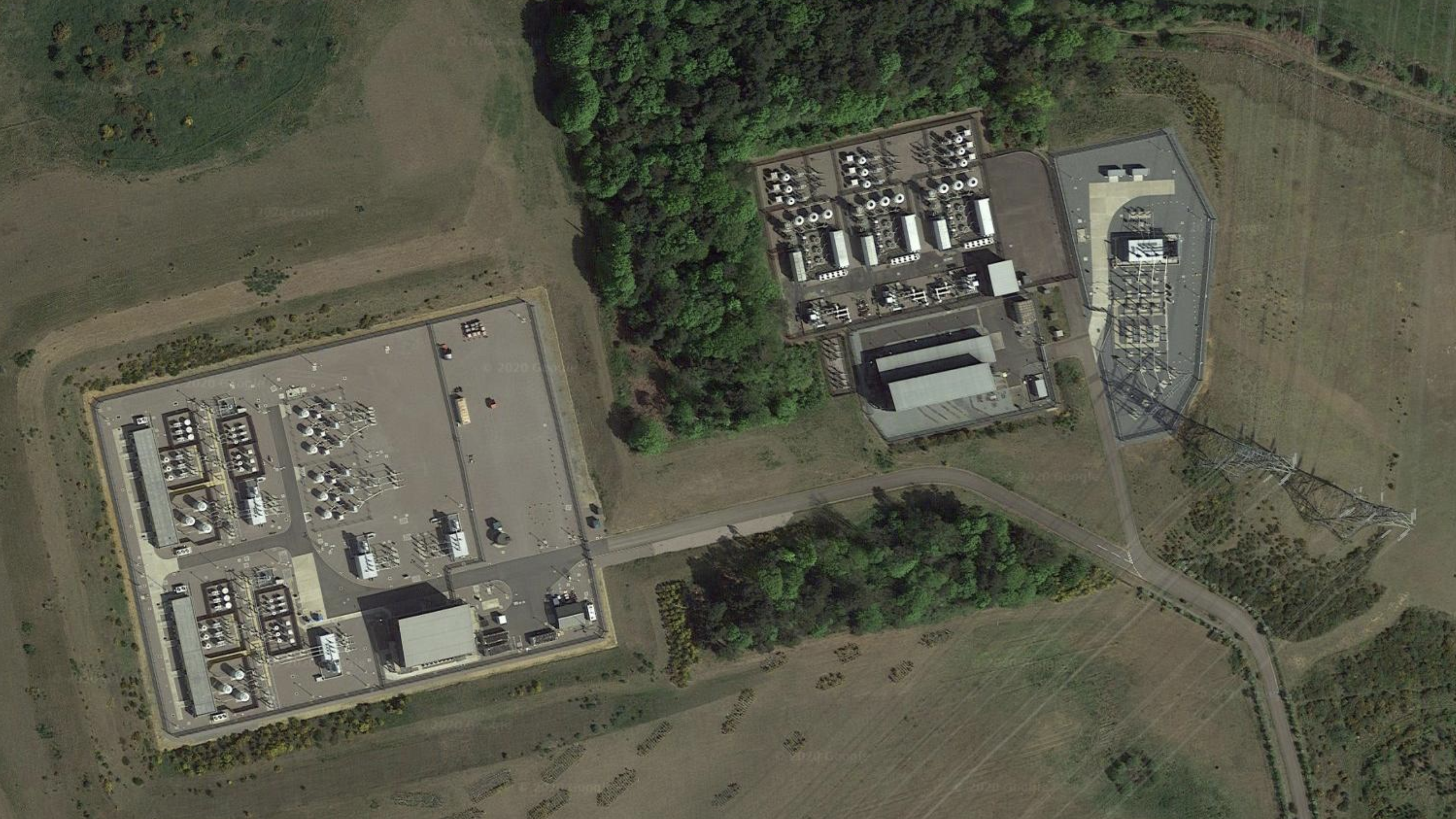
From Sizewell, there is a massive twin overhead line to Ipswich.
This Google Map shows the overhead line as it crosses Junction 53 of the A14 to the West of Ipswich.
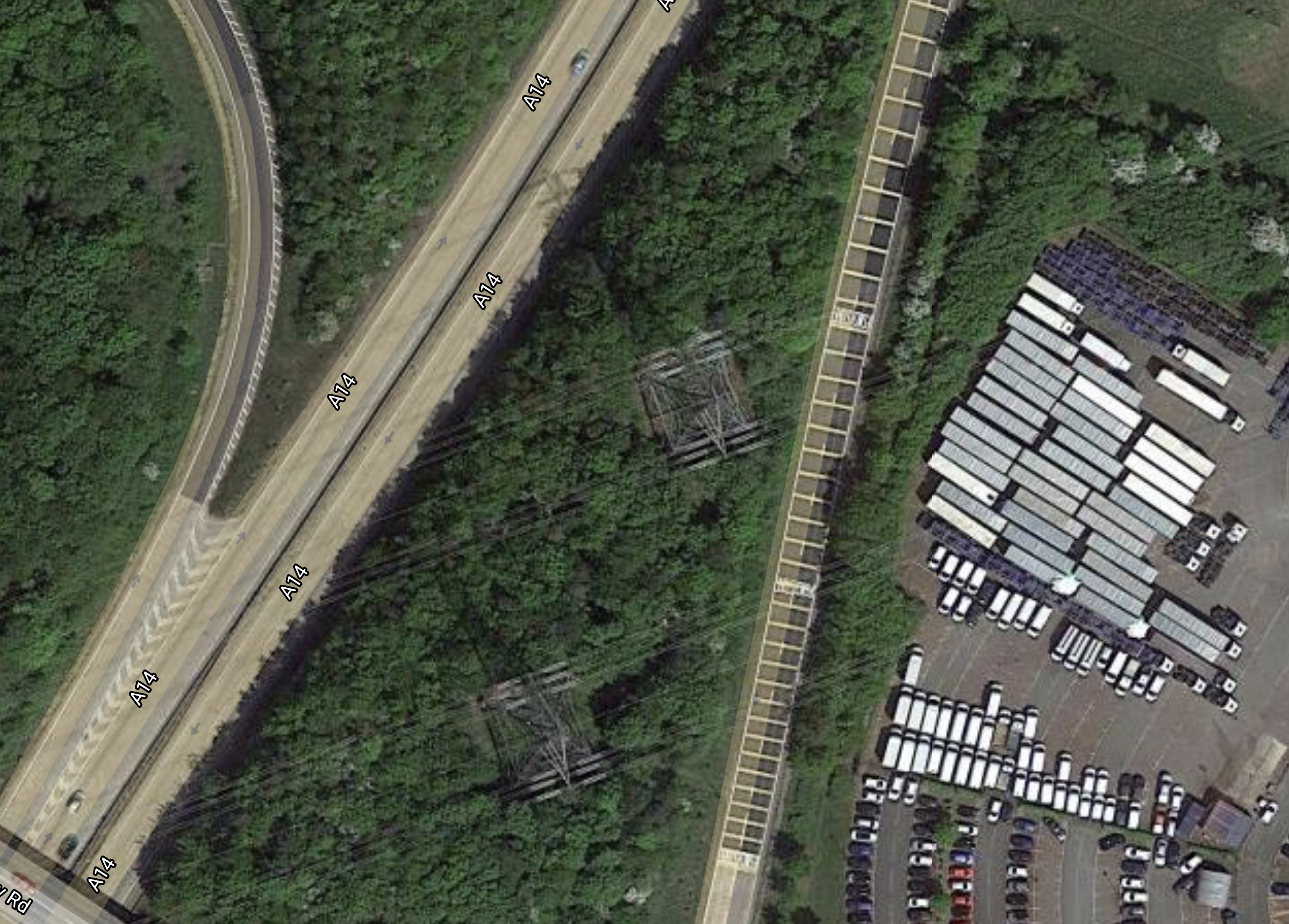
The pylons are in the centre of the map, with the wires going across.
The line has been built for a massive amount of nuclear power at Sizewell.
The Sizewell Railhead
This Google Map shows the railhead at Sizewell.
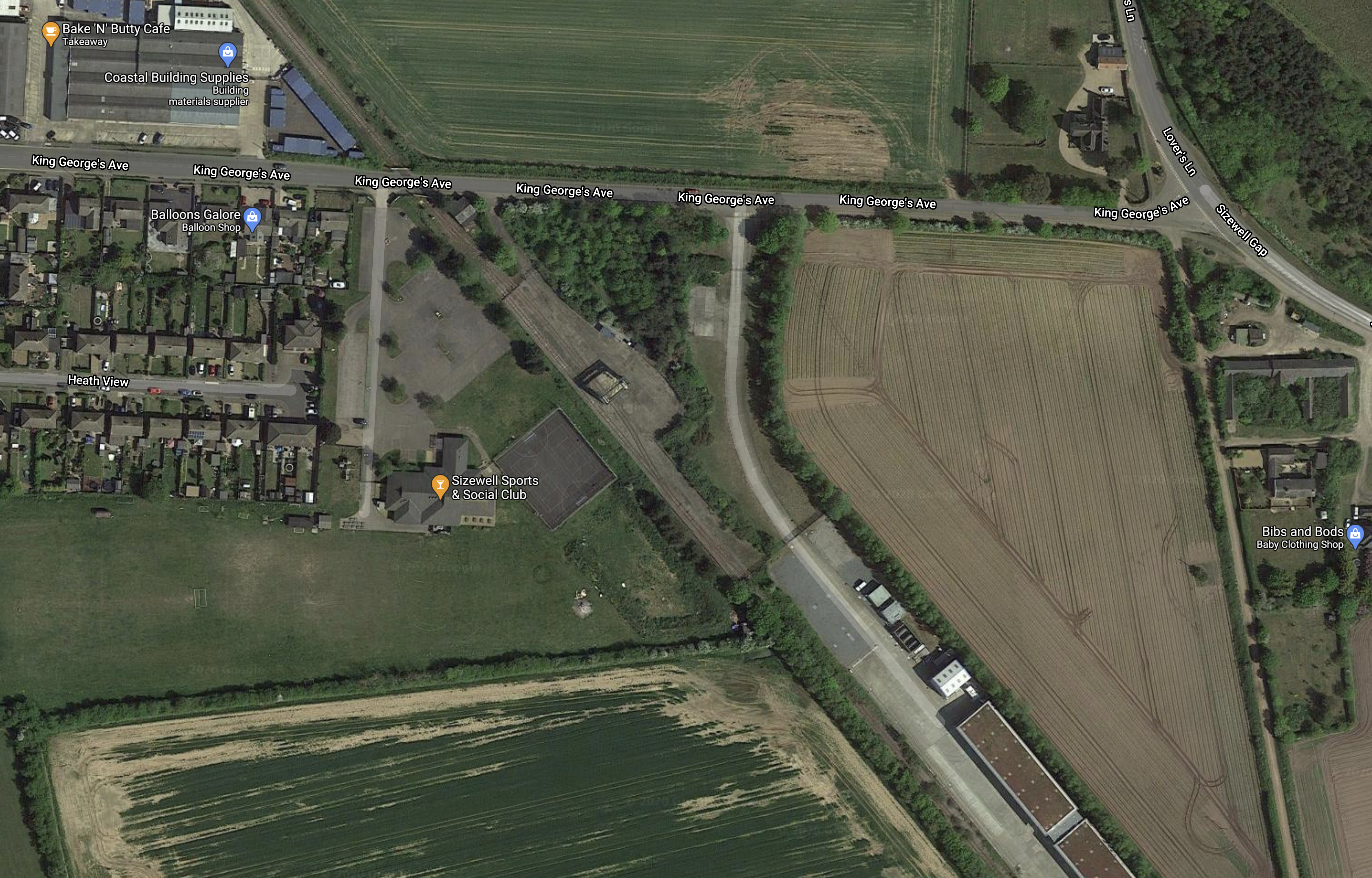
It can also be picked out in the South West corner of the first map.
- The railhead is used to take out spent fuel for processing.
- In the past, it brought in construction materials.
- Wikipedia suggests if the Sizewell C is built, the might be a new railhead closer to the site.
- If a fleet of SMRs were to be built, as the modules are transportable by truck, surely they could be move in by rail to avoid the roads in the area.
- I am an advocate of reinstating the railway from Saxmundham to Aldeburgh, as this would be a way of doubling the frequency on the Southern section of the East Suffolk Line between Saxmundham and Ipswich stations.
I hope that whatever is built at Sizewell, that the rail lines in the area is developed to ease construction, get workers to the site and improve rail services on the East Suffolk Line.
Building A Fleet Of SMRs
One of the disadvantages of a large nuclear power station, is that you can’t get any power from the system until it is complete.
This of course applies to each of the individual units, but because they are smaller and created from a series of modules built in a factory, construction of each member of the fleet should be much quicker.
- Rolls-Royce are aiming for a construction time of 500 days, from the fifth unit off the production line.
- That would mean, that from Day 501, it could be producing power and earning money to pay for its siblings.
- If the eight units were built in series, that would take eleven years to build a fleet of eight.
But as anybody, who has built anything even as humble as a garden shed knows, you build anything in a series of tasks, starting with the foundations.
I suspect that if a fleet were being built, that construction and assembly would overlap, so the total construction time could be reduced.
That’s one of the reasons, I said that building a fleet could be a project manager’s dream.
I suspect that if the project management was top-class, then a build time for a fleet of eight reactors could be nine years or less.
Resources are often a big problem in large projects.
But in a phased program, with the eight units assembled in turn over a number of years, I think things could be a lot easier.
Financing A Fleet Of SMRs
I think that this could be a big advantage of a fleet of SMRs over a large conventional large nuclear power station.
Consider
- I said earlier, that as each unit was completed, it could be producing power and earning money to pay for its siblings.
- Hinckley Point C is budgeted to cost £18 billion.
- Eight Rolls-Royce SMRs could cost only £14.4 billion.
I very much feel that, as you would get a cash-flow from Day 500 and the fleet costs less, that the fleet of smaller stations is easier to finance.
Safety
SMRs will be built to the same safety standards as all the other UK reactors.
In this section on Wikipedia this is said about the Rolls-Royce SMR.
Rolls-Royce is preparing a close-coupled three-loop PWR design, sometimes called the UK SMR.
PWRs or pressurised water reactors are the most common nuclear reactors in the world and their regulation and safety is well-understood.
This is from the History section of their Wikipedia entry.
Several hundred PWRs are used for marine propulsion in aircraft carriers, nuclear submarines and ice breakers. In the US, they were originally designed at the Oak Ridge National Laboratory for use as a nuclear submarine power plant with a fully operational submarine power plant located at the Idaho National Laboratory. Follow-on work was conducted by Westinghouse Bettis Atomic Power Laboratory.
Rolls-Royce have a long history of building PWRs, and Rolls-Royce PWRs have been installed in all the Royal Navy’s nuclear submarines except the first. The Royal Navy’s second nuclear submarine; HMS Valiant, which entered service in 1966, was the first to be powered by a Rolls-Royce PWR.
How much of the design and experience of the nuclear submarine powerplant is carried over into the design of the Rolls-Royce SMR?
I don’t know much about the safety of nuclear power plants, but I would expect that if there was a very serious accident in a small reactor, it would be less serious than a similar accident in a large one.
Also, as the reactors in a fleet would probably be independent of each other, it is unlikely that a fault in one reactor should affect its siblings.
Local Reaction
I lived in the area, when Sizewell B was built and I also went over Sizewell A, whilst it was working.
From personal experience, I believe that many in Suffolk would welcome a fleet of SMRs.
- Sizewell B brought a lot of employment to the area.
- House prices rose!
- Both Sizewell A and B have been well-run incident-free plants
Like me, some would doubt the wisdom of having a Chinese-funded Sizewell C.
Conclusion
Big nuclear has been out-performed by Rolls-Royce
Ilford Station – 18th November 2020
I took these pictures at Ilford station this morning.


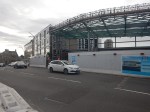


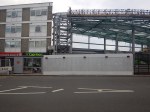
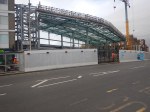


Note.
- The steelwork for the station building has now been erected.
- The new side entrance to the station is operational, but not fully complete.
- There were also guys working on stylish new shelters and possible retail units in the station.
Ilford station is being seriously transformed, as this visualisation of the new station building shows.
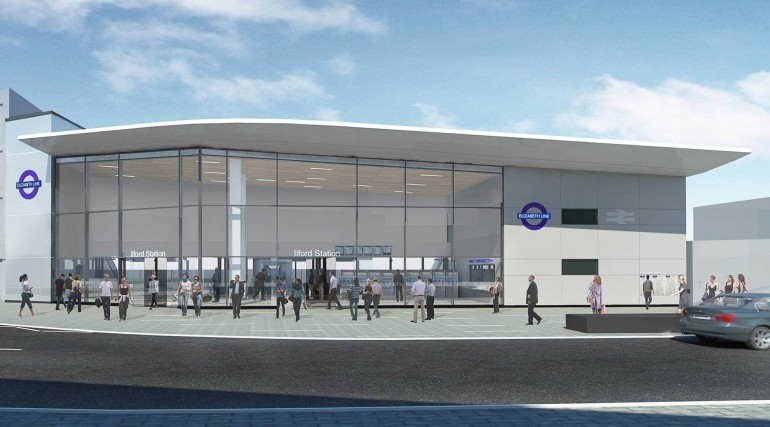
The people in the visualisation are rather badly-drawn
Essex Road Station – 16th November 2020
These pictures show Essex Road station.




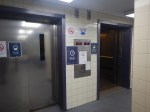



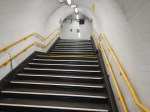

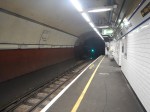
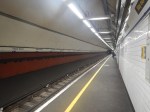
Note.
- It is a station of little architectural merit.
- It is not by any means step-free.
- The atmosphere could be better.
- In the last few weeks, I have witnessed two falls, that could have been serious with a little less luck on those dreadful stairs.
It is certainly not the best station in Islington, let alone North London.
Green Jet Fuel Plant Developers’ Ioy As World Economic Forum Backs Method As Best Aviation Solution
The title of this post, is the same as that of this article on Business Live.
This is the first paragraph.
The World Economic Forum has backed sustainable aviation fuel as the most promising decarbonation policy for aviation, delighting the developers of a £350 million refinery on the Humber.
I bet Velocys are delighted.
I also think, that, the biodiesel, that they can produce, is a short term solution to the decarbonisation of rail freight and the heaviest vehicles powered by diesel.
It’s so much better than throwing the rubbish into landfill.
Old Street Station – 16th November 2020
I took these pictures as I passed through Old Street station.
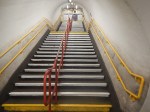

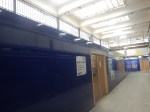
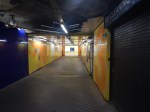


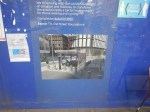

Note.
- The dreadful steps to and from the platforms.
- The last two pictures are for my information.
Will the station be made step-free in this rebuilding at the surface?
East Coast Main Line Electrification Research Agreement
The title of this post, is the same as that of this article on Railway Gazette.
These are the first two paragraphs.
An outline £10m co-investment agreement has been signed by the University of Leeds and the Rail Electrification Alliance which is undertaking the East Coast Main Line power supply upgrade programme.
The agreement provides for two years of research into the best and most efficient way of managing electrical power flow on the route, with the university’s scientists and engineers having access to data collected from lineside static frequency converters.
Sounds good to me. I have analysed countless projects and systems, in the early stages and in many cases, the budget and project time have been reduced or a better method of operation has been developed.
EMR Set To Retain Liverpool – Nottingham Service
The title of this post is the same as that of this article on Railway Gazette.
This is the introductory paragraph.
The Department for Transport has confirmed to East Midlands Railway that, for the time being at least, it is no longer planning to transfer the Liverpool Lime Street – Nottingham service to TransPennine Express from the December 2021 timetable change.
My experience of the service is limited these days, but occasionally, I do use the Liverpool and Sheffield section of the service to get across the Pennines on trips North.
In January 2020, I had a horrendous trip on an overcrowded train composed of several one-car Class 153 trains, which I wrote about in Mule Trains Between Liverpool And Norwich.
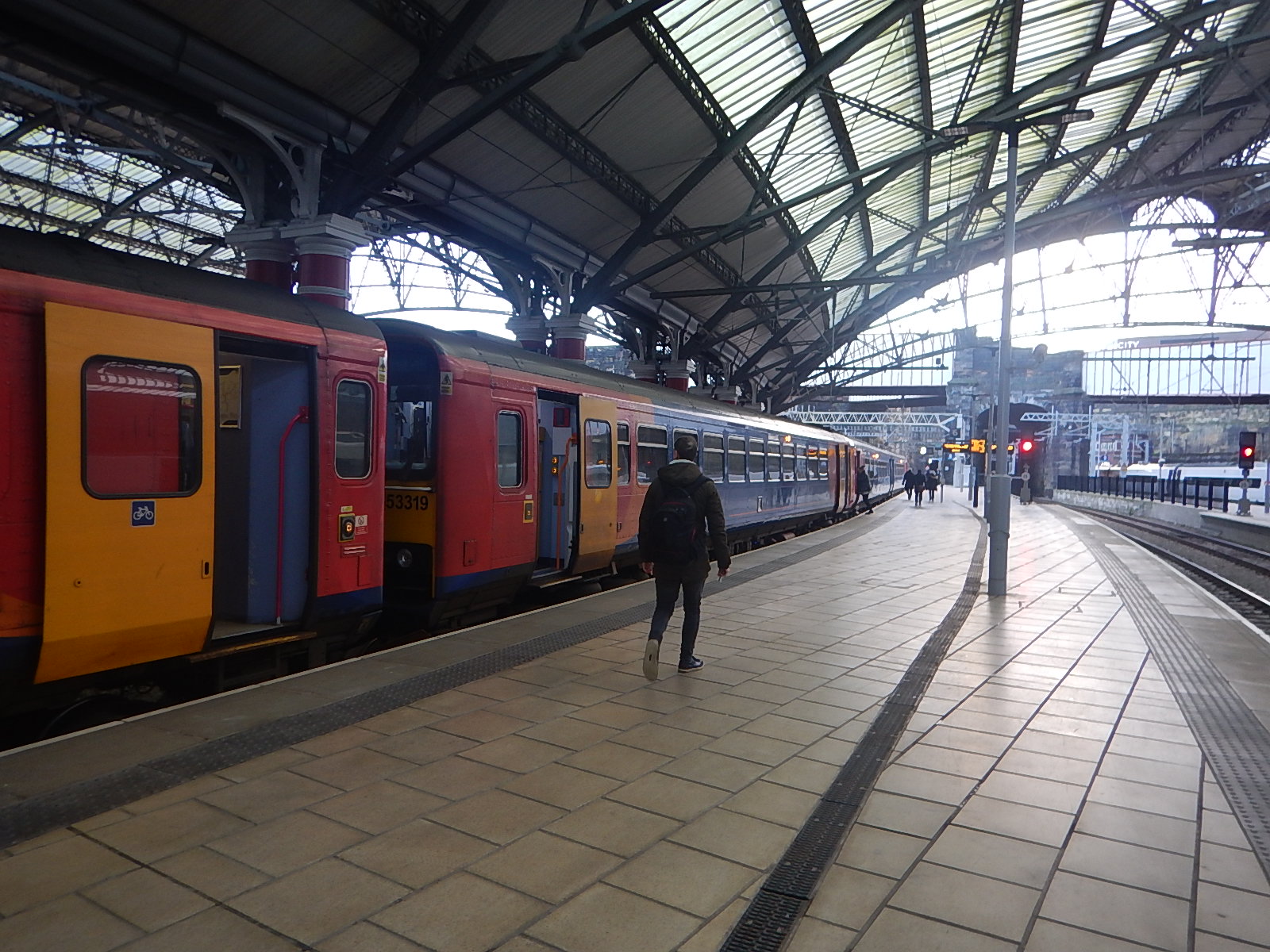
This is not the way to run a long distance service, which takes over five and a half hours.
The plan to improve the service involves splitting it into two from the December 2021 timetable change.
- Liverpool and Nottingham
- Derby and Norwich
It was thought that the Liverpool and Nottingham section would be going to TransPennine Express (TPE).
These points summarise the Railway Gazette article.
- TPE were training drivers and that has now stopped.
- EMR have told staff, they will be keeping both services.
- The service will still be split.
- EMR will not have enough trains to run the split service.
This paragraph sums up what could happen to run the service.
One option favoured by industry insiders would see EMR take on 15 Class 185 Desiro trainsets which are due to be released by TPE during 2021 as its fleet renewal programme concludes. These trains are maintained by Siemens at its conveniently located Ardwick depot in Manchester.
I see this splitting, as being a pragmatic solution to the problems of running a long service, with a very varied loading at various parts of the route.
- As one company runs both sections, the changeover can be arranged to be very passenger-friendly.
- EMR manage the possible change stations at Derby and Nottingham.
- Passengers can be given proper care in the changeover.
- Derby gets a direct connection to Peterborough, Cambridge and Norwich.
With my East Anglian hat on, I can see advantages in the split, as I regularly used to travel as far as Derby or Nottingham, when I lived in the East, but only once took the full service to Liverpool.
I have a few thoughts.
Capacity Between Liverpool And Nottingham
This section of the service is generally run by a pair of Class 158 trains, which have a capacity of around 140 each or 280 in total.
The Class 185 trains have three-cars and a capacity of 180 seats.
Currently, Liverpool and Nottingham takes just under two hours and forty minutes, which would make for a comfortable six-hour round trip. This would mean, that an hourly service between the two cities, will need a fleet of six trains.
Under Future in the Wikipedia entry for Class 185 trains, this is said.
Following the August 2020 decision not to transfer the Liverpool Lime Street to Nottingham route to TransPennine Express, East Midlands Railway could opt to take on the 15 trainsets due to be released from TPE to run this route.
Fifteen trains would be more than enough trains to run a pair on each hourly service and perhaps run some extra services.
Pairs of Class 185 trains between Liverpool and Nottingham would go a long way to solve capacity problems on this route.
Calling At Derby
The current service between Liverpool and Norwich doesn’t call at Derby, as it uses the Erewash Valley Line via Alfreton.
The proposed Eastern portion of the split service has been proposed to terminate at Derby, so passengers would change at Nottingham, if they wanted to travel to Sheffield, Manchester or Liverpool.
As East Midlands Railway, runs both services, they can optimise the service to serve and attract the most passengers.
Preparation For High Speed Two At East Midlands Hub Station
Eventually, the two halves of the Liverpool and Norwich service must surely call at the future East Midlands Hub station for High Speed Two, so future routes must fit in with the plans for High Speed Two.
But there’ll be plenty of time to get that right.
Interchange At Nottingham
I’m sure a quick and easy interchange can be performed at Nottingham.
In the simplest interchange, the two services could share a platform and passengers could just walk between the two trains on the level.
The following sequence could be used at Nottingham.
- The train from Derby to Norwich would arrive in the platform and stop at the Eastern end of the platform.
- The train from Liverpool to Nottingham would arrive in the platform and stop close behind it.
- Passengers on the train from Liverpool, who wanted to take the Norwich train, would simply walk a along the platform and board the train.
- The Norwich train would leave when ready.
- The train from Liverpool would stay where it had stopped and be prepared for the return trip to Liverpool.
- , The next train from Norwich to Derby would pull in behind the Liverpool train.
- Passengers on the train from Norwich, who wanted to take the Liverpool train, would simply walk a along the platform and board the train.
- The Liverpool train would leave when ready.
- Finally, the Norwich to Derby train would leave for Derby.
Only one platform would be needed at Nottingham station, that would need to be long enough to handle the two trains.
Between Norwich And Derby
This is the only section of the Liverpool and Norwich route with any electrification.
- Currently about thirty miles between Grantham and Peterborough are electrified.
- The lines around Ely and Norwich are also electrified.
I think that Ely and Peterborough will be electrified earlier than other lines.
- It would be part of an electrified freight route between Felixstowe and the East Coast Main Line.
- It would enable electric passenger trains between Cambridge and the North.
- It would mean the Ipswich and Peterborough services could be run by battery electric trains.
- It could be a useful electrified diversion route to London, during engineering works.
,This extra electrification, would also mean that Norwich and Derby would probably be within range of battery electric trains.
Stadler have stated that Greater Anglia’s Class 755 trains can be converted from bi-mode into battery electric trains.
So as Greater Anglia and East Midlands Railway are both Abellio companies, could we see battery electric operation on the around 150 miles between Norwich and Derby?
Conclusion
Splitting the Liverpool and Norwich service opens up a lot of possibilities to improve the service.
East West Railway Company To Start Second Phase Of Rolling Stock Procurement
The title of this post, is the same as that of this press release from East West Rail.
These are the three introductory paragraphs.
East West Railway Company (EWR Co) is to restart market engagement with potential train suppliers, as its rolling stock procurement process enters a new phase.
The move follows an initial phase of procurement activity, which EWR Co concluded earlier in the year. A new PIN Notice has been published today to restart engagement with potential suppliers, which includes a set of technical specifications taking account of feedback from the market gained during the initial procurement phase.
This procurement aims to secure a short-term, interim solution to leasing a small fleet of self-powered trains for the Western Section of East West Rail.
The press release has a link to the Prior Information Notice or PIN Notice on the EU database.
along with all the usual contact and other details, this is said about the specification.
The East West Railway Company (EWR Co.) is looking to leasing a fleet of 12 or 14 x 3 car self-powered units with modifications including European Train Control System (‘ETCS’) Level 2 and Driver Controlled Operation (‘DCO’) capability, supported by a full maintenance package (under a ‘wet’ lease). These units will ensure timely operation of EWR’s Western Section Phase 2 between Oxford, Milton Keynes, Bedford and Aylesbury. The lease duration would be 4 years, with an option to extend for 2 years.
The date of the notice is the 10th of November 2020, so it has been recently updated.
I commented on these trains in March 2020, when I wrote EWR Targets Short-Term Fleet Ahead Of Possible Electrification.
In the intervening eight months, a lot have things have happened.
Awareness Of Green Issues
The Covid-19 pandemic has arrived, with all its ferocity and seems to be moving people in the direction of thinking about green issues and zero-carbon transport.
Type “build back greener UK” into Google and you get lots of articles. Some feature Boris Johnson, like this article on Business Green, which is entitled Boris Johnson To Pledge To ‘Build Back Greener’.
I don’t think the public, myriad engineers and scientists and a good selection of politicians will find it appropriate for the East West Railway to use any rolling stock, that is not zero-carbon and powered by renewable energy.
Hitachi Have Launched The Regional Battery Train In Conjunction With Hyperdrive Innovation
In July 2020, I wrote Hyperdrive Innovation And Hitachi Rail To Develop Battery Tech For Trains.
Hitachi had been talking for some time, that they were developing battery electric trains for the UK, but this was the first news of a route to their design, manufacture and into service.
Hitachi also published this YouTube video and this infographic of the train’s specification.

They have also called the train, the Hitachi Regional Battery Train.
- It has a range of 90 kilometres or 56 miles.
- It is fitted with a pantograph for running on 25 KVAC overhead electrification.
- It can run at up to 100 mph on batteries.
- Three-car Class 385 trains can be fitted with batteries, as I wrote about in Hitachi Plans To Run ScotRail Class 385 EMUs Beyond The Wires, which was written in April 2019.
My estimate is that Oxford and Bedford are under fifty miles apart, so if Hitachi’s train could be charged at both ends of the route, one of their trains could provide a self-powered service between Oxford and Bedford.
It seems that Hitachi have an off-the-shelf train, that fits the specification for the trains required by East West Railway.
Vivarail Have Launched A Fast Charge System
Battery electric trains, like electric vehicles are not much use, if you can’t charge them when it is needed.
The initial Service Pattern of the East West Railway is given in the Wikipedia entry of the East West Railway.
- Two trains per hour (tph) – Oxford and Milton Keynes Central via Oxford Parkway, Bicester Village, Winslow and Bletchley.
- One tph – Oxford and Milton Keynes via Oxford Parkway, Bicester Village, Winslow, Bletchley, Woburn Sands and Ridgemont.
- One tph – Aylesbury and Milton Keynes Central via Aylesbury Vale Parkway, Winslow and Bletchley.
There are four terminal stations.
- Aylesbury – No electrification
- Bedford – Full Electrification
- Milton Keynes Central – Full Electrification
- Oxford – No electrification
The existing electrification could be used at Bedford and Milton Keynes Central, whereas some type of charging system, would be needed at Aylesbury and Oxford.
It appears that Adrian Shooter of Vivarail has just announced a One-Size-Fits-All Fast Charge system, that has been given interim approval by Network Rail.
I discuss this charger in Vivarail’s Plans For Zero-Emission Trains, which is based on a video on the Modern Railways web site.
There is more about Vivarail’s plans in the November 2020 Print Edition of the magazine, where this is said on page 69.
‘Network Rail has granted interim approval for the fast charge system and wants it to be the UK’s standard battery charging system’ says Mr. Shooter. ‘We believe it could have worldwide implications.’
Vivarail’s Fast Charge system would surely be a front-runner for installation at Aylesbury and Oxford, if battery electric trains were to be run on the East West Railway.
Choosing A Train
East West Rail have said the following about the train specification.
- Three cars
- Self-powered
- European Train Control System (‘ETCS’) Level 2 and Driver Controlled Operation (‘DCO’) capability
- Available on a wet lease, that includes a full maintenance package
The press release from East West Rail and other documents mentions between twelve and fourteen trains will be leased.
In Trains Needed For The East West Railway, I calculated that the proposed services could need around eight or nine trains.
This must mean one of three things.
- There are plans for extra services.
- There are plans for the proposed services to be extended.
- Trains will run some services in pairs.
Because, of the last reason, the trains must have the ability to run in pairs.
As sections of the East West Railway are being built for 100 mph operation, the trains must also have a 100 mph capability.
When I talked briefly about green issues earlier, I said that I felt the trains should be zero-carbon, which would rule out diesel.
That leaves two options for self-powered operation; battery electric or hydrogen.
So what trains fit the specification?
British Rail Era Trains
A large number of British Rail era trains could be suitable for updating for interim use on the East West Railway.
I even suspect, some fantasist will suggest using shortened versions of InterCity 125 trains, as are used in South-West England and Scotland.
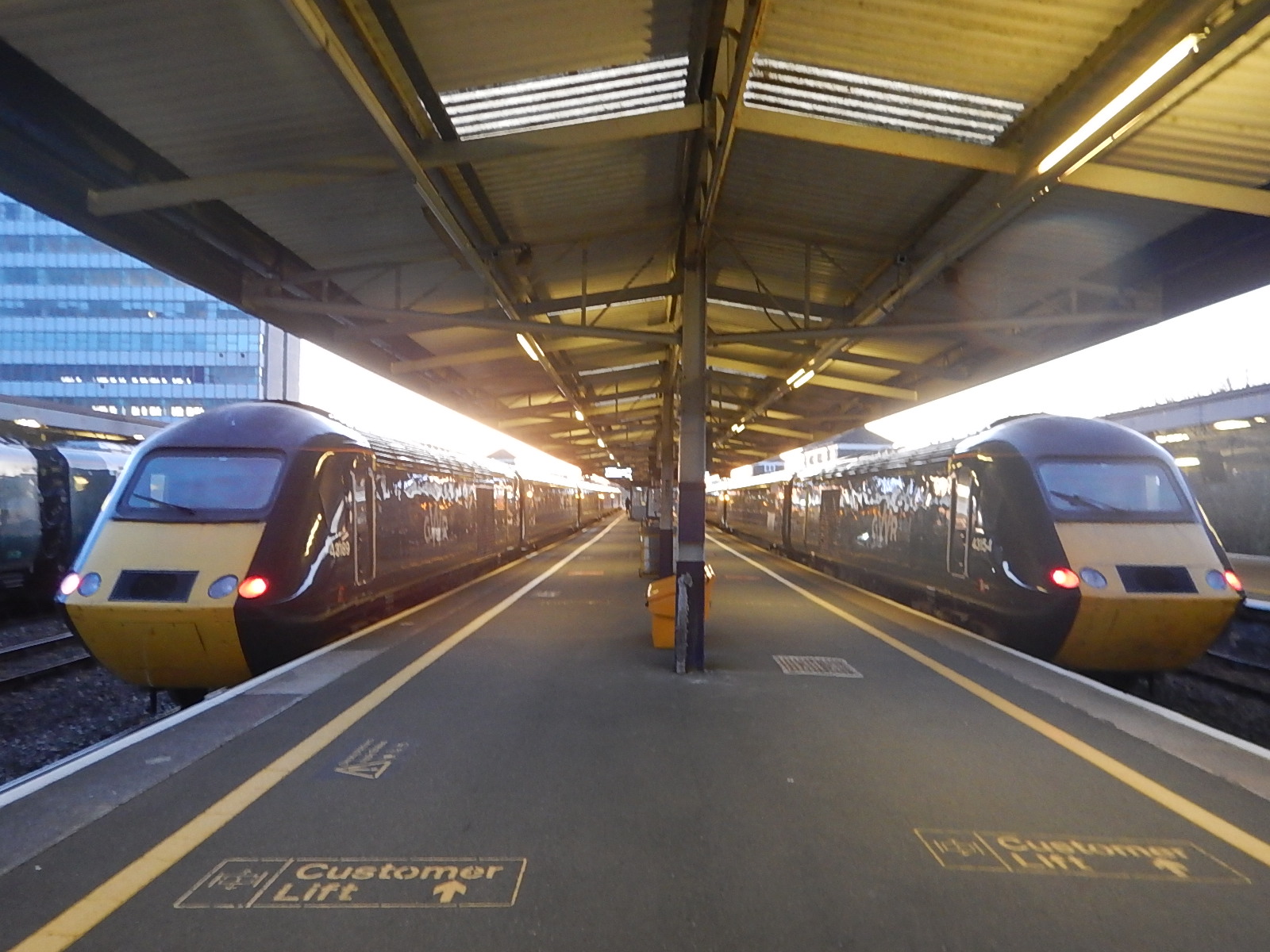
But let’s be serious and not insult the intelligence of the three world-leading universities on the final route of the East West Railway.
A lot of money is also being spent on this railway and tarted-up forty-year-old trains would not encourage people to use the new railway.
Class 170 Trains
There are eighty-seven three-car Class 170 trains with various operators, some of which will be surplus to requirements, as they are being replaced with new trains.
But they are diesel, so surely they don’t fit my perceived need for zero-carbon trains.
That would have been true until a couple of weeks ago, when as I wrote in Vivarail’s Plans For Zero-Emission Trains, Adrian Shooter of Vivarail disclosed an audacious plan to convert, diesel trains into zero-carbon battery electric trains.
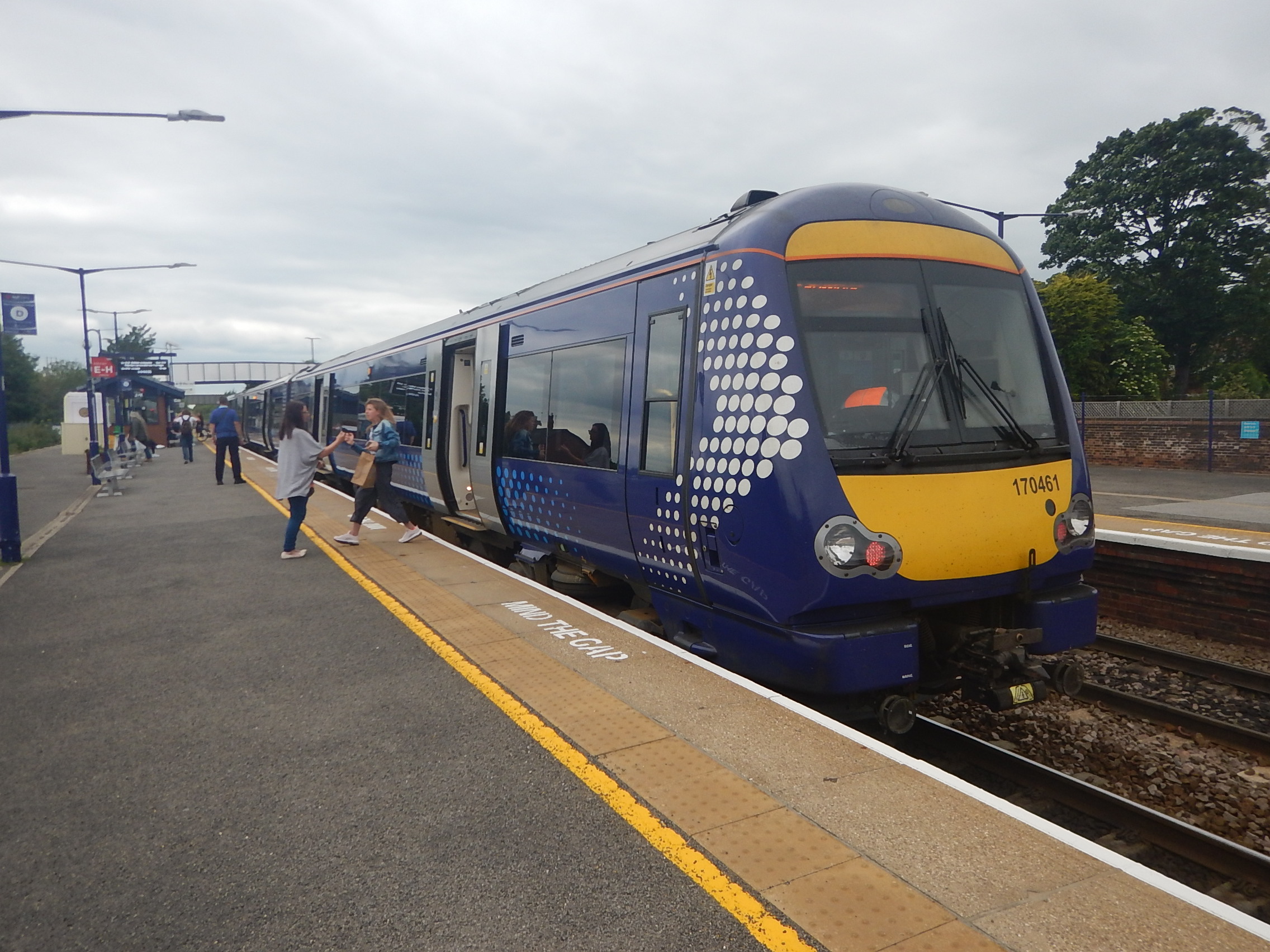
Class 170 trains like this were on the list of possible conversions.
- They 100 mph trains.
- Some are three-cars.
- They meet all the disability regulations.
- They have been used for services much longer than Oxford and Bedford.
They could also start the service as diesel trains and gradually converted to battery electric, if this would be better for operation.
Class 175 Trains
The three-car 100 mph Class 175 trains could be a possibility as there are fifteen trains, but they have two problems.
- They are powered by diesel.
- They probably won’t be available until 2023.
So I think they can be ruled out.
Class 185 Trains
All the fifty-one Class 185 trains are currently in service with TransPennine Express. They are due to release fifteen trains in 2021 and it was thought that these trains were in prime position for becoming the interim trains for East West Railway.
- They 100 mph trains.
- Some are three-cars.
- They meet all the disability regulations.
- They have been used for services much longer than Oxford and Bedford.
- The fleet is the right size.
But then the Department of Transport decided to change their plans for the Liverpool and Norwich service.
I wrote about one journey on the overcrowded section of this service in Mule Trains Between Liverpool And Norwich.
The picture shows the inadequate train formed of an assorted collection of Class 153 trains, I took from Liverpool to Sheffield.
The service is now being split at Nottingham and East Midlands Railway will receive the released Class 185 trains for the Liverpool and Nottingham portion of the service.
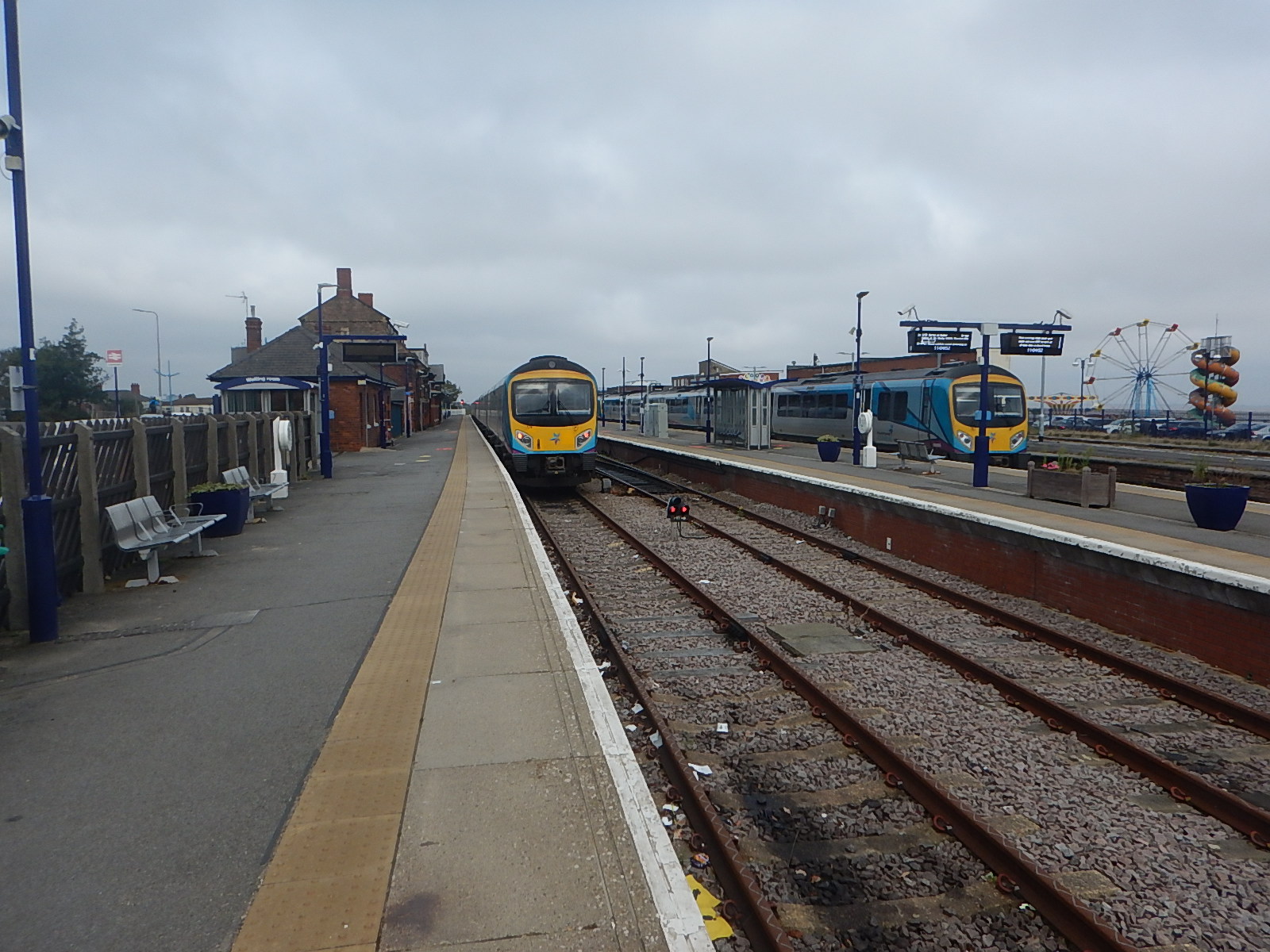
A fleet of these Class 185 trains will surely offer more comfort on a very busy service.
So it is looking unlikely that Class 185 trains will be used on the East West Railway.
Class 220, 221 and 222 Trains
These three fleets of Voyager trains could be a possibility, as they can be shortened to three-car trains.
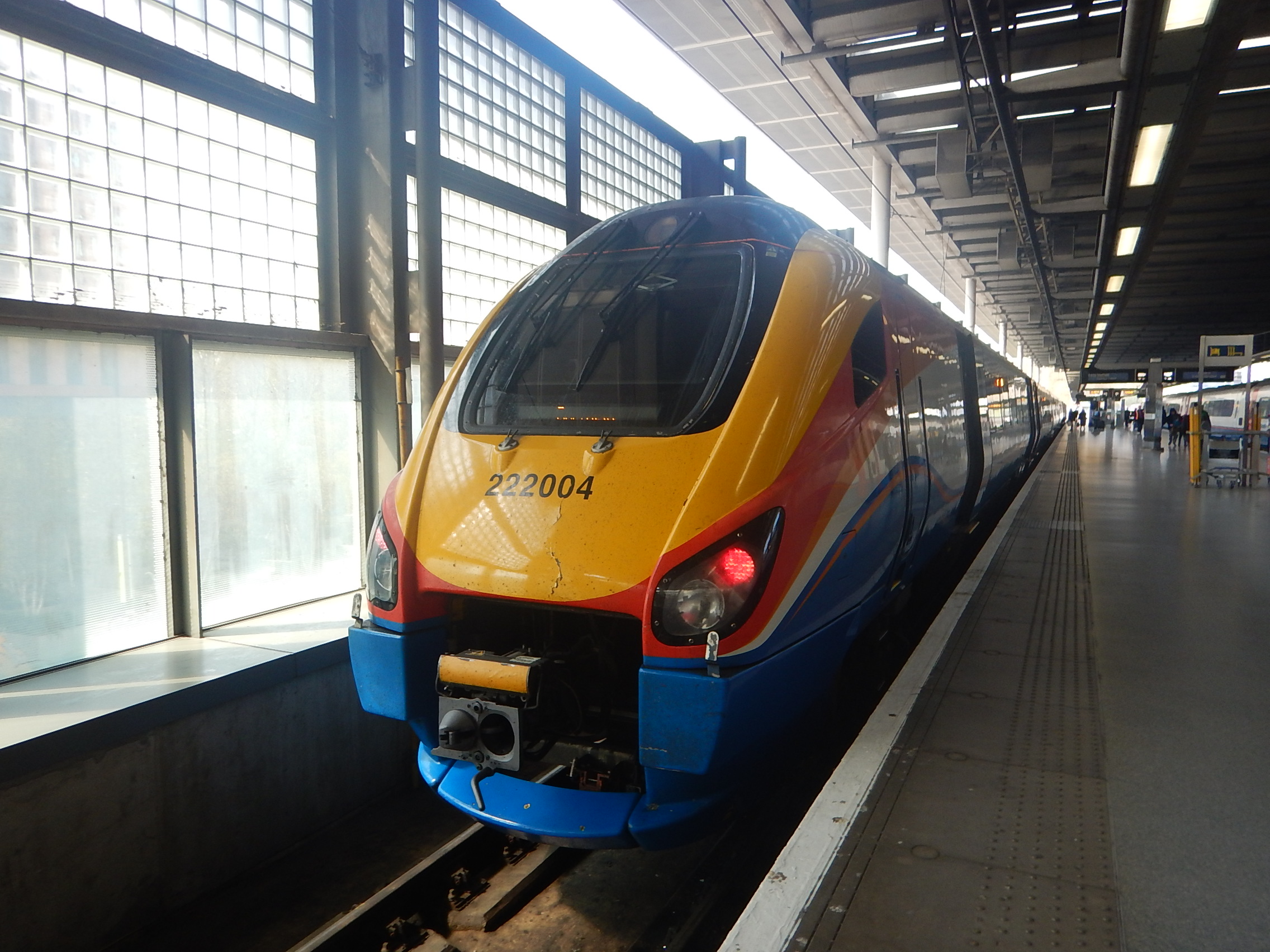
But they have disadvantages.
- They are diesel-powered.
- The diesel engines make a lot of noise for passengers.
- CrossCountry may have an alternative plan for these trains as I wrote about in DfT and Arriva CrossCountry Sign Agreement.
I think it is unlikely, that these trains will be used on the East West Railway.
Class 350 Trains
There are thirty-seven Class 350 trains, that were built only twelve years ago, that have been retired. The owner; Porterbrook are planning to convert them into battery electric versions, which they have called BatteryFLEX trains.
Unfortunately, they are four-cars and unlike other trains, it doesn’t appear that they can be shortened to three cars.
Class 375, 377, 379 and 387 Trains
These four fleets of Electrostar trains could be a possibility for running as battery electric trains.
- Some are three-car trains and four-car trains can be converted to three-car trains, by simply removing a car.
- They are 100 mph trains.
- Bombardier converted a Class 379 train for battery operation and I have heard or seen no adverse reports from either passengers, rail staff or journalists.
- They can work in multiple formations.
- They are all wired for dual-voltage operation.
- Pantographs wells have already been fitted to trains that normally work using 750 VDC third-rail electrification.
The picture shows the Class 379 train, that was converted to battery electric operation.

The Class 379 trains, also have the advantage, that there is a fleet of thirty trains, that are being replaced by Greater Anglia, who are homeless.
If I were the owner of the Class 379 trains, I’d do the following.
- Convert them all into battery electric trains.
- Shuffle cars around to get a mix of three-, four- and five-car trains to match market opportunities.
- Make them compatible with Vivarail’s Fast Charge system.
- Do a licensing deal with Vivarail, so I could supply the chargers.
This plan has some big advantages.
- Battery electric operation of the Class 379 trains has been successfully proven.
- Some Class 379 trains are already available for conversion, as they have been replaced by Greater Anglia.
- The trains could easily be delivered in time for the opening of the East West Railway.
- The trains would not need to be replaced, if the East West Railway was to be fully electrified in the future.
- If I leased out all the Class 379 trains, I’m fairly sure that I could acquire some other Electrostars to convert.
The trains would surely be ideal for the Uckfield Branch and Ashford and Hastings, which are to be run by battery electric trains.
- The order for these services is still to be announced.
- This use would be a trial application of the highest quality.
- I suspect that five-car trains would be ideal for these Southern routes.
- In Battery Electrostars And The Uckfield Branch, I estimated that Southern would need twelve five-car trains for the Uckfield Branch and four trains for the Ashford and Hastings service.
It looks to me, the thirty four-car Class 379 trains could be converted into the following battery electric trains.
- Twelve five-car trains for the Uckfield Branch.
- Four four-car trains for Ashford and Hastings.
- Fourteen three-car trains for the East West Railway.
Using battery electric Class 379 trains for the East West Railway, the Uckfield Branch and Ashford and Hastings. looks from the engineering, numbers and financial points of view to be a very efficient proposition.
Class 385 Trains
As I indicated earlier, Hitachi have the technology to create a Class 385 train with a battery capability.
- They appear to be talking to ScotRail.
- Are they talking to Vivarail about using their Fast Charge system?
- As the trains would be new, East West Railway would get trains to their specification.
Battery electric Class 385 trains must be a serious proposition.
Class 600 Trains
The Class 600 train could be an interesting possibility.
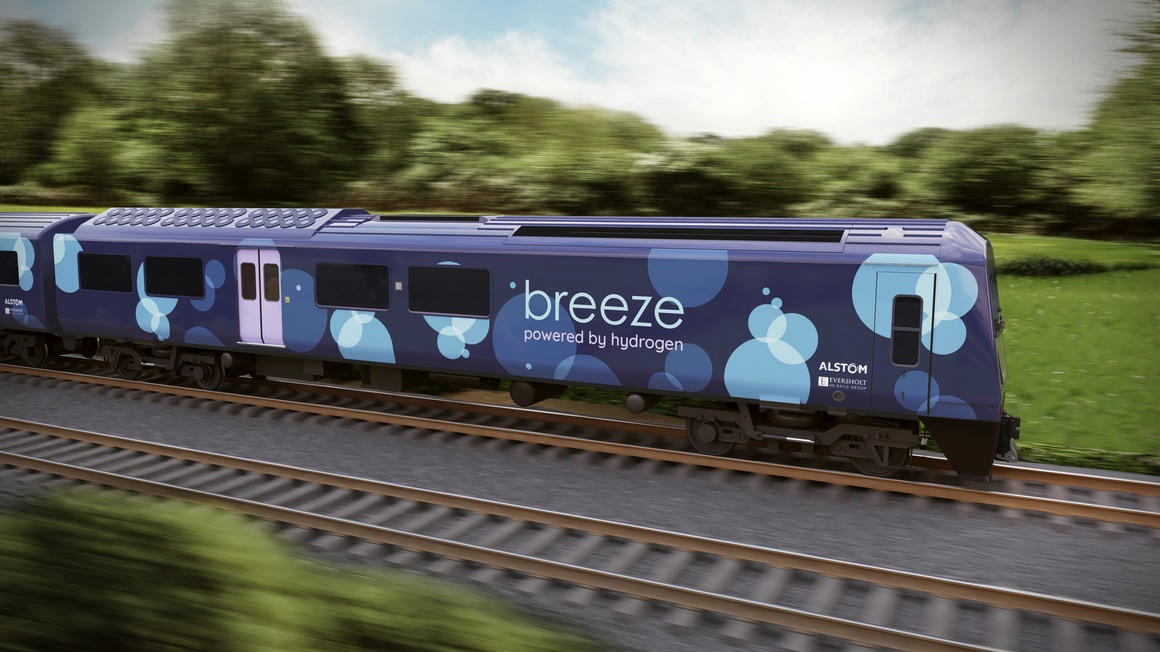
The trains can be powered by both hydrogen and overhead or third-rail electrification.
- The trains are three-cars long.
- They are 100 mph trains.
- First in-service dates are scheduled for 2024, which could be convenient.
- The trains will have a state-of-the-art Renatus interior.
- They will not need charging and could probably be refuelled as infrequently as only once per day.
I am not worried, by the train being powered by hydrogen, but because of the large tanks in the train, the passenger capacity will be lower, than a diesel, electric or battery electric train of a similar length.
I suspect though, that Alstom will be pitching for the order.
Aventras
In this article in Global Rail News from 2011, which is entitled Bombardier’s AVENTRA – A new era in train performance, gives some details of the Aventra’s electrical systems. This is said.
AVENTRA can run on both 25kV AC and 750V DC power – the high-efficiency transformers being another area where a heavier component was chosen because, in the long term, it’s cheaper to run. Pairs of cars will run off a common power bus with a converter on one car powering both. The other car can be fitted with power storage devices such as super-capacitors or Lithium-ion batteries if required. The intention is that every car will be powered although trailer cars will be available.
Unlike today’s commuter trains, AVENTRA will also shut down fully at night. It will be ‘woken up’ by remote control before the driver arrives for the first shift
This was published over nine years ago, so I suspect Bombardier have refined the concept.
Bombardier have not announced that any of their trains have energy storage, but I have my suspicions, that both the Class 345 and Class 710 trains use super-capacitors or Lithium-ion batteries, as part of their traction system design.
I believe that Bombardier, have the ability to build an Aventra to this specification.
- Three-cars
- 100 mph running
- Sixty mile range on battery power.
- Dual voltage.
- Ability to work in pairs.
Like the Hitachi trains, they would be new build.
CAF
CAF have proposed a battery electric train based on the Class 331 train, which I wrote about in Northern’s Battery Plans.
It is a four-car development of the three-car Class 331 trains.
Can it be built as a three-car train to fit the specification?
Conclusion
There are some good candidates sir supplying an interim fleet of trains for the East West Railway.
My money’s on one of the following.
- New Hitachi Class 385 trains
- Converted Class 379 trains.
- New Aventras
All would be battery electric trains.
But there is a change that Alstom’s Class 600 hydrogen trains could be used.
Trains Needed For The East West Railway
This is a simple calculation, that I need to write East West Railway Company To Start Second Phase Of Rolling Stock Procurement.
I shall first calculate the length of the proposed services on the East West Railway.
The Distance Between Oxford and Bedford Stations
Looking at various legs I get the following distances.
- Oxford and Bicester Village stations – 11.7 miles from Real Time Trains.
- Bicester Village and Bletchley – 18.6 miles from Google Maps, using a large screen and a ruler.
- Bletchley and Bedford – 16.5 miles from the Wikipedia entry for the Marston Vale Line.
These distances give a total distance of 46.8 miles
The Distance Between Oxford and Milton Keynes Central Stations
Looking at various legs I get the following distances.
- Oxford and Bicester Village stations – 11.7 miles from Real Time Trains.
- Bicester Village and Bletchley – 18.6 miles from Google Maps, using a large screen and a ruler.
- Bletchley and Milton Keynes Central – 3.1 miles from Real Time Trains.
These distances give a total distance of 33.4 miles
The Distance Between Aylesbury and Milton Keynes Central Stations
Looking at various legs I get the following distances.
- Aylesbury and Aylesbury Vale Parkway – 2.3 miles from Real Time Trains.
- Aylesbury Vale Parkway and Bletchley – 20.5 miles from Google Maps, using a large screen and a ruler.
- Bletchley and Milton Keynes Central – 3.1 miles from Real Time Trains.
These distances give a total distance of 25.9 miles
Journey Timings
This page on the Bedford Borough Council web site, gives a timing of sixty minutes between Bedford and Oxford.
Looking at routes between Cambridge, Ipswich and Norwich, this sixty minute timing is not unreasonable, when compared to Norwich and Ipswich, which is 46.2 miles and takes about 45 minutes on a railway with an operating speed of 100 mph.
The only thing I would say, is that if it were possible to run a train between Bedford and Oxford in an hour including the turnback time, this would give advantages.
- The round trip would be two hours.
- It would be easy to organise a clock-face timetable, that left at the same time each hour from both terminal stations and all the intermediate stations.
I will assume that a two hour round trip is feasible.
Using this speed, I can estimate journey times for the other services.
- Oxford and Milton Keynes Central Stations – 43 minutes
- Aylesbury and Milton Keynes Central Stations – 33 miles
Comfortable two hour round trips would be possible.
Number Of Trains Needed
As each service could be a two hour round trip, they would need just two trains for an hourly service and four trains for a two trains per hour (tph) service.
The services, their frequencies and the number of required would be as follows.
- Oxford and Bedford – one tph – two trains
- Oxford and Milton Keynes Central Stations – two tph – four trains
- Aylesbury and Milton Keynes Central Stations – one tph – two trains
Note.
- That is a total of eight trains.
- If a three hour round trip is needed for Oxford and Bedford, then an extra train will be needed.
It is slightly surprising, that the interim fleet is between twelve and fourteen trains according to this article on Railnews, which is entitled East West Rail Takes Next Step Towards New Trains.
M&G To Invest £150m In UK Battery Start-Up Zenobe
The title of this post, is the same as that of this article on the Financial Times.
Good to see M & G getting involved in funding batteries.
 The Anonymous Widower