Greener And Brighter Stations Across Hampshire And Surrey
The title of this post. is the same as that of this article on Rail Technology Magazine.
These are the first two paragraphs.
Network Rail hope to save 25% in electricity by rewiring and relighting their Wessex Route stations.
Worcester Park and Andover stations are two of the latest stations to be rewired, forming part of the drive to replace old and inefficient electrical equipment and incandescent lights at 32 stations in Hampshire and Surrey.
As Worcester Park station is Freedom Pass territory, I went to have a look.
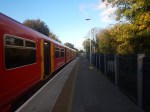

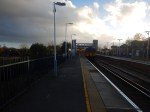
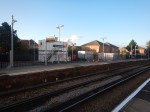

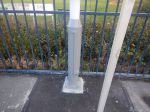

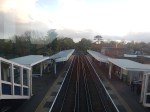
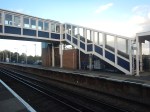
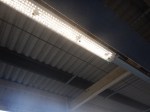
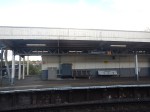
Note.
- It appears that all the original light fittings have been updated with some form of LED conversion.
- The LEDs are clearly visible in some of the pictures.
The whole project is called Rewire and Relight and is due to be finished in 2024.
Conclusion
I suspect Network Rail can apply these techniques to a lot more places, than just 32 stations in Hampshire and Surrey.
Crossrail 2 Falls Victim To £1.8bn TfL Bailout
The title of this post, is the same as that of this article on the Construction Enquirer.
It appears that one of the conditions of the bailout of Transport for London, is that ongoing consultancy on Crossrail 2, will be scrapped.
As someone, who lives in an area, that will benefit enormously from Crossrail 2, I still feel that this is a good idea, as for the last few years, the transport system in East London has coped well and other improvements already in the pipeline, will keep things going until the economy recovers from the covids and a rathional decision can be made about Crossrail 2.
Boost for Liverpool’s Baltic Triangle Area As A Further £1.5m Invested By Combined Authority In New Railway Station Scheme
The title of this post, is the same as that of this story on the Liverpool City Region web site.
These three opening paragraphs give most of the details of the story.
Liverpool’s Baltic Triangle area has been given a big boost as plans to build a new station have moved to the next stage thanks to a £1.5m investment by the Liverpool City Region Combined Authority
Metro Mayor Steve Rotheram has pledged to build a new station on the site of the former St James station, which closed in 1917, which would be located in one of the fastest growing areas of the city, near to the former Cains Brewery.
Those proposals for the station on the Merseyrail network are a step closer thanks to two new developments – an agreement with Network Rail, worth £1.2m, to start the next stage of the design process, and the purchase of a plot of land adjacent to the railway cutting off Stanhope Street for £300k, protecting a potential future site for the new station ticket office building.
As Liverpool St. James station, closed over a hundred years ago, this must be one of the longest times to reopen a station, anywhere in the world.
This Google Map shows the location of the proposed station.
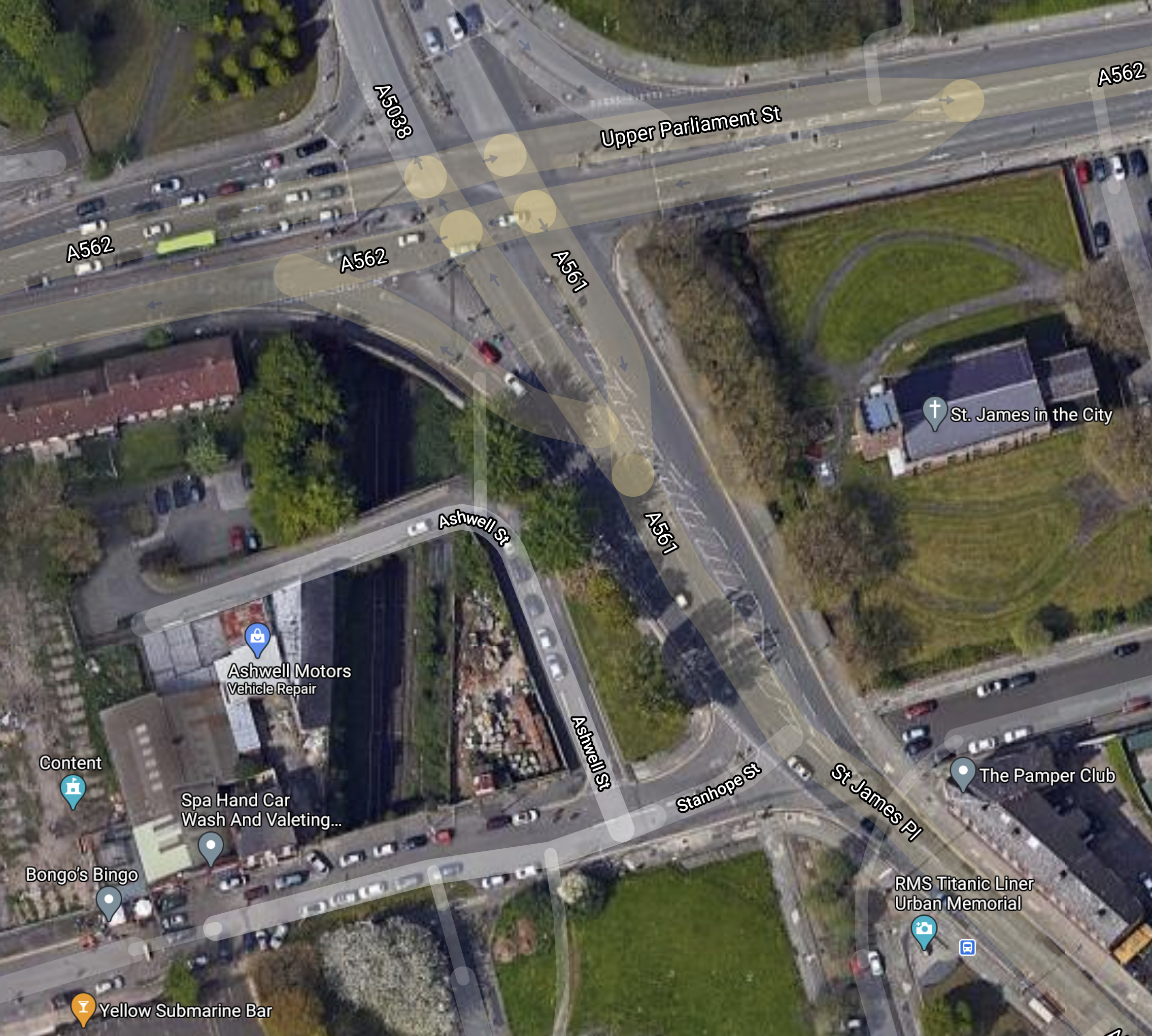
Note.
- The deep dark cutting going under the major road junction, where Upper Parliament Street and the A571 cross.
- The square of roads formed mainly by Ashwell Street, with Stanhope Street in the South, above the cutting.
- Contained in the cutting is Merseyrail’s Northern Line on which the station will be built.
- I also suspect, that the triangular plot of land on the East side of the tracks, is the one mentioned in the extract. It could easily be the place for a ticket office with lifts to the platforms.
Only Liverpudlians would choose to build a station at the bottom of a deep hole.
But then they don’t think like others!
I have a few thoughts and questions.
Will It Be Dark On The Platforms?
This was one of my first thoughts, as there’s nothing worse than a dark station. I also wonder, if one of the reasons the station closed was lack of passengers caused by the darkness.
This picture taken from the story, shows the cutting from the bottom.
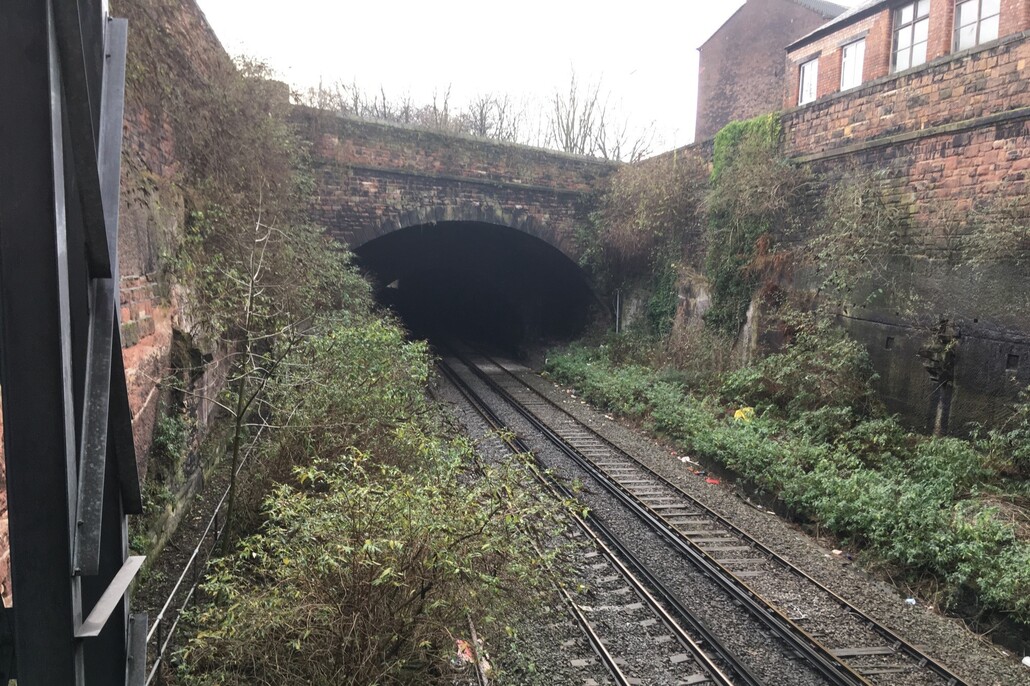
Note.
- Aligning this picture with the map, Liverpool Central is behind us and Hunts Cross is through the tunnel.
- Perhaps on a good day more light gets into the cutting.
I suspect that modern lighting on the platforms could solve the problem.
It appears that the station opened in 1874 and closed in 1917, but the lines through the station were not electrified until 1983.
So as the station must have been served by steam-hauled trains, during its brief opening at the turn of the Nineteenth Century, it must have had a terrible atmosphere on the platforms.
Hopefully, the only smell, that will emanate from the new Class 777 trains, will be one of newness.
What Is On The Triangular Plot?
This Google Map shows the triangular plot of land, that could be used for the ticket office.
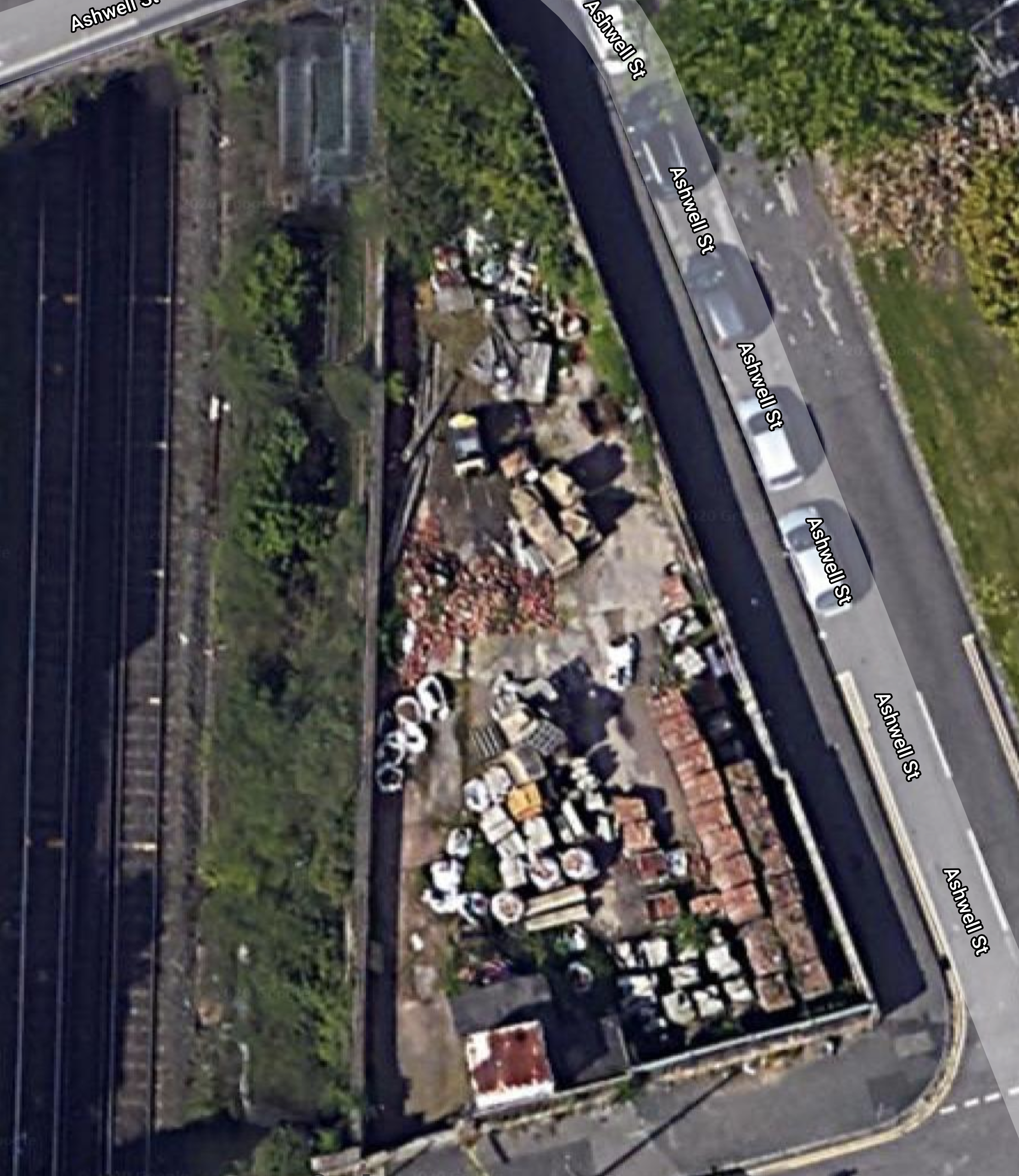
Note.
- It looks very much to be a builder’s yard or a store for building materials, as I can definitely make out packs of bricks and bags of aggregate.
- As there appears to be a steel staircase down to the tracks at the top of the image, it might even be something to do with Network Rail.
- The steel staircase is visible in the picture of the tracks.
- The plot certainly doesn’t contain any buildings of architectural merit.
- I also can’t see a pond, which might contain newts or other protected wildlife.
It would appear to be an ideal site for a station building, with all the necessary facilities.
More Information And Pictures Of The Former Station
This page on the Disused Stations web site, gives extra information to Wikipedia about the station and has some interesting pictures.
How Will The Platforms Be Accessed?
It is a long way for steps, as especially as new stations are generally built step-free.
Merseyrail already have a pair of almost identical stations; Kirkdale and Wavertree Technology Park, which both opened in 2000.
These pictures show Kirkdale station.
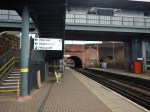
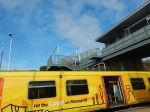

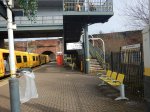
I suspect, platform access at Liverpool St. James station of a similar design could be devised.
- The simplest design would surely be to put a bridge across the tracks from the ticket office, which had a large lift on both sides of the tracks direct to the platforms.
- Stairs from such a bridge could probably be added, but they would be long and complicated.
- It might need a two-stage process with lifts taking passengers down to a bridge over the trains and then stairs and more lifts or ramps to the platforms.
At least, as the line is electrified for third-rail, I doubt clearance will be needed for overhead wires.
Could The Station Have An Island Platform?
One of the comments suggested this. In addition, one picture on the Disused Stations web site appears to show three tracks through the station site.
So this could be an interesting possibility.
Conclusion
I think that we might see a very innovative design here, given Merseyrail’s past record.
Saltburn Station – 28th October 2020
I paid a quick visit to Saltburn station.



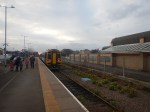
I would have had a bigger look round, but time was tight.
The reason the time was tight, was a classic example of what you get with a rail route, with only one train per hour (tph). The next train would have meant, I’d missed my train to London and would have had to buy another ticket.
This Google Map shows the station.
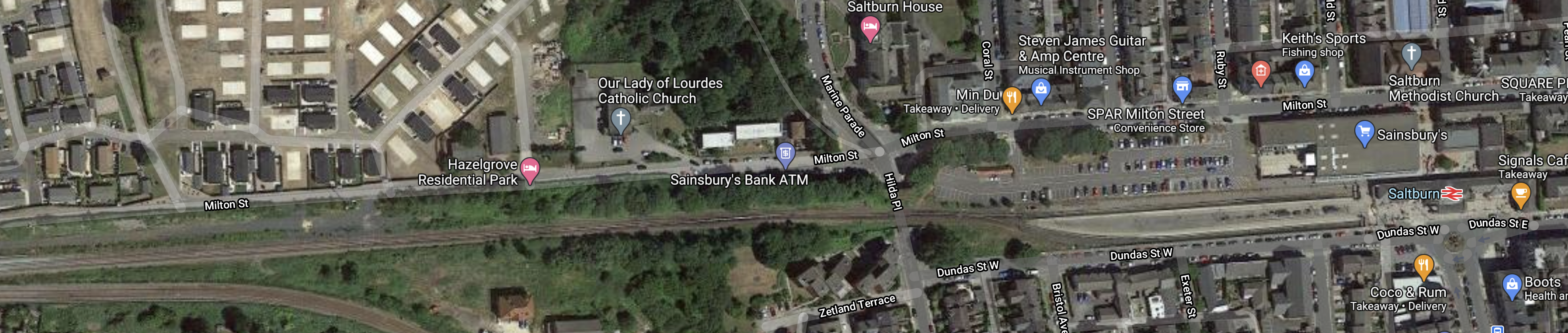
Note.
- There are two platforms.
- The station appears to be close to the Town Centre.
- There is a branch leading South to the Boulby Mine. This branch is used to handle the output of the mine, which is polyhalite and rock salt.
These are my thoughts.
Four tph Between Darlington And Saltburn
Four tph is planned between Darlington and Saltburn.
- Two platforms at Saltburn will surely help.
- All intermediate stations have two platforms.
- The route is double track all the way, except for the approach to Darlington station.
I discussed the approach from the East to Darlington station in Darlington Station – 28th October 2020 and suggested that a dive-under is needed to allow the following.
- High speed trains can make a fast approach and departure from the new high speed platforms at Darlington.
- Saltburn to Bishop Auckland services to avoid crossing the East Coast Main Line on the flat to access Platform 4 at Darlington.
- Darlington and Saltburn services to sneak under the East Coast Main Line and access Platform 2 at Darlington.
There may also need to be some track modifications to the North of Darlington station, but as there are two tph between Bishop Auckland and Darlington to accommodate, the modifications would probably be less extensive.
Charging Battery Electric Trains At Saltburn
I doubt that this would be essential, as Middlesbrough is only thirteen miles away, but there is surely space to fit in one of Vivarail’s Fast Charge systems in the station.
Passenger Services On The Boulby Mine Branch
If housing is developed around Saltburn, this could be a possibility at some time in the future.
This was the route of the Whitby, Redcar and Middlesbrough Union Railway, which was closed in 1958 and then reopened to Boulby Mine in the 1970s.
There were originally two stations between Saltburn and Boulby; Loftus and Grinkle.
In a section of the Wikipedia entry for the railway called The Railway Today, this is said.
In January 2019, Campaign for Better Transport released a report identifying the line between Saltburn and Loftus which was listed as Priority 2 for reopening. Priority 2 is for those lines which require further development or a change in circumstances (such as housing developments)
I wouldn’t be surprised to see a passenger service on this route.
This Google Map shows the Boulby Mine and the Coast.
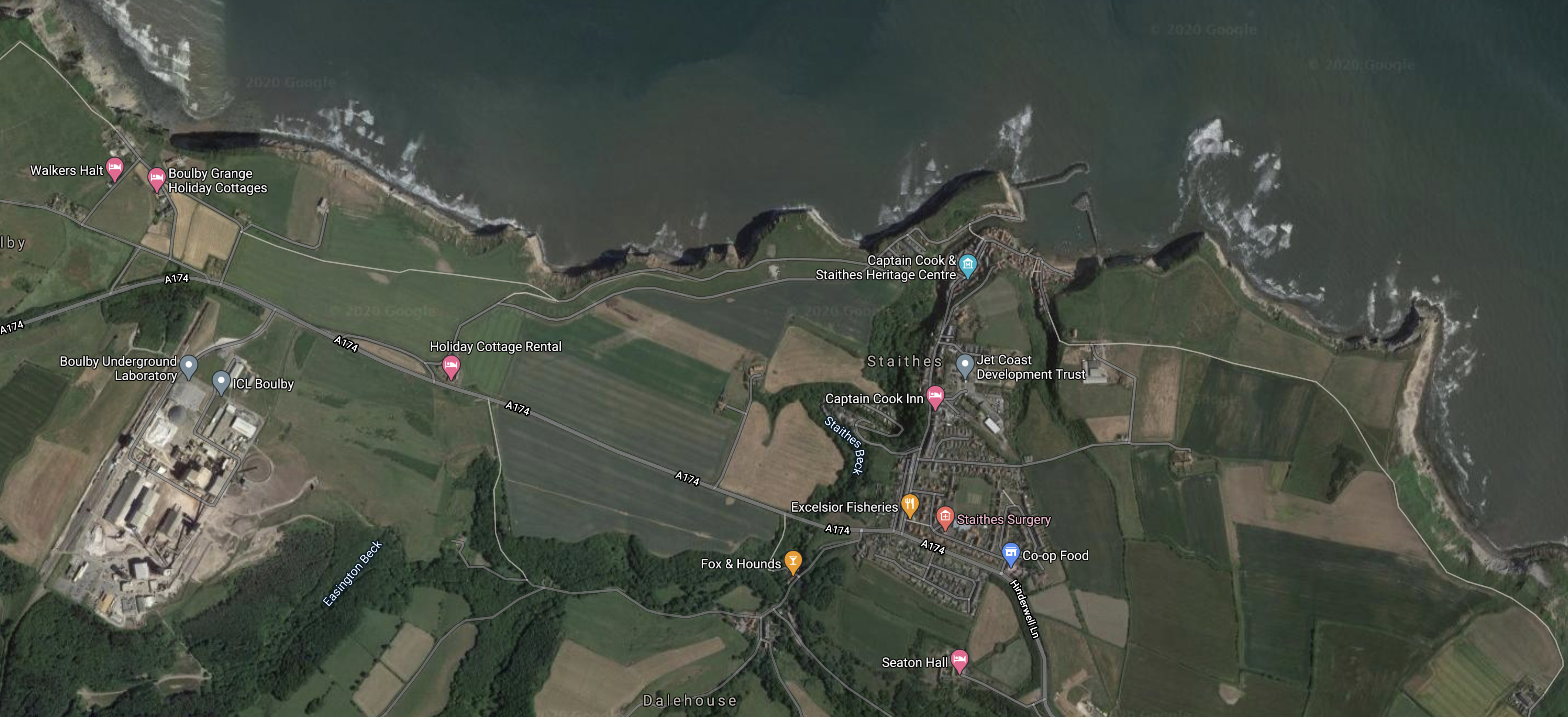
Note.
- The Boulby Mine is at the Western side of the map.
- The village of Staithes has strong connections to Captain Cook.
- The original railway. that ran South of the site of the mine through Staithes and on to Whitby is now a walking route.
I wonder if there should be a station close to the mine.
Conclusion
There is a lot of potential to improve the railway between Middlesbrough and Saltburn.
Megawatt Charging System Set To Rapidly Reduce Fuelling Time For Commercial EVs
The title of this post, is the same as that of this article on Electric Autonomy Canada.
This is the sub-title.
An international task force says their recent high power “charge-in” event has yielded promising results with successful testing of novel connector prototypes that could overhaul the long-haul industry.
The problem of charging heavy freight trucks is a big market in North America and it seems that the event attracted some big players, like ABB, Daimler and Tesla.
- In the trucking industry, speed and range count for a lot.
- Trucks need to be charged during a driver’s rest break of about thirty minutes.
- In the U.S., transport made up 28 per cent of greenhouse gas emissions.
- Charging lots of trucks on typical state-of-the-art car chargers would probably crash the system.
The Megawatt Charging System aims to solve the problems.
How Would It Work?
This paragraph from the article, outlines the problems.
But how, one may ask, could such a massive electrical draw — as much as 4.5 megawatts — be supported by a grid, especially when the usage scale is not just one truck charging up, once a day, but thousands of 18-wheelers rolling and charging across the country.
The MCS Task Force seem to be suggesting that these systems will work as follows.
- A large battery or energy storage system will be trickle charged.
- The truck will be connected and the electricity will flow into the truck.
- It could all be automated.
It sounds very much like Vivarail’s Fast Charge system, which uses batteries as the intermediate store.
As an Electrical and Control Engineer, I would use a battery with a fast response.
I think I would use a Gravitricity battery. This page on their web site describes their technology.
Gravitricity™ technology has a unique combination of characteristics:
- 50-year design life – with no cycle limit or degradation
- Response time – zero to full power in less than one second
- Efficiency – between 80 and 90 percent
- Versatile – can run slowly at low power or fast at high power
- Simple – easy to construct near networks
- Cost effective – levelised costs well below lithium batteries.
Each unit can be configured to produce between 1 and 20MW peak power, with output duration from 15 minutes to 8 hours.
Teeside’s Refurbished Trains
On my trip around Teeside, I took four trains.
There was none of the usual rubbish, that I have endured in the North like this scrapyard special at Carlisle.
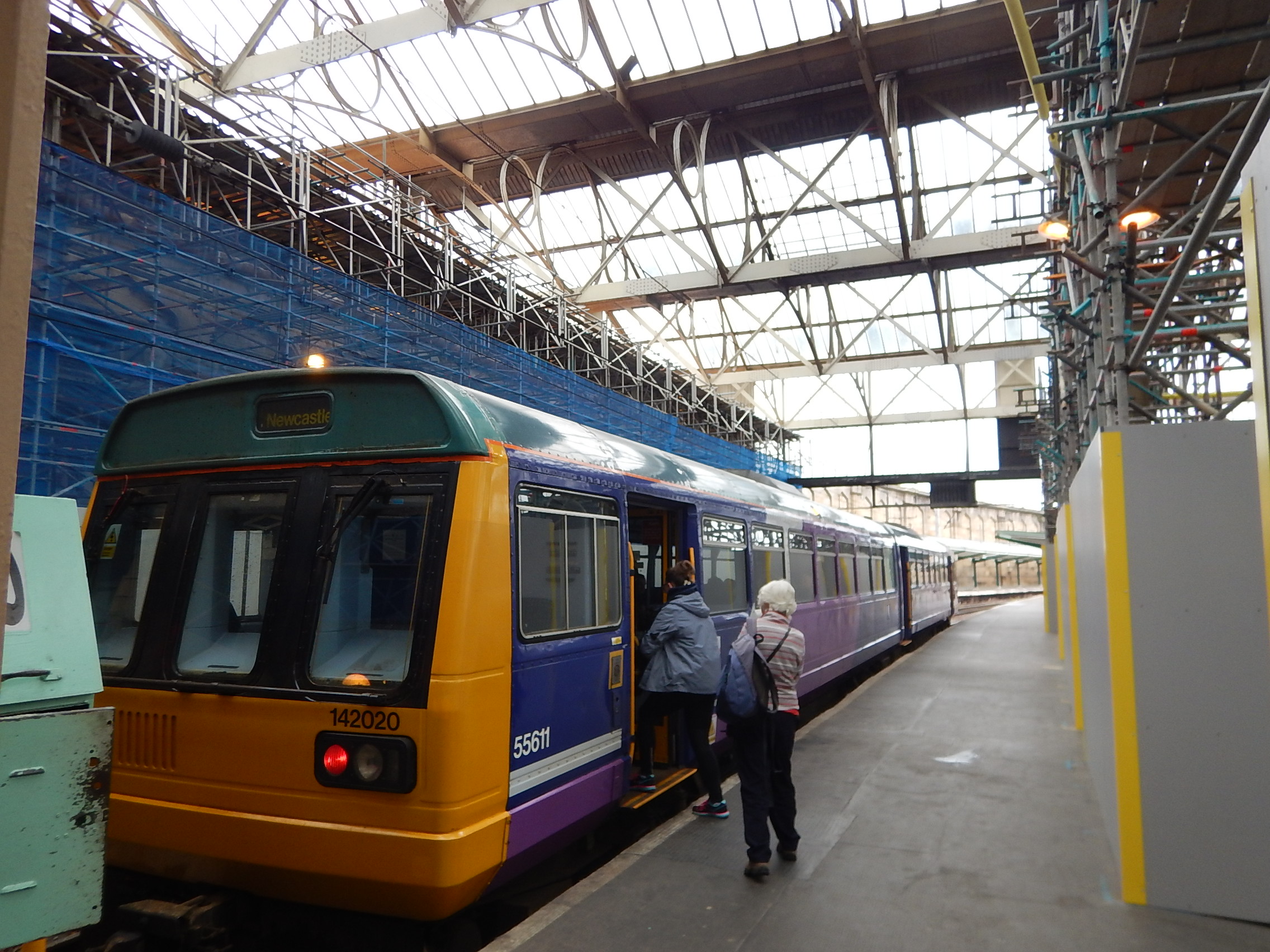
All trains were refurbished Class 158 trains.

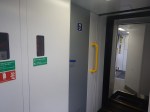
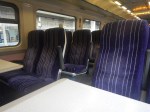
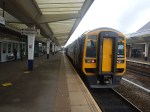
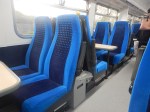
They were a lot better, with tables and clean, working toilets.
But will they get replaced with hydrogen or updated to zero-carbon trains?
Hydrogen Trains
In Fuelling The Change On Teesside Rails, I talked about the local services on Teesside being run by a fleet of hydrogen trains, based on an article in RAIL Magazine.
But the order has not been placed and it must be getting tight if trains are going to run in a few years.
There was this report in the November 2020 Edition of Modern Railways, which is entitled Tees Valley Hydrogen Hub.
This is the first paragraph.
Mott MacDonald is to create a masterplan for the development of a hydrogen transport hub in the Tees Valley. Transport Secretary Grant Shapps made the announcement as he travelled on the HydroFLEX on the 29th of September.
It appears the masterplan could be published in January and would cover several modes of transport.
Battery Electric Trains
There have been developments in the battery electric train field over the past few months.
Hitachi at Newton Aycliffe and Hyperdrive Innovation at Sunderland have partnered up to produce Hitachi’s Regional Battery Train. Three-car trains based on Hitachi’s Class 385 trains would be ideal for trundling around the North East.
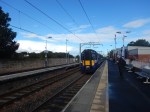
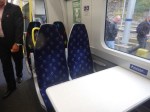


The trains would need charging and what better charging system is there than Vivarail’s Fast Charge system? And they could be produced at Vivarail’s factory at Seaham just up the coast towards Sunderland.
As I indicated in £100m Station Revamp Could Double Local Train Services, where I said this about the location of chargers to power battery electric trains in the Tees and the Tyne.
There will need to be strategically-placed battery chargers around the North-East of England. These could include.
-
- Hexham
- Nunthorpe
- Redcar or Saltburn – This would also be used by TransPennine Express’s Class 802 trains, if they were to be fitted with batteries.
- Whitby
If Grand Central did the right thing and ran battery electric between London and Sunderland, there would probably be a need for a battery charger at Sunderland.
It appears that Adrian Shooter of Vivarail has just announced a One-Size-Fits-All Fast Charge system, that has been given interim approval by Network Rail.
I discuss this charger in Vivarail’s Plans For Zero-Emission Trains, which is based on a video on the Modern Railways web site.
Vivarail might just have another card or should it be train to play.
In the video, Mr. Shooter discusses using Vivarail’s technology to convert British Rail era diesel multiple units to battery electric trains.
Northern have already refurbished the Class 158 trains, so it would surely be an economical route to convert them to battery electric operation.
Northern Announce On Train Permit Scheme For Scooter Users
The title of this post, is the same as that of this article on Rail Advent.
This is the opening paragraph.
A new scheme has been launched by train operator Northern which will allow mobility scooter users to travel to and from over 100 stations on the network.
Sounds like if you live in the North and have a mobility scooter, you should investigate the scheme.
Middlesbrough Station – 20th October 2020
I took These pictures at Middlesbrough station on my trip to Teesside.
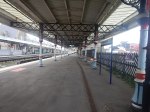
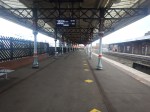
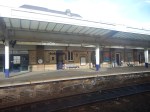
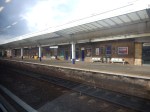
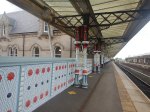
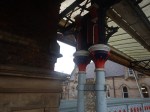
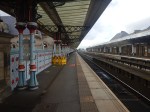
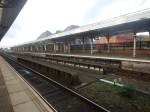
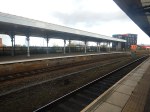
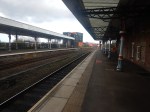
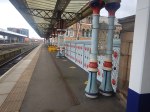



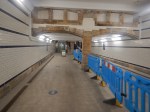
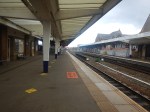
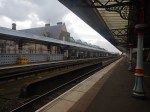
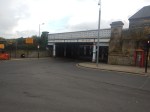

These are my thoughts on the station.
Station Track Layout
This Google Map shows the layout of the station.
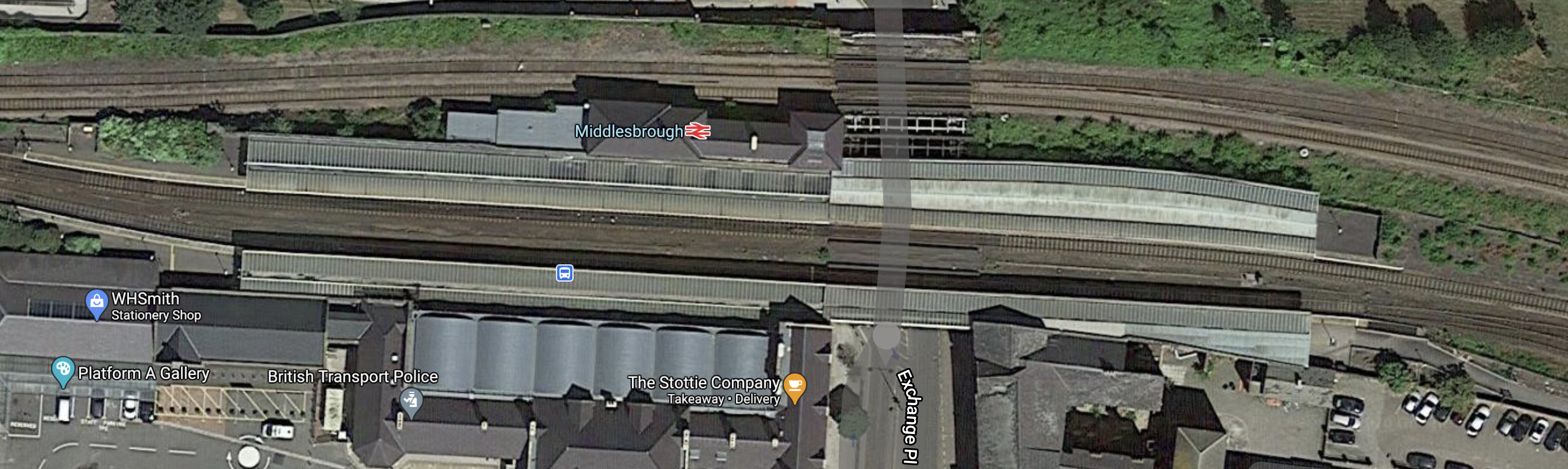
Note.
- The pair of freight lines passing around the North side of the station.
- Platform 1 is the Westbound platform on the South side of the tracks.
- Platform 2 is the Eastbound platform on the North side of the tracks.
Both platforms would appear to be about 150 metres long, which is long enough for a five-car Class 80x train, but not for a 234 metre long nine-car train.
Period Features
The station has a lot of period features, like cast-iron columns and brackets, and good Victorian stonework.
Much seems to have received good TLC.
Northern Entrance
I have seen comments about improving the Northern entrance on various web sites.
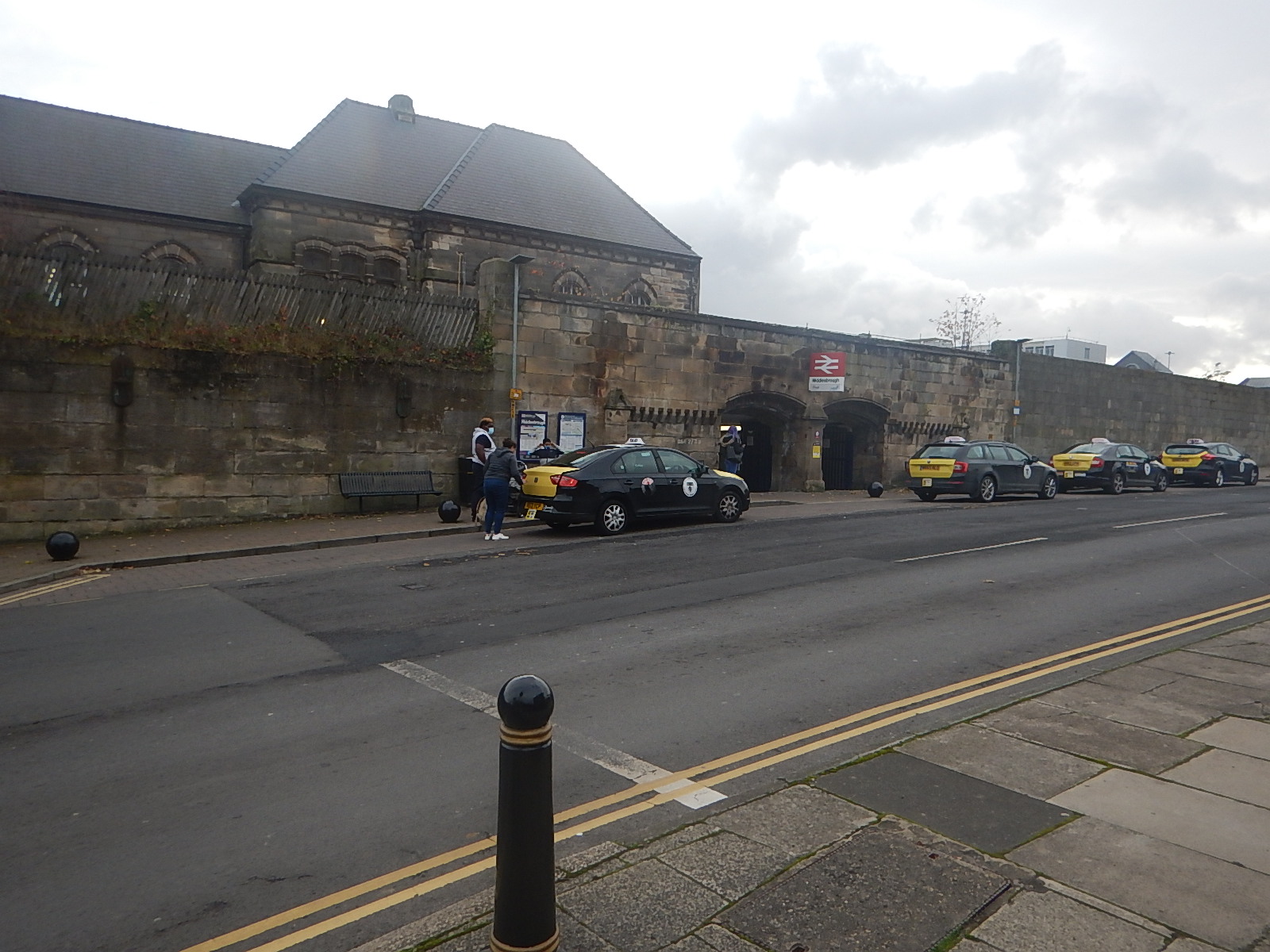
It certainly, isn’t in bad condition.
Improving The Station
In £35m Station Transformation Launched By Tees Valley Mayor, I wrote about the current plans to transform the station. I started with these paragraphs.
The title of this post, is the same as that of this article on Rail Technology Magazine.
This is the introductory paragraph.
Tees Valley Mayor Ben Houchen has announced (June 9th) a £35m transformation of Middlesbrough Station to transport more train services to the town, including the first direct rail link to London in decades.
The Rail Technology Magazine article indicates that Platform 2 at Middlesbrough station will be extended to handle Azuma trains. As the current platform looks to be around 150 metres long and this would be long enough for a five-car train, does this mean that in the future nine-car and ten-car Azumas will be able to run services to Middlesbrough?
Having seen since I wrote the related post, that Hull station has handled some nine-car Azumas, I feel that although five-car Azumas could probably use Middlesbrough station, it would seem prudent to make it possible for the longer trains to call.
Let’s suppose Middlesbrough, were playing a big London club in an important post-pandemic FA Cup match. LNER might want to run a nine-car Azuma to Middlesbrough to accommodate extra passengers.
Charging Battery Trains
LNER and TransPennine Express could be running battery electric Class 800 and Class 802 trains to Middlesbrough and/or Redcar Central stations.
This Hitachi infographic describes their Regional Battery Train, which can be created by adding batteries to the current trains.

With a range of 90 km. or 56 miles, these trains could be able to reach Middlesbrough from the electrification on the East Coast Main Line at Northallerton.
With most journeys, they should have sufficient energy in the battery to return without trouble.
But it would probably be prudent to have charging at Middlesbrough and/or Redcar Central to ensure a safe return.
These pictures were taken from the Eastern end of Platform 2, which is down to be lengthened.
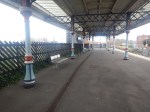
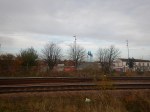
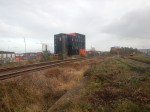

Note.
- The freight lines behind Platform 2.
- There is plenty of space beyond the end of Platform 2.
- There appears to be space for a reversing siding with a charger.
I am sure that a suitable form of charging can be provided on Platform 2 at Middlesbrough station.
Conclusion
Middlesbrough station could be turned into a big asset for the town.
Permali To Develop Composite For Fuel Cell Retrofits
The title of this post, is the same as that of this article on Power Train Technology International.
This is the two opening paragraphs.
Composites engineering specialist Permali has won UK government funding to develop a lightweight composite solution, which is aimed at allowing existing diesel-powered buses to be retrofitted with zero-emission hydrogen powertrains.
According to the company, its R&D team, located at its main site in Gloucester, will be working on this development project in collaboration with hydrogen and fuel cell specialist company Arcola Energy and the UK National Composites Centre (NCC). The partnership is initially aimed at buses, but the new technology concept should be transferable to a wider range of vehicles, such as heavy-duty goods vehicles, trains and even aircraft.
That is an impressive introduction.
I shall be watching Permali.
HS2 Slab Track Contract Awarded
The title of this post, is the same as that of this article on Rail Business UK.
This is the opening paragraph.
Project promoter High Speed 2 Ltd has awarded a consortium of Porr UK and Aggregate Industries UK the contract to design and manufacture modular slab track for HS2.
The article also says that with the exception of tunnels and some specialist track, all track will be slab track.
What is slab track and why is it used?
These pictures show slab track on the Gospel Oak to Barking Line.
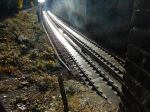


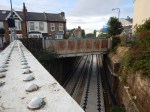
This is obviously not due to high speed, but because space is tight.
This page on the British Continuous Paving Association web site, is entitled Why Build Slab Track?
This is the two opening paragraphs.
Slab track, also called ballastless track, is a modern form of track construction which has been used successfully throughout the world for high speed lines, heavy rail, light rail and tram systems.
Slab track technology offers proven higher performance in service and a longer life than traditional ballasted track.
The article also lists these benefits.
- Very low maintenance requirements
- Shallow construction depth
- Reduced dead load
- Reduced structure gauge
- Higher speed operation
- Engineered noise and vibration performance
- Long design life
- Increased reliability
- Increased availability
- Low whole-life cost
- A sustainable solution
Increasingly, slab track is being used for high speed railways, so I am not surprised it will be used on much of High Speed Two.
 The Anonymous Widower