Paris – Berlin Direct High Speed Train Service Launched
The title of this post, is the same as that of this article on the Railway Gazette.
This was the sub-heading.
A daily high speed train service linking Paris Est and Berlin Hbf was launched on December 16.
These four paragraphs outline a few details of the service.
It is operated through the Alleo partnership of SNCF Voyageurs and DB, with both French and German onboard staff and using DB Class 407 Velaro D trainsets built by Siemens Mobility.
The journey time is just over 8 h, using high speed lines from Paris to Strasbourg and from Frankfurt to Berlin, and calling at Strasbourg, Karlsruhe, Frankfurt Süd and Berlin-Spandau.
The service is targeted at both leisure and business travellers, with the operators highlighting the environmental benefits of the rail journey producing 2 kg of CO2, compared to 200 kg when flying.
Fares start at €59·99 in standard class and €69·99 in first.
Those prices seem good value.
I have just looked up going on the direct trains from Paris to Berlin on 19th Feb and coming back on the 21st.
These were the two trains.
- Paris Est – Berlin HBf 19th Feb – 09:55-18:03 – 8:08 – £52:00
- Berlin HBf – Paris Est 21st Feb – 11:54 – 20:00 – 8:06 – £86:50
Note.
- Why is it cheaper to go to the East?
- The Berlin HBf – Paris Est should allow you to catch a late Eurostar to London.
- easyJet could get you fast and affordably between Gatwick and Berlin Brandenburg Airport.
- Lumo can get you between London and Edinburgh for under £25:00.
New train services are opening up interesting trips.
Consider.
- I’ve not been to Berlin by train except from the East.
- I’ve not been to the new Brandenburg Airport.
- I’ve not done an eight-hour East-West daytime train trip across Europe.
- I want to look at Karlruhe and Chemnitz, and their new tram-trains.
I might organise my trip like this.
- Eurostar from London to Brussels
- Train from Brussels to Karlsruhe
- Overnight in Karlsruhe
- Train from Karlsruhe to Chemnitz
- Overnight in Chemnitz
- Train from Chemnitz to Berlin
- Overnight in Berlin
- Train from Berlin to Paris
- Walk between Paris Est and Paris Nord
- Eurostar from Paris to London
Note.
- I’ve done London to Karlsruhe in a day via Brussels.
- There will be three nights in hotels.
- It should be possible to do Berlin and London via Paris in a day.
I think I’ll at least plan it.
Stratford Station – New Gittins Road Entrance
I’ve been meaning to check out this new entrance at Stratford station for some time, as it opened in July 2024.








It is only a simple entrance with a gate-line, ticket machines, information displays and a warm hut for a ticket checker.
Transport for London and other transport operators could do with a few of these entrances, to cut off travelers, who don’t think they should pay.
Silvertown Tunnel Works – 1st January 2025
cklAlthough today was not the best day weather-wise, it has been a long time since I’ve photographed the works on the Northern exit of the Silvertown tunnel.




















Note.
- The picture sequence starts as I’m leaving Canning Town station on a Docklands Light Railway train.
- As the weather wasn’t good, I took the train to London City Airport, where I walked across the platform and came home.
- City Hall is the angular building, that is behind the flyover.
- Is that underpass under the flyover to get vehicles to and from City Hall quicker?
The quality of the pictures would have been helped by better weather.
Airport Train Services Hit By £100k Cable Theft
The title of this post, is the same as that of this article on the BBC.
This is the sub-heading.
Trains to Manchester Airport have been affected by the theft of more than £100,000 of power cable from a railway line.
These three paragraphs give more details.
The signalling cables were stolen from the railway line between Preston and Bolton over Christmas.
All lines between these stations will be closed “for most of the day” while repair work is carried out, a Network Rail spokesperson said.
Work is due to be completed by around 18:00 GMT, with limited rail replacement buses running to the airport from Blackpool and central Manchester.
In the last century, I was involved in the analysis of cable theft with British Rail.
I discussed it with a judge once, and she said that she felt it would be within sentencing policy to give an extra few months in prison for compromising safety.
Automated Wheel Shape Monitor To Detect Wear
The title of this post, is the same as that of this article on Railway Gazzette.
These three paragraphs describe the monitor.
Central Japan Railway has developed a device that allows the shape of wheels to be measured while trains are passing over it at up to 80 km/h.
Following a series of field tests, the equipment is being introduced on JR Central’s Tokyo – Shin Osaka Shinkansen route in the 2025 financial year, ending in March 2026. Similar devices will then be installed for JR Central’s electric rolling stock running on 1 067 mm gauge conventional routes.
The Automatic Wheel Shape Measurement Device is intended to ensure that wheels are reprofiled at the optimal time based on the wear condition of the wheels. Until now reprofiling has been used at regular intervals or after a train has run a specified distance.
I like this monitor and I hope it is a success.
In the early 1970s, I was working for a section in ICI, that developed innovative instruments for chemical plants.
One of the instruments that the section developed, measured the size of a plastic-film bubble using a television camera and then used the result to control the size and the pressure of the bubble.
We need more clever instruments to measure the size of moving objects.
Lumo Launches A 0.5% Beer For The New Year In Partnership With A Newcastle Brewing Company
The title of this post, is the same as that of this article on the Cumberland Gazette.
This is the sub-heading.
Lumo has launches a locally-sourced, low-alcohol beer in partnership with Newcastle’s Donzoko Brewing Company to be available on services between Edinburgh and London.
These two paragraphs add a bit more detail.
Big Nothing 0.5% will be available in time for the new year, aimed towards those taking part in giving up alcohol for Dry January. The addition is part of Lumo’s commitment to providing locally sourced onboard options as part of the catering offer on its services on the East Coast route.
The release of the drink comes after the Rail Safety and Standards Board (RSSB) reported a 45% increase in alcohol-related incidents during the festive period last year.
I shall be trying some of this beer next time I travel on Lumo.
Putin Apologises Over Plane Crash, Without Saying Russia At Fault
The title of this post, is the same as that of this article on the BBC.
This is the sub-heading.
Russia’s President Vladimir Putin has apologised to the president of neighbouring Azerbaijan over the downing of a commercial airliner in Russian airspace, in which 38 people were killed – but stopped short of saying Russia was responsible.
These three paragraphs give more details on the crash.
In his first comments on the Christmas Day crash, Putin said the “tragic incident” had occurred when Russian air defence systems were repelling Ukrainian drones.
Ukraine’s President Volodymr Zelensky said Russia must “stop spreading disinformation” about the strike.
The plane is believed to have come under fire from Russian air defence as it tried to land in the Russian region of Chechnya – forcing it to divert across the Caspian Sea.
Who do you think you are kidding Mr. Putin?
Colindale Tube Station – 26th December 2024
Colindale station opened on Friday, so I went to have a look.
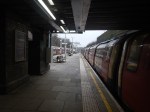
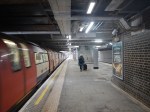
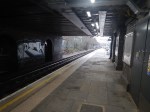

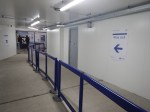
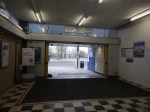



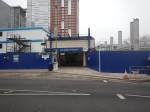
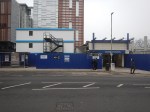

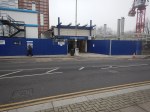
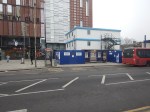
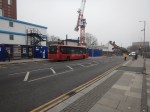
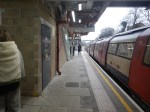
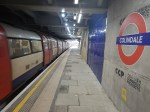



Note.
- Although not finished, it certainly works safely as a station.
- Currently, there is a one way system for passengers.
- It appears a lift is being installed.
- The lift shaft appears to be labelled as Cornish Concrete Products.
- Wikipedia reports that two large towers with 300 new homes will also be built directly adjacent to the new station building.
- There are no ticket barriers.
- On the platforms, there are no information screens! But maps are present.
How many other of London’s Underground stations need a rebuild to bring them up to a modern standard with respect to disabled access?
Housing Over Railway Stations
With a shortage of housing in the UK, should we be building more housing like this?
- Apartments over a step-free railway station.
- Shops and cafes at the ground level.
- Buses and taxis for local transport.
- Green space – There is a park opposite the station.
- Parking as needed.
As a non-driver, an apartment like this might just do for me!
But not in Colindale!
Scotland To Get New Intercity Fleet
The title of this post is the same as that of this press release from Transport Scotland.
These eight paragraphs make up the body of the press release.
The Scottish Government announced today that procurement will begin to replace the trains in its Intercity fleet.
The procurement will seek a replacement for the High Speed Train (HST) fleet of 25 trains which operates on its InterCity routes between Glasgow, Edinburgh, Aberdeen, and Inverness.
Cabinet Secretary for Transport, Fiona Hyslop said:
“Resilient, reliable ScotRail services are key to encouraging more people to choose to travel by train for work, leisure and learning.
“Over 4 million passengers travelled on InterCity trains between our key cities in the last year – we want to encourage even more people to do so. This procurement will enable us to replace the current Intercity fleet with trains which provide improved facilities and accessibility.
“Any replacement fleet is expected to be more energy efficient and therefore will significantly reduce emissions, reduce operating costs and be more in line with current passenger expectations, including for accessibility. The procurement process ensures Scottish suppliers will be able to offer to provide their services to potential bidders.
“This latest milestone in our rolling programme of decarbonisation will ensure the reliability of our Intercity routes for the long-term, making Scotland’s railway a more attractive and greener travel choice.”
Further details on this announcement will be shared when the contract is awarded in 2025. It is also expected that the refreshed Decarbonisation Action Plan will be published in Spring 2025, and this will detail updated targets for replacing ScotRail’s existing diesel fleets.
It is a press release full of good intentions, but very few facts.
Is this what Scots get from their political party?
I have a few questions.
Will The Trains Be Built In The UK?
This must surely give some advantages, but will it get the best trains at the best price?
What Will Be The Number And Capacity Of The Trains?
Transport Scotland could go for a like for like number and capacity replacement.
- But there have been capacity problems in Scotland, which have meant using diesel Class 153 trains as baggage cars.
- They might also want to add extra services.
- Will they replace the train lost at Stonehaven?
They could add a few options.
Other Companies May Need Similar Trains
Consider.
- GWR will need to replace their similar Castles.
- CrossCountry will need new trains.
- Grand Central will need new trains.
- South Western Railway may need new trains for services between Cardiff and Devon.
- Transport for Wales may need new trains.
Hull Trains and Lumo have recently ordered a selection of new Hitachi Class 802 and 803 trains, which I wrote about in Fourteen New Trains To Drive First Rail Open Access Growth.
I can see an argument for buying more Hitachi Class 80x trains, as it will surely save Great British Railways costs in the long time.
Should The New Trains Be A Forever Solution?
When British Rail electrified to Brighton, Crewe, Edinburgh, Glasgow, Leeds, Liverpool, Manchester, Newcastle, Norwich, Portsmouth, Southampton, Weymouth and many other places from London, they saw it as a mode of traction, that would be used forever.
As the trains wore out or got outdated, they would be replaced with trains, which at least could run using the same mode of traction.
Generally, on electrified routes, when British Rail’s electric trains have been replaced, they have been replaced by more modern new electric trains.
The one major exception was on the East Coast Main Line where some InterCity 225 trains were replaced with Hitachi Class 800 and Class 802 diesel bi-mode trains.
But as the Class 800 and Class 802 diesel bi-mode trains were also replacing InterCity125 trains, they were a pragmatic replacement.
The Hitachi trains can be considered a Forever Solution, as bi-mode trains will always be able to work some routes that will never get electrified.
But Hitachi are developing the successor to their diesel bi-mode train, which is the tri-mode train, capable of running on electrification, diesel or battery power.
- Diesel power-packs can be swapped for battery packs.
- The battery packs have the same weight and power as a diesel power-pack.
- Existing diesel bi-mode trains can be converted to tri-mode or battery-electric bi-mode trains.
- A range of over forty miles on a single battery pack has been demonstrated.
Could Hitachi tri-mode trains be The replacements for the Inter7City trains?
Will Some Trains Have A Battery Electric Capability?
I very much believe so, as some routes in Scotland could be decarbonised by battery-electric trains.
What Top Speed Would The Trains Have?
Most of the routes in Scotland, where new modern quality rolling stock is needed, has a top speed of less than 100 mph, but in places the top speed is 125 mph.
I suspect, if trains can run at 125 mph in the places, where it is allowed, could probably save a few minutes on journey times.
Take the Borders Railway.
- The electrification runs out at Brunstane. Batteries would be charged between Edinburgh and Brunstane using the existing electrification.
- To go from Brunstane to Tweedbank and return to Brunstane is 63 miles.
- To work the Borders Railway would need a battery range of 63 miles.
I suspect every route in Scotland could have an electrification strategy for use with battery-electric trains. Some of which would have short lengths of extra electrification.
What Lengths Would The Trains Be?
In my example I used the Borders Railway.
A typical service is run by a three-car Class 170 train or two such trains running as a pair.
Perhaps, a single four- or five-car train could work the service all day and still provide enough capacity?
Conclusion
I believe, that Scotrail services could be electrified line-by-line.
Some lines would need more or longer trains and an update to the electrification.
Redundant Coal Wagons To Be Converted For Construction Traffic
The title of this post is the same as that of this article on Railway Gazette.
These three paragraphs describe the project.
WH Davis is to convert coal wagons owned by leasing company Porterbrook for use by Freightliner to transport aggregates.
’This is a fantastic opportunity to demonstrate what can be achieved by giving redundant fleets a purpose for the next 30-plus years’, said WH Davis Managing Director Andy Houghton on December 19. ‘It’s a truly sustainable option that also gives UK manufacturing a boost to enable the creation of UK jobs in the industry. I really can’t wait to see our latest box wagon design in traffic for Freightliner in 2025.’
Mark Wyborn, Head of Freight at Porterbrook, said freight volumes in the construction sector were expected to continue growing, and the deal ’highlights our commitment to investing in the long-term growth of rail freight while providing affordable, innovative and sustainable rolling stock for the UK railway’.
We need more recycling projects like these.
In the article, there is a picture of a Class 66 locomotive like this one.
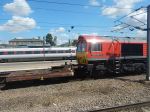
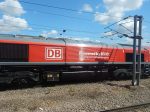
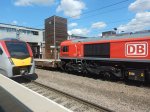
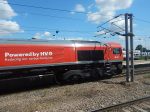
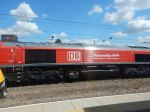
Except this one, which is named after Benjamin Gimbert GC, is different in that it is running on Hydrotreated Vegetable Oil (HVO). which is a more sustainable fuel.
Unfortunately, there is only so much second-hand vegetable oil from the likes of McDonalds and Burger King and it is also a component of Sustainable Aviation Fuel (SAF).
But in the UK, we have engineers at Cummins, JCB, Ricardo and a number of other companies, research organisations and universities, who could create a conversion for the American two-stroke diesels of the Class 66 locomotive so they could run on hydrogen.
These posts detail attempts to create a zero-carbon or dual-fuel locomotive in the UK and some of my thoughts.
- Dual-Fuel Class 37 And 66 Locomotive Concepts Unveiled
- Could Class 66 Locomotives Be Converted Into Battery-Electric Locomotives?
- Freightliner Secures Government Funding For Dual-Fuel Project
- Grants To Support Low-Carbon Technology Demonstrators
- Thoughts On A Battery/Electric Replacement For A Class 66 Locomotive
- A Hydrogen-Powered Locomotive
- Our Sustainability Journey
The Bi-Mode Class 99 locomotive is coming, but we need action now.
I estimate it would probably cost up to £2million to convert a Class 66 locomotive to hydrogen.
So why not have a competition with a prize of perhaps £10million to see who, can produce the best Class 66 or Class 68 locomotive conversion by the end of 2025?
Conclusion
We need urgent action to cut pollution, noise and emissions from heavy freight locomotives and market forces and government grants don’t seem to have produced a solution, so perhaps a competition with a big prize might do it.
It could even be televised,
 The Anonymous Widower