Skegness Station To Benefit From A £3.3m Improvement Package
The title of this post, is the same as that of this article on Rail Technology Magazine.
I took these pictures of Skegness station, on a visit to the town in July last year, which I wrote about in A Trip To Skegness.
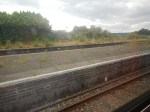
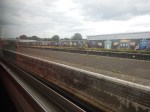
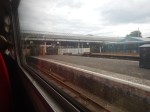
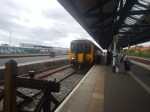

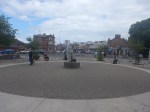
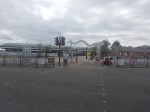
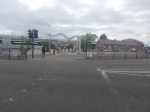
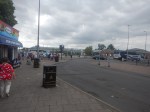


I feel that Skegness station would welcome some improvement.
The Rail Technology Magazine article says this about the project.
Upon completion of the project, customers will be able to utilise a number of enhanced facilities, including an improved accessible toilet with changing spaces, two new start-up offices, a community café and retail provisions. Upgrades will continue through improved access into the station for pedestrians and vehicles, offering integration with the surrounding community.
Work is hoped to start this year.
A Modern Zero-Carbon Train Service
If £3.3 million is going to be spent on Skegness station, would it not be a good idea to have better trains serving the station.
In A Trip To Skegness, I talked about updating the hourly Nottingham and Skegness service using Class 170 trains with Rolls-Royce MTU Hybrid PowerPacks.
I wonder if this route could be improved by fitting the Class 170 trains with Rolls-Royce MTU Hybrid PowerPacks?
- The hybrid technology would have a lower fuel consumption and allow electric operation in stations.
- The prototype hybrid is already working on Chiltern Railways in a Class 168 train.
- The Class 168 train is an earlier version of the Class 170 train and they are members of the Turbostar family.
- Rolls-Royce are developing versions of these hybrid transmissions, that will work with sustainable fuels.
- As we have a total of 207 Turbostar trainsets, these could be a convenient way of cutting carbon emissions on long rural lines.
- As Rolls-Royce MTU are also developing the technology, so their diesel engines can run on hydrogen, it is not outrageous to believe that they could be on a route to complete decarbonisation of this type of train.
I believe that we could see hydrogen-hybrid Class 170 trains, with a Rolls-Royce badge on the side.
But would it be possible to go the whole way using one of Stadler’s battery-electric trains?
Consider the service between Nottingham and Skegness.
- It is hourly.
- The route is run by 100 mph Class 170 trains.
- Nottingham and Grantham are 22.7 miles apart.
- Grantham and Skegness are 58.2 miles apart.
- Trains take four minutes to reverse at Grantham.
- Trains wait 20 minutes before returning at the two end stations.
- Trains reverse at Nottingham in a bay platform, which is numbered 2.
- Grantham is electrified.
- Nottingham station will be electrified in the next few years.
- Skegness station is next to the bus station in the middle of the town, so hopefully the electricity supply is robust enough to charge buses and trains.
Stadler make a train called an Akku.
- It is a member of the FLIRT family.
- It is a 100 mph train.
- I wrote Stadler FLIRT Akku Battery Train Demonstrates 185km Range, which means it could run between Nottingham and Skegness without intermediate charging.
This leads me to the conclusion that with charging systems at Nottingham and Skegness and taking a four-minute top-up at Grantham if needed, a FLIRT Akku could handle this route with ease.
Conclusion
Skegness is a town that needs leveling-up. A refurbished station and 100 mph electric trains to Grantham and London would be a good start.
Battery Train Pilot Project On Challenging’ Westerwald Routes
The title of this post, is the same as that of this article on Railway Gazette.
It is only a small order for three Mireo Plus B battery-electric multiple-units from Siemens Mobility, but I feel, it is significant that engineers and managers are confident that a battery-electric multiple unit can handle a challenging route.
Researchers Use Sea Water To Produce Green Hydrogen At Almost 100% Efficiency
The title of this post, is the same as that of this article on Hydrogen Fuel News.
This paragraph gives more details.
“We have split natural seawater into oxygen and hydrogen with nearly 100 percent efficiency, to produce green hydrogen by electrolysis, using a non-precious and cheap catalyst in a commercial electrolyser,” explained Professor Shi-Zhang Qiao, project leader at the School of Chemical Engineering at the University of Adelaide.
They use what is called a Lewis acid catalyst.
In the late 1960s, I worked for ICI in Runcorn.
Most of the hydrogen they needed was produced from brine by the large Castner-Kellner process, which may have been green, but was filthy, as it used a lot of mercury.
ICI also had an older and cruder process, which produced hydrogen and oxygen, by electrolysing brine, in a simple cell.
- These cells had a metal tub, with a concrete lid.
- Two electrodes passed through the lid.
- The lids quickly degraded and cells were rebuild regularly.
- But it did produce medical grade sodium hydroxide.
Legend also had it, that the salt that collected around the lid was pure enough to use in the canteen.
In Torvex Energy, I describe a company in Stockton which is also going the sea water electrolysis route.
Having seen, its Victorian ancestor in operation, I believe that sea water electrolysis has possibilities to make hydrogen efficiently.
Riding In A Train Designed To Run On Battery Power
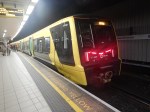
Today, I had my first ride in a train, that has been designed to be able to run on battery power.
- Merseyrail’s Class 777 trains run normally using third-rail electrification.
- But they are also designed to run on battery power.
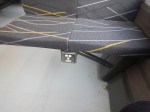
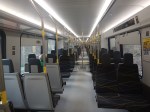
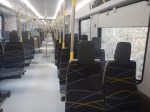
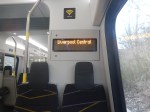
- I took these pictures of the train as it went from Liverpool Central station to Kirkby station and back to Moorfields station, from where I took a train back to Liverpool Lime Street station.
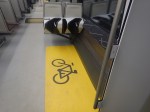
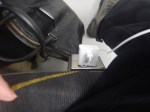
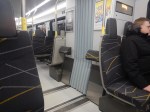
I took these pictures on the route.
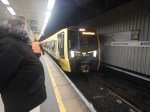
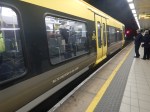
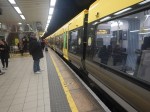

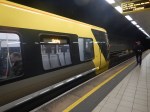

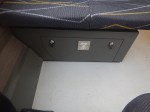

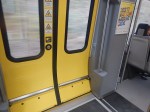

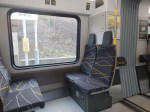


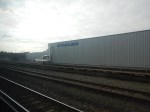
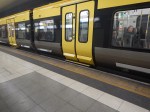

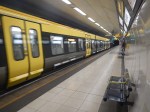

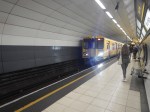
Note.
- Every seat has access to a power and USB socket.
- Every head-rest has leather facings.
- The end lights change from white for front, to red for back, when the train changes direction.
- Door lights are green when it is safe to enter.
- There is a lot of attention to detail in the design.
If there is a better suburban train in Europe, I’ve yet to see or ride in it.
Noise And Vibration
Consider.
- I have ridden in two trains converted to battery-electric operation and both were very quiet.
- This train was also very quiet, but it has been designed for battery operation.
- I suspect that the train is very frugal with electricity.
- I wonder, if the small battery, that is carried on the train for depot movements, is also used for regenerative braking.
- It might not be a traditional battery, but a supercapacitor, some of which are made from curved graphene.
This train certainly sets new standards in noise and vibration.
So Many Floating Wind Designs, So Few Test Sites – Norwegian METCentre Sold Out
The title of this post, is the same as that of this article on offshoreWIND.biz.
This is the sub-heading.
There are currently more than 80 floating wind technology concepts and designs worldwide, and testing even a certain number of these could prove to be an endeavour since there are not many test sites dedicated to floating wind technology in Europe.
It strikes me that we need more test centres.
As UK waters will in the next couple of decades be home to a lot more GW of wind farms, perhaps we should develop a test centre.
I wonder, if South Wales would be the place for a test centre.
- There is a lot of sea, which isn’t cluttered with oil and gas rigs, and wind farms.
- There are a lot of wind farms planned in the area.
- There are at least two good technology universities.
- There are some deep water ports.
- Electricity connections and power generation are good.
- There is good train connections to the rest of England and Wales.
- A train testing centre is being built at Nant Helen. Some tests needed to be done could be the same.
Some innovative designs for wind turbines are also being developed in South Wales.
Nightmare On The Buses
The title of this post, is not the title of a horror remake of the popular 1970s-sitcom’ On The Buses, but a description of my journeys on a 141 bus today.
Until, last Friday, I had two buses; the 21 and 141 to take between my house and Moorgate, which is an important destination for me.
- There is a large Marks and Spencer food store there, where I regularly buy the gluten-free food, I must have as a coeliac.
- There is a LEON there, where I regularly have my gluten-free breakfast.
- Moorgate station is a good transport interchange from which I regularly start journeys over London.
But now there is only one bus; the 141.
In November 2021, I wrote The Great Bus Robbery, where I said this.
What is TfL’s latest crime?
The 21 and 271 buses are going to be combined into a new route between Lewisham and Highgate, which will go nowhere near the Balls Pond Road.
So we’ll just have the one bus route to the City of London.
On past form, if TfL say they will increase the frequency, I wouldn’t believe them.
This was my conclusion.
We will need the 21 bus to provide us with a route to Crossrail, as the 141 buses will be full.
The 21 bus is needed where it is and mustn’t be stolen.
Note that Crossrail is now called the Elizabeth Line.
Today, I made three journeys between my house and Moorgate station and this is what happened.
Journey 1 – Southbound
I arrived at the bus stop and after five minutes a 141 bus arrived.
But it was full and didn’t open the door to let any of the waiting six passengers board.
After another three minutes, another 141 bus arrived and we squeezed on.
But there wasn’t any seats left and I stood all the way to Moorgate.
Journey 2 – Northbound
I only had my breakfast and as I had things to do at home, I returned fairly quickly after finishing my breakfast.
Partly, this was also because a 141 bus turned up with some seats available.
But it was a lot closer to capacity, than Northbound buses at about the same time last week.
Journey 3 – Northbound
My third journey started at about four in the afternoon, after I’d been out to take some pictures and buy a few food items in Marks and Spencer.
I had to wait seven minutes for a 141 bus and as there was a 76 bus a couple of minutes in front of it, I took that, with the intention of changing halfway.
I was able to get a seat.
In the end, the 76 bus got stuck in traffic and I walked to my intended change stop and waited there for the 141 bus, which was without a seat, so I stood for three stops to home.
It was one of the slowest journeys, I’d had between my house and Moorgate station.
Day 2 – February 7th – 2023
I arrived at the bus stop and found a lady, who had been waiting for an hour-and-a-quarter.
I had no problem coming home, as I went to Liverpool during the day and got a taxi back from Euston.
Day 3 – February 8th – 2023
Perhaps, they’d heard our pleas, but a bus turned up after a couple of minutes with plenty of spare space.
I even got a seat.
Going home, at about 10, there wasn’t a spare seat.
Revenue per bus, is certainly rising.
Conclusion
On the evidence of the first three day, it appears that there is not enough capacity without the 21 bus.
World’s First Offshore Wind Farm Using 16 MW Turbines Enters Construction In China
The title of this post, is the same as that of this article on the offshoreWIND.biz.
This is the sub-heading.
China Three Gorges Corporation (CTG) has started construction of the second phase of its offshore wind farm Zhangpu Liuao. The project will be both China’s and the world’s first wind farm to comprise 16 MW wind turbines.
I hope the Chinese have done all their calculations, research and testing. The dynamics of large wings are tricky and there are a lot of square law factors involved. I’d always be worried that at a particular wind speed a dangerous vibration will be setup.
How many Chinese engineers have seen videos of Galloping Gertie?
As the video says, no one was injured or killed, when the Tacoma Narrows Bridge fell into the river, but we nearly had a very similar disaster in the UK. I used to work at ICI in Runcorn and at the time, I lived in Liverpool, so every day, I went to work I crossed the Silver Jubilee Bridge twice.
One day, after a party in Cheshire, I even got so drunk, I had to stop the car on the bridge and was sick into the Mersey. It was before C and myself were married and she always claimed she nearly called the marriage off, after the incident.
But have you ever wondered, why that bridge is a through arch bridge rather than a suspension bridge as over the Forth, Hmber and Severn, which were all built around the same time?
Wikipedia has a section, which describes the Planning of the bridge.
The new bridge had to allow the passage of shipping along the Manchester Ship Canal. Many ideas were considered, including a new transporter bridge or a swing bridge. These were considered to be impractical and it was decided that the best solution was a high-level bridge upstream from the railway bridge. This would allow the least obstruction to shipping and would also be at the narrowest crossing point. The first plan for a high-level bridge was a truss bridge with three or five spans, giving an 8 yards (7 m) dual carriageway with a cycle track and footpaths. This was abandoned because it was too expensive, and because one of the piers would be too close to the wall of the ship canal. The next idea was for a suspension bridge with a span of 343 yards (314 m) between the main towers with an 8 yards (7 m) single carriageway and a 2-yard (2 m) footpath. However aerodynamic tests on models of the bridge showed that, while the bridge itself would be stable, the presence of the adjacent railway bridge would cause severe oscillation.
The finally accepted design was for a steel through arch bridge with a 10-yard (9 m) single carriageway. The design of the bridge is similar to that of Sydney Harbour Bridge but differs from it in that the side spans are continuous with the main span rather than being separate from them. This design feature was necessary to avoid the problem of oscillation due to the railway bridge. The main span measures 361 yards (330 m) and each side span is 83 yards (76 m).
But that misses out part of the story that I learned about at ICI.
I developed a very simple piece of electronics for ICI Runcorn’s noise and vibration expert. The equipment allowed the signals from two noise meters to be subtracted. This meant that if they were pointed in different directions, the noise generated by an object or piece of equipment could be determined.
The noise and vibration expert had tremendous respect from his fellow engineers, but his involvement in the design of the Runcorn bridge had elevated him to a legend.
The designers of the suspension bridge, that is detailed in the Wikipedia extract, presented their design to the ICI (Merseyside) Scientific Society.
The noise and vibration expert was at the meeting and questioned the design and said it would collapse due to oscillations caused by the presence of the railway bridge. He advised aerodynamic tests should be done on the bridge.
His back of the fag packet calculations were shown by tests to be correct and the bridge was built as a through arch bridge.
These pictures show the bridge.
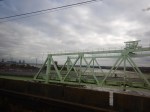
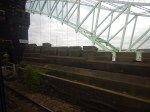
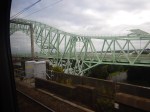
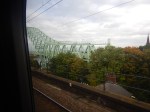

They were taken from a train on the railway bridge.
Equinor And SSE Eye Green Hydrogen Production For 1.32 GW Dogger Bank D
The title of this post, is the same as that of this article on offshoreWIND.biz.
This is the sub-heading.
SSE Renewables and Equinor, the developers of the Dogger Bank Wind Farm in the UK, are exploring two options for Dogger Bank D, the fourth wind farm the partners are looking to build as part of the development. These include using Dogger Bank D for electricity that would feed into the UK grid and/or for green hydrogen production.
This says to me, that depending on need, electricity from the Dogger Bank Wind Farms and D in particular, can be distributed in the grid or converted into green hydrogen.
- The article says that the electrolyser could become the UK’s largest green hydrogen project
- There will be plenty of hydrogen storage in the salt caverns at Aldbrough, which can currently store the equivalent of 320 GWh of electricity, It is currently being expanded to be one of the largest hydrogen stores in the world according to this page on the SSE web site.
- There are currently two gas-fired power stations at Keadby and they will in a few years be joined by a third, that will be fitted with carbon-capture and a hydrogen-fueled power station.
The various wind farms, power stations and gas storage on Humberside are growing into a very large zero-carbon power cluster, with an output approaching six GW.
Any shortfall in wind output, could be made-up by using the Keadby 3 gas-fired power station with carbon capture or the Keadby hydrogen power station.
Conclusion
Humberside is getting a cluster of power stations and wind farms, that can produce almost twice the electricity of Hinckley Point C nuclear power station.
Extending The Elizabeth Line – Connecting West Anglia Main Line Services To The Central Tunnel
If say it was ever needed to run a train between Cambridge or Stansted stations and the Central Tunnel of the Elizabeth Line, three things must be possible.
Trains Would Have To Be Compatible With The Central Tunnel Of The Elizabeth Line
As any train would have to be compatible with the platform-edge doors in the central tunnel of the Elizabeth Line, the trains would have to be dimensionally identical to the current Class 345 trains.
- Nine cars
- Possibility of lengthening to ten cars.
- 204.73 metres long.
- 6 sets of doors per carriage
- Ability to run under full digital signalling.
I covered this in detail in Extending The Elizabeth Line – High Speed Trains On The Elizabeth Line.
Trains Would Need A 100 mph Capability To Travel On The Fast Lines Of The West Anglia Main Line
They would be designed for a higher speed of at least 100 mph, to enable running on the fast lines.
The faster running would ease scheduling of the trains.
Effectively, the train would be a Class 345 train with more features and considerably more grunt.
Trains Must Be Able To Connect Between The West Anglia Main Line And The Central Tunnel Of The Elizabeth Line At Stratford
This map from cartometro.com shows the track layout at Stratford.
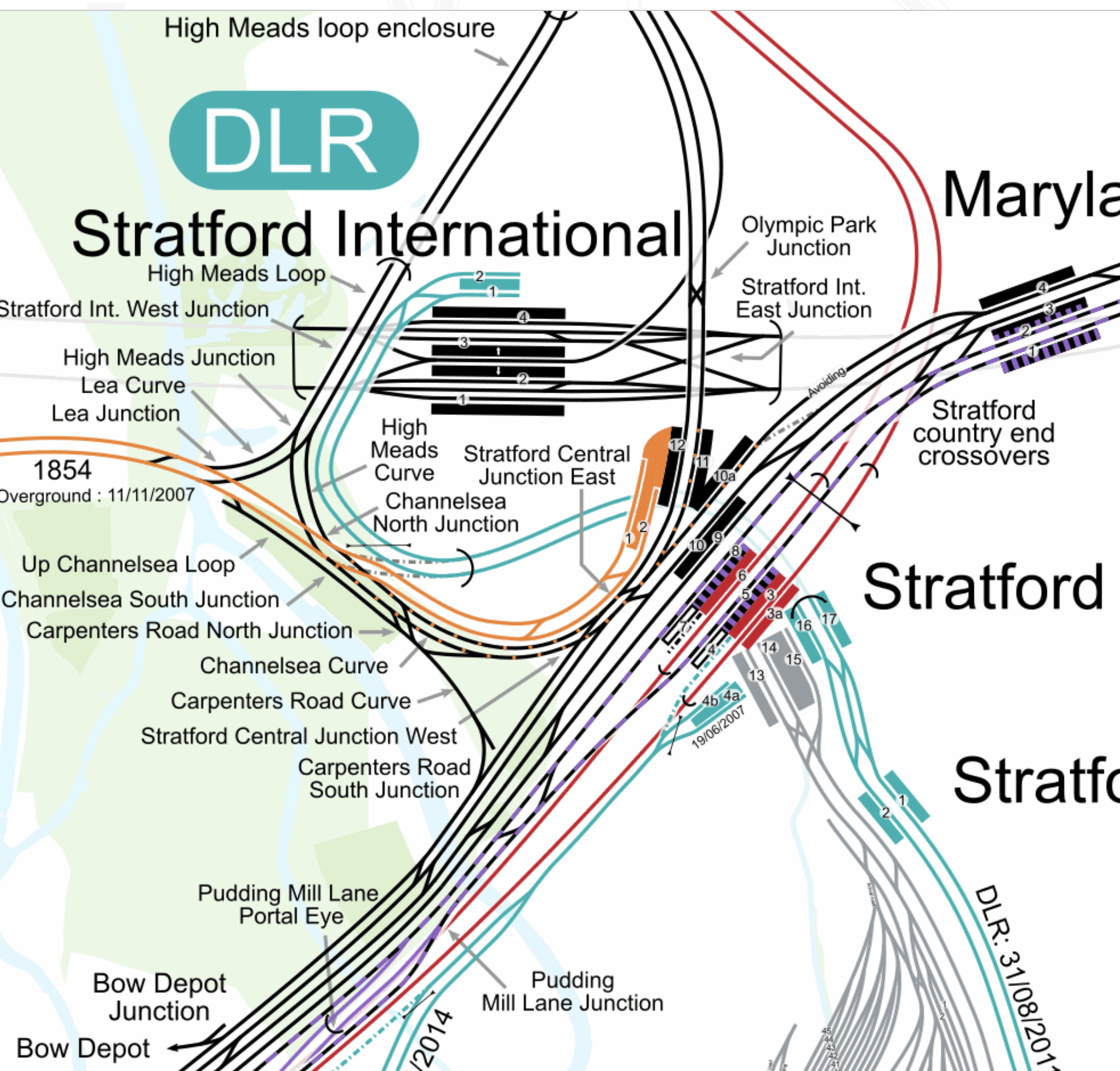
Note.
- The Elizabeth Line is shown in black and purple.
- The Elizabeth Line enters and leaves the Central Tunnel at the Pudding Mill Lane Portal Eye.
- The West Anglia Main Line to and from Stansted and Cambridge goes through Platforms 11 and 12 at Stratford station, before crossing over Stratford International station and going through Olympic Park Junction.
I am fairly sure that the track layout at Stratford does not allow trains to go both ways between West Anglia Main Line and the Elizabeth Line Central Tunnel.
But I suspect with the addition of a couple of extra crossovers, that this could be arranged.
Kittiwake Compensation
The title of this post, is the same as that of this page of Ørsted’s Hornsea Three web site.
The first section of the page gives the background.
Hornsea 3 Offshore Wind Farm received planning permission in December 2020. As part of our Development Consent Order, a requirement was included for ecological compensation measures for a vulnerable seabird species whose populations could be affected by wind farms – the Black-legged kittiwake (Rissa tridactyla).
Our compensation plan focusses on providing artificial nesting structures for kittiwake along the east coast of England. This project is the first of its kind and we are working on new and innovative designs for the artificial nesting structures. Each structure will be purpose-built, bespoke and specific to the landscape characteristics of each location. The structures also present an educational opportunity, allowing researchers to better understand kittiwake.
Developing effective environmental compensation measures is essential to ensure the UK Government’s targets for offshore wind can be realised, to deliver a net zero-carbon future.
So kittiwakes are not being paid compensation, as I don’t suspect many have bank accounts.
But they are being built a few new nesting structures.
Wikipedia has an entry on kittiwakes.
It notes that all European kittiwakes are of the black-legged variety and this is a picture, I took of some on the Baltic in Newcastle.
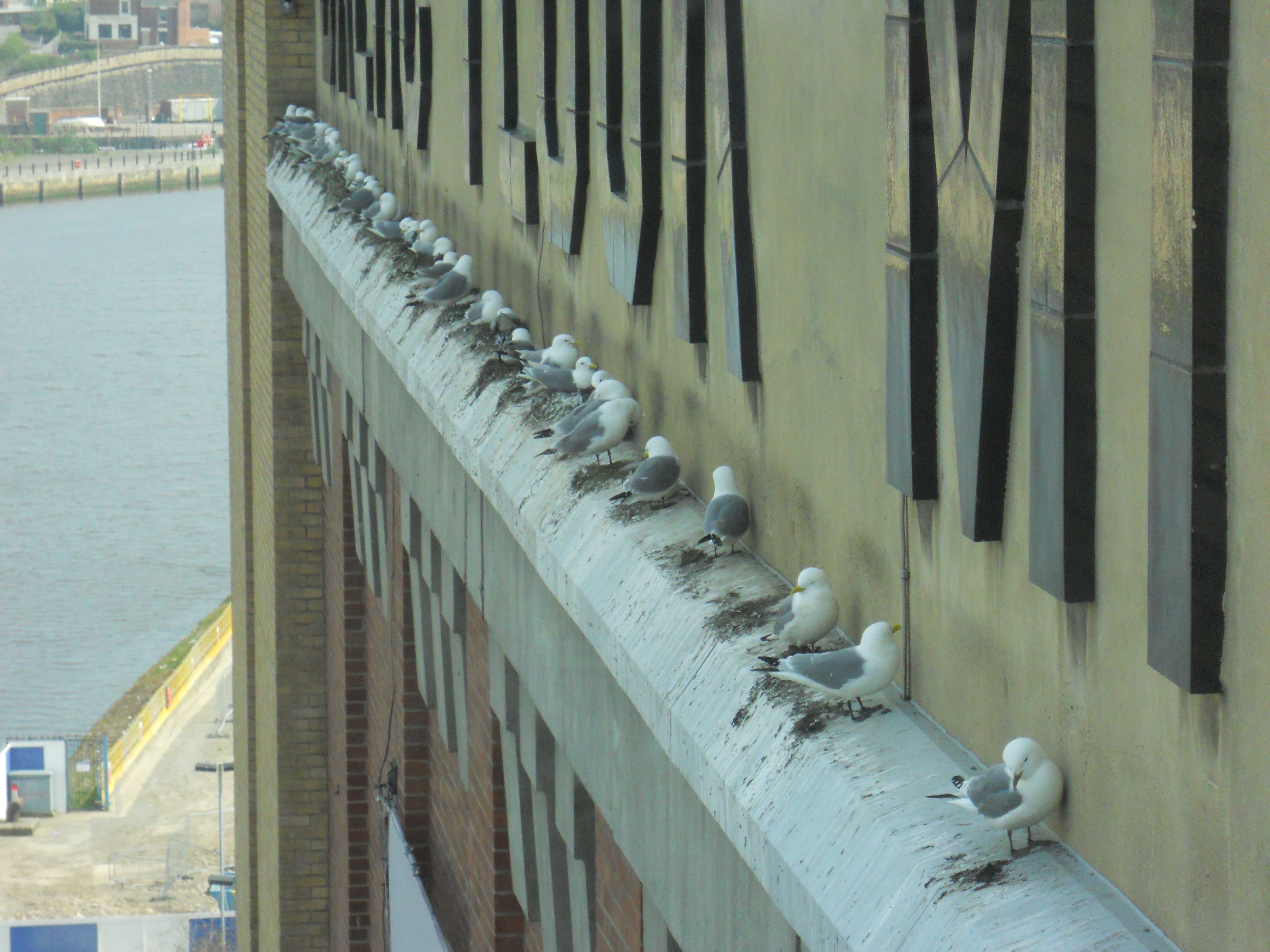
I’ve seen several pictures of kittiwakes lined up like these.
The document goes on to describe the work being done for the kittiwakes and this is said about work in East Suffolk.
Lowestoft and Sizewell are the only locations between Kent and Humberside with thriving kittiwake colonies. Kittiwake normally nest on steep cliffs with narrow ledges. East Anglia doesn’t have these natural nesting spaces, so kittiwake have reverted to colonising urban areas, for example on windowsills and ledges of buildings. Kittiwake breeding for the first time are most likely to find artificial structures that are situated close to these urban areas. They are less likely to find structures in places where there are not already kittiwake. Lowestoft and Sizewell are therefore two of the few places in East Anglia where artificial structures could be colonised quickly. These purpose-built nesting sites would improve breeding conditions for kittiwake, whilst successfully achieving our compensation requirements to unlock the world’s biggest offshore wind farm.
I took this picture of kittiwakes at Sizewell.
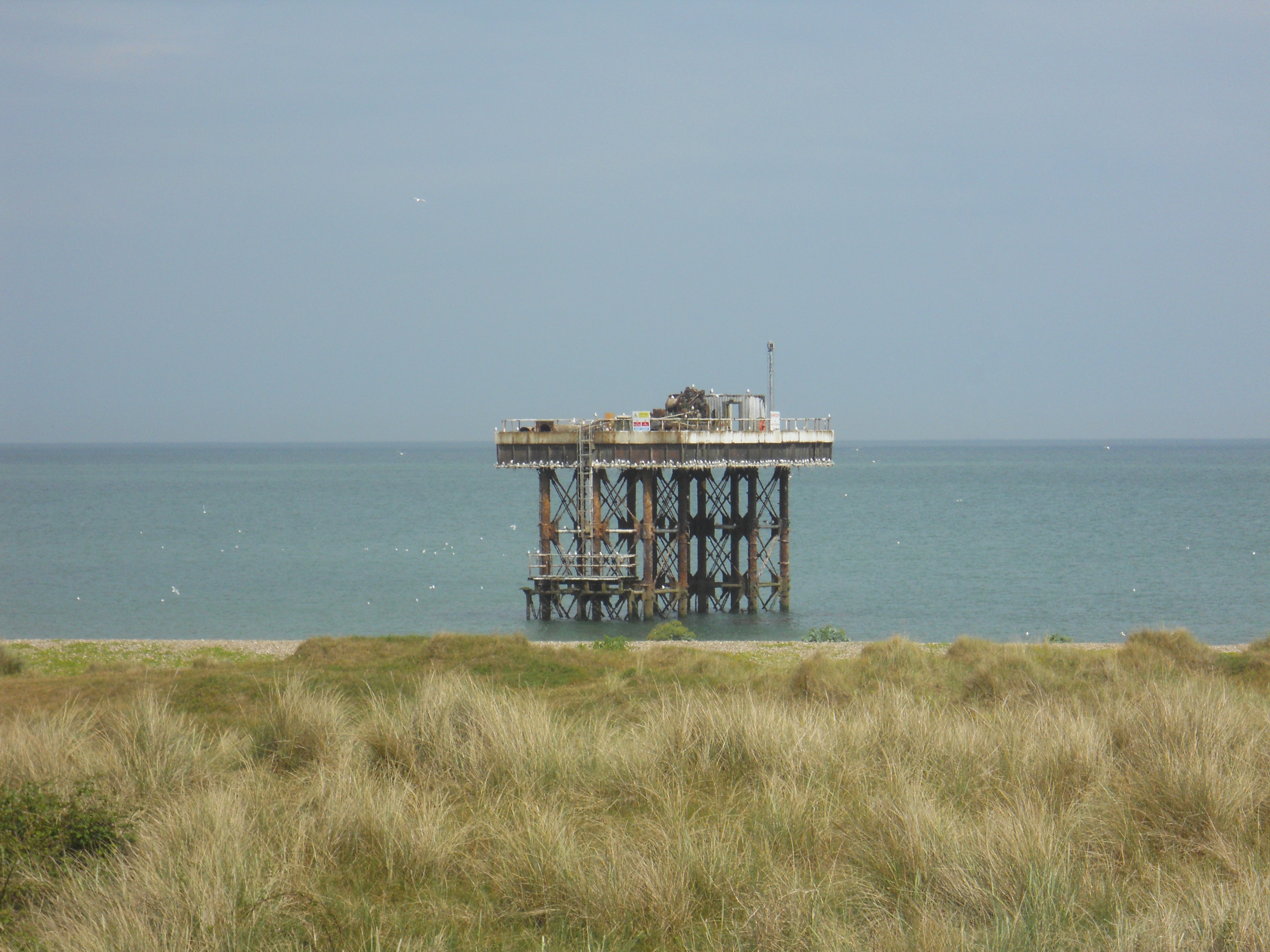
It doesn’t seem too unlike the structure on the Hornsea 3 web site.
 The Anonymous Widower