Trains Disrupted After Lorry Crashes Onto Tracks In East Lothian
The title of this post, is the same as that of this article on the BBC.
These are the first two paragraphs.
Train services in and out of Edinburgh have been delayed after a lorry crashed onto the tracks in East Lothian.
The lorry driver was taken to hospital following the crash onto the East Coast Main Line between Wallyford and Prestonpans at about 13:30. His condition is not known.
Note.
- On a day with a rail strike, this was all that was needed.
- The place name is appropriate.
There is no excuse for an accident like this.
Could Rolls-Royce SMRs Be The Solution To Europe’s Gas Shortage?
Of all the offshore wind farms, that I’ve looked at recently, I find Magnora’s ScotWind N3 wind farm the most interesting.
I wrote about it in ScotWind N3 Offshore Wind Farm.
I said this.
In any design competition, there is usually at least one design, that is not look like any of the others.
In the successful bids for the ScotWind leases, the bid from Magnora ASA stands out.
- The company has an unusual home page on its offshore wind web site.
- This page on their web site outlines their project.
- It will be technology agnostic, with 15MW turbines and a total capacity of 500MW
- It will use floating offshore wind with a concrete floater
- It is estimated, that it will have a capacity factor of 56 %.
- The water depth will be an astonishing 106-125m
- The construction and operation will use local facilities at Stornoway and Kishorn Ports.
- The floater will have local and Scottish content.
- The project will use UK operated vessels.
- Hydrogen is mentioned.
- Consent is planned for 2026, with construction starting in 2028 and completion in 2030.
This project could serve as a model for wind farms all round the world with a 500 MW power station, hydrogen production and local involvement and construction.
I very much like the idea of a concrete floater, which contains a huge electrolyser and gas storage, that is surrounded by an armada of giant floating wind turbines.
These are my thoughts.
Floating Concrete Structures
To many, they may have appear to have all the buoyancy of a lead balloon, but semi-submersible platforms made from concrete have been used in the oil and gas industry for several decades.
Kishorn Yard in Scotland was used to build the 600,000-tonne concrete Ninian Central Platform,in 1978. The Ninian Central Platform still holds the record as the largest movable object ever created by man.
The Ninian Central Platform sits on the sea floor, but there is no reason why a semi-submersible structure can’t be used.
Electrolysers
There is no reason, why a large electrolyser, such as those made by Cummins, ITM Power or others can’t be used, but others are on the way.
- Bloom Energy are working on high temperature electrolysis, which promises to be more efficient.
- Torvex Energy are developing electrolysis technology that used sea water, rather than more expensive purified water.
High Temperature Electrolysis
High temperature electrolysis needs a heat source to work efficiently and in Westinghouse And Bloom Energy To Team Up For Pink Hydrogen, I described how Bloom Energy propose to use steam from a large nuclear power station.
Offshore Nuclear Power
I’ve never heard of offshore nuclear power, but it is not a new idea.
In 1970, a company called Offshore Power Systems was created and it is introduced in its Wikipedia entry like this.
Offshore Power Systems (OPS) was a 1970 joint venture between Westinghouse Electric Company, which constructed nuclear generating plants, and Newport News Shipbuilding and Drydock, which had recently merged with Tenneco, to create floating nuclear power plants at Jacksonville, Florida.
Westinghouse’s reactor was a 1.150 MW unit, which was typical of the time, and is very similar in size to Sizewell B.
The project was cancelled before the reactors were towed into position.
Nuclear Knowledge Has Improved
Consider.
- In the fifty years since Offshore Power Systems dabbed their toes in the water of offshore nuclear power, our knowledge of nuclear systems and engineering has improved greatly.
- The offshore oil and gas industry has also shown what works impeccably.
- The floating offshore wind industry looks like it might push the envelop further.
- There has been only one nuclear accident at Fukushima, where the sea was part of the problem and that disaster taught us a lot.
- There have been a large number of nuclear submarines built and most reached the planned end of their lives.
- Would a small modular nuclear reactor, be safer than a large nuclear power plant of several GW?
I would suggest we now have the knowledge to safely build and operate a nuclear reactor on a proven semi-submersible platform, built from non-rusting concrete.
An Offshore Wind Farm/Small Modular Reactor Combination Producing Hydrogen
Consider.
- A typical floating offshore wind farm is between one and two gigawatts.
- A Rolls-Royce small modular reactor is sized to produce nearly 0.5 GW.
- The high temperature electrolyser will need some heat to achieve an optimum working temperature.
- Spare electricity can be used to produce hydrogen.
- Hydrogen can be stored platform.
- Hydrogen can be sent ashore using existing gas pipes.
- Hydrogen could even be blended with natural gas produced offshore to create a lower-carbon fuel.
- It would also be possible to decarbonise nearby offshore infrastructure.
A balance between wind and nuclear power can be obtained, which would provide a steady output of energy.
Conclusion
There are a large numbers of possibilities, to locate a Rolls-Royce small modular reactor close to a wind farm to use high temperature electrolysis to create green hydrogen, which can be used in the UK or exported through the gas network.
West Drayton Station – 22nd June 2202
I passed through West Drayton station today and took these pictures.








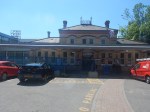

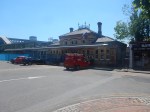




Note.
- The rebuilding of the station is almost finished.
- There are three platforms that can be used by the Elizabeth Line.
- The new Platform 5 is still to be completed
The station is fully step-free between street and platform, but not between train and platform.
News Of The Day From Rolls-Royce
This press release from Rolls-Royce is entitled Rolls-Royce Advances Hybrid-Electric Flight With New Technology To Lead The Way In Advanced Air Mobility.
This is the introductory paragraph.
Rolls-Royce is officially announcing the development of turbogenerator technology, which includes a new small engine designed for hybrid-electric applications. The system will be an on-board power source with scalable power offerings and will complement the Rolls-Royce Electrical propulsion portfolio, enabling extended range on sustainable aviation fuels and later as it comes available through hydrogen combustion.
This paragraph outlines the use of the new small engine.
Current battery technology means all-electric propulsion will enable eVTOL and fixed wing commuter aircraft for short flights in and between cities and island-hopping in locations like Norway and the Scottish Isles. By developing turbogenerator technology, that will be scaled to serve a power range between 500 kW and 1200 kW, we can open up new longer routes that our electric battery powered aircraft can also support.
There is also a video in the press release, which gives more information.
- The turbogenerator is compatible to their electric power and propulsion offering.
- The turbogenerator has a power of 500-1200 kW to serve different aircraft platforms.
- The system is modular and can be tailored to different applications.
- The turbogenerator can either power the aircraft directly or charge the batteries.
- The system can be configured to provide primary power for other applications.
- Rolls-Royce are designing all the components; the turbogenerator, the gas turbine, the generator, the power electronics, so they all fit together in a compact and lightweight solution.
- Rolls-Royce intend to manufacture all components themselves and not rely on bought-in modules.
- Every gram of weight saved is important.
I suspect that one of the keys to making this all work is a very comprehensive and clever control system.
I have a few thoughts.
Weight Is Key
Rolls-Royce emphasise weight saving in the video. Obviously, this is important with any form of flying machine.
An Example System
Let’s suppose you want an electric power system to power a railway locomotive or one of those large mining trucks.
- The locomotive or truck has an electric transmission.
- Power of 2 MW is needed.
- A battery is needed.
- Fuel will be Sustainable Aviation Fuel (SAF) or hydrogen.
A series hybrid-electric power unit will be created from available modules, which could be very fuel efficient.
What Will Rolls-Royce’s System Be Able to Power?
Although the system is aimed at the next generation of electric flying machines, these systems will be used in any application that wants an efficient zero- or low-carbon power source.
Consider.
- Some large trucks have diesel engines with a power of almost 500 kW.
- A Class 68 bi-mode locomotive has a 700 kW diesel engine.
- A Class 802 train has three 700 kW diesel engines.
- Rolls-Royce subsidiary MTU are a large supplier of diesel engines for rail, road and water.
It looks to me that Rolls-Royce have sized the system to hoover up applications and they have MTU’s experience to engineer the applications.
Class 43 Power Cars
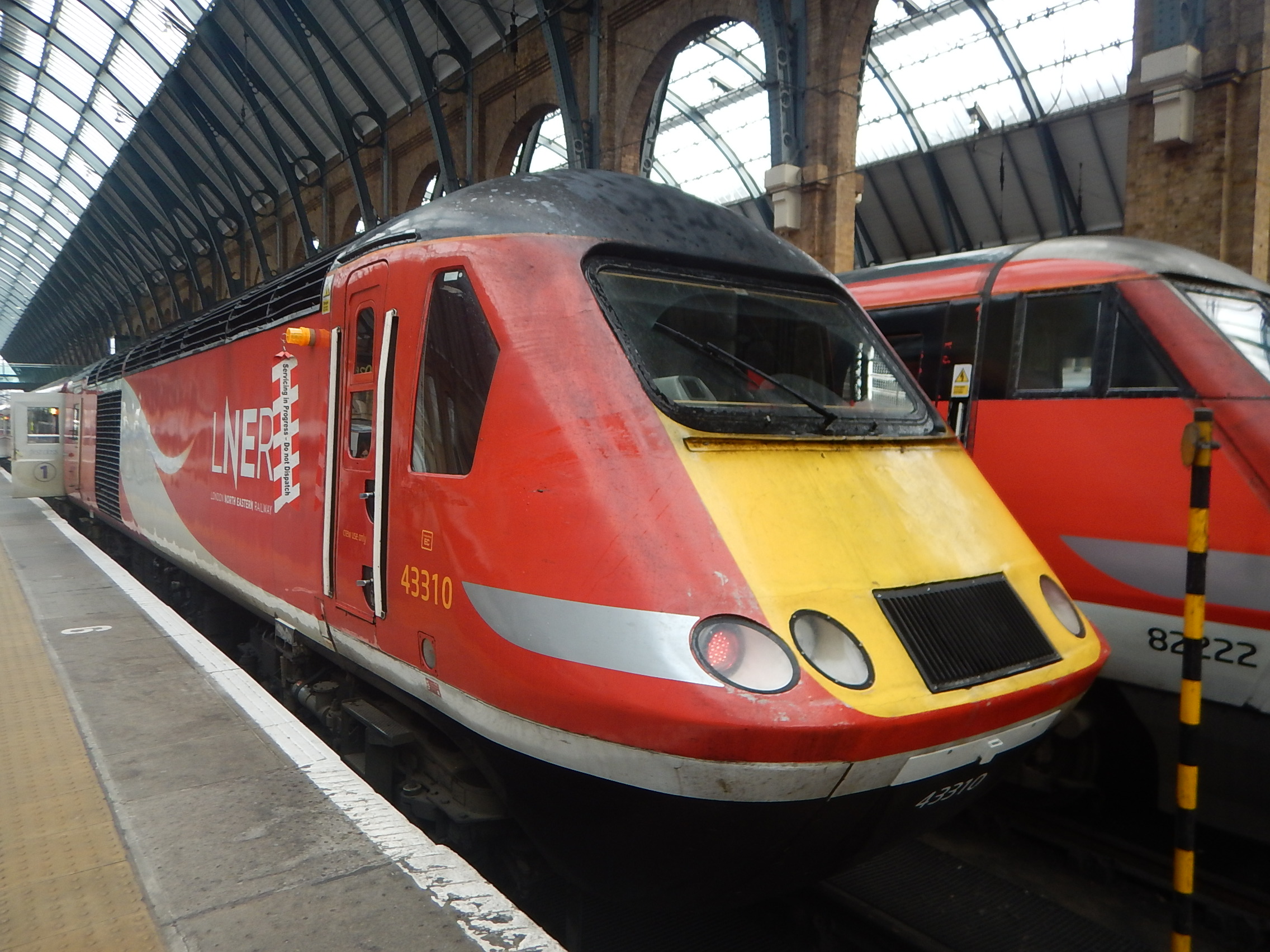
The iconic Class 43 power cars running on UK railways are an interesting possibility for powering with Rolls-Royce’s new system.
- Despite being over forty-years old, there are over a hundred and twenty still in service.
- They were upgraded with new 1.7 MW MTU diesel engines in the early part of this century.
- Rolls-Royce is based in Derby.
- The Class 43 power cars were developed in Derby.
- Hydrogen-powered Class 43 power cars, hauling GWR Castles or ScotRail Inter7Cities would be tourist attractions.
- The Class 43 power cars need to be either decarbonised or replaced in the next few years.
Decarbonisation using Rolls-Royce’s new system would probably be more affordable.
This all sounds like a project designed in a pub in Derby, with large amounts of real ale involved.
But I wouldn’t be surprised if it happened.
Will The System Be Upgradable From Sustainable Aviation Fuel To Hydrogen?
This is an except from the introductory paragraph.
The system will be an on-board power source with scalable power offerings and will complement the Rolls-Royce Electrical propulsion portfolio, enabling extended range on sustainable aviation fuels and later as it comes available through hydrogen combustion.
This would appear that if used in aviation, it will be possible to upgrade the system from sustainable aviation fuel to hydrogen, when a suitable hydrogen supply becomes available.
But all applications could be upgraded.

A truck, like the one shown in the picture could be delivered as one running on sustainable aviation fuel and converted to hydrogen later.
Conclusion
Rolls-Royce have put together a modular system, that will have lots of applications.
Step-Free Provision On Elizabeth Line West Of Paddington
The stations may be step-free between street and platform, but West of Paddington, there does not appear to be step-free access between the platform and the train.
These pictures show a selection of stops.
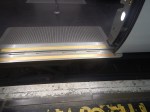




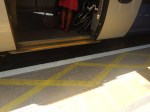

Compare these steps of a few inches, with those I showed in Step-Free Access Between Train And Platform On The Elizabeth Line.








These pictures were taken between Woolwich and Paddington stations and show first class step-free access between train and platform.
The step-free access on the Western branch of the Elizabeth Line does not appear to be up to the standard expected of a world class railway.
Is The Current Arrangement Only Temporary?
I took these pictures at Padding Station today of a Class 345 train alongside Platform 10.




Note.
- There are large gaps.
- I had a chat with a station guy, who’d just unloaded two wheelchair passengers from the train using a ramp.
- He felt things could be improved.
- I feel that level access for the Elizabeth Line at Paddington is important.
But when the Elizabeth Line is fully connected, it will be connected to a series of Central London stations, including Paddington, that will have full step-free access between the train and the platform.
So the current arrangement will be improved dramatically in a few months.
The Visitor To London In A Wheel-Chair
The Central London section of the Elizabeth Line between Paddington and Whitechapel or Woolwich stations is step-free between street and train.
So a visitor to London in a wheel-chair might choose to stay in a hotel on this easy section of the Elizabeth Line to make the most of their stay.
But because of the lack of step-free access between train and platform outside of the Central London section, would they have trouble visiting places like Windsor, which would require a change of trains at Slough?
Would It Be Possible To Separate Elizabeth Line and Great Western Railway Services?
Consider.
- Great Western Railway services between Paddington and Didcot Parkway use the Elizabeth Line platforms at Ealing Broadway, Hayes and Harlington, West Drayton, Slough, Maidenhead, Twyford and Reading.
- In addition, some express trains stop at Slough and Ealing Broadway.
- There are also freight trains passing through.
It might be sensible to move the Paddington and Didcot Parkway service to the Elizabeth Line and adjust platform heights appropriately.
Australian Mining Billionaire Touts A Green Revolution In U.S. Coal Country — With Skepticism Trailing Close Behind
The title of this post, is the same as this article on Forbes.
It is a definite must-read about Andrew ‘Twiggy’ Forrest, making one of the most difficult hydrogen pitches in the world, to coal miners in West Virginia.
Perhaps we need Mr Forrest to convince the RMT, that their views are wrong and so nineteenth century.
Crocheting On The Lizzie Line
I saw a lady crocheting on the Lizzie Line yesterday!
Gravity—Yes, Gravity—Is the Next Frontier for Batteries
The title of this post, is the same as that of this article on Popular Mechanics.
This is the first paragraph.
When the sun isn’t shining and the wind isn’t howling, suspended weights can step in to generate power.
The article goes on to explain Energy Vault and Gravitricity.
It is certainly an endorsement of the technique from one of America’s popular magazines.
Cost Of Turning Off UK Wind Farms Reached Record High In 2021
The title of this post, is the same as that of this press release from Drax.
This is the first paragraph.
The cost of turning off wind farms in the UK has reached record levels, according to a new report.
The press release makes these points.
- Investing in more long duration electricity storage, such as expanding Drax’s Cruachan pumped storage hydro plant in Scotland, would mean more excess renewable power could be stored and made available when required, cutting costs and carbon emissions.
- The cost of turning off UK wind farms to manage the electricity system rose from almost £300m during 2020 to over £500m in 2021, contributing to higher energy bills and carbon emissions, according to a new report.
- Costs increased substantially because the system relied on expensive gas power to manage periods when wind power was curtailed, as not enough electricity storage was available to prevent the excess renewable power from wind farms going to waste.
Drax give these reasons for the problems.
This happened as a result of constraints in the transmission system and a lack of long-duration storage capacity, which is needed to manage periods when renewable power generation outstrips demand.
The problem is going to get worse as we increase the amount of wind power in the UK.
Penny Small, Drax’s Group Generation Director sums everything up.
This report underlines the need for a new regulatory framework to encourage private investment in long-duration storage technologies.
The UK is a world-leader in offshore wind, but for the country’s green energy ambitions to be realised we need the right energy storage infrastructure to support this vital technology, make the system secure and reduce costs.
Drax’s plan to expand Cruachan will strengthen UK energy security, by enabling more homegrown renewable electricity to power British homes and businesses, reducing system costs and cutting carbon emissions.
A good framework has been created for wind farms and many more are being proposed and developed.
Frameworks are needed for both transmission systems and long-duration energy storage capacity.
Volvo Trucks Showcases New Zero-Emissions Truck
The title of this post, is the same as that of this press release from Volvo Trucks.
This is the first paragraph.
Imagine a truck that only emits water vapor, produces its own electricity onboard and has a range of up to 1 000 km. It’s possible with fuel cells powered by hydrogen, and Volvo Trucks has started to test vehicles using this new technology.
This picture shows one of the trucks.
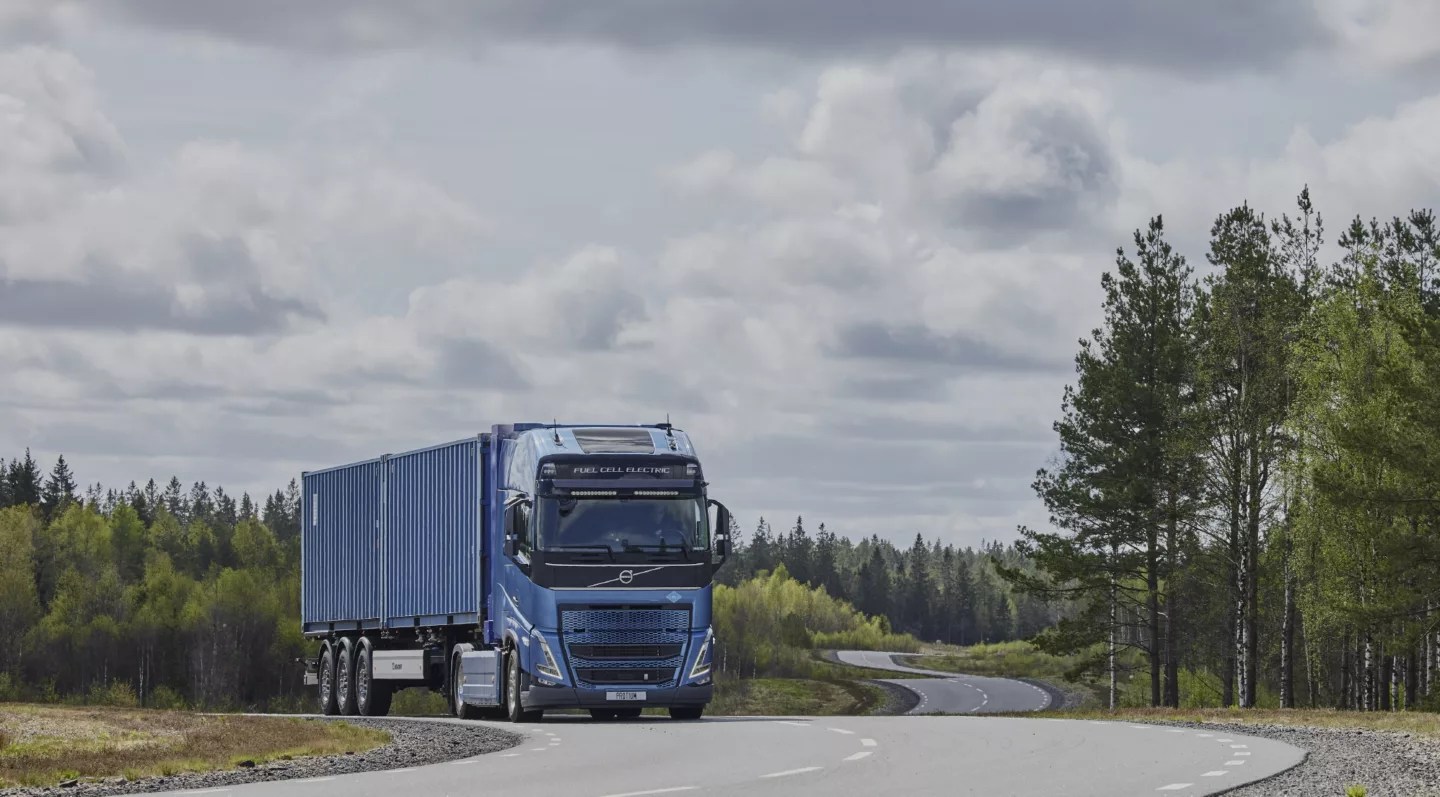
It certainly looks like a normal truck.
From the press release, it looks like Volvo Trucks are taking a conservative approach to designing, developing and launching the truck.
- Early examples will go through an extensive test program.
- It uses two fuel cells can generate up to 300 kW.
- Range is quoted at up to 1000 km.
- Fully refuelling takes 15 minutes.
- Gross weight is up to 65 tonnes.
- It looks to be a straight replacement for a current diesel truck.
Full launch is mentioned as towards the end of the decade, after there are enough hydrogen filling stations.
Conclusion
I may not have driven a large truck like this, but I’ve certainly funded a large number and talked with many experienced operators.
It looks to me that this could be the truck for an operator or company, who wants to offer zero-carbon transport for commercial, environmental, public relations or tax reasons.
 The Anonymous Widower