Effort To Contain Costs For Hoo Reopening
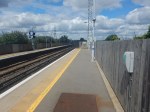
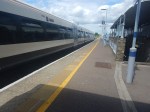
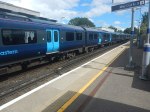
The title of this post, is the same as that of an article in the April 2022 Edition of Modern Railways.
This is the first paragraph.
Medway Council is working with Network Rail and other industry players in an effort to make restoration of a passenger service to Hoo on the Isle of Grain branch feasible. The Council was awarded £170 million from the Housing Infrastructure Fund in 2020 to support schemes to facilitate building of 12,000 new houses in the area, with £63 million of the HIF money for reinstatement of services on the Hoo Branch.
The article mentions, this new infrastructure.
- A new station South of the former Sharnal Street station.
- Works to level crossings, of which there are six between Gravesend station and proposed site of the new Hoo station.
- A passing place at Hoo Junction, where the branch joins the North Kent Line.
- A passing place at Cooling Street.
Note.
- The single-platform Bow Street station cost £8 million.
- The single-platform Soham station cost nearly £22 million, but it has a bridge.
- Reopening the Okehampton branch and refurbishing Okehampton station cost £40 million.
I think costs will be very tight.
Possible Train Services
This is said in the article about the train service on the branch.
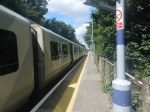
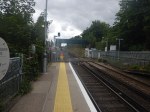
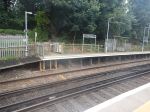
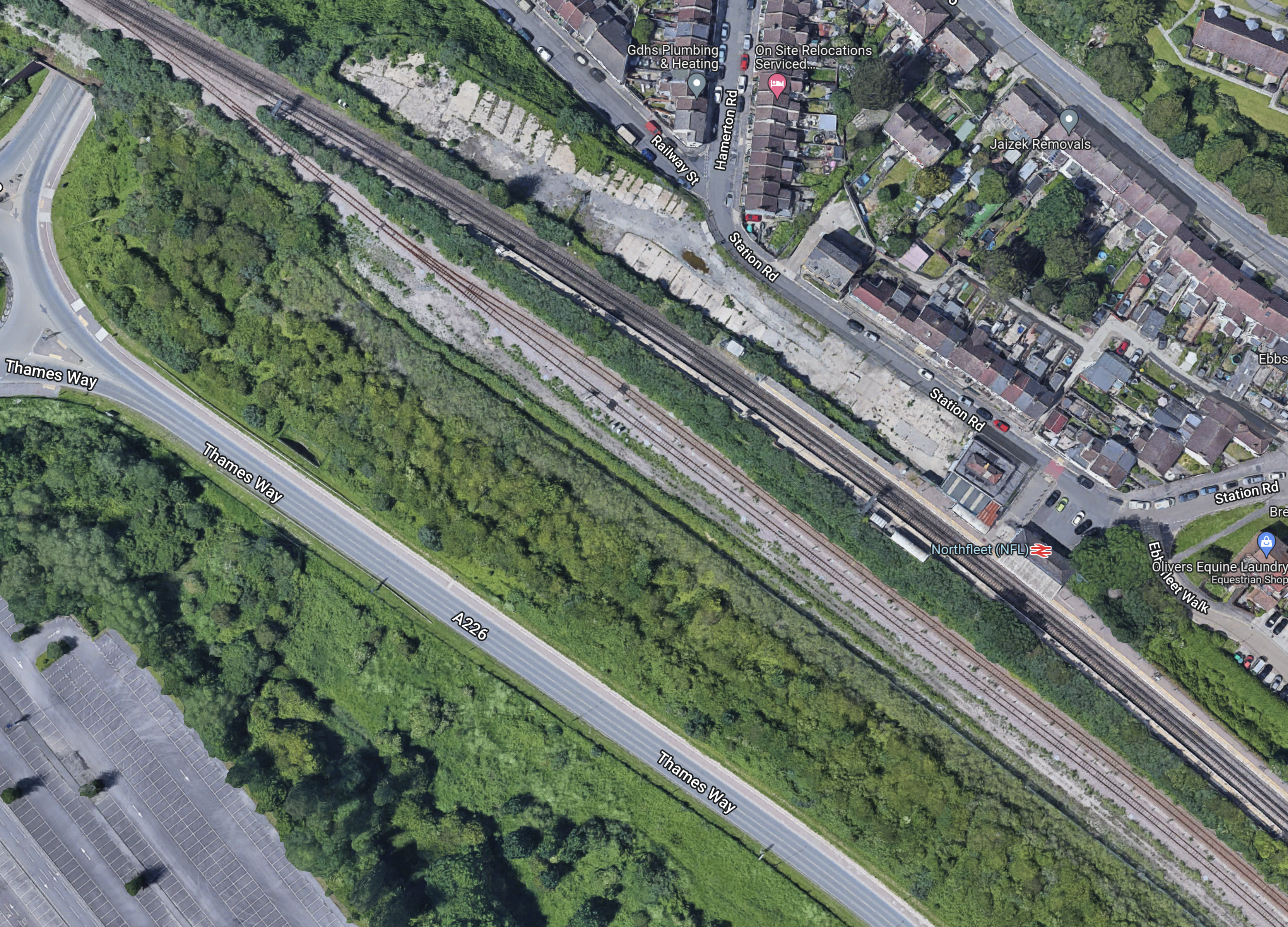
While third rail electrification was originally proposed, this idea has been discarded in favour of self-powered trains on the branch, such as battery-operated trains. Possible destinations include Gravesend, Northfleet or Ebbsfleet for interchange with trains going to London, or extension of London to Dartford or Gravesend services over the branch, using hybrid third-rail/battery trains.
Consider.
- Merseyrail will be using battery-electric trains to provide services to the new Headbolt Lane station, as permission was not available for extending the existing third-rail track.
- Electrification would probably cost more than providing a charging system at Hoo station.
- Turning the trains at Gravesend, Northfleet or Ebbsfleet could be difficult and a new bay platform would probably break the budget.
- Both Dartford and Gravesend have two trains per hour (tph), that could be extended to the new Hoo station.
- Hoo junction to Hoo station is no more than five or six miles.
- There are also half-a-dozen level crossings on the route, which I doubt the anti-thord rail brigade would not want to be electrified.
- The Dartford services have a possible advantage in that they stop at Abbey Wood station for Crossrail.
- It may be easier to run services through Gravesend station, if the terminating service from Charing Cross were to be extended to Hoo station.
- A two tph service between London Charing Cross and Hoo stations, with intermediate stops at at least London Bridge, Lewisham, Abbey Wood and Dartford would probably be desirable.
I feel that the most affordable way to run trains to Hoo station will probably be to use battery-electric trains, which are extended from Gravesend.
It may even be possible to run trains to Hoo station without the need of a charging system at the station, which would further reduce the cost of infrastructure.
Possible Trains
Consider.
- According to Wikipedia, stopping Gravesend services are now run by Class 376, Class 465, Class 466 and Class 707 trains.
- Real Time Trains indicate that Gravesend services are run by pathed for 90 mph trains.
- Class 376, Class 465 and Class 466 trains are only 75 mph trains.
- Class 707 trains are 100 mph trains and only entered service in 2017.
I wonder, if Siemens designed these trains to be able to run on battery power, as several of their other trains can use batteries, as can their New Tube for London.
In Thoughts On The Power System For The New Tube for London, I said this.
This article on Rail Engineer is entitled London Underground Deep Tube Upgrade.
This is an extract.
More speculatively, there might be a means to independently power a train to the next station, possibly using the auxiliary battery, in the event of traction power loss.
Batteries in the New Tube for London would have other applications.
- Handling regenerative braking.
- Moving trains in sidings and depots with no electrification.
It should be born in mind, that battery capacity for a given weight of battery will increase before the first New Tube for London runs on the Piccadilly line around 2023.
A battery-electric train with a range of fifteen miles and regenerative braking to battery would probably be able to handle a return trip to Hoo station.
An Update In The July 2022 Edition Of Modern Railways
This is said on page 75.
More positive is the outlook for restoration of passenger services on the Hoo branch, where 12,000 new houses are proposed and Medway Council is looking to build a new station halfway down the branch to serve them. As the branch is unelectrified, one idea that has been looked at is a shuttle with a Vivarail battery train or similar, turning round at Gravesend or another station on the main line.
Steve White worries that this could mean spending a lot of money on infrastructure work and ending up with what would be a sub-optimal solution. ‘Do people really want to sit on a train for 10 minutes before having to get out and change onto another train? I don’t think so. Ideally what you want is through trains to London, by extending the Gravesend terminators to Hoo.’
That would require a battery/third rail hybrid unit, but Mr. White thinks that is far from an outlandish proposal; with Networker replacement on the horizon, a small bi-mode sub-fleet could dovetail neatly with a stock renewal programme. Medway Council and rail industry representatives are working on coming up with a solution for Hoo that could do what it does best; facilitating economic regeneration in a local area.
Note that Steve White is Managing Director of Southeastern.
I’ll go along with what he says!
Conclusion
I believe that a well-designed simple station and branch line could be possible within the budget.
A battery-electric upgrade to Class 707 trains could be a solution.
But the trains could be very similar to those needed for Uckfield and to extend electric services in Scotland.
Only In Norfolk
I have a Google Alert for “Norfolk Vanguard wind farm” that picked up this story, which is entitled Norfolk Constabulary Issues Inclusive Language List Of 37 Sexual Identities And Genders.
Only in Norfolk!
DP Energy And Offshore Wind Farms In Ireland
DP Energy are a company that are developing these offshore wind farms in Ireland.
Located off the West Coast of Ireland, the Clarus Offshore Wind Farm project will utilise Floating Offshore Wind (FOW) technology and upon completion, will have the potential capacity of up to 1 GW.
Located off the South Coast of Ireland, the Inis Ealga Marine Energy Park project will utilise Floating Offshore Wind (FOW) technology and upon completion, will have the potential capacity of up to 1 GW.
Latitude 52 Offshore Wind Farm
DP Energy has given the name Latitude 52 to the area it is exploring for a potential future offshore wind farm off the coast of Counties Wicklow and Wexford.
It appears to be another 1 GW project.
Located off the East Coast of Ireland, the Shelmalere Offshore Windfarm project will utilise fixed bottom wind turbines and upon completion, will have the potential capacity of up to 1 GW.
Note.
- These wind farms are being developed in a partnership with Spanish Energy company; Iberdrola.
- Each is a one GW offshore wind farm.
They are also developing the Gwynt Glas offshore wind farm in the UK sector of the Celtic Sea.
- In January 2022, EDF Renewables and DP Energy announced a Joint Venture partnership to combine their knowledge and
expertise, in order to participate in the leasing round to secure seabed rights to develop up to 1GW of FLOW in the Celtic Sea. - The wind farm is located between Pembroke and Cornwall.
The addition of Gwynt Glas will increase the total of floating offshore wind in the UK section of the Celtic Sea.
- Blue Gem Wind – Erebus – 100 MW Demonstration project – 27 miles offshore
- Blue Gem Wind – Valorus – 300 MW Early-Commercial project – 31 miles offshore
- Falck Renewables and BlueFloat Energy – Petroc – 300 MW project – 37 miles offshore
- Falck Renewables and BlueFloat Energy – Llywelyn – 300 MW project – 40 miles offshore
- Llŷr Wind – 100 MW Project – 25 miles offshore
- Gwynt Glas – 1000 MW Project – 50 miles offshore
This makes a total of 2.2 GW, with investors from several countries.
It does seem that the Celtic Sea is becoming the next area of offshore wind around the British Isles to be developed.
Interconnectors
Interconnectors are to be built to connect Ireland, UK and France.
The Celtic Interconnector is being built between County Cork in Ireland and the North West Coast of France.
Greenlink is being built between County Wexford in Ireland and Pembroke in Wales.
Conclusion
Are the British, Irish and French governments, planning to build a large wind power resource in the Celtic Sea?
A Hydrogen-Electric Class 99 Locomotive
In GB Railfreight Plans Order For Future-Proofed Bi-Mode Locomotives, I introduced the Class 99 locomotive, for which the first order was announced by Stadler and GB Railfreight yesterday.
This was the start of that post, which I wrote in early March 2022.
The title of this post, is the same as that of this article on Railway Gazette.
This is the introductory paragraph.
GB Railfreight is planning to order a fleet of main line electro-diesel locomotives with a modular design which would facilitate future replacement of the diesel engine with a battery or hydrogen fuel cell module.
In this post, I will look at the design of a Class 99 locomotive running on hydrogen.
These are my thoughts.
Using Hydrogen Fuel Cells
The Railway Gazette article suggests that hydrogen fuel-cells will be used to create a hydrogen-electric Class 99 locomotive.
A typical hydrogen fuel-cell transmission will have the following elements, which will replace the diesel-electric generator.
- A hydrogen fuel tank
- A appropriately-sized hydrogen fuel-cell which generates electricity from hydrogen.
- A battery to store electricity.
- Regenerative braking will also be used to charge the battery.
- The locomotive will have an electric transmission.
The various components will be fitted into the space, that was occupied by the diesel engine.
This Alstom video promotes the Alstom Coradia iLint and explains how it works.
Most hydrogen fuel-cell trains and trucks , work as the train does in this video.
Using A Reciprocating Engine Running On Hydrogen
This press release from Caterpillar is entitled Caterpillar to Expand Hydrogen-Powered Solutions to Customers.
It describes how Caterpillar will develop versions of their reciprocating engines, that will run on 100 % hydrogen.
This would be an alternative way of developing a zero-carbon Class 99 locomotive.
Note that Cummins, JCB and Rolls-Royce mtu have also converted diesel engines to run on hydrogen.
This method of conversion has advantages.
A Battery-Electric Class 99 Locomotive
In GB Railfreight Plans Order For Future-Proofed Bi-Mode Locomotives, I introduced the Class 99 locomotive, for which the first order was announced by Stadler and GB Railfreight today.
This was the start of that post, which I wrote in early March 2022.
The title of this post, is the same as that of this article on Railway Gazette.
This is the introductory paragraph.
GB Railfreight is planning to order a fleet of main line electro-diesel locomotives with a modular design which would facilitate future replacement of the diesel engine with a battery or hydrogen fuel cell module.
The rest of the article gives clues to the deal and the specification of the locomotives.
- Negotiations appear to have started with Stadler for locomotives to be built at their Valencia plant.
- Twenty locomotives could be ordered initially, with options for thirty.
- The locomotive will be Co-Co bi-modes.
- The diesel engine will be for heavy main line freight and not just last-mile operations.
- They would be capable of hauling freight trains between Ipswich and Felixstowe, within two minutes of the times of a Class 66 locomotive.
- They will be of a modular design, so that in the future, the diesel engine might be replaced by a battery or fuel cells as required and possible.
They have provisionally been called Class 99 locomotives.
Note the introductory paragraph of the Railway Gazette article.
GB Railfreight is planning to order a fleet of main line electro-diesel locomotives with a modular design which would facilitate future replacement of the diesel engine with a battery or hydrogen fuel cell module.
What sort of range and performance will this give to a Class 99 locomotive?
In Class 99 Electro-Diesel Locomotive Order Confirmed, I came to this conclusion.
It does appear that a design based around the latest version of a Caterpillar C175-16 diesel engine will be possible.
The easiest way to create a battery-electric Class 99 locomotive would be to replace the Caterpillar C175-16 diesel engine with the largest and most efficient batteries possible, add regenerative braking to battery and the best control system for the locomotive and the batteries, that engineers can devise.
These are my thoughts.
Range Of A Euro Dual On Diesel
Consider.
- A Euro Dual locomotive has a 3,500 litre fuel tank.
- A Euro Dual locomotive has a fuel consumption of 1039.3 L/hr.
This should allow the locomotive to run for about three hours and twenty minutes or about 250 miles.
Obviously, any electrification on the route, will increase the range.
Weight Of The Diesel Engine
This data sheet for the Caterpillar C175-16 diesel engine gives a weight of over twenty tonnes, which is certainly a lot of weight.
You’ve also got the weight of the fuel tank, which could also contain in the Euro Dual hold nearly three tonnes of diesel.
I will assume that the weight of a Caterpillar C175-16 diesel engine and the associated gubbins could be as high as 25 tonnes.
How Much Energy Could A Twenty Tonne Battery Hold?
In Innolith Claims It’s On Path To 1,000 Wh/kg Battery Energy Density, which was written two years ago.
This was my conclusion of that post.
I am led to believe these statements are true.
- Tesla already has an energy density of 250 Wh/Kg.
- Tesla will increase this figure.
- By 2025, the energy density of lithium-ion batteries will be much closer to 1 KWh/Kg.
- Innolith might achieve this figure. But they are only one of several companies aiming to meet this magic figure.
These figures will revolutionise the use of lithium-ion batteries.
I feel it is reasonable to go along with Tesla’s figure of 250 Wh/Kg, which gives a 5 MWh battery could replace the C175-16 diesel engine, if it had a total weight of 20 tonnes.
If the battery could have a total weight of 25 tonnes, the battery would have a capacity of 6.25 MWh.
It does look like the Caterpillar C175-16 diesel engine and the associated gubbins could be replaced by a substantial battery.
As the years go by, the capacity of the batteries will only grow.
Will Battery-Electric Class 99 Locomotives Have Regenerative Braking?
According to Wikipedia, Stadler Euro Dual locomotives do have regenerative braking, so it would seem likely, that this could be used to recharge the batteries, in addition to 25 KVAC overhead electrification, where it is available.
I will assume that battery-electric Class 99 locomotives will have regenerative braking.
How Long Could A Battery-Electric Class 99 Locomotive Run On Batteries?
Consider.
- To have the performance of a Class 99 locomotive on diesel, the locomotive would need to output 2,800 kW.
Without regenerative braking this would give these figures.
- A 5 MWh battery would run for at least one hours and 47 minutes.
- A 6.25 MWh battery would run for at least two hours and 13 minutes.
Add in regenerative braking and short strategic lengths of electrification and large parts of the UK network would be opened up to electrified trains.
Conclusion
Stadler have probably done extensive simulations of the UK network with battery-electric Class 99 locomotives, so they would know the true potential of these locomotives.
Class 99 Electro-Diesel Locomotive Order Confirmed
The title of this post, is the same as that of this article on Railway Gazette.
This first paragraph gives details of the order.
GB Railfreight, leasing company Beacon Rail and Stadler have signed an agreement for the supply of 30 Class 99 six-axle electro-diesel locomotives for entry into service from 2025. The operator said they would the first electro-diesel locomotives capable of hauling heavy freight at main line speeds on the UK network.
The article also gives these technical details of the Class 99 locomotives.
- Ability to operate under 25 KVAC overhead electrification.
- Up to 6,000 kW under electrification.
- Maximum speed of 120 km/h (75 mph)
- ‘high-power low-emissions’ Stage V diesel engine.
- Tractive effort of up to 500 kN
- The locomotives will be compatible with UK loading gauge and specifications.
This document on the Stadler web site is the specification for the Stadler Euro Dual locomotives, that have been sold to German operator; HVLE.
These are some technical details.
- Ability to operate under 25 KVAC overhead electrification or 15 KVAC German overhead electrification.
- Up to 6,000 kW under electrification.
- Maximum speed of 120 km/h
- Caterpillar C175-16 Stage IIIB diesel engine.
- Engine output of 2,800 kW
- Tractive effort of up to 500 kN
- A Euro Dual locomotive has a length of 23 metres
- A Euro Dual locomotive has a 3,500 litre fuel tank.
Wikipedia gives details of a Stadler Class 68 locomotive, which is shown in this picture.
These are some details.
- There are 34 Class 68 locomotives in service in the UK.
- Caterpillar C175-16 Stage IIIB diesel engine.
- Engine output of 2,800 kW
- A Class 68 locomotive has a 5,000 litre fuel tank.
- A Class 68 locomotive has a length of 20.5 metres.
- It should be noted, that a Class 66 locomotive has an engine output of 2,500 kW.
These are my thoughts on the design and specification of the Class 99 locomotive.
The Diesel Engine
The Class 68 and the Euro Dual appear to have a diesel engine, with these specifications.
- Caterpillar C175-16 Stage IIIB diesel engine.
- Engine output of 2,800 kW
Whereas the Class 99 locomotive is stated as having a ‘high-power low-emissions’ Stage V diesel engine.
So have Stadler fitted the latest Caterpillar C175-16 Stage V diesel engine into a Class 99 locomotive?
This would surely be likely, as any reputable diesel engine company would strive to reduce the emissions of their engines and make them compatible with the latest regulations.
Will 2,800 kW Be Enough Power On Diesel?
If the Class 99 locomotive has 2,800 kW from the latest Caterpillar diesel engine, this is the same as for a Class 68 and the Euro Dual, so it is likely to be enough power.
It is also more power, than is available from a Class 66 locomotive.
What Will Be The Length Of The Class 99 Locomotive?
It does appear that the Class 68 locomotive is 20.5 metres long and the Euro Dual is 23 metres long.
But this is not really unexpected as the Euro Dual has two larger three-axle bogies.
I suspect to use the equipment layout of the Euro Dual, that the Class 99 locomotive could be 23 metres long.
What About The UK Loading Gauge?
When it came to designing the Class 68, 88 and 93 locomotives, Stadler had no difficulty fitting all the gubbins in a 20.5 metre package.
If I am right in surmising that a Class 99 locomotive will be longer because of its larger bogies, I suspect that modern computer-aided design will enable Stadler to create a locomotive, that will fit the UK loading gauge.
Conclusion
It does appear that a design based around the latest version of a Caterpillar C175-16 will be possible.
The New Track Layout At Bank And Moorgate Stations
This map from cartometro.com shows the new track layout through Bank And Moorgate.
Note.
- Crossrail is shown in purple.
- The Central Line is shown in red.
- The Circle, Hammersmith and City and the Metropolitan lines are shown in yellow and mauve.
- The Circle, District lines are shown in yellow and green stripes.
- The Northern Line is shown in black.
- The Northern City Line, that terminates at Moorgate is also shown in black.
The routes of the Northern Line are now clear from the map.
The Northbound Route Of The Northern Line
The Northbound trains pass through the following platforms.
- The Easternmost platform, which is numbered 4 at Bank station.
- The Western Northern Line platform, which is numbered 7 at Moorgate station.
This route of the Northbound tunnel will be identical before and after the works.
The Original Southbound Route Of The Northern Line
Until January this year, the Southbound trains passed through the following platforms.
- The Eastern Northern Line platform, which is numbered 8 at Moorgate station.
- The original Western Northern Line platform, which was numbered 3 at Bank station.
Note how the Northbound and Southbound tracks cross between the two stations.
The New Southbound Route Of The Northern Line
The new Southbound route is shown dotted on the map.
- The new Southbound platform is also shown dotted.
- The Northbound and Southbound tracks still cross between the two stations.
The tracks don’t return to standard left-hand running until South of Borough station.
After the line fully-reopens, some time in May this year, the Southbound trains will pass through the following platforms.
- The Eastern Northern Line platform, which is numbered 8 at Moorgate station.
- The new Western Northern Line platform at Bank station.
Effectively, the Southbound tunnel has been moved to the West to create more space in Bank station.
Conclusion
The design of the new tunnel appears simple, but I don’t think it was that easy to construct.
London Underground: Safety Checks Cause Metropolitan Line Disruption
The title of this post, is the same as that of this article on the BBC.
These are the first three paragraphs.
Urgent safety checks are being carried out on trains running on the Metropolitan line section of the Tube, Transport for London (TfL) has said.
TfL is warning of severe disruption as engineers check over the entire fleet of trains – which also run on the Circle and Hammersmith & City lines.
The trains were only introduced in 2010, but TfL said a fault had been identified on some of their wheels.
Obviously, safety is a priority and it will take some time to check all of the trains.
I have used these trains several times in the last few days and there are extended intervals between services.
Could Crossrail Come To The Rescue?
Consider.
- Crossrail has interchanges with the Circle, District, Hammersmith & City and the Metropolitan Lines at Whitechapel, Liverpool Street, Moorgate, Farringdon, Paddington and Ealing Broadway.
- Crossrail trains have been running between Paddington and Abbey Wood for a few months.
- Crossrail has good connections to the Central and Jubilee Lines.
Perhaps, opening Crossrail at a lower frequency may take the pressure off the system?
A Massive Task For Ukraine?
After the Russians are thrown out of Ukraine, it will be a massive task to rebuild Ukraine.
But one of Ukraine’s traditional industries can also be used to transform the world.
The Transformation Of Energy Production To Floating Offshore Wind
I believe that over the next few years, we will see an enormous transformation of zero-carbon energy to floating offshore wind.
- The floating offshore wind industry is planning to use the next-generation of larger wind turbines of up to 20 MW.
- These turbines are too large and intrusive to install onshore.
- Floating wind turbines generally have a higher capacity factor of over 50 %, than onshore turbines.
- Each wind turbine will be mounted on a substantial semi-submersible float, which is built out of large-diameter steel tubes
- The wind turbines are of the same design, as those installed onshore.
- There are several designs for the floats and they are usually based on designs that have worked in the oil and gas industry.
The world will need millions of floating turbines and an equivalent number of floats to fully decarbonise.
Could The Ukrainians Build The Floats?
Consider.
- The Russians have destroyed Mariupol, whilst the Ukrainians have defended the city in the steelworks.
- Mariupol used to have a large shipbuilding industry.
- Ukraine is in the world’s top ten of iron ore producers.
- There is a lot of scrap steel available in the Ukraine, that the Russians have left behind.
- The Ukrainians probably have a lot of workers, who have the skills to build the floats.
I’m sure something could be arranged for the benefit of everybody.
Two More Floating Wind Projects In The Celtic Sea
In Two Celtic Sea Floating Wind Projects Could Be Delivered By 2028, I said this.
There now appears to be four floating wind farms under development in the Celtic Sea between the South-West corner of Wales and the Devon and Cornwall Peninsular.
- Blue Gem Wind – Erebus – 100 MW Demonstration project – 27 miles offshore
- Blue Gem Wind – Valorus – 300 MW Early-Commercial project – 31 miles offshore
- Falck Renewables and BlueFloat Energy – Petroc – 300 MW project – 37 miles offshore
- Falck Renewables and BlueFloat Energy Llywelyn – 300 MW project – 40 miles offshore
But they do create a starter for a GW.
Last night, I found two other projects being developed in the Celtic Sea, under the collective name of the Llŷr Project.
The sponsoring company, which appears to be called Llŷr Wind has a web site, with a title of Harnessing Welsh Energy, which has this outline description underneath.
Situated off the Pembrokeshire coast, in southwest Wales, is a flagship project that could transform the world’s ability to generate renewable electricity from wind. The Llŷr projects are exploring the potential of two innovative floating offshore wind technologies.
The next statement is key.
Combined, the two 100MW projects will generate enough renewable electricity to power around 250,000 homes. If successful, we will be able to offer highly cost-effective, floating offshore wind farms to the rest of the world by 2030.
The Llŷr Project would appear to be a research project to find the best way to generate electricity using floating wind turbines in deep water.
- It appears that the two wind farms will use different floats for the turbines.
- The Llŷr projects are located in the approaches to the Bristol Channel in the Celtic Sea approximately 40 kilometres offshore at depths averaging 60-70 metres.
- These offshore sites enjoy high average windspeeds which are, typically, in excess of 10 metres per second. That is over twenty miles per hour.
- Each 100MW project will comprise 6 to 8 next-generation turbines which are too large to be deployed on land.
- 6 x 20 MW turbines will be 120 MW.
- 8 x 12 MW turbines will be 96 MW.
- Each project will have an offshore substation.
- There will be up to two connections for each substation.
- Will the Llŷr Projects test manufacturers’ new turbine designs?
- It is hoped that installation of the turbines will start in 2025/26, with power being delivered in 2026/7.
- The project is being developed by Floventis Energy, which is a joint venture of SBM Offshore and Cierco.
It does look to me that SBM Offshore, who are a Dutch company, are using their extensive oil and gas experience to develop floating offshore wind.
This appears to be a very well-thought out research project in a location, where there is everything needed.
- Lots of wind, which can be boosted by dragons if needed.
- Deep water.
- Ports for assembly of turbines onto floats.
- Steelworks and fabrication.
- Good electrical connections to the National Grid.
- Excellent universities.
- Good transport connections.
- An experienced engineering workforce.
There is also the ultimate potential of 50 GW of floating offshore wind in the Celtic Sea.
Conclusion
The Llŷr Project could have a very positive input into the worldwide development of floating offshore wind.
I have read the web sites of Floventis, SBM Offshore and Cierco and these companies appear to be aiming to dominate the floating offshore wind industry.
Their strategy is stated on the Floventis web site.
Our strategy is simple. We plan to maximize the local benefits of our projects and minimize their impact. Our technologies are far more benign than conventional offshore wind and more suited for deployment in remote and sensitive environments.
Already driving demonstration projects in California and the UK, Floventis is building a portfolio of projects to take floating offshore wind, through a stepwise process – increasing project size, to full scale commercial development proposals by 2030.
We believe that the floating offshore wind industry is a model for a “just transition” to clean energy, at scale, which will reward communities, in the broadest sense, with skilled jobs and enhanced social equity.
I can certainly live with that! And I’m certain the world can too!