Expansion Plan To Take World’s Biggest Battery Storage Project To 3GWh Capacity
The title of this post, is the same as that of this article on Energy Storage News.
These are the first two paragraphs.
Plans to nearly double the output and capacity of the world’s biggest battery energy storage system (BESS) project to date have been announced by its owner, Vistra Energy.
The Texas-headquartered integrated utility and power generation company said it wants to add another 350MW/1,400MWh BESS to the Moss Landing Energy Storage Facility in California’s Monterey Bay.
The project is based at the Moss Landing Power Plant, which was once the largest power plant in the state of California, with a generation capacity of 2560 MW.
There appear to be three phases.
- Phase 1 is 300MW/1,200MWh and went online at the end of 2020
- Phase 2 is 100MW/400MWh and went online in August 2021.
- Phase 3 will be 350MW/1,400MWh.
This gives a maximum power output of 750 MW and prospective total capacity of 3 GWh. At full power, the battery could supply 750 MW for four hours.
For comparison, the two Scottish batteries I talked about in Amp Wins Consent For 800MW Scots Battery Complex, have a combined output of 800 MW and a total capacity of 1600 MWh, which would give a full power run of two hours.
Could the difference be that Scotland has 9.3 GW of installed windpower, whereas the much larger California has only 6 GW?
Both Scotland and California also have some pumped storage power stations.
- Drax Group who own the 7.1 GWh Cruachan power station, plan to increase its generating capacity from 440MW to 1040MW.
- California has two larger stations at Castaic and Helms.
- After writing about the Western HVDC Link in Amp Wins Consent For 800MW Scots Battery Complex, I wonder if when the wind is blowing in Scotland and it isn’t in Wales, that electricity can be exported from Scotland to Wales for storage.
This all shows the complex integrated nature of electricity networks.
ITM Power’s 24MW Electrolyser Sale to Yara
The title of this post, is the similar to that of this press release from ITM Power. I just added a few words.
These are the first three paragraphs.
ITM Power (AIM: ITM), the energy storage and clean fuel company, is pleased to provide details of the sale of a 24MW electrolyser to Linde Engineering contained in the Company’s Half Year Report issued yesterday. The electrolyser is to be installed at a site operated by Yara Norge AS (“Yara”) located at Herøya outside Porsgrunn, about 140 km southwest of Oslo. The site covers an area of approximately 1.5 square kilometres and is the largest industrial site in Norway. The Porsgrunn site produces 3 million tons of fertiliser per year.
The hydrogen required for ammonia production is currently produced from SMR. Yara intends to start replacing this grey hydrogen with green hydrogen produced from renewable energy and electrolysis. The 24MW system supplying 10,368 kg/day of hydrogen will account for approximately 5% of the plant’s consumption and serve as a feasibility study for future upscaling. Yara has received a grant of up to NOK 283m (£23.6m,pending ESA approval) from Enova SF, a Government funding body, to invest in green solutions for hydrogen used for industrial purposes in Norway.
The electrolyser equipment is due to be ready for shipment from ITM Power in Q4 2022 with revenue realised in the Company’s 2022/2023 financial year.
These are my thoughts.
The Size Of The Electrolyser
A 24 MW electrolyser, that produces 10,368 Kg of hydrogen/day may sound a large device.
This is an extract from the press release.
In January 2021, the Company received an order for the world’s then largest PEM electrolyser of 24MW from Linde. In October 2021, the Company, with Linde, announced the deployment of a 100MW electrolyser at Shell’s Rhineland refinery, following the start-up of an initial 10MW facility at the site.
It appears that ITM Power have built one before and one four times the size has been ordered.
What Size Of Electrolyser Would Yara Need To Fully Decarbonise Ammonia Production?
According to the press release, a 24 MW electrolyser will produce five percent of the plant’s consumption, which means that a 480 MW electrolyser will be needed, if Yara use an ITM electrolyser to produce all their hydrogen.
Will manufacture of an electrolyser of this size be a problem for ITM Power?
The press release says this about electrolyser production.
ITM Power operates from the world’s largest electrolyser factory in Sheffield with a capacity of 1GW (1,000MW) per annum, with the announced intention to build a second UK Gigafactory in Sheffield with a capacity of 1.5GW expected to be fully operational by the end of 2023. The Group’s first international facility, expected to have a capacity of 2.5GW per annum, is intended to be operational by the end of 2024, bringing total Group capacity to 5GW per annum.
It also says that the company has raised £250m to accelerate expansion.
The Delivery Date
The delivery date of the electrolyser is stated as Q4 2022.
I find this rather quick, which makes me believe that one of the reasons for the success of ITM Power is their production process.
How Much Ammonia Is Produced Worldwide?
This is an extract from this publication from the Royal Society, which is entitled Ammonia: Zero-Carbon Fertiliser, Fuel And Energy Store.
Current global ammonia production is about 176 million tonnes per year and is predominantly achieved through the steam reforming of methane to produce hydrogen to feed into ammonia synthesis via the Haber Bosch process.
Ammonia production is a highly energy intensive process consuming around 1.8% of global energy output each year (steam methane reforming accounts for over 80% of the energy required) and producing as a result about 500 million tonnes of carbon dioxide (about 1.8% of global carbon dioxide emissions)2,3,4. Ammonia synthesis is significantly the largest carbon dioxide emitting chemical industry process. Along with cement, steel and ethylene production, it is one of the ‘big four’ industrial processes where a decarbonisation plan must be developed and implemented to meet the netzero carbon emissions target by 2050.
It looks like Linde and ITM Power have a fairly simple plan to decarbonise world ammonia production. And they have started with one of the easier targets; Yara in the very environmentally-correct Norway.
I estimate that to produce 176 million tonnes of green ammonia will need over 28 GW of electrolyser capacity.
Conclusion
If Linde and ITM Power can persuade the world, that their technology is the way to go, then they’ve got it made.
Green Hydrogen Companies Are Going Public To The Delight Of Investors
The title of this post, is the same as that of this article on Hydrogen Fuel News.
The article discusses the IPO of the ThyssenKrupp subsidiary; Nucera.
There is more in this article on Reuters, which is entitled Betting On Hydrogen Hype, Thyssenkrupp Eyes $687 mln In IPO Cash.
I have a feeling, that this would not be an investment for widows and orphans, but this widower may know enough to have a small punt at the right price.
Face Coverings Your Choice
In England from today, you don’t legally have to wear masks.
This notice was on the door of Marks and Spencer at The Angel.

These are the words at the bottom.
Face coverings are not legally required but the Government recommends them in indoor crowded areas. If you have any symptoms of COVID-19 please refrain from entering the store.
How sensible!
It will be interesting to analyse the takings of Marks & Spencer, Waitrose and Sainsburys as they are all close together on Liverpool Road.
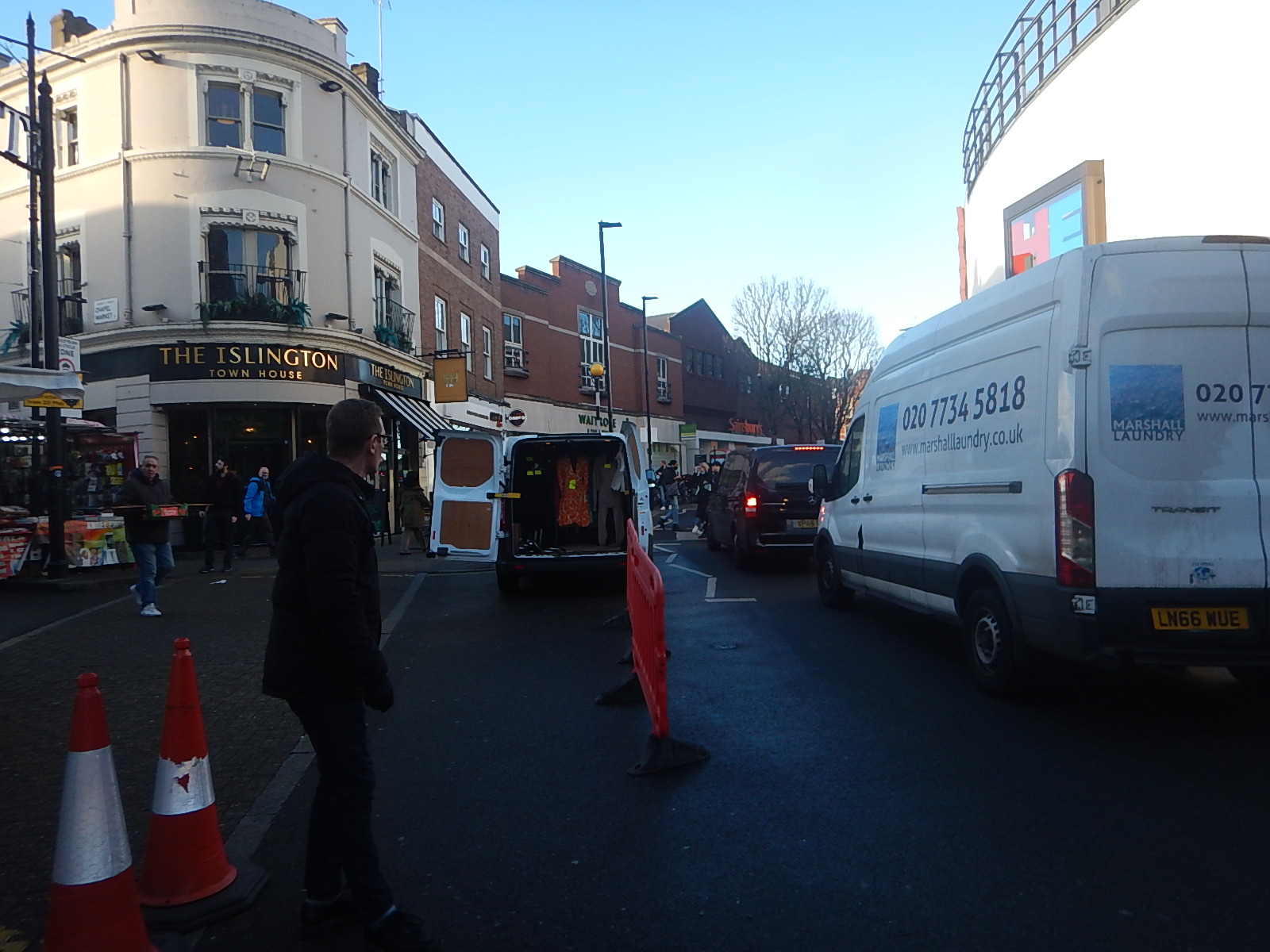
I was standing outside Marks & Spencer, when I took the picture.
A Tale Of Two Cataract Operations
I have now had two cataract operations.
There was a few weeks between the operations and in the interval they changed the machines.
- The first was a Leica and the second was a Zeiss.
There were no problems with either operation, but there were differences, particular in how I felt afterwards.
- With the first, I was slightly more uncomfortable and had a slight amount of pain in my left eye. But the pain was nothing that a few ginger biscuits couldn’t cure.
- With the second, I’ve had no pain at all and the eye looks less red. I was able to take the dressing off in the evening and go out the next day, which I couldn’t do after the first.
Now fifty-four hours after the operation, my eyes are back to normal. I can even type this without putting on my glasses.
Conclusion
I would suggest that before you have a cataract operation, you make sure the surgeon will be using the latest machines.
Amp Wins Consent For 800MW Scots Battery Complex
The title of this post, is the same as that of this article on renews.biz.
These are the first two paragraphs.
Canadian storage player Amp Energy has revealed that its 800MW battery portfolio in Scotland has secured planning consent.
The portfolio is due to be operational in April 2024 and will comprise two 400MW battery facilities, each providing 800 megawatt-hours of energy storage capacity.
Some other points from the article.
- The two facilities will be located at Hunterston and Kincardine.
- They will be the two largest grid-connected battery storage facilities in Europe.
- The two batteries will be optimised by Amp Energy‘s proprietary software.
This Google Map shows the Hunterston area.
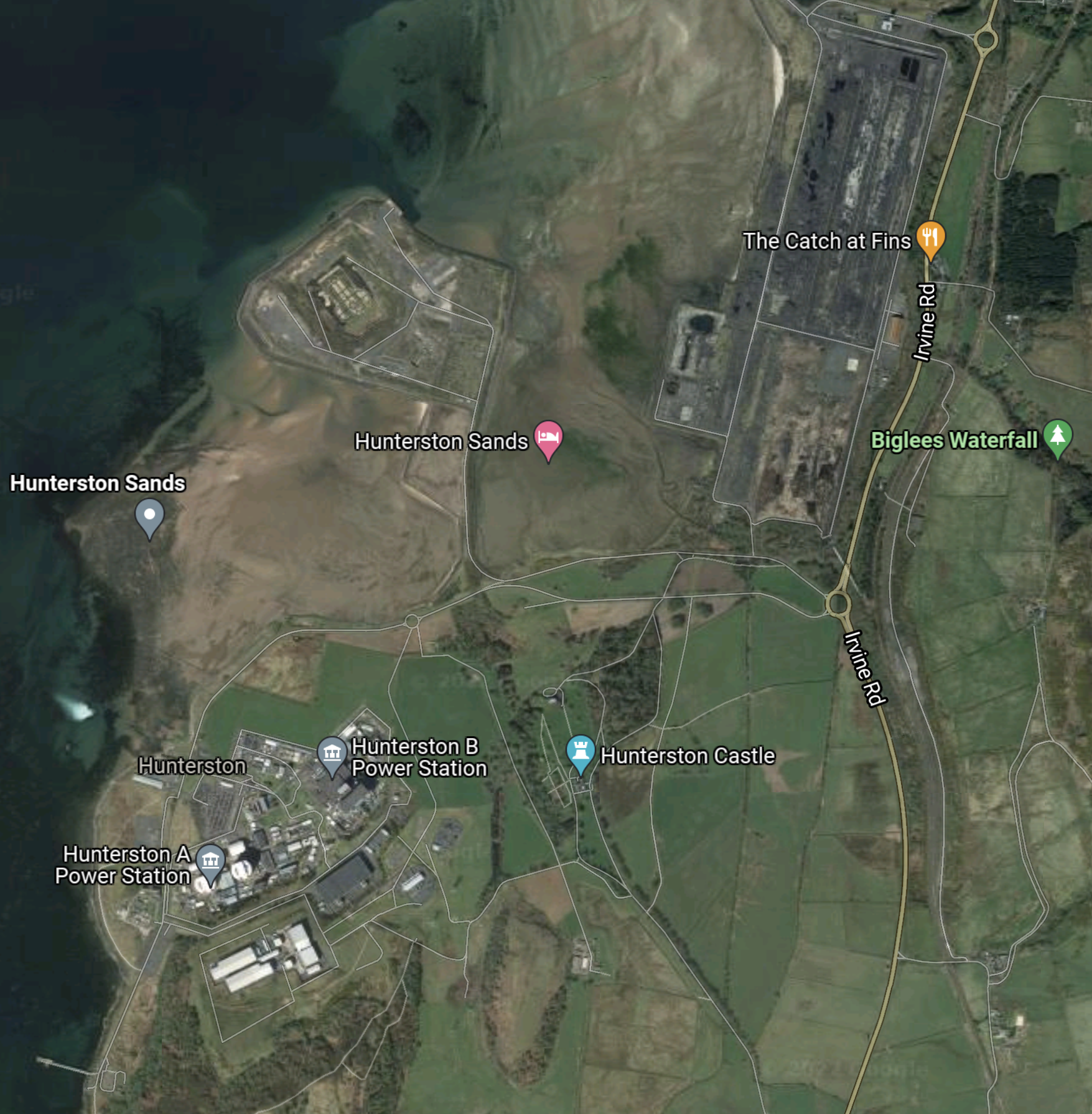
Note.
- The Hunterston A and Hunterston B nuclear power stations, which are both being decommissioned.
- Hunterston B only shut down on the 7th of January, this year.
- There is also a large brownfield site in the North-East corner of the map.
This second Google Map shows the South-East corner of the nuclear power station site.
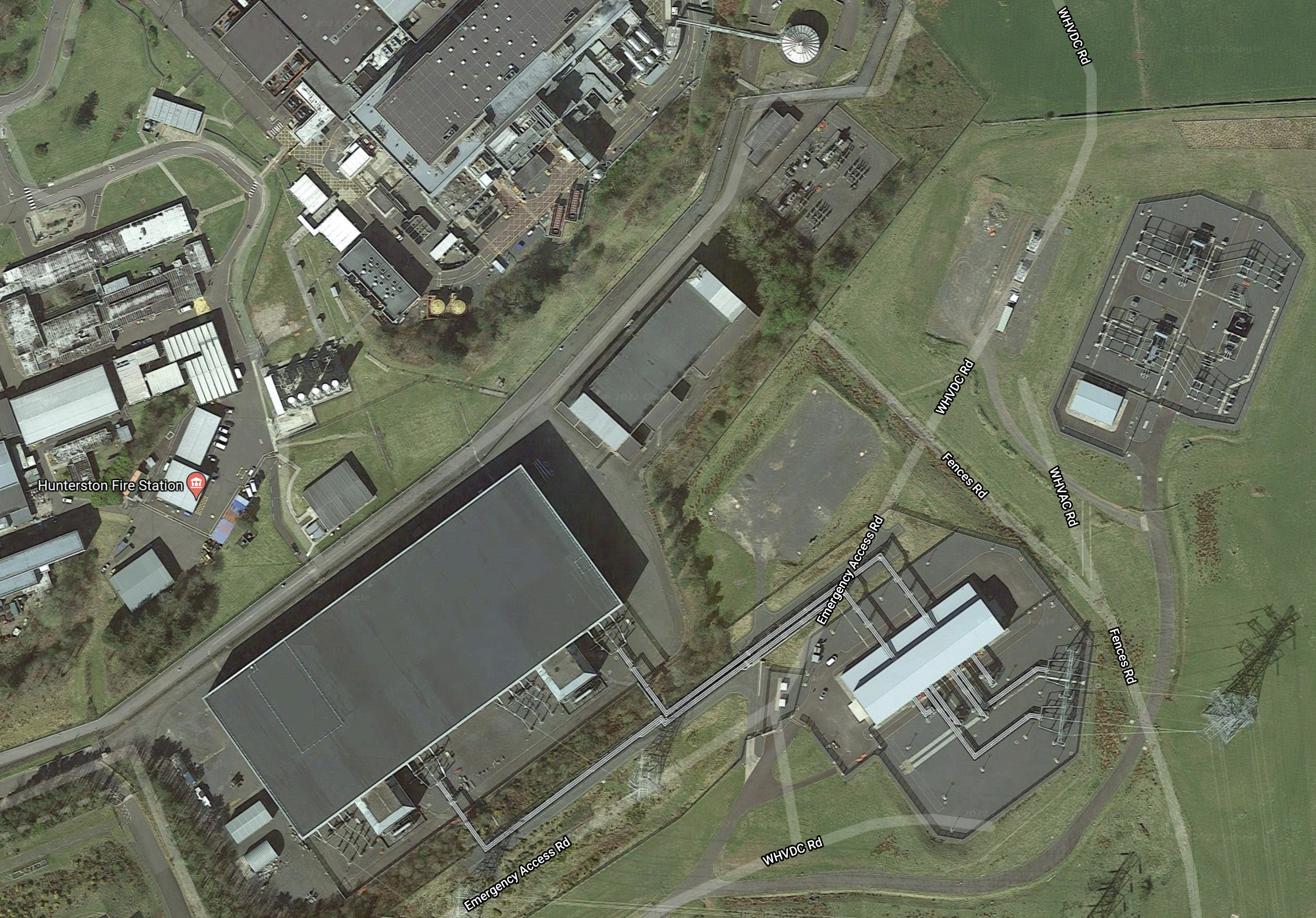
It’s certainly got a good grid connection.
But then it had to support.
- The Hunterston A nuclear power station rated at 360 MW.
- The Hunterston B nuclear power station rated at 1.2 GW.
- The Western HVDC Link, which is an interconnector to Connah’s Quay in North Wales, that is rated at 2.2 GW.
I’m sure that National Grid has a suitable socket for a 400 MW battery.
This Google Map shows the Kincardine area.
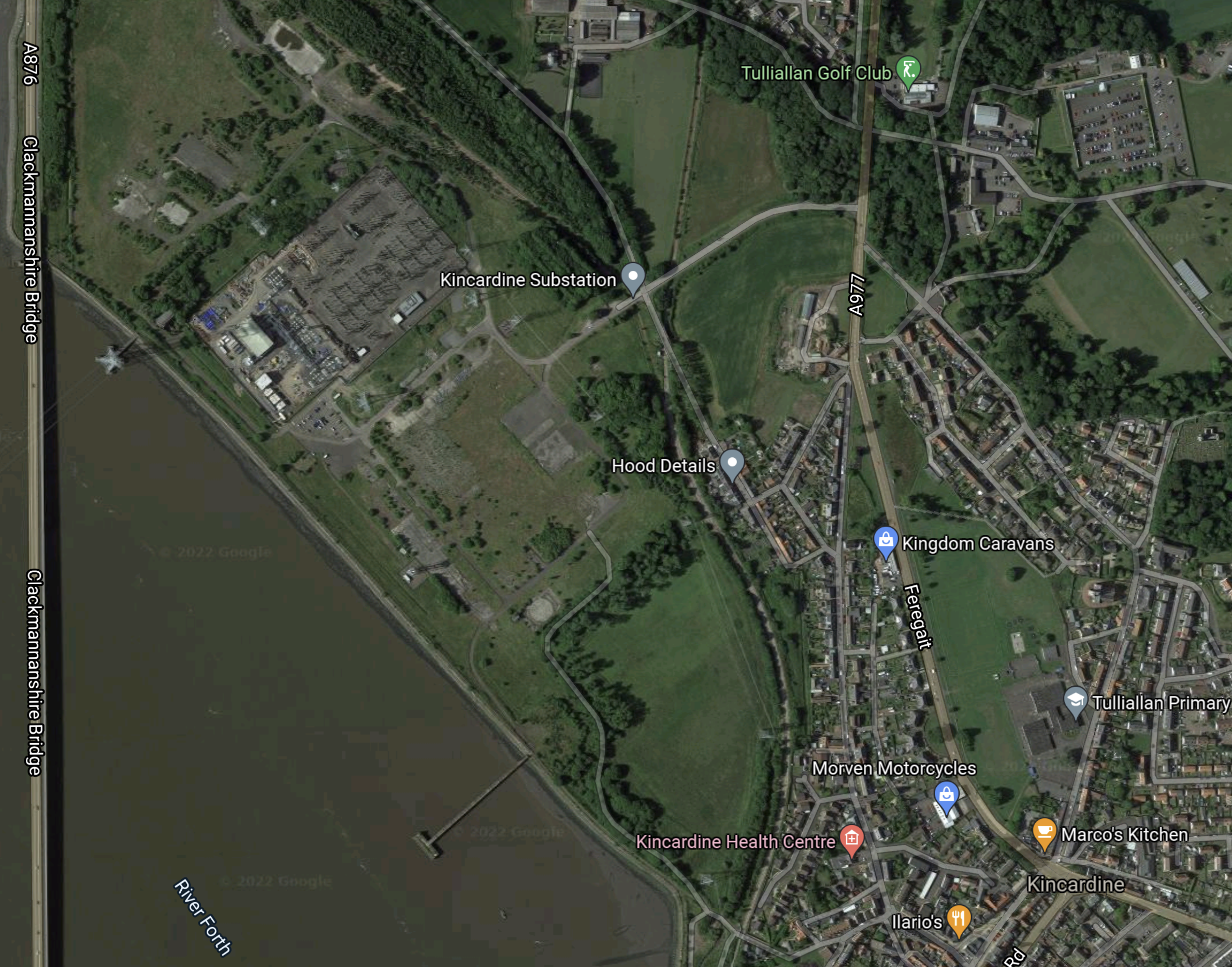
Note.
- The Clackmannanshire Bridge down the Western side of the map.
- The Kincardine Substation to the East of the bridge close to the shore of the River Forth.
- The 760 MW Kincardine power station used to be by the substation, but was demolished by 2001.
As at Hunterston, I’m sure that National Grid could find a suitable socket for a 400 MW battery.
Amp Energy’s Philosophy
As a trained Control Engineer I like it.
- Find a well-connected site, that can handle upwards of 400 MW in and out.
- Put in a 800 MWh battery, that can handle 400 MW in and out.
- Optimise the battery, so that it stores and supplies electricity as appropriate.
- Throw in a bit of artificial intelligence.
Old power station sites would seem an ideal place to site a battery. Especially, as many demolished coal, gas and nuclear stations are around 400-600 MW.
It should be noted that Highview Power are building a 50 MW/400 MWh CRYOBattery on an old coal-fired power station site in Vermont.
The Western HVDC Link
I mentioned earlier that the Northern end of the Western HVDC Link, is at Hunterston.
The Wikipedia entry for the Western HVDC Link, says this about the link.
The Western HVDC Link is a high-voltage direct current (HVDC) undersea electrical link in the United Kingdom, between Hunterston in Western Scotland and Flintshire Bridge (Connah’s Quay) in North Wales, routed to the west of the Isle of Man.[2] It has a transmission capacity of 2,250 MW and became fully operational in 2019.
The link is 262 miles long.
This Google Map shows the Connah’s Quay area in North Wales.
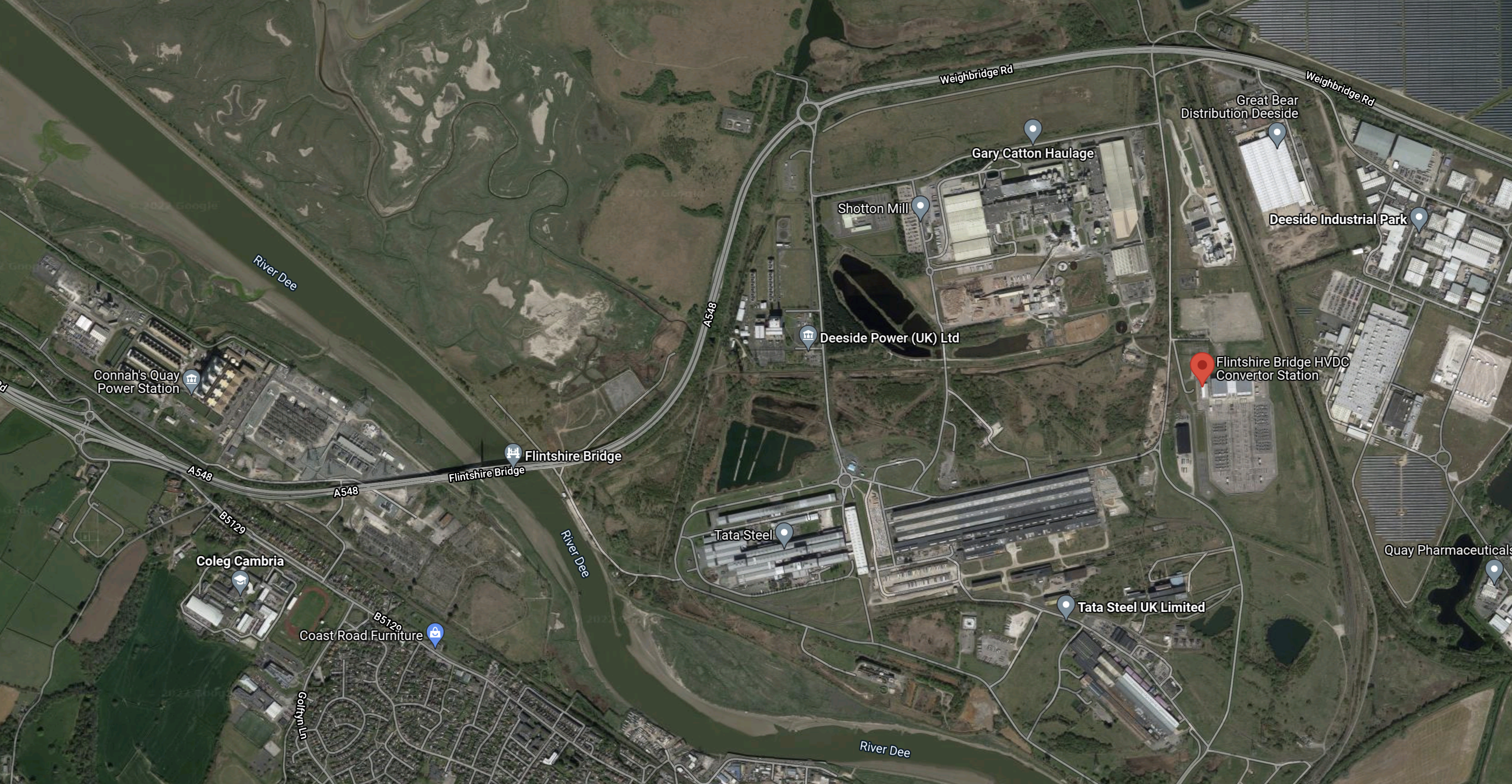
Note.
- The red arrow indicates the Flintshire Bridge HVDC converter station, which is the Southern end of the Western HVDC Link.
- The Borderlands Line between Liverpool and Chester, runs North-South to the East of the convertor station.
- To the East of the railway are two solar farms. The Northern one is Shotwick Solar Park, which at 72 MW is the largest solar farm in the UK.
- To the West of the converter station, just to the East of the A 548 road, is the 498 MW Deeside power station.
- Follow the A548 road to the West and over the River Dee, the road passes South of the 1420 MW Connah’s Quay Power station.
- The two power stations burn gas from Liverpool Bay.
- There are a lot of wind turbines along the North Wales Coast and Liverpool Bay.
The map also shows a lot of high electricity users like Tata Steel.
I can certainly see why the Western HVDC Link was built to connect Scotland and North Wales.
- There is a lot of renewable energy generation at both ends.
- There are heavy electricity users at both ends.
- The Scottish Central Belt is at the North.
- Greater Merseyside is at the South.
The Western HVDC Link is an electricity by-pass, that must have avoided expensive and controversial construction on land.
I wouldn’t be surprised to see another 400 MW/800 MWh battery at the Southern end.
Conclusion
The Canadians seem to have bagged two of the best battery sites in Europe.
- Both sites would appear to be able to handle 400 MW, based on past capabilities.
- There is lots of space and extra and/or bigger batteries can probably be connected.
- Scotland is developing several GW of wind power.
I can see Amp Energy building a series of these 400 MW sites in the UK and around Europe.
This is the big news of the day!
BHP To Trial Battery Locos On Pilbara Iron Ore Network
The title of this post, is the same as that of this article on Railway Gazette.
The article summarised all the battery-electric locomotives ordered to bring the iron ore to the coast by mining companies; BHP, Fortescue, Rio Tinto and Roy Hill.
The article indicates some of the innovative operations that will be tried. This is a sentence from the article.
A key element will be to assess the potential for capturing regenerated braking energy on the loaded downhill runs, and storing it to power empty trains back uphill to the mines.
I would hope that the South Wales Metro, the Buxton branch and the East Kilbride branch will use similar energy conservation techniques.
SWR Says Farewell To ‘456’s
The title of this post, is the same as a section heading in the February 2022 Edition of Modern Railways.
South Western Railways are reducing services because of the pandemic and they are retiring their Class 456 trains, which have been returned to their leasing company; Porterbrook.
- The Class 456 trains are thirty-years old.
- They are two-car third-rail electric trains.
- They have an operating speed of 75 mph.
- They are due to be replaced by new Class 701 trains.
According to the Modern Railways article, they have been put in store by Porterbrook.
But they are not trains in bad condition, as these pictures show.








The trains had a high-class refurbishment in 2014.
In Special Train Offers A Strong Case For Reopening Fawley Line, I discussed the reopening of the Fawley Line.
This is an extract from that post about the rolling stock to use on the line.
South Western Railway’s Innovative Train Plan
This is another quote from the original Rail Magazine article.
However, SWR’s Mark Hopwood favours a much bolder plan. “We’d have to take a decision, once we knew the line was going ahead. But my personal belief is that we should be looking for a modern environmentally-friendly train that can use third-rail electricity between Southampton and Totton and maybe operate on batteries down the branch line.”
Pressed on whether that would mean Vivarail-converted former-London Underground stock, Hopwood adds. “It could be. Or it could be a conversion of our own Class 456, which will be replaced by new rolling stock very shortly. But I don’t think this is the time to use old diesels.
Note.
- Mark Hopwood is now Managing Director of Great Western Railway.
- Great Western Railway and South Western Railway are both First Group companies.
- There are twenty-four Class 456 trains.
I wonder, if the plan that Mark Hopwood hinted at a couple of years ago, is being carried out.
Two dozen, two-car zero-carbon battery-electric trains would do nicely for some of the routes of GWR and SWR.
Converting Class 456 Trains Into Two-Car Battery Electric Trains discusses this possible conversion in detail.
Up, Up And Away: Flying AirCar Earns Its Wings
The title of this post, is the same as that of this article on The Times.
This is the first paragraph.
A supercar that comes with wings attached has been given the green light to take to the skies.
It has been given European certification.
I will be very surprised if the Klein Vision AirCar is a success!
Spanish Consortium Forms For $4.4 Billion Green Hydrogen Investment
The title of this post, is the same as that of this article on Hydrogen Fuel News.
This paragraph outlines the project.
A thirty-three company consortium, called the Spanish Hydrogen Network (Shyne) will be investing into a spectrum of green hydrogen technologies, including the installation of 500 megawatts of renewable H2 capacity by 2025. From there, the capacity will increase to 2 gigawatts by 2030. This represents half of the Spanish government’s goal for the entire country by that year, which is 4 gigawatts of capacity.
The article says this about the creation of hydrogen hubs.
The green hydrogen project’s goal is to “generate an ecosystem that connects” three H2 hubs.
The goal of the project is to develop an ecosystem in which three planned industrial H2 hubs in the Murcia, Catalonia and Basque regions will be connected. The project is also meant to support the development of two new innovation hubs in Castile-La Mancha and Madrid and will target the development of solid-oxide electrolyzers and photoelectrocatalysis.
Note that photoelectrocatalysis is the direct production of hydrogen from solar energy.
 The Anonymous Widower