Heavy Traffic In The Balls Pond Road – 6th December 2021
London has too much traffic.
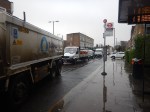

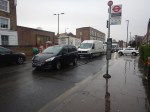
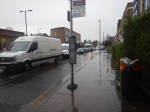
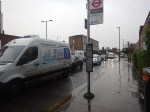
These pictures were taken at three in the afternoon.
There was not a zero-carbon vehicle in sight.
At least the pollution was down, as it was raining.





Oversite Development At Moorgate Station – 10th December 2021
These pictures were taken in Moorgate of the development over the station.

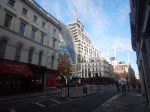
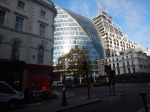
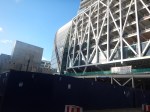
I was walking up from Bank station.
Green Light For New £80m Merseyrail Station
The title of this post, is the same as that of this article on the Liverpool Echo.
These are the first two paragraphs.
The station was hailed as a key part of the town’s “bright future” tonight as councillors met to consider the proposal at a meeting of Knowsley Council ’s planning committee.
Based at Headbolt lane in the Tower Hill/ Northwood area of Kirkby, the station, which will take around 18 months to build, will become the first in the country to have trains operating by battery power instead of electrified lines on part of the track.
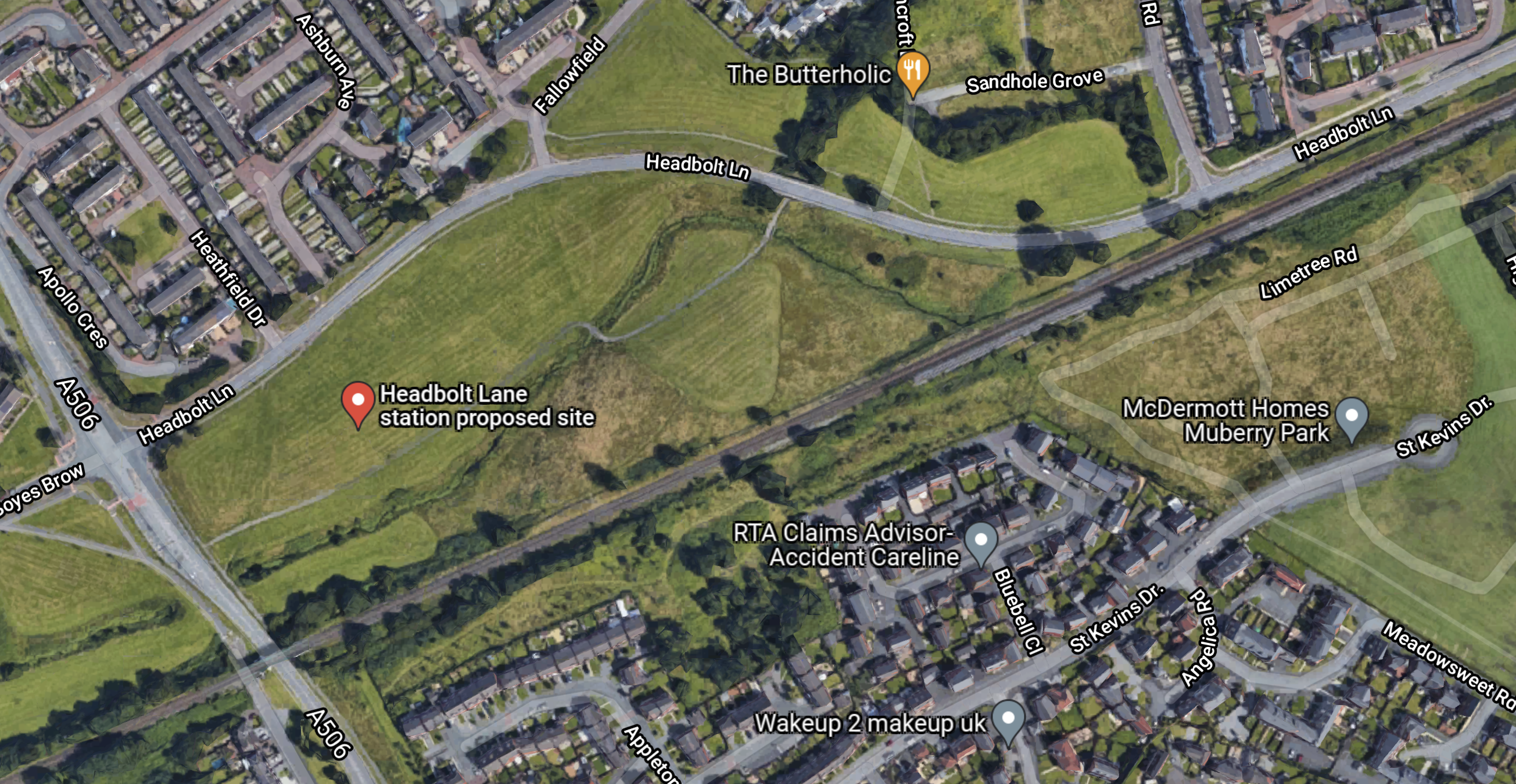
This Google Map shows the location of the station.
And this planning document from Knowsley Council shows the station road layout.
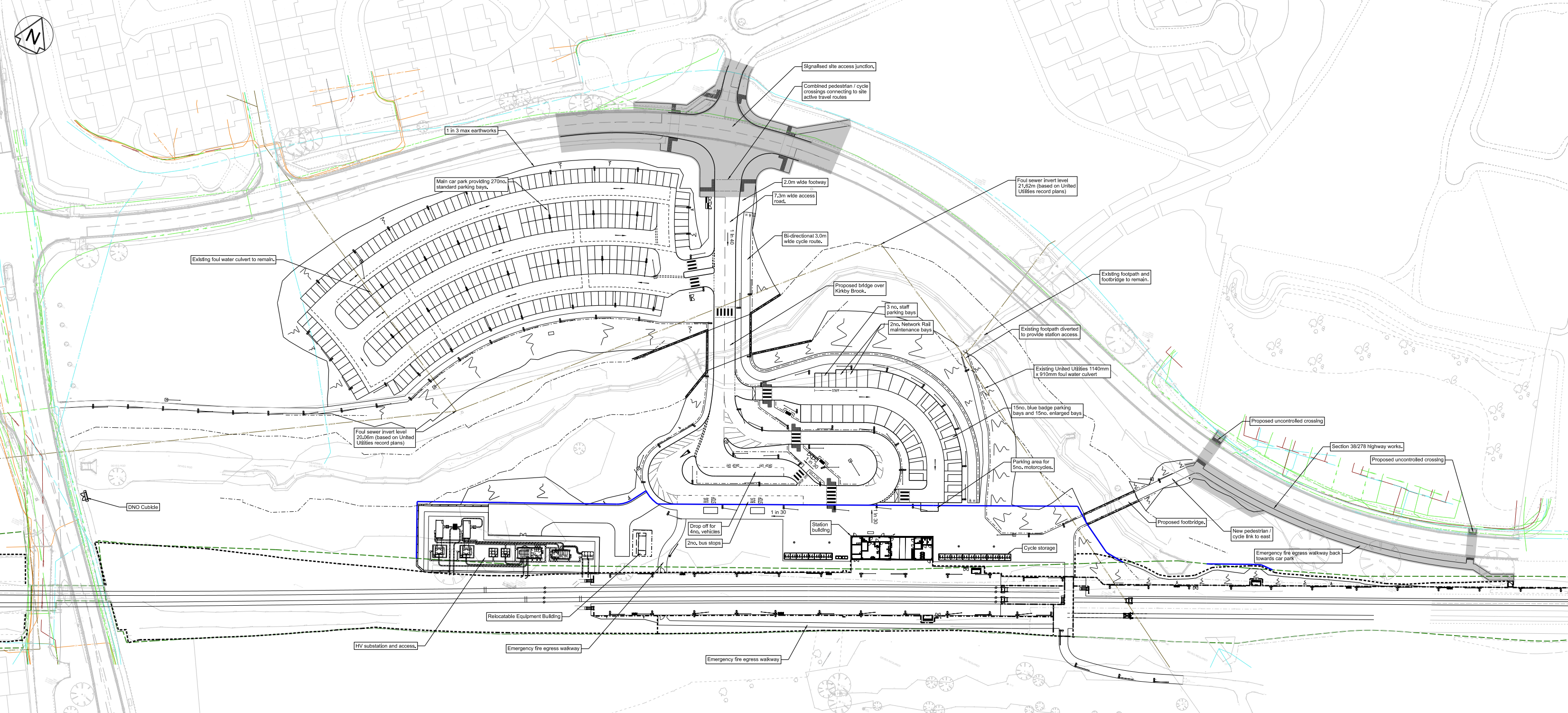
Note.
- Kirkby station and Liverpool is to the West.
- Wigan is to the East.
- There is adequate car parking.
I have also enlarged the area around the station buildings to show the platform layout.
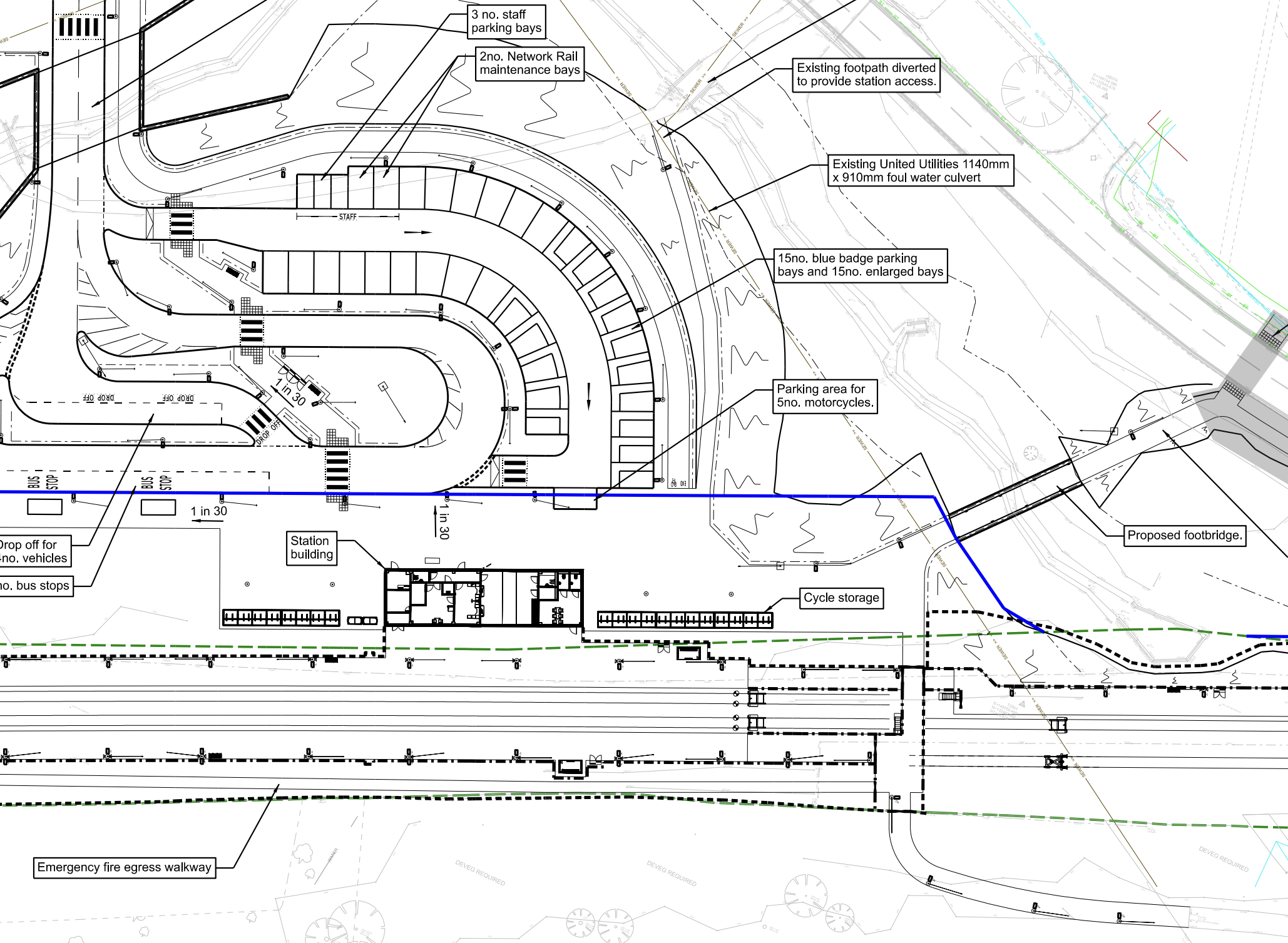
Note.
- There are two platforms and tracks towards Liverpool.
- There is a single platform towards Wigan.
- There appears to be adequate cycle storage and blue badge parking.
In Headbolt Lane Station Fly-Through, I described the new Headbolt Lane station.
This screen capture is from the video in that post.
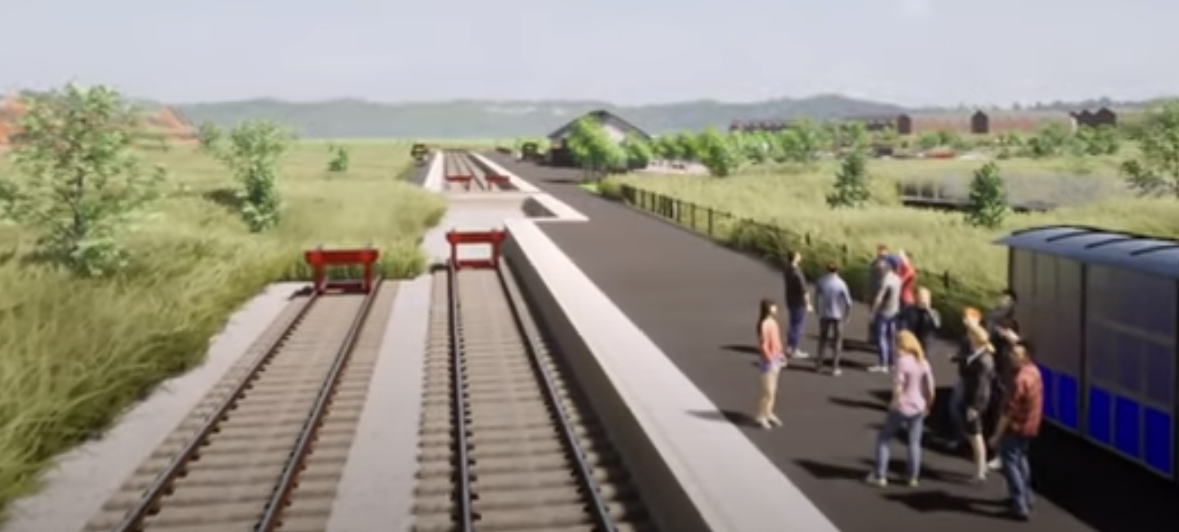
Note.
- Two platforms going away from the camera and one platform and what looks to be a siding going towards the camera.
- There appears to be no direct connection between the two different sets of tracks.
From the maps the camera is looking towards Liverpool,so it would mean that Liverpool services had two platforms. But they currently make do with one at Kirkby.
There appears to be no clues about how the station will be modified to serve Skelmersdale.
When It Comes To Buses, Will Hydrogen Or Electric Win?
The title of this post, is the same as that of this evcellent article on WIRED.
The WIRED article is a serious comparison between the merits of battery and hydrogen-powered buses.
The writer of the article talked to two people, who should know.
- James Dixon, who is a Research Fellow in the Transport Studies Unit and Environmental Change Institute at Oxford University
- Neil Collins, who is Managing Director of Wrightbus.
I think the philosophy of Wrightbus with four basic zero-carbon buses could be right.
- Streetdeck Hydroliner FCEV – A hydrogen-powered double-deck bus.
- Streetdeck Electroliner BEV – A battery-powered double-deck bus.
- GB Kite Hydroliner FCEV – A hydrogen-powered single-deck bus.
- GB Kite Electroliner BEV – A battery-powered single-deck bus.
This surely is a basis for satisfying customers, who like to buy what they feel is best for their networks and passengers.
This paragraph from the Wired article, illustrates how terrain and climate might favour one bus or the other.
Still, hydrogen may be a better option in a city with lots of hills, like Hong Kong, where it’s also very warm and humid, says Collins. “That’s going to be a problem for electric buses, because the cooling and the hills are just going to drain the batteries,” he says. “But if the city is relatively flat, and the journey times are relatively short, and it’s not either significantly warm or significantly cold, battery electric can do a very good job.”
In addition, you wouldn’t choose hydrogen buses, if supply of hydrogen was difficult.
Could this be why Jo Bamford, who is the owner of Wightbus, has established a company to help bus operators with the transition to hydrogen. I wrote about it in New Company Established To Help Transition Bus Fleets To Hydrogen.
I have also heard stories of garages in city centres, where it is not possible to get enough power to charge a garage full of battery buses. Some of these garages are in residential areas, which perhaps may not welcome tankers of hydrogen going through to supply the buses with hydrogen.
Perhaps, the solution for garages like this is to relocate the garage to a site, which fulfils one of these conditions.
- Good connections to the motorway and trunk road network, so that hydrogen can be brought in by truck.
- A high-capacity electricity supply to either charge battery electric buses or generate hydrogen using an electrolyser.
Buses would operate according to this daily cycle.
- Buses would either be charged or refuelled with hydrogen overnight.
- They would position to a convenient place to start their daily diagrams.
- At the end of the day, they would return to the garage.
Note.
- Battery-electric buses may need to be topped-up during the day.
- Hydrogen buses with their longer range should be able to service routes further away.
- Routes would be arranged, so that hydrogen buses would not need to be topped up.
The big advantage of a remote bus garage is that the city centre site could be redeveloped to pay for the new buses and garage.
Volkswagen Transformation Boosts Spending On Electric Vehicles
The title of this post, is the same as that of this article in The Times.
This is the first paragraph.
Volkswagen plans to increase its spending for battery-powered electric vehicles by about 50 per cent to €52 billion by 2026 as part of the carmaker’s far-reaching transformation.
That is a lot of euros.
This is a statement from their Chief Executive; Herbert Diess
We are becoming a battery manufacturer, a charging infrastructure manager, software is playing a more dominant role . . . We are developing new business activities with an unbelievable dimension for us.
Vehicle manufacturers must either change or die.
TfL To Ban Private e-Scooters and e-Unicycles From Its Premises
The title of this post, is the same as this article on City AM.
I am no fan of these devices, especially, when they are ridden on pavements at speed, as they are very often in London.
I have also seen several instances of Darwinian behaviour, which would increase the quality of the gene pool.
The sooner the riders of these devices are made to obey the law the better.
Fortescue Making Plans To Test ‘Green’ Locomotives At Rail Operations In 2022
The title of this post, is the same as that of this article on International Mining.
This is the first two paragraphs.
The decarbonisation of Fortescue Metals Group’s (Fortescue) locomotive fleet is ramping up with the arrival of two additional locomotives at Fortescue Future Industries’ (FFI) research and development facility in Perth, Western Australia.
The two four-stroke locomotives will undergo further testing on the new fuel system, joining the first two-stroke locomotive which underwent testing earlier this year.
FFI aim to test the locomotives in 2022.
Reading the International Mining article reveals an interesting philosophy for decarbonisation.
FFI have set up a Green Team and it appears that they have a free rein to stick their noses into any decarbonisation issue in Fortescue Metals Group’s business.
I know it is a technique that works from personal experience.
When I worked for ICI Plastics Division in the early 1970s, I was in their Computer Techniques Section. The section had been setup by the Divisional Board to see if these new-fangled computers had a use in the running and development of the business outside of the company’s billing and accountancy.
We had a right to stick our noses anywhere.
It certainly gave me a wonderful apprenticeship into how to apply computers to diverse and difficult problems.
Rail Minister Officially Opens Werrington Tunnel
The title of this post, is the same as that of this article on Rail Technology Magazine.
This is the first two paragraphs.
Werrington Tunnel, an underground freight tunnel running beneath the East Coast Main Line near Peterborough, has been formally opened by Rail Minister Chris Heaton-Harris.
A key step in the £1.2bn East Coast upgrade, the opening of the tunnel allows for freight services to be ran underneath the main rail artery, significantly improving passenger service reliability on the East Coast Main Line.
I also think, that the tunnel will be used creatively by passenger and freight operators.
Electrification
There is a possibility that the Great Northern and Great Eastern Joint Line (GNGE) between Werrington and Doncaster via Lincoln could be electrified.
- It would allow the many freight trains using the route to be hauled by electric locomotives.
- It would create a by-pass for the East Coast Main Line during engineering works, that could be used as a diversion route by electric trains.
- Werrington and Lincoln are just over fifty miles and might be handled by battery-electric trains, if the GNGE were to be partially electrified.
According to one report, the Werrington Tunnel has been readied for electrification, should that be decided.
An Improved Peterborough And Lincoln Service
In the past, I have travelled between London and Lincoln with a change at Peterborough. In one case, I just missed my connection, as it was a long crowded walk between the two platforms.
The Werrington Tunnel will enable trains to and from Lincoln to use platforms on the West side of Peterborough station.
Train times and platform allocations could be arranged to make connections at Peterborough easier.
A London And Lincoln Service Via Spalding And Sleaford
There are two possible routes between London King’s Cross and Lincoln
- The current LNER service leaves the East Coast Main Line at Newark.
- An alternative route would leave the East Coast Main Line at Peterborough and be routed via the Werrington Tunnel, Spalding and Sleaford.
These notes apply to the alternative route.
- The Lincoln service wouldn’t call at Grantham and Newark.
- Some services could also call at other stations.
- The current hourly Peterborough and Lincoln service via Spalding is run by a Class 153 train , which stops four times and takes fourteen minutes longer than LNER’s service via Newark.
- An easy connection to and from Skegness could be arranged at Spalding,
LNER also plans to extend some Lincoln services to Grimsby Town and Cleethorpes. Timings will dictate which will be the better route.
The Werrington Tunnel would add a large degree of flexibility in routing services between London King’s Cross and Lincoln and Lincolnshire.
Splitting And Joining At Peterborough
If the Werrington Tunnel makes Lincoln timings via Spalding and Sleaford viable, I wonder if it would be possible for trains to split and join at Peterborough.
- One train would go to Lincoln via the Werrington Tunnel, Spalding and Sleaford.
- The other might go North to Bradford, Hull, Middlesbrough, Scarborough or York.
The Werrington Tunnel again adds flexibility.
A Round-The-Wash Service Between Doncaster And Ipswich/Norwich
In Is There A Case For A Round-The-Wash Service Between Doncaster And Ipswich/Norwich?, I suggested this service, which would be an hourly Doncaster and Cambridge service via Scunthorpe, Grimsby Town Cleethorpes, Lincoln, Sleaford, Spalding, Werrington Tunnel and Peterborough that would alternatively extend to Ipswich or Norwich.
The Werrington Tunnel again opens up possibilities.
Conclusion
I’m sure that the Werrington Tunnel and the technology that built it will be imitated elsewhere.
 The Anonymous Widower