Is There A Case For A Round-The-Wash Service Between Doncaster And Ipswich/Norwich?
I suggested this service in The Integrated Rail Plan For The North And Midlands And The East Coast Main Line.
Effectively, it would join East Midlands Railway’s Doncaster and Peterborough service with Greater Anglia’s Cambridge and Ipswich service.
- The service could go via Scunthorpe, Grimsby Town, Cleethorpes, Grimsby Town, Market Rasen, Lincoln, Sleaford, Spalding, Peterborough, March, Ely, Cambridge North, Cambridge, Newmarket, Bury St. Edmunds and Stowmarket.
- There would be reverses at Cleethorpes and Cambridge.
- There may be extra stops in Lincolnshire and across Suffolk.
- The service would not use the East Coast Main Line, but would use the new Werrington Dive-Under and the Great Northern and Great Eastern Joint Line to the East of the East Coast Main Line.
- The frequency would be one train per two hours (1tp2h).
- Ideal trains could be Class 755 trains, perhaps running on batteries or hydrogen.
It would be paired with a new Doncaster and Norwich service, that could partly replace East Midlands Railway’s Liverpool and Norwich service.
- The service could go via Scunthorpe, Grimsby Town, Cleethorpes, Grimsby Town, Market Rasen, Lincoln, Sleaford, Spalding, Peterborough, March, Ely, Cambridge North, Cambridge, Cambridge North, Ely, Thetford, Attleborough and Wymondham.
- There would be reverses at Cleethorpes and Cambridge.
- There may be extra stops in Lincolnshire and across Norfolk.
As with the Ipswich train it would not use the East Coast Main Line and have a frequency of 1tp2h.
The Objectives Of The Service
I believe this service could have several objectives.
Remove Slower Trains From The East Coast Main Line Between Peterborough And Doncaster
There aren’t many except freight, but this plan could provide a better solution to the Liverpool and Norwich service.
Providing Better Connections To The Biggest Growth Point In The UK – Cambridge
Cambridge needs better connections, so that it can bring in the staff and workers, that the high-tech capital of the UK needs.
Better Connection Of East Anglia And Lincolnshire To Northern England And Scotland
In Peterborough and Doncaster the route has two main interchanges to bring about these connections.
Promoting Tourism
For a start the route has five cathedrals; Bury St. Edmunds, Ely, Lincoln, Norwich and Peterborough and the historic city of Cambridge.
But I do believe that there are numerous places, where tourists might stay on the route and use it to explore the East of the country.
A Few Questions
These are a few questions.
Would The Route Be Electrified?
I don’t believe it will be fully electrified for two reasons.
Freight locomotives will increasingly become hydrogen-powered and also be able to use electrification, where it exists.
Plans by the likes of Hitachi ABB Power Grids and Furrer and Frey are likely to enable discontinuous and battery-electric trains to be able to work the route.
This philosophy would avoid all the disruption and reconstruction of structures of electrification and probably be much more affordable.
Would York Or Leeds Make A Better Northern Terminal For The Route?
Both have possibilities.
- York would need running on the East Coast Main Line.
- Leeds would probably need trains capable of 125 mph running.
On the other hand both Leeds and York would have superb connectivity.
Conclusion
I feel this would be a very valuable new service and it could be created without building any new infrastructure other than perhaps some strategic stations.
Trial Operation Begins On London’s Crossrail
The title of this post, is the same as that of this article on Railway Gazette.
Trial running is one of the last stages before opening.
Hopefully it will open early in 2022.
The Integrated Rail Plan For The North And Midlands And The East Coast Main Line
Note that this is not a finished post.
To read the The Integrated Rail Plan For The North And Midlands (IRP), click this link.
There is a section in the IRP called Serving Leeds, York and North East England.
It is a section of six paragraphs and I shall describe their contents in detail separately.
Paragraph 3.41
This is said in the IRP.
Under the original plans, HS2 trains would have served Leeds, York and North East England via the West Midlands, with the Eastern Leg branching off from the Phase One line just north of Birmingham Interchange.
This is a significantly longer route than the current East Coast Main Line from King’s Cross, which goes directly up the eastern side of the country.
Due to capacity constraints north of Doncaster HS2 trains to Newcastle and York could also only be accommodated at the expense of existing services, potentially reducing or removing connections between the North East and Doncaster, Newark and Peterborough.
Unlike the West Coast Main Line, there is also potential to lengthen existing trains by up to three carriages, increasing the number of seats on those trains by around 40%.
Geography wins and I’ll discuss the train lengthening later.
Paragraph 3.42
This is said in the IRP.
The IRP has concluded in favour of a significant package of upgrades to the East Coast Main Line which could deliver similar journey times to London and capacity improvements for York and the North East as the original proposals – but many years sooner, and with operational carbon savings because trains will be taking a shorter route.
Speed is important in both project delivery and running of the trains.
Paragraph 3.43
This is said in the IRP.
We are therefore taking forward a substantial package of investment for the East Coast Main Line between London and Leeds and the North East, subject to future business case. Development work will consider interventions from both NPR designs undertaken by Network Rail, mainly focussed on York and northwards, and work undertaken by Mott MacDonald for the Department for Transport focused on the line south of York. North of York we will look to increase the number of paths for long distance high speed trains from 6 to 7 or 8 per hour. In addition to the already planned roll-out of digital signalling, work is expected to include looking at opportunities to improve rolling stock performance; power supply upgrades to allow longer and faster trains; route upgrades to allow higher speeds, including of up to 140mph on some sections; measures to tackle bottlenecks, for example south of Peterborough and at stations and junctions such as Newark, Doncaster, York, Northallerton, Darlington and Newcastle all of which limit speed and capacity; and to replace level crossings where needed.
We will ask Network Rail to now take forward these proposals, including considering any alternatives which may deliver better outputs and/or more cost-effective solutions.
I’ll discuss a lot of this later in more detail.
Paragraph 3.44
This is said in the IRP.
This package is intended to:
-
- Cut journey times from London to a range of destinations, including Leeds, Darlington, Northallerton, Durham, and Newcastle by up to 28 minutes, bringing journey times closer to those proposed by HS2, much earlier than previously planned;
- Allow the introduction of longer trains, increasing the number of seats;
- Provide 7–8 long distance high speed paths per hour north of York to Newcastle, compared to the current 6 paths (and so allowing a minimum of two fast Manchester to Newcastle services each hour alongside other ambitions);
- Improve performance and reliability, enabling faster and more reliable services for passengers.
I’ll discuss a lot of this later in more detail.
Paragraph 3.45
This is said in the IRP.
Journey times from London to Newcastle under this plan could be as little as 2 hrs 25-28 minutes (subject to stopping pattern), about 21-24 minutes faster than now and 8 minutes slower than under the full HS2 plans.
Journey times to York and Darlington under this plan would be about 15 minutes faster than now and 12-14 minutes slower than under the full HS2 plans.
Journey times from London to Leeds, at around 1 hour 53, would be about 20 minutes faster than now, but 32 minutes slower than under the full HS2 plans.
I’ll discuss a lot of this later in more detail.
Paragraph 3.46
This is said in the IRP.
Journey times from Birmingham to Leeds would be around 30 minutes faster than the current typical time, and, subject
to further analysis, York and the North East could be would be around 30 minutes faster than the current typical time,
via HS2 Western Leg, Manchester and NPR (based on indicative train service).
I’ll discuss a lot of this later in more detail.
My Thoughts
These are my thoughts.
Longer Trains
This is said in Paragraph 3.41
Unlike the West Coast Main Line, there is also potential to lengthen existing trains by up to three carriages, increasing the number of seats on those trains by around 40%.
The Hitachi Class 800, Class 801, Class 802 and Class 803 trains, that run the routes out of King’s Cross come in lengths of five, nine and ten coaches.
- The maximum length of an individual train is twelve cars according to this Hitachi document.
- All destinations with the possible exception of Harrogate, Lincoln and Middlesbrough can handle the current nine-car trains.
- Lengthening a five-car train by three cars would increase capacity by 60 %. You’d just run a current nine-car train.
- Lengthening a nine-car train by three cars would increase capacity by 33.3 %. Poor maths but possible.
- Lengthening a ten-car train by three cars would increase capacity by 30 %. Two trains would have to be lengthened, as ten-car trains are a pair of five-car trains.
It looks to me that the IRP is talking about running twelve-car trains.
- The Hitachi trains are all plug-and-play.
- The main stations on the route are Doncaster, Edinburgh, King’s Cross, Leeds, Newcastle and York.
- Some platforms would need to be lengthened, but some like Edinburgh, Leeds and York are probably already long enough.
But what about the important London terminus at King’s Cross?
These pictures show the Northern ends of the platforms at King’s Cross station.
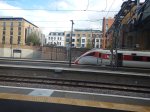
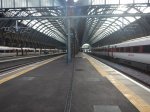
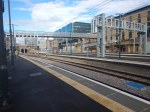
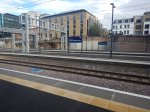
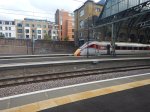
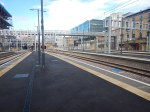
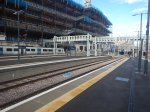
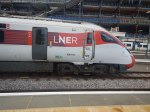
The two trains are both nine-car Hitachi Class 800 or Class 801 trains and I was standing in line with their noses.
I wonder what is the maximum length of trains that can be handled in these platforms.
- They can certainly handle ten-car trains, as LNER run these to Leeds.
- Looking at maps, I suspect that eleven-car trains could be the largest that can be handled.
I suspect it will be tight, but I suspect with a simple platform extension, twelve car trains could be accommodated in King’s Cross station.
Journey Times
These times come from High Speed Two’s Journey Planner and the IRP.
- London and Edinburgh – Three hours and forty-eight minutes – Four hours and nineteen minutes – Three hours and fifty-eight minutes – My estimate based on IRP figures
- London and Newcastle – Two hours and seventeen minutes – Two hours and forty-nine minutes – Two hours and 25-28 minutes
- London and Durham – Two hours and sixteen minutes – Two hours and fifty-five minutes – Two hours and forty minutes
- London and Darlington – One hour and fifty minutes – Two hours and twenty-two minutes – Two hours and seven minutes
- London and York – One hour and twenty-four minutes – Two hours and ten minutes – One hour and fifty-five minutes – My estimate based on IRP figures
- London and Leeds – One hour and twenty-one minutes – Two hours and thirteen minutes – One hour and fifty-three minutes
Note.
- The first time is that from High Speed Two, which assumes the Eastern Leg of High Speed Two has been built.
- The second time is the current best time via the East Coast Main Line.
- The third time is the IRP’s estimate via an upgraded East Coast Main Line.
- Where the estimates are mine it is noted.
London and York and London and Leeds are under two hours, London and Newcastle is under three hours and London and Edinburgh is under four hours.
Are these times fast enough for modal shift from the Air and Roads to Rail?
Project Delivery
Rail projects in the UK have a variable record in the delivering of projects on time and on budget.
I haven’t done the full analysis, but I do believe that smaller projects have a better record of delivery, based on media reports.
In Railway Restored: Regular Trains To Run On Dartmoor Line For First Time In 50 Years, Network Rail have delivered an important smaller project, for which I said.
Network Rail have set themselves a good precedent to open the line in nine months and £10 million under budget.
As the improvement of the East Coast Main Line is more of a succession of smaller projects, rather than one large project does this mean it is more likely to be delivered on time and on budget?
Extra Paths
This is said in Paragraph 3.43
North of York we will look to increase the number of paths for long distance high speed trains from 6 to 7 or 8 per hour.
One of the min reasons for building High Speed Two, but here we have extra capacity being created on the East Coast Main Line.
One extra path would be very good, but two would be excellent.
Power Supply Upgrades
In the last eighteen months, I’ve written two articles about updating of the power supply on the East Coast Main Line.
- East Coast Main Line Northern Power Supply Works Funded
- East Coast Main Line Electrification Research Agreement
The second article talks about the involvement of the University of Leeds to get the power supply to a high standard.
It does appear that Network Rail are doing all they can to enable the East Coast Main Line to handle the eight electric trains per hour
140 mph Running
There are several elements to the successful achievement of 140 mph running on a railway.
- The trains must be capable of running safely at 140 mph.
- The track must be able to support trains at that speed.
- The signalling must be in-cab and fully tested.
- The electrification must be designed for running at the required speed.
- The drivers must be fully trained.
Note.
- There are certainly 140 mph trains in service and there are tracks in the UK, where they can be tested at that speed.
- I wouldn’t be surprised as we have been running 140 mph InterCity 225 trains on the East Coast Main Line for thirty years, that a lot of the track is already profiled for 140 mph running.
- The digital signalling is being installed.
- The electrification on the East Coast Main Line has been dodgy for years, but is now being upgraded.
- Drivers are probably the least to worry about, as they probably know the route well and are honing their skills in simulators.
I can see 140 mph running being delivered in stages and on time.
Darlington Improvements
In First Phase Of ‘Transformational’ Darlington Rail Station Upgrade Approved, I said this about the improvements at Darlington station.
This upgrade is on the Eastern side of the current station and will include a new entrance, station building, concourse and three new platforms.
This design should allow the following.
-
- LNER, High Speed Two and other expresses not stopping at the Darlington station to pass through at speeds of up to 125 mph or more.
- Expresses stopping in the station will slow and accelerate in less time than they do now.
- It will probably allow more local trains to Bishops Auckland, Middlesbrough and Saltburn
A seventy-five percent increase in platforms probably offers other advantages.
This could knock several minutes off journey times.
York Improvements
I describe this problem and my solution in Improving The North Throat Of York Station Including Skelton Bridge Junction.
My solution won’t happen, as I advocate replacing the historic Skelton Bridge with a modern four-track bridge.
Effects On Lincoln Service
It will be interesting to see how the improvements to the East Coast Main Line effect LNER’s service between King’s Cross and Lincoln.
Any time improvements South of Newatk will surely be reflected in the time between King’s Cross and Lincoln.
Conclusion
The plan seems feasible to me.
Improving The North Throat Of York Station Including Skelton Bridge Junction
On the thirty mile stretch of the East Coast Main Line, between York and Northallerton stations, the route is mainly four tracks.
But three miles North of York there is Skelton Bridge over the River Ouse, which is shown in this Google Map.

Zooming closer, I clipped this second Google Map.
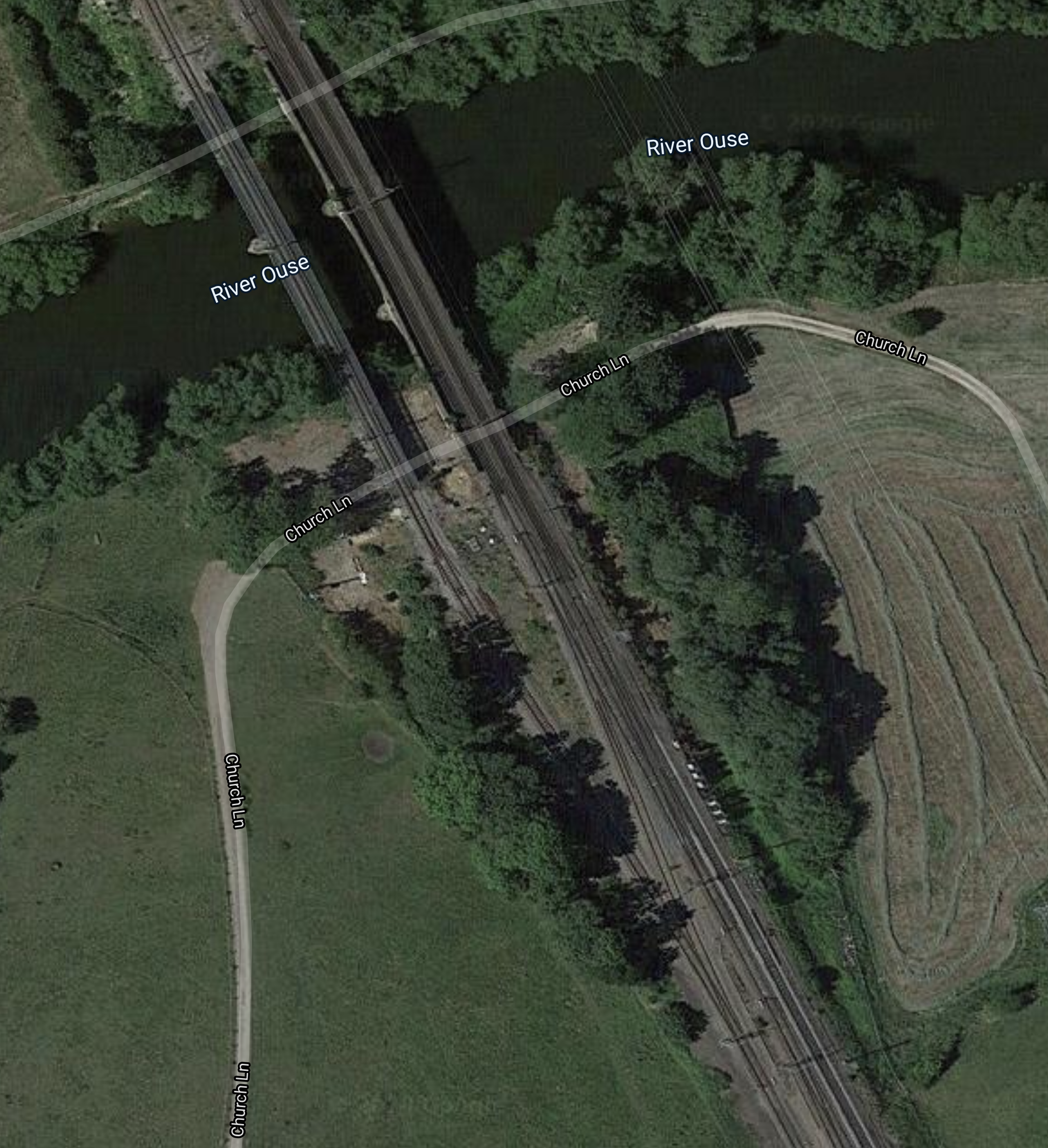
Note.
- There are actually two bridges over the River Ouse.
- The East bridge is a double-track bridge and is the original stone arch bridge.
- The West bridge was added later and I suspect has little architectural merit.
- The tracks on both sides of the bridge are extremely complicated.
If you look at the timings, trains seem to take one of two timings between York and Northallerton.
- 17-18 minutes, which is almost an average speed of 100 mph.
- 27 minutes, which is 67 mph.
Incidentally, one of Drax’s long biomass trains managed a time of 27 minutes.
Would going faster save any minutes?
- A 110 mph average would give a time of 16.4 minutes
- A 120 mph average would give a time of 15 minutes
- A 125 mph average would give a time of 14.4 minutes
- A 140 mph average would give a time of 12.9 minutes
On the face of it, it doesn’t appear that there are very large time savings, to be achieved.
On the other hand, if all trains can pass through Skelton Bridge and its complicated junction, without slowing, delays will be minimised and timetables can be faster.
But there is an anomaly in all the express trains that pass through York station. All stop, except those planned for East Coast Trains. In fact, their trains won’t stop between Stevenage and Newcastle.
The obvious solution to the Skelton Bridge problem, is to do what British Rail didn’t have the courage to do, when they electrified the East Coast Main Line in the 1980s. And that is to demolish the bridge and build a stylish modern four-track bridge!
It would eliminate many of the things, that could go wrong and would surely improve reliability. This could help to maintain a higher operating speed.
But would it be allowed by the Planning Authorities and the Heritage Taliban?
Hopefully, it doesn’t matter!
- I am a Control Engineer and mathematical modeller, who has programmed some immensely complex systems in the last fifty-five years.
- I have also flown light aircraft on instruments for many hours, where you control the plane according to what Air Traffic Controllers and the instruments tell you.
My experience tells me that, it would be possible to control a busy junction, like Skelton Bridge safely, by a well-programmed computer system helping the driver, to arrive at the junction at the right time to go straight through.
I also believe that if modern in-cab digital ERTMS signalling can handle twenty-four tph on Thameslink going to and from scores of stations, then it can handle Skelton Bridge Junction.
In Could ERTMS And ETCS Solve The Newark Crossing Problem?, I proposed a similar solution to the problem at Newark.
1.5GW Of Irish PV To Receive Grid Connection Offers Through ECP Process
The title of this post is the same as that of this article on Solar Power Portal.
Note.
- There are 85 projects in total.
- Several also involve energy storage
- Gresham House and Gore Street Energy Storage Funds are involved.
It all seems to be happening in Ireland.
Digital Signalling Work Outlined By Network Rail For Northern City Line
The title of this post, is the same as that of this article on Rail Business Daily.
This is the first paragraph.
Network Rail has detailed work due to be delivered on the Northern City Line to Moorgate.
I use this line regularly and I believe that with digital signalling the Northern City Line could see a large increase in frequency.
Currently, the service from Moorgate is as follows.
- 4 tph to Welwyn Garden City via Potters Bar
- 4 tph to Hertford North of which 2 tph extending to Watton-at-Stone and 1tph of those continuing to Stevenage.
Note.
- tph is trains per hour.
- Although the service is reduced from that shown, because of the pandemic and lower passenger demand.
But eight tph means a train every seven minutes and thirty seconds.
If you look at London’s high frequency lines, they have or will have passenger frequencies as follows.
- Crossrail – 24 tph on dedicated tracks with digital signalling.
- East London Line – 16 tph on dedicated tracks.
- North London Line – 8 tph on tracks shared with freight trains.
- Thameslink – 24 tph on dedicated tracks with digital signalling.
Note.
- The East London Line is planned to go to 20 tph with two extra tph to Clapham Junction and Crystal Palace.
- 20 tph means a headway between trains of three minutes.
- 24 tph means a headway between trains of two minutes and thirty seconds.
It should also be noted that the Victoria Line runs upwards of thirty tph on a fully digitally-signalled line.
What Level Of Service Would Be Possible?
These are my thoughts on various aspects of the Northern City Line.
How Many Trains Could Be Handled Between Finsbury Park And Moorgate?
This section of track is a simple double-track with a diamond crossing to the North of the two platforms at Moorgate, so that trains can use either platform.
This layout is used at Brixton and Walthamstow Central on the Victoria Line and Battersea Power Station on the Northern Line to name just three of many.
So I suspect that the track layout at the terminus at Moorgate can handle well-upwards of twenty tph.
The new Class 717 trains that run into Moorgate have an operating speed of 85 mph, which is faster than the previous Class 313 trains, which appear to have run at 30 mph South of Drayton Park.
I suspect that eventually twenty or even twenty-four tph will be possible on a digitally-signalled route between Finsbury Park and Moorgate.
But in the interim, sixteen tph would be a good compromise.
How Many Trains Could Be Handled On The Current Routes?
Currently, four tph use the both the Welwyn Garden City and the Hertford East/Stevenage routes.
I am fairly sure that both routes could handle eight tph, with the only proviso, that there is enough terminal capacity to turn the trains.
Looking at the layout of Welwyn Garden City station, I am certain that it could be modified to be able to handle eight tph.
I would hope that the new platform at Stevenage station, built to handle trains to and from Moorgate, can cater for four tph. As there are turnback platforms at Gordon Hill and Hertford North stations, I’m sure the other four tph could be handled.
The Piccadilly Line And The City of London
It has always been difficult to get between the Northern section of the Piccadilly Line and the City of London.
In the 1960s, I used to use my bicycle. By public transport, you generally had to use the bus or the 641 trolley bus to Moorgate.
With the improvement of the Northern City Line and Finsbury Park station, the fastest route to Moorgate is probably to change between the Piccadilly and Northern City Lines at Finsbury Park station.
Increasing the frequency of Northern City Line services between Finsbury Park and Moorgate would create a high-capacity route to the City for those commuting from the Northern section of the Piccadilly Line.
The Piccadilly Line And Crossrail
There is no connection between the Piccadilly Line and Crossrail.
A trip between Oakwood and Canary Wharf would be difficult.
As with getting to the City of London, the improvement of the Northern City Line and Finsbury Park station offers a route to Crossrail.
Oakwood and Canary Wharf would probably be done with changes at Finsbury Park and Moorgate.
The Victoria Line And The City of London
There is a cross-platform interchange at Highbury & Islington station between the Victoria and Northern City Lines.
With an increased frequency of Northern City Line services between Finsbury Park and Moorgate, I would expect that more people would use this route.
The Victoria Line And Crossrail
There is no connection between the Victoria Line and Crossrail.
The easiest route will be to take the route in the previous section and join Crossrail at Moorgate.
Conclusion
It does look that with the current routes sixteen tph to and from Moorgate could be a practical limit.
But that would still be a train every three minutes and forty-five seconds between Finsbury Park and Moorgate.
This increased frequency could be needed to create a high capacity link between the Northern sections of the Piccadilly and Victoria Lines and the City of London and Crossrail.
KEPSA Signs Large-Scale Green Energy Projects MoU In Kenya
The title of this post, is the same as that of this article on ESI Africa.
This is the first paragraph.
The Kenya Private Sector Alliance (KEPSA) has signed a Memorandum of Understanding (MoU) with green energy company Fortescue Future Industries (FFI) to help facilitate its members participation in new large scale green energy projects in Kenya.
FFI are planning a possible green hydrogen and green ammonia facility in the country, that will use renewable energy.
Andrew Forrest is building up the air miles again.
Is The Alstom Hydrogen Train Powered By A Fuel Cell?
In Alstom And Eversholt Rail Sign An Agreement For The UK’s First Ever Brand-New Hydrogen Train Fleet, I mentioned that Alstom’s Hydrogen Aventra could be powered by either a small gas turbine or a fuel cell or cells, but I didn’t plump for one or the other. I said this.
If you look at the proportions of the Alstom hydrogen train and the pictures of Class 710 trains, I feel that the Alstom train could have the longer twenty-four metre cars.
It may be a tight fit compared to creating the Alstom Coradia iLint hydrogen train, but I would feel it is possible to install a fuel cell or cells, the required cooling and the hydrogen tanks, having seen cutaway drawings of hydrogen-powered double-deck buses on the Wrightbus web site.
Interestingly, the Alstom press release doesn’t mention fuel cells, so could the train be powered by a small gas turbine?
I think it is unlikely, but it is technically feasible.
I had forgotten one important factor. Both the Aventra factory and Rolls-Royce are in Derby and I know from talking to a retired British Rail engineer, that there is a lot of contact between the two companies at an informal level.
Rolls-Royce have published this picture of their beer keg-sized generator.
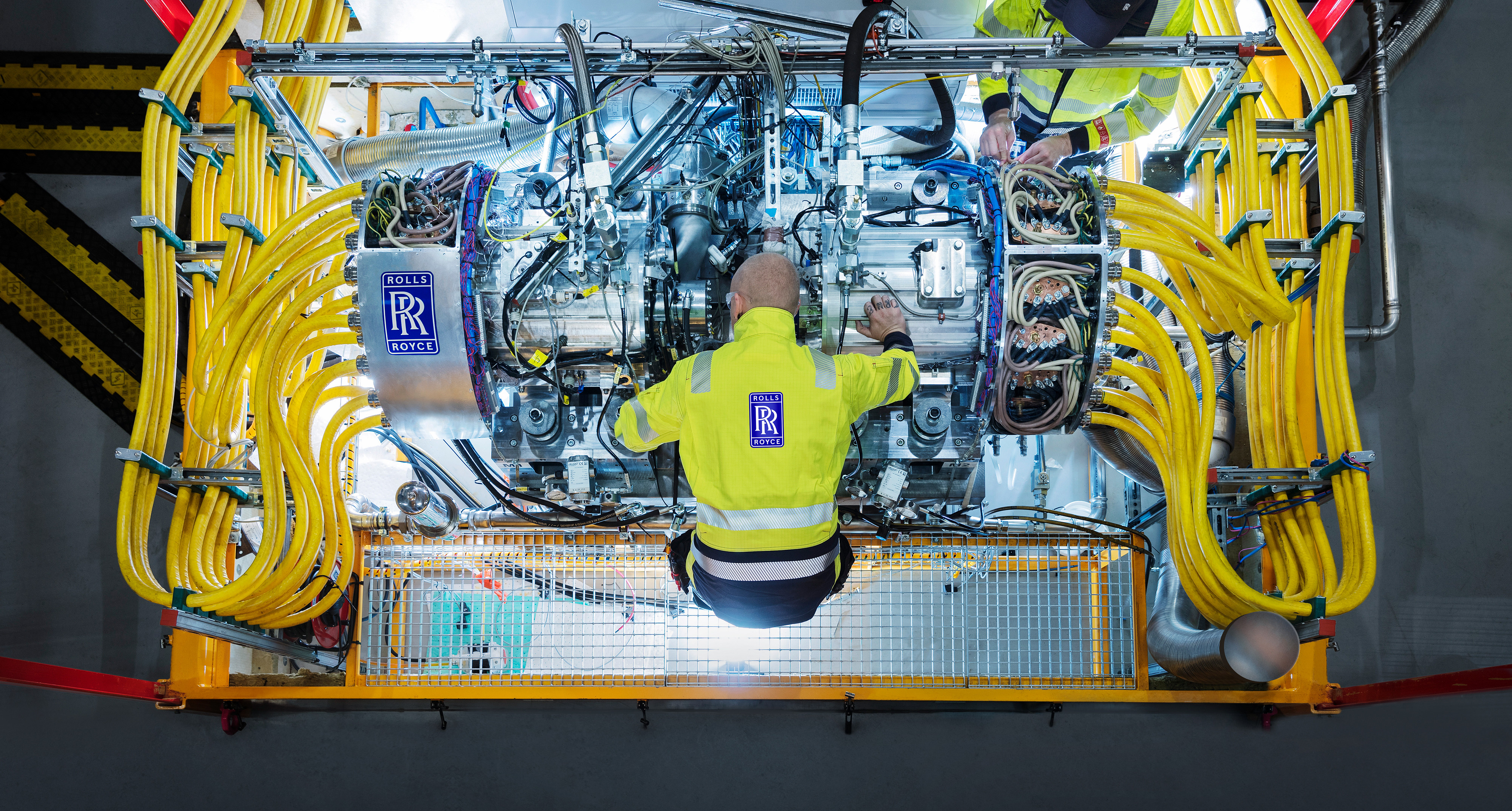
Would it need the cooling system, which appears to be needed with a fuel-cell?
The Rolls-Royce Advantage
There would surely be advantages in using a Rolls-Royce gas turbine to power the train.
- Having a Rolls-Royce power unit must help sales of your plane or train.
- There is the Derby connection.
- Alstom already deal with Rolls-Royce subsidiary; MTU for diesel engines for freight locomotives.
Could we be seeing a hydrogen multiple unit powered by a gas turbine?
‘Spirit of Innovation’ Stakes Claim To Be The World’s Fastest All-Electric Vehicle
The title of this post is the same as that of this press release on the Rolls-Royce web site.
This is the first paragraph.
We believe our all-electric ‘Spirit of Innovation’ aircraft is the world’s fastest all-electric aircraft, setting three new world records. We have submitted data to the Fédération Aéronautique Internationale (FAI) – the World Air Sports Federation who control and certify world aeronautical and astronautical records – that at 15:45 (GMT) on 16 November 2021, the aircraft reached a top speed of 555.9 km/h (345.4 mph) over 3 kilometres, smashing the existing record by 213.04 km/h (132mph). In further runs at the UK Ministry of Defence’s Boscombe Down experimental aircraft testing site, the aircraft achieved 532.1km/h (330 mph) over 15 kilometres – 292.8km/h (182mph) faster than the previous record – and broke the fastest time to climb to 3000 metres by 60 seconds with a time of 202 seconds, according to our data. We hope that the FAI will certify and officially confirm the achievements of the team in the near future.
Rolls-Royce also claim that the maximum speed achieved of 387.4 mph make it the world’s fastest all-electric vehicle.
To put that speed into perspective, it is faster than a Mark V Spitfire, which was powered by a legendary Rolls-Royce Merlin engine. These aircraft were powered by a Merlin 45 engine that generated 1074kW.
By comparison the Spirit of Innovation has a maximum power of just 400 kW.
Why Do It?
This paragraph from the press release gives an explanation.
As well as a stunning technical achievement, the project and world record runs provided important data for our future electric power and propulsion systems for all-electric urban air mobility and hybrid-electric commuter aircraft. The characteristics that ‘air-taxis’ require from batteries, for instance, are very similar to what was developed for the ‘Spirit of Innovation’.
I’ll go with that, as Rolls-Royce seem to be associated with several electric aviation projects.
But I can’t help feeling that there are parallels with the 1930s, when Supermarine and Rolls-Royce teamed up to produce the Supermarine S 6B, that won the Schneider Trophy outright in 1931. It is generally accepted that the knowledge gained at the time helped to design the Spitfire and the Merlin engine.
Whitelee Green Hydrogen Facility To Power Public Transport
The title of this post, is the same as that of this article on the BBC.
Some points from the article.
- It will be the country’s largest electrolyser. Is that Scotland or the UK?
- The facility is being built by Scottish Power, ITM Power and BOC.
- Friends of the Earth think it’s wrong and the electricity should be used immediately.
In ScottishPower’s Green Hydrogen Project Looks To Build UK’s Largest Electrolyser, the title says that the Whitelee project will be the UK’s largest electrolyser.
 The Anonymous Widower