Thoughts On Step-Free Access At Manor House Station
I use Manor House station regularly, as I have a bus-stop by my house, that is perhaps fifty metres from my front door, that connects to the station.
- There is also a zebra crossing to get to the other side of the road.
- The 141 bus actually connects me to Manor House, Turnpike Lane and Wood Green stations on the Piccadilly Line.
- This is because it was a replacement for the 641 trolley-bus route that used to run between Winchmore Hill and Moorgate via. Milmay Park.
- I also use the station as a convenient station to go West on the Piccadilly Line.
- As it connects step-free at Finsbury Park station to the Victoria Line, it certainly has its uses.
Click this link to see an excellent photo of a 641 trolley-bus at Manor House station.
The pub in the photo was the Manor House, where I saw such performers as John Mayall and Eric Clapton amongst others.
I took these pictures today




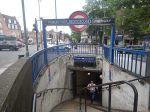



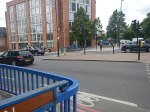
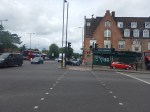

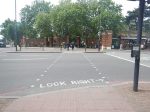
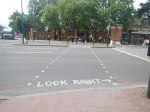



The station has an unusual layout.
-
-
- Two major roads; the Seven Sisters Road (A503) and Green Lanes (A 105) cross at the station.
- The four major roads are all controlled by traffic lights, which also allow pedestrians to cross the major roads safely on the surface.
- There are a couple of staircases at each corner of the junction and these lead down to a maze of passages that connect these entrances to the escalators that lead up and down to the platforms.
- The former Manor House pub and a new Travel Lodge sit opposite each other on the junction.
- The Travel Lodge sits on the South-West corner.
- The North-West corner leads directly into Finsbury Park., which is not a bad place to go for a walk or a jog.
-
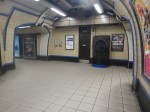
The below ground subways in the station are all level.
The staircases between subway and street level are very reminiscent of those at Piccadilly Circus or Leicester Square stations.
The staircases also have some excellent period details.
But then they tend to do things as they should in my part of North London.
This picture was taken after a World Cup Third!
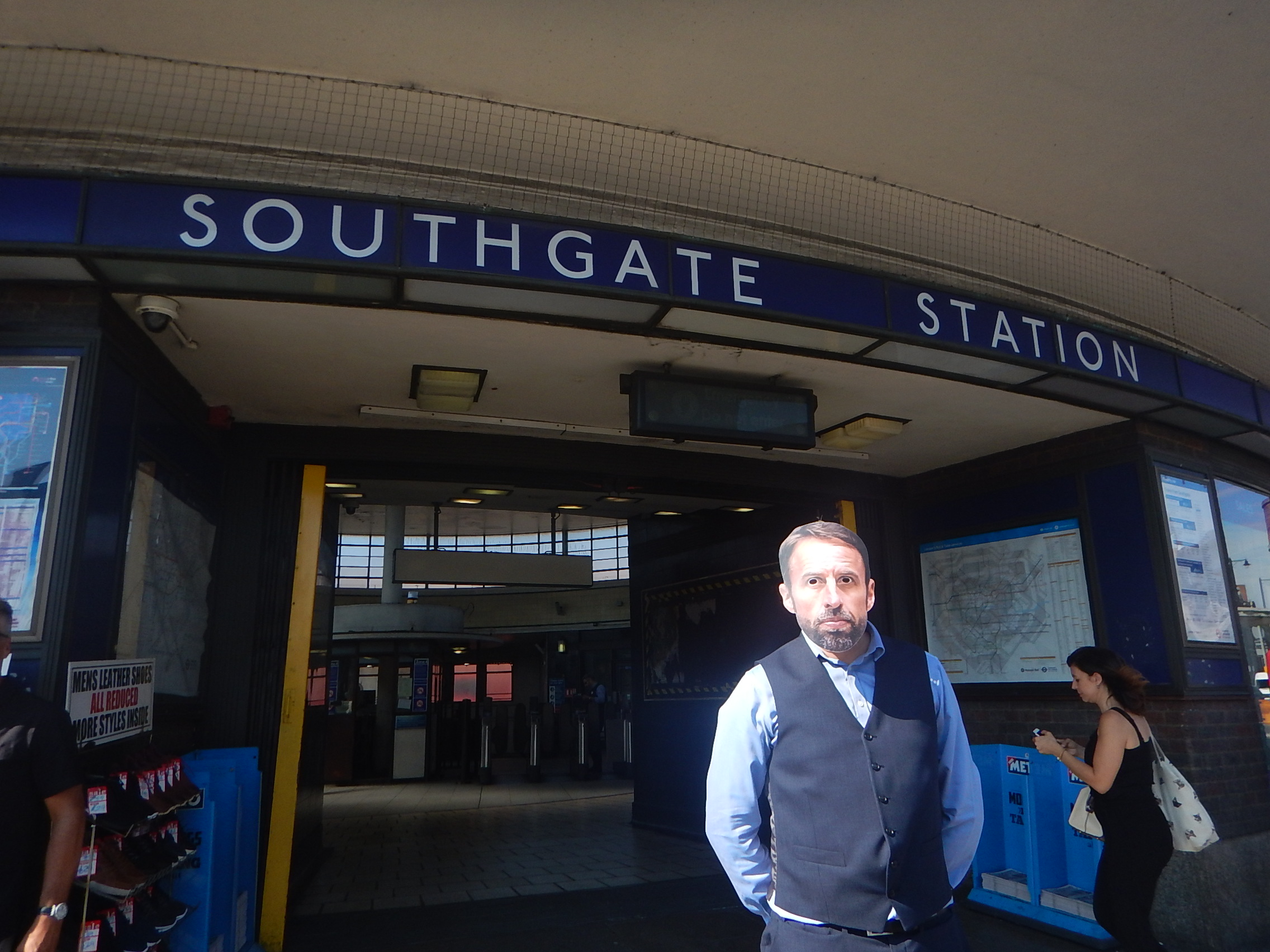
What will happen, if England win the Euros?
Manor House station’s design can best be summed up as two level areas connected by a series of staircases.
- Central London stations with this layout include Bank, Cockfosters, Kings Cross St. Pancras,Leicester Square, Manor House, Piccadilly Circus. Tottenham Court Road and Victoria.
- At least Cockfosters, Kings Cross St. Pancras, Tottenham Court Road and Victoria have lifts between the two levels.
- Bank station will have more lifts than Oti Mabusi in a dance routine, after the rebuild.
- Old Street was similar, but Transport for London (TfL) are rebuilding the station.
Cockfosters has level access at both the surface and the platform level and they have sneaked in a lift in a corner of the station.

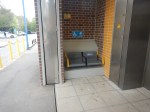
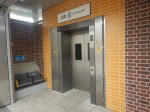

Grandparents in a wheel-chair or Louis or Lilibet in a pushchair can easily be taken easily between train and the car-park.I am certain, that if there are a number of lifts at the four corners of the road junction at Manor House, then access both to the station and across the junction will be substantially eased.
That just leaves us with the problem of getting between subway and platform levels.
This map from cartometro.com shows the platform layout.

Note that as at Turnpike Lane station in this platform layout, there is also a generous space between the platforms.
The two escalators and a set of stairs face North.
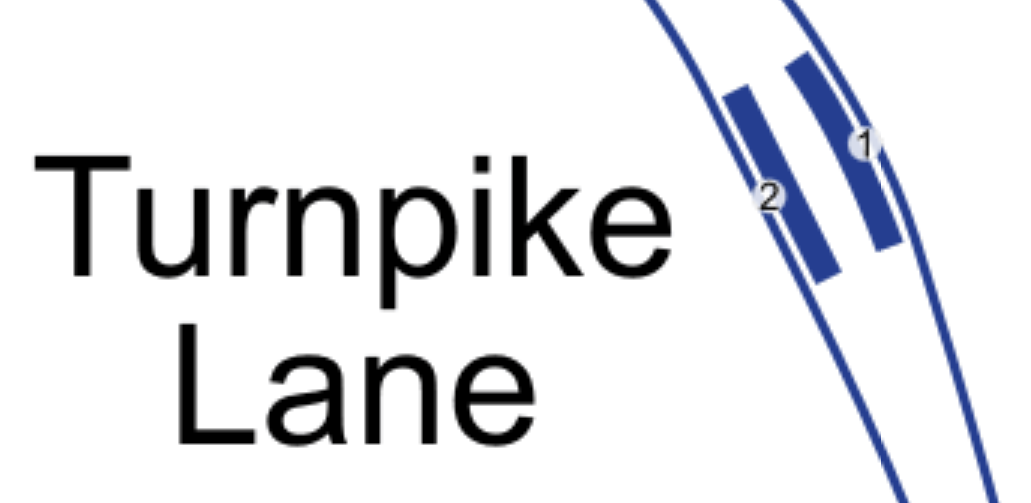
Wood Green station is a bit different, as it has a turnback siding
The two escalators and a set of stairs also face South.

When I used to use the Piccadilly Line in the 1960s, it tended to be pain, if a Wood Green train turned up, when you wanted to go to Oakwood or Cockfosters.
Bounds Green station is shown in this map.
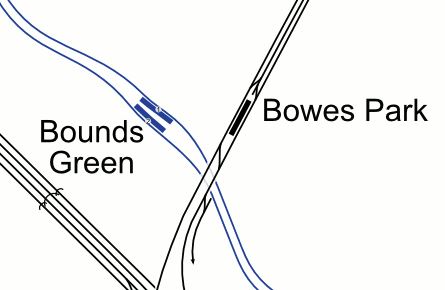
Again the tracks appear to have been curved to allow generous space.
The two escalators and a set of stairs face North.
Arnos Grove station is a station with sidings and four platforms on the surface.
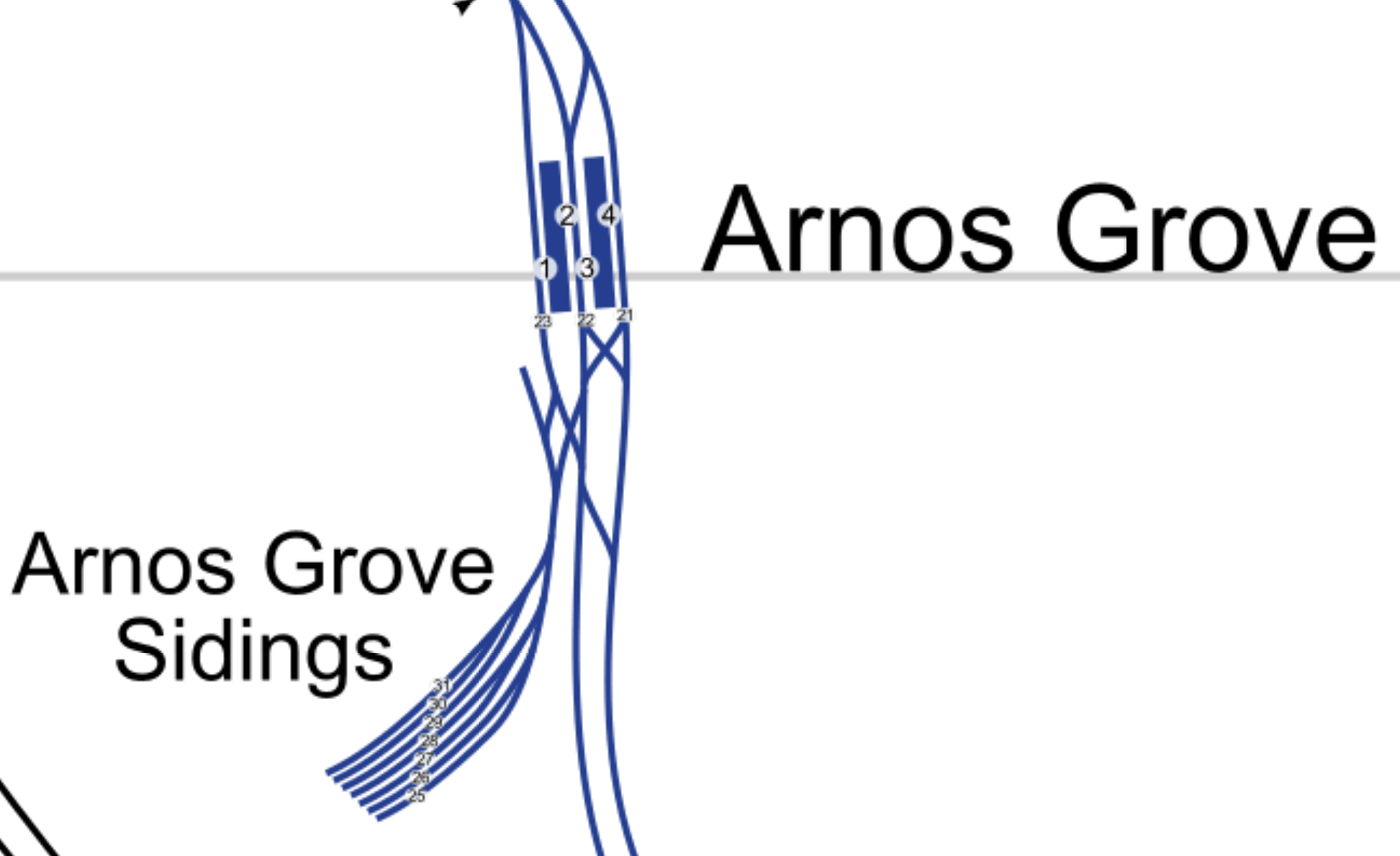
The car parks are likely to be developed for housing, so there will be major changes at the station.
Southgate station is the last station, that doesn’t have step-free access.
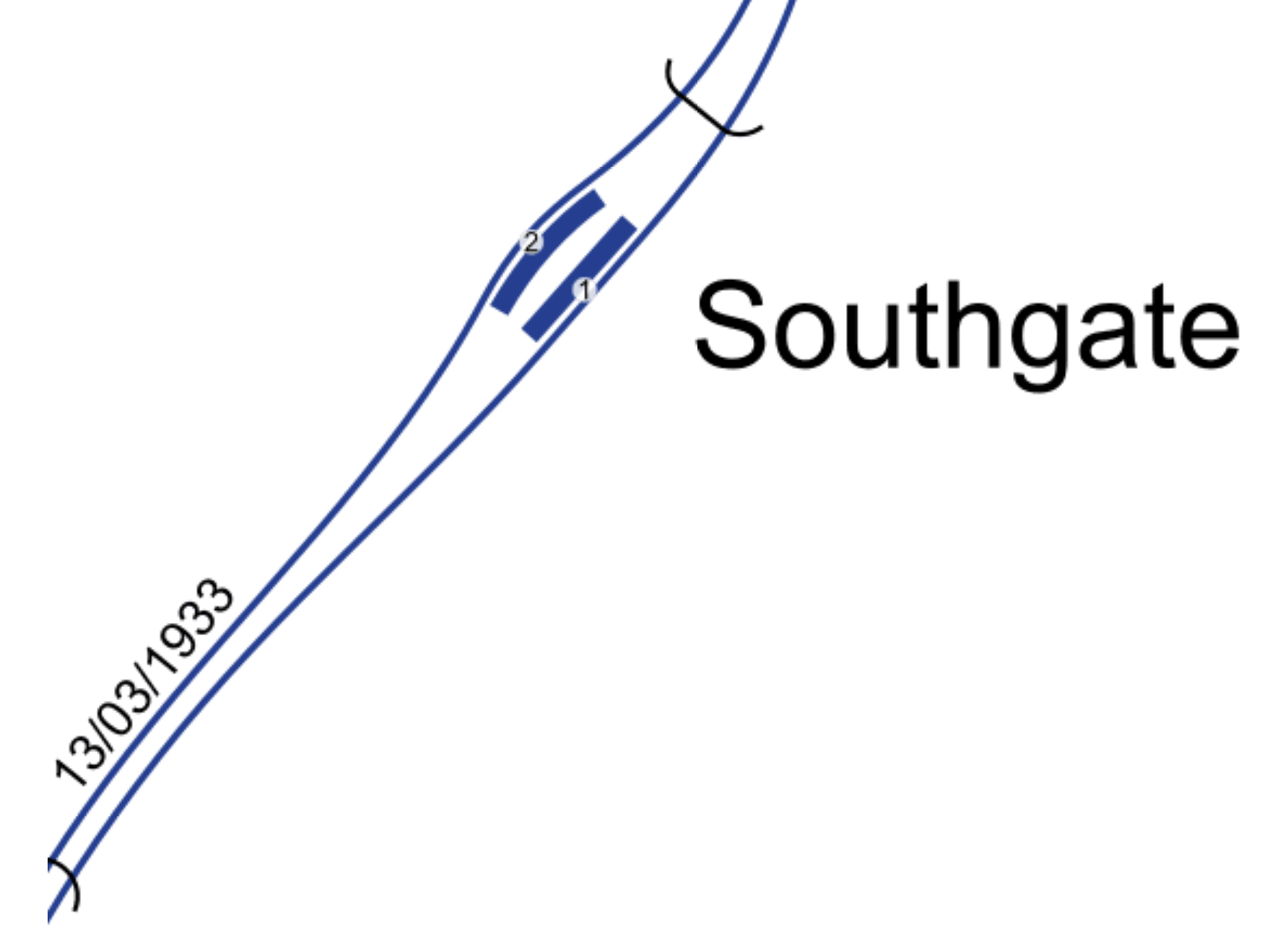
But again there is some space between the tracks.
The two escalators and a set of stairs face North.
So did the designers of the Northern Extension of the Piccadilly Line leave space to put in more equipment or even lifts?
After all they didn’t stint themselves on the design of the stations.
Designing Step-Free Access
This is not easy and various considerations must be taken into account.
Revenue Protection
At Cockfosters station, the new lift goes between two areas that are outside the ticket barriers.
If as I have proposed at Manor House station, where there would be lifts between the surface and the subway level, both areas are outside the ticket barriers.
At Tottenham Hale station, there several lifts all of which are inside the ticket barrier.
Staff At The Barrier
Nearly all ticket barriers in London are watched by staff to sort out problems like passengers, who don’t know how to use the system.
Costs
It is unlikely, that large sums of money will be available to add step-free access to all stations on the Underground.
I also think, that step-free access at stations will be funded by developments close to stations.
A London-Wide Solution
It is for these and other reasons, that I think London needs to look in detail at all stations and see if a series of solutions can be developed for all stations.
In this section of the Piccadilly Line, there are five stations with three escalators or two escalators and a staircase.
But there are others on the other deep tube lines.
So should a standard solution be developed for all stations like this? And for all groups of similar stations.
Could An Inclined Lift Be Used At This Group Of Stations?
This picture shows the first inclined lift, I ever saw, which was on the Stockholm Metro.
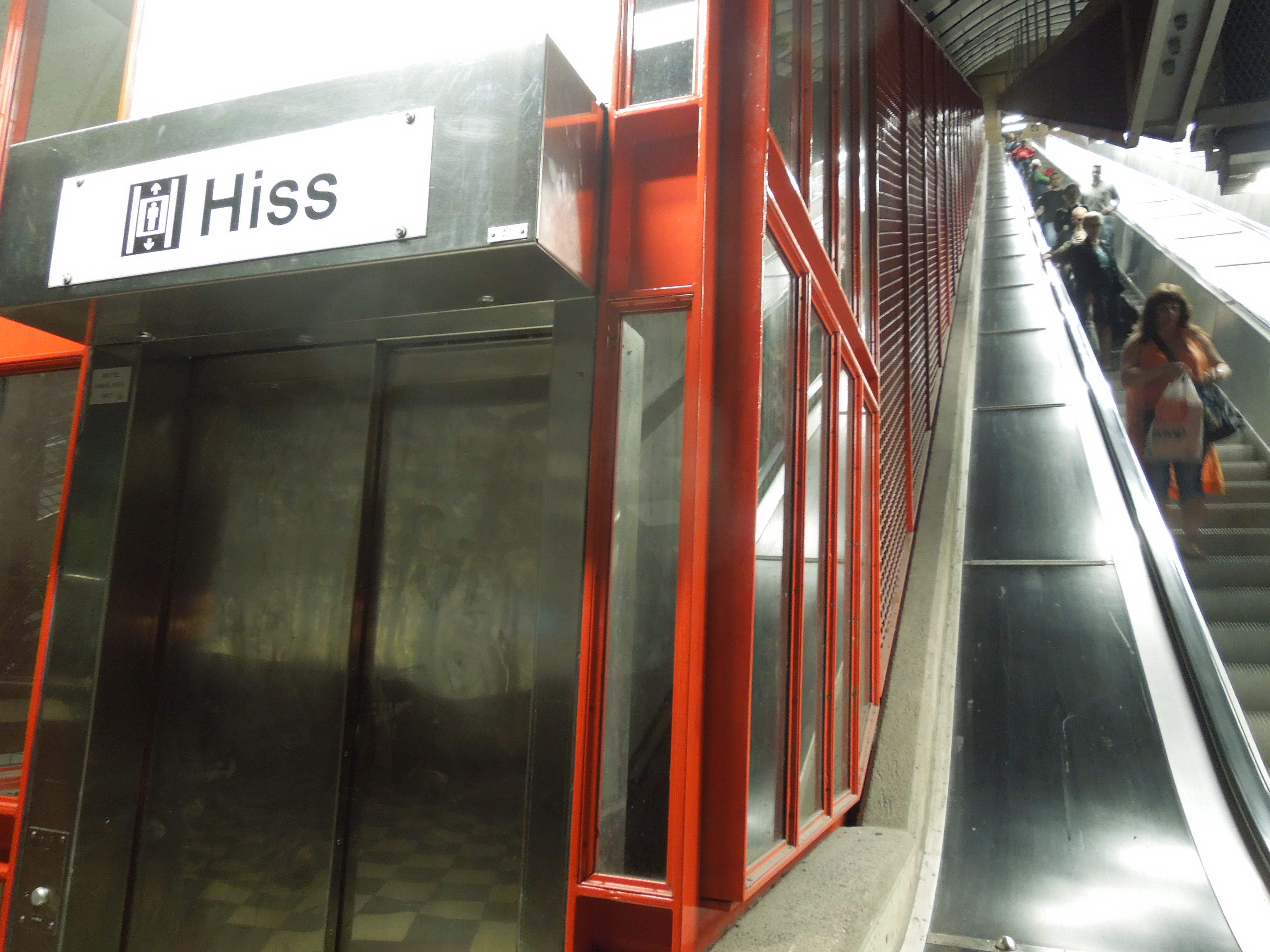
Looking at the picture shows it was installed on a very long set of escalators.
At present, there is only one inclined lift on the London Underground and that one is at Greenford station.

It is a very neat and compact installation, that incorporates a double-staircase, an up escalator and an inclined lift in a confined space.
I think we’ll see similar solutions to Greenford employed in some stations on the Underground. In Is This A Simple And Affordable Solution To Providing Step-Free Access At Essex Road Station?, I outline how an inclined lift could be used at Essex Road station.
These pictures show the three escalators at Manor House station.


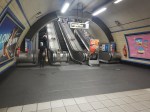
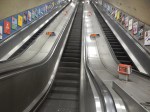
Note.
- The middle escalator was switched off.
- There is a spacious lobby at the bottom of the escalators.
The other four below-ground stations North of Finsbury Park; Turnpike Lane, Wood Green, Bounds Green and Southgate all have two escalators and a central staircase
These pictures show Bounds Green station.
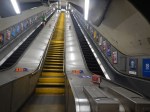
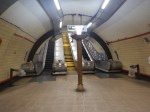
Note that the stairs are in the middle.
It looks to me, that all five escalator systems to the North of Finsbury Park are more or less identical.
- Only Manor House has a third escalator.
- There is a large lobby at the bottom.
- All stairs are in the middle escalator slot.
- Are the stairs designed to be replaced with a third escalator?
So would it be possible to design an inclined escalator solution for all stations, that fitted all of the stations?
I think it might be very much a possibility.
- The central staircase would be replaced by a third escalator.
- One of the outside escalators would be replaced with an inclined lift.
Note
- Many of these escalators were probably installed in the early 1990s, a few years after the Kings Cross Fire.
- Escalators are replaced regularly every ten or twenty years.
So could the installation of the inclined lifts, be worked into the schedule of escalator maintenance and replacement?
I believe with good project management it could be arranged.
- At no time during the works would any station have less than two escalators.
- If there were to be an escalator failure, all of the stations are connected by frequent buses and some are even within walking distance.
The works could also be arranged to fit in with available cash-flow.
I believe that eventually all these stations will need to be provided with full step-free access.
Conclusion
I believe that a sensible program of works can be developed to make all deep-level stations North of Finsbury Park step-free on the Piccadilly Line.
- The deep-level platforms would be served by two escalators and an inclined lift.
- The works would be performed alongside the regular maintenance and replacement of the current escalators.
- There would be no substantial tunneling.
- The works could also be arranged to fit in with available cash-flow.
The technique would be applicable to other stations on the Underground network.
Turnpike Lane Station
In Is Turnpike Lane Tube Station Going Step-Free?, I tried to explain the puzzling works going on at Turnpike Lane station.
Could those works be digging a lift-shaft or something in a more engineering line, like installing more ventilation or new power cables?
There’s certainly no clues on the Internet.
This table shows step-free status and 2019 passenger numbers at the Piccadilly Line stations to the North of Kings Cross St. Pancras station.
- Cockfosters – Step-Free – 1.86 million
- Oakwood – Step-free – 2.78 million
- Southgate – 5.43 million
- Arnos Grove – 4.44 million
- Bounds Green – 5.99 million
- Wood Green – 12.13 million
- Turnpike Lane – 10.6 million
- Manor House – 8.55 million
- Finsbury Park – Step-free – 33.40 million
- Arsenal – 2.77 million
- Holloway Road – 6.69 million
- Caledonian Road – Step-free – 5.60 million
- Kings Cross St. Pancras – Step-free – 88.27 million
Note.
- The high passenger numbers at Finsbury Park and Kings Cross St. Pancras, where there is interchange with lots of other services.
- The long gap of step-free access between Oakwood and Finsbury Park.
- Arnos Grove could be an easier station to make step-free.
I just wonder, if a lift at Turnpike Lane station could be the interim solution, until inclined lifts are installed in the distant future.
Soaking Up The Sun: Artificial Photosynthesis Promises Clean, Sustainable Source Of Energy
The title of this post, is the same as that of this article on Science Daily.
As the article is about research at Perdue University, this could be science to watch.
Has London Done Its Best To Organise Friday’s England and Scotland Match?
Scotland are coming to play England on Friday, with the match starting at 20:00.
These are my thoughts.
Travelling To Wembley On The Day
This article on The Times is entitled England v Scotland: Ticketless Fans Urged To Stay Away From Wembley.
These are the first two paragraphs.
Thousands of ticketless Scotland fans are set to descend on London for the England game on Friday amid growing concern about the lack of a Covid-secure fan zone.
Nearly 3,000 Scottish fans have tickets for the clash at Wembley but the Scottish Football Supporters Association expects that twice as many will travel south. Some estimate that the number could be as high as 20,000.
The article also says the following about trains on Friday, that would get you to London in time for the match.
- Fifteen trains from Glasgow are full.
- Most of the seventeen trains from Edinburgh are full.
Using the capacity of the trains, I wouldn’t be surprised to see 20,000 Scottish fans coming by train.
But there are other ways to come.
- Scotland now has a good rail services to places like Doncaster, Leeds, Liverpool, Manchester, Peterborough and York. All of these places have lots of hotels and a good train service to London.
- Some will fly.
- How many will come by coach?
- Personally, I’ve driven between London and Edinburgh and Glasgow several times and with two nominated drivers, who didn’t drink, it’s an easy drive and can be done in under six hours.
- London also has a large expatriate Scottish population. How many will go or want to go to the match?
- Plenty of hotel rooms in London are available for Thursday and Friday night at a reasonable price.
Wembley stadium is also well-served by public transport and you could park at somewhere like Milton Keynes and get the train to the stadium.
Getting Home
I suspect many will need a hotel room, but it does look that there are plenty available.
Those who’ve driven down, would just pick up their car and drive home through the night.
But will many be intending to sleep rough somewhere?
It’s Been A Long Time!
It’s been a long time since Scotland reached a major finals and it was 1996, when they last played England in the finals of a major tournament.
Surely, this will increase the number of fans, who will turn-up in London without tickets!
Scots Always Travel If They Can!
I am old enough to have watched Celtic with the 1967 European Cup in Lisbon in on a black-and-white television.
They certainly travelled then and amused everybody with their drunken antics after the match.
The last time England played Scotland at Wembley was a friendly in 2013.
This report on the BBC, which is entitled Trafalgar Square Scots Party Leaves 10,000 Beer Cans, describes the antics in Trafalgar Square.
This is a paragraph from the BBC report.
Westminster City Council’s Leith Penny said: “Our crews worked hard round the clock to get London back to normal for our residents and businesses this morning.”
That was mild compared to what a spokesman for Westminster City Council said on the BBC.
I remember he compared the drunken Scots to the well-behaved Dortmund and Bayern Munich fans, who had taken over the square in May. I wrote about that in Trafalgar Square In Yellow.
Everybody is Demob-Happy!
After nearly two years of the pandemic, many are demob-happy and football supporters on both sides will be looking to get to or near the match.
How Many Scots Will Turn Up?
I quoted earlier that 20,000 could turn up!
As my mother would say! “And the rest!”
There Will Be No Fan Zone
This press release from the Mayor of London is entitled EURO 2020 Fan Zone To Host Key Workers For England’s Group Games.
- All England games, semi-finals and final to be screened
- Exclusive key worker access for first two, socially-distanced, Fan Zone matches as mark of gratitude from Mayor for their work during pandemic
- Plan for up to 9,500 fans for Czech Republic group clash if Covid restrictions lifted on June 21
- Renowned artist JR will transform the city with his epic black and white portraits to celebrate competition.
- The Fan Zone will operate a zero tolerance, ‘one strike and you’re out’ policy towards racism and other forms of discrimination
I predict there will be tens of thousands of angry Scotsmen.
So What Has Sadiq Khan Got To Say?
The Times has these two paragraphs.
The mayor’s office urged Scottish fans without tickets to stay at home. A spokesman for Khan said: “It is not possible to hold a fan zone for Scottish fans in London due to the Covid restrictions . . . fans should only travel to the capital if they have a ticket or a safe place to watch the match.”
A source close to the mayor added: “We would have liked to put up a zone for Scottish fans and increased capacity at Trafalgar Square but the licence from Westminster [council] required social distancing so we could not do more. Central government would also have needed to make an exemption to allow it to happen but they have not.”
Typically, Khan seems to be blaming everybody except himself.
Hydrogen And The Anglo-Australian Trade Deal
This article on the BBC is entitled UK And Australia In First Post-Brexit Trade Deal.
I can see one very profitable result of this trade deal.
The world has a large and growing need for green hydrogen produced by renewable energy.
Australia is embracing the hydrogen economy and I have posted about Australia hydrogen developments several times.
This post is entitled H2U Eyre Peninsula Gateway Hydrogen Project Begins Largest Green Ammonia Plant and it describes how Australia will convert renewable electricity into liquid green ammonia for export to Japan.
Australia has a lot of sun and can create a lot of green hydrogen and ammonia for South East Asia.
Electrolysers need to be used to convert solar and wind electricity into hydrogen, which would be exported in tankers either as liquid hydrogen or liquid ammonia.
The largest hydrogen electrolyser factory in the world, is owned by ITM Power and is located in Sheffield/Rotherham. It has a capacity to build 1 GW of electrolysers in a year.
Looking at the electrolyser market, I can see the company needing another similar-sized factory.
Australia’s Solar Power Potential
This section in the Wikipedia entry for Solar Power In Australia is called Potential.
These are some points from the section.
- Typically, in the winter months, a square metre of much of Australia receives 4 kWh of insolation per day.
- Some areas in the North receive fifty percent more.
- Australia has the potential to install 179 GW of solar power on roofs across the nation.
Australia used to curse the sun because of all the cancer it brought. Now it could make them the world’s hydrogen powerhouse!
At present ninety percent of Australia’s solar panels are made in China.
But that may not be for ever, if what I wrote in Solar To Hydrogen Efficiency Record Broken By Australian National University Researchers, turns out to lead to an alternative technology to create hydrogen.
An Anglo-Australian Hydrogen Alliance
What better possible place to build a second electrolyser factory is there, than in Australia?
- The Australian economy can use a lot of hydrogen for transport.
- Australia is embracing hydrogen technology.
- Australia is well-placed to export electrolysers to their friends in South East Asia.
- Australia has the sun to produce massive amounts of green hydrogen.
If the UK and Australia developed hydrogen together, it would be good for both countries.
- Australia can develop massive levels of renewable electricity from solar.
- The UK can develop massive levels of renewable electricity from wind and possibly other sources.
- Both countries are researching the ways to create and use hydrogen.
- Both countries could produce hydrogen for nearby economies needing large amounts of hydrogen.
- Many UK and Australian companies operate in both countries.
But above all, we haven’t had a major fall-out with Australia since the Bodyline Tour in 1932-1933.
An Airport Train For A Pandemic?
These pictures show one of Greater Anglia‘s new Class 745 trains on a Stansted Express service at Hackney Downs station, on the way to Liverpool Street station.
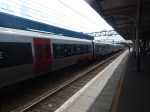
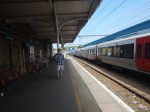
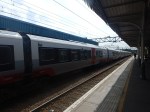
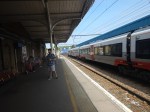
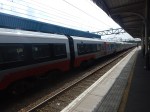
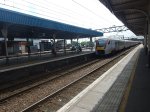
Stansted Express services do not usually use Platform 3, but it would appear that the service had started from Bishops Stortford.
The Future Of Stansted Express Trains
The previous Stansted Express trains; the more-than-adequate Class 379 trains are still waiting for a future, after being replaced.
Now because of the pandemic, the excellent Class 745 trains are running virtually empty.
Perhaps, it’s not a lucky route for trains.
Cargo Sous Terrain
This is a Swiss idea to move small parcels around the country.
This is the project’s web site.
There will be a network of tunnels under Switzerland serving all the major centres.
This article on LeNews is entitled Switzerland’s Underground Tunnel Project Gets Green Light From Upper House, describes the project.
This is the first paragraph.
On 1 June 2021, a project to build an underground freight tunnel network stretching from Geneva to St Gallen, gained almost unanimous support in the Council of States, Switzerland upper house.
These are a few points from the article.
- It appears to be privately funded.
- There will be a three-lane tunnel network across the country.
- It will use driverless electric vehicles.
- Speed will be 30 kph.
- It will run twenty-four hours per day.
- There will be a track in the roof of the tunnel for smaller parcels.
- There will be a total of 500 km of tunnels.
- Completion date is set for 2045.
- It will cost around £24 billion.
It’s as though all of Switzerland were to be turned into a giant Amazon or Ocado warehouse.
Will It Work?
I don’t see why not, although it would be an immense project!
This paragraph indicates they will start small.
The first 70 km section of the tunnel network, which will connect a hub in Härkingen-Niederbipp with Zurich, is scheduled for completion in 2031.
But even that will cost around £2.5 billion!
It certainly, is a bold idea, that has possibilities.
Has Tess Daly Only Got The One Dress?
Pictures of Tess Daly have been all over the London Underground for over a year now.

But it’s all getting a bit boring and perhaps she needs a new dress?
Air Passengers Can Beat Queues With Uber-Style Private Jet Service
The title of this post, is the same as that of this article on The Times.
Hyer Aviation are starting a service that uses similar technology to Uber to share seats on private jets around Europe.
Their modus operandi is laid out in this press release on their web site.
This paragraph is from the press release.
The concept works like an extra-comfortable UberPool with wings. Passengers can initiate their own flight or join flights proposed by others. This allows them to fly on private aircraft for a fraction of the cost while offsetting the carbon emission of their flights. From London, routes are available to some of Britain’s favourite holiday destinations such as Ibiza, Cannes, Malaga, Amalfi Coast and Amsterdam. From Amsterdam, it is also possible to find flights proposed by other passengers to Nice and Ibiza.
think this business model could fly.
Years ago, I owned a twin piston-engined six seater aircraft and I flew it all over Europe. I don’t fly now, as my medical history would probably stop that, but the experience showed there are many quiet airports all over the UK and Europe, that could be destinations for a 6-9 seater aircraft.
To me the interesting thing about this business model, is that there are several zero-carbon 6-9 seater aircraft under development.
Two are electric developments of the widely-used Cessna Caravan and the Britten-Norman Islander and others are clean-sheet developments like the Eviation Alice or the Faradair BEHA.
ZeroAvia are also experimenting with a hydrogen-powered Piper Malibu.
An electric or zero-carbon future for aviation is closer than many think.
But it will start at the smaller end with ranges of up to 500 miles.
Is Qatar 2022 Seriously Under Threat?
For various reasons, I’m not in favour of holding the 2022 World Cup in Qatar.
I am not alone and summed up Greg Dyke’s views in Greg Dyke On Qatar 2022, where I came to this conclusion.
I think the whole tournament is already dead-in-the-water and that it probably won’t take place in Qatar. If it does, it will be in fully-enclosed air-conditioned stadia, with virtually no spectators and absolutely no real fans or atmosphere.
The air-conditioned stadia will probably use masses of electricity generated in fossil fuel power stations.
This article on the BBC is entitled Christian Eriksen: Denmark Midfielder Suffered Cardiac Arrest, Says Team Doctor.
Was Eriksen’s cardiac arrest caused by the heat in Copenhagen?
We shall probably not know until the full investigation has been completed.
Now put yourself in the position of an owner of a Premier League or other important football club.
Would you allow your star player to go and play in the heat of Qatar without a full investigation into what happened with Christian Eriksen?
I suspect many owners would tell Qatar and FIFA, where they could stick their World Cup.
They just can’t afford to risk their assets!
Cummins: Paving The Way To A Hydrogen Economy
The title of this post, is the same as that of this article on H2 View.
Cummins is an American multinational corporation, with sales of $23.77 billion in 2018.
That is not small and a lot of that sales revenue comes from the sales and support of products that use diesel fuel, with all the emission and pollution problems that that entails.
So rather than just wait for a slow corporate death, Cummins have decided to embrace a zero-carbon fuel strategy based on hydrogen.
As part of this strategy they purchased an 81 % stake in Canadian hydrogen technology company; Hydrogenics.
This must-read article is a good report on the progress of the strategy.
I believe Cummins is a company to watch in the strategy of replacing diesel with hydrogen.
 The Anonymous Widower