Plans For £100m Coventry To Nottingham Rail Link Announced
The title of this post, is the same as that of this article on the BBC.
This is the first two paragraphs.
A £100m scheme to reconnect three Midlands cities by rail could be running by 2025, subject to funding, according to a regional transport group.
Midlands Connect said it had completed a strategic business case for a direct link between Coventry, Leicester and Nottingham.
The article also says this about the route.
The group said there was a “strong case” for the project and it had narrowed it down to two – one which called at the Warwickshire town of Nuneaton and one which ran direct between the three cities.
In A Potential Leicester To Coventry Rail Link, which I wrote in February 2019, I talked about this link and came to the conclusion it was feasible.
But things have moved on in those two years and these are my updated thoughts.
Via Nuneaton Or Direct
This Google Map shows the rail layout to the South of Nuneaton station.
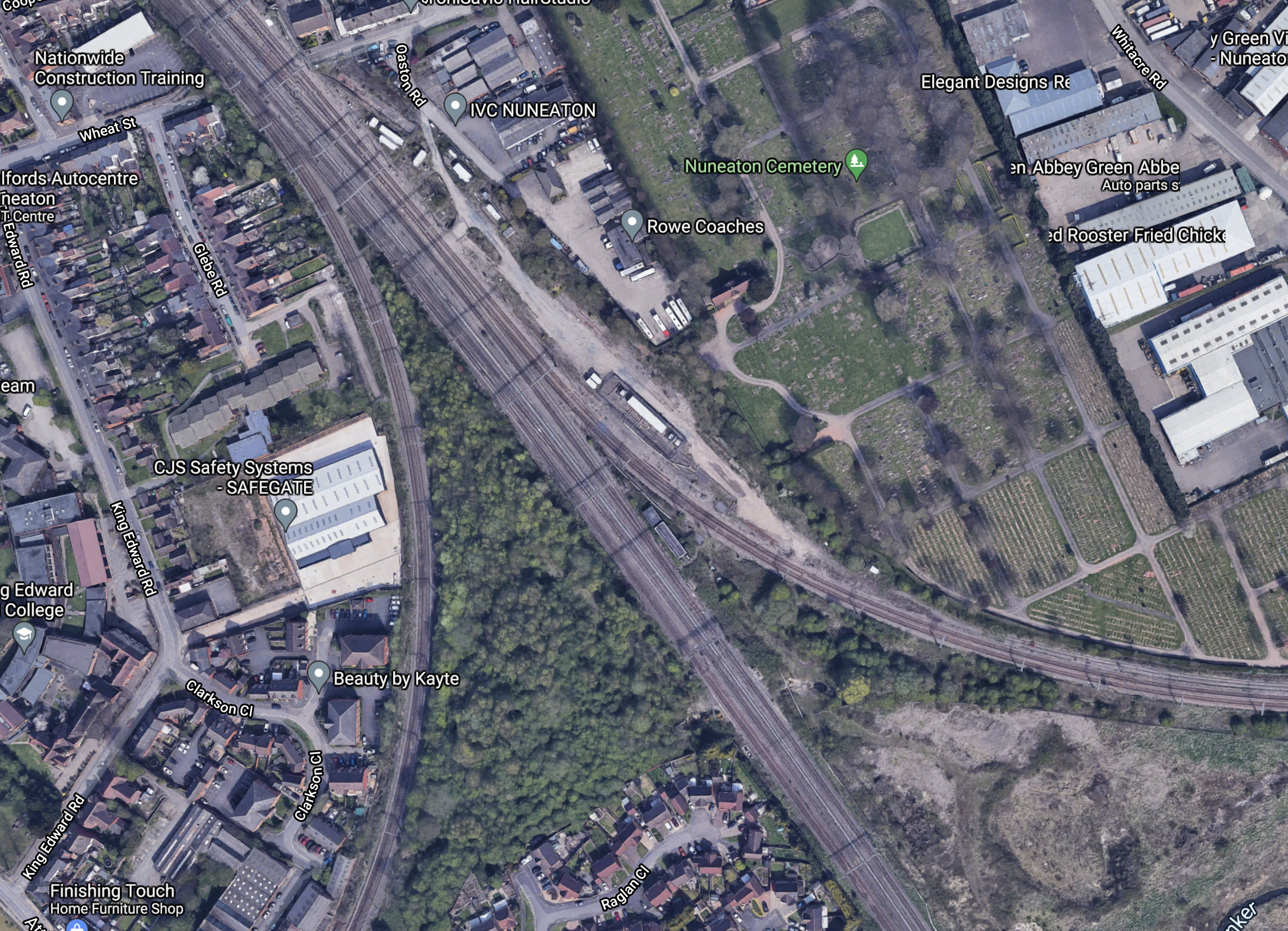
Note.
- The multi-track electrified railway running North-West and South-East is the Trent Valley section of the West Coast Main Line.
- Branching off to the South-West is the Coventry and Nuneaton Line.
- Branching off to the South-East is the line to Leicester.
Nuneaton station is off the map to the North on the West Coast Main Line.
Unfortunately, services to Coventry and Leamington Spa call in Platform 1 on the Western side of the station and services between Leicester and Birmingham call in platforms 6 and 7 on the Eastern side.
This probably rules out a clever solution, where perhaps an island platform, has Birmingham and Leicester services on one side and Coventry and Leicester services on the other.
This Google Map shows Nuneaton station.
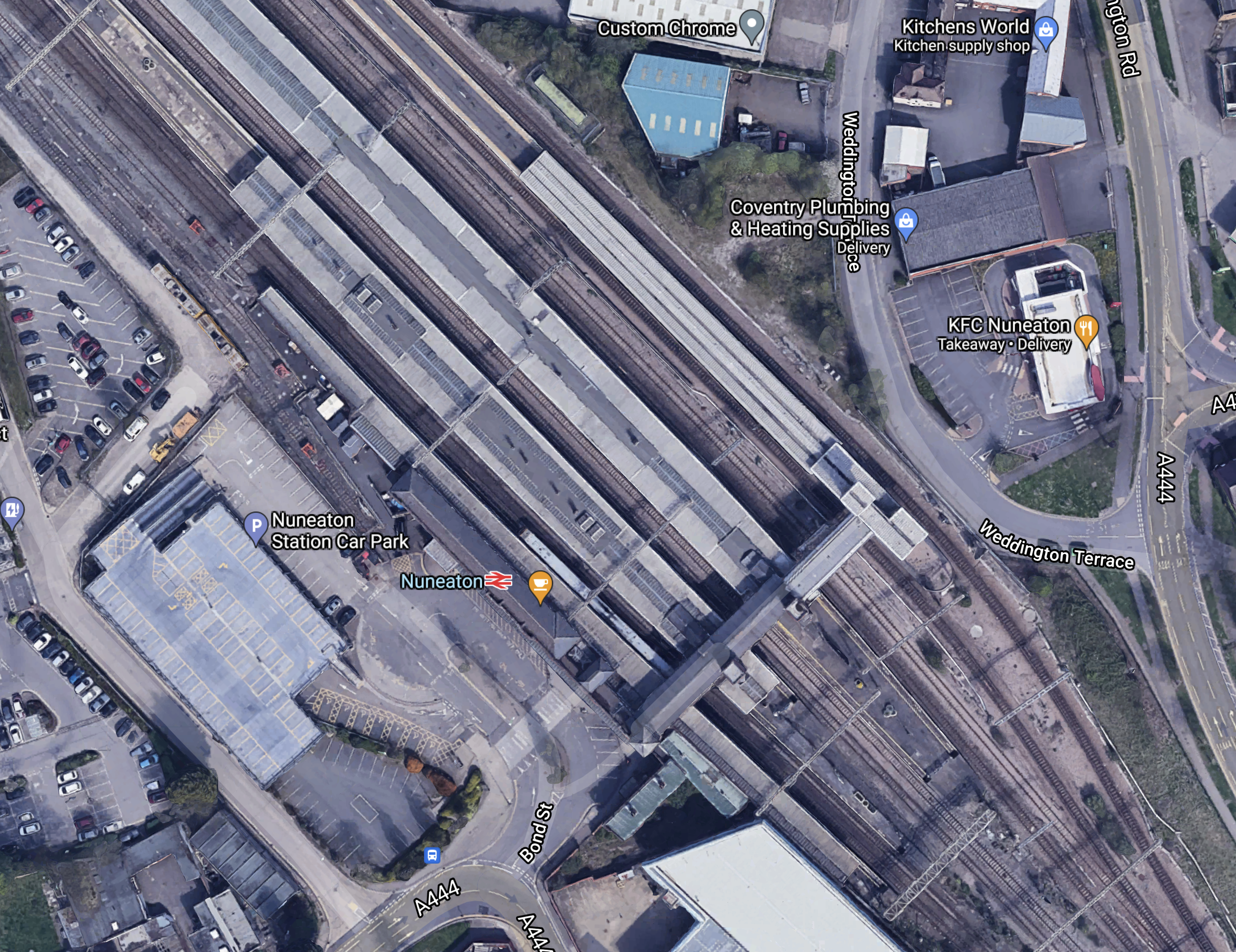
Note.
- Platform 6 and 7 form the island platform on the North-East side of the station.
- Birmingham trains call in Platform 6.
- Leicester trains call in Platform 7.
The track layout for Platforms 6 and 7 appears comprehensive with crossovers allowing both platforms to be used for services to both cities.
This Google Map shows the crowded track layout to the South of the station.
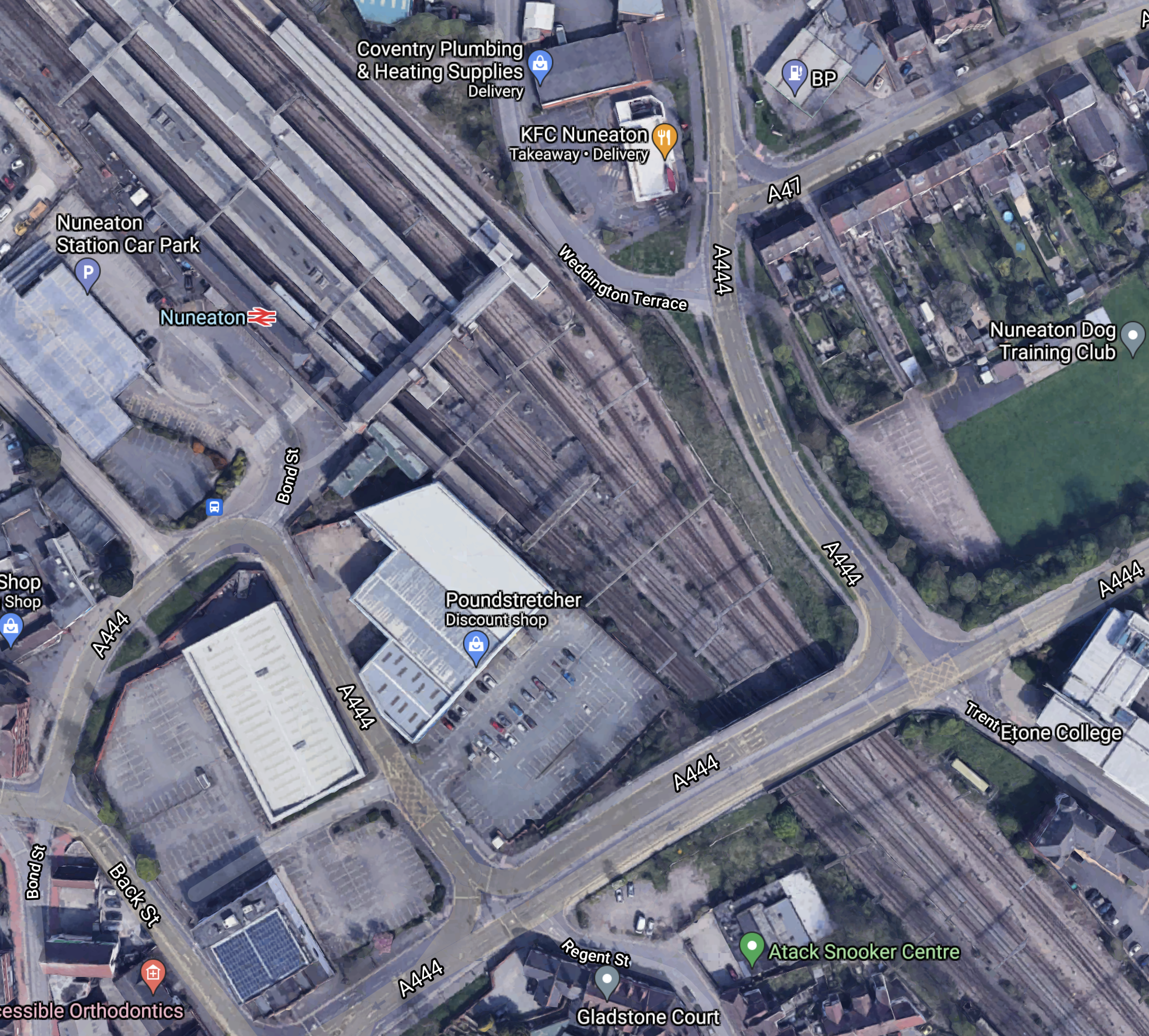
The only possibility would appear to be a single track dive-under that connected Platform 6 and/or 7 to the Coventry and Nuneaton Line on the other side of the West Coast Main Line.
I feel that costs would rule it out.
I suspect that a direct solution cutting out Nuneaton might be possible.
This Google Map shows the three routes diverging to the South of Nuneaton station.
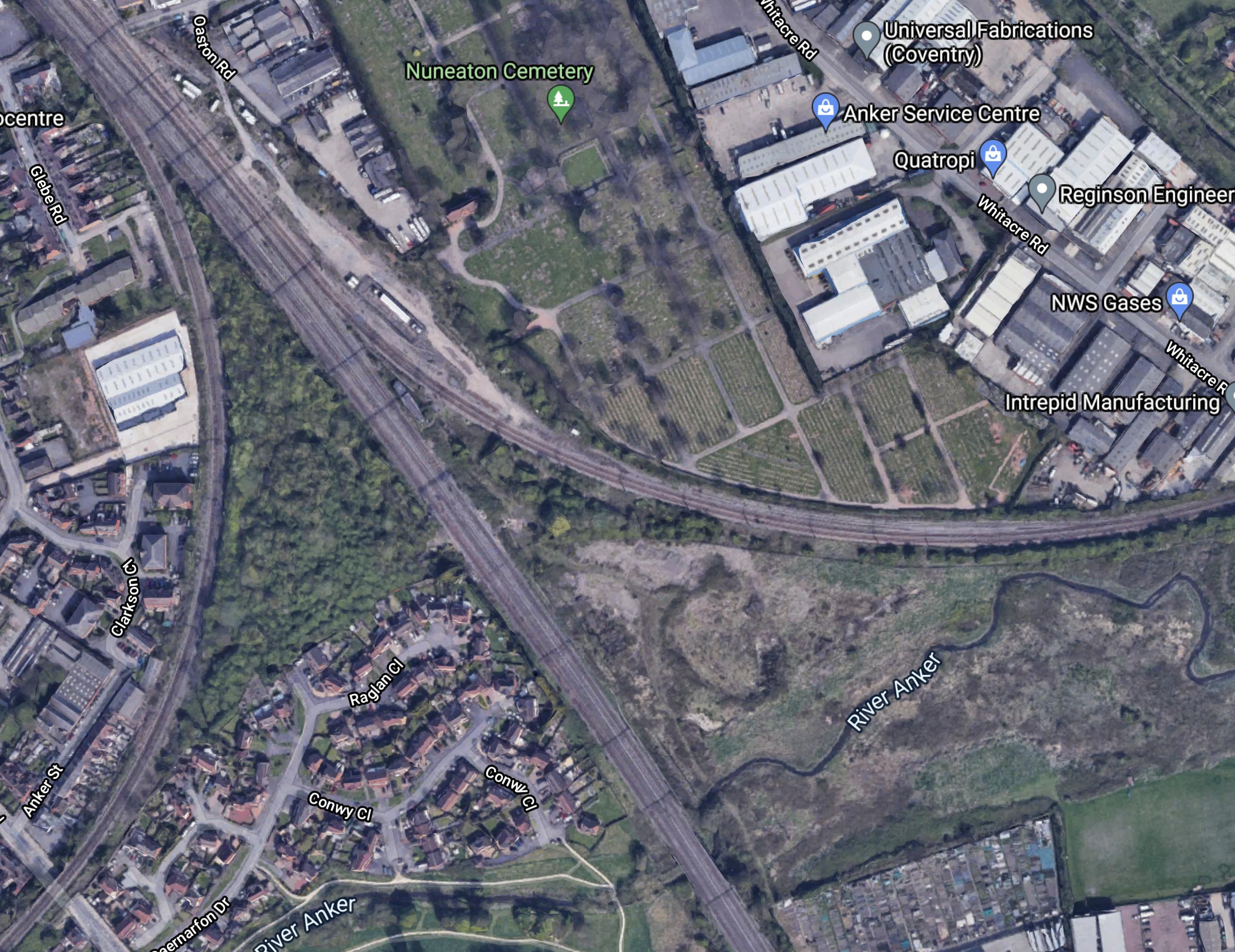
It might be possible to connect the Coventry and Leicester Lines, but the curve might be too tight.
The alternative could be to build a dive-under that would connect Platform 1 to the Leicester Line.
- It would appear that it could be the easiest and most affordable option.
- Trains would reverse in Nuneaton station.
It is certainly a tricky problem, but I do believe there is a simple cost-effective solution in there somewhere.
Nuneaton Parkway Station
This page on Coventry Live gives some information about the proposed Nuneaton Parkway station.
There is also a proposed station, to be called Nuneaton Parkway, situated off the A5 between Hinckley and Nuneaton.
This Google Map shows the area where the A5 crosses the Birmingham-Peterborough Line, that runs between Hinckley and Nuneaton..
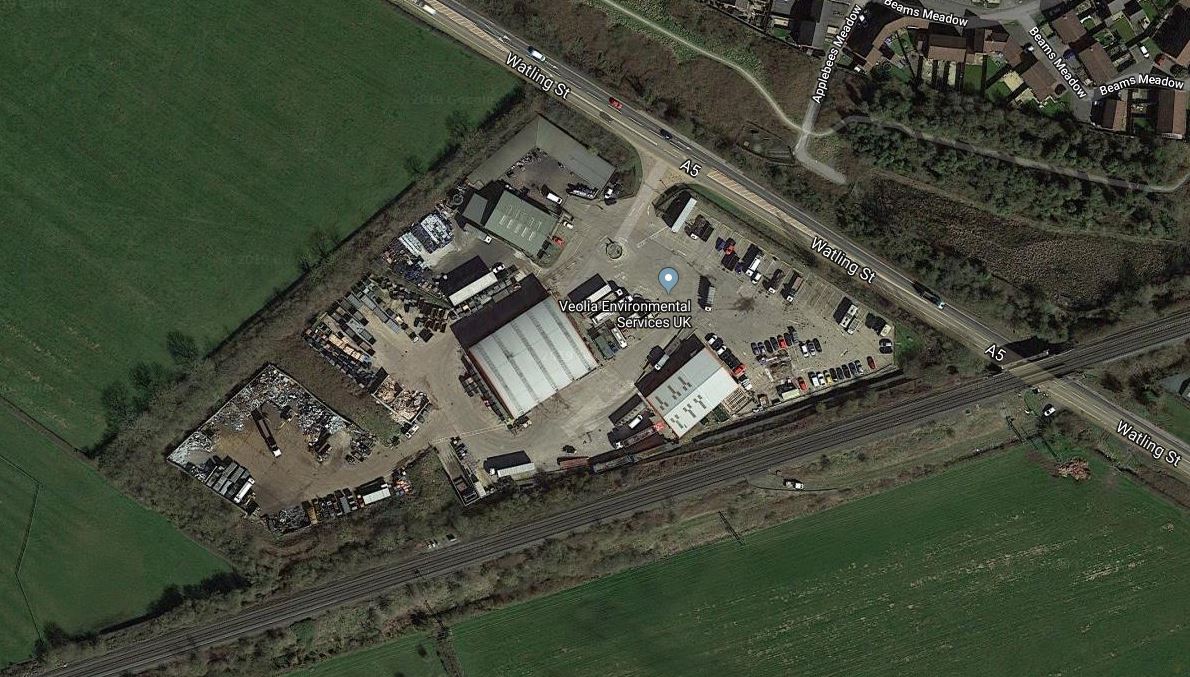
This must surely be one of the best sites to build a new Parkway station in the UK.
- The triangular site is a waste transfer station operated by Veolia Environmental Services UK.
- It has a direct connection to the A5, which could be easily improved, with perhaps a roundabout.
- Doing a crude estimate from the Google Map, I calculate that the site is about sixteen hectares, which is surely a good size for a Parkway station.
- There’s even quite a lot of new housing within walking and cycling distance.
It would also appear that the station could be built on this site without major disruption to either road or rail traffic.
The Stations And Timing
This document on the Midlands Connect web site, gives their aims for the service.
- Coventry and Leicester – 38 minutes from 54 minutes with one change.
- Coventry and Loughborough – 50 minutes from 88 minutes with otwo changes.
- Coventry and East Midlands Parkway – 56 minutes from 104 minutes with otwo changes.
- Coventry and Nottingham – 70 minutes from 108 minutes with otwo changes.
The service would have a frequency of two trains per hour (tph).
If the train did the same station stops as the current services between Coventry and Leicester, it could stop at all or a selection of the following intermediate stations.
- South Wigston
- Narborough
- Hinckley
- Nuneaton
- Bermuda Park
- Bedworth
- Coventry Arena
The total time would appear to be around fifty minutes, with 28 minutes for Leicester to Nuneaton and 22 minutes from Nuneaton to Coventry. Although the BBC article says that Coventry and Leicester would drop from the current 54 minutes to 38 minutes.
Currently services between Leicester and Birmingham New Street stations are run by CrossCountry.
- One tph – Birmingham New Street and Cambridge or Stansted Airport
- One tph – Birmingham New Street and Leicester
Note that not all intermediate stations receive a two tph service.
Would a two tph service between Leicester and Coventry enable all the stations on the route to have a two tph service?
The Current Leicester And Nottingham Service
Currently the following services run between Leicester and Nottingham.
- 1 tph – EMR InterCity – Direct
- 1 tph – EMR InterCity – Via Loughborough, East Midlands Parkway and Beeston
- 1 tph – EMR Regional – Via Syston, Sileby, Barrow-upon-Soar, Loughborough, East Midlands Parkway, Attenborough and Beeston
Note.
- Timings vary between 23 and 49 minutes.
- Four tph between Leicester and Nottingham would be a Turn-Up-and-Go service that would attract passengers.
- The BBC article is indicating a Coventry and Nottingham time of 70 minutes, which would indicate a Leicester and Nottingham time of 32 minutes, which would appear to be in-line with the EMR Intercity service that stops at Loughborough, East Midlands Parkway and Beeston.
It looks to me that a fourth semi-fast service between Leicester and Nottingham would not be a bad idea.
But Midlands Connect are proposing two extra tph between Coventry and Nottingham.
A Coventry And Nottingham Service
Consider.
- An two tph service would fit in well and give a Turn-Up-and-Go service between Leicester and Nottingham.
- The Coventry and Nottingham time of 70 minutes indicates that the train would need to be to EMR InterCity standard.
- If there is an allowance of twenty minutes at either end of the route, this would indicate a round trip of three hours.
This standard of service would need an operational fleet of six five-car Class 810 trains or similar for a frequency of two tph.
I very much feel that there should be electrification of the Midland Main Line between Leicester and either East Midlands Parkway or Derby.
This would mean that the Coventry and Nottingham route would break down as follows.
- Coventry and Nuneaton – 19,2 miles – No electrification
- Nuneaton and Leicester – 18.8 miles – No electrification
- Leicester and East Midlands Parkway – 19.1 miles – Possible electrification
- East Midlands Parkway and Nottingham – 8.4 miles – No electrification
Note that electrification is already available at Coventry and Nuneaton.
The Coventry and Nottingham route would appear to be possible with battery-electric trains, after the route between Leicester and East Midlands Parkway is electrified.
An Improved Birmingham And Cambridge Service
If Nottingham and Coventry needs a fast two tph service stopping at the major towns and cities in between, surely Birmingham and Cambridge need a similar service.
- It could call at Nuneaton, Leicester, Melton Mowbray, Oakham, Stamford, Peterborough, Ely and Cambridge North.
- Some services could be extended to Stansted Airport.
- It would have a frequency of two tph.
The Birmingham and Cambridge route would break down as follows.
- Birmingham and Nuneaton – 21 miles – No electrification
- Nuneaton and Leicester – 18.8 miles – No electrification
- Leicester and Peterborough – 40 miles – No electrification
- Peterborough and Ely – 30.5 miles – No electrification
- Ely and Cambridge – 14.7 miles – Electrified.
Note that electrification is already available at Birmingham, Nuneaton and Peterborough.
The Birmingham and Cambridge route would appear to be possible with battery-electric trains, if Leicester station were to be electrified.
Midland Connect’s Proposed Leeds and Bedford Service
I wrote about this service in Classic-Compatible High Speed Two Trains At East Midlands Hub Station.
It would run between Leeds and Bedford stations.
It would use the Midland Main Line between Bedford and East Midlands Hub stations.
It would use High Speed Two between East Midlands Hub and Leeds stations.
It would stop at Wellingborough, Kettering, Market Harborough, Leicester, Loughborough and East Midlands Hub stations.
- The service frequency could be hourly, but two trains per hour (tph) would be better.
- Leicester and Leeds would take 46 minutes.
Obviously, it wouldn’t run until the Eastern Leg of High Speed Two opens, but it could open up the possibility of Coventry and Leeds in under ninety minutes.
Driving takes over two hours via the M1.
Conclusion
This looks to be a very feasible and fast service.
It also illustrates how extending the electrification on the Midland Main Line can enable battery-electric trains to provide connecting services.
Enough electrification at Leicester and a few miles North of the station to fully charge passing trains would probably be all that is needed.
Department Of Transport Claims London and Sheffield Times Could Be Cut By Thirty Minutes
In this article on the BBC, which is entitled Government Announce £401m Boost For Rail Services, this is said.
The funding announcement coincided with the completion of the first phase of the £1.5bn Midland Main Line Upgrade, which has supported the launch of East Midlands Railway’s (EMR) first electric services on the route between Corby in Northamptonshire and London St Pancras.
The project will see journey times between Sheffield and London cut by up to 30 minutes, the DfT said.
So how feasible is the claim of a thirty minute cut in London and Sheffield timings?
On Monday, the 07:30 train from London to Sheffield, covered the 164.7 miles in two hours and twelve minutes at an average speed of 74.9 mph.
If that train had done the trip in one hour and forty-two minutes, that would have been an average speed of 96.9 mph.
By the time, the new Class 810 trains arrive in a couple of years, they will be able to use the new electrification to Market Harborough, when on Monday the 82.8 miles without a stop, was covered in an hour, at an average speed of 82.8 mph.
These new trains are 125 mph electric trains under the wires and they will have two separate fast lines on which to run.
Example time savings at various average speeds to Market Harborough are as follows.
- 100 mph – 10 minutes saving.
- 110 mph – 14.8 minutes saving.
- 125 mph – 20.3 minutes saving
- 130 mph – 21.8 minutes saving
- 140 mph – 24.6 minutes saving
Note.
- The faster the average, the greater the time saving.
- Faster than 125 mph would only be possible with full in-cab digital signalling, which is currently being installed on the East Coast Main Line.
- I have been to Leicester in an InterCity 125, which was running at 125 mph most of the way.
But it does look like the new Class 810 trains will be able to save around twenty minutes to Sheffield, by making full use of the electrification between London and Market Harborough.
They would need to save just ten minutes between Market Harborough and Sheffield.
The Monday Train covered the 81.9 miles between Market Harborough and Sheffield in one hour and twelve minutes, which is an average speed of 68.3 mph.
To obtain the saving of ten minutes, it would need to do the journey in one hour and two minutes, which would be an average speed of 79.3 mph.
Given that the new Class 810 trains are designed to cruise at 125 mph on diesel, I don’t think this is an impossible objective.
What Will Be The Ultimate Time Between London and Sheffield On The Midland Main Line?
I believe that the following two sections of the Midland Main Line can be easily electrified.
- Between Leicester and Derby without the problem of the bridge at the South end of Leicester station, which would be so disruptive.
- Clay Cross North Junction and Sheffield which will be electrified for High Speed Two. I doubt Derby and Clay Cross Junction will be electrified as it’s a World Heritage Site.
On my Monday train, the following are times North of Leicester.
- Leicester and Derby is 29.3 miles, which is covered in 32 minutes at an average speed of 55 mph, which includes five stops. Raise this to 110 mph and the journey time is just 16 minutes or a saving of 16 minutes.
- Derby and Clay Cross North Junction is 21.8 miles, which is covered in 13 minutes at an average speed of 100 mph. By averaging 120 mph, there would be a saving of 2.1 minutes.
- Cross North Junction and Sheffield is 15.5 miles, which is covered in 16 minutes at an average speed of 58.2 mph.
Note.
- Savings would come between Leicester and Derby because of 125 mph linespeed and faster stops because of electrification.
- I believe that Hitachi battery-electric trains could sustain 125 mph on battery alone between Derby and Clay Cross North Junction, if they entered the section without electrification at full speed with full batteries. Now that is what I call a battery-electric train!
- There must be a minute or two to be saved on an electrified section into Sheffield with the stop at Chesterfield.
Add up all the savings and I feel that an hour and a half is possible between London and Sheffield.
And what time is High Speed Two claiming? One hour and twenty-seven minutes!
Could A Battery-Electric Train Cruise At 125 mph?
This may seem a silly idea, but then trains don’t care where they get their electricity from.
On the 21.8 miles between Derby and Clay Cross North, a sizeable proportion of energy will be used to accelerate the train up to the linespeed for the electrified section.
When the train enters the section without electrification, it will have two sources of energy.
- The electricity in the full batteries.
- The kinetic energy in the train at the required speed.
As the train runs through the section air and rolling resistance will tend to slow the train and electricity from the battery will be used to maintain speed.
In How Much Power Is Needed To Run A Train At 125 mph?. I estimated that for a Class 801 train to maintain 125 mph needs 3.42 kWh per vehicle mile.
A simple sum of 21.8 * 5 * 3.42 gives an energy need of 372.8 kWh to run between Derby and Clay Cross North Junction.
I’m sure than Hitachi can fit a 400 kWh battery in a five-car Class 810 train.
Would a slightly larger battery and in-cab signalling allow battery-electric trains to run at 140 mph? If the track allowed it, I don’t see why not!
Conclusion
I believe the Department of Transport’s statement of saving thirty minutes between London and Sheffield is feasible.
But so is a time of an hour-and-a half, which will give High Speed Two a run for its money!
Could West Africa Become A Green Energy Powerhouse?
I ask this question, because I have just read this article on Hydrogen Fuel News, which is entitled Green Hydrogen Potential Causes Germany to court West African countries.
The article has this sub-title.
Nations in that part of Africa have the capacity to meet 1500 times Germany’s 2030 H2 demand.
That would appear to be a massive amount of hydrogen.
This extract from the article, talks about energy production.
Initial results for the 15 West African Economic Area (ECOAS) countries revealed that a massive three quarters of West African land is appropriate for wind turbines. Moreover, the electricity production from wind energy in the region costs about half the amount it would in Germany.
Additionally, solar power systems can also be economically operated on about one third of the West African region.
Add in a few large electrolysers and you have the hydrogen.
The hydrogen can be transported to Germany by tanker, either as hydrogen or ammonia.
The German strategy is to be underpinned by education, as this extract explains.
In support of developing West African green hydrogen production, a new master’s graduate program on clean H2 technology will begin in September. The purpose of the program will be to train local green hydrogen scientific specialists. The first three waves of the program are expected to train about 180 students attending four universities in Côte d’Ivoire, Togo, Senegal, and Niger.
Perhaps the Commonwealth should do something similar in West African countries like Gambia, Ghana, Nigeria and Sierra Leone.
After all many parts of Australia have very similar climate and population densities and probably energy generation potential to large parts of West Africa.
The Geographical Advantage
It should also be noted that geographically West Africa is close to Europe by ship.
There are no pinch points like the Suez Canal
As the European hydrogen gas network grows, the journey will get shorter.
Does anybody know how long it would take a tanker to go between say Accra in Ghana to Rotterdam?
Conclusion
I would see four main benefits coming to West Africa.
- Electricity for all.
- Employment to support the new industries.
- Hydrogen to power transport.
- The value of all those exports.
Hopefully, the standard of living of all those in West Africa would improve.
Marsh Barton Station – A Ride-To-Work Station
According to this article on pbctoday, work has started at the new Marsh Barton station in Exeter.
This first paragraph from the article makes it clear.
Graham has commenced works on the construction of the new £16m Marsh Barton railway station in Exeter.
This Google Map shows the location.
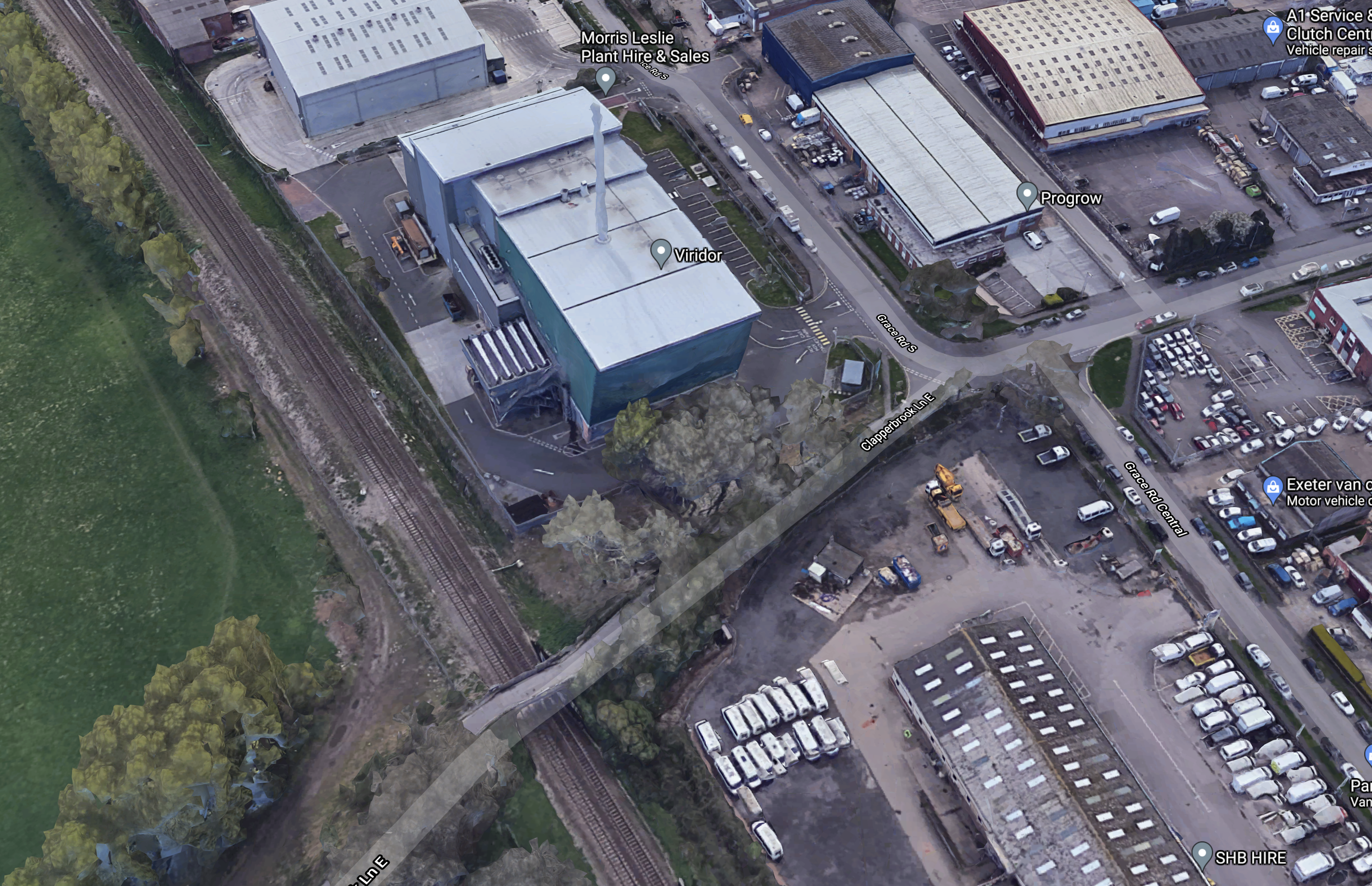
Note.
- The Riviera Line between Paignton and Exeter towards the Western side of the map.
- Clapperbrook Lane running to the South-West corner of the map over the railway.
- The large blue-clad building with the chimney, is the Viridor energy-from-waste plant.
- Marsh Barton itself is a large trading estate to the North-East of the railway.
The station will be built where Clapperbrook Lane crosses the railway,
This document of the Devon County Council (DCC) web site gives more details about the station.
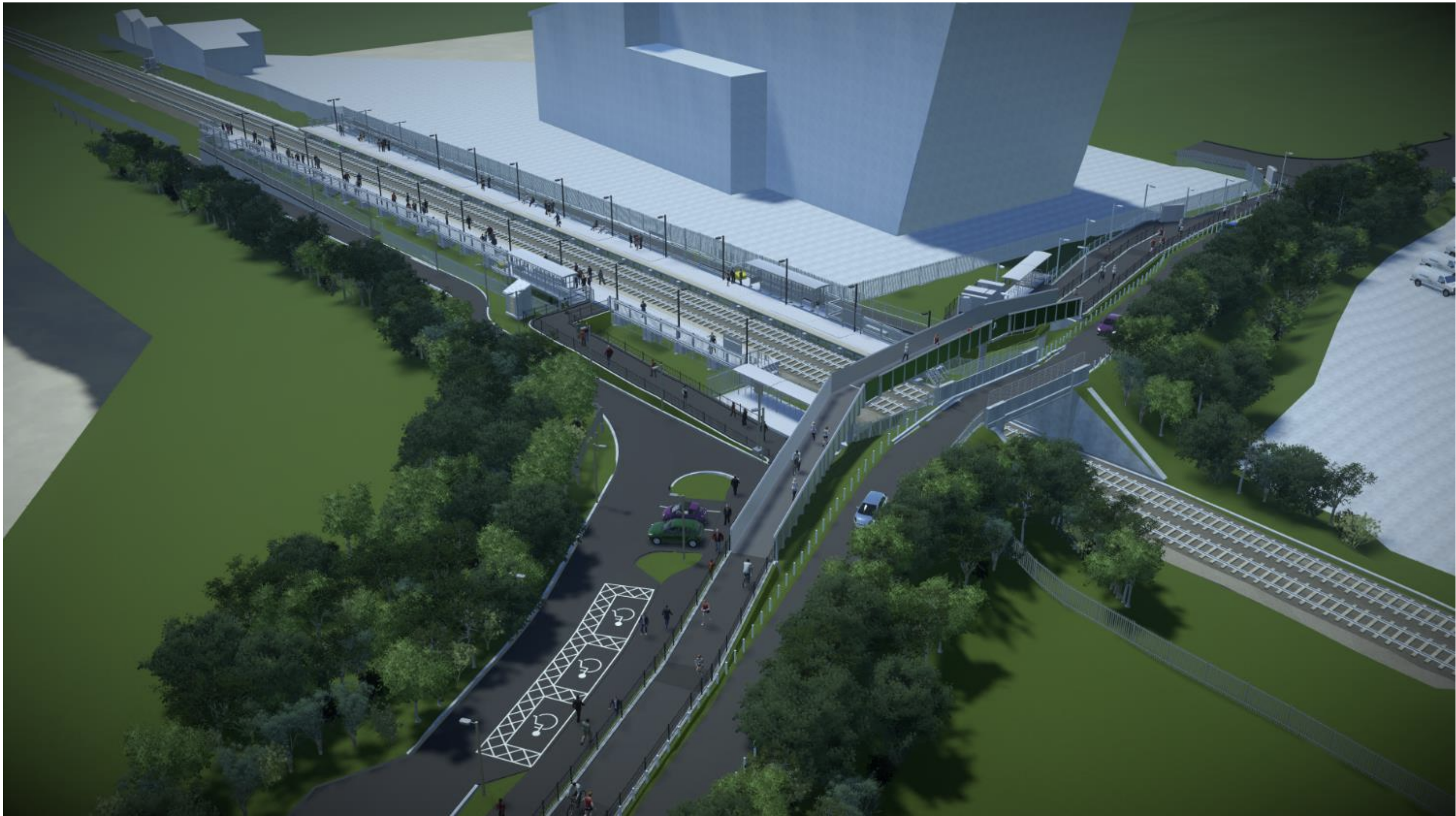
This image from the DCC document shows how the completed station will look.
These are my thoughts.
Crossing The Tracks
A cycle and foot bridge will be built parallel to the current Clapperbrook Lane East Bridge over the railway.
The DCC document says this about the bridge.
The key changes from the previous proposal relates to the ramps and access
between the two platforms. The previous design included ramps running parallel to
the railway, with long ramps and imposing structures due to Network Rail
requirements for their asset. The redesign now includes the ramps and a new bridge
constructed parallel to Clapperbrook Lane. This will instead be a Devon County
Council-owned asset and allows Devon County Council standards to be applied for
their pedestrian bridges. This is more in line with preferences expressed by disability
groups who supported shorter length but slightly steeper gradient with resting
platforms.
It looks to me that the final design will be much more aesthetically-pleasing than some of the structure Network Rail have erected lately.
These pictures show Network Rail’s traditional approach at Horden station.

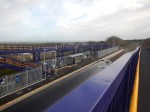
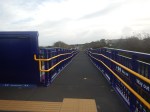
I feel the Devonian approach could be better, when I see it.
From the Google Map 3D image of the station, it looks like the bridge could be already under construction, so I don’t think, I’ll have long to wait.
The Platforms
The DCC document says that there will be two 124 metre long platforms, which will take six-car local trains.
- 3 x 2-car Class 150 trains will be 120.2 metres long
- 3 x 2-car Class 156 trains will be 138.2 metres long
- 2 x 3-car Class 165 trains will be 137.1 metres long
- 1 x 5-car Class 800 train is 130 metres long
It strikes me that although 124 metres can accommodate a formation of three Class 150 trains, it might be too short in the future.
Especially, as trains likely to be available in battery-electric versions, which will surely be used to decarbonise the Riviera Line in the future, all have cars of 23 metres or longer.
Both platforms appear to have just a single waiting shelter.
Cycle Parking
There are twenty parking spaces for cycles on each side of the line.
The DCC document says this about local housing and cycling.
The station will be within reasonable cycling distance of the 2,500 dwelling South
West Exeter strategic allocation and Alphington village and so forms an important
part of mitigating traffic impacts on routes on the western side of the city.
Is there enough provision for the secure storage of cycles?
Disabled Parking
There are just three parking spaces for disabled passengers.
Car Parking
There are no generally-available car parking spaces.
The DCC document says this about car parking.
The scheme will also support aims for low-car development aspirations as part of the
emerging Liveable Exeter housing plans, which includes proposals for strategic
levels of housing in the Marsh Barton area, all within easy walking distance of the
station.
But will the station persuade local residents to forgo driving into Exeter and use the train?
Who Will Use The Station?
The DCC document talks of Marsh Barton station being a destination station for those who work in the area.
It also says this about leisure use.
In addition, the existing Clapperbrook Lane adjacent to the station provides an important link into the Riverside Valley multi-use trail network for leisure trips as well as commuter journeys to RD&E and County Hall, within a short walk/cycle distance of the station. Being located adjacent to a high quality, attractive cycle network offers huge potential to improve integration between rail and cycling.
Currently the lane is very popular with over 400 cyclists per day recorded crossing the rail bridge; however, it is narrow with poor visibility and although lightly trafficked is not suitable for all young families, people with disabilities or people less confident on bicycles.
I have a feeling that the station will need some extra facilities to attract more passengers. Ideas like a drop-off and pick-up facility, a warm place to wait and perhaps a local shuttle bus come to mind.
But as I said in the title it is very much a Ride-To-Work station.
Conclusion
The station has an interesting feature in the bridge over the railway, which gives full step-free access.
But I do feel that some of the details of the station will need some extra thought.
From other pages on the web, it appears the station is being constructed under a Design and Build contract with experienced station builder; Graham Construction. So hopefully, the details will be properly sorted.
The proof of the quality of the design will be in the usage figures.
Headbolt Lane Station Fly-Through
I had to show this Merseytravel YouTube video, as I feel the new Headbolt Lane station uses some interesting ideas.
This Google Map shows Headbolt Lane and the railway.
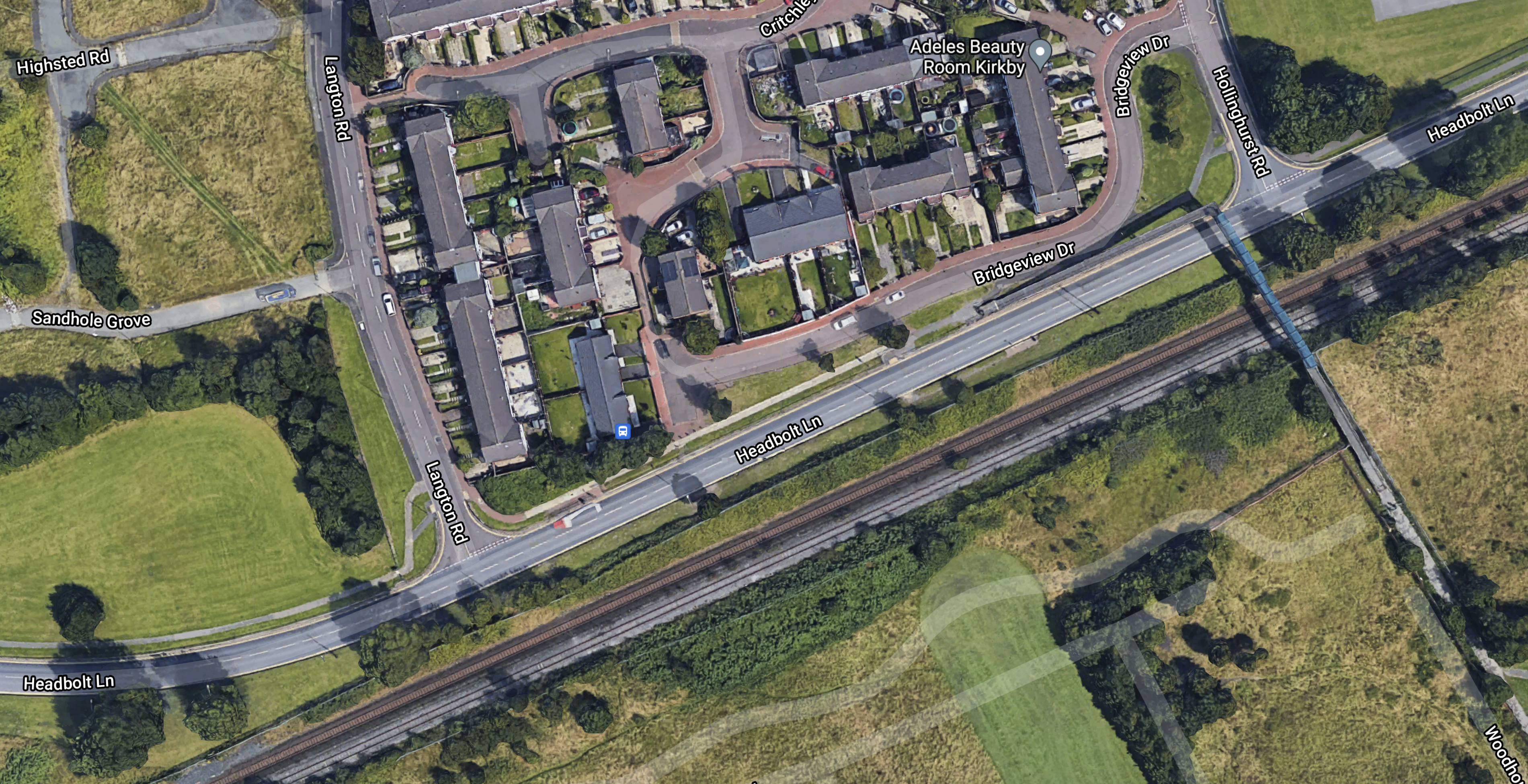
Note.
- The footbridge over the railway. I took the pictures from and around this bridge in Merseyrail To Skelmersdale – Headbolt Lane Station.
- The footbridge can’t be seen in the YouTube video.
Liverpool is to the West and Wigan is to the East.
These are my thoughts.
Is The Station North Or South Of The Railway?
As it is called Headbolt Lane, the station must have good access from that road, otherwise travellers will get rather confused.
So until proven otherwise, I will assume that the station must be to the North of the railway.
Which Way Is Liverpool In the Video?
If the station is North of the railway, then in the first part of the video, the visualisation approaches the station from the North and Liverpool is to the right and Wigan is to the left.
If that is right, then the yellow bus always points towards Liverpool.
How Many Platforms?
Wikipedia says that Headbolt Lane station will have three platforms.
From the video there will be two platforms for trains to and from Liverpool, although the current layout at Kirkby station makes do with just one platform.
There would also appear to be a single platform for trains to and from Wigan, Bolton and Manchester.
But there is a second Eastern track shown in the video, which possibly indicates provision has been made for a second platform for services in that direction.
Wot No Bridge?
It would appear that there is no bridge over or subway under the railway.
But it does appear that the platform layout shown allows passengers to walk between the ends of the tracks on the level to the platform or platforms on the side of the station away from the station building.
Will There Be A Second Entrance To The Station On The Other Side Of The Tracks?
The layout would allow this and it could be useful for those passengers living or working on that side of the railway.
Is The Platform Layout Unique?
I have travelled widely looked at railway stations all over the world.
But I can’t remember seeing a layout like this.
The layout does have advantages.
- An expensive bridge with lifts will not be needed.
- There is nothing mechanical or electrical to go wrong.
- Extra platforms can be added if required.
- It can also be used as a simple step-free way to cross the railway.
I suspect that the layout could be used in other places.
Train Frequencies To Liverpool
The current service between Kirkby station and Liverpool is four trains per hour (tph), which is handled on a single platform.
One platform at Headbolt Lane would surely be sufficient, but a second platform must surely allow extra services and provide more resilience in case of train failure.
Train Frequencies To Wigan, Bolton And Manchester
The current service between Kirkby station and Manchester is one tph, which is handled on a single platform.
One platform at Headbolt Lane would surely be sufficient and could easily handle two tph.
Are two platforms provided for Liverpool services, so that extra services could be run in the Peak or to provide more resilience, should a train fail in the station.
A Service To Skelmersdale
Consider.
- Skelmersdale is about five miles North of the line between Headbolt Lane and Wigan.
- One of Merseyrail’s current Class 507 trains covers the 5.5 miles between Kirkby and Sandhills station in twelve minutes.
- The proposed layout of Headbolt Lane station does not allow direct services between Liverpool and Skelmersdale.
These distances and timing would mean the following.
- A single shuttle train between Headbolt Lane and Skelmersdale could run a two tph service.
- A pair of shuttle trains between Headbolt Lane and Skelmersdale could run a four tph service.
Passengers would need to change trains at Headbolt Lane station.
This may seem less passenger-friendly than a direct service, but it could be the most affordable option.
And it could always be improved with modifications at Headbolt Lane station.
Is There A Role For Battery-Electric Trains?
Consider.
- For Health and Safety reasons, it is very unlikely that any new third-rail track will be laid in the UK.
- The distance between the current Kirkby station and the new Headbolt Lane station is about 1.5 miles.
- The distance between Headbolt Lane and Skelmersdale stations is less than eight miles.
- I suspect Headbolt Lane and Skelmersdale stations would both have good power supplies.
- Merseyrail’s new Class 777 trains have a battery capability.
Would this allow the following?
- Liverpool and Headbolt Lane services to use battery power between Kirkby and Headbolt Lane station. All charging would be done between Liverpool and Kirkby.
- The shuttle train between Headbolt Lane and Skelmersdale would work on battery power, with batteries charged at both ends of the route.
There is also the possibility, that the Headbolt Lane and Manchester Victoria service could be run using battery-electric Class 331 trains.
- Headbolt Lane and Manchester Victoria will be a 28.5 mile service with a couple of miles of electrification at the Manchester end.
- I estimate that the battery-electric Class 331 trains will have sufficient range to handle this route with charging at Headbolt Lane station.
- Currently, trains from Manchester Victoria take over ten minutes to turnround at Kirkby station.
- Provision for a charger could be built into Headbolt Lane station.
It would be a simple way to electrify the Kirkby and Manchester Victoria service.
In addition, battery-electric Class 331 trains are likely to have longer battery range than the Class 777 trains.
So might it be better if the Headbolt Lane and Skelmersdale shuttle was worked by battery-electric Class 331 trains.
If the two East-facing platforms at Headbolt Lane station were to be fitted with charging facilities, this would give an increased level of reliability.
Could Northern’s Manchester Victoria Service Terminate At Skelmersdale?
If both services were to be run by Northern’s battery-electric Class 331 trains, this could be a possibility.
- A reverse would be needed at Headbolt Lane station.
- I estimate that 2tph on the route would fit together well.
- Trains would be charged at Skelmersdale station.
- Chargers might not be needed at Headbolt Lane station.
In addition, a two tph service would fit in well with four or six tph to Liverpool.
Conclusion
It’s almost as if Headbolt Lane station could consist of three elements.
- The station facilities, bus interchange and car parking.
- A two-platform station for Merseyrail services to Liverpool
- A two-platform station with charging facilities for Northern services to Blackburn, Bolton, Manchester Victoria, Skelmersdale and Wigan.
All services from Headbolt Lane station will be run by battery-electric reains.
Costs have been saved by the following.
- Not having a bridge over the tracks.
- Maintaining the separation between Northern and Merseyrail services.
- Not electrifying between Kirkby and Headbolt Lane stations.
- Not electrifying the Skelmersdale Branch.
The whole station appears to have been designed on a single level.
A Fair Recovery For Hackney Central
This image from Hackney Council shows a visualisation of the new entrance to Hackney Central station, that will be created on Graham Road.
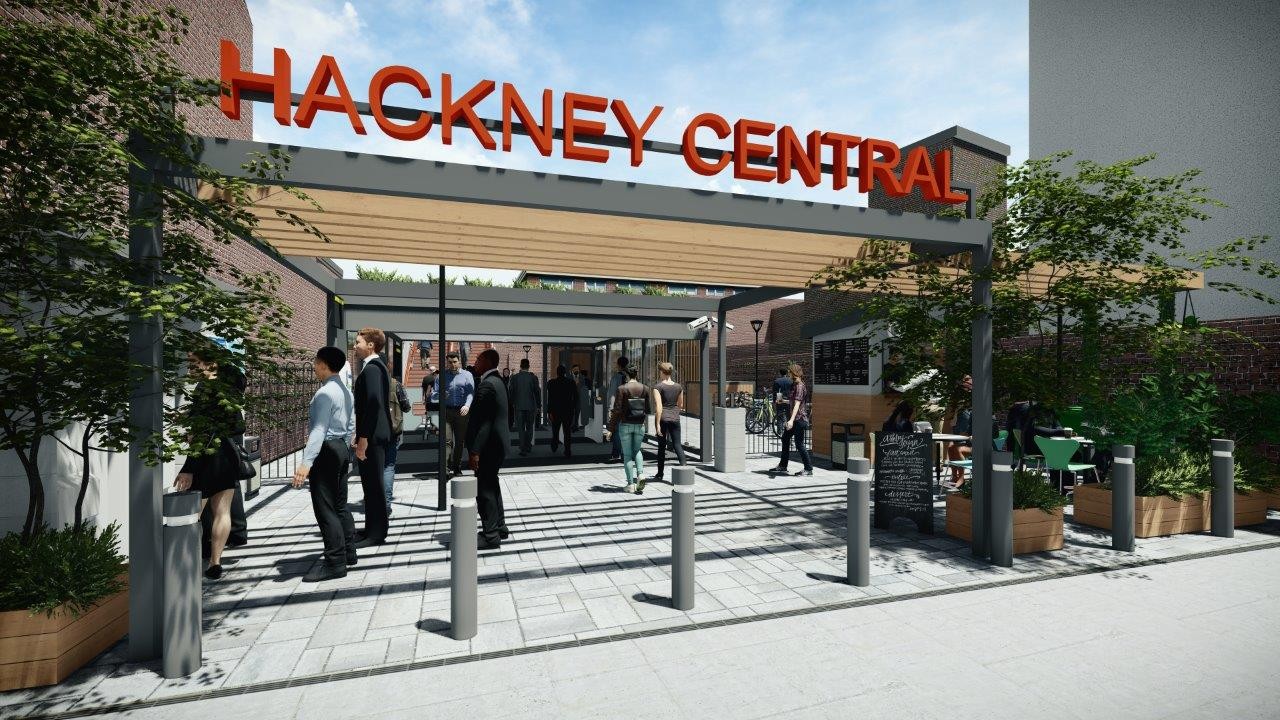
I took these pictures of the site in October 2019.

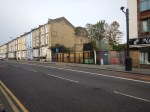
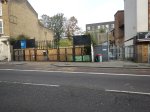
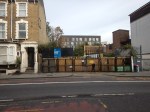
I wrote about the new entrance in Will Hackney Central Station Get A Second Entrance?.
It’s certainly a site in need of improvement.
Here’s a few more of Hackney’s images from this page on Hackney Council’s web site.
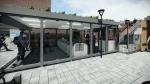



If they build it like the visualisations, it could be something special.
Kraft Heinz And Freight Innovation
In the UK, we certainly need to get more freight on to the railways.
Recently, KraftHeinz were involved in an experiment. A lot of their product currently comes into the UK in containers, which are then taken by road from the ports by truck.
This report about the experiment was on this page of the Modern Railway’s web site.
KraftHeinz’s distribution centre is in the Orrell district of Wigan, with the Wigan Wallgate to Southport route the closest railway line. The trial involved a container train that was sent from Crewe to the branch on an overnight working, with the notional offloading taking place from the running line close to Gathurst station. Also demonstrated was the feasibility of loco run round in this area. Network Rail signallers helped ensure the success of the trial by facilitating the use of a crossover at Parbold station for the run round (some signal alterations would be likely if this became a regular operation).
This Google Map shows the area.
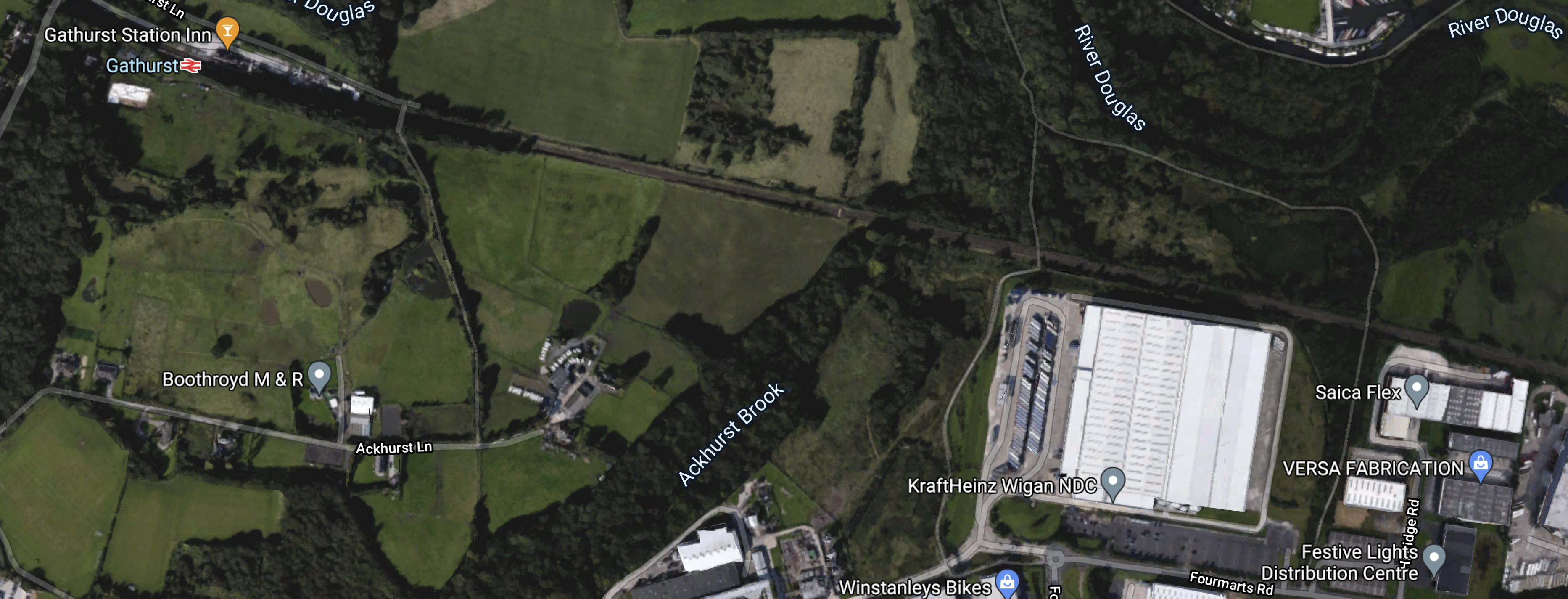
Note.
- Gathurst station is in the North-West corner of the map.
- The KraftHeinz Distribution Centre is in the South-East corner of the map.
- The Wigan Wallgate and Southport Line runs between the two.
It was all very convenient for some intense night work.
I have some thoughts.
Where’s The Siding?
Years ago a lot of factories and distribution centres like this, would have had a siding.
Many have been sold off and built over, as many companies preferred to use road transport.
Using The Running Line
This was first used in the UK to load timber on to trains in the North of Scotland for transporting to markets in the South.
Surely, the only thing needed is ground strong enough alongside the track to support a container handling machine.
Were JCB Involved?
JCB are innovators and appeared a few days on this blog, in this a post entitled JCB Finds Cheap Way To Run Digger Using Hydrogen.
Although, that post wasn’t about cargo handling, it shows that the company thinks differently and I’m sure they can come up with a pollution-free container-handler to unload containers at night for companies like KraftHeinz.
Conclusion
Surely, if this freight movement were to be used regularly, the signalling changes and perhaps some concrete should be installed.
We need more cargo-handling experiments like this to get more trucks off the road.
Plans For New West Midlands Railway Station With £400k Land Deal At Aldridge
The title of this post, is the same as that of this article on Rail Advent.
This is the two introductory paragraphs.
Plans for a new railway station at Aldridge in the West Midlands have moved on another stage after the West Midlands Combined Authority agreed a £400k investment to purchase the land.
Plans to upgrade train services in the Black Country include new stations at Darlaston and Willenhall along with Aldridge.
I predicted this station could be built in Green Light For Revived West Midlands Passenger Service.
The Location Of The Station
This Google Map shows a possible location of the new Aldridge station.
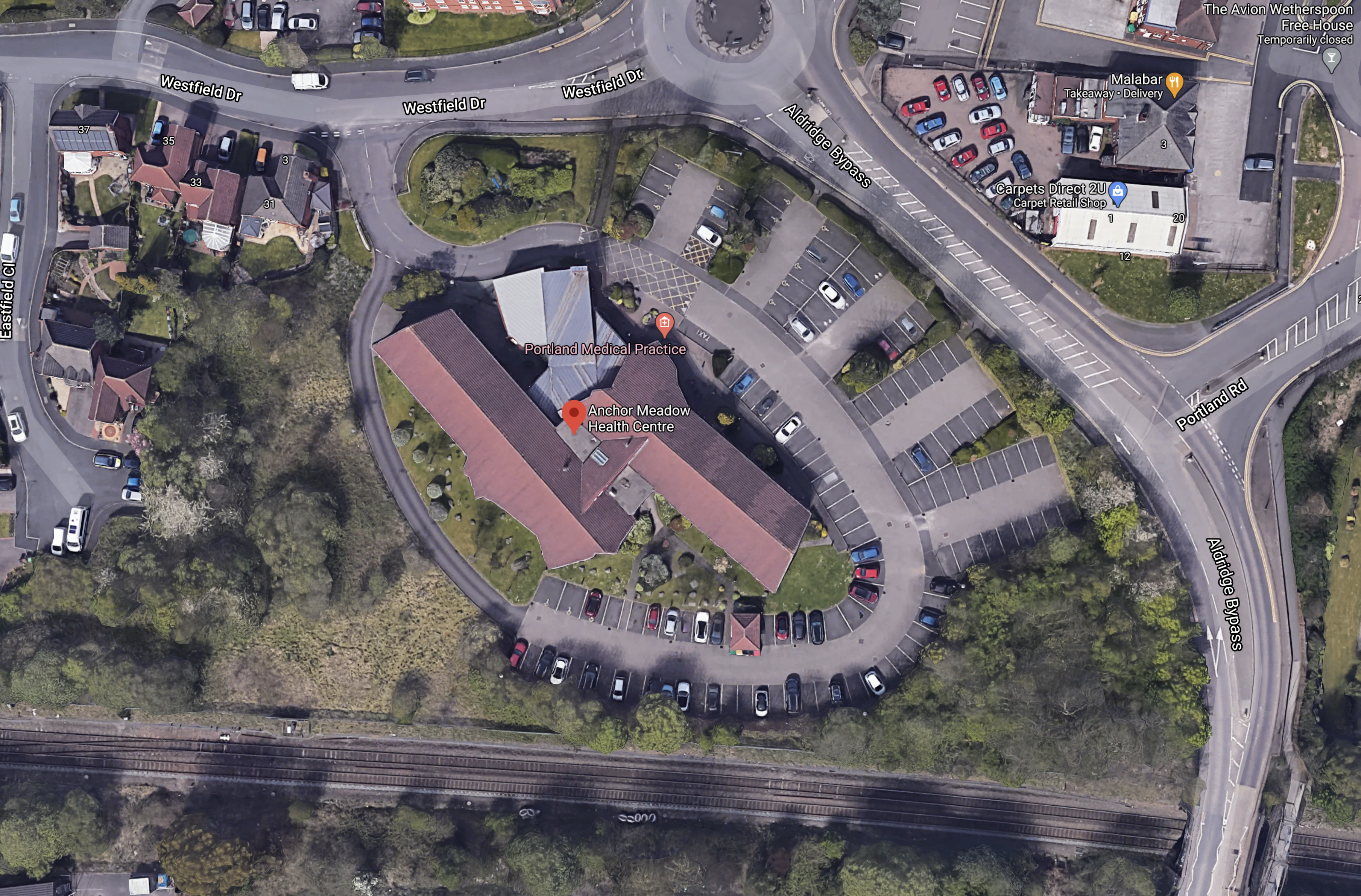
Note
- The Sutton Park Line is double track and not electrified.
- The road running South of the railway is called Station Road, which is a bit of a giveaway, as to the location of the former station.
- There is a crossover visible in the image,
The Rail Advent article says this about the location, of the station.
The land needed for the station in owned by the NHS and is situated next to the Anchor Meadow Health Centre, designs are still being worked on, but are expected to include a 150 space car park
The Anchor Meadow Health Centre is on the North side of the railway, marked by a red arrow and surrounded by an access road.
- It could have a single platform, alongside the Health Centre.
- There would be no need for an expensive bridge.
The station could be designed to be converted into a two-platform station if a full service were to be run on the Sutton Park Line at a future date.
Battery-Electric Operation
Consider.
- Aldridge station is probably no more than about five miles from Walsall station and its electrification.
- The extended service from Birmingham New Street and Walsall cstations could be run by a battery-electric train.
- West Midlands Trains have ordered Class 730 trains, which can be fitted with batteries.
From my experience of talking to passengers, who have regularly used battery trains, I believe they attract passengers, because of their lack of noise and pollution.
Battery-Electric Class 331 Trains On The Radar
In the June 2021 Edition of Modern Railways, there is an article which is entitled Northern Looks To The Future.
This is a paragraph.
Also on the radar is the creation of hybrid Class 331 EMUs fitted with batteries. A proposal has been developed by CAF and owner Eversholt Rail to augment three-car ‘331s’ with a fourth vehicle containing batteries, which would see batteries also fitted to the existing centre car. The Manchester to Windermere route has been touted as a possible location for deployment, with trains switching to battery power on the non-electrified branch from Oxenholme, although the line’s user group still favours electrification of the branch.
I have a few thoughts.
Electrification at Oxenholme
In Surprising Electrification At Oxenholme, I detailed the electrification at Oxenholme station in May 2018.
Consider.
- Platform 3 used by the Windermere trains is fully electrified.
- The crossover South of the station used by trains going between the Windermere Branch Line and the West Coast Main Line is fully electrified.
- The electrification continues for perhaps a hundred metres along the Windermere branch.
I am fairly certain, that this electrification has been designed so that a bi-mode or battery-electric train can perform a reliable power changeover in Platform 3 at Oxenholme station.
What Will Be The Range Of A Four-Car Battery-Electric Class 331 Train?
This is very much a case of how long is a piece of string.
At least we know from the extract above that the train is designed to do a return trip between Oxenholme and Windermere stations, which is a distance of 20.4 miles and a six minute turnround.
We should also note that Hitachi are claiming a range of 56 miles for their Regional Battery Train, which is described in this Hitachi infographic.

As the Class 331 with batteries will compete with the Hitachi Reional Battery Train, I would suspect that the range on easy level ground would be at least fifty miles at a speed of over 80 mph, if not 100 mph.
A Selection Of Possible Routes
These are a selection of other Northern routes where the battery-electric Class 331 trains might be used.
Manchester Airport and Barrow-in-Furness
Consider.
- This is a sibling route to the Manchester Airport and Windermere route and currently has eleven services to Windermere’s four.
- This is a 103.7 mile route.
- All but 28.1 miles is electrified.
Battery-electric Class 331 trains with a charge at Barrow-in-Furness should be able to handle this route.
Lancaster and Barrow-in-Furness
Consider.
- This is a 34.8 mile route
- All but 28.1 miles is electrified.
- Lancaster is a fully electrified station.
Battery-electric Class 331 trains with a charge at Barrow-in-Furness should be able to handle this route.
Carlisle and Barrow-in-Furness
This is the 85.7 mile route of the Cumbrian Coast Line of which none is electrified.
Consider.
- Carnforth is a fully-electrified station.
- Barrow-in-Furness station could be electrified.
- It is a fairly level route along the coast.
- I suspect that electricity supplies are available at Barrow-in-Furness, Sellafield, Whitehaven and Workington to power electrification.
- Carlisle is a fully-electrified station.
- Barrow-in-Furness and Sellafield are only 35 miles apart.
- CAF have produced trams for Birmingham and Seville, that work with discontinuous electrification.
- There are parts of the route, where there would be those, who would object to the erection of electrification gantries.
I feel it would be possible to electrify the Cumbrian Coast Line using battery-electric Class 331 trains, with a range of at least fifty miles and some short sections of new electrification.
Surely, a battery-electric train along the Cumbrian Coast by the Lake District would be the ideal train for the area
Lancaster and Morecambe
Consider.
- This is a 4 mile route.
- None is electrified.
- Heysham is another four miles past Morecambe.
- Lancaster is a fully-electrified station.
This route might have been built for battery-electric trains.
This route might be possible with no extra infrastructure.
York and Blackpool North
Consider.
- This is a 105.5 mile route.
- In a few years about 62 miles will be without electrification.
- It goes through the picturesque Calder Valley.
As with the Cumbrian Coast Line, I believe that this service could be run using battery-electric Class 331 trains, with a range of at least fifty miles and some short sections of new electrification.
Preston and Colne
Consider.
- This is a 29 mile route.
- None is electrified.
- It is steeply uphill to Colne.
Battery-electric Class 331 trains with a charge at Colne should be able to handle this route.
Alternatively, they could use Newton’s friend to return down the hill.
This route might be possible with no extra infrastructure.
As with York and Blackpool North, this route would benefit with electrification between Preston and Blackburn.
Preston and Blackpool South
Consider.
- This is a 20 mile route.
- 7.7 miles is electrified.
Battery-electric Class 331 trains should be able to handle this route.
This route might be possible with no extra infrastructure.
In an ideal world, Preston and Blackburn would be electrified and trains would run between Colne and Blackpool South, as they used to do.
Liverpool Lime Street and Manchester Airport
Consider.
- This is a 45.5 mile route,
- 26.5 miles is not electrified.
- It is fully electrified at both ends.
Battery-electric Class 331 trains should be able to handle this route.
This route might be possible with no extra infrastructure.
Liverpool Lime Street and Manchester Oxford Road
Consider.
- This is a 34.2 mile route.
- 26.5 miles is not electrified.
- It is fully electrified at both ends.
Battery-electric Class 331 trains should be able to handle this route.
This route might be possible with no extra infrastructure.
Southport and Alderley Edge
- This is a 52 mile route,
- 27 miles is not electrified.
- It is fully electrified at the Southern end.
- There is third rail electrification at Southport.
Battery-electric Class 331 trains with a charge at Southport should be able to handle this route.
Could some Class 331 be fitted with third-rail equipment to charge on Merseyrail’s third-rail electrification?
Manchester Piccadilly and Chester
Consider.
- This is a 45 mile route.
- 38 miles is not electrified.
- It is fully electrified at Manchester end.
- There is third rail electrification at Chester.
Battery-electric Class 331 trains with a charge at Chester should be able to handle this route.
Could some Class 331 be fitted with third-rail equipment to charge on Merseyrail’s third-rail electrification?
Manchester Piccadilly and Buxton
Consider.
- This is a 25.5 mile route.
- 17.8 miles is not electrified.
- It is steeply uphill to Buxton.
Battery-electric Class 331 trains with a charge at Buxton should be able to handle this route.
Alternatively, they could use Newton’s friend to return down the hill.
This route might be possible with no extra infrastructure.
Manchester Piccadilly and Rose Hill Marple
Consider.
- This is a 13.3 mile route.
- 8.3 miles is not electrified.
- It is fully electrified at Manchester end.
Battery-electric Class 331 trains should be able to handle this route.
This route might be possible with no extra infrastructure.
Manchester Piccadilly and New Mills Central
Consider.
- This is a 13 mile route.
- Only 2 miles is electrified.
- It is fully electrified at Manchester end.
Battery-electric Class 331 trains should be able to handle this route.
This route might be possible with no extra infrastructure.
Manchester Piccadilly and Sheffield
Consider.
- This is a 42 mile route.
- Only 2 miles is electrified.
- It is fully electrified at Manchester end.
- It is a scenic route.
Battery-electric Class 331 trains with a fifty mile range and a charge at Sheffield should be able to handle this route.
Southport and Stalybridge
- This is a 45 mile route.
- 27 miles is not electrified.
- It will be fully electrified at the Southern end, when electrification between Manchester Victoria and Stalybridge is completed.
- There is third rail electrification at Southport.
Battery-electric Class 331 trains with a charge at Southport should be able to handle this route.
Could some Class 331 be fitted with third-rail equipment to charge on Merseyrail’s third-rail electrification?
Manchester Victoria And Kirkby
- The Kirkby end of this route will change to the new Headbolt Lane station in a couple of years.
- This is a 30 mile route.
- 28 miles is not electrified.
- It is fully electrified at the Southern end.
- There is third rail electrification at Kirkby or Headbolt Lane.
Battery-electric Class 331 trains with a charge at Kirkby or Headbolt Lane should be able to handle this route.
Could some Class 331 be fitted with third-rail equipment to charge on Merseyrail’s third-rail electrification?
I would hope that the new Headbolt Lane station is being designed with battery-electric trains from Manchester in mind!
Rochdale And Clitheroe
Consider.
- This is a 44.7 mile route.
- There is 10.7 miles of electrification between Bolton and Manchester Victoria.
- The Clitheroe end of the route has 23.7 miles of line without electrification.
- The Rochdale end of the route has 10.4 miles of line without electrification.
- It is steeply uphill to Clitheroe.
Battery-electric Class 331 trains should be able to handle the Rochdale end, but could struggle with the climb to Clitheroe.
But it appears that all services needing to climb the hills to Colne and Clitheroe now stop in Platform 2, which is different to Wikipedia, which says that services to Clitheroe stop in Platform 1.
- With charging in platform 2 and a fifty-mile range battery-electric Class 331 trains could reach Clitheroe (9.8 miles), Colne (17 miles), and possibly Leeds (50 miles).
- With charging in platform 4 and a fifty-mile range battery-electric Class 331 trains could reach Bolton (14 miles) and Preston (12 miles)
- Would a fully-charged train leaving Blackburn be able to go via Todmorden and reach the electrification at Manchester Victoria, which is a distance of 39.4 miles?
Note.
If necessary a few well-planned extra miles of electrification would ensure reliable battery-electric services in East Lancashire centred on Blackburn.
The closely-related Blackburn and Rochdale and Blackburn and Wigan Wallgate services would fit in well with an electrified Blackburn station, that could fully charge trains.
I certainly believe that electrifying Preston and Blackburn could give extra benefits.
- Battery-electric trains between Blackpool and Liverpool in the West and Colne, Hebden Bridge, Bradford, Leeds and York in the East.
- Direct electric services from Euston to Blackburn and Burnley.
- Fast freight paths across the Pennines.
In addition, it would probably allow battery-electric trains to run to Leeds via a reinstated Skipton and Colne link.
Wigan And Leeds
Consider.
- The route can terminate at either Wigan North Western or Wigan Wallgate station.
- This is a 68.2 mile route using Wigan North Western.
- Wigan North Western is a fully-electrified station.
- The 16 miles between Wigan North Western and Salford Crescent stations is not electrified.
- The 5 miles between Salford Crescent and Manchester Victoria stations is electrified.
- The 37.2 miles between Manchester Victoria and Mirfield stations is not electrified.
- The 12.2 miles between Mirfield and Leeds will be electrified in the next few years.
- Leeds is a fully-electrified station.
Battery-electric Class 331 trains with a fifty mile range should be able to handle this route.
Chester And Leeds
Consider.
- This is a 89.7 mile route.
- There is third rail electrification at Chester.
- The 18.1 miles between Chester and Warrington Bank Quay stations is not electrified.
- The 21.8 miles between Warrington Bank Quay and Manchester Victoria stations is electrified.
- The 40.3 miles between Manchester Victoria and Bradford Interchange stations is not electrified.
- The 9.4 miles between Bradford Interchange and Leeds stations is not electrified.
- Leeds is a fully-electrified station.
- There seems to be generous turnround times at Chester and Leeds.
It looks to me that the trains are going to need a full battery charge at Bradford Interchange or perhaps Leeds and Bradford Interchange needs to be fully electrified.
I also feel that it would help if the electrification through Manchester Victoria were to be extended towards Rochdale.
But I don’t think it will be impossible for battery-electric Class 331 trains to work the route between Leeds and Chester with some new electrification and/or charging at Bradford Interchange.
Manchester Victoria And Leeds
Consider.
- This is a shortened version of the Chester and Leeds route.
- This is a 49.8 mile route.
- Manchester Victoria is a fully-electrified station.
- The 40.3 miles between Manchester Victoria and Bradford Interchange stations is not electrified.
- The 9.4 miles between Bradford Interchange and Leeds stations is not electrified.
- Leeds is a fully-electrified station.
My comments would be similar to the Chester and Leeds route.
Leeds And York Via Harrogate And Knaresborough
Consider.
- This is a 38.8 mile route.
- Leeds is a fully-electrified station.
- The Harrogate Line is not electrified.
- York is a fully-electrified station.
Battery-electric Class 331 trains with a fifty mile range should be able to handle this route.
There are two other services on the Harrogate Line.
- Leeds and Harrogate – 18.3 miles
- Leeds and Knaresborough – 22.1 miles
I have a feeling that a fleet of battery-electric trains could electrify all services on the Harrogate Line with no extra infrastructure.
Summing Up The Possible Routes
I have assumed that the proposed battery-electric Class 331 train has a range of around fifty miles, which is not unlike that for the Hitachi Regional Battery Train.
It would appear that many of Northern’s routes can be run by a train with this range including some that are around a hundred miles.
There are also routes like the Harrogate Line, which would accept a battery-electric Class 331 train tomorrow, if it were available.
Will A Mix Of Four-Car Electric And Battery-Electric Trains Be Better Than A Mix Of Four-Car And Three-Car Electric Trains?
If the technology is right, I suspect that a four-car battery-electric Class 331 train will be able to substitute for one without batteries on a route that doesn’t need battery power.
This must surely have advantages when trains are in maintenance or otherwise unavailable, as nothing annoys passengers more than an overcrowded train.
Conclusion
The Modern Railways article also says this.
More widely, Northern has previously stated ambitions to acquire more trains, and work was underway last year to identify what this requirement might be.
From my simple analysis on some of their routes, I would look to acquire some four-car battery-electric Class 331 trains, once they have been oroven to work.
Latest On Hydrogen Trains In The Tees Valley
In the June 2021 Edition of Modern Railways, there is an article which is entitled Northern Looks To The Future.
This is a paragraph.
Northern has been working on proposals to introduce both hydrogen and battery conversions. For the former, the Tees Valley has been selected for the potential deployment of a whole system production pilot for a hydrogen fleet, with a dedicated depot, fuelling infrastructure and trains. A sub-fleet of Class 600 HMUs, converted by Alstom and Eversholt Rail from Class 321 EMUs and dubbed ‘Breeze’, is the preferred option for routes radiating from Middlesbrough to Nunthorpe, Bishop Auckland and Saltburn, creating a small self-contained network. If approved, these plans would fit with the Government’s aim to develop a hydrogen hub in the Tees Valley.
Could the Class 600 trains finally be on their way?
 The Anonymous Widower