Scottish Town Regains Its Station After 56 Years
The title of this post, is the same as that of this article on Railnews.
This is the introductory paragraph.
Trains are calling at Kintore in Aberdeenshire today for the first time since December 1964.
Some points about the new Kintore station.
- It is a two platform station on the newly double-tracked Aberdeen and Inverness Line.
- The station has a footbridge with lifts.
- The station is 13.4 miles or 19 minutes from Aberdeen.
- The station is 94.8 miles or two hours and twenty-three minutes from Inverness.
- All the services I can find yesterday, seem to have been run by Class 158 trains.
- There is a 168 space car park, with 24 charging points.
The station cost £15 million.
London Overground Syndrome
I have a feeling that Aberdeen and Inverness Line could be a prime candidate for suffering from London Overground Syndrome.
I suspect though, that ScotRail will quickly eradicate it, by putting on more trains.
DfT and Arriva CrossCountry Sign Agreement
The title of this post, is the same as that of this article on Railway News.
This is the introductory paragraph.
The franchisee CrossCountry, which is owned by Arriva, has signed a three-year agreement with the Department for Transport to bring the franchise in line with the Emergency Recovery Measures Agreements (ERMAs).
CrossCountry has the following trains in its fleet.
34 x Class 220 trains
24 x Class 221 trains
This gallery shows Class 220 trains and the closely related Class 222 trains, which are in service with East Midlands Railways.


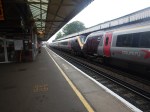
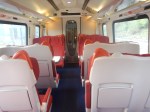
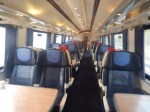
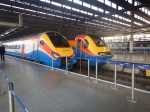
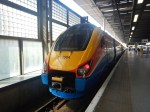
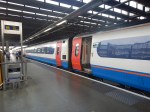
Note that these three fleets of Bombadier Voyager trains are now twenty years old and will probably need a makeover soon.
If they have a problem it is that they are diesel multiple units and create a lot of noise and pollution in stations and depots.
This is said in the Railway News article.
One element of this new contract is a focus on reducing the environmental impact of the operator’s diesel fleet.
, Two separate projects are mentioned.
- Using a separate electrical supply to Turbostars during cleaning.
- Use of on-train batteries on the Voyagers in stations.
In Have Bombardier Got A Cunning Plan For Voyagers?, I gave my thoughts on the second project, when Bombardier proposed it in 2018.
I can see the following scenario happening.
- When the new Class 805 trains are delivered, Avanti West Coast’s Class 220 trains are transferred to Arriva CrossCountry.
- When the new Class 810 trains are delivered, East Midland Railway’s Class 222 trains are transferred to Arriva CrossCountry.
- CrossCountry update their Voyagers with batteries.
- CrossCountry retire their InterCity 125 trains.
CrossCountry may have enough trains to run a mainly Voyager fleet, backed up by a few Turbostars.
Could Bombardier’s Plan Be Revived In A Different Form?
If CrossCountry had all the Voyages, they would have the following fleet.
- 34 x four-car Class 220 trains – Currently with CrossCountry.
- 20 x five-car Class 221 trains – Currently with Avanti West Coast
- 20 x five-car Class 221 trains – Currently with CrossCountry
- 4 x four-car Class 221 trains – Currently with CrossCountry
- 6 x seven-car Class 222 trains – Currently with East Midlands Trains
- 17 x five-car Class 222 trains – Currently with East Midlands Trains
- 4 x four-car Class 222 trains – Currently with East Midlands Trains
This totals to eighty-five trains with a total of 285 intermediate cars, of which 128 were built with tilt for Class 221 trains.
Currently CrossCountry has a total of 58 four- and five-car Voyagers and enough Class 43 power cars for six InterCity 125 trains.
If they rearranged the non-tilting intermediate cars of the Voyagers, 157 intermediate cars is enough for one of the following.
- 78 – four-car trains
- 52 – five-car trains
- 39 – six-car trains
- 26 – eight-car trains
- 22 – nine-car trains
Add in forty five-car Class 221 trains and there is more than enough trains for CrossCountry to run their current services without the retired InterCity 125s.
CrossCountry would also be able to form the trains into the lengths they needed for efficient services.

This formation photographed at Basingstoke could be formed of a single train, if they wished, as they have more than enough coaches.
I suspect in true design engineering fashion, engineers at CrossCountry have got the toy trains or Lego bricks out to shuffle the coaches on a big table to see what are the best train lengths for their network.
If they decided to go the eight-car route, which could give up to twenty-six trains, this would be more than enough to be able to retire the InterCity 125s.
Could one of the Intermediate cars be converted into a pantograph and battery car?
- If the diesel engine and the associated gubbins were to be removed, this would save around two tonnes in weight.
- A two-tonne battery could probably have a capacity of 200 kWh.
- Bombardier probably have ideas about how a car could be converted.
Someone could have a lot of fun playing musical carriages and the following trains could be created.
- A fleet of Voyager bi-mode trains of optimum length for CrossCountry’s route network.
- Most services would be run by single trains, which must give advantages to the operator, their staff and passengers.
- All braking would be regenerative braking to battery to save energy.
- Where electrification exists, the trains could use it.
- All station stops would be performed on battery power.
There might even be some left over driving cars and some intermediate cars to be converted into battery electric trains for another route.
Conclusion
There is a route there for CrossCountry to have a much more environmentally-friendly fleet, better suited to their needs
- The Turbostars would be given a local electricity supply to cut noise and pollution during overnight cleaning.
- The InterCity 125s would be retired.
- CrossCountry acquires as many Voyagers as it needs after Avanti West Coast and East Midlands Railway get their new trains.
- The Voyagers carriages would be shuffled so that they could handle all routes and replace the InterCity 125s.
- The design exists to convert the Voyagers into diesel-electric-battery tri-mode high speed trains.
Note.
- There are enough trains to do a gradual conversion, with CrossCountry having enough trains for a full service at all times.
- All trains will probably have been built this century or nearly so!
I also feel, that the fleet would be a marketing asset, rather than a bit of a discouragement to use CrossCountry’s services again.
Can We Innovate Our Way Out Of Our Troubles?
One Of London’s biggest problems at the moment is the bridges across the Thames.
This article on the BBC is entitled London’s Bridges ‘Are The Capital’s Embarrassment’ and is typical of many.
Hammersmith Bridge is causing particular trouble and has been closed to all traffic for some time.
But then I saw this innovative solution to the Hammersmith Bridge problem.

Note.
- Hammersmith Bridge is still closed.
- A floating bridge has been added alongside for pedestrians and cyclists.
- The floating bridge uses parts of the old Blackfriars pier.
- There is an innovative floating pontoon, which is activated by the current, that is used in the middle of the river to transfer passengers across.
- New Civil Engineer thinks, the temporary bridge could become a tourist attraction.
The design made me smile.
Will The Return Of Strictly Cause The Number Of Cases Of The Covids To Drop?
The phrase Bread and Circuses, was apparently first used by Juvenal, who was a Roman poet
During the covids, Asda, Morrisons, Sainsburys, Tesco, Waitrose and others have delivered the bread.
And now the BBC is bringing on the circuses with the start of the new series of Strictly from tomorrow.
If the rate does drop, the Government should buy up the latest James Bond film and show it on a Friday night.
Why Is Manchester The Odd City Out?
I find the different reactions of the large Northern cities interesting.
I have seen no comment and moaning from Leeds, Newcastle and Sheffield, and Liverpool and the rest of Lancashire seems to have accepted their Tier 3. fate.
Only Manchester seems to have a serious objection.
I know Liverpool well, as I went to Liverpool University in the 1960s, met my late wife there and we lived together in the city for a couple of years.
I still visit the City regularly, as I like the city’s weather and outlook and do business with my old University.
I have visited Manchester many times, often for football (I support Ipswich, despite being a Londoner!) and I find the city very different to Liverpool.
But I don’t seem to warm to Manchester, as I do to Liverpool and the other large cities of the North.
Or is it Manchester doesn’t warm to me?
Andy Burnham is not a Mancunian and could it be, that his hard stand against the Government, is driven by wanting to be more Mancunian, than the Mancunians.
Manchester puzzles me, but it does seem to be out of step with the rest of the North.
Feltham Depot – 13th October 2020
On my trip to Feltham Station, I passed the construction site of Feltham Depot.
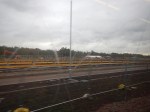
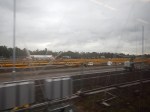

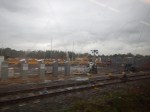
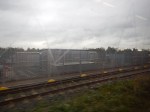
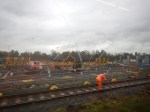
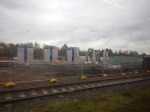
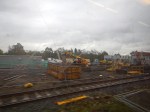

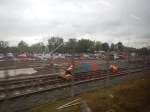
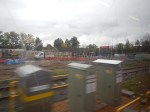
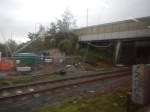


It seems to be progressing.
It’s a pity that the train, that I used to take the pictures, had such badly scored windows.
All Change At The Broadgate Entrance To Liverpool Street Station
Everything seems to have changed at the Broadgate Entrance To Liverpool Street Station, as these pictures show.






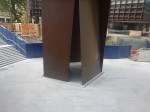





Note.
- You now enter at street level, rather than through a subway.
- You ascend a gentle ramp to walk through some upmarket shops and then descend into the station using an escalator.
- You can also walk through the shops to the bus station between the rail station and Broadgate.
The only thing, that hasn’t changed is the rusty smoking shelter.
Interview: Hitachi’s Nick Hughes On Driving Innovation In Rail Propulsion
The title of this post is the same as that of this article on The Engineer.
As with the article I discuss in Hydrogen On The Line, it is another well-written and informative article from The Engineer, where those at the sharp end of innovative rail technologies give their views.
This is the introductory paragraph.
As part of a series of articles exploring the propulsion technologies that will shape the future of key transport sectors The Engineer spoke to Hitachi Rail’s Nick Hughes about the innovations that will propel the rail sector into a low carbon future.
The Engineer asked these questions.
- What propulsion innovations will help power the rail sector towards net zero?
- Can you outline some of your organisation’s own key activities in this area?
- What are the key obstacles and challenges to developments in this area?
- What is your vision for the long-term future of propulsion in your sector?
I find the answer to the last question most interesting.
Rail is going to become increasingly digitised and integrated into other sectors involved in smart cities, mobility-as-a-service and flexible green grid. Therefore, Hitachi Rail won’t be able to stay at the forefront of innovation by its self. This is why we are focused on building partnerships with other like-minded, innovative, clean tech companies like Hyperdrive Innovation, Perpetuum and Hitachi group companies such as Hitachi ABB.
Hyperdrive Innovation is going to apply its knowledge and expertise from the automotive sector, to develop a market leading battery for Hitachi trains. Perpetuum predictive analytics improve reliability and availability of existing trains. Meanwhile, Hitachi ABB’s experience of the power sector allows our battery train solution to incorporate charging, storage and grid management. These partnerships creates an entry point into the rail market for our partners, potentially leading to future growth and jobs.
However, it is important to recognise that the established technologies of today – battery trains, discontinuous electrification and high-speed trains – are the technologies will help achieve the 2050 net zero emission target.
I would very much agree with all that is said.
How Covids-Unfriendly Is A Class 345 Train?
These pictures show Crossrail’s Class 345 trains.
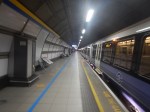
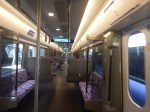


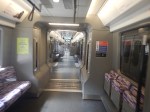

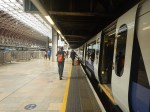

Note.
- This example was a nine-car train going to Heathrow.
- It is 205 metres long and can carry 1500 passengers.
- As with most London Underground trains, most of the passengers sit longitudinally.
- Having watched people on these trains several times in the last few weeks and feel that the design encourages social-distancing
But there are other big advantages, when it comes to suppressing the virus.
- Each car has three sets of sliding doors on each side, which is more than most trains. As the lobbies on the train are spacious, does this help the maintaining of social-distancing, when entering and leaving the train.
- The trains are walk-through, so if you end up with a car, that is full of mask deniers, it is easy to move.
- The trains have full air-conditioning, which should reduce the amount of virus in the air.
I hope Transport for London are watching the statistics for the covids, to see if they go up or down, as more new trains are introduced on Crossrail routes.
Hydrogen On The Line
This article on The Engineer is entitled On Track: Advances In UK Hydrogen Rail.
This sub-heading introduces the article.
An expert panel from Vivarail, Birmingham University and Alstom discuss UK developments in hydrogen powered rail transport.
The article is a very readable article, that explains, the whys, wherefores and hows of hydrogen powered rail transport in the UK.
 The Anonymous Widower