Crossrail’s Paddington Service Plans Revealed
The title of this post is the same as that of this article on Rail Magazine.
This is the first paragraph.
Trains from London Paddington Crossrail station to Shenfield will begin six months after trains start serving the low-level station from other destinations.
In Crossrail Ltd Outlines Plan To Complete The Elizabeth Line,, which I wrote in April 2019, I quoted these points from a statement on the Crossrail web site.
- Crossrail Ltd has identified a six-month delivery window with a midpoint at the end of 2020.
- Bond Street station will open later.
- Service will be initially twelve trains per hour (tph) between Paddington and Abbey Wood stations.
- Services between Paddington and Reading will commence in December 2019 with a frequency of 4 tph in the peak.
None of these promises from six months ago appear to have been changed.
So my comment at the time still stands.
Twelve trains per hour (tph) gives a capacity of 18,000 passengers per hour, which compares with the 36 tph and 31,500 passengers per hour of the Victoria Line.
Practically, this means that a twelve tph Crossrail could be carrying sixty percent of the number of passengers of the Victoria Line. It’s better than a kick in the teeth!
But then Dear Old Vicky is the Platinum Standard with lots of encrusted diamonds!
There is also other information in the Rail Magazine article.
- Paddington to Shenfield services will start six months after the start of Paddington to Abbey Wood services.
- Services will initially use the two-platform Crossrail station under Paddington as a terminus.
- Through services are expected to start a year later.
It looks like Crossraill should be fully open by the May 2022 timetable change.
This map from carto.metro.free.fr shows the layout of the lines at Paddington station.

Note that if you go pass the Crossrail tunnel portal on a train, there are generally several of Crossrail’s Class 345 trains to be seen, lined up in front of Westbourne Park bus garage.
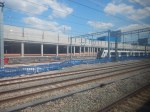
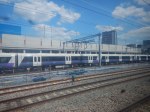


These pictures were taken in July 2019.
Fracking Hell…Is It The End?
The title of this post, is the same as that of this article in yesterday’s Sunday Times.
The article is an interesting read.
These two paragraphs are key.
Activism by Extinction Rebellion and growing public concern about climate change have weakened the chances of an industry once expected to create 64,500 jobs ever getting off the ground.
Cuadrilla Resources, the fracking company most active in Britain, has in recent days been removing equipment from its sole operating site in Lancashire. Petrochemicals tycoon Sir Jim Ratcliffe has vowed to pursue shale gas exploration overseas because of “archaic” and “unworkable” regulations at home.
But I think it’s more complicated than that!
I sometimes go to lectures at the Geological Society of London and two stand were about fracking.
Two were about fracking.
Fracked or fiction: so what are the risks associated with shale gas exploitation?- Click for more.
This is a video of the lecture.
What Coal Mining Hydrogeology Tells us about the Real Risks of Fracking – Click for more.
This is a video of the lecture.
This is a must-watch video from a good speaker.
I have also written several posts about fracking, with some of the earliest being in 2012-2013.
I have just re-read all of my posts.
- In the posts I have tried to give information and at times, I have said we should start fracking.
- But we should only start if we know what we’re doing.
- In several places I ask for more research.
However, there are some interesting facts and inconvenient truths about fracking and natural gas in general.
- Russia earns about €300billion a year or twenty percent of its GDP from gas exports to Europe. See Should We Nuke Russia?.
- Putin backs the anti-fracking movement. See Russia ‘secretly working with environmentalists to oppose fracking’.
- Fracking techniques is used in the Scottish Highlands to obtain clean water from deep underground. See the second Geological Society of London video.
- About forty per cent of gas usage is to heat housing. See the second video.
- The eighteen percent of the UK population, who don’t have a gas supply are more likely to be in fuel poverty. See the second video.
- Scotland has more need for energy to provide heat. See the second video.
- Natural gas with carbon capture and storage has a similar carbon footprint to solar power. See the second video.
- Cowboy fracking, as practised in the United States, would not be allowed in the UK or the EU. See the second video.
- We have no historic earthquake database of the UK, which would help in regulation and research of fracking. See the second video.
- Fracking has brought down the price of gas in North America.
- In the United States fracked gas is cutting the need to burn coal, which produces more pollution and carbon dioxide to generate the same amount of energy. See A Benefit Of Fracking.
The article in the Sunday Times says pressure against fracking has started the shutdown of the industry in the UK.
But there is another big pressure at work.replacement of natural gas with hydrogen.
- This would reduce carbon emissions.
- It can be used as a chemical feedstock.
- It could be delivered using the existing gas network.
- The gas network could be changed from natural gas to hydrogen on a phased basis, just as the change from town to natural gas was organised around fifty years ago.
But it would mean that all gas users would need to change their boilers and other equipment.
Put yourself in the position of Jim Ratcliffe; the major owner and driving force behind INEOS.
INEOS needs feedstocks for chemical plants all over the world and affordable natural gas is one that is very suitable, as it contains two of the major elements needed in hydrocarbons and many useful chemicals; carbon and hydrogen.
If local sources are not available, then liquefied natural gas can be shipped in.
The Hydrogen Economy
It is possible to replace natural gas in many applications and processes with hydrogen.
- It can be used for heating and cooking.
- Important chemicals like ammonia can be made from hydrogen.
- It can be transported in existing natural gas etworks.
- Hydrogen can also replace diesel in heating and transport applications.
There is also a possibility of measures like carbon taxes being introduced, which using hydrogen would reduce.
There’s more in the Wikipedia entry for Hydrogen economy.
Have Jim Ratcliffe and others done their predicting and decided that the demand for locally sourced natural gas will decline and that the hydrogen economy will take over?
But there will need to be a readily available source of large amounts of hydrogen.
I used to work in a hydrogen factory at Runcorn, which was part of ICI, that created hydrogen and chlorine, by the electrolysis of brine. In some ways, the hydrogen was an unwanted by-product, back in the late 1960s, but similar and more efficient processes can be used to convert electricity into hydrogen.
The latest idea, is to cluster offshore wind farms around gas rigs in the seas around the UK. The electricity produced would be used to electrolyse water to extract the hydrogen, which would then be piped to the shore using existing gas pipelines.
It would be a way of reusing infrastructure associated with gas fields, that have no gas left to extract.
There would be no need to build an expensive electricity cable to the shore.
The Dutch, Danes and the Germans are proposing to build the North Sea Wind Power Hub, which is described like this in Wikipedia.
North Sea Wind Power Hub is a proposed energy island complex to be built in the middle of the North Sea as part of a European system for sustainable electricity. One or more “Power Link” artificial islands will be created at the northeast end of the Dogger Bank, a relatively shallow area in the North Sea, just outside the continental shelf of the United Kingdom and near the point where the borders between the territorial waters of Netherlands, Germany, and Denmark come together. Dutch, German, and Danish electrical grid operators are cooperating in this project to help develop a cluster of offshore wind parks with a capacity of several gigawatts, with interconnections to the North Sea countries. Undersea cables will make international trade in electricity possible.
Later, Wikipedia says that ultimately 110 GW of electricity capacity could be developed.
So could these planned developments create enough hydrogen to replace a sizeable amount of the natural gas used in Western Europe?
I suspect a lot of engineers, company bosses and financiers are working on it.
Conclusion
I have come to the following conclusions.
- Fracking for hydrocarbons is a technique that could be past its sell-by date.
- The use of natural gas will decline.
- INEOS could see hydrogen as a way of reducing their carbon footprint.
- The heating on all new buildings should be zero carbon, which could include using hydrogen from a zero-carbon source.
There are reasons to think, that electricity from wind-farms creating hydrogen by electrolysis could replace some of our natural gas usage.
A Selection Of Train Noses
I have put together a selection of pictures of train noses.
They are in order of introduction into service.
Class 43 Locomotive
The nose of a Class 43 locomotive was designed by Sir Kenneth Grange.


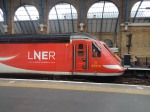
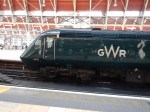
Various articles on the Internet, say that he thought British Rail’s original design was ugly and that he used the wind tunnel at Imperial College to produce one of the world’s most recognised train noses.
- He tipped the lab technician a fiver for help in using the tunnel
- Pilkington came had developed large armoured glass windows, which allowed the locomotives window for two crew.
- He suggested that British Rail removed the buffers. Did that improve the aerodynamics, with the chisel nose shown in the pictures?
The fiver must be one of the best spent, in the history of train design.
In How Much Power Is Needed To Run A Train At 125 mph?, I did a simple calculation using these assumptions.
- To cruise at 125 mph needs both engines running flat out producing 3,400 kW.
- Two locomotives and eight Mark 3 carriages are a ten-car InterCity 125 train.
This means that the train needs 2.83 kWh per vehicle mile.
Class 91 Locomotive
These pictures show the nose of a Class 91 locomotive.
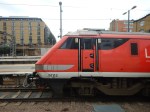

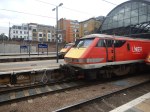
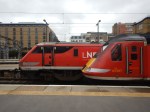

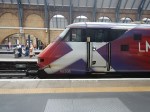
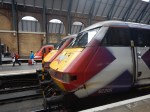
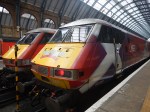
Note, the Class 43 locomotive for comparison and that the Driving Van Trailers have an identical body shell.
It does seem to me, that looking closely at both locomotives and the driving van trailers, that the Class 43s look to have a smoother and more aerodynamic shape.
Class 800/801/802 Train
These pictures show the nose of a Class 800 train.
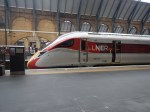
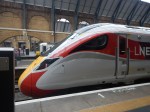
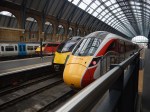
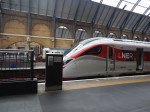
In How Much Power Is Needed To Run A Train At 125 mph?, I did a simple calculation to find out the energy consumption of a Class 801 train.
I have found this on this page on the RailUKForums web site.
A 130m Electric IEP Unit on a journey from Kings Cross to Newcastle under the conditions defined in Annex B shall consume no more than 4600kWh.
This is a Class 801 train.
- It has five cars.
- Kings Cross to Newcastle is 268.6 miles.
- Most of this journey will be at 125 mph.
- The trains have regenerative braking.
- I don’t know how many stops are included
This gives a usage figure of 3.42 kWh per vehicle mile.
It is a surprising answer, as it could be a higher energy consumption, than that of the InterCity 125.
I should say that I don’t fully trust my calculations, but I’m fairly sure that the energy use of both an Intercity 125 and a Class 801 train are in the region of 3 kWh per vehicle mile.
Class 717 Train
Aerodynamically, the Class 700, 707 and 717 trains have the same front.




But they do seem to be rather upright!
Class 710 Train
This group of pictures show a Class 710 train.

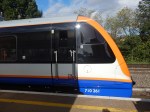
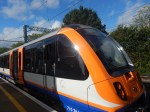
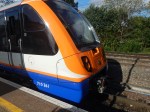
Could these Aventra trains have been designed around improved aerodynamics?
- They certainly have a more-raked windscreen than the Class 717 train.
- The cab may be narrower than the major part of the train.
- The headlights and windscreen seem to be fared into the cab, just as Colin Chapman and other car designers would have done.
- There seems to be sculpting of the side of the nose, to promote better laminar flow around the cab. Does this cut turbulence and the energy needed to power the train?
- Bombardier make aircraft and must have some good aerodynamicists and access to wind tunnels big enough for a large scale model of an Aventra cab.
If you get up close to the cab, as I did at Gospel Oak station, it seems to me that Bombardier have taken great care to create a cab, that is a compromise between efficient aerodynamics and good visibility for the driver.
Class 345 Train
These pictures shows the cab of a Class 345 train.
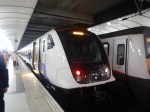
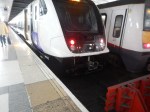

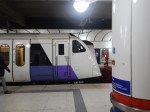
The two Aventras seem to be very similar.
Class 195 And Class 331 Trains
CAF’s Class 195 and Class 331 trains appear to have identical noses.
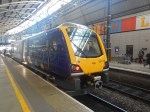

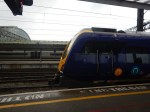
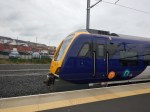
They seem to be more upright than the Aventras.
Class 755 Train
Class 755 trains are Stadler’s 100 mph bi-mode trains.
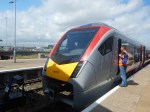
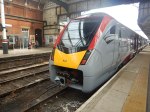
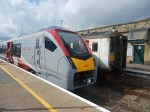

It is surprising how they seem to follow similar designs to Bombardier’s Aventras.
- The recessed windscreen.
- The large air intake at the front.
I can’t wait to get a picture of a Class 755 train alongside one of Greater Anglia’s new Class 720 trains, which are Aventras.
Tortillas From Kings Cross Square
If you are arriving at Kings Cross station and feel a little peckish, it is often worthwhile to check out the offerings in Kings Cross Square in front of the station.




I found these delicious gluten-free tortillas last week.
A Quick Pasta Supper For One
A few months ago Marks & Spencer started selling an Italian made gluten-free passta, that is named prosciutto & ricotta cappelletti.
Marks recommend serving it with your favourite sauce or melted butter.
So I used one of my favourite sauces adapted from Serial Cooking – Quick Pasta For One. The idea came from a recipe from Lyndsey Bareham in The Times.
These pictures show the stages.







Note.
- I split frozen peas down into small one-portion pots.
- The yogurt is a small pot of Honey & Ginger West Country Luxury Yoghurt from Marks & Spencer.
- I generally drink Adnams beer!
I shall cook the second half of the pasta in a few days, which will be the fifth time, I’ve had the meal in three weeks.
Does This Bank Launder Money?
I always associate Tide with a brand of washing powder.

So does the bank of the same name launder money?
Travel Industry Confirms Rail ‘Renaissance’ In Europe
The title of this post is the same as that of this article on Railway Gazette.
This is the introductory paragraph.
Assertions that long-distance rail services in Europe are rapidly becoming more popular as passengers eschew flying for environmental reasons were amply confirmed at the Rail Innovation Forum organised by Amadeus at its head office near Nice on October 9-10.
The article also gives these points.
- Swiss Federal Railways are reporting a 26 % year-on-year increase in passengers for the first quarter of 2019 for night trains.
- Sweden is reporting a 12 % increase in rail traffic and a 4 % drop in air traffic.
- Flight bookings across Scandinavia are down by 10 %.
- German long-distance rail travel is rising.
This all seems good news for carbon emissions.
Renewable Energy Outperforms Fossil Fuels For A Whole Quarter
The title of this post is the same as that of an article in today’s copy of The Times.
This is the introductory paragraph.
Wind and solar farms and other sources of renewable power have produced more electricity than fossil fuels for the first time in a three-month period.
This is a good figure, but how do we compare with the rest of the world.
This Wikipedia entry is entitled List Of Countries By Electricity Production Prom Renewable Sources.
These are some example percentages of renewable energy production.
- Albania – 100 %
- Australia – 14.5 %
- Belgium – 16.6 %
- Brazil – 80.4 %
- Canada 65.0 %
- China – 24.5 %
- Denmark – 60.5 %
- Egypt – 8.2 %
- Ethiopia 93.6 %
- France – 17.5 %
- Germany – 29 %
- Hungary – 10.1 %
- Iceland – 100.0 %
- India – 16.88 %
- Indonesia – 15.9 %
- Iran – 5.8 %
- Iraq – 6.4 %
- Ireland – 24.7 %
- Israel – 2.5 %
- Italy – 37.3 %
- Japan – 15.0 %
- Kuwait – 0.1 %
- Libya – 0.0 %
- Malaysia – 13.7 %
- Netherlands – 12.1 %
- New Zealand – 83.9 %
- Norway – 97.2 %
- Poland – 13.7 %
- Qatar – 0.3 %
- Pakistan – 32.7 %
- Russia – 16.9 %
- Saudi Arabia – 0.0 %
- South Africa – 3.2 %
- South Korea – 2.8 %
- Spain – 38.1 %
- \sweden – 57.1 %
- Switzerland – 59.8 %
- Taiwan – 4.2 %
- Turkey – 32.9 %
- UAE – 0.3 %
- United Kingdom – 27.9 %
- United States – 14.7 %
Figures are for 2016
Rumours Grow Over Future Of HS2
The title of this post is the same as that of this article on Railnews.
This is the first paragraph.
The future of HS2 appears to be increasingly in doubt, as reports suggest that the forthcoming Oakervee Review will axe Phase 2b between the West Midlands and Yorkshire and possibly cancel the project entirely.
The article also says this about the first phase of the project.
Another possibility is that Phase 1 between London and Birmingham could be built more cheaply by lowering the maximum speed from the presently-planned 250km/h. Such a reduction would reduce the new line’s capacity and lengthen journey times but still ease the pressure on the West Coast Main Line, where paths are in short supply.
There are three suggestions in these two paragraphs and before I discuss them, I’ll detail the various phases of the project as they are current proposed.
The Phases Of High Speed Two
High Speed Two will be two phases with the second phase split into two.
- Phase 1 – London and the West Midlands
- Phase 2a – West Midlands and Crewe
- Phase 2b – Crewe and Manchester and West Midlands and Leeds
The plan improves links between London and several major cities in the Midlands and North.
Northern Powerhouse Rail
I am a great believer in holistic design and in the economies of doing several similar projects together or in a well-defined sequence, that delivers benefits in a stream.
For that reason, I believe that the equally-important Northern Powerhouse Rail should be designed in conjunction with High Speed Two, to achieve the following objectives.
- A better railway, that connects more towns and cities.
- A phased delivery of benefits.
- Possible cost savings.
This report on the Transport for the North web site which is entitled At A Glance – Northern Powerhouse Rail, advocates a much better approach.
- High Speed Two would go from Crewe to Hull via Warrington, Manchester Airport, Manchester Piccadilly, Huddersfield, Bradford and Leeds.
- Northern Powerhouse Rail would go from Liverpool to Hull via Warrington, Manchester Airport, Manchester Piccadilly, Huddersfield, Bradford and Leeds.
- There would be a double junction at High Legh between Liverpool and Manchester, that connects the two routes.
- London and Liverpool services would use the Western end of Northern Powerhouse Rail from High Legh.
- There would be improvements East of Leeds to connect to Sheffield and the East Coast Main Line.
This map shows the high speed railways between Crewe, Liverpool, Manchester and Warrington.

I discussed, what has been proposed by Transport of the North in Changes Signalled For HS2 Route In North.
Cutting High Speed Two To An Affordable Budget
I’ll take the three suggestions in the Rail News article.
Suggestion One – Cancel The Project
This is actually the second suggestion, but I think the article kills it in the second paragraph, that I quoted, when it says that High Speed Two is needed to ease pressure on the West Coast Main Line.
Cancellation would probably be a vote loser and a big stick with which to beat Boris, if he brought forward any environmental proposals.
I doubt cancellation will happen, unless we get someone like Nigel Farage as Prime Minister.
Suggestion Two – Cancel Phase 2b Between The West Midlands And Yorkshire
This clip of a map from the Transport for the North report shows a schematic of the rail links to the East of Manchester.
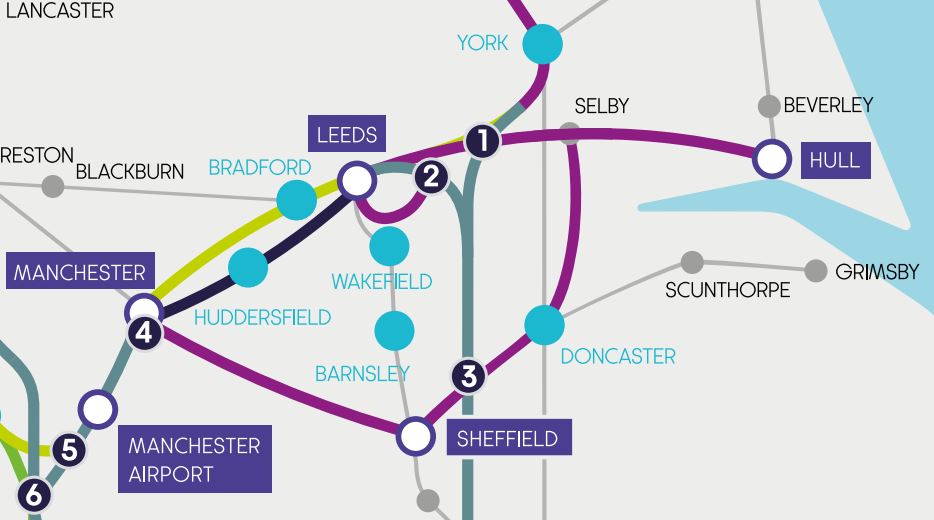
Northern Powerhouse Rail would offer a lot of improvements, which are shown in purple.
There are also these projects that will improve trains to and from Yorkshire.
- Northern Powerhouse Rail between Liverpool and Hull via Manchester Airport, Manchester Piccadilly, Huddersfield, Bradford and Leeds.
- A possible connection between Northern Powerhouse Rail and High Speed Two at High Legh.
- Midland Main Line upgrade with 125 mph bi-mode trains between London and Sheffield.
- 140 mph running on the East Coast Main Line between London and Doncaster and onward to Bradford, Hull, Leeds and York.
I’ll add a few more flesh to the points.
High Speed Two To Hull
If High Speed Two connects to Northern Powerhouse Rail at High Legh it will join everything together.
- High Speed Two trains would run between London and Hull via Birmingham, Crewe, Manchester Airport, Manchester Piccadilly, Huddersfield, Bradford and Leeds.
- Very expensive infrastructure would be shared between High Speed Two and Northern Powerhouse Rail.
- Leeds and Manchester would be just twenty minutes apart, with trains from both lines on the same tracks.
- Hull station has the space to handle the trains.
Combining the two routes should save billions.
Midland Main Line To Sheffield, Rotherham, Barnsley, Wakefield And Leeds
This is already ptoposed for the Midland Main Line.
- New stations will be built at Rotherham and Barnsley.
- Four fast trains per hour between Sheffield and Leeds can be delivered.
- 125 mph bi-mode trains to Yorkshire via the East Midlands.
But what about the following?
- Could the Erewash Valley Line be used instead of a new High Speed Two line between the East Midlands and Sheffield?
- Could the Midland Main Line be electrified and upgraded to 140 mph running like the East Coast Main Line?
Similar connectivity to that of High Speed Two can be created at a lower cost.
Cancellation of the Eastern Leg of Phase 2b would mean there would be no improved link between the West and East Midlands.
Perhaps, the Eastern leg of High Speed Two, would run only to the proposed East Midlands Hub station at Toton.
Increasing Capacity On The East Coast Main Line
In Thoughts On A 140 mph East Coast Main Line Between London And Doncaster, I did a crude calculation to see how many extra trains could be run between London and Doncaster on a digitally signalled 140 mph East Coast Main Line.
This was my conclusion.
If something similar to what I have proposed is possible, it looks like as many as an extra seven tph can be accommodated between Kings Cross and the North.
That is certainly worth having.
Extra trains could be run between Kings Cross and Bradford, Hull, Leeds, Nottingham and Sheffield.
Estimated timings would be eighty minutes to Doncaster and under two hours to Leeds.
Suggestion Three – Reduce Speed In Phase 1
There is always a tendency for project promoters to make sure their project is the biggest and the best.
There will be an optimum speed for a London and Birmingham high speed line, which balances benefits, costs, noise and disturbance. One politician’s optimum will also be very different to another’s.
Such parameters like operating speed and capacity must be chosen with care.
Conclusion
I believe, that we need the capacity of both High Speed Two and Northern Powerhouse Rail to move passengers and freight.
So we should design them together and with other improvements like the Midland Main Line and the East Coast Main Line.
Thoughts On A 140 mph East Coast Main Line Between London And Doncaster
The East Coast Main Line is being upgraded with digital signalling to allow Azumas and other high speed trains to run at 140 mph for most of the route, starting with the section between London and Doncaster.
There is also a string of projects all along the line to improve operating speed, cut out slow trains and improve junctions and crossings.
Finsbury Park And Stevenage
In The New Fifth Platform At Stevenage Station – 11th October 2019, I talked about the improvements at the Northern end of the Hertford Loop Line, which I believe could allow the fast lines between Stevenage and Finsbury Park stations to be exclusively used by digitally-signalled 140 mph trains.
Currently, these passenger services run between Stevenage and Finsbury Park in a typical hour.
- LNER – Edinburgh – 2 trains – #
- LNER – Leeds – 2 trains – #
- LNER – Newark or York – 1 train – #
- Great Northern – Cambridge and Ely expresses – 2 trains
- Thameslink – Cambridge stopping trains – 2 trains.
- Thameslink – Peterborough and Horsham – 2 trains
- Thameslink – Cambridge and Brighton – 1 train
- Hull Trains – 7 trains per day. – #
- Grand Central – 9 trains per day. – #
- East Coast Trains – 5 trains per day. – From 2021. – #
The services can be divided into four groups.
140 mph Non-Stop Expresses
Services marked with a hash (#) will probably be run by versions of Hitachi Class 80x trains or similar, which will be capable of 140 mph running under digital signalling, between Finsbury Park and Stevenage stations.
The twenty-one services run by Hull Trains, Grand Central and East Coast Trains, will probably add up to less than two trains per hour (tph).
This means that there is a need to run seven tph between Finsbury Park and Stevenage.
Kings Cross and Cambridge/Ely Expresses
Currently, these go non-stop between Kings Cross and Cambridge on the fast lines.
Surely, these should be 140 mph-capable trains, so they fit in with all the fast expresses.
After all, Oxford is served by 140 mph-capable trains, so why not Cambridge?
Cambridge Stopping Trains
The half-hourly Cambridge stopping trains have to stop in Welwyn North station,
- They will have to use the fast lines between Welwyn Garden City and Knebworth stations, as there are only two tracks.
- Currently, trains are timetabled to take nine minutes to pass through the double-track section.
- North and South of the double-track section, the services will use the slow lines, as they call at several stations
But these services still leave forty-five minutes in every hour, in which to fit the 140 mph services through the restricting double track section.
These services will be replaced by a two tph Thameslink service between Cambridge and Maidstone East stations.
Thameslink Cross-London Services
The two Thamelink Cross-London services between Peterborough and Horsham and Cambridge and Brighton, go non-stop between Finsbury Park and Stevenage stations.
So could these three services use the Hertford Loop Line?
- North of Stevenage, they use the slow lines.
- South of Finsbury Park, they use the slow lines to access the Canal Tunnels for the Thameslink platforms at St. Pancras.
- Would calls at perhaps Alexandra Palace, Enfield Chase and Hertford North be worthwhile.
The only disadvantage would be that the route would be a few minutes slower, than using the main line.
Trains Terminating At Kings Cross Station
In each hour, it appears that the following trains will terminate at Kings Cross station.
- Seven 140 mph expresses, that are going North of Hitchin.
- Two 140 mph expresses, that are going to Cambridge/Ely.
- Two stopping services, that are going to Cambridge.
The station has nine platforms in the main station and three in the suburban station at the side.
The Wikipedia entry for Kings Cross station, has a section entitled Future Remodelling, where this is said.
In January 2018, it was announced that half the station would close for 3 months from January to March 2020 for remodelling work to the station and its approach, expected to cost £237 million. This includes rationalisation of the tracks, reopening the third tunnel to the approach of the station and closure of platform 10.
The remodelling must allow an increase in numbers of trains terminating at Kings Cross, especially as the problems in the throat should be sorted.
These points should be noted about the High Speed Two platforms at Euston.
- There are eleven platforms.
- They can handle eighteen tph.
- The trains will be up to four hundred metres long.
Considering that a nine-car Class 801 train is less than 240 metres long, I wouldn’t be surprised to find that Kings Cross can handle eighteen tph.
Does that mean that Kings Cross station can accommodate another seven services?
Would The East Coast Main Line Be Able To Handle Eighteen 140 mph Expresses An Hour?
If Kings Cross station can handle eighteen tph, then the two fast lines of the East Coast Main Line must be able to handle this number of trains.
- The two fast lines of the East Coast Main Line between London and Doncaster could be considered a smaller and slower version of High Speed Two.
- High Speed Two has a capacity of eighteen tph.
- High Speed Two trains are almost twice as fast as those on the East Coast Main Line.
- Signalling on the East Coast Main Line will have to deal with slower trains, where there are less than four tracks, as over the Digswell viaduct and through Welwyn North station.
This is just the sort of challenge, for which digital signalling has been created.
Spare Capacity South Of Hitchin
Suppose in a couple of years the following has been done.
- Kings Cross station has been remodelled.
- The Hertford Loop Line has been updated for more and faster trains.
- Thameslink services can use the Hertford Loop Line.
- Thameslink is running the full 24 tph service.
- The Cambridge stopper has been changed into a Thameslink service between Cambridge and Maidstone East.
- Cambridge and Brighton has become a two tph service.
- Kings Cross and Cambridge/Ely expresses are run by 140 mph-capable trains.
This would mean the following frequencies, to the South of Hitchin.
- Seven tph – 140 mph-capable expresses between Kings Cross and the North, with some stopping at Stevenage.
- Two tph – 140 mph-capable expresses between Kings Cross and Cambridge/Ely.
- Two tph – 100 mph Thameslink services between Cambridge and Brighton routed via the Hertford Loop Line.
- Two tph – 100 mph Thameslink services between Peterborough and Horsham routed via the Hertford Loop Line.
- Two tph – 100 mph Thameslink services between Cambridge and Maidstone East routed via the East Coast Main Line. The slow line will be used except over the Digswell viaduct and through Welwyn North station.
Note.
- There will also be a two tph Thameslink service in the Peak between Welwyn Garden City and Sevenoaks. This can be discounted as it avoids the tricky bits of the East Coast Main Line.
- Thameslink services to Cambridge and Peterborough would be routed via the Hertford Loop ine, at a frequency of four tph.
- All Thameslink services would be routed via the Canal Tunnels and St. Pancras station.
- Kings Cross would only be handling 140 mph-capable trains, at a frequency of nine tph.
If the capacity of the 140 mph fast lines is the same as the similar High Speed Two, then eighteen tph should be possible.
Planned trains could be as follows.
- Seven tph – 140 mph-capable expresses between Kings Cross and the North, with some stopping at Stevenage.
- Two tph – 140 mph-capable expresses between Kings Cross and Cambridge/Ely.
- Two tph – Thameslink service between Cambridge and Maidstone East.
Does that mean another seven tph can be accommodated between Kings Cross and Hitchin?
As only nine tph would be going into Kings Cross, the station should have no difficulty handling that number of trains. It could possibly handle another nine tph.
Spare Capacity North Of Hitchin
At Hitchin, the following services wukk go to and from Cambridge.
- Two tph – 140 mph-capable expresses between Kings Cross and Cambridge/Ely.
- Two tph – Thameslink service between Cambridge and Maidstone East.
The other Thameslink services can be ignored, as they use the slow lines between Stevenage and Hitchin and the Hertford Loop Line, so they are out of the way of the 140 mph services.
Does that mean another ten tph can be accommodated between Hitchin and the North?
What Limits The Number Of Extra Trains?
My crude estimation appears to show the following.
- Kings Cross station may be able to handle another nine tph.
- Between Kings Cross and Hitchin may be able to handle another seven trains.
- North of Hitchin may be able to handle another ten trains.
It would appear that the double track section over the Digswell viaduct and through Welwyn North station, limits the capacity of the whole route.
Estimated Timings
In Changes Signalled For HS2 Route In North, I stated this.
Currently, the fastest non-stop trains between London and Doncaster take a few minutes over ninety minutes. With 140 mph trains, I think the following times are easily possible.
- London and Doncaster – 80 minutes
- London and Hull – A few minutes over two hours, running via Selby.
- London and Leeds – A few minutes less than two hours, running on the Classic route.
For comparison High Speed Two is quoting 88 minutes for London Euston and Leeds, via Birmingham and East Midlands Hub.
There could be a race to Leeds between High speed Two and Classic services on the East Coast Main Line.
Speculation On Extra Services
It would not be right, if I didn’t have a small speculation.
Cambridge Services
Consider.
- Oxford and Cambridge both have two main routes to and from London.
- Both have a fast service running at a frequency of two tph.
- Both have other quality, but slower services.
It could be argued that extra fast services are run to Cambridge, but this would use up two valuable paths over the Digswell viaduct.
Perhaps it would be better to copy Greater Anglia’s solution for London and Norwich services and order a high quality purpose-designed train for the route.
- 140 mph-capability
- Digitally-signalled
- 240 metres long
- High quality interior
There would need to be some platform lengthening between Cambridge and Kings Lynn.
Leeds Services
Leeds currently has two tph from Kings Cross and Manchester Piccadilly has three tph from Euston.
Leeds also has a daily direct service to Aberdeen.
I suspect that there could be a sorting out at Leeds, which would mean it gets a third service from London.
Conclusion
If something similar to what I have proposed is possible, it looks like as many as an extra seven tph can be accommodated between Kings Cross and the North.
 The Anonymous Widower