Flirt Akku Battery Multiple-Unit Unveiled
The title of this post is the same as that of this article in Railway Gazette International.
This is the first paragraph.
Stadler has officially unveiled the prototype Flirt Akku, a version of its Flirt family of electric multiple-units which is equipped with a battery to permit operation on non-electrified or partly-electrified routes.
So it looks like another train with batteries, that joins the following, that have been announced in recent months.
- Angel Trains’ Class 165 Hydrive, that I wrote about in Class 165 Trains To Go Hybrid.
- Bombardier Talent 3, that I wrote about in Bombardier Introduces Talent 3 Battery-Operated Train.
- Class 230 train, that I wrote about in Battery Class 230 Train Demonstration At Bo’ness And Kinneil Railway.
- Porterbrook Class 350/2 Battery/FLEX, that I wrote about in Porterbrook Makes Case For Battery/Electric Bi-Mode Conversion.
There are also several projects using MTU Hybrid Power Packs.
What new projects will emerge in the next couple of years?
ScotRail Finds A Use For The Unloved Class 153 Trains
Class 153 trains are the unloved members of British Rail’s Sprinter family. I occasionally use one on excursions to Felixstowe, but they are cramped, noisy and slow.
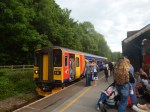
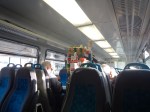
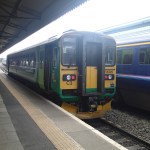
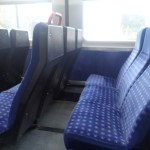
As the pictures show, some are not in bad condition and to be fair, some train operators have tried hard to provide a better level of service.
Greater Anglia still has five Class 153 trains in service and the fact that they will be replaced by three-car Class 755 trains by the end of 2020. You don’t increase capacity by that amount, unless the current one-car trains are overcrowded or you know that there is a lot of untapped demand on the route.
If on the Felixstowe Branch, a doubling of capacity would have been sufficient, then surely a refurbished two-car Class 150, 156 or 170 train, would have been a more than adequate replacement.
Currently, there are seventy of these trains in service and many of them, like those in East Anglia are being replaced with new or refurbished trains.
Greater Anglia’s five units are going to Wales, where they will join another eight on rural lines in West Wales. Nothing has ben said about how they will be used, but they could be used singly, in pairs or in multiple with Class 15x or Class 17x trains.
So they could be useful to the Welsh in providing extra capacity.
In the November 2018 Edition of Modern Railways, Alex Hynes of ScotRail talks about how a number of Class 153 trains will be used to add bicycle space to trains on some of Scotland’s scenic routes. Alex Hynes is quoted as saying.
The interior format is yet to be fixed, but is likely to include a large amount of space given over to bicycles. Bike tourism is a growing area and the aim would be to allay fears about whether or not you’d get your bike on a train by providing plenty of space. Part of the vehicle might be given over to a lounge car layout to make the most of the magnificent views on these routes.
Transport Scotland sees the scenic routes as a key part of the rural economy for the part they play in stimulating tourism.
Our inspiration is to get “158s” on the West Highland route.
So it looks like ScotRail could be running Class 158/Class 153 pairs to provide increased capacity on the West Highland Line.
Wikipedia says this about the use of the Class 153 trains on the West Highland Line.
These single car units are to be completely adapted to accommodate bikes, skis and other outdoor equipment.
They will be attached to the Class 156s either as centre cars, or as extra coaches at either end.
If ScotRail’s scheme is a success, I suspect more of the Class 153 trains could end up doing the same task, in Wales, the South West and North of England.
It should also be noted, with respect to bicycle tourism, that ScotRail’s shortened HSTs will hopefully retain their bicycle swallowing abilities in the back ends of the power cars, thus enabling bicycle tourists to do the longer Scottish journeys with ease.
My one worry about bicycle tourism in Scotland and Wales is not concerned with trains internally, but with getting there from other parts of the UK with a heavily-loaded bicycle.
With the replacement of the HSTs and InterCity 225 from the London to Edinburgh and London to Wales and the West routes, will the new Class 800 trains have enough bicycle capacity? The bicycle storage on these trains look to be a good design for a racing bicycle, but some of the heavily-loaded bicycle tourists I’ve seen in Suffolk, would find them inadequate.
This article in The Guardian is entitled New High-Speed Trains Go Slow On Provision For Cyclists.
The article is critical.
I wonder what provision has been made for bicycles on the new rolling stock for the Caledonian Sleeper?
Anniesland And Glasgow Queen Street Via Maryhill In A Class 230 Train
In Issue 864 of Rail Magazine there is an article about the Class 230 train demonstration in Scotland, that I wrote about in Battery Class 230 Train Demonstration At Bo’ness And Kinneil Railway.
This is the first paragraph.
Vivarail is targeting Scottish routes such as Glasgow Queen Street-Anniesland via Maryhill for its converted London Underground D-Stock, now known as Class 230s.
The Maryhill Line is a short line between Anniesland and Glasgow Queen Street stations.
- There is a shuttle service of two trains per hour, which appear to take about twenty minutes each way.
- There are six intermediate stations
- The line is not electrified and is run by a two-car diesel train.
- Various works have been performed on the line in recent years to make it more useful and easy to operate.
So why has this short line not been electrified?
On Rail Forums, various reasons are put forward including.
- The Maryhill Line might not have the traffic for a three-car electric train.
- It could be a rather tricky electrification.
- There are also issues with lower-powered diesel trains climbing the incline out of Queen Street station, which seem to make creating a diagram for trains on the Maryhill Line difficult.
I suspect that for air quality reasons, Transport Scotland would like to have less diesel trains in city centres.
So a self-contained independently-powered two-car train, shuttling between Queen Street and Anniesland may be a viable solution?
Would battery-powered Class 230 train be able to work the route?
- The trains would be the right size.
- They would be emission-free and quiet.
- The performance of the Class 230 train is probably enough to work the current service.
- Third-rail charging would be possible in the bay platform at Anniesland station.
- If required a charging rail could be added in Queen Street station.
- The platform at Anniesland station could be long enough to stable two trains overnight.
- Except for the charging systems, no new infrastructure would be required.
It could turn out to be another quirky, useful and reliable railway to add to the Glasgow Subway.
Is This The Most Unusual Idea For A New Railway Service in The UK?
In Issue 864 of Rail Magazine there is an article about the Class 230 train demonstration in Scotland, that I wrote about in Battery Class 230 Train Demonstration At Bo’ness And Kinneil Railway.
This is a paragraph.
HITRANS Partnership Manager Frank Roach told RAIL that he was keen to interest Transport Scotland in using battery Class 230s to run shuttle services between Wick and Thurso.
I don’t live in the Far North of Scotland and I’ve never been further North on the mainland that Inverness, so I have no right to criticise the need for a new rail shuttle service between Thurso and Wick.
This Google Map shows the Far North of Scotland.
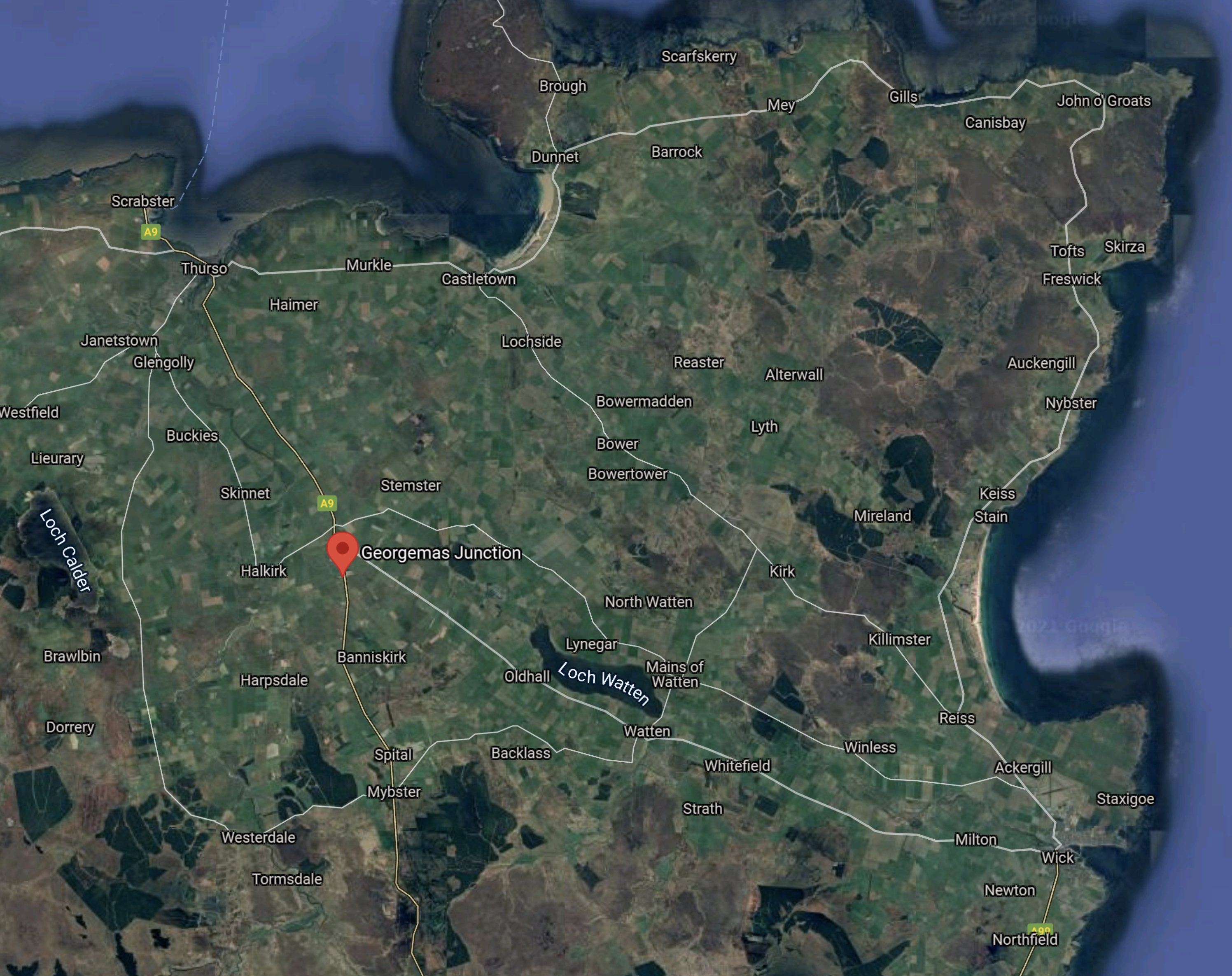
Note.
- Wick is in the South-East corner of the map.
- Thurso is in the North-West corner of the map.
- John O’Groats is in the North-East corner of the map.
- Georgemas Junction, which connects to the Far North Line to Inverness, is indicated by the red array.
This second Google Map shows Wick.
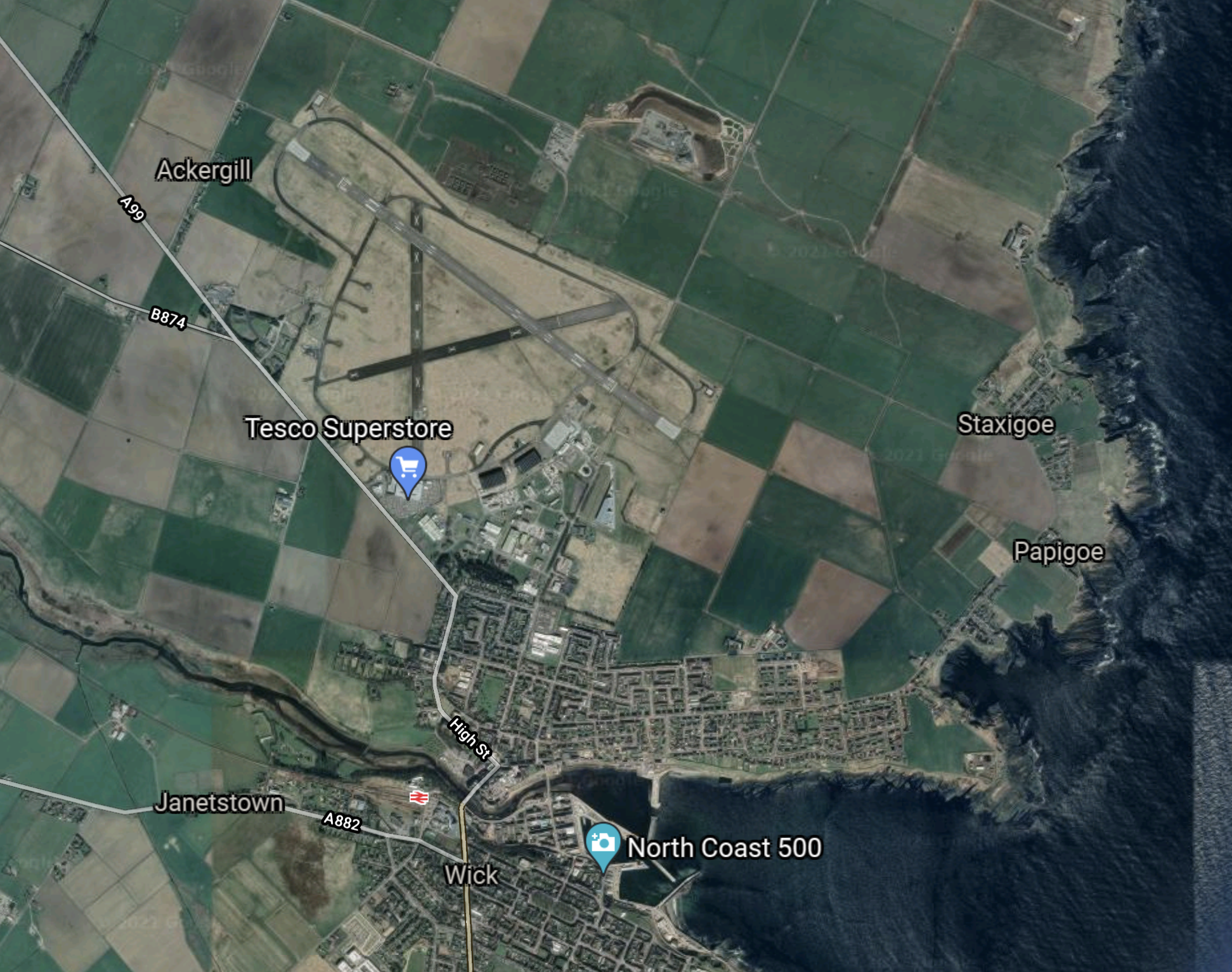
Note.
- The single-platform Wick station.
- Wick Airport, which used to have flights to Edinburgh and Aberdeen.
This third Google Map shows Thurso.
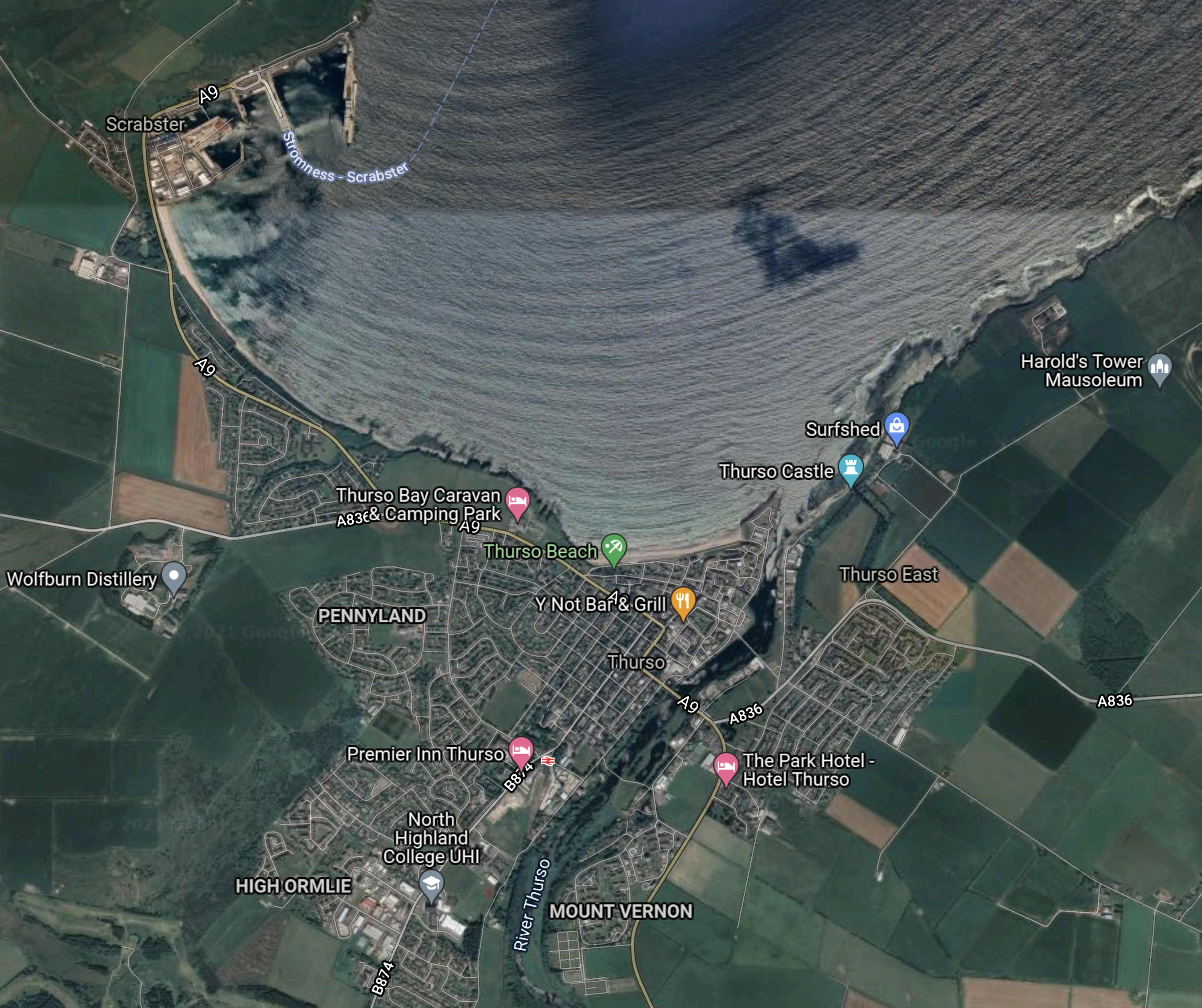
Note.
- The single-platform Thurso station.
- Scrabster with its harbour that has a ferry to the Orkneys.
Consider.
- Wick and Thurso are both towns with populations in the region of 7-8,000 people.
- I suspect that if you live in Wick and want a new widget for your boiler, that it will be in Thurso. And of course, vice-versa!
- Wick and Thurso get four trains per day to and from Inverness and the same number of trains each way between the two towns.
- So it’s not very convenient if an elderly person, who can’t drive wants to go and visit their sibling or friend in the other town for the afternoon.
The two towns would appear to be twenty-nine minutes or twenty-one miles apart by rail.
The article also states that a battery-powered Class 230 train can run at up to sixty mph with acceleration similar to that of an EMU up to forty mph.
Each round trip would probably take an hour, so a single train could provide an hourly service.
I would think, that using the fast charging system described in Charging A Battery-Powered Class 230 Train at Thurso and Wick stations, that a single train could shuttle all day between the two stations with an intermediate stop at Georgemas Junction station.
I suspect the Inverness and the shuttle services could interface seamlessly in something like the following way.
- The shuttle train would arrive in Wick and connect to the charging system.
- The Class 158 train from Inverness would arrive behind the shuttle.
- The Class 158 train would go to Thurso and back.
- The Class 158 train would leave for Inverness.
- The shuttle train would resume its shuttling between Wick and Thurso.
The Class 158 would have taken over one cycle of the shuttle.
The only works needed other than the installation of the charging system, could be to lengthen the platform to accommodate the two trains.
To try to predict the number of passengers that would use this shuttle will be very difficult.
- The train would have a high novelty value for the locals.
- The train could run seven days a week.
- The train could become a quirky tourist attraction.
- Train operators might like to see it for ideas for their problem lines.
- It might encourage a whole number of new ideas.
If say it happened at times, that the train was full, then it could probably be lengthened to by adding a trailer car.
A big beneficiary could be Vivarail.
They would have a service that was providing an hourly shuttle in a remote area, which could show off the features and benefits of the train.
- Remote servicing.
- No diesel fuel required.
- Hourly running
- Fast charging.
- Operation in cold and inclement weather.
- An unusual demonstration location.
There’s even the local Wick Airport to bring in interested parties.
This idea reminds me of a story I heard many years ago. GEC were attempting to sell an Air Traffic Control Radar to a Middle Eastern country.
- The most convenient installation of this radar in the UK was at Prestwick Airport, so the GEC salesman arranged for GEC’s corporate HS 125 business jet to take the prospective purchasers.
- It turned out to be a glorious autumn day.
- As the salesman returned with his guests to the plane, he was pulled aside by the pilot.
- The pilot told him, that there was no greater sight in the world, than the Scottish Highlands on a day like this, so would he like the Arabs to be shown the views.
- They then flew around the Highlands for thirty minutes or so before returning to London.
Was that the most unusual favour, that ever secured an order?
Charging A Battery-Powered Class 230 Train
In Issue 864 of Rail Magazine there is an article about the Class 230 train demonstration in Scotland, that I wrote about in Battery Class 230 Train Demonstration At Bo’ness And Kinneil Railway.
This was said about charging a battery-powered Class 230 train.
A prototype rapid charging facility at its Long Marston base would use short sections of third-rail to quickly recharge a Class 230’s batteries. He said that the third-rail shoegear fitted t the trains in their London Underground service could handle higher currents than simply plugging a cable into the train.
The rapid charging concept consists of a shipping container of batteries that are trickle charged from a mains supply. When a Class 230 sits over the short sections of third-rail, electricity can be quickly transferred to the train’s batteries. When the train is away, the power rails are earthed to ensure they pose no risk The concept provides for charging a Class 230 as it pauses at a terminus before making its return journey.
What surprises me, is the claim, that third-rail is a very effective way of charging the batteries.
But Vivarail’s charging method using third-rail must open up affordable charging in stations and depots with poor-quality or low-capacity electricity supply.
Further Development
The design is very much capable of further development.
- The charging system could be used with any train, which has a third-rail capability.
- It could be made to work in both terminal and through platforms.
- The operation could be totally automatic .
- The system would switch on when the train stops over top and it completes the electrical circuit to allow charging.
- When the train moves away and breaks the circuit, the system would switch off and earth the third-rail.
- The batteries in the charging system could be charged by solar- or wind-power, instead of mains power.
I believe we’ll see some very ingenious charging systems for battery/electric trains.
It’s All About Going Dutch For Eurostar!
In today’s Times, there is an article called Eurostar Sets Pace As Channel Tunnel Booms.
The article says.
Passengers on the Eurostar trains topped 3 million in the quarter, in increase of 12 per cent.
Apparently, there has been a big increase on the Amsterdam route, with more to come.
- A third daily service will start next summer.
- Direct return journeys could be possible next year.
- Five London-Amsterdam return journeys could follow.
That all looks good and I’m sure it would be better if the terrible connecting trains to North Germany, that I wrote about in From Amsterdam To Hamburg The Hard Way, were to be improved.
World’s Longest Sea Crossing: Hong Kong-Zhuhai Bridge Opens
The title of this post is the same as this article on the BBC.
It certainly looks to be an impressive bridge.
But I think it shows just how far design and construction of large bridges has moved in the last couple of decades.
In A Solution To The Northern Irish Problem!, I proposed building a fixed link between Northern Ireland and Scotland.
The Chinese bridge has a length of 55 km, whereas a link between Northern Ireland and Scotland would be about 30 km.
Conclusion
I wouldn’t be surprised that the opening of the Chinese bridge will push politicians, engineers and financial institutions to look seriously, at a fixed link across the North Channel.
My Preparations For Brexit
My Dalstonian grandmother was caught out by WW1, so she had a hundredweight each of jam and sugar in her cellar for WW2.
I shall be storing my money in Zopa, as it should ride out any storms, as it has done in the past.
GE To Partner BNSF On Battery Freight Locomotive Tests
The title of this post is the same as that of this article on Rail Engineer.
The article includes this image.
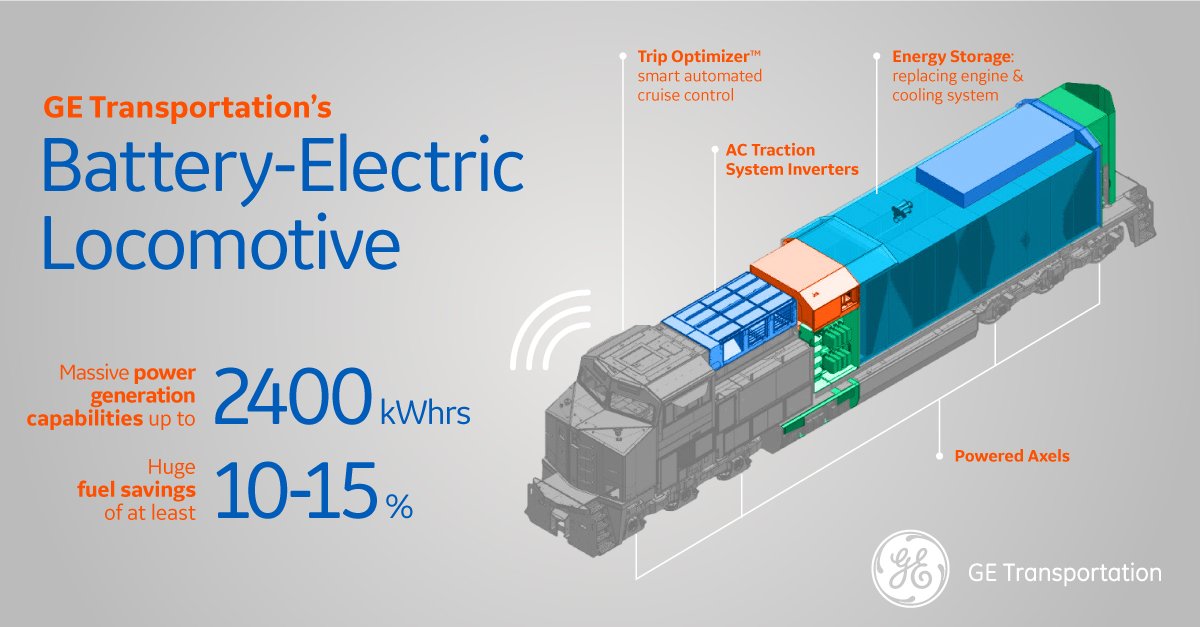
I think that there are some mixed up captions on the image.
It talks about Massive Power Generation Capabilities up to 2400 kWhrs.
kWhrs are a unit of total energy and could refer to the battery storage capability of the locomotive.
If you look at our much smaller ubiquitous UK diesel freight locomotive, the Class 66, this has a power output of 2,460 kW.
If the GE locomotive, which is experimental had a battery of 2400 kWh, then it could supply 2400 kW for an hour.
But the concept seems sound, where the battery electric locomotive would be paired with a diesel locomotive to haul a freight train. Fuel savings of ten percent are expected.
A Diesel/Electric/Battery Hybrid Locomotive For The UK
I could see a practical diesel/electric/battery locomotive being developed for the UK.
A Class 66 Replacement
Over four hundred of the these locomotives were built and they are currently used by these operators in the UK.
- Colas Rail – 5
- DB Cargo UK – 161
- Direct Rail Services – 19
- Freightliner – 127
- GB Railfreight – 88
Which adds up to a surprisingly precise four hundred locomotives.
- They have a power output of 2,460 kW – Call it 2500 kW for ease of calculation.
- They have a top speed of 75 mph, although some can only manage 65 mph.
- They weigh 68 tonnes.
- They are noisy, smelly and don’t meet the latest EU pollution regulations.
- Class 66 drivers, I’ve spoken to, are not keen on the working environment.
But they do various jobs for their operators competently and are not the most expensive of locomotives.
There are also other modern similar-sized diesel locomotives like the thirty Class 67 and thirty-seven Class 70, but these are not as unfriendly, to the environment and staff.
Many of the Class 66 locomotives pull heavy freight trains on routes that are fully or partly electrified like the East Coast Main Line, West Coast Main Line, Great Western Main Line, Midland Main Line and Great Eastern Main Line. The services are diesel-hauled because at the ends of the route, they need to use diesel power.
A specification for a locomotive to replace the long-haul Class 66 locomotives for working fully or partly-electrified routes could be something like.
- Power on electrification of upwards of 3000 kW.
- Ability to move a heavy freight train in and out freight terminals to and from electrification.
- Ability to do a small amount of shunting.
- Sufficient diesel or battery power to handle the train, away from electrification.
- Ability to switch between electric and diesel/battery power at line speed.
I’ve heard from those who work at the Port of Felixstowe, that port operators wouldn’t electrify the port, for both cost and Health and Safety reasons.
The Felixstowe Problem
The Port of Felixstowe is at the end of the twelve mile long Felixstowe Branch Line, which is not electrified.
Trains seem to be allocated up to just over an hour for the journey between the Great Eastern Main Line and the Port.
This would mean that any proposed locomotive must be capable of handling a branch line to a port or freight depot remote from the electrified network.
Similar problems exist at other ports and freight depots including Hull, Immingham, Liverpool, Southampton, Tilbury and Teesport.
The Southampton Problem
If anything, the Port of Southampton has the worst problem, in that it only has access to the third-rail electrification South of the Thames, until freight trains reach Reading, where there is 25 KVAC overhead electrification. It looks like that trains take about ninety minutes between the Port of Southampton and Reading.
Even, if a powerful dual-voltage locomotive were to be available, I doubt that the power supply to the electrification could provide enough power.
The proposed solution to the Southampton problem was the Electric Spine, which would have linked the port to Northern and Central England with a 25 KVAC overhead electrified route.
It has now been largely cancelled.
An alternative would be a locomotive, that could pull a heavy freight train between the Port of Southampton and Reading in an environmentally-friendly way.
One point to note is that a Class 92 locomotive is rated at 4000 kW on 750 VDC third-rail electrification.
Thoughts On A Battery Locomotive
Suppose an operator needed a battery locomotive to go between Southampton and Cardiff, that would be a straight replacement for a Class 66 locomotive.
The proposed battery locomotive would need to be able to supply the 2500 kW of the Class 66 locomotive for two hours to handle the route between Reading and Southampton.
So it would need a battery capacity of around 5000 kWh, which is twice the size of the American test locomotive. A battery this size would probably weigh around fifty tonnes.
I am probably being conservative here, as regenerative braking would probably reduce the amount of energy needed to move the train.
The electro-diesel Class 88 locomotive would probably weigh around eighty tonnes without the diesel engine. So would it be possible to design an electric locomotive incorporating a 5000 kWh battery, with a weight of perhaps one hundred and thirty tonnes.
- It would be about the weight of a Class 70 locomotive.
- It would probably need to be a Co-Co locomotive, to reduce the axle-loading, to that of a Class 70 locomotive.
- It might need to be longer than other comparable locomotives to have enough space for the battery.
- The battery would handle the energy generated by the regenerative braking.
- It could have the 4000 kW power of a Class 88 locomotive.
- It should probably be designed with a 100 mph top speed and the ability to haul passenger trains
- It would be able to use both 25 KVAC overhead and 750 VDC third-rail electrification.
If it is not possible now, as battery energy densities improve, it will be in a few years time.
Other countries other than the UK need a locomotive with a similar specification and I am certain at least one manufacturer in Europe will build a locomotive to this or a similar specification.
A Battery/Electric Locomotive And Felixstowe
Handling the Felixstowe Branch Line would entail the following.
- The locomotive must enter the branch with a battery containing enough energy for the sixty minute run to the Port.
- As the locomotive would probably have hauled a train from London or Haughley Junction using the existing electrification, a full enough battery probably wouldn’t be difficult.
- In the Port, there could be a charging station for the locomotive, where they would connect to a short length of 25 KVAC overhead electrification.
- On leaving the Port, the locomotive would start with a full battery, which would be enough power to reach the Great Eastern Main Line.
- Trains going South to London would run on electrification as far as they could and would arrive in London with a full battery.
- Trains going West to Peterborough, would hopefully be able to top up their battery between Ipswich and Haughley Junction, where they would enter the section without electrification to Peterborough, which takes between two and two-and-a half hours.
It should be noted that, freight trains often wait at Ely in a passing loop alongside the station, to keep out of the way of passenger trains. As Ely is electrified with 25 KVAC, this loop could be electrified, so that locomotives could sneak a top-up during the wait.
I am fairly certain, that a 4000 kW electric locomotive fitted with a 5000 kWh battery could handle all freight services to and from the Port of Felixstowe, at least as far as London and Peterborough.
A Battery/Electric Locomotive Between Peterborough And Nuneaton
How would a battery/electric locomotive handle this important route between Felixstowe and the Midlands and North?
Currently freight trains between Peterborough and Nuneaton have a timing on the section without electrification between Werrington Junction and Nuneaton of a few minutes under two hours.
This should be possible, given the battery range and power of the locomotive.
It would also mean that the battery/electric locomotive could haul a train between the West Coast Main Line and Felixstowe.
A Battery/Electric Locomotive And Southampton
Trains hauled by a battery/electric locomotive on this route, could probably take advantage of the third-rail electrification to top-up the battery as required, which would make it very likely that a 4000 kW electric locomotive fitted with a 5000 kWh battery could handle the route with ease.
A Battery/Electric Locomotive Between ReadingAnd The Midlands And The North
From Reading routes to Bristol, Cardiff and London are fairly easy, but the problems start, if trains need to go to Oxford, Birmingham or the Midlands and the North.
This is where the Electric Spine would have been useful
I have traced some trains from Southampton to the Midlands and the North.
- Southampton to Birch Coppice – There is a three hour section without electrification from Didcot to Birch Coppice.
- Southampton to Birmingham Freightliner Terminal – There is a two-and-a half hour section without electrification from Didcot to the terminal.
- Southampton to Castle Bromwich Jagiuar – There is a two-and-a-half-hour section without electrification from Didcot to Castle Bromwich Jaguar.
- Southampton to Liverpool – There is a two hour section without electrification from Didcot to Coventry.
All of these services are routed through Didcot, Oxford and Banbury. Extending the planned electrification between Didcot and Oxford to Banbury would probably reduce the amount of time on battery power by around thirty minutes.
TransPennine Passenger Services
TransPennine Express will soon be running services between Liverpool Lime Street and Newcastle using rakes of Mark 5 coaches, that will be hauled by a Class 68 diesel locomotive, which has a power of 2800 kW and a maximum speed of 100 mph.
On the TransPennine route, the current service takes seventy-one minutes between the electrified stations of Manchester Victoria and York.
The proposed battery/electric locomotive could handle this with ease to provide a flagship electrically-hauled service across the Pennines without any difficult electrification.
The locomotive would be charged on the current electrification between Liverpool and Manchester Victoria and along the East Coast Main Line.
Chiltern Main Line Passenger Services
Chiltern Main Line passenger services between London Marylebone and Birmingham, are another route, where a rake of coaches are hauled by a Class 68 locomotive.
The problem is that there is no electrification on this route and although a charging station could be provided at Marylebone and Moor Street, it is questionable, if enough power could be taken on during turnround.
But I said earlier, that to ease the passage of freight from Soiuthampton to the Midlands, that Didcot to Banbury should be electrified.
So could this electrification be continued all the way to Birmingham?
This would mean that the battery/electric locomotives would only need to be able to handle the hour-long journey to and from Marylebone, which would have 25 KVAC electrication over the platforms to top up the battery.
The solution is not as easy as TransPennine, but Chiltern Main Line to Birmingham would become an electric service.
The Stadler Class 88 Battery/Electric Locomotive
As Stadler seem to have a monopoly of new locomotives in the UK at present, I will look at their proven Class 88 locomotive.
- It has a power of 4,000 kW on electricity.
- It has a power of 700 kW using an onboard diesel.
- It has a top speed of 100 mph.
- The Caterpillar C27 diesel engine weighs around seven tonnes.
- The locomotive has regenerative braking.
The locomotive is certainly no weakling on electricity, although performance, when pulling a heavy freight train on diesel might be desired to be better. This article on Rail Magazine is entitled Inside Direct Rail Services. This is an extract about the pulling ability of the Class 88 locomotive.
Sample performances over the northern section of the West Coast Main Line (Preston –Carlisle–Mossend) demonstrate that Class 88 can operate the same train weight to the same schedule as Class 68 using 15% less energy. Alternatively, it offers a 45-minute time advantage over a ‘68’ and 80 minutes for Class 66. This gives a competitive edge because a significant proportion of movement costs are absorbed by fuel.
When hauling the maximum permitted load of 1,536 tonnes on the 1 in 75 banks on this route, Class 88 has a balancing speed of 34mph in electric mode or 5mph in diesel mode. Taken together, all these factors helped Class 88 win the Rail Freight Group ‘Rail Freight Project of the Year’ Award in the Innovation and Technical Development category this year.
The locomotive doesn’t appear to be a wimp.
But could the Class 88 locomotive be fitted with a battery?
Current energy storage technology seems to be able to store about 100Wh/kg. So on this basis a seven tonne battery would store about 700 kWh.
I think in a few years it would be possible to build a version of a Class 88 locomotive with no diesel engine and a battery with a 1000 kWh capacity.
But even so, the 1000 kWh battery may be too small.
Would it be able to handle these important routes with a full-length freight train?
- Haughley Junction to Peterborough
- Peterborough to Doncaster via Lincoln
- Peterborough to Nuneaton.
- Southampton to Reading
- Immingham to Doncaster
However, Stadler and Direct Rail Services will be able to extensively model the performance of a battery/electric Class 88 locomotive pulling various weights of freight train on different routes in the UK.
The modelling would show how much battery capacity would be needed for various routes.
Suppose though the battery capacity needed was say 2400 kWh, as I suspect has been specified by the Americans for their locomotive. This would be too heavy and large for the small Class 88 locomotive
But just as the Americans are using their battery/electric locomotive in combination with a diesel locomotive, why not run the battery-electric Class 88 locomotive as a pair with a standard electro-diesel Class 88 locomotive?
TransPennine Passenger Services With A Class 88 Battery/Electric Locomotive
Currently electrification is planned or very likely on the Liverpool to Newcastle route between.
- Manchester Victoria and Stalybridge
- Leeds and Colton Junction on the East Coast Main Line.
This would mean that only around forty minutes of the entire Liverpool to Newcastle route would be without electrification.
Would a battery/electric locomotive with a 1000 kWh battery be able to bridge the gap in the wires between Stalybridge and Leeds?
The battery would be fully charged, at both Stalybridge and Leeds, as the locomotive would have been running under the wires for some time.
It is a very interesting and in my view, a totally feasible possibility.
Conclusion
My modelling experience says that there is at least one solution in there.
- A new build battery/electric locomotive could be designed.
- A battery/electric version of the Class 88 locomotive must be possible and it could work alone or with the current electro-diesel Class 88 locomotive.
I am sure that Jo Johnson’s dream of removing diesel from UK railways will take a big step forward in the next decade, when a battery/electric locomotive with sufficient performance becomes available.
I also believe that short lengths of electrification like Oxford to Banbury, may usefully increase the range of an electric/battery locomotive.
Northumberland Park Station – 22nd October 2018
Northumberland Park station is coming on.
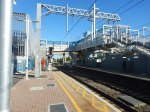
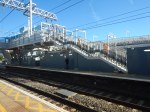
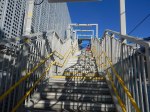
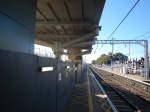
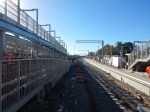
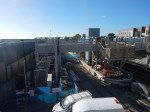
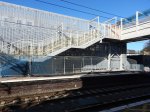
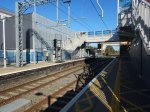
It’s going to be a complicated steel construction.
Some people will like it! Other’s won’t!
I do suspect though, that there will be some superb photographs of this station, when the light is similar to how it was today.
 The Anonymous Widower