Man Dies After Being Hit By Train As Services Out Of Lime Street Cancelled
The title of this post, is the same as that of this article on the Liverpool Echo.
These paragraphs describe the incident.
Cheshire Police were called to Hartford station in Northwich at around 4pm on Monday, May 23, following reports of a man being hit by a train. Once officers and paramedics arrived at the scene the station was closed to all trains and British Transport Police were called.
British Transport Police have confirmed when emergency services arrived at the scene the man was already dead. Officers are currently working to identify the man and inform their next of kin.
At 15:47, I left Liverpool Lime Street station for London and this was my journey.
- We stopped at Runcorn and waited there about 15 minutes.
- We then reversed back to Liverpool and got off the train.
- We were then told to get back on the train.
- I actually sat opposite my original seat in coach U, but there was a bit of chaos as Avanti West Coast were combining passengers for the 15:47 and 16:47.
- We left Liverpool at 17:23.
- The route was through Manchester and then South from Manchester Piccadilly.
- We finally arrived in London at 20:18
The journey had taken five hours and thirty-four minutes.
In addition the 17:47, 18:47 and the 19:47 were cancelled, with some passengers taken by bus to Crewe.
First ‘As New’ Refurbished Avanti West Coast Pendolino Takes To The Tracks
The title of this post, is the same as that of this article on Rail Advent.
The article gives these improvements to the Class 390 trains.
- 25,000 new Standard Class seats
- Conversion of one First Class carriage to provide 2,000 extra standard class seats.
- New onboard shop
- New lighting and carpets
- Passenger information screens (PIS)
- Additional luggage space in standard class
- Power points at every seat
- Refurbished toilets
- New First and Standard Premium seats
The only refurbished train in service is 390125, which operated the following services on the 25th April 2022.
- 0505 Manchester to Euston – Stops at Stockport, Crewe and Stafford
- 0807 Euston to Liverpool – Stops at Milton Keynes Central, Stafford and Runcorn
- 1047 Liverpool to Euston – Stops at Runcorn, Crewe and Stafford
- 1857 Euston to Manchester – Stops at Rugby, Stoke-on-Trent, Macclesfield and Stockport
It will be joined by a second refurbished train early next month.
Avanti West Coast Looks To Recover
The title of this post is the same as an article in the March 2022 Edition of Modern Railways.
These are some points from the article.
Passengers Numbers Are Recovering
This is a paragraph.
Mr. Wittingham says the recovery has been strongest on the Anglo-Scottish and Liverpool corridors, while Manchester have begun to bounce back. Slowest to recover is the London to West Midlands market; ‘there’s several operators here and we were the main carrier of business passengers, and that sector has been recovering more slowly than leisure’ says Mr. Whittingham.
Phil Whittingham is MD of Avanti West Coast.
Train Numbers Are Recovering
Avanti are building up train numbers from Euston after the pandemic.
Frequencies are as follows in trains per hour (tph)
- Pre-Covid – 9
- During the pandemic – 4
- From December 2021 – 7
- Omicron – 4
- From February 2022 – 6
- From May 2022 – 6+
Avanti have reacted to demand.
Three Classes Of Travel
This is a paragraph.
Avanti’s business has historically been driven by leisure travel – before Covid this accounted for broadly 60 % of passengers, with most of the rest travelling for business plus a smaller number of commuters. ‘The demand is there, and we think by next year we’ll be on the way to full recovery’ says Mr. Whittingham. ‘Leisure has been strong, especially at weekends, but the missing bit is the corporate market.’
Avanti have been running a marketing campaign and it appears to have been successful.
This paragraph describes Avanti’s new Standard Premium class.
Last year, Avanti West Coast launched a new class of travel – Standard Premium. This was first introduced in May on an upgrade-only basis before going fully live in September with the option to book online in advance. The new class sits between Standard and First, giving passengers larger seats and greater space but without some of the extras that come with First Class Travel such as complimentary refreshments and lounge access.
These are Mr. Whittingham’s comments on the three classes.
The current split of passengers is 84% Standard, 12 % First and 4 % Standard Premium, but given the latter has been in place for less than a year there is clearly scope for growth. ‘Our research shows people have been upgrading to Standard Premium rather than downgrading from First’.
I have yet to try Standard Premium, but I will next time I use Avanti.
Refreshments
Avanti have decided to serve different refreshments in Standard Premium and First classes.
- In Standard Premium, they are now offering At Seat Orders.
- In First, they have updated the menu.
Both seem to have been well-received.
I like this statement from Mr. Whittingham.
We’ve tried to make it a more personalised service with a less rigid structure, so we give customers what they want, when they want it, rather than when we want to give it to them.
A Consistent Offer
This is a paragraph.
Mr. Whittingham says Avanti has not yet confirmed whether t will offer three classes of travel on the new Hitachi trains it has ordered, but says the aim is to provide a more consistent offer. Assisting this will be changes in the ongoing Pendolino refurbishment, where 11-car sets are having Coach G converted from First to Standard accommodation, meaning all Pendolinos, whether nine-car or 11-car, will have three coaches for First and Standard Premium passengers.
My instinct says that the four trains will be something like.
- Class 390 train – Pendolino – Nine-car – three First/Standard Premium cars – six Standard cars
- Class 390 train – Pendolino – Eleven-car – three First/Standard Premium cars – eight Standard cars
- Class 805 train – Hitachi – Five-car – one First/Standard Premium car – four Standard cars
- Class 807 train – Hitachi – Seven-car – two First/Standard Premium car – five Standard cars
Note.
- The Class 805 and Class 807 Hitachi trains are very much plug-and-play and can be lengthened or shortened as required.
- A regular passenger between London and Liverpool, who regularly upgrades from Standard to Standard Premium in a Class 390 train could be a bit miffed if he couldn’t, because the service was being run by a Class 807 train.
- Hitachi would probably be very happy to add extra cars to the Class 805 and Class 807 trains.
As the Class 390 Pendolino trains are being refurbished, I do wonder if they will be receiving some fittings from the Hitachi trains to make sure the trains are consistent to both on-board staff and passengers.
Pendolino Investment
The Pendolino refurbishment is comprehensive.
- It is one of the largest such programmes ever undertaken in the UK.
- Leasing company; Angel Trains are funding the work.
- Alstom are doing the work at Widnes.
- There appears to be a smooth plan to refurbish all trains.
- Coach G will be converted from First to Standard accommodation in eleven-car trains.
- Mr. Whittingham says that all trains will come out looking like a new train.
The eleven-car trains are being converted first, as the conversion of Coach G gives a capacity benefit of around thirty seats.
The awful seats in Standard Class will be replaced with Lumo-style seats and laptop-friendly fold-down tables.

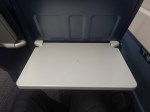
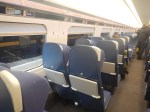
These seats will be a big improvement!
New Trains Coming
This paragraph introduces the new trains.
The second major fleet investment from Avanti is the £350 million for new trains from Hitachi, financed by Rock Rail. These comprise 13×5-car Class 805 bi-modes, ordered for destinations off the electrified route including North Wales and Shrewsbury and 10×7-car Class 807 electrics. Deployment plans for the latter are still being worked through but are likely to include services to Birmingham and Liverpool, and potentially to Blackpool.
What is not said in this paragraph, is that all trains have a redesigned front end, which I suspect is more aerodynamic.
The all-electric Class 807 trains have no diesel engines or batteries, so have they been put on a diet, to improve the acceleration?
In Will Avanti West Coast’s New Trains Be Able To Achieve London Euston and Liverpool Lime Street In Two Hours?, I came to these conclusions.
- A two hour service between London Euston and Liverpool Lime Street will be possible with Avanti West Coast’s new Class 807 trains.
- The current Class 390 trains could go a bit faster and if they cut out a couple of stops could probably break two hours.
I also calculated that a two tph service between London and Liverpool in two hours would need nine trains.
Timetable Changes
This paragraph introduces the article’s section on timetable changes.
The project in turn feeds into a major timetable change planned by Avanti and other West Coast main line operators. This will be the first significant change to West Coast main line schedules since 2008; ‘the world has changed, and we need to think about how we best serve our markets’ says Mr Whittingham.
This paragraph sums up the major changes.
Of note are the planned changes to the pattern of London to West Midlands services; the pre-Covid 20-minute interval would be amended to offer faster journey times and greater connectivity. Also featuring in the new timetable aspirations would be additional Trent Valley calls in some Liverpool and Manchester services; Mr Whittingham cites as one benefit of this the potential for improved journey times between the North West and the East Midlands via a change of train at Nuneaton. The Hitachi trains, with their better acceleration, will be particularly useful on services with more frequent stops.
The next three sections will look at some timetable changes in a bit more detail.
London And West Midlands Services
Replacement of twenty diesel Class 221 trains with thirteen bi-mode Class 805 trains will mean a major reorganisation of services to the West Midlands.
- Some current diesel services will now be electric.
- All services between Birmingham New Street and Euston will now be electric.
- No services will run on diesel under live electrification.
- Avanti have promised to serve Walsall.
- There will be extra services to Shrewsbury and other places.
The electric services will also speed up some services to the West Midlands.
North West And East Midlands Services
I will look at train times for services between the North West (Liverpool Lime Street and Manchester Piccadilly) and the East Midlands (Leicester, Nottingham and Lincoln), where passengers change at Nuneaton.
These are the current fastest possible times according to the National Rail journey planner.
- Liverpool Lime Street and Leicester -2:24 with changes at Crewe and Nuneaton,
- Manchester Piccadilly and Leicester – 2:11 with change at Sheffield
- Liverpool Lime Street and Nottingham – 2:42 with no changes
- Manchester Piccadilly and Nottingham – 1:51 with no changes
- Liverpool Lime Street and Lincoln- 3:42 with changes at Sheffield and Doncaster
- Manchester Piccadilly and Lincoln – 2:38 with change at Sheffield
Note that times are in hours:minutes.
These are all current times for the various legs if the route is via Nuneaton.
- Avanti West Coast – Liverpool Lime Street and Nuneaton – 1:18
- Avanti West Coast – Manchester Piccadilly and Nuneaton – 1:13
- CrossCountry – Nuneaton and Leicester – 0:27
- East Midlands Railway – Leicester and Nottingham – 0:48 – Time from Leicester and Lincoln service.
- East Midlands Railway – Leicester and Nottingham – 0:20 – Time from St. Pancras and Nottingham service.
- East Midlands Railway – Leicester and Lincoln -1:42 – Time from Leicester and Lincoln service.
- East Midlands Railway – Nottingham and Lincoln -0:52 – Time from Leicester and Lincoln service.
Note that the two Avanti West Coast times have been estimated by taking the time from Real Time Trains and adding three minutes for the acceleration or deceleration at Nuneaton.
These would be possible times between the North West and the East Midlands via Nuneaton.
- Liverpool Lime Street and Leicester – 1:47
- Manchester Piccadilly and Leicester – 1:42
- Liverpool Lime Street and Nottingham – 2:37
- Manchester Piccadilly and Nottingham – 2:32
- Liverpool Lime Street and Lincoln- 3:31
- Manchester Piccadilly and Lincoln – 3:26
Note that I am assuming changes at Nuneaton and Leicester are cross-platform or same platform changes that take two minutes.
But there is another level of improvement possible.
Suppose that East Midlands Railway’s Lincoln and Leicester service were to be extended to Nuneaton and run by a train with this specification.
- 125 mph operating speed.
- Battery-electric power.
- 100 mph operating speed on battery power.
- Range of 56 miles on battery
- Ability to use the Midland Main Line electrification, when it is erected.
Charging stations would be needed at Nuneaton and Lincoln.
These would be possible times between the North West and the East Midlands via Nuneaton with the one change at Nuneaton.
- Liverpool Lime Street and Leicester – 1:45
- Manchester Piccadilly and Leicester – 1:40
- Liverpool Lime Street and Nottingham – 2:05
- Manchester Piccadilly and Nottingham – 2:00
- Liverpool Lime Street and Lincoln- 2:57
- Manchester Piccadilly and Lincoln – 2:52
Note.
I am assuming that the timings for the Nuneaton and Leicester and the Nottingham and Lincoln legs are as for the current trains.
I am assuming the change at Nuneaton is a cross-platform or same platform change that takes two minutes.
Trains run on battery where tracks are not electrified.
I can build a table of current times, times via Nuneaton and savings.
- Liverpool Lime Street and Leicester -2:24 – 1:45 – 0:39
- Manchester Piccadilly and Leicester – 2:11 – 1:40 – 0.31
- Liverpool Lime Street and Nottingham – 2:42 – 2:05 – 0:37
- Manchester Piccadilly and Nottingham – 1:51 – 2:00 – 0.09 slower
- Liverpool Lime Street and Lincoln- 3:42 – 2:57 – 0.45
- Manchester Piccadilly and Lincoln – 2:38 – 2:52 – 0:14 slower
It does appear that by using the 125 mph speed of the West Coast Main Line has a positive effect on some times from the North West to the East Midlands.
But times could be reduced further.
- Installing full digital signalling, that would enable 140 mph running between Crewe and Nuneaton, could save ten minutes.
- Improving the Nuneaton and Leicester and the Nottingham and Lincoln legs could allow faster running.
The more I look at changing at Nuneaton, I feel it is a good idea.
- It improves the connections between East Midlands Parkway and Loughborough and the North West.
- It improves the connections between Cambridge, Peterborough and Stansted Airport and the North West, if the change at Nuneaton is to CrossCountry’s Stansted Airport and Birmingham New Street service.
- It improves the connections between Coventry and Leamington Spa and the North West.
Avanti have come up with a cunning plan, worthy of Baldrick at his best.
A Second Hourly Service Between London And Liverpool
A paragraph talks about the second hourly service between London and Liverpool.
Avanti still has ambitions to introduce a second hourly service between Euston and Liverpool, but when this will come in will depend on demand recovery.
Consider.
- If would be desirable if some or all trains running on the route could achieve a timing of two hours between London and Liverpool.
- It is felt that the second service should stop at Liverpool South Parkway station, where the platforms are too short for eleven-car Class 390 trains.
- Avanti have stated they would like more stops in the Trent Valley, especially at Nuneaton, where they would connect to services to the East Midlands.
- Nuneaton is almost exactly halfway between London and Liverpool.
- Running two tph with Class 807 trains would need nine trains and Avanti have only ordered ten in total.
I believe that a practical timetable like this could work.
- Class 390 train – one tph – Non-stop or perhaps a single stop in the Midlands – Under two hours
- Class 807 train – one tph – Stopping at Nuneaton, Stafford, Crewe, Runcorn and Liverpool South Parkway – Current time or better
An hourly service between London and Liverpool in under two hours would surely be a passenger magnet.
Northern Eden Project Worth £125 million Gets Green Light
The title of this post, is the same as that of this article on The Times.
These are the first two paragraphs.
Plans to transform the seafront of a deprived town into a £125 million northern outpost of the Eden Project have been given the green light.
Councillors in Lancashire approved plans for the site on Morecambe seafront which it is hoped will attract around a million visitors and create 400 jobs.
I think the Eden Project Morecambe could be a real Northern success.
Here’s my reasoning.
Location, Location, Location
These are the three most important factors with any house, building or property.
Morecambe has a superb location for visitors coming by car or train, as is close to both the M6 Motoway and the West Coast Main Line.
I wrote about getting to the Eden Project in Getting To The Proposed Morecambe Eden Project By Train.
I suspect visitors coming by road, would drive to a suitable Park-and-Ride and then take a train.
Lancaster Will Be A High Speed Two Station
Lancaster will be served by the following High Speed Two services.
- London Euston – Two hours and three minutes – One tph
- London Old Oak Common – One hour and fifty-six minutes – One tph
- Birmingham Curzon Street – One hour and six minutes – One tph
- Crewe – Fifty-nine minutes – One tph
- Warrington Bank Quay – Forty-two minutes – One tph
- Wigan North Western – Thirty-one minutes – Two tph
- Preston – Seventeen minutes – Two tph
- Oxenholme – Twelve minutes – One tp2h
- Penrith – Thirty-five minutes – One tp2h
- Carlisle – Fifty-two minutes – One tph
- Lockerbie – One hour and eleven minutes – One tph
- Edinburgh – Two hours and twelve minutes – One tp2h
- Motherwell – One hour and fifty-six minutes – One tp2h
- Glasgow – Two hours and twelve minutes – One tp2h
Note.
- tph is trains per hour.
- tp2h is trains per two hours.
- A shuttle train between Lancaster and the Eden Project Morecambe will probably add ten minutes.
High Speed Two will make the Eden Project Morecambe one of the best connected entertainment venues in the UK.
Avanti West Coast And TransPennine Express North Of Warrington Bank Quay After High Speed Two Opens
When High Speed Two opens, it is likely that North of Warrington Bank Quay station, the operating speed of this section of the West Coast Main Line will be faster than the current 125 mph, as the track will have been straightened and digital signalling will have been installed.
It will probably be at least 140 mph.
These trains will be running express passenger services on the route and will be able to match the speed and timings of High Speed Two’s Classic-Compatible trains to the North of Warrington Bank Quay station.
- Avanti West Coast’s Class 390 trains
- TransPennine Express’s Class 397 trains
- TransPennine Express’s Class 802 trains
There is likely to be savings of a few minutes on these services.
- Avanti West Coast – London Euston and Glasgow Central
- TransPennine Express – Manchester Airport, Manchester Piccadilly and Glasgow Central
- TransPennine Express – Liverpool Lime Street and Glasgow Central
Connections from the North-West of England and Southern Scotland will be fast and frequent.
Eden Project Morecambe Will Be A Day Trip For Greater North West England
An area defined by Carlisle, Blackburn, Manchester, Crewe, Chester, Liverpool and Blackpool will be close enough to have a day trip to the venue.
Eden Project Morecambe Is Unlikely To Be A Poor Attraction
The Eden Project Morecambe must be worth attending, but with twenty years experience of running a similar attraction in Cornwall, it is unlikely to be a failure.
Eden Project Morecambe Will Be Easier To Travel To Than The Original Eden Project For Many
I have never even been past the Eden Project in Cornwall, as it is not the easiest place to get to without a car.
I intend to go, but it will probably need two nights in a hotel to do it justice.
But Eden Project Morecambe could well be much shorter trip from London.
Currently, Avanti West Coast’s fastest time between London Euston and Lancaster are two hours and forty minutes, which would mean an under three hours trip both ways to and from Eden Project Morecambe. The Cornish site is probably nearly five hours by public transport.
Conclusion
All these factors should contribute to the success of the attraction.
Are First Group Moving Towards Zero-Carbon?
My post, which was entitled Suppliers Sought For New Bi-Mode Locomotives For TransPennine Express And Great Western Railway, prompted me to ask the question in the title of this post.
This factsheet for First Bus says that all their buses will be zero-carbon by 2035.
This factsheet for First Rail says this about Decarbonising Rail Travel.
FirstGroup’s ambition is to be the partner of choice for low or zero emission transport. We recently became the first UK rail and bus operator to formally commit to setting an ambitious science-based target for reaching net zero emissions by 2050 or earlier.
First Rail leads the sector in decarbonisation, including the introduction of bi-mode diesel and electric powered trains which allow us to make best use of electrified networks. We have signed up to the Government’s challenge to take all diesel-only trains out of service by 2040.
GWR has recently taken delivery of the UK’s first tri-mode train which can use overhead wires, third rail or diesel power. Sustainability is at the heart of the NRCs and both SWR and TPE will develop a decarbonisation policy and roadmap towards net zero emissions in accordance with this goal. New all-electric and bi-mode trains will be introduced by Avanti to replace diesel only trains in the current fleet.
Both these factsheets appear to have been written in 2021.
The zero-carbon status of each of First Group’s rail companies is as follows.
Avanti West Coast
The mainstay of Avanti West Coast are fifty-six Class 390 electric trains.
Twenty Class 221 diesel trains are being replaced by ten new Class 807 electric trains and thirteen new Class 805 bi-mode trains.
Great Western Railway
The mainstay of Great Western Railway are a mixture of ninety-three Class 800 and Class 802 bi-mode trains.
They also have thirty-three Class 387 electric trains working London commuter routes.
There are a large assortment of ninety-four diesel trains of various classes working rural routes and local services in Bristol, Exeter, Oxford and Plymouth. There are a lot of these trains in the UK and I suspect that a nationwide solution will be developed.
There are thirty-five Class 43 diesel locomotives, that power the shortened InterCity 125 trains in the South-West. I wrote about converting these to hydrogen in Will We See Class 43 Power Cars Converted To Hydrogen?
Four Class 57 diesel locomotives that haul the Night Riviera are covered by the request for suppliers, that prompted me to write this post.
South Western Railway
The mainstay of South Western Railway are a mixture of around three hundred electric trains.
There are also ten Class 158 diesel trains and thirty Class 159 diesel trains. There are a lot of these trains in the UK and I suspect that a nationwide solution will be developed.
TransPennine Express
The mainstay of TransPennine Express are nineteen Class 802 bi-mode trains and twelve Class 397 electric trains.
There are also fifty-one Class 185 diesel trains.
Fourteen Class 68 diesel locomotives that haul coaches are covered by the request for suppliers, that prompted me to write this post.
Hull Trains
Hull Trains have a fleet of five Class 802 bi-mode trains.
Lumo
Lumo have a fleet of five Class 803 electric trains.
The service is also sold on the basis of its low-carbon footprint.
Conclusion
First Group would appear top have a fair way to go towards full decarbonisation.
- They have around a hundred-and-thirty Hitachi bi-mode trains. Research is ongoing to replace some diesel engines with batteries.
- They have a lot of diesel trains and locomotives, that are still in front-line service.
- They have the tricky problem of the Class 43 locomotives, which I suspect will result in a nationwide solution.
But at least they have started by requesting proposals to replace the other diesel locomotives.
More Train Companies Are Advertising Now
At the end of October, I posted Hull Trains Are Mounting A Big Advertising Campaign.
Today LNER are also advertising in The Times and these follow other companies like Avanti West Coast, East Midlands Railway, Grand Central and Great Western Railway.
It looks like the Hull Trains campaign must have been successful.
Reopening The Oswestry – Gobowen Line
On October 27th this Beeching Reversal Project was given £50,000 to build a case for reopening.
These are my thoughts.
Gobowen Station
Gobowen station appears to be a fine station.
- It is Grade II Listed.
- It has two platforms.
- It is on the Shrewsbury-Chester Line.
- Transport for Wales run trains to Birmingham New Street, Cardiff Central, Chester, Holyhead and Shrewsbury.
- Avanti West Coast will start running services to and from London Euston via Wrexham in December 2022.
Wikipedia says this about the future of the station.
Gobowen station may become the northern terminus of the proposed Cambrian Heritage Railways line to Llynclys, Pant and Blodwel via Oswestry. Shropshire Council was to acquire the coal yard at Gobowen for railway-related uses, including car parking for the station. If the plans are fully realised, the station would have three platforms, one of which would be for the Heritage Railway.
It does look as if, Shropshire Council have got the money for a full study.
This Google Map shows Gobowen station.

Note.
- The two tracks of the Chester-Shrewsbury Line each have a platform.
- Step-free access is by the level crossing, which is at the North end of the station.
- It looks like it would be space to convert the Northbound platform into an island platform, where the Western platform face would be for the heritage trains.
This second Google Map shows the tracks at the South end of Gobowen station.
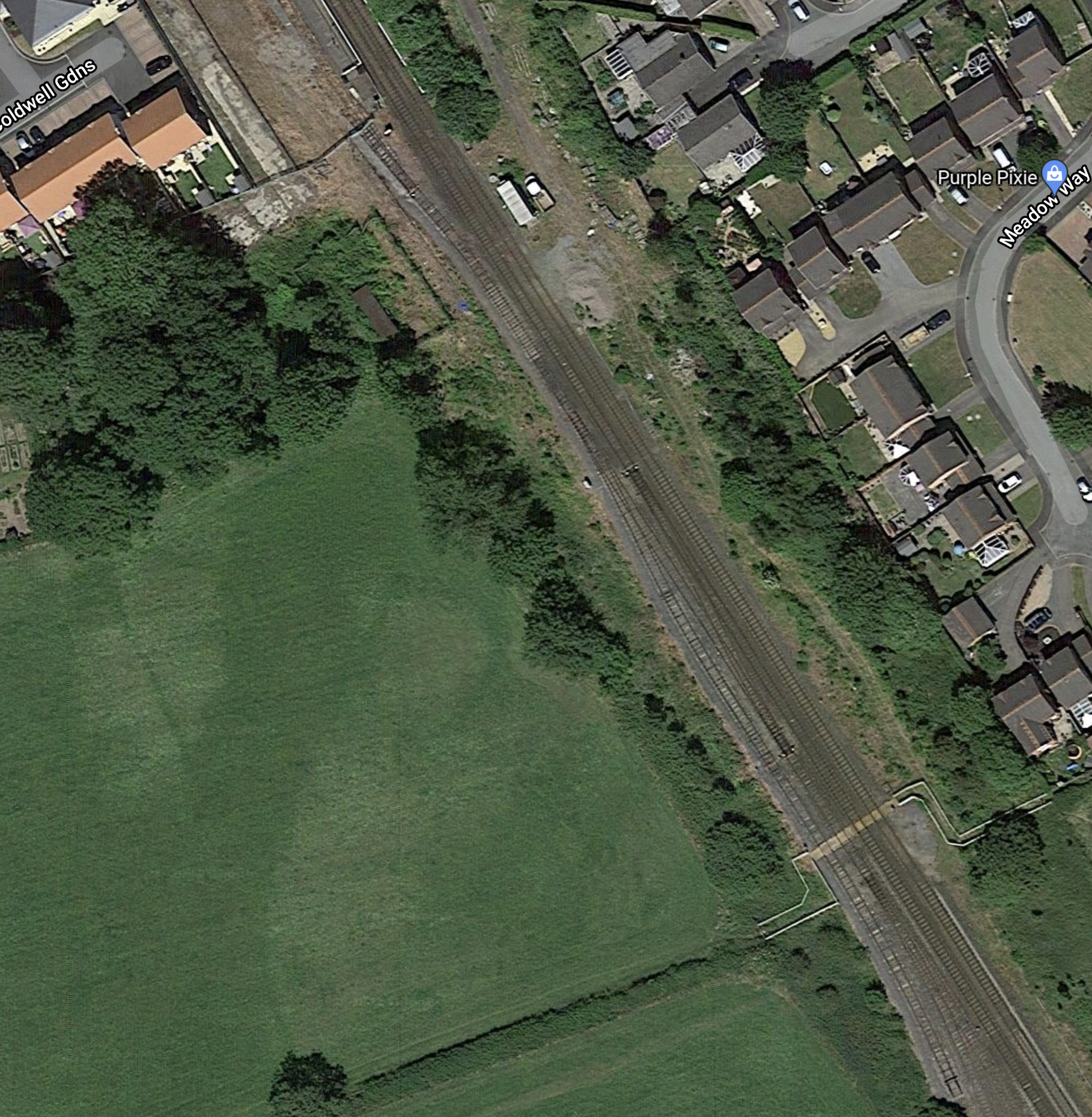
Note.
There is a set of points to allow trains to access a third platform at Gobowen station.
The single-track line to Oswestry branches off to the West at the bottom of the map.
It would appear that a bay platform at Gobowen station can be created to handle trains to Oswestry.
Oswestry Station
Oswestry station appears to be another fine station.
- It is also Grade II Listed.
- It has just a single platform.
- It appears to be owned by the local authority.
This Google Map shows the station.

Note.
- The station is the large building with the chimneys in the South-East corner of the map.
- The single platform is behind it.
- The platform is long enough to take a 1200 metre long train.
This station would make an ideal terminus.
The Track Between Oswestry And Gobowen
The track is single-track with a couple of foot crossings, so I don’t think it will need much to bring it up to a modern standard.
A Shuttle Service Between Oswestry And Gobowen
I suspect a two-car shuttle train between the two stations would suffice for most of the day.
Transport for Wales have some Class 230 trains and these would be ideal. They could even be battery-electric trains if a battery charging system were to be installed at one station.
Could Avanti West Coast Run A Service To London?
It looks like Avanti West Coast’s Class 805 trains could run along the line between Gobowen and Oswestry.
So could Avanti’s planned service to Gobowen terminate at Oswestry instead?
It would all depend on the passenger forecasts and actual numbers
Could Avanti West Coast Run A Battery-Electric Service To London?
Consider.
- Oswestry is a town of 17,500 people, so probably has a reasonable electricity supply, especially if it were to be backed up by a battery.
- The amount of renewable electricity produced over the border in Wales is only going to grow.
- There is plenty of space at Oswestry to put in a charging system to replace the batteries.
Distances are as follows.
- Crewe and Chester – 21.1 miles
- Chester and Gobowen – 24.6 miles
- Gobowen and Oswestry – 3.3 miles
This is a total distance of 49 miles.
Avanti West Coast have ordered thirteen bi-mode Class 805 trains, which will replace the diesel Class 221 trains currently working between London Euston and Chester. Holyhead and Shrewsbury.
- They will run at 125 mph between Euston and Crewe using electric power.
- If full in-cab digital signalling were to be installed on the electrified portion of the route, they may be able to run at 140 mph in places under the wires.
- They will use diesel power on the North Wales Coast Line to reach places like Chester, Holyhead and Wrexham.
- According to an article in Modern Railways, the Class 805 trains could be fitted with batteries.
I wouldn’t be surprised that when they are delivered, they are a version of the Hitachi’s Intercity Tri-Mode Battery Train, the specification of which is shown in this Hitachi infographic.

Note.
- I suspect that the batteries will be used to handle regenerative braking on lines without electrification, which will save diesel fuel and carbon emissions.
- The trains accelerate faster, than those they replace.
- The claimed fuel and carbon saving is twenty percent.
- It is intended that these trains will be introduced next year.
But Hitachi have not given any predictions of the range of these trains on battery power alone.
However, they do claim a battery range of 56 miles for the Hitachi Regional Battery Train, which is based on similar technology.
I believe it would be possible to run a zero-carbon London Euston and Oswestry service.
- The trains would be Class 805 trains fitted with batteries.
- Trains could stop at Milton Keynes Central, Lichfield Trent Valley, Stafford, Crewe, Chester, Wrexham General and Gobowen.
- Trains would use electrification between London Euston and Crewe.
- Trains would recharge their batteries South of Crewe and at Oswestry.
I doubt that a battery-electric zero-carbon train serving Cheshire, Shropshire and North-East Wales would have a negative effect on the area.
Just as Hull and Lincoln seem to be moving towards a frequency of one train per two hours from London, I wonder if this service could ever attain the same frequency.
Onward From Oswestry
Cambrian Heritage Railways are planning to run services past Oswestry on their heritage railway.
Will this be a good idea?
Where Now For First Group?
First Group are a shareholder in Avanti West Coast.
They also own Lumo, who last week launched their open-access service between London and Edinburgh. Their marketing is all about being green and sustainable.
I just wonder if a battery-electric service to Gobowen is successful, they will apply this model all over the group.
Hull Trains service between London and Hull is an obvious possibility for a battery-electric zero-carbon service.
Conclusion
It looks to me, that reopening of the Oswestry – Gobowen Line opens up other possibilities.
Could We See Between London And Much Of The North By Train In Under Two Hours?
I shall write about each route in order starting from Euston and working East.
Avanti West Coast And Euston
These are services from Euston, that I feel could be under two hours.
London Euston And Liverpool Lime Street
On Thursday, I went to Liverpool by train.
- My train took two hours and thirteen minutes between London Euston and Liverpool Lime Street stations.
- There were stops at Stafford, Crewe and Runcorn.
- The Class 390 train was travelling at 125 mph for a lot of the way.
- The distance between the two terminals is 193.6 miles.
- The start to stop average including the stops was 87.3 mph.
So could London Euston and Liverpool Lime Street be achieved in the magic two hours?
A few thoughts.
Average Speed
To do the journey in this time would need an average speed of 96.8 mph.
Accelerating And Stopping
Ideally, the train will run as fast as it can only changing speed for the station stops.
- The train will accelerate from stop to cruising speed at Euston, Stafford, Crewe and Runcorn or four times.
- The train will decelerate from cruising speed to stop at Stafford, Crewe, Runcorn and Liverpool Lime Street or four times.
Effectively, the train goes through four complete station stops, although one will be split between the two ends of the journey.
These figures are from Wikipedia and the Internet
- The acceleration of the Class 390 train is 1.0 mph/sec which means that it takes 125 seconds to get to 125 mph.
- The deceleration of a Class 390 train is 2.0 mph/sec, which means that it takes 63 seconds to stop from 125 mph.
- The acceleration of a Class 801 train is 1.6 mph/sec which means that it takes 78 seconds to get to 125 mph.
- The deceleration of a Class 801 train is 2.2 mph/sec, which means that it takes 57 seconds to stop from 125 mph.
These figures would appear to show, that a Class 801 train can decelerate and accelerate at a stop in nearly a minute faster than a Class 390 train.
So how can we increase the acceleration and deceleration? The two obvious ways are more power and less weight.
Form the Internet, I estimate that the average car in a Class 390 train is around 52 tonnes, as opposed to 41 tonnes for the Hitachi trains.
So does this weight difference explain some of the difference in acceleration and deceleration times?
Consider.
- The Class 390 trains have all the extra weight of the tilt mechanism. More weight means slower acceleration.
- Avanti West Coast’s new Class 807 trains have no diesel engines or batteries. Have the trains been put on a diet?
- They also have a reprofiled nose. Is it more aerodynamic?
So if these trains can save time on the four accelerate/decelerate cycles compared to the Class 390 trains, they must be getting nearer to the magic two hours.
If two minutes a stop can be saved that would save eight minutes on the journey between London Euston and Liverpool Lime Street.
140 Mph Running
The time to do a mile at various speeds are as follows.
- 100 mph – 36 seconds
- 125 mph – 29 seconds
- 140 mph – 26 seconds
So running at 140 mph, as opposed to the current 125 mph would save three seconds for every mile.
To save five minutes would mean the train would have to run for a hundred miles at 140 mph instead of 125 mph.
As Stafford is 133.5 miles from London, it could be that full digital signalling should be installed on the West Coast Main Line all the way to Stafford or even Crewe, which is 158 miles from London.
This schematic map of the West Coast Main Line was clipped from Wikipedia.

Note.
- Trains between London Euston and Liverpool Lime Street take the Trent Valley Line through Nuneaton and Lichfield Trent Valley and stop at Stafford, Crewe and Runcorn.
- Trains between London Euston and Manchester take a variety of routes and all go via Stockport.
- One train per hour (tph) between London Euston and Glasgow Central takes the Trent Valley Line and goes non-stop between London Euston and Warrington Central.
- Norton Bridge Junction just to the North of Stafford has recently been remodelled.
I believe there is potential to enable up to at least a hundred miles of 140 mph running to the South of Crewe. Especially as most of the track South of Crewe is quadruple track.
This should enable the shaving of five or more minutes off the time of any train capable of 140 mph running that uses the Trent Valley Line through Nuneaton, Lichfield Trent Valley and Stafford.
Norton Bridge Junction
Norton Bridge junction, which is five miles North used to be a bottleneck, but it has now been remodelled.
I wrote about it in The New Norton Bridge Junction In Action.
The new junction has probably been designed so that it can save a few seconds for trains going between Stafford and Crewe, whether or not they stop at either or both stations.
Non-Stop Between London Euston and Runcorn
If you look at the times of a London Euston and Glasgow Central train via the Trent Valley Line , it travels the 174.7 miles between London Euston and Weaver Junction non-stop in one hour and forty minutes. This is an average speed of 104.8 mph.
By comparison, my train on Thursday took one hour and forty-seven minutes with the two stops at Stafford and Crewe.
So there is at least six minutes to be saved by going non-stop.
Two Trains Per Hour Between London Euston And Liverpool Lime Street
Wikipedia says this about an additional service.
Subject to approval by the Office of Rail and Road, an additional hourly service will be introduced between London Euston and Liverpool Lime Street with a stop at Liverpool South Parkway from December 2022.
I have a few thoughts and questions on extra services between London Euston and Liverpool Lime Street,
- In my view the second service is much needed.
- I also think, that a later train back to London is needed.
- Does the Wikipedia statement mean that only one train will stop at Liverpool South Parkway?
- Does Runcorn need two tph to and from London?
- Would the platforms at Liverpool South Parkway be lengthened to accept eleven-car Class 390 trains?
I feel that if a train stopped at both Liverpool South Parkway and Runcorn, this would make a two-hour journey more difficult to achieve.
London Euston And Liverpool Lime Street In Two Hours
The new Class 807 trains will be delivered by 2022. Because of the pandemic, I’ll assume that of the ten trains on order, some, but not all, will be available by the December 2022 timetable change.
The time savings needed for a two-hour journey will come from four improvements.
- The increased performance of the Class 807 trains.
- Full digital signalling South of Crewe.
- The track improvements already completed like Norton Bridge Junction.
- Cutting out stop on the second service.
There may also be time savings to be obtained at the intermediate stops, by better working practices.
I doubt that the full digital signalling will have been installed, but all trains will be capable of 125 mph running.
Avanti West Coast probably have a good idea of the time they could achieve without digital signalling and I feel that they could be about five minutes over two hours with the Class 807 trains.
As the eleven-car Class 390 trains are too long for Liverpool South Parkway station, could we see the following service?
- 1 tph – Class 390 train – London Euston And Liverpool Lime Street via Runcorn, Crewe and Stafford.
- 1 tph – Class 807 train – London Euston And Liverpool Lime Street via Liverpool South Parkway.
Note.
- The Class 390 train would run the existing timetable in two hours and thirteen minutes.
- The Class 807 train would be a two-hour express service if possible.
- Going from three stops to one could save the express at least seven minutes, as I showed earlier by looking at train timings South of Weaver Junction.
- There would be time savings of at least two minutes on the express service due to the better performance of the Class 807 train.
To save the final four minutes, there would need to be at least eighty miles of 140 mph running, as each mile saves three seconds.
I am fairly certain, that London Euston and Liverpool Lime Street can be regularly achieved in two hours.
London Euston And Warrington Bank Quay
The hourly London Euston and Glasgow Central expresses seem to take one hour and forty-five minutes for the non-stop trip of 182.1 miles, which is an average speed of 104 mph.
As this service is non-stop, I believe that this service would get the maximum benefit from digital signalling and this service will only get faster, as more and more of the route allowed 140 mph-running.
I wouldn’t be surprised to see almost ten minutes lopped off this service by signalling and other improvements.
I am fairly certain, that London Euston and Warrington Bank Quay can be regularly achieved in well under two hours, by a Class 390 train.
London Euston And Wigan North Western
The hourly London Euston and Glasgow Central expresses seem to take one hour and fifty-six minutes for the single-stop trip of 193.9 miles, which is an average speed of 100.3 mph.
As this service just a single stop at Warrington Bank Quay, I believe that this service would get the maximum benefit from digital signalling and this service will only get faster, as more and more of the route allowed 140 mph-running.
As with Warrington Bank Quay, I wouldn’t be surprised to see almost ten minutes lopped off this service by signalling and other improvements.
I am fairly certain, that London Euston and Wigan North Western can be regularly achieved in comfortably under two hours, by a Class 390 train.
London Euston And Preston
The hourly London Euston and Glasgow Central expresses seem to take two hours and eleven minutes for the two -stop trip of 209 miles, which is an average speed of 95.7 mph.
As this service just stops at Warrington Bank Quay and Wigan North Western, I believe that this service would get the maximum benefit from digital signalling and this service will only get faster, as more and more of the route allowed 140 mph-running.
As with Warrington Bank Quay and Wigan North Western, I wouldn’t be surprised to see almost ten minutes lopped off this service by signalling and other improvements.
I am fairly certain, that London Euston and Preston can be regularly achieved in just under two hours, by a Class 390 train.
London Euston And Blackpool North
Avanti West Coast have indicated that their new Class 807 trains will run between London Euston and Blackpool North.
Consider.
- I am fairly certain that a Class 390 train will be able to run between London Euston and Preston in under two hours, once digital signalling is installed South of Crewe.
- Currently, Class 390 trains take twenty minutes between Preston and Blackpool North stations.
- The Class 807 trains have better acceleration and deceleration and should be able to execute faster stops than the Class 390 trains.
I wonder if Avanti West Coast, Hitachi, Network Rail and Rock Rail have thought up a cunning plan to run Class 807 trains between London Euston And Blackpool North, in under two hours.
Trains would go via the Trent Valley.
Trains might only stop at perhaps Milton Keynes Central, Warrington Bank Quay, Wigan North Western and Preston.
Trains would run at up to 140 mph using digital signalling, in as many places as possible.
Is the performance of the Class 807 trains sufficient to achieve London Euston and Blackpool North in under two hours via the Trent Valley?
London Euston And Manchester Piccadilly via Wilmslow
Consider.
- Most trains between London Euston and Manchester Piccadilly via Wilmslow seem to take around six or seven minutes over two hours.
- I believe that if the 158 miles between London Euston and Crewe were to be digitally signalled, then this could save up to eight minutes by allowing trains to run at 140 mph rather than the current 125 mph.
This could be enough to bring the London Euston and Manchester Piccadilly via Wilmslow below two hours.
I am not surprised at this, as the trains were built for 140 mph and because there is no digital signalling, they are limited to 125 mph, which slows the trains by six or seven minutes.
London Euston And Manchester Piccadilly via Stoke-on-Trent
Everything I said about trains between London Euston and Manchester Piccadilly via Wilmslow probably apply, except that the services via Stoke-on-Trent are a few minutes slower.
But I do feel, that this could be enough to bring the London Euston and Manchester Piccadilly via Stoke-on-Trent below two hours.
East Midlands Railway And St. Pancras
These is only one service from St. Pancras, that is not comfortably under two hours.
London St. Pancras And Sheffield
A typical service between London St. Pancras And Sheffield takes a few minutes over two hours..
- There are two tph
- There are stops at Leicester, Loughborough, East Midlands Parkway, Long Eaton, Derby or Chesterfield depending on the service.
- The Class 222 trains travel at 125 mph for most of the way.
- The distance between the two terminals is 164.7 miles.
- The start to stop average including the stops is 81 mph.
I would suspect that East Midlands Railway’s new bi-mode Class 810 trains will be able to easily break the two-hour barrier.
- They have four diesel engines so they can cruise at 125 mph on diesel.
- They have electric power for South of Market Harborough.
- Some diesel engines will be changed for batteries.
As electrification increases on the Midland Main Line, these trains will use less and less diesel.
I also suspect that digital signalling will start to creep into the route, starting from Bedford, where it is used on Thameslink.
LNER And King’s Cross
These are services from King’s Cross, that are or I feel will be under two hours.
London King’s Cross And Doncaster
A typical service between London King’s Cross And Doncaster takes around one hour and thirty-seven minutes.
- There are four tph
- There are stops at Stevenage, Peterborough, Grantham, Newark and Retford depending on the service.
- The Class 80x trains travel at 125 mph for most of the way.
- The distance between the two stations is 156 miles.
- The start to stop average including the stops is 96.5 mph.
Digital signaling is being installed on this section of the East Coast Main Line and I suspect that this will reduce timings between London King’s Cross And Doncaster.
A simple estimate based on the maximum operating speed, indicates a time of one hour and twenty-six minutes should be possible.
But as a Control Engineer, I believe that digital signalling will lead to faster running over the Digswell Viaduct and through the flat crossing at Newark.
The timing will certainly be under one hour and thirty minutes between London King’s Cross And Doncaster.
London King’s Cross And York
A typical service between London King’s Cross And York takes around one hour and forty-eight minutes.
- There are two tph
- There are stops at Stevenage, Peterborough, Grantham, Newark, Retford and Doncaster depending on the service.
- The Class 80x trains travel at 125 mph for most of the way.
- The distance between the two stations is 188.5 miles.
- A non-stop service takes one hour and fifty-two minutes, which is a start to stop average including the stops is 101 mph.
If my crude estimate of time savings because of digital signalling South of Doncaster can be applied, this would imply a reduction in journey time of at least eleven minutes.
London King’s Cross And Leeds
A typical service between London King’s Cross And Leeds takes around two hours and thirteen minutes.
- There are three tph
- There are stops at Stevenage, Peterborough, Grantham, Newark, Doncaster and Wakefield Westgate depending on the service.
- The Class 80x trains travel at 125 mph for most of the way.
- The distance between the two terminals is 185.9 miles.
- This is a start to stop average including the stops is 83.9 mph.
If my crude estimate of time savings because of digital signalling South of Doncaster can be applied, this would imply a reduction in journey time of at least eleven minutes, which would put a time between London King’s Cross and Leeds of around two hours.
London King’s Cross And Bradford Forster Square
LNER run some services on this route
- The services take thirty minutes between Leeds and Bradford Forster Square stations.
- The services do not reverse at Leeds.
Given that two hours should be possible between London Kings Cross and Leeds, it would appear that two hours and thirty minutes should be possible between Leeds and Bradford Forster Square stations.
London King’s Cross And Bradford Interchange
Grand Central run some services on this route
- The services call at Doncaster, Wakefield Kirkgate, Mirfield, Brighouse and Low Moor
- The services take two hours and fifty-four minutes between London King’s Cross and Bradford Interchange stations.
- The services take one hour and seventeen minutes between Doncaster and Bradford Interchange stations.
The services are run by Class 180 diesel trains, which will have to be replaced to decarbonise the route.
I suspect that Hitachi will have a train for this route, that could use diesel or batteries to the North of Doncaster.
- My estimate for the best time between King’s Cross and Doncaster is one hour and twenty-six minutes.
- The current time between Doncaster and Bradford Interchange stations is one hour and seventeen minutes.
This gives a best time of perhaps two hours and forty-three minutes between Doncaster and Bradford Interchange stations.
The route to Bradford via Leeds is perhaps fifteen minutes faster, but it serves different stations.
London King’s Cross And Harrogate
LNER has been running to Harrogate for some time.
- There is one train per two hours (tp2h)
- The service calls at Stevenage, Grantham, Doncaster, Wakefield Westgate and Leeds.
- some services reverse at Leeds.
- The service takes two hours and fifty-five minutes between London King’s Cross and Harrogate stations.
- The service takes thirty minutes between Leeds and Harrogate stations.
Given that two hours should be possible between London Kings Cross and Leeds, it would appear that two hours and thirty minutes could be possible between London King’s Cross and Harrogate stations.
London King’s Cross And Huddersfield
In LNER Expands To Huddersfield, I described LNER’s new service to Huddersfield.
- There will be one train per day (tpd)
- The service will call at Peterborough, Newark North Gate, Doncaster, Wakefield Westgate, Leeds and Dewsbury.
- The service will split and join with the London King’s Cross and Skipton service at Leeds.
- The service will reverse at Leeds.
- The service take two hours and fifty-five minutes between London King’s Cross and Huddersfield stations.
- The service will take twenty-five minutes between Leeds and Huddersfield stations.
- Improvements are planned, which include electrification, between Dewsbury and Huddersfield
Given that two hours should be possible between London Kings Cross and Leeds, it would appear that two hours and thirty minutes could be possible between London King’s Cross and Huddersfield stations.
London King’s Cross And Hull
The fastest Hull Trains service between London King’s Cross And Hull takes around two hours and thirty minutes.
- There are seven tpd
- There are stops at Stevenage, Grantham, Retford, Doncaster, Selby, Howden and Brough depending on the service.
- The Class 80x trains travel at 125 mph for most of the way.
- The distance between the two terminals is 205.3 miles.
- This is a start to stop average including the stops is 82.1 mph.
If my crude estimate of time savings because of digital signalling South of Doncaster can be applied, this would imply a reduction in journey time of at least eleven minutes, which would put a time between London King’s Cross and Hull of around two hours and twenty minutes.
London King’s Cross And Middlesbrough
LNER have announced a Middlesbrough service, which I wrote about in LNER’s Middlesbrough And London Service. Starts On December 13th.
- There will be one tpd in both directions
- Intermediate stops will be at Thornaby and York.
- The Middlesbrough and London service will leave Middlesbrough from Platform 1 at 07:08 and arrive in King’s Cross at 10:22.
- The London and Middlesbrough service will leave King’s Cross at 15:25 and arrive in Middlesbrough in Platform 2 at 18:18.
There appear to be some curiosities in the timetabling of these trains, which I may explore later.
I would assume that is because LNER want a competitive time of three hours between King’s Cross and Middlesbrough.
These are Southbound times between Eaglescliffe and King’s Cross in the morning.
- Grand Central – Two hours and thirty-nine minutes
- LNER – Three hours and two minutes
Is this because the Class 180 train is a genuine 125 mph train on diesel and the Class 800 train is not?
If my crude estimate of time savings because of digital signalling South of Doncaster can be applied, this would imply a reduction in journey time of at least eleven minutes, which would put a time between London King’s Cross and Middlesbrough of around three hours.
Conclusion
Of the cities and towns in the North, that I have discussed only Bradford, Harrogate, Huddersfield, Hull and Middlesbrough, are ones that will be difficult to be provided with a two-hour journey time to and from London. But all should be possible in close to or under two hours and thirty minutes.
Alstom’s Widnes Factory
I took these pictures as the train to Liverpool passed Alstom’s Widnes factory, soon after crossing the River Mersey.
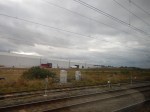
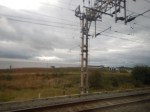
There has still been few announcements lately on the progress of the Class 321 trains being converted to hydrogen-powered Class 600 trains.
Perhaps, they are too busy updating Avanti West Coast’s Class 390 trains.
Arriving In Liverpool Lime Street Station – 14th October 2021
I took these pictures as I arrived into Liverpool Lime Street station today.
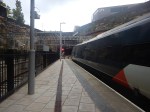

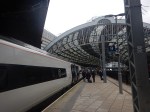
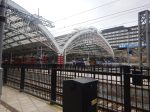
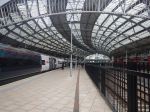
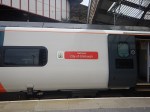
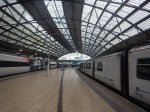
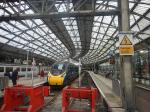
Note.
- The train arrived in Platform 9.
- I arrived in the last coach and took the pictures walking to the front of the train.
- The platform is just long enough for an eleven-car Class 390 train, which is 265.3 metres long. These are the longest trains in Avanti West Coast’s fleet.
- The train was numbered 390130 and named City of Edinburgh.
Network Rail’s platform designers seem to have pulled out all the tricks to fit an eleven-car Class 390 train in Platform 9 at Liverpool Lime Street station.
The new seven-car Class 807 trains will only be 182 metres long, so would appear to fit Platform 9 easily.
In Could Avanti West Coast Run A Lumo-Style Service Between London And Liverpool?, I looked at the various options to run a two trains per hour (tph) service between London Euston and Liverpool Lime Street.
I came to these conclusions.
- The shorter Class 807 trains would be needed to run services that stop at Liverpool South Parkway station, which has shorter platforms.
- If both hourly services were run by new Class 807 trains, there would be a 54 % increase in hourly capacity.
- If one service was run by a Class 390 train and the Liverpool South Parkway service was run by a Class 807 train, this would give a 77 % increase in hourly capacity.
- The Liverpool South Parkway service or both services would be very close to two hours.
Whatever is done, it would be a flagship service between London and Liverpool.

