Velocys’ Fischer–Tropsch Tech Picked For E-fuels Project In Japan
The title of this post is the same as that of this article on Renewables Now.
Fischer–Tropsch technology has a chequered history, as it has been used by regimes like Nazi Germany and South Africa under apartheid to create the fuel they need.
But now Oxford University spin-out company; Velocys have improved the process, so that it can turn rubbish destined for landfill into sustainable aviation fuel.
This is the last paragraph from the article.
The developer says its FT reactor can enable the production of SAF from household waste and woody biomass. The end product is a high-quality version of existing fuels, requiring no changes to engines or infrastructure, Velocys says on its website.
This is surely a viable alternative to keep airlines flying, until hydrogen-powered planes are developed.
The Hybrid-Electric Plane That Will Switch From Passenger To Cargo In 15 Minutes
The title of this post, is the same as that of this article on Simple Flying.
If you are sceptical about the concept of zero-carbon flying, then read this article, which takes the form of an interview with the Managing Director of Faradair.
DHL Express Shapes Future For Sustainable Aviation With First Order Of All-Electric Cargo Planes From Eviation
The title of this post, is the same as that of this press release from DHL Express.
They have ordered twelve cargo versions of the Eviation Alice.
- Planes will be flown by a single pilot.
- Each plane will be able to carry 1,200 Kg of cargo.
- Maximum range is up to 815 km.
- Each flight hour will require thirty minutes of charging.
When you consider Stansted and Charles de Gaulle Airports are 260 kilometres apart, these planes would be able to handle a lot of routes.
What Does 2.5 MW Look Like?
This press release on the Rolls-Royce web site is entitled Rolls-Royce Generator Delivered For Most Powerful Hybrid-Electric Propulsion System In Aerospace.
This Rolls-Royce picture shows the generator installed on a test bed.
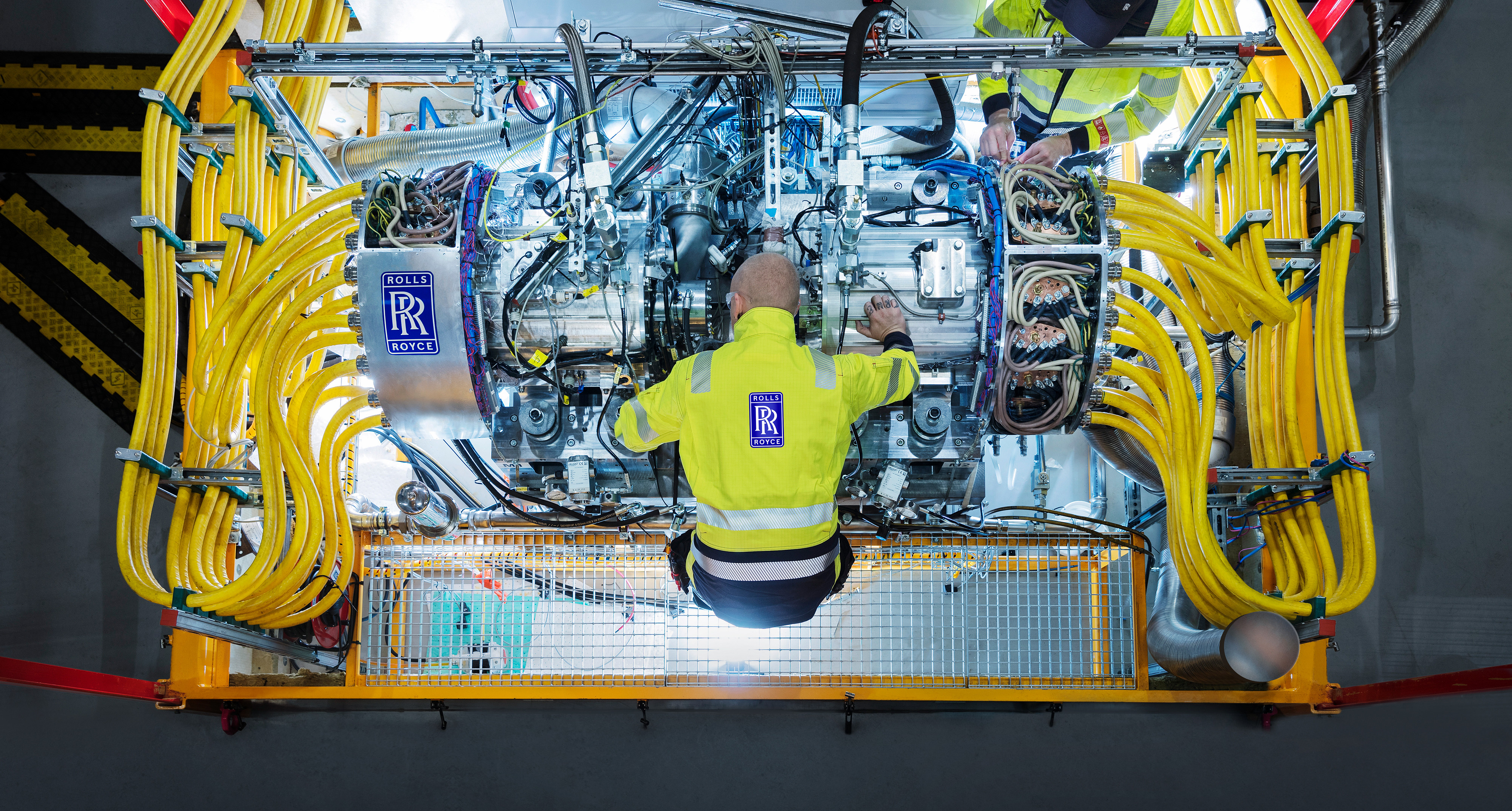
These are the first three paragraphs of the press release.
The generator that will be at the heart of the most powerful hybrid-electric aero power and propulsion system in aerospace has arrived for installation at our specialist testbed.
The generator, and related power electronics, was delivered to the newly-renovated Testbed 108 in Bristol, UK, from the Rolls-Royce facility in Trondheim, Norway, having completed an extensive development test programme. It will form part of the 2.5 megawatt (MW) Power Generation System 1 (PGS1) demonstrator programme, for future regional aircraft. In addition to hybrid-electric propulsion, the generator could also be used as part of a “more-electric” system for larger aircraft or within future ground or marine applications.
PGS1 forms an important element of our sustainability strategy, which includes developing innovative electrical power and propulsion systems.
I must say that as an engineer this 2.5 MW generator really excites me, as I see so many possibilities.
- I am fairly certain, that the generator can be powered by hydrogen, to create a true zero-carbon power generator.
- Rolls-Royce mention aerospace, ground and marine applications.
- The physical size must be an advantage, when it comes to some applications.
- The gas-turbine technology at the heart of the generator has been well-proven in the Lockheed Super Hercules.
But I do note in the press release that there is no mention of hydrogen or rail for which the generator must be eminently suitable.
- Rolls-Royce subsidiary; mtu are one of the leading companies, who power large rail locomotives.
- 2.5 MW is ideal for many rail locomotives.
- The small size must help integration into a rail locomotive.
- My calculations show that the generator and a hydrogen tank could be fitted into a typical modern rail locomotive.
- As electric transmissions can be used, the locomotive could also use electrification.
A lot of these arguments would also apply to the very large trucks used in the mining industries and ships of various sizes.
Conclusion
This Rolls-Royce 2.5 MW Generator will have lots of applications.
Is This One Of The Most Significant Pages On The Internet?
The page is Rolls-Royce’s List Of Press Releases.
On July 8th, 2021, the company issued this press release, which is entitled Rolls-Royce Welcomes All-Electric Ground Support From Jaguar Land Rover For All-Electric Flight Speed World Record Attempt.
This is the opening paragraph.
Rolls-Royce’s all-electric aircraft the ‘Spirit of Innovation’ will take to the skies for the first time in the coming weeks as we work towards a world-record attempt with a target speed of 300+ MPH (480+ KMH). This exciting project will be carbon neutral and to support this ground-breaking innovation Jaguar Land Rover is loaning all-electric zero emission Jaguar I-PACE cars as towing and support vehicles.
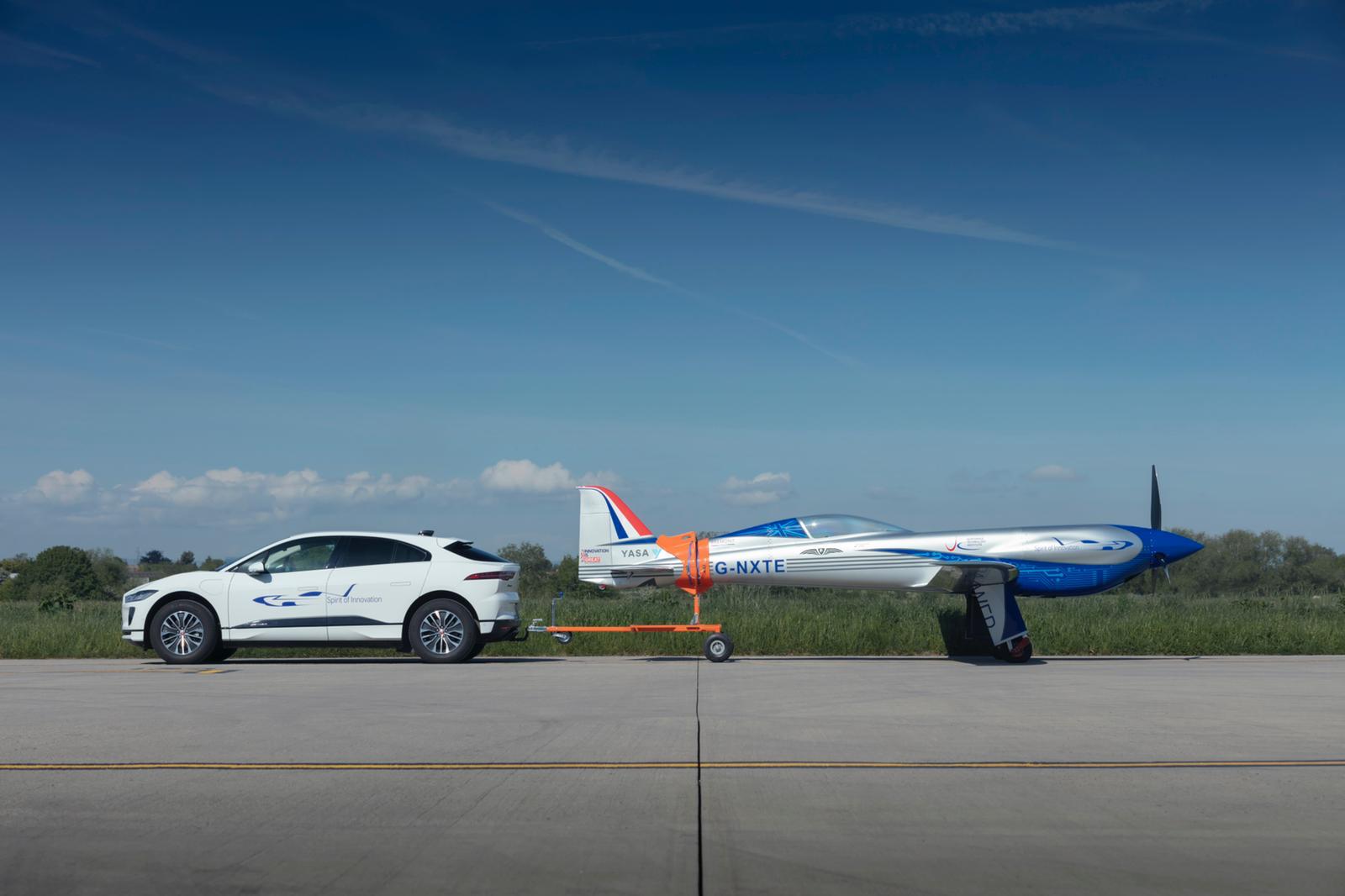
This picture shows Spirit of Innovation and one the Jaguar I-PACE cars together in this Rolls-Royce picture

They make an interesting pair.
There is a full analysis of the plane in this article on CleanTechnica, which is entitled Rolls-Royce Attempting 100% Electric Aircraft Speed Record, Jaguar I-PACE Offering Ground Support.
The Jaguar can even tow the plane.
Unusual.
Also on On July 8th, 2021, the company issued this press release, which is entitled Rolls-Royce And Cavendish Nuclear Sign Delivery And Manufacturing Partnership Agreement For SMR Programme.
Another world-class company has joined the small modular nuclear reactor programme.
I have feelings, that this could be the start of something small and incredibly powerful!
Conclusion
I suspect Rolls-Royce have lots of useful research sitting in their archives. We should all follow, what they doing.
United Airlines To Buy 100, 19-seat Electric Planes from Heart Aerospace
The title of this post, is the same as that of this article on Reuters.
This is the first paragraph.
United Airlines said on Tuesday it would buy 100 19-seat ES-19 electric planes from Swedish start-up Heart Aerospace, as the U.S. carrier eyes battery-powered aircraft for regional routes.

It looks fairly conventional, except that you don’t find many four-engined propeller driven aircraft these days.
This page on the Heart Aerospace web site, gives more details of the company and its plane.
I suggest you read the FAQ, as the last five sections give details on the use of the planes, as short-haul airliners and island hoppers.
What’s A Typical Route That The ES-19 Will Fly In 2026?
In answer to this question, the FAQ says this.
Our early adopter market will be very short flights where there is high demand. This will include island-hopping and flying over mountainous terrain, where the flight distance is significantly less than the road routes available.
I can certainly see these planes and other 19-seaters island hopping and on cross-country routes all over the British Isles.
Other 19-seater Aircraft You May Have Flown
I have only flow in one and that was an Embraer Bandeirante from Norwich to Stavanger.
Others will have flown in a De Havilland Canada Twin Otter or the Britten-Norman Trilander.
Conclusion
This well-backed Swedish design could be a very widely-used airliner, if it meets the ambitious in-service date of 2026.
There are other designs being developed including the more unusual Faradair Aerospace BEHA.

Unlike the ES-19 it is not fully electric, but is powered by a small Honeywell gas turbine running on sustainable aviation fuel.
But the ES-19 looks the best yet!
N
Eviation Alice Has Changed Shape
This article on Flying Magazine gives the latest status of the Eviation Alice.
If you look at the picture in the Flying Magazine article and an earlier one taken at the 2019 Paris Air Show in this article in The Times, you are looking at two different aircraft.
- The earlier aircraft has three engines; two in the wingtips and one in the tail, a V-tail and a taildragger undercarriage.
- The latest aircraft has two engines in pods alongside the rear fuselage, a T-tail and a tricycle undercarriage.
The latest aircraft is much more conventional. This quote from the Flying Magazine article talks about the design.
The production configuration was optimized from real-world lessons learned and customer feedback.
My feedback, as a private pilot with many hours in command of a big piston twin, would have questioned the use of a taildragger configuration with three engines and I certainly prefer the new more-conventional configuration.
Every pilot’s nightmare in a twin-engined aircraft, is an engine-failure on take-off, as it sets up forces that are difficult to control. So you make sure you can cope in that situation. With three engines, there are more difficult situations to handle.
I suspect any pilot, who did their twin training on an aircraft like a Piper Seneca, could be easily and quickly converted to the later version of the Eviation Alice. But few pilots these days learn how to fly taildraggers and this configuration with three engines in the earlier aircraft, could require a longer and more demanding conversion process.
I haven’t piloted an aircraft for twenty years, but even so, in an emergency, I would feel I could take over the current Alice, but the original configuration would have been beyond my experience.
The new more conventional configuration will probably be easier to certify.
Conclusion
I very much agree with the change of configuration.
I hope I get a chance to fly in this aircraft soon after its planned entry into service in 2024.
Alice and other similar electric aircraft will change short-haul aviation very much for the better.
Are Disposable Nappies A Wasted Resource?
I stated my views on disposable nappies in this post called Disposable Nappies, where this was the first sentence.
From a scientifically green point of view, in many places I’m against using disposable nappies, as they clog sewers, end up in landfill and I’ve even seen them in litter bins in parks. We used real nappies for all our three children in the seventies, washing them ourselves in a machine for the first and then using a nappy service for the last two.
But dirty nappies contain a lot of the ingredients, that can be used to make hydrocarbons.
This article from the Sunday Times in 2018 is entitled Syngas, The New Jet Fuel — Stinky Nappies And Coffee Cups.
These are the first two paragraphs of The Times article.
With their packed cabins and recycled air, long-haul passenger jets are the last place where you would want to encounter the whiff of a dirty nappy.
However, old nappies are to be used — along with other non-recyclable waste such as meal packaging and takeaway coffee cups — to power British Airways planes.
Syngas is a mixture of hydrogen, carbon monoxide and some carbon dioxide. Some countries without access to petroleum or diesel created syngas and then used the Fischer–Tropsch process to create the fuels they needed. The process doesn’t have a good reputation as the two main countries to use the process were Germany under the Nazis and South Africa during apartheid.
Why is the use of this process being revived to produce aviation biofuel or sustainable aviation fuel for British Airways?
According to Wikipedia, it can save between 20 and 98 % of carbon emissions compared to conventional jet fuel.
The same process can also make biodiesel for buses, trains and trucks
It’s certainly an area, where a lot of research is going on! Just type “syngas nappies” or “syngas diapers” into Google and you’ll get a lot of serious hits.
By my front door I have a well-designed blue bin.
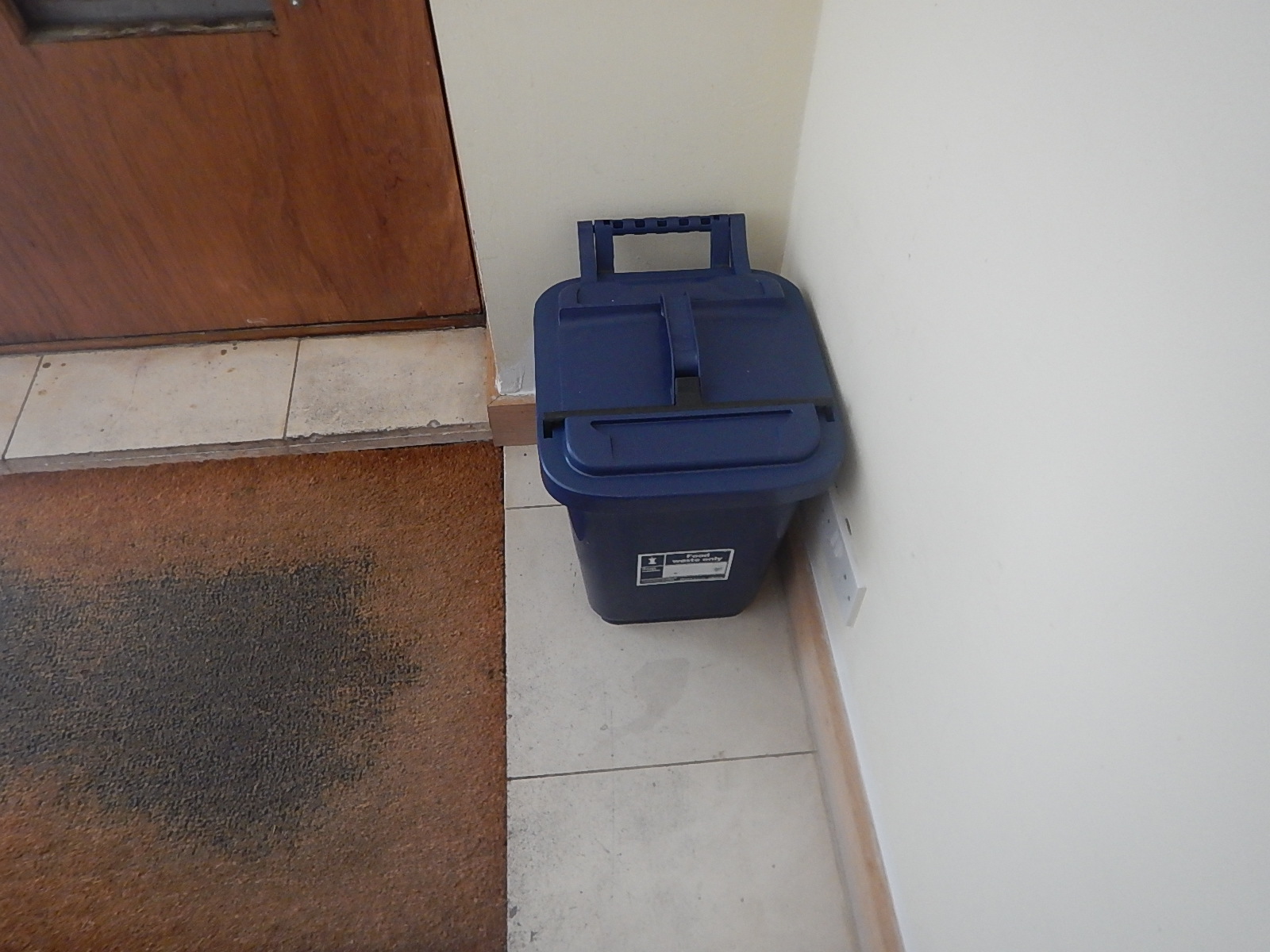
This is for my food waste bin, which is collected once a week.
This page on the Hackney web site is entitled Food Waste Recycling, and this is said about where the food waste goes.
Food waste from households in Hackney is sent to an anaerobic digestion facility in south east England, where it’s turned into renewable energy to power homes and biofertiliser to be spread on local farmland to grow crops.
A similar bin of an appropriate size could be used for nappies.
The nappies would go to an appropriate recycling site, instead of down the toilet or into landfill.
Velocys Technology Powers First Commercial Flight
The title of this post, is the same as that of this article on Biomass Magazine.
This is the first two paragraphs.
Velocys plc, the sustainable fuels technology company, is pleased to announce that sustainable aviation fuel (SAF) produced by the company’s proprietary technology using woody biomass residue feedstock has been used in a commercial flight by Japan Airlines.
Japan Airlines flight (JAL #515) from Tokyo to Sapporo was completed on June 17.
Note.
- From the picture, the aircraft appears to be an Airbus A350.
- Velocys is a sign-out from Oxford University.
Sustainable Aviation Fuel is definitely on its way.
Air Passengers Can Beat Queues With Uber-Style Private Jet Service
The title of this post, is the same as that of this article on The Times.
Hyer Aviation are starting a service that uses similar technology to Uber to share seats on private jets around Europe.
Their modus operandi is laid out in this press release on their web site.
This paragraph is from the press release.
The concept works like an extra-comfortable UberPool with wings. Passengers can initiate their own flight or join flights proposed by others. This allows them to fly on private aircraft for a fraction of the cost while offsetting the carbon emission of their flights. From London, routes are available to some of Britain’s favourite holiday destinations such as Ibiza, Cannes, Malaga, Amalfi Coast and Amsterdam. From Amsterdam, it is also possible to find flights proposed by other passengers to Nice and Ibiza.
think this business model could fly.
Years ago, I owned a twin piston-engined six seater aircraft and I flew it all over Europe. I don’t fly now, as my medical history would probably stop that, but the experience showed there are many quiet airports all over the UK and Europe, that could be destinations for a 6-9 seater aircraft.
To me the interesting thing about this business model, is that there are several zero-carbon 6-9 seater aircraft under development.
Two are electric developments of the widely-used Cessna Caravan and the Britten-Norman Islander and others are clean-sheet developments like the Eviation Alice or the Faradair BEHA.
ZeroAvia are also experimenting with a hydrogen-powered Piper Malibu.
An electric or zero-carbon future for aviation is closer than many think.
But it will start at the smaller end with ranges of up to 500 miles.
 The Anonymous Widower