East Midlands Railway To Leeds
This news story from the Department of Transport is entitled Yorkshire And The Humber To Benefit From £19.8 billion Transport Investment.
This is said about Leeds and Sheffield services.
The line between Sheffield and Leeds will be electrified and upgraded, giving passengers a choice of 3 to 4 fast trains an hour, instead of 1, with journey times of 40 minutes. A new mainline station for Rotherham will also be added to the route, which could give the town its first direct service to London since the 1980s, boosting capacity by 300%.
These are my thoughts.
A New Mainline Station For Rotherham
This page on Rotherham Business News, says this about the location of the Rotherham mainline station.
South Yorkshire Mayoral Combined Authority (SYMCA) and Rotherham Council have been developing a scheme to return mainline train services to the borough for the first time since the 1980s. A site at Parkgate is the frontrunner for a regeneration project described by experts as “a relatively straightforward scheme for delivery within three to four years.”
Various posts and comments on the Internet back the councils preference for a new station at Rotherham Parkgate.
- It would be at Rotherham Parkgate shopping centre.
- It connects to the tram-trains, which run half-hourly to Cathedral in Sheffield city centre via Rotherham Central.
- There appears to be plenty of space.
This OpenRailwayMap shows the tracks at the current Rotherham Parkgate tram stop.
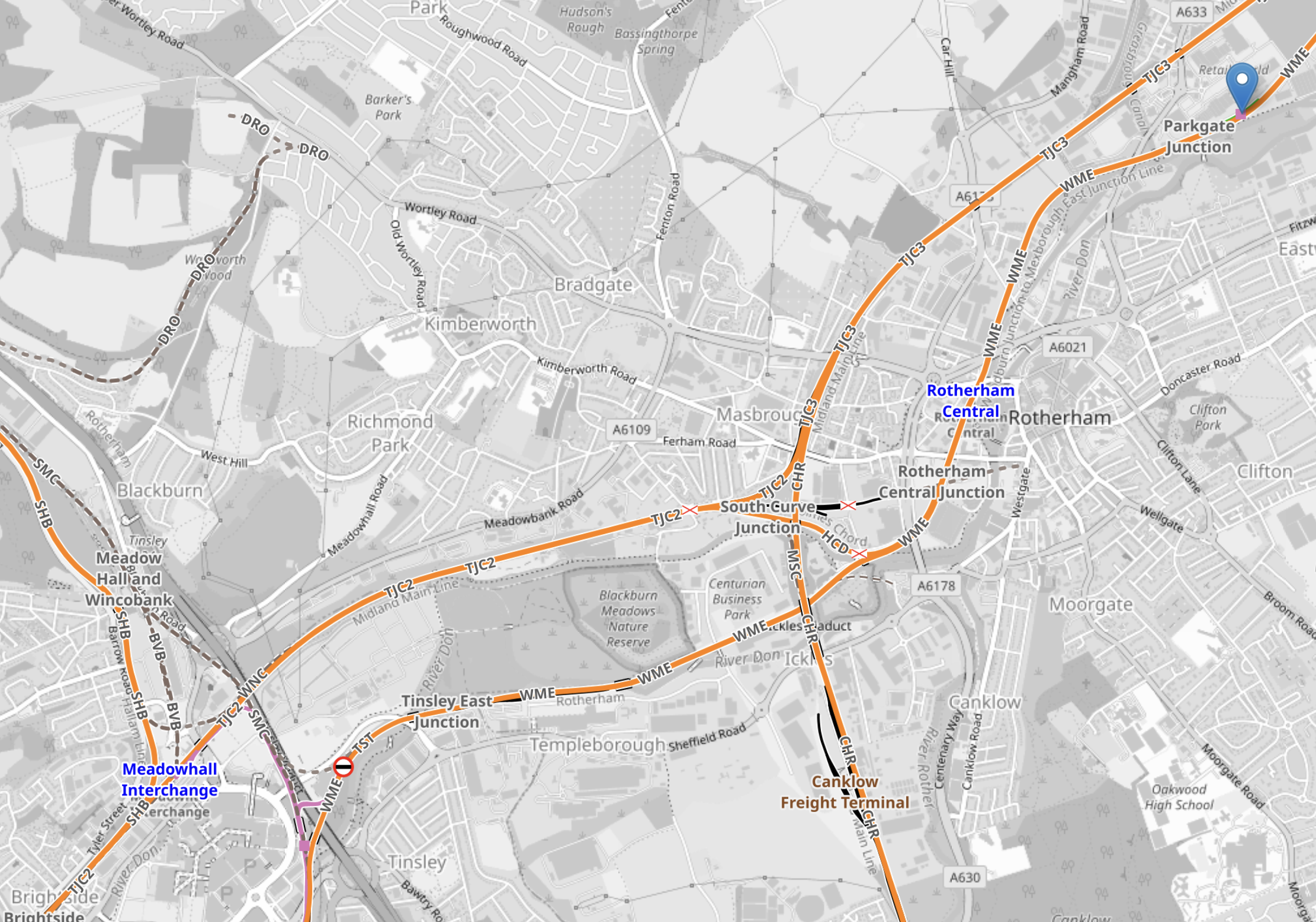
Note.
- The orange lines are the main railway tracks.
- Rotherham Parkgate is indicated by the blue arrow in the North-East corner of the map.
- Trains would run between Sheffield and Rotherham Parkgate via Meadowhall Interchange and Rotherham Central.
- Trains and tram-trains would share tracks through Rotherham Central.
After passing Rotherham Parkgate trains would go to Swinton, and then on to Doncaster or Leeds.
Sheffield And Leeds Via Rotherham Parkgate
Currently, there is an hourly service between Leeds and Sheffield, that goes through the Rotherham Parkgate site.
- It calls at Outwood, Wakefield Westgate, Sandal & Agbrigg, Fitzwilliam, Moorthorpe, Thurnscoe, Goldthorpe, Bolton-upon-Dearne, Swinton, Rotherham Central, Meadowhall.
- The service takes one hour and thirteen minutes, but there are eleven stops.
- As the distance is 38.9 miles, that works out at an average speed of 32 mph.
I suspect this schedule was written for Pacers.
The Department of Transport is aiming for a forty minute journey, which is an average speed of 58.4 mph.
Consider.
- If you look at the maximum speeds of the route from Rotherham Parkgate to Wakefield Westgate, it is 21.8 miles of 100 mph track.
- About twenty miles to the South of Wakefield Westgate is electrified.
- Leeds and Wakefield Westgate is 10.1 miles of 75-85 mph track.
- LNER’s expresses leave Wakefield Westgate, eleven minutes after leaving Leeds.
- I can find a TransPennine Express that takes thirteen minutes to go between Sheffield and Rotherham Parkgate late at night on the way to the depot.
The eleven and thirteen minutes mean that leaves 16 minutes for Rotherham Parkgate to Wakefield Westgate, if Sheffield and Leeds are to be timed at forty minutes, which would be an average speed of 82 mph between Rotherham Parkgate and Wakefield Westgate.
I feel that for a forty minute journey between Leeds and Sheffield, the following conditions would need to be met.
- Very few stops. Perhaps only Meadowhall, Rotherham Parkgate and Wakefield Westgate.
- 100 mph running where possible.
- 100 mph trains
- Electric trains would help, as acceleration is faster. Battery-electric trains would probably be sufficient.
- Some track improvements might help.
But forty minutes would certainly be possible.
At present there are five trains per hour (tph) between Leeds and Sheffield.
- Northern – 2 tph – via Wakefield Kirkgate, Barnsley and Meadowhall – 58 minutes
- Northern – 1 tph – via Outwood, Wakefield Westgate, Sandal & Agbrigg, Fitzwilliam, Moorthorpe, Thurnscoe, Goldthorpe, Bolton-upon-Dearne, Swinton, Rotherham Central and Meadowhall – One hour and 13 minutes
- Northern – 1 tph – via Woodlesford, Castleford, Normanton, Wakefield Kirkgate, Darton, Barnsley, Wombwell, Elsecar, Chapeltown and Meadowhall – One hour and 19 minutes.
- CrossCountry – 1 tph – via Wakefield Westgate – 44 minutes
Note.
- Only the second service will go through Rotherham Parkgate.
- The CrossCountry service takes the more direct route avoiding Rotherham Parkgate.
- All trains go via Meadowhall, although the CrossCountry service doesn’t stop.
- If the CrossCountry service was run by electric trains, it might be able to shave a few minutes as part of the route is electrified.
The CrossCountry service indicates to me, that 40 minutes between Leeds and Sheffield will be possible, but a stop at Meadowhall could be dropped to save time.
Extending East Midlands Railway’s Sheffield Service To Leeds
Consider
- Sheffield station has two tph to London all day.
- The CrossCountry service looks like it could be timed to run between Leeds and Sheffield in forty minutes.
- An East Midlands Railway Class 810 train could probably be timed at 40 minutes between Leeds and Sheffield via Meadowhall, Rotherham Parkgate and Wakefield Westgate.
- The current Northern services could continue to provide connectivity for stations between Leeds and Sheffield.
Extending one tph of East Midlands Railway’s trains to Leeds would probably be sufficient to give two fast trains per hour between Leeds and Sheffield.
- The East Midlands Railway and CrossCountry services could provide a fast service between Leeds and Sheffield in forty minutes.
- If they were electric or battery-electric trains, I suspect that they could call at Meadowhall, Rotherham Parkgate and Wakefield Westgate.
- They could be backed up by the two tph through Barnsley, which could probably be speeded up to around fifty minutes by electrification or using battery-electric trains.
The East Midlands Railway service between London and Leeds would be under three hours.
- Rotherham would get an hourly train to London.
- ,London and Leeds in under three hours, would be slower than Leeds and King’s Cross.
- But the electrification of the Midland Main Line would speed it up a bit.
A fast Leeds and Derby service might compensate for the loss of the Eastern leg of High Speed Two.
Sheffield And Doncaster Via Rotherham Parkgate
At present there are three tph between Sheffield and Doncaster.
- Northern – 1 tph – via Meadowhall, Rotherham Central, Swinton, Mexborough and Conisbrough – 42 minutes
- Northern – 1 tph – via Meadowhall – 28 minutes
- TransPennine Express – 1 tph – via Meadowhall – 27 minutes
Note.
- The first Northern train continues calling at all stations to Adwick.
- The second Northern train continues calling at all stations to Scarborough.
- Both Northern services go through Rotherham Parkgate.
- The TransPennine Express service takes the more direct route avoiding Rotherham Parkgate.
- All trains go via Meadowhall.
These services would give good connectivity for a London train, with a change at Rotherham Parkgate.
Improving Tracks Between Doncaster, Leeds and Sheffield
Consider.
- About 65 % of the main routes between Doncaster, Leeds and Sheffield have a maximum operating speed of 100 mph.
- Doncaster and Leeds is electrified.
- Only 35 miles is without electrification.
- The Midland Main Line is in the process of being electrified to Sheffield.
- There are plans to extend the Sheffield tram-trains to Doncaster Sheffield Airport, that I wrote about in Sheffield Region Transport Plan 2019 – Doncaster Sheffield Airport.
There is also heavyweight electrification infrastructure through Rotherham Central for the Sheffield tram-trains.


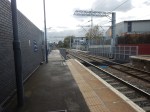
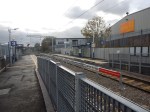
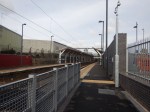

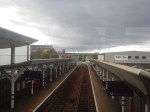


As it is only used by the tram-trains it may be only 750 VDC. But it can probably handle 25 KVAC.
- Could these routes be improved to allow faster running?
- Would it be cost-effective to electrify between Sheffield and the East Coast Main Line and the Doncaster and Leeds Line?
- Alternatively battery-electric trains could be run on the routes between Doncaster, Leeds and Sheffield, charging at all three main stations.
Any form of electric train should be faster, as acceleration and deceleration is faster in any electric train, be it powered by electrification, batteries, hydrogen or a hybrid diesel-battery-electric powertrain.
Conclusion
May The Maths Be With You!
It was a bit of a surprise, when in the November 2023 Edition of Modern Railways, in an article, which was entitled Extra Luggage Racks For Lumo, I read this closing paragraph.
Lumo celebrated its second birthday in late October and was also set to mark the carriage of its two-millionth passenger. It is understood Lumo is interested in augmenting its fleet, such has been the success of the service; while many operators favour bi-mode units, Lumo is proud of its all-electric credentials so straight EMUs are still preferred, although the possibilities of including batteries which could power the trains may be pursued (the ‘803s’ have on-board batteries, but only to provide power to on-board systems if the electricity supply fails).
I find this development very interesting.
Surely the obvious way to increase capacity would be to acquire some extra identical trains and run the busiest services as ten-car trains. I talked about Hull Trains running ten-car trains in Ten-Car Hull Trains. Both companies have five trains, so I suspect that this number would allow for occasional ten-car trains.
If not, then add a few identical trains to the fleet, so capacity can be matched to the demand.
- Some services would be ten-car instead of five-car.
- Platforms at Edinburgh, King’s Cross and Newcastle already handle nine and ten-car trains, so infrastructure costs would be minimal.
- No extra paths would be needed, as a ten-car train can run in a path, that normally has five-car trains, as Hull Trains have shown.
A simple spreadsheet should probably predict, when and how many extra trains need to be added to the fleet.
Lumo And Traction Batteries
But why does the Modern Railways’s article talk about traction batteries?
In the two years since Lumo started their service, there have been days, when the East Coast Main Line has been closed for engineering works, bad weather or an incident. I wrote about an incident in Azumas Everywhere!.
Some of these engineering works have been able to be by-passed by using diversions. But not all of these diversion routes are fully-electrified, so are not available for Lumo.
There would appear to be three viable diversions for the East Coast Main Line.
- Werrington Junction and Doncaster via Lincoln – Not Electrified – 85.4 miles
- Doncaster and York via Leeds – Being Electrified – 55.5 miles
- Northallerton and Newcastle – Not Electrified – 56.8 miles
If all or some of Lumo’s five-car trains had a battery-range of a hundred miles, they would be able to divert around some blockades.
Note.
- A traction battery could also provide power to on-board systems if the electricity supply fails.
- A traction battery would allow the train to skip past some catenary problems.
- I would be interested to know how much diversions, bad weather and incidents have cost Lumo in lost sales and refunds.
As an electrical engineer, I believe, that the emergency-only and the traction batteries could be the same design, but with different software and capacity.
The extra cost of the larger capacity traction battery, might deliver a better service and also pay for itself in the long term.
Extending Lumo’s Route
Lumo will want to maximise revenue and profits, so would it be possible to extend the route North of Edinburgh?
Consider.
- Edinburgh and Aberdeen is 131.4 miles
- Ladybank is a station to the North of the Forth Bridge, which is under 40 miles from Edinburgh.
- The line between Edinburgh and Ladybank is being electrified.
- Ladybank is just 91.4 miles South of Aberdeen.
At some point in the next few years, I believe that one of Lumo’s trains fitted with a hundred mile traction battery could reach Aberdeen on electric power.
The train would need to be charged at Aberdeen before returning South.
How would Aberdonians like that?
Unfortunately, Inverness is 146.1 miles from the nearest electrification at Dunblane, so it is probably too far for a hundred mile traction battery.
It does appear to me that if Lumo’s trains were fitted with a hundred mile traction battery, this would enable them to take some non-electrified diversions and provide a service to Aberdeen.
How Useful Would A Hundred Mile Range Battery-Electric Train Be To Other Operators?
I take each operator in turn.
Hull Trains
Consider.
- It appears that Hull Trains change between diesel and electric power at Temple Hirst junction, which is between Doncaster and Selby, on their route between King’s Cross and Hull/Beverley.
- The distance between Temple Hirst junction and Beverley is 44.3 miles.
- It would appear that an out-and-return journey could be possible on a hundred mile traction battery.
- The hundred mile traction battery would also allow Hull Trains to use the Lincoln diversion, either when necessary or by design.
To ensure enough range, a short length of overhead electrification could be erected at Hull station to combat range anxiety.
The Modern Railways article also says this.
The co-operation between sister East Coast Main Line open access operators Lumo and Hull Trains continues, with one recent move being the use of Hull Trains ‘802’ on Lumo services to cover for a shortage of the dedicated ‘803s’ while one was out of action for repairs following a fatality. although the two types are similar, there are notable differences, most obviously that the Hull Trains units are bi-modes while the Lumo sets are straight EMUs, and a training conversion course is required for Lumo drivers on the ‘802s’. There are also challenges from a passenger-facing perspective – the Hull trains units have around 20 % fewer seats and a First Class area.
If Hull Trains used traction batteries rather than diesel engines could the trains be identical to Lumo’s trains from the driver’s perspective?
This would surely appeal to First Group, who are the owner of both Hull Trains and Lumo.
TransPennine Express
These are TransPennine Express services.
- Liverpool Lime Street and Newcastle – Fully Electrified
- Liverpool Lime Street and Hull – Part Electrified – Hull and Micklefield – 42 miles
- Manchester Airport and Saltburn – Part Electrified – Saltburn and Northallerton – 33.6 miles
- Manchester Piccadilly and Newcastle – Fully Electrified
- Manchester Piccadilly and Scarborough – Part Electrified – York and Scarborough – 42.1 miles
- York and Scarborough – Not Electrified – 42.1 miles
- Manchester Piccadilly and Huddersfield – Fully Electrified
- Huddersfield and Leeds – Fully Electrified
- Liverpool Lime Street and Cleethorpes – Part Electrified – Hazel Grove and Cleethorpes – 104.6 miles
Note.
- I am assuming that the TransPennine Upgrade has been completed and Manchester and Leeds is electrified.
- Liverpool Lime Street and Cleethorpes will need some form of charging at Cleethorpes and a slightly larger battery.
All of these TransPennine Rxpress routes would be possible with a battery-electric train with a hundred mile traction battery.
LNER
These are distances from the electrification of the East Coast Main Line.
- Aberdeen via Ladybank – 91.4 miles – Charge before return
- Bradford Forster Square – Electrified
- Carlisle via Skipton – 86.8 miles – Charge before return
- Cleethorpes via Newark and Lincoln – 63.9 miles – Charge before return
- Harrogate via Leeds – 18.3 miles
- Huddersfield via Leeds – 17.2 miles
- Hull via Temple Hirst junction – 36.1 miles
- Lincoln via Newark – 16.7 miles
- Middlesbrough via Northallerton – 22.2 miles
- Scarborough via York – 42.1 miles
- Skipton – Electrified
- Sunderland via Northallerton – 47.4 miles
Note.
- The first place after the ‘via’ is where the electrification ends.
- Carlisle could be a possibility during High Speed Two upgrading of the West Coast Main Line or for an enthusiasts’ special or tourist train.
- Cleethorpes is a possible new service for LNER. I wrote about this in LNER To Serve Cleethorpes.
- Scarborough must be a possible new service for LNER.
- ‘Charge before return’ means the train must be charged before return. Carlisle is electrified, but Cleethorpes is not.
- The only new infrastructure would be the charging at Cleethorpes.
All of these LNER routes would be possible with a battery-electric train with a hundred mile traction battery.
The hundred mile traction battery would also allow LNER to use the Lincoln diversion.
Grand Central
These are distances from the electrification of the East Coast Main Line for Grand Central’s services.
- Bradford Interchange via Shaftholme junction – 47.8 miles
- Cleethorpes via Doncaster – 52.1 miles – Charge before return
- Sunderland via Northallerton – 47.4 miles
Note.
- The first place after the ‘via’ is where the electrification ends.
- Cleethorpes is a possible new service for Grand Central.
- ‘Charge before return’ means the train must be charged before return.
All of these routes would be possible with a battery-electric train with a hundred mile traction battery.
The hundred mile traction battery would also allow Grand Central to use the Lincoln diversion.
Avanti West Coast
These are distances from the electrification of the West Coast Main Line for Avanti West Coast’s services.
- Chester via Crewe – 21.1 miles
- Gobowen via Wolverhampton – 47.7 miles
- Holyhead via Crewe – 105.5 miles – Charge before return
- Shrewsbury via Wolverhampton – 29.7 miles
- Wrexham via Crewe – 33.3 miles
Note.
- The first place after the ‘via’ is where the electrification ends.
- Gobowen is a possible new service for Avanti West Coast.
- ‘Charge before return’ means the train must be charged before return.
All of these routes would be possible with a battery-electric train with a hundred mile traction battery.
Great Western Railway
These are distances from the electrification of the Great Western Main Line for Great Western Railway’s services.
- Bristol Temple Meads via Chippenham – 24.4 miles
- Carmarthen via Cardiff Central – 77.4 miles – Charge before return
- Cheltenham Spa via Swindon – 43.2 miles
- Exeter St. Davids via Newbury – 120.4 miles – Charge before return
- Great Malvern via Didcot East junction – 76.1 miles – Charge before return
- Hereford via Didcot East junction – 96.9 miles – Charge before return
- Oxford via Didcot Parkway – 10.3 miles
- Paignton via Newbury – 148.7 miles – Charge before return
- Pembroke Dock via Cardiff Central – 121.6 miles – Charge before return
- Penzance via Newbury – 172.6 miles – Charge before return
- Plymouth via Newbury – 120.4 miles – Charge before return
- Swansea via Cardiff Central – 53 miles – Charge before return
- Weston-super-Mare via Chippenham – 43.8 miles
- Worcester Foregate Street via Didcot East junction – 68.2 miles – Charge before return
- Worcester Shrub Hill via Didcot East junction – 67.6 miles – Charge before return
Note.
- The first place after the ‘via’ is where the electrification ends.
- ‘Charge before return’ means the train must be charged before return.
- Partial electrification through Hereford, Great Malvern, Worcester Foregate Street and Worcester Shrub Hill, could possibly be used to charge services from Hereford and Worcester.
- Partial electrification through Penzance, Plymouth and Exeter St. Davids, could possibly be used to charge services from the South West.
- Partial electrification West of Swansea, could possibly be used to charge services from West Wales.
All routes, except for Hereford and Worcester, the South-West and West Wales, would be possible with a battery-electric train with a hundred mile traction battery.
I’ll now look at the three groups of services in more detail.
Services To Hereford And Worcester
These are distances from the electrification of the Great Western Main Line for Great Western Railway’s Hereford and Worcester services.
- Great Malvern via Didcot East junction – 76.1 miles
- Hereford via Didcot East junction – 96.9 miles
- Worcester Foregate Street via Didcot East junction – 68.2 miles
- Worcester Shrub Hill via Didcot East junction – 67.6 miles
Note.
- All services join the Great Western Main Line at Didcot East junction.
- Some services will be probably need to have, their batteries charged at the Hereford and Worcester end.
At the present time, the electrification finishes at Didcot East junction, but if it were to be extended to Charlbury station, these would be the distances without electrification.
- Great Malvern via Charlbury – 52.3 miles
- Hereford via Charlbury – 73.1 miles
- Worcester Foregate Street via Charlbury – 44.4 miles
- Worcester Shrub Hill via Charlbury – 43.8 miles
Note.
- Some of the track between Oxford and Charlbury is only single track, which may give advantages, when it is electrified.
- It might be possible with a hundred mile traction battery for all Worcester services to charge their batteries between Charlbury and London Paddington and not need a charge at Worcester to return.
- A larger traction battery or extending the electrification to perhaps Morton-in-Marsh could see Great Malvern in range of battery-electric trains from London Paddington without a charge.
- Hereford would probably be too far to get away without charging at Hereford.
This OpenRailwayMap shows the layout of Hereford station.
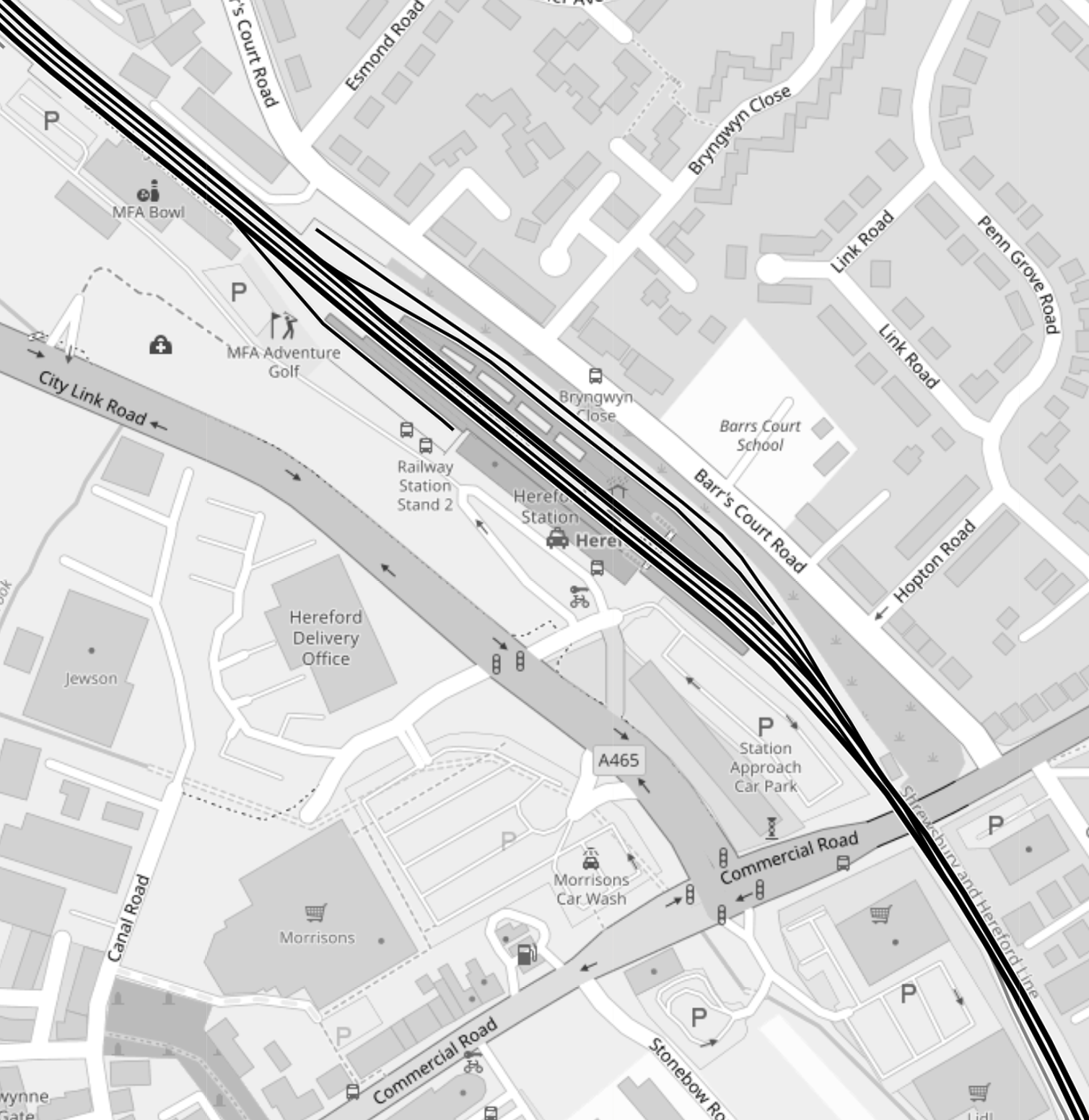
I’m certain that a platform can be found, where there is space for a charger, which could also be used for other trains serving the station.
Services To The South West
In the August 2023 Edition of Modern Railways, there is an article, which is entitled GWR Seeks Opportunities To Grow.
This is the sub-heading.
Managing Director Mark Hopwood tells Philip Sherratt there is plenty of potential to increase rail’s economic contribution.
This is two paragraphs.
The desire to provide electrification to support aggregates traffic from the Mendip quarries could also benefit GWR , says Mr. Hopwood. ‘Having an electric loco would massively help with pathing heavy freight trains through the Thames Valley. If you could electrify from Newbury to East Somerset Junction, a big chunk of the Berks and Hants route would be wired.
Then you can ask how much further you could get on battery power on an IET without running out of juice.’
Newbury to East Somerset Junction would be 53.5 miles of electrification, so I can build this table of services to the South-West
- Exeter St. Davids via Newbury – 120.4 miles – 66.9 miles
- Paignton via Newbury – 148.7 miles – 95.2 miles
- Penzance via Newbury – 251.9 miles – 198.5 miles
- Plymouth via Newbury – 172.6 miles – 119 miles
Note.
- The distance between Penzance and Plymouth is 79.5 miles.
- The first figure in the table is the distance to Newbury.
- The second figure in the table is the distance to East Somerset junction.
A possible way of running these four services to London on battery power is emerging.
- Exeter St. Davids via Newbury – Charge before return – Run on battery for 66.9 miles to East Somerset junction.
- Paignton via Newbury – Charge before return – Run on battery for 95.2 miles to East Somerset junction.
- Penzance via Newbury- Charge before return – Run on battery for 79.5 miles to Plymouth – Charge at Plymouth – Run on battery for 119 miles to East Somerset junction.
- Plymouth via Newbury – Charge before return – Run on battery for 119 miles to East Somerset junction.
Once at East Somerset junction, it’s electrification all the way to Paddington.
This is the corresponding way to run services from London.
- Exeter St. Davids via Newbury – Run on electrification to East Somerset junction, charging the battery on the way – Run on battery for 66.9 miles to Exeter St. Davids.
- Paignton via Newbury – Run on electrification to East Somerset junction, charging the battery on the way – Run on battery for 95.2 miles to Paignton.
- Penzance via Newbury – Run on electrification to East Somerset junction, charging the battery on the way – Run on battery for 119 miles to Plymouth – Charge at Plymouth – Run on battery for 79.5 miles to Penzance.
- Plymouth via Newbury – Run on electrification to East Somerset junction, charging the battery on the way – Run on battery for 119 miles to Plymouth.
More electrification or a larger than a hundred mile traction battery would be needed, as Plymouth and East Somerset junction is 119 miles.
But if a Stadler Akku can do 139 miles on a charge, why shouldn’t a Hitachi battery-electric train?
Services To West Wales
It seems that the current timetable is already setup for battery-electric trains to run to and beyond Swansea.
- Carmarthen and Swansea is almost exactly 32 miles.
- Pembroke Dock and Swansea is 73.4 miles.
- Swansea and Cardiff Central is 45.7 miles.
Note
- All these sections could be run by a battery-electric train, with a fully-charged hundred mile traction battery.
- All trains going to or from Carmarthen or Pembroke Dock reverse at Swansea, where a generous time of more than eleven minutes is allowed for the manoeuvre.
- During the reverse at Swansea, there is sufficient time to charge the batteries, if overhead wires were present.
Battery-electric services could serve Wales Wales with overhead electrification at Carmarthen, Pembroke Dock and Swansea.
Conclusion
We will go a long way, if we embrace battery-electric trains.
Most routes can be handled with a train with a traction battery range of 100 miles.
Exceptions are.
- Hazel Grove and Cleethorpes – 104.6 miles
- Plymouth and East Somerset junction – 119 miles
But if a Stadler Akku can do 139 miles on a charge, why shouldn’t a Hitachi battery-electric train?
Extra Luggage Racks For Lumo
The title of this post, is the same as a small article in the November 2023 Edition of Modern Railways.
Thiese are the first two paragraphs.
Lumo is to remove eight seats from each of its five Class 803 EMUs to make way for additional luggage racks.
Two seats will be removed from four of the five vehicles in each unit to make space for the luggage racks. The move has required a variation of Lumo’s track access agreement, with the Office of Road and Rail, which as originally approved specified that each train must have 400 seats.
The article also states that Lumo has stopped carrying bikes and the bike areas are now used for luggage.
Batteries For Lumo?
The article finishes with this paragraph.
Lumo celebrated its second birthday in late October and was also set to mark the carriage of its two-millionth passenger. It is understood Lumo is interested in augmenting its fleet, such has been the success of the service; while many operators favour bi-mode units, Lumo is proud of its all-electric credentials so straight EMUs are still preferred, although the possibilities of including batteries which could power the trains may be pursued (the ‘803s’ have on-board batteries, but only to provide power to on-board systems if the electricity supply fails).
I find this development very interesting.
As an electrical engineer, I’ve always believed that the emergency batteries in the Class 803 trains are very similar to the traction batteries that Hitachi are developing for the Class 802 trains.
- One design of battery must surely save time and costs in design and testing.
- The difference between the two batteries might be only software and the total capacity of the lithium-ion cells.
- In service testing under real operating conditions can be carried out in Lumo’s Class 803 trains.
- Traction and emergency batteries would be interchangeable, so some operators, who didn’t always need traction but wanted emergency on-board power could be setup as required for the route.
If traction batteries gave the train a range of perhaps 15-20 miles, this might well be enough range, for the train to get through or to the next station, if there was to be an incident like catenary failure or a derailed freight train blocking the line. Obviously, Lumo will have records of all external failures that have affected them.
Consider.
- I have calculated that Peterborough and Doncaster via Lincoln is 88.5 miles.
- I also believe it is likely that in the future, there may be some electrification at Lincoln to charge battery-electric trains.
- Lincolnshire is flat.
Would it be possible for Lumo trains to use a single traction battery to take the Great Northern and Great Eastern Joint Line to get round engineering works on the East Coast Main Line?
What Length Of Trains Could Lumo Run?
In Ten-Car Hull Trains, I talked about Hull Trains running ten-car trains to Hull.
I would expect that all Lumo’s stops are possible with ten-car trains.
As the trains are all Plug-and-Play, Lumo could either run pairs of trains or perhaps lengthen all trains to any size between six and nine cars.
Could Lumo Piggy-Back An Aberdeen Service On An Edinburgh Train?
The line between Edinburgh and Ladybank is being electrified and Ladybank is just 91.4 miles South of Aberdeen.
- A pair of Class 803 trains could leave King’s Cross running as a ten-car formation.
- The leading train would be a Class 803 train equipped with a traction battery.
- The trailing train would be a Class 803 train equipped with the normal emergency battery.
- Aberdeen passengers would get in the leading train.
- The train would run as normal to Edinburgh.
- At Edinburgh the two trains would split with the leading train going on to Aberdeen and the trailing train getting ready to return to London.
The train going to Aberdeen would need sufficient battery range to cover the 91.4 miles to Aberdeen, where it would recharge to make the journey back to Ladybank, Edinburgh and the South.
What About Inverness?
Dunblane is the nearest electrified station to Inverness, but it is 146.2 miles away over a route with lots of steep climbs.
I doubt that a battery-electric train could handle that route.
Conclusions
Luggage seems to be getting more of a problem on trains and buses.
It does appear that a very innovative battery philosophy from Hitachi is emerging.
Interview: Rethinking ‘Unusual And Special’ CrossCountry
The title of this post, is the same as that of this article on Railway Gazette.
This is the sub-heading.
CrossCountry’s National Rail Contract came into force on October 15, giving the business some medium-term certainty and Managing Director Tom Joyner a chance to reflect with Rail Business UK on its evolving role as a truly national train operator.
These are thoughts based on what is said in the article.
Unusual And Special
This paragraph is Tom Joyner’s explanation of what he meant.
‘CrossCountry is unusual and special. The fact that we’re a long-distance operator that connects so many places means we can be there for something different’, believes Managing Director Tom Joyner as he reflects on the operator’s short and medium-term future following the award on September 20 of its National Rail Contract.
I have found CrossCountry useful in the past to efficiently visit some towns and cities in the past, when Ipswich Town are playing away.
Arriva UK’s Contract To Run CrossCountry
This paragraph details the operating contract.
Under the NRC, incumbent Arriva UK Trains will continue to run the non-London inter-city passenger business as it has since November 2007. Commencing on October 15, the contract has a guaranteed core term of four years and an option for this to be extended to eight. The government will take the revenue risk, as it has done since the pandemic, with Arriva receiving a fixed fee to operate the business, with limited bonuses on offer if certain performance targets are met.
As a resident of London, I rarely use CrossCountry. But my only obvious improvement would be that CrossCountry ran trains with a smaller carbon footprint.
Post Pandemic Purpose
This paragraph details their post-pandemic purpose.
‘CrossCountry hasn’t benefitted from re-franchising in the last 10 years and this has presented challenges, particularly from a rolling stock perspective. We’ve been working closely with DfT to agree the post-pandemic purpose and vision for CrossCountry and how these fit into our railway network’, Joyner reports.
Most rail operators in the UK are London-centric or regional. Perhaps CrossCountry should become more ‘Unusual And Special’ to serve the important places, that other rail operators cannot reach.
One place would be the National Memorial Arboretum, which I wrote about in New Station Proposed For National Arboretum.
There must be lots of other places.
It could surely be the transport network for those who wanted to roam the UK on a holiday.
Could it be at the heart of levelling up the regions of the UK?
Fleet Under Pressure
This paragraph describes the current fleet and its condition.
Perhaps most reassuring for regular users of CrossCountry is news that the NRC will allow the operator to deliver some improvements to its train fleet, the backbone of which are the Class 220 and 221 DEMUs Arriva inherited from Virgin Trains in 2007. Other than some minor cosmetic work, these have not been refurbished since they were introduced in 2001. These 200 km/h Voyager trainsets are augmented by a fleet of Class 170 Turbostar DMUs for 160 km/h operation on regional routes to Cardiff and Stansted Airport; CrossCountry withdrew its last ex-British Rail IC125 High Speed Trains on September 18.
I do think, that some way must be found to reduce the operators large carbon footprint.
Are Battery Trains The Answer?
This paragraph gives Tom Joyner’s view on battery trains.
He is equally sceptical about the prospects for alternative traction technology to replace diesel. ‘I keep hearing views from industry colleagues who say, “electrification isn’t the answer, battery is the answer”. But you can’t get a battery that’s got the range that we need, even on the regional services currently worked by Class 170s.’
Birmingham New Street and Leicester is only 39.8 miles, so this route for a Class 170 train, might be possible for battery-electric trains, when there is electrification or charging at Leicester.
Perhaps the plan would be to run battery-electric trains between Birmingham and Leicester and see how the passengers react and how this will change the economics of the other Class 170 services?
A Lot More Food For Thought
There are some more sections in the article, that are worth a read.
- Sustainability Challenge
- Service Offering
- Commuters’ ‘Coventry Conundrum’
- Doing Something Different
This paragraph towards the end of the article makes the levelling up case, that CrossCountry can fulfil.
He suggests that the operator may not need as structured a timetable, and that its operating model could involve serving more destinations rather than the current largely fixed hourly axes crossing in Birmingham. ‘We serve regional Britain and when we talk about levelling up, the railway company best placed to level up in terms of connecting the whole of Britain is us’, he insists. This ethos is reflected in the daily Cardiff – Edinburgh service, with Joyner noting that this will not be a repeating service through the day.
Read the whole article.
I wish Tom Joyner the best of luck!
TransPennine Express Releases Blueprint For Improving Service And Fleet Upgrade
The title of this post, is the same as that of this article on Rail Technology Magazine.
This is the sub-heading.
TransPennine Express (TPE), which transferred to the government’s owning group (DOHL) earlier this year, has set out its plans to address many of the issues which have caused problems and disruption for rail customers.
These three paragraphs summarize their plans.
Making Journeys Better: A Prospectus gives clear detail of the issues TPE has faced during the past two years as well as outlining how TPE, under DOHL, will work to make things better, having completed an in-depth review of the business.
Part of the plans involve the operators plans for its new fleet. Its New Trains Programme outlines its long term view for decarbonisation. The report states that TPE will look towards new technology on its fleet to overcome the lack of clarity on the full electrification of the line.
This, it states will help with the cascading and removal of diesel trains faster across its network.
It always looked to me, that TPE under First Group, brought rather a dog’s breakfast of trains, when a unified fleet of Class 802 trains, as per Hull Trains, might have been easier to operate.
- They are already retiring the Class 68 locomotives and their Mark 5 coaches, so surely to decarbonise their services, a number of battery electric high speed trains would be an idea.
- They are already testing Class 802 battery-electric trains for Hitachi and Eversholt Rail.
- I also feel that CAF could offer a suitable battery-electric train, based on the Class 397 train.
TPE say in the example, that they expect a decision later in the month.
TransPennine Express Services And Battery Electric Trains
These are their services and how they would be effected by battery-electric trains.
- Liverpool Lime Street And Newcastle – Fully-electrified after TransPennine Upgrade.
- Liverpool Lime Street And Hull – Fully-electrified after TransPennine Upgrade.. – 42 miles unelectrified – Service could be run by a battery-electric train that charged between Leeds and Micklefield.
- Manchester Airport and Saltburn – Fully-electrified between Manchester Airport and Northallerton after TransPennine Upgrade. – 33.6 miles unelectrified – Service could be run by a battery-electric train that charged between Leeds and Northallerton. Would eliminate overnight noise problems at Redcar.
- Manchester Piccadilly and Newcastle – Fully-electrified after TransPennine Upgrade.
- Manchester Piccadilly and Scarborough – Fully-electrified between Manchester Piccadilly and York after TransPennine Upgrade. – 42.1 miles unelectrified – Service could be run by a battery-electric train that charged between Leeds and York.
- York and Scarborough – Electrified at York – 42.1 miles unelectrified – Service could be run by a battery-electric shuttle train that charged at York.
- Manchester Piccadilly and Huddersfield – Electrified at Manchester Piccadilly – 25.5 miles unelectrified – Service could be run by a battery-electric shuttle train that charged at Manchester Piccadilly.
- Leeds and Huddersfield – Electrified at Leeds – 17.2 miles unelectrified – Service could be run by a battery-electric shuttle train that charged at Leeds.
- Liverpool Lime Street and Cleethorpes – 125,6 miles unelectrified – In Electrification Of The Hope Valley Line, I show how this route can be run by battery-electric trains that charged on existing electrification a short new section of electrification at Cleethorpes.
Note.
- If Manchester Victoria and Huddersfield, is not electrified, battery-electric trains would be able to cross the 25.8 miles of unelectrified track on battery power.
- If Leeds and Huddersfield, is not electrified, battery-electric trains would be able to cross the 17.2 miles of unelectrified track on battery power.
- I am assuming that the TransPennine Upgrade between Manchester and Leeds will be completed, so that between Liverpool Lime Street and Leeds is fully-electrified.
- The only new infrastructure needed would be electrification at Cleethorpes to charge the trains.
All services except for Liverpool Lime Street and Cleethorpes could be run using battery-electric trains with a range on a full battery of at least 100 miles and with no additional electrification.
Electrifying Cleethorpes Station
This Google Map shows Cleethorpes station.
These pictures show the station in June 2023, when it appears to be going through a platform refurbishment.
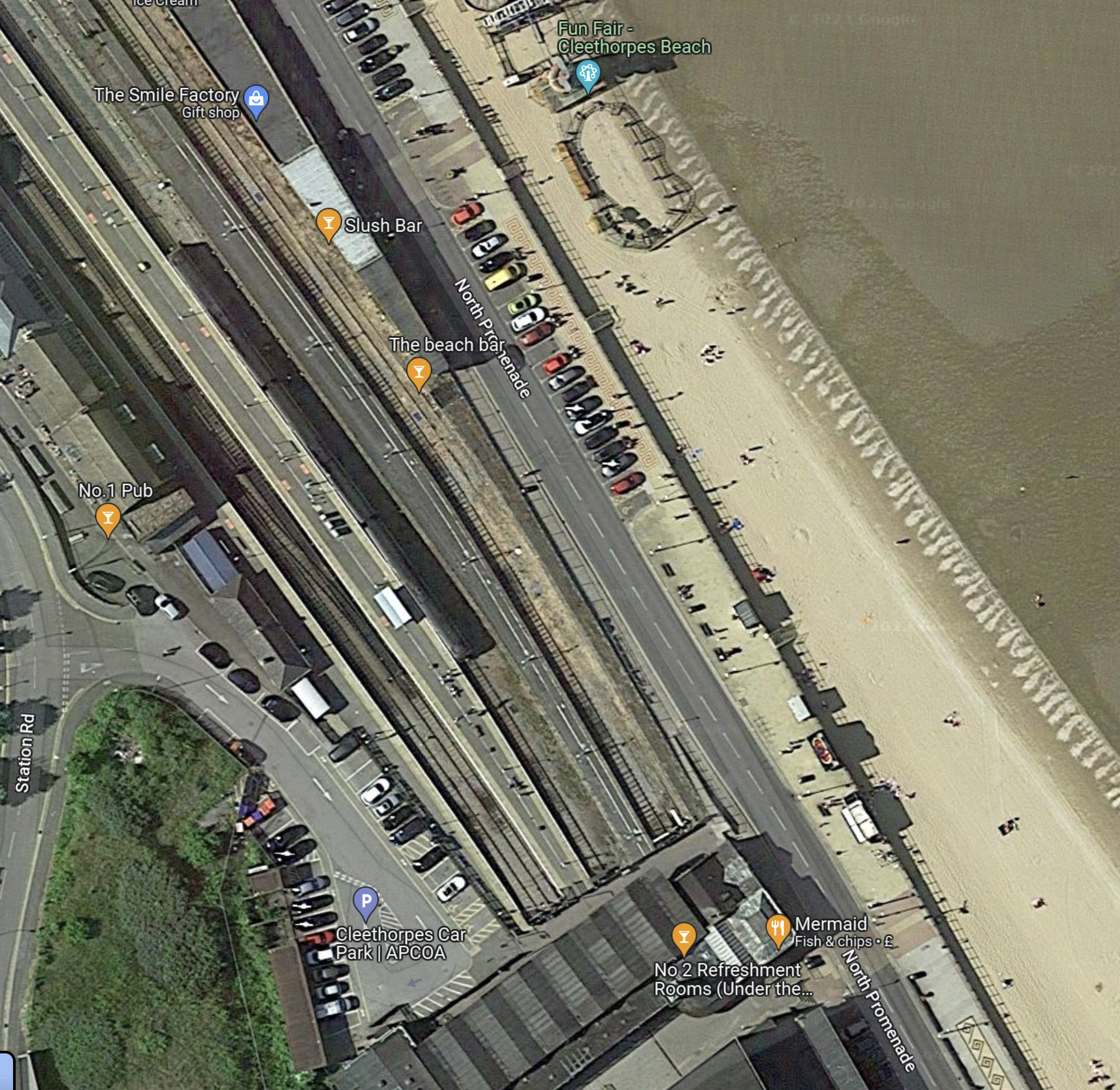
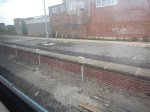
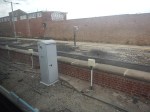
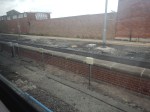
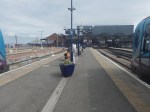
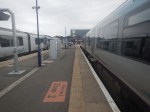
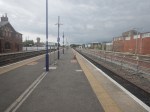
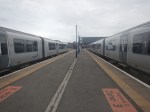
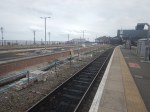
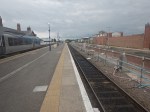
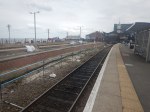
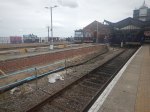
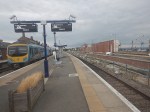
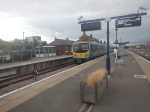
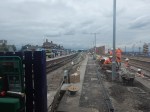
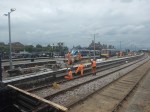
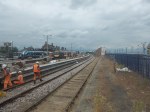
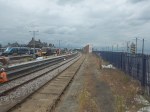
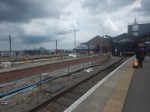
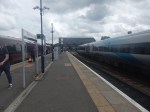
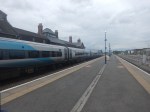
I don’t think it would be the most difficult station to electrify.
- There are four platforms.
- As the station is likely to get more battery-electric services, including one from King’s Cross, I would suspect that at least three out of the four platforms would be electrified.
- Although, the station is Grade II Listed, there doesn’t appear to be any canopies or important architectural details, that would get in the way of electrification.
Once Cleethorpes station had been successfully electrified, similar installations could be applied at other stations like Saltburn, Scarborough and Skegness.
Conclusion
If TransPennine Express were to buy the right number of battery-electric trains with a hundred mile range, they can decarbonise all their routes in a train factory.
Could Sheffield Station Become A Battery-Electric Train Hub?
Promised Improvements To Train Services At Sheffield
This news story from the Department of Transport is entitled Yorkshire And The Humber To Benefit From £19.8 billion Transport Investment.
Sheffield station gets several mentions of improvement to these routes.
Sheffield And Hull
This is said about train services between Sheffield and Hull.
The number of trains between Hull and Sheffield will be doubled, to 2 per hour, with capacity also doubled.
These points describe typical current services.
- The route is 59.4 miles long.
- Modern Class 170 trains take 78 minutes.
- There are stops at Meadowhall, Doncaster, Goole and Brough.
- The maximum speed of the line is mostly around 70 mph, with one short section of 100 mph.
- The average speed is 45.7 mph.
- The train continues to Scarborough after a six-minute stop at Hull.
I believe that if this route were to be electrified, that a time around an hour would be possible between Sheffield and Hull.
Sheffield and Scarborough takes two hours and 45 minutes. With electrification, this time could be less than two hours and 30 minutes.
But it would be around 113 miles of new double-track electrification.
I believe that Sheffield and Hull is a route that could be run by battery-electric trains, that would be charged at both ends of the route.
Sheffield And Leeds
This is said about train services between Sheffield and Leeds.
The line between Sheffield and Leeds will be electrified and upgraded, giving passengers a choice of 3 to 4 fast trains an hour, instead of 1, with journey times of 40 minutes. A new mainline station for Rotherham will also be added to the route, which could give the town its first direct service to London since the 1980s, boosting capacity by 300%.
These points describe typical current services.
- The route is 41.1 miles long.
- Modern Class 195 trains take 56 minutes.
- There is a few miles of electrification at the Leeds end.
- There are stops at Meadowhall, Barnsley and Wakefield Kirkgate.
- The maximum speed of the line is mostly around 60-70 mph.
- The average speed is 44 mph.
I believe that if this route were to be electrified, that a time around fifty minutes might be possible between Sheffield and Leeds.
That is not really good enough, but if they went through a new mainline station for Rotherham, the trains would be able to use 100 mph tracks all the way to Leeds. There would also be electrification between South Kirby junction and Leeds.
I suspect forty minutes should be possible with 100 mph running between Rotherham and Leeds.
I believe that Sheffield and Leeds is a route that could be run by battery-electric trains, that would be charged at both ends of the route.
Sheffield And Manchester
This is said about train services between Sheffield and Manchester.
The Hope Valley Line between Manchester and Sheffield will also be electrified and upgraded, with the aim of cutting journey times from 51 to 42 minutes and increasing the number of fast trains on the route from 2 to 3 per hour, doubling capacity.
In Electrification Of The Hope Valley Line, I talked about electrification of the line and how the services on the line could be run by battery-electric trains.
This was my conclusion in the linked post.
I believe that full electrification of the Hope Valley Line is not needed, if battery-electric trains are used.
I also believe that battery-electric trains and the current improvements being carried out on the Hope Valley Line will enable a forty minute time between Manchester Piccadilly and Sheffield.
I believe that the Hope Valley Line could be speeded up, by the use of intelligent engineering, rather than expensive and disruptive electrification.
Don Valley Line
This is said about the Don Valley Line.
Communities will be reconnected through the reopening of lines and stations closed under the Beeching reforms of the 1960s. This will include the restoration of the Don Valley Line between Stocksbridge and Sheffield Victoria, and new stations at Haxby Station, near York, Waverley, near Rotherham, and the Don Valley Line from Sheffield to Stocksbridge.
I’ve talked about the Don Valley Line before in Reopening The Don Valley Section Of The Former Woodhead Line Between Stocksbridge and Sheffield Victoria To Passenger Services.
The Don Valley Line has a comprehensive Wikipedia entry, which is well worth a read.
Could the Don Valley Line be worked by battery-electric trains?
It would appear that these promised improvements to and from Sheffield could be worked by battery-electric trains.
Now that battery-electric trains are being developed, it could also have services, using these trains.
Could Battery-Electric Trains Improve Other Services At Sheffield?
These are some possibilities.
Chesterfield And Sheffield Victoria
This news story from the Department of Transport is entitled East Midlands To Benefit From £9.6 billion Transport Investment.
This news story also talks about the Stocksbridge Line and Sheffield Victoria, where this is said.
Funding will also be provided for the Barrow Hill Line between Chesterfield and Sheffield Victoria, with a new station at Staveley in Derbyshire.
I wrote about the Barrow Hill Line in Reinstatement Of The Barrow Hill Line Between Sheffield And Chesterfield.
In the related post, this was my conclusion.
This looks to be a very sensible project.
- It could be run with either trains or tram-trams.
- It should be electrified, so it could be zero-carbon.
- Tram-trains could be used to make stations simpler.
- It could give an alternative route for electric trains to Sheffield station.
- The track is already there and regularly used.
But surely the biggest reason to built it, is that it appears to open up a lot of South and South-East Sheffield and North-East Chesterfield for development.
Now that battery-electric trains are being developed, Chesterfield and Sheffield could also have services, using these trains.
Sheffield And Adwick
Nothing is said in the news story about train services between Sheffield and Adwick.
Consider.
- Sheffield and Adwick is 22.7 miles.
- Journeys take fifty minutes.
- There are seven intermediate stations.
- This is an average speed of 27.2 mph.
- Adwick and Doncaster is 4.4 miles and electrified.
- There are generous turn-round times at both ends of the route.
- There are rather unusual reversing arrangements at Adwick.
I wonder if electric trains on this route, would knock a few minutes off the journey time because of the better acceleration and deceleration of electric trains.
Could this route be another route from Sheffield suitable for battery-electric trains?
- The train could fully charge between Adwick and Doncaster and at Adwick.
- It is only a short route with a round trip under sixty miles.
I believe this route could be very suitable for battery-electric trains.
Sheffield And Huddersfield
Nothing is said in the news story about train services in the Penistone Line between Sheffield and Huddersfield.
Consider.
- Sheffield and Huddersfield is 36.4 miles.
- Journeys take one hour and nineteen minutes.
- There are fifteen intermediate stations.
- This is an average speed of 27.6 mph.
- Huddersfield is being electrified as part of the TransPennine Upgrade.
I wonder if electric trains on this route, would knock a few minutes off the journey time because of the better acceleration and deceleration of electric trains.
Could this route be another route from Sheffield suitable for battery-electric trains?
Sheffield And Lincoln
Nothing is said in the news story about train services between Sheffield and Lincoln.
Consider.
- Sheffield and Lincoln is 48.5 miles.
- All Sheffield and Lincoln services start in Leeds.
- Journeys take one hour and twenty-five minutes.
- There are nine intermediate stations.
- This is an average speed of 34.2 mph.
- There is no electrification.
- Turn-round time at Lincoln is 26 minutes.
- All trains terminate in Platform 5 at Lincoln.
I wonder if electric trains on this route, would knock a few minutes off the journey time because of the better acceleration and deceleration of electric trains.
Could this route be another route from Sheffield suitable for battery-electric trains?
- Platform 5 could be electrified at Lincoln.
- There may need to be a battery top-up at Sheffield and Leeds.
I believe this route could be very suitable for battery-electric trains.
Electrification Between Sheffield And London
Consider.
- The Midland Main Line electrification is creeping up from London.
- It should soon be installed between St. Pancras and Market Harborough.
- Sheffield and Market Harborough is 81.9 miles.
- The Class 810 trains that will run the Sheffield and London route can’t be far off entering service.
There might be scope for running battery-electric trains on the route, until the electrification is complete.
A Battery-Electric Train Hub At Sheffield
I believe that a fair proportion of services to and from Sheffield could be run using battery-electric trains or bog-standard electric trains.
This OpenRailwayMap shows the platforms at Sheffield.

Note.
- The lilac tracks are those of the Sheffield Supertram.
- The darker lines are the tracks in the station.
- Tracks could be electrified as required.
Eventually, Sheffield will be a fully-electrified station, because of the Midland Main Line electrification.
But why not do it sooner rather than later, so that by running new or refurbished battery-electric trains to places like Huddersfield, Hull, Leeds, Lincoln, London and Manchester?
- Services would be speeded up by around a minute or two for each stop.
- Faster journeys may attract more passengers.
- Routes would be creating less carbon emission and pollution.
- In some cases, routes would be zero carbon.
Some routes would need electrification at the terminal to charge the trains, but Leeds, London St. Pancras and Manchester are already fully electrified.
Charging Long Distance Battery-Electric Trains When They Stop In Sheffield
These long distance services stop in Sheffield.
- CrossCountry – Plymouth and Edinburgh
- CrossCountry – Reading and Newcastle
- East Midland Railway – London and Leeds
- East Midland Railway – Liverpool Lime Street and Norwich
- Northern – Leeds and Lincoln
- Northern – Leeds and Nottingham
- Northern – Sheffield and Cleethorpes
- TransPennine Express – Liverpool Lime Street and Cleethorpes
battery-electric trains could be given a top-up, as they pass through.
I am assuming that CrossCountry, East Midland Railway, Northern and TransPennine Express will be running suitable battery-electric trains.
Battery-Electric Train Hubs
To be a battery-electric train hub, a station probably needs to have all or nearly all of its platforms electrified.
- It should be able to fully-charge any battery-electric trains terminating in the station, provided that the turn-round time is long enough.
- It should be able to give a through battery-electric train a boost if required, so that it gets to the final destination.
It would appear that there are already several battery-electric train hubs in the England, Scotland and Wales.
This map from OpenRailwayMap shows Liverpool Lime Street station, with electrified tracks shown in red.

It would appear that the station is fully electrified and is an excellent battery-electric train hub.
This map from OpenRailwayMap shows Manchester Piccadilly station, with electrified tracks shown in red.

It would appear that the station is fully electrified, except for the Northernmost platform, and is an excellent battery-electric train hub.
This map from OpenRailwayMap shows Leeds station, with electrified tracks shown in red.
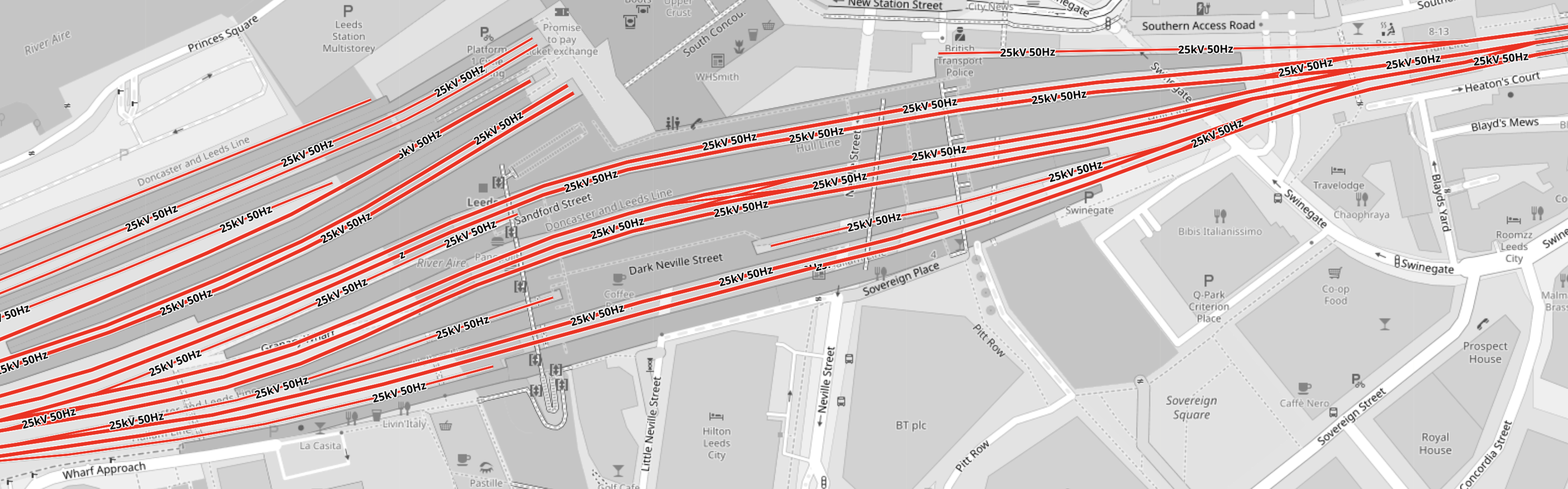
It would appear that the station is fully electrified and is an excellent battery-electric train hub, with twelve electrified bay platforms.
Conclusion
I can see a very comprehensive scheme being developed for Sheffield, based on a hub for battery-electric trains at Sheffield station.
Improvements To Leeds And Hull Services
This news story from the Department of Transport is entitled Yorkshire And The Humber To Benefit From £19.8 billion Transport Investment.
This is said about Leeds and Hull services.
Hull will also be brought into the Northern Powerhouse Rail network, reducing journey time from Leeds from 58 minutes to just 48. The number of trains between Hull and Sheffield will be doubled, to 2 per hour, with capacity also doubled. Journeys from Hull to Manchester will drop from 115 to 84 minutes, enabling 2 fast trains to Leeds.
I shall look at the 10:15 Northern Trains service between Hull and Leeds on the 13th October 2023.
- The distance is 51.8 miles.
- There are seven stops.
- The service is run by a diesel Class 158 train.
- Journey time is 69 minutes.
Ten minutes off this time would be worthwhile.
I shall look at the 10:03 TransPennine Express service between Hull and Leeds on the 13th October 2023.
- There are two stops.
- The service is run by a diesel Class 185 train.
- Journey time is 54 minutes.
Ten minutes off this time would be difficult.
Note.
- The line between Micklefield and Leeds is being electrified.
- The distance between Hull and Micklefield is 42 miles.
- The route has a maximum speed of between 75 and 90 mph.
There is also an historic swing bridge at Selby, which would probably be difficult to electrify.
How Many Minutes Could Electric Trains Save Between Leeds and Hull?
Electric trains have better acceleration and deceleration, when compared to diesel trains, so two minutes per stop and for the acceleration and deceleration at Hull and Leeds, would give the following times.
- Northern Trains – 53 minutes
- TransPennine Express – 48 minutes
As electrification is not mentioned for between Leeds and Hull, the only electric trains, that could work the route will be battery-electric trains.
Battery-Electric Trains Between Leeds and Hull
Consider.
- TransPennine Express already have Class 802 trains, from which the battery-electric version is being developed.
- Northern Trains would need a suitable battery-electric train. There has been talk of a CAF battery-electric Class 331 train, but nothing more. These would surly be ideal.
- Trains could be charged on new electrification in Hull station and between Micklefield and Leeds.
The trains would need a range of just 42 miles.
A Second Fast Train Between Leeds and Hull
What does this statement in the news story imply?
Journeys from Hull to Manchester will drop from 115 to 84 minutes, enabling 2 fast trains to Leeds.
I feel that this statement must be read in conjunction with the benefits of the TransPennine Route Upgrade.
One benefit is given as Faster Journeys, where this is said.
We’re speeding up journeys so you can travel to your favourite towns and cities more quickly. Our fastest journey times are forecast to be 63-66 minutes between Manchester and York and 41-42 minutes between Manchester and Leeds.
The news story says that the fastest journey times between Leeds and Hull will be 48 minutes, which would give a Hull and Manchester time of 89-90 minutes.
Alternatively, there could be these timings on one train.
- Hull and Leeds – 48 mins
- Hull and Manchester Victoria – 84 mins
- Leeds and Manchester Victoria – 36 mins
Note.
- The train would call at Brough, Selby, Leeds, Huddersfield and Stalybridge.
- There may be a new station at Leeds Thorpe Park
- The distance between Hull and Manchester Victoria is 94.7 miles.
- This is an average speed of 67.6 mph.
It almost looks like it’s connectivity East of Leeds and speed between Leeds and Manchester.
Conclusion
Battery-electric trains would provide all the improvements promised between Leeds and Hull.
Electrification Of The Hope Valley Line
This news story from the Department of Transport is entitled Yorkshire And The Humber To Benefit From £19.8 billion Transport Investment.
This is said about the Hope Valley Line.
The Hope Valley Line between Manchester and Sheffield will also be electrified and upgraded, with the aim of cutting journey times from 51 to 42 minutes and increasing the number of fast trains on the route from 2 to 3 per hour, doubling capacity.
The fast trains are currently TransPennine’s service between Liverpool Lime Street and Cleethorpes.
- Between Platform 13 at Manchester Piccadilly station and Sheffield station is 42.6 miles.
- At the Manchester end, there will be electrification between Manchester Piccadilly and Hazel Grove stations, which is 8.7 miles and takes typically 17 minutes.
- After the electrification of the Midland Main Line to Sheffield, there will be electrification between Dore & Totley and Sheffield stations, which is 4.2 miles and takes typically 8 minutes.
The gap in the electrification between Dore & Totley and Hazel Grove stations will be 29.7 miles.
But it will not be an easy route to electrify.
- At the Western end, there is the Disley Tunnel, which is 3535 metres long.
- In the middle, there is the Cowburn Tunnel which is 3385 metres long, that is also the deepest tunnel in England.
- At the Eastern end, there is the Totley Tunnel, which is 5700 metres long.
Yorkshire doesn’t have an Underground railway, but the combined length of these three tunnels is 7.84 miles, which means that over 26 % of the electrification needed between Manchester Piccadilly and Sheffield will have to be installed in tunnels.
Could The Route Be Run Using Battery-Electric Trains?
Consider.
- The gap in the electrification between Dore & Totley and Hazel Grove stations will be 29.7 miles.
- There is electrified sections at Dore & Totley and Hazel Grove stations, which will be able to charge the trains.
- Merseyrail’s Class 777 trains have demonstrated a battery range of 84 miles.
- A Stadler Akku train has demonstrated a battery range of 139 miles.
- Hitachi are developing a battery-electric version of TransPennine’s Class 802 train.
- If all trains can run on batteries or be self-powered, there would be no need to electrify the long and possibly difficult tunnels.
I believe that it would be possible to electrify all passenger services between Manchester and Sheffield using appropriate battery-electric trains.
Freight would be a problem and I suspect that hydrogen-hybrid and other self-powered locomotives could handle the route.
Could The Complete TransPennine Liverpool Lime Street and Cleethorpes Service Be Run By Battery-Electric Class 802 trains?
These are the various electrified and unelectrified sections.
- Liverpool Lime Street and Liverpool South Parkway – Electrified – 5.7 miles – 10 minutes
- Liverpool South Parkway and Trafford Park – Not Electrified – 25.2 miles – 30 minutes
- Trafford Park and Hazel Grove – Electrified – 12.6 miles – 28 minutes
- Hazel Grove and Dore & Totley – Not Electrified – 29.7 miles – 35 minutes
- Dore & Totley and Sheffield – Electrified – 4.2 miles – 6 minutes
- Sheffield and Doncaster – Not Electrified – 18.6 miles – 25 minutes
- Doncaster and Cleethorpes – Not Electrified – 52.1 miles – 78 minutes
Note.
- This is a total of 125.6 miles without electrification.
- The Manchester Piccadilly and Sheffield time is 56 minutes.
- The distance is 37.8 miles.
- That is an average speed on 40.5 mph.
- Most of the line between Manchester Piccadilly and Sheffield has an maximum speed of 70 mph, but there is a short length of track with a 50 mph speed and another longer one with 90 mph.
To achieve 40 minutes between Manchester Piccadilly and Sheffield would need an average speed of 60.7 mph. Given the improvements being carried out by Network Rail at the current time, I believe that forty minutes between Manchester Piccadilly and Sheffield should be possible.
I’ll look at a train going East.
- The train will leave Liverpool Lime Street with a reasonably full battery after charging using the current electrification in the station.
- The train will leave Liverpool South Parkway with a full battery after charging using the current electrification from Liverpool Lime Street.
- The train will arrive at Trafford Park with a battery perhaps two-thirds full, but it will be fully charged on the current electrification to Hazel Grove.
- The train will arrive at Dore & Totley with a battery perhaps two-thirds full, but it will be fully charged on the Midland Main Line electrification to Sheffield.
- The train will arrive at Doncaster with a battery perhaps two-thirds full and the train would wait until it had enough charge to reach Cleethorpes.
I’ll look at a train going West.
- The train will leave Cleethorpes with a full battery after charging using the new electrification in the station.
- The train will arrive at Doncaster with a battery perhaps two-thirds full and the train would wait until it had enough charge to reach Sheffield.
- The train will arrive at Sheffield with a battery perhaps two-thirds full, but it will be fully charged on the Midland Main Line electrification to Dore & Totley.
- The train will arrive at Hazel Grove with a battery perhaps two-thirds full, but it will be fully charged on the current electrification to Trafford Park.
- The train will arrive at Liverpool South Parkway with a battery perhaps two-thirds full, but the route is electrified to Liverpool Lime Street.
Note.
- If the battery range on a full battery was over 90 miles, the two most easterly sections could be run without any charging at Doncaster.
- If the battery range was over 125.6 miles, the journey could be done by starting with a full battery.
- If every time the train decelerated, regenerative braking would recover energy, which could be reused.
- The only new electrification needed will be a short length at Cleethorpes station, that would charge the trains.
I certainly believe that Liverpool Lime Street and Cleethorpes services could be run by battery-electric trains.
Could The Complete TransPennine Liverpool Lime Street and Cleethorpes Service Be Run By Battery-Electric Class 802 trains Without The Midland Main Line Electrification?
In this section, I’m assuming, that there is no electrification at Sheffield.
These would be the various electrified and unelectrified sections.
- Liverpool Lime Street and Liverpool South Parkway – Electrified – 5.7 miles – 10 minutes
- Liverpool South Parkway and Trafford Park – Not Electrified – 25.2 miles – 30 minutes
- Trafford Park and Hazel Grove – Electrified – 12.6 miles – 28 minutes
- Hazel Grove and Cleethorpes – Not Electrified – 104.6 miles – 143 minutes
Note.
- This is a total of 129.6 miles without electrification.
- The battery range of the train, should probably be around 120 miles to make sure the train could run between Hazel Grove and Cleethorpes.
- One diesel power-pack could be installed for emergency use.
I’ll look at a train going East.
- The train will leave Liverpool Lime Street with a reasonably full battery after charging using the current electrification in the station.
- The train will leave Liverpool South Parkway with a full battery after charging using the current electrification from Liverpool Lime Street.
- The train will arrive at Trafford Park with a battery perhaps 80 % full, but it will be fully charged on the current electrification to Hazel Grove.
- The train would then eek out what power it had left to reach Cleethorpes.
If necessary, the train could stop in the electrified Doncaster station to top up the batteries from the East Coast Main Line electrification for the run to Cleethorpes.
I’ll look at a train going West.
- The train will leave Cleethorpes with a full battery after charging using new electrification in the station.
- The train will arrive at Doncaster with a battery perhaps 57 % full and the train would wait if needed, until it had enough charge to reach Hazel Grove.
- The train will arrive at Hazel Grove with a battery perhaps one-thirds full, but it will be fully charged on the current electrification to Trafford Park.
- The train will arrive at Liverpool South Parkway with a battery perhaps one-thirds full, but the route is electrified to Liverpool Lime Street.
Note.
- If the battery range on a full battery was over 105 miles, the Eastern section could be run without any charging at Doncaster.
- If the battery range was over 129.6 miles, the journey could be done by starting with a full battery.
- If every time the train decelerated, regenerative braking would recover energy, which could be reused.
- The only new electrification needed will be a short length at Cleethorpes station, that would charge the trains.
However, it might be prudent to electrify the through platforms at Sheffield, so that they could be used for emergency charging if required.
Northern Train’s Service Between Sheffield And Manchester Piccadilly Via The Hope Valley Line
There is a one train per hour (tph) Northern service between Sheffield and Manchester Piccadilly.
- The Class 195 diesel train takes 78 minutes.
- The distance is 42 miles.
- The first mile or so at the Manchester end is electrified.
- Trains seem to take about sixteen minutes to turn round at Manchester Piccadilly.
- Trains seem to take about nine minutes to turn round at Sheffield.
- The service runs via Reddish North, Brinnington, Bredbury, Romiley, Marple, New Mills Central, Chinley, Edale, Hope, Bamford, Hathersage, Grindleford and Dore & Totley.
- The max speed is generally 60 mph to the West of New Mills Central and 70 mph to the East, with short lower speed sections.
There would appear to be two ways to run this route withy battery-electric trains.
- As Manchester Piccadilly station is fully-electrified and trains could be connected to the electrification for upwards of twenty minutes, trains will certainly be able to be fully-charged at Manchester. As the round trip is only 84 miles, could trains run the service without a charge at Sheffield.
- Alternatively, there could be a dedicated electrified platform at Sheffield. But the problem with this, is that currently this service uses a random platform at Sheffield.
It looks like, if the train has the required range, that charging at the Manchester end would be the better solution.
Liverpool And Norwich Via The Hope Valley Line
This service uses a similar route between Liverpool Lime Street and Sheffield, as the Liverpool and Hull service and then it meanders, through the East Midlands.
- Liverpool Lime Street and Liverpool South Parkway – Electrified – 5.7 miles – 11 minutes
- Liverpool South Parkway and Trafford Park – Not Electrified – 25.2 miles – 33 minutes
- Trafford Park and Hazel Grove – Electrified – 12.6 miles – 26 minutes
- Hazel Grove and Dore & Totley – Not Electrified – 29.7 miles – 28 minutes
- Dore & Totley and Sheffield – Electrified – 4.2 miles – 6 minutes
- Sheffield and Nottingham – Being Electrified – 40.6 miles – 52 minutes
- Nottingham and Grantham – Not Electrified – 22.7 miles – 30 minutes
- Grantham and Peterborough – Electrified – 29.1 miles – 29 minutes
- Peterborough And Ely – Not Electrified – 30 miles – 31 minutes
- Ely and Norwich – Not Electrified – 53.7 miles – 56 minutes
This is a total of 161.3 miles without electrification.
But as Sheffield and Nottingham and Grantham and Peterborough will be fully electrified, this route will be possible using a battery-electric train.
Electrifying Sheffield Station
I said earlier in this post, that electrifying Sheffield station would be an option for electrifying the Sheffield and Manchester Piccadilly service.
If this were to be done, it would have collateral benefits for other services that terminate at Sheffield, which could be charged whilst they turned around.
I wrote about Sheffield station as a battery-electric train hub in Could Sheffield Station Become A Battery-Electric Train Hub?
Conclusion
I believe that full electrification of the Hope Valley Line is not needed, if battery-electric trains are used.
I also believe that battery-electric trains and the current improvements being carried out on the Hope Valley Line will enable a forty minute time between Manchester Piccadilly and Sheffield.
High Speed Two To Barrow-in-Furness
There has been a lot of speculation about the Northern end of High Speed Two, so I might as well add sort out a few facts and add a bit of speculation of my own.
Barrow-in-Furness Used To Have A Service To London
Barrow-in-Furness station doesn’t have a direct service to London.
This paragraph from the Wikipedia entry, describes how it used to be.
The present station was formerly known as Barrow Central, and at one time it was a terminus for British Rail long-distance or InterCity services. From October 1947 until May 1983 these included sleeper services to and from London Euston. A sleeper service in the London direction only was briefly reintroduced between May 1987 and May 1990.
Note.
- I find it interesting, that the area had both InterCity and sleeper services.
- There are some big employers like BAe Systems and British Nuclear Fuels in the area.
- Rishi Sunak has announced that the Cumbrian Coast Line will be upgraded.
- A High Speed Two service could improve low-carbon access to the Lake District.
- Grimsby/Cleethorpes in Lincolnshire, which probably has a similar economic profile to Barrow-in-Furness appears to be getting a service from London as I wrote about in Azuma Test Train Takes To The Tracks As LNER Trials Possible New Route. So why shouldn’t Barrow-in-Furness have a similar service?
It is my view that Barrow-in-Furness station could support a sprinkling of services.
The Current Barrow-in-Furness Service
Barrow-in-Furness station’s current services are described in these two paragraphs from the Wikipedia entry.
Services to the north are provided on Monday-Saturday by Northern, with services approximately hourly during the day to Whitehaven and Carlisle. One train per day operates to Sellafield specifically for workers at Sellafield nuclear plant (BNFL). Evening trains run only as far as Millom. There are 19 northbound departures each weekday; 15 of these go to Carlisle, three to Millom and one to Sellafield. There are 20 arrivals from the northern part of the line: 15 from Carlisle, three from Millom, one from Maryport and one from Sellafield. Some of these services continue along the Furness Line to Lancaster and Preston.
To the south, there are a mixture of stopping services to Lancaster and a number of through services to Manchester Airport via Manchester Piccadilly. These operate on a broadly hourly frequency, with a few peak extras throughout the week (including Sundays).
Hard facts on what the improvements to the line will be, have not been reported. But it does seem that a doubling of frequency to two trains per hour (tph) is being proposed.
What Are The Government’s Plans?
This news story from the Government is entitled North West To Benefit From £19.8 billion Transport Investment.
Proposed improvements in Cumbria are contained in this paragraph.
A brand new £2.5 billion fund to transform local transport in 14 rural counties, smaller cities and towns. This new money could pay for new stations, further electrification, bus corridors and new integrated public transport networks. The Energy Coast Line between Carlisle, Workington and Barrow will be upgraded, improving capacity and journey times, enabling trains every 30 minutes between Carlisle, Workington and Whitehaven. The upgrade will also accommodate major new freight demands from the new coal mine and provide regular services for the Westlakes Science Park, Nuclear Academy and Sellafield. This could support the creation of over 18,000 jobs.
I have my thoughts.
Will The Route Be Electrified?
The Cumbrian Coast and the Furness Line effectively form a near 120 mile loop between Carnforth and Carlisle stations on the West Coast Main Line.
- A journey from one end to the other takes about three hours and 18 minutes.
- Main towns and places served include Barrow-in-Furness, Sellafield, Whitehaven and Workington.
- A train between Carnforth and Carlisle can stop at as many as 29 stations.
- The route is not electrified, but it connects to the electrified West Coast Main Line at both ends at Carnforth and Carlisle.
This OpenRailwayMap shows Carnforth.

Note.
- The red line is the West Coast Main Line between Carlisle and Lancaster.
- Carlisle is to the North.
- Lancaster is to the South.
- The black line going North-West is the Furness Line to Barrow-in-Furness.
- The black line going East is the Bentham Line to Settle and Leeds.
This OpenRailwayMap shows Carlisle.

Note.
- The red line is the West Coast Main Line between Scotland and Carnforth.
- Scotland is to the North.
- Carnforth is to the South.
- The black line going South-West is the Cumbrian Coast Line to Workington, Whitehaven and Barrow-in-Furness.
- The black line going East is the Settle and Carlisle Line to Settle and Leeds.
If it were to be fully electrified, it could be a diversion route for electrified trains on the West Coast Main Line.
This document on the Government web site is the Train Technical Specification for High Speed Two Classic-Compatible Trains.
The specification says this about the unit and train formation.
The nominal length of the Unit shall be 200m. It has been determined that all Units should
be the same length, with no requirement for a Unit to be capable of being lengthened or
shortened. This supports the overall HS2 business case.The Unit shall be capable of Normal Operation as a single Unit or as two coupled Units.
On the Wikipedia entry for the Cumbrian Coast Line, there is a picture of a very long steam-hauled train on the line.
Full electrification would have these advantages.
- In the next few years several 21st century electrical multiple units will be looking for new places to operate.
- I am fairly certain, that a fully-electrified Cumbrian Coast Line could act as a diversion for High Speed Two and the West Coast Main Line between Carnforth and Carlisle.
- It would enable occasional High Speed Two services to Carlisle via Barrow-in-Furness, Sellafield, Whitehaven and Workington.
- It would also allow electrified freight trains to the new coal mine at Workington and to Sellafield.
But trains from the coal mine would probably need to have hydrogen-hybrid locomotives to get across the Pennines to Teesside for export.
Partial Electrification Of The Line
Partial electrification would probably need the following.
- Installation of electrification between Carnforth and Barrow-in-Furness, so that High Speed Two services can reach Barrow-in-Furness.
- Installation of electrification from Carlisle for enough miles towards Workington to be able to charge the local trains.
- The local trains would need to be able to run about seventy miles on batteries.
Partial electrification would be more affordable, but it would allow the following.
- Battery-electric trains to work between Carnforth and Carlisle.
- It would enable occasional High Speed Two services to Barrow-in-Furness
- Hydrogen-hybrid locomotive-hauled freight trains to the new coal mine at Workington and to Sellafield.
Rail passengers in, to and from Cumbria would probably see a similar level of improvement to that with full electrification.
What Time Would Be Possible At The Present Time?
Consider.
- According to the Wikipedia entry for High Speed Two, two hours and twenty-five minutes is the fastest time between London Euston and Lancaster.
- Trains are timed to take one hour and four minutes with the nine stops, between Barrow-in-Furness and Lancaster.
- To save time some stops could be cut between Barrow-in-Furness and Lancaster.
This would give a London Euston and Barrow-in-Furness time of three hours and twenty-nine minutes, but by removing perhaps five stops, the time could be around three hours and fifteen minutes.
What Time Would Be Possible When High Speed Two Lite Opens To Handsacre Junction?
Consider.
- According to the Wikipedia entry for High Speed Two, two hours and three minutes will be the fastest time between London Euston and Lancaster, after High Speed Two opens to Handsacre junction.
- Trains are timed to take one hour and four minutes with the nine stops, between Barrow-in-Furness and Lancaster.
- To save time some stops could be cut between Barrow-in-Furness and Lancaster.
This would give a London Euston and Barrow-in-Furness time of three hours and seven minutes, but by removing perhaps five stops, the time could be under three hours.
What Frequency Would Be Needed?
LNER seem to run their secondary services to places like Harrogate and Lincoln using a frequency of one train per two hours (tp2h).
That could be an ideal frequency.
Would There Be A Path For The Train To And From London Euston?
This graphic shows High Speed Two services after Phase 2b is completed.
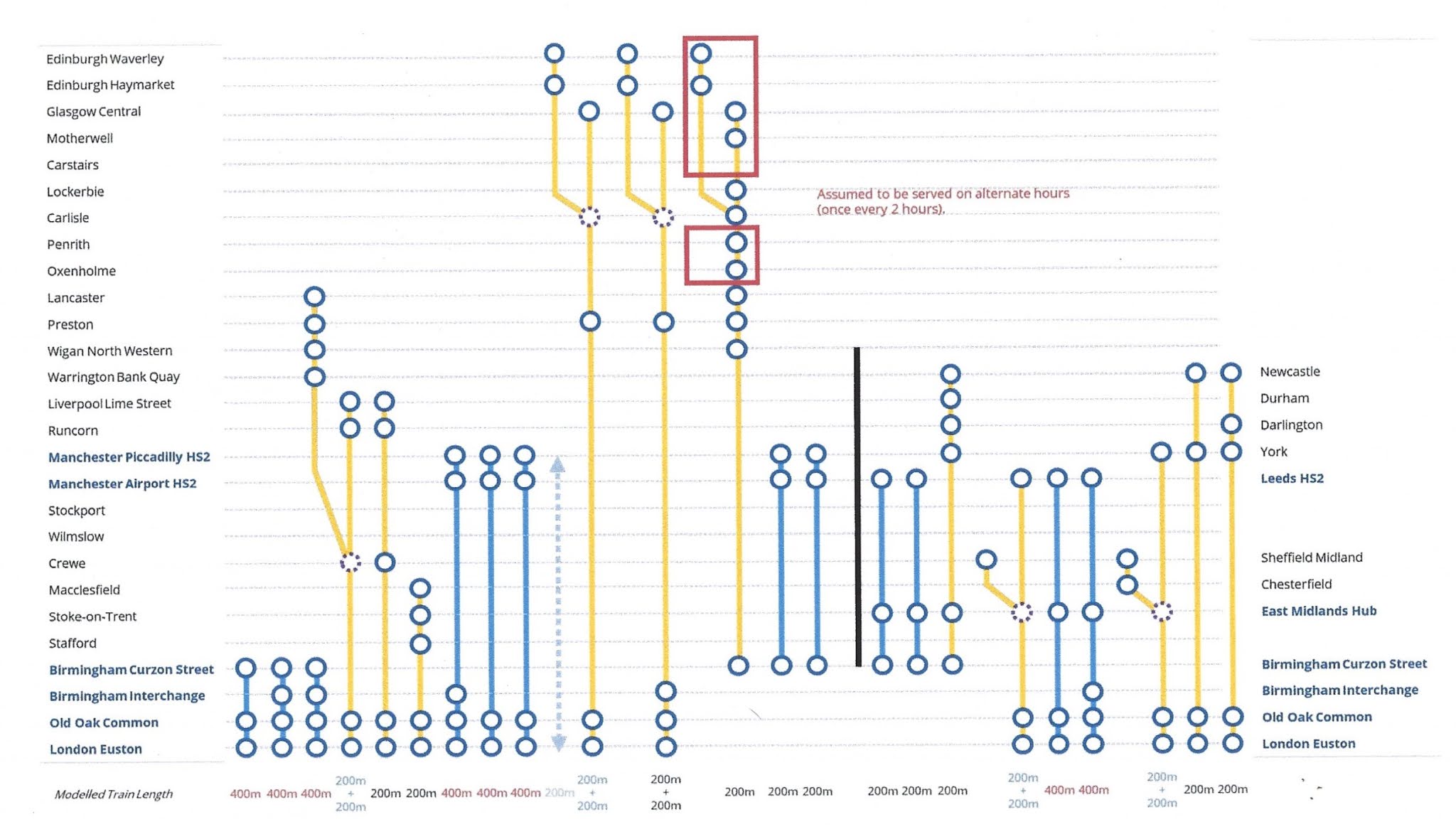
Note.
- Services shown in blue are run by High Speed Two Full Size trains.
- Services shown in yellow are run by High Speed Two Classic-Compatible trains.
- Each of these trains will have a frequency of one tph.
- The nine paths to the right of the vertical black line will not be needed for some time. If ever!
- It looks like a maximum of only eleven paths will be needed to the South of Birmingham.
- It looks like a maximum of only fourteen paths will be needed to the North of Birmingham.
In Will High Speed Two Lite Make Stafford An Important Station?, I totted up all the services through Stafford after High Speed Two Lite opened to Handsacre junction and got these figures.
- Through Stafford station, there are totals of 11 tpd and 14 tph.
- Along the Trent Valley Line, there are totals of 11 tpd and 12 tph.
- North of Stafford on the West Coast Main Line, there are totals of 9 tpd and 12 tph.
- South of Stafford on the West Coast Main Line, there are totals of 2 tpd and 2 tph.
- Between Stafford and Stoke-on-Trent, there are totals of 2 tph.
I accounted for services moving from the West Coast Main Line to High Speed Two.
Consider.
- A large proportion of the route between Preston and Handsacre junction, where the route would join High Speed Two Light has two dedicated high speed tracks and two tracks for freight and local services.
- Digital signalling on High Speed Two has been designed to handle eighteen trains per hour (tph) at 225 mph.
- Surely, the two dedicated high speed tracks, if fitted with High Speed Two digital signalling could handle say 16 tph at 140 mph.
- Network Rail are good at juggling trains to squeeze in more services.
- Extra paths could be created by splitting and joining trains at Crewe or Preston.
My Control Engineering training and practice tells me that it should be possible to add perhaps two tph between Lancaster and Euston.
Could High Speed Two’s Lancaster Service Be Extended To Barrow-in-Furness?
I don’t see why some services could be extended the 34.8 miles to Barrow-in-Furness.
Would Much Work Be Needed At Barrow-in-Furness?
This Google Map shows Barrow-in-Furness station.

Note.
Trains to and from Carnforth come and go from the South East.
Trains to and from Sellafield, Whitehaven and Workington and Carlisle come and go from the North West.
There are three platforms.
Work needed to be done would include.
- Creation of a 200 metre platform for the High Speed Two trains.
- Electrification.
- Addition of charging facilities to the platform for the local trains, which would probably be standard electrification.
Passengers would walk across between the High Speed Two and local trains.
Conclusion
I believe that High Speed Two Classic-Compatible trains could be under three hours between Barrow-in-Furness and London Euston, when High Speed Two Lite opens from Handsacre junction.
UK’s First Battery-Powered Trains Hit The Tracks
The title of this post, is the same as that of this article on the BBC.
This is the sub-heading.
The UK’s first battery-powered passenger trains have started running on Merseyside.
These two paragraphs outline the article.
The trains, which are part of the Liverpool City Region’s £500m publicly owned fleet, will run from the new £80m Headbolt Lane station in Kirkby.
Metro Mayor Steve Rotheram said the move helps to pave the way “for cleaner and greener” transport.
I particularly liked this paragraph.
The battery technology – which removes the need for a live third rail – could see the Merseyrail network running to previously inaccessible places, including Manchester, Wrexham, Warrington, Preston and Runcorn, according to a Liverpool City Region Combined Authority spokesperson.
After the trouble, I had on Tuesday, when I tried to get from Manchester to Saint Helens, Manchester is also a city that’s difficult to leave.

