Fortescue Buys Williams Engineering In Major Push Into High Performance Batteries
The title of this post, is the same as that of this article on Renew Economy.
This is the opening paragraph.
Fortescue Future Industries has made its first major push into battery storage and high performance batteries with the $A310 million purchase of Williams Advanced Engineering (WAE), the offshoot of the Formula 1 specialists Williams Grand Prix Engineering.
Andrew Forrest certainly has a wide-ranging plan.
This article on Railway Gazette is entitled Formula 1 Technology Company To Support Development Of Battery Train, was published later and gives more details.
This is the first paragraph.
Fortescue Metals Group’s green technology division Fortescue Future Industries is developing what it says is a ‘world leading’ battery electric train concept.
It will be interesting to see what technologies are at the heart of the ‘world leading’ concept.
If you are controlling a complex chemical or nuclear plant, you will often have a model of the plant inside the control system, so that the operating strategy can be consistently optimised.
I wouldn’t be surprised to see techniques like this and other advanced techniques be used to reduce the carbon footprint of rail transportation of iron ore and other minerals.
Perhaps, the ideal power for one of these heavy haul trains would consist of a master battery-electric locomotive up front with the crew, assisted by up to three hydrogen-, diesel- or battery-powered slaves.
- All braking would be regenerative to battery.
- Power would be called for from the slave locomotives as required.
- Modelling would determine, if some sections needed electrification to charge the batteries.
I suspect there are opportunities to optimise round trips, as returning the empties will surely need less power.
Volkswagen Transformation Boosts Spending On Electric Vehicles
The title of this post, is the same as that of this article in The Times.
This is the first paragraph.
Volkswagen plans to increase its spending for battery-powered electric vehicles by about 50 per cent to €52 billion by 2026 as part of the carmaker’s far-reaching transformation.
That is a lot of euros.
This is a statement from their Chief Executive; Herbert Diess
We are becoming a battery manufacturer, a charging infrastructure manager, software is playing a more dominant role . . . We are developing new business activities with an unbelievable dimension for us.
Vehicle manufacturers must either change or die.
Is This One Of The Most Significant Pages On The Internet?
The page is Rolls-Royce’s List Of Press Releases.
On July 8th, 2021, the company issued this press release, which is entitled Rolls-Royce Welcomes All-Electric Ground Support From Jaguar Land Rover For All-Electric Flight Speed World Record Attempt.
This is the opening paragraph.
Rolls-Royce’s all-electric aircraft the ‘Spirit of Innovation’ will take to the skies for the first time in the coming weeks as we work towards a world-record attempt with a target speed of 300+ MPH (480+ KMH). This exciting project will be carbon neutral and to support this ground-breaking innovation Jaguar Land Rover is loaning all-electric zero emission Jaguar I-PACE cars as towing and support vehicles.
This picture shows Spirit of Innovation and one the Jaguar I-PACE cars together in this Rolls-Royce picture
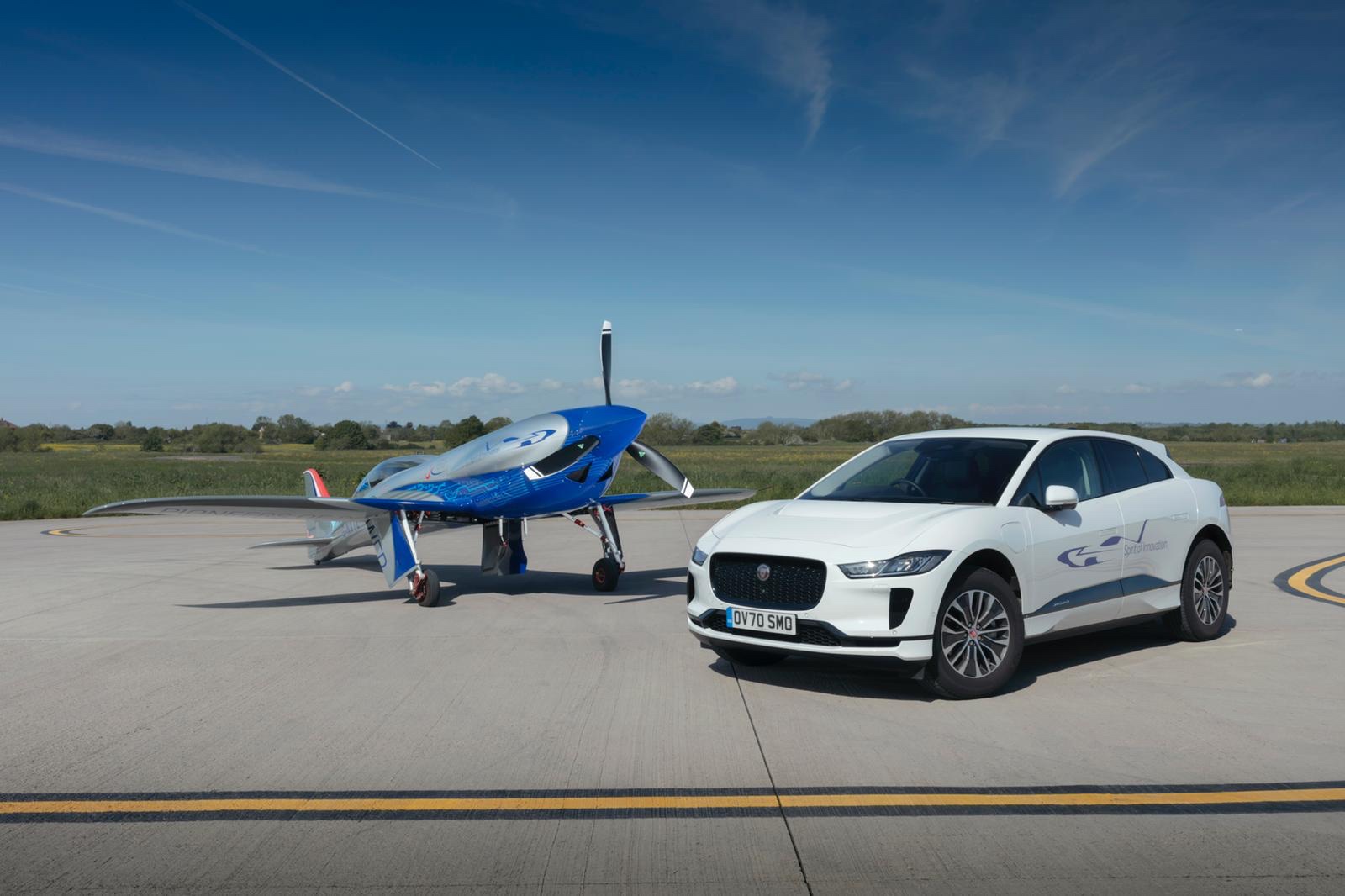
They make an interesting pair.
There is a full analysis of the plane in this article on CleanTechnica, which is entitled Rolls-Royce Attempting 100% Electric Aircraft Speed Record, Jaguar I-PACE Offering Ground Support.
The Jaguar can even tow the plane.
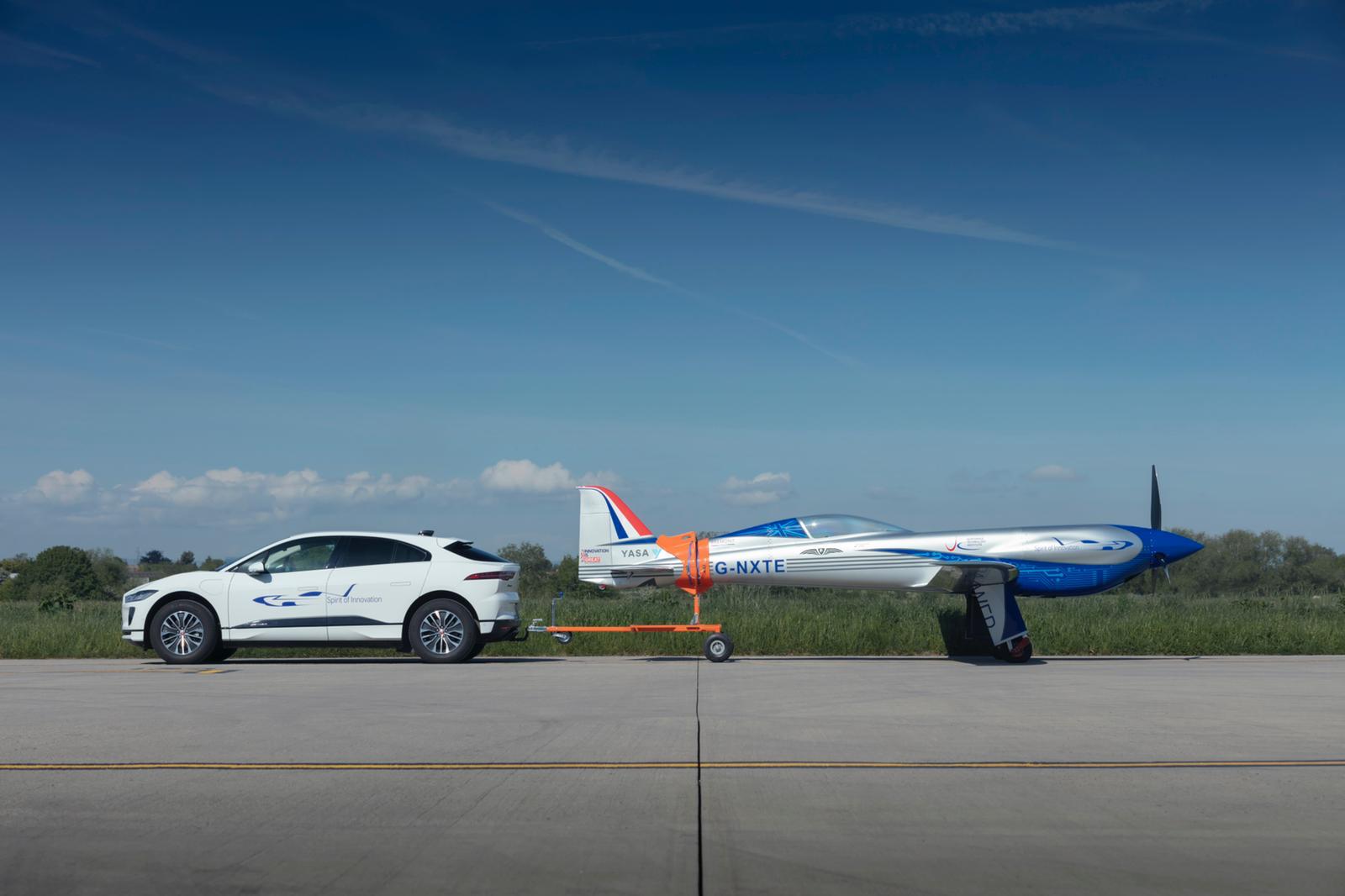
Unusual.
Also on On July 8th, 2021, the company issued this press release, which is entitled Rolls-Royce And Cavendish Nuclear Sign Delivery And Manufacturing Partnership Agreement For SMR Programme.
Another world-class company has joined the small modular nuclear reactor programme.
I have feelings, that this could be the start of something small and incredibly powerful!
Conclusion
I suspect Rolls-Royce have lots of useful research sitting in their archives. We should all follow, what they doing.
The Complex Web At Sunderland
This article on the BBC is entitled Nissan Announces Major UK Electric Car Expansion.
This is the first few paragraphs.
Nissan has announced a major expansion of electric vehicle production at its car plant in Sunderland which will create 1,650 new jobs.
The Japanese carmaker will build its new-generation all-electric model at the site as part of a £1bn investment that will also support thousands of jobs in the supply chain.
And Nissan’s partner, Envision AESC, will build an electric battery plant.
I think there is more to this than meets the eye!
We wait several years for a battery gigafactory to come along and then two come along in a month or two; Blyth and Sunderland. On television today, a BBC reporter talked of eight possible battery gigafactories in the UK.
Lithium Supply
Where do they all think the lithium will come from, as some say there’s a world-wide shortage?
The only explanation, is that the UK government and the gigafactory owners have bought into a secure source of lithium, that is convenient for or easily transported to the North-East.
I am very suspicious that Cornish Lithium or British Lithium have found something bigger than anybody expected.
The numbers don’t add up otherwise!
Lithium Refining
On the other hand, it appears that lithium needs a lot of electricity to extract the metal from the ores, as electrolysis is used.
But with all the windpower being developed off the North-East Coast, there could be more than enough to refine the lithium.
Remember too, that lithium has applications in defence and aerospace applications, when alloyed with magnesium and aluminium.
So could a substantial lithium refining capability be built in the North-East?
The Chinese View
In The Times, Lei Zhang, who is chief executive of Envision also said he liked our masses of offshore wind power, so perhaps the Chinese want to produce green batteries in Sunderland after refining the lithium in the North-East?
Conclusion
We probably need battery-electric cars built from green steel, fitted with green batteries and charged with green electricity.
Is the Gigawatts of offshore wind electricity in the North-East luring the battery and car makes to the area.
Could we also see green steel manufacturing on Teesside?
A Ford F150 Lightning Could Travel A Thousand Miles On Hydrogen
The title of this post, is the same as that of this article on Hydrogen Fuel News.
I have no interest in buying any vehicle, let alone a big American pickup.
But I found the article an interesting comparison between a battery-powered vehicle and what could be done with hydrogen.
They feel that the hydrogen-powered vehicle will have a longer range, a better towing capability and have better climate-control.
Thoughts On The Duke’s Land Rover Hearse
This article on The Times is entitled The Land Rover hearse: a vehicle fit for the Duke of Edinburgh’s final journey.
I made this comment.
There’s a church near me in Hackney, where in less restricting times, you regularly saw a horse-drawn funeral. These must cost a fortune to maintain and provide.
I remember seeing a report on the BBC about an undertaker, who has created a motorcycle and sidecar hearse for the funerals of those of a certain persuasion.
I can imagine some of my farming and off-road enthusiast friends liking the idea of being taken to their funeral in a hearse made from a Land-Rover. As you say, it would have a certain style.
There are even conversions, so that old Defenders can be converted to run on battery power, so the hearse could be zero-carbon too!
I have just heard Giles Brandreth on the BBC, who as the biography of the Duke, was at the funeral, as a reporter. He said that he had talked to the Commander of the Guards, who had walked alongside the hearse in the procession. He related how the driver had difficulty keeping the speed down with a lot of slipping of the clutch and noise from the diesel engine.
As I said in my comment to The Times article, perhaps the hearse should have been battery-powered. But then surely, this should apply to a fair proportion of all hearses.
Massless Energy Storage: The Next Step In Battery Technology
The title of this post, is the same as that of this article on AZOCleanTech.
This is the introductory paragraph.
In this environmentally conscious world, fossil fuels are being shunned in favor of renewables for electricity generation and transportation. Due to their periodic nature, excess energy generated by renewables is frequently stored in batteries. However, these often add extra weight to the cars and consumer electronics they power.
To solve the problem, researchers in Sweden have developed a structural battery.
Sounds like a good idea to me!
Are Hydrogen-Fuelled Vehicles A Waste Of Our Time And Energy?
The title of this post, is the same as that of this article on Engineering & Technology, which is the magazine of the Institution of Engineering and Technology. So it should be authoritative.
This is the concluding paragraph.
Cars account for 61 per cent of surface transport emissions, HGVs only 17 per cent, buses 3 per cent, and rail 2 per cent (CCC, December 2020) so for cost/benefit it cannot be worthwhile switching to hydrogen fuel cell buses and trains. Through any impartial lens of engineering science, hydrogen fuel cell cars do not appear to be a transport winner and the Government should revisit decisions it has made about related funding. But then there is political virtue signalling.
It is a must-read contribution to the debate, as to whether hydrogen or battery power, is best for surface transport.
I don’t believe there is a simple answer, because for some applications, battery electric power is not feasible because of reasons of power or range.
- Would a battery-electric truck, be able to haul a forty-four tonne load between the Channel Tunnel and Scotland?
- Would a battery-electric locomotive be able to haul a thousand tonne aggregate or stone train for anything but a few tens of miles?
- Is it possible to design a a battery-electric double-deck bus, that can carry seventy passengers?
I believe there are applications, where battery-electric is not a feasible alternative to the current diesel traction.
It is worth noting, that truck-maker; Daimler is planning to have both battery and hydrogen heavy trucks in its product line.
Users will choose, what is the best zero-carbon transport for their needs.
The Black Cab Driver’s Answer
It is always said, that, if you want to know the answer to a difficult question, you ask the opinion of a black cab driver.
So as the new electric black taxis, are the most common electric vehicle, that the average Londoner uses, what do the guys up-front say about their expensive vehicles.
- Regularly, cab drivers complain to me about the range and having to use the diesel engine to charge the battery or power the car.
- Some suggest to me, that hydrogen might be a better way to make the vehicles zero-carbon.
I think they may have a point about hydrogen being a better method of powering a black taxi, when you look at the pattern of journeys and the battery size and charging limitations of the vehicle.
These limitations may reduce in the future, as the technology gets better, with higher density batteries and faster charging.
We could even see a design and sales war between battery and hydrogen black cabs.
It always pays to follow the money!
Jaguar Car Brand To Be All-Electric By 2025
The title of this post, is the same as that of this article on the BBC.
It would appear, that some of the larger vehicles will be powered by hydrogen.
But it is an interesting, even if it is an inevitable move.
I find these two paragraphs interesting.
But it has dropped plans to build an electric version of its XJ saloon at the Castle Bromwich plant, meaning the site will eventually stop making cars.
Chief executive Thierry Bolloré said the plant would focus instead on “non-production” activities in the long term, without giving details.
Note.
- Castle Bromwich is a large site.
- It’s probably not in the best place to build thousands of cars.
- Would turning it into a giant battery-pack factory be classed as non-production?
It sounds like there’s a cunning plan.
- As an engineer, I believe, there’s only one way to build an electric car and that is as light in weight as possible to make sure the car goes as far as possible on each charge of the battery.
- So this will mean the sort of construction methods used for Formula One cars and aircraft.
- Will this in turn mean a brand new factory, that makes cars in radically different ways?
I think there’s a lot more to be disclosed.
Ovo To Launch ‘Half-Price’ Electric Vehicle Charging Tariff
The title of this post, is the same as that of this article on the Guardian.https://www.theguardian.com/money/2021/jan/26/ovo-to-launch-half-price-electric-vehicle-charging-tariff
This is the sub-title.
New Drive Anytime rate bids to mirror rivals’ off-peak tariff with savings of 60% a year, supplier claims.
If I had a car, it might be a good deal.
 The Anonymous Widower