Irlam Station To Go Step-Free
This document on the Government web site is entitled Access for All: 73 Stations Set To Benefit From Additional Funding.
Irlam station is on the list.
These pictures show the station and the current subway.

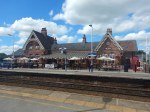

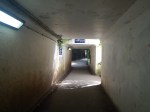

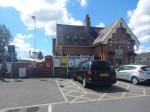
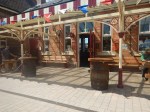
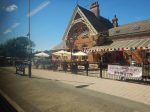
The station was a total surprise, with a large pub-cafe and a lot of visitors and/or travellers sitting in the sun.
I had an excellent coffee and a very welcoming gluten-free blueberry muffin!
This Google Map shows the station.
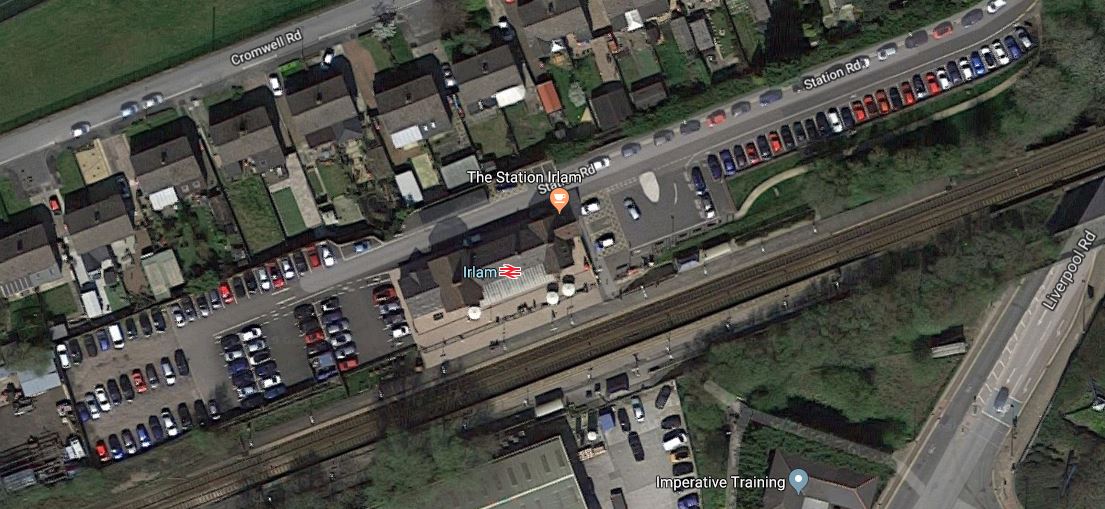
It is one of those stations where commuters have to cross the railway either on the way to work or coming home.
So a step-free method of crossing the railway is absolutely necessary.
The Current And Future Rail Service
As the station lies conveniently between Liverpool and Warrington to the West and Manchester and Manchester Airport to the East, it must be a station with tremendous potential for increasing the number of passengers.
At the moment the service is two trains per hour (tph) between Liverpool Lime Street and Manchester Oxford Road stations.
- Oxford Road is probably not the best terminus, as it is not on the Metrolink network.
- When I returned to Manchester, many passengers alighted at Deansgate for the Metrolink.
- On the other hand, Liverpool Lime Street is a much better-connected station and it is backed up by Liverpool South Parkway station, which has a connection to Merseyrail’s Northern Line.
- The current service doesn’t serve Manchester Piccadilly or Airport stations.
A guy in the cafe also told me that two tph are not enough and the trains are often too short.
Merseyrail work to the same principle as the London Overground and other cities of four tph at all times and the frequency certainly draws in passengers.
Whilst I was drinking my coffee, other trains past the station.
- One tph – Liverpool Lime Street and Manchester Airport
- One tph – Liverpool Lime Street and Norwich
Modern trains like Northern’s new Class 195 trains, should be able to execute stops at stations faster than the elderly diesel trains currently working the route.
So perhaps, after Irlam station becomes step-free, the Manchester Airport service should call as well.
As Liverpool Lime Street station has been remodelled, I can see a time in the not too distant future, when that station can support four tph, that all stop at Irlam station.
The Manchester end of the route could be a problem, as services terminating at Oxford Road have to cross the busy lines of the Castlefield Corridor.
So perhaps all services through Irlam, should go through Deansgate, Manchester Oxford Road and Manchester Piccadilly stations to terminate either at the Airport or perhaps Stockport or Hazel Grove stations.
But would this overload the Castlefield Corridor?
Battery/Electric Trains
If you look at the route between Liverpool Lime Street and Manchester Oxford Road stations, the following can be seen.
- Only about thirty miles between Deansgate and Liverpool South Parkway stations is not electrified.
- The section without electrification doesn’t appear to be particularly challenging, as it is along the River Mersey.
It is my view, that the route between Liverpool and Manchester via Irlam, would be an ideal route for a battery/electric train.
A train between Liverpool Lime Street and Manchester Airport stations would do the following.
- Run from Liverpool Lime Street station to Liverpool South Parkway station using the installed 25 KVAC overhead electrification.
- Drop the pantograph during the stop at Liverpool South Parkway station.
- Run from Liverpool South Parkway station to Deansgate station using battery power.
- Raise the pantograph during the stop at Deansgate station.
- Run from Deansgate station to Manchester Airport station, using the installed 25 KVAC overhead electrification.
The exact distance between Deansgate and Liverpool South Parkway stations is 28.2 miles or 45.3 kilometres.
In 2015, I was told by the engineer riding shotgun on the battery/electric Class 379 train, that that experimental train was capable of doing fifty kilometres on battery power.
There are at least four possible trains, that could handle this route efficiently.
- Porterbrook’s proposed batteryFLEX train based on a Class 350 train.
- A battery/electric train based on the seemingly unwanted Class 379 train.
- A battery/electric version of Stadler’s Class 755 train.
- I believe that Bombardier’s Aventra has been designed so that a battery/electric version can be created.
There are probably others and I haven’t talked about hydrogen-powered trains.
Battery power between Liverpool and Manchester via Irlam, appears to be very feasible.
Tram-Trains
As my train ran between Manchster and Irlam it ran alongside the Metrolink between Cornbrook and Pomona tram stops.
Manchester is very serious about tram-trains, which I wrote about in Could A Class 399 Tram-Train With Batteries Go Between Manchester Victoria And Rochdale/Bury Bolton Street/Rawtenstall Stations?.
Tram-trains are often best employed to go right across a city, so could the Bury tram-trains go to Irlam after joining the route in the Cornbrook area?
- Only about thirty miles between Deansgate and Liverpool South Parkway stations is not electrified.
- The route between Liverpool and Manchester via Irlam doesn’t look to be a very challenging line to electrify.
- The total distance bettween Liverpool Lime Street and Manchester Victoria station is only about forty miles, which is a short distance for a tram-train compared to some in Karlsruhe.
- Merseyrail’s Northern Line terminates at Hunts Cross station, which is going to be made step-free.
- There is an existing step-free interchange between the Liverpool and Manchester route via Irlam and Merseyrail’s Northern Line at Liverpool South Parkway station.
- Class 399 tram-trains will have a battery capability in South Wales.
- Class 399 tram-trains have an operating speed of 62 mph, which might be possible to increase.
- Stadler make Class 399 tram-trains and are building the new Class 777 trains for Merseyrail.
I think that Stadler’s engineers will find a totally feasible and affordable way to link Manchester’s Metrolink with Liverpool Lime Street station and Merseyrail’s Northern and Wirral Lines.
I can envisage the following train service running between Liverpool and Manchester via Irlam.
- An hourly service between Liverpool Lime Street and Nottingham, as has been proposed for the new East Midlands Franchise.
- A four tph service between Liverpool Lime Street and Manchester Airport via Manchester Piccadilly.
- A tram-train every ten minutes, linking Liverpool Central and Manchester’s St Peter’s Square.
- Tram-trains would extend to the North and East of Manchester as required.
- All services would stop much more comprehensively, than the current services.
- Several new stations would be built.
- In the future, the tram-trains could have an interchange with High Speed Two at Warrington.
Obviously, this is just my speculation, based on what I’ve seen of tram-train networks in Germany.
The possibilities for the use of tram trains are wide-ranging.
Installing Step-Free Access At Irlam Station
There would appear to be two ways of installing step-free access at Irlam station.
- Add lifts to the existing subway.
- Add a separate bridge with lifts.
These are my thoughts on each method.
Adding Lifts To The Existing Subway
Consider.
- The engineering would not be difficult.
- Installaton would probably take a number of weeks.
- There is good contractor access on both sides of the railway.
There are similar successful step-free installations around the UK
The problem is all about, how you deal with passengers, whilst the subway is closed for the installation of the lifts.
Adding A Separate Bridge With Lifts
Consider.
- There is a lot of space at both the Eastern and Western ends of the platform to install a new bridge.
- Adding a separate bridge has the big advantage, that during the installation of the bridge, passengers can use the existing subway.
- Once the bridge is installed, the subway can be refurbished to an appropriate standard.
Passengers will probably prefer the construction of a new bridge.
In Winner Announced In The Network Rail Footbridge Design Ideas Competition, I wrote how the competition was won by this bridge.
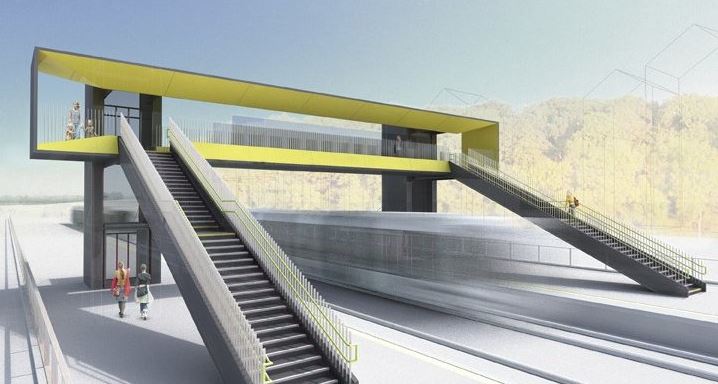
So could a factory-built bridge like this be installed at Irlam station?
There is certainly space at both ends of the platform to install such a bridge and the daily business of the station and its passengers would be able to continue unhindered, during the installation.
I’m also sure, that the cafe would be happy to provide the daily needs of the workforce.
Conclusion
From a station and project management point-of-view, adding a new factory-built bridge to Irlam station is the easiest and quickest way to make the station step-free.
It also appears, that Network Rail have made a wise choice in deciding to put Irlam station on their list of stations to be made step-free, as the station could be a major part in creating a new high-capacity route between Liverpool and Manchester.
This could also be one of the first stations to use an example of the new bridge.
- Installation would be quick and easy.
- There is no site access problems.
- There station can remain fully open during the installation.
- All stakeholders would probably be in favour.
But above all, it would be a superb demonstration site to bring those from stations, where Network Rail are proposing to erect similar bridges.
East Midlands Railway’s New Look
The title of this post, is the same as a short article in Issue 882 of Rail Magazine.
What is interesting, is that it shows a visualisation of a Class 360 train in the new livery.
In Abellio East Midlands Railway’s Plans For London And Corby, I came to this conclusion.
I wouldn’t be surprised, if East Midlands Railway brought in Class 379 or Class 360 trains as a stop-gap and replaced them with electric versions of the bi-modes in 2022.
The best solution would be to obtain three twelve-car all-electric versions of the bi-modes by December 2020, to run the initial service.
Hitachi has a 125 mph electric Class 801 train and a 125 mph bi-mode Class 802 train.
Stadler has a 125 mph electric version of Greater Anglia’s Class 745 train and I suspect a compatible 125 mph bi-mode train.
Bombardier are working on a 125 mph bi-mode Aventra and have been quoted as saying Aventras can be stretched to 125 mph.It will be interesting to see what trains East Midlands Railway chooses.
By showing, a Class 360 train in their new livery, are they attempting to do one or all of the following.
- Get better terms for the nine interim trains they may need.
- Get better terms and earlier delivery for enough new twelve-car electric trains to run a 125 mph service between London and Corby.
- Trying to get better terms with the leasing companies to take back Class 379 and Class 360 trains, currently at Greater Anglia.
The Dutch can be tough negotiators.
Is There Nothing A Class 319 Train Can’t Do?
If a train every goes into orbit round the world, it will be highly-likely that it will be a Class 319 train!
Electric Trains In North-West England
The fleet of eighty-six trains entered service in 1987 on Thameslink and now twenty-seven are plying their trade on the electrified routes around the North-West of England.
- You don’t hear many complaints about them being called London’s cast-offs.
- Passengers fill them up in Blackpool, Liverpool, Manchester and Preston.
- They still do 100 mph where possible.
- They seem to be reliable.
- They are not the most attractive of trains.
But handsome is as handsome does!
Drivers have told me, that although the suspension may be a bit soft for the bumpy route across Chat Moss, the trains do have superb brakes.
Bi-Mode Class 769 Trains
Nearly thirty of the trains are being converted into bi-mode Class 769 trains for working partially-electrifired routes and although these are running late, they should be in service this year.
Rail Operations Group
Two Class 769 trains have been ordered to be fast logistics trains by Rail Operations Group.
Wikipedia says the trains will be used to transport mail.
But if you read the history of the Rail Operations Group, they make the assets sweat and I’ve read the trains will still have seats, so they might do some other rail operations.
The Hydrogen-Powered Class 799 Train
And now comes the Class 799 train!
This is a demonstrator to prove the concept of conversion to hydrogen power.
The fact that the train now has it’s own number must be of some significance.
Alstom are converting Class 321 trains into Class 321 Breeze trains.
- The conversion will reduce passenger capacity, due to the large hydrogen tank
- It will have a 1,000 km range.
- It will have regenerative breaking.
- It will have a new AC traction package
- It will probably have the interior of a Class 321 Renatus train.
The conversion will obviously build on Alstom’s experience with the Alstom Coradia iLint train and Eversholt’s experience with the Renatus.
When it comes to the Class 799 train, the following will apply.
- Porterbrook have all the experience of creating the bi-mode and dual-voltage Class 769 train.
- Birmingham University’s Birmingham Centre For Railway Research And Education (BCRRE) are providing the expertise to design and convert the Class 319 train to hydrogen power.
- I also wouldn’t be surprised to find out, that the BCRRE has applied some very extensive mathematical modelling to find out the performance of a hydrogen-powered Class 319 train or HydroFLEX train.
- The conversion could be based closely on Class 769 experience and sub-systems,
Could the main purpose be to demonstrate the technology and ascertain the views of train operators and passengers on hydrogen power?
The most important question, is whether the Class 799 train, will have the same passenger capacity as the original Class 319 train?
If it does, then BCRRE must have found a way to store the hydrogen in the roof or under the floor.
It should be noted, that it was only in September 2018, that the contract to develop the Class 799 train was signed and yet less than a year later BCRRE and Porterbrook will be demonstrating the train at a trade show.
This short development time, must mean that there is not enough time to modify the structure of the train to fit a large hydrphen tank inside, as Alstom are proposing.
A smaller hydrogen tank could be placed in one of three places.
- Underneath the train.
- On the roof.
- Inside the train, if it is small enough to fit through the train’s doors.
Note.
- I doubt that anybody would put the tank inside the train for perceived safety reasons from passengers.
- On the roof, would require substantial structural modifications. Is there enough time?
So how do you reduce the size of the hydrogen tank and still store enough hydrogen in it to give the train a useful range?
In Better Storage Might Give Hydrogen The Edge As Renewable Car Fuel, I indicated technology from Lancaster University, that could store four times as much hydrogen in a given size of tank.
This reduced tank size would make the following possible.
- The hydrogen tank, the fuel cell and the batteries could be located underneath the four-cars of the Class 319 train.
- The seating capacity of the Class 799 train could be the same as that of a Class 319 train.
Clever electronics would link everything together.
If BCRRE succeed in their development and produce a working hydrogen-powered Class 799 train, how would the technology be used?
Personally, I don’t think we’ll see too many hydrogen-powered Class 799 trains, running passengers on the UK network.
- The trains are based on a thirty-year-old train.
- The interiors are rather utilitarian and would need a lot of improvement, to satisfy what passengers expect.
- Their market can probably be filled in the short-term by more Class 769 trains.
But I do believe that the technology could be applied to more modern trains.
A Hydrogen-Powered Electrostar
Porterbrook own at least twenty four-car Electrostar trains, which have been built in recent years.
Six Class 387 trains, currently used by c2c, may come off lease in the next few years.
Could these trains be converted into a train with the following specification?
- Modern train interior, with lots of tables and everything passengers want.
- No reduction in passenger capacity.
- 110 mph operating speed using electrification.
- Useful speed and range on hydrogen power.
- ERTMS capability, which Porterbrook are fitting to the Class 387 trains to be used by Heathrow Express.
It should be born in mind, that a closely-related Class 379 train proved the concept of a UK battery train.
- The train was converted by Bombardier.
- It ran successfully for three months between Manningtree and Harwich.
- The interior of the train was untouched.
But what was impressive was that the train was converted to battery operation and back to normal operation in a very short time.
This leads me to think, that adding new power sources to an Electrostar, is not a complicated rebuild of the train’s electrical system.
If the smaller hydrogen tank, fuel cell and batteries can be fitted under a Class 319 train, I suspect that fitting them under an Electrostar will be no more difficult.
I believe that once the technology is proven with the Class 799 train, then there is no reason, why later Electrostars couldn’t be converted to hydrogen power.
- Class 387 trains from c2c, Great Northern and Great Western Railway.
- Class 379 trains, that will be released from Greater Anglia by new Class 745 trains.
- Class 377 trains from Southeastern could be released by the new franchise holder.
In addition, some Class 378 trains on the London Overground could be converted for service on the proposed West London Orbital Railway.
A Hydrogen-Powered Aventra
If the Electrostar can be converted, I don’t see why an Aventra couldn’t be fitted with a similar system.
Conclusion
A smaller hydrogen tank, holding hydrogen at a high-density would enable trains to be converted without major structural modifications or reducing the passenger capacity.
The development of a more efficient method of hydrogen storage, would open up the possibilities for the conversion of trains to electric-hydrogen hybrid trains.
Abellio’s Plans For London And Melton Mowbray Via Corby And Oakham
This page on the Department for Transport web site is an interactive map of the Abellio’s promises for East Midlands Railway.
These are mentioned for services to Oakham and Melton Mowbray.
- After electrification of the Corby route there will continue to be direct service each way between London and Oakham and Melton Mowbray once each weekday, via Corby.
- This will be operated with brand new 125mph trains when these are introduced from April 2022.
This seems to be a very acceptable minimum position.
In Abellio’s Plans For London And Corby, I suggested that Class 379 trains could be used on the route and that the trains might be fitted with batteries.
- Corby and Melton Mowbray are about twenty-fives apart.
- Batteries and their fast-charging technology has come on at a fast pace since Abellio participated in the Class 379 BEMU Trial in 2015.
Are Abellio thinking about extending some Croby services using battery technology?
The technology is certainly capable, but is there a proven passenger need?
Turning Trains At Melton Mowbray stations
This Google Map shows Melton Mowbray station.
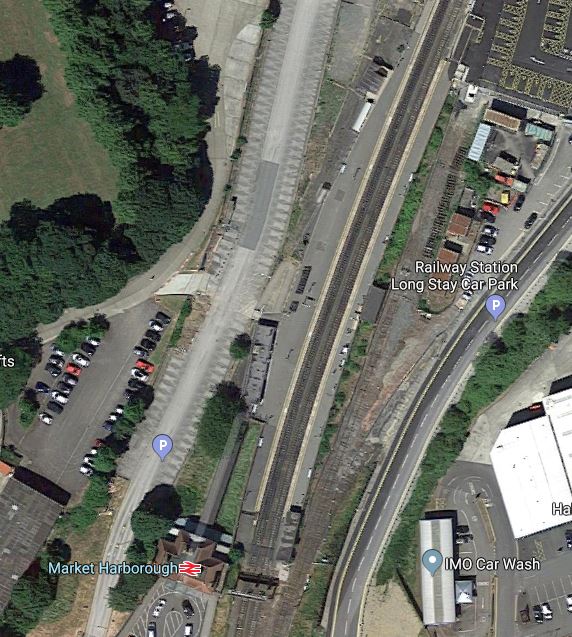
It looks to be a station on a large site with more than adequate car parking and I suspect building a bay platform with charging facilities would not be the most difficult of projects.
Conclusion
As current trains take about thirty minutes between Corby and Melton Mowbray, with a bay platform at the latter station, I think it would be possible to run hourly Class 379 trains with batteries to and from St. Pancras.
Abellio East Midlands Railway’s Plans For London And Corby
This page on the Department for Transport web site is an interactive map of the Abellio’s promises for East Midlands Railway.
These are mentioned for Midland Main Line services to Corby.
Dedicated Corby – St Pancras Express Service Will Be Introduced From December 2020 With 12-car Trains In The Peaks
In 2020, the route between London and Corby will have been improved.
- It will be fully electrified.
- There will be double-track between Kettering and Corby.
- Corby station will have a second platform.
- 125 mph running will be possible in sections of the route between London and Corby.
- Twelve-car trains indicate, that the rolling stock would be modern electric multiple units.
Possible trains include.
- Class 387 trains, which are capable of 110 mph.
- Class 379 trains, which are capable of 100 mph.
- Class 350 trains, which are capable of 110 mph.
- In Issue 877 of Rail Magazine, it is rumoured that Greater Anglia’s Class 360/1 trains will be used, which are capable of 100 mph.
There must also be the possibility, for a train manufacturer to deliver enough new trains to run the London and Corby service.
To run the current hourly service, three trains are needed, so if each train was three four-car electric multiple units, nine trains would be needed.
As these electric trains will need to mix it with the 125 mph trains on the fast lines between St. Pancras and Kettering, 110 mph trains would probably be preferable.
Class 387 trains were originally mooted for this route, but they all seem to have been snapped up by other operators, who may be reluctant to let them go.
On the other hand, as I wrote in When Crossrail Opens To Reading, Will Great Western Railway Have Too Many Class 387 Trains?, Great Western Railway may have a few trains going spare.
The three other possible trains are both used in Abellio-run franchises.
- ,Abellio Greater Anglia are replacing their thirty Class 379 trains with new Stadler Class 745/1 trains in 2019.
- Abellio Greater Anglia are replacing their twenty-one Class 360 trains with new Bombardier Class 720 trains in 2020.
- West Midlands Trains have a large fleet of Class 350 trains.
Greater Anglia’s plans currently give the order of the new Stadler fleet introduction as.
- Four-car Class 755/4 trains
- Twelve-car Class 745/0 trains for London and Norwich services
- Three-car Class 755/3 trains
- Twelve-car Class 745/1 trains for London and Stansted services
All trains are to be introduced by the end of 2020.
The Bombardier Class 720 trains are also planned to be introduced by the same date, starting this Autumn.
Could this mean that it is likely that nine Class 379 or Class 360 trains could be available before the end of 2019?
If Class 379 or Class 360 trains are used to Corby, it would allow a very relaxed train introduction.
There could be at least a year, to turn the trains into perfect trains for a high-capacity London and Corby service.
I think using Class 387 and Class 350 trains wouldn’t be so simple.
As the Class 745/1 trains for London and Stansted could be the last to be delivered, which might delay the release of the Class 379 trains, could this explain the rumours for using the Class 360 trains, between London and Corby.
There is also an interesting possibility.
Suppose, Abellio decided to order 125 mph trains from Stadler identical to the Class 745/0 trains between London and Norwich on the route between London and Corby.
- Stadler probably knows how to upgrade the trains to 125 mph, as there are electric Flirts in Norway with this performance.
- Greater Anglia have invested heavily in driver simulators and training aids for their Stadler trains.
- By the end of 2019, they will be running Class 745/0 trains between London and Norwich.
With different colours and a few route-specific details, the London and Norwich Class 745/0 trains, would surely be more than acceptable for London and Corby.
Stadler would surely be able to build the extra trains before the Stansted trains. This would mean that the unwanted Class 379 trains would have to soldier on to Stansted for a few more months.
125 mph Class 745 trains would be a magnificent upgrade to the London and Corby service.
Corby – London Service Doubled To Two Trains Per Hour All Day
This would mean the need would be eighteen four-car trains. or six twelve-car trains.
There are enough Class 379 and Class 360 trains, but obtaining the originally-planned Class 387 trains could be problematic.
Building the three extra new trains would not be a problem.
Kettering, Luton And Luton Airport Parkway Services Provided With 2 Trains Per Hour for Most Of The Day
Note.
- Luton station is on the latest list of stations to be made step-free by 2024.
- Luton Airport has been agitating for more fast trains to and from London and now gets a half-hourly express.
- Luton Airport Parkway station will have the Luton DART connection to the Airport in 2021.
- Class 379 trains are designed for airport services.
It appears to be a better service for passengers.
Enhanced Sunday Service Throughout The Route With Regular Direct Sunday Services Between London And Corby
No passenger complaints here.
Refurbished Modern Express Trains From December 2020
Features include.
- Increased capacity
- More reliable service
- Improved comfort
- Passenger information system
- Free on-board Wi-Fi
- At-seat power sockets
- USB points
- Air conditioning
- Tables at all seats
- Increased luggage space
- On-board cycle storage
What more could passengers want?
Many of these features are already installed in the Class 379 trains and would be no problem.
- When I rode the BEMU Trial train between Maningtree and Harwich, the information on the Class 379 train was word perfect.
- The trains are reliable and comfortable.
- Wi-fii, power sockets, air-conditioning and increased luggage space are already fitted.
- The trains have lots of tables, but not at every seat.
These are a selection of pictures of the interior of a Class 379 train.
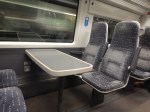
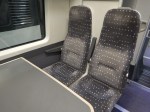
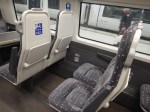
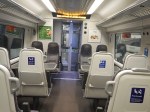
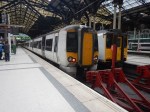
Updating the interior of the trains would not be a major problem.
Class 360 Trains Would Need A Substantial Refurbish
If Class 360 trains were to be used to Corby, they would need a substantial refurbish, but the general feeling is that this would be possible and there is a year to do it.
iNew-Build Class 745 Trains
With a small fleet of new-build Class 745 trains, the customer would get what they want! – Tables, 2+2 seating, wi-fi sockets etc.
The Greater Anglia London and Norwich specification would be a good starting point.
Will The Class 379 Trains Be Fitted With Batteries?
The BEMU Trial in 2015, showed that this was feasible. Abellio was involved in this trial and must have their own views on the technology.
- Depots are safer places.
- Electrification can be simpler.
- Regenerative braking can be handled on the train without using the overhead wires for return currents.
- Batteries increase train efficiencies.
This picture shows, the wires are going up at Corby.
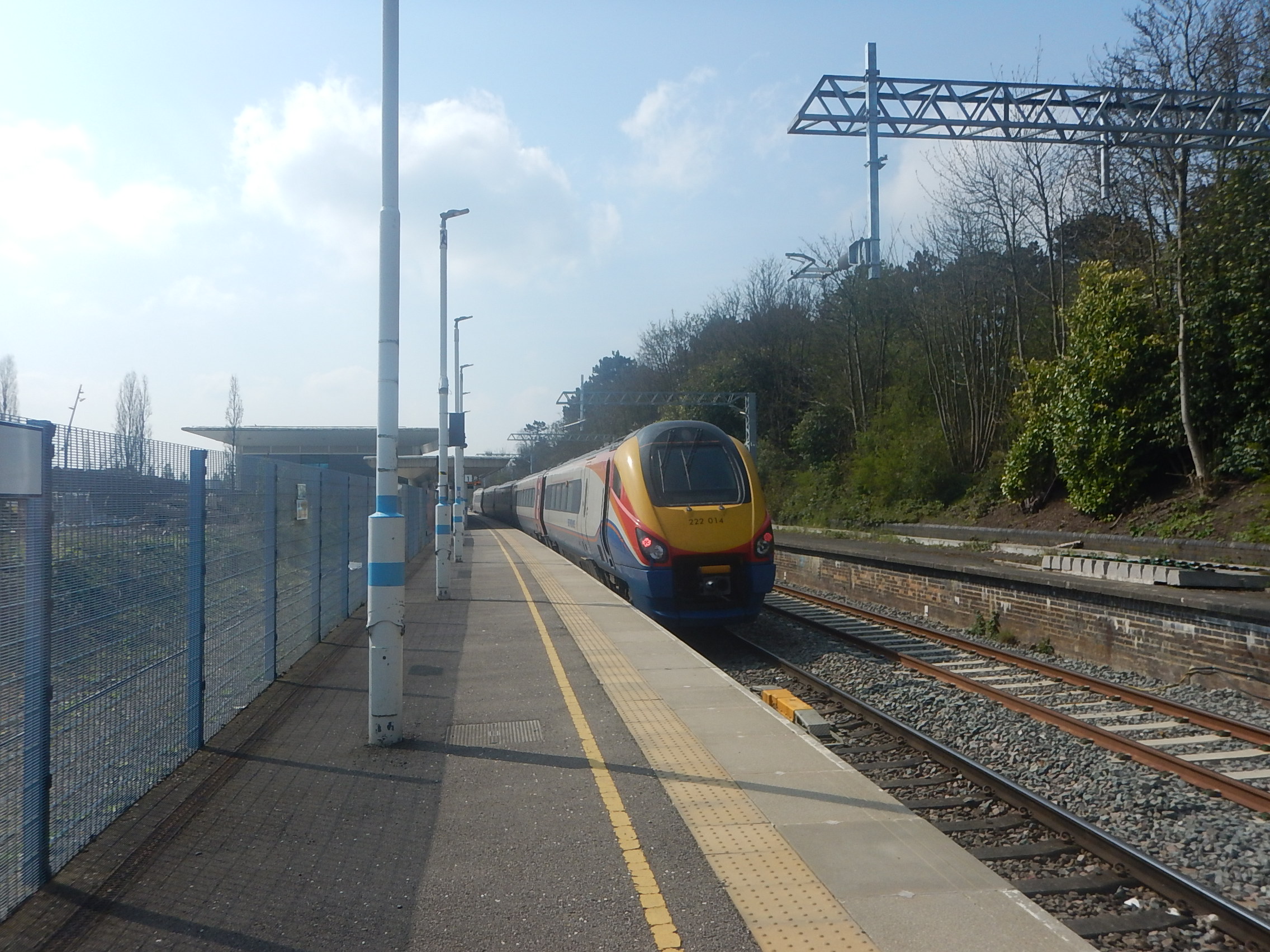
So it doesn’t look like battery power will be used to Corby.
But batteries could still be fitted for efficiency and safety reasons or possibly to power the trains to Oakham and Melton Mowbray.
What About The Rumour Suggesting Class 360 Trains Will Be Used?
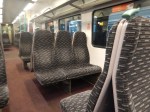
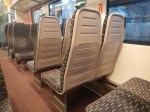
These are some pictures of a Class 360 train.


Consider.
- The Class 360 trains have a 2+3 interior with few if any tables.
- If Bombardier deliver the Class 720 trains, later than planned, availability of the Class 360 trains for Corby could be tight.
- Could they be prated to 110 mph trains, if that was felt necessary?
I feel that there would be a lot more work to prepare the trains for Corby and a higher chance, they would be late!
I think except as a stop-gap, it is unliklely that Class 360 trains will be used between London and Corby.
Will The Trains Be Replaced In A Few Years?
Consider.
- The London and Corby route is 79.5 miles long and takes 75 minutes with four stops, which is an average speed of 64 mph.
- At present, services between London and Corby are run using 125 mph Class 222 trains.
- The Class 222 trains have better acceleration than an InterCity 125 and much better acceleration than a Class 360 train.
- The London to Corby route is a less-than-125 mph route.
- Network Rail ia currently improving the electrification between London and Bedford, so that the route between London and Corby will be an electrified 125 mph route.
- None of the trains being considered for the service between London and Corby is faster than 110 mph.
Does all this mean that Corby services might be slower after electrification?
- Will the 125 mph upgrade to the track and electrification ensure the electric trains are faster, even if they are 100 mph trains.
- Well-driven 100-110 mph trains might be as fast.
However, the Derby, Nottingham and Sheffield expresses might be slowed, just as they are by the 100 mph Thameslink trains.
In the article in Issue 877 of Rail Magazine, four manufacturers are suggested for the bi-mode trains that will be used between London and Derby, Nottingham and Sheffield from 2022.
- Bombardier
- Hitachi
- Stadler
- Talgo
Hitachi are the only manufacturer with 125 mph bi-mode trains on the UK Network.
They have a near-identical bi-mode Class 802 train and an all-electric Class 801 train.
- Both are capable of 125 mph running.
- Conversion between the two trains involves changing the number of engines.
- Drivers are probably trained to drive both types of train.
Ideally, on the Midland Main Line, electric trains could run to Corby, with bi-mode trains running to Derby, Nottingham and Sheffield.
So when the 125 mph bi-mode trains are delivered in 2022, would it be sensible to run their 125 mph electric cousins to Corby?
- South of Market Harborough, all East Midlands Railway trains would be 125 mph electric trains, running on 125 mph tracks.
- One tph between London and Corby would need three twelve-car trains.
- Two tph between London and Corby would need six twelve-car trains.
If that is the case, then whatever train is run to Corby from December 2020, is only a stop-gap for a couple of years, where only nine four-car trains would be needed.
Would it be more economic in the long term to place the order for the bi-mode trains, with a manufacturer, who can deliver three all-electric trains by December 2020?
I believe Stadler could do that!
Conclusion
I’m fairly certain, that services between London and Corby could be run by refurbished Class 379 trains.
As there is plenty of time before service introduction, this could be a very relaxed and painless introduction of new trains. Unlike some others recently.
There may even be time to upgrade the top speed of the trains, so they fit in better with East Midlands Railway’s 125 mph expresses.
I wouldn’t be surprised, if East Midlands Railway brought in Class 379 or Class 360 trains as a stop-gap and replaced them with electric versions of the bi-modes in 2022.
But the best solution would be to obtain three twelve-car all-electric versions of the bi-modes by December 2020, to run the initial service.
- Hitachi has a 125 mph electric Class 801 train and a 125 mph bi-mode Class 802 train.
- Stadler has a 125 mph electric version of Greater Anglia’s Class 745 train and I suspect a compatible 125 mph bi-mode train.
- Bombardier are working on a 125 mph bi-mode Aventra and have been quoted as saying Aventras can be stretched to 125 mph.
It will be interesting to see what trains East Midlands Railway chooses.
But I think Stadler Class 745 trains are a distinct possibility.
- Abellio will have experience of running these trains and training drivers and other staff.
- 125 mph trains could be almost identical to those on London and Norwich services.
- Stadler have built 125 mph electric Flirts for Norway.
By juggling production a bit, they could be delivered on time for a December 2020 start of services.
Could Electric Trains Run On Long Scenic And Rural Routes?
In the UK we have some spectacular scenic rail routes and several long rural lines.
Basingstoke And Exeter
The West of England Main Line is an important rail route.
The section without electrification between Basingstoke and Exeter St. Davids stations has the following characteristics.
- It is just over one hundred and twenty miles long.
- There are thirteen intermediate stations, where the expresses call.
- The average distance between stations is around nine miles.
- The longest stretch between stations is the sixteen miles between Basingstoke and Andover stations.
- The average speed of trains on the line is around forty-four mph.
There is high quality 750 VDC third-rail electrification at the London end of the route.
Cumbrian Coast Line
The Cumbrian Coast Line encircles the Lake District on the West.
The section without electrification between Carnforth and Carlisle stations has the following characteristics.
- It is around a hundred and fourteen miles long.
- There are twenty-nine intermediate stations.
- The average distance between stations is around four miles.
- The longest stretch between stations is the thirteen miles between Millom and Silecroft stations.
- The average speed of trains on the line is around thirty-five mph.
There is also high standard 25 KVAC electrification at both ends of the line.
Far North Line
The Far North Line is one of the most iconic rail routes in the UK.
The line has the following characteristics.
- It is one-hundred-and-seventy-four miles long.
- There are twenty-three intermediate stations.
- The average distance between stations is around seven miles.
- The longest stretch between stations is the thirteen miles between Georgemas Junction and Wick stations.
- The average speed of trains on the line is around forty mph.
The line is without electrification and there is none nearby.
Glasgow To Oban
The West Highland Line is one of the most iconic rail routes in the UK.
The line is without electrification from Craigendoran Junction, which is two miles South of Helensburgh Upper station and the section to the North of the junction, has the following characteristics.
- It is seventy-eight miles long.
- There are ten intermediate stations.
- The average distance between stations is around eight miles.
- The longest stretch between stations is the twelve miles between Tyndrum Lower and Dalmally stations.
- The average speed of trains on the line is around thirty-three mph.
From Glasgow Queen Street to Craigendoran Junction is electrified with 25 KVAC overhead wires.
Glasgow To Mallaig
This is a second branch of the West Highland Line, which runs between Crianlarich and Mallaig stations.
- It is one hundred and five miles long.
- There are eighteen intermediate stations.
- The average distance between stations is around five miles.
- The longest stretch between stations is the twelve miles between Bridge Of Orchy and Rannoch stations.
- The average speed of trains on the line is around twenty-five mph.
Heart Of Wales Line
The Heart of Wales Line is one of the most iconic rail routes in the UK.
The line is without electrification and the section between Swansea and Shrewsbury stations, has the following characteristics.
- It is just over one hundred and twenty miles long.
- There are thirty-one intermediate stations.
- The average distance between stations is around four miles.
- The longest stretch between stations is the thirteen miles between Shrewsbury and Church Stretton stations.
- The average speed of trains on the line is just under forty mph.
There is also no electrification at either end of the line.
Settle And Carlisle
The Settle and Carlisle Line is one of the most iconic rail routes in the UK.
The section without electrification between Skipton and Carlisle stations has the following characteristics.
- It is just over eighty miles long.
- There are thirteen intermediate stations.
- The average distance between stations is around six miles.
- The longest stretch between stations is the sixteen miles between Gargrave and Hellifield stations.
- The average speed of trains on the line is around forty mph.
There is also high standard 25 KVAC electrification at both ends of the line.
Tyne Valley Line
The Tyne Valley Line is an important route between Carlisle and Newcastle stations.
The line is without electrification has the following characteristics.
- It is just over sixty miles long.
- There are ten intermediate stations.
- The average distance between stations is around six miles.
- The longest stretch between stations is the sixteen miles between Carlisle and Haltwhistle stations.
- The average speed of trains on the line is around mph.
There is also high standard 25 KVAC electrification at both ends of the line.
A Pattern Emerges
The routes seem to fit a pattern, with very similar characteristics.
Important Local Transport Links
All of these routes are probably important local transport links, that get children to school, many people to large towns for shopping and entertainment and passengers of all ages to see their friends and relatives.
Many would have been closed but for strong local opposition several decades ago.
Because of the overall rise in passengers in recent years, they are now relatively safe for a couple of decades.
Iconic Routes And Tourist Attractions
Several of these routes are some of the most iconic rail routes in the UK, Europe or even the world and are tourist attractions in their own right.
Some of these routes are also, very important in getting tourists to out-of-the-way-places.
Lots Of Stations Every Few Miles
The average distance between stations on all lines seems to be under ten miles in all cases.
This surprised me, but then all these lines were probably built over a hundred years ago to connect people to the expanding railway network.
The longest stretch between two stations appears to be sixteen miles.
Diesel Hauled
All trains seem to be powered by diesel.
This is surely very inappropriate considering that some of the routes go through some of our most peaceful and unspoilt countryside.
Inadequate Trains
Most services are run by trains, that are just too small.
I know to put a four-car train on, probably doubles the cost, but regularly as I explore these lines, I find that these two-car trains are crammed-full.
I once inadvertently took a two-car Class 150 train, that was on its way to Glastonbury for the Festival. There was no space for anything else and as I didn’t want to wait an hour for the next train, I just about got on.
Passengers need to be encouraged to take trains to rural events, rather than discouraged.
An Electric Train Service For Scenic And Rural Routes
What would be the characteristics of the ideal train for these routes?
A Four-Car Electric Train
Without doubt, the trains need to be four-car electric trains with the British Rail standard length of around eighty metres.
Dual Voltage
To broaden the applications, the trains should obviously be capable of running on both 25 KVAC overhead and 750 VDC third-rail electrification.
100 mph Capability
The trains should have at least a 100 mph capability, so they can run on main lines and not hold up other traffic.
No Large Scale Electrification
Unless there is another reason, like a freight terminal, quarry, mine or port, that needs the electrification, using these trains must be possible without any large scale electrification.
Battery, Diesel Or Hydrogen Power
Obviously, some form of power will be needed to power the trains.
Diesel is an obvious no-no but possibly could only be used in a small way as emergency power to get the trains to the next station, if the main power source failed.
I have not seen any calculations about the weight, size and power of hydrogen powered trains, although there have been some professional videos.
But what worries me about a hydrogen-powered train is that it still needs some sizeable batteries.
So do calculations indicate that a hydrogen-powered train is both a realisable train and that it can be produced at an acceptable cost?
Who knows? Until, I see the maths published in a respected publication, I will reserve my judgement.
Do Bombardier know anything?
In the July 2018 Edition of Modern Railways, there is an article entitled Bi-Mode Aventra Details Revealed.
A lot of the article takes the form of reporting an interview with Des McKeon, who is Bombardier’s Commercial Director and Global Head of Regional and Intercity.
This is a paragraph.
However, Mr McKeon said his view was that diesel engines ‘will be required for many years’ as other power sources do not yet have the required power or efficiency to support inter-city operation at high-speeds.
As Bombardier have recently launched the Talent 3 train with batteries that I wrote about in Bombardier Introduces Talent 3 Battery-Operated Train, I would suspect that if anybody knows the merits of hydrogen and battery power, it is Mr. McKeon.
So it looks like we’re left with battery power.
What could be a problem is that looking at all the example routes is that there is a need to be able to do station-to-station legs upwards of thirteen-sixteen miles.
So I will say that the train must be able to do twenty miles on battery power.
How Much Battery Capacity Should Be Provided On Each Train?
In Issue 864 of Rail Magazine, there is an article entitled Scotland High Among Vivarail’s Targets for Class 230 D-Trains, where this is said.
Vivarail’s two-car battery units contains four 100 kWh lithium-ion battery rafts, each weighing 1.2 tonnes.
If 200 kWh can be placed under the floor of each car of a rebuilt London Underground D78 Stock, then I think it is reasonable that up to 200 kWh can be placed under the floor of each car of the proposed train.
As it would be required that the train didn’t regularly run out of electricity, then I wouldn’t be surprised to see upwards of 800 kWh of battery installed in the train.
n an article in the October 2017 Edition of Modern Railways, which is entitled Celling England By The Pound, Ian Walmsley says this in relation to trains running on the Uckfield Branch, which is not very challenging.
A modern EMU needs between 3 and 5 kWh per vehicle mile for this sort of service.
So if we are aiming for a twenty mile range from a four-car train with an 800 kWh battery, this means that any energy consumption better than 10 kWh will achieve the required range.
Regular Charging At Each Station Stop
In the previous section, I showed that the proposed train with a full battery could handle a twenty mile leg between stations.
But surely, this means that at every stop, the electricity used on the previous leg must be replenished.
In Porterbrook Makes Case For Battery/Electric Bi-Mode Conversion, I calculated the kinetic energy of a four-car Class 350 train, with a full load of passengers, travelling at ninety mph, as 47.1 kWh.
So if the train is travelling at a line speed of ninety mph and it is fitted with regenerative braking with an efficiency of eighty percent, 9.4 kWh of energy will be needed for the train to regain line speed.
There will also be an energy consumption of between 3 kWh and 5 kWh per vehicle per mile.
For the proposed four-car train on a twenty mile trip, this will be between 240 and 400 kWh.
This will mean that between 240 and 400 kWh will need to be transferred to the train during a station stop, which will take one minute at most.
I covered en-route charging fully in Charging Battery/Electric Trains En-Route.
I came to this conclusion.
I believe it is possible to design a charging system using proven third-rail technology and batteries or supercapacitors to transfer at least 200 kWh into a train’s batteries at each stop.
This means that a substantial top up can be given to the train’s batteries at stations equipped with a fast charging system.
New Or Refurbished Trains?
New trains designed to meet the specification, could obviously be used.
But there are a several fleets of modern trains, which are due to be replaced. These trains will be looking for new homes and could be updated to the required battery/electric specification.
- Greater Anglia – 30 x Class 379 trains.
- Greater Anglia – 26 x Class 360 trains.
- London North Western Railway – 77 x Class 350 trains.
- TransPennine Express – 10 x Class 350 trains
In Porterbrook Makes Case For Battery/Electric Bi-Mode Conversion, I describe Porterbrook’s plans to convert a number of Class 350 trains to battery/electric trains.
These Class 350 Battery/FLEX trains should meet the specification needed to serve the scenic and rural routes.
Conclusion
I am led to the conclusion, that it will be possible to design a battery/electric train and charging system, that could introduce electric trains to scenic and rural routes all over the UK, with the exception of Northern Ireland.
But even on the island of Ireland, for use both North and South of the border, new trains could be designed and built, that would work on similar principles.
I should also say, that Porterbrook with their Class 350 Battery/FLEX train seem to have specfied a train that is needed. Pair it with the right charging system and there will be few no-go areas in mainland UK.
The Silent Transport Revolution
Today, I rode in two battery-powered modes of transport.
Returning from Kings Cross, I was a passenger in one of London’s new black cabs; the LEVC TX.
Earlier in the day, I’d ridden in a battery-powered version of the Class 230 train.
Both vehicles are quieter than diesel-powered versions, as is to be expected.
But what surprised me about the Class 230 train today, is that you can have a normal conversation in the train without raising your voice. The D78 trains from which the Class 230 train has been developed, weren’t that quiet.
The Class 379 BEMU, that I rode in three years ago, was also quiet.
I came back from Scotland in a Standard Class Mark 4 Coach, which was also quiet, but it is a trailer without motors and probably plenty of sound-proofing.
Does the design of a battery-electric vehicle with regenerative braking reduce the noise and vibration emitted?
The Class 230 train has an electrical system based on DC batteries and AC traction motors. So there must be aone very clever heavy electronics to manage the power. So there is orobably little in the electrical system to make the clatter one typically hears on a train. The train obviously has a mechanical brake for emergencies and to bring the train to a funal halt, but that was not used in anger on our short trip.
Bombardier Introduces Talent 3 Battery-Operated Train
The title of this post is the same as that of this article on InsideEVs.
This picture of the train is from Bombardier’s web site.
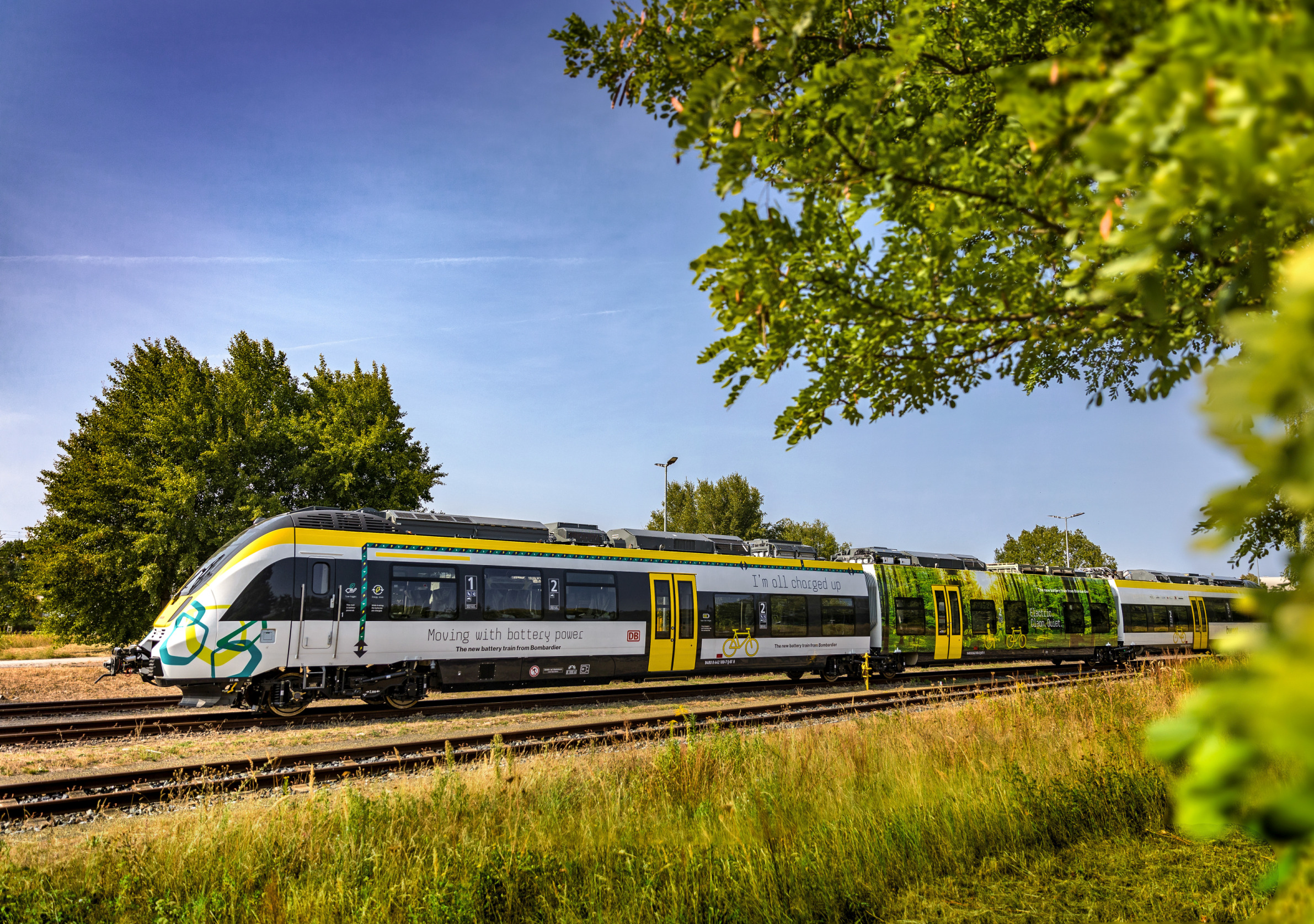
This is said.
Bombardier recently presented the Talent 3, which according to the press release, is the first of its kind to enter passenger operation in Europe in over 60 years.
The first prototype has a range of 40 km (25 miles), but the second one scheduled for 2019 will go 100 km (62 miles) on a single charge.
There’s even a nifty little video.
All the features and benefits of the train are detailed.
- Bridging gaps in electrification.
- Modular batteries, so more can be added to increase range.
- Regenerative braking to save energy.
- Lower infrastructure costs.
- Electric instead of diesel trains under city centres.
- Low noise.
- No CO2 emissions.
- Low cost of ownership.
But this is all about a Talent 3 train, that is designed to a Continental loading gauge. Wikipedia says this about the design.
The Talent 3 is based on the earlier Talent and Talent 2 designs, with a wider carbody, larger doors, and a lower floor to increase capacity and improve passenger flow at station stops. Depending on the intended service pattern, the Talent 3 can be specified with either a 160 kilometres per hour (99 mph) or 200 kilometres per hour (120 mph) top speed. Talent 3 trainsets can vary in length based on customer requirements—ÖBB ordered six-car sets with a passenger capacity of 300, while Vlexx ordered three-car sets that carry up to 160 passengers.
The picture and the video look like a three-car train.
How Large Are The Batteries On A Talent 3?
What do we know about the train?
- It appears to have three cars.
- According to this page on the Bombardier web site, the train has four batteries.
- I estimate that according to weights in Wikipedia, a three-car Talent weighs 86.5 tonnes
- A three-car Talent 3 can carry 160 passengers.
My calculation is as follows.
- 160 passengers at 90 Kg each with baggage, bikes and buggies weigh 14.4 tonnes.
- I’ll assume each battery weighs a tonne.
- This gives a total train weight of 104.9 tonnes.
At a speed of 160 kph, the Omni Kinetic Energy Calculator gives a kinetic energy of 28.8 kWh.
So four batteries of 25 kWh each would be sufficient to handle the regenerative braking energy.
What about the UK?
Bombardier’s equivalent product for the UK is the Aventra, which unlike the Talent 3 is a substantially all-new design, although it does use proven technology from previous trains.
It has also received six orders for a total of over 400 trains.
I have always thought, that after the successful BEMU trial with a Bombardier Class 379 train, that batteries will become an important part of rail technology and they will feature in the design of the Aventra.
You may think, that looking at the video, that we’ll have trouble with the UK’s small loading gauge putting the batteries on the roof of the train, but the actual size of batteries is not large and they can go underneath.
I sometimes wonder, If the reason for the delay of the Class 710 trains, is that when they are successfully running, Bombardier will finally come clean in the UK, about how batteries are used on the Aventra. You wouldn’t want the trains to be unreliable, so they are making sure that all systems, including the important batteries are 100 % reliable.
In Don’t Mention Electrification!, I state why I believe that the Barking Riverside Extension of the Gospel Oak to Barking Line could be built without electrification.
So I’m fairly certain that the Class 710 trains are designed to run this section of the route on battery power.
Surprising Electrification At Oxenholme
I took these pictures of the Windermere platform, which is numbered 3, at Oxenholme station on the 7th May 2018.


Note the overhead wires for electric trains.
This picture is from an earlier post dated the 1st May 2015.
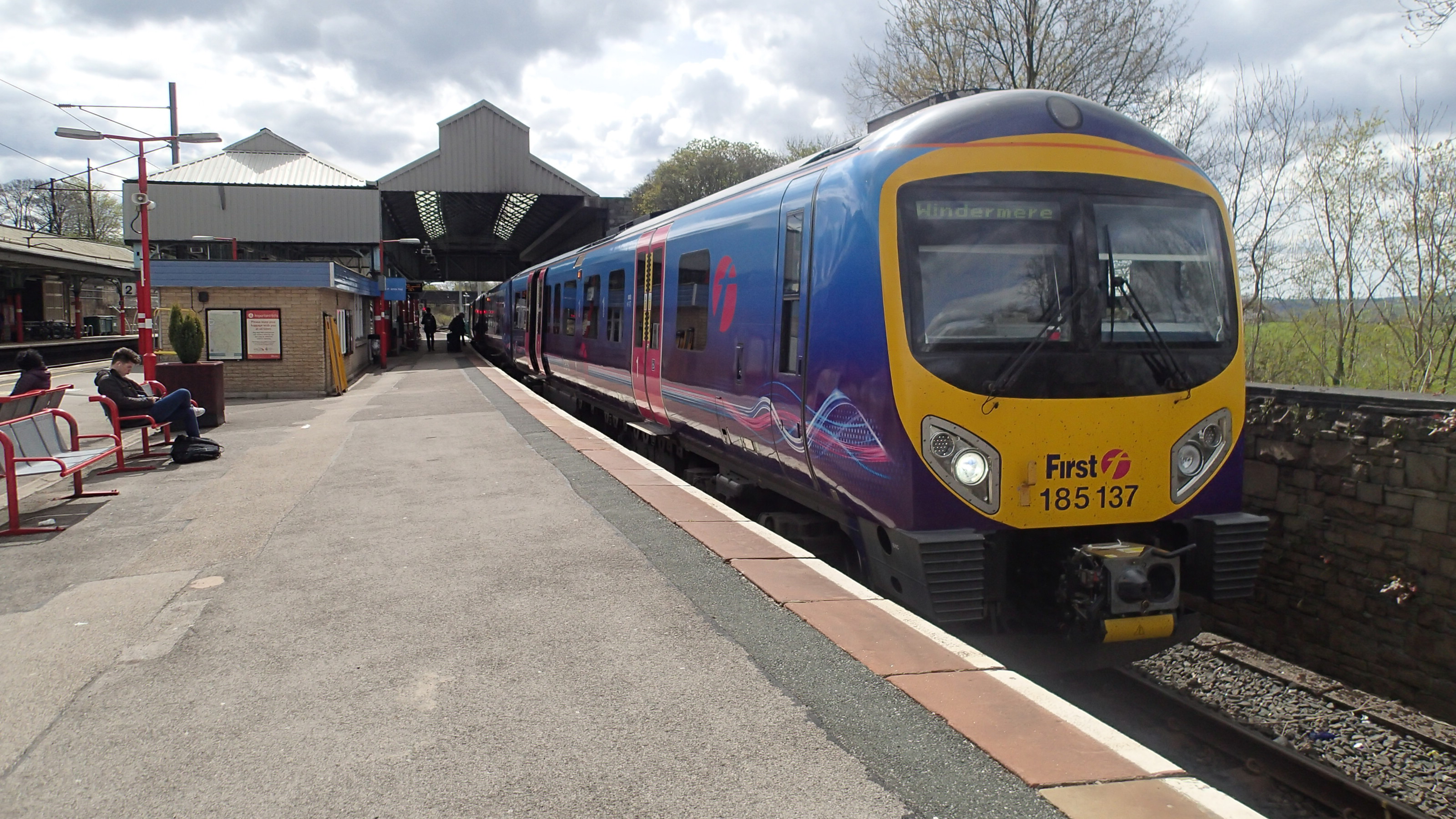
There are no overhead wires in the picture.
In the Electrification Proposal section of the Wikipedia entry for the Windermere Branch Line, this is said.
On 20 July 2017, it was announced that electrification of the Windermere branch was cancelled. As an alternative, Northern plan to utilise Class 769 multiple units on the route; these are Class 319 electric multiple units converted to function as bi-mode units, capable of operating under electric power between Manchester and Oxenholme, and under diesel power on the Windermere branch.
Did Grayling’s announcement come too late to stop these wires being erected?
This Google Map shows the station.
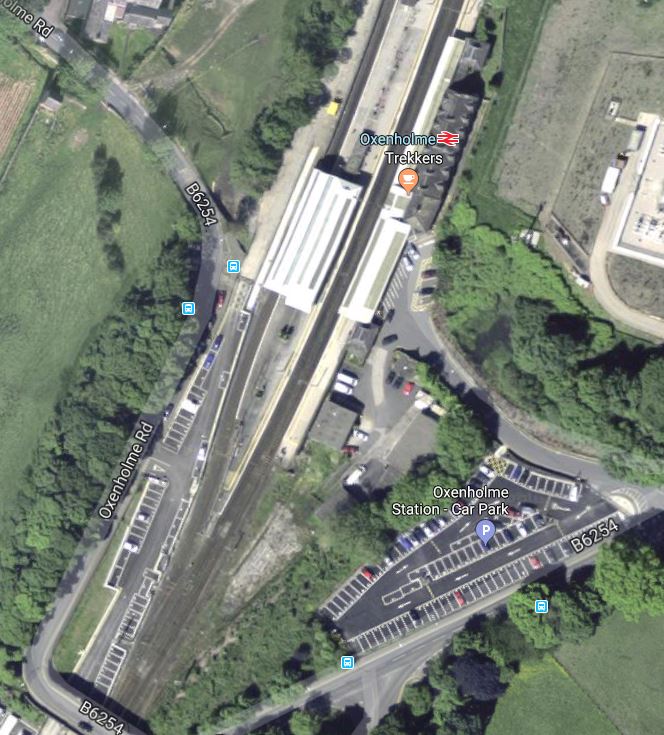
Note how Platform 3 is accessible from the South. North of the station, Platform 3 only leads to the Windermere Branch Line.
Bi-Mode Trains
The short length of additional electrification would be ideal for a bi-mode train, like the Class 769 train, which will be working the line in the near future.
Going towards Windermere, the train would arrive in Platform 3 having used electrical power at speeds of up to 100 mph from Manchester Airport. The pantograph would be lowered and the train would move on to Windermere using diesel power.
Coming from Windermere, the train would change from diesel to electric power in Platform 3.
It is a very conservative method of changing power source, to do it in a station, as if anything goes wrong, the passengers are only stranded in a station, rather than in the middle of nowhere.
In their previous incarnation as dual-voltage Class 319 trains, the voltage changeover was always done in Farringdon station.
Battery Trains
The Windermere Branch Line is ten miles long, so out and back from Oxhenholme should be well within range of a battery electric multiple unit, if not now, in a couple of years time.
A battery electric multiple unit, perhaps developed from Bombardier’s Class 379-based BEMU demonstrator, would be ideal for the Windermere to Manchester Airport service.
- The Class 379 trains were built in 2010-2011, for the Stansted Airport service.
- They will be released by Greater Anglia in 2019.
- They are 100 mph trains.
And then there’s the Class 230 train!
These trains would do a good job running an hourly shuttle between Oxenholme and Windermere, but they could be unsuitable for long-term use.
- The capacity would be too low.
- They are too slow to run on the West Coast Main Line.
- Running a service between Windermere and Manchester Airport might be too far.
But undoubtedly, a well-designed battery train would be able to work the Windermere Branch Line.
- Services between Windermere and Manchester Airport would charge batteries on the electrified lines.
- Batteries could be topped up as required in Oxenholm station.
- There would be no need to electrify the Windermere Branch Line.
Wordsworth would have written a poem about battery trains gliding quietly through the Lake District.
Conclusion
Network Rail have future-proofed the electrification at Oxenholm station in a very professional way.
 The Anonymous Widower