Cornish Plant Produces Geothermal Power
The title of this post, is the same as that of this article on Ground Engineering.
This is the sub-heading.
Hot water from a granite fault zone in Cornwall is being used to create electricity after a pioneering plant was switched on last week.
These two paragraphs add a few more details.
Geothermal Energy Lithium (GEL) started generating power from its United Downs facility near Redruth in late February.
The company drilled down more than 5km to reach hot water sitting in natural fractures in the rock deep below Cornwall.
This excellent video, shows the wide significance of what is happening in Cornwall.
10 Exciting New Train Journeys Coming To The UK In 2026
The title of this post, is the same as that of this article in The Telegraph.
The journeys are.
South Wales Metro (The ‘Welsh Tube’)
Effectively, what the Welsh have done is turn the railways radiating from Cardiff into the sort of metro that Birmingham, Glasgow, Liverpool and Tyne-Tees have created over the last few decades.
- They are replacing a large proportion of the rolling stock, with new electric or hybrid-electric trains and tram-trains.
- Some of the lines are notably scenic.
- Some new stations have been added.
- There are attractions to visit.
- A Day Ranger ticket is available.
A few times in the past few years, when I feel I need some fresh air, I’ve taken a train to Cardiff, bought a Day Ranger and climbed a few hills in a train, as in my seventies, I’m too old to walk up.
I wouldn’t be surprised that the forthcoming Leeds Metro borrows heavily from ideas developed on the South Wales Metro.
London To Stirling
Stirling is one of those towns and cities, like Barrow-in-Furness, Blackpool, Shrewsbury and a few others, that Virgin and Avanti West Coast seem reluctant to serve.
I feel by choosing Stirling for a service, Lumo have just done the obvious.
- The route is fully-electrified.
- Stops will be Milton Keynes, Nuneaton, Crewe, Preston, Carlisle, Lockerbie, Motherwell, Whifflet, Greenfaulds, and Larbert.
- There will be four trains per day.
- The initial trains will be Class 222 trains.
- The electric Class 803 trains are on order.
- Hitachi are developing battery-electric trains for Lumo on the East Coast to be able to use the diversion via Lincoln, which would probably reach Perth.
- Car-hire companies will do well in Stirling.
- Stirling has onward train connections to Aberdeen, Dundee, Inverness, Montrose, Perth and Stonehaven.
- I wouldn’t be surprised to see FirstGroup, who are Lumo’s parent or another coach company, creating a hydrogen-powered coach network for the North of Scotland.
- The service will start in May 2026.
That really shows how railways can be used to boost growth. But will the SNP get the message?
I will use this service to have a few days in Stirling and explore the Southern part of the Scottish Highlands by train.
Caledonian Sleeper from Birmingham
This looks to be obvious addition to the Caledonian Sleeper.
The Telegraph says this.
The joys of the Caledonian Sleeper to Scotland, well known to travellers from London, are to be extended for the first time to those wanting to alight at Birmingham International. This change – the biggest in the Caledonian Sleeper schedule for 30 years – will mean that greeting the dawn approaching places as far flung as Fort William, Aberdeen and Inverness will be a far more realistic prospect for fans of this form of travel who live in the Midlands.
Note.
- The Birmingham stop will be at International not New Street.
- The service starts on January 16.
- Only the Highlander will stop at Birmingham International.
It seems to be a well-thought out simple addition to the service.
Newquay And Falmouth
The Telegraph says this.
Exciting news for fans of Cornwall where a new direct service linking the north and south coasts this year will make travelling by train between the key towns of Newquay and Falmouth considerably easier. The improvement to the current journey, frequently involving multiple changes and lasting two and half hours, will start with an increase in services between Newquay and Par in the spring and, by the end of the year, the commencement of the direct link all the way through to Falmouth.
Note.
The project is named the Mid Cornwall Metro.
The project has cost £57 million.
The route will be Newquay and Falmouth Docks via Quintrell Down, St. Columb Road, Roche, Bugle, Luxulyan, Par, St. Austell, Truro, Perranwell, Penryn, Penmere and Falmouth Town.
For more information, see midcornwallmetro.com
The journey time between Newquay and Falmouth will be cut by forty-five minutes.
I am sure that there are other rail systems in the UK, Ireland and in the wider world, that could benefit from a
High Speed Sonnet (Weardale To Stratford-upon-Avon)
The Telegraph says this.
And now for something completely different: a one-off charter train from the dales of County Durham to Stratford-upon-Avon, the heart of Shakespeare country. This journey, dubbed the “High Speed Sonnet”, comes as part of the 50th anniversary celebrations of the introduction of the legendary InterCity 125 high speed trains, one of which will be deployed on the run from Stanhope to the birthplace of the bard.
This train journey, although it is probably very nice is not really my scene.
- I don’t have a partner.
- I don’t live near to Weardale or Stratford-on-Avon.
- As I’m coeliac and low alcohol, I’m not really keen on gourmet dining events.
But the train is an Intercity 125, so some might like to take a ride.
For more details see excursionsbyrail.co.uk
West Highland Line, Scotland
The Telegraph says this.
A journey along the West Highland line, the most scenic stretch of track in Britain, and a visit to the Royal waiting room used by Queen Victoria during visits to Balmoral are two of the highlights of a new tour for 2026, offered by small group Scotland and UK specialists McKinlay Kidd.
Similar comments to the previous journey apply, except that it is West Scotland.
But the train is steam-hauled over the Glenfinnan Viaduct of Harry Potter fame, so some might like to take a ride.
For more details see mckinlaykidd.com
Mid Wales Explorer
The Telegraph says this.
Another new tour for 2026, this one run by The Railway Touring Company, has as its focus the central part of Wales. Highlights include a journey along the Welsh Highland line on the “Harbourmaster”, shorter trips on the celebrated little railways of Llangollen, Bala Lake, Talyllyn, Vale of Rheidol and Welshpool, and a narrowboat ride across world heritage Pontcysyllte Aqueduct located 38 metres above the River Dee. Tidy.
I might go on this one if the date of June 10th fits.
For more details see railwaytouring.net
Newcastle And Brighton
The Telegraph says this.
How about this for a tantalising prospect – a direct service between Newcastle and Brighton calling at York, Sheffield, Birmingham New Street, Oxford, Reading, and Gatwick Airport – with no need to change trains in London? This is the new route proposed by open-access operator Grand Central (part of Arriva UK Trains) and currently awaiting approval from the Office of Rail and Road.
All going well, services – five trains each way daily – should start by the end of the year. A potential game changer and, following the commencement of the direct link between Seaham and London in December 2025, a further example of Grand Central’s drive to connect underserved communities.
For more details see grandcentralrail.com
London And Cleethorpes
The Telegraph says this.
Another Grand Central proposal that whets the appetite is the application to run direct services (for the first time since 1992) between London and the Lincolnshire seaside town of Cleethorpes. While not without its critics, Cleethorpes is an old-school British resort with pier, promenade and the Cleethorpes Coast Light (miniature) Railway service. If approved, four services a day would be up and running by the end of 2026; additional stops would include Doncaster, Scunthorpe, Grimsby, Thorne South, Crowle and Althorpe.
For more details see grandcentralrail.com
Note.
Althorpe is not to be confused with the burial place of Princess Di.
In Lunch On The Pier In Cleethorpes, I wrote about excellent gluten-free fish and chips on the pier.
Champagne Moments On The Northern Belle
The Telegraph says this.
The late Queen Mother famously enjoyed G&Ts while seated in carriages which now form part of the the Northern Belle. This in mind, she would likely have approved of the latest innovation on one of Britain’s plushest trains: the addition of a “Krug class”, which includes one bottle of Krug Grande Cuvée Champagne per couple, to enjoy over a multi-course meal and seating in Duart (formerly a carriage on The Royal Train) or Glamis, named after the Queen Mother’s childhood home.
The train operates a number of day trips on scenic routes to landmark cities such as York, Edinburgh and Bath, and to colourful events such as the RHS Chelsea Flower Show.
For more details see 95pp; northernbelle.co.uk
Offshore Wind Turbines In 2025: China Continues Leading In Single-Unit Capacity, Vestas’s 15 MW Turbine Installed At Offshore Wind Farms
The title of this post, is the same as that of this article on offshoreWIND.biz.
This is the sub-heading.
In offshoreWIND.biz‘s 2024 annual wind turbine overview, you could have read about the first 16 MW floating wind platform installed offshore and a 26 MW prototype under construction, both in China, and a 21 MW prototype being assembled in Europe. Wind turbine generator (WTG) technology did not stop progressing in 2025, with Chinese OEMs still leading capacity-wise, while in Europe, first offshore wind farms are now featuring 15 MW turbines and a 21+ MW model was installed onshore for testing.
The article is very much a must-read and there is a lot of innovation going on.
As a comparison, between 2020 and 2026 we commissioned or are building these offshore wind farms in the UK.
- East Anglia One – 2000 – 714 MW – 102 x 7 MW
- Hornsea One – 2020 – 1218 MW – 174 x 7 MW
- Kincardine – 2021 – 49.5 MW – 6 x floating
- Hornsea Two – 2022 – 1386 MW – 165 x 8 MW
- Moray East – 2022 – 950 MW – 100 x 9.5 MW
- Triton Knoll – 2022 – 857 MW – 90 x 9.5 MW
- Seagreen Phase 1 – 2023 – 1400 MW – 114 x 10 MW
- Dogger Bank A – 2025 – 1235 MW – 95 x 13 MW
- Moray West – 2025 – 882 MW – 60 x 14 MW
- Neart Na Gaoithe – 2025 – 450 MW – 54 x 8 MW
- Dogger Bank B – 2026 – 1235 MW – 95 x 13 MW
- East Anglia 3 – 2026 – 1372 – 95 x 14 MW
- Sofia – 2026 – 1400 MW – 100 x 14 MW
Average sizes for the various years are as follows.
- 2020 – 7 MW
- 2021 – floating
- 2022 – 8-9.5 MW
- 2023 – 10 MW
- 2025 – 8-14 MW
- 2026 – 13-14 MW
It can clearly be seen that in the last few years, turbines have been getting bigger.
I have some thoughts on the article.
2025 Saw Some Plans For And Installations Of Some Very Large Turbines
These four monsters were mentioned at the start of the article.
- 26 MW – Prototype installed for testing (China)
- 21.5 MW – Prototype installed for testing (Europe)
- 15 MW Installed at offshore wind farms (Europe)
- 50 MW Twin-turbine platform; Announced (China)
- MingYang Turbines to Spin on Hexicon’s Floating Offshore Wind Project
- World’s First Offshore Wind Farm Using 16 MW Turbines Enters Construction In China
- The Secret Of The TwinHub
- Hexicon Wins UK’s First Ever CfD Auction For Floating Offshore Wind
- The Chinese seem to be providing turbines for both manufacturers.
- The TwinHub is the Swedish design, being built for trial in Cornwall.
- This new design is a 50 MW design, whereas these two are 32 MW.
Ocean Winds Secures Third Celtic Sea Floating Wind Site
The title of this post, is the same as that of this article on offshoreWIND.biz.
This is the sub-heading.
Ocean Winds has secured the third floating offshore wind site in the Celtic Sea, offered through the Crown Estate’s Round 5 auction earlier this year. The developer is joining Equinor and the Gwynt Glas joint venture, which were awarded rights for two of the three sites offered in Round 5 in June.
This paragraph outlines Ocean Winds’s deal.
On 19 November, the Crown Estate said that Ocean Winds was set to be awarded the rights for a third floating offshore wind site in the Celtic Sea.
There would now appear to be three Celtic Winds deals for wind farms.
- Gwynt Glas – 1.5 GW
- Ocean Winds – 1.5 GW
- Equinor – 1.5 GW
Note.
- 4.5 GW will be able to power a good proportion of South Wales and the South-West peninsular.
- In Gwynt Glas And South Wales Ports Combine Strength In Preparation For Multi-Billion Floating Wind Industry, I talk about partnerships between the wind farms and the ports.
- If you sign up for a large wind farm from the Crown Estate, do you get to have afternoon tea with Charles and Camilla in the garden at Highgrove or even Buckingham Palace?
This map of the wind farms is available from download from this page on the Crown Estate web site.
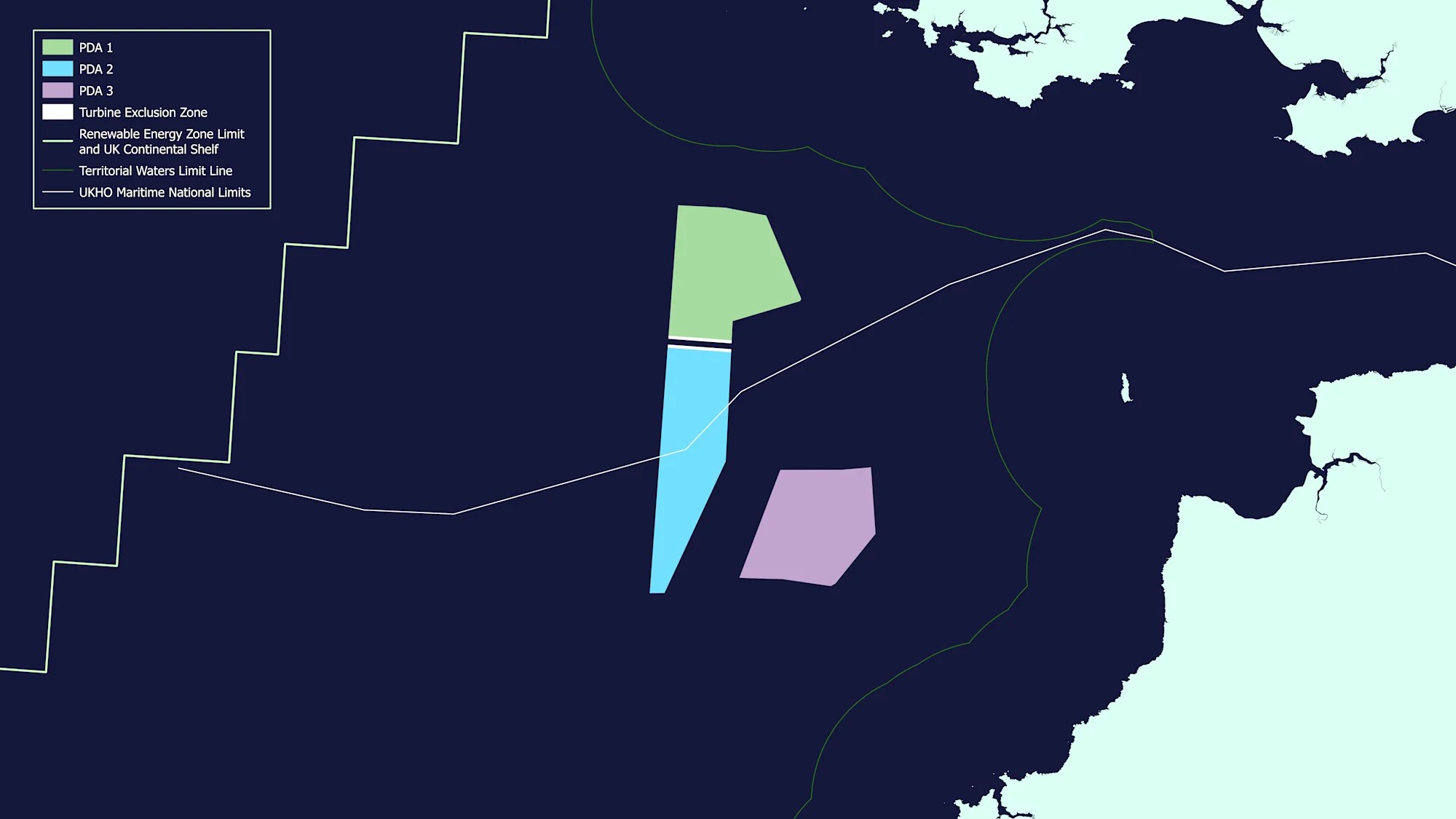
Note.
- Gwynt Glas is in green.
- Ocean Winds is in blue.
- Equinor is in mauve.
- The white dot to the East of the wind farms is Lundy Island.
This triple wind farm is certainly well-placed to supply power to Cornwall, Devon and South Wales.
South West Freight Set For Resurgence
The title of this article is the same as that of a feature article in the November Edition of Modern Railways.
One of the topics, the article discusses is lithium mining in Cornwall and its transport from the South West.
I started by asking, Google AI, where lithium is mined in Europe, and received this answer.
Portugal is the only country in the EU currently mining lithium, with the Barroso project being the main focus of future production. However, there are multiple other European countries with significant lithium deposits that are expected to begin mining in the near future, including the Czech Republic, Finland, France, Germany, Spain, and Serbia.
So Cornish lithium will be one of several sources, but surely ideal for UK batteries.
The Modern Railways article has two paragraphs, which describe lithium mining in Cornwall.
But it’s the potential for lithium that may be the most exciting development for rail freight in the region. Cornish Lithium plans to extract it from an open pit at Trelavour, near St Austell, and it is adamant that rail will be vital for its plans to come to fruition. Trelavour is next to the Parkandillack china clay processing plant, and Cornish Lithium plans to use this to bring in essential materials. The volumes are significant – an estimated 180,000 tonnes per year of input are anticipated, most if not all brought in by rail, and the site’s output of around 8,000 tonnes per year could also go by rail. It is hoped the first traffic could run to the site before the end of Control Period 7 in March 2029 in a project that could run for 20 years.
It isn’t just Cornish Lithium seeking to extract this ‘white gold’ from Cornwall. Imerys British Lithium is extracting lithium and producing lithium carbonate, initially at a pilot site in Roche – with the aim of producing around 21,000 tonnes of the material every year for 30 years.
In total the two sites will produce 790,000 tonnes of lithium ores over thirty years, which when averaged is about 72 tonnes per day.
I then asked Google AI, where the lithium will be processed and refined and received this answer.
Lithium from Cornwall will be processed and refined at demonstration and full-scale plants located within the county. Specifically, Cornish Lithium has a demonstration plant in St Dennis and plans to build a full-scale plant there to produce refined lithium hydroxide. Similarly, the British Lithium project, a joint venture with Imerys, is developing a pilot plant and full-scale processing facility in the St Austell area to produce lithium carbonate from granite, says BBC News.
That seems a very comprehensive answer from a computer!
This Google Map shows the area of Cornwall between St. Dennis and St. Austell.
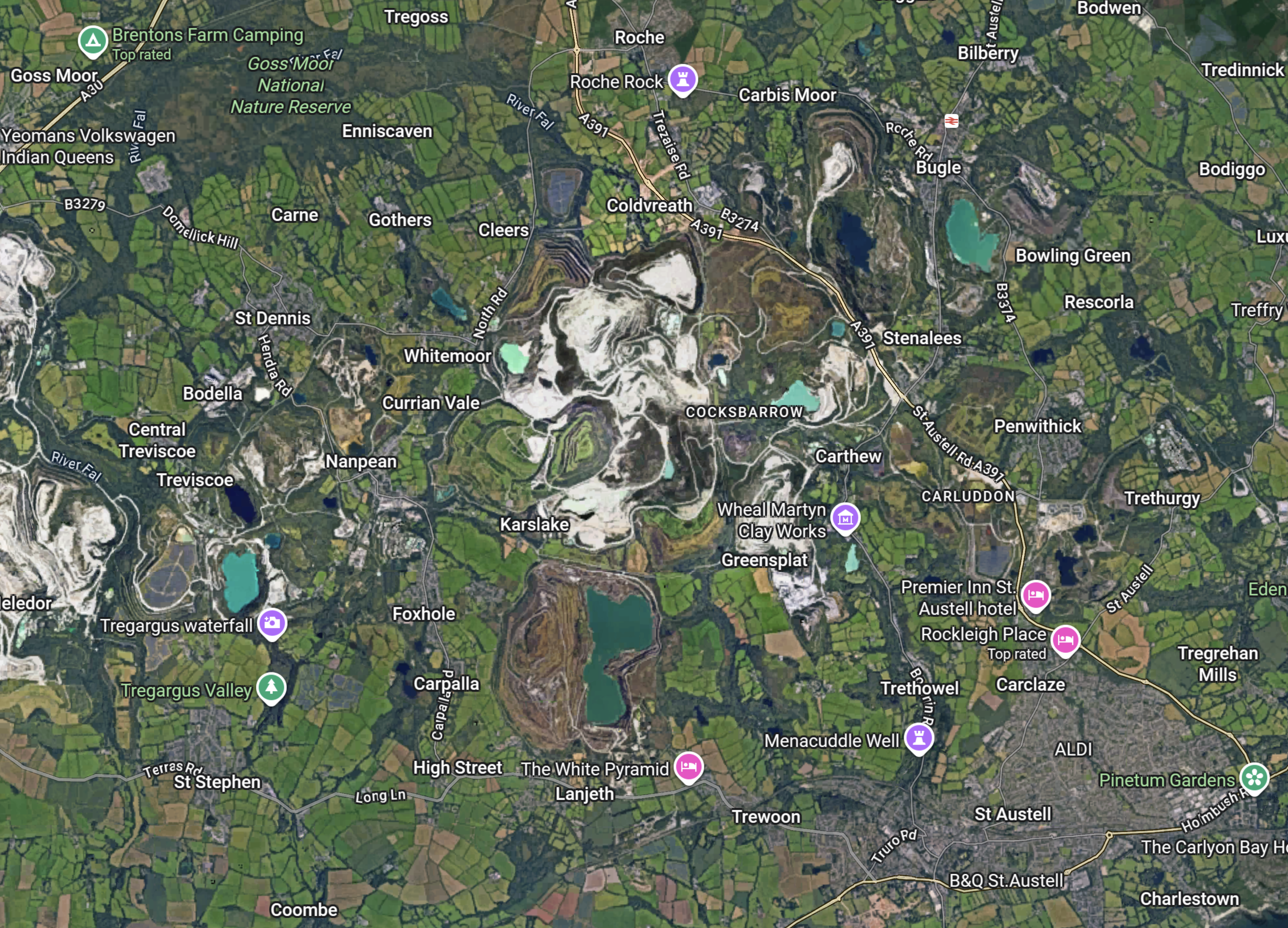
Note.
- St. Austell is in the South-East corner of the map.
- St. Dennis is in the North-West corner of the map.
- Trelavour appears to be just South of St. Dennis.
- In the middle of the map, are the china clay workings.
Although rail is mentioned, it looks like new tracks will have to be laid.
The Modern Railways article says this about using rail.
Should these plans come to fruition, it seems likely rail will play a part in the supply chain. It is not much of an exaggeration to suggest that Cornwall’s lithium deposits offer a generational opportunity for the Duchy, and by extension, for rail freight.
But, if I’m right about the daily amount being around 72 tonnes, then not many trains will be needed.
I have a few further thoughts.
How Much Will The Lithium Be Worth?
I asked Google AI, what is a tonne of lithium metal worth and got this answer.
A tonne of battery-grade lithium metal is worth approximately $77,962 to $80,398 USD, with an average of about $79,180 USD. The price fluctuates significantly based on market conditions, and the value can differ for industrial-grade lithium metal or other lithium compounds like carbonate or hydroxide.
Assuming a price of $80,000, then a day’s production is worth $5,760,000 and a year’s production is worth about $2 billion.
This could be a massive Magic Money Mine for Rachel from Accounts.
Will The Royal Albert Bridge Cope With The Extra Trains?
The Modern Railways article says this.
While there is excitement about the potential from Cornwall’s new and revived minerals industries, there are caveats. One is the train weight limit on the Royal Albert Bridge, Saltash.
Note.
- A five-car Class 802 train weighs 243 tonnes and I’ve seen pairs in Cornwall.
- Other trains may be heavier, but if the lithium refining is done in Cornwall, the lithium trains won’t be too heavy.
As lithium is the lightest metal, is it sensible to perform the processing and refining in Cornwall and leave the unwanted rocks in the Duchy?
New Bid To Connect Heritage Railway To Mainline
The title of this post, is the same as that of this article on the BBC.
The is the sub-heading.
A bid to connect one of the longest heritage railways in Britain with mainline services has taken a step forward.
These are the first two paragraphs.
West Somerset Railway (WSR) and Somerset Council have now submitted a business plan to the government to restore the mainline from Taunton to the final WSR stop at Bishop’s Lydeard.
The proposal suggests Bishop’s Lydeard could become a commuter and tourist hub.
There has been several attempts to connect the branch to Taunton station.
These are my thoughts.
Minehead, Bishop’s Lydeard And Hinckley Point C
This Google Map shows the area.
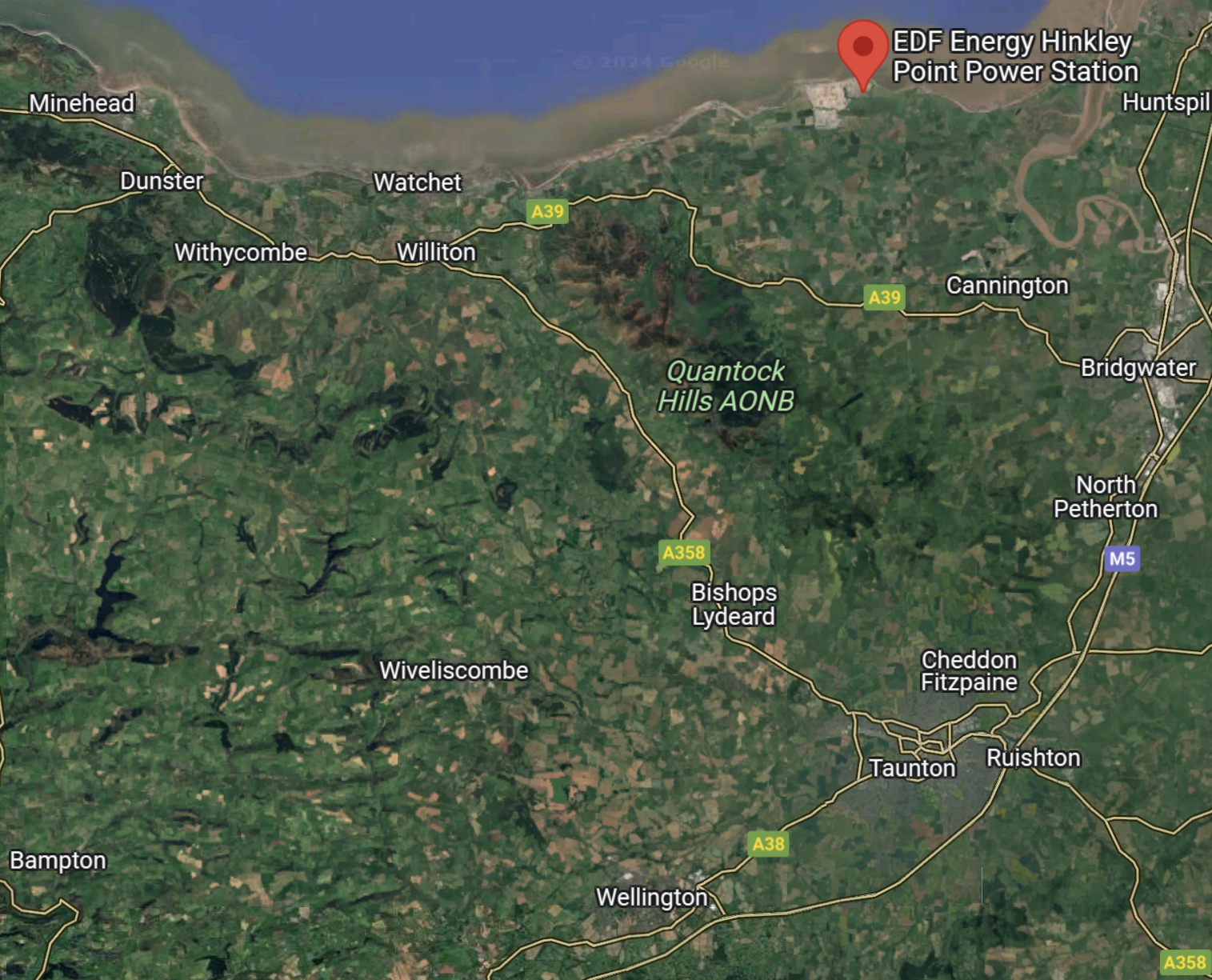
Note.
- Minehead is in the North-West corner of the map.
- Hinckley Point power station is indicated by the red arrow.
- Bishop’s Lydeard is in the middle of the map.
- The M5 motorway curves diagonally between the North-East and South-West corners of the map.
- There are motorway services at Taunton Deane, which is to the South of Taunton and Cullompton, which is a few miles South-West of Wellington.
- The large town of Taunton is the junction of the London and Exeter and the Bristol and Exeter railway lines.
- The town of Wellington will be getting a new railway station.
It is a very busy area and it will only get busier, as the availability of power will only attract industry, like the battery factory pencilled in for Bridgewater.
The Major Effect Of Hinckley Point C
Hinckley Point C will generate 3.26 GW of electricity and to operate the power station will need around nine hundred workers.
I can also expect that the Hinckley Point site will get involved in other energy handling and use.
- The site would be an ideal place for a large electrolyser to produce hydrogen.
- Wind turbines in the Bristol Channel could use Hinckley’s grid connection.
- Energy could be stored on the site. It could be an ideal location for one of Highview Power’s 200 MW/3.25 GWh liquid air batteries.
- Hydrogen could be exported using coastal tankers.
- Interconnectors could take electricity to Cornwall, Devon, Wales and Ireland.
All of these activities would create needs for workers at all levels.
- A rail connection to Taunton and Bristol, will probably be needed to bring workers into Hinckley Point.
- A rail connection would be ideal for bringing construction materials, steel and other heavy goods into and out of the Hinckley Point site.
- Hydrogen could also be taken out in rail tankers.
- Nuclear waste could be taken out by train.
I think it is highly likely, that Hinckley Point will need a rail connection for efficient operation.
Sizewell C And Hydrogen
Hydrogen is so important to the philosophy of the design and construction of Sizewell C, that hydrogen has its own section on the Sizewell C web site.
Hydrogen produced by nuclear power stations like Hinckley Point C, is called pink hydrogen, but like green hydrogen it is zero-carbon and pollution-free.
Hinckley Point C And Hydrogen
I can envisage Hinckley Point C will create a lot of hydrogen both for use locally and distribution to remote users.
- Hydrogen could be delivered locally by truck, just as propane is today around the world.
- Coastal tankers could distribute the hydrogen from a jetty.
- Pipelines could connect the two nearby motorway service stations to the power station site.
Just as is happening at Sizewell, a local hydrogen network could be built.
Hydrogen Refuelling On The M5
Consider.
- In MAN Expands Its Zero-Emission Portfolio, I talked about MAN’s new hydrogen-powered hTGX truck, which has been designed with a 600 km. or 373 mile range.
- As Cullompton, which is the Southernmost of the two services on the M5 that are close to Hinckley Point C, is only 124.9 miles from Penzance, it should be possible for a truck, with a range similar to that of the MAN hTGX to do a round trip from the Southern end of the M5 to Penzance, without refuelling.
- As the total length of the M5 is only 163 miles, a hydrogen-powered truck with the range of the MAN hTGX would be able to do a delivery anywhere along the motorway and return to the hydrogen from Hinckley Point C, without refuelling.
- MAN are saying that the hTGX truck can be refuelled in less than fifteen minutes.
It looks to me, that a hydrogen electrolyser at Hinckley Point C would be ideally located to provide pink hydrogen for a zero-carbon hydrogen-powered route to and from the far South-West.
I believe that if there were a best-in-class hydrogen-refuelling facility close to Hinckley Point C, it would encourage those who regularly drove to Devon and Cornwall to look seriously at hydrogen-powered vehicles.
The Nature Of The Hinckley Point C Rail Link
Sizewell C are using a simple practical approach to connect the Sizewell C site to the nearby East Suffolk Line.
- The existing freight sidings are being expanded.
- Two Park-and-Ride sites are being created at stations in the East Suffolk Line.
- A link road will be built between the railway and the Sizewell C site.
- A fleet of hydrogen-powered double-deck buses has been ordered to take workers between the railway and the power station.
- The signalling on the East Suffolk Line is being improved.
This map from OpenRailwayMap shows the Northern end of the West Somerset Railway and its relationship to Hinckley Point C power station.
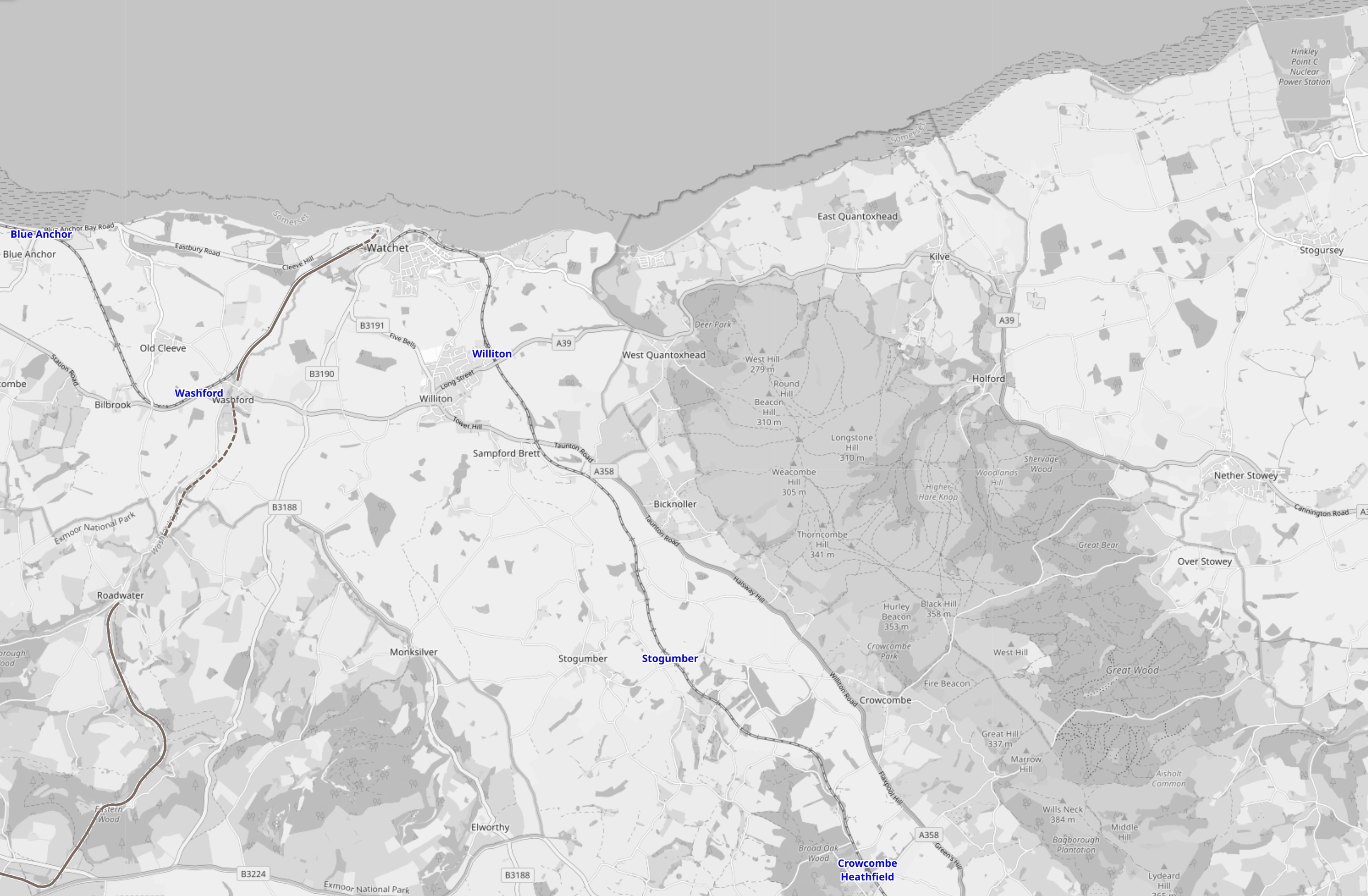
Note.
- Hinckley Point C power station is in the North-East corner of the map.
- Crowcombe & Heathfield, Stogumber, Sampford Brett, Doniford Halt, Williton, Watchet, Washford and Blue Anchor are existing or former stations on the West Somerset Railway.
- Existing stations are shown in blue.
- West of Blue Anchor are the two existing stations of Dunster and Minehead.
This Google Map shows Williton station, which is the nearest station to Hinckley Point C.
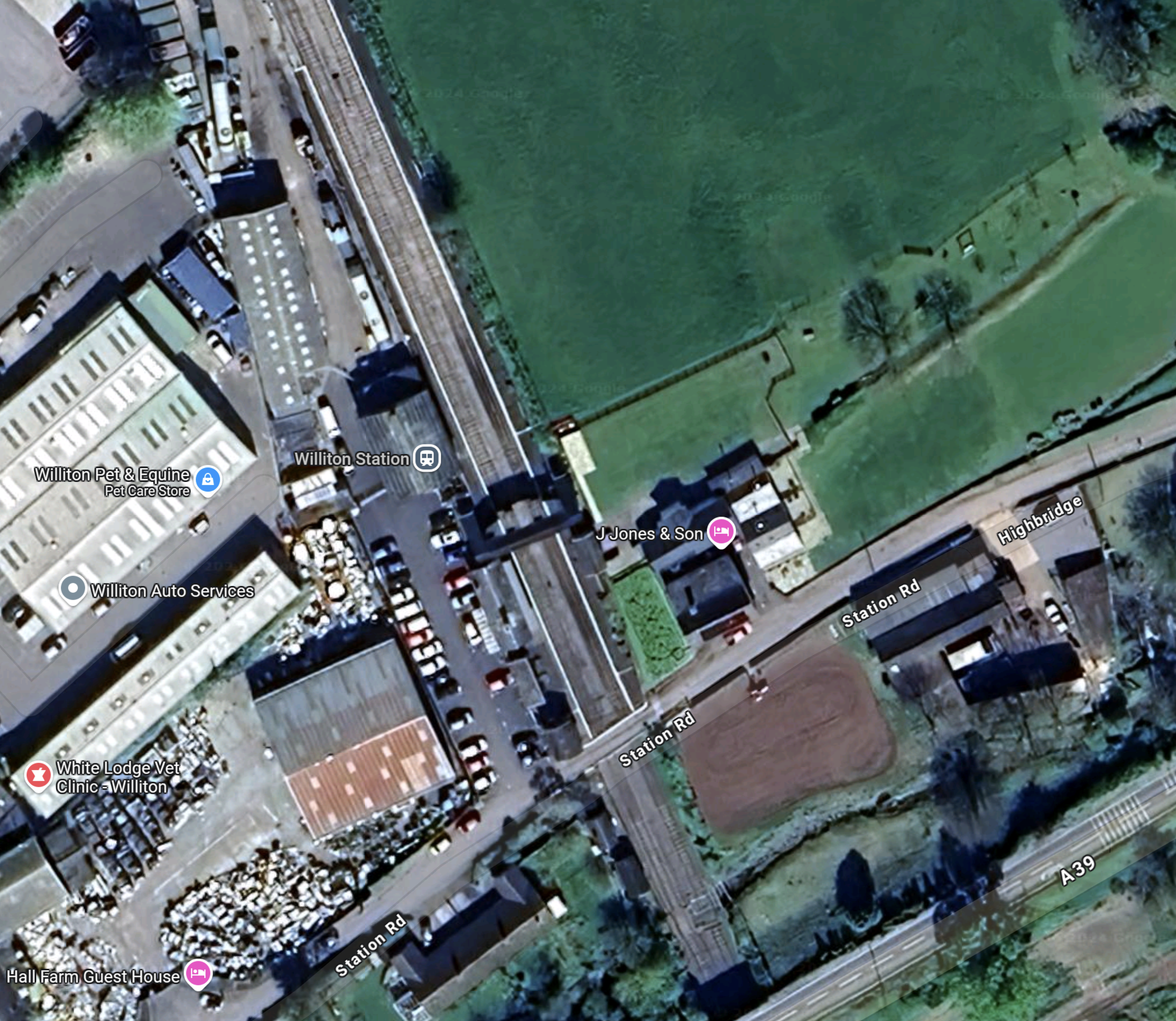
Note.
- The station has a footbridge, which was erected in 2011, so is probably in good condition.
- There are several Listed buildings on the site.
- Going East on the A39 should lead to Hinckley Point C.
I suspect a quality bus company could build a small fleet of buses to shuttle workers, visitors and others to Hinckley Point C.
As I’m sure, hydrogen will be in plentiful supply, I’m certain hydrogen-powered buses could be used.
This Google Map shows a longer section of the West Somerset Line through Williton station.
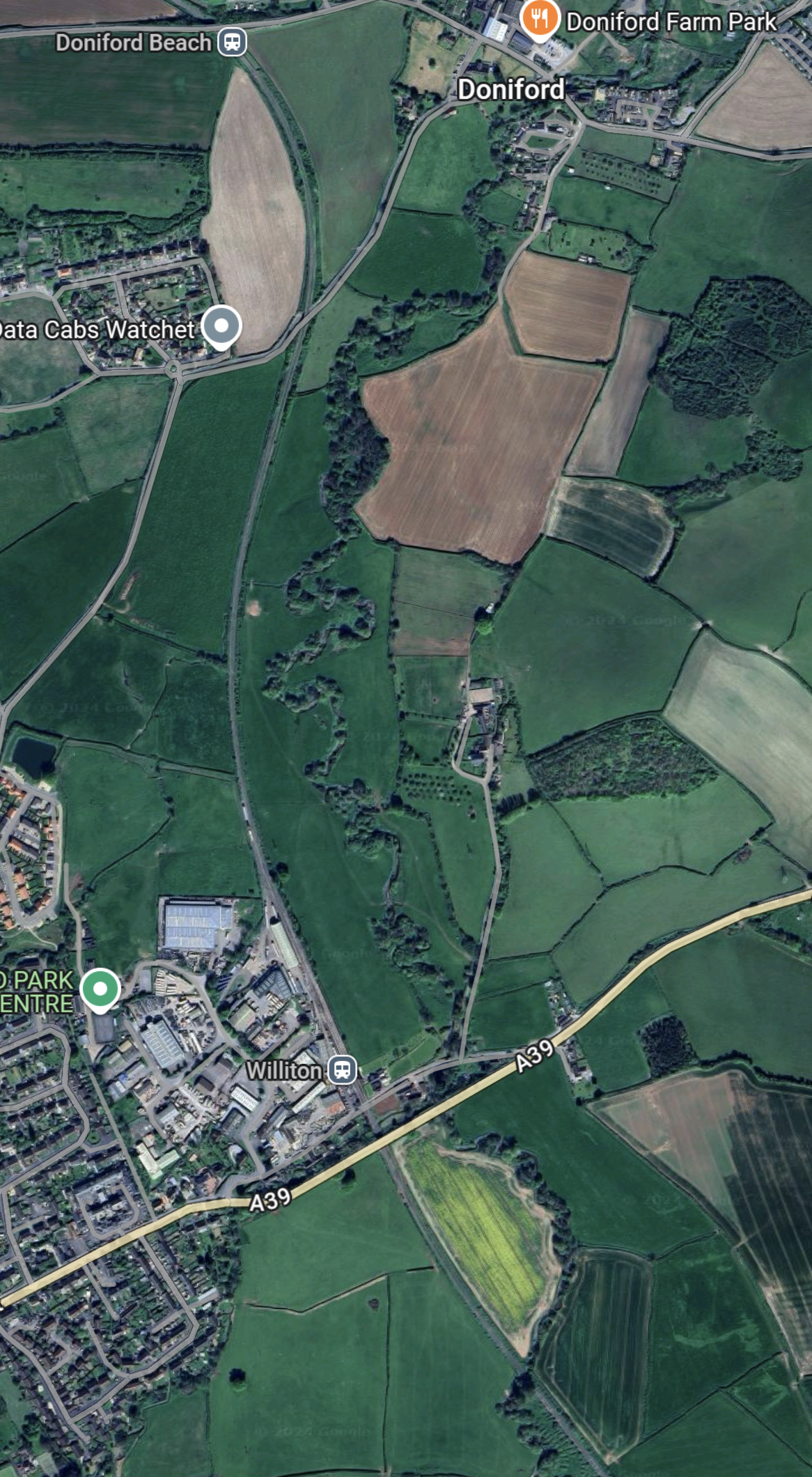
Note.
- The West Somerset Line runs North-South down the map.
- Doniford Halt station is at the top of the map, where the coast road crosses the railway on a bridge.
- Williton station is in the middle of the map, where the A39 crosses the railway.
Looking at the railway, which runs mainly between fields, I wouldn’t be surprised that if Hinckley Point wanted a freight siding, they could fit one in.
Go-op
Go-op are an open access railway company, that wants to run services in Somerset.
I wrote about their successful application in Regulator Approves New Go-op Train Service Between Swindon, Taunton and Weston-super-Mare.
This is the first paragraph of their Wikipedia entry.
Go-op Cooperative Ltd.,[ branded as Go-op, is an open access train operating company, proposing to operate a service in south-west England between Taunton and Swindon, via Westbury. It aims to become the first cooperatively owned train operating company in the United Kingdom, to improve access to the public transport infrastructure through open access rail services linking main lines to smaller market towns, and by co-ordinating services with light rail, bus links and car pools.
If you read their Wikipedia entry and their web site, they seem to have ambition and be different.
According to Wikipedia, they have made no less than five different proposals, but it is the fourth that I find interesting.
In 2021, Go-op began discussions with Network Rail for services between Swindon and Bishops Lydeard (just beyond Taunton), which it hoped to begin in mid-2022. At first there could only be three services per day, due to congestion between Swindon and Westbury; a further three could be provided to Frome or Westbury, connecting with existing services to Swindon. These plans would also improve local services on the TransWilts Line, calling at Trowbridge and Melksham.
The plans for Bishops Lydeard would restore the link broken in 1971 between the national network and the preserved West Somerset Railway, which runs leisure services to Minehead.
This sounds very much like an extended and simplified version of the West Somerset Line proposal.
But it does look like two groups have looked at the infrastructure and what is needed and come to similar conclusions.
Perhaps, they have other things in common like train procurement and servicing.
Stadler Presents A World First In Berlin
The title of this section, is the same as that of this press release from Stadler.
These are the first two paragraphs.
With the RS ZERO, the rail vehicle manufacturer is presenting the successor to the successful Regio-Shuttle RS1 model. There is a choice of two modern and environmentally friendly drive technologies: Hydrogen and battery. Both will enable CO2 emission-free operation of secondary lines in the future.
Stadler today unveiled the prototype of the new RS ZERO, the innovative successor to the successful RS1 Regio-Shuttle. The Regio-Shuttle has been one of the most popular vehicles in German regional rail transport for 28 years, with around 500 RS1 vehicles currently in operation in Germany and the Czech Republic. Stadler is building on this proven technology and integrating state-of-the-art, environmentally friendly drive systems. The RS ZERO is optionally available with a hydrogen and/or battery drive and thus not only sets new standards for environmentally friendly rail transport, but also presents a world first.
These pictures from Chemnitz Trams And The Chemnitz Model, show the Regio-Shuttle RS1.




Note.
- The Regio-Shuttles can run as up to seven car trains.
- These Regio-Shuttles are electro-diesel.
- The distinctive diagonal windows.
- They can carry 170 passengers at 75 mph.
- They can run as train-trams using the Chemnitz model on compatible tram networks.
The Regio-Shuttle Wikipedia entry gives more details.
This image from the press release shows the prototype RS ZERO.
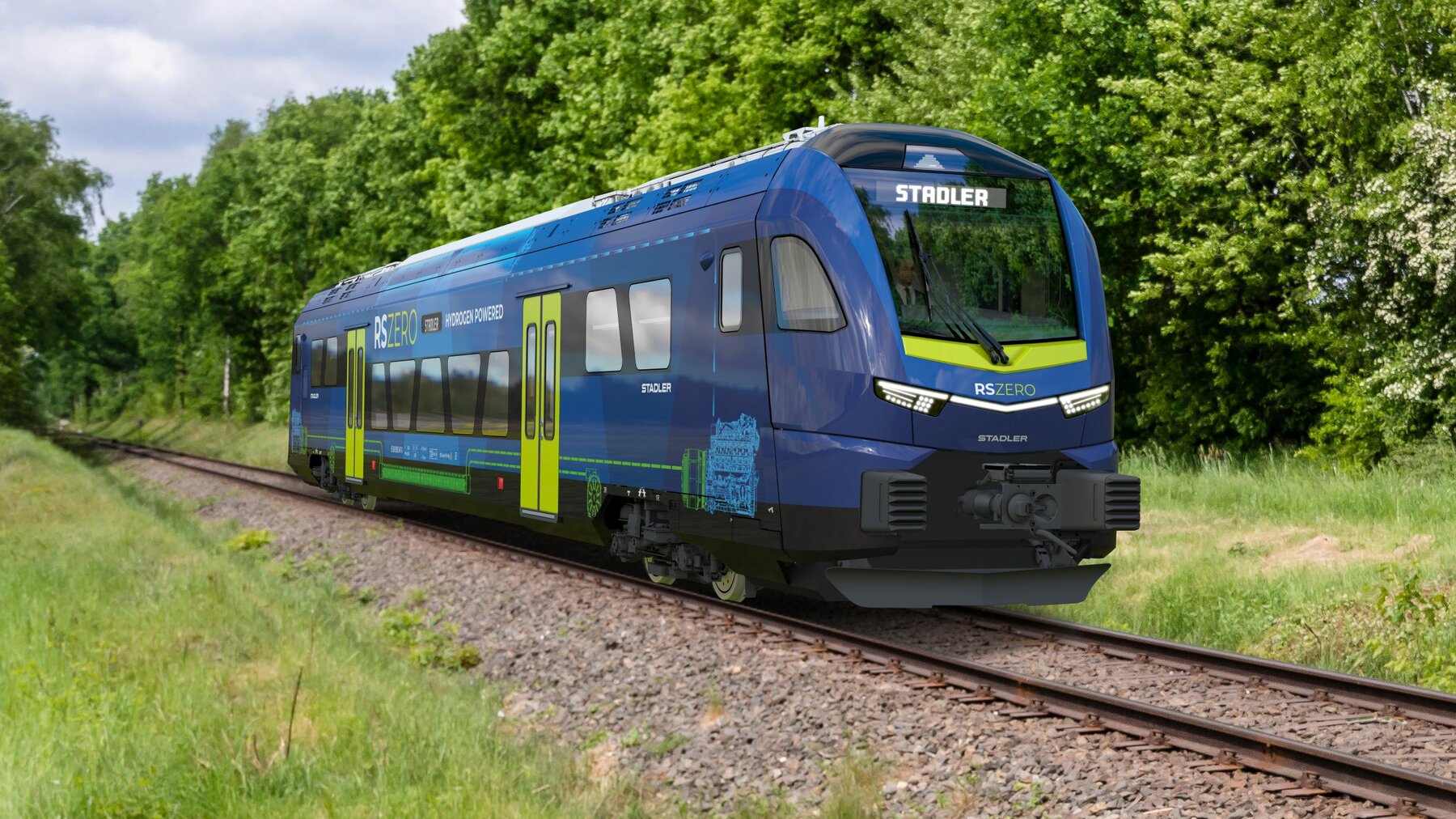
It looks very similar to my pictures from Chemnitz.
I have a few thoughts.
Comparison To A Class 150 Train
A Class 150 train can carry up to 149 seated passengers at 75 mph, which is similar to the RS ZERO.
As Stadler have built trains for Greater Anglia, Merseyrail and the Glasgow Subway, I believe that Stadler could build an RS ZERO, that would fit the UK loading gauge.
In What Train Is This?, I show the standard of interior, that can be achieved by refurbishing a Class 150 train, but unlike the RS ZERO, the train won’t be zero-carbon.
Does The RS ZERO Have A Toilet?
This is a paragraph from the press release.
The prototype of the RS ZERO presented today in Berlin is a one-car vehicle with hydrogen drive. Stadler is demonstrating the numerous design options with a multi-purpose area equipped for carrying bicycles, pushchairs and bulky luggage, lounge and comfort zones, standard and privacy seats, a wheelchair space, WC and a train office.
The train appears to be able to have what an operator might need.
What Will Be The Range Of An RS ZERO On Hydrogen?
I suspect, Stadler will provide a train, that will handle the route.
Would Stadler Be Able To Produce An RS ZERO That Could Satisfy The West Somerset/Go-op Requirement?
I obviously, can’t answer that.
But.
- The train is zero-carbon.
- It’s the right size.
- I suspect that the hydrogen fuel will be available from Hinckley Point C.
- The design has a proven track record.
- The train is not by any means vapourware!
- Stadler need a launch order.
- An experienced ROSCO would probably finance the trains.
One perk is that those involved in buying the train, could probably wangle a trip to Chemnitz to see several Regio-Shuttle RS1 trains at work.
Note that Chemnitz used to be Karl-Marx Stadt, so some of our Government will feel nostalgic.
But I do believe, this could be a very handy train to decarbonise branch and secondary lines in the UK.
Meet The British ‘Space Inspectors’ Working For A Safe Blast-Off
The title of this post, is the same as that of this article on the Daily Telegraph.
This is the sub-heading.
A small band of professionals is keeping Britain’s £65 billion space economy in good working order
The article talks about how the Civil Aviation Authority will make sure we boldly go, with a high degree of safety, starting with these three paragraphs.
With Britain’s first vertical launch expected to lift off from Shetland this year, the UK could soon become the go-to European destination for space missions.
But behind the scenes, an army of ‘space inspectors’ is ensuring that, despite reaching for the stars, companies have their feet planted firmly on the ground.
It is the job of the Civil Aviation Authority (CAA) to make sure that things go off with a bang – but only at the right time.
Having lived through all the excitement of space exploration from Sputnik 1 in 1957 onwards.
A few decades ago, when I was in Florida, I saw a launch of the Space Shuttle.
Hopefully, I’ll be lucky enough to get to Shetland or Cornwall to see a space launch from the UK.
The Daily Telegraph article also has this paragraph.
There are more than 2,200 companies working in Britain’s £65 billion space economy from satellite manufacturers to spaceports, from software to observation. The industry has grown significantly in recent years, and is aiming to capture 10 per cent of the global space market by 2030.
I don’t think, the ten-year-old boy, that my father woke in 1957 to tell about Sputnik 1, really ever thought ever thought there would be a chance that he’d see a space launch from the UK.
But now it appears to be happening! Fingers crossed!
Residents Invited For A Bird’s Eye View Of How Mid Cornwall Metro Will Transform Transport Links In Cornwall
The title of this post, is the same as that of this article on RailUK.
This is the first paragraph.
Residents have been encouraged to attend an event at the Hotel Victoria in Newquay on Friday 9 February (10am – 7pm) and Saturday 10 February (10am – 4pm) when they’ll be able to see for themselves how the Mid Cornwall Metro, funded by Cornwall Council and £50 million of government Levelling Up Funding, will create a sustainable transport corridor through central Cornwall.
This is the last paragraph.
Another engagement event will take place at the Stannary on the University campus at Tremough on Friday 1 March from 10am to 5pm, and the Temperance Hall, Lower Market Street, Penryn TR10 8BH on Saturday 2 March from 10am to 4pm.
If the weather looks good, then I might go.
This page, with an excellent graphic, explains the Mid Cornwall Metro.
UK’s First Deep Geothermal Power Plant To Be Built In Cornwall
The title of this post, is the same as that of this article on Energy Monitor.
This is the sub-heading.
Once operational in late 2024, the United Downs geothermal project will deliver around 3 MW of baseload renewable electricity and up to 10 MWh of zero-carbon heat.
This is the introductory paragraph.
Italian cleantech company Exergy International will team up with the UK’s Geothermal Engineering to construct the first deep geothermal power plant in the UK, located at the United Downs Deep Geothermal Power project in Cornwall. By late 2024, the project will deliver around 3MWe of baseload renewable electricity and up to 10MWh of zero-carbon heat for a large housing development at the newly developed Langarth Garden Village.
I have already written about using geothermal methods in the UK.
- Can Abandoned Mines Heat Our Future?
- Eden Project: Geothermal Heat Project ‘Promising’
- Exciting Renewable Energy Project for Spennymoor
- Mine Water Heat
- Schlumberger New Energy And Thermal Energy Partners Form Geothermal Development Company STEP Energy
- The Earth’s Energy: Switching Geothermal Power On
- ‘World-First’ As Bunhill 2 Launches Using Tube Heat To Warm 1,350 Homes
I can’t help feeling that in ten years time, geothermal energy will be a larger part of the UK’s energy mix, than anybody believes today.
These are my reasons.
- When engineering companies like Schlumberger get involved, they usually succeed, as this means more projects and more profits.
- If Bunhill 2 in Islington can be a success using heat from the Underground, then any well-designed geothermal project can be a success.
- There are hundreds of coal mines in the UK, that are full of warm water, that can be used as a heat source.
- Research is ongoing all over the world to improve geothermal power.
We may not be able to generate lots of geothermal energy like the United States, Iceland, Indonesia, the Philippines, Turkey, Italy, Kenya and New Zealand, but we’ll be plucky.
Thoughts About Electrification Through Devon And Cornwall
Distances
I’ll start by looking at a few distances.
- Penzance and Taunton – 162.3 miles
- Penzance and Exeter St. David’s – 131.5 miles
- Penzance and Plymouth – 79.5 miles
- Taunton and Exeter St. David’s – 30.7 miles
- Plymouth and Exeter St. David’s – 52 miles
- Taunton and Newbury – 89.6 miles
- Plymouth and Taunton – 82.8 miles
- Taunton and Paignton – 59 miles
- Taunton and Patchway – 51.7 miles
Note.
- Patchway and Newbury are already electrified to Cardiff Central and London Paddington respectively.
- Bombardier’s engineer told me eight years ago, that the battery-electric Class 379 had a range of sixty miles.
- Stadler’s FLIRT Akku has a Guinness world record of 139 miles on one battery charge. See this page on the Stadler web site.
- Even Stadler’s Class 777 trains for Merseyrail have a range of 84 miles on battery power. See New Merseyrail Train Runs 135km On Battery.
The rail distances in Devon and Cornwall are getting closer to being within the capability of trains fitted with batteries.
Station Stop Times
These are typical times that trains stop in the more important stations between Taunton and Penzance.
- Taunton – < 2 mins
- Tiverton Parkway – < 2 mins
- Exeter St. Davids – 2 mins
- Newton Abbot – < 2 mins
- Totnes – < 2 mins
- Plymouth – 11 minutes
- Devonport – < 2 mins
- Saltash – < 2 mins
- Menheniot – < 2 mins
- Liskeard – < 3 mins
- Bodmin Parkway – 2 mins
- Lostwithiel – 2 mins
- Par – 2 mins
- St. Austell – 2 mins.
- Truro – 2 mins
- Redruth – 2 mins
- Camborne – 2 mins
Note.
- The timings were for today.
- The Cardiff and Penzance services were being run by five-car Class 802 trains.
- Most station stops are around two minutes or less, but Plymouth on this train was eleven minutes.
I find it interesting that the Plymouth stop takes so much longer.
Train Stops At Plymouth
I looked at about twenty trains stopping at Plymouth, that included these services.
- London Paddington and Penzance
- Penzance and London Paddington
- Cardiff Central and Penzance
- Penzance and Cardiff Central
Note.
- I found an average time of eight minutes.
- Eleven minutes was a common stop.
- Eight minutes could be enough time for the rail equivalent of a Formula One splash and dash.
- CrossCountry services were going through the station in three minutes.
I am led to believe that the timetable used by the GWR trains would allow a quick battery charge at Plymouth station.
This OpenRailwayMap shows the platforms at Plymouth station.
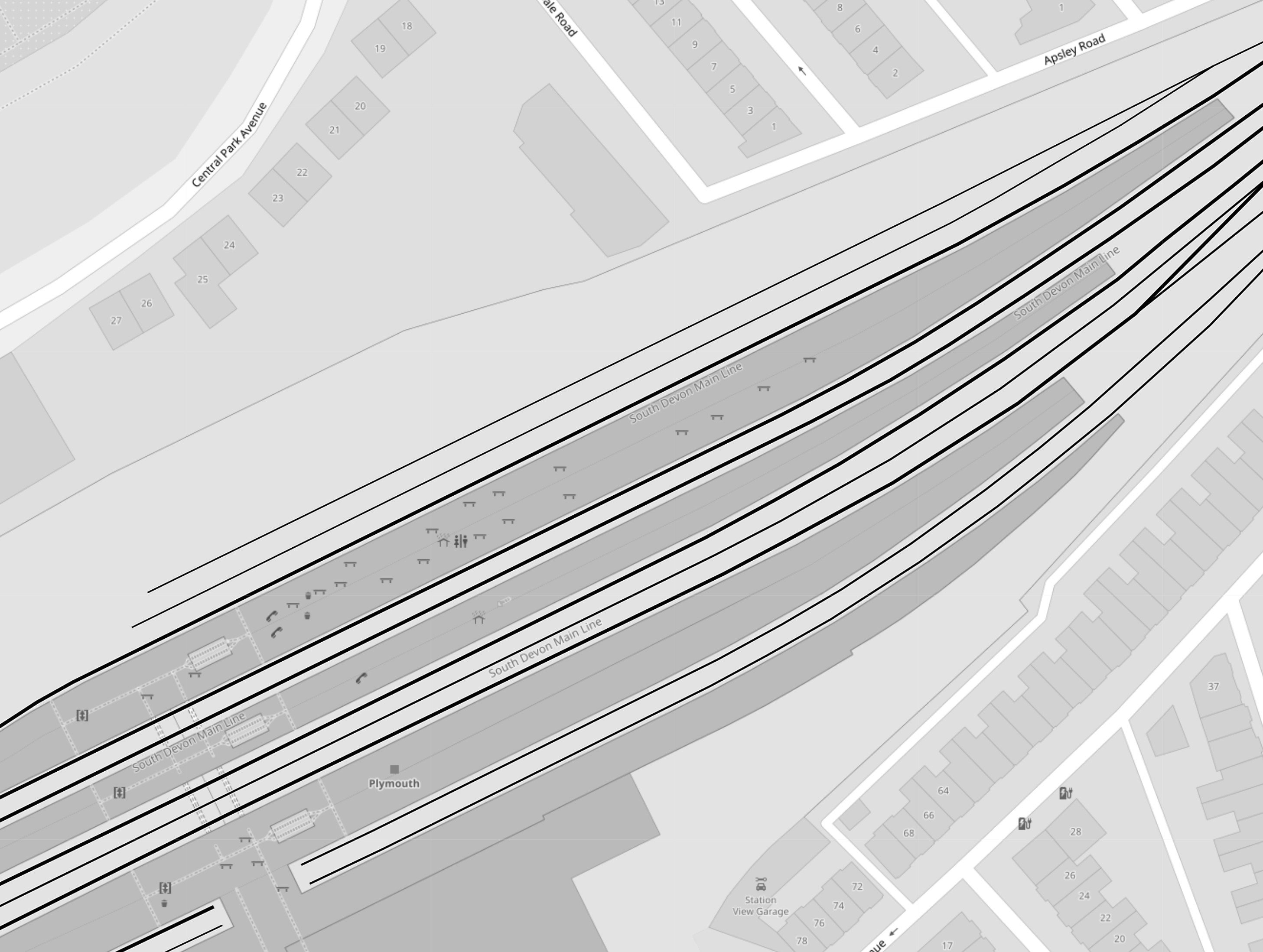
Note.
- London is to the East and Penzance is to the West.
- Platform numbers increase from South to North.
- The two East-facing bay platforms are Platforms 1 and 2.
- The West-facing bay platform in the South-West corner is Platform 3.
- Platform 4 shares the island with the bay platforms 1, 2 and 3.
- Most trains going to Penzance use Platform 4.
- Platforms 5 and 6 share the centre island platform.
- Platforms 7 and 8 share the Northernmost island platform.
- Most trains going towards London use Platform 7.
- Wikipedia indicates that the track layout is comprehensive and allows a lot of operational flexibility.
Although the station was completed around forty years ago, it could have been designed for handling modern battery-electric trains.
- There are three bay platforms numbered 1 to 3, to charge local services and send them on their way.
- Trains can arrive and depart in the five through platforms, numbered 4 to 8, from either direction.
- Two days ago, a nine-car London Paddington to Plymouth train terminated in Platform 7. After waiting an hour it returned to London. An hour would be enough time to fully-charge a train.
- As many platforms as needed could be electrified.
I am fairly sure, that most battery-electric trains could be timetabled to leave Plymouth station with full batteries.
Turnround At Penzance
I have found these turnrounds.
- 802113 arrived from Paddington at 1142 and left for London at 1215
- 802022 arrived from Paddington at 1307 and left for London at 1415
- 802103 arrived from Paddington at 1500 and left for London at 1615
This OpenRailwayMap shows the platforms at Penzance station.
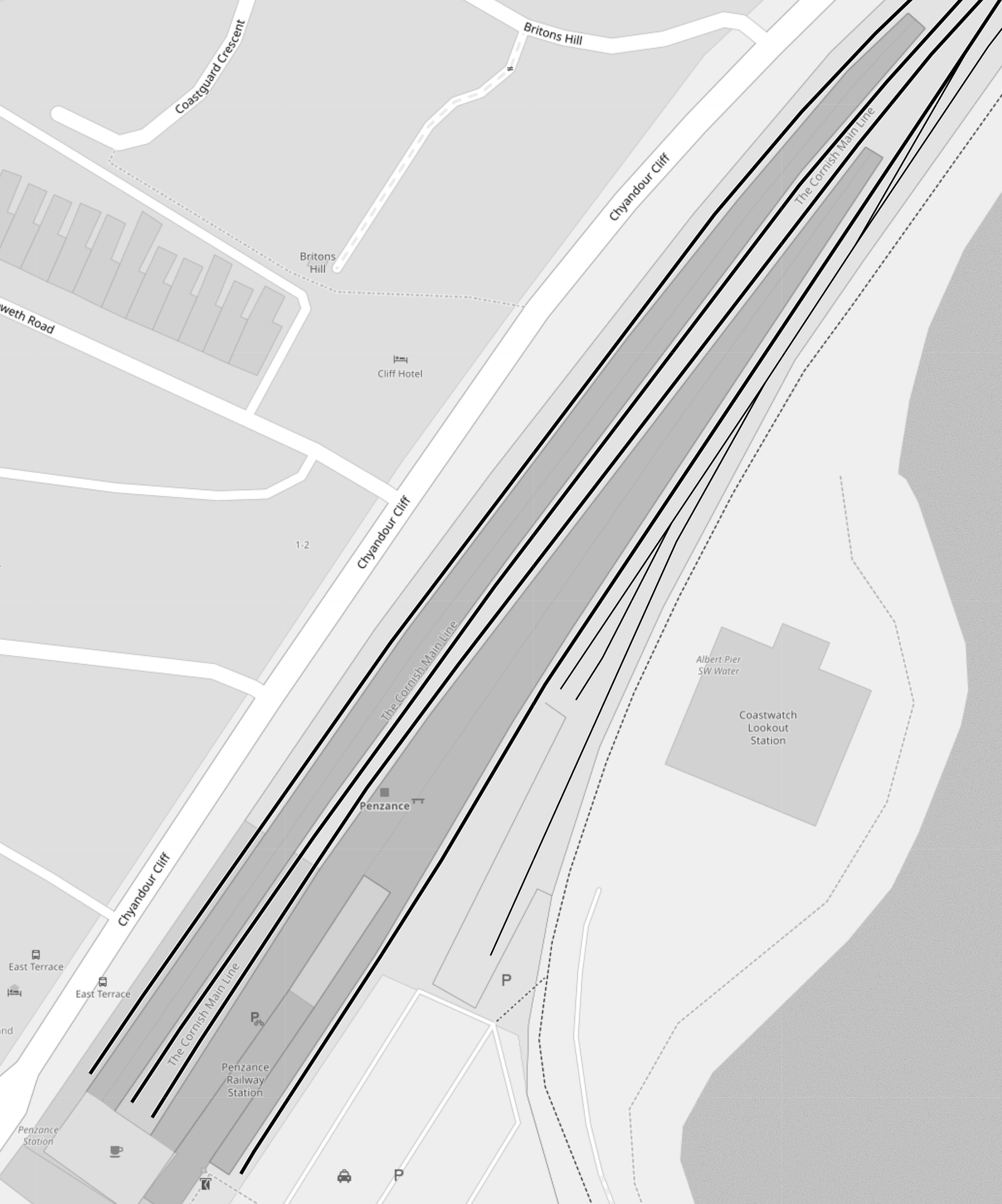
Note.
- The three example trains used Platform 1.
- Platform 1 is the long platform on the landward side of the station.
- Platforms are numbered 1 to 4 from left to right.
- An appropriate number of platforms would be electrified to charge trains terminating at Penzance.
Trains would appear to have plenty enough time to recharge, so they would start their return journey with full batteries.
Engineering Ambition
Several times in my life, I’ve got fired up about engineering or software projects and I like to think, I’ve produced the best and fastest solution.
For this reason, I believe that Hyperdrive Innovation, who are now part of Turntide Technologies, and Hitachi will set themselves three objectives with the design of the the battery packs for the Class 802 train.
- The battery-electric Class 802 will outperform the Stadler FLIRT Akku in terms of speed and distance.
- The battery packs will be plug-compatible with the diesel engines, so there will only be minor software modification to the trains.
- The train will be able to be handle all Great Western Railway’s routes without using diesel.
- I wouldn’t be surprised that on many routes the train will cruise at over 110 mph on batteries.
I also suspect they want the Akku’s Guinness world record, which will mean the range will be in excess of 139 miles.
Battery Range Needed For Routes
These are routes that need to be covered by battery-electric Class 802 trains or similar.
- Avanti West Coast – Crewe and Chester – 22.2 miles
- Avanti West Coast – Crewe and Holyhead – 105.5 miles
- Avanti West Coast – Crewe and Llandudno Junction – 65.5 miles
- Avanti West Coast – Crewe and Wrexham – 34.4 miles
- Avanti West Coast – Shrewsbury and Wolverhampton – 29.7 miles
- Great Western Railway – Penzance and Plymouth – 79.5 miles
- Great Western Railway – Plymouth and Taunton – 82.8 miles
- Great Western Railway – Taunton and Patchway – 51.7 miles
- Great Western Railway – Newbury and Taunton – 89.6 miles
- Great Western Railway – Taunton and Paignton – 59.0 miles
- Great Western Railway – Weston-super-Mare and Chippenham – 43.5 miles
- Great Western Railway – Oxford and Great Malvern – 65.6 miles
- Great Western Railway – Oxford and Hereford – 86.3 miles
- Great Western Railway – Oxford and Worcester Foregate Street – 57.6 miles
- Great Western Railway – Oxford and Worcester Shrub Hill – 57.2 miles
- Great Western Railway – Cheltenham Spa and Swindon – 43.2 miles
- Great Western Railway – Cardiff Central and Carmarthen – 77.4 miles
- Great Western Railway – Cardiff Central and Pembroke Dock – 118.9 miles
- Great Western Railway – Cardiff Central and Swansea – 45.7 miles
- Hull Trains – Beverley and Temple Hirst Junction – 44.3 miles
- Hull Trains – Hull and Temple Hirst Junction – 36.1 miles
- LNER – Hull and Temple Hirst Junction – 36.1 miles
- LNER – Middlesbrough and Longlands Junction – 22.2 miles
- LNER – Sunderland and Longlands Junction – 48.5 miles
- LNER – Lincoln Central and Newark Northgate – 16.6 miles
- LNER – Leeds and Bradford – 13 miles
- LNER – Leeds and Harrogate – 18 miles
- LNER – Leeds and Huddersfield – 17 miles
- LNER – Stirling and Inverness – 146 miles
- LNER – Edinburgh Haymarket and Aberdeen – 130 miles
- LNER – Peterborough and Doncaster via Great Northern and Great Eastern Joint Line – 93.7 miles
- South Western Railway – Basingstoke and Exeter St. David’s – 124.5 miles
- TransPennine – Hull and Micklefield – 42 miles
- TransPennine – Longlands Junction and Saltburn – 34.7 miles
- TransPennine – York and Scarborough – 42 miles
- TransPennine – Doncaster and Cleethorpes – 52.1 miles
- TransPennine – Stockport and Doncaster – 55.4 miles
- TransPennine – Stockport and Cleethorpes – 107.5 miles
Note.
- Stirling and Inverness and Edinburgh Haymarket and Aberdeen could be shortened by up to thirty miles, by planned electrification in Scotland.
- I have assumed that the TransPennine Upgrade has been completed.
- It looks like a battery-electric Class 802 train could use the Great Northern and Great Eastern Joint Line diversion via Lincoln.
- I am slightly surprised, that the longest stretch of line without electrification and with a passenger service is Basingstoke and Exeter St. David’s.
Charging will be needed at some places to charge the battery-electric trains. Stations fitted with chargers could include Aberdeen, Carmarthen, Cleethorpes, Exeter St. David’s, Hereford, Holyhead, Hull, Inverness, Paignton, Penzance, Pembroke Dock, Plymouth, Swansea, Taunton, Weston-super-Mare, Worcester.
Most chargers would be a length of electrification in the platform, where the battery-electric trains terminated or passed through.
More On LNER’s Ten New Bi-Modes
I wrote about these trains in LNER Seeks 10 More Bi-Modes.
This was my conclusion.
There is a lot of scope to develop LNER’s services.
I think it is likely that the order will go to Hitachi.
But as I indicated, I do believe that there is scope for a manufacturer to design a zero-carbon train, that was able to serve Aberdeen and Inverness.
-
- I suspect a fleet of ten trains would be sufficient.
- Trains would use the 25 KVAC overhead electrification, where it exists and hydrogen or battery power North of the wires.
The trains would also be capable of being upgraded to higher speeds, should the East Coast Main Line be turned into a High Speed Line.
I also think, that whatever trains are bought, there will be a large upgrading of the existing Hitachi fleet, which will add batteries to a lot of trains.
In the July 2023 Edition of Modern Railways, there is an article, which is entitled LNER Embraces Pioneering Spirit, which takes the form of an interview with LNER’s Managing Director; David Horne.
In a section, which is entitled ‘225’ Replacement, this is said.
Meanwhile, Mr Horne is looking to what might replace the InterCity 225 fleet, now smartly repainted in a scheme which pays homage to the original ‘Swallow’ livery. While there were fears this fleet may be withdrawn as an economy measure, the ‘225s’ are now on lease until at least next summer.
But Mr Horne says obsolescence issues are a real challenge and LNER will struggle to maintain the fleet beyond 2025, and from the May 2023 timetable change the number of daily diagrams was reduced from five to four to conserve the fleet’s mileage. Much of the heavy maintenance work had previously been carried out at Wabtec’s Doncaster site, but this facility is no longer available, and while a recent reliability improvement programme is bearing fruit, the challenges remain. The crunch point comes with the transition to ETCS at the southern end of the ECML as part of the East Coast Digital Programme – Mr Horne says LNER does not want to fit cab signalling on the ‘225s’.
The solution to this issue is to procure additional trains to run alongside the 65 Azumas, and LNER went out to tender in October 2020 for a fleet of 10 trains with self-power capability.
While a preferred bidder has been identified, the business case to proceed with the procurement is awaiting approval, but Mr Horne is still hopeful this project can be progressed.
The current plan envisages the new trains broadly replacing the ‘225s’ on Leeds and York diagrams, but a major benefit with the new fleet would be during engineering work – at present LNER has to withdraw services to places such as Harrogate and Hull to concentrate its bi-mode Azumas on services using non-electrified diversionary routes, and having more stock with self-power capability would ease the issue.
Currently, LNER has these Azumas and InterCity 225s in its fleet.
- Five-car bi-mode Class 800 trains – 10
- Nine-car bi-mode Class 800 trains – 13
- Five-car electric Class 801 trains – 12
- Nine-car electric Class 801 trains – 30
- Nine-car electric ImterCity 225 trains – 8
Note.
- There are 23 bi-mode trains and 50 electric trains.
- There are 167 bi-mode carriages and 302 electric carriages.
- Currently 31.5 % of the trains are bi-mode.
- With ten new bi-mode trains and no InterCity 225 trains, 44 % of the fleet will be bi-mode.
Is this increase in the percentage of the fleet, that are bi-mode acceptable?
I wonder, if there is a more affordable and flexible way to increase the fleet size.
In the Wikipedia entry for the Class 800 train, there is a section, which is entitled Traction And Generator Units, where this is said.
The Class 800 and Class 802 bi-mode are equipped with three GU per five-car set and five GU per nine-car set; a five-car set has a GU situated under vehicles 2/3/4 and a nine-car set has a GU situated under vehicles 2/3/5/7/8. In comparison, the electric-orientated Class 801 features a single GU for a five to nine-car set, which provides emergency power for limited traction and auxiliaries if the power supply from the overhead line fails. By adding or removing GUs, a Class 800 can be converted into a Class 801 and vice versa.
Let’s look at LNER’s needs, which are actually two separate sub-needs.
- There is a need for ten new trains to replace the InterCity 225 trains.
- There is a need to increase the size of the bi-mode fleet to be able to use the Great Northern and Great Eastern Joint Line and other non-electrified routes to by-pass engineering works.
Note.
- I suspect that as Mr Horne explained, there are only five or possibly four InterCity 225s diagrammed on a particular day, then perhaps ten five-car bi-mode Class 800 trains, might be able to cover for the retirement of the InterCity 225s.
- These trains would work as pairs to Leeds and York to replace the InterCity 225 capacity.
- If required they could split and join at Leeds and York to serve other destinations.
- The diversion route of the Great Eastern Joint Line has an unelectrified distance of 93.7 miles and the route is electrified at both ends.
- Would a battery-electric Class 800 train handle this distance? I suspect if Stadler can do it, then Hitachi and Turntide Technology will be able to do it too!
LNER will have replaced the InterCity 225s and acquired ten new five-car blockade runners.
As an order for ten new five-car battery-electric trains, is not to be sneezed at, I suspect Hitachi will make sure that their new battery-electric variants have enough range.
So this would mean that the range of a five cat battery-electric Class 800 train, should be in excess of 93.7 miles.
It should be noted that the five-car Class 800 and Class 802 trains have specific advantages when it comes to converting them to battery-electric trains.
- They are modern trains, that are still in production, every bit of information about the train is known down to the last nut, bolt and plastic clip.
- Like most modern trains, hey have a sophisticated computer system controlling the train.
- They have spaces for three, four or maybe even five diesel engines under the floor, which could be used for a battery-pack in every car designed to hold a diesel engine.
- The train has an electric bus between nose and tail.
- As is shown, when the trains change between diesel and electric, the pantograph can go up and down with all the alacrity of a whore’s drawers.
- The trains can be converted between bi-mode and electric, by adding or removing diesel packs. I doubt this feature will be removed, as batteries replace diesels.
With my Electrical and Control Engineer’s hard hat on, I doubt there is anything to stop a Class 800 or Class 802 train being fitted with three or more batteries to create a 125 mph train, with a range approaching two hundred miles on battery power.
The initial name of these Hitachi trains was the Hitachi Super Express. Is this train the Hitachi Super Battery Express?
But it would appear, that for their initial needs, LNER, just need a range to handle the near hundred miles of the Great Northern and Great Eastern Joint Line.
Inverness and Aberdeen will come later.
Hull Trains
This page on the Lumo web site is entitled Greener Travel Between Edinburgh And London.
These are the first three paragraphs.
A new, 100% electric rail service is to start running between London and Edinburgh with fares for as little as £14.90 in a bid to encourage greener and more affordable travel between the capitals.
Called Lumo, it will provide low-carbon, affordable long-distance travel for over 1 million passengers per year. Over 74,500 passengers currently fly between Edinburgh and London each month3.
And with single tickets between the capitals starting from just £14.90, Lumo will be a comfortable, convenient alternative to flying that is affordable for all. Some 60% of all single fares will be available at a cost of £30 or less.
I’m sure Hull Trains, who are owned by First Group like Lumo would like to position themselves in the 100 % electric low-carbon box too!
Currently, Hull Trains’s five-car Class 802 trains, run 88.6 and 72.2 miles using diesel on round-trips to Beverley and Hull respectively from London.
If batteries were fitted to their trains to give a battery range of around a hundred miles, Hull Trains could call themselves 100 % electric.
No new infrastructure would be required, but a short length of overhead electrification in a convenient platform at Hull station would ensure the train left for London and Beverley with a full battery.






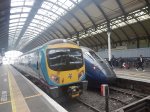
The pictures show Hull Trains’s Class 802 train in Platform 7 at Hull station.
Penzance And Taunton
This to me is the key section as if you can run a battery-electric train between these two stations it allows so many of the services to be run using zero-carbon traction.
These are distances from Taunton.
- Exeter St. David’s – 30.7 miles
- Newbury – 89.6 miles
- Okehampton – 55.3 miles
- Paignton – 59.0 miles
- Patchway – 51.7 miles
- Plymouth – 82.8 miles
Note.
- I’ve added Okehampton, as I feel that if Dawlish had another encounter with Poseidon, Okehampton with its proposed Parkway station on the A30 could be the terminus for coaches to and from Cornwall.
- All would be possible with a battery-electric train, with a hundred-mile range, leaving Taunton with a full battery.
- Charging could be needed at Okehampton and Paignton.
What is needed is some form of charging in the Taunton area.
This OpenRailwayMap shows Taunton station.

Note.
- The station has four through platforms.
- All Great Western Railway services to and from Devon and Cornwall stop in the station.
- I feel it would be possible to electrify the station, so that all stopping trains could charge the batteries.
But the problem would be, that as typically trains only stop for a couple of minutes at Taunton, there may not be enough time to take enough charge on board.
This OpenRailwayMap shows the track between Wellington and Collumpton, between Taunton and Exeter.
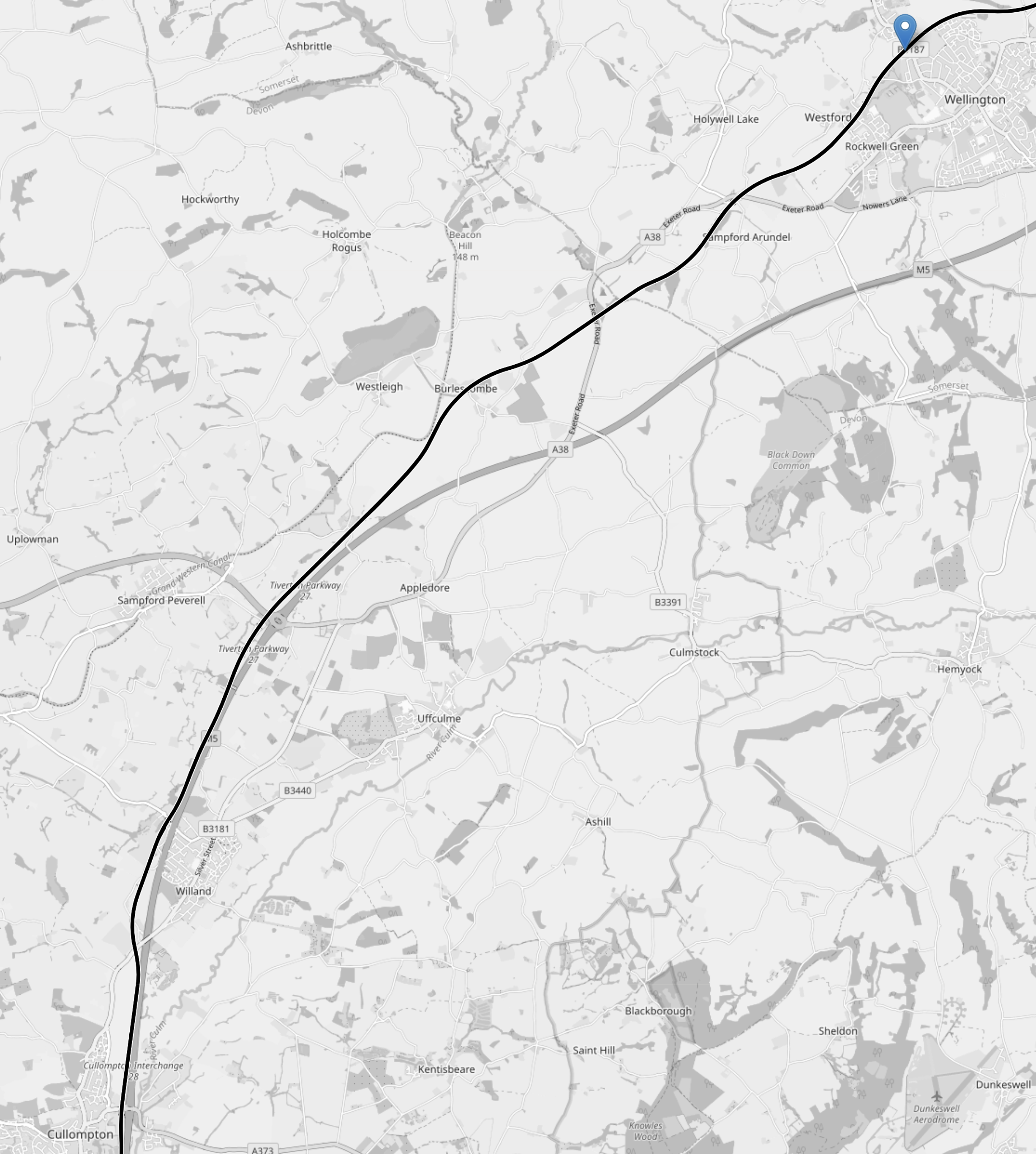
Note.
- The black line is the railway between Taunton and Exeter.
- The blue arrow in the North-East corner of the map indicates the position of the proposed Wellington station.
- Collumpton is in the South-West corner of the map and has also been put forward for a new Collumpton station.
- I talked about the reopening of these two stations in Reopening Of Wellington and Cullompton Stations.
- The M5 to the North of Collumpton runs closely alongside the railway.
- According to Real Time Trains, it takes just under ten minutes to go the thirteen miles between Wellington and Collumpton.
This Google Map shows a section of the M5 North of Collumpton.
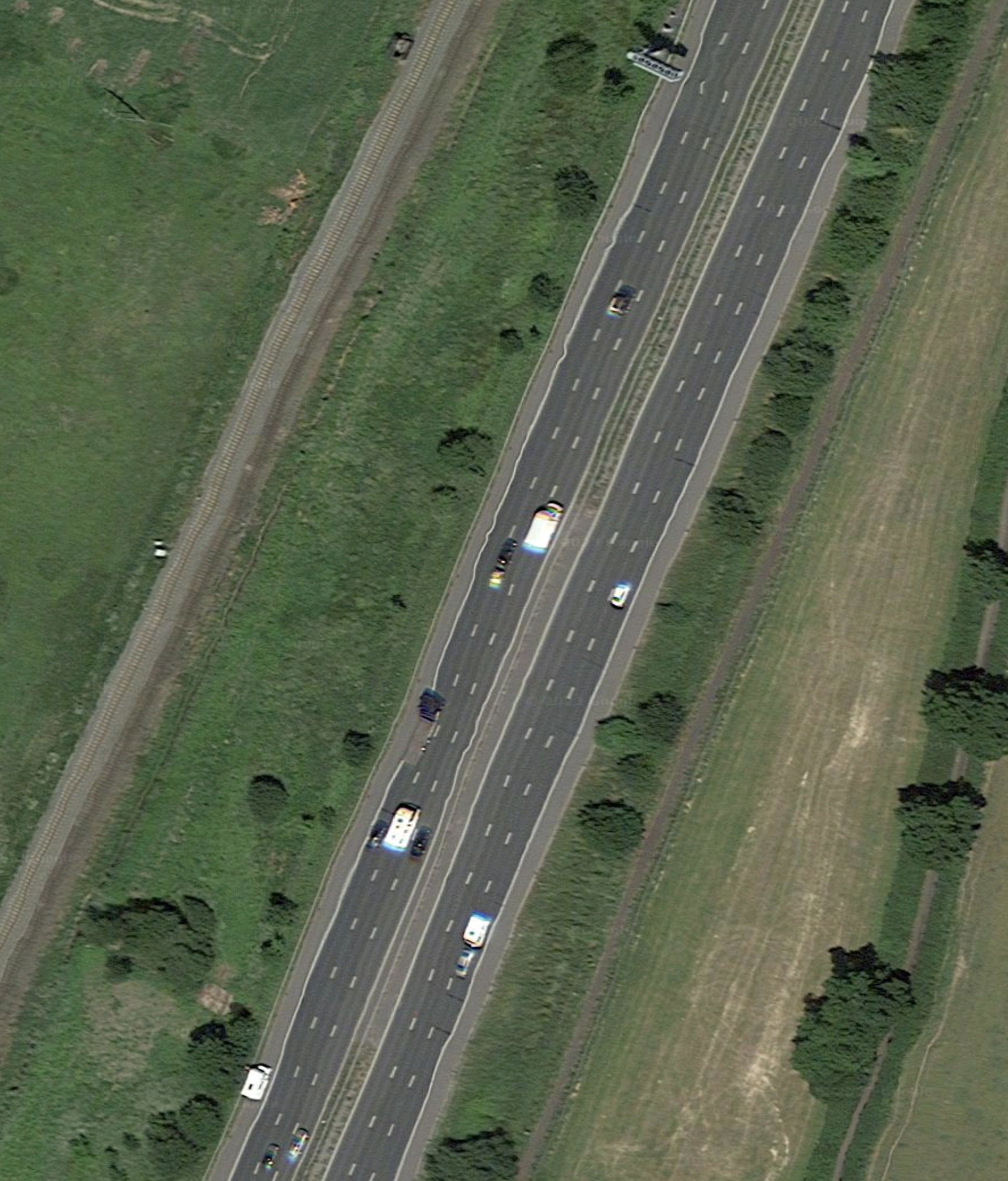
And this Google Map shows Tiverton Parkway station.
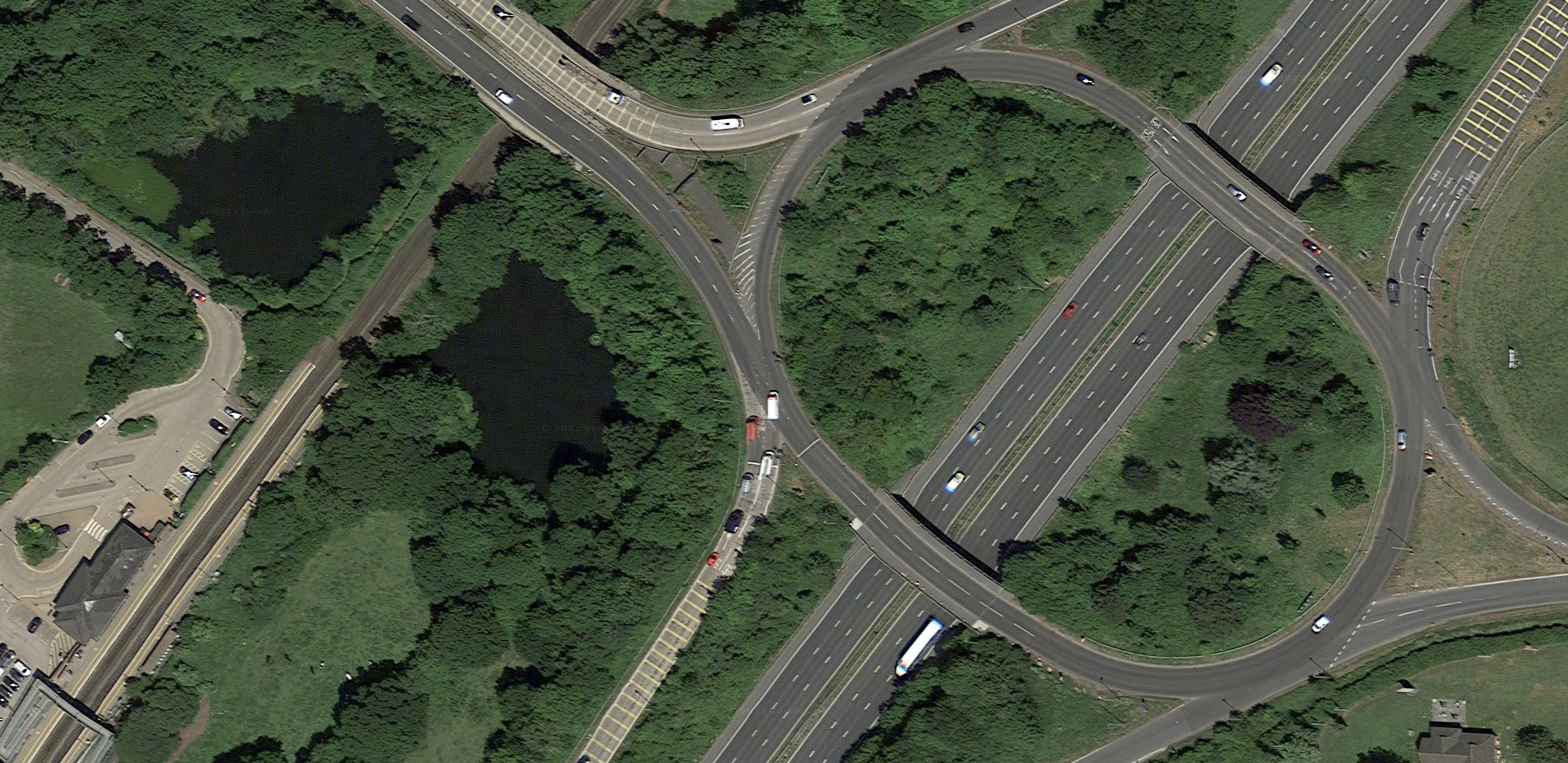
Note how the railway runs alongside the M5 to the West.
I feel that if the two new stations of Wellington and Collumpton are built between Taunton and Exeter St. David’s, then why not partially electrify the route, so that all trains would leave or pass through Taunton and Collumpton stations with full batteries.
- Going West the trains would reach Exeter St. David’s, Okehampton or Plymouth.
- Going East trains would reach Newbury for Reading and Paddington, and Patchway for Cardiff.
I believe that a battery-electric solution is possible, that would enable the decarbonisation of the Great Western Main Line all the way to Penzance.
 The Anonymous Widower