Fortescue Future Industries As A First Mover In Global Green Hydrogen And Next Generation Mining Equipment
The title of this post, is the same as that of this article on International Mining.
This is the most significant sentence in the article.
Fortescue has set an industry leading target to be carbon neutral by 2030.
The article details how Andrew Forrest’s company intends to do it.
I found the article a fascinating read.
Port Of Açu And Fortescue To Explore 300MW Hydrogen Plant In Brazil
The title of this post, is the same as that of this article on H2Bulletin.
This is the first paragraph.
Brazilian ports have been attracting foreign investors to benefit from its abundant renewable resources. Porto do Açu Operações SA has recently started exploring opportunities to become a hydrogen production hub in Brazil, which H2Bulletin exclusively covered in its recent article.
The location of the Superport of Açu is shown on this Google Map.
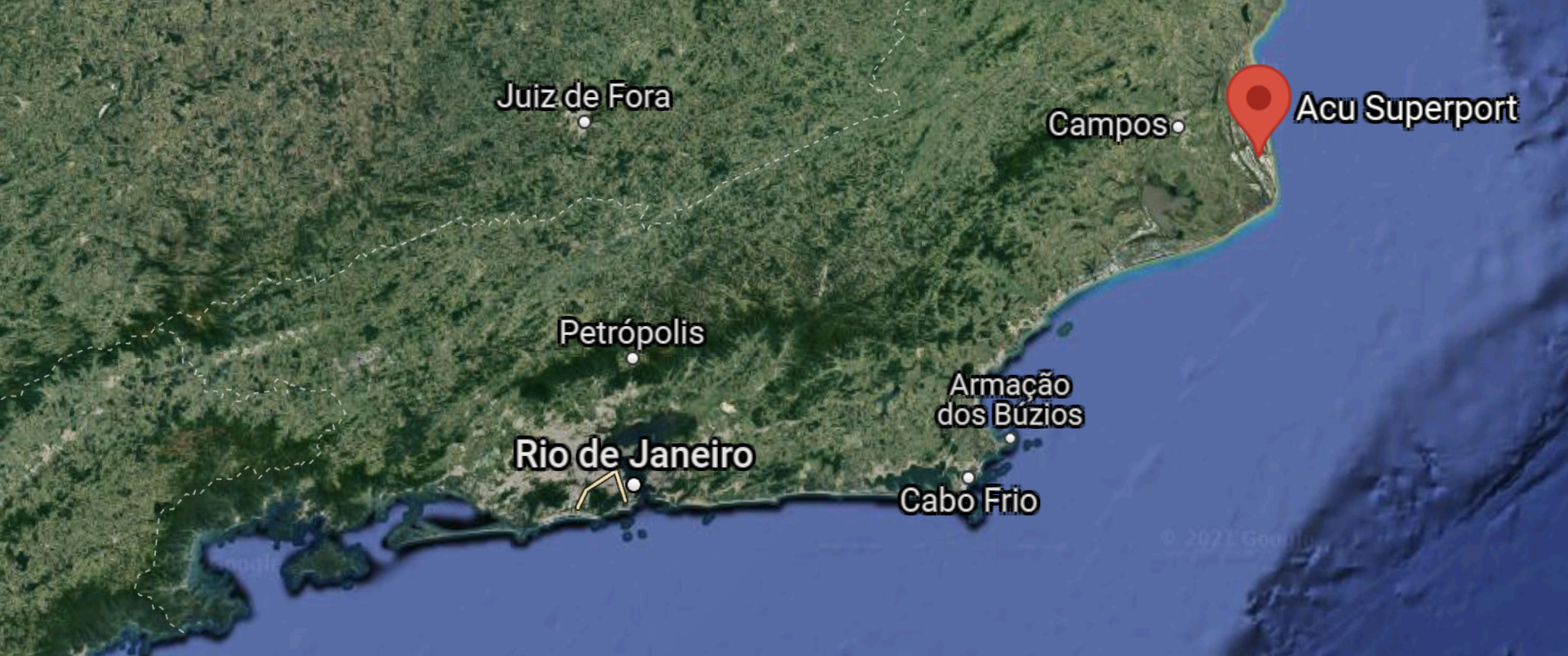
Açu is marked by the red arrow and is about 300 km. from Rio de Janeiro.
Over the last year or so, I’ve noticed several ports declare the intention of becoming hydrogen hubs.
- Hydrogen can be used to power dock vehicles, tugs, work-boats and ships.
- Hydrogen can be used to support local businesses with high energy needs.
- In the future hydrogen may power freight trains to and from the port.
Do ports feel hydrogen is a good way to decarbonise?
Do Ports Make Good Hydrogen Hubs?
Consider.
- Ports and their staff are used to handling cargoes of all types including gases, chemicals, liquids and liquified gases.
- They generally have space for the tanks to store hydrogen.
- They have a good electrical connection for an electrolyser to create green hydrogen.
- They have lots of uses for hydrogen.
Any excess hydrogen can be exported to someone who needs it.
It seems to me, that a port is a good place for a hydrogen hub.
Hydrophilic Polymers: The Key To A Green Future
The title of this post, is the same as that of this article on Tech Xplore.
This is the first paragraph.
Researchers from the University of Surrey and the University of Bristol are working on innovative devices to tame and store carbon-free renewable energy from unpredictable sources such as wind and solar.
That got me interested and I read the whole article.
This abstract on SpringerLink gives a definition of hydrophilic polymers.
Hydrophilic polymers are those polymers which dissolve in, or are swollen by, water. Many compounds of major technical and economic importance fall within this definition, including many polymers of natural origin. Many foodstuffs—containing substantial amounts of carbohydrate and protein— can be classified as hydrophilic polymers, and some have important technical and industrial uses, apart from their nutritional value. For example, although over 95% of the starches produced from corn (maize), wheat, potato, tapioca, and other vegetable sources are used as foods (human or animal), the remaining quantity represents an important part of the technical polymer market. In fact, more than two-thirds of hydrophilic or water-soluble polymers used in industry are derived from polymers of natural origin, so coming from renewable resources (harvested crops, trees, waste animal products and so on), rather than petrochemical sources of finite availability.
This paragraph from the Tech Xplore article describes the research.
The Chemistry Department at Surrey is working with collaborators at Bristol, Professors Ian Hamerton and David Fermin, and Superdielectrics Ltd., an innovative British Research Company located at the Surrey Research Park to transform simple hydrophilic polymers which were originally developed for use as contact lenses, to realize a second critical energy storage process.
This could lead to the next generation of supercapacitors.
Conclusion
This is fascinating technology and it could save the world.
Mineral Carbonation International Win COP26 Clean Energy Pitch Battle
The title of this post, is the same as that of this article on Gasworld.
I have been following Australian company; Mineral Carbonation International for a few months and I am glad to see their technology, which turns carbon dioxide into bulk solid materials like building blocks and plasterboard, has now been recognised at a high level.
This is a screen capture of their home page.

The company certainly has a dream!
Read the website.
I believe that it is technology like this that will help to save the world from climate change.
I am glad that the great and good at COP26 are thinking along the same lines as myself!
Reopening Corsham Station
On October 27th this Beeching Reversal Project was given £50,000 to build a case for reopening.
Corsham is a town in Wiltshire.
- It has a population of 13,000
- It is very much a military town, with numerous defence establishments, some of which are deep underground in former bath stone quarries.
- Corsham station closed in 1965.
As this Google Map shows the Great Western Railway passing through the town.
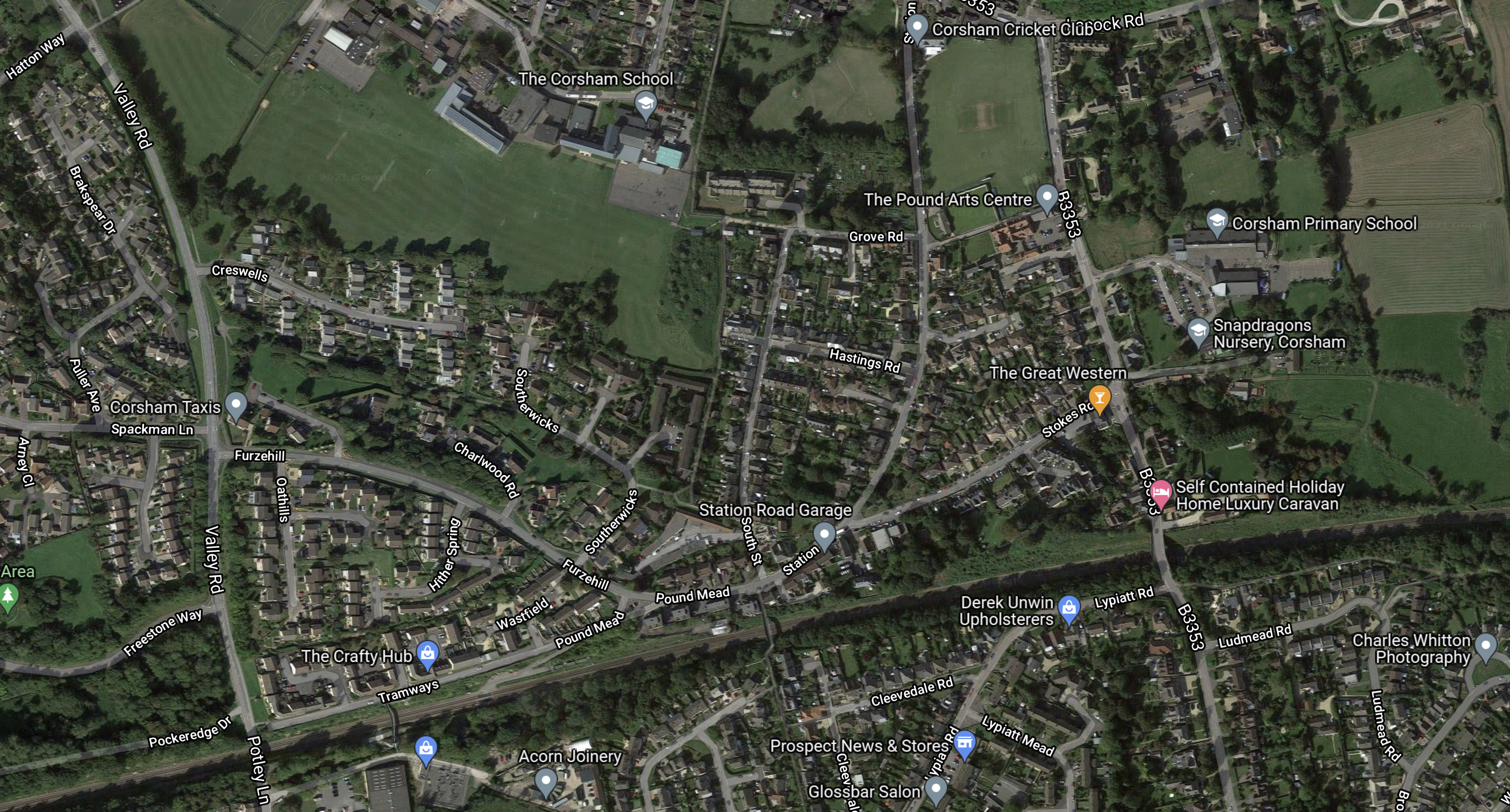
The dark scar of the railway across the map towards the bottom is clearly visible.
This second Google Map shows the site of the former station.
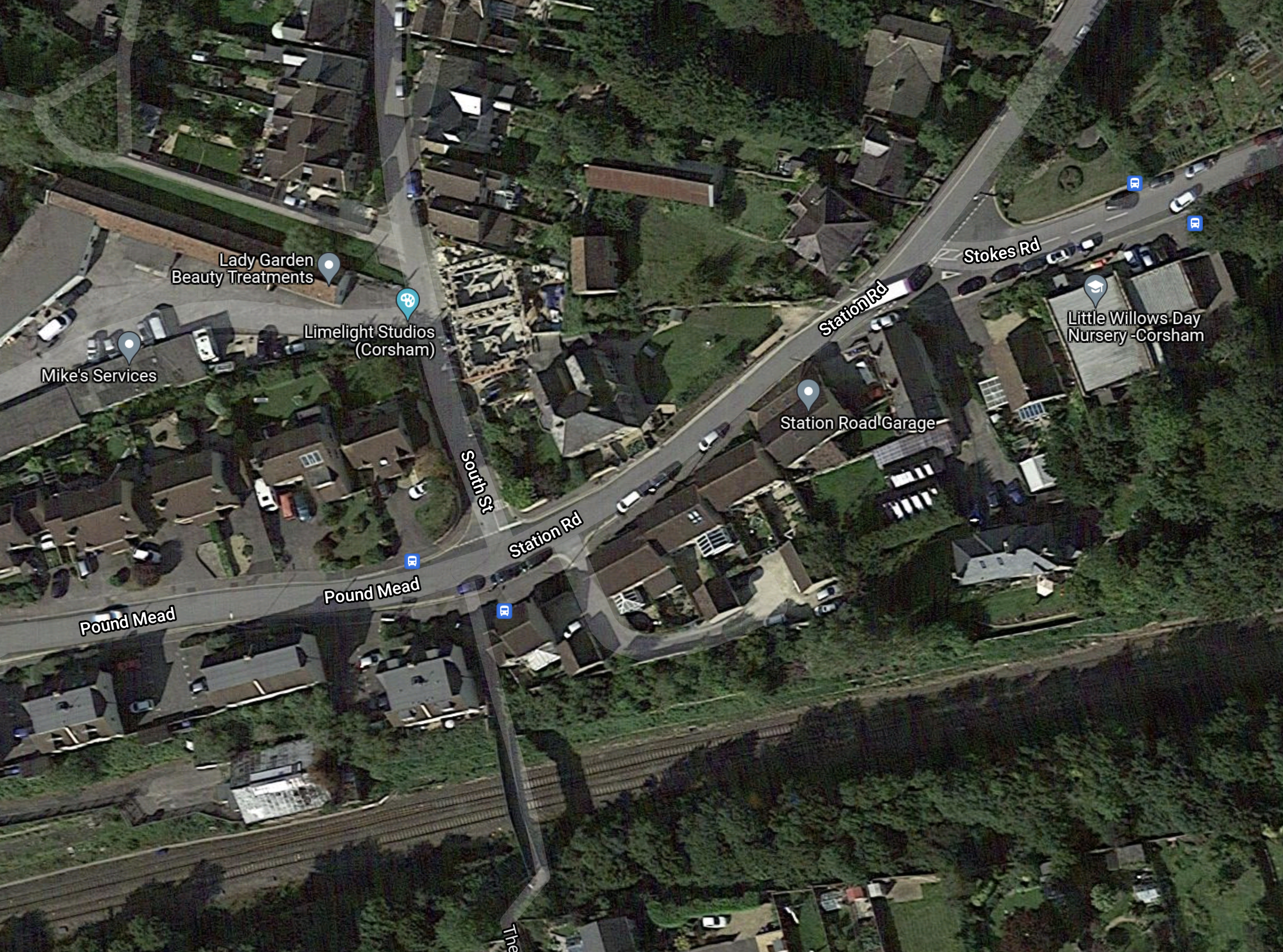
Note.
- Station Road is a bit of a giveaway.
- There is a footbridge over the double-track railway. Note the shadow.
- The railway is not electrified, but could be in the future.
- Chippenham station is to the East and Bath Spa station is to the West.
- The station was in a deep cutting on the approach to Box Tunnel, which is to the West.
I doubt that designing and building a new Corsham station will be a challenging project.
These are my thoughts on other issues.
Military Issues
The Wikipedia entry for Corsham has a section called Defence, which lists well over half-a-dozen defence sites.
Could these be a reason for the new station?
- Just like many other businesses and families, does the Ministry of Defence feel it should decarbonise?
- Are large numbers of employees and visitors driving in from Swindon and Bristol?
How many new stations would cut the country’s carbon footprint?
Services
Currently, it appears the only services going through Corsham are the Paddington and Bristol Temple Meads service
- There are two trains per hour (tph)
- The trains call at Reading, Didcot Parkway, Swindon, Chippenham and Bath Spa.
- Between Chippenham and Paddington is fully-electrified
- Trains run between Bristol Temple Meads and Chippenham, which is a distance of 24.4 miles on diesel.
These trains could stop, but would that slow the services?
Perhaps alternate services would stop at only one of Corsham and Chippenham. But that would mean the train couldn’t be used between those two stations.
An alternative philosophy would be to electrify between Chippenham and Bath Spa, so that the stops would be faster , as acceleration would be under electric power.
- Box Tunnel has been prepared for electrification.
- This would be thirteen miles of new electrification.
- Trains would run between Bristol Temple Meads and Bath Spa, which is a distance of 11.5 miles on diesel.
But the good citizens of Bath, might object to electrification through Sydney Gardens and the City Centre.
If they do object, an alternative would be to electrify between Bathampton junction and Chippenham.
- As before Box Tunnel would be electrified.
- This would be eleven miles of new electrification.
- Trains would run between Bristol Temple Meads and Bathampton junction, which is a distance of 13.7 miles on diesel.
Bath would not be despoiled by electrification.
Battery-Electric Trains
I touched on electrification in the previous section and I believe it would be reasonably easy to electrify between Chippenham station and Bathampton junction.
This would mean that there would be just 13.7 miles for the train to power itself between Bristol Temple Meads and Bathampton junction.
As it is 27.4 miles in total with perhaps a twenty minute wait in Bristol Temple Meads station, I believe this would be within the battery range of a Hitachi Intercity Tri-Mode Battery Train, which is described in this Hitachi infographic.

Note.
- Hitachi haven’t disclosed the range of the train on battery power alone.
- Twenty minutes in Temple Meads station is enough to fully charge the battery.
If the train could be recharged at Temple Meads station, the battery range needed would be just fifteen miles.
Conclusion
All stakeholders would appear to benefit from this new station.
Hull Trains Is Back And Stronger Than Ever
The title of this post, is the same as that of this press release from Hull Trains.
This is the first paragraph.
Timetables at Hull Trains will be back to pre-pandemic levels from December as public confidence in rail travel continues to grow.
These are other points from the press release.
- The number of returning passengers is steadily increasing.
- From December 12th, Hull Trains will be running 94 trains per week in total, which is two higher than the pre-pandemic record.
- An additional service will be run on Sunday to match the six trains per day (tpd) on Saturday.
- There will be seven tpd on weekdays. That’s not far off one train per teo hours (tp2h) all day.
Passenger numbers must be coming out from the pandemic well.
This sentence from the press release gives a clue to how Hull Trains will cope with increasing passenger numbers.
Ten-car operations will commence on Fridays and Saturdays to provide additional capacity just in time for Christmas travel and the general growing demand as we prepare to enter 2022.
I suspect by rescheduling maintenance and running all five trains in services, they can run some trains on Fridays and Saturdays as pairs.
- As Hull trains only stop at Stevenage, Grantham, Retford, Doncaster, Selby, Howden, Brough, Hull and Beverley, there aren’t many stations, that need to be able to take ten-car trains.
- I suspect a couple of platforms might need lengthening, as a ten-car train is 260 metres long. Or they could instruct passengers to only use the front train for the stations with short platforms. Or only use five-car trains to the stations with short platforms.
- But the longer trains won’t need any extra paths.
- I was also told last year, that Hull station can take nine-car trains, so perhaps it can take a ten.
So to increase capacity on the route, Hull Trains just need to add another train to their fleet.
As all costs are probably well-known, with a bit of simple modelling, Hull Trains can probably predict, when they need to add a new train.
Whilst I was looking at the Lumo train yesterday, I got talking to a driver from Hull Trains, who had come over to take a professional look at Lumo’s Class 803 train.
I asked him what he liked about Hull Trains’s Class 802 trains as a driver. He said the brakes, which is probably most important to a driver, as they’re at the sharp end, if anything happens. So that’s comforting.
He also said that some of the Hitachi trains had shown they were stable at 140 mph. So that’s good too.
On talking about the batteries on the Lumo train, I got the impression that batteries will appear on other Hitachi Trains.
Conclusion
It appears to be all trains go between London and Hull.
In Could We See Between London And Much Of The North By Train In Under Two Hours?, I looked at the effect of improvements on the East Coast Main Line and concluded that timings between London Kings Cross and Hull could be around two hours and twenty minutes. This would surely be a spur to increasing traffic on the route.
Surely, when Hull Trains use battery-electric Hitachi trains between London and Hull, this will be the icing on the marketing cake, as we seem to be coming to a point, where zero-carbon sells.
As an aside, will Lumo, who are another First Group company, use a similar mix of five- and ten-car trains on the London and Edinburgh route to increase capacity?
I suspect that what is good for Hull Trains will be good for Lumo.
Fortescue Future Industries Invests In Dutch Thin-Film Solar And H2 Firm HyET
I missed this article, when it was published, so I’m publishing it now!
The title of this post, is the same as that of this article on Renewables Now.
These two paragraphs outline the deal.
Australia’s Fortescue Future Industries (FFI) has taken a 60% stake in Dutch company High yield Energy Technologies (HyET) Group to assist in its ambition to supply 15 million tonnes of green hydrogen globally by 2030.
The green energy company of Fortescue Metals Group Ltd (ASX:FMG) has also provided the majority of financing for the expansion of the Dutch solar photovoltaic (PV) factory of HyET Solar.
Andrew Forrest certainly seems to be splashing the cash.
I first wrote about the hydrogen innovation of the HyET Group in December 2020 in New Device Separates Hydrogen From Natural Gas When The Two Gases Are Blended In Pipelines.
I finished that post, with this simple sentence.
This invention could change the world!
In the UK, there is a project called HyDeploy, which aims to blend twenty percent hydrogen into the UK’s natural gas.
- At this level, all boilers, appliances and processes would work without major changes.
- A significant amount of carbon emissions would be saved.
- Gas imports would be reduced.
Could HyET’s technology be used to piggyback a hydrogen delivery network alongside the UK’s gas network?
It might even be possible to attach hydrogen filling stations direct to the gas network.
Results For HS2’s Trial For Alternative Fuels Set To Cut Carbon Released
The title of this post, is the same as that of this article on Rail Technology Magazine.
This paragraph sums up the results.
Although the results demonstrated partial air quality benefits, when compared to red diesel, the trial showed possible carbon reduction opportunities via the sustainable sourcing of alternative fuels.
It looks like, there will be benefits from swapping from red diesel.
 The Anonymous Widower