Lumo: Why Won’t The New Train Service Stop At Yorkshire Stations?
The title of this post, is the same as that of this article on the Yorkshire Post.
This is the first article, I’ve found about Lumo, that has a negative headline.
The reason is probably very simple, in that most Lumo services are planned to stop at only at Newcastle and Morpeth, with two services having an extra stop Stevenage.
They are intending to run the service in as short a time as possible between London King’s Cross and Edinburgh.
As each stop has a time penalty, not stopping in Yorkshire will give potential to go cut the journey time.
But the positive message that comes from the writer of the Yorkshire Post article is that Yorkshire likes the concept.
This paragraph is their take on the service.
The goal is to encourage a more environmentally friendly mode of transportation and affordable travel. Lumo will provide low-carbon emissions, affordable long-distance travel for more than one million passengers every year.
Perhaps they would like their own Yorkshire flyer.
The obvious way for this to happen would be for the Open Access operator; Grand Central to convert themselves into a train operator like Lumo.
- The ten diesel Class 180 trains would be replaced by new electric trains.
- The trains would need a 140 mph capability under digital signalling to fit in with the plans of Network Rail, LNER and Lumo to create a top-class high-speed high-capacity East Coast Main Line.
- The trains would need a battery capability as Grand Central’s routes are not fully electrified.
- They could copy Lumo’s green marketing philosophy, ticketing and catering offering.
As to the trains, I’m sure that Hitachi could offer a version of their Intercity Tri-Mode Battery Train, the specification of which is shown in this Hitachi infographic.

The trains would need a range of fifty miles on battery-power.
Charging facilities wold be needed at Bradford Interchange and Sunderland stations, as neither has suitable 25 KVAC overhead electrification.
Conclusion
The conversion of Grand Central to work on the Lumo model is possible and as the trains will need to be changed to zero-carbon ones soon to meet decarbonisation objectives, I would suspect that at least that will happen.
New East Linton Station Development Given The Go Ahead
The title of this post, is the same as that of this article on Rail Technology Magazine.
This is the first paragraph.
Proposals to open a station in the village of East Linton, for the first time in over half a century, have just been approved by East Lothian Council’s planning committee.
In The Scottish Borders Have Caught London Overground Syndrome, I said this.
It would also appear that because of the success of the Borders Railway, that there are suggestions to add new stations on the East Coast Main Line at Reston and East Linton. This is said under Future in the Wikipedia entry for East Linton station.
Proposals to reopen the station, along with the former station at Reston, have received the backing of John Lamont MSP, who has taken the case to the Scottish Parliament. A study published in 2013 proposed that East Linton and Reston stations be reopened. Since Abellio ScotRail took over the franchise in April 2015, they have now committed to reopening East Linton and Reston Stations as part of the local Berwick service by December 2016 but due to the shortage of rolling stock this will now commence in December 2018.
So it would appear there is a high chance it will happen.
Reston station is well on the way to completion and the site is shown in this Google map.

Note.
- The East Coast Main Line running between the North-West and South-East corners of the map.
- The brown scars around the railway indicate the site of the station.
- The main A1 road is just off this map to the North.
In New Rail Service From Newcastle To Edinburgh To Stop At These Northumberland Stations, I indicated that a new service from TransPennine Express will start running in December 2021 and will call at Reston station, when it opens.
Now East Linton station is on its way.
This Google Map shows the village of East Linton.
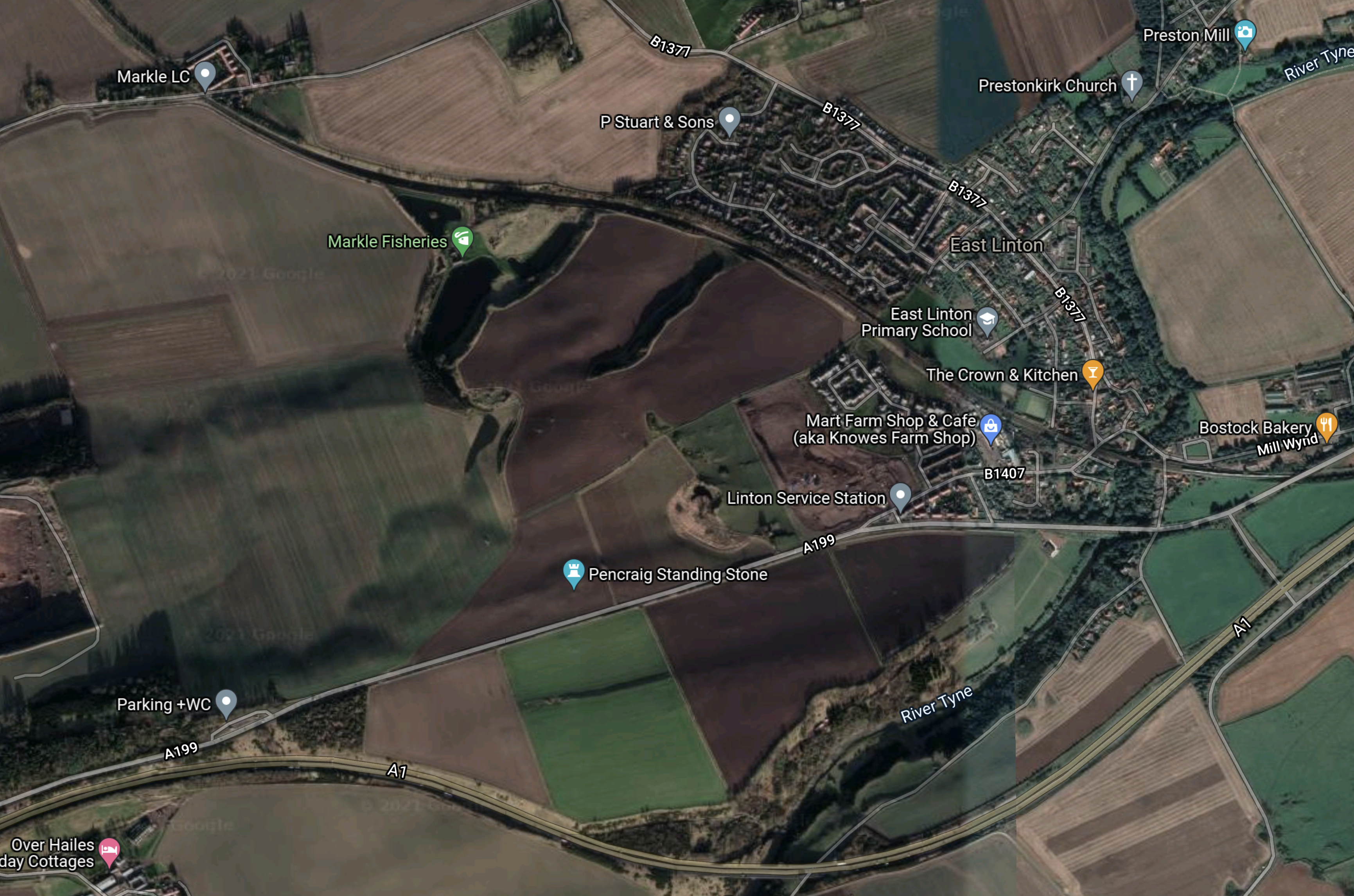
Note.
- The East Coast Main Line going through the middle of the village.
- The A1 curves South of the village.
Will the station be built in the middle of the village?
The page on Scotland’s Railway, indicates it will be.
East Linton and Reston stations seem to be progressing at speed, but then so did Horden and it appears Soham will be open this year.
Network Rail seem to have at last got their project management right.
Werrington Dive-Under – 8th September 2021
I had gone to Peterborough to take pictures of the Werrington Dive Under, from a train between Peterborough and Spalding.
I took these pictures going Peterborough and Spalding.
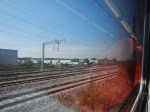
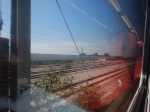
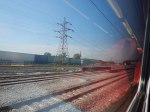
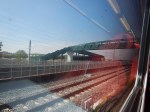

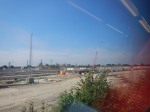




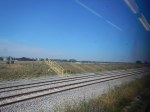
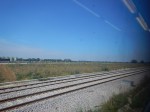
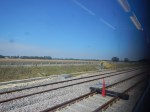
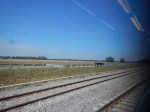
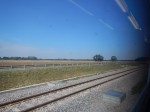
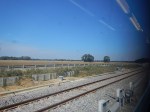
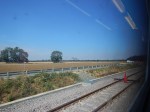
My train between Peterborough and Spalding stations took the following route.
- The Class 158 train was a great improvement on the Class 153 train, I took in From Peterborough To Lincoln in 2015.
- It started in Platform 1b at Peterborough station.
- It then crossed over to the Down Fast line to go North.
- Finally, it slowed to cross the Up Fast and Up Slow lines to go towards Spalding.
- It is surely not an efficient and the safest way to run a railway.
Think about turning right on a busy dual carriageway, by going through a gap in the central reservation.
This diagram shows the new track layout of Werrington Junction.
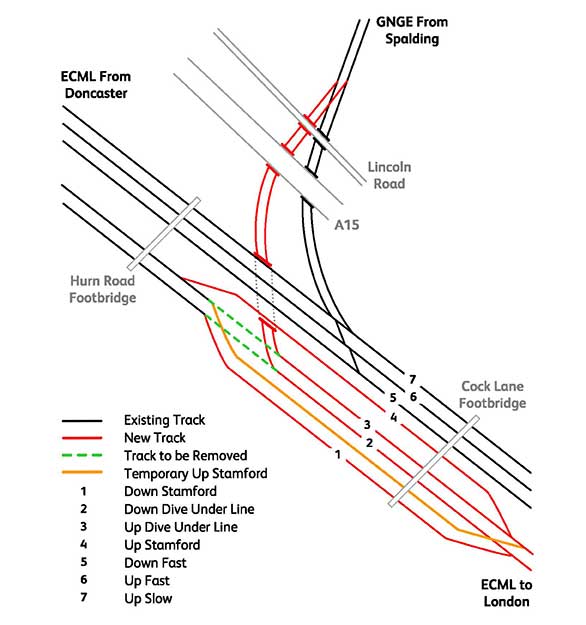
Note.
- My train was going North on Line 5, so it had to use the two crossovers to get to the lines to Spalding.
- The Up Stamford (Line 4) can be seen in the pictures after the two lines have disappeared into the dive-under.
It’s a pity the first of my pictures aren’t better, but the sun was in the wrong direction.
I took these pictures going Spalding and Peterborough.
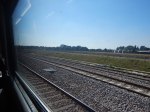
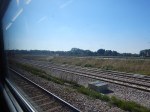

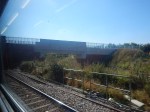
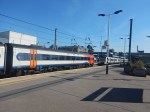
Note.
- The train used the Up Slow (line 7) to go between Werrington Junction and Peterborough station.
- The last two pictures show the Class 158 train in Platform 1b at Peterborough station.
At least this time, the train didn’t cross the Fast lines.
Will Passenger Trains Use The Werrington Dive-Under?
I’m very sure they will!
- On the Western side of Peterborough station, there are four platforms 4 to 7 and an avoiding line for freight trains going North.
- It appears that all of these lines can access the Down Stamford (Line 1) and Up Stamford (Line 4) to go to Werrington Junction.
- At Werrington Junction, trains either take the route to Stamford or use the dive-under for Spalding.
It looks to me, that if the trains to and from Spalding terminated in one of the Western platforms, then they could use the Stamford Lines to access the dive-under and they wouldn’t cross the Fast Lines of the East Coast Main Line on the flat.
Greengauge 21’s Suggestion, That Thameslink Be Extended To Spalding
In the study by Greengauge 21, which is entitled Connecting East Lincolnshire, this is said.
As noted the Spalding-Peterborough line should be a strong candidate for electrification because of its freight potential, and if so it could also accommodate an extension of Thameslink services from London and the South East to Spalding where interchange would be made with a Spalding–Boston–Louth–Grimsby express bus using the A16.
This proposal may be possible, if instead of using the dive-under, the Thameslink trains were able to use the Up Slow (line 7) to go both ways between Werrington Junction and Peterborough station.
As in the near future, full digital signalling will apply through Peterborough, this shouldn’t be a problem.
Electrification Of The Werrington Dive-Under?
Consider.
- There is a gap of around ninety miles in the freight route between the comprehensive electrification at Peterborough and Doncaster stations on the Great Northern and Great Eastern Joint Line (GNGE).
- There are dozens of level crossings.
- The route goes through the centre of Lincoln, where there are two level crossings.
There are two ways of decarbonising the route.
- Full electrification
- Using hydrogen-powered freight locomotives.
Both solutions have their proposers and opponents.
I favour hydrogen-electric hybrid locomotives, that can use electrification where it exists, as it reduces the infrastructure cost on overbridges and in freight depots.
- Hydrogen-powered locomotives have a go-anywhere capability.
- There are also a lot of routes in the UK, where freight trains currently run and it would take a long time to electrify all of them.
- As rail freight companies would have to purchase a lot of new locomotives, I can see them opting for hydrogen-electric hybrid locomotives.
But there are others, who think the only way is full electrification.
London And Lincolnshire By Electric Train
Passenger trains are not a problem, as Alstom, CAF, Hitachi, Stadler and others have demonstrated battery ranges of over fifty miles.
LNER are currently serving Lincoln from London using Hitachi bi-mode Class 800 trains, which use diesel for the 16.5 miles between Newark and Lincoln.
Hitachi’s proposed Intercity Tri-Mode Battery Train, is described in this Hitachi infographic.
I believe it would be possible to handle London and Lincoln via Newark without using diesel.
It also looks like it will be possible to convert the LNER’s current Class 800 trains into Intercity Tri-Mode Battery Trains.
But I doubt their range would sufficient to go between London and Lincoln via Peterborough, Spalding and Sleaford, unless there were to be a charging system at Lincoln.
But surely though, the ideal train for Lincolnshire would be a train that ran between London and Cleethorpes via Peterborough, Spalding, Sleaford, Lincoln, Market Rasen and Grimsby Town.
- Peterborough and Lincoln is 56.9 miles.
- Lincoln and Cleethorpes is 47.2 miles.
- The service could be timed for a convenient interchange with the other Lincolnshire train services.
- The service could run perhaps a few times per day.
With charging systems at Lincoln and Cleethorpes, similar to the Hitachi ABB Power Grids system that I described in Solving The Electrification Conundrum, this service could be run by an Intercity Tri-Mode Battery Train.
Peterborough And Lincolnshire By Electric Train
If you could run between Peterborough and major places in Lincolnshire, as part of a London service, I also suspect that a well-designed Peterborough and Lincolnshire service could serve Lincolnshire almost equally well.
It might use Platform 5 to terminate at Peterborough.
- This is paired with Platform 4, which is the platform generally used by LNER trains from London, so there would be a cross-platform interchange going North.
- Going South, there would be a need to use the footbridge.
How many people would use an hourly cross-TransLincs service?
The East Coast Main Line And The A14
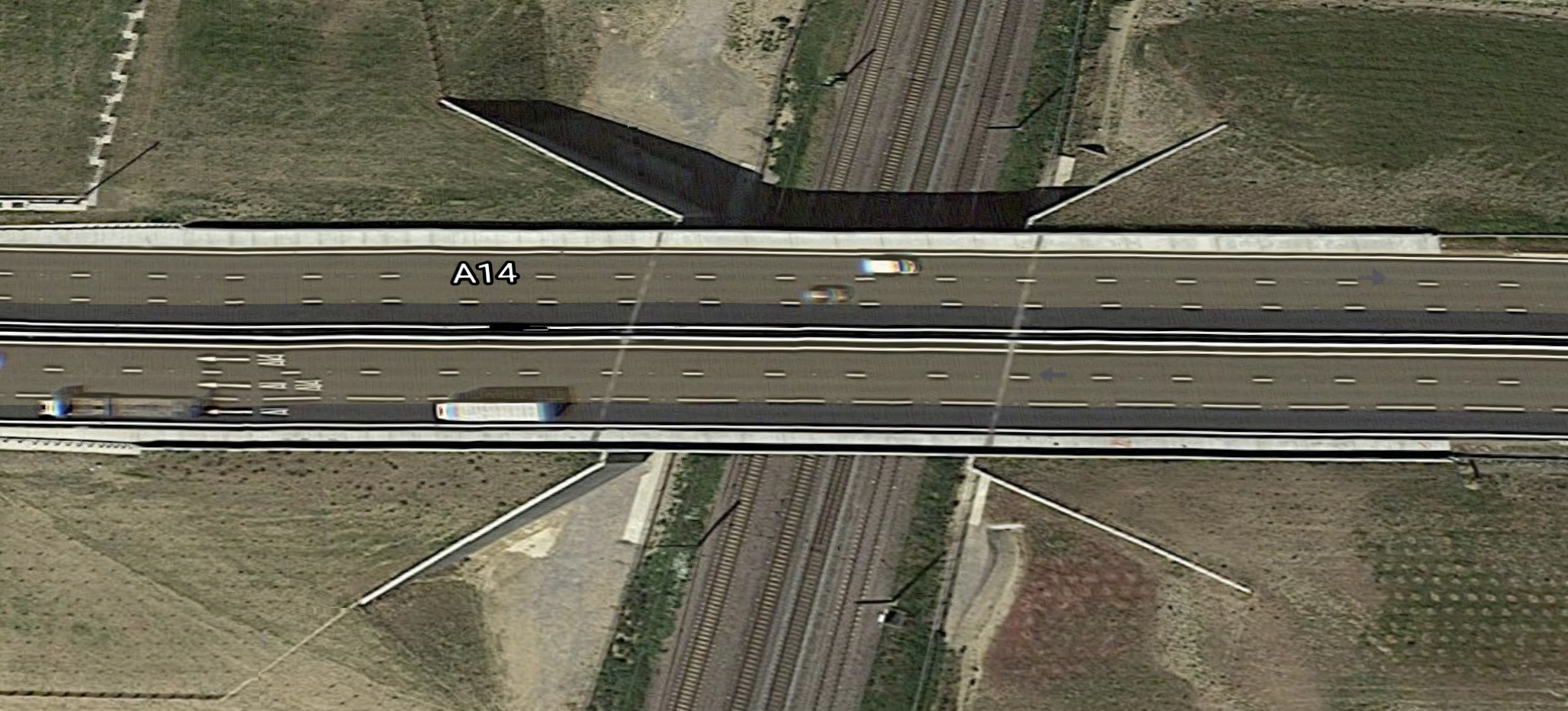
I finally managed to get pictures of the new route of the A14 as it crosses over the East Coast Main Line.
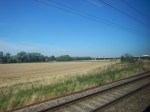
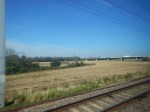
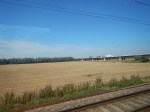
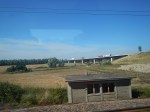
This Google Map shows the crossing from above.
I do wonder, why in the 1990s, when they created the A14, they didn’t do a proper job?
But then history shows that Governments don’t seem to get East-West links in the UK right.
- Road and rail links across the Pennines are inadequate.
- Only recently have Edinburgh and Glasgow been properly connected by rail.
- The electrification of the Great Western Railway between London and Swansea has been an on-off project, that should have been done after electrification of the East Coast Main Line, before the team of engineers had been disbanded.
- Road and rail links to the port of Holyhead were ignored for years and could be improved again.
- The Varsity Line between Oxford and Cambridge was recommended by Beeching to be kept, but Harold Wilson closed it and now we are recreating it.
Is it because none of these routes are of much importance for politicians and civil servants living in London?
Let The Diving Under Begin!
The page on the Network Rail web site is entitled Network Rail Completes Major Signalling Work Near Peterborough Ready For Freight Trains To Begin Diving Under East Coast Main Line This Winter.
The Network Rail web page gives details of the innovative techniques used to build and insert the dive-under.
This Network Rail picture shows the dive-under going under the East Coast Main Line from the North East.
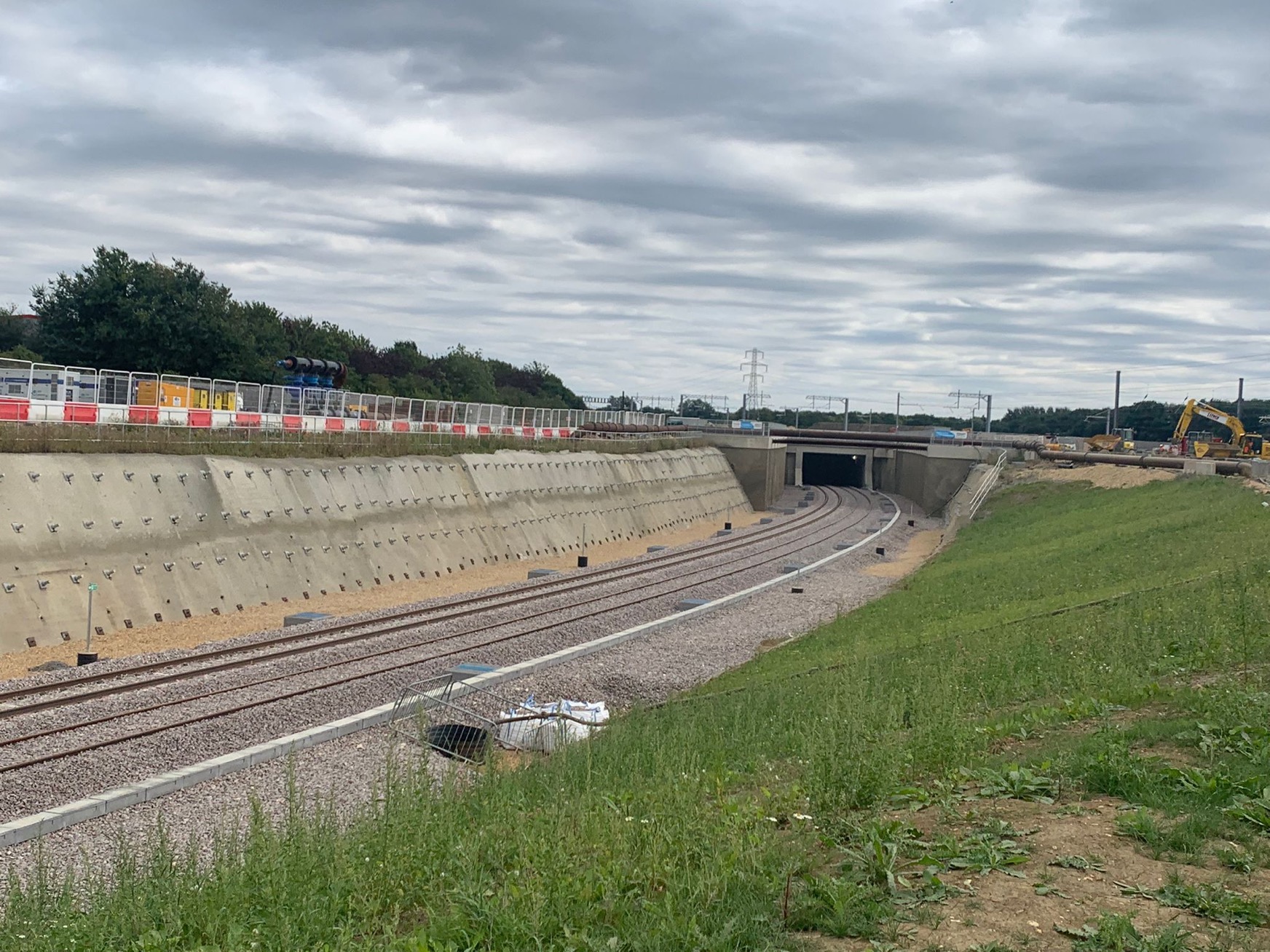
It certainly looks to be strongly constructed.
Freight Trains Through The Werrington Dive-Under
I have just counted the number of freight trains that would have used the route had it been open last Friday between 0600 and 2400.
It was twenty-seven trains or almost one train per hour (tph) in each direction.
- How long will it be before the residents of Lincoln and the other towns and cities on the route start protesting about the noisy, smelly and polluting Class 66 locomotives, that haul most of these freight trains?
- The long trains will also annoy drivers and residents at the many level crossings on the route.
Operators may not be able to do much about the train length, but they can start looking for some more environmentally-friendly locomotives, which could be hydrogen-powered.
At least there is funding for a lower-emission dual-dual-fuel locomotive, that I wrote about in Freightliner Secures Government Funding For Dual-Fuel Project.
Anxiety Over HS2 Eastern Leg Future
I did think about giving this post a title of Here We Go Again, as it yet another story about delaying or cancelling the Eastern Leg of High Speed Two.
But in the end I decided to use the title of the article in the September 2021 Edition of Modern Railways.
I wrote about this subject in Is The Eastern Leg Of High Speed Two Under Threat? in December 2020.
In that post, this was my major conclusion.
To achieve the required timings for High Speed Two, major improvements must be made to existing track on the East Coast Main Line and these improvements will mean that existing services will be competitive with High Speed Two on time.
It is backed up by the timings in the following table., which show the direct time by High Speed Two and my best estimate of time on an improved East Coast Main Line.
- Bradford – Will not served by High Speed Two – One hour and fifty-four minutes
- Cleethorpes – Will not served by High Speed Two – Two hours and fifty-one minutes
- Darlington – One hour and forty-nine minutes – One hour and forty-nine minutes
- Doncaster – Will not served by High Speed Two – One hour
- Edinburgh – Three hours and forty minutes via Western Leg – Three hours and thirty minutes.
- Grimsby – Will not served by High Speed Two – Two hours and thirty-six minutes
- Harrogate – Will not served by High Speed Two – One hour and fifty-two minutes
- Huddersfield – Will not served by High Speed Two – Two hours and eight minutes
- Hull – Will not served by High Speed Two – One hour and fifty minutes
- Leeds – One hour and twenty-one minutes – One hour and thirty minutes
- Lincoln – Will not served by High Speed Two – One hour and fifty-one minutes
- Middlesbrough – Will not served by High Speed Two – Two hours and twenty minutes
- Newcastle – Two hours and seventeen minutes – Two hours and sixteen minutes
- Nottingham – One hour and seven minutes – One hour and fifty minutes
- Scarborough – Will not served by High Speed Two – Two hours and fifty-seven minutes
- Sheffield – One hour and twenty-seven minutes – One hour and twenty-seven minutes
- Skipton – Will not served by High Speed Two – Two hours and seven minutes
- Sunderland – Will not served by High Speed Two – Two hours and thirty minutes
- York – One hour and twenty-four minutes – One hour and twenty-four minutes
Note.
- I have included all destinations served by Grand Central, Hull Trains and LNER.
- I have included Nottingham and Sheffield for completeness and in case whilst electrification is installed on the Midland Main Line, LNER run services to the two cities.
- I suspect LNER services to Bradford, Harrogate, Huddersfield and Skipton will split and join at Leeds.
There are a total of nineteen destination in this table.
- Twelve are not served by High Speed Two.
- Six are not more than fifteen minutes slower by the East Coast Main Line.
Only Nottingham is substantially quicker by High Speed Two.
In Is The Eastern Leg Of High Speed Two Under Threat?, I said that if Nottingham services ran at the sort of speed on the East Coast Main Line, that a time of one hour and twenty-one minutes between London St. Pancras and Nottingham could be possible. That would be just fourteen minutes slower than the time on High Speed Two with a change at East Midlands Hub.
Conclusion
I am getting more convinced that we don’t need the Eastern Leg of High Speed Two to East Midlands Hub and Leeds for a few years yet, as by uprating the East Coast and Midland Main Lines we can handle the traffic that we currently are generating with ease.
What Does High Speed Two Mean By Classic Compatible Trains?
The Classic-Compatible trains are described in this section in Wikipedia, by this sentence.
The classic-compatible trains, capable of high speed but built to a British loading gauge, permitting them to leave the high speed track to join conventional routes such as the West Coast Main Line, Midland Main Line and East Coast Main Line. Such trains would allow running of HS2 services to the north of England and Scotland, although these non-tilting trains would run slower than existing tilting trains on conventional track. HS2 Ltd has stated that, because these trains must be specifically designed for the British network and cannot be bought “off-the-shelf”, these conventional trains were expected to be around 50% more expensive, costing around £40 million per train rather than £27 million for the captive stock.
The Classic-Compatible trains will share these characteristics with the Full-Size trains.
- Maximum speed of 225 mph.
- Cruising speed of 205 mph on High Speed Two.
- Length of 200 metres.
- Ability to work in pairs.
- A passenger capacity around 500-600 passengers.
But what characteristics will the Classic-Compatible trains share with other trains on the UK network?
The Classic-Compatible trains will share some tracks with other trains, according to High Speed Two’s latest plans.
- On the East Coast Main Line, the trains will run between York and Newcastle.
- On the Liverpool Branch between Weaver junction and Liverpool Lime Street station.
- On the Midland Main Line between Clay Cross North junction and Sheffield.
- On the Midland main Line between East Midlands Hub and Bedford.
- On the West Coast Main Line, the trains will run between Crewe and Glasgow.
- On the West Coast Main Line, the trains will run between Stafford and Macclesfield.
As High Speed Two develops, the Classic-Compatible trains could venture off the main routes to places like Aberdeen, Barrow-in-Furness, Blackburn, Blackpool, Cleethorpes, Holyhead, Huddersfield, Inverness, Middlesbrough, Redcar, Scarborough, Stirling and Sunderland.
They will need to be able to go anywhere, which is worthwhile to connect to High Speed Two.
The main restriction is the size of the train and so a Classic-Compatible train probably can’t be larger than the largest train on the UK network, with respect to width, height and to a certain extend length.
Widths of typical trains are as follows.
- Class 319 train – 2.82 metres
- Class 321 train – 2.82 metres
- Class 387 train – 2.80 metres
- Class 700 train – 2.80 metres
- Class 710 train – 2.77 metres
- Class 745 train – 2.72 metres
- Class 800 train – 2.70 metres
- Mark 4 coach – 2.73 metres
Heights of typical trains are as follows.
- Class 319 train – 3.58 metres
- Class 321 train – 3.78 metres
- Class 387 train – 3.77 metres
- Class 710 train – 3.76 metres
- Class 745 train – 3.95 metres
- Mark 4 coach – 3.79 metres
Note.
- I find it odd, that the smallest width is one of the newest trains; Hitachi’s Class 800.
- Length is fairly irrelevant as many trains in the UK are almost 240 metres long.
I suspect that Classic-Compatible trains will have width of between 2.70 and 2.80 metres and a height of around 3.80 metres.
Could A High Speed Two Classic-Compatible Train Go Through The Thameslink Tunnel?
I ask this question, as surely in a post-pandemic world, where we are all flying there may be a case to be made for a train service between the North of England and Gatwick Airport.
But when East Midlands Railway has their new Class 810 trains, it might be possible, if they didn’t use the diesel engines.
Signalling would not be a problem, as in a few years time, all trains will be equipped with the latest digital signalling systems.
If running a Class 810 train, through the tunnel is possible, given that a Classic-Compatible train will not be larger than a Class 810 train, will High Speed Two’s trains be able to cross London in the Thameslink Tunnel?
As Midlands Connect are planning to run a Leeds and Bedford service using High Speed Two Classic-Compatible trains, could this service be extended through the Thameslink Tunnel to Gatwick Airport and Brighton?
I have a feeling that this will be physically possible.
- It would be under the control of the signalling.
- There’s no reason, why a high speed train can’t have a precise low speed performance.
- It would stop at all stations.
- It would use one of the Bedford and Brighton paths on Thameslink
Passengers would like catching a train at a station in Central London and like being whisked all the way to East Midlands Hub and Leeds.
Could A High Speed Two Classic-Compatible Train Go Through The Crossrail Tunnel?
Consider.
- It would surely be possible to arrange tracks at Old Oak Common to allow High Speed Two Classic-Compatible trains to go between High Speed Two and Crossrail.
- Crossrail is considering running to Ebbsfleet.
- It might even be possible to connect in East London.
- The High Speed Two Classic-Compatible trains would be digitally-signalled and controlled through Crossrail without stopping.
- Platform edge doors would ensure safety, but also prevent the trains from stopping at the existing stations.
I have just looked at the London railway map on carto metro, there are stretches of Crossrail under London, where there is space for a station with 200 metre, if not a 400 metre platforms, to the West or East of current Crossrail stations.
- To the West of Bond Street
- To the East of Tottenham Court Road
- To the West of Farringdon
- To the East of Liverpool Street
- To the West of Canary Wharf
- To the East of Canary Wharf
Would all appear to have the required space and be possibilities for extra High Speed Two platforms.
Effectively, some stations would have two sets of platforms on the tracks beside each other.
- One pair of platforms would be the existing station, with platform edge doors compatible with Crossrail’s Class 345 trains.
- The other pair of platforms would be the High Speed Two station, with platform edge doors compatible with High Speed Two Classic-Compatible trains.
- The signalling and train control systems would automatically stop trains in the appropriate platform.
- Extra passageways would link the new platforms to the existing station.
I suspect when Crossrail was designed, the possibility of adding extra stations to the underground section was considered and there is a method of adding extra platforms in Crossrail’s book of cunning engineering ideas.
Conclusion
I don’t rule out a High Speed service between Birmingham and stations in the North of Great Britain and major cities on the Continent.
- Crossrail would be used to link High Speed One and High Speed Two.
- High Speed Two Classic-Compatible trains would be used.
- Stops in London could be Old Oak Common, Bond Street, Liverpool Street, Canary Wharf and Ebbsfleet
It may sound to be a fanciful idea, but I believe it is possible.
Should Improvement Needed For High Speed Two On The East And West Coast Main Lines Be Given High Priority?
High Speed Two will bring major improvements in times between London and the North of England and Scotland, with these figures claimed by this page on the High Speed Two web site.
- London Euston and Carlisle – 2 hours and 23 minutes saving 54 minutes
- London Euston and Darlington – 1 hours and 50 minutes saving 32 minutes
- London Euston and Durham – 2 hours and 16 minutes saving 37 minutes
- London Euston and Edinburgh – 3 hours and 48 minutes saving 31 minutes
- London Euston and Glasgow – 3 hours and 40 minutes saving 49 minutes
- London Euston and Lockerbie – 2 hours and 55 minutes saving 43 minutes
- London Euston and Newcastle – 2 hours and 17 minutes saving 32 minutes
Substantial savings would seem to be possible.
The Recent Record Run On The West Coast Main Line
A few weeks ago, Avanti West Coast ran a Class 390 train between London Euston and Glasgow in three hours and 53 minutes and 1 second. They were trying to beat the record set by the \APT-P in 1984 of three hours and 52 minutes and 40 seconds.
In Lessons From The Record Run in the August 2021 Edition of Modern Railways, Roger Ford makes a big hint in a section called Hint.
Roger starts with this paragraph.
In the virtual race with APT-P, the Pendolino was seven minutes ahead approaching the border, but this was not sufficient to overcome APT-P’s advantage of being able to run faster over lines which, unlike the southern end of the WCML, have not enjoyed the increased speeds further south, such as at Stafford and Crewe.
He then talks of a levelling-up of the infrastructure being needed on the Northern section of the West Coast Main Line.
Roger finishes the section with this paragraph.
Thus, the final message of the run is that if HS2 is to realise its full potential, planning for the West Coast Route Modernisation (North) needs to start now, both for journey time reductions and reliability.
The High Speed Two time between Preston and Glasgow of two hours and 26 minutes, given by their journey time calculator is in line with current timings.
I am drawn to the following conclusions about services between Preston and Glasgow.
- I suspect the similar times could be expected, as the trains will have to cope with other trains on the route.
- Most of High Speed Two’s savings must be on the new track to the South of Wigan.
It would appear that any savings made between Preston and Scotland will benefit both classic and high speed services.
I certainly agree with Roger’s hint to start planning the upgrade of the Northern section of the West Coast Main Line.
This would surely enable upgrade of the route to start sooner and places at the North of the route would benefit from faster journey times to the South before High Speed Two is complete.
Reducing The Journey Times On The West Coast Main Line
If you look at the average speed between Preston and Glasgow of a typical train, it is just 84.3 mph.
Various average speeds give the following times between Preston and Glasgow.
- 90 mph – two hours and 8 minutes
- 100 mph – one hour and 55 minutes
- 110 mph – one hour and 45 minutes
It would appear there is scope for reductions in journey times to be made.
I have flown my virtual helicopter along the Scottish part of the route and it doesn’t look to be too terrifying.
- There are tight speed limits at Preston and Carlisle
- The railway is not hemmed in by development until close to Glasgow.
- Most of the modern bridges, where the M74 crosses the railway appear to have space for an extra track.
- Connection of the Borders Railway to the West Coast Main Line could give scope for improvement between Gretna junction and Carlisle.
- The depot at Annandale, that I wrote about in High Speed Two To Build Stabling Facility In Scotland, may give scope for a shorter, straighter and faster route between Grena Green and Kirkpatrick-Fleming, that could run closer to the M74.
- North of Lockerbie, there may be scope to put extra tracks between the railway and the M74.
- The Carstairs area could be ripe for improvement.
I would feel that digital signalling and some well-applied engineering could cut a sensible amount of time from Preston and Glasgow timings.
- I can certainly say, that the route is not a desert, where possible improvements will be difficult to find.
- I also don’t feel there are any obvious improvements, that will be controversial.
There is also the M74, which could be invaluable for camouflaging the railway.
Reducing The Journey Times On The East Coast Main Line
Much of the work to speed up the Northern section of the East Coast Main Line is laid out in Northern Powerhouse Rail – Significant Upgrades Of The East Coast Main Line From Leeds To Newcastle (Via York And Darlington) And Restoration Of The Leamside Line, a post I wrote to explain what Northern Powerhouse Rail feel is urgently needed.
Mentioned in the other post are following projects.
- Full Digital Signalling
- Phase 2 Of The East Coast Main Line Power Supply Upgrade
- York to Church Fenton Improvement Scheme
- Darlington Station Remodelling
- The North Throat Of York Station Including Skelton Bridge Junction
- Use Of The Leamside Line
As with the West Coast Main Line, the improvements would benefit both classic and High Speed services.
Conclusion
Improvements to both the East and West Coast Main Lines will help both classic and High Speed services between London and the North of England and Scotland.
I think that planning and design should be started as soon as possible.
Construction should start as early as possible, so that the benefits of faster trains are felt at the earliest date possible.
Northumberland Railway Line: Test Train Runs On Planned Route
The title of this post, is the same as that of this article on the BBC.
This is the first four paragraphs.
A test train has travelled along part of a new Northumberland line ahead of the reintroduction of passenger services.
Six new stations are to be built and 18 miles (29km) of track upgraded between Newcastle and Morpeth.
The test train contained dignitaries and rail officials, with full services expected to start in 2024.
Northern said it was looking at running two trains an hour six days a week and hourly services on Sundays.
It very much sounds to be a good start.
The article certainly has a good picture of one of the bridges on the line.
Morpeth?
Note that the article says that the first phase goes to Morpeth. I had thought it was going to Ashington.
Or could it be that Network Rail want to open up Newcastle and Morpeth to take some local services off the East Coast Main Line.
A New Timetable For The East Coast
The title of this post, is the same as that of an article in the August 2021 Edition of Modern Railways.
The Modern Railways article describes in detail the thinking behind the proposed timetable for the East Coast Main Line, that will be introduced in May 2022.
The new titletable would appear to be a compromise and judging by the number of complaints that have appeared in the media, the compromise doesn’t suit everyone.
A lot of my programming was concerned with the allocation of resources in large projects and that expertise convinces me, that the East Coast Main Line doesn’t have enough capacity to accommodate all the services that passengers need and train companies want to run.
These are my thoughts.
High Speed Two
When High Speed Two is completed to Leeds, it will add the following services to Leeds.
- Three trains per hour (tph) between London Euston and Leeds in a time of one hour and twenty-one minutes.
- Two tph between Birmingham Curzon Street and Leeds in a time of forty-nine minutes.
- One tph between Bedford and Leeds, run by Midlands Connect, in a time of one hour and thirty-six minutes.
Leeds will benefit from these services from the South on the new High Speed Two.
But the High Speed Two network has been designed to need to run three tph between York and Newcastle, which will have to share with other East Coast Main Line services.
Both High Speed Two and the aspiration of providing more services on the East Coast Main Line mean that more capacity must be provided between York and Newcastle.
High Speed Two is not mentioned in the Modern Railways article.
I know the Eastern Leg of High Speed Two is many years away, but surely, it should have an influence on the design of East Coast Main Line services.
For instance, destinations like Bradford, Cleethorpes, Doncaster, Harrogate, Huddersfield, Hull, Lincoln, Middlesbrough, Peterborough, Redcar, Scarborough, Skegness and Sunderland are unlikely to be served by High Speed Two services, so how does that determine our thinking, when planning train services to these destinations.
Perhaps, there should be lists of secondary destinations, that should be served by the various operators.
London And Leeds In Two Hours
This is mentioned in the Modern Railways article as being an aspiration of Virgin Trains East Coast, when they ran the franchise.
In Thoughts On Digital Signalling On The East Coast Main Line, I did a few rough calculations and said this.
Consider.
-
- The fastest current trains between London Kings Cross and Leeds take between two hours and twelve minutes and two hours and fifteen minutes.
- I suspect that the extra tracks into Kings Cross, that are currently being built will save a few minutes.
- There must be some savings to be made between Doncaster and Leeds
- There must be some savings to be made between London Kings Cross and Woolmer Green.
- There could be a rearrangement of stops.
I think it is highly likely that in the future, there will be at least one train per hour (tph) between London Kings Cross and Leeds, that does the trip in two hours.
It is my view, that any new East Coast Main Line timetable should include services between London Kings Cross and Leeds in a few minutes under two hours.
London And Edinburgh In Four Hours
This must be another objective of the train companies, as it is competitive with the airlines.
But it is not a simple process as cutting stops to save time, often annoys the locals.
So achieving the objective of a four-hour trip between London and Edinburgh probably needs some major upgrades to the East Coast Main Line.
Some of the improvements needed are detailed in Northern Powerhouse Rail – Significant Upgrades Of The East Coast Main Line From Leeds To Newcastle (Via York And Darlington) And Restoration Of The Leamside Line.
Projects in the related article include.
- Phase 2 Of The East Coast Main Line Power Supply Upgrade
- York to Church Fenton Improvement Scheme
- Darlington Station Remodelling
- The North Throat Of York Station Including Skelton Bridge Junction
- Use Of The Leamside Line
- Full Digital ERTMS signalling.
It would appear there’s a lot of work to do, but all of it, will be needed for High Speed Two.
The Modern Railways article does point out, that the new Hitachi trains have superior acceleration to the InterCity 225 trains, that they have replaced. So that will help!
Although it is a worthwhile objective, I think it will be some years before London and Edinburgh times of under four hours are obtained on the East Coast Main Line.
Hitachi’s Intercity Tri-Mode Battery Train
These trains are described in this Hitachi infographic.
Within a couple of years these trains will start to be seen on the East Coast Main Line serving destinations like Cleethorpes, Grimsby, Harrogate, Huddersfield, Hull, Lincoln, Middlesbrough and Sunderland.
Although, it says batteries will replace one engine in the infographic, I believe the standard five-car train for the East Coast Main Line will have two battery packs and an emergency diesel engine. Before the end of the decade, they will be fully-decarbonised with three battery packs.
Splitting And Joining
Although the Hitachi trains can accomplish splitting and joining with ease, it is only mentioned once in the Modern Railways article and that is concerned with a service to Huddersfield, which will split and join at Leeds.
I can see this being used to make sure that each train running into Kings Cross is either a nine-car or a pair of five-car trains, as this would maximise capacity on the route.
Currently, trains to York and Lincoln share a path into Kings Cross, with trains alternating to each destination, so each destination gets one train per two hours (1tp2h).
It would surely be possible for a pair of trains to leave Kings Cross, that split at Newark, with one train going to York and the other to Lincoln.
- The Modern Railways article says that the Middlesbrough service will be an extension of the 1tp2h York service.
- This means Kings Cross and Middlesbrough would call at Stevenage, Peterborough, Grantham, Newark North Gate, Retford, Doncaster and York.
- So at some time in the future could the Middlesbrough and Lincoln services share a path, with a split and join at Newark?
If the Lincoln and Middlesbrough services were to be run at a frequency of 1tp2h, the intervening paths could be used for other destinations.
Theoretically, by using pairs of five-car trains and splitting and joining, four destinations can be given a service of 1tp2h to and from London, that all use the same path.
I think the following splits and joins would be feasible.
- Lincoln/Middlesbrough splitting and joining at Newark North Gate.
- Lincoln/Scarborough splitting and joining at Newark North Gate.
- Nottingham/Sheffield splitting and joining at Newark North Gate.
- Harrogate/Huddersfield splitting and joining at Leeds.
- Bradford/Skipton splitting and joining at Leeds.
- Hull/Leeds splitting and joining at Doncaster.
Note.
- The two Lincoln splits and joins at Newark North Gate could possibly be arranged, so that Middlesbrough got roughly 1tp2h and Scarborough got perhaps two trains per day (tpd).
- Hull would be a very useful destination, as it is a large station to the East of the East Coast Main Line.
- Nottingham and Sheffield could be useful destinations during any disruption on the Midland Main Line, perhaps due to installation of full electrification.
The permutations and combinations are endless.
All Fast Trains Must Have Similar Performance
East Coast Trains, Hull Trains, LNER and TransPennine Express all use trains with similar performance.
But other operators like Great Northern use slower trains on the East Coast Main Line.
As the Hitachi trains will be running at up to 140 mph under the control of full digital signalling, it strikes me that for safe, fast and efficient operation, the other operators will need faster trains, where they run on the fast lines of the East Coast Main Line.
Grand Central
Grand Central‘s fleet of Class 180 trains will need to be replaced to decarbonise the operator and will surely be replaced with more 140 mph trains to take advantage of the digitally-signalled East Coast Main Line.
As their routes are not fully-electrified, I suspect they’ll be using similar Hitachi battery-electric trains.
The Cambridge Effect
Cambridge is becoming one of the most important cities in the world, let alone England and the UK.
It is generating new businesses at a tremendous rate and it needs an expanded rail network to give access to housing and industrial premises in the surrounding cities and towns.
- Peterborough is in the same county and is developing alongside Cambridge.
- Bury St. Edmunds, Norwich and other towns are being drawn into Cambridge.
- East West Rail to Bedford, Milton Keynes and Oxford is coming.
Cambridge is well-connected to London, but needs better connections to the North and Midlands.
King’s Cross And King’s Lynn
Currently, this route is run by 110 mph Class 387 trains.
These trains are just not fast enough for Network Rail’s 140 mph digitally signalled railway between King’s Cross and Hitchin.
In Call For ETCS On King’s Lynn Route, I examine how 125 mph trains and full digital signalling could be used to run between King’s Cross and King’s Lynn via Cambridge.
This would allow the trains to use the fast lines into King’s Cross.
I also feel, that to maximise the use of paths into King’s Cross, that the King’s Lynn service could be paired with a new Norwich service. The two trains would split and join at Cambridge.
Liverpool Lime Street And Norwich
This service is currently run by Class 156 trains and needs decarbonising. It also runs on 125 mph lines between.
- Peterborough and Grantham
- Nottingham and Sheffield
It certainly needs a thorough redesign and modern rolling stock to replace the current rolling road blocks.
East West Rail will certainly increase Cambridge and Norwich services to two tph, so why not terminate this Liverpool service at Cambridge rather than Norwich?
- Cambridge station has a lot of space to add extra platforms.
- The service would not need to reverse at Ely.
- It would add much-needed capacity to the Cambridge and Peterborough route.
- The service could even terminate at the new Cambridge South station.
- There have been plans for some time to split this service at Nottingham.
As between Peterborough and Grantham is a fully-electrified four-track line, I suspect that a Cambridge and Nottingham service could be handled by a 110 mph battery-electric train based on a Class 350 or Class 379 train.
Similar battery-electric trains could probably handle the Northern section between Nottingham and Liverpool Lime Street.
Stansted Airport And Birmingham Via Cambridge
After the work to the North of Peterborough at Werrington, this service has a clear route away from the East Coast Main Line, so it can be ignored.
The service does need decarbonisation and I suspect that it could be run by a 110 mph battery-electric train based on a Class 350 or Class 379 train.
CrossCountry And TransPennine Express Services
CrossCountry and TransPennine Express also run services on the Northern section of the East Coast Main Line.
- CrossCountry – 1 tph – Leeds and Edinburgh via York, Darlington, Durham, Newcastle, Alnmouth, Berwick-upon-Tweed and Dunbar (1tp2h)
- CrossCountry – 1 tph – Sheffield and Newcastle via Doncaster, York, Darlington and Durham.
- TransPennine Express – 1 tph – Liverpool Lime Street and Scarborough via Leeds, Garforth and York
- TransPennine Express – 1 tph – Manchester Airport and Redcar via Leeds, York, Thirsk, Northallerton, Yarm, Thornaby, and Middlesbrough.
- TransPennine Express – 1 tph – Liverpool Lime Street and Edinburgh via Leeds, York, Darlington, Durham, Newcastle and Morpeth.
- TransPennine Express – 1 tph – Manchester Airport and Newcastle via Leeds, York, Northallerton, Darlington, Durham and Chester-le-Street (1t2h)
In addition LNER and East Coast Trains also run these services on the same section.
- LNER – 1 tp2h – London Kings Cross and York
- LNER – 1 tph – London Kings Cross and Edinburgh via York, Darlington, Newcastle, Berwick-upon-Tweed
- LNER – 1 tph – London Kings Cross and Edinburgh via York, Northallerton (1tp2h), Darlington, Durham, Newcastle and Alnmouth (1tp2h)
- East Coast Trains – 5 tpd – London Kings Cross and Edinburgh via Newcastle and Morpeth.
Aggregating the stops gives the following.
- York – 8.5 tph
- Darlington – 6 tph
- Durham – 5 tph
- Chester-le-Street – 0.5 tph
- Newcastle – 6 tph and 5 tpd
- Morpeth – 1 tph and 5 tpd
- Almouth – 1.5 tph
- Berwick-on-Tweed – 2 tph
- Dunbar – 0.5 tph
Note.
- 1 tp2h = 0.5 tph
- Scotland is building two new stations at Reston and East Linton.
- Northern run trains between Newcastle and Morpeth.
It does appear from comments in the Modern Railways article, that the various train companies and passenger groups can’t agree on who calls where to the North of York.
Perhaps the Fat Controller should step in.
Between Newcastle and Berwick-on-Tweed
With the reopening of the Northumberland Line between Newcastle and Ashington, there may be an opportunity to reorganise services between Newcastle and Berwick-on-Tweed.
- Morpeth could be served via the Northumberland Line.
- Britishvolt are building a large gigafactory for batteries at Blyth.
- It would probably be a good idea to remove slow diesel services from the East Coast Main Line.
- Reston station will need a train service.
- Morpeth and Newcastle are under twenty miles apart on the East Coast Main Line and the route via Ashington is perhaps only ten miles longer.
It looks to me that local services on the Northumberland Line and between Newcastle and Reston on the East Coast Main Line could be run by a 110 mph battery-electric train.
Conclusion
There would appear to be a lot of scope to create a very much improved timetable for the East Coast Main Line.
I do think though that the following actions must be taken.
- Ensure, that all the long-distance train companies have trains capable of running at 140 mph under the control of digital signalling.
- Develop a 110 mph battery-electric train to work the local routes, that run on the East Coast Main Line.
- Get agreement between passengers and train companies about stopping patterns to the North of York.
- Use splitting and joining creatively to squeeze more trains into the available paths.
LNER would also need to increase their fleet.

