What Will Be The Fastest Times Possible Between London King’s Cross And Leeds?
According to media reports, it is likely that the Eastern Leg of High Speed Two will be scrapped on kicked into the long grass.
So out of curiosity, what times can be achieved between London King’s Cross and Leeds.
Wikipedia says this about digital signalling on the line.
Increasing maximum speeds on the fast lines between Woolmer Green and Dalton-on-Tees up to 140 mph (225 km/h) in conjunction with the introduction of the Intercity Express Programme, level crossing closures, ETRMS fitments, OLE rewiring and the OLE PSU – est. to cost £1.3 billion (2014). This project is referred to as “L2E4” or London to Edinburgh (in) 4 Hours. L2E4 examined the operation of the IEP at 140 mph on the ECML and the sections of track which can be upgraded to permit this, together with the engineering and operational costs.
Note.
- Woolmer Green is 23.8 miles North of King’s Cross and a short distance to the North of the Digswell Viaduct.
- Dalton-on-Tees is North of Doncaster, where the line to Leeds leaves the East Coast Main Line.
The 186 mile journey to Leeds can be broken down into these sections.
- King’s Cross and Woolmer Green – 23.8 miles – 16 minutes – 89.3 mph
- Woolmer Green and Doncaster – 132.2 miles – 85 minutes – 93.3 mph
- Doncaster and Leeds – 29.9 miles – 32 minutes – 56 mph
In Will Avanti West Coast’s New Trains Be Able To Achieve London Euston and Liverpool Lime Street In Two Hours?, I estimated that each stop in an electric Hitachi Class 802 train takes eight minutes, which includes six minutes accelerating and decelerating and a two minute dwell time in the station.
- Services between London Euston and Leeds typically stop three times, so this means there are four acceleration/deceleration cycles, if you add in the one split between London Kings Cross and Leeds.
- There are also three dwell times of perhaps two minutes in the intermediate stations.
- This would mean that a total of thirty minutes must be added to calculate the journey time.
If the train averaged these speeds over 186 miles, the following times would be achieved.
- 125 mph – 89 minutes
- 130 mph – 86 minutes
- 140 mph – 80 minutes
- 150 mph – 74 minutes
- 160 mph – 70 minutes
Adding in the thirty minutes for stops gives some reasonable timings for between London King’s Cross and Leeds.
There are ways that times could be reduced.
Removal Of Level Crossings
This course of action always brings results, but is hated by the local users.
This article in The Times is entitled HS2 Eastern Leg To Leeds Axed, where there is said.
The government’s long-awaited Integrated Rail Plan also commits to full electrification of the Midland Main Line from London St Pancras to Sheffield, as well as upgrades to the East Coast Main Line. The Times understands this includes removing level crossings, which will help reduce journey times.
Every little helps!
More Running At Higher Speeds
From my figures, it appears that roughly a ten mph increase in average speed reduces journey time by up to six minutes.
So the more running at 140 mph or even faster the better.
It should be noted that the Selby Diversion on the East Coast Main Line was designed by British Rail for 160 mph The Wikipedia entry says this.
The line was the first purpose-built section of high-speed railway in the UK having a design speed of 125 mph; however, research by British Rail in the 1990s indicated that the route geometry would permit up to 160 mph operation, subject to the necessary overhead line equipment and signalling upgrades.
Upgrading the line for higher speeds would be a way of reducing the journey time.
- Curves could be better profiled.
- Full digital signalling with perhaps even some degree of automatic control could be introduced.
- More robust overhead line equipment could be installed.
- Some sections of slab track could be laid.
- Level crossing removal.
I wouldn’t be surprised if one of the new Hitachi trains within a few years could be able to average 140 mph between London King’s Cross and Leeds, with a possible 160 mph average speed in the future.
Faster Acceleration And Deceleration
If the three-minute acceleration and deceleration times can be reduced to two minutes this will save eight minutes on the journey.
Quicker Dwell Times
Why not?
Automatic Train Control Through The Newark Crossing
I proposed this in Could ERTMS And ETCS Solve The Newark Crossing Problem? and I believe it would allow trains on the East Coast Main Line at full speed if they didn’t stop at Newark station.
Automatic Train Control Over The Digswell Viaduct And Through The Welwyn North Station
As at the Newark Crossing, I believe ERTMS and ETCS could increase speeds over the Digswell Viaduct and through Welwyn North station.
High-Speed Two Classic Compatible Trains
These faster trains could bring the time down further, if they were to run the service.
Sample Times
I wouldn’t be surprised to see with full digital signalling and a 125 mph average between London King’s Cross and Leeds.
- 125 mph Base Time – 89 minutes.
- Four Acceleration/Deceleration section at 6 minutes each – 24 minutes.
- Three Dwell Times at 2 minutes each – 6 minutes
This would mean a total time of one hour and 59 minutes.
Uprate that to 140 mph and faster acceleration and deceleration.
- 140 mph Base Time – 80 minutes.
- Four Acceleration/Deceleration section at 4 minutes each – 16 minutes.
- Three Dwell Times at 2 minutes each – 6 minutes
This would mean a total time of one hour and 42 minutes.
Uprate that to 160 mph and faster acceleration and deceleration.
- 160 mph Base Time – 70 minutes.
- Four Acceleration/Deceleration section at 4 minutes each – 16 minutes.
- Three Dwell Times at 2 minutes each – 6 minutes
This would mean a total time of one hour and 32 minutes.
A Non-Stop Service
This would speed up the service.
With a 125 mph average between London King’s Cross and Leeds.
- 125 mph Base Time – 89 minutes.
- One Acceleration/Deceleration section at 6 minutes each – 6 minutes.
This would mean a total time of 95 minutes.
Uprate that to 140 mph and faster acceleration and deceleration.
- 140 mph Base Time – 80 minutes.
- One Acceleration/Deceleration section at 4 minutes each – 4 minutes.
This would mean a total time of 84 minutes.
Uprate that to 160 mph and faster acceleration and deceleration.
- 160 mph Base Time – 70 minutes.
- One Acceleration/Deceleration section at 4 minutes each – 4 minutes.
This would mean a total time of 74 minutes.
These compare with a proposed time of one hour and 21 minutes on the original plan to High Speed Two.
Conclusion
It looks like a non-stop service between London and Leeds running at 140 mph, with perhaps some sections at perhaps a bit faster, could be able to match the High Speed Two times.
Are Grand Central Going To Order Some Hitachi Intercity Battery Hybrid Trains?
I ask this question because I’ve just looked at the Hitachi infographic for the Hitachi Intercity Battery Hybrid Train, that I wrote about in Hitachi Rail And Angel Trains To Create Intercity Battery Hybrid Train On TransPennine Express
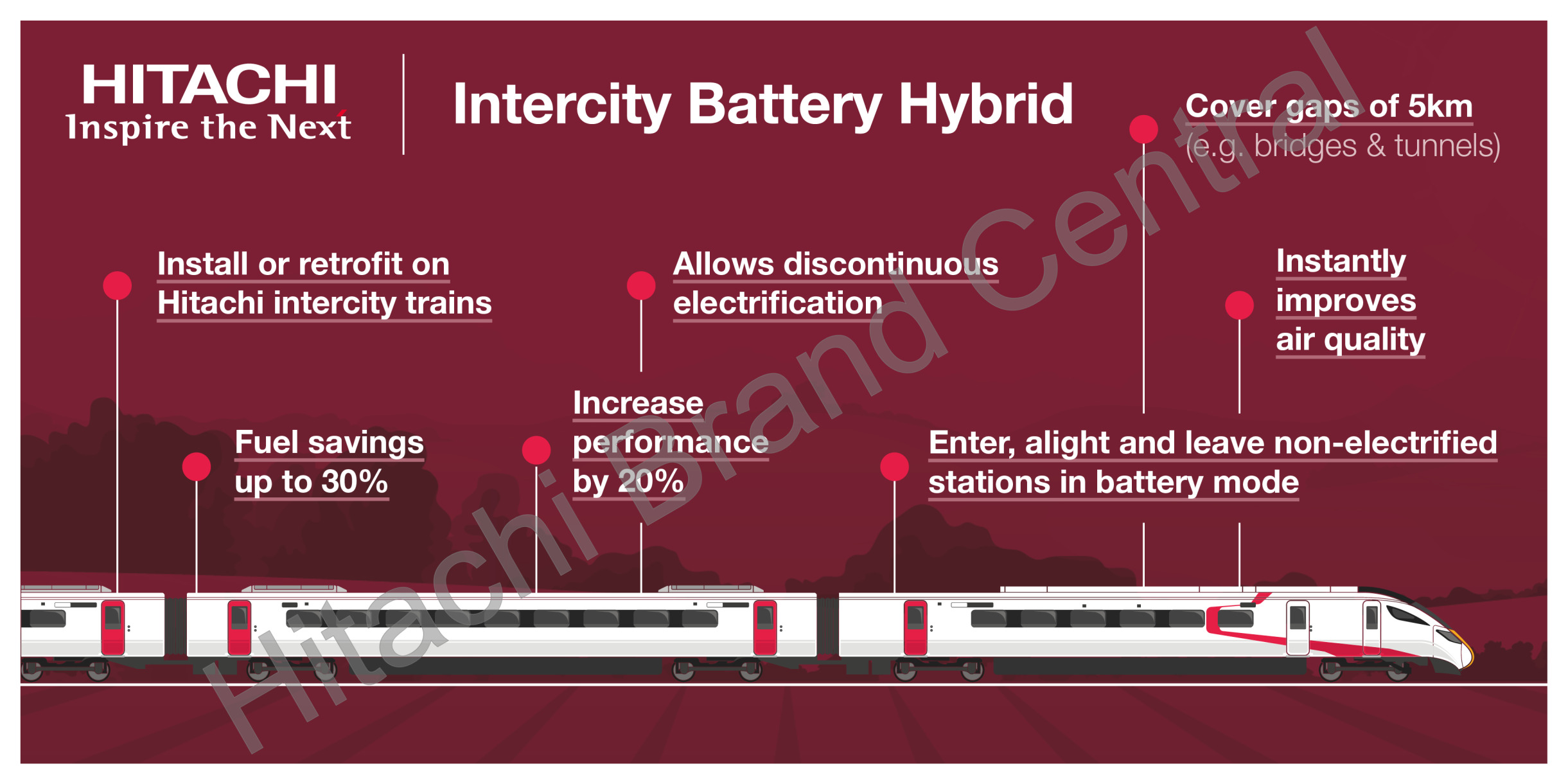
Note that in the background of the image Hitachi Grand Central can be seen.
Looking at Grand Central‘s routes I can say the following.
- The Sunderland service uses the fully-electrified East Coast Main Line to the South of Northallerton.
- The Bradford service uses the East Coast Main Line to the South of Shaftholme Junction.
- The Sunderland service runs for 47.4 miles on lines without electrification.
- The Bradford service runs for 47.8 miles on lines without electrification.
- The trains run at 125 mph on East Coast Main Line.
- Each service has around half-a-dozen stops, most of which are on lines without electrification.
Grand Central run the services using Class 180 diesel trains.
I think there are two possibilities for new trains.
Hitachi Intercity Battery Hybrid Train
This train would be similar to the Hitachi Intercity Battery Hybrid Train shown in the infographic.
- It would be designed to run efficiently on diesel.
- The train could run at 140 mph on electricity and with a signalling update.
- The claimed extra performance could speed up the services.
- Batteries would be used in stations.
There would be a worthwhile saving in fuel and less carbon emissions.
Hitachi Intercity Battery Hybrid Train With A Larger Battery
This would be similar to the standard train, but with a larger battery.
- Battery range would be sufficient to cover the lines without electrification.
- Charging would need to be installed at Bradford Interchange and Sunderland stations.
- The other two diesel engines might be replaced with batteries.
- No diesel would be used.
- The train could run at 140 mph on electricity and with a signalling update.
- The claimed extra performance could speed up the services.
- Batteries would be used in stations.
There would be no fuel costs and zero emissions.
In Grand Central Opts For Split And Join, I wrote about Grand Central’s application to run more services that had been reported in the April 2018 Edition of Modern Railways in an article that is entitled Grand Central Applies For Extra Services.
If Grand Central are still interested in expanding and splitting and joining, then the Hitachi trains, which have a proven ability in this area would fit the requirement.
In
Reopening The Askern Branch
On October 27th this Beeching Reversal Project was given £50,000 to build a case for reopening.
These are my thoughts.
The Askern Branch Line
This description of the Askern Branch Line is from Wikipedia.
The Askern branch line is a railway line which runs in North, South and West Yorkshire in England. The stretch of track runs from Shaftholme Junction north of Doncaster (on the East Coast Main Line between Doncaster and York), via Askern, Norton and Womersley to Knottingley, where it joins the Pontefract Line.
This map was also clipped from Wikipedia.
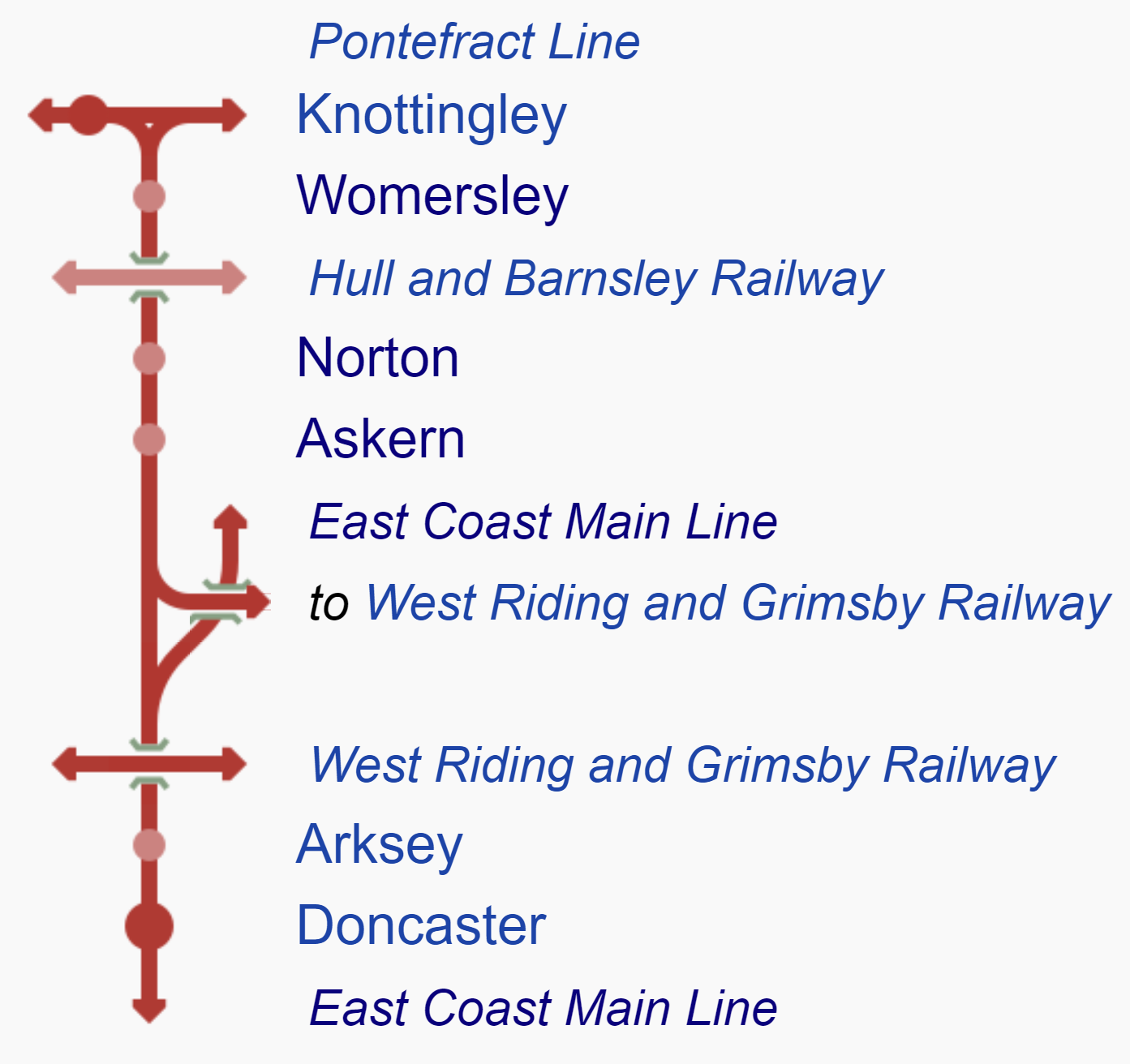
Note.
- Shaftholme junction is where the Askern Branch splits from the East Coast Main Line.
- There are three closed stations on the Askern Branch; Askern, Norton and Womersley.
- Between Shaftholme junction and Knottingley West junction, on the Pontefract Line is 10.7 miles.
- The operating speed of the line is between twenty and fifty mph.
Unbelievably, in those 10.7 miles there are nineteen level crossings.
Current Passenger Services
The only passenger services on the line are Grand Central‘s services between London King’s Cross and Bradford Interchange.
- Grand Central are an open-access operator.
- Grand Central ran the first service in 2007.
- There are four trains per day (tpd) in both directions.
- They call at Doncaster, Pontefract Monkhill, Wakefield Kirkgate, Mirfield, Brighouse, Halifax and Low Moor.
Perhaps, if they stopped at a station on the Askern Branch Line, it would give their finances a lift.
Freight Services
There are up to four freight services per hour on the line.
Askern Station
Askern station used to serve the village of Askern.
- Askern has a population of about 6,000.
- Askern used to be a spa town.
- But then coal was discovered and it became a mining village.
- Do spas and coal mining make a good mix? I doubt it.
- Eventually the station closed in September 1948.
- There is a level crossing at the station.
The village is now developing and there is pressure for the reopening of the station.
Railfuture has backed the reopening.
Norton Station
Norton station used to serve the village of Norton.
- Norton has a population of about 5,000.
- The station closed in September 1948.
- There is a level crossing at the station.
There appears to be no pressure to reopen the station, although the site is protected.
Womersley Station
Womersley station used to serve the village of Womersley.
- Womersley has a population of a few hundred.
- The station closed in September 1948.
- There is a level crossing at the station.
There appears to be no pressure to reopen the station.
Would This Project Be Better Described As Reopening Askern Station?
I can’t find any reference to reopening Norton and Womersley stations, so perhaps Reopening Askern Station would be closer to the reality.
A New Askern Station
This Google Map shows the site of the former station.
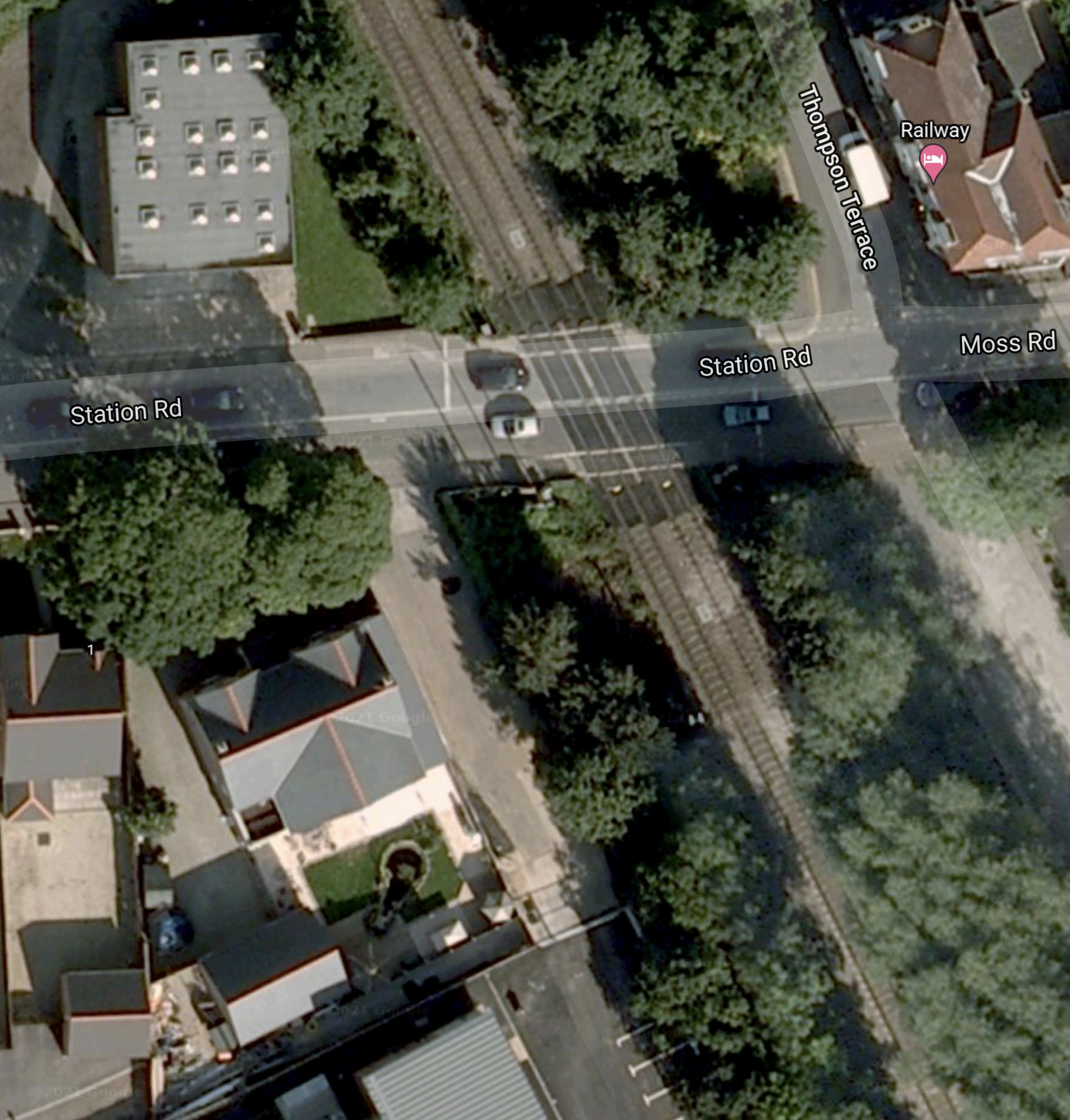
This could be a challenging station to design depending on the brief.
Services At A New Askern Station
I suspect that some or perhaps all of Grand Central’s Kings Cross and Bradford Interchange services will call.
But these don’t go to Leeds and I suspect that a service is needed to and from Leeds.
Will The Askern Line Be Electrified?
Who knows?
Hull Trains Is Back And Stronger Than Ever
The title of this post, is the same as that of this press release from Hull Trains.
This is the first paragraph.
Timetables at Hull Trains will be back to pre-pandemic levels from December as public confidence in rail travel continues to grow.
These are other points from the press release.
- The number of returning passengers is steadily increasing.
- From December 12th, Hull Trains will be running 94 trains per week in total, which is two higher than the pre-pandemic record.
- An additional service will be run on Sunday to match the six trains per day (tpd) on Saturday.
- There will be seven tpd on weekdays. That’s not far off one train per teo hours (tp2h) all day.
Passenger numbers must be coming out from the pandemic well.
This sentence from the press release gives a clue to how Hull Trains will cope with increasing passenger numbers.
Ten-car operations will commence on Fridays and Saturdays to provide additional capacity just in time for Christmas travel and the general growing demand as we prepare to enter 2022.
I suspect by rescheduling maintenance and running all five trains in services, they can run some trains on Fridays and Saturdays as pairs.
- As Hull trains only stop at Stevenage, Grantham, Retford, Doncaster, Selby, Howden, Brough, Hull and Beverley, there aren’t many stations, that need to be able to take ten-car trains.
- I suspect a couple of platforms might need lengthening, as a ten-car train is 260 metres long. Or they could instruct passengers to only use the front train for the stations with short platforms. Or only use five-car trains to the stations with short platforms.
- But the longer trains won’t need any extra paths.
- I was also told last year, that Hull station can take nine-car trains, so perhaps it can take a ten.
So to increase capacity on the route, Hull Trains just need to add another train to their fleet.
As all costs are probably well-known, with a bit of simple modelling, Hull Trains can probably predict, when they need to add a new train.
Whilst I was looking at the Lumo train yesterday, I got talking to a driver from Hull Trains, who had come over to take a professional look at Lumo’s Class 803 train.
I asked him what he liked about Hull Trains’s Class 802 trains as a driver. He said the brakes, which is probably most important to a driver, as they’re at the sharp end, if anything happens. So that’s comforting.
He also said that some of the Hitachi trains had shown they were stable at 140 mph. So that’s good too.
On talking about the batteries on the Lumo train, I got the impression that batteries will appear on other Hitachi Trains.
Conclusion
It appears to be all trains go between London and Hull.
In Could We See Between London And Much Of The North By Train In Under Two Hours?, I looked at the effect of improvements on the East Coast Main Line and concluded that timings between London Kings Cross and Hull could be around two hours and twenty minutes. This would surely be a spur to increasing traffic on the route.
Surely, when Hull Trains use battery-electric Hitachi trains between London and Hull, this will be the icing on the marketing cake, as we seem to be coming to a point, where zero-carbon sells.
As an aside, will Lumo, who are another First Group company, use a similar mix of five- and ten-car trains on the London and Edinburgh route to increase capacity?
I suspect that what is good for Hull Trains will be good for Lumo.
Could We See Between London And Much Of The North By Train In Under Two Hours?
I shall write about each route in order starting from Euston and working East.
Avanti West Coast And Euston
These are services from Euston, that I feel could be under two hours.
London Euston And Liverpool Lime Street
On Thursday, I went to Liverpool by train.
- My train took two hours and thirteen minutes between London Euston and Liverpool Lime Street stations.
- There were stops at Stafford, Crewe and Runcorn.
- The Class 390 train was travelling at 125 mph for a lot of the way.
- The distance between the two terminals is 193.6 miles.
- The start to stop average including the stops was 87.3 mph.
So could London Euston and Liverpool Lime Street be achieved in the magic two hours?
A few thoughts.
Average Speed
To do the journey in this time would need an average speed of 96.8 mph.
Accelerating And Stopping
Ideally, the train will run as fast as it can only changing speed for the station stops.
- The train will accelerate from stop to cruising speed at Euston, Stafford, Crewe and Runcorn or four times.
- The train will decelerate from cruising speed to stop at Stafford, Crewe, Runcorn and Liverpool Lime Street or four times.
Effectively, the train goes through four complete station stops, although one will be split between the two ends of the journey.
These figures are from Wikipedia and the Internet
- The acceleration of the Class 390 train is 1.0 mph/sec which means that it takes 125 seconds to get to 125 mph.
- The deceleration of a Class 390 train is 2.0 mph/sec, which means that it takes 63 seconds to stop from 125 mph.
- The acceleration of a Class 801 train is 1.6 mph/sec which means that it takes 78 seconds to get to 125 mph.
- The deceleration of a Class 801 train is 2.2 mph/sec, which means that it takes 57 seconds to stop from 125 mph.
These figures would appear to show, that a Class 801 train can decelerate and accelerate at a stop in nearly a minute faster than a Class 390 train.
So how can we increase the acceleration and deceleration? The two obvious ways are more power and less weight.
Form the Internet, I estimate that the average car in a Class 390 train is around 52 tonnes, as opposed to 41 tonnes for the Hitachi trains.
So does this weight difference explain some of the difference in acceleration and deceleration times?
Consider.
- The Class 390 trains have all the extra weight of the tilt mechanism. More weight means slower acceleration.
- Avanti West Coast’s new Class 807 trains have no diesel engines or batteries. Have the trains been put on a diet?
- They also have a reprofiled nose. Is it more aerodynamic?
So if these trains can save time on the four accelerate/decelerate cycles compared to the Class 390 trains, they must be getting nearer to the magic two hours.
If two minutes a stop can be saved that would save eight minutes on the journey between London Euston and Liverpool Lime Street.
140 Mph Running
The time to do a mile at various speeds are as follows.
- 100 mph – 36 seconds
- 125 mph – 29 seconds
- 140 mph – 26 seconds
So running at 140 mph, as opposed to the current 125 mph would save three seconds for every mile.
To save five minutes would mean the train would have to run for a hundred miles at 140 mph instead of 125 mph.
As Stafford is 133.5 miles from London, it could be that full digital signalling should be installed on the West Coast Main Line all the way to Stafford or even Crewe, which is 158 miles from London.
This schematic map of the West Coast Main Line was clipped from Wikipedia.

Note.
- Trains between London Euston and Liverpool Lime Street take the Trent Valley Line through Nuneaton and Lichfield Trent Valley and stop at Stafford, Crewe and Runcorn.
- Trains between London Euston and Manchester take a variety of routes and all go via Stockport.
- One train per hour (tph) between London Euston and Glasgow Central takes the Trent Valley Line and goes non-stop between London Euston and Warrington Central.
- Norton Bridge Junction just to the North of Stafford has recently been remodelled.
I believe there is potential to enable up to at least a hundred miles of 140 mph running to the South of Crewe. Especially as most of the track South of Crewe is quadruple track.
This should enable the shaving of five or more minutes off the time of any train capable of 140 mph running that uses the Trent Valley Line through Nuneaton, Lichfield Trent Valley and Stafford.
Norton Bridge Junction
Norton Bridge junction, which is five miles North used to be a bottleneck, but it has now been remodelled.
I wrote about it in The New Norton Bridge Junction In Action.
The new junction has probably been designed so that it can save a few seconds for trains going between Stafford and Crewe, whether or not they stop at either or both stations.
Non-Stop Between London Euston and Runcorn
If you look at the times of a London Euston and Glasgow Central train via the Trent Valley Line , it travels the 174.7 miles between London Euston and Weaver Junction non-stop in one hour and forty minutes. This is an average speed of 104.8 mph.
By comparison, my train on Thursday took one hour and forty-seven minutes with the two stops at Stafford and Crewe.
So there is at least six minutes to be saved by going non-stop.
Two Trains Per Hour Between London Euston And Liverpool Lime Street
Wikipedia says this about an additional service.
Subject to approval by the Office of Rail and Road, an additional hourly service will be introduced between London Euston and Liverpool Lime Street with a stop at Liverpool South Parkway from December 2022.
I have a few thoughts and questions on extra services between London Euston and Liverpool Lime Street,
- In my view the second service is much needed.
- I also think, that a later train back to London is needed.
- Does the Wikipedia statement mean that only one train will stop at Liverpool South Parkway?
- Does Runcorn need two tph to and from London?
- Would the platforms at Liverpool South Parkway be lengthened to accept eleven-car Class 390 trains?
I feel that if a train stopped at both Liverpool South Parkway and Runcorn, this would make a two-hour journey more difficult to achieve.
London Euston And Liverpool Lime Street In Two Hours
The new Class 807 trains will be delivered by 2022. Because of the pandemic, I’ll assume that of the ten trains on order, some, but not all, will be available by the December 2022 timetable change.
The time savings needed for a two-hour journey will come from four improvements.
- The increased performance of the Class 807 trains.
- Full digital signalling South of Crewe.
- The track improvements already completed like Norton Bridge Junction.
- Cutting out stop on the second service.
There may also be time savings to be obtained at the intermediate stops, by better working practices.
I doubt that the full digital signalling will have been installed, but all trains will be capable of 125 mph running.
Avanti West Coast probably have a good idea of the time they could achieve without digital signalling and I feel that they could be about five minutes over two hours with the Class 807 trains.
As the eleven-car Class 390 trains are too long for Liverpool South Parkway station, could we see the following service?
- 1 tph – Class 390 train – London Euston And Liverpool Lime Street via Runcorn, Crewe and Stafford.
- 1 tph – Class 807 train – London Euston And Liverpool Lime Street via Liverpool South Parkway.
Note.
- The Class 390 train would run the existing timetable in two hours and thirteen minutes.
- The Class 807 train would be a two-hour express service if possible.
- Going from three stops to one could save the express at least seven minutes, as I showed earlier by looking at train timings South of Weaver Junction.
- There would be time savings of at least two minutes on the express service due to the better performance of the Class 807 train.
To save the final four minutes, there would need to be at least eighty miles of 140 mph running, as each mile saves three seconds.
I am fairly certain, that London Euston and Liverpool Lime Street can be regularly achieved in two hours.
London Euston And Warrington Bank Quay
The hourly London Euston and Glasgow Central expresses seem to take one hour and forty-five minutes for the non-stop trip of 182.1 miles, which is an average speed of 104 mph.
As this service is non-stop, I believe that this service would get the maximum benefit from digital signalling and this service will only get faster, as more and more of the route allowed 140 mph-running.
I wouldn’t be surprised to see almost ten minutes lopped off this service by signalling and other improvements.
I am fairly certain, that London Euston and Warrington Bank Quay can be regularly achieved in well under two hours, by a Class 390 train.
London Euston And Wigan North Western
The hourly London Euston and Glasgow Central expresses seem to take one hour and fifty-six minutes for the single-stop trip of 193.9 miles, which is an average speed of 100.3 mph.
As this service just a single stop at Warrington Bank Quay, I believe that this service would get the maximum benefit from digital signalling and this service will only get faster, as more and more of the route allowed 140 mph-running.
As with Warrington Bank Quay, I wouldn’t be surprised to see almost ten minutes lopped off this service by signalling and other improvements.
I am fairly certain, that London Euston and Wigan North Western can be regularly achieved in comfortably under two hours, by a Class 390 train.
London Euston And Preston
The hourly London Euston and Glasgow Central expresses seem to take two hours and eleven minutes for the two -stop trip of 209 miles, which is an average speed of 95.7 mph.
As this service just stops at Warrington Bank Quay and Wigan North Western, I believe that this service would get the maximum benefit from digital signalling and this service will only get faster, as more and more of the route allowed 140 mph-running.
As with Warrington Bank Quay and Wigan North Western, I wouldn’t be surprised to see almost ten minutes lopped off this service by signalling and other improvements.
I am fairly certain, that London Euston and Preston can be regularly achieved in just under two hours, by a Class 390 train.
London Euston And Blackpool North
Avanti West Coast have indicated that their new Class 807 trains will run between London Euston and Blackpool North.
Consider.
- I am fairly certain that a Class 390 train will be able to run between London Euston and Preston in under two hours, once digital signalling is installed South of Crewe.
- Currently, Class 390 trains take twenty minutes between Preston and Blackpool North stations.
- The Class 807 trains have better acceleration and deceleration and should be able to execute faster stops than the Class 390 trains.
I wonder if Avanti West Coast, Hitachi, Network Rail and Rock Rail have thought up a cunning plan to run Class 807 trains between London Euston And Blackpool North, in under two hours.
Trains would go via the Trent Valley.
Trains might only stop at perhaps Milton Keynes Central, Warrington Bank Quay, Wigan North Western and Preston.
Trains would run at up to 140 mph using digital signalling, in as many places as possible.
Is the performance of the Class 807 trains sufficient to achieve London Euston and Blackpool North in under two hours via the Trent Valley?
London Euston And Manchester Piccadilly via Wilmslow
Consider.
- Most trains between London Euston and Manchester Piccadilly via Wilmslow seem to take around six or seven minutes over two hours.
- I believe that if the 158 miles between London Euston and Crewe were to be digitally signalled, then this could save up to eight minutes by allowing trains to run at 140 mph rather than the current 125 mph.
This could be enough to bring the London Euston and Manchester Piccadilly via Wilmslow below two hours.
I am not surprised at this, as the trains were built for 140 mph and because there is no digital signalling, they are limited to 125 mph, which slows the trains by six or seven minutes.
London Euston And Manchester Piccadilly via Stoke-on-Trent
Everything I said about trains between London Euston and Manchester Piccadilly via Wilmslow probably apply, except that the services via Stoke-on-Trent are a few minutes slower.
But I do feel, that this could be enough to bring the London Euston and Manchester Piccadilly via Stoke-on-Trent below two hours.
East Midlands Railway And St. Pancras
These is only one service from St. Pancras, that is not comfortably under two hours.
London St. Pancras And Sheffield
A typical service between London St. Pancras And Sheffield takes a few minutes over two hours..
- There are two tph
- There are stops at Leicester, Loughborough, East Midlands Parkway, Long Eaton, Derby or Chesterfield depending on the service.
- The Class 222 trains travel at 125 mph for most of the way.
- The distance between the two terminals is 164.7 miles.
- The start to stop average including the stops is 81 mph.
I would suspect that East Midlands Railway’s new bi-mode Class 810 trains will be able to easily break the two-hour barrier.
- They have four diesel engines so they can cruise at 125 mph on diesel.
- They have electric power for South of Market Harborough.
- Some diesel engines will be changed for batteries.
As electrification increases on the Midland Main Line, these trains will use less and less diesel.
I also suspect that digital signalling will start to creep into the route, starting from Bedford, where it is used on Thameslink.
LNER And King’s Cross
These are services from King’s Cross, that are or I feel will be under two hours.
London King’s Cross And Doncaster
A typical service between London King’s Cross And Doncaster takes around one hour and thirty-seven minutes.
- There are four tph
- There are stops at Stevenage, Peterborough, Grantham, Newark and Retford depending on the service.
- The Class 80x trains travel at 125 mph for most of the way.
- The distance between the two stations is 156 miles.
- The start to stop average including the stops is 96.5 mph.
Digital signaling is being installed on this section of the East Coast Main Line and I suspect that this will reduce timings between London King’s Cross And Doncaster.
A simple estimate based on the maximum operating speed, indicates a time of one hour and twenty-six minutes should be possible.
But as a Control Engineer, I believe that digital signalling will lead to faster running over the Digswell Viaduct and through the flat crossing at Newark.
The timing will certainly be under one hour and thirty minutes between London King’s Cross And Doncaster.
London King’s Cross And York
A typical service between London King’s Cross And York takes around one hour and forty-eight minutes.
- There are two tph
- There are stops at Stevenage, Peterborough, Grantham, Newark, Retford and Doncaster depending on the service.
- The Class 80x trains travel at 125 mph for most of the way.
- The distance between the two stations is 188.5 miles.
- A non-stop service takes one hour and fifty-two minutes, which is a start to stop average including the stops is 101 mph.
If my crude estimate of time savings because of digital signalling South of Doncaster can be applied, this would imply a reduction in journey time of at least eleven minutes.
London King’s Cross And Leeds
A typical service between London King’s Cross And Leeds takes around two hours and thirteen minutes.
- There are three tph
- There are stops at Stevenage, Peterborough, Grantham, Newark, Doncaster and Wakefield Westgate depending on the service.
- The Class 80x trains travel at 125 mph for most of the way.
- The distance between the two terminals is 185.9 miles.
- This is a start to stop average including the stops is 83.9 mph.
If my crude estimate of time savings because of digital signalling South of Doncaster can be applied, this would imply a reduction in journey time of at least eleven minutes, which would put a time between London King’s Cross and Leeds of around two hours.
London King’s Cross And Bradford Forster Square
LNER run some services on this route
- The services take thirty minutes between Leeds and Bradford Forster Square stations.
- The services do not reverse at Leeds.
Given that two hours should be possible between London Kings Cross and Leeds, it would appear that two hours and thirty minutes should be possible between Leeds and Bradford Forster Square stations.
London King’s Cross And Bradford Interchange
Grand Central run some services on this route
- The services call at Doncaster, Wakefield Kirkgate, Mirfield, Brighouse and Low Moor
- The services take two hours and fifty-four minutes between London King’s Cross and Bradford Interchange stations.
- The services take one hour and seventeen minutes between Doncaster and Bradford Interchange stations.
The services are run by Class 180 diesel trains, which will have to be replaced to decarbonise the route.
I suspect that Hitachi will have a train for this route, that could use diesel or batteries to the North of Doncaster.
- My estimate for the best time between King’s Cross and Doncaster is one hour and twenty-six minutes.
- The current time between Doncaster and Bradford Interchange stations is one hour and seventeen minutes.
This gives a best time of perhaps two hours and forty-three minutes between Doncaster and Bradford Interchange stations.
The route to Bradford via Leeds is perhaps fifteen minutes faster, but it serves different stations.
London King’s Cross And Harrogate
LNER has been running to Harrogate for some time.
- There is one train per two hours (tp2h)
- The service calls at Stevenage, Grantham, Doncaster, Wakefield Westgate and Leeds.
- some services reverse at Leeds.
- The service takes two hours and fifty-five minutes between London King’s Cross and Harrogate stations.
- The service takes thirty minutes between Leeds and Harrogate stations.
Given that two hours should be possible between London Kings Cross and Leeds, it would appear that two hours and thirty minutes could be possible between London King’s Cross and Harrogate stations.
London King’s Cross And Huddersfield
In LNER Expands To Huddersfield, I described LNER’s new service to Huddersfield.
- There will be one train per day (tpd)
- The service will call at Peterborough, Newark North Gate, Doncaster, Wakefield Westgate, Leeds and Dewsbury.
- The service will split and join with the London King’s Cross and Skipton service at Leeds.
- The service will reverse at Leeds.
- The service take two hours and fifty-five minutes between London King’s Cross and Huddersfield stations.
- The service will take twenty-five minutes between Leeds and Huddersfield stations.
- Improvements are planned, which include electrification, between Dewsbury and Huddersfield
Given that two hours should be possible between London Kings Cross and Leeds, it would appear that two hours and thirty minutes could be possible between London King’s Cross and Huddersfield stations.
London King’s Cross And Hull
The fastest Hull Trains service between London King’s Cross And Hull takes around two hours and thirty minutes.
- There are seven tpd
- There are stops at Stevenage, Grantham, Retford, Doncaster, Selby, Howden and Brough depending on the service.
- The Class 80x trains travel at 125 mph for most of the way.
- The distance between the two terminals is 205.3 miles.
- This is a start to stop average including the stops is 82.1 mph.
If my crude estimate of time savings because of digital signalling South of Doncaster can be applied, this would imply a reduction in journey time of at least eleven minutes, which would put a time between London King’s Cross and Hull of around two hours and twenty minutes.
London King’s Cross And Middlesbrough
LNER have announced a Middlesbrough service, which I wrote about in LNER’s Middlesbrough And London Service. Starts On December 13th.
- There will be one tpd in both directions
- Intermediate stops will be at Thornaby and York.
- The Middlesbrough and London service will leave Middlesbrough from Platform 1 at 07:08 and arrive in King’s Cross at 10:22.
- The London and Middlesbrough service will leave King’s Cross at 15:25 and arrive in Middlesbrough in Platform 2 at 18:18.
There appear to be some curiosities in the timetabling of these trains, which I may explore later.
I would assume that is because LNER want a competitive time of three hours between King’s Cross and Middlesbrough.
These are Southbound times between Eaglescliffe and King’s Cross in the morning.
- Grand Central – Two hours and thirty-nine minutes
- LNER – Three hours and two minutes
Is this because the Class 180 train is a genuine 125 mph train on diesel and the Class 800 train is not?
If my crude estimate of time savings because of digital signalling South of Doncaster can be applied, this would imply a reduction in journey time of at least eleven minutes, which would put a time between London King’s Cross and Middlesbrough of around three hours.
Conclusion
Of the cities and towns in the North, that I have discussed only Bradford, Harrogate, Huddersfield, Hull and Middlesbrough, are ones that will be difficult to be provided with a two-hour journey time to and from London. But all should be possible in close to or under two hours and thirty minutes.
Heritage Steam And Diesel Locomotives To Run Under Digital Signalling
This page on the Network Rail web site is entitled East Coast Digital Programme Selects Atkins And Thales As Key Partners For Heritage Rail Vehicles Pathfinder Project.
To illustrate the sort of rail vehicles they mean, the page is headed with this picture of a Stanier Black 5 locomotive, which is by courtesy of West Coast Railways.
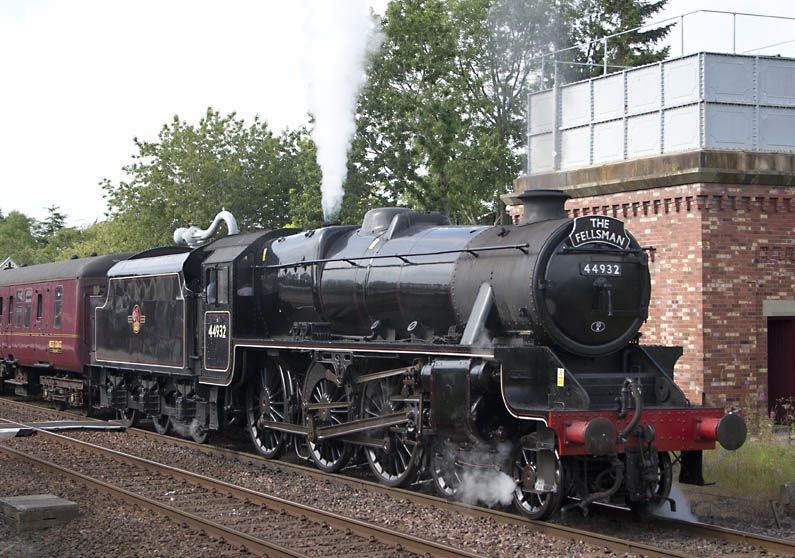
These are the first four paragraphs of the page.
Atkins, a member of the SNC-Lavalin Group, and Thales have been appointed by Network Rail to deliver an industry-first pathfinder project for Heritage Rail Projects as part of the East Coast Digital Programme.
The pathfinder will carry out design and trial fitment of the technology to determine if it is a viable technical and commercial option for heritage vehicles.
The option of retro-fitting the technology would enable heritage steam and diesel vehicles to continue operating on mainline infrastructure in radio-based train control. In a world first, the pathfinder project will see European Train Control System (ETCS) in-cab signalling equipment, supplied and installed by Thales, trial fitted on Tornado and designed for a Black 5 steam locomotive, as well as a Class 55 Deltic diesel locomotive which was built over 40 years ago.
These vehicles have been selected because they are best placed to support the project. Tornado is a large modern build with established designs and power, and the Black 5 and Deltic are representative of other vehicle types.
If this project is successful, we will continue to see heritage steam and diesel locomotives on the UK rail network.
First Phase Of ‘Transformational’ Darlington Rail Station Upgrade Approved
The title of this post is the same as that of this article on the North East Times.
This upgrade is on the Eastern side of the current station and will include a new entrance, station building, concourse and three new platforms.
This design should allow the following.
- LNER, High Speed Two and other expresses not stopping at the Darlington station to pass through at speeds of up to 125 mph or more.
- Expresses stopping in the station will slow and accelerate in less time than they do now.
- It will probably allow more local trains to Bishops Auckland, Middlesbrough and Saltburn
A seventy-five percent increase in platforms probably offers other advantages.
Lumo: Why Won’t The New Train Service Stop At Yorkshire Stations?
The title of this post, is the same as that of this article on the Yorkshire Post.
This is the first article, I’ve found about Lumo, that has a negative headline.
The reason is probably very simple, in that most Lumo services are planned to stop at only at Newcastle and Morpeth, with two services having an extra stop Stevenage.
They are intending to run the service in as short a time as possible between London King’s Cross and Edinburgh.
As each stop has a time penalty, not stopping in Yorkshire will give potential to go cut the journey time.
But the positive message that comes from the writer of the Yorkshire Post article is that Yorkshire likes the concept.
This paragraph is their take on the service.
The goal is to encourage a more environmentally friendly mode of transportation and affordable travel. Lumo will provide low-carbon emissions, affordable long-distance travel for more than one million passengers every year.
Perhaps they would like their own Yorkshire flyer.
The obvious way for this to happen would be for the Open Access operator; Grand Central to convert themselves into a train operator like Lumo.
- The ten diesel Class 180 trains would be replaced by new electric trains.
- The trains would need a 140 mph capability under digital signalling to fit in with the plans of Network Rail, LNER and Lumo to create a top-class high-speed high-capacity East Coast Main Line.
- The trains would need a battery capability as Grand Central’s routes are not fully electrified.
- They could copy Lumo’s green marketing philosophy, ticketing and catering offering.
As to the trains, I’m sure that Hitachi could offer a version of their Intercity Tri-Mode Battery Train, the specification of which is shown in this Hitachi infographic.

The trains would need a range of fifty miles on battery-power.
Charging facilities wold be needed at Bradford Interchange and Sunderland stations, as neither has suitable 25 KVAC overhead electrification.
Conclusion
The conversion of Grand Central to work on the Lumo model is possible and as the trains will need to be changed to zero-carbon ones soon to meet decarbonisation objectives, I would suspect that at least that will happen.
 The Anonymous Widower