Lower Thames Crossing Tunnelling ‘To Begin In 2028’
The title of this post, is the same as that of this article on the BBC.
This is the sub-heading.
The tunnelling process for the Lower Thames Crossing is due to begin in 2028.
These three paragraphs add more detail to the story.
National Highways said negotiations to buy one of the world’s largest tunnelling machines were now under way.
It would be capable of digging 60 metres below the Thames, creating a new road link between Essex and Kent, and now enables the project to secure private sector investment to deliver the remainder of the construction.
Next summer, work on the northern tunnel entrance where the tunnel machine will begin its journey will get under way.
Hopefully, it’ll all be complete by the early 2030s.
The Elephant In The Garden Of England
This section shows the proposed route of the Lower Thames Crossing.
It as an extract of a previous post called Elizabeth Line To Ebbsfleet Extension Could Cost £3.2 Billion.
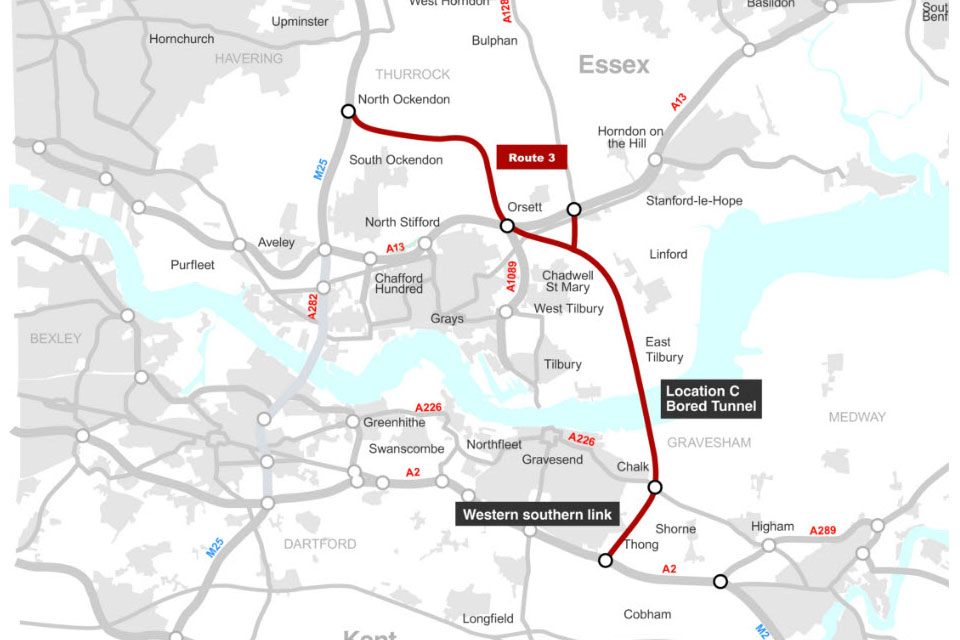
It is proposed that the new Lower Thames Crossing is built to the East of Gravesend.
This map from the Department of Transport, shows the route.
Note.
- The new crossing, which is shown in red, bypasses the Dartford Crossing on the M25.
- The A226 runs between Gravesend and Higham via a junction with the new crossing at Chalk.
- Northfleet is to the West of Gravesend.
This Google Map shows the area between Chalk and Higham.
Beaulieu Park Station – 30th October 2025
I went to Beaulieu Park station this morning and took these pictures.
































Note.
LionLink: Proposed Windfarm Cabling Sites In Suffolk Are Revealed
The title of this post, is the same as that of this article on the BBC.
This is the sub-heading.
National Grid has revealed where it wants to build energy infrastructure for cabling between the UK and the Netherlands.
These four paragraphs describe the project.
The power line, called LionLink, would connect offshore wind farms in the North Sea.
The energy company wants the cables to reach land at either Walberswick or Southwold, both in Suffolk.
A converter station would be built on the outskirts of nearby Saxmundham and could cover a six-hectare area.
That would then connect to a substation being built at the village of Friston, also in Suffolk, as part of the offshore wind plans.
But the plans have brought the Nimbies out in force.
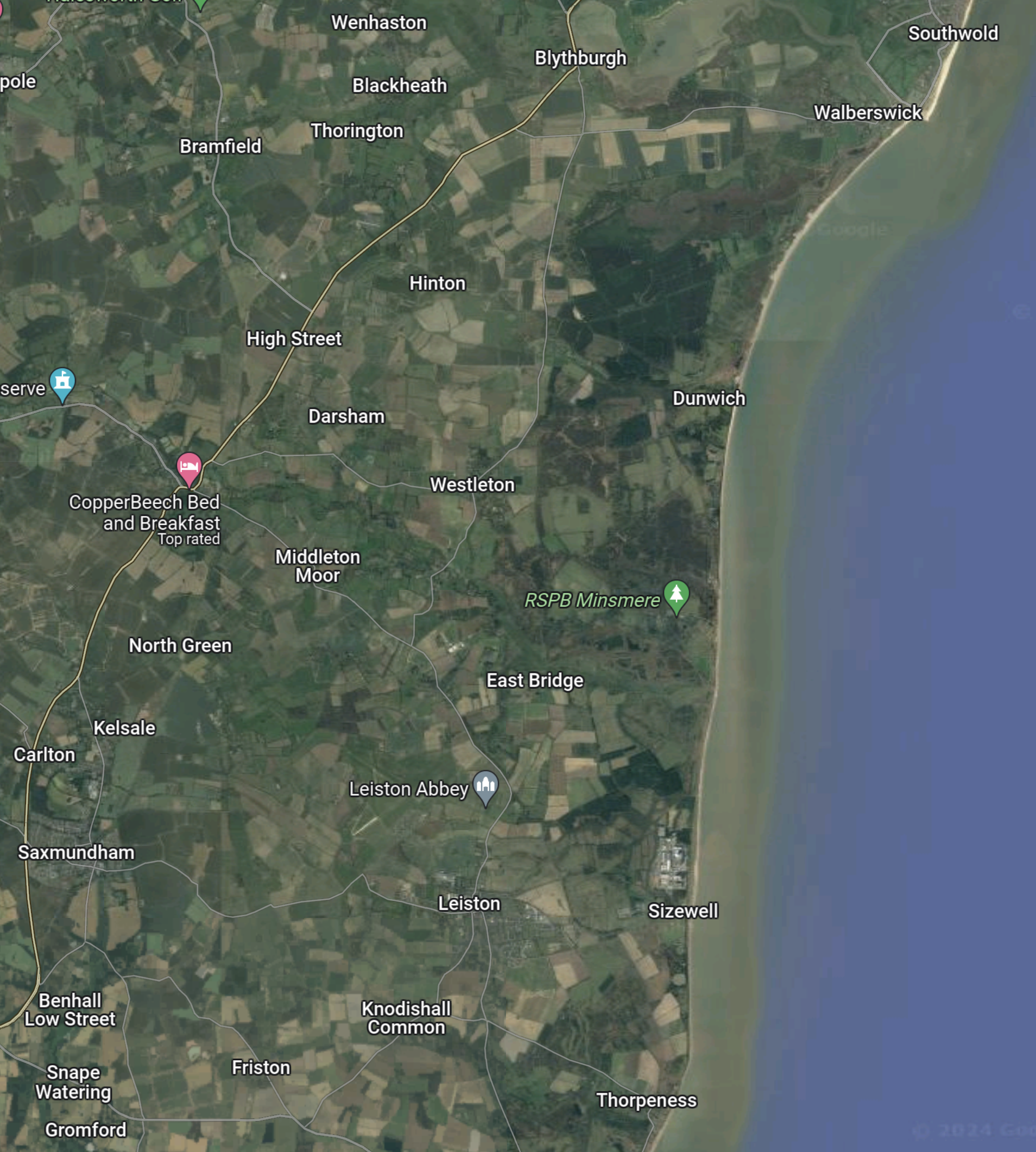
This Google Map shows the Suffolk Coast, to the South of Southwold.
Note.
- Southwold and Walberswick in the North-East corner of the map.
- Saxmundham is just up from the South-West corner of the map, with Friston to its East.
- Sizewell with the 1.2 GW Sizewell B nuclear power station is on the coast directly East of Saxmundham.
- Sizewell B is planned to be joined by the 3.2 GW Sizewell C nuclear power station.
- LionLink is likely to have a capacity of 2 GW.
- I also believe that at least another GW of offshore wind power will be squeezed in along this section of coast.
The Sizewell site is connected to the National Grid at Bullen Lane substation to the West of Ipswich.
These pictures show the pylons that were built in the 1960s to connect Sizewell A to the National Grid.








I doubt, they would be allowed to be erected today.
One alternative would be to use T-pylons, like these built to connect Hinckley Point C to the National Grid.

There is more on T-pylons in this press release from National Grid, which is entitled National Grid Energise World’s First T-Pylons.
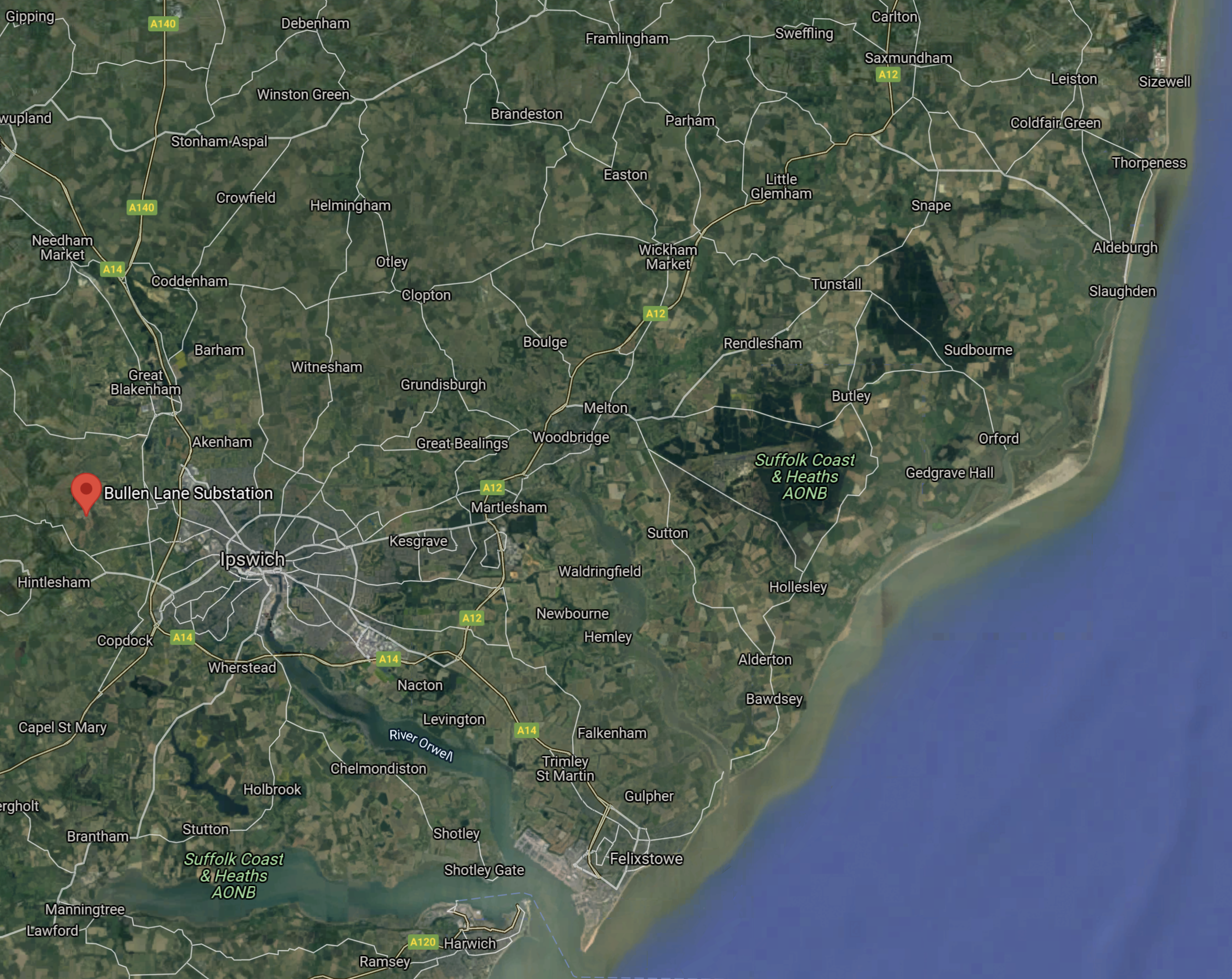
This Google Map shows the area between Ipswich and the coast.
Note.
- Sizewell is in the North-East corner of the map.
- Felixstowe, Harwich and Freeport East are at the mouth of the rivers Orwell and Stour.
- The Bullen Lane substation is to the West of Ipswich and shown by the red arrow.
Looking at maximum power flows in Suffolk and Somerset, we get.
- North-East Suffolk to the National Grid at Bullen Lane – 7.4 GW.
- Hinckley Point C to the National Grid – 3.26 GW.
I am led to the conclusion, that there need to be a doubling of the pylons between North-East Suffolk and Bullens Lane.
I can understand why the Nimbies have been aroused.
I believe that National Grid will have to take the undersea route along the coast of Essex and Suffolk, to get the electricity to its markets.
Was Baldrick An Essex Man?
I have been looking at Network Rail’s page for Beaulieu Park station.
This is the heading.
Network Rail and Essex County Council are working together to develop proposals for the first railway station to be built on the Great Eastern main line for over 100 years.
These two paragraphs outline the project and where the finance is being obtained.
The new station is part of a wider regeneration of the Beaulieu Park estate in Chelmsford with new road infrastructure and up to 14,000 homes.
Essex County Council, in partnership with Chelmsford City Council, successfully secured £218m of funding from the Government’s Housing and Infrastructure (HIF) fund together with £34m contributions from the South East Local Enterprise Partnership and the developers of Beaulieu, Countryside and L&Q.
These features of Beaulieu Park station are listed on the page.
- Three platforms with a central loop line and new tracks to enable stopping services to call at the station while allowing fast trains to pass through unimpeded
- Step free access to all platforms via 2 lifts
- Accessible toilets, baby change facilities, waiting area and space for retail/catering
- Ticketing facilities, with ticket vending machines and a gate line
- Pedestrian and cycle access routes to the station
- 500 spaces for cycle parking and storage
- A bus interchange including bus stands for local services
- Pick up and drop off area with dedicated taxi bays
- Parking for over 700 cars, 5% of which to be designated Blue Badge bays, and motorcycle spaces, as well as dedicated parking for station staff, emergency services, and a dedicated space for service access.
Note.
- How many other parkway stations, other than Ebbsfleet International station have 700 parking spaces?
- The parking at Whittlesford Parkway can only hold 377 vehicles.
- How many other parkway stations have an overtaking loop for faster trains?
Beaulieu Park is not your average parkway station!
I have a few thoughts.
Which Of The Current Services Will Call?
The Network Rail page says this about services.
It will provide additional access to the railway with regular connections to the capital (only 40 minutes from London Liverpool Street station) and other destinations in the east of England. New tracks will enable stopping services to call at the station while allowing fast trains to pass through unimpeded.
Note.
- Trains between London and Hatfield Peverel station typically take under forty minutes.
- Two fast trains per hour (tph) between Liverpool Street and Norwich via Colchester, Ipswich and Stowmarket pass through.
- Only one of the fast trains stops at Chelmsford.
- Four stopping tph, one to each of Braintree, Clacton-on-Sea, Colchester Town and Ipswich pass through.
If all the stopping trains stopped, Beaulieu Park would have the following services.
- Braintree – 1 tph
- Chelmsford – 4 tph
- Clacton-on-Sea – 1 tph
- Colchester – 3 tph
- Colchester Town – 1 tph
- Hatfield Peverel – 1 tph
- Ingatestone – 2 tph
- Ipswich – 1 tph
- Kelvedon – 2 tph
- London Liverpool Street – 4 tph
- Marks Tey – 2 tph
- Romford – 1 tph
- Shenfield – 3 tph
- Stratford – 4 tph
- Witham – 4 tph
All trains are new Class 720 electric trains.
I also feel, that Network Rail could be being cunning.
Suppose, the Liverpool Street and Norwich express, that doesn’t stop at Chelmsford, stopped instead at Beaulieu Park.
- This would give an hourly express service between Beaulieu Park and Norwich, which stopped at Colchester, Manningtree, Ipswich, Stowmarket and Diss.
- It would also enable two tph between Beaulieu Park and Ipswich.
The 700 parking spaces at Beaulieu Park now start to make sense.
- Both Ipswich and Norwich stations are within walking distance of the town centres and the football grounds.
- Ipswich station has a shuttle bus service to the town centre and the hospital.
- Both stations have several local train services.
Beaulieu Park station appears to have been designed as a Park-and-Ride station for the Great Eastern Main Line and all its branches.
Services To And From Lowestoft
In Making Sense Of The New East Anglia Franchise, I looked in detail at Greater Anglia’s promises.
In a section, which is entitled London – Lowestoft – Yarmouth Services, I said this.
There are going to be four direct services between London and Lowestoft each day. This probably initially means two trains to London in the morning peak and two trains back in the evening one.
When, I first moved back to Suffolk in the 1970s, I regularly caught a diesel-hauled train from Wickham Market to London for the day.
This is all motherhood and apple pie for those in Lowestoft wanting to go to London, but I suspect it isn’t the easiest service for a train operator to schedule efficiently and make money.
Would a train operator really want to start a full train at Lowestoft at say six in the morning and then have it wait around all day in London before returning in the evening?
The service hasn’t started.
Services To And From Cambridge Or Peterborough
At some time in the last decade, one of the predecessors of Greater Anglia, used to run a service to Peterborough via Colchester and Ipswich, so that travellers in Essex could catch trains to the North.
Given too that Cambridge has an employment problem, if a service was run, it might attract passengers.
The Class 755 trains Could Serve Bury St. Edmunds, Cambridge, Lowestoft, Newmarket, Peterborough And Yarmouth
Consider.
- A pair of Class 755 trains would leave Liverpool Street.
- They would use electric power to run to Ipswich.
- The trains would run in one of the paths of the current hourly Ipswich service.
- Like their all electric siblings; the Class 745 trains, they would probably run most of the journey at near 100 mph.
- At Ipswich the trains would split.
- One train would go to on to Lowestoft and Yarmouth and the other would go to Cambridge and Peterborough.
If passenger numbers felt it was a good idea, I’m certain, it could be timetabled.
The Chelmsford Avoiding Line
In Will The Chelmsford Avoiding Line Be Rebuilt?, I described the avoiding line, that used to be between the two tracks at Chelmsford station.
It probably saved a few minutes, by allowing fast expresses to pass stopping trains.
Effectively, a new avoiding line is being built at Beaulieu Park, a few miles from the original position at Chelmsford.
So will the fast expresses save a few minutes?
Could The Elizabeth Line Run To Beaulieu Park?
Consider
- The end sections of the Elizabeth Line seem to be busy, as I wrote in Very Busy Lizzie.
- The City of Chelmsford is between Shenfield and Beaulieu Park.
- Paddington and Reading is 35.9 miles.
- Liverpool Street and Hatfield Peverel is 35.9 miles.
So Beaulieu Park is actually closer to London than Reading.
Perhaps, at some time in a few years, passenger traffic between Beaulieu Park and Shenfield will be such, that the Elizabeth Line will be extended to Beaulieu Park.
The ideal service from Beaulieu Park would surely be two tph to Heathrow, as getting to Heathrow from East Anglia by train needs a change at Liverpool Street.
The only drawback is that to work effectively on the Great Eastern Main Line, a sub-variant of the Class 345 trains will be needed with a 100 mph operating speed. I wrote about these trains in Extending The Elizabeth Line – High Speed Trains On The Elizabeth Line.
But they may have the advantage of being able to take the fast lines between Shenfield and Stratford.
Conclusion
Beaulieu Park may just look like any other station to serve a housing development.
But it’s a lot more than that!
- It’s a Park-and-Ride for the whole Great Eastern Main Line and London.
- It should speed up expresses between London and Colchester, Ipswich or Norwich.
- It should improve local connectivity.
- It could take a lot of traffic off the nearby A12.
- It could give the City of Chelmsford its own local metro.
- It could give Heathrow a direct link to much of Essex.
- How much carbon will be saved by passengers?
We need many more well thought out Park-and-Ride stations.
UK Confirms £205 Million Budget To Power More Of Britain From Britain
The title of this post, is the same as that of this press release from the Department of Energy Security And NetZero.
This is the sub title.
UK government confirms budget for this year’s Contracts for Difference scheme as it enters its first annual auction, boosting energy security.
These are the three bullet points.
- Government announces significant financial backing for first annual flagship renewables auction, boosting Britain’s energy security
- £170 million pledged for established technologies to ensure Britain remains a front runner in renewables and £10 million ring-fenced budget for tidal
- Scheme will bolster investment into the sector every year, delivering clean, homegrown energy as well as green growth and jobs
These are my thoughts.
First And Annual
The scheme is flagged as both first and annual!
Does this mean, that each Budget will bring forward a pot of money for renewables every year?
My father, who being a letterpress printer and a Cockney poet would say it did and I’ll follow his lead.
Two Pots
In Contracts for Difference Round 4, there were three pots.
- Pot 1 – Onshore Wind and Solar
- Pot 2 – Floating Offshore Wind, Remote Island Wind and Tidal Stream
- Pot 3 – Fixed Foundation Offshore Wind
This document on the government web site lists all the results.
For Contracts for Difference Round 5, there will be two pots, which is described in this paragraph of the press release.
Arranged across 2 ‘pots’, this year’s fifth Allocation Round (AR5) includes an allocation of £170 million to Pot 1 for established technologies, which for the first time includes offshore wind and remote island wind – and confirms an allocation of £35 million for Pot 2 which covers emerging technologies such as geothermal and floating offshore wind, as well as a £10 million ring-fenced budget available for tidal stream technologies.
It could be described as a two-pot structure with a smaller ring-fenced pot for tidal stream technologies.
Contract for Difference
There is a Wikipedia entry for Contract for Difference and I’m putting in an extract, which describes how they work with renewable electricity generation.
To support new low carbon electricity generation in the United Kingdom, both nuclear and renewable, contracts for difference were introduced by the Energy Act 2013, progressively replacing the previous Renewables Obligation scheme. A House of Commons Library report explained the scheme as:
Contracts for Difference (CfD) are a system of reverse auctions intended to give investors the confidence and certainty they need to invest in low carbon electricity generation. CfDs have also been agreed on a bilateral basis, such as the agreement struck for the Hinkley Point C nuclear plant.
CfDs work by fixing the prices received by low carbon generation, reducing the risks they face, and ensuring that eligible technology receives a price for generated power that supports investment. CfDs also reduce costs by fixing the price consumers pay for low carbon electricity. This requires generators to pay money back when wholesale electricity prices are higher than the strike price, and provides financial support when the wholesale electricity prices are lower.
The costs of the CfD scheme are funded by a statutory levy on all UK-based licensed electricity suppliers (known as the ‘Supplier Obligation’), which is passed on to consumers.
In some countries, such as Turkey, the price may be fixed by the government rather than an auction.
Note.
- I would trust the House of Commons Library to write up CfDs properly.
- As a Control Engineer, I find a CfD an interesting idea.
- If a generator has more electricity than expected, they will make more money than they expected. So this should drop the wholesale price, so they would get less. Get the parameters right and the generator and the electricity distributor would probably end up in a stable equilibrium. This should be fairly close to the strike price.
I would expect in Turkey with Erdogan as President, there are also other factors involved.
Renewable Generation With Energy Storage
I do wonder, if wind, solar or tidal energy, is paired with energy storage, this would allow optimisation of the system around the Contract for Difference.
If it did, it would probably mean that the generator settled into a state of equilibrium, where it supplied a constant amount of electricity.
Remote Island Wind
Remote Island Wind was introduced in Round 4 and I wrote about it in The Concept Of Remote Island Wind.
This was my conclusion in that post.
I must admit that I like the concept. Especially, when like some of the schemes, when it is linked to community involvement and improvement.
Only time will tell, if the concept of Remote Island Wind works well.
There are possibilities, although England and Wales compared to Scotland and Ireland, would appear to be short of islands.
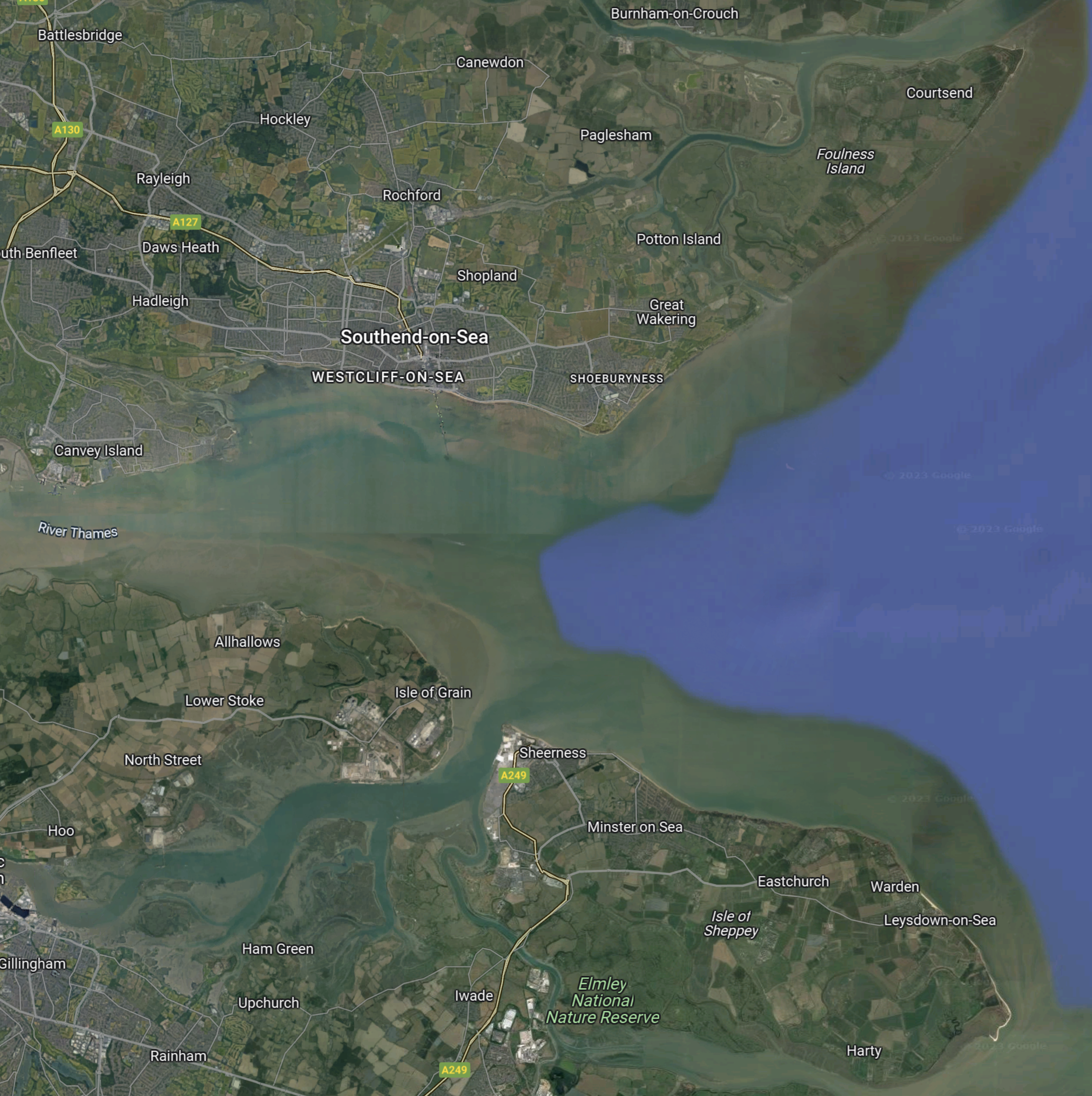
This map shows the islands of the Thames Estuary.
Note.
- In Kent, there is the Isle of Sheppey and the Isle of Grain.
- Between the two islands is a large gas terminal , a gas-fired power station and an electricity sub-station connecting to Germany.
- In Essex, there is Canvey, Foulness and Potton Islands.
- There is also the site at Bradwell, where there used to be a nuclear power station.
If we assume that each island could support 200 MW, there could be a GW of onshore wind for London and perhaps a couple of SMRs to add another GW.
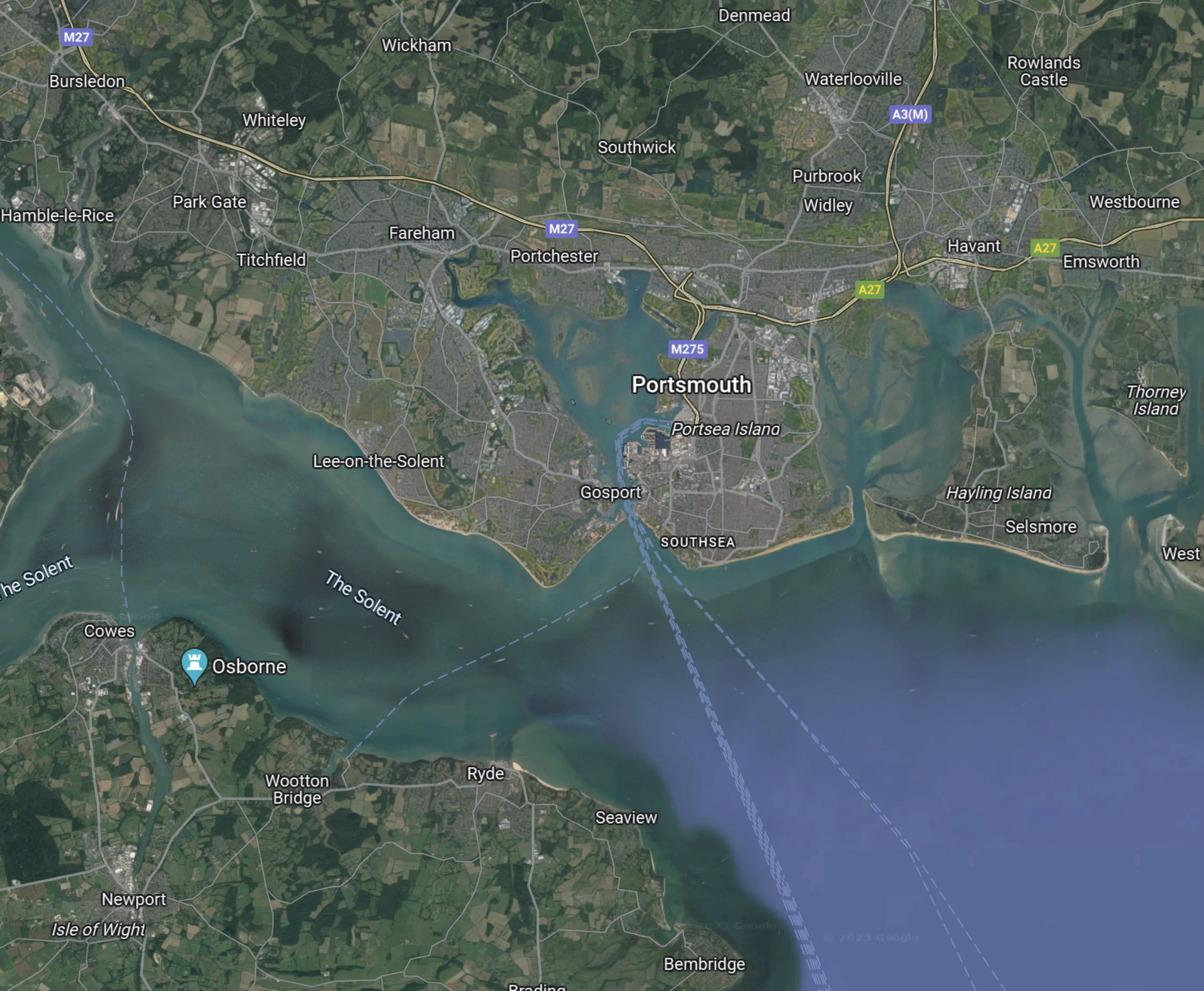
This map shows the islands around Portsmouth.
Note.
- Hayling Island is to the East of Portsmouth.
- Further East is Thorney Island with an airfield.
The Isle of Wight could be the sort of island, that wouldn’t welcome wind farms, although they do make the blades for turbines. Perhaps they should have a wind farm to make the blades even more green.
But going round England and Wales there doesn’t seem to be many suitable places for Remote Island Wind.
I do think though, that Scotland could make up the difference.
Geothermal Energy
This is directly mentioned as going into the emerging technologies pot, which is numbered 2.
I think we could see a surprise here, as how many commentators predicted that geothermal heat from the London Underground could be used to heat buildings in Islington, as I wrote about in ‘World-First’ As Bunhill 2 Launches Using Tube Heat To Warm 1,350 Homes.
Perhaps, Charlotte Adams and her team at Durham University, will capitalise on some of their work with a abandoned coal mine, that I wrote about in Exciting Renewable Energy Project for Spennymoor.
Timescale
This paragraph gives the timescale.
The publication of these notices mean that AR5 is set to open to applications on 30 March with results to be announced in late summer/early autumn 2023, with the goal of building upon the already paramount success of the scheme.
It does look like the Government intends this round to progress at a fast pace.
Conclusion
If this is going to be an annual auction, this could turn out to be a big spur to the development of renewable energy.
Supposing you have a really off-beat idea to generate electricity and the idea place in the world is off the coast of Anglesey.
You will certainly be able to make a bid and know like Eurovision, one auction will come along each year.
Giant Batteries Will Provide Surge Of Electricity Storage
The title of this post, is the same as that of this article on The Times.
These are the first two paragraphs.
Britain’s capacity to store electricity in giant batteries is set to double after dozens of new projects won contracts through a government scheme to keep the lights on.
Developers of battery storage projects with a total output capacity of at least 3.3 gigawatts won contracts to operate from winter 2025-26 through the government’s “capacity market” auction, according to Cornwall Insight, the consultancy.
Note that Hinckley Point C is only 3.26 GW.
The biggest battery in these contracts is a giant that Intergen will be building at the London Gateway.
When the battery got planning permission in November 2020, Intergen published this press release, which is entitled InterGen Gains Consent To Build One Of The World’s Largest Battery Projects In Essex.
These are three bullet points at the head of the press release.
- Edinburgh-headquartered energy company InterGen has been granted planning consent to build the UK’s largest battery storage project at DP World London Gateway on the Thames Estuary.
- £200m project is set to provide at least 320MW/640MWh of capacity, with the potential to expand to 1.3GWh – more than ten times the size of the largest battery currently in operation in the UK and set to be one of the world’s largest.
- The battery will provide fast-reacting power and system balancing with an initial two-hour duration, and is a significant piece of infrastructure on the UK’s journey to net zero.
As Cilla might have said. “What a lorra lorra lot of lithium!”
But it’s not just lithium-ion batteries that are getting large.
In The Power Of Solar With A Large Battery, I talked about a Highview Power CRYOBattery with a capacity of 50MW/500MWh, that is being built in the Atacama desert in Chile.
The Essex battery is a giant battery and it’s bigger than the one in Chile, but I’m fairly sure Highview Power could build a battery bigger than the one InterGen are building. You just add more liquid air tanks and turbomachinery.
UK’s Tevva Uses Submarine Tech To Power Electric Trucks
The title of this post, is the same as that of this article on The Times of Israel.
The article is from April 2017 and starts with this paragraph.
Startup founded by Asher Bennett, brother of Israel’s education minister, aims to provide digital, emission-free vehicles.
This paragraph gives details of the man behind the company and their first sales.
Meanwhile, one UK company — Tevva Motors — has already got its first orders for repowering the trucks of delivery giants UPS, DHL and Switzerland’s Kuehne+Nagel with its components, including the batteries and motor, according to Tevva’s 48-year-old Israeli founder Asher Bennett. Bennett is the older brother of former entrepreneur turned right-wing politician Naftali Bennett, who is Israel’s education minister.
Since the article was written, Naftali Bennett has become Israel’s Prime Minister.
This paragraph explains how the trucks work.
The trucks Tevva repowers as well as those the company is planning to build from scratch next year at its new facility in Chelmsford are fully digital. “Every piece of information on our trucks is on the cloud,” Bennett said. The software and algorithms developed by the company automatically calculate the most efficient use of the battery and instruct the range extender when to kick in, without any input from the driver.
We’re already starting to see trains using similar techniques.
But as a time-expired Control Engineer, I would go a similar route.
It is a fascinating article, that deserves a full read.
Class 321 Renatus Trains At Wickford And On The Crouch Valley Line
This article on Rail Advent indicated that the platform extension at Wickford station had been completed, so that five-car Class 720 trains can work the Crouch Valley Line.
This morning I went to look at the progress and took these pictures.





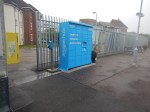


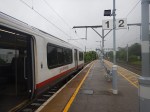



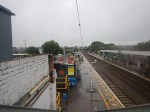
Note.
- Platform 1 has been extended at the London end.
- The two trains working the branch were Class 321 Renatus trains.
- The stations on the branch seemed to have been spruced up.
I suspect Greater Anglia are expecting a lot more commuters and visitors.
- But then the area is getting a lot more housing.
- There are fast direct trains to and from London Liverpool Street on a railway with refurbished electrification.
- Burnham-on-Crouch is one of the foremost yachting towns.
- Remember the area is not far from Snowgoose Country.
- The new Wallasea wetlands that were created with the tunnel spoil from Crossrail’s tunnels is not far away.
This Google map shows Burnham-on-Crouch and Wallasea Wetlands.
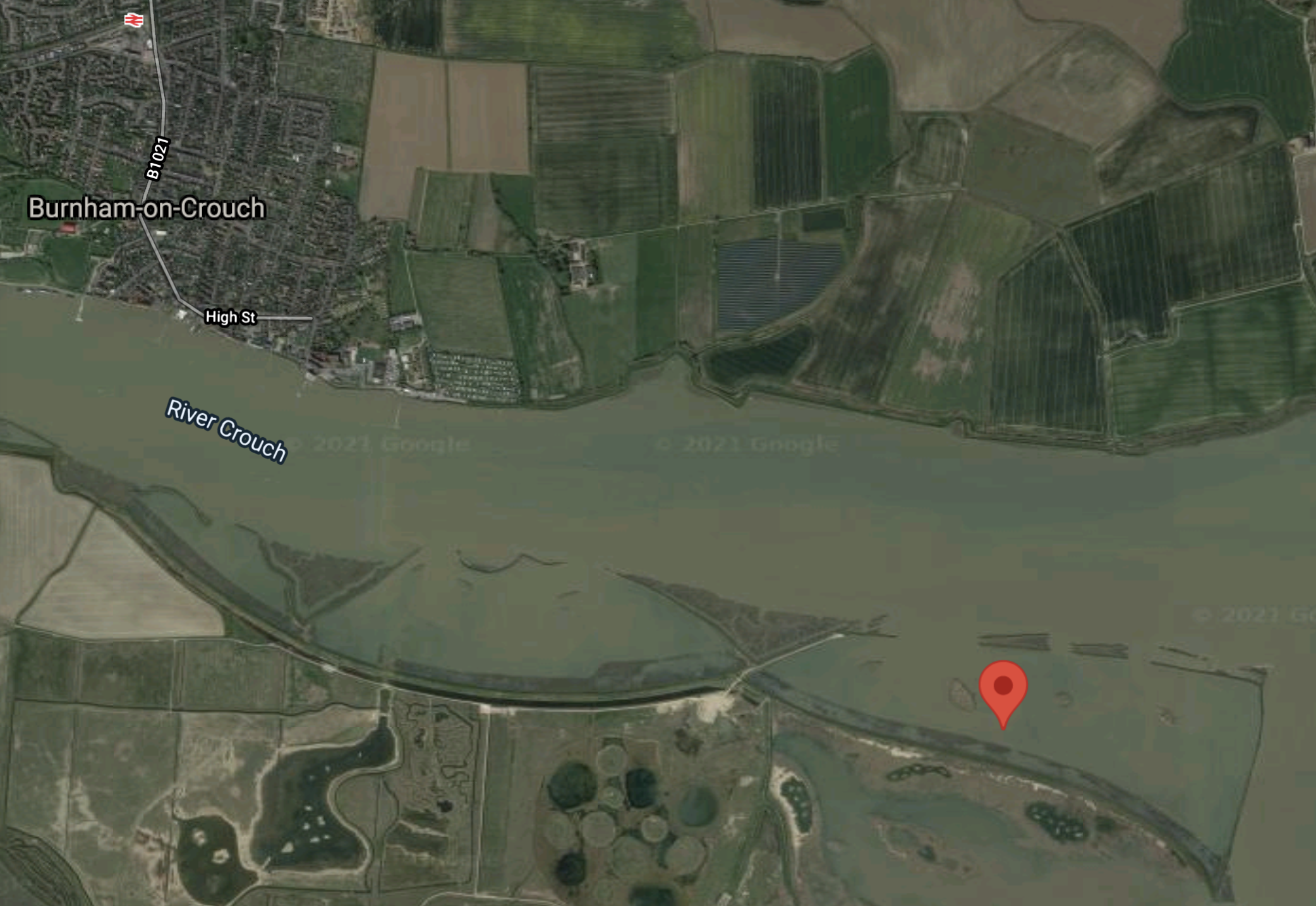
Note.
- Burnham-on-Crouch with its station in the North-West corner of the map.
- Wallasea Wetlands are marked by the red arrow.
I don’t think it will be long before an appropriately-powered ferry is provided across the River Crouch.
I also have some thoughts.
The Class 321 Renatus Trains
The Class 321 Renatus trains may be a 2017 conversion of a 1990-built British Rail Class 321 train, but that doesn’t mean they are a cheap and nasty conversion.
So until all the Class 720 trains are in service, they are a more than adequate stand-in.
I was told that the Class 720 trains will be in service on the branch in September.
The Snow Goose
The Snow Goose is one of the great books of the Twentieth Century, written by the American; Paul Gallico.
This summary of the plot is from Wikipedia.
The Snow Goose is a simple, short written parable on the regenerative power of friendship and love, set against a backdrop of the horror of war. It documents the growth of a friendship between Philip Rhayader, an artist living a solitary life in an abandoned lighthouse in the marshlands of Essex because of his disabilities, and a young local girl, Fritha. The snow goose, symbolic of both Rhayader (Gallico) and the world itself, wounded by gunshot and many miles from home, is found by Fritha and, as the human friendship blossoms, the bird is nursed back to flight, and revisits the lighthouse in its migration for several years. As Fritha grows up, Rhayader and his small sailboat eventually are lost in the Dunkirk evacuation, having saved several hundred men. The bird, which was with Rhayader, returns briefly to the grown Fritha on the marshes. She interprets this as Rhayader’s soul taking farewell of her (and realizes she had come to love him). Afterwards, a German pilot destroys Rhayader’s lighthouse and all of his work, except for one portrait Fritha saves after his death: a painting of her as Rhayader first saw her – a child, with the wounded snow goose in her arms.
It is not a book, you’d expect an American to write about the dark days of World War II in the UK.
But as Christopher Nolan showed in his film, Dunkirk was the battle in World War II, that stiffened up the sinews and summoned up the blood.
Wickford Station
The pictures show that Wickford station is being rebuilt.
I would think it needs a speed-free bridge.
Council Launches Campaign To Extend Crossrail To Southend-on-Sea
The title of this post is the same as that of this article on Rail Technology Magazine.
I wrote about this extensively in Crossrail Tests Its Trains In Southend and feel it is a good plan.
Extra Capacity Between London And Southend
If some of the currently planned twelve trains per hour (tph) to Shenfield, ran to Southend Victoria station and terminated there, this might generate a lot of traffic between Southend and the West End, Paddington and Heathrow.
A More Intensive Service To Southend Airport
Southend Airport is growing fast and I suspect that with both Easyjet and Ryanair using the Airport, that Essex boys and girls will start using their local airport in droves.
With a more frequent rail service I suspect many more will use the trains.
If Crossrail served the Airport much of East London would probably use the service, to avoid the hassle of changing trains or parking the car.
A Twenty-Four Hour Service to Southend Airport
Consider.
- I’ve flown into Southend Airport at a late hour and just about caught the last train.
- I also had to get there at an early hour for a flight to Amsterdam.
There has been talk of Crossrail running through the night and I suspect, Southend Airport would welcome this development in the future.
Enabling Housing
London needs more housing and Southend is probably one of those places, where more houses can be built.
But a better train service is needed and Crossrail could be one easy way to provide it.
Taking Pressure From Liverpool Street
Liverpool Street station is full and lacks capacity.
Moving some Southend services to Crossrail will free up more capacity for other services.
Conclusion
Extending Crossrail to Southend has a lot going for it.
Not All Rail Improvements Are Spectacular
I found this article from The Enquirer, which is entitled Essex set for faster trains after summer speed restriction is finally lifted.
This is said.
A LONG-STANDING speed restriction in place on the railway between Shenfield and Seven Kings, London, during the summer has been lifted by Network Rail.
The decision was made after the completion of important railway improvement works over Christmas. Network Rail engineers worked around-the-clock for 10 days to replace 12.5km of overhead wires at Gidea Park, untangling the complex web of crossovers, and replacing it with more durable and heat-resistant wires.
Passengers will not see any dramatic physical difference, but if the sun ever beats down again, the trains will still stick to the timetable.
 The Anonymous Widower