Wagons Roll For Freightliner UK
The title of this post, is the same as that of this article on railfreight.com.
This is the first paragraph.
UK operator Freightliner has taken delivery of the first batch of new FFA-G wagons for UK operations. The forty wagons have arrived in the UK from Poland, adding to the intermodal fleet of the operator. The entire order, for 230 wagons will be delivered by the end of November 2021.
The wagons have been designed for efficiency and being able to take a forty foot container anywhere on the UK’s network with a loading gauge of W10.
New 775m-Long Freight Trains Begin Operating On UK’s Rail Network
The title of this post, is the same as that as this article on Global Railway Review.
This is the first paragraph.
DP World have announced that its two deep-water ports at Southampton and London Gateway have become the first in the UK capable of handling Freightliner’s new 775m-long intermodal container trains.
It appears from the article that Birmingham, Manchester and Leeds can also handle these longer trains.
Construction Ramps Up At £260 Million Mossend International Railfreight Park In Scotland
The title of this post, is the same as that of this article on Rail Engineer.
This is the first paragraph.
The development of a major new low carbon, multi-modal rail freight facility located in the heart of Scotland has taken a significant step forward with the laying of a private rail track to facilitate construction. Once complete, Mossend International Railfreight Park (MIRP) will provide 2.2 million sq ft of logistics space and Scotland’s first 775-metre electric rail terminal.
This looks to be all good stuff.
But Glasgow has needed the capability to handle 775-metre electric freight trains for some time.
- 775 metres is the length of the longest freight trains in use in the UK, after an increase in length, that I wrote about in New 775m-Long Freight Trains Begin Operating On UK’s Rail Network.
- Electric locomotives will cut carbon emissions.
- Mossend International Railfreight Park (MIRP) has a fully electrified connection to the West Coast Main Line (WCML).
- From the WCML routes are electrified most of the way to major freight destinations in England and to the Channel Tunnel.
So what took politicians so long to decide to upgrade the MIRP, as surely the ability to handle the longest electric freight trains will surely encourage the following?
- The movement of freight from road to rail.
- A reduction in freight traffic on the roads of Scotland and to a lesser extend England.
- The ability to run electric freight trains between Glasgow and Continental Europe.
If freight ramps up after the MIRP is completed, there’ll probably be a need for the following.
Some new highly capable locomotives like the Class 93 locomotive.
More than the proposed 16 trains per day (tpd).
They will certainly need the planned 24/7 operation.
This Google Map shows the site of the MIRP at the current time.
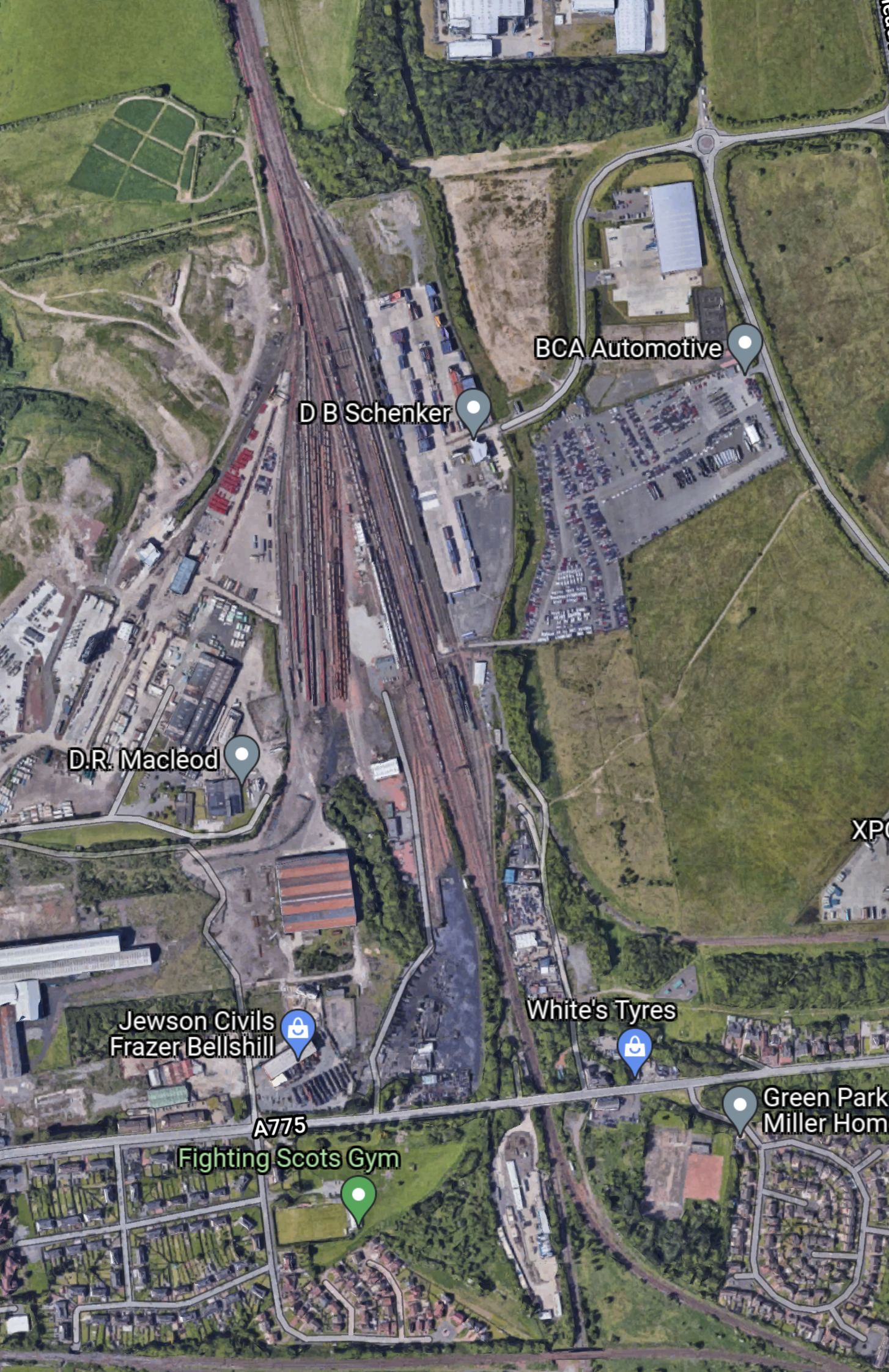
It will be interesting to see how the site grows.
‘Dramatically More Powerful’: World’s First Battery-Electric Freight Train Unveiled
The title of this post, is the same as that of this article in The Guardian.
It is a good article about Wabtec’s new FLXdrive battery train and is very positive about it coming from a typical Guardian direction.
The article is a must-read.
I am beginning to feel that what Wabtec has done is to create a practical and affordable solution, that will cut carbon emissions in a difficult area, that produces the figures and also is understandable by diverse groups, like journalists, politicians and environmentalists. And they are backing it with academic research from a good university.
I also believe that the technology can be applied to existing locomotives as I outlined in Could Class 66 Locomotives Be Converted Into Battery-Electric Locomotives?.
Could this be another example of positive environmental change brought about by when the big beasts play their cards in the jungle?
Going green is a way of company survival! And Wabtec are going in that direction.
Could Class 66 Locomotives Be Converted Into Battery-Electric Locomotives?
This picture shows a Freightliner Class 66 locomotive passing through Stratford with a multimodal freight train.
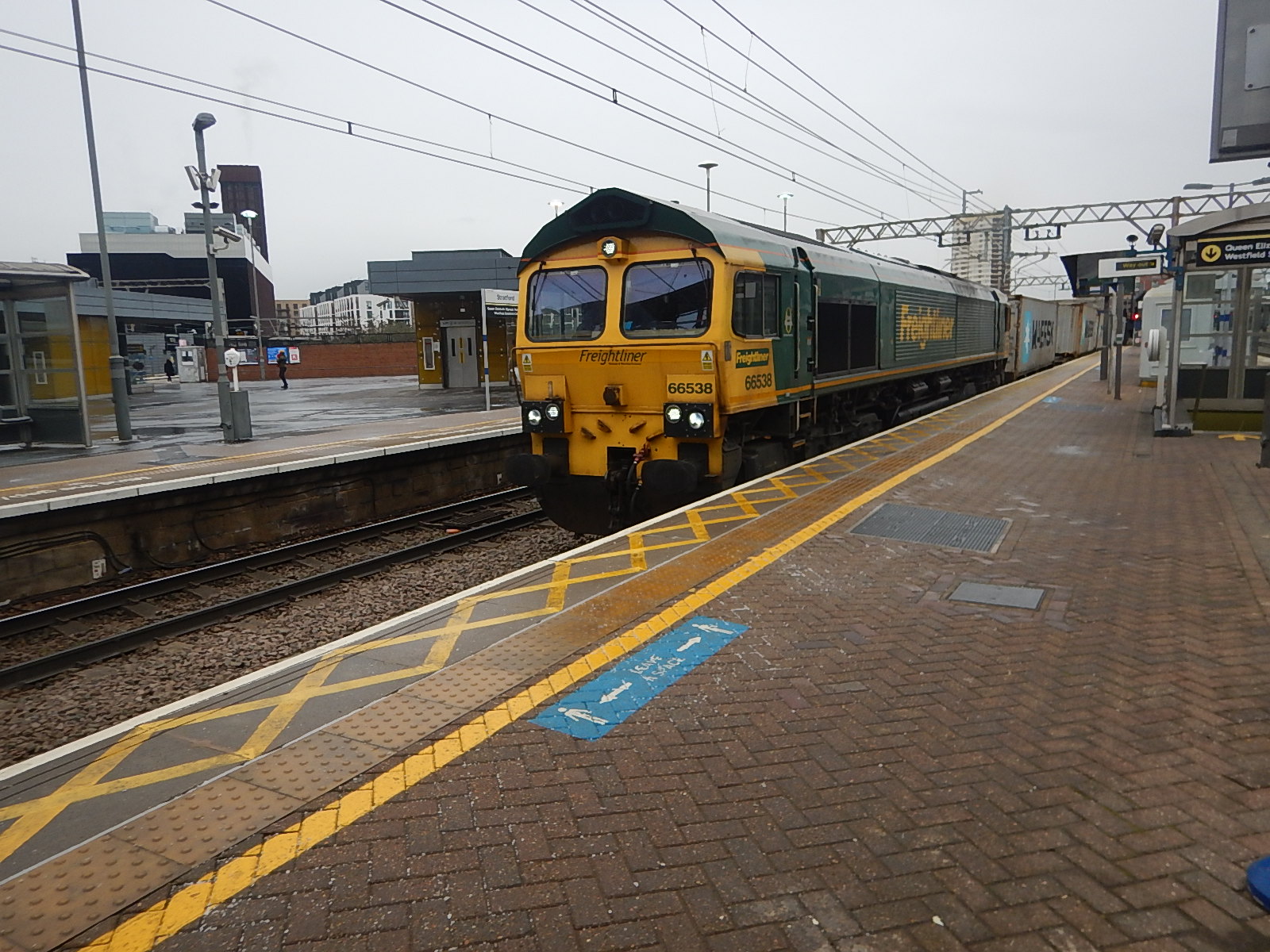
These are a few thoughts on converting some of the four hundred and eighty Class 66 locomotives into battery-electric locomotives.
An Estimate Of Performance Of A Battery Electric Class 66 Locomotive
In Iron Ore Miner Orders Heavy-Haul Battery Locomotive, I said this about a UK-sized locomotive based on Wabtec’s FLXdrive battery-electric technology.
I could envisage Wabtec designing a UK-sized battery-electric locomotive with these characteristics.
- 2.5 MW power output, which is similar to a Class 66 locomotive.
- A battery size of perhaps 1.8 MWh based on Wabtec’s FLXdrive technology.
- A pantograph to charge the batteries and also power the locomotive where electrification exists.
- 75 mph operating speed.
- Ability to work in tandem with a Class 66 locomotive.
All technology is under Wabtec’s control.
This locomotive could have a range of at least fifty miles on battery power, doing the sort of duties that Class 66 locomotives do!
So it would be able to take a multimodal container train out of the Port of Felixstowe to the electrification at Ipswich.
The Class 66 Locomotive Is Diesel-Electric
The Class 66 locomotive is a diesel-electric locomotive, where the diesel engine drives an alternator, which generates electricity, which then powers the six traction motors, which are arranged, so that there is one on each of the six axles.
This should make conversion easier, as the heavy lump of the engine and the alternator would be replaced with a large number of lithium-ion batteries.
Wabtec Has A Modular Battery System
This article on Railway Age gives a lot of detail and several pictures of the modular FLXdrive battery system.
- Each module is a 4.9 kWh battery, that weighs 72.6 Kg.
- Batteries are arranged into strings, which feed the traction motors.
- There is a sophisticated control system, which ensures that a module failure doesn’t disable the locomotive.
- The battery system is air-cooled.
I would expect that Wabtec could arrange a number of modules in the stripped out body of a Class 66 locomotive.
The FLXdrive Battery System Handles Regenerative Barking
The Railway Age article says this.
Battery charging while the FLXdrive is operating occurs through regenerative dynamic braking.
This will certainly improve efficiency.
Could A Pantograph Be Fitted To A Class 66 Locomotive?
This picture of a Class 66 locomotive was taken at Peterborough.

Note the 25 KVAC overhead electrification and the gap between the wires and the roof of the locomotive.
I don’t think it would the toughest job to design a pantograph for a Class 66 locomotive.
What Would Be The Use Of A Battery Electric Class 66 Locomotive With A Fifty Mile Range?
I believe that a surprising number of duties currently handled by Class 66 locomotives could be performed by a battery-electric Class 66 locomotive.
- The locomotives would effectively be electric locomotives with a last fifty mile capability.
- The number of possible duties will increase as electrification increases.
- They would be ideal to support track maintenance activities.
- They would be a zero-carbon locomotive with a low noise footprint.
As I said earlier, they should be able to haul a heavy intermodal train out of the Port of Felixstowe.
Would A Battery-Electric And A Diesel-Electric Class 66 Locomotive Working As A Pair Be Able to Handle The Heaviest Trains?
As the Americans and Canadians have shown with more than one locomotive, where one is a battery-electric locomotive can reduce the carbon-emissions, the same rules must apply in the UK.
Conclusion
I am not a lover of the smelly, noisy and polluting diesel Class 66 locomotives, but it does look it could be possible to convert some into battery-electric locomotives.
I wouldn’t be surprised to see Wabtec convert some Class 66 locomotives into battery-electric locomotives.
I also believe, that conversion of Class 66 locomotives to battery-electric operation could be the most affordable way to help decarbonise rail freight.
Iron Ore Miner Orders Heavy-Haul Battery Locomotive
The title of this post, is the same as that of this article on Railway Gazette.
This is the first two paragraphs.
Mining company Roy Hill has ordered a Wabtec FLXdrive battery-electric heavy-haul freight locomotive. This will replace one the four ES44ACi diesel-electric locos used to haul its 2 700 m long iron ore trains, and is expected to reduce fuel costs and emissions by ‘double digit’ percentages while also cutting maintenance costs.
The locomotive is scheduled to be delivered in 2023. It will have a capacity of 7 MWh, an upgrade from the 2·4 MWh prototype which Wabtec and BNSF tested in revenue service in California earlier this year.
Note.
- It will have a 7 MWh battery.
- 2700 metres is 1.6 miles.
It looks to me, that the three diesel locomotives and one battery locomotive are arranged as a massive hybrid locomotive and I suspect that with sophisticated control systems, those double digit cuts in fuel costs and emissions would be possible.
A couple of years ago, I took this picture near Shenfield.
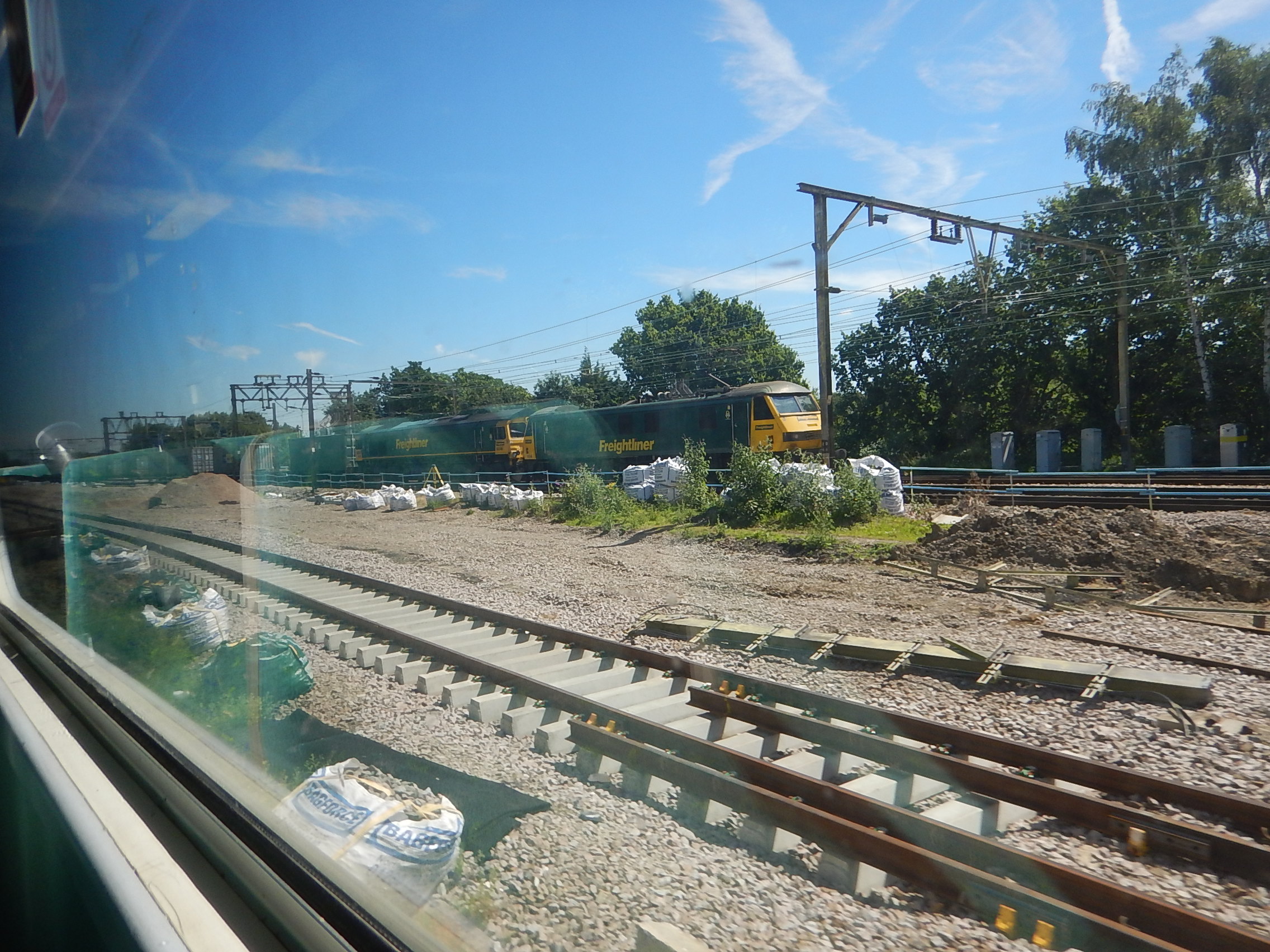
This double-headed train has a Class 90 electric locomotive and a Class 66 diesel locomotive at the front of a long freight train.
- The Class 90 locomotive has an TDM system for multiple working.
- The Class 66 locomotive has an AAR system for multiple working.
So does this mean that the two locomotives can’t work together, which if it does begs the question of what is happening.
- Had the Class 66 locomotive failed and Class 90 was acting as a Thunderbird?
- Was the Class 66 locomotive being moved from one depot to another for maintenance or repair?
- Was it an experiment to see if the two locomotives could work together?
I sometimes think that I didn’t see this unusual formation, but then the camera doesn’t lie.
But could we learn from what Wabtec are doing for Roy Hill in Australia?
The Class 93 Locomotive
Rail Operations Group have already ordered thirty Class 93 tri-mode locomotives from Stadler, which have following power ratings.
- Electric – 4000 kW
- Diesel – 900 kW
- Hybrid – 1300 kW
If this locomotive is capable of hauling the heaviest intermodal freight trains out of Felixstowe, Southampton and other ports and freight terminals, it could contribute to substantial reductions in the diesel fuel used and emissions.
As an example, I will use a freight train between Felixstowe North Terminal and Trafford Park Euro Terminal.
- It is a route of 280 miles.
- I will ignore that it goes along the North London Line through North London and along the Castlefield Corridor through Manchester Piccadilly station.
- There is fifteen miles without electrification at the Felixstowe end.
- There is under three miles without electrification at the Manchester end.
On this service , it could be as much as 94 % of diesel and emissions are saved, if the Class 93 locomotive can haul a heavy freight train out of Felixstowe. A few miles of strategically-placed electrification at the Ipswich end would help, if required.
It must also be born in mind, that the Class 93 locomotive is a 110 mph locomotive on electric power and could probably do the following.
- Run at 100 mph on the busy Great Eastern Main Line.
- Run at faster speeds on the West Coast Main Line.
- Fit in well with the 100 mph passenger trains, that run on both routes.
So not only does it save diesel and carbon emissions, but it will save time and make the freight train easier to timetable on a route with lots of 100 mph passenger trains.
The Class 93 locomotive looks like it could be a game-changer for long-distance intermodal freight, especially, if there were short sections of strategically-placed electrification, added to the electrified network.
Emissions could also be reduced further by using some for of sustainable fuel.
The picture shows a Class 66 locomotive, which is powered by Hydrotreated Vegetable Oil or HVO.
I can see that all diesel-powered trains and locomotives will be powered by sustainable fuels by the end of this decade.
A Wabtec Battery-Electric Locomotive
Wabtec is building a battery-electric locomotive for Roy Hill in Australia.
This article on Railway Age talks about Wabtec’s FLXdrive battery locomotives and describes some features of the locomotive for Roy Hill in Australia.
It mentions pantographs and overhead wires to charge the batteries.
- Wabtec’s prototype battery locomotive has a power output of 3.24 MW and a battery size of 2.4 MWh
- The Roy Hill battery locomotive has a power output of 3.24 MW and a battery size of 7 MWh
I could envisage Wabtec designing a UK-sized battery-electric locomotive with these characteristics.
- 2.5 MW power output, which is similar to a Class 66 locomotive.
- A battery size of perhaps 1.8 MWh based on Wabtec’s FLXdrive technology.
- A pantograph to charge the batteries and also power the locomotive where electrification exists.
- 75 mph operating speed.
- Ability to work in tandem with a Class 66 locomotive.
All technology is under Wabtec’s control.
This locomotive could have a range of at least fifty miles on battery power.
I think this locomotive could handle these routes.
- Peterborough and Doncaster via the Great Northern and Great Eastern Joint Line via Lincoln, with some form of charging at halfway.
- Felixstowe and Nuneaton, with some extra electrification at some point between Peterborough and Leicester.
- Oxford and Birmingham, with possibly some extra electrification in the middle.
One option for charging electrification, would surely be to electrify passing loops.
I think a battery-electric locomtive based on Wabtec’s FLXdrive technology could be a very useful locomotive.
Could Wabtec’s Battery-Electric Locomotive Pair-Up With A Class 66 Locomotive?
Roy Hill will use their locomotive to form a consist of three diesel locomotives and one battery locomotive to obtain double-digit savings of fuel and emissions, when hauling iron-ore trains that are 1.6 miles long on a route of 214 miles.
We don’t have massive iron-ore trains like this, but we do move huge quantities of segregates and stone around the country in trains generally hauled by Class 66 locomotives.
So could a Class 66 or another suitable locomotive be paired-up with a battery-electric locomotive to make savings of fuel and emissions?
I would suggest that if it works in Australia, the technology will probably work in the UK.
The biggest problem for Wabtec is that the heavy end of the market may well be a good one for hydrogen-powered locomotives. But Wabtec are going down that route too!
Conclusion
I am convinced that the two decarbonisation routes I have outlined here are viable for the UK.
But I also feel that locomotive manufacturers will produce hydrogen-powered locomotives.
Other companies like Alstom, Siemens and Talgo will also offer innovative solutions.
Getlink Launches A New Innovative Unaccompanied Rail Freight Cross-Channel Service
The title of this post, is the same as that of this press release from Getlink.
This is the first two paragraphs.
From September 18, 2021, a new cross-Channel freight service will be open to all transporters, using an unaccompanied mode through the Channel Tunnel. The service will benefit of Getlink’s unique customs expertise for the passage through the border
The crossing will be managed by Eurotunnel Le Shuttle Freight and will operate 24 hours a day and six days per week. Departures will be from the Group’s two terminals in Calais or Folkestone. The capacity will be 8,300 trailers per year. The Eurotunnel Border Pass will allows transporters to speed up the border crossing by digitising their administrative exchanges with the border authorities.
The service is designed to compliment the decarbonisation plans of both the French and UK Governments.
It looks like this could be a sensible idea.
But 8,300 trailers per year only equates to around 26-27 trailers per day. So do they just fill up one train per day?
One article on the Getlink service says that DFDS have launched a rival service for unaccompanied trailers between Calais and Sheerness.
Russian Convoys
This article on Railway Gazette is entitled Five-Train Platoons To Operate With Virtual Coupling.
This is the first paragraph.
Russian Railways is planning to use platooning technology to operate flights of up to five freight trains next year using radio data exchange between locomotives to create a virtual coupling. The aims to reduce headways from 12 to 6 to 8 min, increasing capacity on congested sections of the Trans-Siberian main line.
As a Control Engineer, I must believe that if the Russians get the programming right, then it should work.
Similar techniques will probably be used with digital signalling in the UK and Europe, where each train is controlled by the signalling. But each train will probably have a driver.
The problem in Russia could also be the large number of ungated level crossings, which according to some I’ve met are prone to a lot of accidents, as drivers regularly chance it after too much vodka.
 The Anonymous Widower