UK Rail Operations Group Gets The Keys To Their Tri-Mode Locomotive
The title of this post, is the same as that of this article on RailFreight.com.
This is the sub-heading.
A Green Milestone, in every sense. Delivered in an eye-catching livery reminiscent of British Racing Green, Rail Operations Group may well have called the delivery of their first Class 93 tri-mode locomotive, a leap forward in reshaping the future of operations. It is certainly an environmental first strike on behalf of the rail industry in the race to a net-zero carbon economy.
Note.
- There are thirty on order.
- It can haul both freight and passenger trains.
- It has a maximum speed of 110 mph.
- The development history in the Wikipedia entry is a good read.
It certainly looks an impressive locomotive and the livery will get it noticed. But then you don’t hide your best light under a bushel!
Operations
This section in the Wiki9pedia entry is entitled Proposed Use, where this is said.
ROG intends to pair the locomotive with a new generation of freight wagons that would run at a maximum speed of 100 mph (160 km/h), comparable to that of contemporary passenger trains. Trains formed of such wagons would be easier to insert into timetables around and between existing passenger trains, increasing flexibility and potentially creating capacity for more freight trains on the national network.
In addition to freight, the Class 93 has also been designed to accommodate the haulage of passenger stock, including a variable-height Dellner coupling and a three-step Westcode brake in addition to its conventional two-pipe air brake.
The Class 93 locomotives will surely be very impressive hauling freight heavy trains to and from Felixstowe, on the electrified Great Eastern Main Line sandwiched between the 100 mph express passenger trains.
- What weight and length of train, these locomotives can haul in and out of Felixstowe?
- What destinations will they be able to reach using the electrification from Ipswich?
- Will they be able to take shorter trains to the Midlands via Ely and Leicester?
It will be interesting to see where these locomotives operate.
Electrification Of The Hope Valley Line
This news story from the Department of Transport is entitled Yorkshire And The Humber To Benefit From £19.8 billion Transport Investment.
This is said about the Hope Valley Line.
The Hope Valley Line between Manchester and Sheffield will also be electrified and upgraded, with the aim of cutting journey times from 51 to 42 minutes and increasing the number of fast trains on the route from 2 to 3 per hour, doubling capacity.
The fast trains are currently TransPennine’s service between Liverpool Lime Street and Cleethorpes.
- Between Platform 13 at Manchester Piccadilly station and Sheffield station is 42.6 miles.
- At the Manchester end, there will be electrification between Manchester Piccadilly and Hazel Grove stations, which is 8.7 miles and takes typically 17 minutes.
- After the electrification of the Midland Main Line to Sheffield, there will be electrification between Dore & Totley and Sheffield stations, which is 4.2 miles and takes typically 8 minutes.
The gap in the electrification between Dore & Totley and Hazel Grove stations will be 29.7 miles.
But it will not be an easy route to electrify.
- At the Western end, there is the Disley Tunnel, which is 3535 metres long.
- In the middle, there is the Cowburn Tunnel which is 3385 metres long, that is also the deepest tunnel in England.
- At the Eastern end, there is the Totley Tunnel, which is 5700 metres long.
Yorkshire doesn’t have an Underground railway, but the combined length of these three tunnels is 7.84 miles, which means that over 26 % of the electrification needed between Manchester Piccadilly and Sheffield will have to be installed in tunnels.
Could The Route Be Run Using Battery-Electric Trains?
Consider.
- The gap in the electrification between Dore & Totley and Hazel Grove stations will be 29.7 miles.
- There is electrified sections at Dore & Totley and Hazel Grove stations, which will be able to charge the trains.
- Merseyrail’s Class 777 trains have demonstrated a battery range of 84 miles.
- A Stadler Akku train has demonstrated a battery range of 139 miles.
- Hitachi are developing a battery-electric version of TransPennine’s Class 802 train.
- If all trains can run on batteries or be self-powered, there would be no need to electrify the long and possibly difficult tunnels.
I believe that it would be possible to electrify all passenger services between Manchester and Sheffield using appropriate battery-electric trains.
Freight would be a problem and I suspect that hydrogen-hybrid and other self-powered locomotives could handle the route.
Could The Complete TransPennine Liverpool Lime Street and Cleethorpes Service Be Run By Battery-Electric Class 802 trains?
These are the various electrified and unelectrified sections.
- Liverpool Lime Street and Liverpool South Parkway – Electrified – 5.7 miles – 10 minutes
- Liverpool South Parkway and Trafford Park – Not Electrified – 25.2 miles – 30 minutes
- Trafford Park and Hazel Grove – Electrified – 12.6 miles – 28 minutes
- Hazel Grove and Dore & Totley – Not Electrified – 29.7 miles – 35 minutes
- Dore & Totley and Sheffield – Electrified – 4.2 miles – 6 minutes
- Sheffield and Doncaster – Not Electrified – 18.6 miles – 25 minutes
- Doncaster and Cleethorpes – Not Electrified – 52.1 miles – 78 minutes
Note.
- This is a total of 125.6 miles without electrification.
- The Manchester Piccadilly and Sheffield time is 56 minutes.
- The distance is 37.8 miles.
- That is an average speed on 40.5 mph.
- Most of the line between Manchester Piccadilly and Sheffield has an maximum speed of 70 mph, but there is a short length of track with a 50 mph speed and another longer one with 90 mph.
To achieve 40 minutes between Manchester Piccadilly and Sheffield would need an average speed of 60.7 mph. Given the improvements being carried out by Network Rail at the current time, I believe that forty minutes between Manchester Piccadilly and Sheffield should be possible.
I’ll look at a train going East.
- The train will leave Liverpool Lime Street with a reasonably full battery after charging using the current electrification in the station.
- The train will leave Liverpool South Parkway with a full battery after charging using the current electrification from Liverpool Lime Street.
- The train will arrive at Trafford Park with a battery perhaps two-thirds full, but it will be fully charged on the current electrification to Hazel Grove.
- The train will arrive at Dore & Totley with a battery perhaps two-thirds full, but it will be fully charged on the Midland Main Line electrification to Sheffield.
- The train will arrive at Doncaster with a battery perhaps two-thirds full and the train would wait until it had enough charge to reach Cleethorpes.
I’ll look at a train going West.
- The train will leave Cleethorpes with a full battery after charging using the new electrification in the station.
- The train will arrive at Doncaster with a battery perhaps two-thirds full and the train would wait until it had enough charge to reach Sheffield.
- The train will arrive at Sheffield with a battery perhaps two-thirds full, but it will be fully charged on the Midland Main Line electrification to Dore & Totley.
- The train will arrive at Hazel Grove with a battery perhaps two-thirds full, but it will be fully charged on the current electrification to Trafford Park.
- The train will arrive at Liverpool South Parkway with a battery perhaps two-thirds full, but the route is electrified to Liverpool Lime Street.
Note.
- If the battery range on a full battery was over 90 miles, the two most easterly sections could be run without any charging at Doncaster.
- If the battery range was over 125.6 miles, the journey could be done by starting with a full battery.
- If every time the train decelerated, regenerative braking would recover energy, which could be reused.
- The only new electrification needed will be a short length at Cleethorpes station, that would charge the trains.
I certainly believe that Liverpool Lime Street and Cleethorpes services could be run by battery-electric trains.
Could The Complete TransPennine Liverpool Lime Street and Cleethorpes Service Be Run By Battery-Electric Class 802 trains Without The Midland Main Line Electrification?
In this section, I’m assuming, that there is no electrification at Sheffield.
These would be the various electrified and unelectrified sections.
- Liverpool Lime Street and Liverpool South Parkway – Electrified – 5.7 miles – 10 minutes
- Liverpool South Parkway and Trafford Park – Not Electrified – 25.2 miles – 30 minutes
- Trafford Park and Hazel Grove – Electrified – 12.6 miles – 28 minutes
- Hazel Grove and Cleethorpes – Not Electrified – 104.6 miles – 143 minutes
Note.
- This is a total of 129.6 miles without electrification.
- The battery range of the train, should probably be around 120 miles to make sure the train could run between Hazel Grove and Cleethorpes.
- One diesel power-pack could be installed for emergency use.
I’ll look at a train going East.
- The train will leave Liverpool Lime Street with a reasonably full battery after charging using the current electrification in the station.
- The train will leave Liverpool South Parkway with a full battery after charging using the current electrification from Liverpool Lime Street.
- The train will arrive at Trafford Park with a battery perhaps 80 % full, but it will be fully charged on the current electrification to Hazel Grove.
- The train would then eek out what power it had left to reach Cleethorpes.
If necessary, the train could stop in the electrified Doncaster station to top up the batteries from the East Coast Main Line electrification for the run to Cleethorpes.
I’ll look at a train going West.
- The train will leave Cleethorpes with a full battery after charging using new electrification in the station.
- The train will arrive at Doncaster with a battery perhaps 57 % full and the train would wait if needed, until it had enough charge to reach Hazel Grove.
- The train will arrive at Hazel Grove with a battery perhaps one-thirds full, but it will be fully charged on the current electrification to Trafford Park.
- The train will arrive at Liverpool South Parkway with a battery perhaps one-thirds full, but the route is electrified to Liverpool Lime Street.
Note.
- If the battery range on a full battery was over 105 miles, the Eastern section could be run without any charging at Doncaster.
- If the battery range was over 129.6 miles, the journey could be done by starting with a full battery.
- If every time the train decelerated, regenerative braking would recover energy, which could be reused.
- The only new electrification needed will be a short length at Cleethorpes station, that would charge the trains.
However, it might be prudent to electrify the through platforms at Sheffield, so that they could be used for emergency charging if required.
Northern Train’s Service Between Sheffield And Manchester Piccadilly Via The Hope Valley Line
There is a one train per hour (tph) Northern service between Sheffield and Manchester Piccadilly.
- The Class 195 diesel train takes 78 minutes.
- The distance is 42 miles.
- The first mile or so at the Manchester end is electrified.
- Trains seem to take about sixteen minutes to turn round at Manchester Piccadilly.
- Trains seem to take about nine minutes to turn round at Sheffield.
- The service runs via Reddish North, Brinnington, Bredbury, Romiley, Marple, New Mills Central, Chinley, Edale, Hope, Bamford, Hathersage, Grindleford and Dore & Totley.
- The max speed is generally 60 mph to the West of New Mills Central and 70 mph to the East, with short lower speed sections.
There would appear to be two ways to run this route withy battery-electric trains.
- As Manchester Piccadilly station is fully-electrified and trains could be connected to the electrification for upwards of twenty minutes, trains will certainly be able to be fully-charged at Manchester. As the round trip is only 84 miles, could trains run the service without a charge at Sheffield.
- Alternatively, there could be a dedicated electrified platform at Sheffield. But the problem with this, is that currently this service uses a random platform at Sheffield.
It looks like, if the train has the required range, that charging at the Manchester end would be the better solution.
Liverpool And Norwich Via The Hope Valley Line
This service uses a similar route between Liverpool Lime Street and Sheffield, as the Liverpool and Hull service and then it meanders, through the East Midlands.
- Liverpool Lime Street and Liverpool South Parkway – Electrified – 5.7 miles – 11 minutes
- Liverpool South Parkway and Trafford Park – Not Electrified – 25.2 miles – 33 minutes
- Trafford Park and Hazel Grove – Electrified – 12.6 miles – 26 minutes
- Hazel Grove and Dore & Totley – Not Electrified – 29.7 miles – 28 minutes
- Dore & Totley and Sheffield – Electrified – 4.2 miles – 6 minutes
- Sheffield and Nottingham – Being Electrified – 40.6 miles – 52 minutes
- Nottingham and Grantham – Not Electrified – 22.7 miles – 30 minutes
- Grantham and Peterborough – Electrified – 29.1 miles – 29 minutes
- Peterborough And Ely – Not Electrified – 30 miles – 31 minutes
- Ely and Norwich – Not Electrified – 53.7 miles – 56 minutes
This is a total of 161.3 miles without electrification.
But as Sheffield and Nottingham and Grantham and Peterborough will be fully electrified, this route will be possible using a battery-electric train.
Electrifying Sheffield Station
I said earlier in this post, that electrifying Sheffield station would be an option for electrifying the Sheffield and Manchester Piccadilly service.
If this were to be done, it would have collateral benefits for other services that terminate at Sheffield, which could be charged whilst they turned around.
I wrote about Sheffield station as a battery-electric train hub in Could Sheffield Station Become A Battery-Electric Train Hub?
Conclusion
I believe that full electrification of the Hope Valley Line is not needed, if battery-electric trains are used.
I also believe that battery-electric trains and the current improvements being carried out on the Hope Valley Line will enable a forty minute time between Manchester Piccadilly and Sheffield.
Iarnród Éireann And Latvia’s DIGAS To Trial Europe’s First Retrofitted Hydrogen Freight Locomotive
The title of this post, is the same as that of this press release from Irish Rail.
This is the sub-heading.
Cleaner, cheaper and practical initiative towards decarbonisation goals
These are the first three sections.
Cleaner
Iarnród Éireann Irish Rail is providing a locomotive and will test a retrofitted hydrogen locomotive using a cleaner burning renewable fuel.
Cheaper
DIGAS will provide a cost-effective way how to introduce a hydrogen in the fleet of existing diesel locomotives by retrofitting diesel locomotives with a specialised internal combustion engine (ICE) hydrogen system.
Practical
The collaboration will demonstrate a practical path towards complete decarbonisation of the diesel locomotive fleet.
Note.
- The eighteen 071 Class locomotives were built in Canada by General Motors.
- Some date from as early as 1976.
- In the UK, there is a similar project to convert Class 66 locomotives to dual fuel, which I wrote about in Clean Air Power Adds Hydrogen To Class 66 Fuel Mix.
It does look that the technology is being developed to convert freight locomotives to hydrogen.
New Freight Interchange Connects To West Coast Main Line
The title of this post, is the same as that of this article on Rail Technology Magazine.
This is the sub-heading.
Rail passengers have been thanked after major work to connect a new rail to road freight interchange with the West Coast main line was completed.
These two paragraphs outline the project.
The work, which took nine days, saw new track, points and signalling systems installed to connect the existing railway to the new sidings at the under-construction freight facility at SEGRO logistics park in Northampton.
Once complete, the facility will provide 5 million square ft of warehouse space and employ up to 7,000 people.
This OpenRailwayMap shows the location of SEGRO logistics park in Northampton (SLPN).

Note.
- SEGRO logistics park in Northampton is in the middle of the map.
- The M1 motorway runs along the North-East side of the logistics park
- The complex junction of the M1 at the Eastern side of the logistics park is Junction 15.
- The orange line down the West side of SLPN is the Northampton Loop Line.
- A loop from the Northampton Loop Line is used to create a Rail Freight Interchange on the West side of the logistics park.
- The red line running across the South-West corner of the map is the West Coast Main Line.
The SEGRO logistics park has a comprehensive web site, which shows seven plots.
These are my thoughts.
Freight Trains
Initial plans talk of four freight trains per day, with more to come in the future.
This picture from Network Rail shows the Northern end of the Rail Freight Interchange.

Note.
- There is a freight train, which looks like it’s going North on the Northampton Loop Line.
- There are tunnels at the Northern end of the site.
- This page on the Network Rail web site has another picture and a video.
- It looks like there will be a lot of concrete.
It will be interesting to see the final layout in a year or so.
There Is No Mention Of A Rail Station
In everything I’ve read about the SLPN, there is no mention of a railway station, so this must mean that all the seven thousand or more workers on the site, will get there by road.
The only thing I can see about transport for workers to and from the site is this sentence.
A sustainable bus route will connect SLPN to the town centre and local neighbourhoods to the south.
Well-designed and implemented, it would properly suffice.
Nothing though is said about cycling or walking!
There Is No Mention Of Hydrogen
It is likely, that in the life of SLPN, there will be a significant move to hydrogen-powered heavy trucks.
Has SLPN been designed with hydrogen in mind.
Solar Thermal Heating
The buildings are noted as having solar thermal heating. That is a new one on me, but it seems possible.
I took these pictures as I passed the site on my return from Birmingham on September 21st 2023


One concrete tunnel is clearly visible.
Cunning Electrification On The North London Line
I took a trip on the North London Line from Highbury & Islington station to Richmond station.
I took various pictures on the way.
25 KVAC Overhead Electrification
East of Acton Central station, typical 25 KVAC overhead electrification is used.
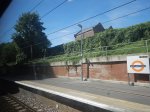
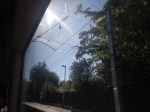

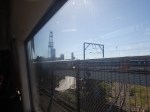
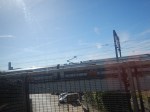
It may need to be beefed up, if more large electric locomotives haul freight trains along the North London Line.
Gunnersbury Station
Gunnersbury station is a two-platform station with London Underground four-rail electrification.

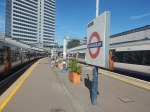

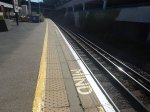
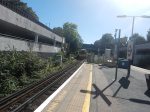
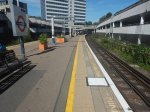
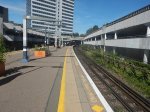
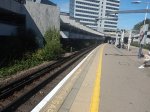
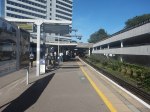
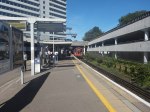

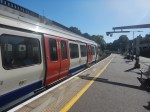
It can be used by London Underground S-Stock and London Overground Class 378 trains.
It must help that both trains were built by Bombardier in Derby.
Kew Gardens Station
Kew Gardens station is a two-platform station with London Underground four-rail electrification.
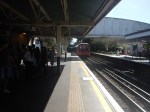
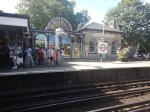
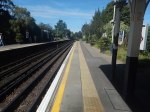
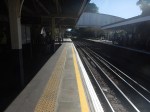
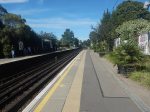

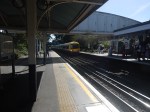

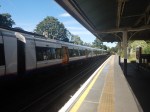
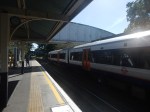
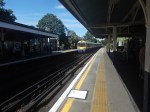
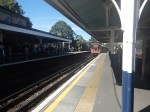
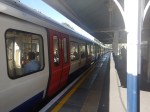
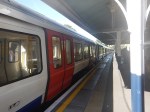
As with Gunnersbury station, both types of train can use both platforms.
Richmond Station
Richmond station is both a through and terminal station.

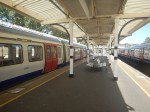
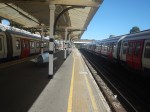

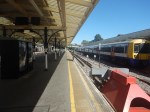
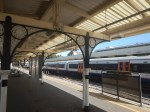
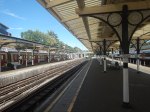
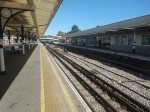
Note.
- Platforms 1 and 2 are through platforms for South Western main line services.
- Platforms 3 to 7 are for terminating London Underground and Overground services.
- Platforms 1 to 3 have traditional third-rail electrification.
- Platforms 4 to 7 have London Underground four-rail electrification.
- If needed, it may be possible to add another platform between platforms 3 and 4.
It looks like a lot of flexibility has been built in.
I have a few general thoughts.
Getting The Voltages Right
London Underground’s system used to use 630 VDC for its four-rail system, whereas Network Rail’s system uses 750 VDC.
I wouldn’t be surprised to find out that both trains use quality power electronics that can work on a range of voltages. This would enable London Underground to up their voltage to the same 750 VDC as used by Network Rail.
In Chiltern Sets Out New Fleet Ambitions, I talked about how Chiltern Railways could use London Underground’s four-rail electrification between Harrow-on-the-Hill and Amersham stations to charge the batteries.
As an electrical engineer, I don’t think this is outrageous.
Nestlé And Tesco Launch Double-Stacked Rail Freight Trial
The title of this post, is the same as that of this article on Logistics Manager.
This is the sub-heading.
Nestlé UK and Ireland has successfully completed its first delivery to supermarket chain Tesco using a ‘first-of-its-kind’ rail container, as part of a new rail freight trial.
These are the first three paragraphs.
The container features a roof-raising mechanism allowing products to be “double-stacked from floor to ceiling operating at full capacity before the roof is lowered for transit”. The appeal of this is its capability to store potentially twice as much freight in one journey, reducing costs and emissions.
This is part of Nestlé’s plans to increase freight capacity on trains as a means of reducing the negative impact that the company’s logistics operations have on the environment. It is hoped that the trial will allow the process to be refined over time, providing further opportunities for Nestlé to expand the volume of goods that can be transported via rail in a single shipment.
This focus is integral to Nestlé’s strategy to reduce its reliance on the consumption of diesel in its road transport network. According to a 2021 report from the Rail Delivery Group, rail freight produces, on average, 76% fewer emissions than road transport. This, it claims, equates to a reduction of around 1.4 million tonnes of CO₂ nationally each year.
Note.
- This article would appear to be a follow-on to Nestlé Unveils New Double-Stacking Rail Logistics Plan To Reduce Carbon Footprint, which I wrote in June 2022.
- In From 2025, Nestlé Waters France Will Use The First Hydrogen-Powered Freight Train Through An Innovative Solution Developed by Alstom and ENGIE, I talk about how Nestlé are experimenting with hydrogen-powered locomotives.
Nestlé certainly seem to be working on reducing the carbon dioxide produced by their logistic operations.
Electrification Between Newbury And East Somerset Junction
In the August 2023 Edition of Modern Railways, there is an article, which is entitled GWR Seeks Opportunities To Grow.
This is the sub-heading.
Managing Director Mark Hopwood tells Philip Sherratt there is plenty of potential to increase rail’s economic contribution.
This is two paragraphs.
The desire to provide electrification to support aggregates traffic from the Mendip quarries could also benefit GWR , says Mr. Hopwood. ‘Having an electric loco would massively help with pathing heavy freight trains through the Thames Valley. If you could electrify from Newbury to East Somerset Junction, a big chunk of the Berks and Hants route would be wired.
Then you can ask how much further you could get on battery power on an IET without running out of juice.’
I have some thoughts.
Where Is East Somerset Junction?
This OpenRailwayMap shows East Somerset junction.
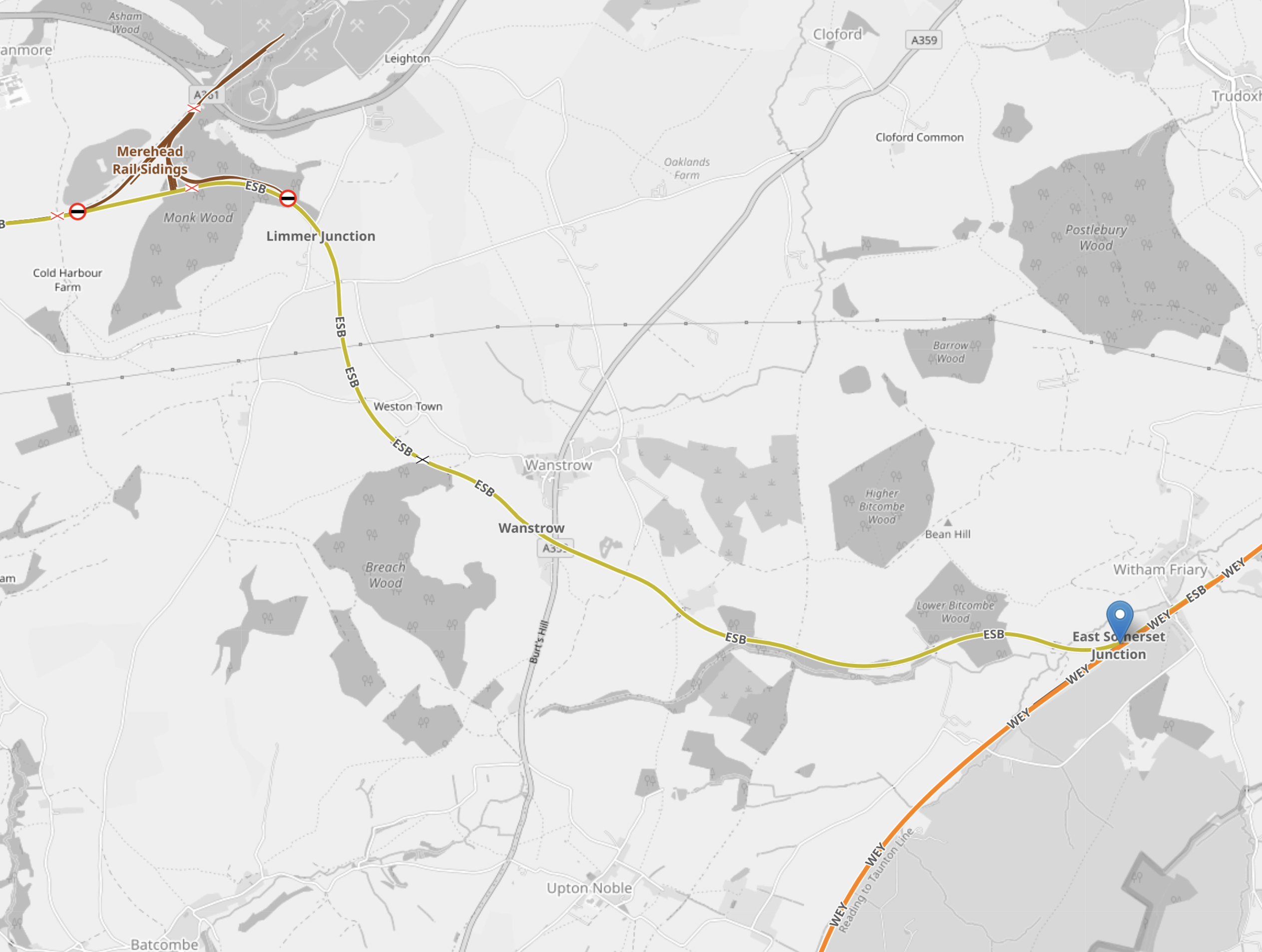
Note.
- The East Somerset junction is marked with the blue arrow.
- East Somerset junction is 5.2 miles North of Bruton station and 5.4 miles South of Frome station on the Reading and Taunton Line.
As the map shows there is a branch to Merehead Rail Sidings, which is shown in yellow.
This Google Map shows Merehead Rail Sidings.
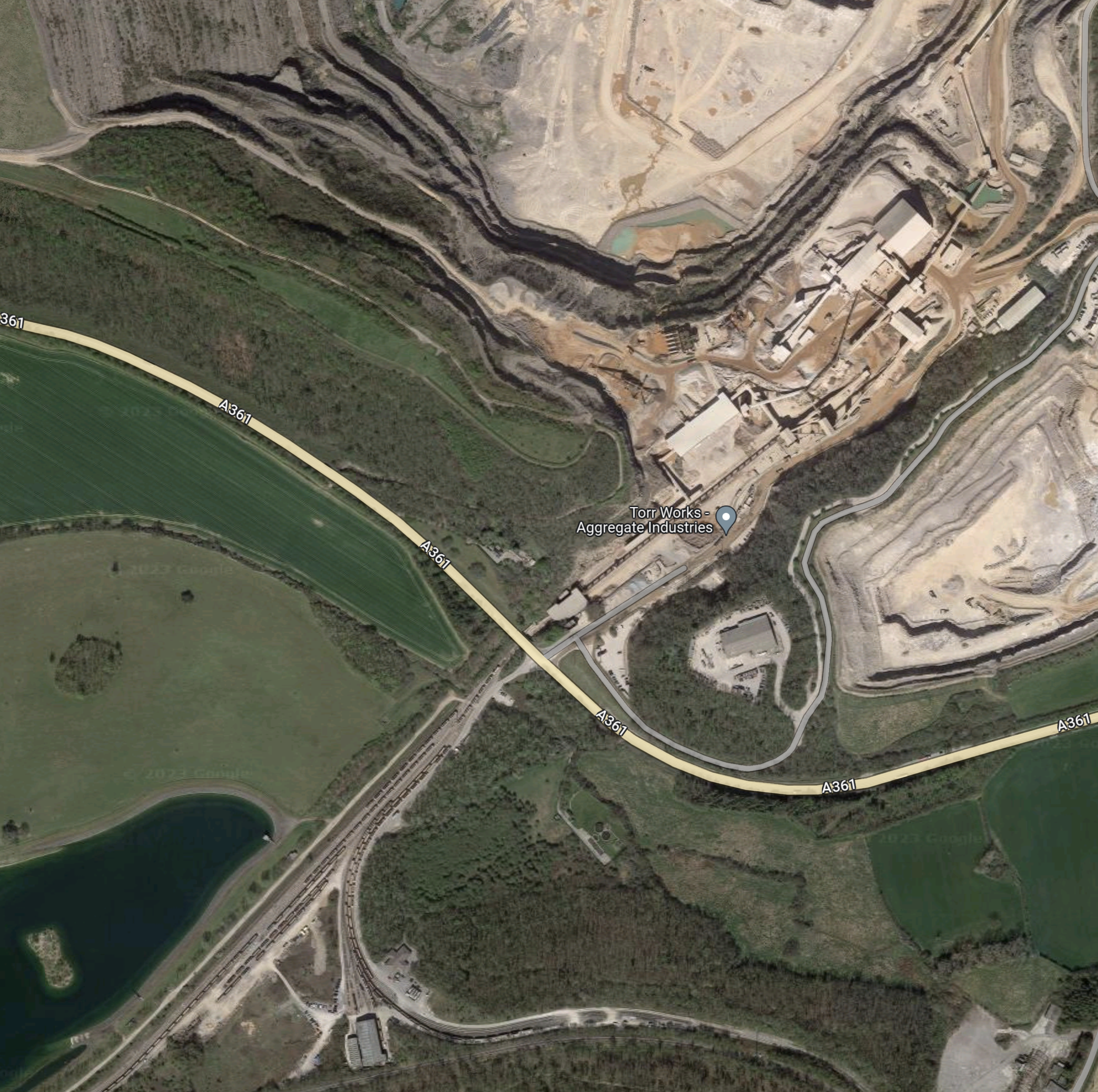
Note.
- It looks like there is a massive quarry to the North of the A361 road, which curves across the map.
- It is labelled Torr Works – Aggregate Industries.
- Torr Works has a Wikipedia entry.
- The rail sidings are South of the A361.
- Zooming in on the map, shows that the railway between East Somerset junction and Merehead is single-track and only a few miles long.
Distances from East Somerset junction are as follows.
- Dorchester junction – 41.2 miles
- Newbury – 53.4 miles
- Taunton – 37.2 miles
- Weymouth – 47.8 miles
Note that it is electrified with 750 VDC third-rail between Weymouth and Dorchester junction.
Range of Battery-Electric Trains
Consider.
- A Bombardier engineer told me eight years ago, that the battery-electric Class 379 train had a range of sixty miles.
- Stadler’s FLIRT Akku has a Guinness world record of 139 miles on one battery charge. See this page on the Stadler web site.
- Even Stadler’s Class 777 trains for Merseyrail have a range of 84 miles on battery power. See New Merseyrail Train Runs 135 km On Battery.
It does appear that five-car battery-electric trains will have ranges in excess of a hundred miles.
I believe that because Hitachi’s battery makers have a good record, they will probably be very ambitious and will want that Guinness record, that Hitachi’s Class 802 trains will have a battery range not far short of the 139 miles of the Stadler FLIRT Akku.
I will be very surprised if Hitachi’s battery-electric version of a Class 802 train, doesn’t have range of at least 125 miles.
But say if they could do say 140 miles, the battery-electric Class 802 train could cover every long-distance route in the UK, which would attract orders for trains to run on the following routes.
- Cardiff and Swansea
- Crewe and Holyhead
- Edinburgh and Aberdeen
- Edinburgh and Inverness
- Crewe and Holyhead
- London Waterloo and Exeter St. Davids
A substantial reward to the battery makers, would probably not be out of order.
Aggregate Trains From The Mendips
Consider.
- Mining and quarrying companies are under pressure from governments, shareholders and environmentalists to reduce their carbon footprints.
- Many are replacing diesel-powered mining excavators and trucks, with electric or hydrogen versions.
- In addition, those companies delivering building products to the construction industry are under pressure to provide low-carbon products.
- Using rail with electric traction to deliver products to market would cut carbon emissions and might even help sales.
These Mendip quarries appear to be connected to the Reading and Taunton Line.
- Torr Works – Connects 5.4 miles to the South of Frome.
- Whatley Quarry – Connects close to Frome.
There may be others.
But these rail-connected quarries, connect at or North of East Somerset junction, to where Mark Hopwood is proposing electrification.
Zero-carbon rail traction could even be possible, by electrifying the short single-track branch lines. or by using hydrogen-electric hybrid locomotives.
GWR’s London And South-West Services
These services use the Reading and Taunton Line to join the Bristol and Exeter Line at Taunton, before going on to Exeter, Plymouth and other destinations in the South-West of England.
These are distances from East Somerset Junction.
- Exeter – 67 miles
- Paignton 95.2 miles
- Penzance – 198.5 miles
- Plymouth – 119.0 miles
- Taunton – 37.2 miles
Note.
- Exeter, Paignton, Penzance and Plymouth stations would need short lengths of electrification to charge terminating trains or top-up passing trains.
- In Thoughts About Electrification Through Devon And Cornwall, I showed that the average stop time at Plymouth station was eight minutes, which could be enough for the rail equivalent of a Formula One splash and dash.
- A 125 mile battery range, not only enables London and Penzance, but also Cardiff and Swansea, and Edinburgh and Aberdeen, when the extra electrification is completed.
Could my estimate of a 125 mile battery range, be Hitachi’s objective for their battery-electric trains?
The Ultimate Battery-Electric Class 802 Train
Hitachi have been totally silent on how the fitting of batteries to Class 802 trains is going.
But Mark Hopwood is more forthcoming in the GWR Seeks Opportunities To Grow article. where this is said.
Meanwhile, GWR had announced plans with Eversholt Rail to trial the replacement of a diesel generator unit with batteries on a Class 802 IET. However, Mr. Hopwood says this would not be useful for GWR and so the trial is not proceeding; instead, a TransPennine Express Class 802 will be the subject of a battery trial.
It sounds to me that another solution is being developed to get trains to run on electric power between London and the South-West.
- I think we can rule out full electrification on the grounds of cost, disruption, time and the Nimbys and objectors will have a field day.
- Newbury and Penzance is a distance of 251.9 miles, which would surely need a lot of batteries.
Mark Hopwood’s idea to electrify the 53.4 miles between Newbury And East Somerset junction, is starting to look like a good compromise.
GWR’s Bristol/Gloucester And Weymouth Services
These stopping trains are run by diesel trains and take the following route between Bristol Temple Meads and Weymouth stations.
- Keynsham
- Oldfield Park
- Bath Spa
- Freshford
- Avoncliff
- Bradford-on-Avon
- Trowbridge
- Westbury
- Frome
- East Somerset junction
- Bruton
- Castle Cary
- Yeovil Pen Mill
- Thornford
- Yetminster
- Chetnole
- Maiden Newton
- Dorchester West
- Dorchester junction
- Upwey
Note.
- I would assume that there is enough electrification at Bristol Temple Meads and towards Gloucester to charge the trains.
- Trains would leave Bristol Temple Meads with a full battery.
- The eighteen stops mean that an electric train with regenerative braking will be more efficient.
- Bristol Temple Meads and Westbury is not electrified.
- Westbury and East Somerset junction will be electrified with 25 KVAC overhead electrification under Mark Hopwood’s proposal.
- Trains take sixteen minutes between Westbury and East Somerset junction.
- East Somerset junction and Dorchester junction is not electrified.
- Dorchester junction and Weymouth is electrified with 750 VDC third-rail electrification.
- Trains take ten minutes between Dorchester junction and Weymouth.
Distances of the various legs are as follows.
- Bristol Temple Meads and Westbury – 28.3 miles – Not Electrified
- Westbury and East Somerset junction – 11.4 miles – Electrified
- East Somerset junction and Dorchester junction – 41.4 miles – Not Electrified
- Dorchester junction and Weymouth – 6.6 miles – Electrified
The two sections without electrification, should be well within range of a dual-voltage battery-electric train, that has been designed for the route.
GWR’s Cardiff Central And Portsmouth Harbour Service
These stopping trains are run by diesel trains and take the following route between Bristol Temple Meads and Portsmouth Harbour stations.
- Keynsham
- Oldfield Park
- Bath Spa
- Freshford
- Avoncliff
- Bradford-on-Avon
- Trowbridge
- Westbury
- Warminster
- Salisbury
- Romsey
- Redbridge
- Southampton Central
- Fareham
- Cosham
- Fratton
- Portsmouth & Southsea
Note.
- I would assume that there is enough electrification at Bristol Temple Meads and towards Cardiff Central to charge the trains.
- Trains would leave Bristol Temple Meads with a full battery.
- The seventeen stops mean that an electric train with regenerative braking will be more efficient.
- Bristol Temple Meads and Westbury is not electrified.
- Westbury station will be electrified with 25 KVAC overhead electrification under Mark Hopwood’s proposal.
- Trains would leave Westbury with a full battery.
- Westbury and Redbridge is not electrified.
- Redbridge and Portsmouth Harbour is electrified with 750 VDC third-rail electrification.
Distances of the various legs are as follows.
- Bristol Temple Meads and Westbury – 28.3 miles – Not Electrified
- Westbury and Redbridge – 46.4 miles – Not Electrified
- Redbridge and Portsmouth Harbour – 28.5 miles – Electrified
The two sections without electrification, should be well within range of a dual-voltage battery-electric train, that has been designed for the route.
GWR’s Bristol Temple Meads And Salisbury Services
These stopping trains are run by diesel trains and take the following route between Bristol Temple Meads And Salisbury stations.
- Keynsham
- Oldfield Park
- Bath Spa
- Freshford
- Avoncliff
- Bradford-on-Avon
- Trowbridge
- Dilton Marsh
- Warminster
Note.
- I would assume that there is enough electrification at Bristol Temple Meads to charge the trains.
- Trains would leave Bristol Temple Meads with a full battery.
- An electric train with regenerative braking will be more efficient.
- Bristol Temple Meads and Westbury is not electrified.
- Westbury station will be electrified with 25 KVAC overhead electrification under Mark Hopwood’s proposal.
- Trains would leave Westbury with a full battery.
- Westbury and Salisbury is not electrified.
Distances of the various legs are as follows.
- Bristol Temple Meads and Westbury – 28.3 miles – Not Electrified
- Westbury and Salisbury – 24.4 miles – Not Electrified
The two sections without electrification, should be well within range of a battery-electric train, that has been designed for the route.
GWR’s Swindon And Westbury Services
These stopping trains are run by diesel trains and take the following route between Swindon and Westbury stations.
- Chippenham
- Melksham
- Trowbridge
Note.
- This is the Transwilts service.
- I would assume that there is enough electrification at Swindon to charge the trains.
- Trains would leave Swindon with a full battery.
- An electric train with regenerative braking will be more efficient.
- Chippenham and Westbury is not electrified.
- Westbury station will be electrified with 25 KVAC overhead electrification under Mark Hopwood’s proposal.
- Trains would leave Westbury with a full battery.
Distances of the various legs are as follows.
- Swindon and Chippenham – 16.9 miles – Electrified
- Chippenham and Westbury – 15.8 miles – Not Electrified
The section without electrification, should be well within range of a battery-electric train, that has been designed for the route.
What Can Be Done If The Electrification Is Not Long Enough?
Some of these routes battery-electric routes may need more electrification to work efficiently.
Despite some routes having both 25 KVAC overhead and 750 VDC third-rail electrification, any extension of the electrification would be overhead, as new third-rail electrification is effectively banned.
Conclusion
It looks like Mark Hopgood proposal is an excellent idea to enable the decarbonisation of GWR services in Wiltshire and Somerset.
- Express services would be run by battery-electric Class 802 trains.
- Local services would be run by battery-electric trains with perhaps three cars.
Some of the local trains would need to be dual-voltage to use both forms of electrification.
Freight Trains Through Lincoln Station
I must have spent nearly ninety minutes in total at Lincoln station yesterday and in that time, at least four long freight trains went through.
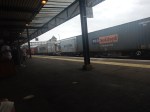
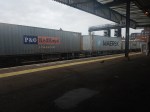
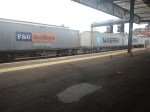
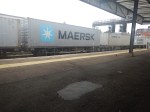
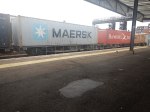
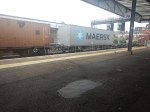
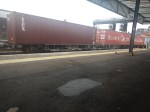
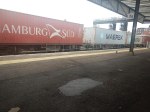
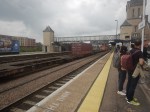
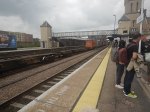
The reason is that Lincoln station lies on the Great Northern and Great Eastern Joint Line, which is a major freight diversion between Doncaster and Peterborough.
- It appears to me, that more freight trains are now using this route since the opening of the Werrington Dive Under.
- All were hauled by a noisy and polluting diesel Class 66 locomotive.
- Some were hauling as many as forty containers.
Articles like this one on Lincolnshire Live, which is entitled Who Had The Crazy idea to Let Trains Run Right Through Lincoln City Centre?, which contains this paragraph.
Then, you’re left with a decision over whether you take your own life in your hands by scuttling over the crossing as fast as you can before being trapped by the barriers, climbing the stairs of one of the two footbridges, or simply waiting at the barrier for the trains to pass (and God help you if it’s one of those freight trains with a seemingly endless amount of carriages).
New footbridges have been installed over the railway, as I wrote about in The Footbridges Over The Railway At Lincoln. But is that enough?
Diesel locomotives are not the most friendly of neighbours and the sooner we start to replace them with quieter locomotives the better.
Lincoln is not the only place, that is plagued by Class 66 locomotives.
- Near me, the North London and Gospel Oak to Barking Lines are regularly used by freight trains hauled by diesel locomotives, despite being electrified.
- Diesel locomotives regularly use the Castlefield Corridor through Manchester.
There must be other places, which suffer from these beasts.
Battery Wagons To Lower Mining Railway Emissions
The title of this post, is the same as that of this article on Railway Gazette.
These two paragraphs introduce the concept of the wagons.
Intramotev is to supply three ReVolt battery wagons to enable regenerative braking on a industrial railway.
The battery and automation technology company said this would be the first deployment of self-propelled battery-electric wagons in a traditional freight train, with regenerative braking and battery technology used to reduce locomotive diesel consumption and thus costs and emissions.
It may seem an unusual concept, but it’s one of those ideas, where if the maths and the costs stack up, it will work.
Intramotev’s web site gives more details on their Product & Technology page, where this is said.
Combining the low energy usage of steel wheels on steel rails with the efficiency of electric drivetrains to create the most energy-efficiency overland transport.
This article on electrek is entitled A Company Is Developing Self-Propelled, Battery-Electric Railcars You Can Control With Your Phone has two paragraphs, which describe their two current products.
In a few short years, the company has been able to develop unique freight solutions using software and battery-electric propulsion technology. This includes the TugVolt battery electric railcar (seen above and below), which can decouple from the consist (the group of railcars as a whole) and operate independently for first and last mile legs.
The company has also developed a ReVolt railcar that can be positioned to stay within the train’s consist and capture energy using regenerative braking to reduce diesel consumption from the line’s locomotive.
As a Control Engineer, I feel strongly, that this technology would work very well in the UK.
East-West Rail: Bedford’s Mayoral Candidates Split On Rail Project
The title of this post, is the same as that of this article on the BBC.
This is the first sentence.
Part of the route of the controversial East-West Rail project will not be decided before we know the winner of Bedford’s mayoral elections.
Unfortunately, the four candidates for Mayor all seem to have different ideas for East-West Railway through the town.
I have a few thoughts and observations.
Thameslink
Thameslink has the following connections to the East West Railway.
- Four tph at Bedford.
- Three tph at Cambridge.
Note.
- tph is trains per hour.
- All Bedford trains terminate at Bedford.
- The half-hourly Luton Airport Express between London St. Pancras and Corby stops at Luton Airport Parkway, Luton, Bedford, Wellingborough and Kettering.
- Cambridge trains may extend to Cambridge North station.
- Cambridge has additional through services between London King’s Cross and Ely and/or King’s Lynn.
Both Bedford and Cambridge will be busy stations.
Extra Tracks At Bedford
Bedford station has four tracks; two which are generally used by Thameslink services and two main lines used by through trains.
- The fast lines must accommodate the following trains.
- East Midlands Railway – 6 tph in both directions. Two tph stop in Bedford station.
- Freight Trains – 2 tph in both directions.
- East West Railway – 2 tph in both directions. All trains will stop in Bedford station.
It strikes me, that the station may need at least one and possibly two extra tracks.
If there are extra tracks, there will need to be some demolition of houses.
Freight Trains
In Roaming Around East Anglia – Newmarket Station, I wrote this about the plans of the East West Rail Consortium in the area.
In this document on the East-West Rail Consortium web site, this is said.
Note that doubling of Warren Hill Tunnel at Newmarket and
redoubling between Coldham Lane Junction and Chippenham Junction is included
in the infrastructure requirements. It is assumed that most freight would operate
via Newmarket, with a new north chord at Coldham Lane Junction, rather than
pursuing further doubling of the route via Soham.
So would it be possible to create a double-track railway through Newmarket station?
In the related post, I came to this conclusion.
Newmarket can benefit from East West Rail, but the two parties must agree objectives that don’t cause problems for the other.
But I do think, that Newmarket will not welcome the building of a double-track railway through the town.
I do wonder, if the East West Rail Consortium plan to run freight trains between Felixstowe and South Wales and the West of England through Bedford and Oxford.
Four freight tph, through Bedford would certainly need extra tracks and the demolition of houses in the centre of Bedford.
Electrification
Two of the candidates for Bedford’s mayor, think that the line needs to be electrified.
As the route is full or partially-electrified at Didcot, Bletchley, Bedford and Cambridge, I believe that battery-electric trains could handle the route.
But then there are no plans to purchase any passenger trains of this type.
Freight trains would still need to be diesel hauled, unless more progress is made fairly quickly in the development of hydrogen-powered freight locomotives.
The Cambridge Effect
Cambridge is one of the most important cities in the world, because of its strength in innovation in high technology industries.
But Cambridge is bursting at the seams and needs more space for laboratories, advanced manufacturing and housing.
A fully-developed double-track and electrified East West Railway would open up Bletchley, Milton Keynes, Bedford, Newmarket, Bury St. Edmunds and Ipswich to act as satellites to help Cambridge build a shared and successful future.
The Felixstowe Effect
If Cambridge will stimulate the growth of passenger traffic, then Felixstowe will promote the growth of East-West freight traffic.
Conclusion
It may not be initially built that way, but probably by 2040, the East West Railway will be a fully-electrified double-track railway between Didcot and Felixstowe.
Extra tracks will also be needed through Bedford. This will mean demolition of houses.

