Gatwick Airport – 23rd November 2023
I went to Gatwick Airport to see the new railway station.



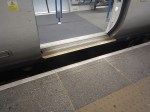
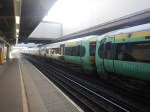


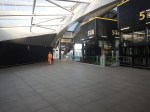


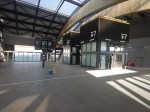
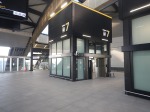








Note.
- As at Reading and Leeds stations, space has been created by building a wide concourse over the tracks.
- The experience certainly seemed better.
- Most platforms have up and down escalators and lifts.
- There were still a few things that needed to be finished.
But for me, as a man with a Freedom Pass and a Senior Railcard, the ticketing to Gatwick is still a pain.
- If I go to Heathrow or London City, I use my Freedom Pass to get to the Airport.
- If I go to Eurostar, I use my Freedom Pass to get to St. Pancras station.
- If I go to Stansted, I use my Freedom Pass to get to Liverpool Street station and buy a ticket for Stanstead Express.
If I go to Gatwick, Luton or Southend airports, I use my Freedom Pass to get to a station with a Booking Office and then buy an extension ticket from the Zone 6 boundary to the airport.
I believe there are three solutions.
Make It Possible To Link A Bank Card To A Freedom Pass
It should be possible to do something like the following.
- Touch in at Moorgate.
- Take the Elizabeth Line to Farringdon.
- Take Thames to Gatwick Airport.
- Check out at Gatwick Airport.
The credit card associated with the Freedom Pass would then be charged the fee for between the Zone 6 boundary and Gatwick Airport.
The credit card would be entered through the Freedom Pass web site.
On a related matter I believe that the Freedom Pass web site could be a nice little earner for Transport for London, by doing the following.
- Selling rail tickets on a best-priced basis. Savings are to be had by selling tickets for Freedom Pass holders from the Zone 6 boundary.
- Managing Railcards.
- Selling Transport for London merchandise.
Nobody would pay more than they do now, but Transport for London would pick up some commission from selling tickets.
Develop A Flexible App That Works With A Freedom Pass And Phone Payments
Similar to the first option, but the app charges accordingly.
Put Gatwick Airport In Zone 6
The management of Gatwick Airport might like to attract more travellers, so they would pay from the Zone 6 boundary for Freedom Farm users.
Conclusion
I would find the first two options acceptable, providing the charges were no more than now!
Could A Mega-Station Be Built For The Channel Tunnel?
This article on Railway Gazette International, is entitled Start-Up Announces Amsterdam To London And Paris High Speed Train Ambitions.
It talks about how Dutch start-up; Heuro wants to run fifteen trains per day (tpg) between London and Amsterdam.
The article then has this paragraph, which details other operators, who are wanting to run services between London and the near Continent.
Heuro’s announcement comes after Spanish start-up Evolyn announced plans in October for a Paris – London service, while on November 11 British newspaper The Daily Telegraph reported that Sir Richard Branson and Phil Whittingham, former head of Virgin Trains and Avanti West Coast, were also drawing up plans to compete with Eurostar and had held discussions with infrastructure managers.
This leads me to the conclusion, that there will be a need for more capacity for trains and/or passengers at some time in the future.
- There are six International platforms at St. Panvcras International station, which can each probably handle four trains per hour (tph), so I suspect the station could handle 24 International tph.
- As a modern high speed train can carry over 500 passengers, that is 12000 passengers per hour.
- Visit St. Pancras station in the morning and it is often crammed with travellers coming from and going to Europe.
I suspect that the number of trains may not be a problem, but the number of passengers will.
We could always join Shengen, but then that would be an open door to all the would-be migrants to the UK.
This Google Map shows Stratford International station.
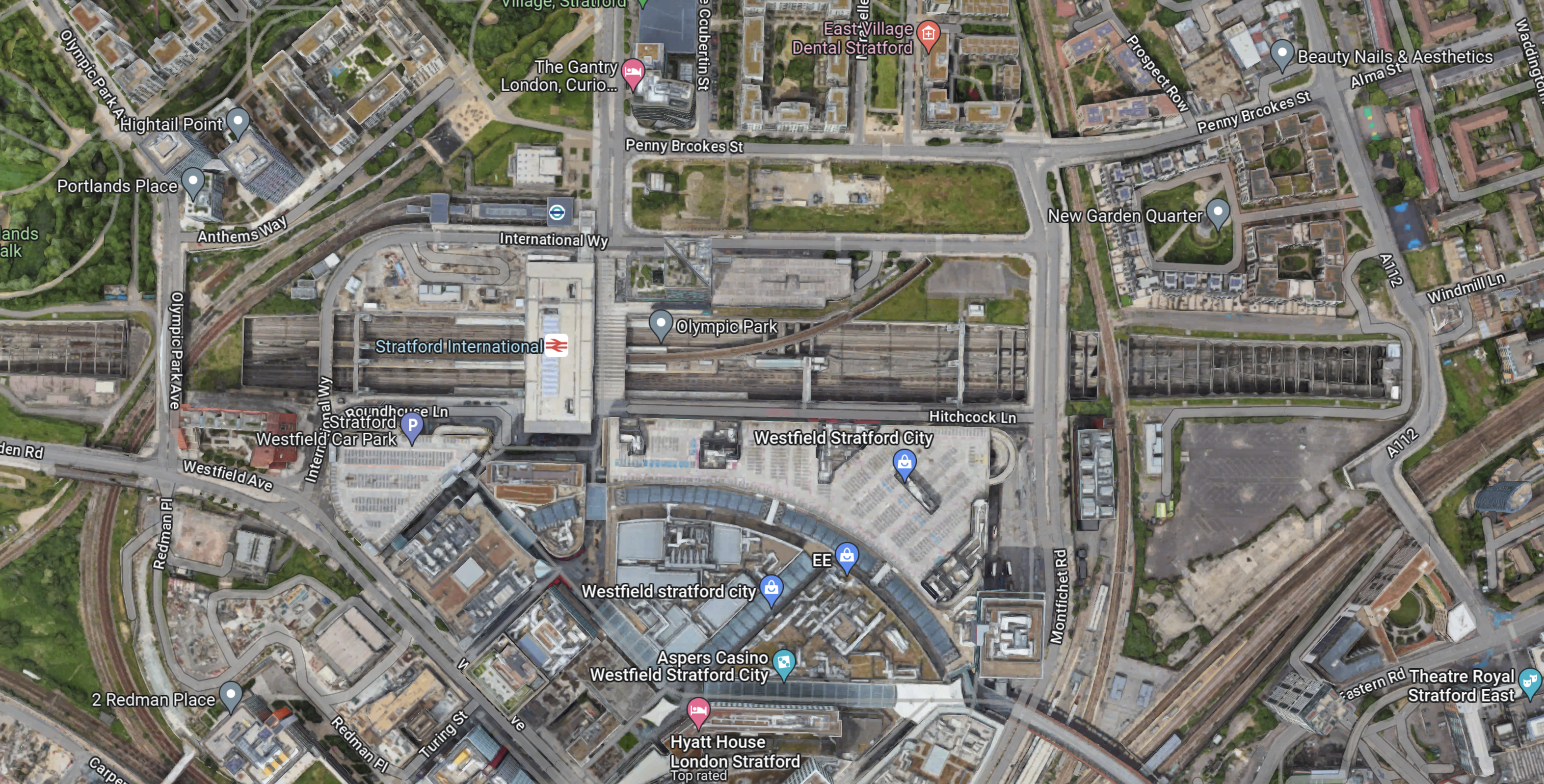
Stratford International station is in a soulless concrete cavern, that lies across the middle of the map.
In Platforms 1 And 4 At Stratford International Station, there are a lot of pictures of the station.
I think it would be extremely difficult to add extra platforms and passenger facilities to the station.
This Google Map shows Ebbsfleet International station.
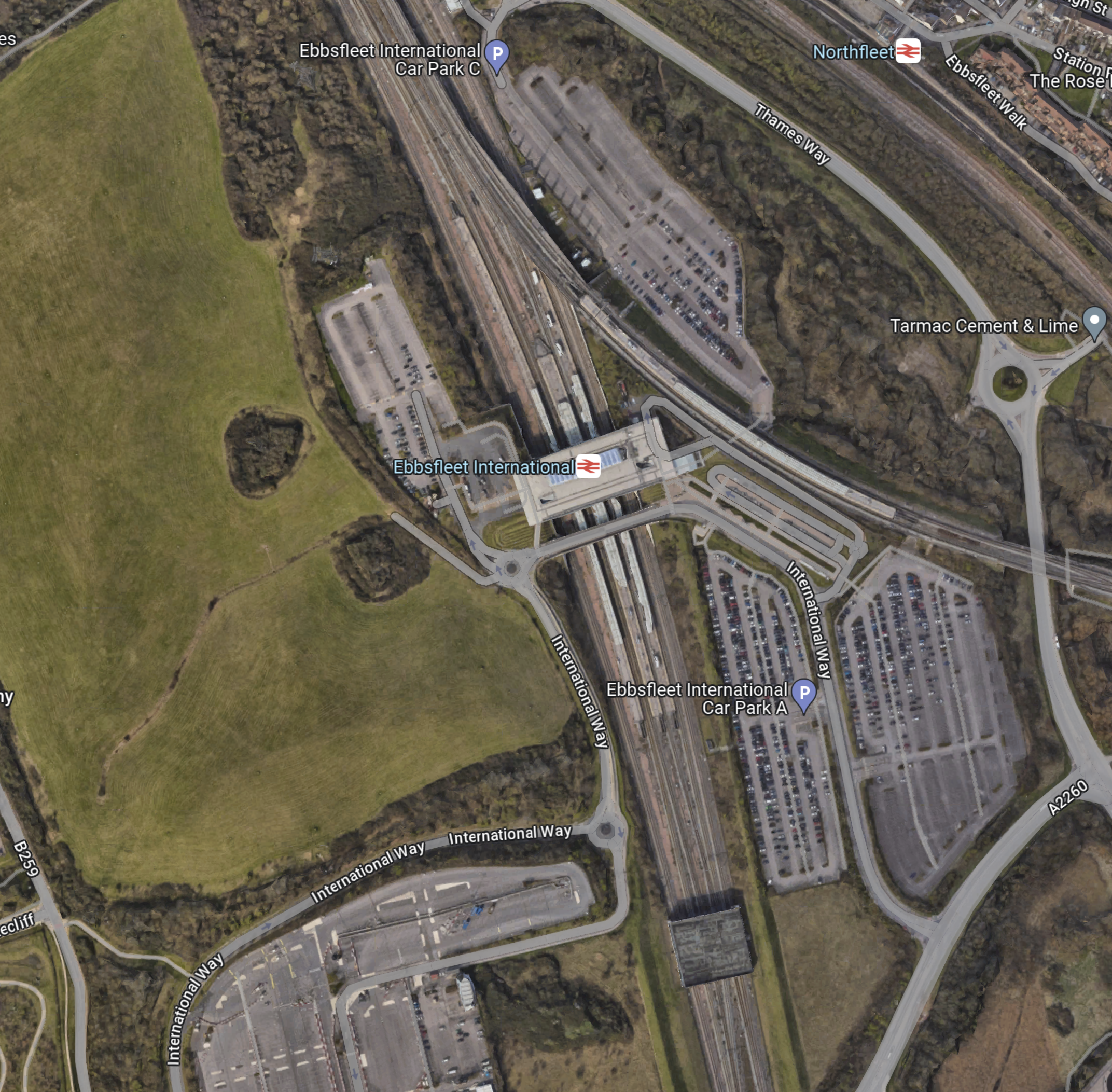
Note.
- Ebbsfleet International station, with its two International and four domestic platforms is in the middle of the map.
- The station is surrounded by car parks with a total of 5,000 spaces.
- Northfleet station is in the North-East corner of the map.
There is a lot of land, without any buildings on it.
These are my thoughts.
Enough Extra Bay Platforms To Handle The Additional Trains
There would appear to be space for perhaps two bay platforms to terminate trains.
But would passengers we happy being dumped outside Central London?
Would An Elizabeth Line Extension To Ebbsfleet Be Needed?
There are various plans to link the Elizabeth Line tp Ebbsfleet International.
In Elizabeth Line To Ebbsfleet Extension Could Cost £3.2 Billion, I showed this map from the Abbeywood2Ebbsfleet consultation.
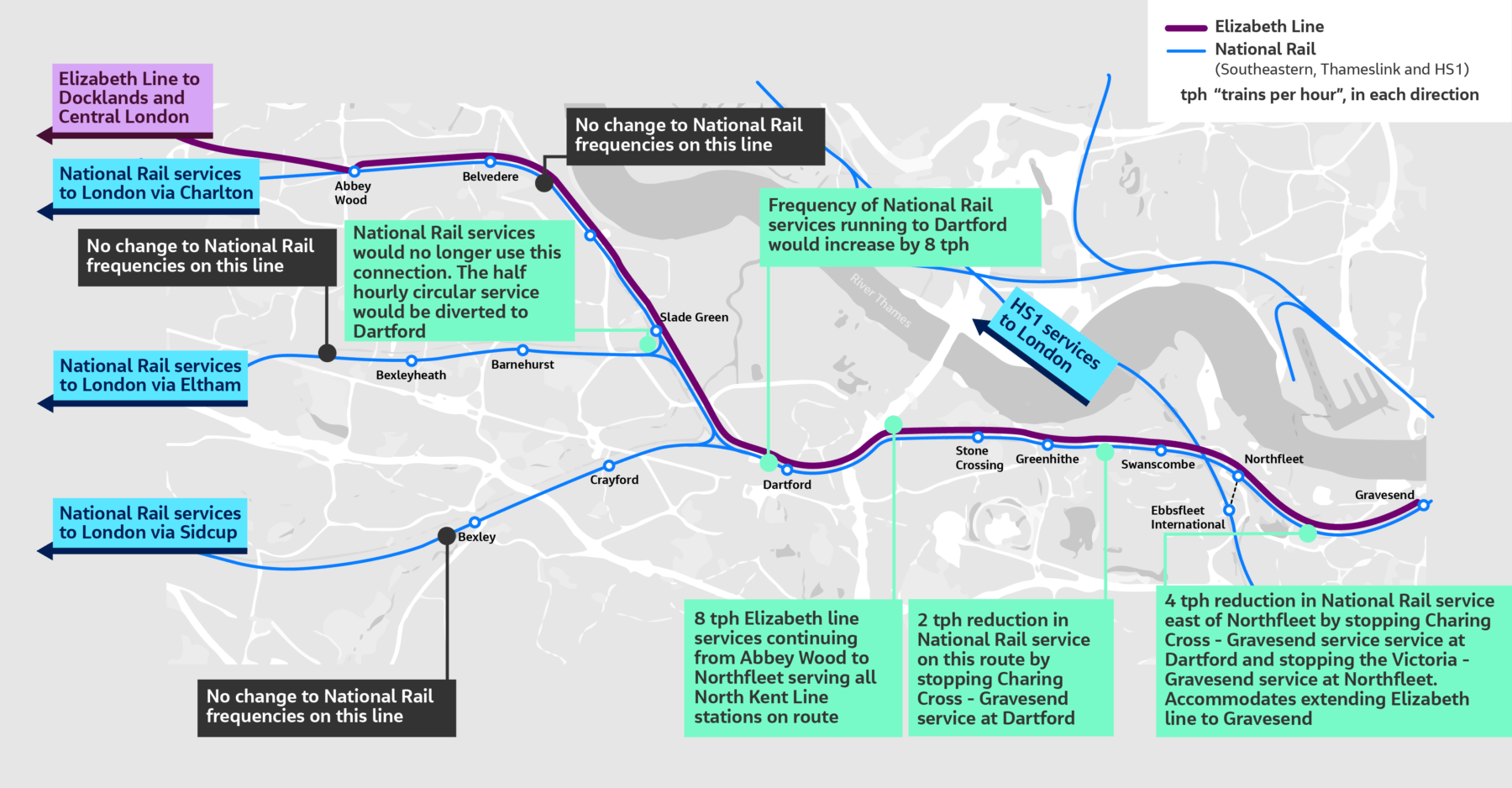
There doesn’t appear to be too much new infrastructure, except for a proper connection between Northfleet and Ebbsfleet stations. References on the Internet, say that the similar-sized Luton DART connection at Luton Airport, cost around £225 million.
The Elizabeth Line connects to the following.
- Bond Street
- Canary Wharf
- City of London
- Farringdon for Thameslink
- Heathrow Airport
- Old Oak Common for High Speed Two
- Liverpool Street station
- Oxford Street
- Paddington station
- Slough for Windsor
- Tottenham Court Road for the British Museum, Oxford Street, Soho, Theatreland and the Underground.
- West End of London
- Whitechapel for the Overground and Underground
For many people like me, the Elizabeth Line at Ebbsfleet will provide one of the quickest ways to get to and from European trains.
Ebbsfleet Has Space For A Bus Station
A bus station with comprehensive routes could be built at Ebbsfleet station, which I don’t think will be possible at St. Pancras.
It would also be possible to provide an easy route to Gatwick Airport along the M25.
Hotel Accommodation
This is surely necessary.
It would make an ideal base for tourists and business people, who wanted to visit several of the large cities connected to Ebbsfleet.
A Very Large Car Park
Consider.
- Heathrow Airport is looking at providing upwards of 50,000 car parking spaces.
- Some travellers are seriously allergic to public transport and will always use their car.
- Many travellers these days want to take a severely outside case with them, when they’re only having a weekend in Paris.
I feel that a mega-station for Europe will need upwards of 10,000 car parking spaces. All of them with vehicle-to-grid chargers.
A Very Large Storage Battery
According to this page on the E-on web site, the average size of the battery in an electric vehicle is 40 kWh.
If 5,000 car parking spaces were to be fitted with vehicle-to-grid charging (V2G), that would be 2 MWh of energy storage, that could be used by National Grid, to store surplus electricity.
Get V2G right and it could make a serious contribution to your parking costs.
Pictures Of Ebbsfleet Station
These are some pictures I took at Ebbsfleet station today.






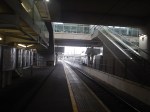







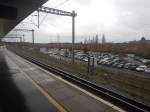
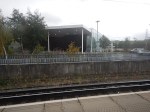
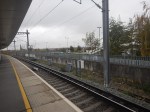


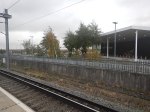
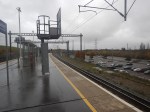
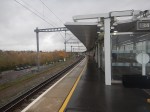


Note.
- The station is a fairly boring concrete, glass and steel construction.
- The SouthEastern HighSpeed services also go to St. Pancras, so they don’t offer any different connectivity towards the capital.
In addition, the SouthEastern HighSpeed Class 395 trains aren’t step-free at the platforms, as these pictures shows.




As I came back into St. Pancras International station, staff were struggling to load a wheelchair onto a train using a ramp.
Would A Two-Station Solution Increase Capacity?
High Speed Rail lines have high capacity trains and there are examples of more than one station at the end of a route.
- The London end of High Speed Two will have stations at Old Oak Common and Euston.
- The Manchester end of High Speed Two will have stations at Manchester Airport and Manchester Piccadilly.
- The Edinburgh end of the East Coast Main Line has stations at Waverley and Haymarket.
- The Amsterdam end of Eurostar and Thalys has stations at Rotterdam, Schipol Airport and Amsterdam.
A selection of stations gives choice and convenience for travellers.
Conclusion
I believe that selective development of Ebbsfleet International station could be used to take the pressure away from St. Pancras International station.
These developments could include.
- A comprehensive bus station
- Elizabeth Line to Northfleet
- Hotel Accommodation
- Lots Of Car Parking
Sussex Will Be Leader In Hydrogen Energy Production
The title of this post, is the same as that of this article on The Argus.
These are the first three paragraphs.
The county is today launching its bid to become a pioneer for use and production of hydrogen energy.
Experts will unveil Brighton’s hydrogen strategy this morning showing how the city and surrounding areas are championing a clean energy infrastructure.
With plans for a Worthing crematorium to become the first in the world powered entirely by hydrogen, development of a green energy production facility in Shoreham, and a growing fleet of hydrogen-powered buses in Crawley, the region is already breaking ground in the hydrogen industry – and shows no sign of stopping.
These are my thoughts.
The Plan Is Comprehensive
This document of the Council website, is entitled the Greater Brighton Hydrogen Strategy.
It is very comprehensive and discusses hydrogen in Sussex from all angles.
Every Council in the UK needs to have their own comprehensive strategy like this.
The Report Cautions That Greater Brighton May Need More Renewable Energy
Consider.
- The Rampion wind farm, with a capacity of 400 MW is already operating in the sea South of Brighton.
- This should be joined by the 1200 GW rampion 2 wind farm in the next few years.
It is unlikely substantial onshore wind and solar farms will be built in the area.
Gatwick Airport Is Expected To Need A Hydrogen Supply
The strategy says this about Gatwick and the two Rampion wind farms.
The offshore wind farm Rampion is large enough to be considered nationally significant infrastructure. There
is a second development for this wind farm planned for 2025-6, which will connect into Bolney substation as
per the existing wind farm.The GBEB energy plan suggested that an electrolyser could be sited there, although there are no identified demand locations nearby other than potential refuelling of passing traffic on the A23.
However, considering the relative distance to Gatwick airport, which is expected to be a significant future
demand, there may be an opportunity for a direct pipeline. This would be further into the future and requires
further analysis and bilateral engagement between Rampion and Gatwick. Engagement with Rampion found
that, given the large population supplied by the Rampion wind farms, and the relative lack of other large-scale
renewables locally, these wind farms are unlikely to face significant curtailment and will fully contribute to
decarbonising the local electricity grid. Therefore, using Rampion to produce hydrogen by electrolysis is not
seen as the best use case in the near term.
It looks to me, that because of the electricity demand in the Brighton and Gatwick area, that a big decision needs to be made to create some more renewable capacity.
Could this mean a Rampion 3 or perhaps a fleet of small modular nuclear reactors at Dungeness?
An Electrolyser At Bolney Substation
This Google map shows the position of Bolney substation.
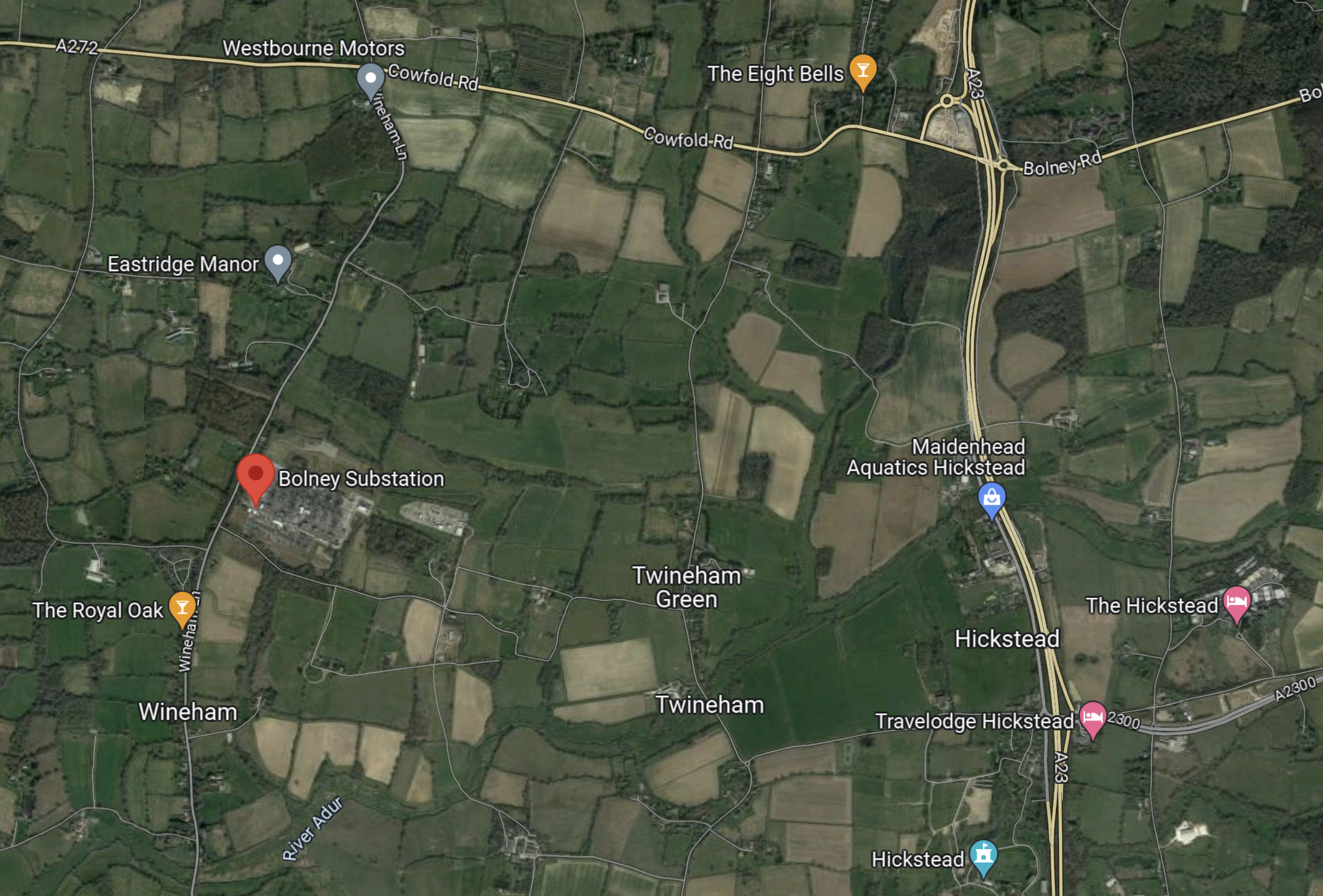
Note.
- The A23 is the main London-Brighton road.
- Bolney substation is indicated by the red arrow.
- The substation doesn’t have very good road access.
- I also suspect that the locals wouldn’t like an electrolyser in their midst.
On a brief look, I suspect that an electrolyser at Bolney substation will be a non-starter.
Shoreham Port As A Hydrogen Hub
The strategy mentions Shoreham Port several times, but gives the impression that progress is slow.
This Google Map shows Shoreham Port.
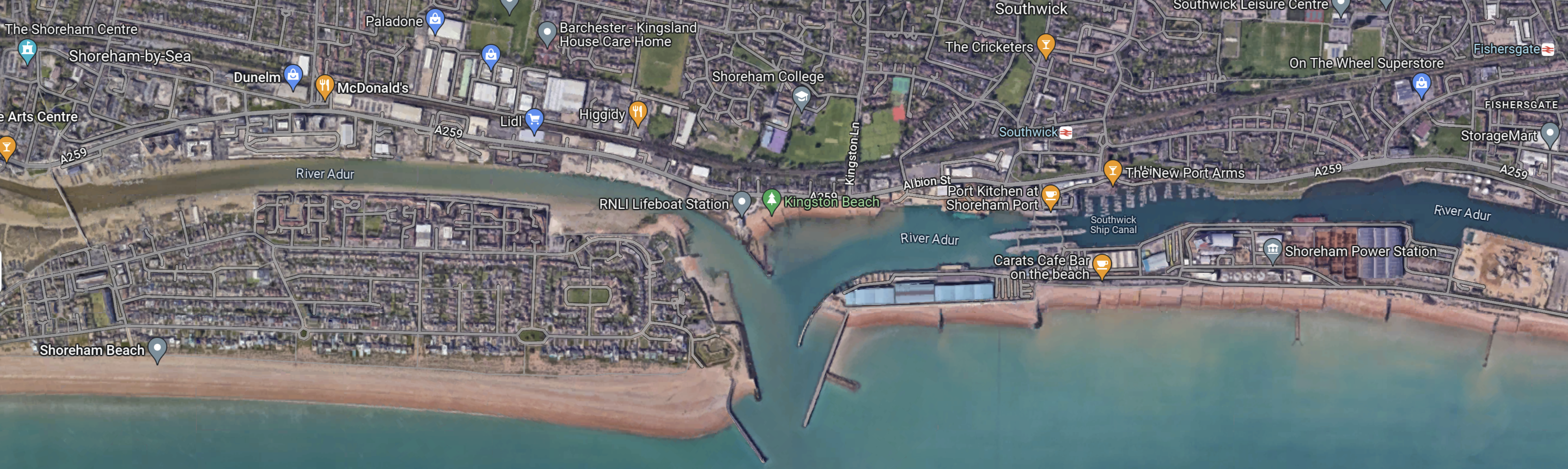
Note.
- Shoreham is in the West.
- The port reaches a long way to the East.
- The 420 MW gas-fired Shoreham Power station, is at the Eastern end of the port, close to the sea.
There appears to be spaces along the water for developing hydrogen infrastructure.
This page on the H2Green web site is entitled Agreement to Develop Clean Energy Hub for Shoreham Port, Sussex, starts with this paragraph.
Getech, the geoscience and geospatial technology provider and data-led energy asset developer, is pleased to announce that its wholly owned hydrogen subsidiary, H2 Green, has signed a Collaboration Agreement (the “Agreement”) with Shoreham Port.
It lists these three highlights.
- H2 Green granted a two-year legally binding exclusive right to develop a renewable energy hub (the “Hub”) at the Port of Shoreham, West Sussex.
- Under plans submitted by H2 Green to Shoreham Port, the Hub will initially focus on the provision of green hydrogen and renewable electricity to the Port’s fleet of 39 heavy forklift trucks and 12 heavy goods vehicles.
- Green Hydrogen will be sourced by a scalable green hydrogen production, storage and refuelling facility – the economics of which will be optimised by its integration with new solar and wind electricity generation capacity.
- The Hub will then be expanded to facilitate the decarbonisation of more than 800 heavy goods vehicles that enter Shoreham Port daily, and to provide fuel to port and coastal marine vessels.
That is all good stuff, but I do wonder, where the renewable electricity is going to come from.
In Further Thoughts On BP’s Successful INTOG Bid, I looked at BP’s plan for a 50 MW wind farm.
- It will be about twenty miles offshore from Aberdeen.
- With an appropriate electrolyser 50 MW of electricity would produce twenty tonnes of hydrogen per day.
- The electrolyser could be onshore or even offshore.
- The technology has all been developed.
Could H2Green be thinking of developing a similar hydrogen production facility?
Go-Ahead Adds 20 FC Buses To Gatwick Fleet
The title of this post, is the same as that of this article on electrive.com.
I described my ride on these buses in My Second Ride In A Wrightbus Single-Decker Hydrogen Bus.
I am publishing this post for this key paragraph on the electrive.com article.
When the order was placed in 2021, Martin Harris, Managing Director of Brighton & Hove and Metrobus, already specified why hydrogen buses were now being used for the first time: “We run services 24 hours a day, with hilly terrain, heavy passenger loads and duty cycles well in excess of the national average at up to 370 miles per day. Those provide really challenging conditions for any technology but we concluded that hydrogen provides the most efficient replacement for our diesel buses.”
It is interesting to note, that the hydrogen buses in Birmingham, Dublin and Liverpool are used on longer routes.
My Second Ride In A Wrightbus Single-Decker Hydrogen Bus
Or it might have been the third or fourth, but it was the first outside of London in a single-decker Wrightbus hydrogen bus. The earlier rides were in the RV1 route, which I wrote about in London’s Hydrogen Buses.
I took these pictures.


















Note.
The trip was in Crawley and Go-Ahead are building a network of hydrogen buses to link the town and Gatwick Airport.
- It was a high quality bus.
- It was busy.
- It was the first bus, I’d seen in the UK, with a detailed route.
Someone had been thinking about how to design a bus route.
Britain’s Longest Road Tunnel Could Be Built Along A27
The title of this post is the same as that of this article in The Argus.
These three paragraphs outline the scheme.
The longest road tunnel in the UK could be built as a long-term solution to congestion along the A27.
The tunnel, which would cost around £2 billion, has been touted as a way of addressing traffic and a way to improve local quality of life.
A new report by Transport for the South East (TfSE) said investing in such schemes is the only way carbon emissions from congested road traffic can be seriously tackled and improve.
The article also states, that the project is unlikely to be started before 2050.
These are my thoughts.
Where Will The Tunnel Be Built?
This Google Map shows Worthing.
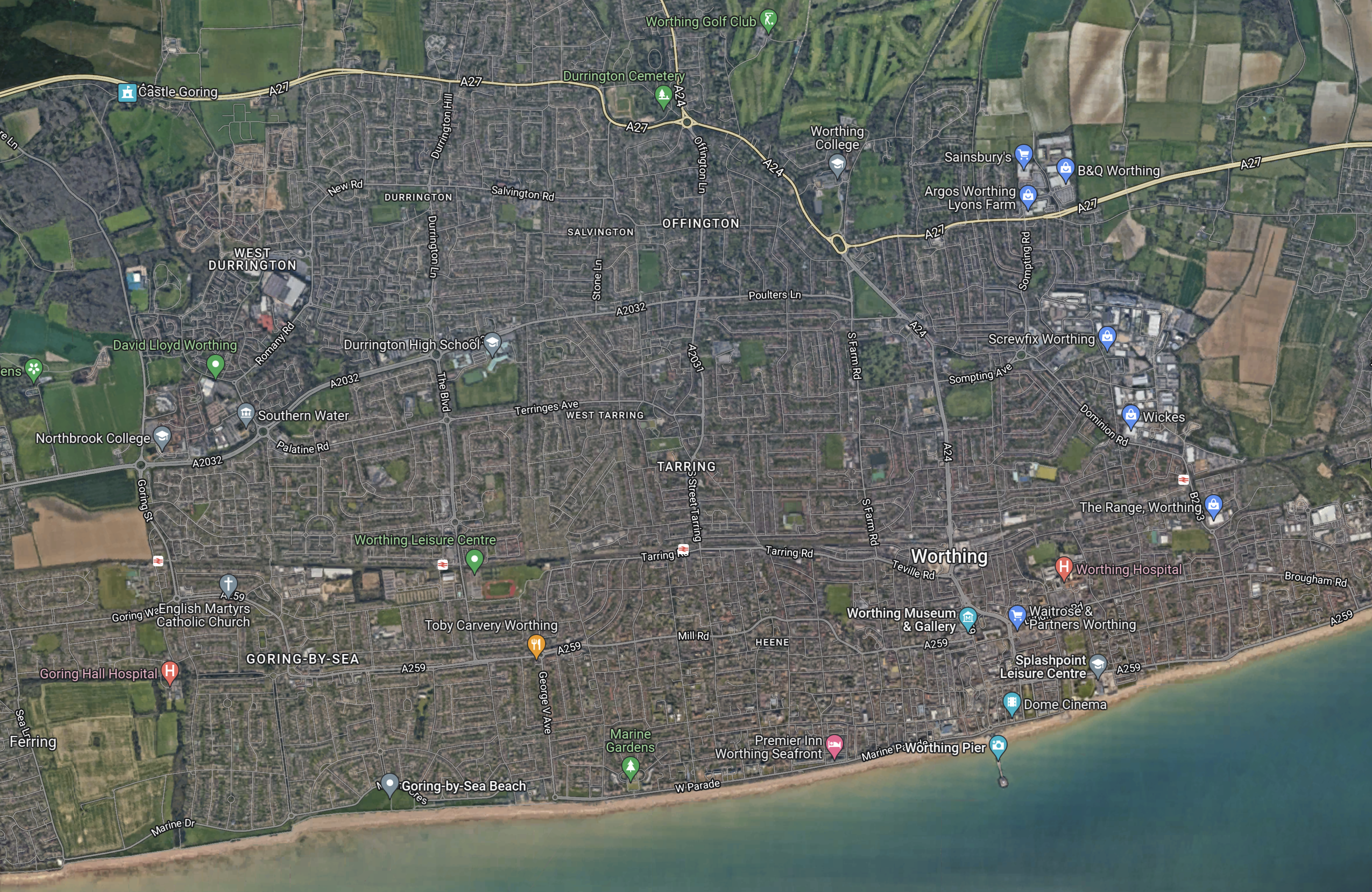
Note.
- The A27 road runs roughly across the top of the map.
- The A27 has sections of dual-carriageway.
- There are two roundabouts, where the A27 connects with the A24 road between London and Worthing via Sutton, Dorking and Horsham.
- The West Coastway Line runs across the middle of the map.
- Four of the five stations in Worthing are visible.
- From East to West the stations are East Worthing, Worthing, West Worthing and Durrington-on-Sea, with Goring-by-Sea off the map to the West.
This Google Map shows the section of the A27 to the West of the A24.
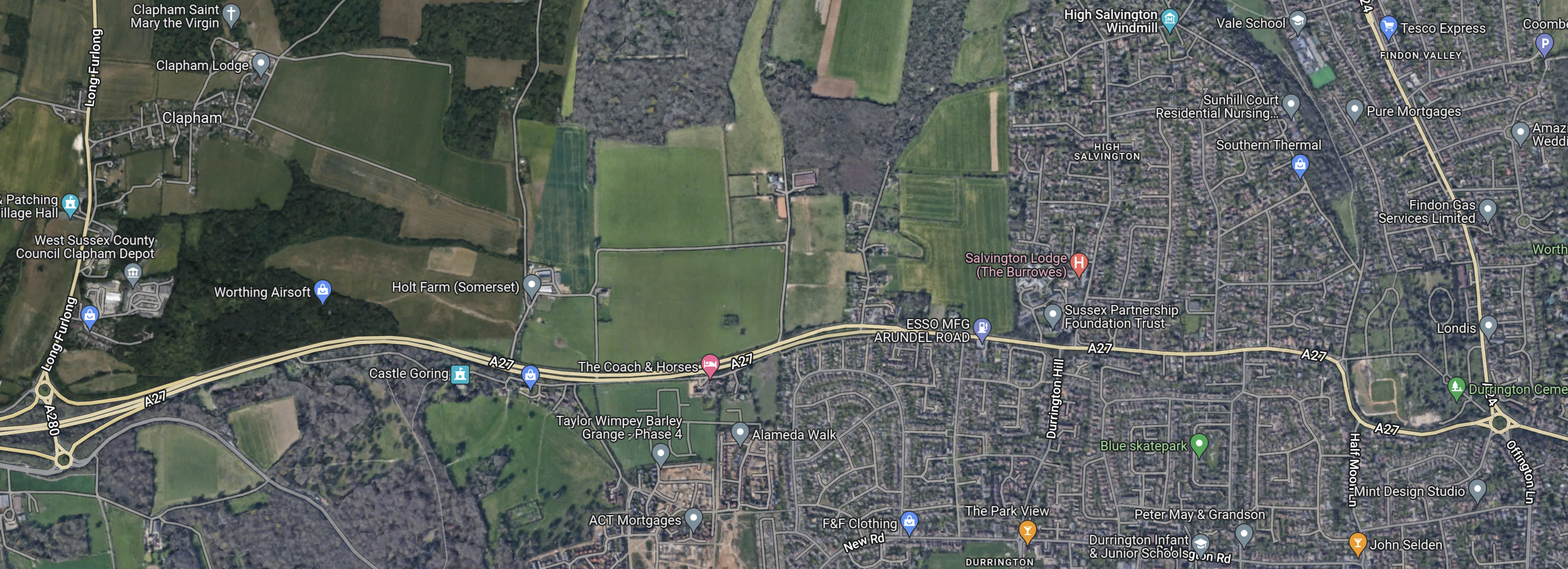
Note.
- The A27 goes all the way across the map.
- There is a large junction with the A280 at the Western edge of the map.
- There is a large roundabout at the junction with the A24, at the Eastern edge of the map.
- The Western half of the A27 between the two junctions, appears to be dual-carriageway.
- The A27 continues in the West as a dual-carriageway between the junction with the A280, almost as far as Arundel.
I suspect the Western portal of the tunnel would be close to the junction with the A280 and for much of the route, it could be bored under the A27 to minimise noise and vibration for those living along the route.
This third Google Map shows the section of the A27 to the East of the A24.
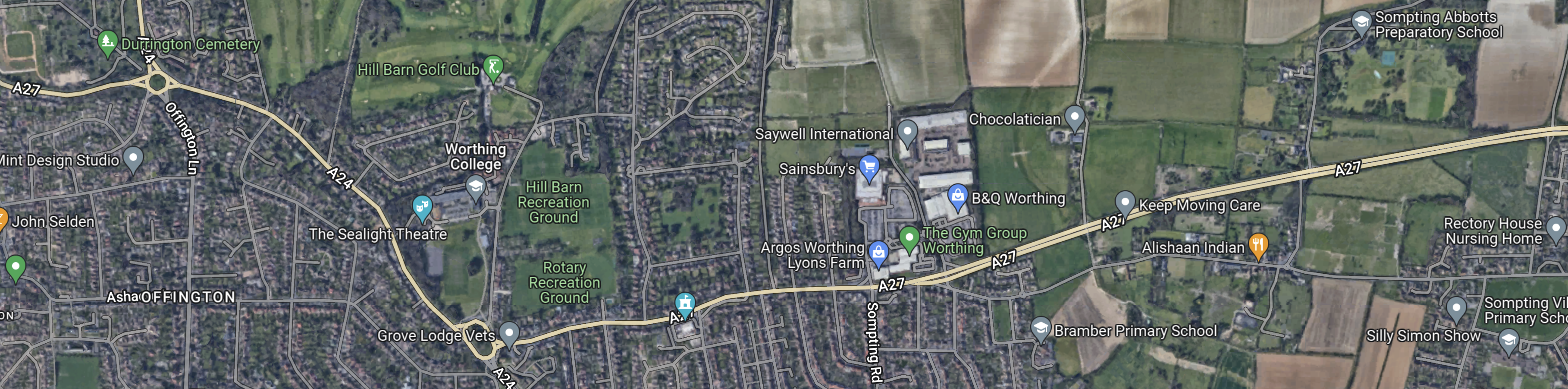
Note.
- The A27 goes all the way across the map.
- It shares a route with the A24 between the two roundabouts towards the West of the map.
- The Eastern section of the A27 appears to be dual-carriageway.
- T27 continues in the East to the North of Shoreham and Brighton and the South of Lewes.
I suspect the Eastern portal of the tunnel would be close to the Western end of the dual-carriageway section to Lewes and for much of the route, it could be bored under the A27 and A24 to minimise noise and vibration for those living along the route.
As we’re good at tunneling in the UK, I don’t think this will be a difficult tunnel to bore.
What Should We Do In The Interim?
The article in the Argus says this.
Should the plans go ahead, the tunnel could be ready for construction by 2050, with a range of other measures proposed to cut congestion in the short term.
2050 is a long time to wait.
I haven’t driven in the area much in the last twenty years, as even before I didn’t drive, I’ve tended to take the train to places like Brighton, Eastbourne, Portsmouth and Southampton.
In my experience the East and West Coastway Lines along the South Coast have reasons, why people drive for preference.
- The trains are not frequent enough. There should be four trains per hour (tph) if possible.
- There needs to be more direct train services to London and Gatwick Airport.
- Some of the stations are not very passenger-friendly. More step-free access is needed.
- Some of the stations can’t handle twelve-car trains.
- The Class 313 trains, that are used to the West of Brighton, were built in the 1970s. Similar trains of that period in the rest of the UK, have either been replaced or will soon be.
- Is there enough car parking?
- Could some closed stations be reopened?
- Could Park-and-Ride facilities be built, where the A27 crosses the railway?
- Would it help, if the West and East Coastway Lines didn’t need a change at Brighton?
- Would a high speed service between Eastbourne and London via Hastings and High Speed One attract leisure passengers.
An improved railway might reduce traffic on the A27.
Perhaps the easiest improvement would be to replace all the East and West Coastway fleet with new or refurbished trains with the following specification.
- 100 mph operation.
- High-class well-designed interior matched to the passenger mix.
- Ability to handle the Marshlink Line and other sections without electrification.
- Wi-fi and power sockets.
- A refreshment trolley might be a good idea.
A marketing campaign might help.
Southbound Thameslink To Eastbound Elizabeth Line At Farringdon Station
I travelled today from St. Pancras International station to Whitechapel station, using the following route.
- Southbound Thameslink service to Farringdon station.
- Eastbound Elizabeth Line service to Whitechapel station.
These pictures show my walk at Farringdon station.








Note.
- I was riding at the back of the train, so I had a long walk to the lifts.
- It would be better to travel in the Southern end of the Thameslink train, as the lifts are at the Southern end of the Southbound Thameslink platform.
- I used the lifts to descend to the Elizabeth Line platforms.
- It is only a short walk between the lifts and the Elizabeth Line trains.
As the last picture indicates, the connecting lifts that I used, can also be used to go from the Southbound Thameslink to the Westbound Elizabeth Line at Farringdon Station.
These connecting lifts can also be used in the reverse direction to go from all Elizabeth Line services to Southbound Thameslink services to London Bridge, East Croydon, Gatwick Airport, Brighton and all the other Southern Thameslink destinations!
If you want to avoid the lifts, as it appears they can busy, you have to climb the stairs to get to the concourse and then descend to get the escalator down to the Elizabeth Line, that I wrote about in Westbound Elizabeth Line To Northbound Thameslink At Farringdon Station.
Conclusion
There would appear to be an imbalance of quality between the connections between the Elizabeth Line and the two Thameslink platforms.
- Those going between the Elizabeth Line and the Northbound Thameslink platform will find it easy, as most of the route is on an escalator.
- On the other hand, those using the Southbound Thameslink platform at busy times could find it congested and slow.
I suspect that regular users of the station, will develop their own routes through the station.
Gatwick Airport Station – 30th March 2022
Gatwick Airport station is being upgraded and I took these pictures as I passed through twice today on my way to and from Brighton.










It will be a much bigger and better station when the upgrade is complete.
Network Rail Invest In A New Footbridge For Goring-by-Sea
The title of this post, is the same as that of this article on Rail Technology Magazine.
It describes work being done at Goring-by-Sea station, which includes.
- Platform lengthening.
- Refurbishment of the footbridge.
This Google Map shows the station.

Note the footbridge, by the level crossing, at the Western end of the station.
It would appear, that the platform lengthening is being done to support a new timetable, whilst Gatwick Airport station is upgraded.
I wouldn’t be surprised to see the Arundel Chord built, as has been proposed as a Beeching Reversal project, which I wrote about in Beeching Reversal – Arundel Chord.
I visited on the 8th of December 2020 and took these pictures.




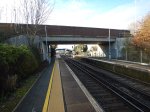


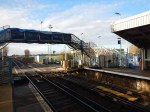

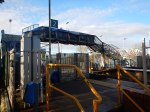
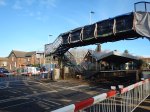

Note.
- It appears the Eastbound platform has been extended.
- From what I could see of the footbridge, it is certainly showing its age and needs a make-over.
- Whilst I was there, the level crossing by the station, was shut for thirteen minutes.
Are Network Rail going to do something about the level crossing?

