All Five Halted US Offshore Wind Farms Resume Construction
The title of this post, is the same as that of this article on offshoreWIND.biz.
This is the sub-heading.
All five US offshore wind farms under construction that received stop-work orders from the US government have been cleared to continue building, with Ørsted’s Sunrise Wind project the fifth project to be granted a preliminary injunction as part of a lawsuit challenging the order issued by the Director of the Department of the Interior’s Bureau of Ocean Energy Management (BOEM) on 22 December 2025.
I would have loved to have been a fly on the wall of the Oval Office in the White House, as what words could the dumbest United States President of my lifetime possibly use to put any positive spin on such an overwhelming five-round defeat, where he was screwed, glued and tattooed to borrow an expression from Brian, who was one of my favourite accountants.
This table summarises the five wind farms.
- Coastal Virginia Offshore Wind-Commercial – 2600 MW – Operation in 2027.
- Empire Wind 1 – 816 MW – Operation in 2026.
- Revolution Wind – 704 MW – Operation in 2026.
- Sunrise Wind – 924 MW – Operation in 2027.
- Vineyard Wind 1 – 804 MW – Operation in late 2026.
The five farms total nearly 6 GW.
This is what Google AI says about the usefulness of 6 GW to power typical United States houses.
6 gigawatts (GW) of power can supply approximately 5 million US homes, based on recent large-scale energy capacity deals. Depending on energy efficiency and regional usage, this capacity typically translates to around 750,000 homes per 1 GW, meaning 6 GW can cover a range of roughly 4.5 million to 5 million households.
I doubt Trump will give up gracefully.
Centrica Energy And Seneca Resources Company Sign First-of-Its-Kind Long-Term MiQ Methane Emissions Certificates Agreement
The title of this post, is the same as that of this press release from Centrica.
This is the sub-heading.
Centrica Energy and Seneca Resources Company are proud to announce a groundbreaking agreement, marking the first long-term deal of its kind to support independently verified methane emissions from an MiQ-certified US natural gas producer, helping to underpin reductions over time. This ten-year agreement underscores the commitment of Centrica and Seneca to support global efforts to reduce methane emissions.
This first paragraph added more detail.
Centrica Energy sources and delivers gas and LNG globally, including LNG shipped from the US to international markets. Under the terms of the agreement, Centrica will procure 250,000 MMBtu per day of MiQ-certified gas certificates over the next ten years, a strategic move that positions Centrica at the forefront of methane reduction initiatives, aligns with emerging regulatory requirements, and reinforces leadership in sustainable energy practices.
MiQ is new to me, so here is what the press release says about MiQ.
MiQ is a global leader in methane emissions certification and data. Our mission is to accelerate the transition to lower emissions gas by providing a credible and transparent certification system that drives regulatory compliance, incentivizes continuous improvement, and ensures methane accountability in the oil and gas sector throughout the entire supply chain.
It appears to me that MiQ-certified low-emissions gas is almost like an equivalent of FairTrade coffee.
If the UK buys its gas as MiQ-certified low-emissions gas, it could claim, that it has cut its gas emissions.
Google AI On Low-Emission Natural Gas
I asked its view and received this answer.
Low-emission natural gas refers to methane-based energy with significantly reduced greenhouse gas, methane leakage, and particulate emissions, often achieved through enhanced extraction, certification, or blending with cleaner gases. It offers up to 40% less (CO2) than coal and 20-30% less than oil, serving as a critical transition fuel to support renewable energy.
low-emission natural gas would seem to be a sensible way to go.
Is There A Plan To Increase The Capacity Of the Elizabeth Line?
On Sunday, when I came back from West Ealing station to Moorgate station on Sunday after taking the pictures, that I used in West Ealing Station – 1st February 2026, I was at the wrong end of the train for getting out at Moorgate.
So I had to walk from one end to the other of one of the most crowded Elizabeth Line trains, I’ve ever been on.
If it was as crowded as that on a Sunday morning, then it would appear, that the capacity of the line needs to be increased.
So I asked Google AI, the title of this post and received this reply.
Yes, there is a firm plan to increase the capacity of the Elizabeth line, driven by high demand and to support the future opening of the HS2 station at Old Oak Common. Transport for London is producing 10 new Class 345 trains to boost service, with expected delivery in 2026-2028.
But is 2026-2028 going to be early enough?
The Ultimate Recycled Electric Local Train
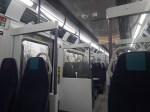
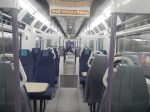
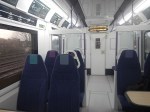
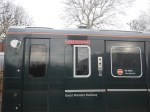
This morning, I took a ride across London to ride in the first Class 230 train in public service in London.
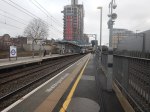
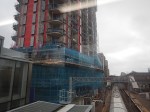
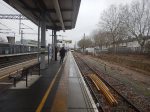
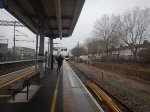
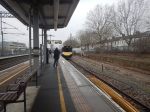
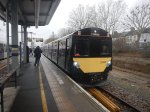
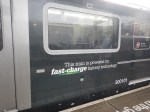
I took these pictures of the new block of flats going up at West Ealing station, the charging system for the train and the train.
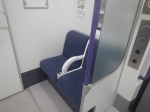
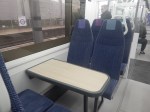

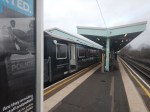


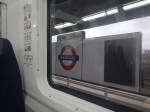




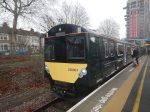
Note.
- The train is three-cars with a toilet to suit everybody, except possibly Donald Trump, who’d want it in gold.
- The single train is shuttling between West Ealing and Greenford stations.
- Each journey 2.5 mile journey takes eleven minutes.
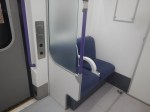
I was surprised at the number of tables and the quality of the seats.
These are some extra thoughts.
The Blocks Of Flats
Google AI gave me this.
Several new developments around West Ealing station feature tall blocks, with major proposals ranging from 4 to 26 storeys. Key projects include a 26-storey tower, proposed 19–22 storey towers on Manor Road/Waitrose site, and 7–21 storey student accommodation blocks. These, along with other 9-storey developments, are transforming the area into a high-density “transport hub” cluster.
I think the 26-storey West 55 Tower is shown in the first two pictures.
Google AI also says some of the natives are not happy about all the towers.
But I like the “high density” transport hub.
Integrating The Railway And The Housing
Note.
- This would appear to be a good example of integrating the railway and the housing.
- The second picture appears to show a walkway between the station and Tower 55.
- I met a property developer on a train once and he told me, that housing on top of stations without car parking, had better numbers all round, with more flats, less cost and good profit.
- I wonder, if Tower 55, is one of his? He was certainly enthusiastic about the concept.
- Would a Fast-Charge system be easier and very much safer to squeeze in than traditional overhead wiring?
If the flats all don’t have garages, there must be space for other uses.
The Charger At Work
Note.
- The third to the sixth pictures, show the train coming into the station and charging ready for a trip to Greenford.
- The train acts as a heavy safety guard during the process.
- Anything electrical or dangerous is underneath the train.
I would expect that a health and safety expert, would rate the train no more dangerous than a normal train.
There Seems To Have Been A Lot Of Innovative Recycling On The Train
This certainly seems to apply to the seats, which in some cases are the originals remodeled.
A Stylish And Well-Built Train
This phrase would sum up my overall view of the train.
I have a Korean son-in-law and I know a bit, how Koreans think about design.
I would think, that he would like this as it is a stylish and practical train, so it wouldn’t embarrass you or your Korean boss, if you told him to use this train in the UK, to get to your offices.
Using my Korean example, I suspect, that this train could be one that endears itself to its passengers, with its quirky and practical feel, just like the original Mini did.
Adrian Shooter Would Be Pleased
Most Certainly!
I wish all the team well, as I believe this technology and a few trains like 230001 will make their mark on the world.
A Practical Hundred Mile Battery-Electric Route
The Sheffield and Scunthorpe Line is a Parliamentary Service.
- It is 71.6 miles over 1 hour and 48 minutes, through seven stations of the Lincolnshire countryside, at an average speed of 40 mph.
- Currently, it runs once per day, which is not very ideal for a job, education, training, shopping or visiting grandchildren.
- A two-car version of 230001 could be ideal to perhaps do four round or five trips a day and level-up some of the poorer parts of the UK, that don’t even have a decent bus service.
- A similar two-car train could also serve the 45-mile round-trip Cleethorpes and Barton-on-Humber service.
I am sure that this train could start the right sort of rural or urban revolution.
Treasures Found On HS2 Route Stored In Secret Warehouse
The title of this post is the same as that of this article on the BBC.
This is the sub-heading.
Treasures unearthed by hundreds of archaeologists during the ongoing construction of the controversial HS2 train line have been shown exclusively to the BBC.
These three paragraphs add detail to the story.
The 450,000 objects, which are being held in a secret warehouse, include a possible Roman gladiator’s tag, a hand axe that may be more than 40,000 years old and 19th Century gold dentures.
It is an “unprecedented” amount and array of items, which will yield new insights into Britain’s past, says the Centre for British Archaeology.
Major building developments in the UK need land to be assessed by archaeologists as part of the planning process, to protect heritage sites.
Crossrail also collected a lot of artefacts in an archaeology programme, that I wrote about in Bison to Bedlam or How To Make Friends.
Typing “TransPennine Route Archaeology” into Google AI gave this answer.
AI Overview
Archaeological investigations for the Trans-Pennine upgrades are split into two major, parallel projects: the A66 Northern Trans-Pennine road project and the Transpennine Route Upgrade (TRU) rail project. Both have revealed significant historical, archaeological, and industrial remains.
A66 Northern Trans-Pennine Upgrade (Road)
As part of the A66 upgrade between Penrith and Scotch Corner, Oxford Cotswold Archaeology (OCA) is conducting extensive excavations.
Key Finds: Archaeologists have identified prehistoric settlements, Neolithic stone axes, and evidence of a 60-meter-wide posthole structure.
Roman Discovery: A major Roman vicus (settlement) and the original Roman road have been uncovered, revealing a “grid of Roman field systems and ditches” near Brough.
Locations: Key sites include Brougham, Brough, Kirkby Thore, and Crackenthorpe.
Significance: These findings illustrate the area’s long-distance connection, trade, and culture from prehistoric through Roman times.
Transpennine Route Upgrade (Rail)
This project, involving Network Rail and ASWYAS (Archaeological Services WYAS), is upgrading the railway between Manchester, Huddersfield, Leeds, and York.
172-Year-Old Railway Siding: A mid-19th-century railway siding was uncovered at Hillhouse Sidings in Huddersfield, revealing two turntables and brick-built engine sheds.
Roman Settlement (Ravensthorpe): Excavations at Ravensthorpe (for a new station) uncovered a large, hexagonal-shaped feature thought to be an Iron Age or Roman-British enclosure, featuring ceramics, glass, and animal bones.
Mirfield Viaduct: An investigation of the Grade II-listed Mirfield Viaduct (built 1836-1839) was conducted to record its structure before upgrade works.It could be a very large exhibition in the North, if High Speed Two and the two Transpennine Route Upgrades were combined in a single exhibition.
I asked Google AI, what is the largest exhibition centre in Yorkshire and received this answer.
The largest exhibition sites in Yorkshire are concentrated in Harrogate, anchored by the Great Yorkshire Event Centre and the Harrogate Convention Centre. These venues offer a combined total of over 10,000 square meters of exhibition space, accommodating major national events, conferences, and large-scale outdoor exhibitions.
I suspect Leeds, Manchester and Sheffield could have other ideas.
Does Miserable Weather Deplete Your B12?
Consider.
I have been feeling down this winter and especially in the last few weeks.
- My three-monthly B12 injection is now due.
- But I can’t get one until the second of February.
- But on miserable days like this, I do feel bad.
- So I have asked for the injection to be moved forward?
In answer to my question in the title of this post, Google AI gave this answer.
Yes, cold, dark, and “miserable” winter weather can contribute to lower Vitamin B12 levels, or at least worsen an existing deficiency.
While miserable weather does not directly “burn” B12 out of your body, the associated lifestyle changes and reduced sunlight can cause levels to drop.
Here is how winter weather affects B12:
Reduced Sun Exposure:
While Vitamin D is directly linked to sunlight, the general reduction in sunlight during winter can affect energy levels and mood.
Low Vitamin B12 can also cause similar symptoms, making it harder to distinguish between a vitamin deficiency and “winter blues”.
Dietary Changes:
In winter, people may consume less of the fresh, nutrient-dense foods (like animal products) that are high in B12, or they may feel less motivated to maintain a balanced diet, leading to lower intake.
Increased Stress and Fatigue:
Cold, dark weather can induce stress.
Chronic stress and fatigue are known to deplete B vitamin reserves, including B12.
Increased Sensitivity to Cold: Ironically, if you are already slightly deficient in B12, you may feel much colder, more tired, and more lethargic than others, exacerbating the feeling of “miserable” weather.
Key Takeaways:
Check Levels: If you experience extreme fatigue, low mood, or numbness in your hands and feet during winter, it might be worth checking your B12 levels.
Supplementation: In many cases, people, especially vegetarians or vegans, find that B12 supplements or injections help manage symptoms of low energy and poor mood during colder months.
Diet: Ensure you are getting enough B12-rich foods like meat, fish, dairy, and fortified foods.
If you are feeling significantly lower energy or mood during winter, it is always best to consult a healthcare professional.Conclusion:
Do B12 Injections Help Stroke Recovery?
A friend, who thinks I’ve made a good recovery from a stroke, asked me if there is anything I could recommend, for another of his friends, who has just had a stroke.
As a coeliac, am I in a group with a higher risk of a stroke?
So, I asked Google AI, the question, if this were true and received this answer.
- Initial Higher Risk: Some studies suggest a slightly increased risk of stroke (roughly a 10-15% increased likelihood). This risk is highest in the first year after diagnosis.
- Effect of Gluten-Free Diet: After 5 years on a strict, gluten-free diet, the risk of stroke for people with coeliac disease is virtually the same as that of the general population.
- Overall Risk: While some studies have suggested a link, others, including a 2023 UK Biobank study, found no clear evidence of an association between coeliac disease and stroke, although they did find an overall increased risk of cardiovascular disease (27% higher).
- Mechanism: The potential for a higher risk is likely due to the chronic inflammation associated with untreated coeliac disease, rather than traditional risk factors like high blood pressure or smoking.
- Children: A 2023 study found that coeliac disease plays a minimal role in the risk of stroke in children, but recommended that doctors consider it a potential factor in cases of stroke with unknown causes.
Conclusion:
While untreated coeliac disease may slightly increase the risk of stroke due to chronic inflammation, adhering to a gluten-free diet helps manage this risk.
This study by coeliacUK and Oxford University, was the source of the findings by Google AI.
Do B12 Injections Help Stroke Recovery?
For nearly thirty years, ever since I was diagnosed as coeliac, I have had regular three-monthly B12 injections. So ever since my stroke in 2011, I have had B12 injections.
So now AI is available, I felt I should ask Google AI to see if it says anything useful.
This is the answer I received.
- Nerve Repair & Axonal Growth: B12 aids in repairing damaged nerve fibers (axons) and regenerating nerve cells, vital for restoring lost function after a stroke.
- Reduces Inflammation: It helps calm the harmful inflammatory response (neuroinflammation) in the brain after an ischemic stroke, notes this ScienceDirect article.
- Improves Brain Communication: B12 supports neurotransmitter production, allowing brain cells to communicate more effectively and speeding up healing, according to this Flint Rehab article.
- Lowers Stroke Risk: By reducing homocysteine levels, an amino acid linked to stroke, B12 can help prevent recurrent strokes, reports this Flint Rehab article and this NIH article.
- Supports Microglia Function: It helps functionalize microglia (brain immune cells) to reduce injury and promote recovery, states this ScienceDirect article.
- To Boost Recovery: For those with moderate deficiencies, injections or supplementation can improve neurological function, notes this NIH article.
Conclusion
B12 injections seem to have done me no harm.
I also have them on the NHS, at no cost to myself.
If the NHS said I couldn’t have them, I’d pay for them.
New Station Openings In Early 2026
This post is for two reasons.
I needed an answer to my query.
I wanted to explore the competence of Google AI.
When I typed the title of this post into Google AI, I received this answer.
Several new railway stations in the UK are scheduled to open or begin passenger services in early 2026, primarily in the West Midlands, Northumberland, Devon, and Cambridgeshire.
- Darlaston (between Walsall and Wolverhampton)
- Willenhall (between Walsall and Wolverhampton)
- Kings Heath (Camp Hill line, Birmingham)
- Moseley Village (Camp Hill line, Birmingham)
- Pineapple Road (Camp Hill line, Birmingham)
- Bedlington
- Northumberland Park (interchange with Tyne and Wear Metro)
- Cambridge South (Cambridgeshire) – Expected to open in June 2026, connecting the biomedical campus to London, Birmingham, Stansted, and Gatwick airports.
- Okehampton Interchange (Devon) – This new park and ride station, part of the Devon Metro plan, is planned to open in spring 2026.
- Magna (Rotherham) – A new tram-train and park & ride stop is due to open in early 2026.
- Darlington Station redevelopment (County Durham) – Major redevelopment works are “on target” for completion in spring 2026.
It looks to me, that Google AI made a good fist of my question.
 The Anonymous Widower