Will Hydrogen Buses and Coaches Make Good Rail Replacement Buses?
My near-twenty-mile-ride in a Wrightbus hydrogen-powered bus yesterday, got me thinking.
I believe they would make excellent Rail Replacement Buses.
- The 280 mile range would allow them to both deploy over a l long distance to an incident or cover over a hundred miles or more.
- The quality of the interior is more main line train, than suburban bus.
- Every seat has a charging point.
- The performance of the hydrogen-powered bus, should mean that less time is lost and less compensation will be paid.
- This performance could be used to advantage if the rail line being replaced is alongside a motorway.
I feel it could be good PR for train companies, that they are using quality, fast Rail Replacement Buses.
Sutton Station To Gatwick Airport By Hydrogen-Powered Bus
In Central London and Gatwick Airport For Free On A Freedom Pass, I indicated it was possible to go to Gatwick Airport for nothing, if you had a Freedom Pass, which is also a free bus pass for England.
This morning I took public transport to Gatwick Airport by this route.
- I took a 43 bus to London Bridge station.
- This bus terminates in the bus station in front of the train station, so it was a simple step-free entry into the part of the station, where Southern Trains terminate.
- I took a Southern Train to Sutton station.
- I then took a Metrobus 420 bus from Sutton station to Gatwick Airport.
These pictures show the journey.

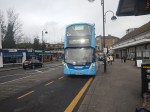


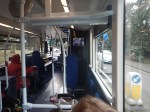











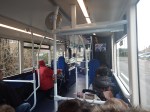






















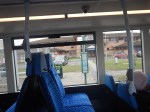







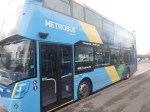
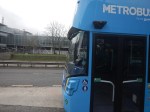
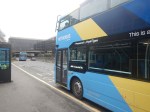

Note.
- The bus stop is directly outside the entrance to Sutton station.
- Sutton station is step-free.
- The information on the Metrobus’s buses at Sutton station is poor.
- The bus had a 74 number plate, so was registered after September 1st, 2024.
- The bus said it was a hydrogen bus.
- The seats were comfortable with leather facings.
- The route was mainly through rural Surrey.
- There were sections of dual-carriageway road with continuous 40 mph running.
- There were a number of steep hills.
- Previously, I have been told by a Bradford Councillor, that the City of Bradford is going for hydrogen-powered buses , as the city has lots of steep hills.
- The unusual Reigate and Redhill War Memorial on the A25.
- The route goes past Hadworth, Reigate and Redhill stations.
- Just before Gatwick Airport, the bus called at East Surrey Hospital.
I have some thoughts.
Does This Hydrogen Bus Have Almost The Quality Passengers Would Expect From A Coach?
Consider.
- I was very impressed with the quality of the bus and its fittings.
- But its biggest assets were the ride and mouse-quiet noise and being vibration-free.
- It was certainly up there, with the best British buses on UK roads.
- Strangely, I never rode in any of London’s Green Line coaches of the 1950s and 1960s.
But as Wrightbus are selling hydrogen-powered single-decker buses to the Germans, the quality must be of a certain standard.
The Performance Of The Bus
I would sum up the bus as follows.
- The bus didn’t hang around and it was well-driven.
- On much of the dual-carriageway, the bus appeared to be at the maximum speed limit of 40 mph
- Ride and seats were comfortable.
- There was virtually no vibration.
- At times, you almost felt you were in a top-of-the-range coach.
- The running gear is from German company ZF, which certainly doesn’t hinder the ride.
- The journey from Sutton to Gatwick Airport is twenty miles and took about ninety minutes.
I would feel that if Wrightbus design their CoachH2 chassis to the same standard of this bus, they’ll have a difficulty to meet sales demand.
Wrightbus Hydrogen Buses For My Local Bus Route 141
Consider.
- The 141 bus route is my local bus, which gets me to Moorgate, Bank, London Bridge and Manor House.
- The length of the full route is twenty miles and it takes about an hour to go from London Bridge station to Palmers Green.
- The route is currently run by older Wrightbus hybrid diesel-electric buses.
- I suspect that modern hydrogen buses could last almost all day on one fill of hydrogen, with perhaps a top-up at lunchtime.
They would have no difficulty handling the route and would greatly increase the customers current rock-bottom satisfaction.
Hydrogen Buses In Leafy Suburbs
- Where I live, is not particularly leafy or a suburb.
- But I seems to remember, when I moved here, that some of my neighbours complained about the noise of the 76 bus route.
- So Transport for London put on some quieter buses.
I would expect, that Metrobus might use the mouse quieter hydrogen buses in post areas, to avoid annoyance.
Hydrogen Buses As Route Extenders
Effectively, the Metrobus route 420 is acting as a route extender for Southern and Thameslink services coming South from London.
As it is a quality bus, that gets a move on, I suspect that some travellers, who previously took a train to Sutton, Tadworth, Reigate, Redhill or other stations and were then picked up, may take a hydrogen bus to a more convenient bus stop.
Because of the long range of a hydrogen bus or coach, zero-carbon performance, should be achieved without any range anxiety for passengers, driver or bus company.
Onward From Oakhampton Parkway Station
Consider.
- In 2014, storms destroyed the railway at Dawlish in Devon.
- As there was no alternative route, the storms cut everything west of Dawlish off from the rest of the UK.
- It is now likely, that a Park-and-Ride station will be built close to Okehanpton, which commuters would use for travel to Exeter.
- The main road to the South-West ; the A 30 will pass nearby.
It would appear, that Okehampton Interchange station could be used, if Nepture decided to show his power again.
Hopefully, the emergency plan will scare Nepture away.
Lumo To The Scottish Borders
Consider.
- Lumo have applied to extend some of their Edinburgh services to Glasgow.
- Talking to a friend in the Scottish Borders, they said, that travelers drive to Newcastle or Morpeth to catch Lumo for London.
- Four or five Lumo services every day stop in each direction at Morpeth station.
- So would it be sensible to run a bus or coach through the Scottish Borders to connect with the Lumo services?
This Google Map shows Morpeth in relation to the Border towns.
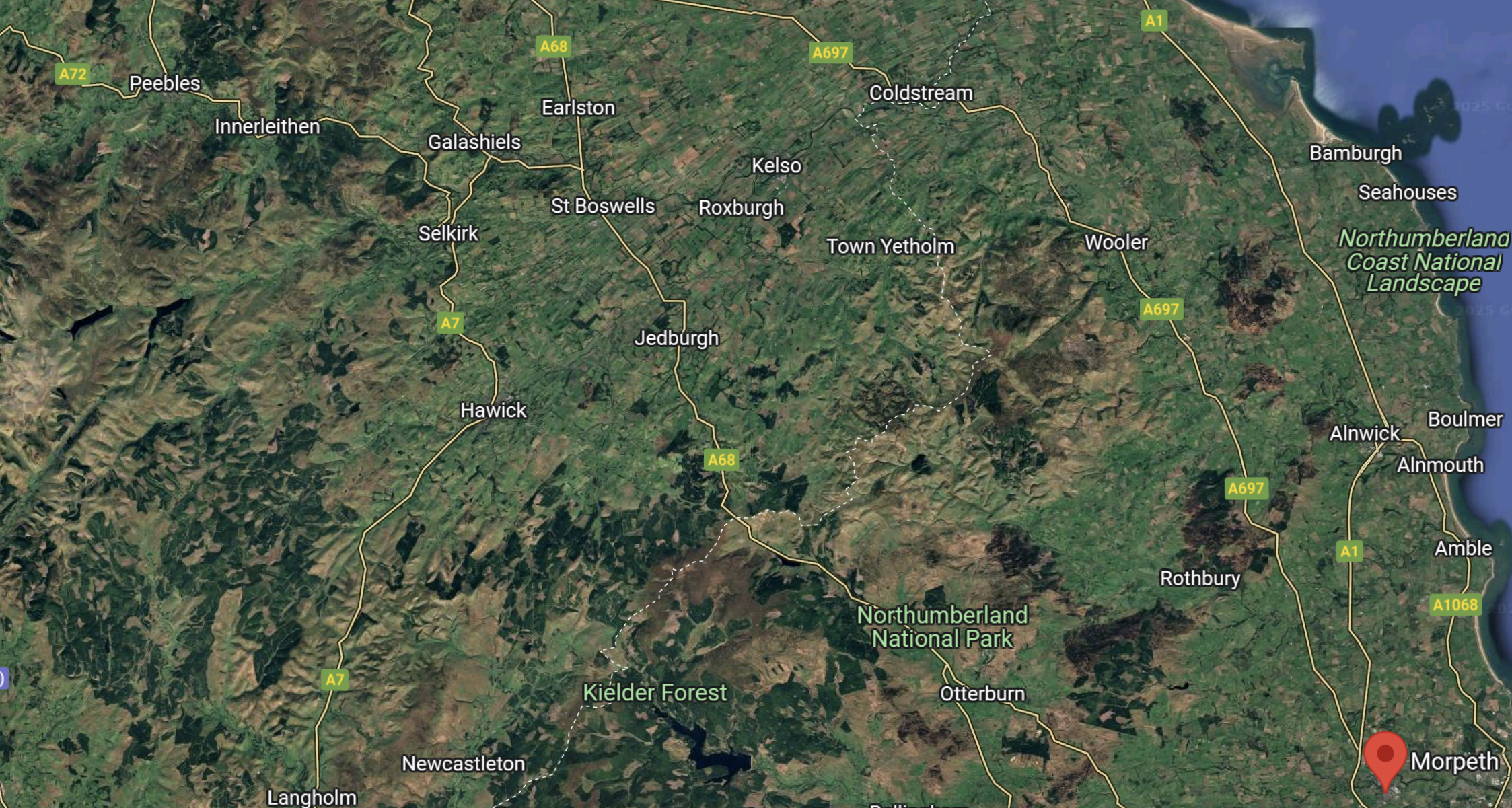
Note.
- Morpeth is marked by the red arrow in the South-East corner of the map.
- Galashiels, Galashiels, Hawick, Jedburgh, Peebles, Saint Boswells and Selkirk can be picked out on the map.
- The coach service would probably terminate at Galashiels, as it has a large bus terminal and and a railway station.
- Click the map to show it to a larger scale.
Morpeth to Galashiels is 69 miles and it should take about an hour and a half.
Hydrogen Buses As Rail Replacement Buses
Consider.
- I have had Rail Replacement Coaches as opposed to buses a few times in the UK.
- Once on the East Coast Main Line but usually on the Great Eastern Main Line to Ipswich or Norwich.
- They are generally more suited to their task. as they are faster and more luxurious.
- Many of our major rail lines run alongside trunk roads or motorways or fast dual carriageways.
So because hydrogen buses and coaches a have superior performance, than their diesel cousins, will hydrogen be the better fuel for a Rail Replacement Bus.
Metrobus’s Hydrogen Buses
This press release on the Metrobus web site is entitled Hydrogen Buses.
This is the sub-heading.
Our commitment to Zero Emissions
As part of our commitment to reducing emissions, twenty new hydrogen fuelled buses will operate on Fastway routes 10 & 20. These new buses demonstrate an ongoing commitment to reducing our local emissions. They deliver against science-based targets set by Metrobus and its parent company, The Go-Ahead Group, of becoming a net zero business by 2045 and decarbonising our bus fleet by 2035.
Conclusion
This bus is the best I’ve ridden in.
Central London and Gatwick Airport For Free On A Freedom Pass
I have always found it odd, that I can get to Heathrow Airport for free on my Freedom Pass, but for Gatwick Airport, I must buy a ticket.
Not that I’m bothered about the price of the ticket, but for some it might mean that they can’t get to their preferred holiday destination, as planes only fly from Heathrow.
The different treatment of the two airports must also annoy some airport and airline owners and bosses.
But recently, a free route for London’s Freedom Pass holders has opened.
This article on Inside Croydon is entitled Metrobus Rolls Out Zero-Emission Hydrogen Fleet Into Sutton.
These are the first two paragraphs.
Metrobus has been rolling out a fleet of hydrogen-powered buses, and last week its first double deckers, operating the 420 route from Sutton town centre to Gatwick Airport and Crawley, were brought into service.
Metrobus is planning on having more than 40 hydrogen-powered buses, in a partnership with West Sussex, Surrey and Kent county councils and Gatwick, in a £24million investment by the partners including a £10 million grant from the Department for Transport.
Note.
- The range of a Wrightbus Hydroliner is 280 miles on a full tank of hydrogen.
- It looks like as Crawley to Sutton station is a 42.2 miles round trip, so that means six round trips are possible on a tank of hydrogen.
- The Hydroliners may have the speed to use the M23 between Sutton and Crawley.
According to the article, refueling would be at Crawley.
A Zero-Carbon Extension To The Freedom Pass Zone
The free route for Freedom Pass holders to Gatwick Airport will be.
- Southern or Thameslink Train to Sutton.
- 420 bus to Gatwick Airport.
The article says this about the routes that are being planned.
The 420 route runs from Sutton town centre, through Belmont and Banstead, to Tadworth and then on to Reigate and Redhill, serving East Surrey Hospital before going on to the airport and Crawley. Metrobus is planning to use other hydrogen-powered buses on routes that will serve Caterham, Dorking, Tunbridge Wells, Haywards Heath and Brighton.
It appears that the hydrogen buses will add a large zero-carbon area to the Freedom Pass zone.
The only new infrastructure, would be the refueling equipment at Crawley.
I can also see the buses becoming an unusual tourist attraction for the area.
An Extension To An Electric Railway Or Tramway
They may also set a precedent for how a transport network can be extended in a zero-carbon manner from a tram or rail terminal served by an electric railway or tramway.
Battery electric buses could be used, but their range means that on anything but the shortest routes, they would constantly need recharging.
Okehampton Interchange Station
The first paragraph of the Wikipedia entry for Okehampton Interchange station describes it like this.
Okehampton Interchange (formerly known as Okehampton Parkway) is a proposed railway station in Okehampton on the Dartmoor Line. The station would be part of the Devon Metro and has been described as a priority station. The station is to be sited off Exeter Road, by the Business Park and close to the junction with the A30, in the Stockley Hamlet area of Okehampton. It would also serve 900 new homes to be built nearby.
But I believe that Okehampton Interchange station also has another purpose.
If the sea should destroy the coastal railway, as it did a few years ago, then passengers for the South-West could be ferried to and from Okehampton Interchange station by high-speed hydrogen-powered coaches along the A30, to catch trains to Exeter and London.
So, I would build a hydrogen filling station at Okehampton Interchange station, so that if the sea destroys the coastal railway again, the alternative is ready.
Normally, the hydrogen filling station would refuel local hydrogen buses, trucks, cars and other vehicles and those passing on the A30 to and from Cornwall.
Okehampton Interchange station would be the ultimate extension to an electric railway. Even if the Dartmoor Railway was worked by electro-diesel trains.
British Buses For British Bottoms
Occasionally, I catch the 153 bus, as it goes between the Leon, where I often go for breakfast, and the William Harvey Heart Centre, where I volunteer as a lab-rat.
Lately, I’ve noticed that the route is being run by new Wrightbus GB Kite single-decker battery-electric buses.
This morning I had a ride.

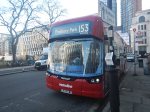
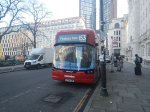

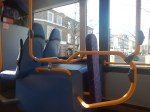
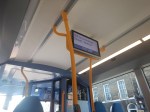
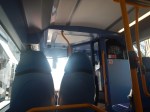
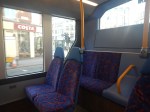
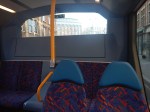

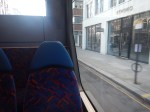
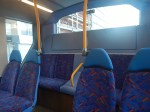
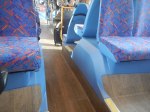

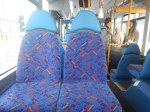
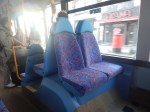
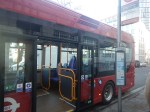







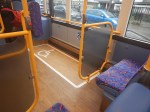
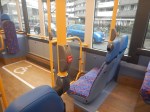
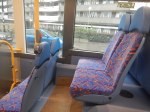
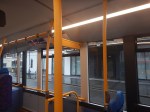
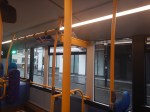
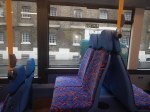
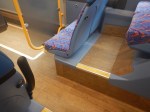
Note.
- The buses are battery-electric.
- This page is the bus’s home page.
- This bus is the short 10.2 metre long version.
- It was certainly a well-built, smooth-riding and comfortable bus, that was approved by my sensitive British bottom.
This Press Release from Wrightbus is entitled Wrightbus Sets Sights On Further European Expansion After Hydrogen Buses Land In Germany.
This is the sub-heading.
Leading zero-emission bus pioneer Wrightbus has announced plans for further expansion into Europe following the arrival of a landmark hydrogen bus order into Germany.
These are the first three paragraphs.
All of the 31 buses for operator Regionalverkehr Köln Gmbh (RVK) are now in situ – the first ever Wrightbus vehicles on European soil – with testing underway before the fleet goes into service across the Cologne region.
Named the fastest-growing bus manufacturer in Europe, Wrightbus has enjoyed a remarkable year. Alongside further hydrogen bus deals for Saarbahn, Vestische, Cottbus and West Verkehr, and the opening of a new European service centre in Bruhl, Wrightbus is also hiring staff to supply buses to France and Benelux.
In October, it also signed a landmark deal worth up to half-a-billion pounds to supply more than 1,000 buses to operator Go-Ahead over the next three years – 90 per cent of which will be zero-emission.
The press release says that deals are possible in France and Benelux.
Vallourec’s Delphy Hydrogen Storage Solution
Hydrogen can be a nuisance to store.
I have just found a YouTube video of a system called Delphy from French company Vallourec.
Delphy seems a neat solution, where hydrogen is stored vertically in a 100 metre hole, that can hold a 100 tonnes of hydrogen.
You can watch this video.
I think this would be an ideal hydrogen storage solution for a bus or coach company or a truck operator.
Wrightbus StreetDeck Ultroliner Next-Gen To Get Cummins Power
The title of this post, is the same as that of this article on Route One.
These three paragraphs give more details.
Wrightbus will utilise Cummins power in its StreetDeck Ultroliner diesel double-decker for the first time in a next-generation variant of that model.
Those vehicles will be powered by the six-cylinder B6.7 engine rated at 250bhp or 300bhp, driving through the Voith DIWA.8 seven-speed automatic gearbox. Such an approach will further reduce emissions, and the new model will be Ultra-Low Emission Bus accredited by Zemo Partnership, the manufacturer says.
The existing StreetDeck Ultroliner, which is powered by the Daimler OM 934 four-cylinder engine, will continue to be available. The first Cummins-powered examples are to be supplied to Isle of Man operator Bus Vannin.
As a hydrogen version of the the Cummins six-cylinder B6.7 engine is available, at some point in the future, these buses will be convertible to zero-emission hydrogen power.
Wrightbus have already set up a division called New Power to do the conversion of existing buses, as I reported in Wrightbus Launches NewPower In Bicester.
London’s New Tram-Like Buses Come Into Service
The title of this post, is the same as that of this article on the BBC.
I went to Orpington station and all I saw was several small diesel single-decker buses running around in the awful cold.
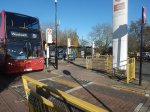




So I retreated on a warm train after a couple of hours.
One driver said that the reams were running and she looked genuinely disappointed, that they hadn’t turned up.
But from my knowledge of electric vehicles, although not Irizar ie Trams, I do wonder if the single-figure temperatures in Orpington had drained the batteries.
But I can’t imagine a company like Irizar making a mistake like that.
Although one of the station men said that Orpington can get to be a very cold station. Now that is something I’ll agree with!
In the other hand the 358 route takes an hour from end to end, so in my opinion, it might have been better to use hydrogen-powered buses.
Australian Volgren Rolls Out First Hydrogen Bus Based On Wrightbus Chassis Technology
The title of this post, is the same as that of this article on Sustainable Bus.
These four paragraphs outline the progress.
Australian bus bodybuilder Volgren is rolling out of production a first hydrogen-powered bus model manufactured in cooperation with Northern Irish bus manufacturer Wrightbus.
Back in 2019, Volgren announced launch of its first battery-electric on BYD chassis. The deal with Wrightbus for fuel cell bus manufacturing in Australia dates back to May 2022.
With over 150 zero-emission buses already in operation, spanning six variants of both battery-electric and fuel-cell technologies, this hydrogen-powered bus represents the latest addition in Volgren’s offer.
A second hydrogen bus is already in production and will be delivered to the customer in the coming months, Volgren says.
It will be interesting to see how this deal develops.
Will it follow the successful path set by some of JCB’s deals around the world, or will the Chinese feel Australia is their patch and find a way to kick Wrightbus and its technology, out of the country?
Wrightbus Signs Deal For Largest Ever Order
The title of this post, is the same as that of this article on the BBC.
This is the sub-heading.
Ballymena bus manufacturer Wrightbus has signed a deal to supply more than 1,000 buses to operator Go-Ahead over the next three years.
These are the first three paragraphs.
The company said it is the largest deal in its 78-year history and will be worth up to half a billion pounds.
Go-Ahead is an international transport group and one of the UK’s largest public service providers.
Wrightbus has had a strong 2024 with 786 buses registered so far this year and it now employs more than 2,000 people.
It finally looks like Wrightbus is securely on the road again.
Spotlight On The IVECO E-WAY H2: Less Weight, 15% More Passenger Capacity
The title of this post, is the same as that of this article on Sustainable Bus.
This is the sub-heading.
Up to seven time less batteries than a BEV bus (one module instead of 7), with 15% more passengers. These are the specifications mostly stressed by IVECO BUS when outlining the features of IVECO BUS E-WAY H2, presented at Busworld 2023 in Brussels. The bus model derives directly from the E-WAY BEV bus model
Note.
- The hydrogen fuel cell technology is from Hyundai.
- The bus is designed to be lighter in weight, which increases passenger capacity from 93 to 111 and gives an enhanced range.
- The driveline is from Accelera by Cummins, with a Siemens electric motor.
- IVECO provide the front axle and ZF the rear.
- Surprisingly, the bus is assembled from stainless steel panels, onto a steel floor.
It strikes me, that if the late great Colin Chapman had designed a bus, it would follow some of IVECO’s design.
Conclusion
This bus could set the standard for hydrogen-powered buses.
I particularly liked the saving in lithium compared to an electric bus.

