One Of The Five Large Buses Sold In Korea This Year Is Hydrogen-Powered
The title of this post, is the same as that of this article in Pulse.
These are the first three paragraphs.
Nearly one in five large buses sold in South Korea in 2025 to date has been a hydrogen fuel cell electric vehicle (FCEV). In response, Hyundai Motor Co. is increasingly focusing on hydrogen-powered commercial transport amid sluggish demand for hydrogen-powered passenger cars.
According to data from the Korea Automobile & Mobility Association (KAMA) and Hyundai Motor, 380 hydrogen-powered buses were sold in the first five months of 2025, out of 1,923 large buses sold overall. The market share stood at 19.8 percent, indicating a significant increase from 6 percent in 2023 and 14.4 percent the previous year.
Analysts say hydrogen power is better suited for commercial vehicles than for passenger cars. While electric vehicles work well for lighter, smaller vehicles, hydrogen-powered systems offer key advantages for larger vehicles, including longer range, shorter refueling times, and greater payload capacity.
Korea and Germany certainly have more hydrogen-powered buses than the UK.
But then we are rather lagging behind other countries in the use of hydrogen. I am certainly writing fewer hydrogen stories since the change of government.
The Hindenberg has done a wonderful job, in convincing politicians that hydrogen is dangerous.
Wrightbus Delivers More Hydrogen Buses To Germany Bringing Total To 43 – Around 130 Are Due To Be On The Roads By The End Of 2025
The title of this post, is the same as that of this article on the Belfast Newsletter.
This is the sub-heading.
The Ballymena bus manufacturer has also opened a European service centre and spare parts warehouse in Brühl, near Cologne
These three paragraphs add detail to the story.
Northern Ireland zero-emission bus manufacturer Wrightbus has delivered 12 new hydrogen vehicles to German operator WestVerkehr GmbH.
The latest order completion of Kite Hydroliner single decks means there are now 43 hydrogen-powered buses on the streets of Germany – with around 130 due to be on the roads by the end of 2025.
WestVerkehr GmbH is based in the westernmost district of Germany, on the border with the Netherlands, and will operate the Kite Hydroliners between Heinsberg, Hückelhoven, and Erkelenz.
I always think, that if you can sell anything vehicles to the Germans, there can’t be much wrong with them.
This picture shows one of the new Wrightbus electric buses, that I ride regularly around Finsbury in London.
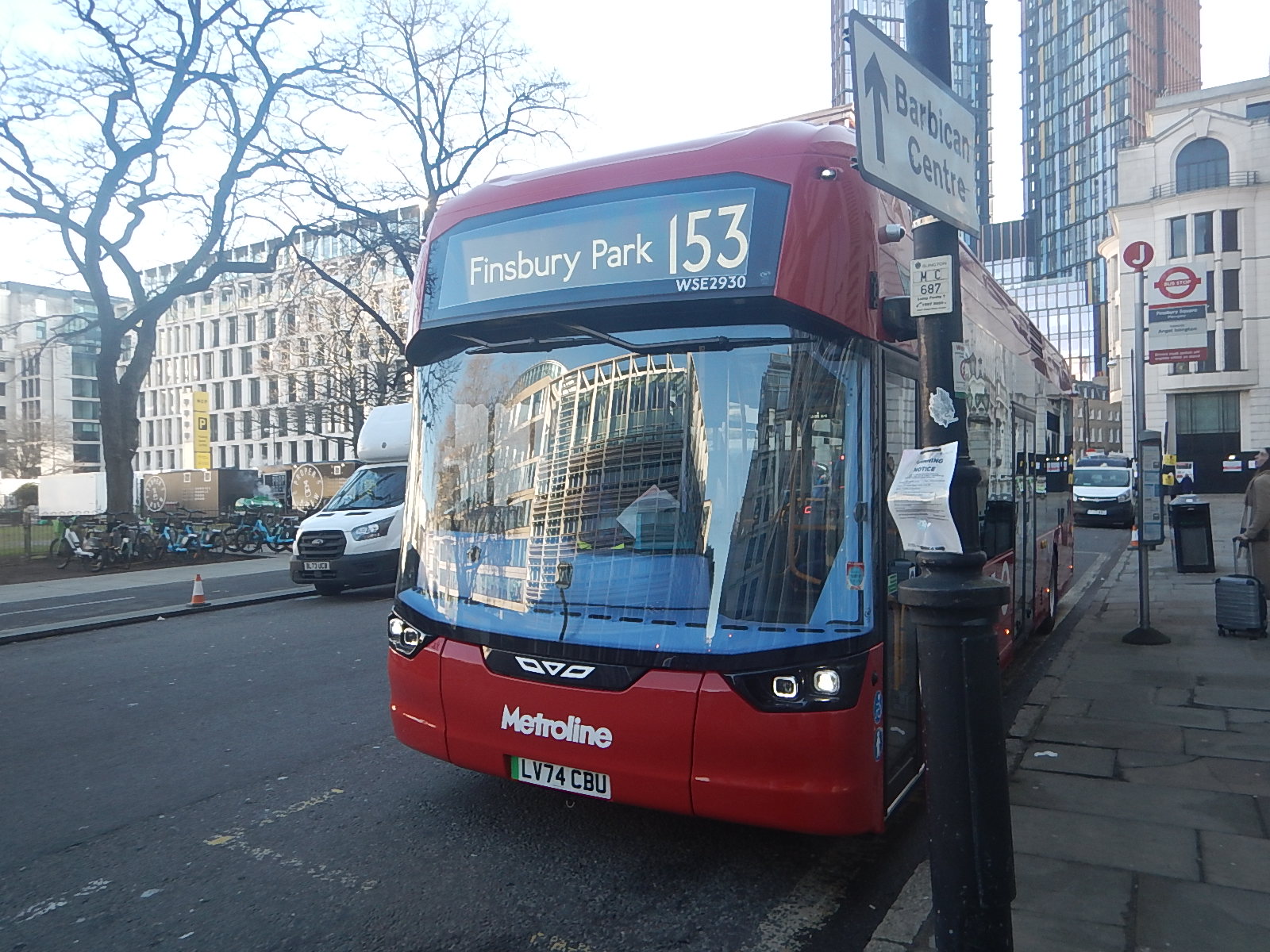
I was on a Chinese electric bus yesterday and there’s no doubt, that the ride in the Wrightbus product is smoother, than that of the Chinese one. Especially, when standing. The Chinese bus doesn’t even come close for ride with a New Routemaster.
London would do better, if it converted the thousand New Routemaster to zero-carbon power, rather than import a thousand Chinese buses.
In Equipmake Hybrid To Battery Powered LT11, I describe how one New Routemaster had a transmission transplant in Norfolk.
As it is possible, are Wrightbus NewPower working on it?
Wrightbus At Heart Of £6.5bn Hydrogen Mega-Project Set To Transform UK Economy
The title of this post is the same as that of this article on Love Ballymena.
These are the first three paragraphs.
Ballymena’s Wrightbus is at the forefront of a transformative £6.5 billion clean hydrogen initiative that promises to create 24,300 jobs across the UK and position the nation as a global leader in renewable energy.
Project HySpeed, unveiled this week, unites some of Britain’s most influential companies—including Wrightbus, Centrica, JCB, and ITM Power—in a landmark effort to scale up green hydrogen production, reduce costs, and accelerate industrial decarbonisation.
The project is a major coup for Ballymena, where Wrightbus, a pioneer in zero-emission transport, has been a vital part of the local economy for decades. As a key member of the HydraB Power group, which spearheads HySpeed, Wrightbus brings its expertise as the producer of the world’s first hydrogen-powered double-decker bus.
I believe we need the Irish dimension in Project HySpeed, as the Irish have a unique way of getting things done.
I am reminded by a story, that I heard from a retired Guards officer about the liberation of Vienna in World War II.
The city was in a desperate state and as he hold me the story, the retired officer said that a woman could be had for the price of two cigarettes.
In the mess one evening, the officers were discussing what to do, when an Irish Guards officer said, “The people need some fun! Let’s organise a horse race meeting!”
They all thought he was joking, but that is what they did!
The guy, who told the story is long since dead, but he believed that day of fun meant that Austria wasn’t taken over by the Soviets, like so many other East European countries.
The Irish do have this unique way of getting things done.
Note that the CEO of Centrica is Chris O’Shea. Does he have Irish roots?
Wrightbus To Build 1,000 Zero-Emission Buses
The title of this post, is the same as that of this article on The Times.
This is the sub-heading.
Northern Ireland company to ramp up production by 40% and recruit hundreds more employees as it also develops the UK’’s first long-distance hydrogen coach
These are the first two paragraphs, which add more detail.
Wrightbus, the Northern Ireland bus manufacturer, could be supplying as many as 1,000 zero-emission vehicles to depots around the UK as it increases production by 40 per cent over a two-year period and takes on hundreds more workers.
The company, best known for the redesigned 21st century take on the Routemaster ordered by the former mayor of London Boris Johnson, also announced it is to spend £5 million developing the UK’s first long-distance hydrogen coach capable of travelling 1,000km (621 miles) on a single recharging of its fuel cells.
These two paragraphs describe their production and employment plans.
Jean-Marc Gales, the former senior Peugeot director who is Wrightbus’s chief executive, said production at its Northern Ireland plant would go from 1,000 vehicles last year to 1,200 this year and 1,400 in 2026.
Over the same period the company’s workforce will grow from 1,500 to 2,500.
Peter Kyle, the secretary of state for science, innovation and technology, said this.
The level of innovation at Wrightbus and their quality standards have been recognised.
That is surely rare praise for a private company from a Labour Minster.
I first wrote about Wrightbus’s new hydrogen coach in early March, when I wrote Wrightbus Goes Back To The Future As It Relaunches The Contour Coach, which was based on this Wrightbus press release, which has the same title.
I said this in my post.
Wrightbus is entering the coach market for the first time in more than 30 years with the launch of two new vehicles in the next 18 months.
The first vehicle to hit the market is the Contour, a low-emission 55-seater coach that was launched at a customer showcase event today (March 5).
It’s a case of back to the future for Wrightbus, which last produced a Contour coach in 1987 before retiring the vehicle.
The second vehicle, a zero-emission hydrogen coach – which is under development in Ballymena, Northern Ireland – will be added to the Wrightbus coach range within the next 18 months to help drive decarbonisation of the sector.
The low emission Contour has a lead time of just six months from order, which is considerably faster than the current one-to-two-year average wait customers have come to expect from the sector. Featuring a Cummins Euro 6 400BHP X11 engine and a ZF automatic gearbox, the modern-day Contour has been built with comfort in mind, with up to 55 reclining seats – each with its own USB port – alongside other modern safety features. Competitively priced and available with or without PSVAR compliance, there is also the option of the vehicle being ‘pre-prepared’, protecting the vehicle’s ‘second life’ and flexibility.
The coach has a range of bespoke options for customers to choose from and is designed to maximise luggage space and functionality.
The low emission Contour coach was to have been built in China.
But events have moved on fast in the last month, with Trump and China trading insults on tariffs almost daily.
From today’s article in The Times and a press release from the Government, which is entitled Science Secretary Hails Wrightbus As Company Pledges £25 million To Bolster UK’s Green Transport Revolution And Drive Growth, it appears that the Chinese coach has been dropped.
Could the plan now be something like this?
- The low emission Contour coach will either be dropped, built in Ballymena or perhaps even built on JCB’s site in Texas.
- It might possibly be advantageous to build the coach in the United States to balance the tariffs and target the North American market.
- I would feel, that North America could be a lucrative market for the larger thousand kilometre coach.
- With the low emission Contour coach, Cummins get a chance to show the United States their excellent hydrogen technology.
- Trump can claim, that he’s brought jobs back to the United States.
- If Wrightbus and/or JCB build the low emission Contour coach, they could probably create a better product and get it to market earlier.
I suspect we’ll learn more of Wrightbus’s plans in the next few weeks.
Is This The Ultimate Tourist Bus?
This picture clipped from the Wrightbus web site, shows one of their latest products – An open-top electric tourist bus.
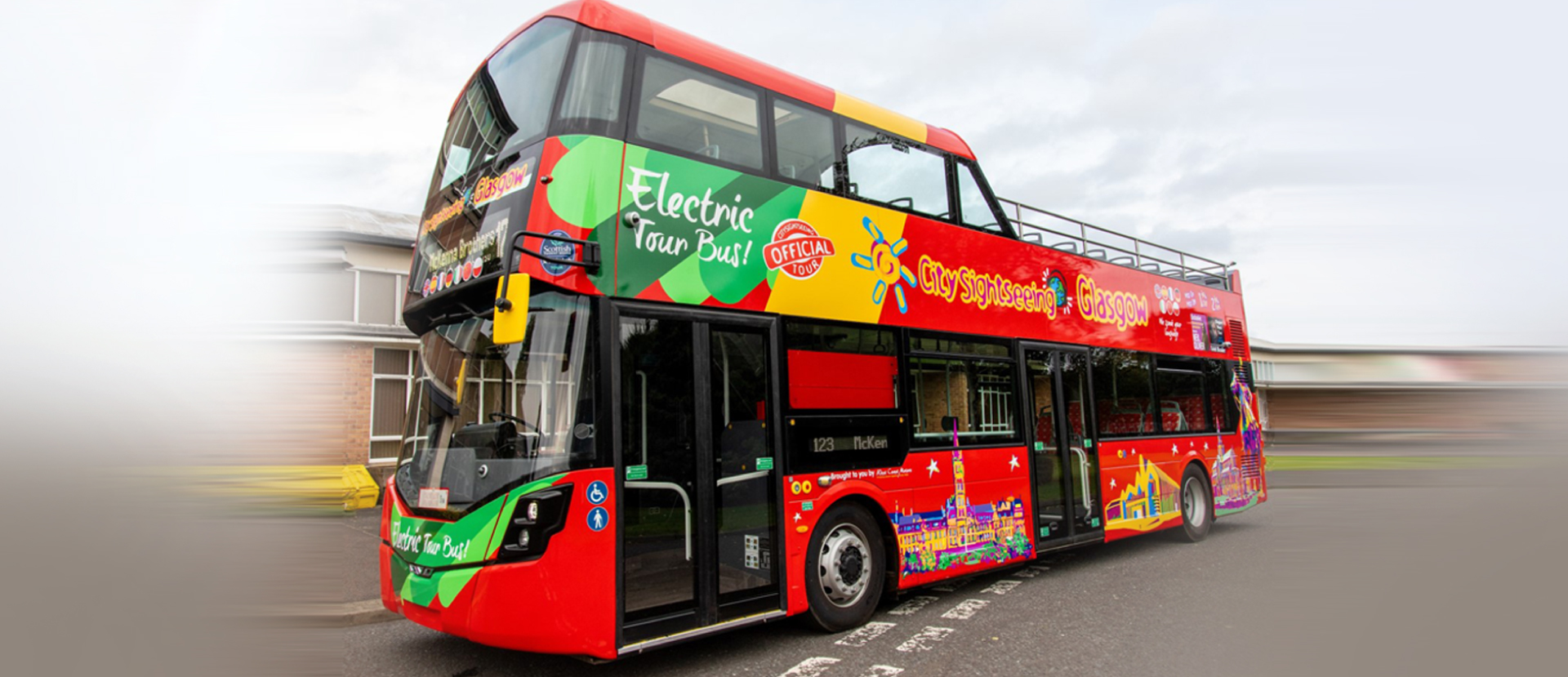
It appears to be running in Glasgow.
But if I was in charge of tourism, I’d get a hydrogen-powered version, as that would surely attract the punters.
Wrightbus Hydrogen Buses Trial Begins At Sizewell C
The title of this post, is the same as that of this article on Route One.
This is the sub-heading.
An order of 150 more StreetDeck Hydroliners, plus battery-electrics, could follow, says the manufacturer
These three paragraphs give more details.
A trial of four Wrightbus StreetDeck Hydroliner hydrogen fuel cell-electric buses at Sizewell C nuclear power plant in Suffolk was launched this week.
The three double-deckers and one single-decker are transporting workers at the under-construction site to test operational performance of the clean technology.
Wrightbus says a successful pilot scheme could lead to an order of 150 hydrogen buses from Sizewell, which would represent the UK largest fleet using that technology.
These zero-carbon buses are to ensure that transporting workers to the site for the project, has the lowest possible carbon footprint.
Gatwick Airport South Terminal Bus Station
These pictures show the bus station at Gatwick Airport’s South Terminal

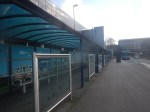












Note.
- It is in two separate sections (Northbound and Southbound) on either side of a fairly busy dual carriageway.
- This is the bus station in the South Terminal for Metrobus local services.
- Most of these pictures were taken on the Southbound side, with the last four looking down from the terminal.
- The information displays were clear and easy to understand.
- Access to the terminal and the train station was via lifts and a pair of travelators.
- About 80 % of the buses I saw were hydrogen-powered.
It did look as if it had been designed by an architect, who was more used to designing rudimentory rural tram stops or train stations.
This page on the London Gatwick web site gives more details of Coaches and Buses at Gatwick Airport.
From Reading To Gatwick Airport Along The North Downs Line
After writing Connecting Reading And The West To Gatwick Airport And Eurostar, I decided to go and look at the reality of the North Downs Line between Reading and Gatwick Airport stations.
I took my usual route to Reading, which is to go to Moorgate and get the Elizabeth Line direct to Reading using my Freedom Pass, after having breakfast in the Leon on Moorgate.
- I then had to leave the station at Reading, so that I could buy my ticket to Gatwick Airport.
- It would be so much easier, if there ere a couple of ticket machines on the bridge or platform at Reading station, so that passengers, who were changing trains could buy tickets quickly and easily.
In the end, I caught the 11:24 train to Gatwick with only a few minutes to spare.
From Reading To Gatwick Airport Along The North Downs Line
Along the North Downs Line, the train was a well-refreshed Great Western Railway Class 165 train.
These are some of the pictures, that I took on the route.









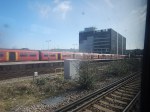





























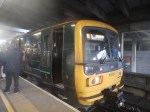
Note.
- The route goes through a lot of typical Surrey heathland.
- I noticed several pubs along the way.
- I suspect that there are some good walks from the stations.
- Reading and Guildford are university cities.
- Sandhurst is home to the Royal Military Academy.
- Farnborough Airport used to be home to the Royal Aircraft Establishment.
- Most of the seats on the train were taken.
I would expect that for a mainly rural route it is fairly busy.
Hitachi’s Intercity Battery Trains
Hitachi have developed an Intercity battery train and it is described on this page on their web site, where this is said about converting the trains to battery-electric operation.
A quick and easy application of battery technology is to install it on existing or future Hitachi intercity trains. Hitachi Rail’s modular design means this can be done without the need to re-engineer or rebuild the train and return them to service as quickly as possible for passengers.
Replacing one diesel engine with just one battery reduces emissions by more than 20% and offers cost savings of 20-30%. Our intercity battery powered trains can cover 70km on non-electrified routes, operating at intercity speeds at the same or increased performance.
That performance is certainly enough for Reading and Ashford via Gatwick, as only 37.7 miles in total, is not electrified.
Does The North Downs Line Mirror The East-West Rail?
Consider.
- The East West Rail will encircle London to the North, between Oxford and Cambridge.
- The North Downs Line encircles London to the South, between Reading and Ashford.
They could be considered two complimentary rail lines.
A Milton Keynes And Ashford International Service
Looking at the track layout on OpenRailwayMap, it would appear that one of Hitachi’s proposed Intercity Battery Trains fitted with dual voltage could pick its way elegantly along the East West Rail and the North Downs Line between Milton Keynes and Ashford International via Oxford, Reading and Gatwick Airport.
An Occasional Sheffield And Ashford International Service
If you could run a service between Milton Keynes and Ashford International, why not extend it to Bedford or even Sheffield in the North?
I believe if you put these Hitachi’s proposed Intercity Battery Trains on a cross-country route, that they will quickly suffer from London Overground Syndrome. This is my definition of the syndrome.
This benign disease, which is probably a modern version of the Victorian railway mania, was first identified in East London in 2011, when it was found that the newly-refurbished East London Line and North London Line were inadequate due to high passenger satisfaction and much increased usage. It has now spread across other parts of the capital, despite various eradication programs.
Put simply, it can probably be summed up as Quality Attracts Passengers.
Serving Heathrow
There have been various plans to get rail access into Heathrow from the West, but none have so far got off the starting blocks.
It is my view, that in the interim period, after my trip last weekend in the superb Wrightbus hydrogen double deck bus from Sutton to Gatwick, that I wrote about in Sutton Station To Gatwick Airport By Hydrogen-Powered Bus, that we should ask Wrightbus, who are designing a hydrogen-powered coach, to design the ultimate coach to connect rail hubs to major airports.
I would then run these coaches every ten minutes between Reading station and Heathrow Airport.
Serving Attractions
I believe that pairing Hitachi’s proposed Intercity Battery Trains with Wrightbus’s hydrogen coach could be a winner for passengers and operators.
As an example, Lumo are hoping to run an open access service between Paddington and Carmarthen, if Heidi the Spoilsport permits. Would it not be sensible, if one of Wrightbus’s hydrogen coaches did the last mile duties to the ferry for Ireland at Fishguard harbour.
DfT Objects To Eight Open Access Applications
The title of this post is the same as that of an article in the March 2025 Edition of Modern Railways.
Surprise! Suprise! There are no prizes for innovation and risk, to be given out by Starmer’s Government Of All The Lawyers.
- Alliance Rail – Cardiff and Edinburgh – opposed
- Grand Central – London and York – opposed
- Hull Trains – London and Hull – opposed
- Hull Trains – London and Sheffield – opposed
- Lumo – London and Glasgow – opposed
- Lumo – London and Rochdale – opposed
- Virgin Trains – London and Liverpool – opposed
- Virgin Trains – London and Glasgow – opposed
Wrexham, Shropshire and Midlands Railway – London and Wrexham – supported.
Splitting And Joining Of Trains
Several of the objections, seem to be on grounds of capacity.
So why not pair up some services and split and join at a convenient station?
Hull Trains – A Hull and a Sheffield service could start together in London and split in Retford.
Lumo – A Newcastle and an Edinburgh service could start together in London and split in Newcastle.
Lumo – An Edinburgh and a Glasgow service could start together in London and split in Edinburgh.
Virgin Trains – A Liverpool and a Glasgow service would start together in London and split in Crewe.
A Bad Decision
I believe the Government’s decision is a very bad one.
At the weekend I wrote Sutton Station To Gatwick Airport By Hydrogen-Powered Bus, about my trip in a hydrogen-powered bus to Gatwick-Airport.
- The quality, performance and roadholding of this new zero-carbon bus was superb.
- I can’t wait to try out Wrightbus’s new hydrogen-powered coach in the next twelve months.
- In the future, I can see high speed hydrogen coaches steaming along the motorways of the UK and Ireland.
Hydrogen-powered coaches will do for cheap travel on the roads of these islands, what Ryanair and easyJet for did above our heads.
Never Mind Heathrow: Gatwick Airport Is Close To Getting A New Runway
The title of this post, is the same as that of this article on The Times.
A friend passed through at Gatwick Airport yesterday, so I went to wish him well. For a change , I took a Metrobus from Sutton station to the South terminal – This route is free and doesn’t need a ticket with a Freedom Pass!
The bus was no ordinary bus, but a brand new Wrightbus hydrogen double decker from Ballymena.
It took a round-about route, as its main function is to bring local workers and passengers into the airport and handle traffic to Redhilll, Reigate and East Surrey Hospital.
But if this is the shape of buses to come, then I’m for it. Quality was more coach than bus and performance was sparkling with little or no noise and vibration.
Gatwick and Metrobus are building a network of local hydrogen buses to bring workers and passengers into the airport and I suspect, if the Airport has the fuel, they’ll use it for other purposes, like air-side vehicles, aircraft tow-trucks and car park buses.
Gatwick unlike Heathrow has a close-by source of electricity to produce hydrogen in the soon-to-be-extended 1.6 GW Ramplion offshore wind farm, just off Brighton.
Airbus are talking about bringing hydrogen aircraft into service by 2035 and I believe that by this date we’ll be regularly seeing hydrogen-turboprops on short routes.
As someone, whose software planned the Channel Tunnel, I think it reasonable by 2035, the following projects will be completed.
- Zeroavia are talking of converting aircraft to hydrogen in the next few years.
- A number of short-haul hydrogen aircraft are in service.
- Gatwick’s new runway and terminals are built.
- Ramplion is pumping hydrogen to the airport.
- The station has been updated.
- The Thameslink frequency of trains will have been increased.
Gatwick could be the first major airport to use large amounts of hydrogen, to cut emissions.
 The Anonymous Widower