First Demonstration Of Low-Cost Green Hydrogen Tech Launched By Advanced Ionics
The title of this post, is the same as that of this article on Hydrogen Fuel News.
Advanced Ionics has announced its Early Access Program, sponsored by the Repsol Foundation. This program will be a paid pilot study. Their low-cost green hydrogen production processes are powered by the Symbion electrolyzer technology, which uses process waste heat and is up to 50% more efficient than other technologies. Through the Early Access Program, Advanced Ionics hopes to provide customers with confidence in the potential of its technology. The program is part of an effort from the foundation to support entrepreneurships spearheading industrial decarbonization tech.
Note.
- At a first glance this looks promising.
- Electrolysis and waste heat is suggesting high temperature electrolysis, which appears to be more efficient.
- I suspect that the Repsol Foundation has plenty of funds.
- Advanced Ionics have a comprehensive web site.
I shall add this to my list of electrolyser technology to watch.
Apollo to Work On Celtic Sea Multi-Connection Offshore Substations
The title of this post, is the same as that of this article on offshoreWIND.biz.
This is the sub-heading.
Celtic Sea Power has awarded the Aberdeen-based engineering consultants, Apollo, with the pre-FEED contract for the 400 MW Pembrokeshire Demonstration Zone Multi-connection Offshore Substation (PDZ MOS) and 2x 1 GW MOSs targeting The Crown Estate Refined Area of Search (RAoS) A offshore Wales
This is the first paragraph.
Located 19 kilometres off the Pembrokeshire coast, the PDZ MOS project is designed to allow offshore renewable energy technology developers easy access to a consented test site complete with a grid connection to prove their technology in the offshore environment.
Sounds like the sort of infrastructure that is needed, so you can tow up your experimental floating wind turbine, secure it and just plug it in.
National Grid Energise World’s First T-Pylons
The title of this post, is the same as that of this press release from National Grid.
These are the four bullet points.
- Electricity is flowing to homes and businesses through the first new pylon design in the UK for nearly 100 years.
- Major milestone in National Grid’s Hinkley Connection project to connect 6 million homes and businesses in the South West to home grown, low carbon energy.
- The T-design, with a single pole and cross shaped arms, is around a third shorter than the traditional design with a smaller ground footprint.
- The T-pylons, along with a new substation and underground cabling, are now incorporated into National Grid’s electricity transmission network delivering electricity in Somerset and across England and Wales.
This is the first paragraph.
National Grid has successfully energised 36 of the world’s first T-pylons between Bridgwater and Loxton in Somerset. The new shaped pylons have been constructed as part of the £900 million Hinkley Connection Project, a new 57 km high-voltage electricity line that will connect six million homes and businesses to new sources of home grown, low carbon energy and help the UK to meet its net zero by 2050 target.
There is a video in the press release, which is well worth a view.
- The size of the pylons certainly reduces their visibility.
- It appears there are seven cables on either side.
These pictures show the transmission lines to the Sizewell power station site.
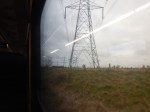
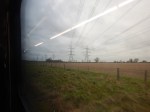
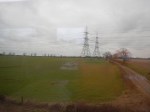


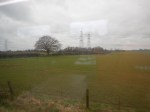


Note.
- The lower height is very noticeable.
- There seem’s to be a lot more wires.
- I would assume, that the reduced number of components, reduces the cost of installation and maintenance.
The installation proved that even in the most mundane of applications, innovation can bring positive results.
The T-pylons are a design by Danish company; Bystrup.
This is the specification from their comprehensive web-page.
- Power – 2 x 400 kV
- Height – 35 metres / 114 feet
- Units/km – 3 (5 units/mile)
- Material – Hot-dip galvanised steel, painted
- Assembly – On-site and quick – less than 10 parts
- Installation – Simple monopile foundation
- Production possible anywhere in the world
- Developed – 2011-2014
They’ve also won several awards.
- 1st prize in int. competition for RIBA
- Nominated for the IET Innovation Award 2014
- Gold Prize, CIGRE Seoul 2017
- Award winner, UK Steel Awards (SSDA) 2017
I would hope to see more in the UK.
Call For Innovations In Offshore Wind – RWE Launches Global Innovation Competition 2023
The title of this post, is the same as that of this press release from RWE.
This is the sub-heading.
Solutions wanted in the domains of ecology, circularity and system integration – Deadline for submission is 17th of April 2023
This is the first paragraph.
RWE, one of the world leaders in offshore wind, has launched its second annual Innovation Competition. The company is looking for solutions in the domains of ecology, system integration and circularity in offshore wind. RWE is dedicated to exploring and supporting innovative solutions that can both accelerate the pace of deployment of offshore wind, as well as contribute to sustainable development of offshore wind farms worldwide.
As someone who explored the dynamics of towing out and erecting floating oil platforms in the 1970s, I don’t think my experience fits entering. But I’ll be thinking about something.
World’s First Offshore Vessel Charging System Completes Harbour Trials
The title of this post, is the same as that of this article on offshoreWIND.biz.
This is the sub-heading.
MJR Power and Automation, together with Blackfish Engineering and Tidal Transit, have completed the harbour trials of the company’s platform-mounted automated offshore power and charging system.
Reading the article, this appears to be a very comprehensive system, that allows electric or hybrid wind farm servicing vessels to top up their batteries efficiently before returning to base.
Surely, it is better to do it this way by developing the charging network before bringing the battery and hybrid vessels into service.
UK Company Introduces Robotic Ecosystem For Offshore Wind Farm Inspections
The title of this post, is the same as that of this article on offshoreWIND.biz.
This is the sub-heading.
Marshall Futureworx, the venture building and advanced technologies arm of Marshall of Cambridge, has unveiled plans to provide offshore wind farm inspection services using a resident robotic ecosystem.
These two paragraphs outline the system.
Lilypad is an ecosystem of multiple autonomous BVLOS (Beyond Visual Line of Sight) UAVs (Unmanned Aerial Vehicles) which utilise artificial intelligence and navigational sensors to provide dynamic and on-demand offshore inspection services, Marshall Futureworx said.
The UAVs are deployed from dedicated offshore charging stations and monitored by a single remote pilot stationed in an onshore command and control centre. Inspection data and reports are then transmitted back to the wind farm operators, which is said to enable faster, more frequent, reliable, and predictive maintenance scheduling and more effective utilisation of assets.
I can think of lots of uses for a system like this.
Floating Foundation For 15+ MW Offshore Wind Turbines Launches
The title of this post, is the same as that of this article on offshoreWIND.biz.
This is the sub-heading.
Odfjell Oceanwind has launched the Deepsea Star™ harsh environment floating wind foundation designed to support wind turbines with a capacity of 15 MW and more.
Note.
- Odfjell Oceanwind is a Norwegian company and has this web site.
- This news item from Odfgell Oceanwind is entitled Odfjell Oceanwind Launches The Deepsea Star™ 15MW Floating Wind Foundation and was published on the 28th of February, 2023.
- The news item was the source of the iffshoreWIND.biz article.
- In the news item, one of the designers, explains some of the features.
I very much believe that ,my twenty-three-year-old self armed with ICI’s PACE 231-R would have had great fun examining the dynamic proiperties of a structure like this.
Activity Ramping Up On Irish Floating Wind Test Site
The title of this post, is the same as that of this article on offshoreWIND.biz.
This is the sub-heading.
The Sustainable Energy Authority of Ireland (SEAI) is busy with bringing forward its Atlantic Marine Energy Test Site (AMETS), a floating wind and wave energy technology test site which has been in development for several years now. Along with offshore surveys scheduled for next month, SEIA has also commenced work on procuring an onshore substation and a floating LiDAR for AMETS.
It all sounds very professional.
The Atlantic Marine Energy Test Site will be located off Annagh Head in the West of Ireland. This Google Map shows the location of Annagh Head on the island of Ireland.

I do have a imperfect memory of a weekend of good hospitality and gourmet food at a hotel called the Cashel House Hotel to the West of Galway, but I can’t remember how C and I flew there. Did we fly to Knock or Shannon either using a scheduled airline or my Cessna 340 A?
All I can remember of the holiday, was that it was very windy at times and driving through Westport. So did we explore towards Annagh Head?
This Google Map shows a close-up of Annagh Head.
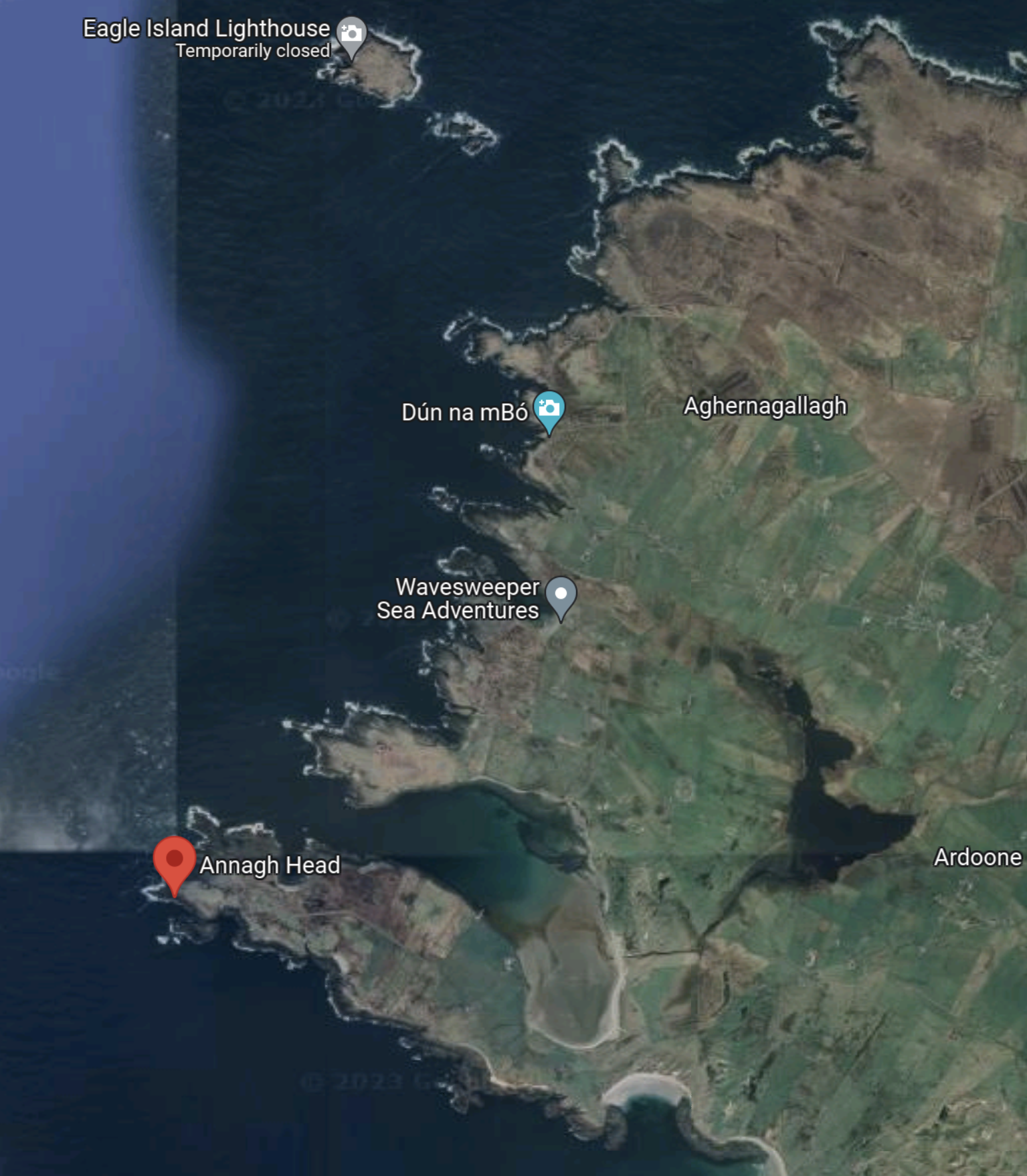
I suspect that Annagh Head is an ideal location to test floating wind and wave power.
There will also be good hospitality and airlinks to the UK and Europe.
In So Many Floating Wind Designs, So Few Test Sites – Norwegian METCentre Sold Out, I wrote about the shortage of test sites for wind power.
So perhaps, AMETS will help to fill the gap?
In
Skegness Wind Turbine Trial To Light Up Pier In UK First
The title of this post, is the same as that of this article on the BBC.
This is the sub-heading.
A Lincolnshire seaside pier is being lit up at night with the help of a new mini wind turbine.
These are the first three paragraphs.
One of the 6ft (2m) vertical turbines has been installed on Skegness Pier with another fitted on a factory roof in Spalding.
They are able to capture wind from all directions without turning, making them low maintenance.
Both are made by Norwegian company Ventum Dynamics, which is testing the technology with local councils.
I believe it is one of those ideas, that proves the Sliced-Bread Theory of Innovation.
I have a few thoughts.
Design
The design looks clean, modern and unobtrusive.
I don’t know what the noise level is like, but I suspect good design means, it could be fairly low.
I’ll just have to visit Skegness on a windy day, which won’t be a difficult thing to arrange.
Easy To Add To An Existing Or New Building
The Ventum web site has some good pictures.
From my flying experience, I suspect that the higher a turbine is mounted, the more power will be generated.
The only problem would be the heritage lobby.
This picture shows Oakwood station on the Piccadilly Line.

Note.
- The station is the second most Northerly on the line.
- It opened in 1933.
- It is a classic Charles Holden design.
- It is a Grade II* Listed building.
- The station is on top of a hill and has an elevation of 71 metres above sea level.
It might be the ideal place to put perhaps six turbines on the roof.
But would the heritage lobby allow it?
Remote Power
Teamed with a battery, they would be the ideal remote power solution for buildings and locations without a mains supply.
Finance
I used to part-own a finance company and feel that these turbines would be attractive to a finance company, if ethically sold.
Conclusion
I like them!
Entrion Wind Wins ScotWind Feasibility Deal For Its 100-Metre Depth Foundation Tech
The title of this post, is the same as that of this article on offshoreWIND.biz.
This is the sub-heading.
Entrion Wind has been awarded a project to evaluate the feasibility of its patent-pending fully restrained platform (FRP) offshore wind foundation technology by a Scotwind developer.
Having worked on similar structures for reusable oil platforms in the 1970s, I reckon these FRP monopoles can be made to work.
The structures, I mathematically-modelled were for a company called Balaena Structures, that had been started by two Cambridge University engineering professors. The structures were about a hundred metres high and perhaps thirty metres in diameter.
They would have been built horizontally in the sort of dock, where you would build a supertanker and would have been floated into position horizontally. Water would then be let in to the cylinder and they would turn to the vertical. From that position, they would be lowered to the sea-bed by adjusting the water in the cylinder. They had a method of holding the Balaena to the seabed, which relied mainly on the weight of the structure and what they called the gum-boot principle.
Sadly, they never sold any platforms and the company folded.
Until recently, you could find the expired patents on the Internet.
There’s more on Entrion Wind’s technology on this page on their web site.
 The Anonymous Widower