Ireland Charts Course For 37 GW Offshore Wind Development
The title of this post, is the same as that of this article on offshoreWIND.biz.
This is the sub-heading.
Irish Minister for the Environment, Climate and Communications, Eamon Ryan, has launched the Future Framework for Offshore Renewable Energy, which provides a roadmap for Ireland to deliver 37 GW of offshore wind by 2050.
This is the introductory paragraph.
The framework sets out the pathway Ireland will take to deliver 20 GW of offshore wind by 2040 and at least 37 GW in total by 2050. Critically, it also provides the evidence base for Ireland’s offshore renewable energy (ORE) targets.
This document from the UK Government, which is called Offshore Wind Net Zero Investment Roadmap, says this.
With the highest deployment in Europe, we have proved that offshore
wind can be delivered at ever increasing scale whilst decreasing the
costs to consumers.
The UK has a world-leading ambition to deploy up to 50GW by 2030,
with up to 5GW coming from floating offshore wind.
Irish ambitions look to be more or less in line with the UK’s.
These are some further thoughts.
Ireland Interconnectors
These are interconnectors connecting Ireland to the UK and Europe.
- Celtic Interconnector – 700 MW – Between the southern coast of Ireland and the north-west coast of France.
- East-West Interconnector – 500 MW – Between Portan in Ireland to Shotton in Wales.
- Green Link – 500 MW – Between County Wexford and Pembrokeshire.
- Moyle Interconnector – 500 MW – Between Scotland and Northern Ireland.
If Ireland is going to install 37 GW of offshore wind, as opposed to about 4.7 GW in total generation now, I suspect Ireland will need more interconnectors or industries, that need a lot of GWs.
UK Energy Grid Needs £60bn Upgrade To Hit Green Target, Plan Says
The title of this post, is the same as that of this article on the BBC.
This is the sub-heading.
The UK’s electricity network needs almost a further £60bn of upgrades to hit government decarbonisation targets by 2035, according to a new plan.
These five paragraphs explain the plan.
About 4,000 miles of undersea cables and 1,000 miles of onshore power lines are needed, said the National Grid’s Electricity Systems Operator (ESO).
The investment would add between £20 to £30 a year to customer bills, it said.
The government said the ESO’s plans were preliminary and yet to pass a “robust planning process”.
The plans were written up by the ESO, the organisation which runs the electricity network and would run the updated system it is calling for too. It is currently owned by National Grid but will transfer into government ownership later this year.
Its latest £58bn estimate is for work needed between 2030 and 2035 and comes on top of a previous £54bn estimate for work taking place between now and 2030.
These are my thoughts.
The Amount Of Undersea Cable
Edinburgh and London are roughly 400 miles apart as the train runs, so it looks like there could be the equivalent of ten underwater cables between the North of Scotland and England.
In Contracts Signed For Eastern Green Link 2 Cable And Converter Stations, I talked about the proposed 2 GW link between Peterhead in Scotland and Drax in England, which will be a double cable. So there’s the first two of these long cables.
It looks to me, that National Grid are proposing to use underwater cables wherever they can, so they avoid large expensive planning rows stirred up by Nimbies.
Monitoring The Undersea Cables
Last week Ofgem gave National Grid a £400,000 grant to develop new innovative technologies, which I wrote about in £400k For National Grid Innovation Projects As Part Of Ofgem Fund To Help Shape Britain’s Net Zero Transition.
One of the project is called HIRE – Hybrid-Network Improvement & Reliability Enhancement and will be used to check all these cables are performing as they should.
My electrical engineering experience tells me, that there must be some cunning way, that will detect that something is happening to the cable. The involvement of a technology company called Monitra in the project is a bit of a giveaway.
How Much Will It Cost Me?
Currently, UK consumers pay about £30 per year to have electricity delivered, so this will rise to between £50 and £60 per year.
That is just over a pound a week. I would pay about the same for a resident’s parking permit outside my house for an electric car and probably three times more for a petrol or diesel car.
Do We Have Enough Cable?
Two undersea cable factories are under development in Scotland and I suspect the 4,000 miles of undersea cables will be delivered on schedule and covered in saltires.
What About T-Pylons?
The latest onshore electricity transmission line between Hinckley Point C and Bristol, doesn’t use traditional pylons.
It uses T-pylons like these to connect the 3.26 GW nuclear power station.
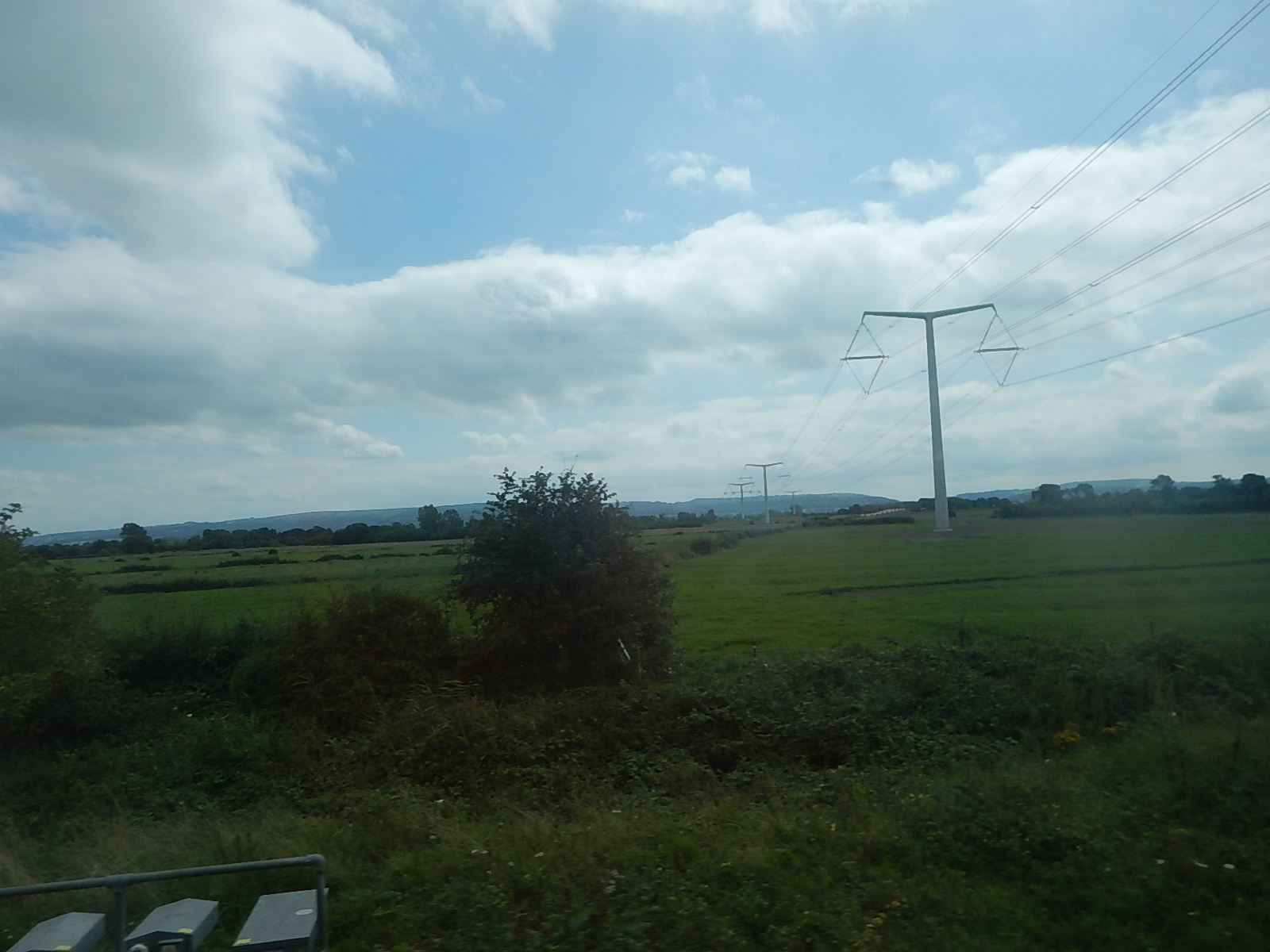
Note that they are shorter, designed to be less intrusive, have a smaller footprint and are made from only ten parts.
I suspect they will cost less to install and maintain.
There is more on T-pylons in National Grid Energise World’s First T-Pylons.
I wouldn’t be surprised that some of the oldest traditional pylons will be replaced by T-pylons.
I am surprised that T-pylons are not mentioned in the BBC article.
I like T-pylons. How do you feel about them?
Eastern Green Link 2
This press release from National Grid, describes Eastern Green Link 2 like this.
Eastern Green Link 2 (EGL2) is a 525kV, 2GW high voltage direct current (HVDC) subsea transmission cable from Peterhead in Scotland to Drax in England delivered as a joint venture by National Grid and SSEN Transmission.
This map from National Grid, shows the route of the Eastern Green Link 2.

The Northern landfall is at Sandford Bay and the Southern landfall is at Wilsthorpe Beach.
This Google Map shows Sandford Bay and Peterhead power station.
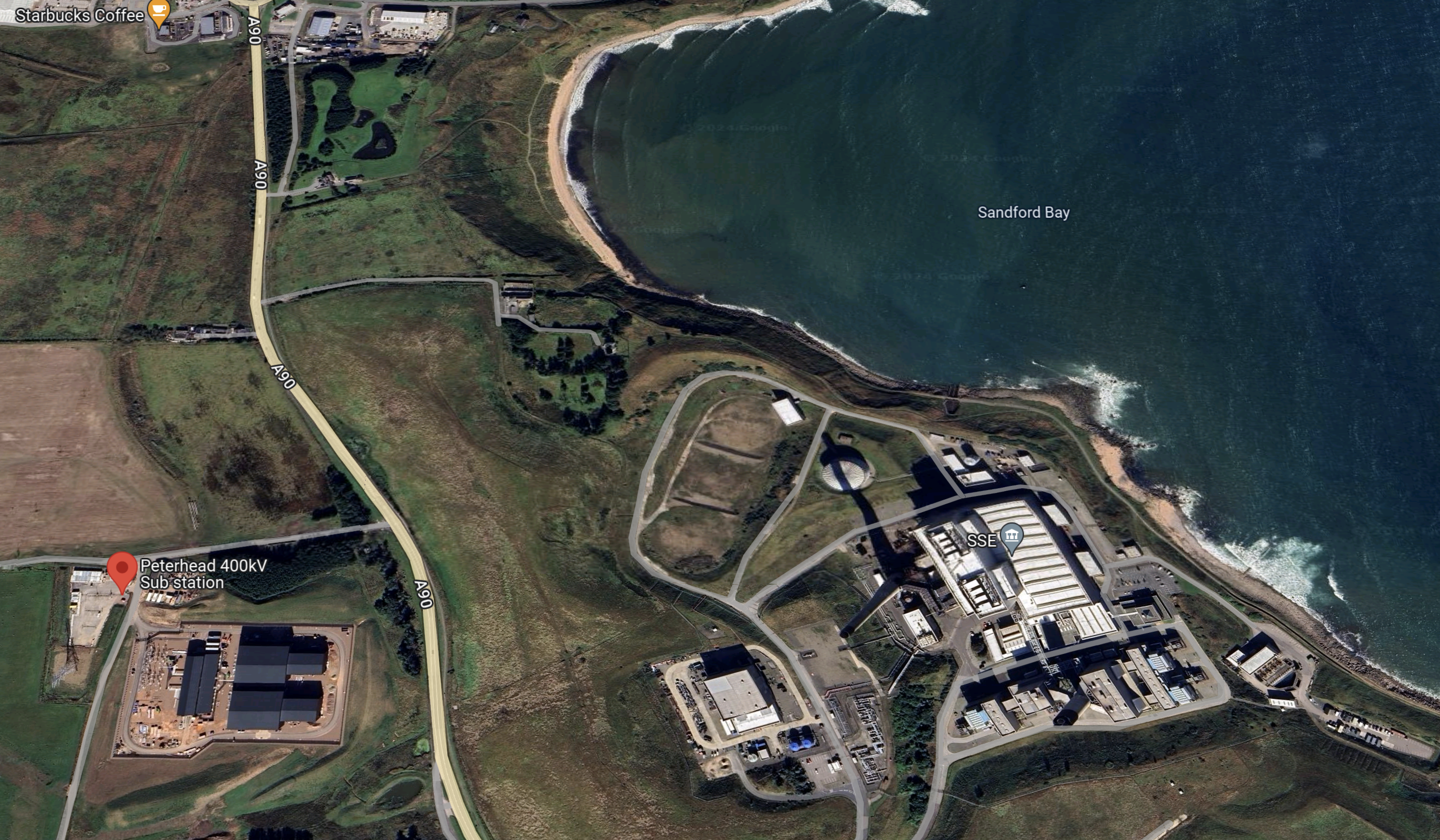
Note.
- Sandford Bay occupies the North-East corner of the map.
- The red arrow indicates the main 400kV sub-station at Peterhead.
- The 2177 MW gas-fired Peterhead power station is to the East of the sub-station marked as SSE.
This second Google Map shows the onshore route of the cable from Wilsthorpe to Drax.

Note.
- Flamborough Head is in the North-East corner of the map.
- Wilsthorpe Beach is at Bridlington a couple of miles South of Flamborough Head.
- The red arrow indicates Drax Power station.
- An onshore underground cable will be installed from landfall in Wilsthorpe to a new onshore converter station built in Drax.
The EGL2 HVDC cable connection from Scotland to England consists of 436km of submarine cable and 69km of onshore cable.
Both converter stations will be on existing power station sites and the major onshore works will be the underground cable between Wilsthorpe and Drax.
Where Does Drax Go From Here?
Currently, Drax power station is a 2595 MW biomass-fired power station.
There are now other large power sources that could replace some or all of the output of Drax power station.
- 2GW of Scottish wind power coming to Drax on Eastern Green Link 2.
- 6 GW of offshore wind is being developed at the Hornsea wind farms.
- 8 GW of offshore wind is being developed at the Dogger Bank wind farms.
- 2.5 GW from the three gas-fired power stations at Keadby, two of which are likely to be fitted with carbon capture.
- 1.8 GW from the proposed hydrogen-fired Keadby Hydrogen power station.
Given the bad feelings many have about Drax burning biomass, with 20.3 GW of electricity, you might think that shutting down Drax would be a simple solution.
But, according to Drax’s Wikipedia entry, it has a unique property.
Despite this intent for baseload operation, it was designed with a reasonable ability for load-following, being able to ramp up or down by 5% of full power per minute within the range of 50–100% of full power.
So Drax could be very useful in balancing the grid, by ramping up and down to fill the gap between production and need.
In addition, there is good biomass. This is from the Wikipedia entry.
A 100,000 tonne pa capacity straw pelletization facility was constructed at Capitol Park, Goole in 2008.
Drax are also promoting BECCS or Bioenergy carbon-capture and storage.
There is a Wikipedia entry for Bioenergy With Carbon Capture And Storage, of which this is the first couple of sentences.
Bioenergy with carbon capture and storage (BECCS) is the process of extracting bioenergy from biomass and capturing and storing the carbon, thereby removing it from the atmosphere. BECCS can theoretically be a “negative emissions technology” (NET).
I do feel that carbon capture and storage is a bit like sweeping the dust under the carpet, when you sweep the floor around it.
But carbon capture and use could be another matter.
This Google Map shows the Drax site.

Note how it is surrounded by agricultural land.
Could the power station be the source of pure carbon dioxide to be fed in greenhouses to flowers, herbs, salad vegetables, tomatoes and other plants?
I suspect there’s productive life left in Drax power station yet!
LionLink
LionLink, that is being developed by National Grid is a new type of interconnector, called a multi-purpose interconnector, that will connect Suffolk and The Netherlands via any convenient wind farms on the way. This means that the electricity generated can go where it is needed most.
I wrote about LionLink in World’s Largest-Of-Its-Kind Power Line To Deliver Clean Power To 1.8m UK Homes And Boost Energy Security.
Other Multi-Purpose Interconnectors
I can see other multi-purpose interconnectors like LionLink being built around the UK.
- There could be one across the Dogger Bank to link out 8 GW of Dogger Bank wind farms with those of the Dutch, Danes and Germans on their section of the bank.
- NorthConnect could be built between Scotland and Norway via some of the wind farms being developed to the North-East of Scotland.
- Could wind farms to the North of Ireland use a multi-purpose interconnector between Scotland and Northern Ireland.
- I can also see one or possibly two, being built across the Celtic Sea to link Devon, South Wales and Southern Ireland via the wind farms being developed in the area.
- Will we also see a Channel multi-purpose interconnector to transfer electricity along the South Coast of England?
Some of these multi-purpose interconnectors could be key to creating a revenue stream, by exporting electricity, to countries in Europe, that have a pressing need for it.
Conclusion
National Grid’s excellent plan will lead to the end of the practice of shutting down wind turbines. The spare electricity will be exported to Europe, which will surely create a good cash-flow for the UK. This in turn will encourage developers to create more wind farms in the seas around the UK’s coasts.
Thousands Pay More Tax In ‘Chaotic’ Yousaf Budget
The title of this post, is the same as that of this article in The Times.
It has this sub-heading.
Efforts to plug £1.5bn funding hole put Scotland at a disadvantage, say business leaders
I have a feeling that the rise in income tax will have unintended consequences.
The UK’s Current Hydrogen Plans
Last week, the UK Government announced grants for eleven big hydrogen projects, around the UK, with two in Scotland. The new Scottish electrolysers will be playing a large part in decarbonising the Scotch whisky industry and HGVs.
I wrote Major Boost For Hydrogen As UK Unlocks New Investment And Jobs to describe the investments scope and benefits.
The Government estimated that these grants will create 700 jobs, across the UK.
How many quality high-paid jobs will this funding create in Scotland? As two of the eleven projects are based in Scotland, it could be around 127 quality jobs.
More UK Hydrogen Plans Are On The Way
The Government also indicated that this was only the first stage of bringing hydrogen production to the UK, so I will expect more high-paid quality jobs will be created.
Projected UK Offshore Wind Power
This Wikipedia entry is a list of all installed, under-construction and proposed offshore wind farms in the UK.
Aggregating the new unbuilt wind farms says the following capacity will very likely be installed in the UK in the next few years.
- Scotland – 32, 750 MW.
- England – 25,558 MW
- Wales – 700 MW
As more proposals have been called for, particularly in the Celtic Sea, I don’t think it would be unreasonable to add perhaps another 10,000 MW.
Wind farms are also proposed for around the island of Ireland and in the waters of the Channel Islands.
Upgrading Of The National Grid
These three posts could well be forerunners of other posts, I will write in the next few months.
- National Grid Fast-Tracks Overhead Line Upgrade Project To Help Accelerate Connection Dates Of 175 Clean Energy Projects
- National Grid To Accelerate Up To 20GW Of Grid Connections Across Its Transmission And Distribution Networks
- National Grid’s London Power Tunnels Breakthrough Completes £1 Billion Project’s Tunnelling Activity
National Grid is increasing its capacity at a fast pace and will need a large number of quality engineers.
Crossrail And Electrical Engineers/Electricians
I suspect we’ll find, that when a report on the late delivery of Crossrail is published, an electrician shortage will get some of the blame.
I have friends, who are electricians. Because of the shortage of trained electricians, they were offered fortunes to work on Crossrail.
Do We Have Enough Engineers?
For all the reasons I have outlined, our path to net-zero will need a lot of trained electrical engineers and electricians and just as Crossrail showed, when there is a shortage of labour in a particular area, remuneration rises.
Electrical engineers and electricians in the British Isles will be able to pick and choose the jobs they take, just as they did with Crossrail and the other major projects being built at the same time.
Effects On Scotland
If you were an engineer, who had skills and could work on these projects, would you prefer to work on a project, where the tax rate was lower?
Scotland’s tax rise will harm their decarbonisation ambitions.
Surely, the Greens should have vetoed a tax increase, which will inevitably slow their progress to net-zero?
Or are Greens a tad short of the grey matter?
Conclusion
I believe the Scottish government has shot itself in the foot.
Centrica Energy, Bord Gáis Energy And Mitsubishi Power Announce Development Of Europe’s First Ammonia Fired Power Generation Facility
The title of this post, is the same as that of this press release from Centrica.
This is the sub-heading.
Centrica plc and Mitsubishi Power Europe Limited “Mitsubishi Power Europe” have signed a Memorandum of Understanding (MOU) to explore the development, construction, and operation of Europe’s first-ever ammonia-fired power generation facility at Bord Gáis Energy’s Whitegate Combined Cycle Gas Turbine (CCGT) power station in Cork, Ireland.
These four paragraphs outline the project.
The project is being led by Centrica through its Bord Gáis Energy and Centrica Energy businesses and Mitsubishi Power Europe and would become Europe’s inaugural ammonia-fired power generation facility and one of only two such facilities in the world.
The utilisation of low carbon ammonia as a clean and sustainable fuel source for power generation has the potential to provide security of supply while reducing greenhouse gas emissions. Low carbon ammonia has a higher volumetric density than hydrogen, enabling the utilisation of low carbon hydrogen in a form which is easy to transport and store, resulting in a fuel that can be combusted with no carbon emissions at point of use. Its use as a fuel is a promising long-term energy solution for the transition to a low-carbon energy value chain.
Bord Gáis Energy’s facility at Whitegate CCGT power station would serve as a global demonstration site for ammonia-fired power generation technology, providing insight into the feasibility and scalability of low carbon ammonia as a green fuel and shaping the future of power generation worldwide, with low carbon ammonia being sourced through Centrica Energy’s global trading network.
Following the signing of the MOU, the project team is being established to commence project feasibility assessments. Upon the successful outcome of this assessment, extensive local stakeholder engagement will commence.
Note.
- No mention of the size of the new power station is given in the press release.
- Whitegate power station is a 445 MW combined cycle gas turbine (CCGT), that was built in 2010.
- It can meet ten percent of Ireland’s electricity demand.
I have a few thoughts.
Will The Existing Power Station Be Converted To Ammonia Or Will A New Ammonia-Fired Power Station Be Built Alongside?
Consider.
- If the second station doesn’t work, there’s no reduction in power.
- If a replacement station doesn’t work, ten percent of Ireland will be in the dark.
- Ireland will be needing more power in the next few years.
- A second power station can be appropriately-sized.
- Japanese don’t like to lose face!
Prudence probably says that building a second station alongside is the least risky route.
Wind Power In Ireland
This Wikipedia entry is entitled Wind Power In Ireland.
This is the first paragraph.
As of 2021 the island of Ireland has 5,585 megawatt and the Republic of Ireland has 4,309 MW of installed wind power nameplate capacity, the third highest per capita in the world. In 2020 wind turbines generated 36.3% of Ireland’s electrical demand, one of the highest wind power penetrations in the world.
There is also one 500 MW interconnector between the islands of Great Britain and Ireland, with another similar-sized one under construction.
As the wind doesn’t blow all the time, the island of Ireland will need some low-carbon backup.
Why Ammonia?
This paragraph from the press release gives several reasons.
The utilisation of low carbon ammonia as a clean and sustainable fuel source for power generation has the potential to provide security of supply while reducing greenhouse gas emissions. Low carbon ammonia has a higher volumetric density than hydrogen, enabling the utilisation of low carbon hydrogen in a form which is easy to transport and store, resulting in a fuel that can be combusted with no carbon emissions at point of use. Its use as a fuel is a promising long-term energy solution for the transition to a low-carbon energy value chain.
There may also be secondary issues here.
If you read the Applications section in the Wikipedia entry for ammonia, you will realise, what a useful chemical ammonia is.
As Ireland has a lot of agriculture, a fertiliser plant could be located close to the power station.
If the ammonia was green ammonia, then this will help to decarbonise the island of Ireland.
Where Will The Green Ammonia Come From?
These posts deal with the production and distribution of green ammonia.
- Could West Africa Become A Green Energy Powerhouse?
- H2U Eyre Peninsula Gateway Hydrogen Project Begins Largest Green Ammonia Plant
- KEPSA Signs Large-Scale Green Energy Projects MoU In Kenya
- Namibia Is Building A Reputation For The Cheapest Green Hydrogen
- Uniper To Make Wilhelmshaven German Hub For Green Hydrogen; Green Ammonia Import Terminal
Note.
- A continent with a lot of renewable energy like Africa or Australia can create lots of green ammonia.
- As the press release says, ammonia is easier to transport and store compared to hydrogen.
- The press release says that low carbon ammonia will be sourced through Centrica Energy’s global trading network.
- Fortescue Future Industries is mentioned in several posts, as producers of green hydrogen and green ammonia.
- Centrica is big enough to stand up to Andrew “Twiggy” Forrest and Fortescue Future Industries.
As in a few years, we will have many GWs of renewable energy, could we be making green ammonia for the Irish?
This news story on the UK Research and Innovation web site is entitled Designs For Green Ammonia Plant Become Reality.
This is the sub-heading.
Science and Technology Facilities Council (STFC) researchers are building a small-scale plant to generate ammonia using only renewable energy sources.
These two paragraphs outline the story.
Ammonia is a promising carbon-free fuel source of the future and so if successful, the plant has the potential to considerably advance the UK’s net zero ambitions.
It marks the second phase of the Ammonia Synthesis Plant from Intermittent Renewable Energy (ASPIRE) initiative which will be led by STFC in conjunction with the University of Bath, Johnson Matthey, and Frazer-Nash Consultancy.
The UK Research and Innovation news story has this description of the ASPIRE technology.
Current commercial ammonia synthesis is optimised for near steady production requiring constant power.
The first phase of ASPIRE however saw the design of a patented modular reactor and thermal management system that should enable operation from an intermittent renewable power supply.
The new plant will have three core elements:
- a pressure swing adsorption system which extracts nitrogen from air
- a modular electrolyser which splits hydrogen from water
- a synthesis loop that uses the modular reactor and a thermal management system to combine hydrogen and nitrogen to make ammonia
This will enable the entire production process to operate autonomously, powered by a small wind turbine and series of solar canopies with an ammonia generation rate proportional to the available renewable power.
There is even this quote from a Dr. Alan Partridge.
Thanks to the incredible work on this initiative by the team at Rutherford Appleton Laboratory as well as the University of Bath and private sector partners, we are closer than ever to producing industry-scale green ammonia for the UK and the world.
Perhaps, this technology will allow the island of Ireland to make all the green ammonia it needs.
Will Centrica Be Going Into The Green Ammonia Business?
The Centrica press release says they will be dealing in green ammonia for the benefit of Ireland. So Yes!
Conclusion
The news story on the UK Research and Innovation web site is a must-read.
As we have so much renewable energy in the UK, some company will build an ASPIRE-based green ammonia plant in the UK.
High Speed Two To Holyhead
Rishi Sunak has just announced that the North Wales Main Line will be electrified, along with the cancellation of further phases of High Speed Two.
I have written about this topic before in Could High Speed Two Serve Holyhead?.
In that post, I started with this question and answer.
Why?
It could be a way to create a zero- or low-carbon route between the islands of Great Britain and Ireland.
In Could High Speed Two Finish At Lichfield?, I discussed, what might happen if the Birmingham to Manchester leg of High Speed Two were to be scrapped.
This was my main conclusion.
I strongly believe that an upgraded Trent Valley Line linked to a shortened High Speed Two at Lichfield could improve journey times between London, Birmingham and the North.
As the current Holyhead services will pass this junction between the Trent Valley Line and High Speed Two, there is no reason, why they couldn’t take High Speed Two to and from London, if the service was run by High Speed Two Classic-Compatible Trains.
These are further thoughts.
Timings
These would be the times in hours:minutes.
- Bangor – 2:42
- Chester – 1:28
- Holyhead – 3:10
- Llandudno Junction – 2:24
Currently, Holyhead is three hours and forty-five minutes.
Would the Electrification Be Full Or Partial Between Crewe And Holyhead?
This question will be increasingly asked about electrification.
Consider.
- CAF, Hitachi, Siemens and Stadler are all developing battery-electric technology for trains.
- The UK’s first battery-electric train service goes into service tomorrow between Liverpool and Headbolt Lane station.
- Freight locomotives are increasingly being ordered with both electric and diesel power.
- Some of the castles, countryside and other monuments wouldn’t be enhanced, with lots of overhead electrification.
I think it is likely, that electrification will increasingly have gaps for visual, technical or heritage reasons.
Electrification of the North Wales Coast Line with other small improvements could probably reduce the journey time between London and Holyhead to around three hours.
Would There Be Enough Paths On The Trent Valley Line And High Speed Two?
This graphic shows High Speed Two services after Phase 2b is completed.
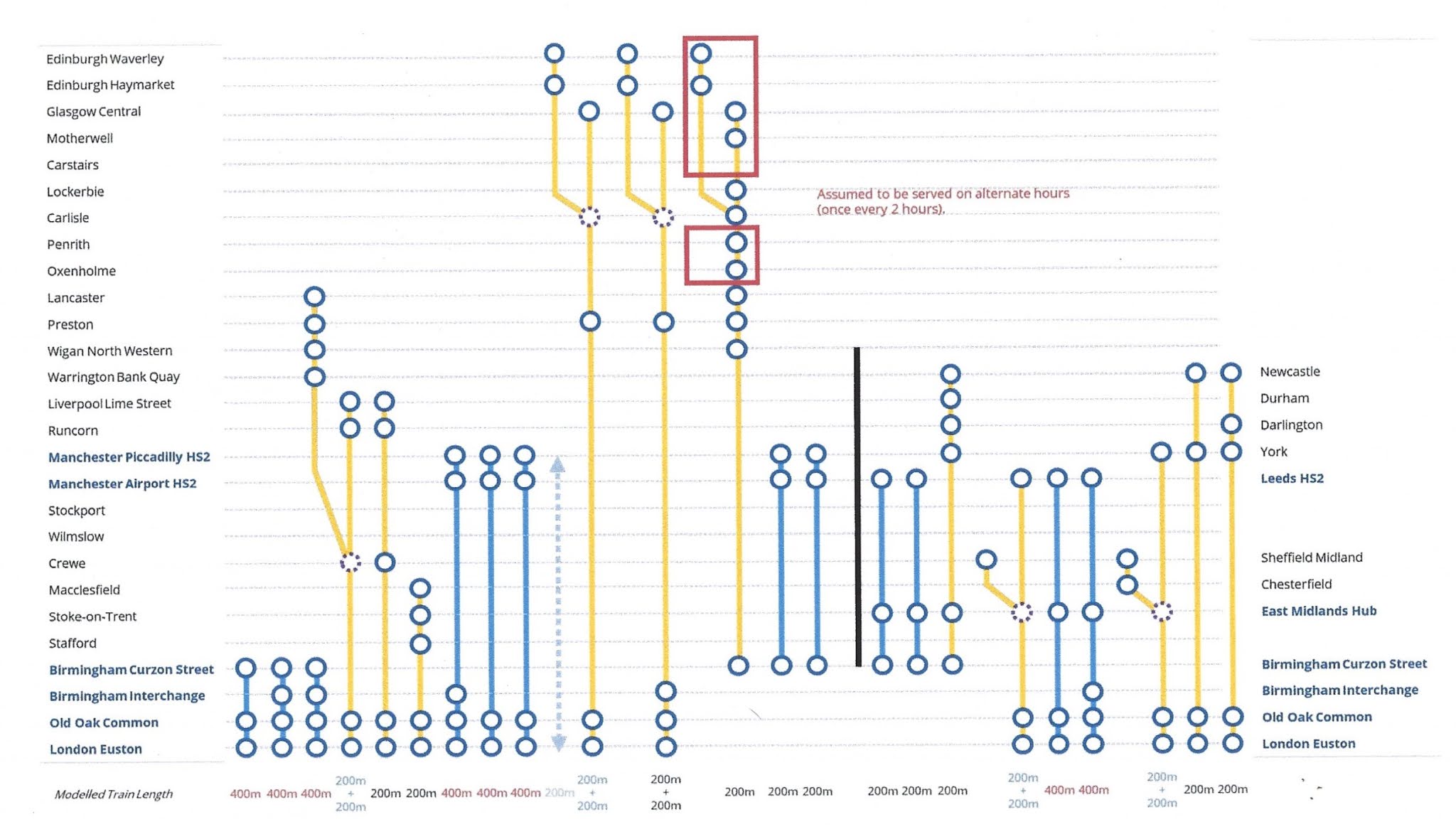
Note.
- Services shown in blue are run by High Speed Two Full Size trains.
- Services shown in yellow are run by High Speed Two Classic-Compatible trains.
- There are a total of 23 train paths of which eleven would need to go along the Trent Valley Line.
- The three London-Manchester services and the two Birmingham-Manchester services would have to be run by High Speed Two Classic-Compatible trains.
- The second Liverpool train is only a single train, but it could be a pair, that split at Crewe, with one train going to Liverpool and the other to Chester and North Wales.
- All the Avanti West Coast services, currently using the Trent Valley Line would probably be replaced by High Speed Two services.
There would have to be a bit of reorganising, but I suspect an hourly path could be found for a train between London and Holyhead.
A Fast Green Route To The Emerald Isle
Electrification of the North Wales Coast Line with other small improvements could probably reduce the journey time between London and Holyhead to around three hours.
This service could be paired with a fast zero-carbon ferry to the island of Ireland?
Conclusion
I am fairly sure that an HS2 service to Holyhead could be run, once the North Wales Coast Line is electrified.
See Also
Could High Speed Two Finish At Lichfield?
Baltic States Agree To Develop Plan To Railway Network’s Conversion According To EU Standards
The title of this post is the same as that of this article on Baltic News Network.
These are the first two paragraphs.
During a meeting of European transport ministers in Brussels, participants agreed that all member states the railway network of which differs from the EU standard, have until 2025-2026 to develop a plan to transition to 1 435 mm. This applies to Latvia as well, as reported by Ministry of Transport.
Latvia and other Baltic States still have railway networks built in accordance with Russian standard of 1 520 mm, whereas the majority of other European countries have railway standard of 1 435 mm. This is also the standard that will be used for the Rail Baltica line.
I have some thoughts.
- Putin won’t like it, as his trains won’t fit the gauge, so it will cramp his invasion plans.
- Will gauge change apply to Spain and Ireland?
- If the Irish Republic converts, will Ulster say no? Undoubtedly they will!
- Will it also apply to trams, as there are quite a few metre gauge tramways.
I doubt that it will ever happen everywhere.
DP Energy And Offshore Wind Farms In Ireland
DP Energy are a company that are developing these offshore wind farms in Ireland.
Located off the West Coast of Ireland, the Clarus Offshore Wind Farm project will utilise Floating Offshore Wind (FOW) technology and upon completion, will have the potential capacity of up to 1 GW.
Located off the South Coast of Ireland, the Inis Ealga Marine Energy Park project will utilise Floating Offshore Wind (FOW) technology and upon completion, will have the potential capacity of up to 1 GW.
Latitude 52 Offshore Wind Farm
DP Energy has given the name Latitude 52 to the area it is exploring for a potential future offshore wind farm off the coast of Counties Wicklow and Wexford.
It appears to be another 1 GW project.
Located off the East Coast of Ireland, the Shelmalere Offshore Windfarm project will utilise fixed bottom wind turbines and upon completion, will have the potential capacity of up to 1 GW.
Note.
- These wind farms are being developed in a partnership with Spanish Energy company; Iberdrola.
- Each is a one GW offshore wind farm.
They are also developing the Gwynt Glas offshore wind farm in the UK sector of the Celtic Sea.
- In January 2022, EDF Renewables and DP Energy announced a Joint Venture partnership to combine their knowledge and
expertise, in order to participate in the leasing round to secure seabed rights to develop up to 1GW of FLOW in the Celtic Sea. - The wind farm is located between Pembroke and Cornwall.
The addition of Gwynt Glas will increase the total of floating offshore wind in the UK section of the Celtic Sea.
- Blue Gem Wind – Erebus – 100 MW Demonstration project – 27 miles offshore
- Blue Gem Wind – Valorus – 300 MW Early-Commercial project – 31 miles offshore
- Falck Renewables and BlueFloat Energy – Petroc – 300 MW project – 37 miles offshore
- Falck Renewables and BlueFloat Energy – Llywelyn – 300 MW project – 40 miles offshore
- Llŷr Wind – 100 MW Project – 25 miles offshore
- Llŷr Wind – 100 MW Project – 25 miles offshore
- Gwynt Glas – 1000 MW Project – 50 miles offshore
This makes a total of 2.2 GW, with investors from several countries.
It does seem that the Celtic Sea is becoming the next area of offshore wind around the British Isles to be developed.
Interconnectors
Interconnectors are to be built to connect Ireland, UK and France.
The Celtic Interconnector is being built between County Cork in Ireland and the North West Coast of France.
Greenlink is being built between County Wexford in Ireland and Pembroke in Wales.
Conclusion
Are the British, Irish and French governments, planning to build a large wind power resource in the Celtic Sea?
Blue Gem Wind
Principle Power are the designers of the WindFloat.
The Projects page of the Principle Power web site led me to a project called Erebus. This is Principle Power’s description of the project.
The Celtic Sea, located between the United Kingdom and Ireland, holds an estimated 50 GW of offshore wind resource. The 96 MW Erebus project, located offshore Pembrokeshire, Wales, is a flagship project planned by Blue Gem Wind, a joint venture between Total and Simply Blue Energy, to unlock the potential of this region.
The project will feature between 7 and 10 turbines on WindFloat® floating platforms located approximately 44 km southwest of the Pembrokeshire coastline.
The Erebus project will see the deployment of a fully industrialized WindFloat® and represents a stepping stone that will allow the local supply chain to build capabilities for the delivery of larger projects under development in the Celtic sea region.
Note.
- Developing 50 GW of offshore wind in the Celtic Sea is not a small amount of wind power.
- The 96 MW Erebus project would appear to be the first project in the Celtic Sea.
- The turbines would be between 9.5 and 14 MW.
- The Principle Power website states that the water depth of the Erebus wind farm is seventy metres.
- The deployment of a fully industrialized WindFloat.
- The Erebus wind farm is being developed by Blue Gem Wind.
It would be larger than the current world’s largest floating wind farm, which is the Kincardine Wind Farm.
Who Are Blue Gem Wind?
Blue Gem Wind have a web site, with a picture of three turbines riding on WindFloats and a couple of support boats and this mission statement.
Floating Offshore Wind
A new generation of energy in the Celtic Sea
The Our Projects page shows a good picture and says this.
Floating wind is set to become a key technology in the fight against climate change with over 80% of the worlds wind resource in water deeper than 60 metres. Independent studies have suggested there could be as much as 50GW of electricity capacity available in the Celtic Sea waters of the UK and Ireland. This renewable energy resource could play a key role in the UK meeting the 2050 Net-Zero target required to mitigate climate change. Floating wind will provide new low carbon supply chain opportunities, support coastal communities and create long-term benefits for the region.
A header indicates a stepping-stones approach to assist the local supply chain and says this.
We believe that a stepping stone approach to the development of floating wind in the Celtic Sea brings a number of benefits. Starting with smaller demonstration and early-commercial projects, increasing in size, will help to capture the highest local supply chain content. It will also maximise knowledge transfer and facilitate a sustainable transfer to a low carbon economy.
Because of this focus on stepping stone projects we have proposed Erebus, a 96MW test and demonstration project followed by Valorous, a 300MW early-commercial project.
These links give more details of the two projects.
- Erebus – 100MW Test & Demonstration project in the Celtic Sea
- Valorous – A 300MW Early Commercial project in the Celtic Sea
It appears that the company is taking a sensible approach.
- They are starting small and building up deployment.
- They are using proven WindFloat technology.
- They are developing a local supply chain.
This Google Map shows the area of the two wind farms.
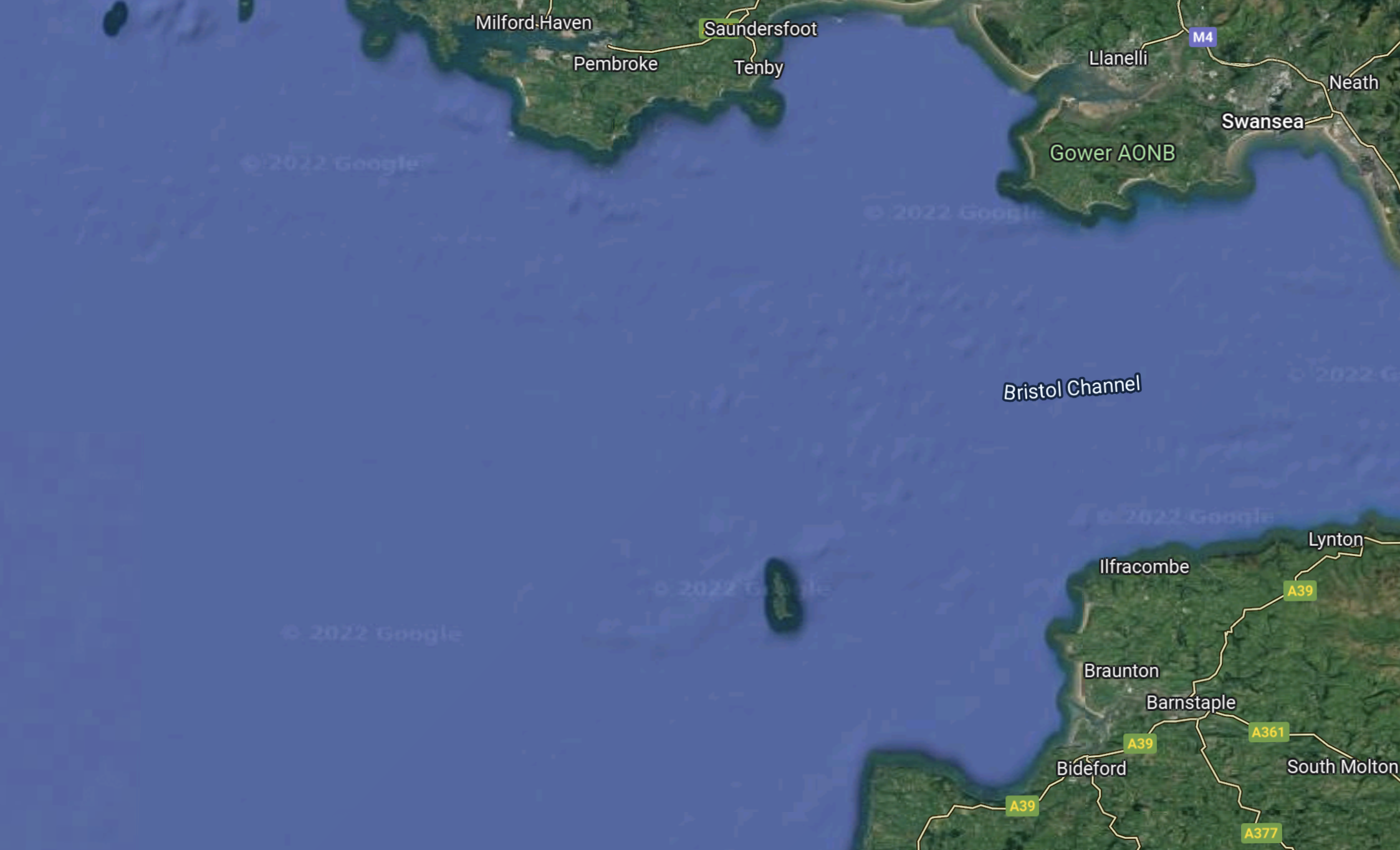
Note.
- Pembroke in the middle at the top of the map.
- Barnstaple and Bideford in Devon in the South-East corner of the map.
- Lundy Island off the Devon coast.
I estimate that the two wind farms will be about the Western edge of this map, with Erebus to the North of Valorous. They wouldn’t want to be too far to the West, as that would put them in the shipping lanes between Ireland and France.
Will The Turbines Be Assembled In The Milford Haven Waterway?
This Google Map shows the Milford Haven Waterway.
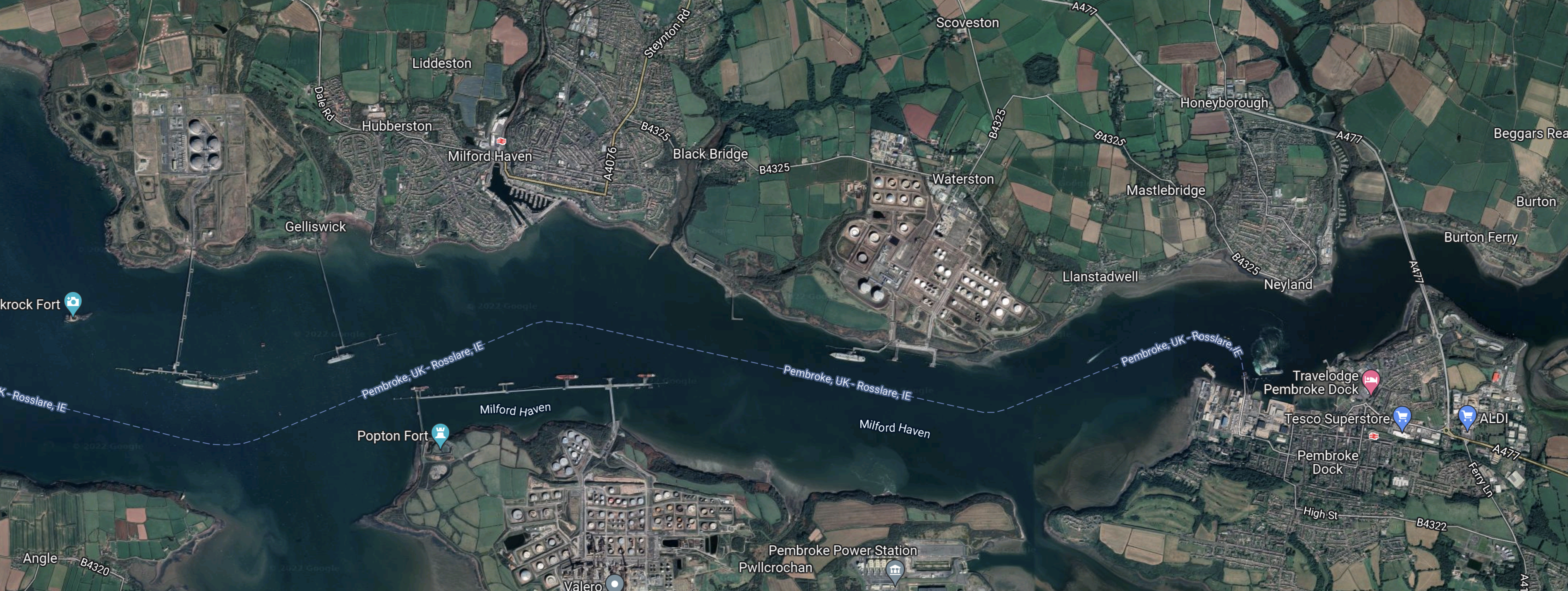
Note.
- Pembroke Dock, where Blue Gem Wind has its offices, is at the Eastern end of the map.
- The oil refineries and LNG terminals.
- Milford Haven on the North side of the waterway.
- The 2.2 GW gas-fired Pembroke power station on the South side of the waterway.
- The ferry route between Rosslare and Pembroke Dock.
But as the waterway is one of the deepest natural harbours in the world, I wouldn’t be surprised to find, that the turbines will be lifted on to the WindFloats in this waterway.
The turbines would be brought in by sea and the WindFloats would be towed in from their manufacturing site.
Where Will The WindFloats And Turbines Be Built?
There could be enough space to build the WindFloats in the Milford Haven Waterway, but I suspect they will be built in a shipyard, which is close to a supply of steel. South Wales is an obvious possibility.
I estimate that for the two wind farms between twenty-eight and forty turbines would be needed and these would probably be brought in by sea and then lifted onto the WindFloats somewhere in the Milford Haven Waterway.
It could be a very efficient process.
Will Pembroke Power Station Have A Future Role?
Consider.
- Pembroke power station is the largest gas-fired power station in Europe.
- It has a capacity of 2.2 GW.
- It was only completed in 2012, so it has many years of life yet!
- It is also probably young enough, to be able to be converted to run on hydrogen.
- It obviously will have a very good connection to the National Grid.
I would suspect that initially, the power cable from Erebus and Valorous, would use the same grid connection as the power station.
But in the future there must be some interesting ways that the wind farms and the power station can work together.
- A large electrolyser could be built to create hydrogen for heavy transport and industrial uses, from excess electricity.
- Could the oxygen from the electrolyser be used for steelmaking in South Wales?
- As natural gas is phased out the power station could be converted to hydrogen power.
- In times of low wind, the power station could make up the shortfall.
- The wind farms could be used as the primary electricity source, with the power station adding the extra power needed to meet demand.
There are certainly ways, the wind farms and the power station can work together.
Conclusion
These two related wind farms seems a good way to start wind developments between the UK and the island of Ireland.
Scotland’s Energy Storage
I have been using the web sites of Drax Group, SSE Renewables and ILI Group, and this page from Strathclyde University to look at various hydro-electric schemes to store energy using the tried-and-tested method of pumped hydro.
I have analysed these schemes.
Affric/Beauly
The scheme is now owned by SSE Renewables and has a page on their web site, which introduces the scheme like this.
Situated about 16 kilometres to the west of Inverness, Beauly is the gateway to the Affric/Beauly hydro electric scheme.
Currently, it generates a maximum power of 100.3 MW.
My analysis in Repurposing The Affric/Beauly Hydro-Electric Scheme, showed the following.
- Research from Strathclyde University, says that the Affric/Beauly scheme could support 78 GWh of pumped storage in one scheme at Fasnakyle.
- Adding pumped storage facilities to the Affric/Beauly hydro-electric scheme, with a capacity of upwards of a conservative 50 GWh, should be possible.
Generating capacity and system operation could be improved by replacing some or all of the 1950s and 1960s turbines with modern units and using modern control systems.
The Affric/Beauly hydro-electric scheme could be augmented by upwards of 50 GWh of storage.
Balliemeanoch
This new scheme is being developed by the ILI Group.
From what is published in the press. it appears to be a giant 1.5 GW/45 GWh project.
In Thoughts On The Balliemeanoch Pumped-Hydro Scheme, I analyse the plan.
The Balliemeanoch hydro-electric scheme could add 45 GWh of storage.
Balmacaan
This new scheme is being developed by SSE Renewables.
My searches in A Possible Balmacaan Pumped Storage System, showed the following.
It has a 600 MW generating capacity and I suspect would have about 15-20 GWh of storage.
The Balmacaan hydro-electric scheme could conservatively add upwards of 15 GWh of storage.
Breadalbane
The scheme is now owned by SSE Renewables and has a page on their web site, which introduces the scheme like this.
The Breadalbane scheme is set in the mountainous region around Loch Lyon, Loch Tay and Loch Earn in Perthshire.
Currently, it generates a maximum power of 168.4 MW.
My analysis in Repurposing The Breadalbane Hydro-Electric Scheme, showed the following.
- Research from Strathclyde University, says that the Breadalbane scheme could support 12 GWh of pumped storage in one scheme at Ben Lawers.
- I believe a similar scheme could be built South of Loch Tay to add a similar amount of pumped storage capacity.
As with the Beauly/Affric scheme, generating capacity and system operation could be improved by replacing some or all of the 1950s and 1960s turbines with modern units and using modern control systems.
The Breadalbane hydro-electric scheme could be augmented by upwards of 12 GWh of storage.
Coire Glass
This new scheme is being developed by SSE Renewables and the project has its own web site, which introduces the scheme like this.
Coire Glas is a hydro pumped storage scheme with a potential capacity of up to 1500MW. Coire Glas is an excellent pumped storage site with a large lower reservoir (Loch Lochy) and a significant elevation of more than 500m between the lower and the new upper reservoir site over a relatively short distance.
It is planned to generate a maximum power of up to 1.5 GW for twenty hours, which indicates an energy storage capacity of 30 GWh.
In SSE Renewables Launches 1.5GW Coire Glas Construction Tender, I talk about the current status of the project.
The Coire Glas hydro-electric scheme could add 30 GWh of storage.
Conon
The scheme is now owned by SSE Renewables and has a page on their web site, which introduces the scheme like this.
The Conon scheme lies within the northwest Highlands, broadly between Inverness and Ullapool. Electricity generation started here when the Ross-shire Electricity Supply Company built the small Falls of Conon hydro electric power station in the 1920s.
Currently, it generates a maximum power of 107.2 MW.
My analysis in Repurposing The Conon Hydro-Electric Scheme, showed the following.
- Research from Strathclyde University, says that the Conon scheme could support up to 131 GWh of pumped storage.
- Adding pumped storage facilities to the Conon hydro-electric scheme, with a capacity of upwards of a conservative 30-40 GWh, should be possible.
As with other schemes, generating capacity and system operation could be improved by replacing some or all of the 1950s turbines with modern units and using modern control systems.
The Conon hydro-electric scheme could be augmented by upwards of 30 GWh of storage.
Corrievarkie
This new scheme is being developed by the ILI Group.
From the planning application it appears to be a 600 MW/14.5 GWh project.
In Corrievarkie Pumped Storage Hydro Project, I analyse the plan.
The Corrievarkie hydro-electric scheme could add 14.5 GWh of storage.
Cruachan
Cruachan is a pumped-storage power station, that is owned by Drax, which have a comprehensive web site for the power station.
- It has an output of 440 MW.
- It has an energy storage capacity of 7.1 GWh
- It can can reach full generating capacity in less than 30 seconds.
In Drax’s Plans For Cruachan, I analyse Drax’s plans, which they call Cruachan 2.
- It will be a 600 MW power station.
- It will be to the East of the current power station.
- More than a million tonnes of rock would be excavated to build the power station.
The existing upper reservoir, which can hold 2.4 billion gallons of water, has the capacity to serve both power stations.
These was my conclusions.
It looks like very good engineering to me.
- There is a good chance, that on most nights, the reservoir will be filled using wind energy
- The maximum output of the Cruachan power station has been more than tripled from 323 to 1010 MW.
- There has been no increase in the size of the Cruachan reservoir.
Scotland will now have a GW-sized hydro-electric power station.
It will not be very much smaller than Sizewell B nuclear station.
Foyers
The scheme is now owned by SSE Renewables and has a page on their web site, which introduces the scheme like this.
The current Foyers Power Station operates quite differently to conventional hydro electric power stations. Foyers hydro scheme consists of one pumped hydro power station and one hydro power station and one major dam..
Currently, it generates a maximum power of 305 MW.
My research and analysis in The Development Of The Foyers Pumped Storage Scheme, showed the following.
- Foyers is a modern pumped-hydro scheme with a capacity of 10 GWh.
- The updating of the original 1896 hydro-power station to a modern pumped-storage system in 1974 is a superb example of hydro-power engineering.
The development of Foyers power station is an example, that shows what can be done in other hydro-electric schemes around Scotland and the rest of the world.
Galloway
Galloway is a hydroelectric scheme, that is owned by Drax, which have a comprehensive web site for their two hydroelectric schemes in Scotland; Galloway and Lanark.
- Galloway has a total output of 109 MW.
- It has six power stations at Drumjohn, Kendoon, Carsfad, Earlstoun, Glenlee and Tongland.
- There is no energy storage
- It is what is known as a run-of-the-river scheme.
The scheme opened in the 1930s.
Glendoe
The scheme is now owned by SSE Renewables and has a page on their web site, which introduces the scheme like this.
In 2009, the first major hydro electric power station to be built in Scotland for almost 30 years, Glendoe on the eastern shore of Loch Ness, began generating electricity.
Currently, it generates a maximum power of 106.5 MW.
My analysis in Glendoe Hydro Power Station, led me to conclude, that engineers will look at this scheme built in the early years of this century to convert it to a pumped storage facility. It might even have been designed for conversion to a pumped storage station, as it was built after the successful conversion of Foyers power station. Comparing the size of the upper lake to Foyers and other schemes, I would estimate it could easily provide in excess of 15 GWh of storage.
The Glendoe hydro-electric scheme could be augmented by upwards of 15 GWh of storage.
Glenmuckloch
This is a small scheme promoted by Buccleuch, that generates 4 MW and stores 1.6 GWh in a disused opencast coal mine.
My analysis in The Glenmuckloch Pumped Storage Scheme, led me to this conclusion.
This project appears to have stalled, but I do like the idea of using a disused mine to store energy and the engineering behind the project.
I will ignore it in my conclusions of this post.
Great Glen
The scheme is now owned by SSE Renewables and has a page on their web site, which introduces the scheme like this.
The Great Glen runs for more than 100 kilometres from Inverness in the northeast, to Fort William in the southwest, following a geological fault line that divides north and south Scotland.
Currently, it generates a maximum power of 112.7 MW.
My analysis in Repurposing The Great Glen Hydro-Electric Scheme, showed the following.
- Research from Strathclyde University, says that the Great Glen scheme could support up to 90 GWh of pumped storage.
- Adding pumped storage facilities to the Great Glen hydro-electric scheme, with a capacity of upwards of a conservative 30 GWh, should be possible.
As with other schemes, generating capacity and system operation could be improved by replacing some or all of the 1950s and 1960s turbines with modern units and using modern control systems.
The Great Glen hydro-electric scheme could be augmented by upwards of 30 GWh of storage.
Lanark
Lanark is a hydroelectric scheme, that is owned by Drax, which have a comprehensive web site for their two hydroelectric schemes in Scotland; Galloway and Lanark.
- Lanark has a total output of 17 MW.
- It has two power stations at Bonnington and Stonebyres.
- There is no energy storage
- It is what is known as a run-of-the-river scheme.
The scheme opened in the 1920s.
Red John
This new scheme is being developed by ILI Group and the project has its own web site, which introduces the scheme like this.
Between 2007 and 2015, the total installed capacity of renewables electricity in Scotland has more than doubled. Due to its intermittent nature, the rise in renewable generation has resulted in increased demand for flexible capacity to help meet energy balancing requirements for the national grid system.
Pumped storage hydro is considered by the Directors to be the most developed and largest capacity form of grid energy storage that currently exists. This can help reduce renewable energy curtailment and therefore promote grid stability.
The web site says this about the project.
- The scheme has an output of 450 MW.
- The storage capacity is 2.8 GWh.
- The scheme has planning consent.
- The project is budgeted to cost £550 million.
- The construction program indicates that the scheme will be completed by the end of 2025.
It also has very detailed maps.
I wrote about the project in Red John Pumped Storage Hydro Project, where I came to these conclusions.
- This scheme has the output of a large gas-fired power station for just over six hours.
- The finances must add up, as no-one would back a scheme like this if they didn’t get an adequate return on their money.
It may only be a small scheme, that is a quarter of the size of the existing nearby Foyers pumped-storage scheme, but as it is shovel-ready, we should start digging.
The Red John hydro-electric scheme would add 2.8 GWh of storage.
Shin
The scheme is now owned by SSE Renewables and has a page on their web site, which introduces the scheme like this.
Shin is Scotland’s most northerly hydro electric scheme. It utilises water from a 650 square kilometre catchment area in Sutherland, including Loch Shin, and water from the River Cassley and River Brora.
Currently, it generates a maximum power of 32.1 MW.
My analysis in Shin Hydro Power Scheme, showed the following.
- I would be very surprised if any pumped storage were to be added to this scheme.
- This 1950s scheme has been partially updated.
Perhaps some more updating would be worthwhile.
Sloy/Awe
The scheme is now owned by SSE Renewables and has a page on their web site, which introduces the scheme like this.
With the exception of Cruachan Power Station which was commissioned in 1965, major work on the Sloy/Awe scheme was completed by 1963, the year the Beatles had their first No 1 hit with From Me To You – and a world away from the immediate post-war austerity being experienced when Sloy Power Station was commissioned just 14 years earlier.
Currently, it generates a maximum power of 261.9 MW.
My analysis in Repurposing The Sloy/Awe Hydro-Electric Scheme, showed the following.
- Research from Strathclyde University, says that the Sloy/Awe scheme could support up to 68 GWh of pumped storage.
- Adding pumped storage facilities to the Sloy/Awe hydro-electric scheme, with a capacity of upwards of a conservative 40 GWh, should be possible.
As with other schemes, generating capacity and system operation could be improved by replacing some or all of the 1930s and 1950s turbines with modern units and using modern control systems.
The Sloy/Awe hydro-electric scheme could be augmented by upwards of 40 GWh of storage.
Tummel Valley
The scheme is now owned by SSE Renewables and has a page on their web site, which introduces the scheme like this.
The Tummel scheme stretches from Dalwhinnie, famous for its whisky distillery, in the north, to the remote Rannoch Station in the west, and the highly-popular tourist town of Pitlochry in the east.
Currently, it generates a maximum power of 309.2 MW.
My analysis in Repurposing The Tummel Hydro-Electric Scheme, showed the following.
- Research from Strathclyde University, says that the Tummel Valley scheme could support up to 135 GWh of pumped storage.
- Adding pumped storage facilities to the Tummel Valley hydro-electric scheme, with a capacity of upwards of a conservative 40-60 GWh, should be possible.
As with other schemes, generating capacity and system operation could be improved by replacing some or all of the 1930s and 1950s turbines with modern units and using modern control systems.
The Tummel Valley hydro-electric scheme could be augmented by upwards of 40 GWh of storage.
A Simple Summary
These are deliberately conservative figures from my analysis.
- Affric/Beauly – 50 GWh
- Balliemeanoch – 45 GWh
- Balmacaan – 15 GWh
- Breadalbane – 12 GWh
- Coire Glas – 30 GWh
- Conon – 30 GWh
- Corrievarkie – 14.5 GWh
- Glendoe – 15 GWh
- Great Glen – 30 GWh
- Red John – 2.8 GWh
- Sloy/Awe – 40 GWh
- Tummel Valley – 40 GWh
Note.
- With new storage like Balliemeanoch, Balmacaan, Coire Glas, Corrievarkie and Red John, I am using published figures where they are available.
- With figures from existing schemes,I am being deliberately very conservative.
That is a total of 324.3 GWh with 107.3 GWh down to new storage
Strathclyde University’s Prediction
This page on the Strathclyde University web site, gives these figures for the possible amounts of pumped-storage that can be added to existing schemes.
- Errochty – 16
- Glasgarnock – 23
- Luichart – 38
- Clunie – 40
- Fannich – 70
- Rannoch – 41
- Fasnakyle – 78
- Tummel – 38
- Ben Lawers – 12
- Nant – 48
- Invermoriston – 22
- Invergarry – 41
- Quoich – 27
- Sloy – 20
That is a total of 514 GWh or 621.3 GWh if you include new storage.
Conclusion
Scotland and the UK, has been left a superb legacy for the future by the pioneering work of Scottish engineers and the North of Scotland Hydroelectric Board.
Most of these assets are now in the hands of two groups; Scottish and Southern Energy (SSE) and Drax Group.
Having seen several of the schemes detailed in this post, in the last few weeks, on Michael Portillo’s; Great Coastal Railway Journeys, it does seem that both groups are looking after their assets.
SSE and Drax also seem to be doing their best to publicise the success of one of the UK’s high-value, but low-profile engineering assets.
I believe that we should do a survey that would identify the following.
- What needs to be done to allow each aqueduct, dam, power station and tunnel to continue to function until a given date in the future.
- Which of the individual schemes can be updated to larger schemes or pumped storage systems.
We would then be able to device a long term plan to create a world-class hydro-electric power scheme for Scotland.
Scotland should be able to provide upwards of 400 GWh of pumped-storage.
This article on Current News is entitled Up To 24GW Of Long Duration Storage Needed For 2035 Net Zero Electricity System – Aurora.
These are the first three paragraphs.
Deploying large quantities of long duration electricity storage (LDES) could reduce system costs and reliance on gas, but greater policy support is needed to enable this, Aurora Energy Research has found.
In a new report, Aurora detailed how up to 24GW of LDES – defined as that with a duration of four hours or above – could be needed to effectively manage the intermittency of renewable generation in line with goals of operating a net zero electricity system by 2035. This is equivalent to eight times the current installed capacity.
Additionally, introducing large quantities of LDES in the UK could reduce system costs by £1.13 billion a year in 2035, cutting household bills by £26 – a hot topic with energy bills on the rise as a result of high wholesale power prices.
The report also says that long duration storage could cut carbon emissions by ten million tonnes of carbon dioxide per year.
It appears to me, Scotland can provide more than enough energy storage for the UK and the Island of Ireland, even if the seas around the British Isles were almost completed covered by wind turbines.
In addition, to the works in Scotland to update the various hydroelectric schemes, there would need to be more interconnectors around the UK and probably to close countries like Belgium, Denmark, France, Germany, the Netherlands and Norway.
There could even be an interconnector between Iceland and Scotland, so Iceland’s abundance of zero-carbon electricity could be exported to Europe.
Ireland’s First Green Hydrogen Project To Come On Stream ‘In Weeks’
The title of this post, is the same as that of this article on the Irish Times.
This is the first two paragraphs.
Belfast is set to receive Ireland’s first hydrogen-powered double-decker buses in coming weeks using fuel coming from wind energy generated in nearby north Antrim.
The initiative is the first “green hydrogen” project on the island of Ireland and the first step to decarbonise Northern Ireland’s public transport by 2040, according to Mark Welsh, energy services manager with Energia, which is generating the hydrogen at its wind farm near Ballymena.
Green hydrogen is produced by an electrolyser powered by renewable electricity.
The article gives a good summary of the use of hydrogen in Ireland in the future.
But isn’t all hydrogen created and used on the island of Ireland green?
 The Anonymous Widower