Could Greater Anglia Run A Comprehensive Service For East Anglia?
Consider.
- In the last fifty years, there have been direct trains between London Liverpool Street and Lowestoft stations.
- In the last forty years, there have been direct trains between London Liverpool Street and Peterborough stations.
- Greater Anglia currently run an hourly train between London Liverpool Street and Ipswich stations, with stops at Stratford, Shenfield, Chelmsford, Hatfield Peverel, Witham, Kelvedon, Marks Tey, Colchester and Manningtree
- Frequencies on both routes were not high and less than four trains per day (tpd), but they must have been a demand for these services.
- Greater Anglia promised to run a Lowestoft service, when they successfully reapplied for the franchise.
- Greater Anglia have 38 Class 755 trains, of which 14 are three-cars and 24 are four-cars.
- Class 755 trains can run in twoses and possibly threeses. (Suffolk dialect for twins and triplets!)
Could these elements be assembled to provide a comprehensive East Anglia service?
- A pair of Class 755 trains would leave Liverpool Street for Ipswich.
- They would takeover some of the paths of the hourly Liverpool Street and Ipswich service and run possibly about four or five tpd, according to demand.
- Between Liverpool Street and Ipswich the trains could stop at Stratford, Shenfield, Chelmsford, Hatfield Peverel, Witham, Kelvedon, Marks Tey, Colchester and Manningtree
- The services would splitgoing North and join going South at Ipswich
- One train would go to Peterborough with stops at Needham Market, Stowmarket, Elmswell, Thurston, Bury St. Edmunds, Soham, Ely, Manea, March and Whittlesea.
- The other would go to Lowestoft with stops at Woodbridge, Melton, Wickham Market, Saxmundham, Darsham, Halesworth, Brampton, Beccles and Oulton Broad South.
Note.
- The Class 755 trains would use electricity, where electrification exists.
- They would use diesel on lines without electrification.
- They would be able to hold 100 mph, so wouldn’t delay other trains.
- Seventeen towns would get new direct services to and from London.
- A Class 745 train is 236.6 metres long, whereas a pair of four-car Class 755 trains is only 161.4 metres.
- A three-train formation of Class 755 trains is only 5.5 metres longer than a single Class 745 train.
I am fairly sure no new substantial infrastructure would be required.
I have some further thoughts.
Example Timings
These timings to and from London are based on current timings of the Class 745 and 755 trains.
- Ipswich – 60 mins
- Stowmarket -70 mins
- Bury St. Edmunds – 88 mins
- Soham – 108 mins
- Ely – 117 mins
- March – 136 mins
- Peterborough – 158 mins
- Woodbridge – 75 mins
- Melton – 80 mins
- Wickham Market – 86 mins
- Saxmundham – 97 mins
- Darsham – 104 mins
- Halesworth – 113 mins
- Brampton – 119 mins
- Beccles – 128 mins
- Oulton Broad South – 138 mins
- Lowestoft – 146 mins
Notes.
- Times to and from Ipswich are based on typical services at the current time.
- I have assumed that there are no stops South of Ipswich.
- Saxmundham is the closest station to Sizewell and could be important in bringing in construction workers for Sizewell C.
I think some of the times like those to and from Bury St. Edmunds, Ipswich, Lowestoft, Saxmundham and Woodbridge could create popular routes.
Battery-Electric Trains
Consider.
- I wrote about Stadler’s expertise with battery-electric trains in Stadler FLIRT Akku Battery Train Demonstrates 185km Range.
- 185 km. is 115 miles.
- The Class 756 trains for Transport for Wales are similar trains to the Class 755 trains fitted with batteries.
- In Battery Power Lined Up For ‘755s’, I wrote about plans to put batteries in the Class 755 trains.
These sections of lines are not electrified on the routes I have talked about.
- Haughley Junction and Ely – 38 miles
- Ely and Peterborough – 30.5 miles
- Westerfield and Lowestoft – 38 miles
As there is electrification at Ely, Haughley, Peterborough and Westerfield and South to London, I am fairly certain the route could be run by battery-electric trains.
Electrification To Sizewell C
In the January 2023 Edition of Modern Railways, there is an article, which is entitled Rail Set To Support Sizewell C Construction.
It details how sidings will be built to support the construction, with up to four trains per day (tpd), but the electrification word is not mentioned.
This is surprising to me, as increasingly, big construction projects are being managed to emit as small an amount of carbon as possible. High Speed Two is being built this way and I suspect Rolls-Royce’s SMR design will minimise carbon emissions during manufacture and construction. It will be very surprising if Sizewell C doesn’t follow High Speed Two’s example. After all, it may be an isolated site, but in Sizewell B, it’s got one of the UK’s biggest carbon-free electricity generators a couple of hundred metres away.
The writer of the Modern Railways article, thinks an opportunity is being missed.
I feel the following should be done.
- Improve and electrify the East Suffolk Line between Ipswich and Saxmundham Junction.
- Electrify the Aldeburgh Branch Line and the sidings to support the construction or agree to use battery-electric or hydrogen zero-carbon locomotives.
One of the collateral benefits of electrifying from Ipswich to Saxmundham Junction, is that it will make it easier for battery-electric Class 755 trains to work Ipswich and Lowestoft services.
- If the trains were to leave Saxmundham Junction going North with a full battery, they should be able to travel to Lowestoft and return.
- Battery-electric Class 755 trains could bring in workers from Ipswich or Lowestoft and further afield.
- It could even leave behind a zero-carbon branch line to Sizewell, Leiston and Aldeburgh, with two tph to Ipswich.
Sizewell C could be a superb demonstration project for low-carbon construction!
The Lowestoft-Great Yarmouth Conurbation
The Wikipedia entry for Lowestoft says this about the town.
The estimated population in the built-up area exceeds 70,000. Its development grew with the fishing industry and as a seaside resort with wide sandy beaches. As fishing declined, oil and gas exploitation in the North Sea in the 1960s took over. While these too have declined, Lowestoft is becoming a regional centre of the renewable energy industry.
Whilst the Wikipedia entry for Great Yarmouth says this about the town.
Great Yarmouth, often called Yarmouth, is a seaside town and unparished area in, and the main administrative centre of, the Borough of Great Yarmouth in Norfolk, England; it straddles the River Yare and is located 20 miles (30 km) east of Norwich. A population of 38,693 in the 2011 Census made it Norfolk’s third most populous. Its fishing industry, mainly for herring, shrank after the mid-20th century and has all but ended.[3] North Sea oil from the 1960s supplied an oil-rig industry that services offshore natural gas rigs; more recently, offshore wind power and other renewable energy industries have ensued.
Wikipedia also said this about the population of the wider Great Yarmouth.
The wider Great Yarmouth borough had a population of around 92,500, which increased to 97,277 at the 2011 census.
Taken together they are one of the largest conurbations in East Anglia.
The main means of transport between the two towns is by road.
Surely, two towns of over 70,000 people, who are only a few miles apart need a rail connection.
Onward From Lowestoft To Great Yarmouth
If the comprehensive East Anglia service, I’m discussing is to be truly comprehensive, it must serve the Norfolk Broads and Great Yarmouth.
This would also improve the connectivity between two of the largest coastal towns in East Anglia, that I indicated in the last section.
This OpenRailwayMap shows a cunning plan proposed by Network Rail to connect Lowestoft and Great Yarmouth.
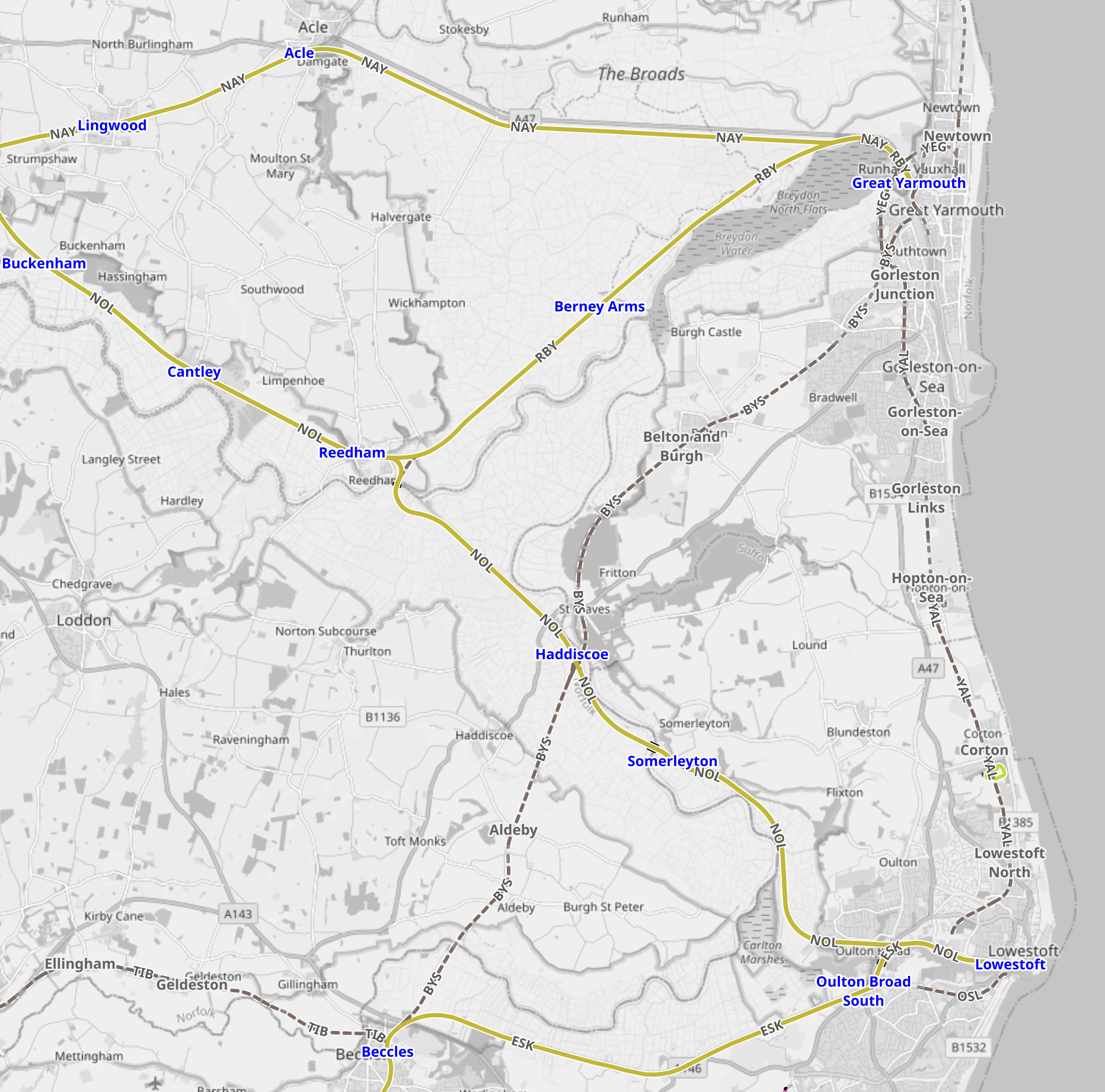
Note.
- Great Yarmouth is in the North East corner of the map.
- Two lines lead West from Great Yarmouth station, with the more Northerly route going direct to Norwich and the more Southerly one going to Norwich via Berney Arms and Reedham.
- Lowestoft is in the South East corner of the map.
- Two lines lead West from Lowestoft station, with the Northern route going to Norwich via Reedham and the Southern one going to Ipswich via Oulton Broad South.
- The route of a coastal railway connecting the two towns is also shown.
Network Rail’s cunning plan is indicated on this second nap from OpenRailwayMap.
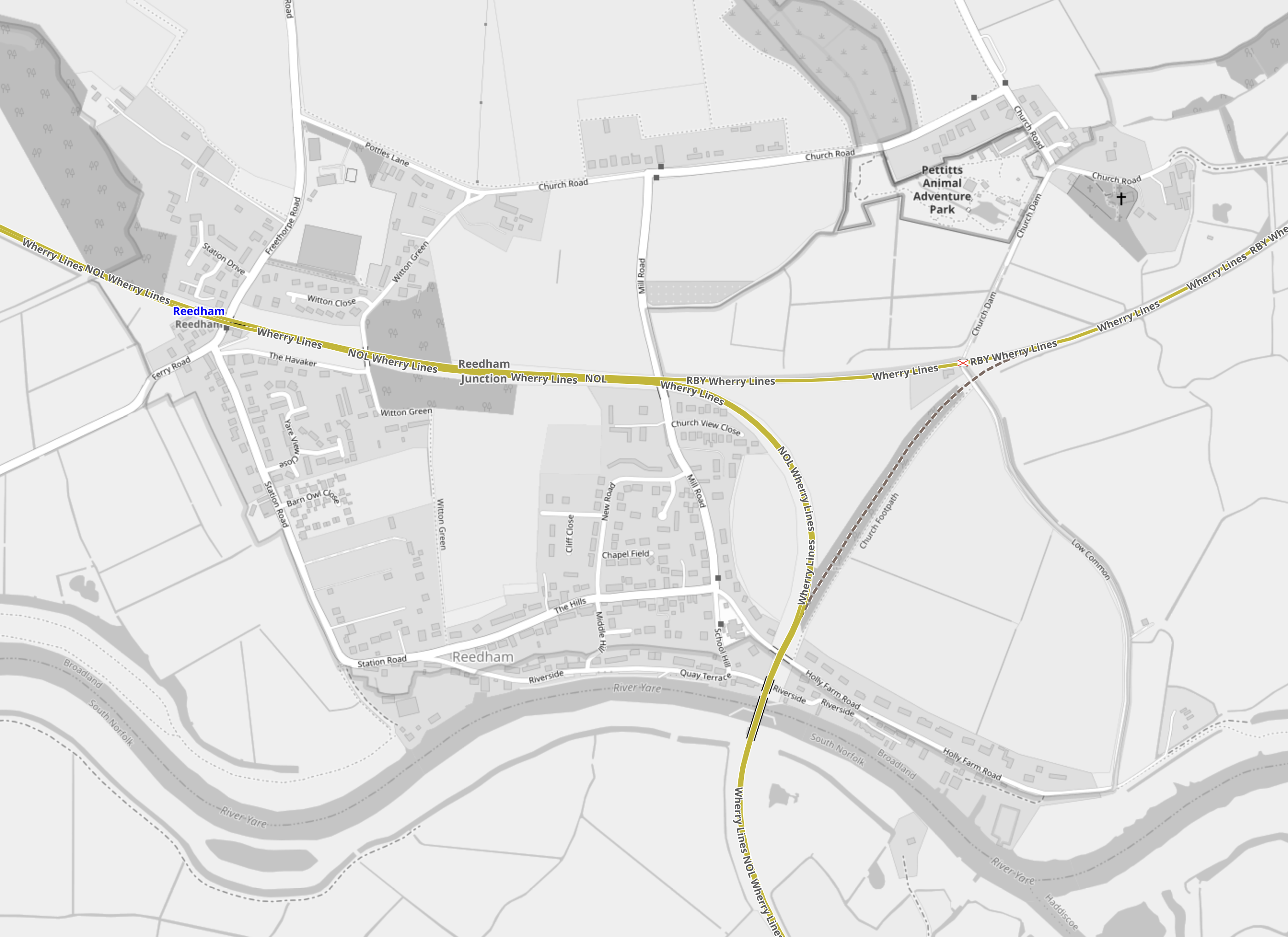
Note.
- Reedham station is in the North-West corner of the map on the line to Norwich.
- To the East of the station is a triangular junction.
- The track from the North-East corner of the junction is the line to Great Yarmouth.
- The track from the Southern corner of the junction is the line to Lowestoft.
- Unfortunately, the South-Eastern leg of the junction was removed in 1880.
In Norfolk Rail Line To Remain Closed As £68m Upgrade Project Overruns, I said this.
Network Rail are talking about reinstating the Reedham Chord to create a more direct route between East Anglia’s largest North-Eastern towns. This is said about the Reedham Chord in Direct Yarmouth Services in the Wikipedia entry for Lowestoft station.
In January 2015, a Network Rail study proposed the reintroduction of direct services between Lowestoft and Yarmouth by reinstating a spur at Reedham. Services could once again travel between two East Coast towns, with an estimated journey time of 33 minutes, via a reconstructed 34-chain (680 m) north-to-south arm of the former triangular junction at Reedham, which had been removed in c. 1880. The plans also involve relocating Reedham station nearer the junction, an idea which attracted criticism.
This sounds a good plan to me.
- It would allow direct services between Lowestoft and Great Yarmouth.
- It would allow direct services between Ipswich and Great Yarmouth with a reverse at Lowestoft in about two hours.
- With possible charging at Lowestoft and/or Great Yarmouth, a scenic route could be created between Ipswich and Norwich for battery-electric Class 755 trains. If that doesn’t get people out of their cars then nothing will!
- Various leisure, tourism and work-related opportunities would be created.
Never in the field of railway engineering would such a small chord have given so much.
Sizewell C Issues
Sizewell C will be a massive project and I also suspect that like High Speed Two, it will be built in a manner that will be zero-carbon where possible.
We already know from the Modern Railways article, that four tpd will shuttle material to a number of sidings close to the site. This is a good start.
Since Sizewell A opened, trains have regularly served the Sizewell site to bring in and take out nuclear material. These occasional trains go via Ipswich and in the last couple of years have generally been hauled by Class 88 electro-diesel locomotives.
It would be reasonable to assume that the Sizewell C sidings will be served in the same manner.
But the route between Westerfield Junction and Ipswich station is becoming increasingly busy with the following services.
- Greater Anglia’s London and Norwich services
- Greater Anglia’s Ipswich and Cambridge services
- Greater Anglia’s Ipswich and Felixstowe services
- Greater Anglia’s Ipswich and Lowestoft services
- Greater Anglia’s Ipswich and Peterborough services
- Freight services serving the Port of Felixstowe, which are expected to increase significantly in forthcoming years.
But the Modern Railways article says this about Saxmundham junction.
Saxmundham junction, where the branch meets the main line, will be relaid on a slightly revised alignment, retaining the existing layout but with full signalling giving three routes from the junction protecting signal on the Down East Suffolk line and two in the Down direction on the bidirectional Up East Suffolk line. Trap points will be installed on the branch to protect the main line, with the exit signal having routes to both running lines.
Does the comprehensive signalling mean that a freight train can enter or leave the Sizewell sidings to or from either the busy Ipswich or the quieter Lowestoft direction in a very safe manner?
I’m no expert on signalling, but I think it does.
- A train coming from the Lowestoft direction needing to enter the sidings would go past Saxmundham junction on the Up line. Once clear of the junction, it would stop and reverse into the branch.
- A train coming from the Ipswich direction needing to enter the sidings would approach in the wrong direction on the Up line and go straight into the branch.
- A train leaving the sidings in the Lowestoft direction would exit from the branch and take the Up line until it became single track. The train would then stop and reverse on to the Down line and take this all the way to Lowestoft.
- A train leaving the sidings in the Ipswich direction would exit from the branch and take the Up line all the way to Ipswich.
There would need to be ability to move the locomotive from one end to the other inside the Sizewell site or perhaps these trains could be run with a locomotive on both ends.
The advantage of being able to run freight trains between Sizewell and Lowestoft becomes obvious, when you look at this Google Map, which shows the Port of Lowestoft.
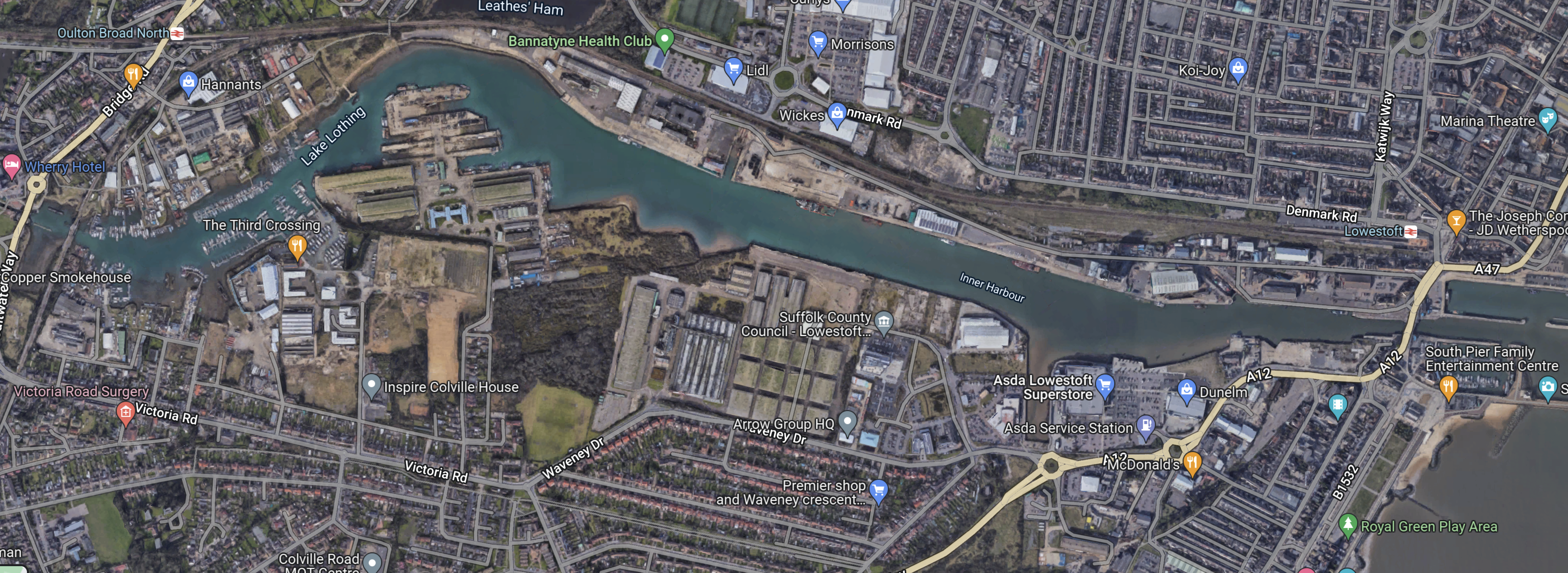
Note.
- The Inner Harbour of the Port of Lowestoft.
- The East Suffolk Line running East-West to the North of the Inner Harbour.
- Lowestoft station at the East side of the map.
I doubt it would be the most difficult or expensive of projects to build a small freight terminal on the North side of the Inner Harbour.
I suspect that the easiest way to bring the material needed to build the power station to Sizewell would be to do the following.
- Deliver it to the Port of Lowestoft by ship.
- Tranship to a suitable shuttle train for the journey to the Sizewell sidings.
- I estimate that the distance is only about 25 miles and a battery or hydrogen locomotive will surely be available in the UK in the next few years, that will be able to provide the motive power for the return journey.
In The TruckTrain, I wrote about a revolutionary freight concept, that could be ideal for the Sizewell freight shuttle.
Great Yarmouth Racecourse
Great Yarmouth Racecourse is one of my favourite racecourses and I believe it is one of the attractions in Great Yarmouth, that would benefit from an improved rail service between Lowestoft and Great Yarmouth, as it would almost double those with efficient public transport access to the racecourse.
The walking distance between Great Yarmouth station and the racecourse is walkable for many and I remember doing it since C died.
With the train connection to Lowestoft and perhaps a courtesy bus from the station, I wouldn’t be surprised to see that a Lowestoft-Yarmouth rail connection being very good for the racecourse. Especially as road traffic between the two towns can be not the best.
Finishing At Norwich
There are operational reasons to carry on to Norwich, where Crown Point, is the home base for the Class 755 trains.
But it would also link a lot of places that are dependant on tourism and are also heavily involved in East Anglia’s energy industry.
Onward From Peterborough To Lincoln
If the Lowestoft service can extend to Great Yarmouth, an extension of the Peterborough service to Lincoln via Spalding and Sleaford might be possible.
But with LNER also serving Lincoln from Kings Cross, I doubt the route would carry many passengers to and from London.
Conclusion
A service from London, that splits into two trains at Ipswich for Lowestoft and Peterborough has possibilities.
The Development of Liverpool Street And Paddington Stations
This article in The Telegraph is entitled Row Over ‘Grotesque’ £1.5bn Liverpool Street Revamp.
There is no doubt that Liverpool Street and Paddington stations will need a higher number of trains per hour and this will probably mean more platforms. But there is no space in either station.
Suppose a long-distance version of the current nine-car Alstom/Bombardier trains were to be built with toilets, a 110 mph top speed, but dimensionally identical to the existing Class 345 trains.
The Central Tunnel of the Elizabeth Line could probably handle more trains, than it currently does, given that Dear Old Vicky handles 36 trains per hour.
So services like Southend and Oxford or Beaulieu and Newbury could be run through the Central Tunnel, replacing the current Greater Anglia and GWR services.
This would relieve platform space in the current terminals and the high-speed Elizabeth Line trains, would just be more trains going through the Central Tunnel at 80 mph.
The important Oxford and Cambridge route would be one change at either Farringdon or Liverpool Street, Or with some track modifications, it might be possible to run direct via the Central Tunnel, Stratford and the West Anglia Main Line.
Sorting out the trains, would ease the development of Liverpool Street and Paddington stations.
Six Good Points Of The Elizabeth Line
The Ride Quality
I wrote about this in The Quality Of The Ride On The Lizzie Line.
The Virtual Extension Of The Elizabeth Line To Epping And South West Essex
I wrote about this in Elizabeth/Central Line Interchange At Stratford – 23rd June 2022.
The Quality Of The Station Staff
They are excellent and I suspect they’ve been very well-trained.
The Bakerloo Line Link At Paddington Station
I wrote about this in Elizabeth Line – Paddington Bakerloo Line Link – 24th May 2022.
The Connection Between The Northern And Lizzie Lines At Tottenham Court Road Station
Iwrote about this in The Connection Between The Northern And Lizzie Lines At Tottenham Court Road Station.
The Underground Link between Liverpool Street and Moorgate Stations
I wrote about this in London’s First Underground Roller Coaster.
I wrote about my first ride in Elizabeth Line – Riding The Underground Roller Coaster At Liverpool Street Station – 24th May 2022.
Extending The Elizabeth Line – Improving The Northern City Line
Some parts of North and North-East London, have less-than-good connections with the Elizabeth Line.
- The Piccadilly Line has no direct connection with the Elizabeth Line.
- The Victoria Line has no direct connection with the Elizabeth Line.
- The Bank branch of the Northern Line has only a poor connection with the Elizabeth Line at Moorgate station.
- The Northern City Line has only a poor connection with the Elizabeth Line at Moorgate station.
- The Charing Cross branch of the Northern Line has a good connection with the Elizabeth Line at Tottenham Court Road station.
- The Lea Valley Lines of the London Overground have good connections with the Elizabeth Line at Liverpool Street station.
- Thameslink has a good connection with the Elizabeth Line at Farringdon station.
It would appear that if you live near one of the Lea Valley Lines or Thameslink stations, you can access the Elizabeth Line fairly easily at Liverpool Street or Farringdon stations, but if you rely on a Northern, Northern City, Piccadilly or Victoria Line local station, you are not so lucky!
Could The Northern City Line Be Improved To Give Better Connections Between North London And The Elizabeth Line?
This map from cartometro.com shows the lines between Finsbury Park and Highbury & Islington stations.
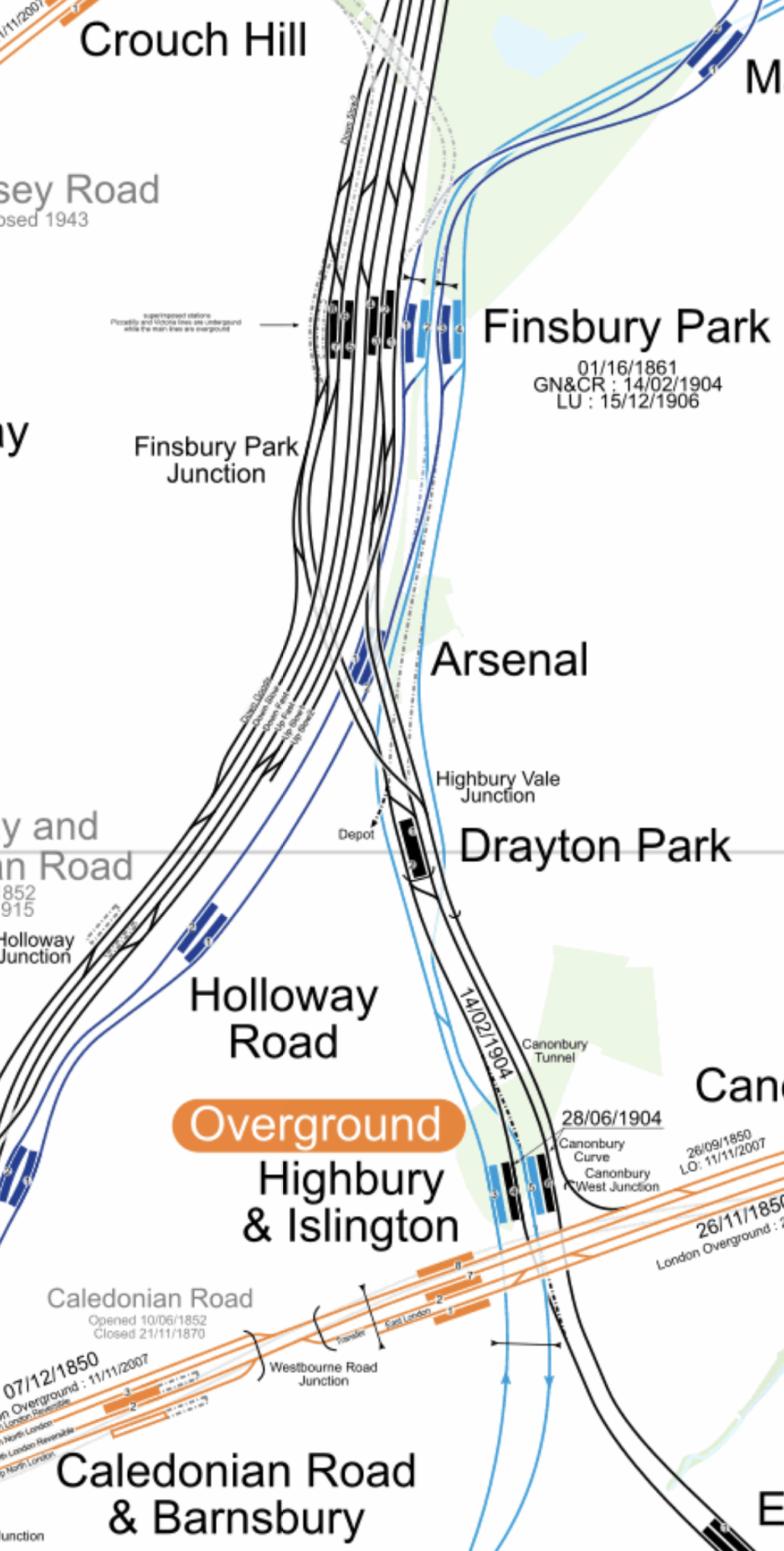
Note.
- The dark blue tracks are the Piccadilly Line, which calls at M (Manor House), Finsbury Park, Arsenal, Holloway Road and Caledonian Road, before going South-West to King’s Cross St. Pancras.
- The lighter blue tracks are the Victoria Line, which calls at Finsbury Park and Highbury & Islington, before going South-West to King’s Cross St. Pancras.
- The black tracks on the Western side of the map are those of the East Coast Main Line into King’s Cross.
- The black tracks going South-East from Finsbury Park are the Northern City Line, which calls at Finsbury Park, Drayton Park, Highbury & Islington, E (Essex Road) and Old Street before terminating at Moorgate.
This second map shows the lines through Finsbury Park station.
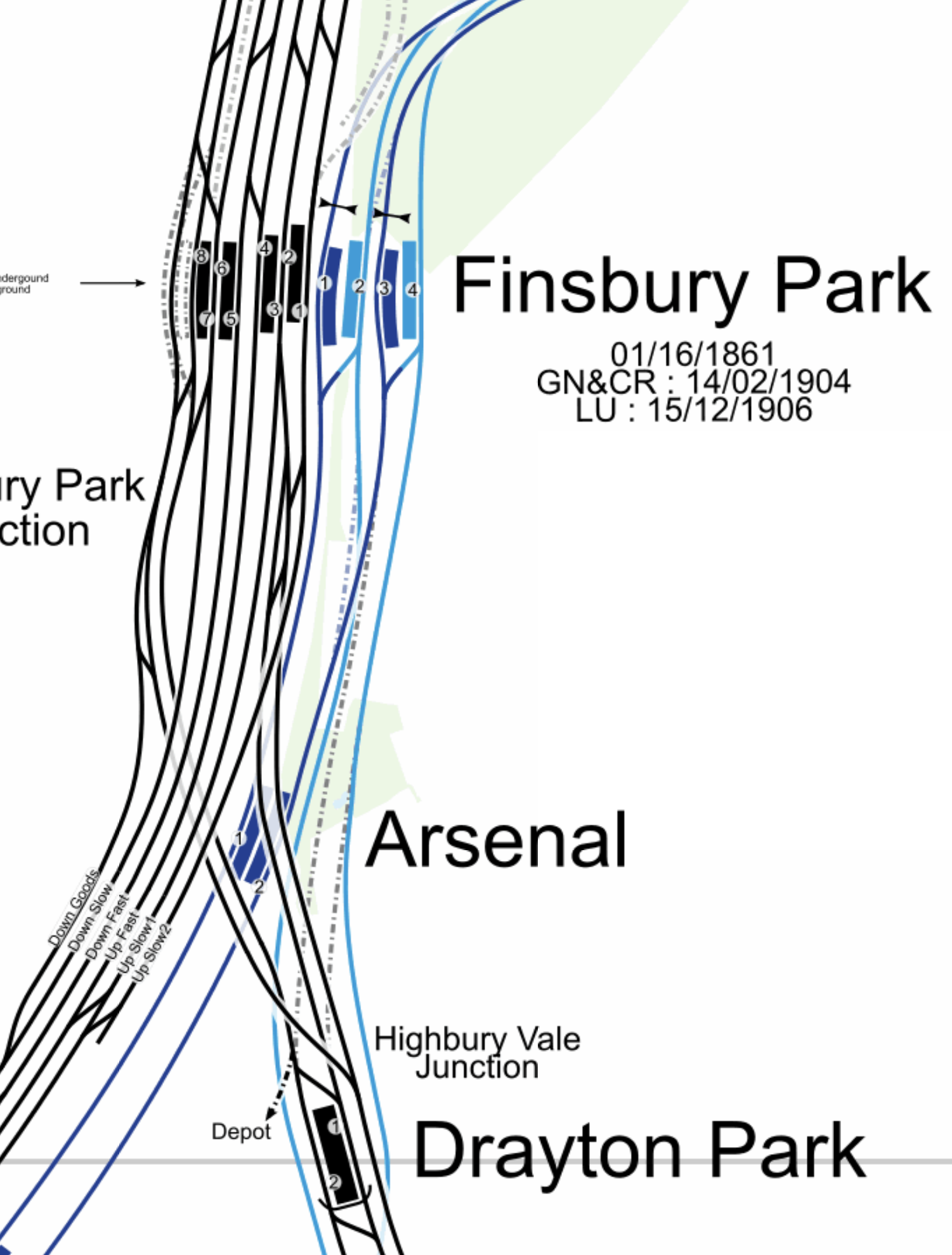
Note.
- The dark blue tracks are the Piccadilly Line.
- The lighter blue tracks are the Victoria Line.
- The black tracks going through Drayton Park station are the Northern City Line.
- The platforms of the Piccadilly and Victoria Lines are paired at Finsbury Park station, so that passengers can change lines with a simple walk-across.
This third map shows the lines through Highbury & Islington station.
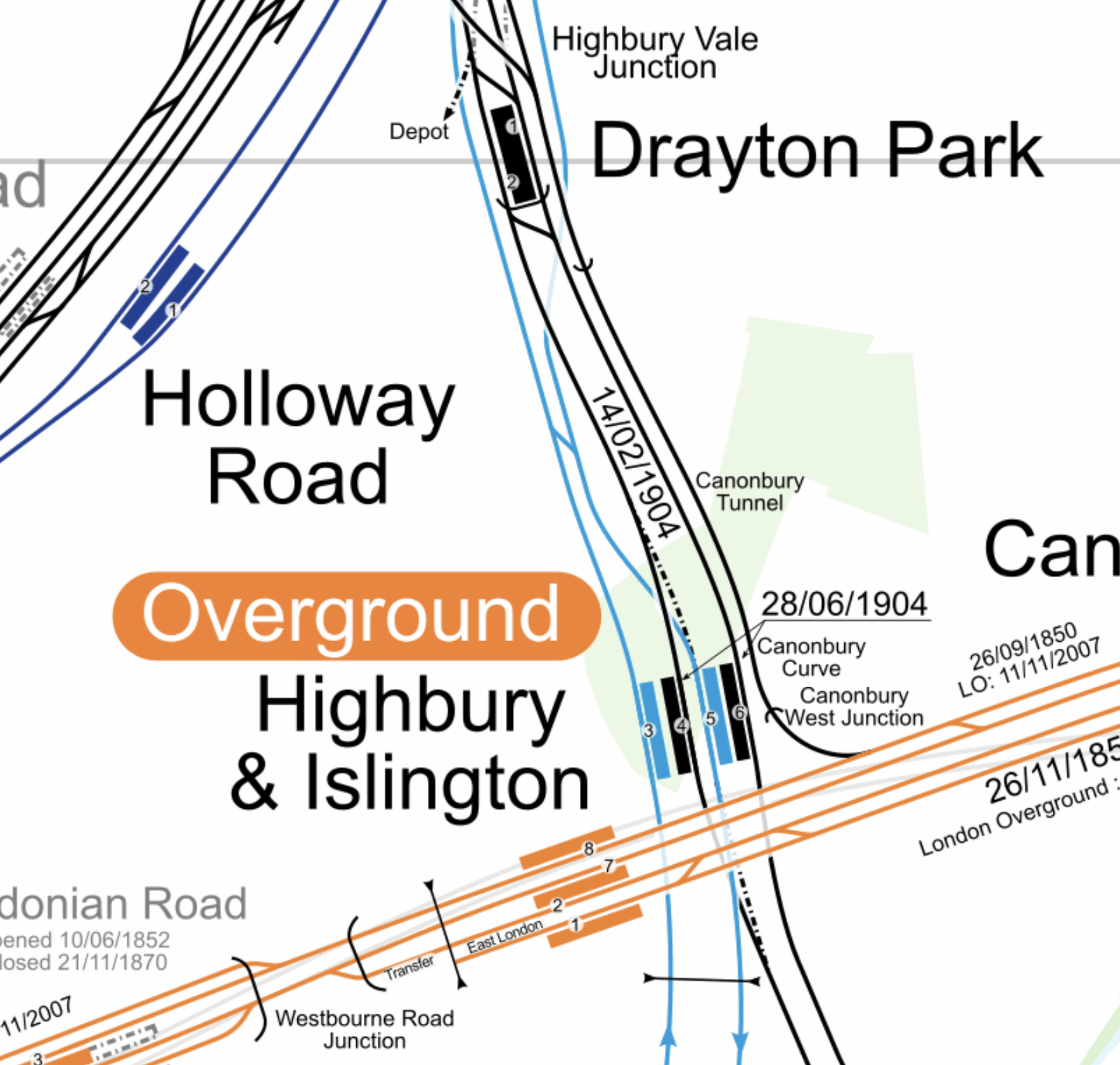
Note.
- The dark blue tracks are the Piccadilly Line.
- The lighter blue tracks are the Victoria Line.
- The orange tracks are the London Overground.
- The black tracks going through Drayton Park and Highbury & Islington stations are the Northern City Line, which terminates at Moorgate station.
- The platforms of the Northern City and Victoria Lines are paired at Highbury & Islington station, so that passengers can change lines with a simple walk-across.
The big problem with Highbury & Islington station is that is not step-free.
A Step-Free Route Between Wood Green And Moorgate Stations
Currently, it is possible to go between Wood Green and Moorgate stations by using three trains.
- Piccadilly Line – Wood Green to Finsbury Park – 6 mins
- Victoria Line – Finsbury Park to Highbury & Islington – 6 mins
- Northern City Line – Highbury & Islington to Moorgate – 10 mins
Note.
- These are actual times measured on my phone.
- The total time is twenty-two minutes.
- I had to wait a couple of minutes at both changes.
- Both changes are walk-across.
- The changes are not as perfect as they could be, although they would be easily managed with a buggy or a heavy case.
These pictures show the change at Highbury & Islington station.
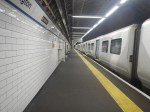
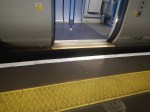
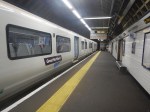
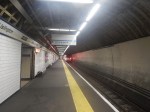
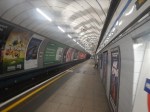
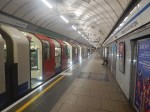
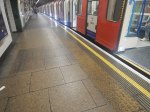
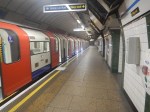
These pictures show the change at Finsbury Park station.

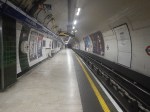
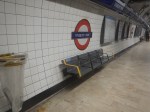
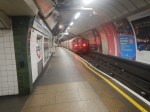
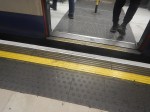
This route works for all stations Between Manor House and Cockfosters.
- Cockfosters – Add 15 minutes
- Oakwood – Add 12 minutes
- Southgate – Add 9 minutes
- Arnos Grove – Add 6 minutes
- Bounds Green – Add 3 minutes
- Turnpike Lane – Subtract 2 minutes
- Manor House – Subtract 5 minutes
But look at the frequencies of the three sections in trains per hour (tph)
- Piccadilly Line – 21 tph
- Victoria Line – 33 tph
- Northern City Line – 4 tph
The Northern City Line frequency is not high enough, as you could have a fifteen minute wait for a train.
Improvements Needed To The Northern City Line
The Northern City Line now has new Class 717 trains, a terminal platform at Stevenage and full digital signalling is being installed.
- The major improvement needed would be to improve frequency to at least 12 tph.
- Six tph on both branches should be possible.
I would also install step-free access at more stations.
Moorgate Station’s Northern City Line Platforms
These pictures show the platforms of the Northern City Line at Moorgate station.

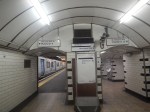
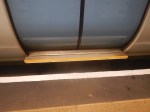
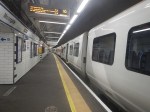
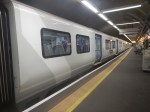
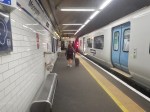

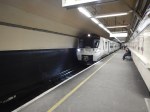
Note.
Improved Connections At Moorgate Station
I talked about the connections between the Northern and Elizabeth Lines at Moorgate station in Elizabeth Line To Northern Line At Moorgate Station.
This was my conclusion.
Routes between the Northern and Elizabeth Lines at Moorgate need to be improved.
I feel that some of the improvements could be fairly minor, but adding step-free access to the Northern City Line could be more difficult.
An Improved Connection Between Bank And Moorgate Stations
Currently, there are three ways between Bank and Moorgate stations.
- Use the Northern Line
- Use a 21, 43 or 141 bus routes
- Walk
I believe that it would also be possible to dig a pedestrian tunnel between the two stations and fit it out with a moving walkway.
This visualisation shows the updated Bank station.
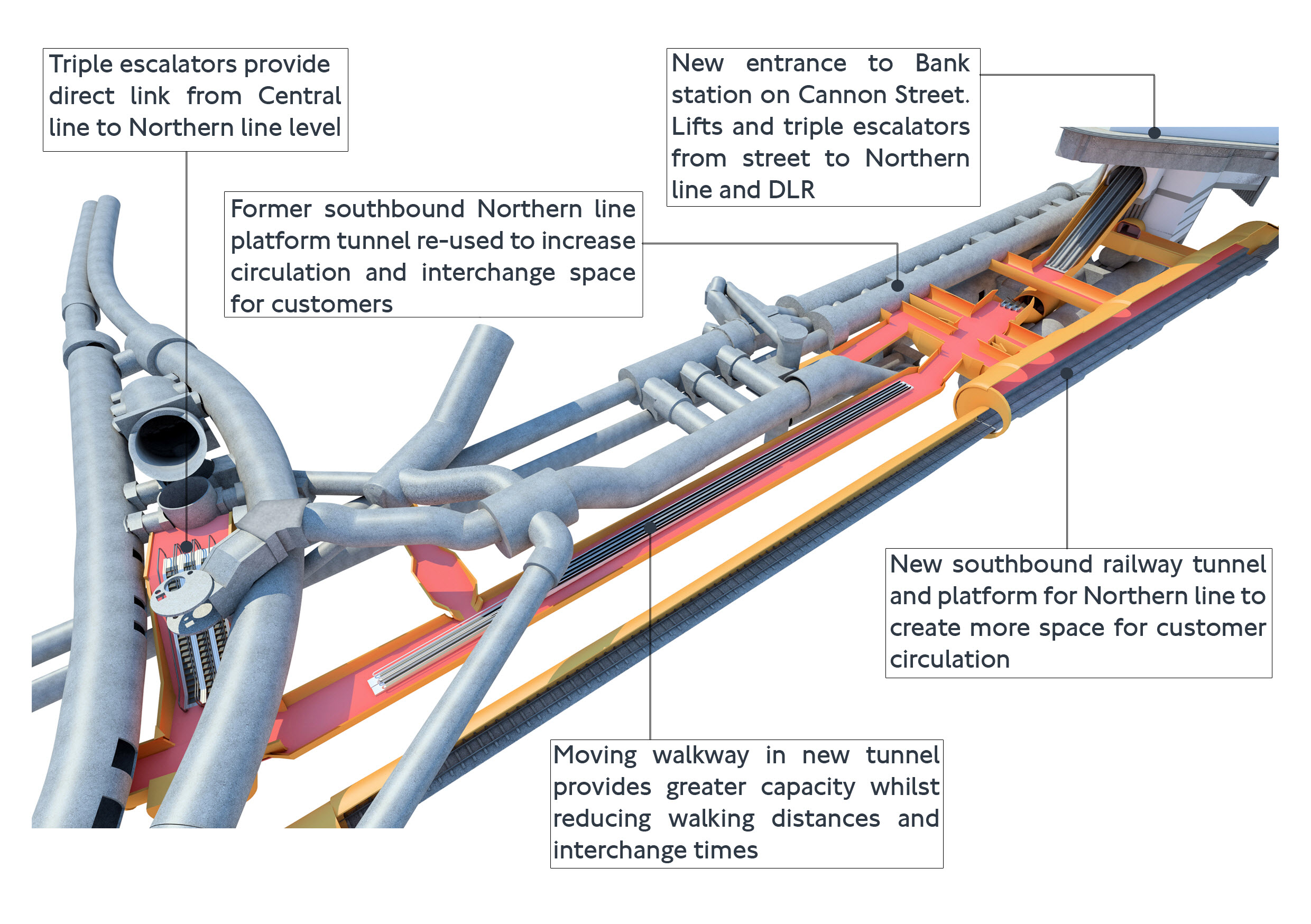
Note.
- Moorgate station is to the left.
- The only more-or-less completed bits are the two Northern Line tunnels and platforms and parallel pedestrian tunnel.
- The four cross tunnels can be picked out towards the far end of the station.
- Three of the cross tunnels can now be used by passengers.
- The moving walkway can be accessed from the two cross tunnels nearest to the Central Line.
- The escalators from the yet-to-open Cannon Street entrance appear to lead directly into a cross tunnel and a parallel tunnel to the moving walkway.
I believe that the moving walkway to Moorgate station could connect with the Bank station complex, at the Moorgate end of the new moving walkway in Bank station.
Could An Oxford And Cambridge Service Be Run Via The Lizzie Line?
This article on the BBC is entitled East-West Rail: Part Of £5bn Scheme ‘Appears To Be Unachievable’.
These are the first four paragraphs.
A £5bn rail project “appears to be unachievable” in parts, a government report said.
The East-West Rail scheme will create a link from Oxford to Cambridge, with services being introduced in stages.
Stage two, between Oxford and Bedford, and stage three, between Bedford and Cambridge, have “major issues”, the Infrastructure and Projects Authority said.
A spokesman for East-West Rail said the delivery programme was “under review”.
As someone, who used to live near Cambridge, I have seen the transport routes improve in East Anglia, but not the area’s connections to the rest of the country.
The article describes Stage 2 and 3 of the East West Railway like this.
Stage two involves predominantly upgrading existing infrastructure, between Bletchley and Bedford, to allow services between Oxford and Bedford.
Stage three involves building a new line, between Bedford and Cambridge, to extend the railway and facilitate services from Oxford to Cambridge.
So if the Government feel that the major issues and opposition should lead to cancellation of the scheme to the East of Bedford or even Bletchley, what are the problems and alternatives?
Freight
The Port of Felixstowe is the UK’s busiest container port and it handles 48% of Britain’s containerised trade.
Having lived as a teenager in Felixstowe and in Suffolk for probably half my life, there is only one certainty about the port in my mind. It will get bigger and will generate more rail and road traffic in East Anglia.
- The roads have improved greatly, since the 1960s, when I used to cycle between Ipswich and Felixstowe, along a two-lane single carriageway road.
- The renamed A14 has replaced the A45 and now connects the port to the M1 and the M6.
- Tens of long freight trains every day now connect Felixstowe with the rest of the country.
- The East West Railway will be a very useful link between Felixstowe and South Wales and the West of England.
- Global warming will mean the decarbonisation of heavy freight, with more traffic on an electrified railway.
Felixstowe’s connections to the North and Midlands may have improved greatly, but they will need to be improved a lot more.
The Port of Southampton is the UK’s second busiest container port.
- Most freight trains from Southampton go North via Basingstoke, Reading and Oxford.
- A plan some years ago was for an Electric Spine, that would have connected the Port of Southampton to the Northern cities.
- The Electric Spine would have envisaged electrification of the East West Railway to the West of Bedford and electrified connections with the West Coast Main Line and the Midland Main Line.
- The Midland Main Line is now planned to be fully electrified, under the the Integrated Rail Plan for the North and Midlands.
Southampton, like Felixstowe will be in need of improved transport connections.
In an ideal world, an electrified East West Railway, would improve freight connections between the UK’s two busiest container ports and major cities in the UK.
Problems With Freight
Could this be the major problem East of Bletchley, where the residents living along the route, don’t want to see large numbers of freight trains running close by?
In this document on the East-West Rail Consortium web site, this is said.
Note that doubling of Warren Hill Tunnel at Newmarket and
redoubling between Coldham Lane Junction and Chippenham Junction is included
in the infrastructure requirements. It is assumed that most freight would operate
via Newmarket, with a new north chord at Coldham Lane Junction, rather than
pursuing further doubling of the route via Soham.
Will the residents of Newmarket object to a double-track freight railway through the town? Freight trains and horses are not a good mix.
I do wonder, if freight trains hauled by noisy and unfriendly diesel locomotives are one of the reasons a full Oxford and Cambridge railway is losing its appeal and becoming a vote loser for the Government.
Cambridge Has An Accommodation And Commuting Problem
There is a shortage of accommodation in Cambridge for offices, laboratories, workshop and above all workers.
So it looks to the surrounding towns and cities to provide help.
London and Ely have good links, but the city needs better links to Bedford, Bury St. Edmunds, Haverhill, Ipswich, Norwich, Kings Lynn, Peterborough, Soham, Stansted Airport, Stevenage, Sudbury and Thetford.
Cambridge may be the place in the South East with the largest numbers of commuters from London.
Cambridge Needs A Decent Rail Network
In my view Cambridge needs at least the following services in trains per hour (tph)
- Colchester via Haverhill, Sudbury and Marks Tey – 2 tph
- Ipswich via Newmarket, A14 Parkway, Bury St. Edmunds, Stowmarket and Needham Market – 2 tph
- King’s Lynn via Cambridge North, Ely and Downham Market – 2 tph
- Oxford via Bedford, Milton Keynes/Bletchley and Bicester – 2 tph
- London King’s Cross via Cambridge South – 2 tph
- Norwich via Cambridge North, Ely, Thetford, Attleborough and Wymondham – 2 tph
- Peterborough via Cambridge North, Ely and March – 2 tph
- Stansted Airport via Cambridge South and Audley End – 2 tph
- Stevenage via Royston and Hitchin – 2 tph
- Wisbech via Cambridge North, Ely and March – 2 tph
Note.
- Some services already exist.
- Some of these services duplicate each other to give 4 tph or even 6 tph on certain routes.
- Some services could be back-to-back through Cambridge.
- A 14 Parkway station is a new station proposed by the East West Railway. I wrote about it in detail in Soham Station – 14th December 2021.
- Haverhill would be served by a rebuilt Stour Valley Railway.
- Wisbech would be served by restoring the railway to March.
To complete the network there would be a two tph service between Peterborough and Ipswich, which would go via March, Ely, Soham, A 14 Parkway, Bury St. Edmunds, Stowmarket and Needham Market.
Oxford Could Probably Argue that It Needs A Decent Rail Network Like Cambridge
Oxford would argue this and they have a point.
The East West Railway Is The Odd Line Out
Looking at the rail networks at Cambridge and Oxford, it appears, that with the exception of Cotswold services at Oxford and a few CrossCountry services, it appears that the East West Railway is a bit of an odd line out, as everything else is a local service.
The Effects Of Not Building The Bedford And Cambridge Section Of The East-West Railway
What will it mean, if the Bedford and Cambridge Section of The East-West Railway is not built?
- Cambourne will not get the promised station.
- Bedford and Cambridge journeys will be by bus, train via London or private car.
- Commuting into Cambridge from the West will be difficult.
- Milton Keynes and Cambridge journeys will be by bus, train via London or private car.
- Oxford and Cambridge journeys will be by bus, train via London or private car.
- Train journeys between Cambridge and much of the rest of the UK, will need to go via London.
It would appear that by not building the third section of the East West Railway, a lot of potential passengers will be denied a rail service.
Could Services Be Run Using Existing Infrastructure Through London?
The Elizabeth Line will eventually be able to handle a lot more services than it does at present.
Would Extending The Elizabeth Line To Oxford Be A Good Start?
Consider.
- Oxford has two services to London; Chiltern to Marylebone and Great Western Railway (GWR) to Paddington.
- The GWR service to Paddington stops only at Reading and Slough, has a frequency of two tph and takes under an hour.
- The fastest journey between Oxford and Liverpool Street using a fast GWR train and the Elizabeth Line takes one hour and 20 minutes.
- Only 10.6 miles of the route between Oxford and Paddington is without electrification.
- There is also a two tph stopping shuttle train between Oxford and Didcot Parkway stations and a two tph stopping train between Paddington and Didcot Parkway.
I feel that combining the two Didcot Parkway services and moving them to the Elizabeth Line would be an experiment worth trying.
This would give 2 tph direct to the following stations.
- Bond Street for the West End
- Canary Wharf for finance.
- Farringdon for Cambridge, Gatwick and Brighton.
- Hayes & Harlington for Heathrow.
- Liverpool Street for the City of London, Cambridge and Stansted
- Reading for Wales and the West.
Note.
- No-one would have a worse service than currently, but many passengers would avoid a change on their journey.
- Services could terminate at either Abbey Wood or Shenfield stations.
- Services could be an extension of the two tph to Reading or additional services.
- Between Didcot Parkway and Oxford is shown on OpenRailwayMap, as proposed for electrification.
- There may need to be some new platforms at Didcot Parkway station.
- I estimate that between Oxford and Liverpool Street would take one hour and fifty minutes.
It certainly looks, that it would be possible to replace the current GWR service between Oxford and Paddington, with an all-electric Elizabeth Line service.
The direct stopping service between Oxford and Liverpool Street would be thirty minutes slower, than the current fastest train.
The current fastest train between Liverpool Street and Cambridge takes 71 minutes, so with a change at Liverpool Street Oxford and Cambridge would probably be just over three hours.
Google Maps estimate a driving time of two hours between the two University Cities.
Could The Elizabeth Line Be Extended To Cambridge?
There is no train connection between the Elizabeth Line and the West Anglia Main Line at Liverpool Street station, although the walk for passengers is not that long.
In Extending The Elizabeth Line – Connecting West Anglia Main Line Services To The Central Tunnel, I describe how it could be possible to connect the West Anglia Main Line to the Elizabeth Line at Stratford station.
This connection would allow services from Cambridge, Harlow and Stansted to anywhere on the Elizabeth Line to the West of Stratford.
Oxford and Cambridge and Heathrow and Stansted would be distinct possibilities.
Could A High Speed Limited Stop Service Run Between Oxford And Cambridge?
In Extending The Elizabeth Line – High Speed Trains On The Elizabeth Line, I proposed running faster long-distance trains through the Central Tunnel of the Elizabeth Line.
- They would have to be dimensionally identical to the Class 345 trains to fit the platform edge doors.
- They would have a long-distance interiors.
- In the Central Tunnel, they would behave like 345 trains. with Paddington to Stratford taking 19 minutes.
- But on main lines like the Great Western Main Line, they could rattle along at 125 mph.
If the trains could keep up with Class 802 train performance between Oxford and Paddington and enter the Central Tunnel quickly, these times could be possible.
- Oxford and Paddington – 55 minutes
- Paddington and Stratford – 19 minutes
- Stratford and Tottenham Hale – 14 minutes
- Tottenham Hale and Cambridge – 65 minutes
Just over two-and-a-half hours, without a change of train, sounds fine to me.
What About The Trains From Great Malvern?
The fast services between Paddington and Oxford, run twice an hour, with the service formed of one hourly Paddington and Oxford service and another hourly Paddington and Great Malvern service.
- If Oxford gets electrified soon, this will mean that the Oxford and Paddington service would be all-electric.
- But the Great Malvern service would need to be able to handle 65.5 miles of line without electrification each way.
- The speed limits between Oxford and Great Malvern vary between 70 and 100 mph.
I’m certain that Stadler could design and build a train, with the following characteristics.
- Class 345 dimensions.
- 125 mph performance.
- Ninety miles range on battery power.
The trains would be charged between Paddington and Oxford and by a charger at Great Malvern.
Conclusion
Would an Oxford and Cambridge service through Central London be an alternative to the East-West Railway?
Perhaps not an alternative, but an addition?
Platforms 16 and 17 At Liverpool Street Station – 2nd July 2022
On my way to Ilford station today, I used the Elizabeth Line at a not too busy time from Liverpool Street station.
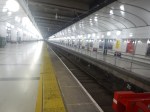
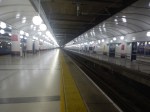

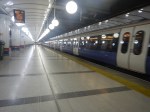

Note.
- Platform 18 has been closed.
- Platform 16 is to the left and Platform 17 is to the right.
- Platforms 16 and 17 have been lengthened.
- The can now handle the full nine-car Class 345 trains.
- There is a wide walkway on the far side of Platform 17.
I have a few thoughts.
Why Is The Access Between Train And Platform Not Level?
This picture shows level access on the central section of the Elizabeth Line at Whitechapel station.
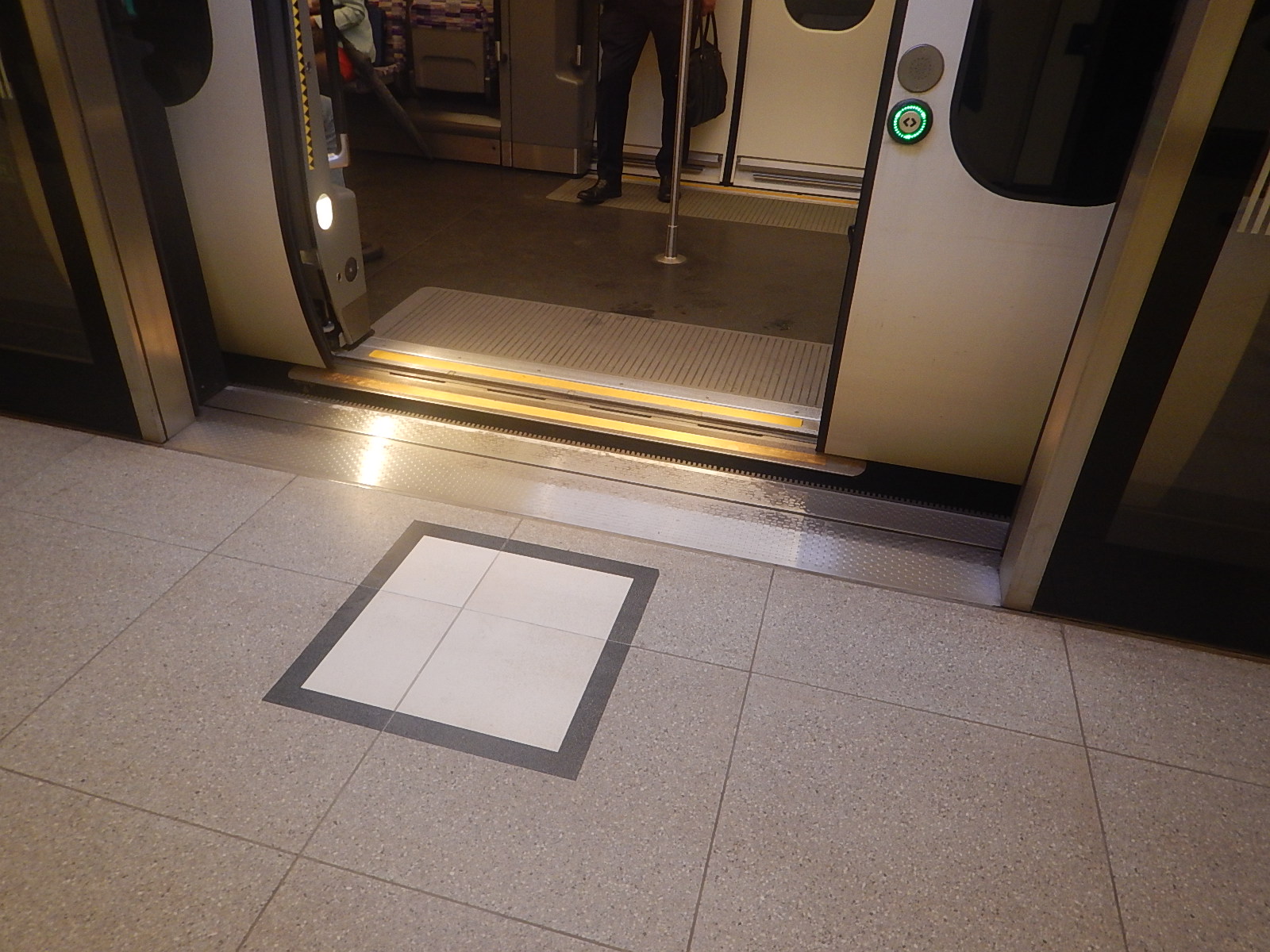
Why wasn’t the platform height adjusted to fit the trains in the rebuilt platforms 16 and 17 at Liverpool Street station?
Are There Any Plans For The Walkway Behind Platform 17?
Consider.
- At the other end of the station concourse, there is a walkway alongside Platform 1, that leads in and out of the station.
- There is also a walking route out between the two sections of the station.
A walkway behind Platform 17 could be possible.
Station Redevelopment
This article on Ian Visits is entitled Liverpool Street Station Plans For A £1.5 billion Redevelopment.
This is the first paragraph.
Initial plans have been revealed for a £1.55 billion redevelopment of Liverpool Street station that would see it become a two-level station with a much larger entrance built next to the tube station.
As the station is surrounded by a large cluster of skyscrapers, I will assume there will be another one.
Despite Brexit, Covid-19 and the War in Ukraine, there still seems to be an appetite for new office space in London.
Changing Trains At Canary Wharf Station – 13th June 2022
I took these pictures around the new Canary Wharf station on the Elizabeth Line.

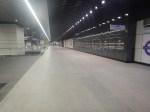

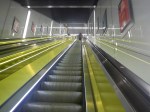


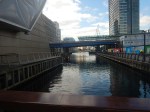






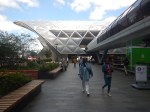
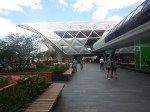

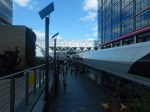
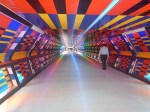




Note.
- The station appears to follow, a very similar design to some of stations on the Jubilee Line.
- Changing to various lines at Canary Wharf would appear to be a bit of a walk, that is very much in line with say a connection between the Jubilee Line and the Docklands Light Railway.
- The connection to the Jubilee Line appears to be a tunnel under the offices.
- For West India Quay DLR station, you walk along the dock.
These are some of the routes that you would use from Canary Wharf.
- Bank – DLR
- Battersea Power Station – DLR – Change at Bank – Northern Line
- Clapham Junction – Elizabeth Line – Change at Whitechapel – East London Line
- Croydon – Elizabeth Line – Change at Whitechapel – East London Line
- Crystal Palace – Elizabeth Line – Change at Whitechapel – East London Line
- Enfield – Elizabeth Line – Change at Liverpool Street – Enfield Town or Cheshunt Line
- Euston – DLR – Change at Bank – Northern Line
- Heathrow Airport – Elizabeth Line
- King’s Cross – DLR – Change at Bank – Northern Line
- Liverpool Street – Elizabeth Line
- London Bridge – Jubilee Line
- London City Airport – Jubilee Line – Change at Canning Town – DLR
- Marylebone – Elizabeth Line – Change at Paddington – Bakerloo Line
- Moorgate – Elizabeth Line
- Paddington – Elizabeth Line
- St. Pancras – DLR – Change at Bank – Northern Line
- Victoria – DLR – Change at Bank – District/Circle Line
- Walthamstow – Elizabeth Line – Change at Liverpool Street – Chingford Line
- Waterloo – Jubilee Line
Note.
- The new escalator connection between the DLR and the Northern Line at Bank station will enable easier journeys to Euston, King’s Cross, St. Pancras and many other Northern Line stations.
- The excellent connection between the Elizabeth Line and the East London Line at Whitechapel station, will get a lot of use.
- The DLR features in several routes, including the important one to London City Airport.
In A Short Cruise At Greenwich, I said this about the DLR.
The Docklands Light Railway is often thought by Londoners, commuters and visitors as a bit of a Cinderella.
However, like Cinderella she works hard all day and provides reliable and efficient transport, where the only alternatives are buses, bicycles, taxis and Shank’s pony.
Just after the 2012 Olympics, I met a big cheese in Transport for London on a DLR train. He felt that the DLR had been the star in getting everybody to the games.
It must be one of the most successful light railways in the world!
And yet, no-one has ever thought to build another running on the same principles.
So why does it work so well?
This article on Intelligent Transport is entitled Celebrating 30 years Of The DLR, where this is said, under a heading of Customer Satisfaction.
One of the biggest successes of the DLR over the last 30 years has been its high levels of reliability, with over 99% of its trains departing on time.
The DLR has also had consistently good feedback and engagement with its customers, with high satisfaction ratings averaging at 89 out of 100.
Do these numbers mean that people trust Cinderella and will trust her to get through even in the most difficult of circumstances?
Conclusion
Canary Wharf station could develop into a very important interchange.
Elizabeth Line – Riding The Underground Roller Coaster At Liverpool Street Station – 24th May 2022
In London’s First Underground Roller Coaster, I published this cross-section of the double-ended Liverpool Street station, which I have christened an underground roller-coaster.
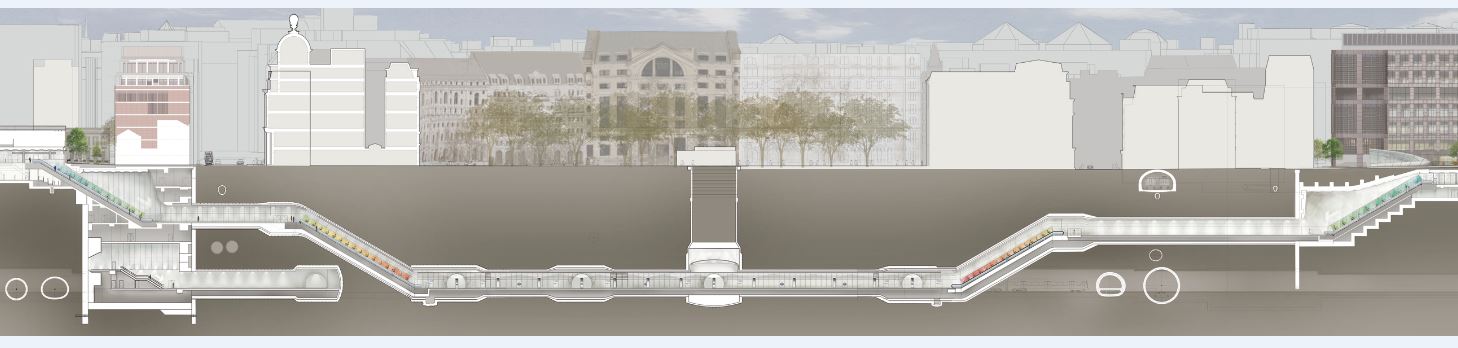
Note.
- Moorgate station is on the left.
- Liverpool Street station is on the right.
- In the middle looking like a giant juicer is the ventilation shaft in Finsbury Circus.
- The Crossrail tunnels, which consist of two running tunnels and a pedestrian walkway between them are at the deepest level.
- There are escalators and lifts all over the place.
Today, I walked between Liverpool Street and Moorgate.
As I walked I took these pictures.





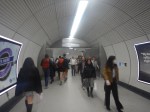




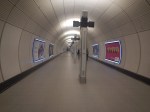
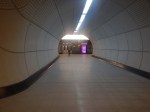

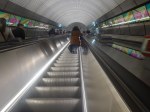
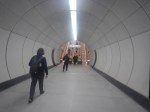
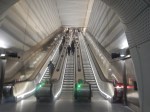
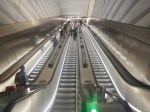

Note.
- It is two down escalators and two up escalators from end to end.
- The passageway is wide, with cross passageways linking to the platforms.
- It is all step-free.
- I used a down inclined lift.
I feel it was probably easier than a walk on the surface.
But as it was raining, I didn’t get wet.
One Broadgate – 9th April 2022
I haven’t walked down Eldon Street for some time from Moorgate to Liverpool Street station and last time, there was an office block on the North side of the street.
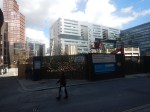
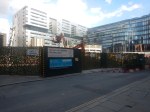

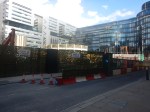
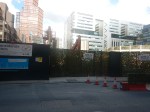
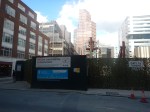


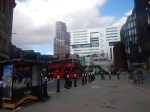



Note.
- Yesterday, there was just a large hole there, which will be filled by the new development of One Broadgate.
- The silver building in the background of many of these pictures is 5 Broadgate, which is the London offices of UBS.
- One Broadgate will be a ten story development.
- The development will be a mixed development with retail and leisure on the lower floors and offices above.
- The last three pictures show the developing plaza in front of Broadgate, with another new development in the South-West corner.
Despite Brexit, the Covid-19 pandemic and now the Russian attack on Ukraine, there seems to be no letup in the building of new offices in London.
 The Anonymous Widower