Did Plans For Crossrail Ever Include A Station At Holborn?
I have only one North-South bus route, where I live.
The 141 bus connects Palmers Green and London Bridge station.
- The 141 bus was the replacement for the 641 trolley bus, which was the main link between Wood Green, Turnpike Lane and Harringay, and the City of London, when I was a child.
- The vehicles are up to ten years old Wrightbus diesel hybrids.
- The route suffers badly from overcrowding as it connects, Bank and Moorgate stations in the City of London, with the outer reaches of the Piccadilly Line.
The overcrowding on the 141 bus route has got worse in the last couple of years because of the following.
- The rebuilding of London Bridge station brought more passengers to the 141 bus route.
- The opening of the new London Bridge bus station at London Bridge station has improved access to the buses at London Bridge station.
- The improvement of the connection of the buses to the Docklands Light Railway, Central Line and Northern Line at Bank station.
- The opening of the Battersea branch of the Northern Line, which brings more passengers to Bank station.
- The opening of the new Cannon Street entrance to Bank Underground station.
- The opening of the Elizabeth Line through Moorgate station.
- Recently, a new walking route between Moorgate and Liverpool Street was opened, which will bring more passengers to the buses on Moorgate.
- The rebuilding of Old Street station brought more passengers to the 141 bus route.
So what was the response of the Mayor and Transport for London, to all this increase of passenger numbers?
The 21 bus, which shadowed the 141 route, and doubled the number of buses through where I live, was moved to serve Holloway.
It was a big crime against mathematics and the wishes of our long-serving Labour MP; Meg Hillier.
So to handle many more passengers between London Bridge station and Newington Green through the City of London, the number of buses was halved.
I believe that the overcrowding will get worse because of the improvements, that Transport for London have planned.
- The Piccadilly Line will be getting new air-conditioned trains within a couple of years and these will inevitably attract more passengers to the line.
- On the other hand the air-conditioning may persuade passengers to use the Piccadilly Line more than they do now. Instead of changing to the 141 bus at Manor House station, passengers could change at Finsbury Park, King’s Cross St. Pancras or Holborn stations for other routes to the City of London.
- The third line to receive the new air-conditioned trains will probably be the Central Line, which would create another East-West air-conditioned line and bring more passengers to Bank station.
- The Central Line could give some relief for the buses through Bank, if an extra station was built on the Central Line to interchange with Shoreditch High Street station on the East London Line of the London Overground.
- The fourth line to receive the new air-conditioned trains will probably be the Waterloo and City Line, which would create another air-conditioned line and bring more passengers to Bank station.
- It is likely, that more services will be added to the Elizabeth Line, which will bring more passengers to Moorgate station.
- It is likely, that more services will be added to the Northern City Line, which will bring more passengers to Moorgate station.
- The Mayor is also planning to pedestrianise Oxford Street, which may fill up the Central Line with extra passengers.
It looks to me, that there will be a need for a large increase of bus capacity through the City of London on a North-South axis.
On the other hand, the City of London have stated that they will pedestrianise many of their streets.
So what can be done to avoid gridlock in the City of London?
Develop The Northern City Line At Moorgate
I use this route regularly to and from Moorgate station.
- It already has new Class 717 air-conditioned trains.
- The route is already digitally signalled in conjunction with the East Coast Digital Programme.
- It has two platforms at Moorgate station.
- Highbury & Islington station has interchanges with the Victoria Line and the North and East London Lines of the London Overground.
- Finsbury Park station has interchanges with the Victoria Line and National Rail services.
- Bowes Park station has an out of station interchange with Bounds Green station on the Piccadilly Line.
- Step-free access needs improving.
- The Victorians had plans to extend the line to Lothbury near Bank station.
If the Northern City Line could handle more passengers, would passengers get to all parts of the City of London by changing at Finsbury Park and walking from Moorgate or Old Street stations?
I regularly go between my house and Moorgate, by taking a bus to Essex Road station and using the Northern City Line.
I believe that with improvements on the Northern City Line, the line could be turned into a very valuable part of London’s rail infrastructure.
Connect The Central Line And The East London Line At Shoreditch High Street Station
I wrote about this proposal in Will Shoreditch High Street Be Connected To The Central Line?
The Elizabeth Line needed to be completed before this could be started.
Build The Western Extension Of The Docklands Light Railway
I wrote about this proposal in The Bank Station Upgrade And The Western Extension Of The DLR.
Rebuild Holborn Station
The interchange between Piccadilly and Central Line at Holborn station is difficult to say the least.
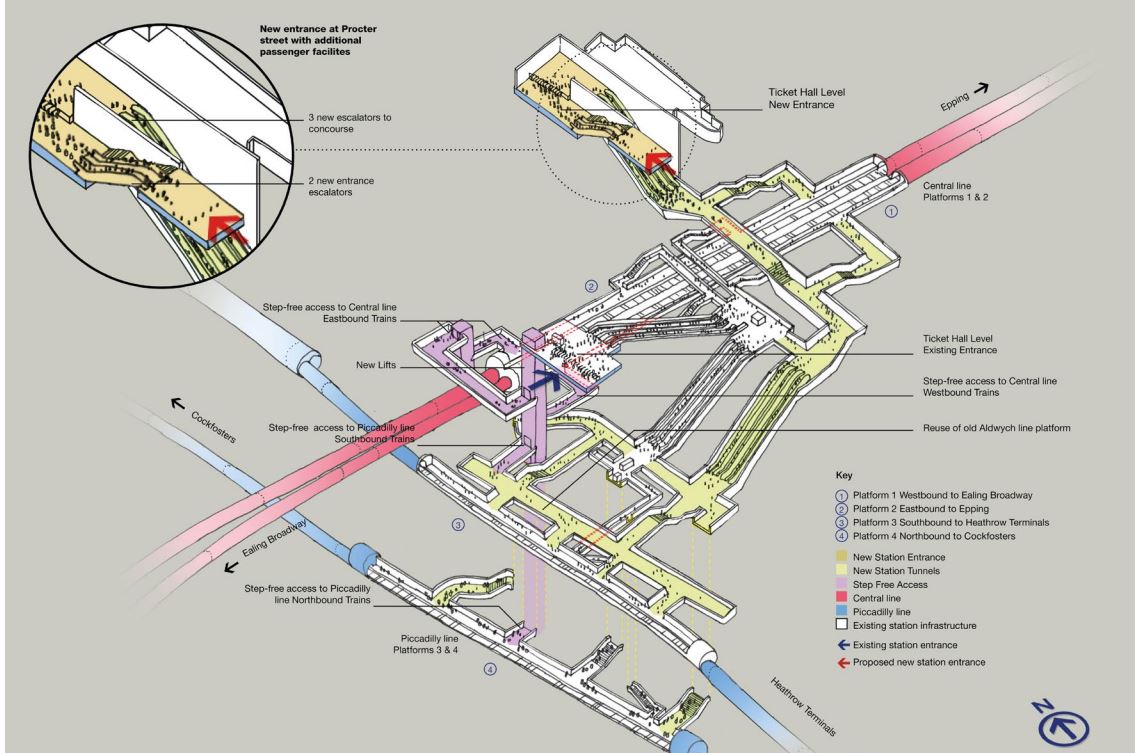
Holborn station is being extended with a new entrance. As with Euston, I suspect it has been designed with a feasible place for DLR platforms to be added.
This document on the TfL web site, gives more details of what is proposed at Holborn station.
I extracted this visualisation of the proposed station.
This map from carto.metro.free.fr shows the lines in the through and around the station.
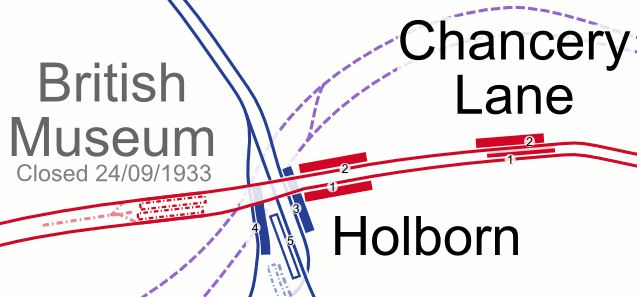
.Note, the Elizabeth Line, which is shown by dotted lines passes to the North of the station.
Conclusion
Not all these improvements need to be done, but each would improve transport in the City of London.
When Silvertown Opens, Blackwall Tolls Start Too
The title of this post, is the same as that of this article on the BBC.
This is the sub-heading.
In under a month, tolls will be introduced for drivers at the new Silvertown Tunnel and the existing Blackwall Tunnel in east London.
These four paragraphs add detail to the story.
For car drivers it will cost £8 a day in peak. These are huge changes to London’s transport network and awareness seems to be low.
The new highly controversial Silvertown Tunnel opens on 7 April.
Critics have dubbed the crossing a huge polluting white elephant that will do nothing to cut congestion and pollution with little or no business case.
Supporters say it will reduce congestion on the old, existing Blackwall Tunnel and improve resilience on the crossing that closes between 600-700 times a year. It will also provide more cross river bus routes as well as a bus that can carry bikes.
As a very experienced mathematical modeller, my gut feeling is that four new tolled lanes under the River Thames is not the solution.
These are my thoughts.
Transport for London Are Not Good Mathematical Modellers
As a non-driver, I rely heavily on the 141 bus for transport.
- It stops close to my house.
- It takes me to and from Moorgate, where I also pick up the Elizabeth Line.
- It takes me to and from Bank, where I also pick up the Central Line.
- It takes me to and from River Thames, from where I pick up the Thames Clippers.
- It takes me to and from London Bridge station, where I also pick up theThameslink.
- It takes me to and from Manor House station, where I pick up the Piccadilly Line.
- It takes me to and from Harringay Green Lanes station, where I pick up the Gospel Oak to Barking Line.
I must admit some of the reasons I like the bus route, are that it connects me to my childhood memories of WoodGreen, Southgate, Oakwood and Cockfosters.
When, I moved here, there were two North-South buses that ran within fifty metres of my house.
- The 21 bus ran between Newington Green and Lewisham.
- The 141 bus ran between Palmers Green and London Bridge station.
Then, two years ago the Elizabeth Line and the rebuilt Bank station both opened, followed a year later by an upgraded Old Street station.
These three improvements, added a lot more passengers to the North-South corridor, between London Bridge station and Newington Green roundabout.
I suspect a quality modelling of bus passengers North-South, through the city of London, would have shown, that more buses were needed on the combined 21/141 route.
So what did Sir SadIQ and Transport for London do? They rerouted the 21 bus away from the busiest section through De Beauvoir Town.
In their modelling, I suspect.
- They overestimated how many travellers used the Northern Line.
- They ignored the fact, that the Piccadilly Line doesn’t serve the City of London.
- They ignored the fact, that the Piccadilly Line doesn’t connect to the Elizabeth Line.
- They ignored the fact, that the 141 bus, is the only direct way between Palmers Green, Wood Green, Turnpike Lane and Manor House to the City of London.
- They felt De Beauvoir Town was a posh area and doesn’t need more buses, as residents can use their cars.
Halving the number of buses was a seriously bad decision.
I now have a damaged left knee due to constant standing on overcrowded buses.
It’s also got a lot worse lately due to constant bus diversions and cancellations, due to Islington’s LTNs and constant road works.
I’ve heard similar tales of bad bus planning from all over London.
So why should I trust Transport for London’s traffic modelling on the Silvertown and Blackwall Tunnels?
The Silvertown And Blackwall Tunnel Share Approach Routes
This map from the BBC article shows the layout of the two tunnels and their approach roads.
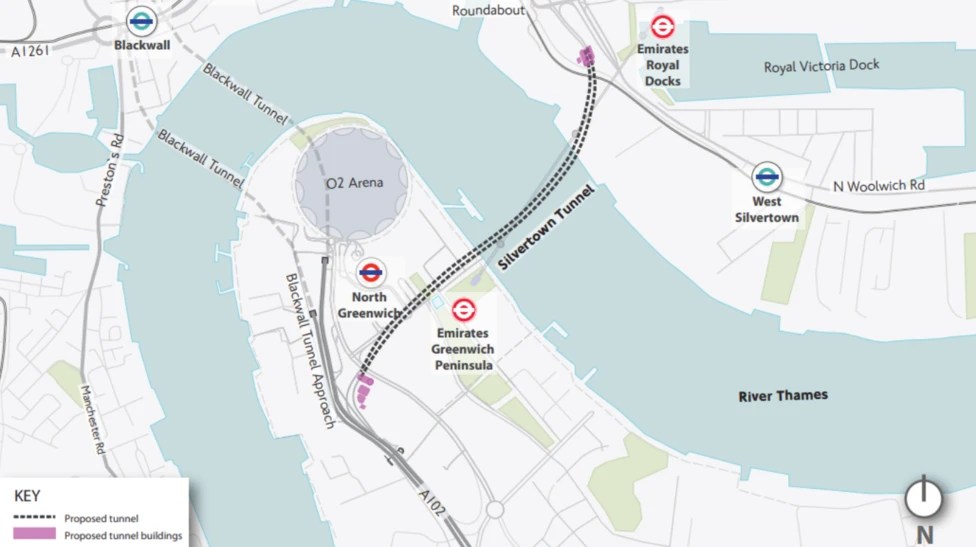
Note.
- The Blackwall Tunnel is two, two lane tunnels, one in each direction.
- The Silvertown Tunnel is one four lane tunnel, with two lanes in each direction.
- The O2 lies between the two tunnels.
The map shows the shared approach road for both tunnels.
What happens if there is an accident on the approach to the tunnels?
Tolling Problems
I feel that the tolling regime is overly complicated.
Hopefully, any problems this causes will lessen, as drivers know what to do.
The Sat-Nav Route Between The Tunnels And The M1
I’ve just looked one recommended route up, not that I have a Sat-Nav and I’ve never used one and the route is straightforward.
- Blackwall Tunnel Northern Approach to Hackney Wick.
- Wick Lane to Hackney Central.
- Graham Road and Dalston Lane to Dalston Junction
- Balls Pond Road to Southgate Road/Mildmay Park
- St. Paul’s Road to Highbury & Islington station.
- Holloway Road to Archway.
- Archway Road, Aylmer Road and Falloden Way to Henly’s Corner.
- North Circular Road and Great North Way to the M1.
I live just South of the Southgate Road/Mildmay Park junction and often these days it is jammed solid.
But there is another route from Hackney Wick.
- A12 to Redbridge Roundabout on the North Circular Road.
- North Circular Road to the M1.
I dread to see what happens, when the Dartford Crossing is closed and heavy trucks from the Channel Tunnel to the M1, decide to take the Silvertown Tunnel as an alternative route.
Struggling To Get Home From Moorgate Station
In most cases to get back to my house, I take a convenient 141 bus from Moorgate station.
- The bus stop at Moorgate is the same side of the road as the exit from Moorgate station.
- At the stop at my home, I just cross the not very busy road and there is a zebra crossing, if the road is busy.
- The walks at both ends are not more than fifty metres.
- The 141 bus, used to share the route with the 21 bus, which meant there was a bus every five minutes.
- The 21 buses are more comfortable New Routemasters.
Now, that the 21 bus no longer shares the route, timings of the 141 are much extended, with sometimes a wait of as long as 15 minutes.
This is because.
- The traffic has got a lot heavier.
- One fleet of buses, is taking both groups of passengers.
- Islington has laid out numerous Low Traffic Neighbourhoods.
Consequently, the remaining 141 buses have a much higher passenger density and I don’t always get a seat.
This Saturday and Sunday, the Elizabeth Line wasn’t running, so the buses were overcrowded.
On both days, I had to get a 76 bus from Moorgate to De Beauvoir Town, as I had waited for a long time and one had not been shown on the app.
Yesterday, I would have had to wait 26 minutes for the 141 bus to do the last mile to get home.
So I walked and took these pictures of Islington’s not so pretty pavements.



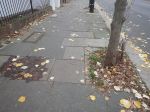
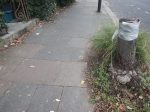
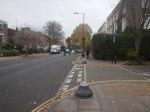
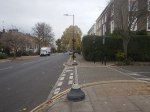
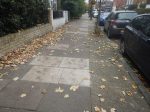


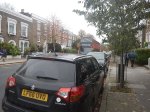
Compared to Hackney, they are not a pretty sight. And the pavements did make walking difficult.
As I did the last leg to my house, five 141 buses passed me, as Transport for London don’t believe in spreading them out, where there are punters.
Luckily, I wasn’t carrying anything heavy!
Today, I was even luckier in that a 141 bus stopped, soon after I got off the 76.
More Mushroom Management On TfL Buses
After my experience in Mushroom Management On TfL Buses, I’ve changed my weekend breakfast routine at weekends, to one where on Saturdays and Sundays, I eat breakfast in London’s poshest Leon at Hanover Square, which I wrote about in A Quality Takeaway With A Station And A Large Garden.
It is a large restaurant.
It has comfortable seating.
It is within my not very long walking distance of the Bakerloo, Central, Elizabeth, Jubilee and Victoria Lines, and Oxford Street with all its buses.
There is a garden with seating in the square.
This picture shows the frontage of the building.
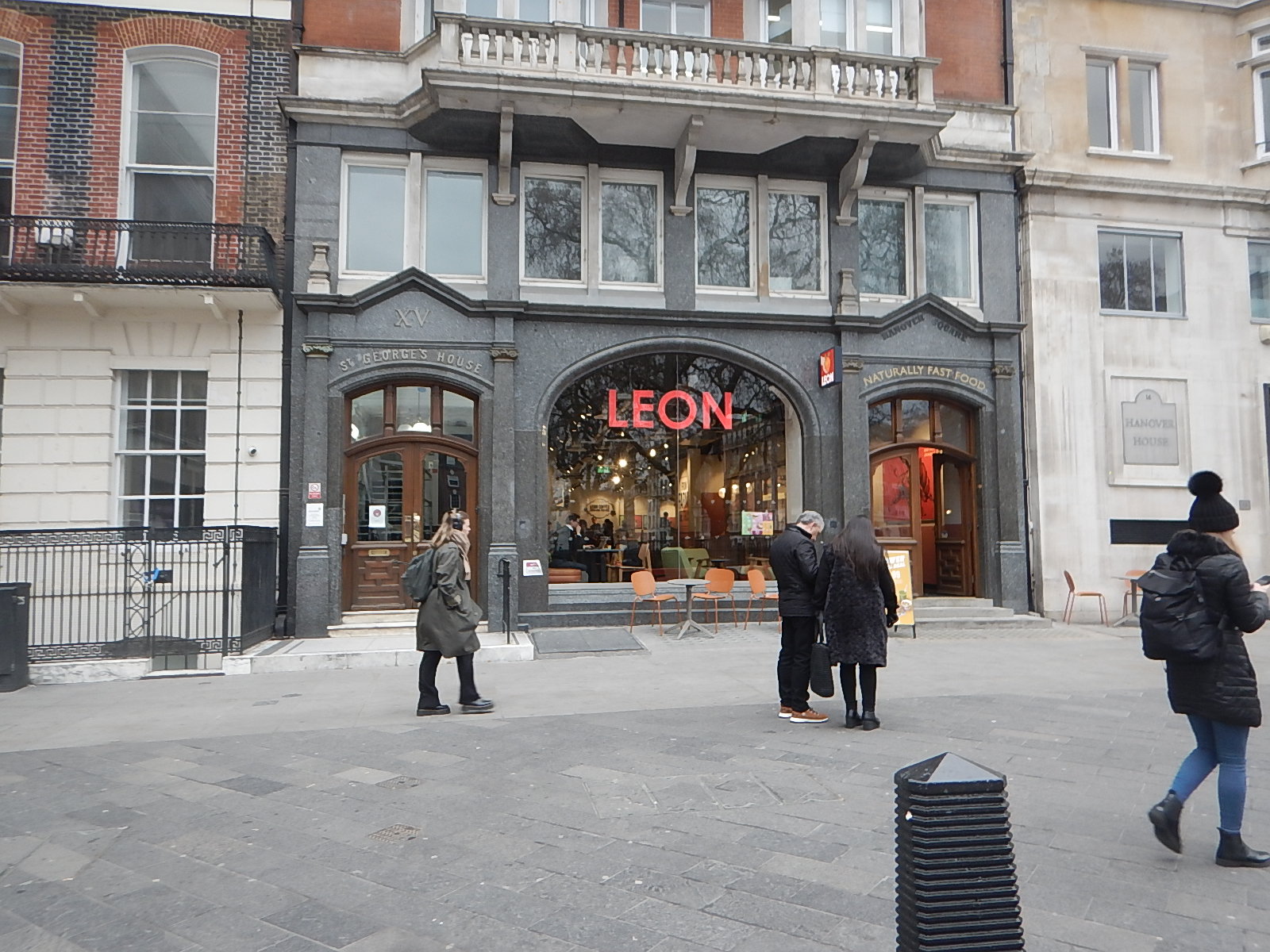
It’s certainly not your average takeaway or fast food outlet.
Normally, Hanover Square is a very easy location for me to travel to.
- I walk round the corner to the stop for the 38 bus.
- The 38 buses are usually every 3-4 minutes and I travel to Tottenham Court Road station.
- I go one stop on the Elizabeth Line, travelling in the rear of the train to Bond Street station.
- I’m then at the right end of the station to exit directly into Hanover Square, after riding up from the depths on a long escalator.
Leon is just a fifty metre walk away.
Today, there were no problems, although I did cut it a bit tight.
But all was fine in the end and I had a good full-English breakfast.
A Difficult Journey Home!
When, I set off from home, I wasn’t sure which way, I would come home.
In the end, I decided to come home the simple way of taking the Elizabeth Line to Moorgate station and then getting the 141 bus from there, as it stops close to my home.
But this route has the Elizabeth Line end-changing problem, in that the Hanover Square entrance at Bond Street station is at the Eastern end of the train and the Moorgate entrance at Liverpool Street station is at the Western end of the train.
So at some point in the journey, I would have to take a two-hundred metre walk, either on the platform or inside the train. The latter is not easy on a train to and from Heathrow, as it is often stuffed full with cases in the aisle. Why do people want to take all the contents of their house on holiday?
So I decided to go via a reverse at Whitechapel, where I positioned myself at the Western end of the train for exit at Moorgate.
It really was necessary to install travellators at Liverpool Street station on the Elizabeth Line, as between the two entrances is a long walk, as this graphic shows.
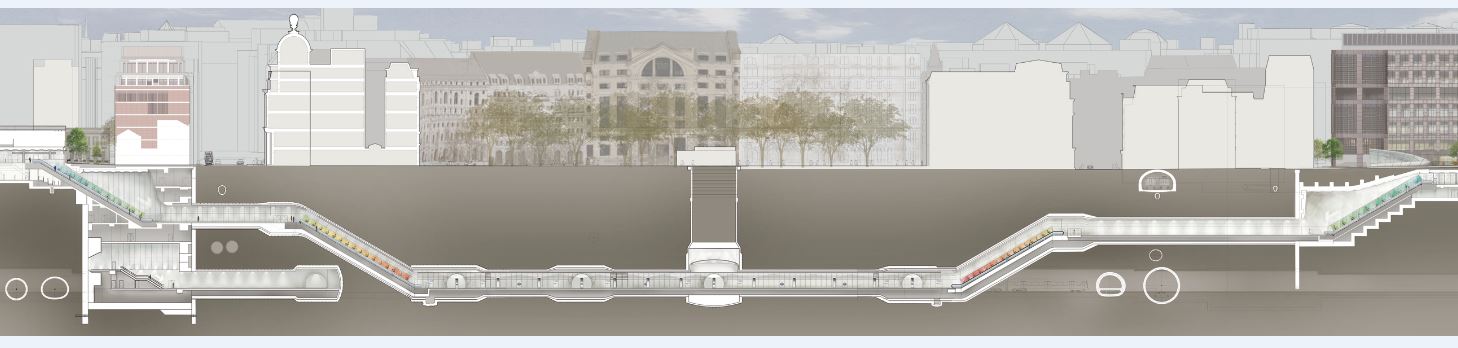
Note.
- Moorgate is to the left
- Liverpool Street is to the right.
But then Transport for London wanted a spectacular line with spectacular stations, that would win awards. Which it has!
I alighted from the train at the Moorgate end of the station, which meant that after two escalator rides and a short walk, I was at the 141 bus stop on the surface.
But there were no buses of any numbers calling at the stop.
This was because of the Lord Mayor’s Show, which meant there were no buses through the City.
But.
- There were no posters at stations saying that the show was taking place and buses would be diverted.
- Displays on bus stops were not saying anything about the show.
- The BBC hadn’t mentioned the Lord Mayor’s Show on the TV this morning.
- The BBC doesn’t have a local news at weekends, which would surely have mentioned the show and its effects on public transport.
- The display on the bus stop at Moorgate was still broken, as it has been for six months.
- There was a small information poster on the bus stop, but it was positioned too high for me to see.
- Taxis seemed to be avoiding the City.
There were a few stewards about and one suggested, that I walked to Old Street, which would not be easy on my legs.
In the end, I decoded that a retreat via Whitechapel and Dalston Junction was probably the best way to get home, as the Overground would be unlikely to be effected.
But I made the mistake of getting on a Circle Line train at Moorgate, so I didn’t get to Whitechapel.
Instead, I walked to the 141 and 21 bus stop at Monument station and caught a 21 bus North. I hoped that I would be able to connect to the 141 bus, that I needed to get home.
I did get safely home, but only after two long waits at bus stops, where I changed bus routes twice.
Conclusion
Transport for London need to devise bus plans for all major events and publicise them well in advance.
In London’s New 733 Bus Route, I described how Transport for London put in a temporary bus route between Finsbury Square and Oval stations to replace the Northern Line during the upgrade of Bank station.
As the Lord Mayor’s Show happens every year, surely the same plan can be rolled out each year, with any appropriate changes.
I’d be interested to know whether other large cities have plans for big celebrations in city centres.
First Look Inside £2.2bn Silvertown Tunnel
The title of this post, is the same as that of this article on the BBC.
These are the first five paragraphs.
For the first time, Transport for London has invited journalists inside what is one of the most controversial infrastructure projects in the capital.
The Silvertown Tunnel is 1.4km (just under one mile) long and stretches from Silvertown in Newham to the Greenwich Peninsula.
Inside the tunnel, it is extremely wide. A lot bigger than other tunnels like the supersewer or Crossrail. Boring was finished a few weeks ago.
Transport for London (TfL) says the scheme will address queues at the Blackwall Tunnel and reduce pollution. But it has faced fierce opposition from those who think it will do the total opposite and increase pollution and congestion.
And the big question is – even with mitigation – can a road tunnel ever be green?
Note.
- There is a good picture, showing the width of the tunnel.
- It is very wide and can’t be much narrower than the four-lane Queensway Tunnel, which was opened under Mersey in 1934.
These are my thoughts.
I Am Against The Tunnel Being Built
My main reason I am against the Silvertown Tunnel is that Transport for London’s mathematical modelling of and rerouting of buses past my house has been some of the worst I’ve seen. I talk about the bus problems I now have in Is The Nightmare On The Buses Going To Get Worse?
So until the two tunnels; Blackwall and Silvertown are complete and open with tolling, I won’t trust any of Transport for London’s pronouncements.
I also feel that as the Silvertown Tunnel will allow trucks to pass though, there will be times, when they will cut through the East End to get to the Motorways going North.
But now, it’s more or less finished, we will probably need to use it.
How Is The Tunnel Being Paid For?
The Wikipedia entry for the Silvertown Tunnel has a section called Costs, where this is said.
In 2012, the cost was stated to be £600m. A consultation in 2015 stated that the cost of construction was estimated to be £1bn. In March 2020, the cost was increased again, to £1.2 billion. Operation, maintenance and financial costs of the tunnel over 25 years is expected to cost another £1bn.
The £2.2 billion will be repaid by tolls on both tunnels. Effectively, it’s a Private Finance Initiative or PFI.
Can A Road Tunnel Ever Be Green?
This is the question the BBC asked in the last paragraph of my extract.
Although, I am very much against this tunnel, I do believe this tunnel can be green.
- Suppose, the tunnels were made free for zero-carbon vehicles, that were powered by batteries, hydrogen or possibly ammonia.
- This might nudge vehicle owners and operations to go zero-carbon.
This extra number of zero-carbon vehicles would help to clean up London’s air.
I wonder which will be the preferred route for trucks associated with construction to go to and from sites in Central London?
- These trucks are major polluters in Central London.
- There are sensible moves to make construction sites zero-carbon.
If the Silvertown Tunnel didn’t have tolls for zero-carbon trucks, then surely this would nudge, this sizeable group of trucks to go zero-carbon to the benefit of everyone in Central London.
The only problem with making zero-carbon vehicles toll-free, is that it probably ruins the finances of the tunnels, from the point of view of the investors.
Conclusion
I can see lots of conflict starting over the operation of this tunnel.
Is The Nightmare On The Buses Going To Get Worse?
This morning after photographing the finish of the Bank Station Upgrade, I walked down the side of the new Cannon Street entrance to catch a 141 bus from King William Street to my home.
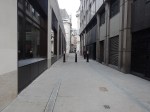
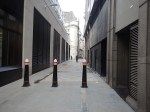

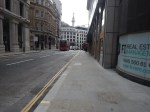
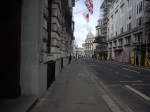
Note.
- There are two bus stops for the 21, 43 and 141 buses on King William Street; one Northbound and one Southbound.
- The bus stops are a two minute level walk from the gate-line at the Cannon Street entrance.
- To go between the gate-line and the Northbound stop requires no crossing of any road, but the route to the Southbound stop requires the use of a light-controlled crossing.
- The Cannon Street entrance is step-free and only a short walk, between the street and the platforms of the Docklands Light Railway and the Northern Line.
- The access to the Central Line is also easy, but a longer walk.
This afternoon, I walked the other way from the Southbound bus stop on King William Street to the new Cannon Street entrance of Bank station.
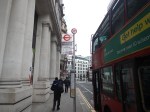
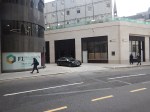
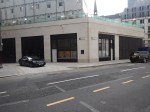
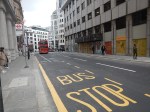
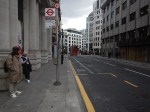
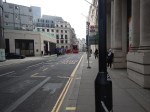
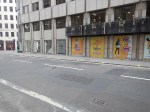
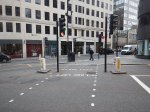
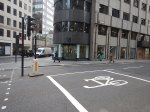
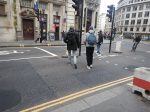
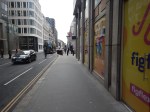
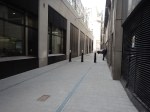
Note.
- It is a totally level walk.
- There are lights to help the crossing of King William Street.
- The concrete building on the other side of King William Street is the other end of the new station entrance.
- It looked to me, that there was a retail unit in the corner of that building. This was confirmed by station staff and it would surely be an ideal place for an upmarket takeaway.
- The building on the corner of Cannon Street and King William Street is a set of shared offices. Again it is in a prime position.
- You can also walk from the bus stop to the main Monument station entrance.
I timed myself from the Southbound stop on King William Street to the various platforms.
- Central Line – Under five minutes
- Dockland Light Railway – Under four minutes
- Northern Line – Under three minutes
Will these times encourage passengers to use the new entrance and its buses to North London?
If I was looking for offices for a foreign company, that wanted to be in the City, as I do occasionally for an American attorney, I would start in this area.
Step-Free Access On The Northern Line Is Rather Variable
If you look at the step-free access on this section of the Northern Line, you find the following.
- Euston – Escalators – No Lifts until High Speed Two
- King’s Cross – Escalators – One Lift to platform
- Angel – Escalators – No Lifts – Medium walk to the buses
- Old Street – Escalators – No Lifts – Medium walk to the buses
- Moorgate – Escalators – Long Lift route – Medium walk to the buses
- Bank (North) – Escalators – Lots of Steps – Medium walk to the buses
- Bank (Cannon Street) – Escalators – Two Lifts to platforms – Short walk to buses
- London Bridge – Escalators – One Lift to platform – Steps to buses
Note.
- If I was going between My House and the Northern Line South of Bank station, I’d change between the 141 bus and the Northern Line at the Cannon Street entrance to Bank station.
- Alternatively, I can take a 38 bus to the Angel and join the route there. But that route can be very slow coming North, as there is a lot of walking. Going South, it’s also likely to be blocked by a Tesco truck at the Angel.
- Between My House and the Docklands Light Railway, I’d change from the 141 bus at the Cannon Street entrance to Bank station.
- I might even take that route, if I wanted the Central Line out of Bank.
It does appear that as the new Cannon Street entrance to Bank station has been well-designed with full step-free access and short walks to the bus stops, that it will be the interchange of choice for many travellers to and from the area, who are using the buses.
Conclusion
I feel that a lot of passengers from North London will use the 21, 43 and 141 buses to access the Central and Northern Lines, and the Docklands Light Railway using the new Cannon Street entrance to the Bank station complex.
I very much feel that all three bus routes will have a lot more passengers, so the Nightmare On The Buses, is likely to get worse.
The Mayor Rubs It In!
I took these pictures whilst waiting to get home this morning from Moorgate, whilst waiting for a 141 bus.
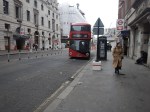
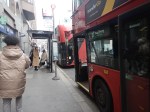
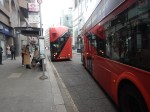
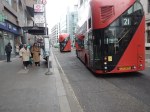
It’s one thing to reroute the buses, but quite another to send them up and down the old route, with plenty of space for passengers. Although, I don’t think this will help his reelection chances next year.
When the 141 bus did arrive, it was about ninety percent full.
I predicted in a letter to my MP. that this overcrowding would happen because the opening of the Elizabeth Line and the Bank Station Upgrade.
I also said similar things in Does London Need High Capacity Bus Routes To Extend Crossrail?, which I wrote in February 2022, before the Elizabeth Line opened in May.
But I didn’t get it all right, as it appeared the biggest increase in passenger numbers happened after the new escalators between the Docklands Light Railway and the Northern Line opened at Bank station. That puzzled me and I can only assume that there is a lot of traffic between the catchment area of the DLR and North East London.
Predicting the number of passengers, who will use a new railway, road or bus service is a difficult science, which very often results in a wrong answer.
In the Mysterious Case Of Rerouting The 21 Bus, it would have been better to have completed all the works at Bank, Moorgate and Old Street stations, before trying to solve the best way to deploy the buses.
- Bank and Moorgate stations are almost completed.
- The completion of Old Street station and the associated road works are still several months away, as I wrote in Is Old Street Roundabout A ‘Too Many Cooks’ Project?
In Does London Need High Capacity Bus Routes To Extend Crossrail?, I said this about the buses needed.
I suspect any route seen as an extension of Crossrail needs to have the following characteristics.
-
- High frequency of perhaps a bus every ten minutes.
- Interior finish on a par with the Class 345 trains.
- Wi-fi and phone charging.
I would also hope the buses were carbon-free. Given that some of these routes could be quite long, I would suspect hydrogen with its longer range could be better.
Get the design of these buses correct and they could attract a large number of passengers from their cars to public transport.
- Ten year old buses, as on the 141 bus are unacceptable.
- Before the 21 bus was withdrawn, you noticed that some passengers wait an extra minute to get a 21 bus with its greater space and comfort.
- Because of the better design of the stairs on modern buses and New Routemasters, I will go upstairs on these buses. But I don’t chance it on an older bus.
- Wi-fi and phone charging would make up for the fact that the Class 345 trains don’t have it.
From experience of the 141 bus in recent days, a frequency of a bus every five minutes is probably needed now.
Nightmare On The Buses
The title of this post, is not the title of a horror remake of the popular 1970s-sitcom’ On The Buses, but a description of my journeys on a 141 bus today.
Until, last Friday, I had two buses; the 21 and 141 to take between my house and Moorgate, which is an important destination for me.
- There is a large Marks and Spencer food store there, where I regularly buy the gluten-free food, I must have as a coeliac.
- There is a LEON there, where I regularly have my gluten-free breakfast.
- Moorgate station is a good transport interchange from which I regularly start journeys over London.
But now there is only one bus; the 141.
In November 2021, I wrote The Great Bus Robbery, where I said this.
What is TfL’s latest crime?
The 21 and 271 buses are going to be combined into a new route between Lewisham and Highgate, which will go nowhere near the Balls Pond Road.
So we’ll just have the one bus route to the City of London.
On past form, if TfL say they will increase the frequency, I wouldn’t believe them.
This was my conclusion.
We will need the 21 bus to provide us with a route to Crossrail, as the 141 buses will be full.
The 21 bus is needed where it is and mustn’t be stolen.
Note that Crossrail is now called the Elizabeth Line.
Today, I made three journeys between my house and Moorgate station and this is what happened.
Journey 1 – Southbound
I arrived at the bus stop and after five minutes a 141 bus arrived.
But it was full and didn’t open the door to let any of the waiting six passengers board.
After another three minutes, another 141 bus arrived and we squeezed on.
But there wasn’t any seats left and I stood all the way to Moorgate.
Journey 2 – Northbound
I only had my breakfast and as I had things to do at home, I returned fairly quickly after finishing my breakfast.
Partly, this was also because a 141 bus turned up with some seats available.
But it was a lot closer to capacity, than Northbound buses at about the same time last week.
Journey 3 – Northbound
My third journey started at about four in the afternoon, after I’d been out to take some pictures and buy a few food items in Marks and Spencer.
I had to wait seven minutes for a 141 bus and as there was a 76 bus a couple of minutes in front of it, I took that, with the intention of changing halfway.
I was able to get a seat.
In the end, the 76 bus got stuck in traffic and I walked to my intended change stop and waited there for the 141 bus, which was without a seat, so I stood for three stops to home.
It was one of the slowest journeys, I’d had between my house and Moorgate station.
Day 2 – February 7th – 2023
I arrived at the bus stop and found a lady, who had been waiting for an hour-and-a-quarter.
I had no problem coming home, as I went to Liverpool during the day and got a taxi back from Euston.
Day 3 – February 8th – 2023
Perhaps, they’d heard our pleas, but a bus turned up after a couple of minutes with plenty of spare space.
I even got a seat.
Going home, at about 10, there wasn’t a spare seat.
Revenue per bus, is certainly rising.
Conclusion
On the evidence of the first three day, it appears that there is not enough capacity without the 21 bus.
Improving The Wood Green And Moorgate Public Transport Corridor
This morning I went for coffee with an old school friend from Minchenden Grammar School at Southgate station.
Southgate is not a bad place to meet someone.
- There are a couple of good coffee shops.
- There are plenty of buses.
- It has a couple of the better chain restaurants including a Pizza Express.
- The area also has a lot of memories for me.
It also has one of London’s most iconic Underground stations.
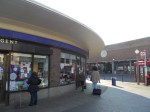
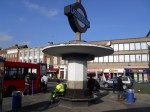
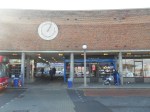
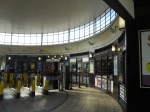
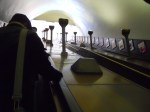
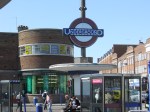
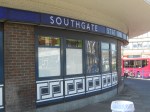
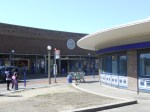
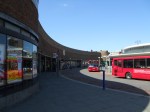
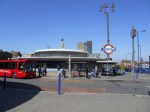
It may look familiar, as it regularly crops up in film and television dramas.
- One station guy told me, that the ticket barriers have been designed to be easy to remove, so filming of an historic drama is possible.
- It was used in The End Of The Affair to portray a Central London station.
- As the escalators have the same bronze fittings as Moscow, they could be used in a story set in Russia.
As the Piccadilly Line doesn’t go anywhere near my house, to get to Southgate, I take a 141 bus to and from a convenient Piccadilly Line station.
- Going North, I changed at Manor House station.
- Coming South, I changed at Turnpike Lane station.
- I could have also have changed at Wood Green station.
The journey home had four major problems.
- The bus stop at Turnpike Lane station, is a few hundred yards from the station.
- I waited fifteen minutes for a 141 bus.
- When it did arrive, it was so packed, it didn’t have space for a miniature dachshund to squeeze in between the feet of the standing passengers.
- The traffic was very heavy, so the journey was slow.
How can this bus route cope in the Peak, if it can’t cope on a Sunday morning?
Various issues and actions and will make these capacity issues worse.
The Victoria Line Has No Direct Connection With The Elizabeth Line
In my view, this was a mistake, although not that serious, as the young or energetic can probably walk between Oxford Circus and the Hanover Square entrance to Bond Street station on the Elizabeth Line.
Will this connection develop with coffee and snack shops to ease passenger interchanges?
When and if Oxford Circus station is ever made step-free, I can imagine a tunnel, perhaps with a moving walkway being built between Oxford Circus station and he Hanover Square entrance to Bond Street station.
There is also the cross-platform interchange at Highbury & Islington station with the Northern City Line that links with Moorgate and the City of London.
The Piccadilly Line Has No Direct Connection With The Elizabeth Line
To get between the Northern stations on the Piccadilly Line and the Elizabeth Line is either a double-change at Finsbury Park and Highbury & Islington stations or a ride on the 141 bus.
I wrote about these issues in Extending The Elizabeth Line – Improving The Northern City Line.
The Elizabeth Line Will Attract Travellers To Moorgate
I notice that my own travelling patterns have changed from using the Central, Circle, District, Hammersmith & City and Metropolitan Lines to using the Elizabeth Line since it opened and I suspect, when the Elizabeth Line is fully joined up, that more passengers will travel to Moorgate to access the Elizabeth Line.
Transport for London and the Mayor Are Rerouting The 21 Bus
The 21 bus duplicates the 141 bus between Newington Green and Moorgate station.
But it is being rerouted next year, which will increase the loading on the 141 bus.
The 141 Bus Used To Be The 641 Trolleybus
When I was a child, London’s trolleybus network was extensive and to get between Wood Green and Moorgate, you would have used the 641 trolleybus.
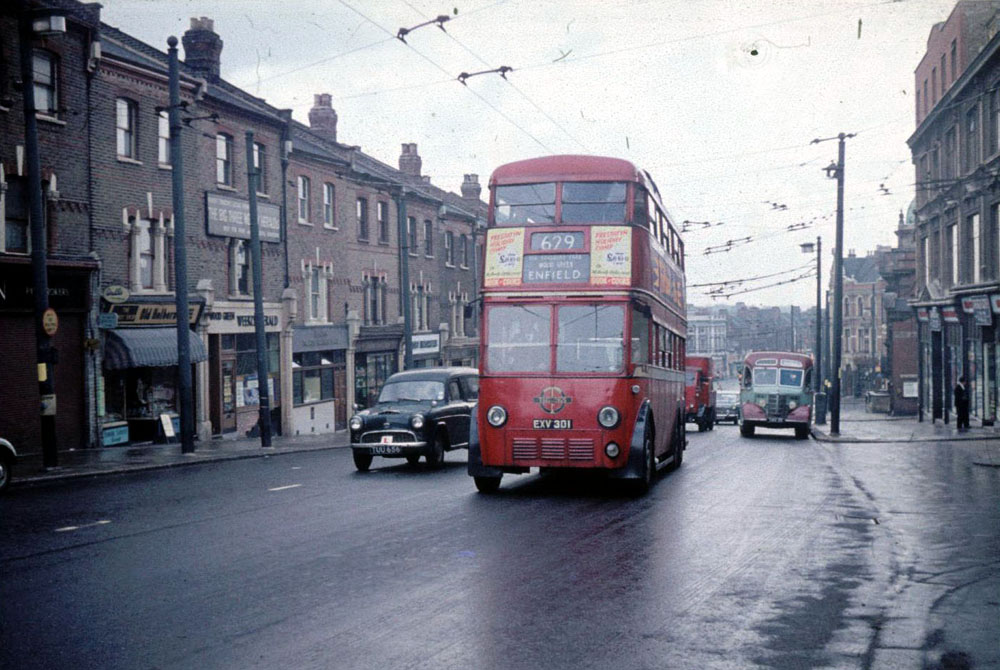
Trolleybus Ascending Jolly Butchers Hill in Wood Green
Many like me, look back on trolleybuses with affection.
Does this historical connection encourage passengers to use the 141 bus, which is the 641 trolleybus’s successor on the route?
My parents certainly had lots of trolleybus stories.
So What Could Be Done?
There are a variety of actions that could be taken to strengthen public transport between Moorgate and Wood Green stations.
Improve The 141 Bus Route
In Does London Need High Capacity Bus Routes To Extend Crossrail?, I put forward ideas for using buses to link to the Elizabeth Line.
This was my suggestion.
I suspect any route seen as an extension of Crossrail needs to have the following characteristics.
- High frequency of perhaps a bus every ten minutes.
- Interior finish on a par with the Class 345 trains.
- Wi-fi and phone charging.
I would also hope the buses were carbon-free. Given that some of these routes could be quite long, I would suspect hydrogen with its longer range could be better.
I feel that a high-quality 141 bus running every ten minutes between London Bridge station and Palmers Green, would be just what the passengers would order.
- Palmers Green bus garage is at the Northern end of the route, so could be used for refuelling or recharging.
- London Bridge station is at the Southern end of the route and was designed with an efficient bus station.
- The 141 route connects London Bridge, Bank, Moorgate and Old Street stations in the City of London.
With the right buses, this could be a route with real quality and usefulness.
Increase The Frequency On The Northern City Line
The Northern City Line may have new Class 717 trains, but it still has a pathetic frequency of eight trains per hour (tph)
- I am sure it could be increased to at least 12 tph between Moorgate and Alexandra Palace stations.
- Something like six tph would go to Welwyn Garden City, four tph to Hertford East station and two to Stevenage.
- Large areas of the Northern suburbs would get a much better connection to the Elizabeth Line.
Once the digital signalling is installed and commissioned, no new infrastructure will be needed.
I am sure, that this would be the easiest way to improve public transport in North London.
Add Step-Free Access To As Many Stations As Possible
Moorgate, Finsbury Park, Oakwood and Cockfosters are step-free with lifts.
As many stations as budgetary constraints allow, should be made step-free.
Extending The Elizabeth Line – Improving The Northern City Line
Some parts of North and North-East London, have less-than-good connections with the Elizabeth Line.
- The Piccadilly Line has no direct connection with the Elizabeth Line.
- The Victoria Line has no direct connection with the Elizabeth Line.
- The Bank branch of the Northern Line has only a poor connection with the Elizabeth Line at Moorgate station.
- The Northern City Line has only a poor connection with the Elizabeth Line at Moorgate station.
- The Charing Cross branch of the Northern Line has a good connection with the Elizabeth Line at Tottenham Court Road station.
- The Lea Valley Lines of the London Overground have good connections with the Elizabeth Line at Liverpool Street station.
- Thameslink has a good connection with the Elizabeth Line at Farringdon station.
It would appear that if you live near one of the Lea Valley Lines or Thameslink stations, you can access the Elizabeth Line fairly easily at Liverpool Street or Farringdon stations, but if you rely on a Northern, Northern City, Piccadilly or Victoria Line local station, you are not so lucky!
Could The Northern City Line Be Improved To Give Better Connections Between North London And The Elizabeth Line?
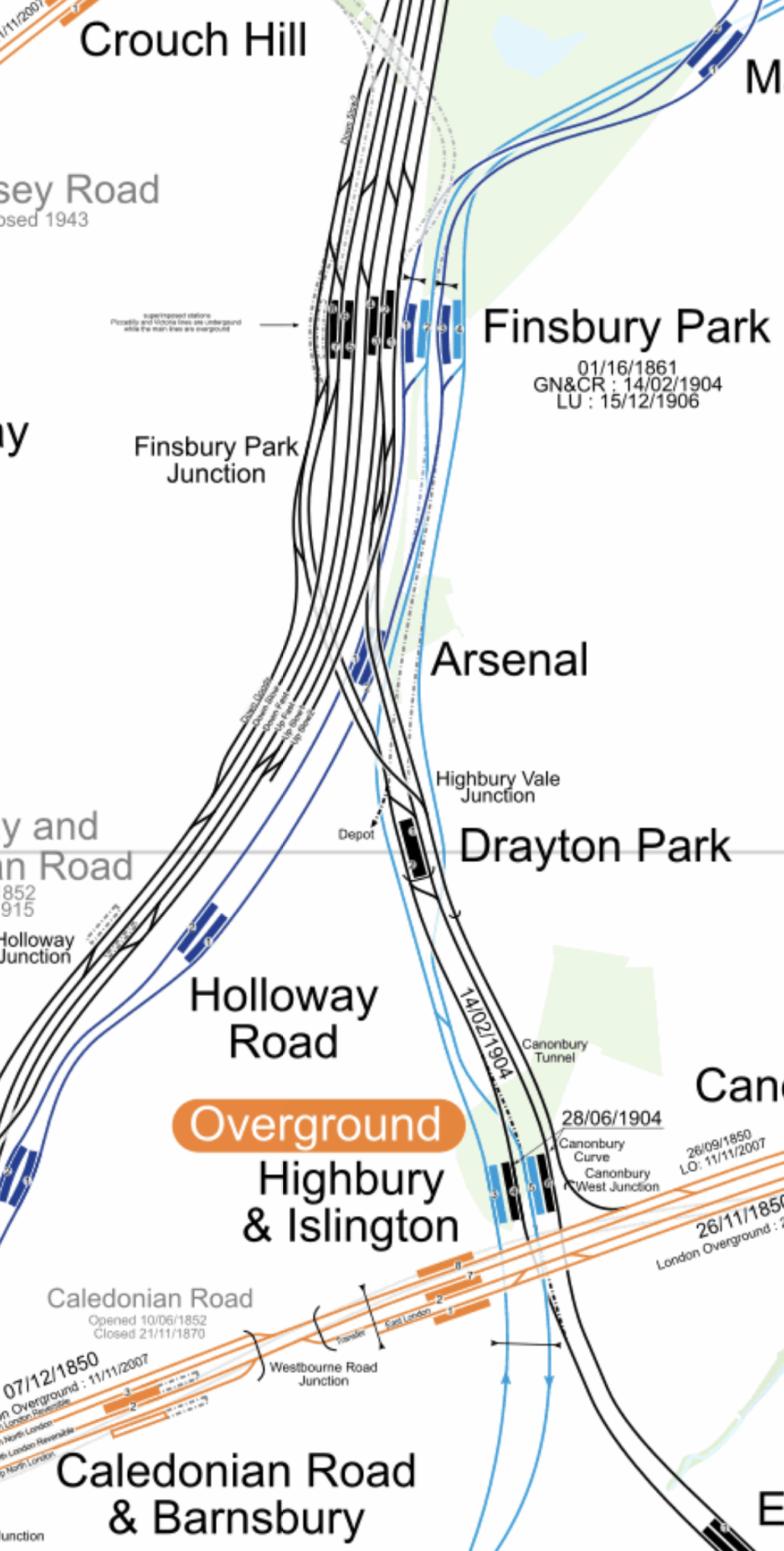
This map from cartometro.com shows the lines between Finsbury Park and Highbury & Islington stations.
Note.
- The dark blue tracks are the Piccadilly Line, which calls at M (Manor House), Finsbury Park, Arsenal, Holloway Road and Caledonian Road, before going South-West to King’s Cross St. Pancras.
- The lighter blue tracks are the Victoria Line, which calls at Finsbury Park and Highbury & Islington, before going South-West to King’s Cross St. Pancras.
- The black tracks on the Western side of the map are those of the East Coast Main Line into King’s Cross.
- The black tracks going South-East from Finsbury Park are the Northern City Line, which calls at Finsbury Park, Drayton Park, Highbury & Islington, E (Essex Road) and Old Street before terminating at Moorgate.
This second map shows the lines through Finsbury Park station.
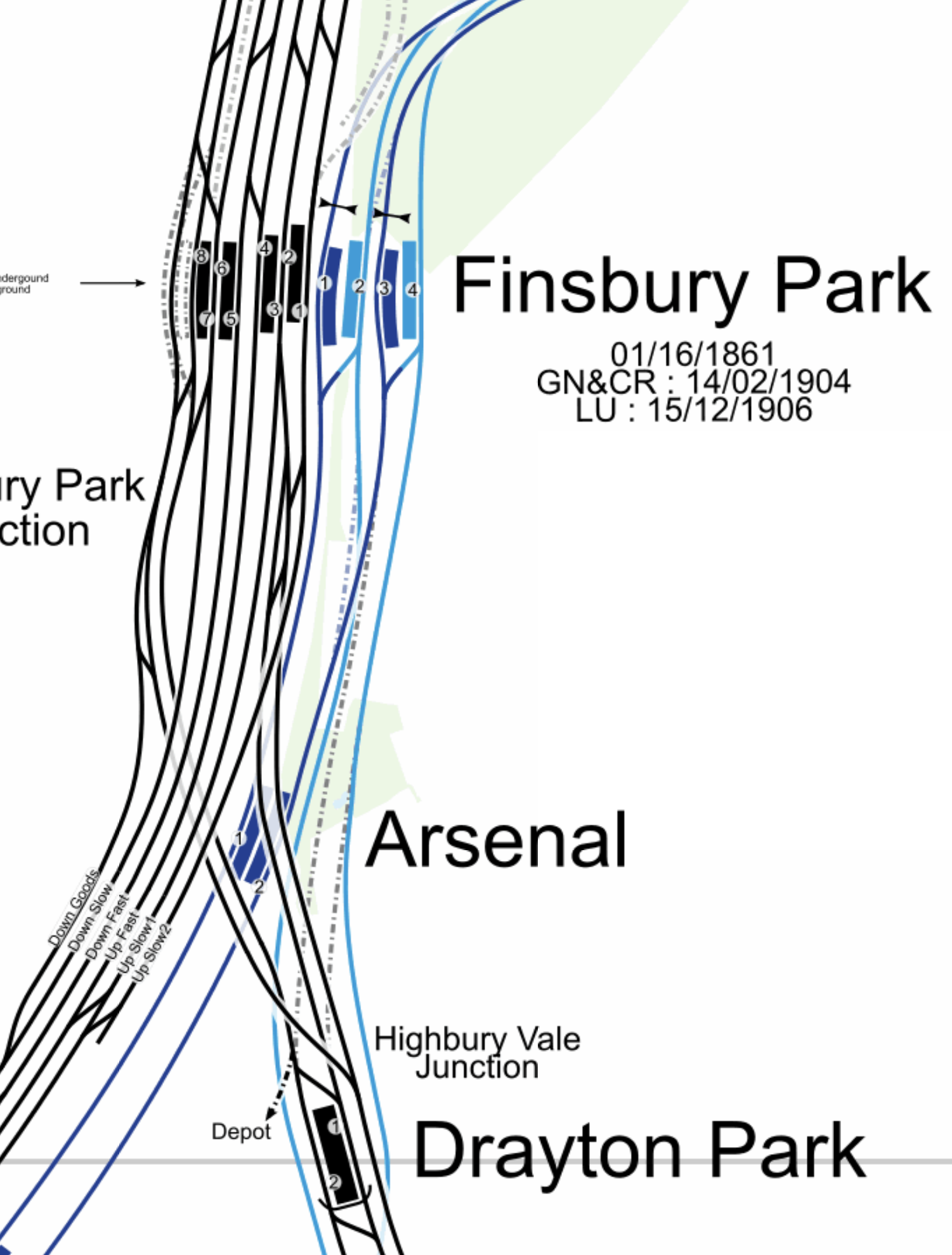
Note.
- The dark blue tracks are the Piccadilly Line.
- The lighter blue tracks are the Victoria Line.
- The black tracks going through Drayton Park station are the Northern City Line.
- The platforms of the Piccadilly and Victoria Lines are paired at Finsbury Park station, so that passengers can change lines with a simple walk-across.
This third map shows the lines through Highbury & Islington station.
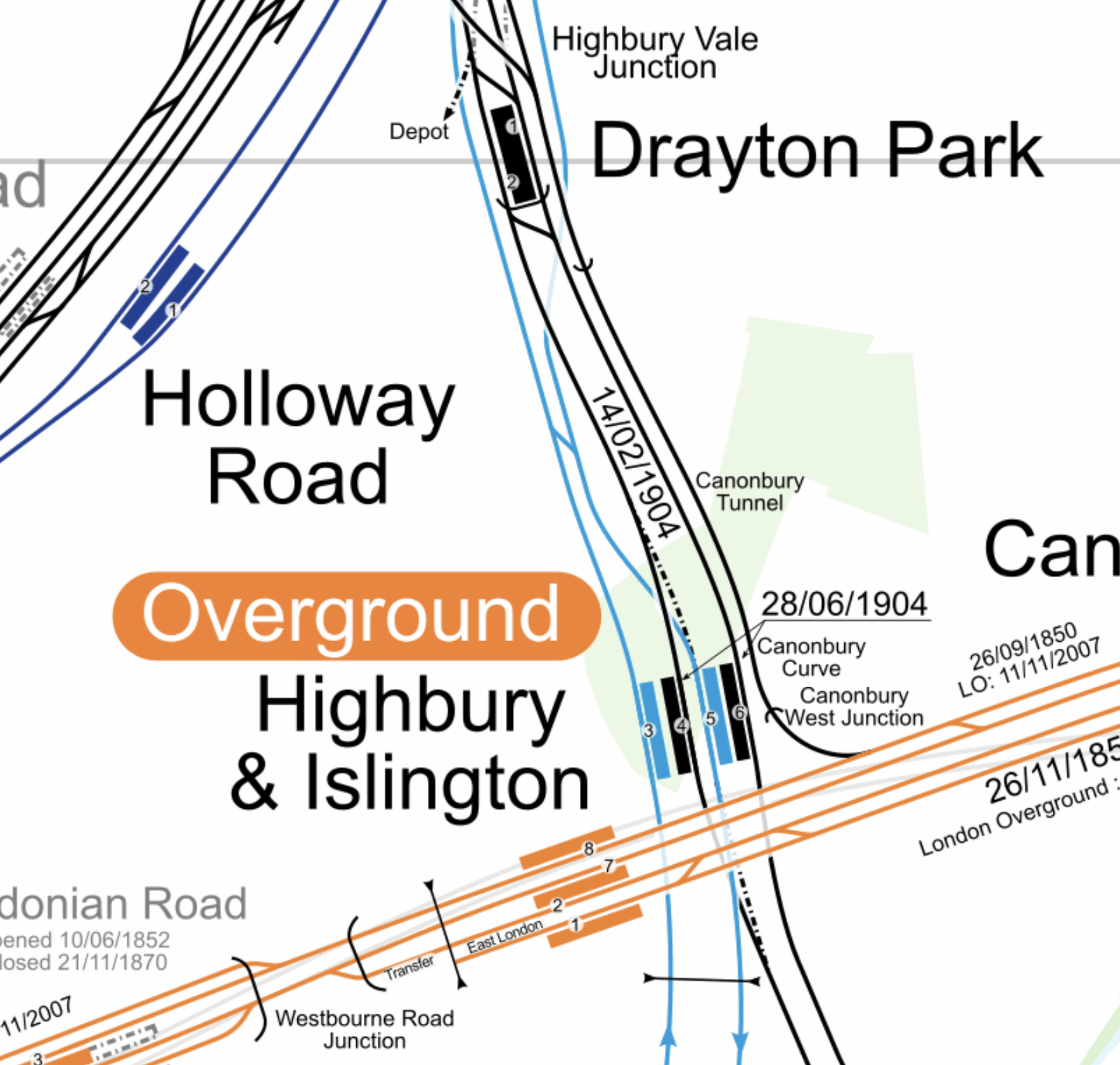
Note.
- The dark blue tracks are the Piccadilly Line.
- The lighter blue tracks are the Victoria Line.
- The orange tracks are the London Overground.
- The black tracks going through Drayton Park and Highbury & Islington stations are the Northern City Line, which terminates at Moorgate station.
- The platforms of the Northern City and Victoria Lines are paired at Highbury & Islington station, so that passengers can change lines with a simple walk-across.
The big problem with Highbury & Islington station is that is not step-free.
A Step-Free Route Between Wood Green And Moorgate Stations
Currently, it is possible to go between Wood Green and Moorgate stations by using three trains.
- Piccadilly Line – Wood Green to Finsbury Park – 6 mins
- Victoria Line – Finsbury Park to Highbury & Islington – 6 mins
- Northern City Line – Highbury & Islington to Moorgate – 10 mins
Note.
- These are actual times measured on my phone.
- The total time is twenty-two minutes.
- I had to wait a couple of minutes at both changes.
- Both changes are walk-across.
- The changes are not as perfect as they could be, although they would be easily managed with a buggy or a heavy case.
These pictures show the change at Highbury & Islington station.
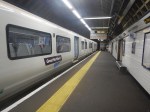
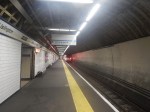
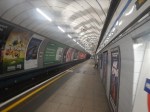
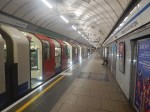
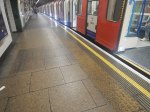
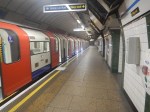
These pictures show the change at Finsbury Park station.

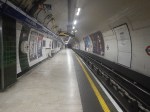
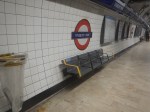
This route works for all stations Between Manor House and Cockfosters.
- Cockfosters – Add 15 minutes
- Oakwood – Add 12 minutes
- Southgate – Add 9 minutes
- Arnos Grove – Add 6 minutes
- Bounds Green – Add 3 minutes
- Turnpike Lane – Subtract 2 minutes
- Manor House – Subtract 5 minutes
But look at the frequencies of the three sections in trains per hour (tph)
- Piccadilly Line – 21 tph
- Victoria Line – 33 tph
- Northern City Line – 4 tph
The Northern City Line frequency is not high enough, as you could have a fifteen minute wait for a train.
Improvements Needed To The Northern City Line
The Northern City Line now has new Class 717 trains, a terminal platform at Stevenage and full digital signalling is being installed.
- The major improvement needed would be to improve frequency to at least 12 tph.
- Six tph on both branches should be possible.
I would also install step-free access at more stations.
Moorgate Station’s Northern City Line Platforms
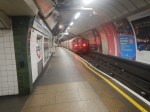
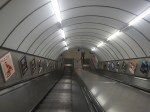
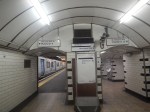
These pictures show the platforms of the Northern City Line at Moorgate station.
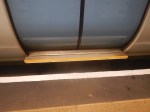
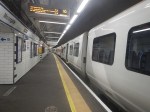
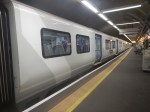
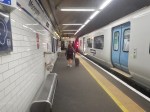

Note.
Improved Connections At Moorgate Station
I talked about the connections between the Northern and Elizabeth Lines at Moorgate station in Elizabeth Line To Northern Line At Moorgate Station.
This was my conclusion.
Routes between the Northern and Elizabeth Lines at Moorgate need to be improved.
I feel that some of the improvements could be fairly minor, but adding step-free access to the Northern City Line could be more difficult.
An Improved Connection Between Bank And Moorgate Stations
Currently, there are three ways between Bank and Moorgate stations.
- Use the Northern Line
- Use a 21, 43 or 141 bus routes
- Walk
I believe that it would also be possible to dig a pedestrian tunnel between the two stations and fit it out with a moving walkway.
This visualisation shows the updated Bank station.
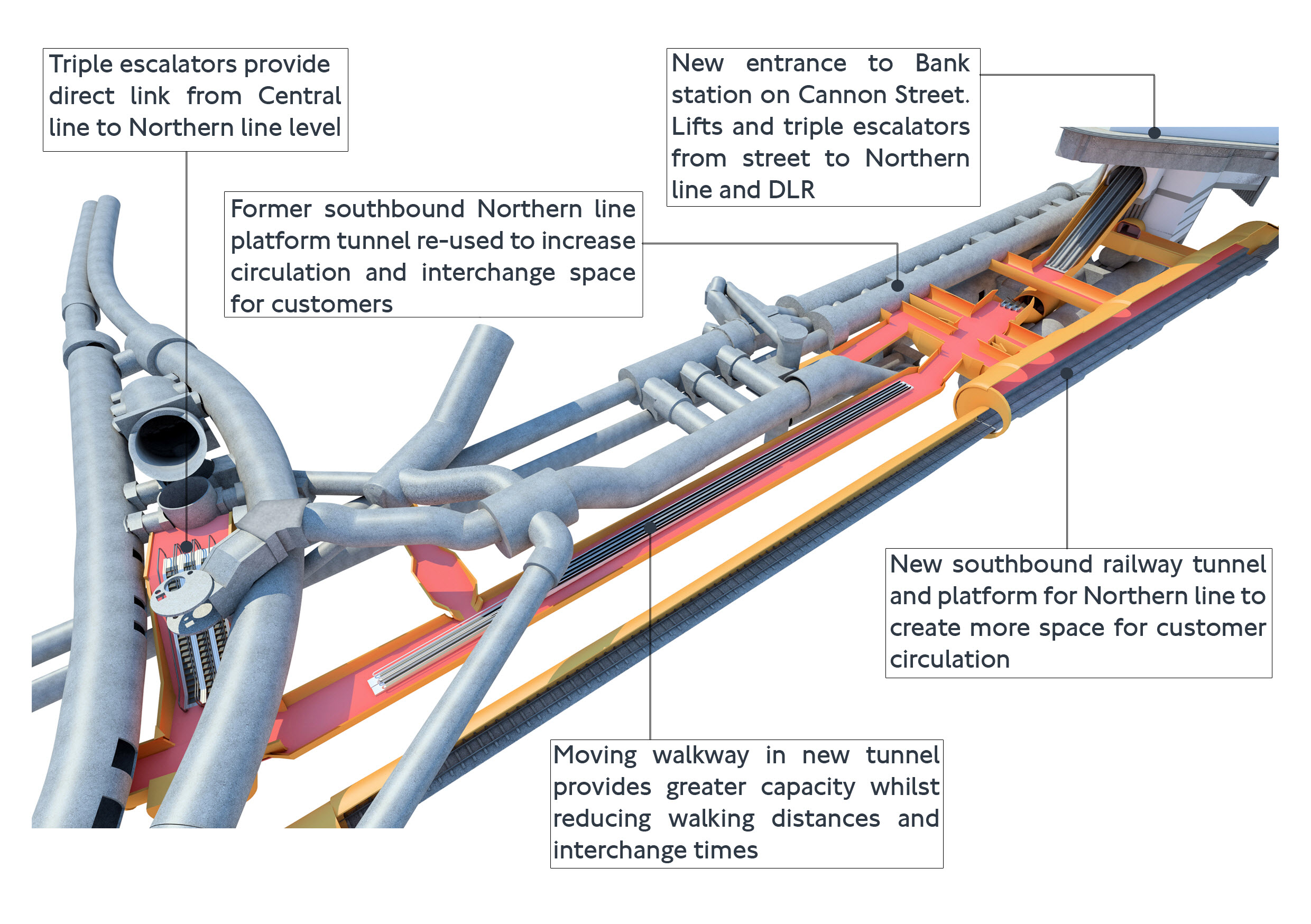
Note.
- Moorgate station is to the left.
- The only more-or-less completed bits are the two Northern Line tunnels and platforms and parallel pedestrian tunnel.
- The four cross tunnels can be picked out towards the far end of the station.
- Three of the cross tunnels can now be used by passengers.
- The moving walkway can be accessed from the two cross tunnels nearest to the Central Line.
- The escalators from the yet-to-open Cannon Street entrance appear to lead directly into a cross tunnel and a parallel tunnel to the moving walkway.
I believe that the moving walkway to Moorgate station could connect with the Bank station complex, at the Moorgate end of the new moving walkway in Bank station.
 The Anonymous Widower