Could London And Central Scotland Air Passengers Be Persuaded To Use The Trains?
How Many Passengers Fly Between London And Edinburgh?
Wikipedia gives these figures for 2024 for passengers from Edinburgh to London
- London City – 334,873
- London Gatwick – 476,152
- London Heathrow – 1,148,634
- London Luton – 338, 729
- London Stansted – 693,953
This gives a total of 2,992,341.
As Wikipedia doesn’t give complete figures for from London to Edinburgh, for the purpose of this analysis, I’ll assume they are the same.
How Many Passengers Fly Between London And Glasgow?
Wikipedia gives these figures for 2024 for passengers from Glasgow to London
- London City – 208,405
- London Gatwick – 456,002
- London Heathrow – 954,027
- London Luton – 255,095
- London Stansted – 225,110
This gives a total of 2,098,639.
As Wikipedia doesn’t give complete figures for from London to Glasgow, for the purpose of this analysis, I’ll assume they are the same.
How Many Passengers Fly Between London And Scotland’s Central Belt?
Adding the two figures gives 5,090,980. in both directions.
Which is an average of 97,903 per week or 13,948 per day.
How Many Train Seats Run Between London And Scotland’s Central Belt?
These figures are for Friday the 1st of August.
- Aventi West Coast – London Euston and Glasgow Central – 5 x 9-car Class 390 train – 2,345 seats
- Aventi West Coast – London Euston and Glasgow Central – 16 x 11-car Class 390 train – 6,677 seats
- LNER – London King’s Cross and Edinburgh – 26 x 9-car Class 801 train – 15,886 seats
- Lumo – London King’s Cross and Edinburgh – 5 x 5-car Class 803 train – 2,010 seats
Note.
- All services are all-electric.
- All services are fairly new or have recently been refurbished,
This gives a total of 26,918 train seats.
Adding Lumo’s Service To Glasgow
In Lumo Will Extend Its King’s Cross And Edinburgh Service To Glasgow, I suggested that the Glasgow service would be run as follows from December 2025.
- Two existing Lumo services will leave London as pairs of five-car trains.
- The pairs will split at Edinburgh.
- The leading train will go on to Glasgow Queen Street calling at Edinburgh Haymarket and Falkirk High stations.
- The trailing train will return to London King’s Cross.
- At the end of the day, the two trains in Glasgow will do a fast run back to London King’s Cross as a pair of 5-car trains.
This will add 804 seats per day between London and Glasgow Queen Street in both directions.
The daily total would now total 27,722 train seats, which compares with a daily average of 13,948 passengers per day, who travel by air.
Adding Lumo’s Service To Stirling
In Lumo To Expand Scotland’s Rail Network With New London-Stirling Rail Route From Spring 2026, I talk about Lumo’s new service to Stirling.
- There will be five trains per day (tpd) in each direction.
- Lumo’s new route will link London Euston directly to Stirling, also calling at Milton Keynes, Nuneaton, Crewe, Preston, Carlisle, Lockerbie, Motherwell, Whifflet (serving Coatbridge), Greenfaulds (serving Cumbernauld) and Larbert.
- The service will use 6-car Class 222 trains, which in the linked post, I estimate will have a similar one-class capacity to the Class 803 trains between London King’s Cross and Edinburgh.
- If the capacity of the two train types is similar, this should give operational advantages and allow some more Class 803 trains to run the Euston and Stirling route.
This second Scottish route will add 2010 train seats per day between London Euston and Stirling in both directions.
The daily total would now total 29,732 train seats, which compares with a daily average of 13,948 passengers per day, who travel by air.
Could More Capacity Be Added Between London And Scotland’s Central Belt?
I believe some of the Lumo services between London King’s Cross and Edinburgh could be doubled up to a pair of trains.
There would have to be no platform length issues at London King’s Cross, Stevenage, Newcastle and Morpeth stations.
If three trains could be doubled up, that would add 1,206 train seats per day between London and Edinburgh in both directions.
The daily total would now total 30,938 train seats, which compares with a daily average of 13,948 passengers per day, who travel by air.
I also suspect, that some of the Stirling services could be doubled up.
Connectivity Of England’s Northern Airports To London And Central Scotland
Birmingham Airport
Consider.
- There are easyJet flights to Edinburgh and Glasgow
- There are 1.5 trains per hour (tph) between Birmingham New Street and Edinburgh.
- There are 6 tpd between Birmingham New Street and Glasgow.
You would make your choice and pay the money.
East Midlands Airport
There are no flights or trains to Edinburgh and Glasgow.
Leeds Airport
Consider.
- There are no flights to Edinburgh or Glasgow.
- There is one tph between Leeds and Edinburgh
- There is one tpd between Leeds and Glasgow
Could Leeds and Glasgow get better connectivity?
Liverpool Airport
Consider.
- There are no flights to Edinburgh or Glasgow.
- There is one tph between Liverpool Lime Street and Edinburgh
- There is three tpd between Liverpool Lime Street and Glasgow
The Liverpool area is well connected to Crewe, Warrington Bank Quay, Wigan North Western and Preston stations on the West Coast Main Line for alternative services to Glasgow.
Manchester Airport
Consider.
- There are no flights to Edinburgh or Glasgow.
- There is one tph between Manchester Airport and Scotland via Manchester Piccadilly and Manchester Oxford Road, which alternates between Edinburgh and Glasgow.
The Manchester area is well connected to Crewe, Warrington Bank Quay, Wigan North Western and Preston stations on the West Coast Main Line for alternative services to Glasgow.
Omio gives this summary of flights between Heathrow and Manchester airports.
Flights from Manchester Airport to London Heathrow Airport depart on average 8 times per day, taking around 1h 6m. Cheap flight tickets for this journey start at £63 but you can travel from only £16 by coach.
Wrightbus and others will be producing mouse-quiet hydrogen-powered coaches in a couple of years. I suspect these will give short flights a good kicking.
Newcastle Airport
Consider.
- There are no flights to Edinburgh or Glasgow.
- There is three tph between Newcastle and Edinburgh with an additional 5 tpd from Lumo.
- There is two tpd between Newcastle and Glasgow.
- There is one tpd between Newcastle and Stirling.
- From December 2025, Lumo will add two tpd from Newcastle to Glasgow and one tpd from Glasgow to Newcastle.
- In Lumo Will Extend Its King’s Cross And Edinburgh Service To Glasgow, I stated that I believe that Lumo’s Glasgow to Newcastle service will be a late evening ten-car train, so travellers can have a long day in Glasgow, Edinburgh and Newcastle and still return to London.
Lumo would appear to fill in the gap between Newcastle and Glasgow.
Google AI gives this summary of flights between Heathrow and Newcastle airports.
There are usually 5-6 direct flights per day between Newcastle and Heathrow airports. These flights are operated by British Airways. The average flight time is around 1 hour and 10 minutes.
Note.
- In 2024, 497, 469 passengers flew between between Heathrow and Newcastle airports, which is an average of 681 passengers in each direction every day.
- This was an increase of 13.6 % on 2023.
- From December Lumo will be running extra London King’s Cross and Newcastle services, with each train having 402 seats.
- The improvements in rail services in and around Newcastle in recent months, will surely bring more passengers to use trains from Newcastle station.
- Will Lumo also target adverts at airline passengers?
London and Newcastle could be another route for mouse-quiet hydrogen-powered coaches.
Conclusion
These numbers summarise my calculations.
- Currently an average of 13,948 passengers per day fly between London and Central Scotland.
- Currently, there are 26,918 train seats available per day between London and Central Scotland.
- In December 2025, Lumo will add another 804 low-cost train seats between London King’s Cross and Glasgow Queen Street.
- In Spring 2026, Lumo will add 2010 low-cost train seats between London Euston and Stirling.
- From Spring 2026, there will be 29,732 train seats available per day between London and Central Scotland.
- This represents a 10 % increase of seats on the trains between London and Central Scotland.
How many passengers, who normally fly, will switch to using the train?
- Lumo may only offer one class, but you get a trolley and can order food from M & S and others to be delivered to your seat.
- Both LNER and Lumo accept dogs. I don’t know about Avanti.
- All services will be all-electric, when Lumo gets its new electric trains for Stirling, in a few years.
- It looks to me like Lumo could be offering a late train back to London from Edinburgh and Glasgow.
- Digital signalling on the East Coast Main Line should speed up services.
If Lumo to Glasgow and Stirling works out, it could also cut the total carbon footprint of travel between London and Central Scotland.
Lumo Will Extend Its King’s Cross And Edinburgh Service To Glasgow
This article on the BBC is entitled New Train Services Approved On East Coast Main Line.
This is the sub-heading.
Additional train services will run on the East Coast Main Line from December, the rail regulator has said.
This will be the additional services for Lumo according to this document from the Office of Road and Rail.
- Lumo (Newcastle): one additional return service between London King’s Cross and Newcastle on weekdays and one additional service in opposing directions on a Saturday and Sunday.
- Lumo (Glasgow extensions): the extension of existing London King’s Cross-Edinburgh services so that Lumo can provide two northbound services and one southbound service between London King’s Cross and Glasgow on weekdays and one in each direction on Sundays.
I have some thoughts.
Train Lengths
The Office of Road and Rail document doesn’t mention train lengths.
- Hull Trains have been running most services as five-car trains, with some running as ten-car trains.
- In Ten-Car Hull Trains, I talked about Hull Trains and their mixing of 5- and 10-car trains and how it increased the number of seats on the route by 16.7 %.
I suspect that Lumo will use pairs of trains on some services to increase and also balance the number of seats.
A Possible Timetable
Consider.
- Currently, there are five Northbound trains every day with five Southbound trains on Monday to Saturday and four on Sunday.
- Lumo seem to run a reliable service.
- Would it be a safe and sensible idea to base the new timetable on the current timetable?
- Perhaps, the Glasgow services could be add-ons to the current timetable.
So it looks to me, that the extra trains will be scheduled using an innovative timetable.
- I wouldn’t be surprised if the Glasgow to London King’s Cross train was a pair of trains in the evening to balance the service and get two trains to London King’s Cross for the start of the next day’s services.
- This would also give travellers as long a day as possible in Glasgow.
- Would the two London King’s Cross to Glasgow trains, start as a pair of trains at London King’s Cross that split at Edinburgh, with one train returning to London King’s Cross and the other going on to Glasgow?
- Glasgow gets ten cars per day from London King’s Cross and sends ten cars back to London King’s Cross.
- Could the Sunday services both be a pair of trains?
The only new paths needed for the service, would be.
- Two between Edinburgh and Glasgow.
- One Southbound between Glasgow and London King’s Cross at the end of the day.
Otherwise the main timetable is as it is now.
How Long Will London King’s Cross and Glasgow Take?
Consider.
- The fastest Lumo trains take around 4 hours and 23 minutes between London and Edinburgh.
- The fastest ScotRail trains take around 50 minutes between Edinburgh and Glasgow Queen Street stations.
I would expect a time of around 5 hours and 13 minutes is possible.
This is slower than the typical 4 hours and 31 minutes of Avanti West Coast between Euston and Glasgow Central stations, but improvements to the signalling may reduce the time that Lumo takes between London and Edinburgh.
What Time Are The Last Train From Glasgow and Edinburgh To London?
These would appear to be the last trains from Glasgow and Edinburgh to London.
- The last Avanti West Coast train would appear to be the 18:40 from Glasgow Central, which gets in to London Euston at 23:40.
- The Caledonian Sleeper leaves at 23:40 from Glasgow Central, which gets in to London Euston at 07:00.
- The last LNER train for London King’s Cross, would appear to be the 19:37 from Edinburgh, which gets in to London King’s Cross at 01:14.
- The last LNER train for Leeds, would appear to be the 21:00 from Edinburgh, which gets in to Leeds at 00:42.
- The last LNER train for Newcastle, would appear to be the 22:00 from Edinburgh, which gets in to Newcastle at 01:14.
- The Caledonian Sleeper leaves at 23:40 from Edinburgh, which gets in to London Euston at 07:00.
Note.
- The timetable seems to assume, that if you are spending a day in Edinburgh or Glasgow and need to return to London, you will use the Caledonian Sleeper.
- Unless you use the Sleeper, you can’t see an evening football match and easily go home to anywhere South of Edinburgh.
- One of the last trains to arrive in London King’s Cross station is the 19:58 Lumo service from Edinburgh, which arrives at 01:00 in London King’s Cross station.
- Surprisingly, London King’s Cross station seems to have several trains moving in and out all night.
There’s certainly a large gap in the evening, where an extra service could run between Glasgow and London King’s Cross.
I wonder how late Lumo could bring a train into King’s Cross station?
- I came in once to King’s Cross at about 01:30 and still got a taxi home.
- There are also lots of 24-hour buses.
- There is little or no car parking.
I still think Lumo will operate a train as late as Network Rail will allow them.
Could Passengers Sleep In Lumo’s Seats?
I’ve certainly managed it. But then I’ve never had a problem falling asleep.
Does The Extended Service To Glasgow Pass The Granny’s Birthday Test?
Suppose it’s your granny’s birthday and you want to go to her family party, which is in the afternoon.
You should be able to take a morning train up to Glasgow and then take the late train back afterwards.
Conclusion
Lumo have spotted a gap in the timetable and they intend to fill it.
Newport And Abergavenny Stations – 14th June 2025
Today, I took a train up the Welsh Marshes Line fromNewport to Abergavenny station.
I took these pictures.












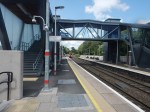
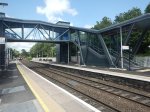
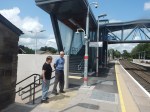
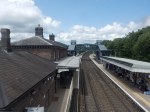
Note.
- Pictures 7 and 8 have a glimpse of the Newport Transporter Bridge in the background.
- All stations are step-free.
- All stations have two platforms.
- All stations have ticket machines.
- I saw a heavy freight train coming down to Newport.
I took these pictures coming down the Welsh Marshes Line from Abergavenny to Newport station.
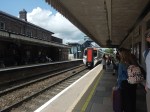













Pictures 25-28 show the Maindee Junction that allows trains to by-pass Newport station.
I have a couple of general points.
The Track Between Hereford And Maindee Junction Allows A Good Speed
Much of the track has a maximum speed of over 75 mph, with a short section up to 90 mph.
As the maximum speed of Lumo’s Class 803 trains is 125 mph and Trains for Wales’s Class 197 trains are 100 mph trains, I would expect that some speed improvement might be possible.
The track also appeared to give a good ride.
The Stations Were All In Good Condition
In addition, Newport station was being refurbished.
Heads Of The Valleys Road Upgrade Officially Opens
The title of this post, is the same as that of this article on BusinessNewsWales.
This is the sub-heading.
The final phase of the £2 billion Heads of the Valleys Road upgrade programme has officially opened.
These first two paragraphs add detail to the project.
The Welsh Government said it marked the completion of “one of the UK’s largest and most technically challenging road projects”.
The £1.4 billion Section 5&6 Dowlais to Hirwaun final phase links the Valleys, South and West Wales to the English Midlands and beyond, together with ports serving Irish and other European destinations. As well as improving the resilience of the South Wales trunk road network, the road provides a vital link across the top of the South Wales valleys for the Metro project improving links to the Cardiff and Swansea Bay City Regions, the Welsh Government said.
From the statistics of work done and the money involved, it would appear that a comprehensive upgrade has fixed a big gap in the UK’s motorway network in South Wales.
This Google Map shows the locations of Dowlais and Hirwaun.
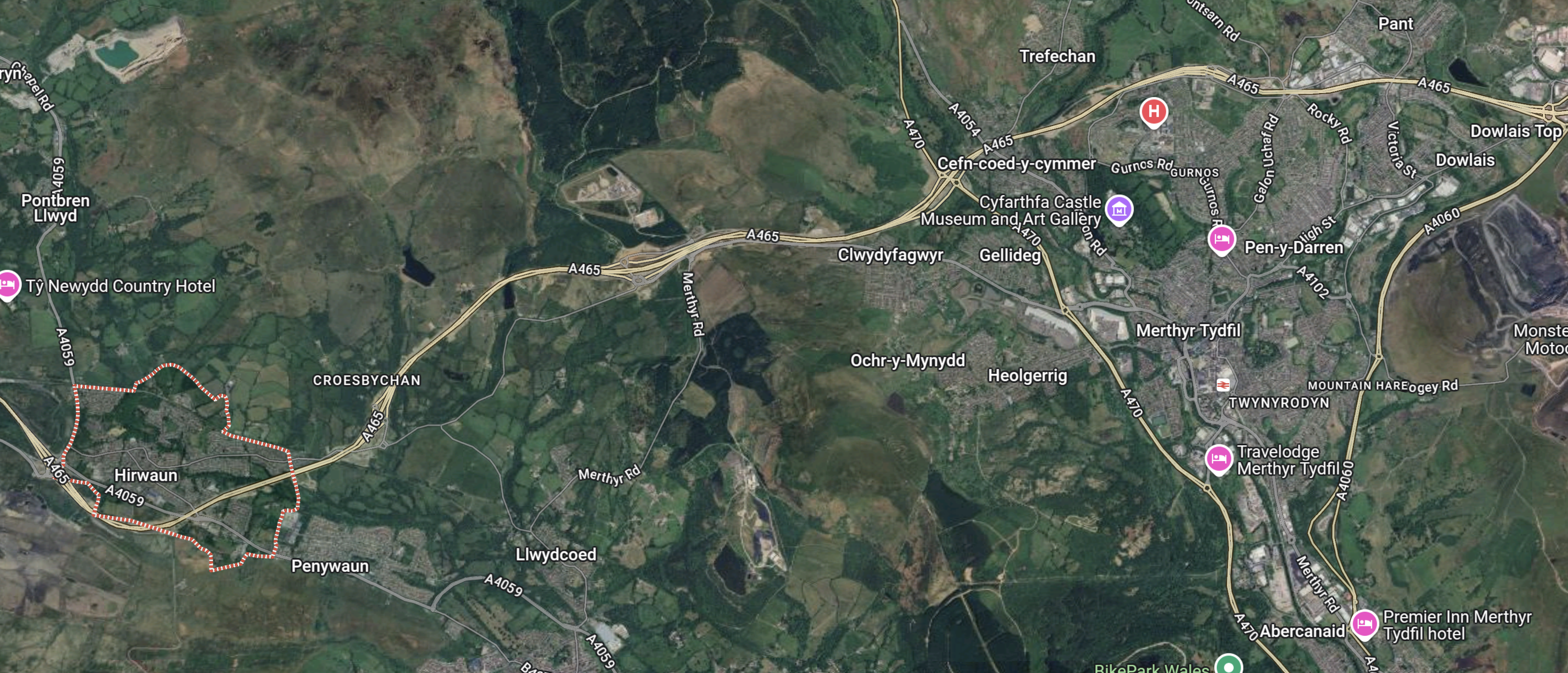
Note.
- Dowlais is in the North-East corner of the map.
- Hirwaun is in the South-West corner of the map and is outlined in red.
- The Heads of the Valleys Road links Dowlais and Hirwaun.
- Going East from Dowlais leads to Abergavenny, Monmouth, Raglan and the English Midlands.
- Abergavenny has a station, but Monmouth and Raglan don’t!
- Abergavenny station has comprehensive services to stations as far apart as Cardiff, Crewe, Holyhead, Manchester Piccadilly, Swansea and Wrexham General.
Abergavenny station could eventually turn out to be a parkway station for the South Wales Valleys.
I can certainly understand, why Lumo wants to run a service to Hereford.
I also feel that the Welsh government and Transport for Wales would be in favour of the service.
- Three towns in Wales; Cwmbran, Pontypool and Abergavenny get a direct service to Bristol Parkway and London Paddington stations.
- Hereford already has an hourly connection to Birmingham New Street via Worcester and University.
- If a coach were to be provided between Bristol Parkway and Bristol Airport, this could make getting to Bristol Airport easier.
I can see further improvements to services, that terminate at Abergavenny.
A Taste Of The Future
On Friday, I went to Chester and took a train home from Crewe to Euston.
It was a new Hitachi Class 805, that sped me to London, with just a stop at Milton Keynes.
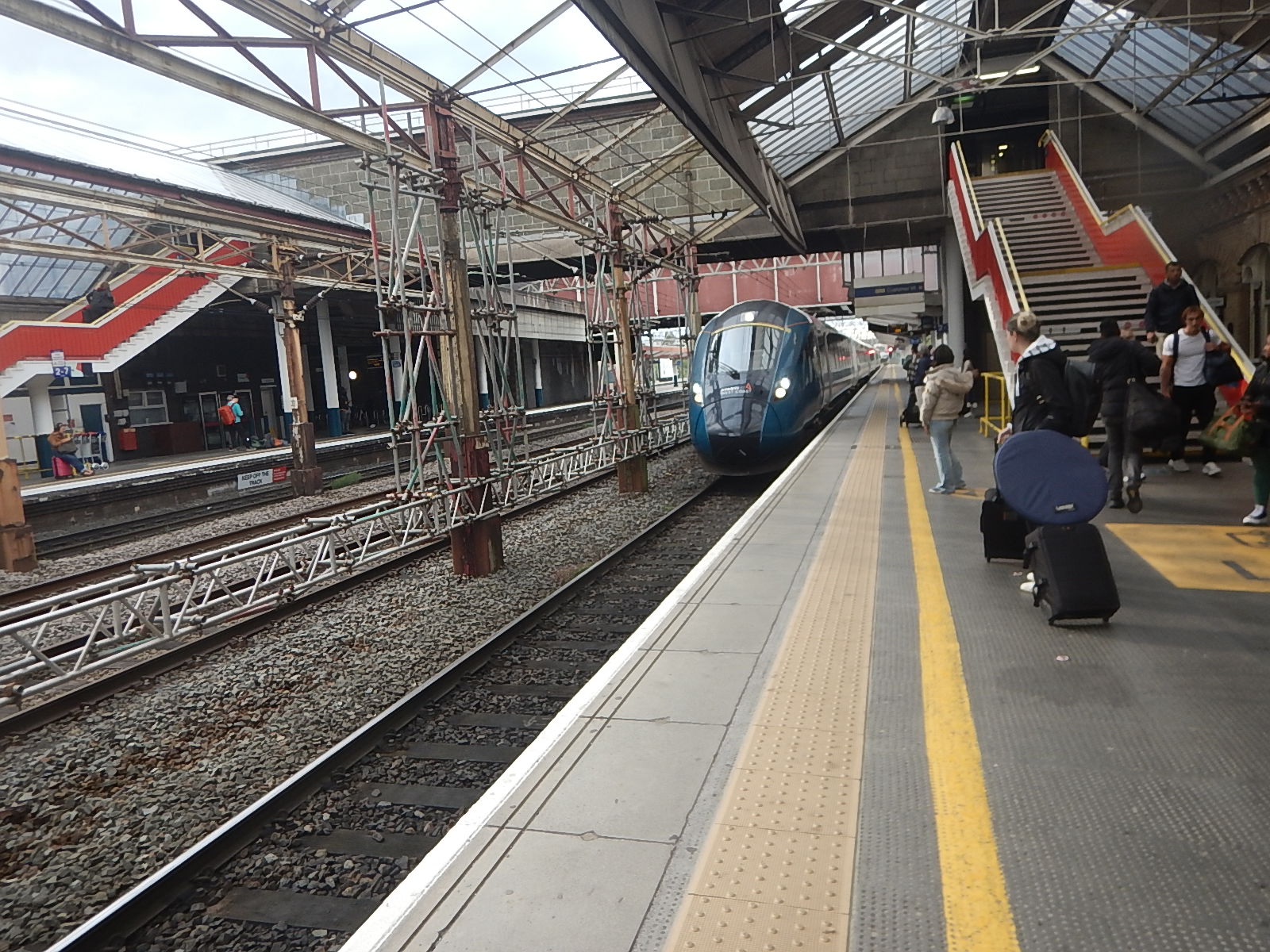
This picture shows the train arriving at Crewe.
Note.
- High Speed Two it is not, but it went most of the way to Euston at 125 mph in an hour and 50 minutes.
- High Speed Two will take 56 minutes, although that is not cast in stone and steel yet.
- Crewe is one of the towns and cities, that will benefit most from High Speed Two.
But whether High Speed Two is delivered or or not, Crewe’s train service should improve in Spring 2026, as the first Lumo service on the West Coast Main Line service will be starting.
I describe the service in Lumo To Expand Scotland’s Rail Network With New London-Stirling Rail Route From Spring 2026.
This paragraph from the linked post, describes the route.
Lumo’s new route will link London Euston directly to Stirling, also calling at Milton Keynes, Nuneaton, Crewe, Preston, Carlisle, Lockerbie, Motherwell, Whifflet (serving Coatbridge), Greenfaulds (serving Cumbernauld) and Larbert.
It is fully-electrified and can support 125 mph running most, if not all, of the way.
It will certainly give knowledgeable travellers options on how they travel on the West Coast Main Line.
Lumo are also proposing another open access service on the West Coast Main Line to Rochdale, which will increase travel options.
My only worry is that Heidi Alexander will cancel it, on the grounds that open access services abstract the revenue of Great British Railways.
But then after announcing the service in a reception in Holyrood, she surely couldn’t cancel it now.
On the other hand, it could be that this Labour Government has discovered that open access trains are a more affordable way of developing rail services to and from London and over longer distances.
Consider.
- Recently, Lumo has proposed open access services from London to Carmarthen, Paignton, Rochdale and Stirling.
- Recently, Arriva has proposed open access services from London to Cleethorpes, Grimsby and Scunthorpe and between Newcastle and Brighton.
- Recently, Alsthom has proposed open access services from London to Shewsbury and Wrexham.
Not one of these services will cost the government a lot of money, but Network Rail will pick up access charges.
So has Heidi Alexander seen sense and feels that it is better to allow more open access services?
Could Any Other Open Access Services Be Opened On The West Coast Main Line?
London Euston and Rochdale is planned by Lumo and I wrote about it in FirstGroup’s Lumo Seeks To Launch Rochdale – London Open Access Service.
This sentence from the linked post, gives the route.
The trains would call at Warrington Bank Quay, Newton-le-Willows, Eccles and Manchester Victoria.
Other possibilities would surely be Blackpool and Barrow-in-Furness, but Blackpool gets a three trains per day (tpd) service from Euston and frequent trains from Preston.
Barrow-in-Furness could be a very useful destination.
With increased defence spending, the shipyards will be busy.
It could be another gateway to the Lake District.
Services could be extended to Sellafield, Whitehaven and Workington.
This OpenRailwayMap shows the Cumbrian Coast Line between the West Coast Main Line and Barrow-in-Furness.
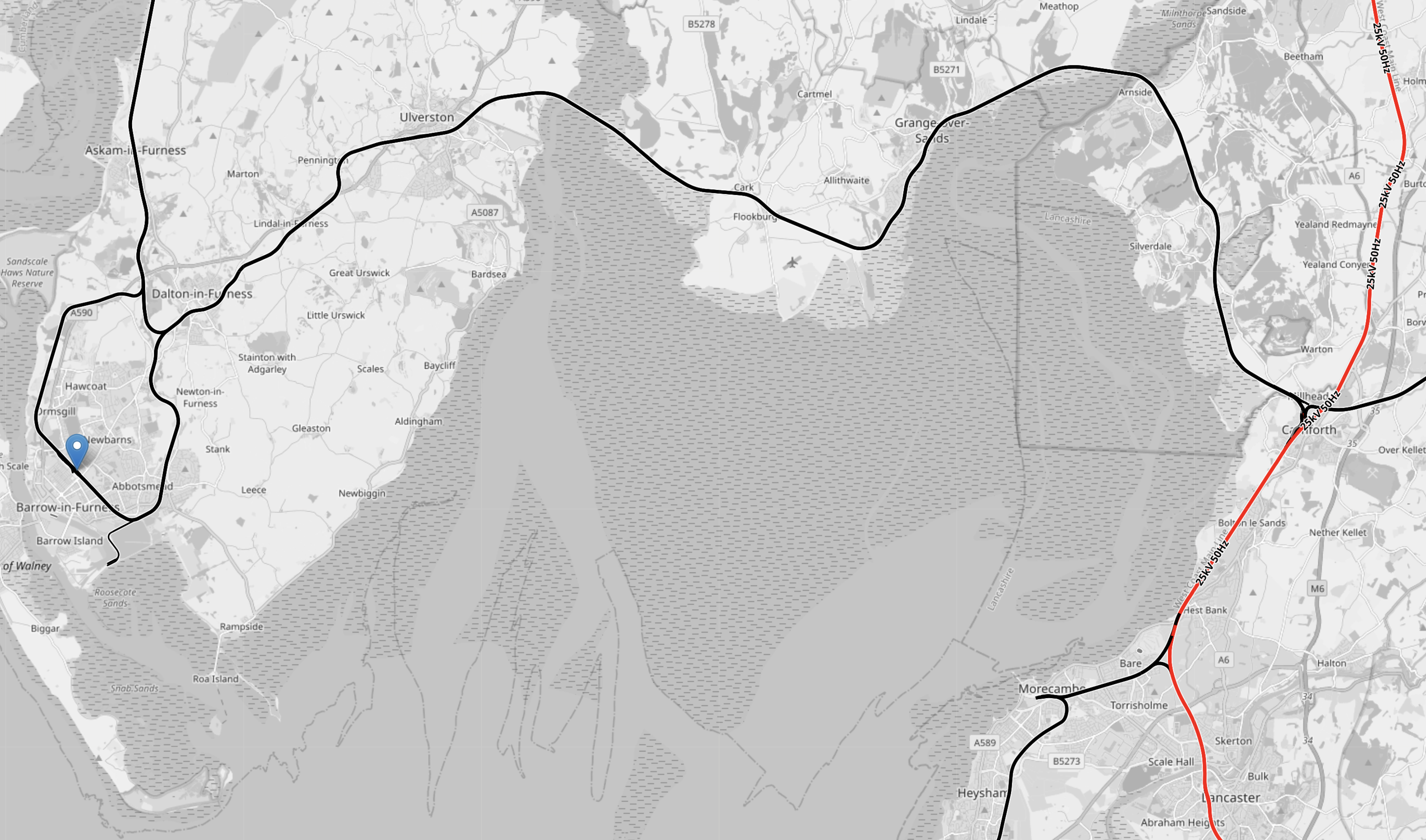
Note.
- The red tracks on the Eastern side of the map is the electrified West Coast Main Line.
- At the bottom of the map on the West Coast Main Line is Lancaster, with its station.
- The black track going West from Lancaster is the Morecambe and Heysham branch.
- The black track going West across the top of the map is the Cumbrian Coast Line.
- Barrow-in-Furness station is indicated by the blue arrow.
- The length of track without electrification on the route is less than thirty miles.
One of Lumo’s battery-electric trains would easily handle a London Euston and Barrow-in-Furness route.
Conclusion
There is obviously scope for new railway routes in the UK and some will be suitable for open access operators.
Perhaps, we need the Office of Road and Rail to be more proactive in deciding, when a route is to be served and then select an operator.
It would need to be an unbiased apolitical process, to stop an incumbent political party running trains to marginal seats, they hoped to win.
FirstGroup Applies To Run Rail Services Between Hereford And London via Cwmbran
The title of this post, is the same as that of this news item from FirstGroup.
These first two paragraphs, add more detail to the title.
FirstGroup plc has submitted the first phase of an application for a new open access rail service between Hereford and London to the Office of Rail and Road (ORR).
FirstGroup plans to expand its open access rail operations as part of its successful Lumo business, building on Lumo’s existing service which has transformed long-distance connectivity between London and Edinburgh. This has helped materially grow rail demand on the East Coast Mainline in recent years, through a new and enhanced choice for customers and providing more trains to more destinations.
These are some more points from the press release.
Route and Frequency
The news item says this about route and frequency.
FirstGroup’s proposal is for two return journeys a day (one on Sundays) between London Paddington and Hereford, calling at Bristol Parkway and Severn Tunnel Junction as well as providing direct London services at Cwmbran, Pontypool & New Inn and Abergavenny.
This OpenRailwayMap shows the route between Bristol Parkway and Pontypool & New Inn stations.
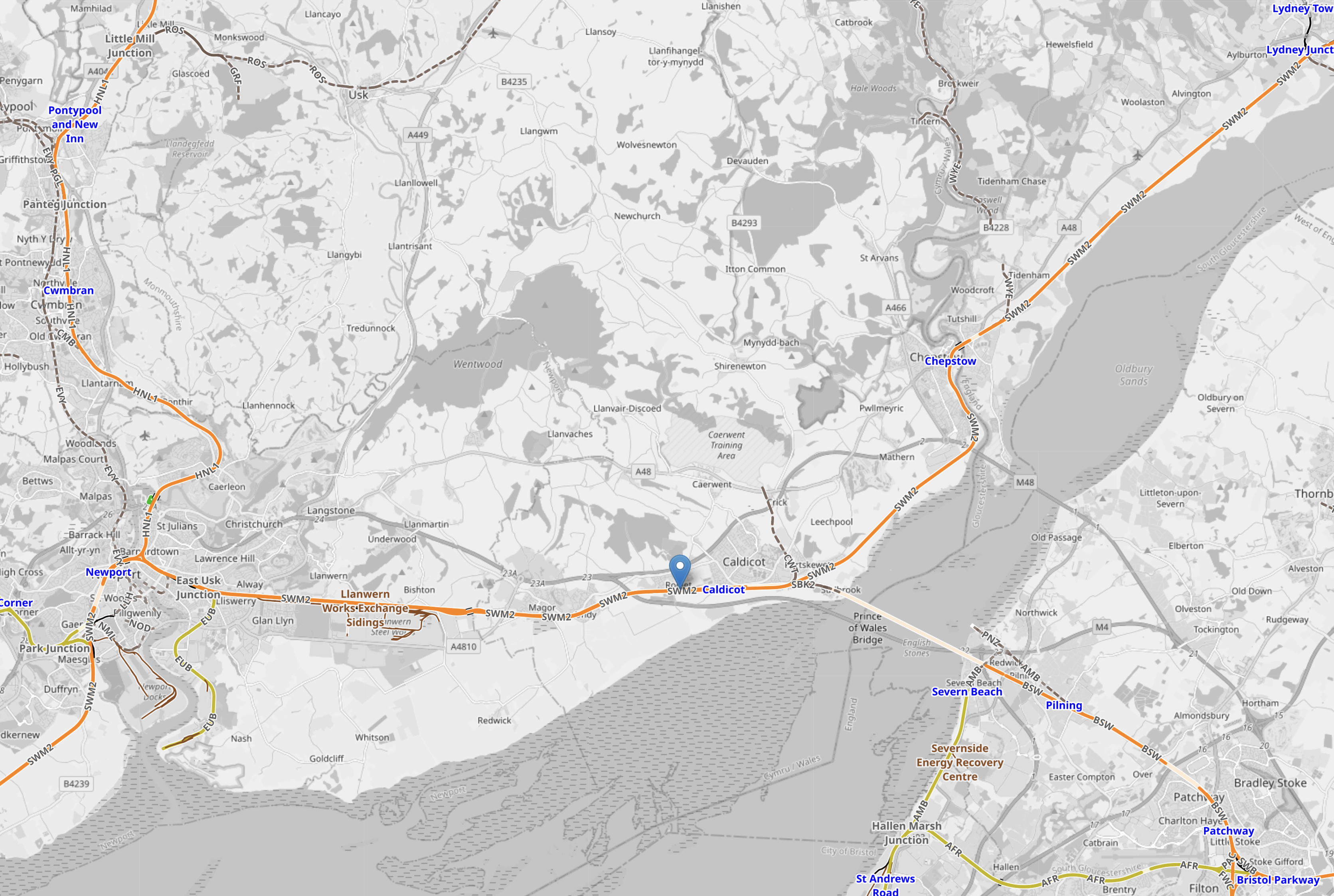
Note.
- Bristol Parkway station is in the South-East corner of the map.
- Severn Tunnel Junction station is marked by the blue arrow in the middle of the map.
- The electrified South Wales Main Line connects Bristol Parkway and Severn Tunnel Junction stations.
- From Bristol Parkway, the electrified Great Western Main Line goes to London Paddington via Swindon and Reading.
- From Severn Tunnel Junction station the South Wales Main Line goes West to Newport, which is on this map and then to Cardiff, Swansea and West Wales.
- Pontypool & New Inn station is in the North-West corner of the map on the Welsh Marches Line between Newport and Crewe stations.
- Welsh Marches Line is connected to the South Wales Main Line at Maindee triangular junction, which is a few miles East of Newport station.
- Cwmbran station is on the Welsh Marches Line between Newport and Pontypool & New Inn stations.
After a quick look on Wikipedia and Real Time Trains, it appears that few if any trains run in either direction between Cwmbran and Severn Tunnel Junction stations using the North-East side of Maindee junction.
Lumo’s trains would use this route to go between Bristol Park and Pontypool & New Inn stations via Severn Tunnel Junction, and Cwmbran.
This second OpenRailwayMap shows the Northern part of the route between Pontypool & New Inn and Hereford stations.
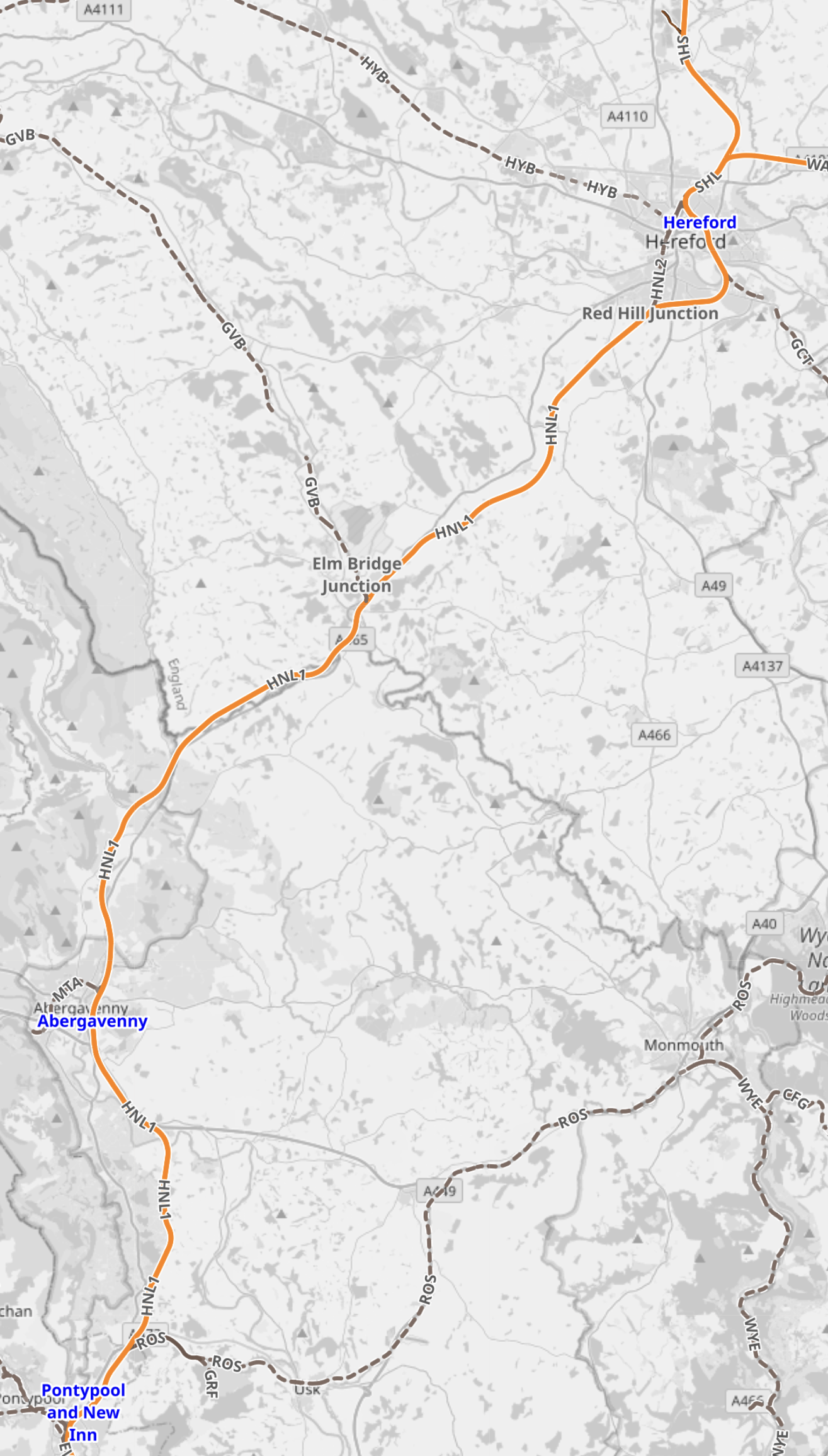
Note.
- The orange track is the Welsh Marshes Line between Newport and Crewe.
- Pontypool & New Inn station is in the South-West corner of the map.
- Abergavenny station is on the West side of the map.
- Hereford station is in the North-East corner of the map.
Looking at the route as a whole, it is a very simple route.
- Trains go as fast as traffic allows, non-stop to Bristol Parkway station.
- Trains then take the South Wales Main Line with a single stop at Severn Tunnel Junction station to Maindee Junction, just to the East of Newport.
- Trains then take the Welsh Marches Line to Hereford stopping at Cwmbran, Pontypool & New Inn and Abergavenny stations.
It is an innovative route, that has these advantages.
- It uses a little-used leg of Maindee Junction.
- London Paddington and Maindee Junction is electrified.
- The fastest Hitachi trains seem to take about one hour and forty minutes between London Paddington and Maindee Junction.
As direct trains between Newport and Hereford take around fifty minutes, a time of two-and-a-half hours between London Paddington and Hereford could be possible.
This would compare with current Great Western Railway services, which take upwards of two hour and forty-five minutes, which often have a change of train.
Lumo Trains Should Be Faster Between London Paddington And Bristol Parkway
This may seem surprising, but most if not all current services stop between London Paddington and Bristol Parkway, stop at Swindon and Reading.
Cutting out a stop saves a few minutes on the journey.
New Trains
The news item says this about new trains.
The new Hereford service would support further investment in new trains. In December 2024 FirstGroup placed a £500m order for 14 trains from Hitachi Rail in County Durham. The Group has an option for a potential second order of similar size and the Hereford fleet would form part of this option.
Yesterday, I went to North Wales and used Avanti West Coast from Euston. The trains both ways were new Class 805 trains, which are bi-mode versions of Lumo’s Class 803 trains. These Class 805 trains travel all the way between Crewe and Holyhead on their diesel engines, so the much shorter leg between Maindee Junction and Hereford will definitely be in range.
But Hitachi are developing battery-electric versions of these trains and as there-and-back between Maindee Junction and Hereford is only 88 miles, I wouldn’t be surprised in a couple of years that Cwmbran, Pontypool & New Inn, Abergavenny and Hereford stations have a direct electric service from London.
Services At Hereford
The news item says this about services at Hereford station.
For Hereford, the two direct London paths each weekday would increase services on this flow from four today, to six. The new services would help mitigate the current large gaps in the timetable with additional daytime and evening arrivals into London, giving Hereford more regular connectivity. The new services would also provide the stations on the route with new direct journey opportunities to Bristol Parkway.
I also believe it would be a faster, fully electric service.
Services At Abergavenny
The Wikipedia entry for Abergavenny station says this about services at the station.
With a few exceptions, the weekday daytime service pattern typically sees one train per hour in each direction between Manchester Piccadilly and Cardiff Central, with most trains continuing beyond Cardiff to Swansea and West Wales. There is also a two-hourly service between Cardiff and the North Wales Coast Line to Holyhead via Wrexham General. These services are all operated by Transport for Wales. The northbound Premier service from Cardiff to Holyhead calls here on Monday to Fridays but the southbound service does not call here.
Note.
- The station has partial step-free access
- The station has 74 parking spaces.
Two trains in each direction would improve the services at Abergavenny station.
Services At Pontypool & New Inn
The Wikipedia entry for Pontypool & New Inn station says this about services at the station.
On weekdays and Saturdays, there is generally a two hourly service between Holyhead and Cardiff in the middle of the day, with additional peak time services southbound in the mornings and northbound in the evenings for commuters to Newport and Cardiff. These include services between Manchester Piccadilly and West Wales via Crewe and Swansea. From December 2013 the evening northbound Arriva “Premier” service train began to call at Pontypool for the first time. The southbound service in the morning does not call here. On Sundays, an irregular service operates, with 8 trains calling southbound and 10 northbound. These mainly run between Manchester and Cardiff.
Note.
- The station is step-free with lifts.
- The station has 150 parking spaces.
Two trains in each direction would improve the services at Pontypool and New Inn station.
Services At Cwmbran
The Wikipedia entry for Cwmbran station says this about services at the station.
Services that stop at Cwmbran in both directions are all operated by Transport for Wales and include the hourly service between Manchester Piccadilly, Cardiff Central and West Wales and the two hourly service between Holyhead and Cardiff Central. Most Sunday services only run on the former route (there are only two services each way to/from Holyhead).
Note.
- The station is being made step-free with lifts.
- The station has 76 parking spaces.
Two trains in each direction would improve the services at Pontypool and New Inn station.
The Heads Of The Valleys Road
The A465 or Heads of the Valleys Road could be considered the South Wlaes equivalent of the North of England’s M62 Motorway.
This description is from the first paragraph of the Wikipedia entry.
Approximately following the southern boundary of the Bannau Brycheiniog National Park, the Ordnance Survey Pathfinder guide describes it as the unofficial border between rural and industrial South Wales. The A465 provides an alternative route between England and the counties in South West Wales and to the ferries to Ireland.
This Google Map shows its route between Merthyr Tydfil and Abergavenny.
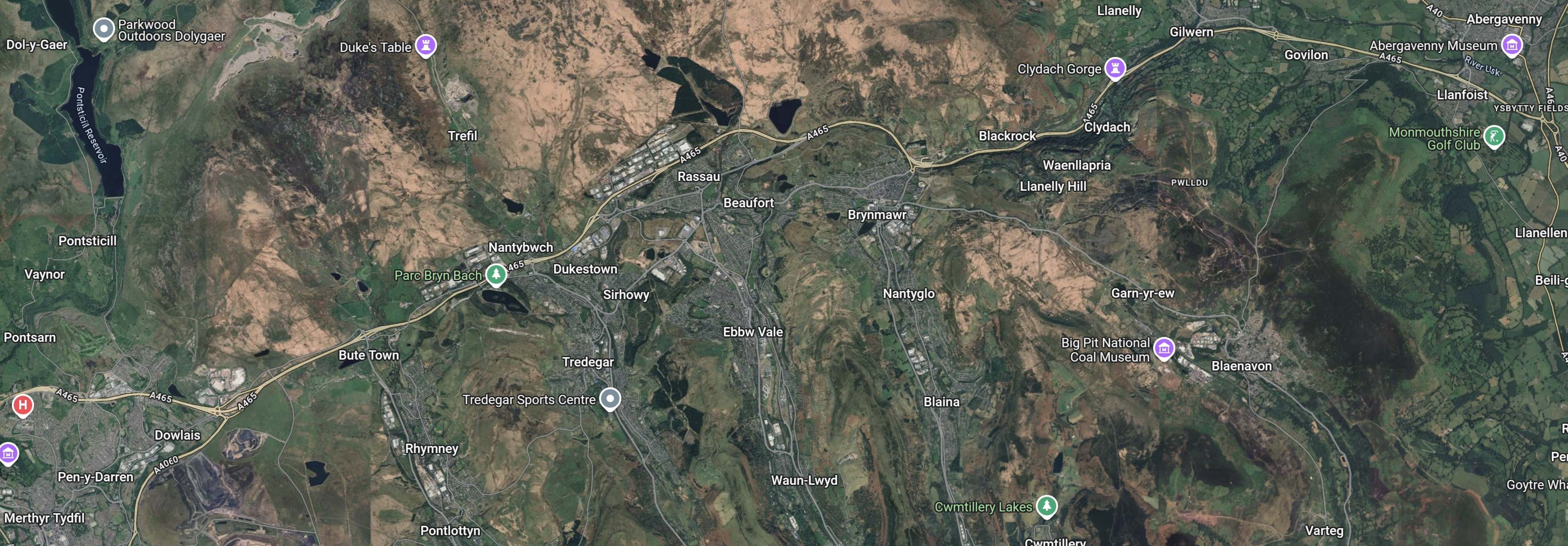
Note.
- Merthyr Tydfil is in the South-West corner of the map.
- Abergavenny is in the North-East corner of the map.
- The full length of the road is just under seventy miles.
- The Heads of the Valleys Road connects to all the towns, that are the Northern termini of the South Wales Metro.
- At it’s Western end, the A 465 connects to the M4 near Swansea.
The news item says this about the tourism benefits of the service.
The new service is expected to have positive economic and social benefits for the communities it serves. Both of FirstGroup’s open access services Lumo and Hull Trains are on track to deliver more than £1.4bn in economic benefits along their routes and FirstGroup hopes to have a similar positive effect for the South Wales and Herefordshire communities.
The service should also provide a convenient link for visitors travelling to the Brecon Beacons/ Bannau Brycheiniog National Park; Blaenavon World Heritage Site and cathedral city of Hereford, driving growth and supporting jobs in the area’s tourism sector.
I do wonder if other tourism related services will be developed at Pontypool & New Inn, Abergavenny and Hereford?
Monmouthshire
This paragraph from the Wikipedia entry for Monmouthshire gives a flavour of the Welsh county.
The county is rural, although adjacent to the city of Newport and the urbanised South Wales Valleys; it has an area of 330 square miles (850 km2) and a population of 93,000. After Abergavenny (population, 12,515), the largest towns are Chepstow (12,350), Monmouth (10,508), and Caldicot (9,813).
I was surprised that the population of the county, was as high as 93,000.
This second paragraph, lists the railway stations.
Monmouthshire is served by four railway stations: in the south are the Severn Tunnel Junction railway station at Rogiet on the South Wales Main Line, which connects South Wales to London; and Chepstow railway station and Caldicot railway station on the Gloucester–Newport line; and in the north, Abergavenny railway station on the Welsh Marches line.
Severn Tunnel Junction and Abergavenny stations will be served by Lumo’s new service.
From my experience of using parkway stations in East Anglia with connections to London, I suspect residents of several towns outside of Monmouthshire will use these two stations for trips to the capital.
Are plans in place for extra parking and bus services?
Travelling To And From Heathrow Airport
I wouldn’t be surprised if Lumo picks up quite a few passengers, who are going to and from Heathrow.
Consider.
- I suspect Severn Tunnel Junction to London Paddington will take about one hour and forty minutes, with just the single stop at Bristol Parkway.
- The Elizabeth Line to the Airport will take 28 minutes and cost £13.90, according to Transport for London.
- The Elizabeth Line is an easy step-free change from National Rail at Paddington.
- Elizabeth Line trains between Paddington and Heathrow are every six minutes.
- It’s not a very long walk at Heathrow between the Elizabeth Line and the terminals.
- Driving from say Monmouth to Heathrow will take about two-and-a-quarter hours and cost you to cross the Severn Bridge and for parking.
If your local Great Western Main Line station is between say Chippenham and Cardiff, you might be surprised at how fast and affordable it can be to go to and from Heathrow by Great Western Railway and Elizabeth Line.
When Lumo starts running to Heathrow, I am sure it will be faster, as the trains will not stop East of Bristol Parkway station.
Running In Conjunction With Services Between London Paddington And Carmarthen
The news item says this about running services in conjunction with Lumo’s services to Carmarthen.
The service would operate in conjunction with the planned service from London to Carmarthen which is due to launch in December 2027, and it is anticipated it could begin at the same time.
Consider.
- Both routes are identical between London Paddington and Maindee Junction.
- Both routes could share depots.
- Hitachi’s trains can split and join with alacrity.
- Class 800, 801, 802 and 803 trains have twenty-six metre cars, which mean a five-car train is 130 metres long.
- Bristol Parkway station has 280 metre long platforms. Pairs of trains could split and join here.
- Seven Tunnel Junction has three 171 metre long platforms. Pairs of trains could not use this station, unless the platforms were lengthened.
- Newport station has three platforms longer than 278 metres. Pairs of trains could split and join here, if the Hereford trains reversed direction.
I suspect if trains split and joined, it would be at Bristol Parkway station.
Note that Bristol Parkway station has 1,800 car park spaces, so Lumo could target passengers wanting to park and take the train to London, Cardiff, Newport and other Welsh destinations.
Co-operation With Great Western Railway
In Does Innovation Get Mr. Ed Miliband Better Prices To Doncaster?, I talked about the ticketing on the East Coast Main Line.
It appears to me, that if you put more seats on a popular route, like King’s Cross and Doncaster, then the availability drives down prices.
I also believe that if the tickets are all available through a common walk-up system, then this fills the seats.
The system has now been applied to the West Coast Main Line and I believe that if Great Western Railway and Lumo collaborated on ticketing, this would improve competition between London Paddington, Bristol Parkway and Cardiff.
There is also the issue of train rescue.
Supposing a pair of five-car Hitachi trains broke down with a fault, that allowed the train to be towed to the nearest station, so that passengers could be disembarked.
Hitachi trains are designed, so that up to twenty-four trains can be joined together in rescue mode.
That would certainly be an impressive sight.
Train Lengths Between King’s Cross and Edinburgh
If you ask Google, what is the platform length at King’s Cross station, you get the following answers.
- Platform 0 – 305 metres
- Platform 1 – 304 metres
- Platform 2 – 285 metres
- Platform 3 – 289 metres
- Platform 4 – 290 metres
- Platform 5 – 270 metres
- Platform 6 – 288 metres
- Platform 7 – 288 metres
- Platform 8 – 289 metres
- Platform 9 – 276 metres
- Platform 10 – 276 metres
This OpenRailwayMap shows the tracks linking to the eleven platforms at King’s Cross.
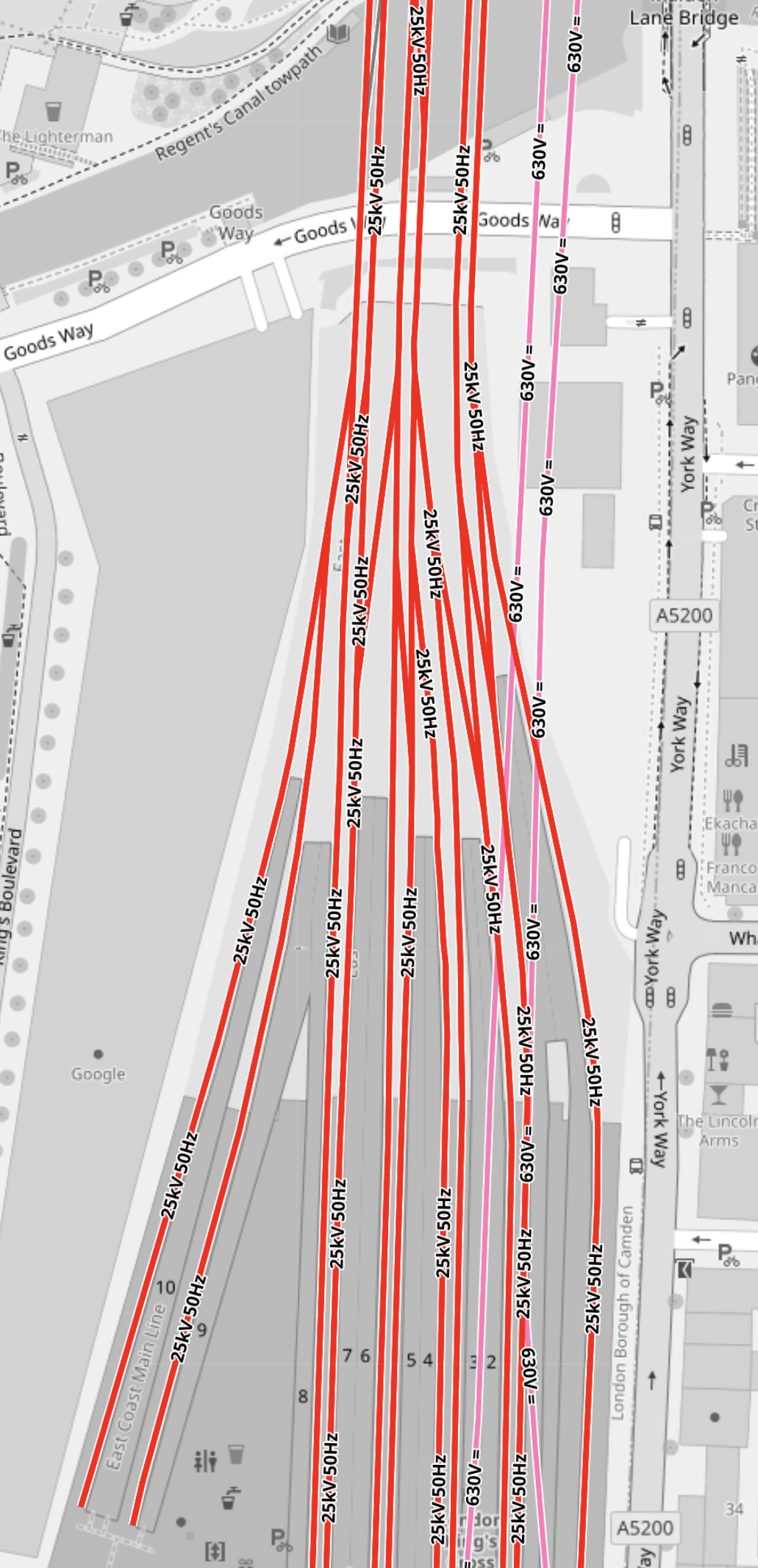
Note.
- The red tracks are the electrified platforms in King’s Cross.
- The two pink tracks are the Piccadilly Line underneath the station.
- Platform 0 is on the right and Platform 10 is on the left.
- The platform number is shown alongside the track.
Platform 0 is the newest platform, which opened in 2010 and also the longest at 305 metres.
Many of the trains using the station are Hitachi Class 800, 801, 802 and 803 trains, which have cars of the following lengths.
- Driving car – 25.85 metres
- Intermediate car – 26 metres
These lengths mean that individual trains have the following lengths.
- Five-car – 129.7 metres
- Nine-car – 233.7 metres
- Ten-car – Pair of five-cars – 259.4 metres
Note.
- It would appear that nine- and ten-car trains can use all platforms 0-8 in the main station.
- Platform 5 may be short at 270 metres, but Real Time Trains shows it can handle nine- and ten-car trains.
Real Time Trains doesn’t seem to show any nine- and ten-car trains using Platforms 9 and 10. Is the approach just a bit tight?
These are some further thoughts.
LNER’s New Class 897 Trains
I asked Google how long will be LNER’s new ten-car Class 897 trains. This is the answer I received.
The Class 897 train will be 218.7 meters (717 ft 6 in) long, according to Wikipedia. These trains will be ten-car units.
Have these trains been designed, so they can fit in Platforms 9 and 10 at King’s Cross and other shorter platforms, that LNER serve?
Other train classes, that could use Platforms 9 and 10 at King’s Cross include.
- Five-car Class 800, 801, 802 and 803 trains – 129.7 metres
- Five-car Class 180 trains – 116.52 metres
- Five-car Class 222 trains – 116.16 metres
- Six-car Class 717 trains – 121.7 metres
- Eight-car Class 379/387 trains – 163.12 metres
- Eight-car Class 700/0 trains – 162 metres
- Twelve-car Class 700/1 trains – 242.6 metres
Real Time Trains or my eyes have observed all these trains, except for the twelve-car Class 700 trains in Platforms 9 and 10 at King’s Cross.
It does appear that the shorter ten-car Class 897 trains improve utilisation of the platforms at King’s Cross station.
Could Twelve-Car Class 800, 801, 802 and 803 Trains Run Into King’s Cross?
Consider.
- LNER and Lumo have both said, they want to win passengers from the airlines on Anglo-Scottish routes.
- Extra paths on the East Coast Main Line are at a premium and hard to come by.
In Do Class 800/801/802 Trains Use Batteries For Regenerative Braking?, I found this extract in a Hitachi document on their web site.
To simplify the rearrangement and management of train configurations, functions are provided for identifying the train (Class 800/801), for automatically determining the cars in the trainset and its total length, and for coupling and uncoupling up to 12 cars in
normal and 24 cars in rescue or emergency mode.
So if say LNER or Lumo wanted a twelve-car train, it would be possible. It also looks like one twelve-car train can rescue another.
Train lengths would be as follows.
- Five-car Class 800, 801, 802 and 803 trains – 129.7 metres
- Six-car Class 800, 801, 802 and 803 trains – 155.7 metres
- Nine-car Class 800, 801, 802 and 803 trains – 233.7 metres
- Twelve-car Class 800, 801, 802 and 803 trains – 311.7 metres
- Twelve-car – Pair of six-car Class 800, 801, 802 and 803 trains – 311.4 metres
As Platform 0 is 305 metres and Platform 1 is 304 metres, I suspect that King’s Cross station could accept twelve-car formations of Hitachi Class 800, 801, 802 or 803 trains, with fairly minor modifications.
But what about other stations?
Berwick-on-Tweed
Both platforms are around 233/234 metres, so twelve-car trains couldn’t call, unless the platforms were lengthened.
Bradford Forster Square
From the pictures, that I took in Bradford Forster Square Station – 20th May 2025, of a pair of LNER five-car trains, I suspect that the new Platform 0 and the extended Platform 1 will accept twelve-car trains, or could easily be modified.
Darlington
Both platforms, where LNER call are over 350 metres long, so Darlington can handle twelve-car trains.
Doncaster
Doncaster has four long platforms and I am fairly sure, the station could be easily modified to handle twelve-car trains.
Durham
Both platforms are over 260 metres, so twelve-car trains couldn’t call, unless the platforms were substantially lengthened.
Edinburgh Waverley
Platform 5 and 6 at Edinburgh Waverley station were both lengthened to 275 metres to accept ten-car LNER trains in 2016. I suspect more lengthening will be needed.
Leeds
Platforms 8 and 11 at Leeds station are both over 320 metres, so should be long enough to accept twelve car LNER trains.
Newark Northgate
Platforms 1 and 2 at Newark Northgate station are only 133 metres. Some platform lengthening would be needed for twelve-car trains to be able to call.
Newcastle
Platforms 2, 3 and 4 at Newcastle station are 362, 304 and 268 metres respectively. I believe with small improvements, that the station could be easily modified to handle twelve-car trains.
Northallerton
Both platforms are around 261/270 metres, so twelve-car trains couldn’t call, unless the platforms were lengthened.
Peterborough
Platforms 3, 4 and 5 at Peterborough station are only 265 metres. Some platform lengthening would be needed for twelve-car trains to be able to stop.
Wakefield Westgate
Both platforms at Wakefield Westgate station are only 255 metres. Some platform lengthening would be needed for twelve-car trains to be able to stop.
York
Four platforms at York station are over 315 metres.
Could A Twelve-Car Class 800, 801, 802 and 803 Trains Run Between King’s Cross And Edinburgh?
This would surely be the ultimate competition for the airlines.
Consider.
- It would use a single twelve-car Hitachi train or a pair of six-car trains.
- It could be fitted with batteries, so it could use the Great Northern and Great Eastern Joint Line diversion, through Lincoln, when there is engineering works or overhead wiring troubles.
- It would use either Platform 0 or Platform 1 at King’s Cross.
- It would use a lengthened platform at Edinburgh.
- Peterborough, Doncaster, York, Darlington and Newcastle could be possible stops.
- I estimate an LNER layout would carry 696 Standard Class and 86 First Class passengers.
- I estimate that a Lumo layout would carry 965 Standard Class passengers.
Note that an Airbus A321neo single-aislr airliner can carry 244 passengers.
Lumo To Expand Scotland’s Rail Network With New London-Stirling Rail Route From Spring 2026
The title of this post is the same as this news item from Lumo.
These three bullet points act as sub-headings.
- Lumo has secured a new route connecting Stirling with London Euston, launching as early as Spring 2026, offering passengers five daily affordable services.
- The announcement comes as Lumo hosted a special event at Holyrood attended by MSPs and Scotland’s MPs, spotlighting Lumo’s contribution to enhancing rail connectivity for previously underserved communities in Scotland.
- The route will provide first-ever direct services to London for Whifflet, Greenfaulds, and Larbert, further boosting economic opportunities and travel options in Scotland.
This first paragraph adds some more details.
Lumo, the UK’s leading Open Access rail operator, today announced it has secured five Class 222 six-car trains for its forthcoming route between London Euston and Stirling, beginning as early as Spring 2026. This expansion aims to enhance travel choice and connectivity for passengers along the central belt of Scotland both to England and to Stirling, offering five daily services with the operator renowned for affordability and efficiency.
I have some thoughts.
What Is The Complete Route?
This is the complete route.
Lumo’s new route will link London Euston directly to Stirling, also calling at Milton Keynes, Nuneaton, Crewe, Preston, Carlisle, Lockerbie, Motherwell, Whifflet (serving Coatbridge), Greenfaulds (serving Cumbernauld) and Larbert.
It is fully-electrified and can support 125 mph running most, if not all, of the way.
There Are No Six-Car Class 222 Trains
Consider.
- Currently, five-car Class 222 trains seat 192 in Standard Class and 50 in First Class.
- Currently, seven-car Class 222 trains seat 236 in Standard Class and 106 in First Class.
- Lumo’s five-car Class 803 trains set 402 in Standard Class.
- Lumo’s trains have no First Class.
I estimate that a six-car Class 222 train, with all Standard Class seating would accommodate not far off the 402 seats of one of Lumo’s bog-standard Class 803 trains.
Having identical numbers of passengers on the two fleets, must surely bring operational advantages.
- A six-car Class 222 train could replace a five-car Class 803 train or vice-versa, if Lumo were short of trains.
- Class 222 trains are able to take the Great Northern and Great Eastern Joint Line and other diversions during times of engineering works.
- The Class 222 trains would be able to run between Euston and Rochdale.
- The Class 222 trains might be useful for developing services on routes without electrification.
In the future, a six-car Class 222 train could be directly replaced in Lumo’s fleet by a five-car battery-electric Class 803 train.
The Class 222 Trains Are Diesel-Powered
All the noise and vibration could be a problem, but if I am right about the interchangeability of the two fleets, then this gives some advantages too.
- Earlier delivery of Class 222 trains, than new Class 803 trains, may enable Lumo to start services between Euston and Stirling at an earlier date.
- Earlier delivery of Class 222 trains, may allow selective withdrawal of Class 803 trains for updating.
- A mixed fleet of diesel and electric trains may be able to run more services during engineering works, by using diversion routes without electrification.
- Short route extensions to Dundee or Perth could be tried to assess demand.
There could be some good reasons to get the Class 222 trains into service sooner rather than later.
Will The Diesel Class 222 Trains Be Replaced By Battery-Electric Class 803 Trains?
Although London And Edinburgh By Lumo Using the Joint Line Diversion, was also about Lumo’s proposed Euston and Rochdale service, it was mainly about using battery power to use the Great Northern and Great Eastern Joint Line to avoid engineering works or wiring problems.
Both train types have the following abilities.
- Ability to go between Stirling and Euston via the West Coast Main Line.
- Ability to go between Rochdale and Euston via the West Coast Main Line.
- Ability to go between Stirling and King’s Cross via the East Coast Main Line.
- Ability to go between Edinburgh and King’s Cross via the East Coast Main Line.
- Ability to handle the Great Northern and Great Eastern Joint Line on their own power.
- Ability to handle diversions of up to around a hundred miles on their own power.
As Lumo’s new battery-electric Class 803 trains are delivered, Lumo’s two Anglo-Scottish routes and the one to Rochdale can go all-electric.
Can Lumo Trains Run As Pairs?
I’ve not seen or heard if Lumo have done this, but as I wrote in Ten-Car Hull Trains, I’ve seen Lumo’s sister company Hull Trains run ten-car trains.
As Wikipedia says that both Class 222 and Class 803 trains can run in multiple formations with other trains from the same class, I have to assume it is possible, providing the Fat Controller agrees to the practice.
Has Heidi Alexander Really Said Yes?
After the launch at Holyrood, in front of MSPs and Scottish MPs, it would now be difficult to say No!
But then there’s a by-election to the Scottish Parliament in Hamilton, Larkhall and Stonehouse on Thursday.
Is Lumo’s new route an easy drive from the constituency? A Scot, who has worked in the area said Yes!
Conclusion
I like FirstGroup’s plan to create a diesel fleet to introduce new services and back up their current ones, until the new battery-electric Class 803 trains are delivered.
The Lack Of Information At Edinburgh Waverley Cost Me £55.10
The ongoing works at Edinburgh Waverley ruined my day. I had intended to come up to the city to take some photographs for this blog and see an old friend, who like me is widowed.
I also wanted to take a train to Leven to see the new stations.
I have a very unusual skin and on some days I can’t use ticket machines, so I need to use a human in a ticket office.
Today was one of those days and to complicate matters, I couldn’t find the ticket office.
I also wasted more time finding platform 17 for Leven.
Going back to London, where I live, my friend advised me to take the escalators from Princes Street to get into the station, which I have used many times before.
But they were shut and I missed the 16:13 Lumo to London by about a minute.
To get home, I had to buy another ticket on LNER for £55.10.
If there had been more information, perhaps in leaflets or from real people around the station, I would have had a much better day.
A Day Trip To Leven From London
On Thursday, the 15th of May, I shall be taking a day trip by train from London King’s Cross to Leven in Fife.
I shall be doing it for the following reasons.
- To see the new Levenmouth Rail Link and its two new stations : Cameron Bridge and Leven.
- To prove that it is possible to do trips like these.
- To prove that it is still possible for me to do trips like these.
- To see a couple of old friends, who live North of the Border.
- I shall probably also ride the new section of the Edinburgh Tram.
I shall be leaving London on the Lumo service at 05:48 and returning on the 16:13, which gives me around six hours in Scotland.

