Cheesecake Energy Secures £1M Seed Investment
The title of this post, is the same as that of this Press Release from Cheesecake Energy.
This is the first paragraph.
Cheesecake Energy Ltd (CEL), a Nottingham, UK-based energy storage startup today announced it has raised £1M in Seed funding to fuel the development of its manufacturing capabilities and support product development of its eTanker storage system. The round was led by Imperial College Innovation Fund alongside prominent investors including Perivoli Innovations, former Jaguar Chairman, Sir John Egan and other angel investors.
And the third and fourth paragraphs describe the technology.
The company’s unique technology, dubbed eTanker, takes established compressed air energy storage concepts and revolutionises them by storing two-thirds of the electricity in the form of heat which can be stored at far lower cost. To store the energy, electric motors are used to drive compressors, which deliver high pressure air & heat into storage units. When the electricity is required, the high-pressure air and heat is passed back through the same compressor (but now working as a turbine), which turns a generator to produce electricity. The company believes its system will cut the cost of storing energy by 30-40% and offers a solution that can be used in several sectors including electric vehicle (EV) charging, heavy industry and renewable energy generation.
The startup has filed 10 patents for stationary, medium-long-duration, long-lifetime energy storage technology. It is based on innovative design work by CEL, a spin-out from over a decade of research at University of Nottingham. Employing circular economy principles, truck engines are converted into zero-emission electrical power-conversion machines for putting energy into and out of storage. Its technology brings together the low cost of thermal storage, the turnaround efficiencies of compressed air energy storage, together with the long life and robustness of a mechanical system, making a game-changing technology in a modular containerised package.
It all sounds feasible to me and if I’d have been asked, I’d have chipped in some of my pension.
The system in some ways can almost be considered a hybrid system that merges some of the principles of Highview Power’s CRYOBattery and Siemens Gamesa’s ETES system of heating large quantity of rock. Although, Cheesecake’s main storage medium is comptressed air, as opposed to the liquid air of the CRYOBattery.
One market they are targeting is the charging of fleets of electric vehicles like buses and from tales I have heard about operators of large numbers of electric buses, this could be a valuable market.
I also noted that the Press Release mentions a National Grid report, that says we will need 23 GW of energy storage by 2030. Assuming we will need to store enough electricity to provide 23 GW for five hours, that will be 115 GWh of energy storage.
At present, pumped storage is the only proven way of storing tens of GWh of energy. In 1984, after ten years of construction, Dinorwig power station (Electric Mountain) opened to provide 9.1 GWh of storage with an output of 1.8 GW.
So ideally we will need another thirteen Electric Mountains. But we don’t have the geography for conventional pumped storage! And as Electric Mountain showed, pumped storage systems are like Rome and can’t be built in a day.
Energy storage funds, like Gresham House and Gore Street are adding a large number of lithium-ion batteries to the grid, but they will only be scratching the surface of the massive amount of storage needed.
Note that at the end of 2020, Gresham House Energy Storage Fund had a fleet of 380 MWh of batteries under management, which was an increase of 200 MWh on 2019. At this rate of growth, this one fund will add 2GWh of storage by 2030. But I estimate we need 115 GWh based on National Grid’s figures.
So I can see a small number of GWh provided by the likes of Gresham House, Gore Street and other City funds going the same route.
But what these energy storage funds have proved, is that you have reliable energy storage technology, you can attract serious investment for those with millions in the piggy-bank.
I believe the outlook for energy storage will change, when a technology or engineering company proves they have a battery with a capacity of upwards of 250 MWh, with an output of 50 MW, that works reliably twenty-four hours per day and seven days per week.
I believe that if these systems are as reliable as lithium-ion, I can see no reason why City and savvy private investors money will not fund these new technology batteries, as the returns will be better than putting the money in a deposit account, with even the most reputable of banks.
At the present time, I would rate Highview Power’s CRYOBattery and Siemens Gamesa’s ETES system as the only two battery systems anywhere near to a reliable investment, that is as safe as lithium-ion batteries.
- Both score high on being environmentally-friendly.
- Both rely on techniques, proven over many years.
- Both don’t need massive sites.
- Both systems can probably be maintained and serviced in nearly all places in the world.
- Highview Power have sold nearly a dozen systems.
- Highview Power are building a 50 MW/250 MWh plant in Manchester.
- Siemens Gamesa are one of the leaders in renewable energy.
- Siemens Gamesa have what I estimate is a 130 MWh pilot plant working in Hamburg, which I wrote about in Siemens Gamesa Begins Operation Of Its Innovative Electrothermal Energy Storage System.
Other companies are also targeting this market between lithium-ion and pumped storage. Cheesecake Energy is one of them.
I believe they could be one of the winners, as they have designed a system, that stores both compressed air and the heat generated in compressing it. Simple but efficient.
I estimate that of the 115 GWh of energy storage we need before 2030, that up to 5 GWh could be provided by lithium-ion, based on the growth of installations over the last few years.
So we will need another 110 GWh of storage.
Based on 50 MW/250 MWh systems, that means we will need around 440 storage batteries of this size.
This picture from a Google Map shows Siemens Gamesa’s pilot plant in Hamburg.
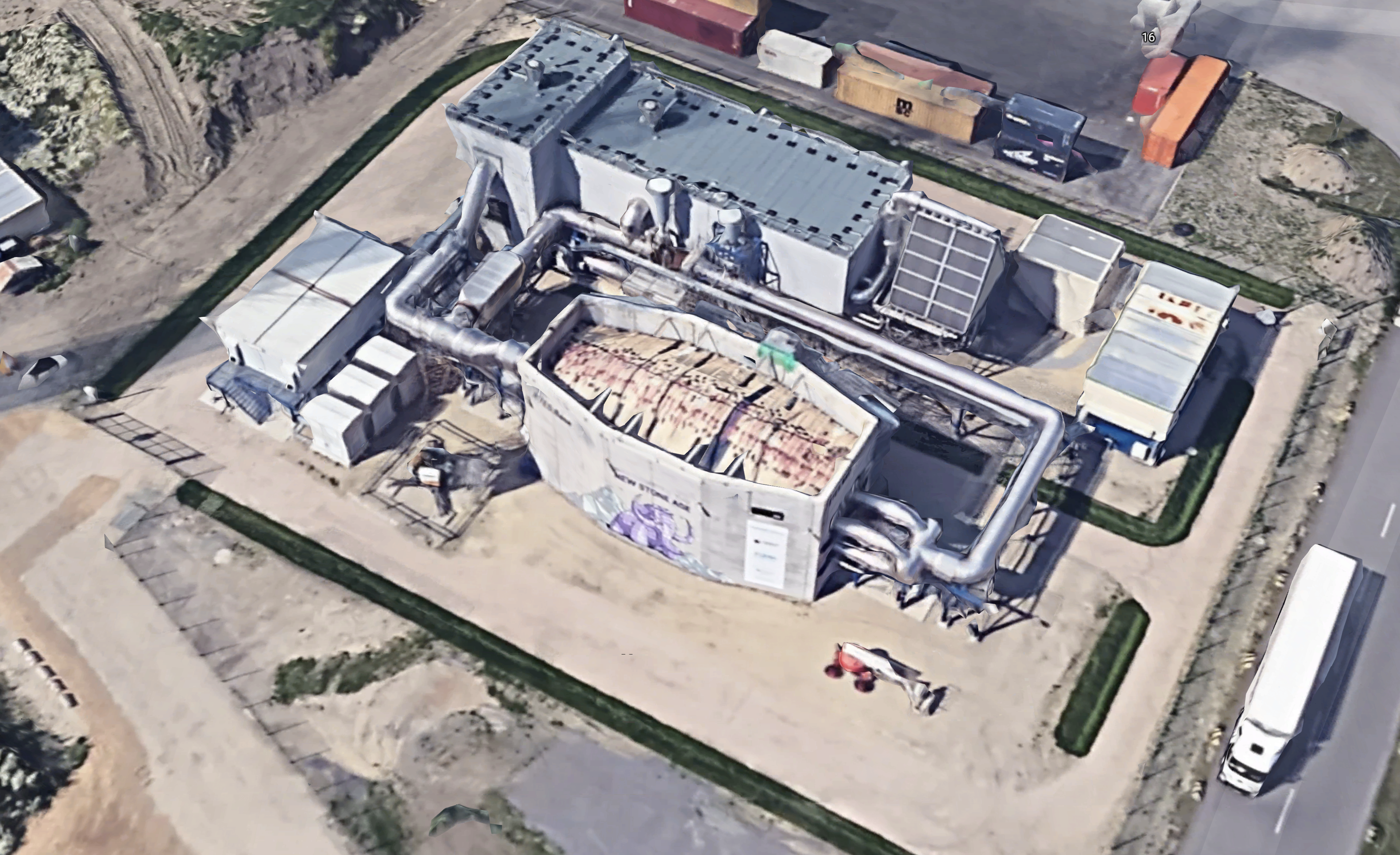
I estimate that this plant is around 130 MWh of storage and occupies a site of about a football pitch, which is one hectare.
I know farmers in Suffolk, who own more land to grow wheat, than would be needed to accommodate all the batteries required.
Conclusion
I believe that National Grid will get their 23 GW of energy storage.
Batteries Could Save £195m Annually By Providing Reserve Finds National Grid ESO Trial
The title of this post, is the same as that of this article on Current News.
The title gives the findings of the Arenko-led trial.
What Is The National Grid Reserve Service?
It’s all about providing capacity for the National Grid Reserve Service, which is described in this Wikipedia entry. This is the introductory paragraph.
To balance the supply and demand of electricity on short timescales, the UK National Grid has contracts in place with generators and large energy users to provide temporary extra power, or reduction in demand. These reserve services are needed if a power station fails for example, or if forecast demand differs from actual demand. National Grid has several classes of reserve services, which in descending order of response time are: Balancing Mechanism (BM) Start-Up, Short-Term Operating Reserve, Demand Management and Fast Reserve.
The Wikipedia entry is very comprehensive.
A Collateral Benefit
This is a paragraph from the article.
Additionally, unlike CCGT plants, batteries do not need to be producing power in order to provide Reserve as they can charge when there is abundant renewable energy on the grid, and then wait to react when needed. As CCGT’s need to be producing power to provide this service, it can led to renewables switched off in favour of the more carbon intensive fossil fuel generation, to ensure Reserve is available if needed.
The article concludes that Reserve from Storage could help National Grid ESO’s reach their target of net-zero operation by 2025.
Could We Replace CCGT Plants With Batteries?
CCGT or combined cycle gas-turbine power plants are efficient ways to turn natural gas into electricity.
- Typical sizes are around 800 MW.
- They are reasonably quick and easy to build.
- As their fuel comes by a pipeline, they don’t need to be connected to the rail network, unlike biomass and coal power plants.
Because they burn methane, they still emit a certain amount of carbon dioxide, although levels much less than an equivalent coal-fired power station.
In Energy In North-East Lincolnshire, I described the three Keadby power stations.
- Keadby – In operation – 734 MW
- Keadby 2 – Under construction – 840 MW
- Keadby 3 – In planning – 910 MW
In total, these three power stations will have a capacity of 2484 MW.
By comparison, Hinckley Point C will have a capacity of 3200 MW.
Add Keadby 4 and the four CCGTs would provide more electricity, than Hinckley Point C.
I think it would be very difficult to replace a cluster of CCGT gas-fired power stations or a big nuclear power plant with the sort of batteries being deployed today. 2.5 to 3 GW is just so much electricity!
I do believe though, that instead of building a 3200 MW nuclear power plant, you could build a cluster of four 800 MW CCGTs.
But What About The Carbon Dioxide?
Using the Keadby cluster of CCGTs as an example.
- Keadby 2 and Keadby 3 are being built to be upgraded with carbon-capture technology.
- The HumberZero gas network will take the carbon dioxide away for storage in worked-out gas fields in the North Sea.
- Some carbon dioxide will be fed to salad vegetables and soft fruits in greenhouses, to promote growth.
- Keadby 2 and Keadby 3 are being built to be able to run on hydrogen.
- The HumberZero network will also be able to deliver hydrogen to fuel the power stations.
I’m certain we’ll see some of the next generation of wind turbines delivering their energy from hundreds of miles offshore, in the form of hydrogen by means of a pipe.
The technology is being developed by ITM Power and Ørsted, with the backing of the UK government.
- Redundant gas pipelines can be used, to bring the hydrogen to the shore
- The engineering of piping hydrogen to the shore is well-understood.
- Redundant gas pipelines can be used if they already exist.
- Gas networks can be designed, so that depleted gas fields can be used to store the gas offshore, in times when it is not needed.
But above all gas pipelines cost less than DC electricity links, normally used to connect turbines to the shore.
I can see very complicated, but extremely efficient networks of wind turbines, redundant gas fields and efficient CCGT power stations connected together by gas pipelines, which distribute natural gas, hydrogen and carbon dioxide as appropriate.
Could Offshore Hydrogen Storage And CCGTs Provide The Reserve Power
Consider.
- Using a CCGT power station to provide Reserve Power is well understood.
- Suppose there is a large worked out gasfield, near to the power station, which has been repurposed to be used for hydrogen storage.
- The hydrogen storage is filled using hydrogen created by offshore wind turbines, that have built in electrolysers, like those being developed by ITM Power and Ørsted.
- One of more CCGTs could run as needed using hydrogen from the storage as fuel.
- A CCGT power station running on hydrogen is a zero-carbon power station.
Effectively, there would be a giant battery, that stored offshore wind energy as hydrogen.
I can see why the UK government is helping to fund this development by ITM Power and Ørsted.
Could We See Cradle-To-Grave Design Of Gas Fields?
I suspect that when a gas field is found and the infrastructured is designed it is all about what is best in the short term.
Suppose a gas field is found reasonably close to the shore or in an area like the Humber, Mersey or Tees Estuaries, where a lot of carbon dioxide is produced by industries like steel, glass and chemicals!
Should these assessments be done before any decisions are made about how to bring the gas ashore?
- After being worked out could the gas field be used to store carbon dioxide?
- After being worked out could the gas field be used to store natural gas or hydrogen?
- Is the area round the gas field suitable for building a wind farm?
Only then could a long-term plan be devised for the gas-field and the infrastructure can be designed accordingly.
I suspect that the right design could save a lot of money, as infrastructure was converted for the next phase of its life.
Conclusion
It does appear that a lot of money can be saved.
But my rambling through the calculations shows the following.
Wind Turbines Generating Hydrogen Give Advantages
These are some of the advantages.
- Hydrogen can be transported at less cost.
- Hydrogen is easily stored if you have have a handy worked-out gas field.
- The technology is well-known.
Hydrogen can then be converted back to electricity in a CCGT power station
The CCGT Power Station Operates In A Net-Zero Carbon Manner
There are two ways, the CCGT station can be run.
- On natural gas, with the carbon-dioxide captured for use or storage.
- On hydrogen.
No carbon-dioxide is released to the atmosphere in either mode.
The Hydrogen Storage And The CCGT Power Station Or Stations Is Just A Giant Battery
This may be true, but it’s all proven technology, that can be used as the Power Reserve.
Power Networks Will Get More Complicated
This will be inevitable, but giant batteries from various technologies will make it more reliable.
40GW Of Battery Storage And Longer Durations Could Help Smash UK Net Zero Targets
The title of this post, is the same as that of this article on Energy Storage News.
This is the introductory paragraph.
More electricity storage and longer durations of storage will be needed for the UK to meet net zero targets, according to electricity system operator National Grid ESO’s latest modelling.
The article is very much a must-read.
Fire Up The Quattro: My Other Car Is An Energy Supplier
An article with this title is on Page 3 of the Business Section in today’s Sunday Times.
This is the first paragraph.
Car companies could be encouraged to become electricity suppliers under an overhaul of the energy market being explored by the government and the regulator.
This is an excellent idea.
These are a few of my ideas.
All-In-One Deals
It would open up the scope for all-in-one deals for the purchase of electric cars.
The cost of the car, servicing and electricity would all be included.
A cost per mile could be guaranteed, which might rise with distance.
Most importantly, he car company would handle all the hassle and give the customers appropriate training.
It Could Be A Range Anxiety Solution
Some articles in the media, are saying that range anxiety is holding back sales of electric cars, as no-one wants to get stuck in remote locations with flat batteries.
Up market brands already have their own rescue service and I can envisage a network of electric trucks, which can rescue stranded vehicles, by giving them sufficient charge to get to the nearest charger.
These trucks could even be in a common fleet with video screens informing everybody they were a particular car company’s Electric Vehicle Rescue Truck. So when rescuing an Audi, they would say Audi’s El;ectric Vehicle Rescue Truck.
If a prospective punter, saw a rescue truck, with their favourite make on the side, it might persuade them to pop in to a showroom.
Free Or Reduced Cost Parking In Electric-Only Car Parks
In Airport Plans World’s Biggest Car Parks For 50,000 Cars, I outlined how a massive car park like this could hold electric cars with a total battery capacity of 1.35 GWh.
This storage capacity could be used to store surplus energy, whilst cars were parked.
I can see a consortium being put together to provide electric-only car parks.
- National Grid to provide and distribute the electricity.
- The car companies to provide the customers.
- Airports and rail stations, local authorities to provide the land.
But not all car parks would be large!
I can imagine new housing developments bringing in an electric vehicle-only rule.
I wouldn’t mind living in one of that type of development.
There would be various charges in these electric vehicle-only car parks.
- An hourly or contract charge for the actual parking.
- A charge for the electricity used to charge the vehicle.
There would also be a payment from Nation Grid based on the amount of energy stored in the vehicle’s battery.
Billing would be automatic, based on when you were connected to the charger and the various energy flows.
\suppose you were flying away from Heathrow for a week, National Grid would have use of your vehicle’s battery to store electricity for seven days.
The car companies would be in a unique position to enable this deal.
- They have the customers.
- They can make their cars compatible with the car parks.
- They can handle the complex billing, as part of an All-In-One deal.
- \drivers would probably prefer to deal with BMW, Jaguar etc., than an energy company.
I would expect this model of car-parking to multiply.
- Many drivers would only use public transport on pain of death, so buying an electric car is the lesser of two evils.
- It would cut emissions in the centre of towns and cities.
- It would appeal to High Streets and Town Centres, as it could attract shoppers and visitors.
- For those with home chargers, it must surely reduce range anxiety
The only disadvantage, is that it might increase the use of cars for short journeys and increase traffic congestion.
But at least the extra vehicles would be non-polluting electric ones.
Conclusion
Used creatively, the proposal of allowing car companies to be energy suppliers, would appear to have possibilities.
.
World’s Largest Wind Farm Attracts Huge Backing From Insurance Giant
The title of this post, is the same as that of an article in the Business pages of yesterday’s copy of The Times.
It is not often that three words implying something big appear in the same sentence, let alone a headline! Such repetition would more likely appear in a tabloid to describe something sleazy.
Until recently, wind power was just something used by those in remote places. I remember a lady in Suffolk, who had her own turbine in the 1980s. She certainly lived well, although her deep freeze was in the next door farmer’s barn.
Now, with the building of the world’s largest wind farm; Hornsea, which is sixty miles off the coast of East Yorkshire, wind farms are talked of as creating enough energy for millions of homes.
Hornsea Project 1 is the first phase and Wikipedia says this about the turbines.
In mid 2015 DONG selected Siemens Wind Power 7 MW turbines with 154 metres (505 ft) rotor turbines for the project – around 171 turbines would be used for the wind farm.
Note that the iconic Bankside power station, that is now the Tate Modern had a capacity of 300 MW, so when the wind is blowing Hornsea Project 1 is almost four times as large.
When fully developed around 2025, the nameplate capacity will be around 6,000 MW or 6 GW.
The Times article says this about the funding of wind farms.
Wind farms throw off “long-term boring, stable cashflows”, Mr. Murphy said, which was perfect to match Aviva policyholders and annuitants, the ultimate backers of the project. Aviva has bought fixed-rate and inflation-linked bonds, issued by the project. While the coupon paid on the 15-year bonds, has not been disclosed, similar risk projects typically pay an interest rate of about 3 per cent pm their bonds. Projects typically are structured at about 30 per cent equity and 70 per cent debt.
Darryl Murphy is Aviva’s head of infrastructure debt. The article also says, that Aviva will have a billion pounds invested in wind farms by the end of the year.
Call me naive, but I can’t see a loser in all this!
- Certainly, the UK gets a lot of zero-carbon renewable energy.
- Aviva’s pensioners get good, safe pensions.
- Turbines and foundations are built at places like Hull and Billingham, which sustains jobs.
- The need for onshore wind turbines is reduced.
- Coal power stations can be closed.
The North Sea just keeps on giving.
- For centuries it has been fish.
- Since the 1960s, it has been gas.
- And then there was oil.
- Now, we’re reaping the wind.
In the future, there could be even more wind farms like Hornsea.
Ease Of Funding
Large insurance companies and investment funds will continue to fund wind farms, to give their investors and pensioners a return.
Would Aviva be so happy to fund a large nuclear power station?
Large Scale Energy Storage
The one missing piece of the jigsaw is large scale energy storage.
I suspect that spare power could be used to do something useful, that could later be turned into energy.
- Hydrogen could be created by electrolysis for use in transport or gas grids.
- Aluminium could be smelted, for either use as a metal or burnt in a power station to produce zero-carbon electricity.
- Twenty-four hour processes, that use a lot of electricity, could be built to use wind power and perhaps a small modular nuclear reactor.
- Ice could be created, which can be used to increase the efficiency of large gas-turbine power plants.
- Unfortunately, we’re not a country blessed with mountains, where more Electric Mountains can be built.
- Electricity will be increasingly exchanged with countries like Belgium, France, Germany, Iceland, Norway and The Netherlands.
There will be other wacky ideas, that will be able to store GWhs of electricity.
These are not wacky.
Storage In Electric Vehicles
Consider that there are three million vehicles in the UK. Suppose half of these were electric or plug-in hybrid and had an average battery size of 50 kWh.
This would be a total energy storage of 75,000 MWh or 75 GWh. It would take the fully developed 6GW Hornsea wind far over twelve hours to charge them all working at full power.
Storage In Electric And Hybrid Buses
London has around 8,500 buses, many of which are hybrid and some of electric.
If each has a 50 kWh batttery, then that is 425 MWh or .0.425 GWH. If all buses in the UK were electric or plug-in hybrid, how much overnight electricity could they consume.
Scaling up from London to the whole country, would certainly be a number of GWhs.
Storage In Electric Trains
I also believe that the average electric train in a decade or so could have a sizeable battery in each coach.
If we take Bombardier they have an order book of over four hundred Aventra trains, which is a total of nearly 2,500 coaches.
If each coach has an average battery size of 50 kWh, then that is 125 MWh or 0.125 GWh.
When you consider than Vivarail’s two-car Class 230 train has a battery capacity of 400 kWh, if the UK train fleet contains a high-proportion of battery-electric trains, they will be a valuable energy storage resource.
Storage in Housing, Offices and Other Buildings
For a start there are twenty-five million housing units in the UK.
If just half of these had a 10 kWh battery storage system like a Tesla Powerwall, this would be a storage capacity of 125 GWh.
I suspect, just as we are seeing vehicles and trains getting more efficient in their use of electricity, we will see buildings constructed to use less grid electricity and gas.
- Roofs will have solar panels.
- Insulation levels will be high.
- Heating may use devices like ground source heat pumps.
- Battery and capacitors will be used to store electricity and provide emergency back up.
- Electric vehicles will be connected into the network.
- The system will sell electricity back to the grid, as required.
Will anybody want to live in a traditional house, that can’t be updated to take part in the energy revolution?
Will The Electricity Grid Be Able To Cope?
National Grid have been reported as looking into the problems that will happen in the future.
- Intermittent power from increasing numbers of wind and solar farms.
- Charging all those electric vehicles.
- Controlling all of that distributed storage in buildings and vehicles.
- Maintaining uninterrupted power to high energy users.
- Managing power flows into and out of the UK on the various interconnectors.
It will be just like an Internet of electricity.
And it will be Europe-wide! and possibly further afield.
Conclusion
The UK will have an interesting future as far as electricity is concerned.
Those that join it like Aviva and people who live in modern, energy efficient houses will do well.
Grenfell Tower Gas Pipes Left Exposed, Despite Fire Safety Expert’s Orders
The title of this post is that of an article in the Guardian.
Read the article and you’ll see the standard of the work done on the gas system in the tower by National Grid.
This is a paragraph.
In March, three months before the blaze, residents told the London fire brigade (LFB) that people living in the 24-storey tower were so scared by the pipes “that they are having a panic attack”.
There is a lot more like that.
Interestingly, Cadent Gas; the division of National Grid that did the work was spun off and is now owned partly by the Qatari government.
A gas system, when it is installed by nincompoops is a disaster waiting to happen.
Workmanship of the quality shown in the pictures would have been rejected by the inspectors on the chemical plants, I worked on in the 1960s, so why when the consultant rejected the installation, was action not taken by Cadent?
The gas may not have caused the Grenfell House fire, but I wonder if the unprotected gas pipe fractured in the heat of the fire and then just added to the inferno.
How Norway Will Keep Britain’s Lights On
This is the title of an article in today’s Times about the building of the North Sea Link, which is described like this in Wikipedia.
The North Sea Link (also known as North Sea Network Link or NSN Link, HVDC Norway–Great Britain, and Norway–UK interconnector) is a 1,400 MW subsea high-voltage direct current electricity cable under construction between Norway and the United Kingdom. It is a joint project of the transmission system operators Statnett and National Grid plc and is due to be completed in 2021.
To put the size of the North Sea Link into context Hinckley Point C nuclear power station will generate 3,2000 MW, so we get 44% of the power reliably for as long as Norway’s hydro-electric power system functions.
The Times article also lists other interconnectors in which National Grid are involved.
- 160 MW system (1961) – 100 MW – co-owned with the French.
- 2000 MW system (1986) – 2000 MW co-owned with the French.
- IFA2 – 1000 MW co-owned with the French
- BritNed – 1000 MW co-owned with the Dutch.
- NemoLink – 1000 MW co-owned with the Belgians.
- Viking Link – 1400 MW co-owned with the Danes.
- ICELink – A possible 1000 MW link to Iceland.
- A possible second connection to Norway
- A possible second connection to the Netherlands.
In addition, there are other links like FABlink and NorthConnect, where National Grid don’t have an interest.
It’s not all importing of electricity, as recently because of troubles with their nuclear plants, we’ve been exporting electricity to the French.
As a control engineer, I think all of these interconnectors are sound investments, as Europe can mix the erratic sources of wind, wave, tidal and solar with the steady outputs of nuclear, coal and hydro.
This Wikipedia article called Wind power in the United Kingdom says this.
The United Kingdom is one of the best locations for wind power in the world, and is considered to be the best in Europe. Wind power contributed 11% of UK electricity generation in 2015, and 17% in December 2015. Allowing for the costs of pollution, particularly the carbon emissions of other forms of production, onshore wind power is the cheapest form of energy in the United Kingdom In 2016, the UK generated more electricity from wind power than from coal.
So back wind up by steady sources from the UK and Europe like nuclear and hydro-electric, when the wind stops and all is well with the lights.
And of course, as many of these interconnectors are bi-directional, when we have excess power, countries in Europe who need it can import it.
Who sits like spider in the middle of this web? – National Grid of course!
All those, who think that coal is a good idea, should be made to sit on the naughty step.
 The Anonymous Widower