Northern Offers Free Travel To Bedlington Terrier Owners When Town’s New Station Opens
The title of this post, is the same as that of this article on Rail magazine.
These two paragraphs add more details.
Passengers with a famous breed of dog named after Bedlington will be offered free travel when the town’s new station is open. It is the sixth and final new station on the Northumberland Line, which reopened to passengers in December 2024 – for the first time in 60 years.
Around 1.3 million journeys have been made on the route so far, with passengers travelling for work, education, important appointments and fun days out. When the station opens on Sunday, 29 March, it will allow customers to travel into Newcastle in around 30 minutes, with an off-peak single costing just £2.60.
I don’t own a dog anymore, let alone a bedlington terrier, but I had intended to go to the opening of the new Bedlington station tomorrow, but there don’t seem to be any trains between London and Newcastle due to engineering works.
So, it looks like I’ll have to miss out!
Could The Settle And Carlisle Be Used As A More Formal Route?
In June 2021, I wrote Through Settle And Carlisle Service Under Consideration, which starts like this.
The title of this post, is the same as that of an article in the June 2021 Edition of Modern Railways.
This is the first paragraph.
Plans for a new Leeds to Glasgow through service via the Settle and Carlisle line are being developed, with CrossCountry and the Department for Transport starting to look at the possible scheme.
It sounds like a sensible idea to me.
The article also suggests the following.
- CrossCountry is a possible operator.
- CrossCountry are keen to improve services between Leeds and Glasgow
- The trains could be InterCity 125s, freed up, by a the arrival of Class 221 trains from Avanti West Coast, when they receive their new Class 805 trains.
- Maintenance of the trains wouldn’t be a problem, as this could be done at Neville Hill in Leeds or Craigentinny in Edinburgh.
- Services could start in December 2023.
But nothing more has been heard.
However some things have happened.
The Settle And Carlisle Has Become A Popular Charter Route
Google AI gave me this paragraph.
The Settle and Carlisle line is an extremely popular, premier route for heritage rail charters, steam excursions, and luxury rail tours in the UK, often operating at full capacity. Renowned for its scenic 72-mile journey through the Yorkshire Dales and Pennines, it features iconic structures like the Ribblehead Viaduct.
I have also written these posts about charters on the Settle and Carlisle Line.
Scheduled Steam-Hauled Services For the Settle And Carlisle Railway
Rail Operator Crosses Line For First Time In Years
‘Staycation Express’ To Return Along Full Length of S & C
It doesn’t appear that the numbers of charter trains are showing any sign of decrease.
LNER Has Ordered Class 897 Trains
When LNER took over the East Coast Main Line services, they had six main classes of trains.
- Five-car Class 800/1 bi-mode trains
- Nine-car Class 800/2 bi-mode trains
- Five-car Class 801/1 electric trains
- Nine-car Class 801/2 electric trains
- Seven-car InterCity225 trains
- Nine-car InterCity225 trains
Note.
- The five-car trains can run in pairs as ten-car trains.
- The Class 800 and Class 801 trains can run to destinations, that lack full electrification using diesel power where needed.
- Hitachi are developing battery-power for rail routes without electrification.
In 2023 to replace the InterCity225 trains ten ten-car Class 897 tri-mode trains were ordered from CAF, which will soon be in service, over all LNER’s network.
LNER Has Fully Electrified And Unelectrified Destinations
LNER’s current destinations, that are fully electrified to King’s Cross include.
- Bradford Forster Square
- Berwick on Tweed
- Darlington
- Doncaster
- Durham
- Edinburgh Haymarket
- Edinburgh Waverley
- Grantham
- Keithley
- Leeds
- Newark Northgate
- Newcastle
- Peterborough
- Retford
- Shipley
- Skipton
- Stevenage
- Wakefield Westgate
- York
Whilst those are not fully electrified include.
- Aberdeen
- Cleethorpes
- Dundee
- Grimsby Town
- Harrogate
- Huddersfield
- Horsforth
- Hull
- Inverness
- Lincoln
- Middlesbrough
- Sheffield
- Sunderland
- Thornaby
- Worksop
Note.
- Other destinations can be added as required.
- I suspect, that Class 897 trains will be able to approach many stations without electrification on battery power alone.
- Staff and Passengers would probably like underground stations like Sunderland to be worked on batteries alone.
The Class 800 bi-mode, the Class 801 electric and the Class 897 tri-mode trains will give LNER a very flexible fleet.
Onward To Skipton, Carlisle and Glasgow Central And Edinburgh From Bradford Forster Square
I wonder is someone has realised that the Class 897 trains could use their tri-mode capabilities to invade Scotland?
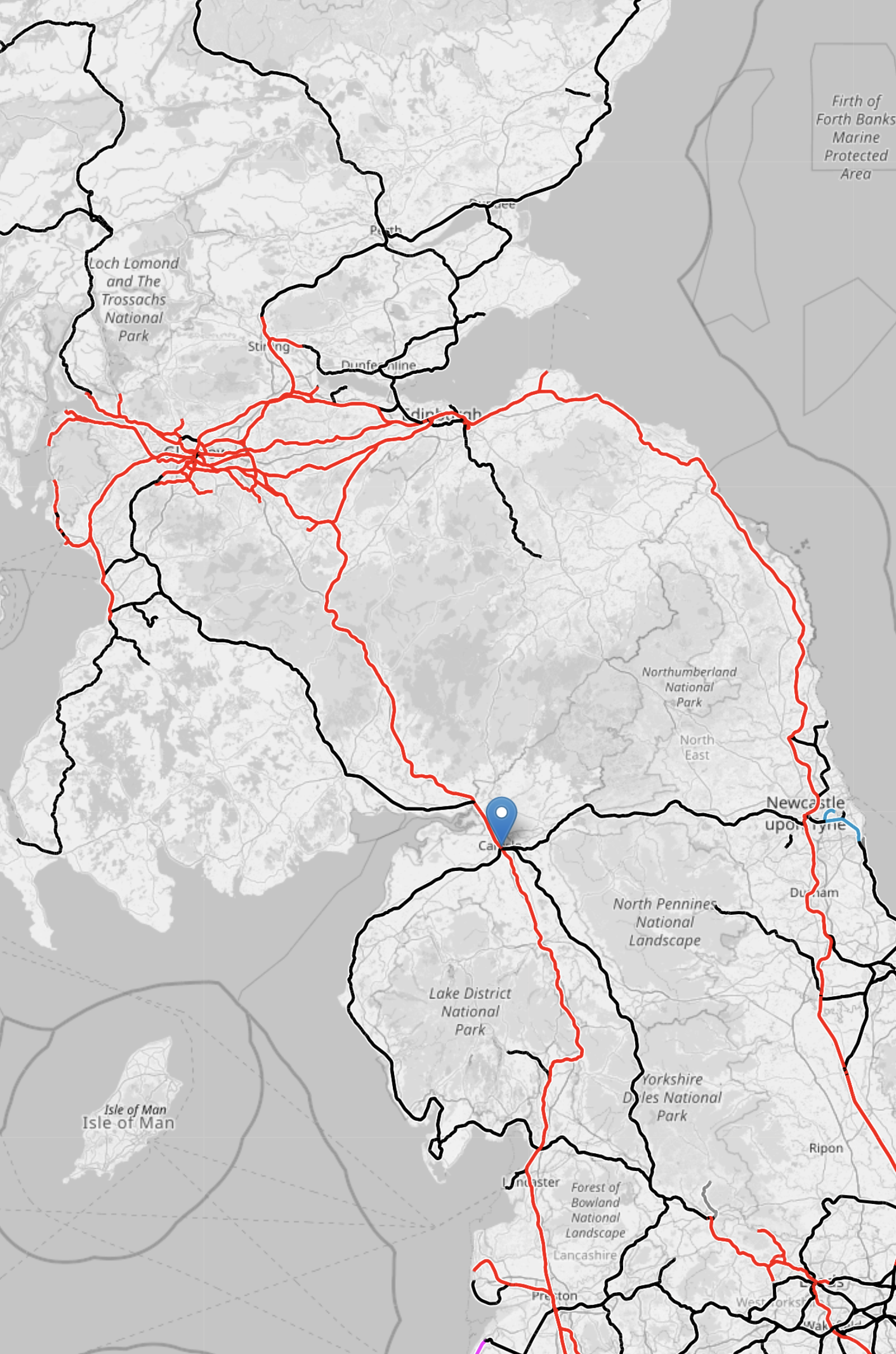
This OpenRailwayMap shows the railways between the Scottish Lowlands and northern England.
Note.
- Red tracks are electrified.
- Black tracks are not.
- The blue arrow in the middle of the map indicates Carlisle.
- The red track going North-South through Carlisle is the West Coast Main Line.
- The black track going South from Carlisle is the Settle and Carlisle Line.
- Where it turns red is at Skipton station and the electrification can power the train to Bradford Foster Square, Doncaster, Leeds or Sheffield stations.
- The West Coast Main Line splits North of Carlisle and electrified trains can reach either Glasgow Central in the West or Edinburgh Haymarket or Waverley in the East.
- The black track going North-South between Carlisle and Glasgow via Dumfries is the Glasgow South Western Line, which can be used as a diversionary route by some trains with a self-powered capability.
The Settle and Carlisle Line certainly makes Anglo-Scottish routes more robust and flexible when there is bad weather, engineering works or overhead wire or signalling failures.
Will Class 897 Trains Be Able To Run On The Settle And Carlisle Line?
I asked Google AI this question and it gave this answer.
Yes LNER’s new Class 897 tri-mode trains (scheduled for introduction from 2027) will be able to run on the Settle and Carlisle line. As tri-mode electro-diesel multiple units, these 10-car trains are designed to operate across the entire LNER network, utilizing electric, diesel, or battery power to manage non-electrified routes like this, providing a modern alternative to older, diesel-only fleets.
Key details regarding Class 897 on the Settle and Carlisle Line:
Tri-mode Capability: These trains can run on electric, diesel, or battery power, making them highly versatile for non-electrified, scenic, or challenging routes.
Operating Strategy: The trains are designed for flexibility and can be used across the LNER network, which includes routes connecting to Scotland via the West Coast Main Line (WCML) or through services from Leeds.Upgrading Service: They will replace the 40-year-old InterCity 225 fleet, offering a more environmentally friendly, modern alternative to current diesel bi-modes, such as the Class 800/802.
The route is a major, yet challenging, rail line featuring 20 viaducts and 14 tunnels, making it suitable for modern, versatile train sets.
I also believe that running Class 897 trains between Yorkshire and Glasgow offers opportunities to run new services, that will appeal to both travellers and rail operators.
Does The UK Need More Passenger Rail Capacity Between Yorkshire And Glasgow?
I asked Google AI this question and it gave this answer.
Yes, the UK requires more passenger rail capacity between Yorkshire and Glasgow due to severe overcrowding and forecasted demand growth. Major routes like the East Coast Main Line (ECML) and West Coast Main Line (WCML) are, or will soon be, at maximum capacity. Key constraints include infrastructure limitations and the need for better Scotland-England connectivity.
Key insights on this need:
Capacity Constraints: The WCML, particularly at its southern end, is already effectively full, with limited capacity for additional, longer trains. Similarly, the ECML is experiencing significant overcrowding.
Growing Demand: Passenger demand for long-distance rail travel continues to rise, with significant increases noted in journeys between Scotland and other regions.
Infrastructure Issues: Constraints include steep inclines, tight curves, and the need to mix passenger and freight traffic, particularly on the West Coast route.
Proposed Solutions: While some improvements are planned, such as Lumo extending services to Glasgow, the Integrated Rail Plan (IRP) focuses on capacity enhancements in the North/Midlands.
Strategic Need: Enhanced, high-speed connections are considered essential for long-term economic integration and to prevent increased air travel/emissions.
The great advantage of the route, is that is already in place.
Can The Settle And Carlisle Line Handle Planned Diversions?
Can The Settle And Carlisle Line Handle The Caledonian Sleeper?
I asked Google AI this question and it gave this answer.
The Settle-Carlisle line is not a standard route for the Caledonian Sleeper, which typically travels via the West Coast Main Line (WCML) to Edinburgh, Glasgow, and beyond. While the line is a scenic, double-track route with significant infrastructure, it is generally used for local services and freight, not long-distance, heavy sleeper trains.
Key Considerations:
Route: The Caledonian Sleeper operates on the West Coast Main Line, serving destinations like Edinburgh, Glasgow, Aberdeen, Inverness, and Fort William.
Capacity & Infrastructure: While the Settle-Carlisle line has major structures like the Ribblehead Viaduct, it is not the primary route for high-speed or overnight sleeper services.
Operational Normal: The sleeper service splits into portions at Edinburgh, and does not regularly operate via the Settle-Carlisle line.
In short, the Settle-Carlisle line is not designed for or used by the Caledonian Sleeper, which operates via the West Coast Main Line.
But it does appear, that in the past some sleeper trains have used it.
How Many Freight Trains Use the Settle And Carlisle Line In A Typical Day?
This article on the BBC is entitled Settle To Carlisle line: Shortage of trains ‘Hampering Growth’, says this about the number of trains.
From only two trains a day in the 1980s the Settle and Carlisle line now sees 14 passenger and 18 freight services a day.
That is progress!
A Trip To The Northumberland Line – 7th November 2025
On Friday, I went to Newcastle to have a look at the new Blyth Bebside station.
I took these pictures between Newcastle and Ashington stations.

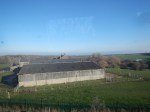
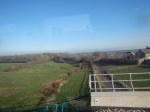




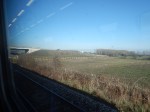
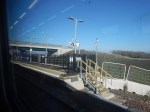
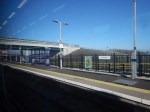
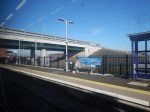
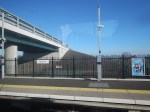
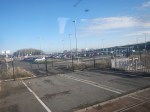
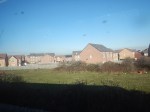
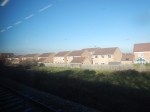
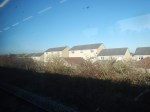

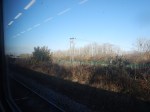
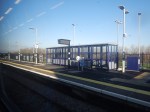
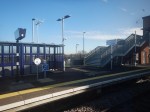
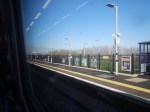
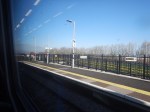
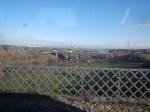


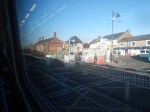
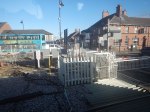
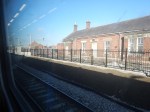
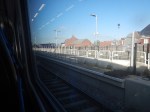
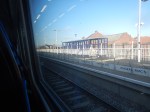
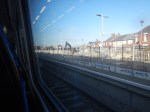
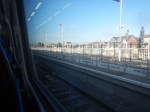
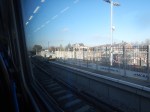
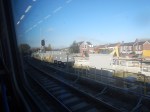






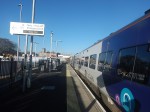
Note.
- The impressive slim bridge over the railway at Newsham station. Other places could imitate this. See Bicester Village Station – 28th May 2025.
- The well-filled car park at Newsham station.
- The large amount of new housing.
- The recently-opened Blyth Bebside station.
- The crossing of the River Blyth.
- The under-construction Bedlington station.
- The crossing of the River Wansbeck.
- The single platform Ashington station.
- The train took 36 minutes for the 18 miles.
- According to staff, there is no hostelry close to the station at Ashington, but there is a good gluten-free pub at Seaton Delaval station, that I wrote about in Seaton Delaval Station – 30th March 2025.
I then returned to Blyth Bebside station and took these pictures.
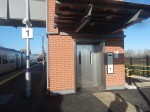
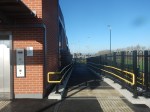
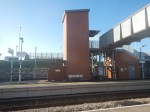

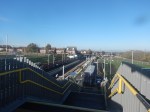
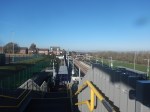

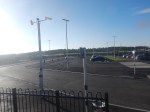
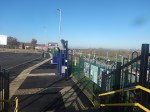
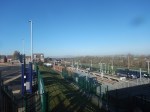

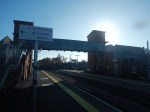
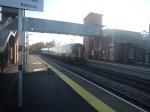
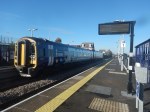
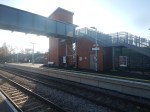
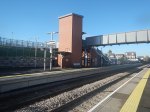
Note.
- Blyth Bebside station is fully step-free.
- There is a sizable car park.
- The wind turbines of Blyth Harbour wind farm can be seen in the distance from the station bridge.
- I estimate the platforms at the station will take a five-car Hitachi Class 802 train or a pair of two-car Class 158 trains.
These are some further thoughts.
The Platforms On The Northumberland Line Are Long
Consider.
- As I said earlier the platforms in the stations appear to be long enough to handle a five-car Hitachi Class 802 train or a pair of two-car Class 158 trains.
- From what some have said about the line, I suspect four-car trains will be needed soon for Newcastle matches.
- But would this be enough, if a local hero like Sting decided to have a Summer concert on the beach?
- Lengthening platforms is often a pain, if you don’t make them long enough.
So were Network Rail just making sure that the track was fit for all eventualities?
Could The Northumberland Line Be Electrified?
These pictures show Platform 1 at Newcastle station, where Northumberland Line trains usually terminate at Newcastle.
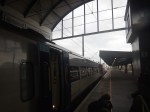
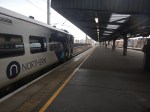
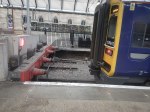
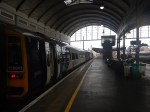
Note.
After 104 Years UK’s Longest Train Route Is Cancelled For Ever
The title of this post, is the same as that of this article on The Times.
These three paragraphs describe the last journey.
With a muted fanfare the UK’s longest train rolled out of Aberdeen on Friday morning for its final sojourn down to Penzance, ending a service that connected both ends of the country for more than 100 years.
The 8.20am CrossCountry train took 13 hours and 20 minutes, with stops at 35 stations along the way, to cover the 774-mile route. Passengers spent more than two hours of the journey in the stations.
The service, which was launched in 1921, headed south through York, Bristol, Taunton and Truro on its way past some of the country’s finest landscapes, and arrived in Penzance at 9.31pm.
Looking at a ticket site and it appears that by using two trains from Aberdeen to King’s Cross and Paddington to Penzance you can be a few minutes faster, if you know your Underground.
This route will get quicker.
- As the East Coast Main Line rolls out its new digital signalling, this should speed up trains, by allowing some running at 140 mph instead of the current 125 mph.
- LNER will also be bringing their new tri-mode (electric/battery/diesel) trains into service, which could give some speed improvements on the diesel section North of the Forth Bridge in terms of speed and ride noise, especially as ScotRail will be partially electrifying part of this section.
- GWR should also be upgrading some of their fleet to tri-mode, which should improve speed and ride noise on the sections, where the route is not electrified.
- CrossCountry could compete, by buying new trains, but it would be a big financial risk, as the London route should get quicker, as track improvements and increased use of digital signalling speed up services from London to Aberdeen and Penzance.
CrossCountry ‘s owner; Arriva isn’t standing still, but have applied for extra Grand Central open access services on the East Coast Main Line to Scunthorpe and Cleethorpes and a new service from Newcastle to Brighton via Birmingham, which will partly fill the gap caused by the loss of the Aberdeen and Penzance service, by linking with GWR at Reading and LNER at Newcastle.
Milestone Reached As 250,000th Passenger Journey Made On Northumberland Line
The title of this post, is the same as that of this news item from Northumberland County Council.
These three introductory paragraphs add detail?
Passengers who have made more than 250,000 journeys on Northumberland Line services are being reminded they can beat the queues for tickets by buying online.
Northern said the major milestone was reached this week, after it began running passenger trains on the line in December, for the first time in 60 years.
Services call at Newcastle, Manors and new stations in Seaton Delaval, Newsham and Ashington, with a journey along the entire route taking around 35 minutes and a single fare costing no more than £3.
This is a good leveling-up story, so why hasn’t the government got a pipeline of shovel-ready new rail projects?
These projects could be for starters.
The West London Orbital
This page on the Transport for London web site gives the current progress and starts with this paragraph.
We’re making plans for a new rail service on existing, underused rail lines in west London that would become part of the London Overground network. The West London Orbital rail service would run from Hounslow towards Hendon and West Hampstead in the north.
The Mayor and Transport for London are probably spending most of their time, thinking of a silly woke name, that no-one will remember and just cause confusion.
The Ivanhoe Line
This article on the BBC is entitled Disappointment As Reopening Of Railway Line Halted.
This is the sub-heading.
The restoration of a passenger rail link through the Midlands has been stopped in its tracks.
These three paragraphs give more detail.
A business case for reopening the Ivanhoe Line rail link from Burton-upon-Trent to Leicester had been submitted before the election, with campaigners hopeful that work could begin in 2024.
But on Monday, Chancellor Rachel Reeves said the Treasury needed to find £5.5bn of savings in 2024 and a further £8.1bn in 2025.
Speaking in the House of Commons, the Chancellor said that the previous government’s entire Restoring Your Railway programme would be scrapped, saving £85m.
Note.
- I don’t believe this government believes in improving the rail infrastructure in the UK.
- But how do they expect people to get around, given their preferred transport mode of electric cars are ridiculously overpriced?
- The article on the BBC is a must-read.
- Last week Arriva Group announced a new Newcastle and Brighton open access service, that will call at Burton-on-Trent, which is planned to be the Western terminus of the Ivanhoe Line. See Arriva Group Submits Open Access Rail Application To Connect Newcastle And Brighton, Via London Gatwick for more details.
For more on the Ivanhoe Line, read the Campaign to Reopen the Ivanhoe Line web site.
Longer Trains Plan As New Rail Line Fills Up
The title of this post, is the same as that of this article on the BBC.
This is the sub-heading.
A newly reopened railway line has attracted so many passengers that carriages may have to be added to trains to avoid people having to stand, a council said.
These three paragraphs add a bit more detail.
The Northumberland Line, between Ashington and Newcastle, opened in December after being shut for 60 years but so far only half the six stations are in operation.
County council deputy leader Richard Wearmouth said making the carriages longer was being considered to cope with demand, especially on busy Newcastle United match days.
He described it as a “good problem” for the £298m project where passenger numbers are on course to hit five times the original estimate.
It looks to me that the Northumberland Line is suffering a very bad case of London Overground Syndrome.
The only certain thing, is that as the syndrome will get worse as more stations are opened.
At least the syndrome has a proven solution – The operator just needs to rustle up some more trains.
Changing Trains At Newcastle Station
In the last few weeks, I have changed trains at Newcastle station between the East Coast Main and the Northumberland Line four times.
I took these pictures on Sunday, when I changed twice.
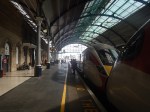

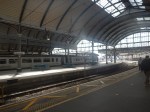
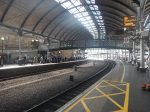
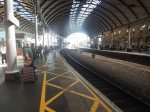
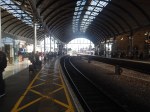
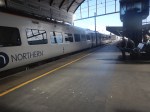

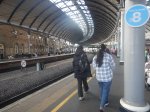
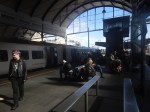
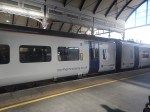
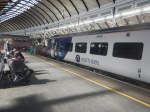
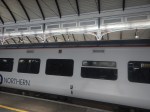
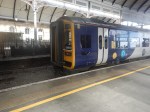
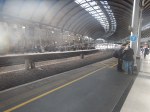
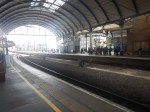
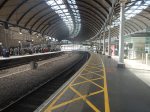
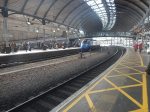
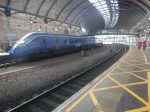
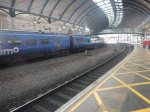
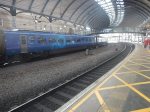
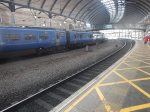
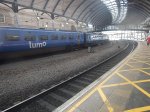
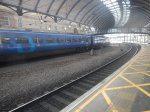
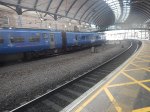
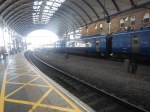
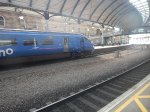
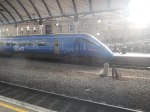
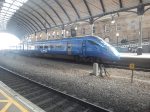
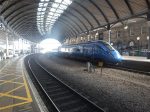
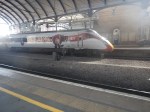
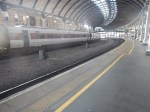
Note.
- On my two train changes yesterday, I needed to buy a ticket for the next leg of my journey and I had to walk miles to the ticket office.
- The walk was rather straining on my dodgy knees.
- There are no signs to the ticket office and I only found it due to a helful human.
- In the morning, I missed my connection and had to wait an hour for the next train.
- A lot of these pictures show diesel multiple units, that were working the Northumberland Line to Ashington in Platform 1, surrounded by happy passengers.
- Platform 1 appears to be able to take at least a pair of Class 158 two-car diesel multiple units.
- Platform 1 appears to be electrified with 25 KVAC overhead wires, even if the Northumberland Line isn’t electrified.
- The staff seem extremely pleased with the success of the Northumberland Line.
The staff were very helpful, but it was all very much organised chaos.
But from what I saw yesterday, it appears that something powerful is stirring along the Northumberland Line.
Perhaps what the BBC predicted in Northumberland Line: Railway ‘Could Create Economic Powerhouse’ is starting to happen?
This was the sub-heading of the BBC article.
An “east coast economic powerhouse” stretching from Edinburgh to Leeds could be created if the Northumberland Line rail scheme goes ahead, a public inquiry has been told.
I’m well aware that one busy weekend doesn’t make a powerhouse.
But Northumberland Council must get ready for the next phases of the project.
Larger Zero-Carbon Trains
In Alstom Hydrogen Aventras And The Reopened Northumberland Line, I suggested that Alstom hydrogen trains might be suitable for the Northumberland Line, but these trains have not been seen in the flesh, so they can probably be discounted.
But this is a picture I took yesterday of Platform 1 at Newcastle station.
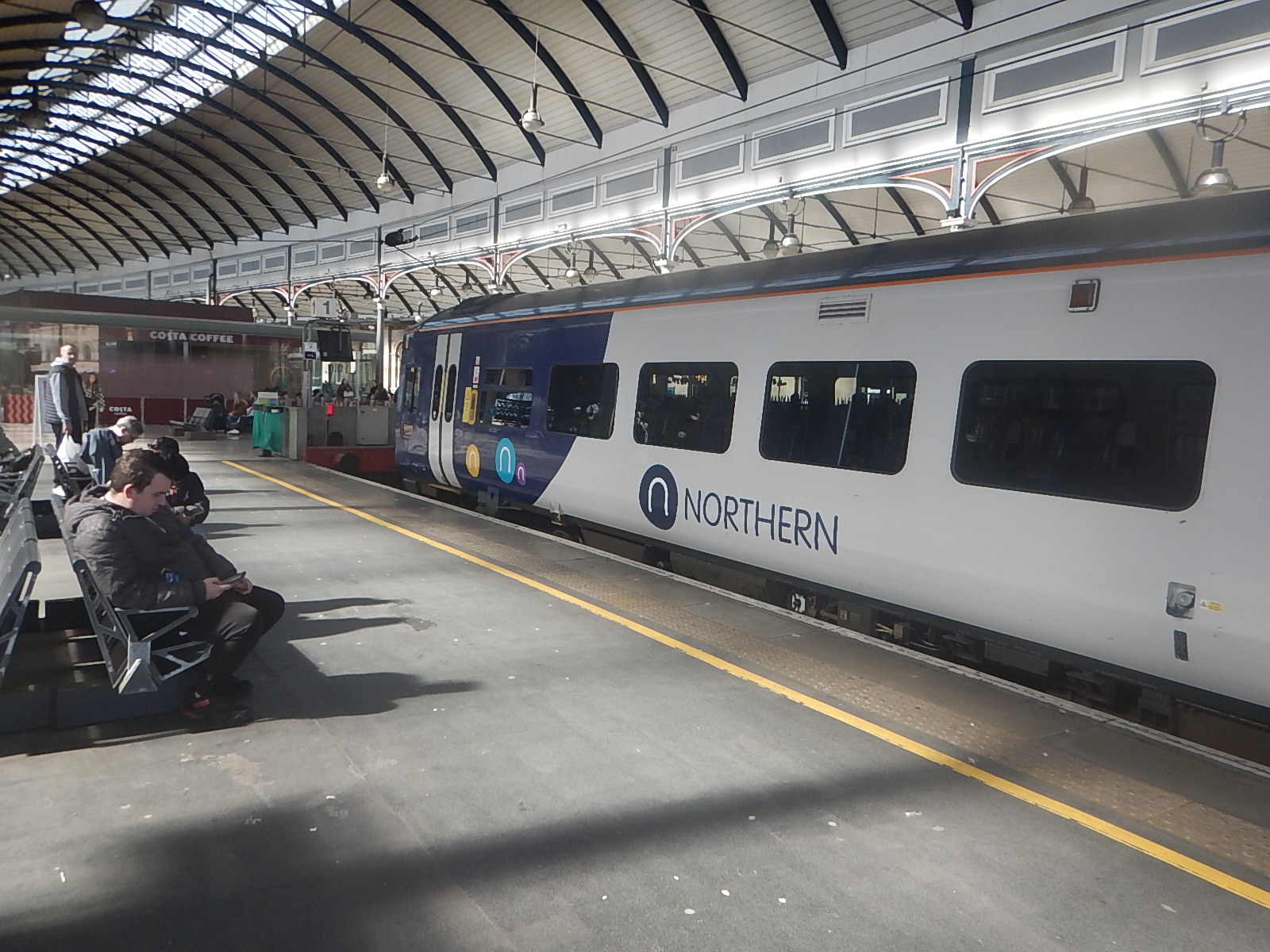
Note.
- The wires of the electrification above the Class 158 diesel multiple unit.
- An out and back trip between Newcastle and Ashington is probably less than fifty miles.
In the Wikipedia entry for Merseyrail’s Stadler Class 777 trains, this is said.
In December 2022, a maximum test range of 135 km (84 miles) was achieved, which was “much longer than we expected”.
It would appear that a small fleet of perhaps three trains, that were fitted with pantographs for charging could work the Northumberland Line, without the need for substantial additions to the infrastructure.
In the Wikipedia entry for the new Tyne and Wear Metro’s Stadler Class 555 trains, this is said.
The new trains will be five cars long in fixed formations, with a Jacobs bogie between the inner cars. One centre car will be fitted with a Brecknell Willis pantograph to draw the power from the 1,500 V DC overhead lines. They will also be fitted with regenerative braking technology for greater energy efficiency, and a battery energy storage system that will allow the trains to remain powered and reach the nearest station if the overhead lines fail. This offers the potential to be used on routes that are not fitted with overhead lines that may be added to the network in the future.
As the Class 777 and Class 555 trains appear to be cousins, perhaps those innovative Swiss engineers at Stadler can come up with a 25 KVAC battery-electric Class 555 train, that could charge its batteries in Platform 1 at Newcastle station and then use battery power to get to Ashington and back.
With perhaps a couple of short lengths of 25 KVAC overhead electrification, I feel Stadler could create a battery-electric Class 555 train, that could handle.
- Newcastle and Ashington and on to Newbiggin, as I wrote about in Onward To Newbiggin-by-the-Sea For The Northumberland Line?.
- Newcastle and Carlisle
- Carlisle and Morpeth via Newcastle
- Hexham and Nunthorpe via Newcastle
How many other branches from electrified main lines in the UK, could be handled by such a train?
How about these routes for starters.
- Darlington and Bishop Auckland
- Darlington and Saltburn
- Preston and Blackpool South.
- Skipton and Preston via Colne.
- Lancaster and Morecambe
- Leeds Metro
- Llandudno Junction and Blaenau Ffestiniog
- Middlesbrough and Whitby.
- Sheffield and Huddersfield
- Sheffield and Leeds
- Sheeffield and Manchester Piccaduilly
Sheffield and York
The Class 555 trains would also have other advantages.
- In the Newcastle area, I’m sure the Tyne and Wear Metro could probably service them.
- They have the Stadler steps for easy access.
- Most Stadler trains, tram-trains and trams are good at climbing hills.
Great British Railways could do a lot worse, than buying a reasonable number of Class 555 battery-electric trains.
Newsham Station – 30th March 2025
Today, I went to Newcastle and took a ride to the recently-opened ; Newsham station on the Northumberland Line.
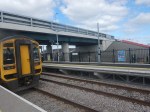
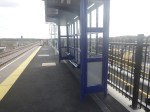
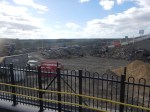
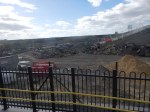
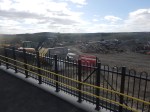
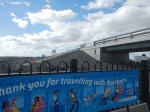
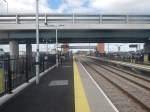
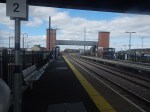




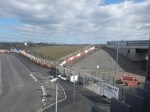
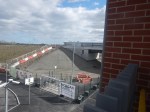
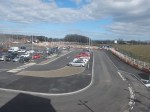

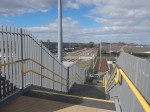
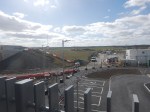
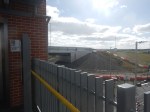
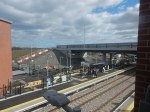


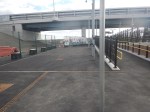
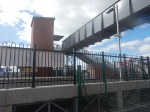
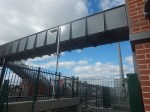
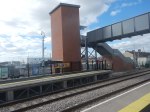
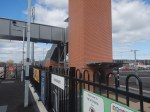
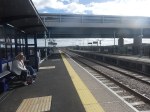
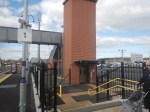
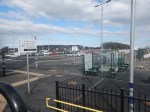
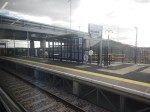
Note.
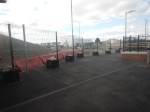
- The road bridge over the railway.
- When complete there will be a lot of parking space.
- The orange bollards in the parking could be electric vehicle chargers, ready to be unveiled.
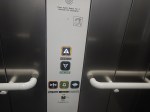
- The full step-free access over the railway via the lifts is already working.
- British Railways, its predecessors and many other countries would have just put in a level crossing.
- The Completed platform is wide.
- Both platforms already have a shelter.
- There are help points, information displays, facilities for those with limited hearing and readers for smart ticketing on both platforms.
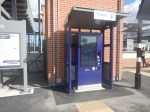
- There is a ticket machine by both lift towers.
- The disabled parking is already marked out.
- The brickwork and other workmanship is top-class.
- There is space behind the platforms for taxis, buses and emergency service vehicles.
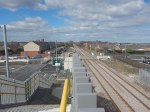
- There is enough clearance under the two bridges for overhead electrification.
There is still some finishing off and landscaping to do, but it is a station with everything.
I have some other thoughts.
The High Quality Lifts Are By Stannah
Several of the passengers I saw, were getting on in years.
Does the maker of the well-advertised stair-lifts use station lifts, which are likely to be used by those of reduced mobilility, as a promotional tool?
The Station Will Be One Of The Best Rural Stations In The UK, When It is Complete
I can see other stations on a similar theme being built.
Especially, where a level crossing is to be eliminated.
This Google Map shows the level crossing and former station at Six Mile Bottom, near where I used to live.
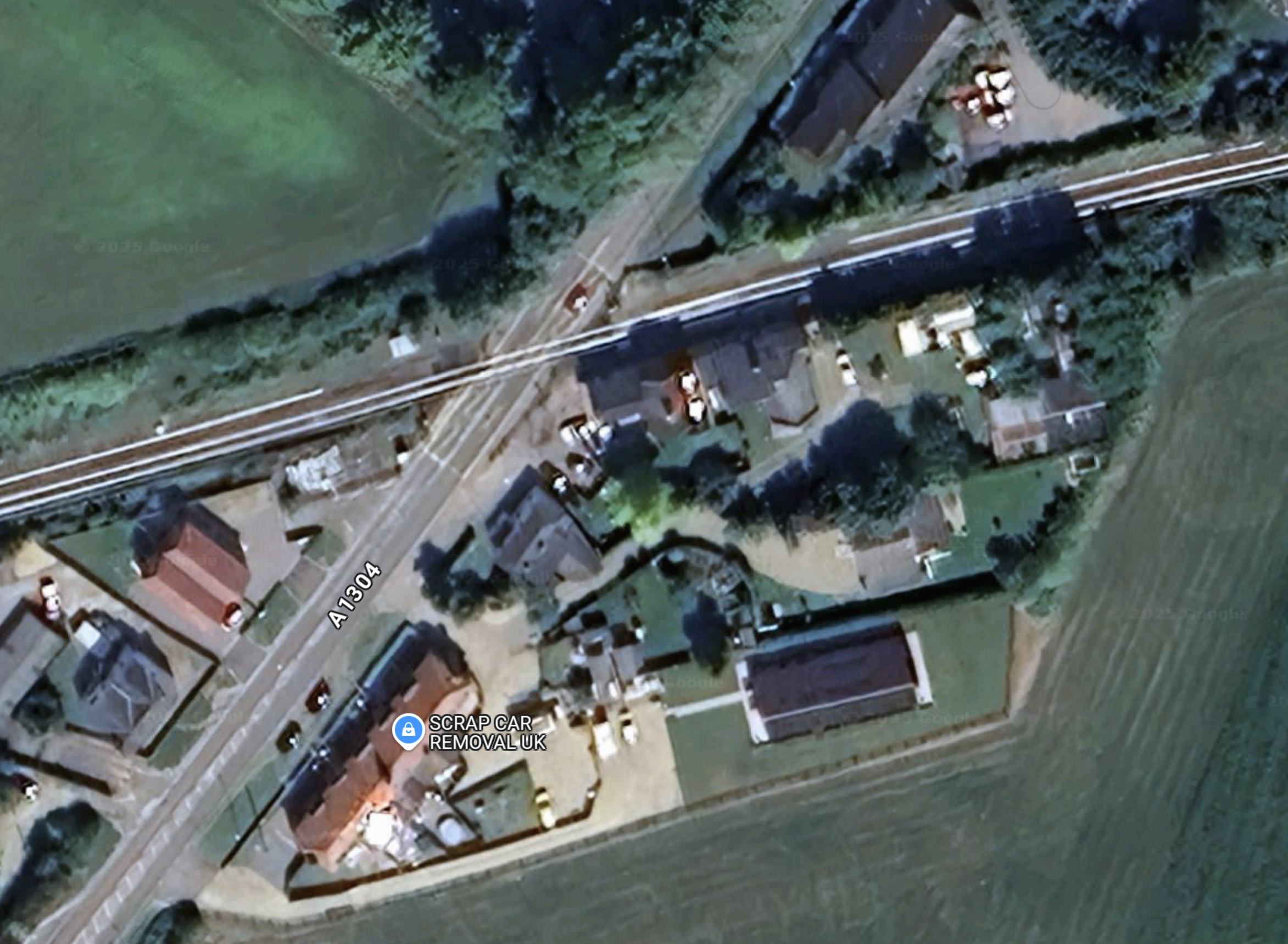
Note.
- The Cambridge and Newmarket railway goes across the map.
- Cambridge is to the West and Newmarket is to the East.
- The main Newmarket to London road crosses the railway here in a level crossing.
- Newmarket is to the North and London and the M11 is to the South.
- There used to be a station here and some want it back.
- There have been several incidents on the level crossing and Greater Anglia have had serious damage to more than one train.
A station like Newsham would be ideal here.
I can see Morgan Sindall building a few more on this theme.
Could they licence the design to construction companies all over the world?
I’ve certainly, seen similar layouts in Eastern Poland, where there are lots of level crossing accidents, according to our guide on one trip. But he said Russia is a lot worse for level crossing accidents.
Newcastle Fans Had Few Trains To London
Yesterday, I felt LNER and Lumo would be cashing in, with Newcastle United playing at Wembley.
The finalists were settled on the 6th of February, so that surely gave Network Rail time to reorganise any engineering works so that LNER and Lumo could be running the maximum number of Newcastle United supporters to London.
Lumo didn’t run at all to London on the Sunday and all LNER trains went via the Stadium of Light.
I would have thought, that Network Rail’s inflexibility cost LNER and Lumo a good publicity opportunity.
 The Anonymous Widower