Railway Lines Through East Midlands Hub Station
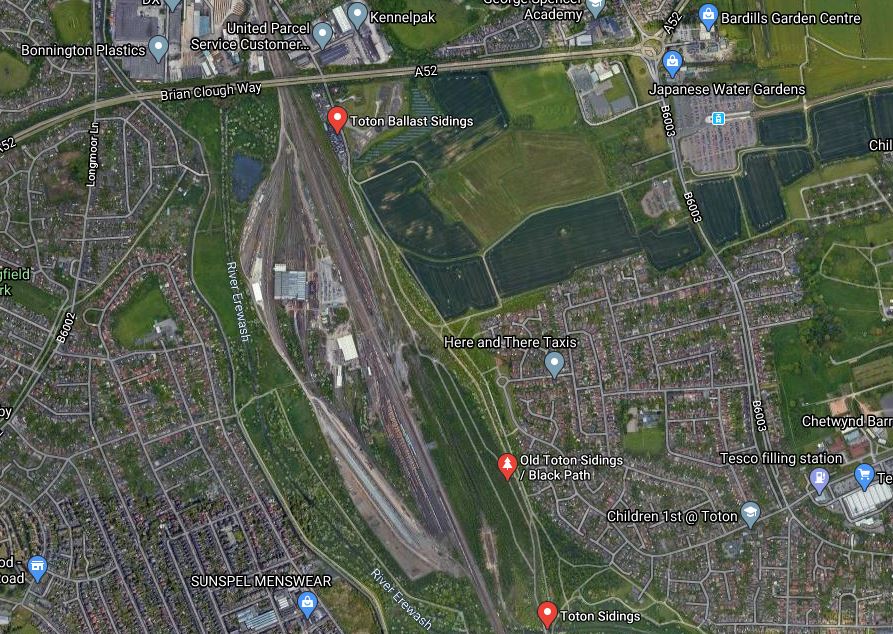
This Google Map shows the position of High Speed Two‘s East Midland Hub station to the West of Nottingham.
Note.
- In the North East Corner of the map, is a label saying Japanese Water Garden. Below that is a blue dot, which marks the Toton Lane tram stop.
- Three red arrows relate to Toton Ballast Sidings, Old Toton Sidings (Black Path) and Toton Sidings from North to South.
- Running to the West of the arrows is a double-track railway and beyond that are a large number of sidings.
This second Google Map shows some of the sidings.

The double track main line is the Erewash Valley Line.
- This line goes North to Ilkeston, Langley Mill, Alfreton, Clay Cross North Junction, Chesterfield and Sheffield.
- Going South, the route splits with one branch going East through Attenborough and Beeston to Nottingham station.
- The other branch turns to the West and then splits again at the massive Trent Junction.
- One branch goes West through Long Eaton station, under the M1, through Spondon station and on to Derby station.
- The second branch goes South over the River Trent to join up with the Midland Main Line and pass through East Midlands Parkway station.
- There is also a chord across the Trent Junction to allow trains to go between Long Eaton and East Midlands Parkway stations.
It is sounds complicated this map from High Speed Two may help.

Note.
- High Speed Two is shown in orange, with the blue dot indicating the East Midlands Hub station.
- Nottingham station is to the North East.
- Attenborough station can be picked out on the line going to Nottingham station.
- The water is in the Trent Valley.
- Trent Junction is the large triangular junction to the West of High Speed Two.
- Two rail lines lead to the West from Trent junction; the northerly one goes to Derby by Long Eaton and the other is a freight line to Castle Donington and East Midlands Gateway.
It is worth looking at how the various passenger services go through the area.
- CrossCountry – Cardiff and Nottingham goes via Derby, Long Eaton, Attenborough, Beeston and Nottingham
- CrossCountry – Birmingham and Nottingham goes via Derby, Long Eaton, Attenborough, Beeston and Nottingham
- East Midlands Railway – Leicester and Lincoln goes via East Midlands Parkway, Attenborough, Beeston and Nottingham
- East Midlands Railway – Liverpool and Norwich goes via Alfreton, Langley Mill, Ilkeston and Nottingham
- East Midlands Railway – Matlock and Newark Castle goes via Derby, Long Eaton, Attenborough, Beeston and Nottingham
- East Midlands Railway – St. Pancras and Sheffield goes via East Midlands Parkway, Long Eaton and Derby
- East Midlands Railway – St. Pancras and Nottingham goes via East Midlands Parkway, Attenborough, Beeston and Nottingham
- Northern – Leeds and Nottingham goes via Alfreton, Langley Mill, Ilkeston and Nottingham.
Note.
- Not one service goes past the site of the new East Midlands Hub station.
- Most services to and from Nottingham seem to use the Attenborough and Beeston route
- Services between Derby and Nottingham go via the Long Eaton, Attenborough and Derby route.
- Services from the North use the Erewash Valley Line and turn East at Trowell for Nottingham.
It is fairly obvious that there needs to be a sort-out of services to fit in with the location of the new East Midlands Parkway station.
Classic-Compatible High Speed Two Trains At East Midlands Hub Station
This article on Rail News, is entitled £2.7bn East Midlands Plan Unveiled For HS2 Links.
This is the first two paragraphs.
A bold plan costed at £2.7 billion for the area around the HS2 hub in the East Midlands has been published by a group of councils, transport bodies and East Midlands Airport.
The core of the scheme is the future East Midlands Hub at Toton, and the plan proposes direct access to the Hub from more than 20 cities, towns and villages in the East Midlands.
If you want to read the original report by Midlands Connect, there’s a download link on this page of their web site.
The original report has a section entitled Midlands Engine Rail, where this is said.
This project is fully integrated with Midlands Engine Rail, a rail improvement plan developed by Midlands Connect to revolutionise connectivity, mobility and productivity across the region. Midlands Engine Rail includes plans for two new HS2 classic-compatible services on an electrified Midland Main Line that will run direct from:
- Bedford and Leeds via Leicester and East Midlands Hub
- Nottingham and Birmingham Curzon Street via East Midlands Hub
These services can run on both electrified and high speed tracks, and would join the HS2 network at Toton, the HS2 East Midlands Hub, meaning that Nottingham and Leicester city centres are directly linked to HS2 without the need to change trains.
These improved connections will more than halve current journey times, with Leicester to Leeds dropping from 120 minutes to 46 minutes and Nottingham to Birmingham falling from 72 minutes to 33 minutes.
Note.
- Between Bedford and East Midland Hub stations, the Midland Main Line is or soon will be an almost a complete 125 mph rail line.
- It is likely, that with digital in-cab signalling, that faster running up to 140 mph may be permitted in places.
- Between Birmingham Curzon Street and East Midlands Hub stations, trains will use High Speed Two at up to 205 mph.
- Between Leeds and East Midlands Hub stations, trains will use High Speed Two at up to 205 mph.
- Leeds and Birmingham Curzon Street station will be new stations for High Speed Two.
The Classic-Compatible Trains
These are described in this section in Wikipedia, by this sentence.
The classic-compatible trains, capable of high speed but built to a British loading gauge, permitting them to leave the high speed track to join conventional routes such as the West Coast Main Line, Midland Main Line and East Coast Main Line. Such trains would allow running of HS2 services to the north of England and Scotland, although these non-tilting trains would run slower than existing tilting trains on conventional track. HS2 Ltd has stated that, because these trains must be specifically designed for the British network and cannot be bought “off-the-shelf”, these conventional trains were expected to be around 50% more expensive, costing around £40 million per train rather than £27 million for the captive stock.
The trains will have the same characteristics as the full-size trains.
- Maximum speed of 225 mph.
- Cruising speed of 205 mph on High Speed Two.
- Length of 200 metres.
- Ability to work in pairs.
- A passenger capacity around 500-600 passengers.
It should be noted that one of these trains will be shorter than a pair of East Midlands Railway’s five-car Class 810 trains, which should avoid any serious platform lengthening on existing lines.
Bedford and Leeds via Leicester and East Midlands Hub
A few facts and thoughts.
- The service is shown as stopping at Wellingborough, Kettering, Market Harborough, Leicester, Loughborough and East Midlands Hub.
- The service frequency could be hourly, but two trains per hour (tph) would be better.
- This service could be more important, than it appears, as by the time High Speed Two opens to Leeds, the East West Railway will be open through Bedford.
- Would a terminal platform need to be added at Bedford station? As the station could be rebuilt for the East West Railway, this shouldn’t be a problem.
- Leeds will have a new High Speed Two station or at least new platforms in the existing station.
- The Bedford and Leeds service would join High Speed Two at East Midlands Hub and go North.
- The Leeds and Bedford service would leave High Speed Two at East Midlands Hub and go South.
Leeds and Leicester will take 46 minutes, with High Speed Two’s journey time calculator, indicating twenty-seven minutes between East Midlands Hub and Leeds stations.
According to an article in the June 2020 Edition of Modern Railways High Speed Two is planning to run the following services on the Eastern leg of High Speed Two between East Midlands Hub and Leeds.
- Two tph – Birmingham Curzon Street and Leeds
- Three tph – London Euston and Leeds
There will be a Turn-Up-And-Go six tph service between East Midlands Hub and Leeds stations.
If the Bedford and Leeds service was an hourly service, when added to the current East Midlands Railway Inter-City services, it would give the following calling frequencies.
- Wellingborough – 2 tph
- Kettering – 2 tph
- Market Harborough – 3 tph
- Leicester – 5 tph
- Loughborough – 3 tph
- East Midlands Parkway – 2 tph
The calling pattern can be adjusted to the number of passengers.
Nottingham and Birmingham Curzon Street via East Midlands Hub
A few facts and thoughts.
- The service is shown as only stopping at East Midlands Hub.
- The service frequency could be hourly.
- The service would go between East Midlands Hub and Nottingham using the Trowell Curve route, which I discussed in Access To Toton – Scheme 6 – Trowell Curve.
- Nottingham station has long terminal platforms that take a full-length Inter-City 125.
- Birmingham Curzon Street will be a new High Speed Two station.
- The Nottingham and Birmingham Curzon Street service would join High Speed Two at East Midlands Hub and go South.
- The Birmingham Curzon Street and Nottingham service would leave High Speed Two at East Midlands Hub and go North.
Nottingham and Birmingham Curzon Street will take 33 minutes, with High Speed Two’s journey time calculator, indicating twenty minutes, between Birmingham Curzon Street and East Midlands Hub stations.
According to an article in the June 2020 Edition of Modern Railways High Speed Two is planning to run the following services on the Eastern leg of High Speed Two from Birmingham Curzon Street.
- Two tph – East Midlands Hub and Leeds
- One tph – East Midlands Hub, York, Darlington, Durham and Newcastle.
There will be a Turn-Up-And-Go four tph service between East Midlands Hub and Birmingham Curzon Street stations.
Midland Main Line Electrification
Midlands Connect is calling for full electrification of the Midland Main Line.
The problem is electrification through Leicester station, where there is a low bridge over the track.
In Discontinuous Electrification Through Leicester Station, I showed how the problem might be solved by discontinuous electrification and battery-equipped trains.
The Shared High Speed Two Path
If you look at the two previous sections you’ll see the following.
- The Birmingham Curzon Street and Nottingham service would leave High Speed Two at East Midlands Hub and go North.
- The Bedford and Leeds service would join High Speed Two at East Midlands Hub and go North.
- The Leeds and Bedford service would leave High Speed Two at East Midlands Hub and go South.
- The Nottingham and Birmingham Curzon Street service would join High Speed Two at East Midlands Hub and go South.
The two services are using the same path on High Speed Two.
I would design the East Midlands Hub, so that High Speed Two and classic services going in the same direction shared an island platform.
Southbound services would behave like this.
- The Nottingham to Birmingham Curzon Street train would arrive in the High Speed Two face of the platform.
- The Leeds to Bedford train would arrive in the classic face of the platform.
- Passengers who needed to change would walk across the platform.
- When ready both trains would go on their way.
Northbound services would do something similar.
It would be an efficient way to organise interchange between services.
- Train design would have to ensure, that all trains using the island platform had similar and preferably step-free access.
- If Greater Anglia and Merseyrail, can do step-free access, then no train designer has an excuse not to.
- Surely every High Speed Two train that arrives at East Midlands Hub, should be paired with a Midland Main Line service, if the timetable allows it.
The money being spent on High Speed Two means that the British public, won’t accept anything less than perfect.
Are There Any Other Possible Destinations For Classic-Compatible High Speed Two Trains From East Midlands Hub Station?
I will put these in alphabetical order.
Bedford
Consider.
- Bedford is already planned to have one classic-compatible service to and from Leeds.
- One of East Midlands Railway’s St. Pancras services calls at Bedford.
- Bedford has a four tph Thameslink service to a large proportion of Central London and the South East of England.
- Bedford has direct services to Gatwick Airport.
- Bedford station will be expanded to accommodate the East West Railway.
- In a few years, Bedford will be connected to Milton Keynes, Oxford and Reading by the East West Railway.
- When the East Midlands Hub station opens, Bedford will be connected to Cambridge, Ipswich and Norwich by the East West Railway.
I feel there is a need for a Turn-Up-And-Go four tph service between Bedford and East Midlands Hub stations.
I estimate that between Bedford and East Midlands Parkway stations will have a journey time of around 60 minutes.
Cambridge
I believe that the East West Railway should be built to the same standard as the East Coast, Great Western, Midland and West Coast Main Lines.
- Digitally signalled
- 125 mph-capable
- Electrified
This would enable classic-compatible services to be extended from Bedford to the UK’s Technology Powerhouse; Cambridge.
As Bedford and East Midlands Parkway could be 60 minutes, timings depend on the times of the East West Railway, between Bedford and Cambridge.
Edinburgh
Consider.
- Edinburgh is an important city; financially and politically.
- Edinburgh is planned to have a classic-compatible service from London via the West Coast Main Line.
- Newcastle is planned to have a classic-compatible service from East Midlands Hub
The city must be a possibility for a classic compatible service from East Midlands Hub.
I estimate that Edinburgh and East Midlands Parkway will have a journey time of a few minutes over two hours
Hull
This clip of a map from the Transport for the North report shows a schematic of the rail links in Yorkshire.
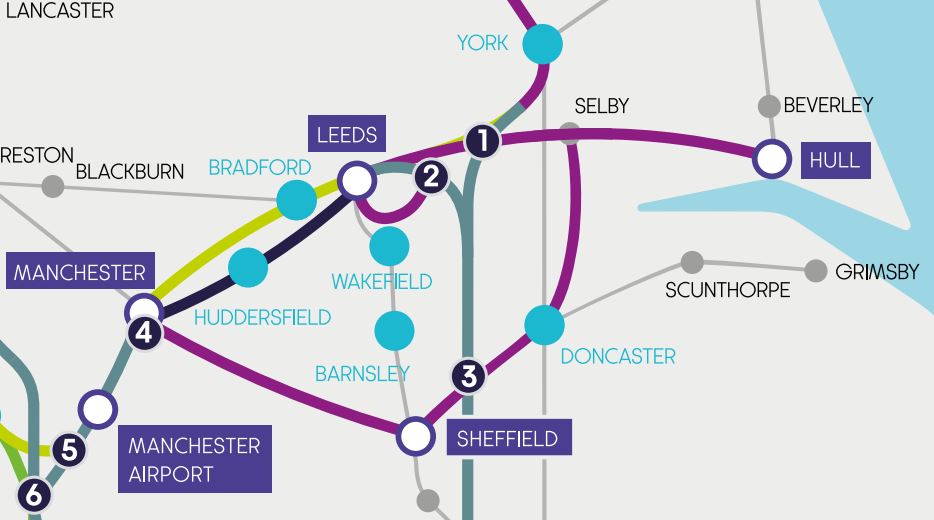
Hull is important for various reasons.
- It is large city.
- It is the Eastern terminus of an increasing number of routes.
- It is becoming a manufacturing centre for North Sea wind.
- The city will be the terminus of Northern Powerhouse Rail across the Pennines from Liverpool, Manchester and Leeds.
- Some reports have shown the city as a terminus of the Western leg of High Speed Two.
For these reasons, I will add Hull to the list.
I estimate that Hull and East Midlands Parkway will have a journey time of under an hour.
Lincoln
Looking forward to 2040, I wouldn’t bet against Lincoln being a very important city in the UK.
- It has history.
- It is becoming an important higher education centre.
- It has lots of space.
- Train operating companies like LNER and East Midlands Railway are improving services to the city.
But most importantly, as Aberdeen became Scotland’s centre for North Sea Oil and Gas, I believe that Lincoln could become England’s centre for North Sea renewable electricity and hydrogen.
I estimate that Lincoln and East Midlands Parkway will have a journey time of around an hour.
Milton Keynes
As I said for Cambridge, I believe that the East West Railway should be built to the same standard as the East Coast, Great Western, Midland and West Coast Main Lines.
This would enable classic-compatible services to be extended from Bedford to Milton Keynes.
As Bedford and East Midlands Parkway could be 60 minutes, timings depend on the times of the East West Railway, between Bedford and Milton Keynes.
Newcastle
As Newcastle already has a direct High Speed Two classic-compatible connection to and from East Midlands Hub station, this must be a possibility.
According to High Speed Two’s journey time calculator<, trains between Newcastle and East Midland Hub stations will take 96 minutes.
Northern Powerhouse Rail
The map I showed with Hull could indicate that a train could take High Speed Two to Leeds and then power its way across the Pennines calling at Leeds, Huddersfield, Manchester Piccadilly, Manchester Airport and Liverpool.
East Midlands Railway would have found a replacement for the Western part of their Liverpool and Norwich service, which is one of the worst railway services in the UK.
Oxford And Reading
As I said for Cambridge, I believe that the East West Railway should be built to the same standard as the East Coast, Great Western, Midland and West Coast Main Lines.
This would enable classic-compatible services to be extended from Bedford to Oxford and Reading.
As Bedford and East Midlands Parkway could be 60 minutes, timings depend on the times of the East West Railway, between Bedford and Oxford and Reading.
Peterborough
I think Peterborough could be an interesting possibility.
- It is the gateway to the East of England.
- It is a fully-electrified station.
- It has seven platforms with space for more.
- Most platforms could take a two hundred metre long train.
East Midlands Railway’s Liverpool and Norwich service, links Peterborough with Nottingham.
- That section of the route is 52 miles long.
- 29 miles of the route on the East Coast Main Line are electrified.
- The 100 mph Class 158 trains take 67 minutes and 30 minutes to travel between the two stops at Grantham and Peterborough.
- Some of LNER’s 125 mph electric Class 800 trains are timetabled to travel between the two stops at Grantham and Peterborough as fast as 18 minutes.
What time will be achievable on this short length of electrified track, when digital signalling is fully-deployed and 140 mph running is possible?
I can certainly see a bi-mode Class 801 train going between Peterborough and Nottingham in under an hour.
I also think that they could equal East Midlands Railway’s times to Nottingham going from Kings Cross via Grantham.
In Access To Toton – Scheme 6 – Trowell Curve, I advocated the following electrification, to allow battery-electric trains to work the Nottingham and Skegness service.
- The Allington Chord between Bottesford and Ancaster stations.
- The line linking the chord to Grantham station.
As Nottingham station will surely be electrified to allow classic-compatible High Speed Two trains to run between the station and Birmingham using High Speed Two, there will only be sixteen miles of double-track between Bottesford and Nottingham station without electrification.
I have just flown my helicopter along the route and there are one or two bridges and Netherfield station, that will need a rebuild, but it wouldn’t be the most challenging of electrifications.
Especially, as there is High Speed Two and the East Coast Main Line to provide power at both ends of the route.
But as it is only sixteen miles would they use battery-electric high-speed trains.
Surely, that is a crazy idea?
In Will High Speed Two’s Classic-Compatible Trains Have Battery Operation?, I explain why you would use such a concept to create an efficient train.
- The batteries drive the train and they are charged from the electrification and regenerative braking.
- Batteries would give a train recovery capability in case of overhead catenary failure.
- Batteries would be used for depot movements.
In Will The Trains On High Speed Two Have Batteries For Regenerative Braking?, I do a calculation for the battery size needed for a 250 mph Spanish high speed train and the batteries are surprisingly small, at 100 kWh per carriage.
I firmly believe, that the mathematics say it is possible for a high speed train to use on-board battery power to perhaps do thirty miles at say 90 mph on a line without electrification.
Sheffield
As Sheffield station will have a direct High Speed Two connection to and from East Midlands Hub station, this must be a possibility.
According to High Speed Two’s journey time calculator, trains between Sheffield and East Midland Hub stations will take 27 minutes.
Note.
- An article in the June 2020 Edition of Modern Railways shows that the Eastern leg of High Speed Two is planned to have nine tph, against a theoretical limit of 18 tph.
- The Leeds-Bedford and Nottingham-Birmingham Curzon Street will use another path.
- Not all services would need to be hourly.
- Could some CrossCountry services be replaced with classic-compatible services?
I feel there is plenty of scope to develop more classic-compatible services along the Eastern leg of High Speed Two.
Access To Toton – Scheme 6 – Trowell Curve
In £2.7bn East Midlands Plan Unveiled For HS2 Links, a series of schemes are given, which improve access to the High Speed Two East Midlands Hub station.
Scheme 6 is defined like this.
The implementation of a minimum of four direct rail services per hour linking the HS2 East Midlands Hub station to Derby, Nottingham and Leicester stations, as well as Loughborough, Matlock, Mansfield, Newark, Alfreton and Grantham, made possible by the building of a new piece of infrastructure, the Trowell Curve, which will link to the Midland Mainline. These additional connections will also create direct links to Stoke-on-Trent, Crewe, Newark and Lincoln, by extending services on existing routes.
That is a comprehensive set of connections.
The Trowell Curve
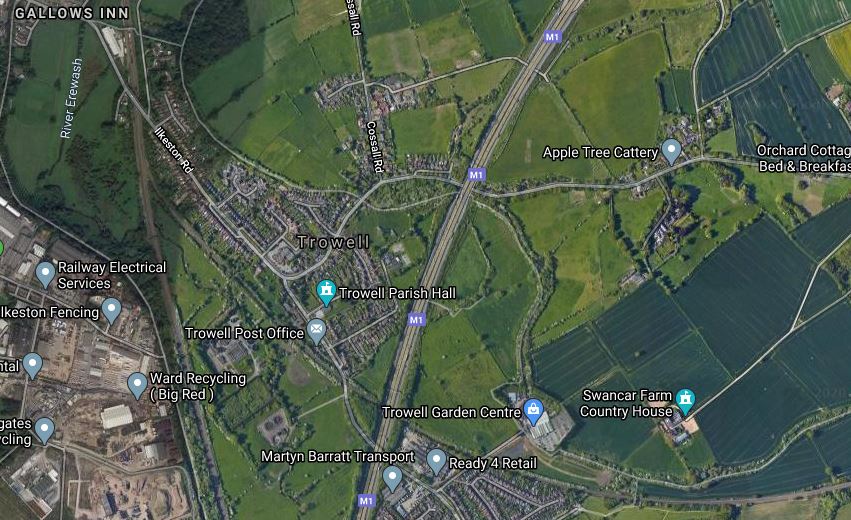
This Google Map shows the location of the village of Trowell.
Note.
- The M1 Motorway running North-South up the map.
- The village of Trowell on the Western side of the motorway.
- Many people will have stopped at Trowell services on the motorway, which are just to the North of the top edge of the map.
- The North-South railway line to the West of the village is the Erewash Valley Line, that runs North from the East Midlands Hub station at Toton to Ilkeston, Langley Mill, Alfreton, Clay Cross North Junction, Chesterfield and Sheffield.
There is also another railway line, that runs on the South Western side of the village and across the bottom of the map, that connects the Erewash Valley Line to Nottingham station.
Trains can go between Nottingham and the North, but there is no connection to go between Nottingham and the South.
It looks like the proposed Trowell Curve will add extra connectivity to the junction, so that all these directions are possible.
- Nottingham to Ilkeston and the North.
- Ilkeston and the North to Nottingham.
- Nottingham to East Midlands Hub Station and the South.
- East Midlands Hub Station and the South to Nottingham
The Trowell Chord will be double-track or bi-directional and must certainly improve connectivity.
East Midlands Hub Station
The East Midlands Hub station will link various bus, tram and train services to High Speed Two.
According to the latest reports in the June 2020 Edition of Modern Railways there will be nine high-speed trains per hour (tph) through the station of which seven tph will stop.
Destinations served would be.
- Birmingham Interchange – 1 tph
- Birmingham Curzon Street – 3 tph
- Chesterfield – 1 tph
- Darlington – 1 tph
- Durham – 1 tph
- Leeds – 5 tph
- London Euston – 4 tph
- Newcastle – 1 tph
- Old Oak Common – 4 tph
- Sheffield – 2 tph
- York – 2 tph
As the capacity of High Speed Two has been said to be 18 tph, there must be the possibility for extra services to run on this leg of High Speed Two.
As four tph is considered by many to be a good Turn-Up-And-Go frequency and two tph a sensible minimum frequency, I can see another train between Birmingham Curzon Street and Newcastle with stops at East Midlands Hub, Leeds, Darlington and Durham.
The design has certainly left enough capacity for those that follow us!
Especially, as Wikipedia says that the new East Midlands Hub station will have eight platforms.
- It would need a minimum of two through platforms for High Speed Two services
- Would it need a terminating platform for High Speed Two services? Not for the currently proposed timetable.
- It would need a minimum of two through platforms for East Midlands Railway’s Inter-City services.
- Would it need a terminating platform for East Midlands Railway’s Inter-City services? Not for the currently proposed timetable.
- There would probably be a need for two through platforms for local services.
On this crude look, eight platforms would appear to be more than enough.
Current Services Through The Area
In Railway Lines Through East Midlands Hub Station, I detailed where the new East Midlands Hub station is to be built and the rail services in the area.
After listing all the services I said this.
Note.
- Not one service goes past the site of the new East Midlands Hub station.
- Most services to and from Nottingham seem to use the Attenborough and Beeston route
- Services between Derby and Nottingham go via the Long Eaton, Attenborough and Derby route.
- Services from the North use the Erewash Valley Line and turn East at Trowell for Nottingham.
It is fairly obvious that there needs to be a sort-out of services to fit in with the location of the new East Midlands Parkway station.
So will the new Trowell Curve give the new station, the rail access it needs?
The Splitting Of The Norwich and Liverpool Service
I wrote about this in Abellio’s Plans For Norwich And Liverpool, where I said this about the basic plan.
Early in the new franchise the Liverpool – Nottingham section will transfer to another operator, which will enable the two halves of the service to better meet the needs of customers.
It will become two services.
- Norwich and Derby via Nottingham, Trowell Curve, East Midland Hub and Long Eaton.
- Nottingham and Crewe via Trowell Curve, East Midland Hub, Long Eaton and Derby.
The second service will go to another operator.
I said earlier, this change is for the needs of customers.
It will also have other effects.
- It will add an extra service between Nottingham and Derby
- It will remove the Norwich and Liverpool service from the Erewash Valley Line.
Has this change being driven by the need to provide good connections to High Speed Two?
Train Services To East Midlands Hub Station
The following sub-sections detail the service between various stations and the East Midlands Hub station.
Alfreton Station
Alfreton station on the Erewash Valley Line, is going through major changes to train services.
Currently, there are these two hourly services.
- East Midlands Railway’s Liverpool and Norwich service.
- Northern’s Leeds and Nottingham service.
Neither service currently goes through the site of East Midlands Hub station and East Midlands Railway will split the Liverpool and Norwich service, so it won’t go anywhere near Alfreton.
Consider.
- Alfreton station probably needs at least a two tph service to East Midlands Hub station.
- The Northern service might be able to go via East Midlands Hub station.
- Both Alfreton and the East Midlands Hub station are on the Erewash Valley Line.
- Trains could run between Alfreton and Nottingham via Langley Mill, Ilkeston, East Midlands Hub, Attenborough and Beeston.
- Trains could run between Alfreton and Derby via Langley Mill, Ilkeston, East Midlands Hub, Long Eaton and Spndon.
Or would it be best to put in a bay platform at Alfreton station and run a shuttle service between Alfreton and the East Midlands Hub stations?
- The minimum frequency would be two tph.
- Up to four tph could probably be easily run.
- Trains would call at all stations.
- Extra stations could be added.
- The distance between Alfreton and East Midlands Hub stations is around twenty miles, so a battery-electric train could be possible.
This Google Map shows Alfreton station.
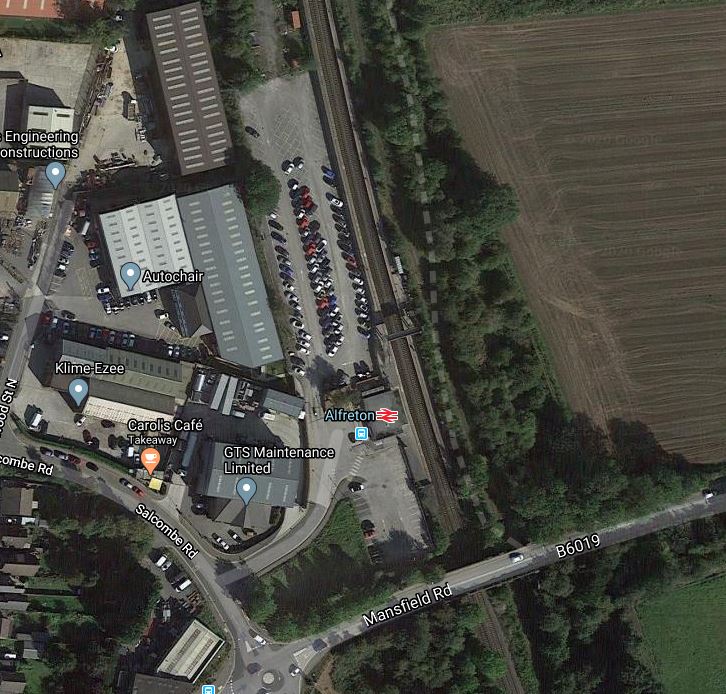
I suspect a bay platform could be added. Or failing that, there could be a turnback siding to the North of the station.
Surely, a local train solution would be a spur to development in the area, especially if it connected to High Speed Two at East Midlands Hub station for High Speed Two.
Derby Station
Consider.
- The current half-hourly East Midlands Railway services between St. Pancras and Sheffield, could not call at both the East Midlands Hub and Derby stations, unless it performed a reverse at East Midlands Hub station.
- Two hourly CrossCountry services, that call at both Derby and Nottingham could use a route via Long Eaton, East Midlands Hub and Trowell Curve.
- An hourly East Midlands Railway service between Newark Castle and Matlock could use a route via Long Eaton, East Midlands Hub and Trowell Curve
- The split service between Liverpool and Norwich would run two tph between Nottingham and Derby, via Long Eaton, East Midlands Hub and Trowell Curve, in both directions.
Six tph can be provided by existing services calling at the new East Midlands Hub station.
Grantham Station
Consider.
- The current hourly East Midlands Railway service between Norwich and Liverpool, calls at Grantham station and could call at the East Midlands Hub, if it used the Trowell Curve route.
- After the service has been split, the two sections will probably both go between Nottingham and Derby via long Eaton, East Midlands Hub and Trowell Curve.
- The current hourly East Midlands Railway service between Nottingham and Skegness calls at Grantham station, but doesn’t pass the site of the East Midlands Hub station.
- This service could be extended to the East Midlands Hub station using the Trowell Curve or the Beeston/Attenborough route, where it would terminate.
It appears relatively easy to give Grantham a two tph service to the East Midlands Hub station.
Ilkeston Station
Ilkeston station would be a stop on all services between the East Midlands Hub and Alfreton and Mansfield stations, so would have a frequent service to the East Midlands Hub station.
Langley Mill Station
Langley Mill station would be a stop on all services between the East Midlands Hub and Alfreton and Mansfield stations, so would have a frequent service to the East Midlands Hub station.
Leicester Station
Consider.
- The current half-hourly East Midlands Railway services between St, Pancras and Nottingham, could call at both the East Midlands Hub and Leicester stations, if the trains used the Trowell Curve.
- Any Ivanhoe Line services between Lincoln and Leicester, could call at both the East Midlands Hub and Leicester stations, if the trains used the Towell Curve.
Leicester would get a frequent train service from the East Midlands Hub station.
Lincoln Station
Lincoln is the Eastern terminal of Ivanhoe Line services. Currently, they run as far as Leicester, but by the time the East Midlands Hub station opens, the services will probably terminate at Burton-on-Trent. I wrote about this project, which is being promoted by the Restoring Your Railway Fund in Reinstatement Of The Ivanhoe Line.
I can see two tph between Lincoln and Burton-on-Trent.
- Stations served could be Newark, Nottingham, East Midlands Hub, East Midlands Parkway, Loughborough, Leicester, Coalville and Ashby-de-la-Zouch.
- The services would use the proposed Trowell Curve.
- Services could be extended to Grimsby and Cleethorpes at the Lincoln end of the service.
- Services would co-ordinate with East Midlands Railway’s Inter-City services to and from London with easy interchange at Leicester and or East Midlands Hub stations.
- Trains could be five-car Class 810 trains to take full advantage of the 125+ mph running between Leicester and Trowell.
- These trains have a shorter dwell time than many and timings could benefit.
Effectively, East Midlands Railway would have a second main line.
Loughborough Station
Consider.
- East Midlands Railway currently has two Inter-City and one Ivanhoe Line service, that stop in Loughborough station and could stop at the East Midlands Hub station.
With another service, Loughborough could have four tph to and from the East Midlands Hub station.
Mansfield Station
This is where Maid Marion flashes her lashes and gets the engineers to reopen her line for passenger trains between North of the former Pye Corner station on the Erewash Valley Line and Kirkby-in-Ashfield station on the Robin Hood Line.
This Google Map shows the route.
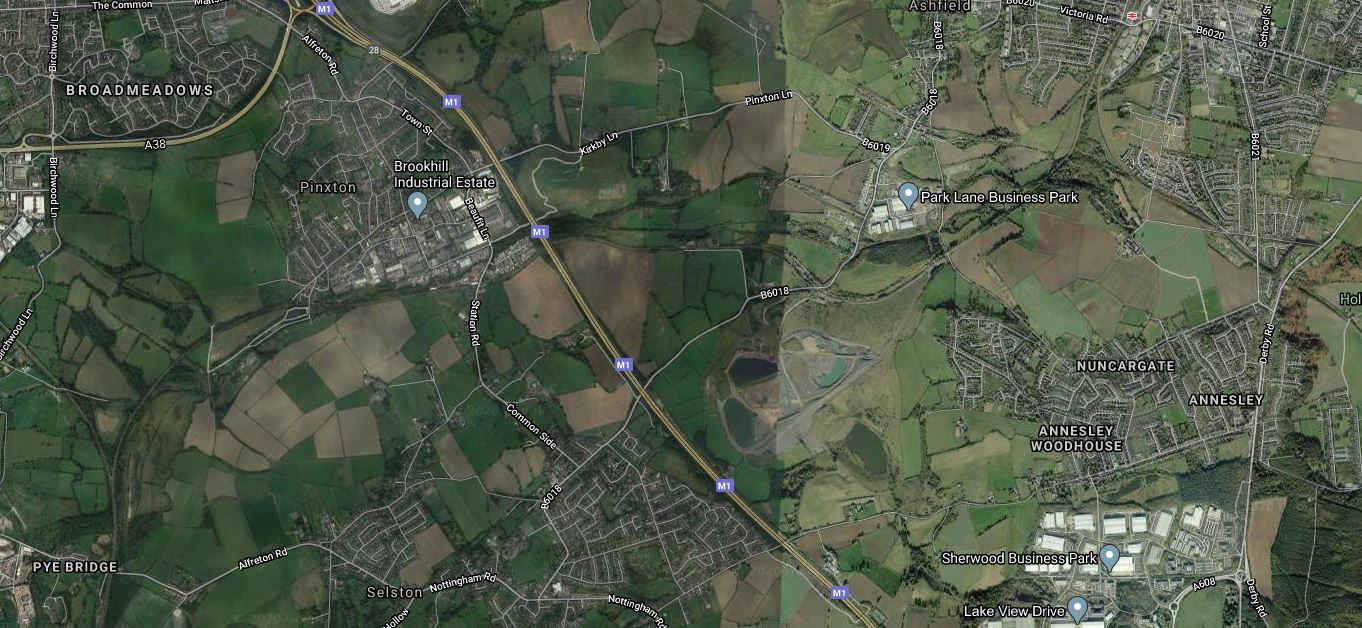
Note.
- The M1 Motorway crossing the map from North-West to South-East.
- Pye Corner is in the South-West corner of the map.
- The Erewash Valley Line runs North-South through Pye Corner.
- Kirkby-in-Ashfield is the urban area in the North-East corner of the map.
- Kirkby-in-Ashfield station is shown by the usual red symbol.
- The Robin Hood Line runs North-South through Kirkby-in-Ashfeld station.
On a high-resolution screen, it’s possible to pick out the freight line, that will become the Maid Marian Line.
- The Maid Marian Line is double-track.
- According to Real Time Trains, the distance between Kirkby-in-Ashfield and Langley Mill stations is around nine miles.
- A freight train took twenty-two minutes between the two stations.
- As there are two tph on the Robin Hood Line, I think it would be reasonable to have a similar frequency on the Maid Marian Line.
- Trains between the East Midlands Hub and Mansfield stations would pass Ilkeston, Langley Mill, Kirkby-in-Ashfield and Sutton Parkway stations.
- Trains could terminate at Nottingham using the Attenborough route.
- Trains could terminate at Derby using the Long Eaton route.
The Maid Marian Line could improve services from Derby, Mansfield, Nottingham and Worksop stations to the new East Midlands Hub station.
Matlock Station
Consider.
- Matlock is currently served by an hourly service between Matlock and Newark Castle via Derby, Spondon, Long Eaton, Attenborough, Beeston, Nottingham and several other smaller stations, which is a service that goes past the site of the East Midlands Hub station.
If this service were to call at the East Midlands Hub station and be doubled in frequency, it would be a very valuable connecting service to and from the East Midlands Hub station.
To call at East Midlands Hub station, it would need to use the Trowell Curve.
Newark Station
Consider.
- Newark is a calling point on the Ivanhoe Line service between Lincoln and Leicester.
- Newark is currently served by an hourly service between Matlock and Newark Castle via Derby, Spondon, Long Eaton, Attenborough, Beeston, Nottingham and several other smaller stations, which is a service that goes past the site of the East Midlands Hub station.
Both services could be increased to two tph, so Newark might end up with a four tph service to Nottingham and East Midlands Hub stations with a two tph service to Derby and Lincoln.
Nottingham Station
Consider.
- The current half-hourly East Midlands Railway services between St. Pancras and Nottingham could use the Trowell Chord route, as this would allow a call at the East Midlands Hub station.
- Ivanhoe Line services between Lincoln and Leicester could also use the Trowell Chord route, which with a change at the hub station, would give Lincolnshire a faster service to and from London and Birmingham.
- In Reinstatement Of The Ivanhoe Line, I wrote about plans to extend the Ivanhoe Line to Burton on Trent.
- The split service between Liverpool and Norwich would run two tph between Nottingham and Derby, via Long Eaton and East Midlands Hub stations, in both directions.
- If the Nottingham and Skegness service, were to be extended to East Midlands Hub, this would add extra services between Nottingham and East Midlands Hub stations.
The required four tph between the East Midlands Hub and Nottingham station could be provided by the diversion of existing services to call at the East Midlands Hub station and using the Trowell Curve.
Stoke-on-Trent And Crewe Stations
Consider.
- Currently, there is an hourly East Midlands Railway service between Crewe and Derby, that calls at nine stations including Kidsgrove, Stoke-on-Trent and Uttoxeter.
- There are also plans to split the Liverpool and Norwich service into two, with the Western half possibly becoming a Crewe and Nottingham service via Derby, East Midlands Hub and Long Eaton.
These two services could be arranged to give a two tph service between Nottingham, Long Eaton, East Midlands Hub and Derby in the South and Stoke-on-Trent and Crewe in the North.
Back-To-Back Services At East Midlands Hub Station
Running services through a station is always more efficient as terminating services in a station will need a bay platform or turnback facility of some sort.
In my analysis, I have proposed that these services might terminate at East Midlands Hub Station.
- A possible shuttle service between East Midlands Hub and Alfreton stations.
- The Maid Marian Line service between East Midlands Hub and Mansfield and Worksop stations.
- The Nottingham and Skegness service could be extended to East Midlands Hub station.
- The Crewe and Derby service could be extended to Nottingham via East Midlands Hub station.
Note.
- The splitting of the Liverpool and Norwich service will result in an overlap between Nottingham and Derby.
- Matlock and Newark services already run back-to-back through the area.
So would it be logical to join some services back-to-back through East Midlands Hub station?
s an example, the Maid Marian Line and Skegness services could be joined into one service.
Other services could follow the precedent of the splitting of the Liverpool and Norwich service.
- Trains coming and going from the East terminate at Derby.
- Trains coming and going from the West terminate at Nottingham.
If the following were arranged.
- Grantham and Mansfield were back-to-back.
- Alfreton and Crewe services terminated at Nottingham.
- Norwich services terminated at Derby.
There would be seven tph between Nottingham and Derby via Long Eaton and East Midlands Hub stations.
Battery-Electric Operation
Consider.
- Hitachi are claiming, that the battery-electric versions of their AT-300 trains, like the Class 810 trains will have a battery range of 55-65 miles and take ten minutes to recharge.
- Nottingham and Derby are sixteen miles away and trains between the two cities, take as long as thirty minutes for the trip.
- There will be high quality electrification at East Midlands Hub station.
In addition, station distances from the East Midlands Hub station are as follows.
- Alfreton – 17 miles
- Crewe – 55 miles – 35 miles without electrification (Derby and Stoke Junction)
- Derby – 6 miles
- Grantham – 20 miles
- Ilkeston – 7 miles
- Langley Mill – 10 miles
- Lincoln – 43 miles
- Mansfield – 23 miles
- Matlock – 23 miles
- Newark Castle – 26 miles
- Nottingham – 10 miles
- Skegness – 80 miles
- Stoke-on-Trent – 42 miles – 35 miles without electrification (Derby and Stoke Junction)
I think the following would be possible on battery power.
- Return journeys to Alfreton, Grantham, Ilkeston, Langley Mill, Mansfield, Matlock and Newark Castle.
- Return journeys to Lincoln with a charge at the destination.
- Return journeys to Crewe and Stoke using the electrification between Stoke Junction and Crewe.
Running battery-electric trains between East Midlands Hub and Skegness station would need a bit of ingenuity.
The building of the Allington Chord in 2005, may have opened up a way for battery-electric trains to be able to run between Nottingham and Skegness.
Consider.
- Bottesford station is the station nearest to Grantham on the Western side of the East Coast Main Line and it is 15.3 miles from Nottingham.
- Ancaster station is the station nearest to Grantham on the Eastern side of the East Coast Main Line and it is 28 miles from Nottingham.
- The original route between Bottesford and Ancaster station caused delays on the main line, so it was replaced by two routes.
- A modified version of the original route allows trains to call at Grantham station, where they reverse before continuing. The distance is 18.7 miles and typically takes 33 minutes
- A double-track short cut under the East Coast Main Line is about 12.7 miles and typically takes 17 minutes.
- The distance between Ancaster and Skegness is 46.7 miles.
- The East Coast Main Line is electrified.
I wonder, if it were possibly to electrify the following tracks.
- The direct double track between Ancaster and Bottesford stations.
- The access lines from the Allington Chord into Grantham station.
Hopefully, as the tracks, were built in 2005, they shouldn’t be too challenging to electrify.
This would enable a train from East Midlands Hub to Skegness to use the following procedure.
- Use the electrified line between East Midlands Hub and Nottingham stations, charging the battery en route.
- Call at Nottingham station and lower the pantograph.
- Leave Nottingham with a full battery.
- Run between Nottingham and Bottesford stations on battery power.
- Call at Bottesford station and raise the pantograph.
- Use either of the electrified routes between Bottesford and Ancaster stations, charging the battery en route.
- Call at Ancaster station and lower the paragraph.
- Run between Ancaster and Skegness stations on battery power.
After charging the train at Skegness, the return would use the following procedure.
- Leave Skegness with a full battery.
- Run between Skegness and Ancaster on battery power.
- Call at Ancaster and raise the paragraph.
- Use either of the electrified routes between Ancaster and Bottesford stations, charging the battery en route.
- Call at Bottesford station and lower the pantograph.
- Run between Bottesford and Nottingham on battery power.
- Call at Nottingham station and raise the pantograph.
- Use the electrified line between Nottingham and East Midlands Hub stations, charging the battery en route.
It’s almost as if, the Allington Chord was designed for battery-electric trains.
Conclusion
The Trowell Curve with a little bit of help from a few friends can create a battery-electric network of local lines based on the three important stations of Nottingham, East Midlands Hub and Derby.
I
Nottingham Targets Multimillion-Pound Tram Extensions
The title of this post is the same as that of an article in Issue 901 of Rail Magazine.
The Nottingham Express Transit (NET) is a quality tram system and seems to have been taken to the heart of the people of the city.
Three separate extensions are proposed.
Clifton Pastures
Clifton Pasures is a proposed development of 3,000 houses and 2,000 jobs to the South of the Clifton South Park and Ride stop on the NET.
This Google Map shows the area, bounded in the West by the A453.
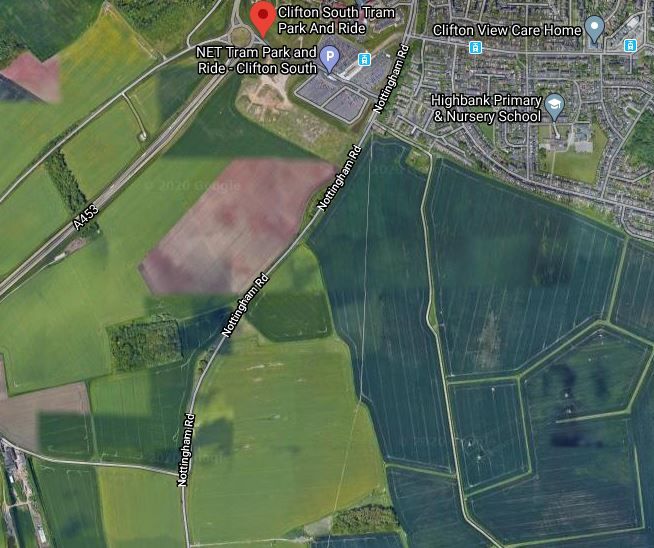
Note.
- The red arrow marks the vehicle entrance to the Park-and-Ride from the A 453.
- A short extension of the NET will be built, which has been costed at £49 million.
It looks to be a well-thought out extension.
Toton Lane Park and Ride To East Midlands Hub Station
This extension from Toton Lane Park-and-Ride stop to the East Midlands Hub station for High Speed Two was first proposed in 2015.
This Google Map shows the area.
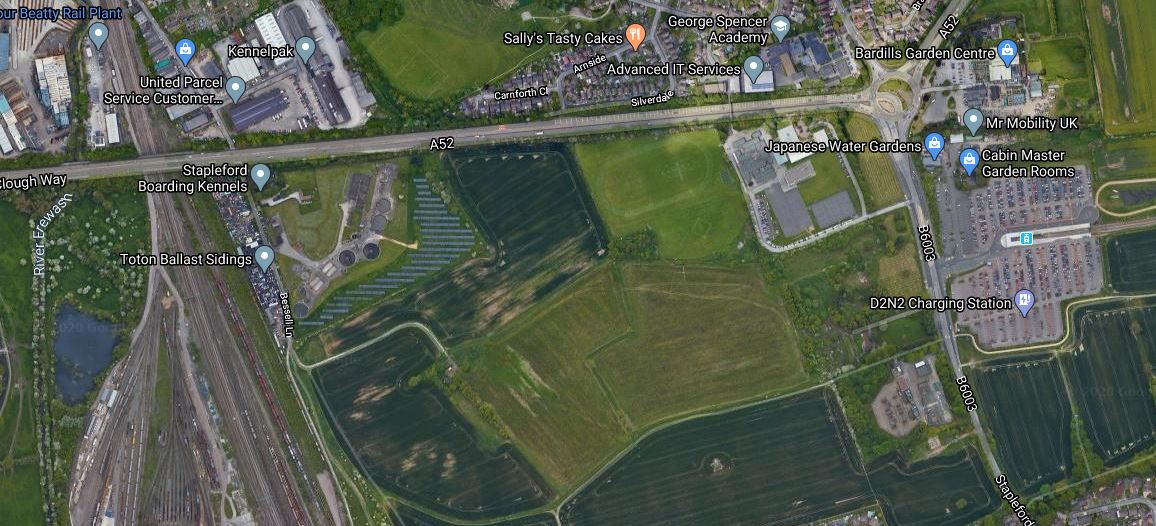
Note.
- Toton Lane Park-and-Ride is on the Eastern side of the map.
- East Midlands Hub station will be built on the Western side of the map on Toton sidings.
- It doesn’t look like there is any serious construction problems in between. There would probably be bridges or tunnels over the B6003 and the railway.
- Would the NET cross the East Midlands Hub station on a bridge at right-angles, as it does at Nottingham station?
This extension of the NET has been costed at £106 million.
The original plans discussed here in Wikipedia, envisaged continuing to Derby.
Nottingham Racecourse And Gedling
The Rail Magazine article describes this extension as follows.
The third (and the longest) proposed route would involve construction of a new route towards Nottingham’s eastern suburbs via Meadow Lane, the Cattle Market, Daleside Road and Nottingham Racecourse.
It is hoped this route could one day stretch as far as a new Park & Ride site planned near Gedling Country Park, although this is not included in the current plans.
This Google Map shows Central Nottingham.
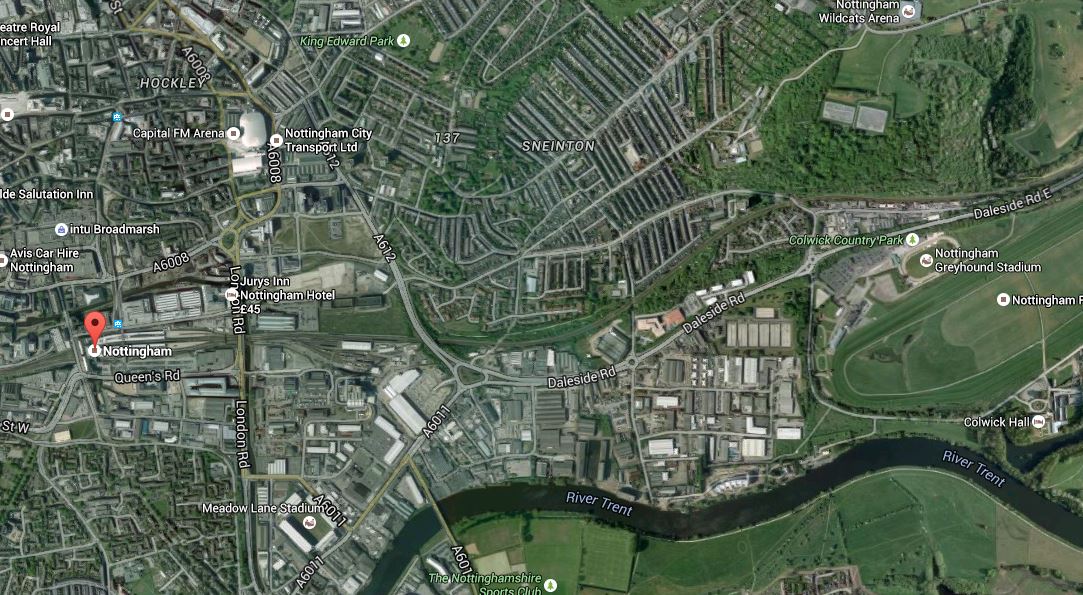
Note.
- The red arrow shows Nottingham station.
- Nottingham Racecourse is at the Eastern side of the map.
- The A6011 is Meadow Lane, which passes Notts County football ground.
- Daleside Road connects Meadow Lane to Nottingham Racecourse.
- The estimated cost of this extension is quoted at between £96 million and £116 million.
It appears to me, that the branch will break East from the main route going South to Clifton South and Toton Lane tram stops and then on the streets along Meadow Lane and Daleside Road to Nottingham Racecourse.
Points And Questions
I have some points and questions on the route.
Access To The Football And Cricket Grounds
Will the Nottingham Racecourse extension improve access to the two football grounds and Trent Bridge cricket ground?
It would be much closer to the sports grounds, than any current tram stop.
Access To Holme Pierrepoint
Will the Nottingham Racecourse extension have a stop at the Holme Pierrepoint National Watersports Centre?
Will There Be A Park-and-Ride At Nottingham Racecourse?
I think there already is one, so will the NET connect it to the City Centre?
Would it be useful to connect this Park-and-Ride to the Queen’s Medical Centre on the Toton Lane branch?
Will There Be Opposition To All The Street-Running?
Every time, I’ve driven near Meadow Lane, Daleside Road and Nottingham Racecourse in the past, it’s been very congested.
Will voters allow these roads to have street-running trams?
Will Trams Be Able To Go Between All Branches?
After the completion of these three new branches, there will be five branches; Clifton Pastures, East Midlands Hub, Hucknall, Nottingham Racecourse and Phoenix Park. All branches will have one or more Park-and-Ride sites.
I can see that there are arguments for these connections.
- Between the Nottingham Racecourse extension with all its major sporting venues and the other branches.
- Between the Queen’s Medical Centre on the Toton Lane branch and the Nottingham Racecourse extension.
I can see that the junction between the Nottingham Racecourse extension and the current NET network being rather complicated, as it must allow these connections.
- East to North
- East to South
- South to East
- North to East
This junction will need a lot of space and get increasingly expensive.
Will Abellio East Midlands Railway Go Flirting?
Abellio take over the East Midlands franchise in a few days and it will be renamed to East Midlands Railway.
It has already disclosed that it will have three divisions.
- EMR Intercity for long distance services from London St Pancras
- EMR Regional for local services
- EMR Electrics for the London St Pancras to Corby service
It has also confirmed it has ordered thirty-three AT-300 trains for EMR Intercity.
Wikipedia also shows, that the following trains will be transferred to East Midlands Railway.
- Nine Class 156 trains from Greater Anglia.
- Twenty-one Class 360 trains from Greater Anglia.
- Five Class 170 trains from ScotRail
- Four Class 180 trains from Hull Trains
The first three fleets will come from Abellio-run franchises and the last will be released fairly soon, as Hull Trains new fleet is arriving.
Looking at the EMR Regional fleet it will comprise.
- 21 – Class 153 trains
- 24 – Class 156 trains
- 26 – Class 158 trains
- 5 – Class 170 trains
Consider.
- Many probably feel that the Class 153 trains are inadequate.
- Except for the Class 170 trains, these trains are around thirty years old.
- Some of the Class 156 trains, which will be transferred from Greater Anglia, are currently being replaced with brand-new Class 755 trains.
- Abellio are going through extensive fleet replacement exercises in ScotRail, Greater Anglia and West Midlands Trains.
The EMR Regional routes, that they will run are a mixed bunch.
This page on the Department for Transport web site is an interactive map of the Abellio’s promises for East Midlands Railway.
Digging out the blurb for each route shows the following.
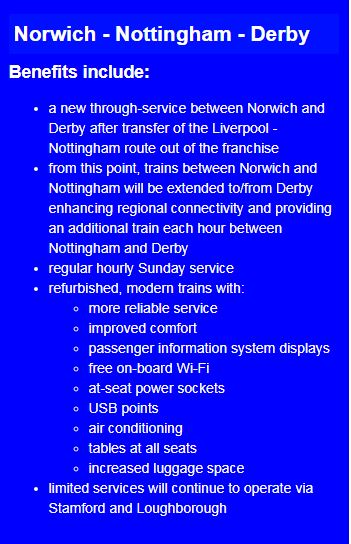
Norwich – Nottingham – Derby
Crewe – Derby – Nottingham
Matlock – Derby – Nottingham

Nottingham – Lincoln – Grimsby

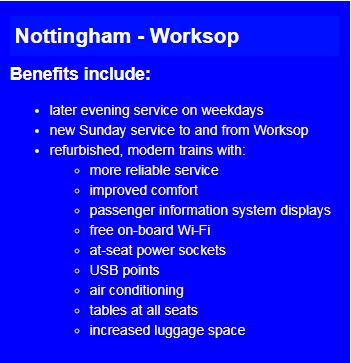
Nottingham – Worksop
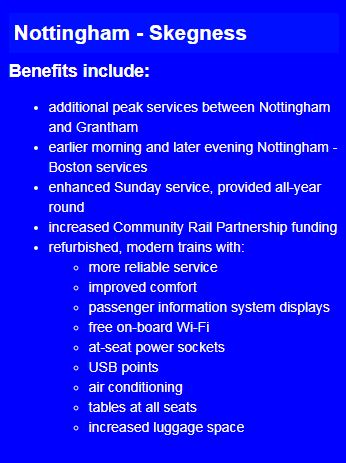
Nottingham – Skegness
Leicester – Nottingham
 Peterborough – Lincoln – Doncaster

Barton-On-Humber – Cleethorpes

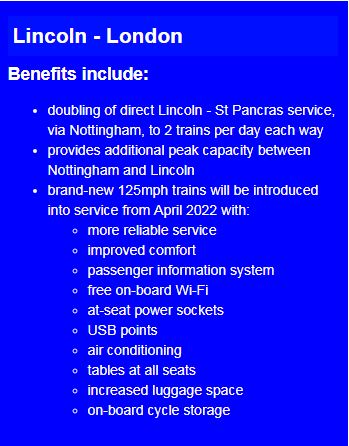
Lincoln – London
London – Oakham – Melton Mowbray

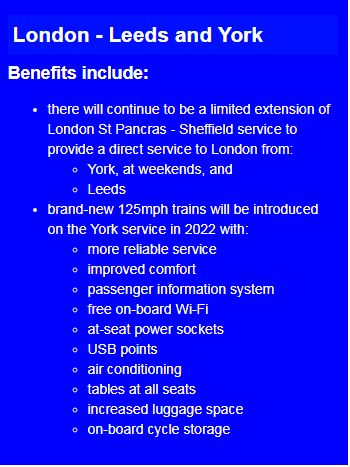
London- Leeds – York
Newark North Gate – Lincoln

I have come to a few conclusions.
The Fleet Is Not Being Expanded Enough To Retire The Class 153 Trains
Consider.
- There are twenty-one Class 153 trains.
- Five Class 170 trains and nine Class 156 trains are being added to the fleet.
Surely, this means that some Class 153 trains will be retained.
Perhaps, the remaining Class 153 trains, will be reorganised into two-car trains to increase capacity.
Extended Services Will Be Run Using New Bi-Mode AT-300 Trains
Services to Leeds and York, Oakham and Melton Mowbray and Lincoln would appear to be run by the new AT-300 trains that have been ordeed from Hitachi.
I’ve no problem with that,but there are three developments that may effect passenger numbers.
- There is a lot of housing development in the Corby, Oakham and Melton Mowbray area.
- There is a very large renewable energy sector developing in North Lincolnshire.
- Sheffield are proposing to add new stations between Sheffield and Leeds, at Rotherham and Barnsley Dearne Valley.
Does the proposed service pattern take this fully into account?
In a way it doesn’t matter, as the worst that could happen, is that East Midlands Railway will need to increase the fleet size by a small number of trains.
Hopefully, they’ll just need to get Hitachi to build the trains!
Most Regional Services Will Be Run By Refurbished Modern Trains
Most services will be run by refurbished modern trains with the following features.
- More reliable service
- Improved comfort
- Passenger information system
- Free on-board wi-fi
- At-seat power sockets
- USB points
- Air-conditioning
- Tables at all seats
- Increased luggage space
Can East Midlands Railway Refurbish Their Augmented Fleet To Meet Their Required Standards?
Consider.
- The Class 170 trains are relatively recent and were built to a high standard, so can probably meet EMR’s standard.
- The Class 158 trains are thirty years old and were built to a high standard, so they might be able to be upgraded to EMR’s standard.
- The Class 156 trains are thirty years old and noisy and old-fashioned, so will need a lot of work to bring them up to EMR’s standard.
- The Class 153 trains are thirty years old and only one car, so would probably be best retired or reduced to an auxiliary role like a bicycle car.
- Only the Class 170 and Class 158 trains can be high standard trains.
- All trains are diesel and only the Class 170 trains are possibly planned to be upgraded to more economical diesel hybrid trains
One additional option might be to refurbish some of the Class 222 trains, when they are replaced by the new Hitachi AT-300 trains on main line services, so they were suitable for the longer regional routes.
Will East Midlands Railway Replace The Fleet?
In their three other franchises in the UK; Greater Anglia, ScotRail and West Midlands Trains, Abellio have opted for replacement of all or a substantial part of the fleet.
So will the same action be taken at East Midlands Railway?
The company could do a lot worse, than invest in a fleet of Class 755 trains like Greater Anglia.
- They could be a mix of lengths, so each route could have a train with capacity for the traffic.
- The trains may be capable of 125 mph running on the Midland Main Line and the East Coast Main Line.
- The interiors meet the company’s requirements.
- The trains could use electrification , where it exists.
- The trains could be fast enough to cover for the AT-300 trains.
- Abellio Greater Anglia will soon have a large knowledge base for the trains.
The clincher could be, that as electrification increases, the trains could fit batteries and generate less carbon.
Conclusion
I wouldn’t be surprised to see Abellio East Midlands Railway buy a fleet of Class 755 trains for their EMR Regional services.
Abellio’s Plans For Nottingham And Matlock Via Derby
This page on the Department for Transport web site is an interactive map of the Abellio’s promises for East Midlands Railway.
These are mentioned for services between Nottingham and Matlock via Derby..
Enhanced Sunday Service Providing An Hourly Service For Most Of The Day
Surely, this should be happening now!
Increased Community Rail Partnership Funding
Always a good thing!
Refurbished, Modern Trains
As with their plans for Nottingham to Norwich, they use the same words about the trains.
So will all these routes from around Nottingham be run using four-car Class 222 trains?
I can’t think what other suitable higher-capacity trains are available.
Except Class 170 trains and they are generally only two-cars, which probably isn’t large enough.
Abellio’s Plans For Nottingham And Crewe Via Derby
This page on the Department for Transport web site is an interactive map of the Abellio’s promises for East Midlands Railway.
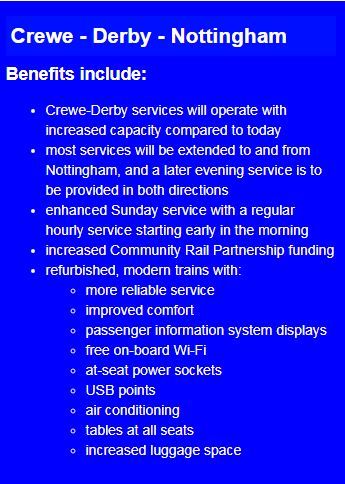
These are mentioned for services between Nottingham and Crewe via Derby.. This is an extension of the current service which is two separate services, that need a change at Derby.
Crewe-Derby Services Will Operate With Increased Capacity Compared To Today
Consider.
- Currently, the service between Derby and Crewe takes 43 minutes with another 30 minutes for Derby And Nottingham.
- It is run by a Sprinter with one or two cars.
- The service is hourly.
- I suspect that a well-driven train will be able to do a round trip from Nottingham to Crewe and back in under three hours.
This would mean that three trains are needed to provide the hourly service.
But put four- or five-car Class 222 trains on the route and this would mean.
- Much greater capacity.
- Faster journeys.
- More comfort and facilities.
If a train could do the round trip in under two hours, then just two trains would be needed for the hourly service.
Most Services Will Be Extended To And From Nottingham
I assumed this in the previous section and it appears sensible.
, Later Evening Service Is To Be Provided In Both Directions
Trains can never be too late.
Enhanced Sunday Service With A Regular Hourly service Starting Early In The Morning
You can’t fault that!
Increased Community Rail Partnership Funding
Or that one!
Refurbished Modern Trains
As with their plans for Nottingham to Norwich, they use the same words about the trains.
Read Abellio’s Plans For Norwich And Liverpool, to see what I said.
Wikipedia’s View
The Wikipedia entry for the Crewe-Derby Line says this about services on the route.
The line sees a basic hourly service in each direction with trains calling at all stations on the route however Peartree which is served by 2 Derby bound trains and 3 Crewe bound trains per weekday.
The majority of services on the route since December 2008 have been provided by Class 153 “Super Sprinter” Diesel Multiple Units however Class 158 “Express Sprinter” and Class 156 “Super Sprinter” units are occasionally used. Overcrowding remains a major issue on the route, particularly in the morning and evening peak and a weekends. Passengers are occasionally left behind.
A Class 222 train on this line with a 70 mph operating speed, must provide a better service.
Collateral Benefits
I see these as collateral benefits.
Extra Services Between Derby and Nottingham
If you take this plan with Abellio’s Plans For Norwich And Liverpool, they both have added an hourly service between Derby and Nottingham.
Better Connections To High Speed Two
\Will these extra services connect to High Speed Two at the East Midlands Hub station?
Remember that Abellio’s is an eight year franchise and High Speed Two will arrive in the area, at the time of the end of the franchise.
Abellio’s Plans For Norwich And Liverpool
This page on the Department for Transport web site is an interactive map of the Abellio’s promises for East Midlands Railway.
These are mentioned for services between Norwich and Liverpool.
Splitting Of The Service
Early in the new franchise the Liverpool – Nottingham section will transfer to another operator, which will enable the two halves of the service to better meet the needs of customers.
The section remaining with East Midlands Railway will become a Norwich and Derby service via Nottingham.
This has been said for some time by the Department of Transport.
It is also said that limited services will continue to operate via Stamford and Loughborough.
Looking at trains between Nottingham and Norwich., they take these routes.
- Grantham, Peterborough, Ely, Thetford
- East Midlands Parkway, Loughborough, Melton Mowbray, Oakham, Peterborough, Ely, Thetford
The service will be extended from Nottingham to Long Eaton, the future East Midlands Hub and Derby.
Refurbished Modern Trains
It is proposed that the service will be run by refurbished modern trains.
Features include.
- More reliable service
- Improved comfort
- Passenger information system displays
- free on-board Wi-Fi
- at-seat power sockets
- USB points
- Air conditioning
- Tables at all seats
- Increased luggage space.
- No date for introduction is given.
This all sounds fine to me.
The Current Trains On The Route
Before discussing the possible new trains, I will look at the current service, that I have used many times.
Class 158 trains are used,
Normally, a pair of two-car trains run together to make a four-car formation.
- At times, these trains are very overcrowded.
- I don’t think, the trains have a universal access toilet.
- The trains are thirty years old and some detailing is not very good or very last century.
- The air-conditioning may be a bit dodgy.
- Nottingham and Norwich is probably about the maximum comfortable range for passenger on these trainss.
I suspect too, that they have operational problems.
- They are only 90 mph trains and they will share tracks with faster trains.
- As part of this route could be on the East Coast Main Line, scheduling trains would be easier, if the trains were capable of 125 mph.
- On board catering is provided by a trolley. Can it be pushed between the two trains?
Abellio are obviously quite right to promise a better train for both passengers, staff and their bottom line.
An Ideal Train For The Route
An ideal train would have a specification something like this.
- Modern train, built since 2000.
- Five or six cars
- 125 mph operating speed.
- An onboard cafe-bar.
- Universal-access toilet.
It sounds to me, like a Class 222 train with a high-class refurbishment.
Currently, there are these Class 222 trains available to the franchise.
- Four by four-car
- Seventeen by five-cars
- Six by seven-cars.
Many of the Class 222 trains, will be replaced in 2022, when the new bi-mode trains are delivered.
The New Trains For The Route
It does look to me, that East Midlands Trains could do a lot worse, than use refurbished Class 222 trains between Norwich and Derby.
- Their engineers and drivers know the trains well.
- They could be arranged as four or five coaches for the route.
- Tory are 125 mph trains, which must bring journey time savings, especially on the East Coast Main Line.
- Bombardier have proposed, that they could be fitted with batteries to reduce the need to run the engines in stations.
Refurbishing something you know, is probably one of the cheaper options.
How Many Trains Are Needed For An Hourly Service Between Nowich And Derby?
I suspect that running to a well defined timetable that times of around three hours could be achieved between Norwich and Derby.
This would probably mean that a train could go from Norwich to Derby and back in under seven hours.
This would mean that seven trains would be needed for an hourly service running all day.
If the 125 mph trains could use their speed on the East Coast Main Line and perhaps on the Breckland Line, it might be possible to do the round trip in six hours and therefor need a train less.
Would Finding Seven Class 222 Trains Be Possible?
Obviously, once the Midland Main Line routes have been replaced by new bi-mode trains in 2022, there will be a lot of Class 222 trains available and seven trains to run the Norwich and Derby service will not be a problem.
Some other factors will help.
Trains Will Be Released By The London And Corby Electric Service
In December 2020, when the London and Corby service receives electric trains, the current Class 222 trains on this route will become available.
I think that this service currently needs three trains.
More Mark 4 Coach/Class 43 locomotive Sets Could Be Created
In Abellio’s Plans For The Midland Main Line, I described how interim sets could be built by replacing the non-compliant Mark 3 coaches in an InterCity 125, with the compliant Mark 4 coaches from an InterCity 225.
These trains would be used to release some of the Class 222 trains on the Midland Main Line.
Another five Mark 4 Coach/Class 43 Locomotive sets would probably release the same number of Class 222 trains.
Trains Could Be Reorganised With A Better Plan
I have a feeling that by reorganising the Class 222 trains and bringing in more more Mark 4 Coach/Class 43 Locomotive sets, could mean that a better plan on the Midland Main Line could be developed.
As an example, when boarding a train at St. Pancrass, I often notice two trains are in the platform and you have to walk to the far train. This is not efficient and surely slows down the turnround of trains.
Platforms 1 to 4 are reserved for East Midlands services at St. Pancras station.
- Two trains per hour to Derby, Chesterfield and Sheffield
- Two trains per hour to Nottingham
- One train per hour to Corby, which goes to two trains per hour in December 2020.
Surely, it would be easier, if the station was organised as follows.
- Sheffield, Nottingham and Corby trains all have their own platform, with one spare for luck!
- All trains are full length, with First Class at the London end
- One train per platform.
This would make things easier for passengers and reduce turnround times.
No More Two Trains Running Together
I think that the practice of train companies running two or more trains together to increase capacity is a bad idea, unless you have no other way.
Consider two four-car trains running together as an eight-car train.
- You have two driving cabs in the middle, which serve no purpose and just take up space. and add useless weight.
- A buffet car in the train can be available to all passengers.
- The First Class seats could be in two separate places on the train.
- With trains like the Hitachi Class 800 trains, onboard staff can only move between trains in a station.
- Walk-through trains allow passengers to position themselves for a convenient and quick exit.
Anybody who procures trains to run in multiple formations all the time, instead of buying longer trains, is generally incompetent.
A Rough Estimate
I have done a very rough estimate and feel that the Midland Main Line services can be run with the following numbers of trains.
- Sheffield services – Ten trains
- Nottingham services – Eight trains
- Corby services – Six trains
As the Corby services will be run by refurbished twelve-car trains, it looks to me that there is a need for eighteen diesel trains for Sheffield and Nottingham services.
I would go for eighteen Mark 4 Coach/Class 43 locomotive sets, with perhaps a couple of spare sets..
Conclusion
The following services should be run with Mark 4 Coach/Class 43 locomotive sets of an appropriate length.
- London and Nottingham
- London and Sheffield
This would release the Class 222 trains for other services like those between Norwich and Derby.
Is This A Platform For Future Tram-Trains?
Whilst I waited for my train to Grantham, I had a quick look at the Northernmost Platform at Nottingham station. Platform 1 is a through platform and it looks like there could be access from both sides in the future.


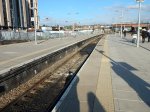
The redesigned Nottingham station certainly has all sorts of possibilities for future development. This Google Map shows the layout.
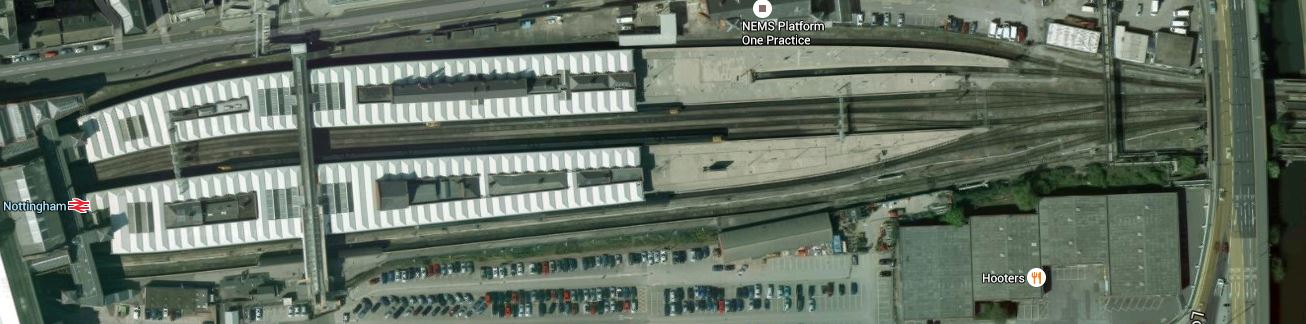
Nottingham Station Layout
Platform 1 is at the top, with the East-facing bay plstform 2 clearly visible.
It would appear that tram-trains could use the outer platforms and then be connected to wherever, as the station sits on a large site with space to the North and South.
The section called Railway Platforms in the Wikipedia entry for Nottingham station, says this.
Finally the southern side platform is numbered 7, and can accommodate a thirteen coach train. Sufficient space exists to the south of this platform to add a second platform face, effectively converting this side platform into an island platform, if traffic increases to justify it.
When you compare Nottingham to other places like Birmingham, Manchester or Leeds, the city is truly lucky to have a station with so many possibilities.
There also are not many places in the UK , where you could run the main tram line at right-angles over the main station. But it is a very good way of connecting the two modes of transport.
To the East of the station, there is also an enormous site with these derelict buildings.
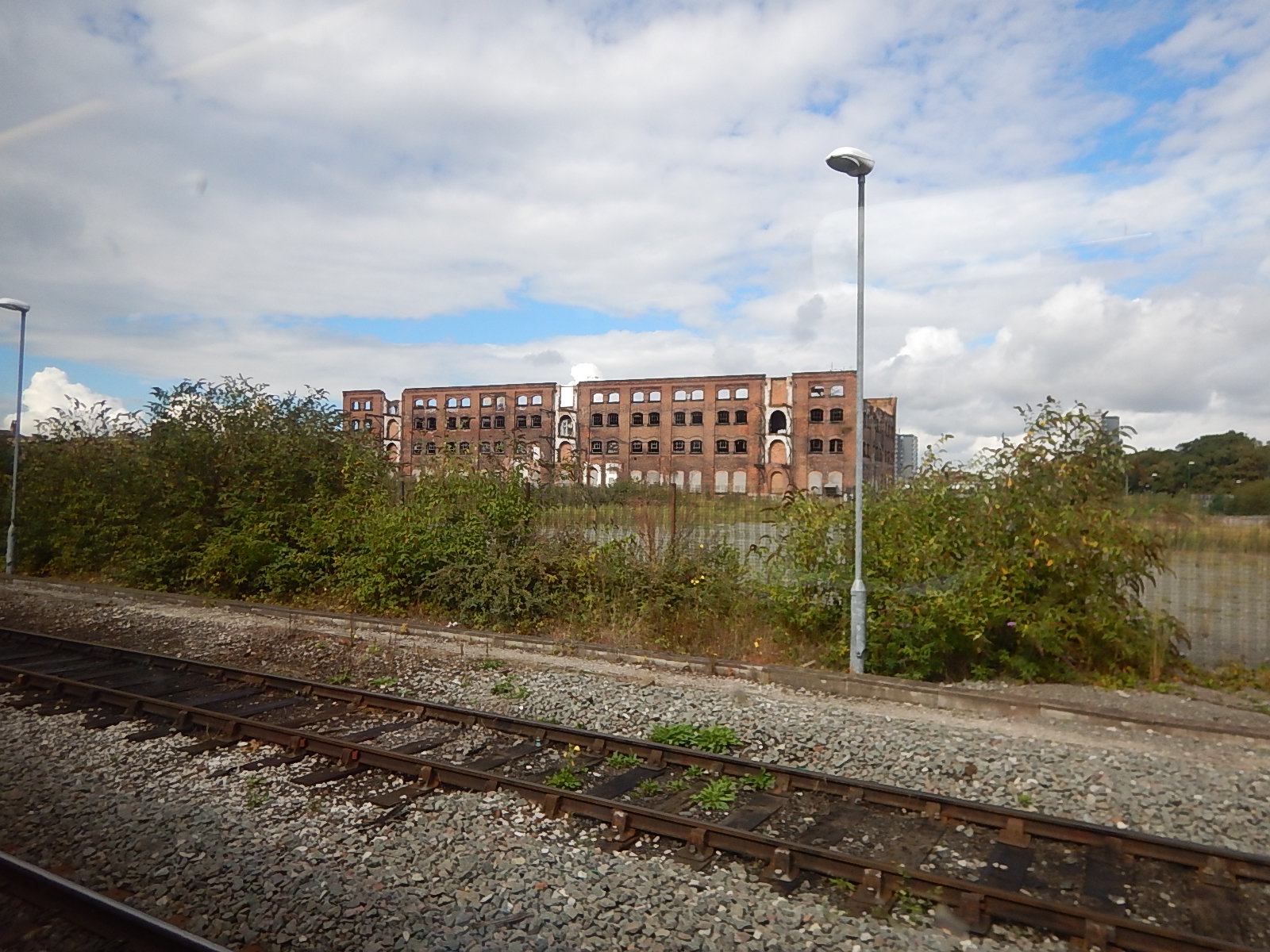
A Derelict Site To The East Of Nottingham Station
The city must have plans for these.
But then Nottingham is very much saying that the City has an exciting and prosperous future.
The Minimum Payment On Contactless Payment
On Saturday, I went out without my real handkerchief, so just before I got my train, I popped into Boots at Liverpool Street station and bought a pack of tissues for the princely sum of forty-five pence.
As I always do in Boots, I used a self-service till, but this time I used my contactless American Express card for the purchase, by just tapping it on the reader.
In some ways that seemed a bit cheeky to me and it certainly raised a smile in myself.
So now, my on-line American Express statement has an entry for 0.45p against Boots.
It got me thinking and yesterday I was taken short in Nottingham station.
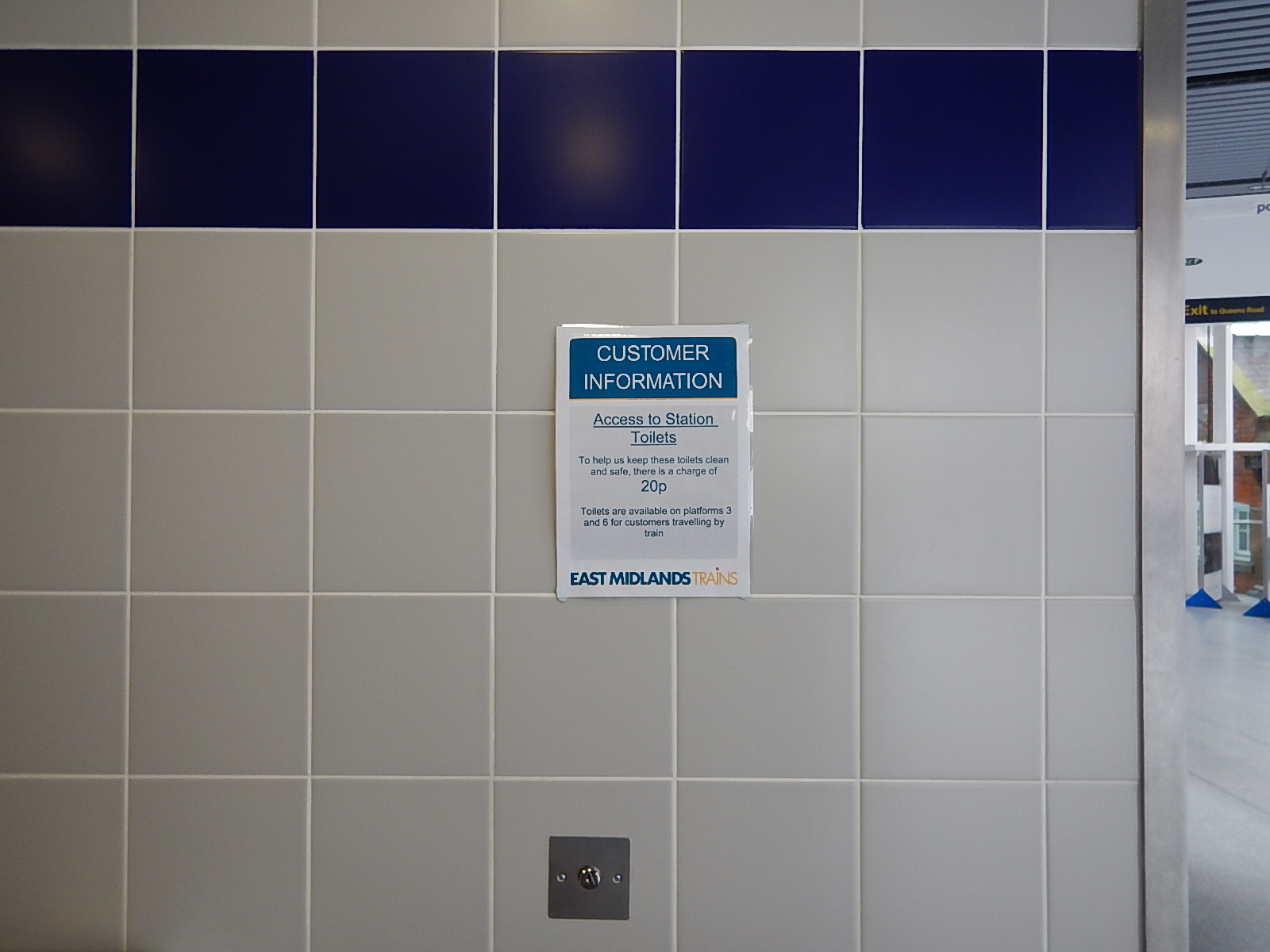
Using The Toilet In Nottingham Station
How long before public toilets like these in stations gocredit contactless?
 The Anonymous Widower