Rolls-Royce Invests In Methanol Technology For Climate-Friendly Shipping
The title of this post, is the same as this press release from Rolls-Royce.
The press report starts with these bullet points.
- Rolls-Royce Power Systems to set standards in high-speed marine methanol engines
- New engines based on proven mtu technologies
- Methanol and synthetic diesel as key fuels of the future for climate-friendly engine operation
- Fuel cell another option on the way to climate-neutral ship operation
It then says this
Rolls-Royce is focusing on methanol as a fuel for climate-friendly shipping: Rolls-Royce business unit Power Systems is currently working on mtu engines for use with methanol. The new high-speed four-stroke engines, which are based on proven mtu technologies, are planned to be available to customers as soon as possible for use in commercial ships and yachts.
This paragraph gives the reasons, why Rolls-Royce is in favour of methanol.
Methanol offers a number of advantages for Rolls-Royce’s efforts to make shipping more climate-friendly and ultimately climate-neutral: The fuel can be produced in a CO2-neutral manner in the so-called power-to-X process, in which CO2 is captured from the air. The energy density of methanol is high compared to other sustainable fuels and, thanks to its liquid state, it can be easily stored and refuelled at ambient temperatures. Existing infrastructure can continue to be used in many cases. Unlike ammonia, methanol is not highly toxic and is environmentally safe. The combustion of methanol in a pure methanol engine can be climate-neutral with significantly reduced nitrogen oxide emissions, thus eliminating the need for complex SCR exhaust gas aftertreatment. Methanol tanks can be flexibly arranged in the ship and require significantly lower safety measures compared to hydrogen or ammonia. Besides the safety aspects and the lower complexity, the lower investment costs for users are a further upside of the methanol tank system.
Methanol seems to be a convenient and safe fuel, which is easier to incorporate into the marine environment, than hydrogen or ammonia.
Wikipedia says this about methanol’s use in shipping.
Methanol is an alternative fuel for ships that helps the shipping industry meet increasingly strict emissions regulations. It significantly reduces emissions of sulphur oxides (SOx), nitrogen oxides (NOx) and particulate matter. Methanol can be used with high efficiency in marine diesel engines after minor modifications using a small amount of pilot fuel (Dual fuel).
Rolls-Royce certainly seem to be keen to use the fuel. They also seem to have the technology.
Rolls-Royce Makes Duisburg Container Terminal Climate Neutral With MTU Hydrogen Technology
The title of this post, is the same as this press release from Rolls-Royce.
This is the first sentence.
Rolls-Royce will ensure a climate-neutral energy supply at the container terminal currently under construction at the Port of Duisburg, Germany.
There is also this Rolls-Royce graphic, which shows the energy sources.

It would appear batteries, combined heat and power (CHP), grid electricity, hydrogen electrolyser, hydrogen storage and renewable electricity are being brought together to create a climate-neutral energy system.
- As the graphic was named hydrogen technology for ports, I would assume that this is a Rolls-Royce mtu system that will be deployed at more than one port around the world.
- Note the H2 CHPs in the graphic. Could these be applications for Rolls-Royce’s beer keg-sized 2.5 MW electrical generator based on a Super Hercules engine?
- One of Rolls-Royce’s small modular nuclear reactors could be ideal for a large port outside Germany.
This is the last paragraph of the press release.
“Hydrogen technology is no longer a dream of the future, but hydrogen technology will prove itself in everyday use in Duisburg. The parallel use of fuel cell solutions and hydrogen engines shows that we have taken the right path with our technology-open approach to the development of new solutions for the energy supply of the future,” says Andreas Schell, CEO of Rolls-Royce Power Systems.
Rolls-Royce mtu appear to be very serious about the possibilities of hydrogen.
What Will Happen To Northern’s Class 195 Trains?
Northern’s Class 195 trains could be a problem in the future.
- They are diesel multiple units.
- There are twenty-five two-car trains and thirty-three three-car trains.
- All cars have a Rolls-Royce MTU 6H1800R85L diesel engine, that drives the train through a ZF EcoLife 6-speed transmission.
- They are 100 mph trains, which is adequate for the routes they serve.
- According to Wikipedia, the trains are designed for a lifespan of thirty-five years, which takes the trains past the date, when it is intended that all trains should be zero-carbon.
It looks to me, that a plan will be needed to decarbonise these trains, as they are probably too new and costly to scrap.
These are possibilities to upgrade them to zero-carbon.
Rebuild as Class 331 Electric Trains
The design of the Class 195 trains is based on the same platform as that of the Class 331 trains.
I would expect that it could be possible to rebuild the Class 195 trains as Class 331 trains.
But it would be an expensive and disruptive process and would require a lot of electrification.
Some battery-electric versions could be created to cut the need for electrification.
Run The Trains On Net-Zero Hydrogenated Vegetable Oil Or Other Fuels
In Powered By HVO, I wrote about research going on into the use of Hydrogenated Vegetable Oil or HVO.
There is also ongoing research into other net-zero fuels that can be used in a diesel engine.
The process used by Velocys to create sustainable aviation fuel can also be used to produce diesel from various sources like disposable nappies, household waste and scrap wood.
Run The Trains On A Dual Fuel Basis With Hydrogen
In Grand Central DMU To Be Used For Dual-Fuel Trial, I talk about how Grand Central in collaboration with a company called G-volution are running experiments with dual-fuelling a Class 180 train. G-volution state that they could dual fuel with hydrogen using their technology.
The Class 180 trains have Cummins engines, but I suspect G-volution’s technology or something similar could be applied to the Rolls-Royce MTU engines in the Class 195 trains.
This could be a very promising route.
Convert The Diesel Engines To Run On Hydrogen
Cummins and JCB have developed internal combustion engines, that can run on hydrogen. I would be very surprised if Rolls-Royce MTU are not developing this technology.
Conclusion
There are options to convert the Class 195 trains into low or zero-carbon trains.
.
First In-flight 100% Sustainable-Fuels Emissions Study Of Passenger Jet Shows Early Promise
The title of this post, is the same as that of this press release from Rolls-Royce.
This is the introductory paragraph.
Initial findings from a world-first study of the impact of 100% sustainable aviation fuel (SAF) on both engines of a commercial jet have provided promising early results.
The study was performed using an Airbus A350, which is powered by Rolls-Royce Trent XWB engines.
This paragraph describes the tests.
In April, the A350 flew three flights over the Mediterranean Sea pursued by a DLR Falcon chaser plane to compare in-flight emissions of both kerosene and Neste’s hydro-processed esters and fatty acids (HEFA) sustainable fuel. The team also carried out compliance tests using 100% SAF and no operational issues were experienced.
I was surprised, when I first read this, that they used a chase plane to measure emissions, as I thought they’d simulate that in a test cell on the ground.
But this is probably, the best way to test the engines, whilst running on sustainable aviation fuel, in real-world conditions.
Conclusion
I believe that sustainable aviation fuel (SAF) will be the interim solution to flying until hydrogen-powered aircraft are developed.
Is The Alstom Hydrogen Train Powered By A Fuel Cell?
In Alstom And Eversholt Rail Sign An Agreement For The UK’s First Ever Brand-New Hydrogen Train Fleet, I mentioned that Alstom’s Hydrogen Aventra could be powered by either a small gas turbine or a fuel cell or cells, but I didn’t plump for one or the other. I said this.
If you look at the proportions of the Alstom hydrogen train and the pictures of Class 710 trains, I feel that the Alstom train could have the longer twenty-four metre cars.
It may be a tight fit compared to creating the Alstom Coradia iLint hydrogen train, but I would feel it is possible to install a fuel cell or cells, the required cooling and the hydrogen tanks, having seen cutaway drawings of hydrogen-powered double-deck buses on the Wrightbus web site.
Interestingly, the Alstom press release doesn’t mention fuel cells, so could the train be powered by a small gas turbine?
I think it is unlikely, but it is technically feasible.
I had forgotten one important factor. Both the Aventra factory and Rolls-Royce are in Derby and I know from talking to a retired British Rail engineer, that there is a lot of contact between the two companies at an informal level.
Rolls-Royce have published this picture of their beer keg-sized generator.
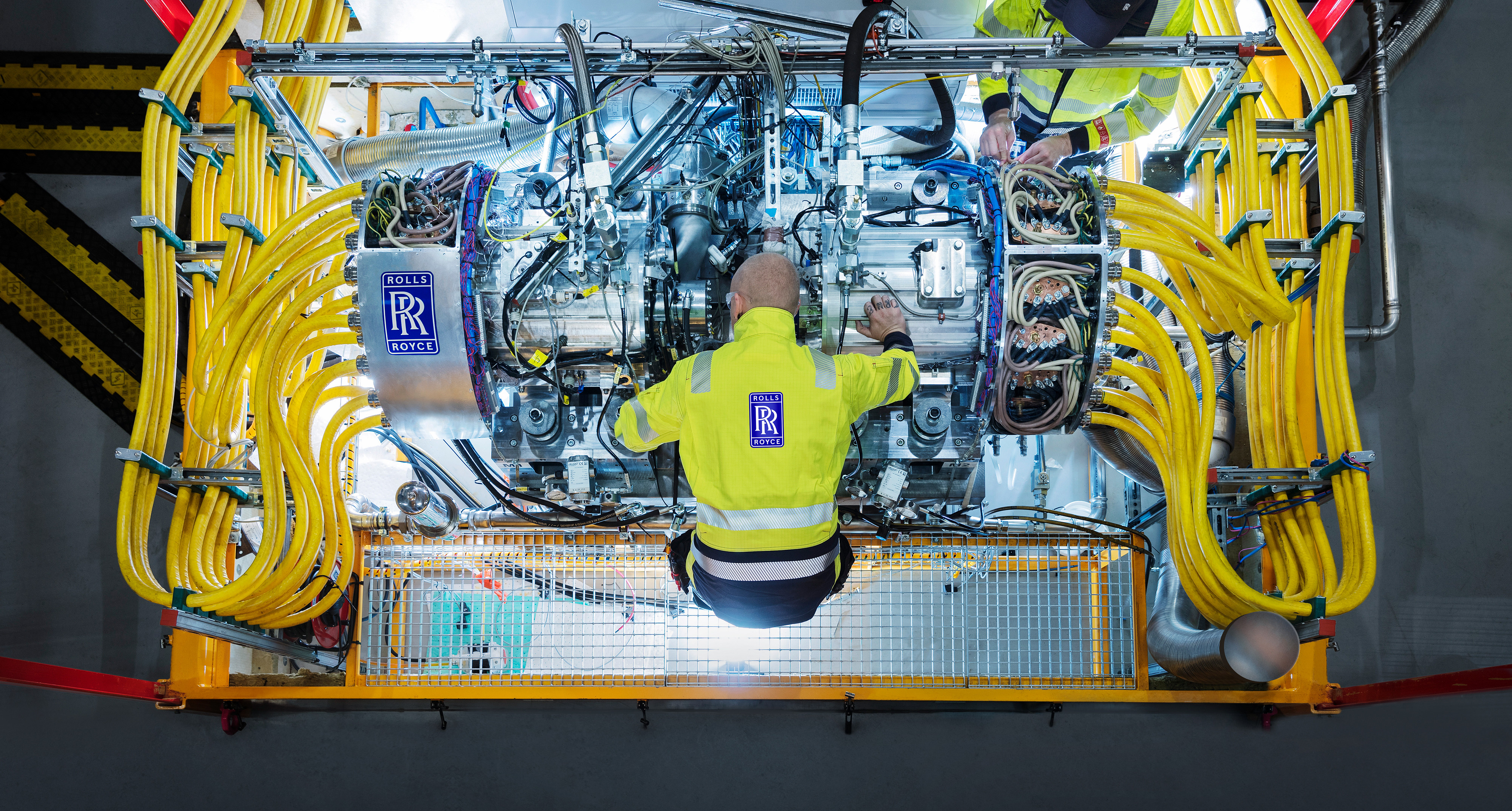
Would it need the cooling system, which appears to be needed with a fuel-cell?
The Rolls-Royce Advantage
There would surely be advantages in using a Rolls-Royce gas turbine to power the train.
- Having a Rolls-Royce power unit must help sales of your plane or train.
- There is the Derby connection.
- Alstom already deal with Rolls-Royce subsidiary; MTU for diesel engines for freight locomotives.
Could we be seeing a hydrogen multiple unit powered by a gas turbine?
‘Spirit of Innovation’ Stakes Claim To Be The World’s Fastest All-Electric Vehicle
The title of this post is the same as that of this press release on the Rolls-Royce web site.
This is the first paragraph.
We believe our all-electric ‘Spirit of Innovation’ aircraft is the world’s fastest all-electric aircraft, setting three new world records. We have submitted data to the Fédération Aéronautique Internationale (FAI) – the World Air Sports Federation who control and certify world aeronautical and astronautical records – that at 15:45 (GMT) on 16 November 2021, the aircraft reached a top speed of 555.9 km/h (345.4 mph) over 3 kilometres, smashing the existing record by 213.04 km/h (132mph). In further runs at the UK Ministry of Defence’s Boscombe Down experimental aircraft testing site, the aircraft achieved 532.1km/h (330 mph) over 15 kilometres – 292.8km/h (182mph) faster than the previous record – and broke the fastest time to climb to 3000 metres by 60 seconds with a time of 202 seconds, according to our data. We hope that the FAI will certify and officially confirm the achievements of the team in the near future.
Rolls-Royce also claim that the maximum speed achieved of 387.4 mph make it the world’s fastest all-electric vehicle.
To put that speed into perspective, it is faster than a Mark V Spitfire, which was powered by a legendary Rolls-Royce Merlin engine. These aircraft were powered by a Merlin 45 engine that generated 1074kW.
By comparison the Spirit of Innovation has a maximum power of just 400 kW.
Why Do It?
This paragraph from the press release gives an explanation.
As well as a stunning technical achievement, the project and world record runs provided important data for our future electric power and propulsion systems for all-electric urban air mobility and hybrid-electric commuter aircraft. The characteristics that ‘air-taxis’ require from batteries, for instance, are very similar to what was developed for the ‘Spirit of Innovation’.
I’ll go with that, as Rolls-Royce seem to be associated with several electric aviation projects.
But I can’t help feeling that there are parallels with the 1930s, when Supermarine and Rolls-Royce teamed up to produce the Supermarine S 6B, that won the Schneider Trophy outright in 1931. It is generally accepted that the knowledge gained at the time helped to design the Spitfire and the Merlin engine.
Rolls-Royce Submits SMR Design For UK Assessment
The title of this post, is the same as that of this article on World Nuclear News.
This is the first paragraph.
Rolls-Royce SMR Limited has submitted its 470 MWe small modular reactor (SMR) design for entry to the UK’s Generic Design Assessment (GDA) regulatory process. The review of the SMR design – based on a small pressurised water reactor – will formally begin once the government has assessed the company’s capability and capacity to successfully enter the GDA process.
It’s good to see this project progressing.
Alstom And Eversholt Rail Sign An Agreement For The UK’s First Ever Brand-New Hydrogen Train Fleet
The title of this post, is the same as that of this press release from Alstom.
This is the first two paragraphs.
Alstom, Britain’s leading train manufacturer and maintenance provider, and Eversholt Rail, leading British train owner and financier, have today announced a Memorandum of Understanding aimed at delivering the UK’s first ever brand-new hydrogen train fleet.
The two companies have agreed to work together, sharing technical and commercial information necessary for Alstom to design, build, commission and support a fleet of ten three-car hydrogen multiple units (HMUs). These will be built by Alstom in Britain. The new HMU fleet will be based on the latest evolution of the Alstom Aventra platform and the intention is that final contracts for the fleet will be signed in early 2022.
This is an Alstom visualisation of the train.
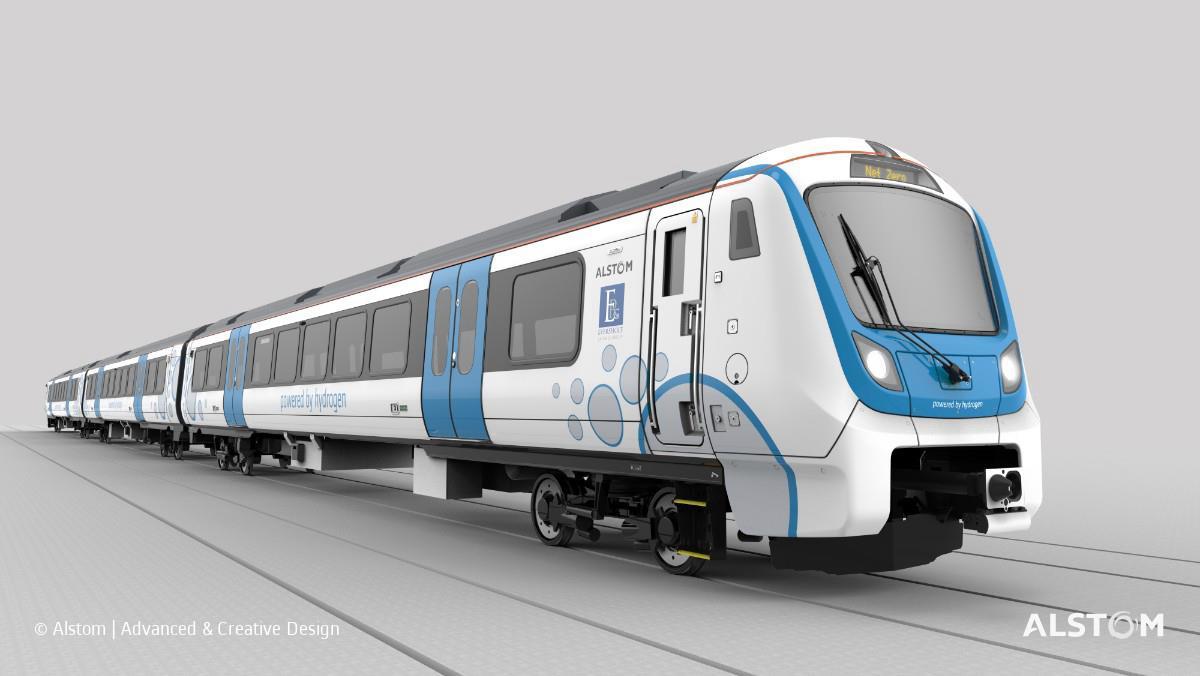
The first thing I notice is that the train doesn’t have the same aerodynamic nose as this current Class 710 train, which is one of the London Overground’s Aventras.
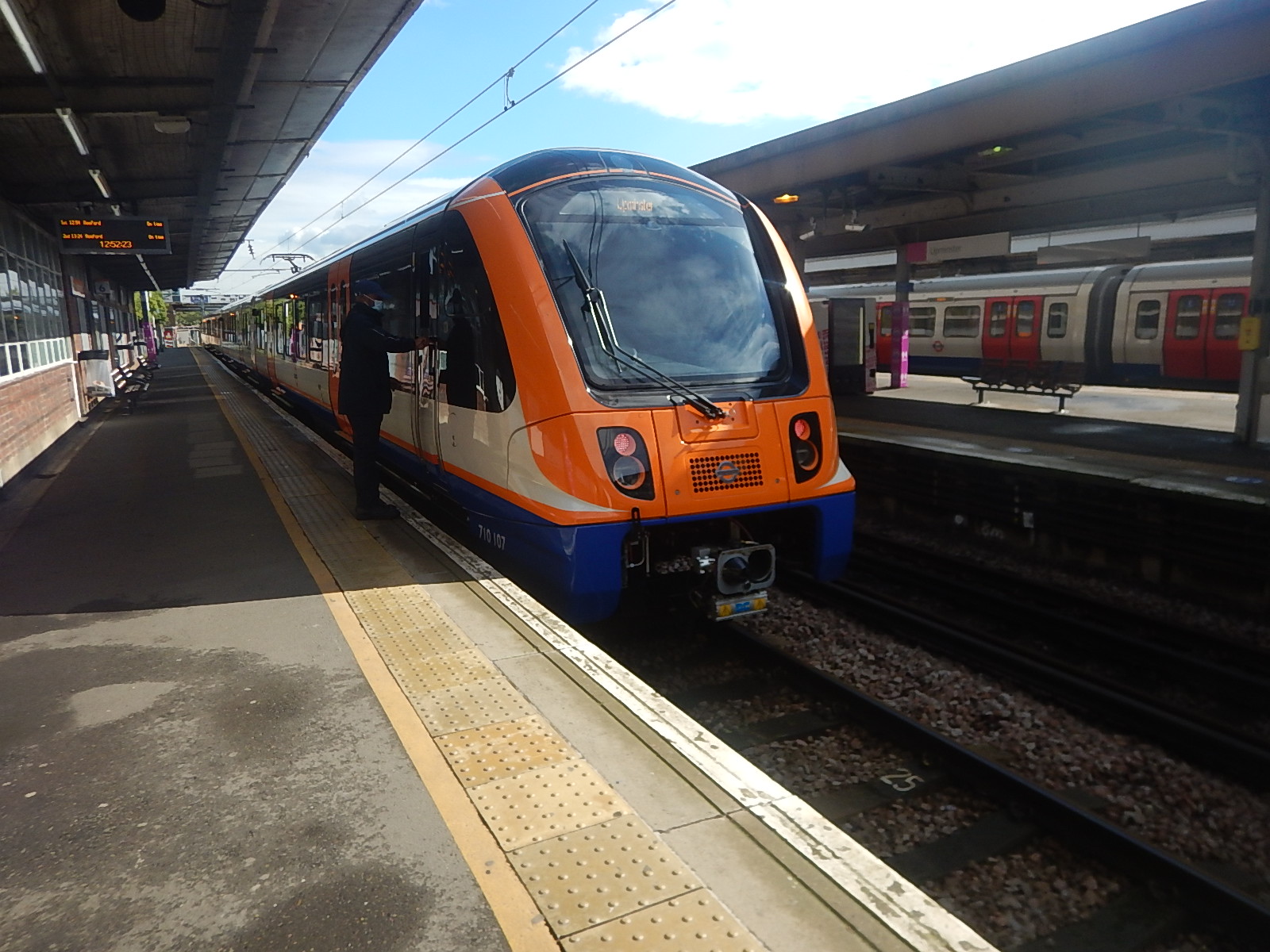
Note how the lights, coupler position and the front-end structure are all different.
These are my further thoughts on the design.
The Aventra’s Traction System
In this article in Global Rail News from 2011, which is entitled Bombardier’s AVENTRA – A new era in train performance, gives some details of the Aventra’s electrical systems. This is said.
AVENTRA can run on both 25kV AC and 750V DC power – the high-efficiency transformers being another area where a heavier component was chosen because, in the long term, it’s cheaper to run. Pairs of cars will run off a common power bus with a converter on one car powering both. The other car can be fitted with power storage devices such as super-capacitors or Lithium-ion batteries if required. The intention is that every car will be powered although trailer cars will be available.
Unlike today’s commuter trains, AVENTRA will also shut down fully at night. It will be ‘woken up’ by remote control before the driver arrives for the first shift
This was published over ten years ago, so I suspect Bombardier (or now Alstom) have refined the concept.
Bombardier have not announced that any of their trains have energy storage, but I have my suspicions, that both the Class 345 and Class 710 Aventra trains use super-capacitors or lithium-ion batteries, as part of their traction system design.
- I was told by a Bombardier driver-trainer that the Class 345 trains have an emergency power supply. When I said “Batteries?”, He gave a knowing smile.
- From the feel of riding on Class 710 trains, as a Control Engineer, I suspect there is a battery or supercapacitor in the drive system to give a smoother ride.
I also feel that the Aventra has been designed, so that it can accept power from a large variety of sources, which charge the battery, that ultimately drives the train.
The Formation Of A Three-Car Aventra
The only three-car Aventra is the Class 730/0 train.
I have not seen one of one of these trains in the metal and the formation can’t be found on the Internet. But Wikipedia does show the pantograph on the middle car.
In The Formation Of A Class 710 Train, I said this.
Here is the formation of the train.
DMS+PMS(W)+MS1+DMS
The plates on the individual cars are as follows.
DMS – Driving Motored Standard
-
- Weight – 43.5 tonnes
- Length – 21.45 metres
- Width 2.78 metres
- Seats – 43
The two DMS cars would appear to be identical.
PMS  -Pantograph Motored Standard
-
- Weight – 38.5 tonnes
- Length – 19.99 metres
- Width 2.78 metres
- Seats – 51
The signifies a wheelchair space.
MS1 – Motored Standard
-
- Weight – 32.3 tonnes
- Length – 19.99 metres
- Width 2.78 metres
- Seats – 52
It is similar in size to the PMS car, but has an extra seat.
So could the formation of a three-car Aventra be?
DMS+PMS(W)+DMS
I have just removed the MS1 car.
This would mean that a three-car Aventra has the following dimensions and capacity.
- Weight – 125.5 tonnes
- Length – 62.89 metres
- Seats – 137
There will probably be a difference between these figures and those of a three-car Class 730 train, as those trains have end-gangways.
Could All The Hydrogen Gubbins Fit Underneath The Train?
These pictures show the space underneath a Class 710 train.
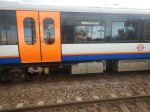
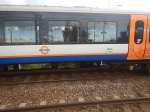
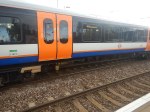

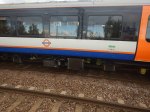
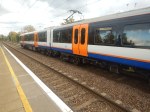
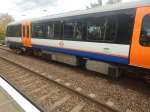
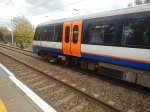
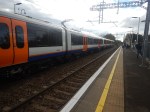
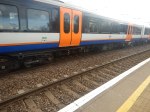
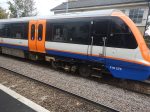
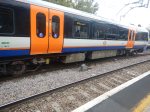
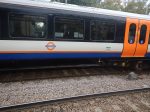

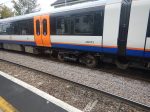
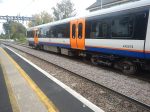
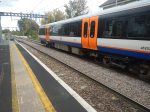
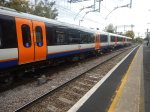
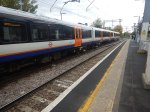
If you also look at Alstom’s visualisation of their Hydrogen Aventra on this post, there would appear to be lots of space under the train.
It should also be noted that Birmingham University’s engineers have managed to put all of the hydrogen gubbins underneath the floor of Porterbrook’s Class 799 train.
Looking at my pictures, you can see the following.
- The two DMS (Driving Motored Standard) cars have large boxes underneath
- The MS1(Motored Standard) car is fairly clear underneath. But this will probably not be there in a three-car train.
- The PMS (Pantograph Motored Standard) car has some space underneath.
If more space needs to be created, I suspect that the cars can be lengthened, between the bogies. The Class 710 trains have twenty metre intermediate cars, whereas some versions have twenty-four metre cars.
I believe that Aventras have been designed, so that various power sources could be installed under the floor.
When the Aventra was designed, over ten years ago, these could have included.
- A diesel generator and all the fuel tanks and cooling systems.
- A battery or other energy storage system.
Since then two other suitable power sources have been developed.
- Rolls-Royce, Honeywell and others have developed small and powerful gas-turbine generators.
- Ballard Power Systems and others have developed hydrogen fuel cell generators.
If you look at the proportions of the Alstom hydrogen train and the pictures of Class 710 trains, I feel that the Alstom train could have the longer twenty-four metre cars.
It may be a tight fit compared to creating the Alstom Coradia iLint hydrogen train, but I would feel it is possible to install a fuel cell or cells, the required cooling and the hydrogen tanks, having seen cutaway drawings of hydrogen-powered double-deck buses on the Wrightbus web site.
Interestingly, the Alstom press release doesn’t mention fuel cells, so could the train be powered by a small gas turbine?
I think it is unlikely, but it is technically feasible.
Does The Alstom Hydrogen Aventra Have Longer Cars?
I have been looking at pictures of Aventras on Wikipedia and in my own archive.
It appears that only Aventras with twenty-four metre carriages have five windows between the pair of double-doors in the intermediate carriages.
This picture shows the PMS car from a Class 710 train.
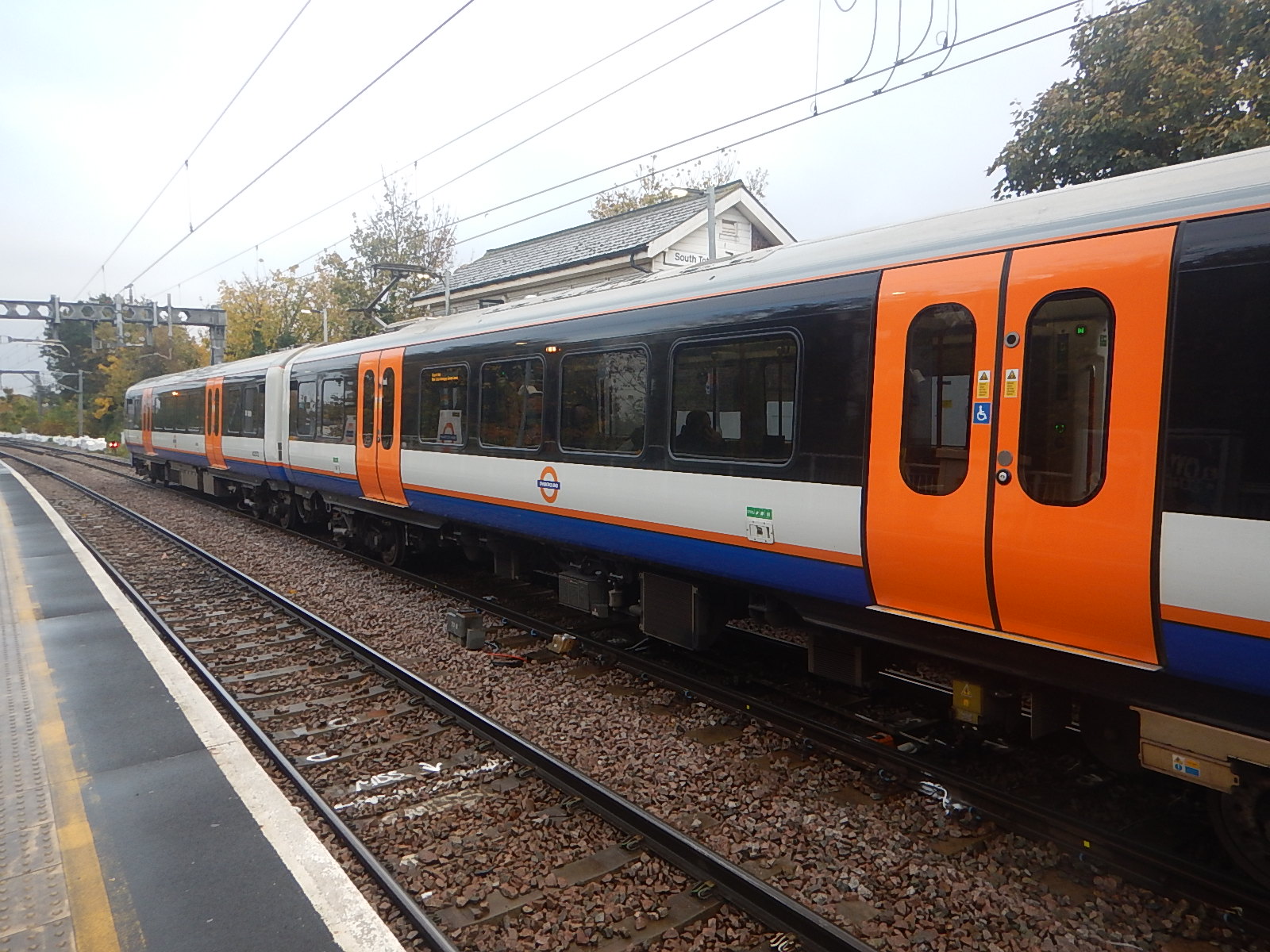
The PMS car is to the right and has four windows between the doors.
This is the side view of one of Greater Anglia’s Class 720 trains.
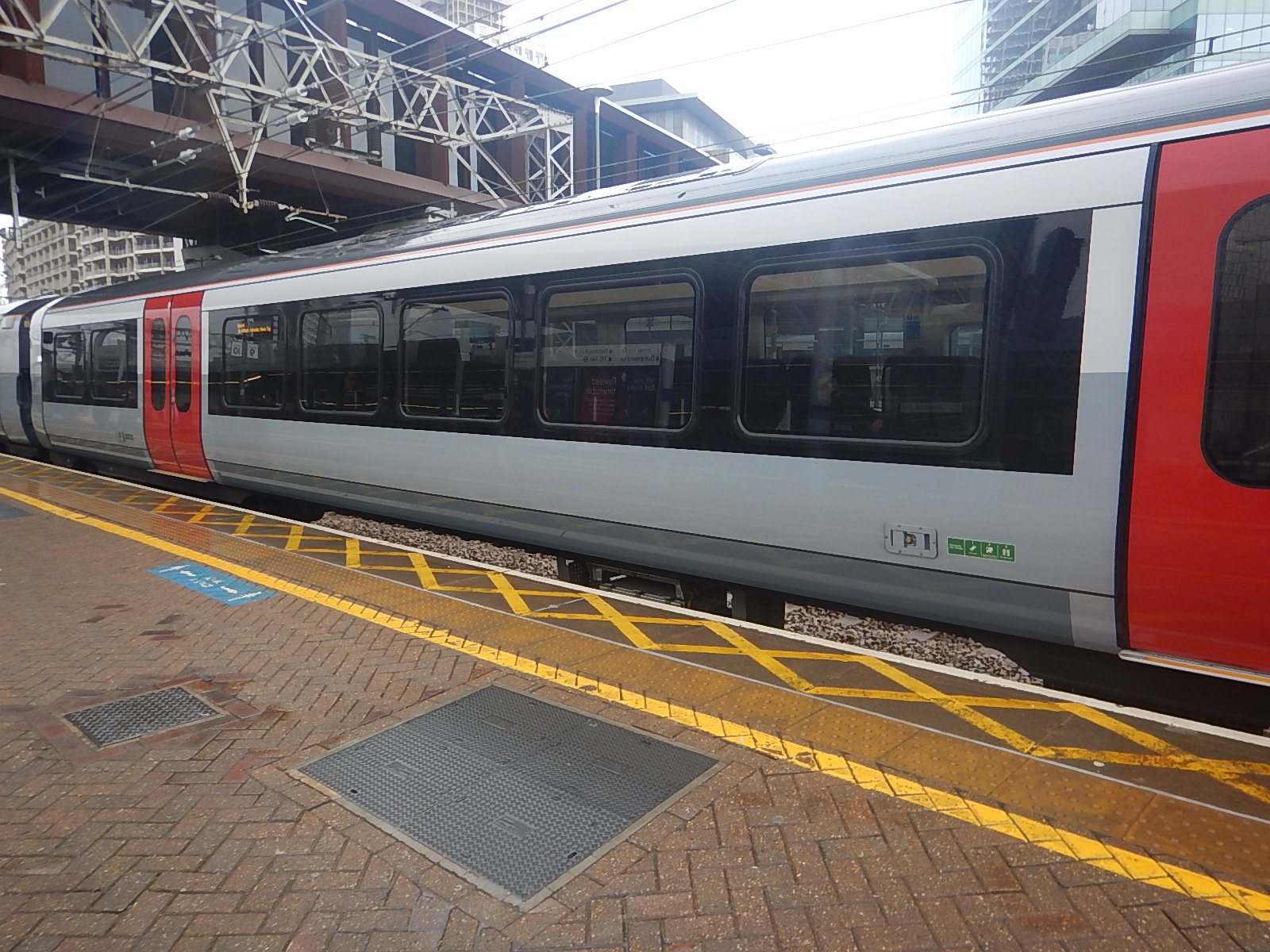
It has twenty-four metre intermediate cars and five windows.
It looks to me that the Alstom Hydrogen Aventra will have twenty-four metre cars.
This will give an extra four x 2.78 metres space under the train compared to a Class 710 train.
It would also appear that the Aventras with twenty-four metre cars also have an extra window in the driving cars, between the doors.
Does the four metre stretch make it possible to position tubular hydrogen tanks across the train to store a practical amount of hydrogen?
Is The Alstom Hydrogen Train Based On A Three-Car Class 730/0 Train?
I have just found this video of a three-car Class 730/0 under test.
And guess what! It has five windows between the doors.
But then it is a train with twenty-four metre cars.
It looks to me, that Alstom have looked at the current Aventra range and decided that the three-car Class 730/0 could be the one to convert into a useful train powered by hydrogen.
So if it is a Class 730/0 train with hydrogen gubbins under the floor, what other characteristics would carry over.
- I suspect Aventras are agnostic about power and so long as they get the right quantity of volts, amps and watts, the train will roll along happily.
- But it means that the train can probably use 25 KVAC overhead electrification, 750 VDC third-rail electrification, hydrogen or battery power.
- I wouldn’t be surprised if if could use 15 KVAC and 3KVDC overhead electrification for operation in other countries, with perhaps a change of power electronics or transformer.
- The interior layout of the trains can probably be the same as that of the Class 730/0 trains.
- The Class 730/0 trains have an operating speed of 90 mph and this could be good enough for hydrogen.
This could be a very capable train, that could find a lot of applications.
Could The Proposed Alstom Hydrogen Aventra Be Considered To Be A Class 730/0 Train With A Hydrogen Extender?
It appears that the only difference between the two trains is that the proposed Alstom Hydrogen Aventra has a hydrogen propulsion system, that can be used when the electrification runs out.
The hydrogen fuel cell will convert hydrogen into electricity, which will either be used immediately or stored in a battery on the train.
The Class 730/0 trains have already been ordered to run services on Birmingham’s electrified Cross-City Line.
There are plans to expand the line in the future and I do wonder if the proposed Alstom Hydrogen Aventras could be the ideal trains for extending the network.
How Does The Alstom Hydrogen Aventra Compare With The Class 600 Breeze Train?
The Class 600 train, which is based on the British Rail-era Class 321 train seems to have gone cold.
If it was a boxing match, it would have been stopped after the fourth round, if not before.
This Alstom visualisation shows the Class 600 train, which is also known as the Breeze.
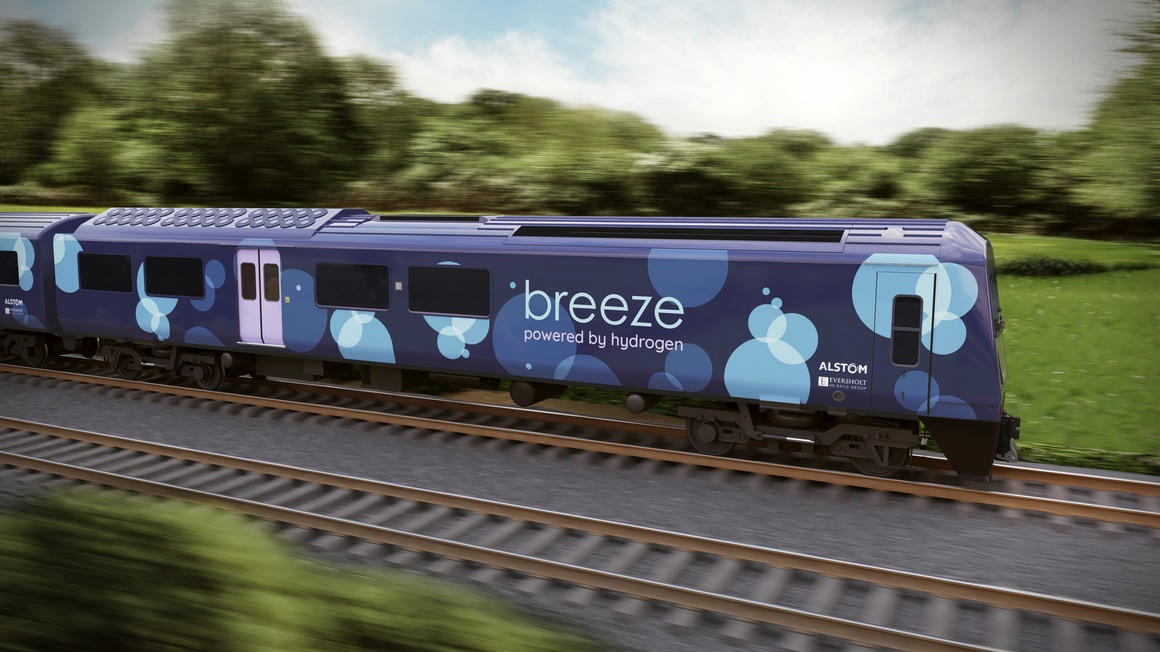
I have a feeling that Alstom have done their marketing and everybody has said that the Class 600 train wouldn’t stand up to a modern train.
- When you consider that each end of the train is a hydrogen tank, I wonder if possible passenger and driver reaction has not been overwhelmingly positive.
- The project was announced in January 2021 and in the intervening time, hydrogen technology has improved at a fast pace.
- There could even be a battery-electric version of the proposed Alstom Hydrogen Aventra.
- The modern train could possibly be lengthened to a four or five car train.
It does strike me, that if Alstom are going to succeed with hydrogen trains, that to carry on with the Class 600 train without an order into the future is not a good idea.
How Does The Alstom Hydrogen Aventra Compare With The Alstom Coradia iLint?
The Alstom Coradia iLint is the world’s first hydrogen train.

It is successfully in service in Germany.
These are some characteristics of the Coradia iLint from the Internet.
- Seats – 180
- Length – 54.27 metres
- Width – 2.75 metres
- Height – 4.31 metres
- Operating Speed – 87 mph
- Range – 370-500 miles
- Electrification Use – No
The same figures for the Alstom Hydrogen Aventra are as follows.
- Seats – 164
- Length – 72 metres
- Width – 2.78 metres
- Height – 3.76 metres
- Operating Speed – 90 mph
- Range – Unknown
- Electrification Use – Unknown, but I would expect it is possible.
Note.
- I have taken figures for the Alstom Hydrogen Aventra from the Class 730/0 train and other Aventras.
- The number of seats is my best estimate from using the seat density of a Class 710 train in a 24 metre long car.
- The width and height seem to be standard for most Aventras.
- Alstom have said nothing about the range on hydrogen.
- I am surprised that the Aventra is the wider train.
But what surprises me most, is how similar the two specifications are. Had the designer of the original Lint hoped to sell some in the UK?
What Is The Range Of The Alstom Hydrogen Aventra?
When they launched the Breeze, Alstom were talking about a range of a thousand kilometres or just over 620 miles.
I have talked to someone, who manages a large bus fleet and they feel with a hydrogen bus, you need a long range, as you might have to position the bus before it does a full day’s work.
Would similar positioning mean a hydrogen train needs a long range?
I suspect it would in some applications, but if the train could use electrification, as I suspect the Alstom Hydrogen Aventra can, this must help with positioning and reduce the range needed and the amount of hydrogen used.
Would Alstom aim to make the range similar to the Coradia iLint? It’s probably a fair assumption.
Could the Alstom Hydrogen Aventra Be Extended To Four Or Five Cars?
I don’t see why not, as Aventras are designed to be lengthened or shortened, by just adding or removing cars, just like their predecessors the Electrostars were.
I can certainly see routes, where a longer Alstom Hydrogen Aventra could be needed and if Alstom have also decided that such a train could be needed, they will surely have investigated how to lengthen the train.
Applications In The UK
These are links to a few thoughts on applications of the trains in the UK.
- Alstom Hydrogen Aventras And Extension Of The Birmingham Cross-City Line
- Alstom Hydrogen Aventras And The Reopened Northumberland Line
- Alstom Hydrogen Aventras And Great Western Branch Lines Between Paddington And Oxford
- Alstom Hydrogen Aventras And The Uckfield Branch
There are probably a lot more and I will add to this list.
Applications Elsewhere
If the Coradia iLint has problems, they are these.
- It can’t use overhead electrification, where it exists
- It has a noisy mechanical transmission, as it is a converted diesel multiple unit design.
The Alstom Hydrogen Aventra can probably be modified to use electrification of any flavour and I can’t see why the train would be more noisy that say a Class 710 train.
I suspect Alstom will be putting the train forward for partially-electrified networks in countries other than the UK.
Conclusion
This modern hydrogen train from Alstom is what is needed.
It might also gain an initial order for Birmingham’s Cross-City Line, as it is a hydrogen version of the line’s Class 730/0 trains.
But having a hydrogen and an electric version, that are identical except for the hydrogen extender, could mean that the trains would be ideal for a partially-electrified network.
There could even be a compatible battery-electric version.
All trains would be identical to the passenger and probably the driver too. This would mean that mixed fleets could be run by an operator, with hydrogen or battery versions used on lines without electrification as appropriate.
Diamond Synchrotron Sparkles And Shows Its Value To UK Economy
The title of this post, is the same as that of this article on Chemistry World, which is a monthly chemistry news magazine published by the Royal Society of Chemistry.
This is the first paragraph.
Diamond Light Source, the UK’s synchrotron, has generated a ‘fantastic return on investment’ since it became operational in 2007. That’s according to a new study that values its socio-economic impacts at around £1.8 billion with each taxpayer contributing £2.45 a year towards it.
If you read the article about the Diamond Light Source, you will find example applications where the synchroton has been used.
- Non-destructive testing of materials and structures. Some have been over a metre in size and a tonne in weight.
- Drug discovery and development.
- A team from the University of Portsmouth has used Diamond to study the bacterial enzyme PETase, which digests plastic.
- Rolls-Royce has used Diamond to examine the stresses in fan-blades.
The article also states that it has hosted 14,000 users.
With an energy of only 3 GeV, Diamond is not the most powerful synchrotron, but it is certainly one of the most sophisticated.
Related Posts
I have written about the Diamond Light Source in these posts.
- Moonshot Is The Spanner In The Covid-19 Works The Country Needs
- The Diamond Light Source And COVID-19
- The Diamond Light Source And Ebola
- The Diamond Light Source And Malaria
- The Diamond Light Source And PETase
The Diamond Light Source is a serious scientific tool, that ranks with the best in the world.
Rolls-Royce Joins Boeing And World Energy For Successful 100% Sustainable Aviation Fuel Flight
The title of this post, is the same as that of this Press Release from Rolls-Royce.
These are the first two paragraphs.
Rolls-Royce, working with Boeing and World Energy, has carried out a successful test flight of its 747 Flying Testbed aircraft using 100% Sustainable Aviation Fuel (SAF) on a Trent 1000 engine.
The aircraft flew from Tucson airport in Arizona, passing over New Mexico and Texas, with a Trent 1000 engine running solely on 100% SAF while the remaining three RB211 engines ran on standard jet fuel, arriving back at the airport three hours and 54 minutes later. Initial indications confirm there were no engineering issues, providing further proof of the fuel’s suitability for commercial use.
Until new zero-carbon technology is developed, which possibly uses hydrogen as a fuel, I believe that Sustainable Aviation Fuel is the best route that the world can take to cut the carbon emissions from flying.
 The Anonymous Widower