Clarksons To Support RWE’s Vanguard West, Vanguard East From ABP’s New Lowestoft Facility
The title of this post, is the same as that of this article on offshoreWIND.biz.
This is the sub-heading.
Clarksons Port Services has signed an agreement with RWE and Associated British Ports (ABP) for RWE’s Vanguard West and Vanguard East offshore wind projects in the UK.
These three paragraphs add more detail to the story.
Under the agreement, the company will support the construction of the two offshore wind farms from the Lowestoft Eastern Energy Facility (LEEF), where Clarksons will lease and operate a facility on behalf of RWE.
ABP officially opened the new port facility in January 2025, after investing GBP 35 million (around EUR 40 million) in the port infrastructure. The facility features deep-water berths, modern utilities and future-proofed infrastructure to support shore power and alternative fuels, according to the port operator.
RWE secured Contracts for Difference (CfDs) for the two offshore wind farms in January this year, when the UK government awarded 8.4 GW of offshore wind capacity in the seventh CfD round (AR7).
Vanguard West and Vanguard East offshore wind projects are almost identical 1545 MW projects, that should be commissioned in 2028/29.
The two projects are 47 km. off the coast of Norfolk.
They will bring their power ashore at Happisburgh and connect underground to the grid at a new substation at Necton.
If I was a Norfolk Nimby, I would feel, that RWE are building these wind farms so as not to annoy the neighbours.
- They are a fair way out to sea.
- There appear to be no overhead cables.
- The support will be handled in a purpose-built facility.
Judding by their actions, I do wonder if RWE are getting a shift on, as they would like to get these wind farms built before the 2029 General Election
RWE Orders 2.76 GW Of Offshore Wind Turbines At Vestas
The title of this post, is the same as that of this article on offshoreWIND.biz.
This is the sub-heading.
RWE has placed a firm wind turbine order with Vestas for its 1,380 MW Vanguard East offshore wind project in the UK, shortly after confirming a firm order for Vanguard West, which will have the same installed capacity.
These three paragraphs add more details.
For Vanguard East, Vestas will supply, deliver, and commission 92 of its V236-15.0 MW wind turbines, and will also be in charge of servicing them under a five-year service agreement, followed by a long-term operational support agreement.
RWE expects to make a final investment decision (FID) for both Vanguard East and Vanguard West in the summer of 2026, with wind turbine deliveries for Vanguard East to begin in the fourth quarter of 2028.
The commissioning of Vanguard West is expected in 2029, with Vanguard East following suit in 2030.
Note.
- On the 23rd of February, 2026, RWE placed a similar order for Vanguard West with Vestas.
- In Global Investor Joining RWE On Two Norfolk Vanguard Offshore Wind Projects, FID Expected in Summer, I describe how KKR are taking a stake in the two of the Norfolk Vanguard Offshore Wind Projects.
Things are looking good for RWE, Norfolk and wind power.
Global Investor Joining RWE On Two Norfolk Vanguard Offshore Wind Projects, FID Expected in Summer
The title of this post, is the same as that of this article on offshoreWIND.biz.
This is the sub-heading.
Global investment firm KKR and RWE have signed an agreement under which KKR acquire a 50 per cent stake in each of RWE’s Norfolk Vanguard East and Norfolk Vanguard West offshore wind projects, totalling 3.1 GW in installed capacity. The wind farms were just awarded Contracts for Difference (CfDs) in the UK’s seventh CfD allocation round (AR7).
These three paragraphs add a few more details.
The two Norfolk Vanguard projects, which RWE bought from Vattenfall in March 2024, have already secured seabed rights, grid connections, development consent orders (DCOs) and all other key permits.
On 14 January, RWE said it launched the process to raise non-recourse project finance debt for the projects and that it expects the closing of the partnership transaction and the project financing, as well as the final investment decision (FID), in the summer of 2026.
Located 50 to 80 kilometres off the coast of Norfolk, the two offshore wind farms are planned to be commissioned in 2029 (Norfolk Vanguard West) and 2030 (Norfolk Vanguard East).
RWE do seem to be lining up everything ready for that final investment decision in the summer of 2026.
- I suspect that with KKR on board, that they have got the money ready and I wouldn’t be surprised to see these two projects quickly progress to a completion.
- I also think it was significant that we have Goldman Sachs involved in Highview Power, who may have a solution to affordable energy storage and now we have KKR getting involved with one of the most professional offshore wind power developers in the world.
- Are Goldman Sachs and KKR placing bets against Trump’s anti wind power stance?
The Germans will certainly need a lot of energy and British offshore wind power, would appear the only place, where it is available easily in quantity to the Germans.
I await the next few months with a lot of interest.
‘Drone Boats Will Be The New Normal’
The title of this post is the same as this article on the BBC.
This is the sub-heading.
A remotely operated boat will survey an area hundreds of miles offshore – while being controlled from an inland airport.
These two paragraphs add more details to the story.
The Orsted Examiner is being launched this week from Grimsby by the renewable energy company, which is currently building the Hornsea 3 windfarm in the North Sea.
The vessel contains enough fuel to be at sea for several months, and an internet connection means it can be remotely controlled from anywhere.
Note.
- This would appear to be an elegant way to improve both productivity and safety.
- In RWE Opens ‘Grimsby Hub’ For Offshore Wind Operations And Maintenance, I indicated that RWE will have a Grimsby hub.
- Will the two companies have similar drone boats?
I certainly agree with the title of the post.
Development Consent Decision On 3 GW Dogger Bank South Project Postponed
The title of this post, is the same as that of this article on offshoreWIND.biz.
This is the sub-heading.
The UK Secretary of State for Energy Security and Net Zero has set a new deadline for the decision on the Development Consent Order (DCO) for Dogger Bank South, a 3 GW offshore wind project developed by RWE, which the company owns in partnership with Masdar.
These two paragraphs add more detail to the project.
The statutory deadline for the decision on the project was 10 January 2026. This has now been moved to 30 April.
According to a statement from the Minister for Energy Consumers, Martin McCluskey, the extension will allow time to request further information that was not provided for consideration during the examination period and to give all interested parties the opportunity to review and comment on such information.
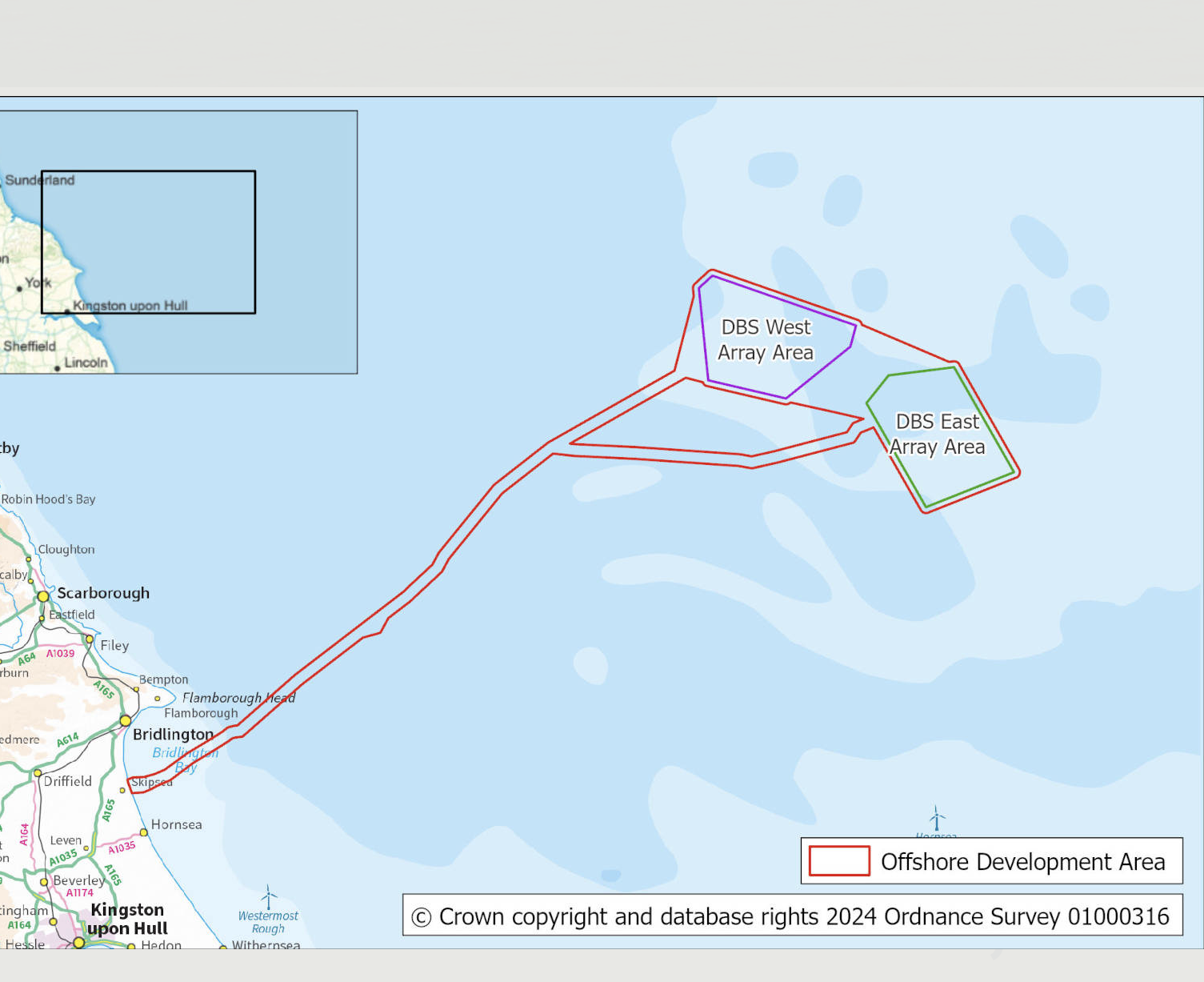
I clipped this map from the Dogger Bank South web site.
Note.
- Bridlington, Kingston-Upon-Hull and Scarborough can be picked out on the coast of East Yorkshire.
- The two wind farms and the route of the cables to the shore can be clearly seen.
I just wonder, whether the nature of the project is changing.
Consider.
- Three GW is a lot of power to move across Yorkshire to where it can be connected to the grid.
- In Consultation On Offshore Wind Reform: Hydrogen Sector Calls For Hybrid Connection Concepts And Warns Of Compensation Risks, German companies involved in the AquaVentus project are calling for more hydrogen to be produced offshore and piped to the shore.
- Could hydrogen produced in the Dogger Bank Wind farms be piped to the Northern end of the AquaVentus pipeline on the German sector of the Dogger Bank?
- A pipeline or cable could still bring energy to Yorkshire.
- The hydrogen could go to the hydrogen stores at Aldbrough and Rough.
- SSE and Centrica could play hydrogen-bankers to the Germans, as Germany is short of hydrogen storage.
- East Yorkshire is building two hydrogen power stations at Keadby and Ferrybridge.
- Support for the Dogger Bank South wind farms will probably be from RWE’S Grimsby hub.
Is this the Anglo-German co-operation, I talked about in UK And Germany Boost Offshore Renewables Ties at work?
I can see benefits for this arrangement for the UK.
- Hydrogen production is offshore.
- A lot of the onshore employment is in the UK.
- There will be a hydrogen pipeline between Germany and the vast hydrogen storage of Humberside via the German Dogger Bank and Dogger Bank South wind farms.
- Will there be a hydrogen pipeline between the North of Scotland and Humberside via the AquaVentus pipeline?
- There will also be a substantial cash flow to the UK Treasury because of all the hydrogen production in UK waters.
RWE may also be able to use a standard hydrogen production platform in German and UK waters.
This is the sort of plan, that the money men will like.
UK Offshore Wind Farm Now Equipped With Scour Protection Doubling As Marine Life Habitat
The title of this post, is the same as that of this article on offshoreWIND.biz.
This is the sub-heading.
RWE has installed around 75,000 reef cubes developed by the nature-inclusive technology designer ARC marine at the Rampion offshore wind farm in the UK, in what the Rampion owner says is a “global first”. The cubes are a specially eco-engineered scour protection solution for wind turbine foundations, and this represents their first full-scale deployment at an offshore wind farm.
These four paragraphs add more details.
The solution is designed to protect the energy infrastructure from strong currents in the subsea environment, while creating new and extending existing living marine habitats, RWE says.
The reef cubes, ranging in size from 15 to 35 centimetres, were installed over the last few days at the base of one of the Rampion turbines by the project’s contractor Rohde Nielsen. It is the first real-world deployment of ARC marine’s patented Reef cubes as scour protection at an operational wind farm, according to RWE.
The developer says that at just one of the Rampion turbines, the reef cubes are providing a habitat surface area of 25,000 square metres.
The deployment is part of the Reef Enhancement for Scour Protection (RESP) pilot that RWE and ARC marine announced in July this year.
ARC marine’s reef cubes have their own comprehensive web site, which show all aspects of this fascinating technology.
The Monster That Is AquaVentus Is Waking Up
I have written about AquaVentus for some time, but inh the last couple of days, ten references have been found to the project by my Google Alert.
What Is AquaVentus?
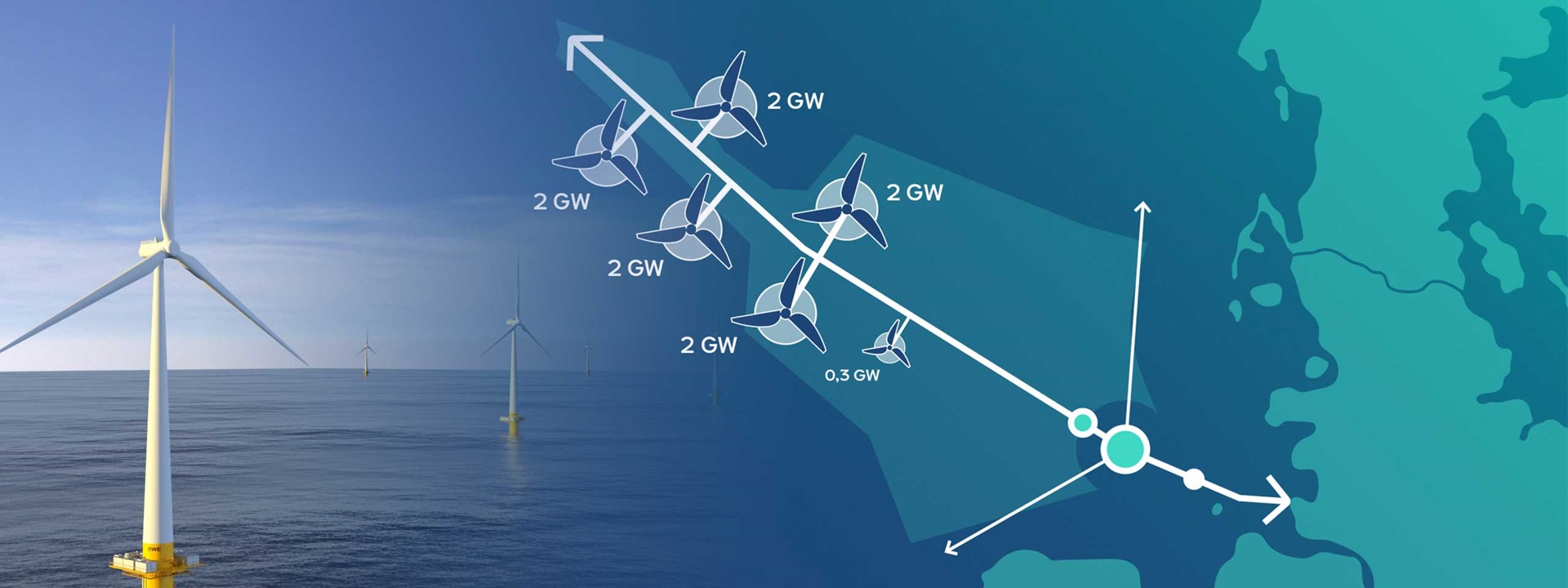
AquaVentus has a web page on the RWE web site, from where I clipped this image.
Note.
- The spine of AquaVentus is a pipeline called AquaDuctus to bring hydrogen to Germany.
- This image shows 10.3 GW of hydrogen will be generated and brought to near Wilhelmshaven in North-West Germany.
These two paragraphs introduce AquaVentus.
Hydrogen is considered the great hope of decarbonisation in all sectors that cannot be electrified, e.g. industrial manufacturing, aviation and shipping. Massive investments in the expansion of renewable energy are needed to enable carbon-neutral hydrogen production. After all, wind, solar and hydroelectric power form the basis of climate-friendly hydrogen.
In its quest for climate-friendly hydrogen production, the AquaVentus initiative has set its sights on one renewable energy generation technology: offshore wind. The initiative aims to use electricity from offshore wind farms to operate electrolysers also installed at sea on an industrial scale. Plans envisage setting up electrolysis units in the North Sea with a total capacity of 10 gigawatts, enough to produce 1 million metric tons of green hydrogen.
It is not an unambitious project.
North Sea Hydrogen Co-operation: AquaVentus And Hydrogen Scotland
The title of this section is the same as that of this page on the Hydrogen Scotland web site.
This is the introduction.
Hydrogen Scotland signed a comprehensive Memorandum of Understanding (MoU) with AquaVentus at Offshore Europe in Aberdeen. The partnership aims to unlock the North Sea’s vast potential for hydrogen production and establish Scotland as a key supplier to European markets through the development of shared infrastructure.
Both partners are committed to intensifying research activities and advocating for the rapid scale-up of a European hydrogen economy.
By joining forces, members of AquaVentus and Hydrogen Scotland can help advance the development and deployment of technologies along the entire value chain – from production through transport and storage to the use of hydrogen for decarbonising the energy system. In addition, both organisations intend to intensify their supporting activities and jointly advocate for the accelerated ramp-up of a European hydrogen economy.
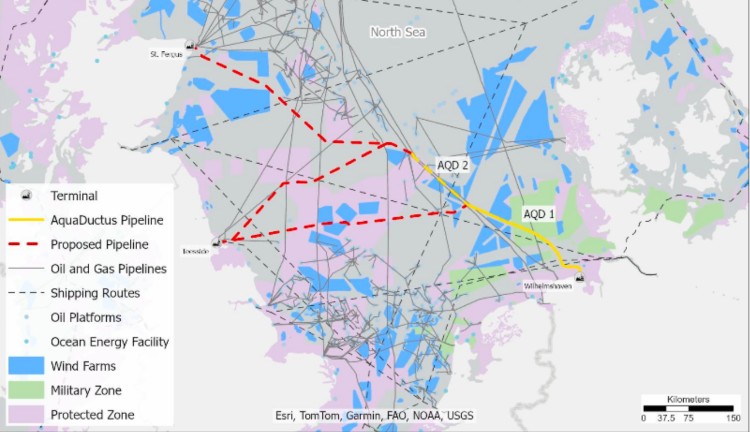
This map of the North Sea, which I downloaded from the Hydrogen Scotland web site, shows the co-operation.
Note.
- The yellow AquaDuctus pipeline connected to the German coast near Wilhelmshaven.
- There appear to be two AquaDuctus sections ; AQD 1 and AQD 2.
- There are appear to be three proposed pipelines, which are shown in a dotted red, that connect the UK to AquaDuctus.
- The Northern proposed pipeline appears to connect to the St. Fergus gas terminal on the North-East tip of Scotland.
- The two Southern proposed pipelines appear to connect to the Easington gas terminal in East Yorkshire.
- Easington gas terminal is within easy reach of the massive gas stores, which are being converted to hold hydrogen at Aldbrough and Rough.
- The blue areas are offshore wind farms.
- The blue area straddling the Southernmost proposed pipe line is the Dogger Bank wind farm, is the world’s largest offshore wind farm and could evebtually total over 6 GW.
- RWE are developing 7.2 GW of wind farms between Dogger Bank and Norfolk in UK waters, which could generate hydrogen for AquaDuctus.
This cooperation seems to be getting the hydrogen Germany needs to its industry.
These five paragraphs outline a position paper by AquaVentus.
This opportunity for German-British cooperation on hydrogen is highlighted in a position paper presented by AquaVentus alongside the signing of the MoU. This paper addresses how the requirements of German-British cooperation – as outlined, for example, in the July 2025 Kensington Treaty between the UK and Germany and the European Commission’s Common Understanding published in May 2025 – can be met.
The position paper highlights the significant potential of hydrogen production in Scotland, the necessity of imports for Germany, and references transport infrastructure already under planning. It thus lays the foundation for cross-border hydrogen trade between Germany and the United Kingdom, and for deeper European cooperation in the hydrogen sector, with three essential prerequisites:
Firstly, the networking of producers and consumers across national borders is critical for a successful market ramp-up
Secondly, beyond this synchronised production and transport infrastructure, regulatory frameworks must also be harmonised. Hybrid connection concepts (pipes & wires) that integrate both electricity and hydrogen networks provide the necessary flexibility for future energy needs, enable efficient use of renewable energy and ensure cost-effective grid expansion
Thirdly, the development from a national core network to a European Hydrogen Backbone is emphasised. Projects such as AquaDuctus can serve as a nucleus for building a pan-European hydrogen network that will shape Europe’s energy infrastructure in the long term. For the authors, strengthened cooperation with the United Kingdom is not only a sound energy policy and economic decision, but also a key contribution to European energy resilience.
Note.
Scotland And AquaVentus Partner On North Sea Hydrogen Pipeline Plans
The title of this post, is the same as that of this article on H2-View.
These four paragraphs introduce the deal and add some detail.
Hydrogen Scotland has committed to working with the AquaDuctus consortium on cross-border infrastructure concepts to connect Scotland’s offshore wind power to hydrogen production in the North Sea.
Under a Memorandum of Understanding (MOU), the two organisations plan to combine Scotland’s offshore wind with AquaVentus’ offshore electrolysis expertise, linking export and import goals across the North Sea.
The AquaDuctus pipeline is a planned offshore hydrogen link designed to carry green hydrogen through the North Sea, using a pipes and wires hybrid approach. The German consortium plans 10GW of offshore electrolysers in the North Sea, producing around one million tonnes of green hydrogen.
The pipeline design allows offshore wind farms to deliver electricity when the grid needs it, or convert power into hydrogen via electrolysis and transport it through pipelines.
Germany is embracing hydrogen in a big way.
- I introduce AquaVentus in AquaVentus, which I suggest you read.
- AquaVentus is being developed by RWE.
- AquaVentus connects to a German hydrogen network called H2ercules to actually distribute the hydrogen.
This video shows the structure of AquaVentus.
I clipped this map from the video.

Note.
- The thick white line running North-West/South-East is the spine of AquaVentus, that will deliver hydrogen to Germany.
- There is a link to Esbjerg in Denmark, that is marked DK.
- There appears to be an undeveloped link to Norway, which goes North,
- There appears to be an undeveloped link to Peterhead in Scotland, that is marked UK.
- There appears to be a link to just North of the Humber in England, that is marked UK.
- Just North of the Humber are the two massive gas storage sites of Aldbrough owned by SSE and Rough owned by Centrica.
- Aldbrough and Rough gas storage sites are being converted into two of the largest hydrogen storage sites in the world!
- There appear to be small ships sailing up and down the East Coast of the UK. Are these small coastal tankers, that are distributing the hydrogen to where it is needed?
When it is completed, AquaVentus will be a very comprehensive hydrogen network.
I believe that offshore electrolysers could be built in the area of the Hornsea 4, Dogger Bank South and other wind farms and the hydrogen generated would be taken by AquaVentus to either Germany or the UK.
- Both countries get the hydrogen they need.
- Excess hydrogen would be stored in Aldbrough and Rough.
- British Steel at Scunthorpe gets decarbonised.
- A 1.8 GW hydrogen-fired powerstation at Keadby gets the hydrogen it needs to backup the wind farms.
Germany and the UK get security in the supply of hydrogen.
Conclusion
This should be a massive deal for Germany and the UK.
RWE, Masdar Move Forward With 3 GW Dogger Bank South Offshore Wind Farms
The title of this post, is the same as that of this article on offshoreWIND.biz.
This is the sub-heading.
The UK’s Planning Inspectorate has concluded its six-month Nationally Significant Infrastructure Project (NSIP) examination period for the Dogger Bank South (DBS) offshore wind farms, being developed by RWE and Abu Dhabi’s Masdar.
These two introductory paragraphs add more details.
Since the start of the examination this January, the Planning Inspectorate has assessed the environmental, socio-economic, and technical attributes of the DBS projects against the UK’s standards for sustainable infrastructure development.
The Inspectorate plans to prepare and submit a detailed report with recommendations to the Secretary of State for Energy Security and Net Zero within the next three months, and a consent decision is expected within the next six months.
The development of this wind farm moves on.
- The lease with the Crown Estate was signed in Jan 2023.
- In November 2023, Masdar took a 49 % stake as I reported in RWE Partners With Masdar For 3 GW Dogger Bank South Offshore Wind Projects.
But there is no completion date anywhere for the whole project, that I can find with Google.
If you type RWE offshore electrolysis into Google AI, you get this answer.
RWE is actively involved in several hydrogen projects utilizing offshore wind power for electrolysis, particularly in the Netherlands and Germany. These projects aim to produce green hydrogen, which is then used in various applications like industrial processes, transportation, and potentially for export. RWE is a major player in offshore wind and is leveraging this experience to advance hydrogen production.
Note.
- RWE are one of the largest, if not the largest electricity generator in the UK.
- In RWE Opens ‘Grimsby Hub’ For Offshore Wind Operations And Maintenance, I stated that RWE are developing almost 12 GW of offshore wind power around our shores.
So just as RWE are utilizing offshore wind power for electrolysis, particularly in the Netherlands and Germany, could they be also be planning to do the same in UK waters with the Dogger Bank South wind farm?
The hydrogen would be brought ashore in a pipeline.
There would be no need for any 3 GW overhead power lines marching across East Yorkshire and around the town of Beverley.
Two large hydrogen stores are being developed at Aldbrough and Rough in East Yorkshire.
H2ercules And AquaVentus
These are two massive German projects, that will end the country’s reliance on Russian gas and coal.
- H2ercules is a series of pipelines that will distribute the hydrogen in Southern Germany.
- AquaVentus will build a network of pipelines to bring 10.3 GW of green hydrogen from the North Sea to the German mainland for H2ercules to distribute.
Germany is embracing hydrogen in a big way.
- I introduce AquaVentus in AquaVentus, which I suggest you read.
- AquaVentus is being developed by RWE.
- AquaVentus connects to a German hydrogen network called H2ercules to actually distribute the hydrogen.
This video shows the structure of AquaVentus.
I clipped this map from the video.
Note.
- The thick white line running North-West/South-East is the spine of AquaVentus, that will deliver hydrogen to Germany.
- There is a link to Esbjerg in Denmark, that is marked DK.
- There appears to be an undeveloped link to Norway, which goes North,
- There appears to be an undeveloped link to Peterhead in Scotland, that is marked UK.
- There appears to be a link to just North of the Humber in England, that is marked UK.
- Just North of the Humber are the two massive gas storage sites of Aldbrough owned by SSE and Rough owned by Centrica.
- Aldbrough and Rough gas storage sites are being converted into two of the largest hydrogen storage sites in the world!
- There appear to be small ships sailing up and down the East Coast of the UK. Are these small coastal tankers, that are distributing the hydrogen to where it is needed?
When it is completed, AquaVentus will be a very comprehensive hydrogen network.
I believe that offshore electrolysers could be built in the area of the Hornsea 4, Dogger Bank South and other wind farms and the hydrogen generated would be taken by AquaVentus to either Germany or the UK.
- Both countries get the hydrogen they need.
- Excess hydrogen would be stored in Aldbrough and Rough.
- British Steel at Scunthorpe gets decarbonised.
- A 1.8 GW hydrogen-fired powerstation at Keadby gets the hydrogen it needs to backup the wind farms.
Germany and the UK get security in the supply of hydrogen.
RWE Opens ‘Grimsby Hub’ For Offshore Wind Operations And Maintenance
The title of this post, is the same as that of this article on offshoreWIND.biz.
This is the sub-heading.
RWE officially opened its ‘Grimsby Hub’ offshore wind operations and maintenance (O&M) facility in the UK on 9 July. From the new O&M base, located at Associated British Ports’ (ABP) Port of Grimsby, RWE’s teams will maintain and operate the Triton Knoll and Sofia offshore wind farms.
These are the first two paragraphs.
The Grimsby Hub also houses RWE’s new UK Centralised Control Room (CCR), which has been set up to provide 24/7 monitoring of the company’s UK offshore wind farms and can provide services such as marine coordination, turbine operations, alarm management, high voltage monitoring and Emergency Response services with a team of twelve operatives, the developer says.
The O&M facility is already employing over 90 Full-Time Equivalents (FTEs), according to RWE, and is expected to employ around 140 RWE staff by 2027, as well as create approximately 60 new locally sourced jobs through the development of the CCR and ongoing offshore operations.
Note.
- Does RWE’s new UK Centralised Control Room control all their UK offshore wind farms?
- I have added them all up and there are almost 12 GW around our shores.
- I’ve read somewhere, that RWE are the UK’s largest power generator. From these figures, that would not surprise me.
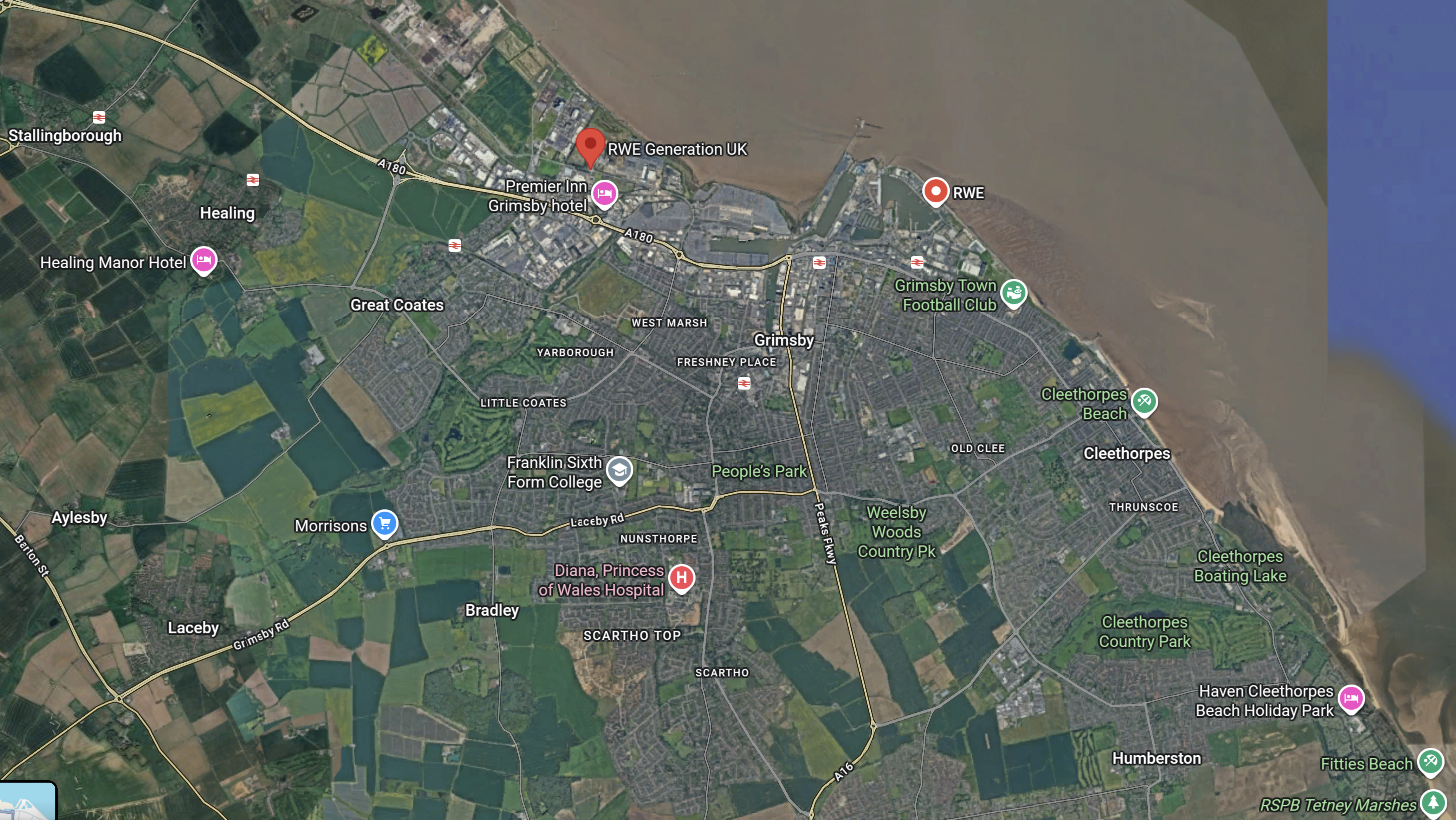
This Google Map shows the location of RWE’s facilities in Grimsby.
Note.
- The bright red arrow at the top of the map indicates RWE Generation UK in Grimsby Docks.
- There is another RWE location to the right of the bright red arrow.
- There is a line of stations along the coast, which from left-to-right are Stallingborough, Healing, Great Coates, Grimsby Town, Grimsby Docks, New Clee and Cleethorpes.
- Cleethorpes is not shown on the map.
- Doncaster and Cleethorpes are 52.1 mile apart, which is within the range of a battery-electric Hitachi and other trains.
- Charging would be at Doncaster, which is fully electrified and at Cleethorpes, by a short length of electrification.
This OpenRailwayMap shows the layout of and the railways around Grimsby Dock.

Note.
- Cleethorpes station is indicated by the blue arrow, in the South-East corner of the map.
- Cleethorpes station has four platforms, but no electrification.
- Grimsby Docks are to the North of the railway to Cleethorpes.
- This Wikipedia entry for Cleethorpes station, shows other railways and light railways served the area. Some were even electric.
These are a few of my thoughts on the development of railways between Sheffield and Cleethorpes.
RWE Will Be A Large Driver Of Employment In Grimsby
Earlier I wrote.
- Does RWE’s new UK Centralised Control Room control all their UK offshore wind farms?
- I have added them all up and there are almost 12 GW around our shores.
- I’ve read somewhere, that RWE are the UK’s largest power generator. From these figures, that would not surprise me.
It’s a long time, since I’ve added resources to a large project, so I asked Google AI, “How many people are needed to support a 1 GW offshore wind farm in the UK?”, and received this answer.
Direct & Indirect Support: For a large-scale project, this often breaks down into approximately 100–150 direct, permanent, high-skilled roles (technicians, engineers, management) and hundreds more in indirect, contracted, or supply chain roles (vessel crews, port operations, logistics).
Industry Average: Studies suggest that for operations and maintenance (O&M), around 50–100 full-time equivalent (FTE) jobs are generated per GW of installed capacity in terms of direct, permanent staff.
Key Takeaways for a 1 GW Farm:
- Direct Technicians/Operators: ~100–200+ (working on-site, turbines, or in control rooms).
- O&M Support Services: ~300–400+ (vessel operators, port logistics, supply chain).
- Total Operations Personnel: 300–600+ people.
Google AI appeared to have borrowed the figure from Ørsted and Hornsea 1 and 2.
So if it’s correct, there will be a total of 7,200 personnel supporting RWE’s wind farms in the UK. Even if only a third were employed in Grimsby, that is still a lot of people to accommodate and who will need to travel to work.
I also think a lot of personnel will come in by train, as the station is close to RWE’s locations.
Will Grimsby Have An Aberdeen-Sized Office-Shortage Problem?
One of the biggest problems, I was always hearing in the 1970s, was the shortage of offices in Aberdeen for the use of the oilmen.
In RWE Goes For An Additional 10 GW Of Offshore Wind In UK Waters In 2030, I talked about RWE’s plans for the future and published this table of new wind farms.
- Sofia – 1,400 MW
- Norfolk Boreas – 1380 MW
- Norfolk Vanguard East – 1380 MW
- Norfolk Vanguard West – 1380 MW
- Dogger Bank South – 3000 MW
- Awel y Môr – 500 MW
- Five Estuaries – 353 MW
- North Falls – 504 MW
Note.
- Sofia is nearly complete.
- Only the three Norfolk and the Dogger Bank South wind farms are on the East side of England and suitable to be serviced from Grimsby., but they still total 7,140 MW.
Has Grimsby got the office-space for all the people needed?
Could The Cleethorpes And Liverpool Lime Street Service Be Run By Battery-Electric Rolling Stock?
The various sections of this route are as follows.
- Cleethorpes and Doncaster – No Electrification – 52.1 miles
- Doncaster and Meadowhall – No Electrification – 15.2 miles
- Meadowhall and Sheffield – No Electrification – 3.4 miles
- Sheffield and Dore & Totley – No Electrification – 4.2 miles
- Dore & Totley and Hazel Grove – No Electrification – 29.2 miles
- Hazel Grove and Stockport – Electrification – 3.3 miles
- Stockport and Manchester Piccadilly – Electrification – 5.9 miles
- Manchester Piccadilly and Deansgate – Electrification – 0.8 miles
- Deansgate and Liverpool South Parkway -Not Electrified – 28.2 miles
- Liverpool South Parkway and Liverpool Lime Street – Electrified – 5.7 miles
Adding the sections together gives.
- Cleethorpes and Hazel Grove – No Electrification – 104.1 miles
- Hazel Grove and Deansgate – Electrification – 10 miles
- Deansgate and Liverpool South Parkway -Not Electrified – 28.2 miles
- Liverpool South Parkway and Liverpool Lime Street – Electrified – 5.7 miles
Note.
- To cover the 104.1 miles to Hazel Grove battery-electric trains would probably need to leave Cleethorpes with full batteries.
- Doncaster is a fully-electrified station and passing trains may be able to have a quick top-up.
- In South Yorkshire Now Has Better North-South Connections, I calculated that Doncaster is a very busy station with 173 express trains per day calling at the station or one every 8.5 minutes.
- Will trains be able to stop for a long period to charge batteries?
- It may be prudent to electrify between Meadowhall and Sheffield, under the Midland Mainline Electrification.
- Sheffield and Dore & Totley is shown that it will be electrified, under the Midland Mainline Electrification.
- Do we really want to have electrification marching along the Hope Valley Line?
- I believe that hydrogen-hybrid locomotives will be a better solution for freight trains on scenic lines like the Hope Valley, as they are zero-carbon, powerful and with a range comparable to diesel.
I believe CAF, Hitachi and Siemens have off the shelf rolling stock and factories in this country, who could build trains for the Cleethorpes and Liverpool Lime Street route.
How Would You Charge Battery-Electric Trains At Cleethorpes?
This picture shows Cleethorpes station
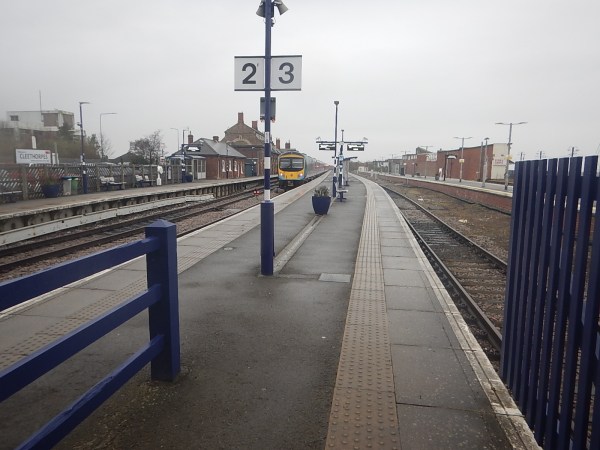
Note.
- The four long platforms without electrification.
- The platforms have recently been refurbished.
- The train in Platform 2 is a TransPennine Express Class 185 Siemens Desiro diesel train.
The simplest way to electrify the station would be to put up enough 25 KVAC overhead wires, so that battery-electric trains needing a charge could put up a pantograph and have a refreshing drink.
In Technology Behind Siemens Mobility’s British Battery Trains Hits The Tracks, I wrote about Siemens Rail Charging Converter.
This is a visualisation of a Siemens Rail Charging Converter in action.
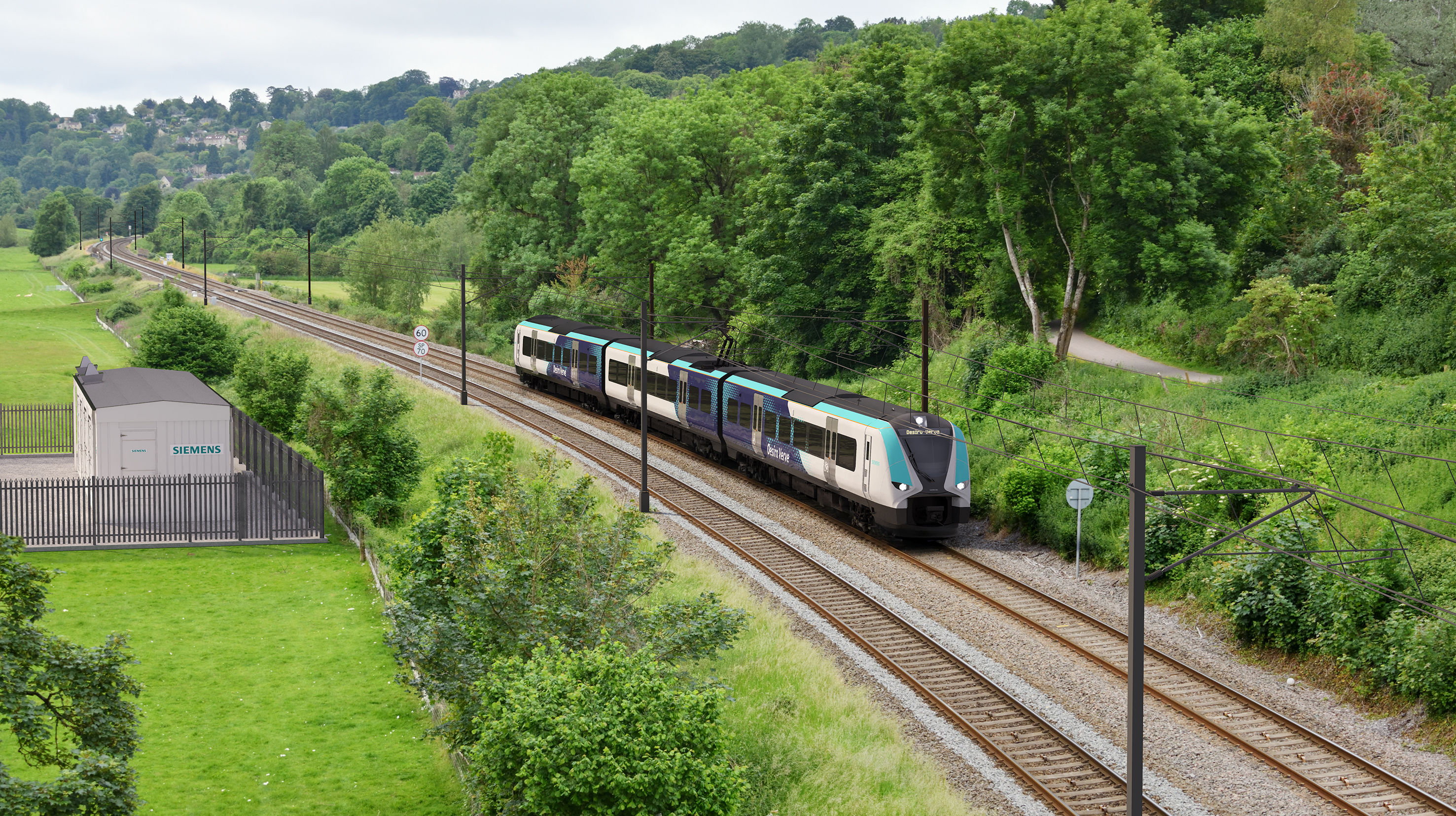
Note.
- The track is electrified with standard 25 KVAC overhead electrification.
- The train is a standard Siemens electric or battery-electric train.
- Siemens Rail Charging Converter, which is the shed in the compound on the left is providing the electricity to energise the catenary.
- I suspect, it could power third rail electrification, if the Office of Rail and Road ever allowed it to be still installed.
- The Siemens Rail Charging Converter does have one piece of magic in the shed. I suspect it uses a battery or a large capacitor to help power the electrification, as it can be powered from any typical domestic grid supply.
- I also wonder, if it has safety devices that cut the power outside the shed if track workers or intruders are detected, where they shouldn’t be?
- It could even cut the power, when trains are not running to save power and increase safety.
This looks to me, that a Siemens Rail Charging Converter could be a superb example of out-of-the-box thinking.
Could The Cleethorpes And Barton-on-Humber Service Be Run By Battery-Electric Rolling Stock?
This OpenRailwayMap shows the railways of North-East Lincolnshire.
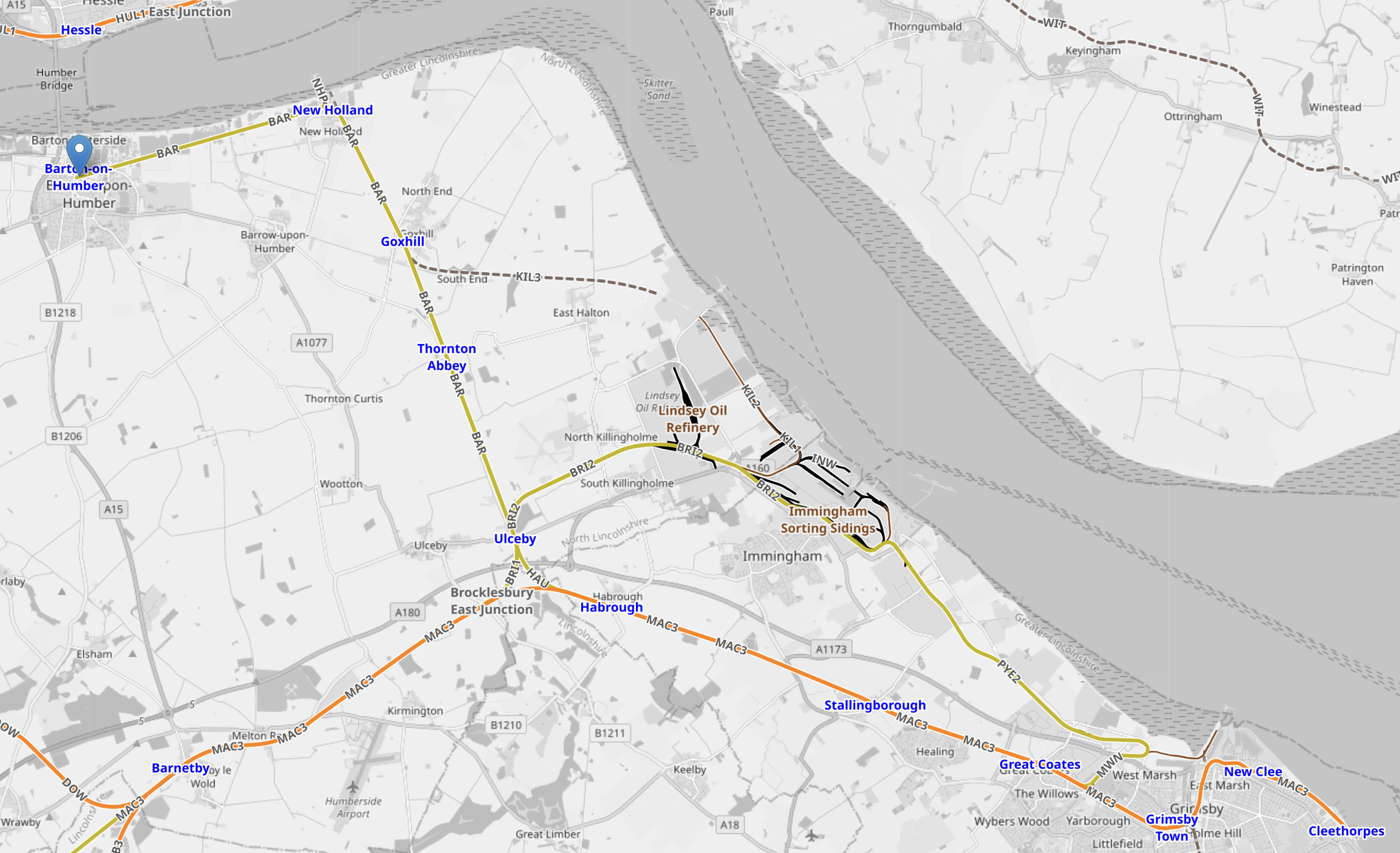
Note.
- Cleethorpes is in the South-East Corner of the map.
- Barton-on-Humber is in the North-West corner of the map and marked by a blue-arrow.
- Stations from South to North would be New Clee, Grimsby Docks, Grimsby Town, Great Coates, Healing, Stallingborough, Habrough, Ulceby, Thornton Abbey, Goxhill, New Holland and Barrow Haven.
- The line is double track.
- Cleethorpes and Barton-on-Humber is just 22.8 miles.
- A round trip would be under fifty miles, which would be well within range of a full-charge at one end.
- Service is one train per two hours (tp2h), which would only need a single train, shuttling between Cleethorpes and Barton-on-Humber.
- Two trains could provide an hourly service.
I would expect, that well-designed, solid and reliable German engineering could build a Siemens’ Rail Charging Connector that could charge four trains per hour (tph) at Cleethorpes station.
At present services are.
- TransPennineExpress – 1 tph to Liverpool Lime Street.
- East Midlands Railway – 1 tp2h to Barton-on-Humber
- East Midlands Railway – 1 tp2h to Matlock via Lincoln and Nottingham
- Northern Trains – 1 train per day (tpd) Sheffield via Brigg.
That is probably only about two tph.
Could The Cleethorpes And Sheffield Service Be Run By Battery-Electric Rolling Stock?
This is a description of the current Cleethorpes and Sheffield service.
- It is run by Northern Trains.
- The morning train leaves Sheffield at 09:54 and arrives in Cleethorpes at 11:40.
- The afternoon train leaves Cleethorpes at 13:20 and arrives in Sheffield at 15:10.
- The train is a Class 150 diesel train, which is a bit of a Joan Collins of a train – Of a certain age, but still scrubs up extremely well!
- Intermediate stations are Worksop, Retford, Gainsborough Central, Kirton Lindsey, Brigg, Barnetby and Grimsby Town
- The route length is 71.6 miles
- Trains take about 45-50 minutes.
It is also a parliamentary train.
The Wikipedia entry for parliamentary train gives this description of the Cleethorpes and Sheffield service.
Via Kirton Lindsey & Brigg. Became a parliamentary service when weekday services were withdrawn in 1993. Regular trains have operated between Gainsborough and Sheffield for most timetable periods since. Suspended January 2022 by Northern, who cited COVID-19 and staffing issues , but the service was reinstated in December 2022. Changed in May 2023 to be one return journey on weekdays only.
In the 1950s and 1960s I lived in Felixstowe part of the time and in the 1970s and 1980s I lived near Woodbridge and I observed first hand the development of the Port of Felixstowe and the effects it had on the surrounding countryside.
The development of the Port of Felixstowe, has brought the following.
- Improved roads and railways.
- Ipswich is now an hour from London by train.
- Ipswich is now a University town.
- New housing and other developments, both in Ipswich and Felixstowe and the surrounding countryside.
- Employment also has increased considerably, both in the Port and in surrounding towns.
- Ipswich’s football team is very much respected all over Europe and has won the English top division, the FA Cup and the UEFA Cup.
When you consider the jobs that RWE could create in the Port of Grimsby, I believe that this could have similar effects in Grimsby and Cleethorpes, as the Port of Felixstowe had in East Suffolk.
Already, the following are being talked about.
- A direct rail link between Cleethorpes and Grimsby to London.
- Battery-electric trains between Cleethorpes and Grimsby and Doncaster, Manchester and Liverpool Lime Street.
I believe that an improved rail link between Cleethorpes and Sheffield could be the catalyst for much needed housing along the route, which would be to the benefit of Cleethorpres, Grimsby, Sheffield and all the intermediate towns and villages on the route.
and the affects this will have on the countryside around the town, I believe that a strong case can be made out for a more frequent service between Cleethorpes and Sheffield.
 The Anonymous Widower