How Will The East Coast Main Line Timetable Change Affect Sheffield?
This article in the October 2025 Edition of Modern Railways is entitled Industry Gears Up For December ECML Timetable Change.
This is the first paragraph.
Major changes are planned to trains along the East Coast main line from 14 December as the long-heralded timetable takes effect.
In this post, I will see how the changes detailed in the article in Modern Railways will affect Sheffield and Doncaster.
Aberdeen-Edinburgh
This is said about Aberdeen and Edinburgh services.
Monday-Saturday services will not change between Aberdeen and Edinburgh, with all intermediate stations served at similar times.
The LNER service to and from King’s Cross will call additionally at Doncaster, Newark Northgate and Peterborough; the last LNER Monday-Friday departure from Aberdeen will terminate at Doncaster instead of Leeds, and the first LNER Monday-Saturday train to Aberdeen will start from King’s Cross at 05:48 instead of Leeds.
Note.
- An hourly fast train between Edinburgh and King’s Cross will have a journey time of 4 hours and 10 minutes, which is a saving of at least 12 minutes.
- There is an Aberdeen-Manchester air service, but no Edinburgh-Manchester or Leeds-Scotland air services.
- In Could London And Central Scotland Air Passengers Be Persuaded To Use The Trains?, I speculated about how air passengers could be tempted to use the trains between London and Central Scotland.
- It looks to me, that LNER are strengthening their services between Doncaster and Scotland.
- Will that 05:48 King’s Cross departure for Aberdeen, enable a working day in Aberdeen and return?
Is LNER’s aim to get travellers to use the trains between Doncaster and Scotland, as an alternative to driving or trains from Leeds?
Alnmouth and Berwick
This is said about Alnmouth services.
Quicker LNER journey times are promised to stations South of York, with King’s Cross-Alnmouth journey times up to 15 minutes quicker.
More TPE trains will run between Newcastle, Morpeth, Alnmouth, Berwick, Reston, Dunbar, East Linton and Edinburgh Waverley.
The number of trains calling at Durham on weekdays will fall from 18 to 13 Southbound and from 15 to 10 Northbound.
This is said about Berwick services.
LNER trains will call every two hours during the middle of the day, and the number of weekday trains to King’s Cross falls from 15 to 11 Southbound with a 13 to nine fall Northbound. More TPE trains will call.
Note.
- Lumo serves Newcastle, Morpeth and Edinburgh.
- Reston and East Linton are new stations.
- The stations between Newcastle and Edinburgh need adequate parking to attract commuters.
It looks to me, that LNER are timing the trains to attract day trips along the East Coast Main Line.
Bradford Forster Square/Interchange
This is said about Bradford Forster Square services.
The number of weekday trains will remain as per May 2025, but on Sundays, the number of trains serving Forster Square increases from two to six each way on a two-hourly interval. LNER stopping patterns change, with fewer trains calling at Peterborough and none at Grantham or Retford.
Trains currently stop at Peterborough, Doncaster, Wakefield Westgate, Leeds and Shipley, but surely a more regular six trains per day (tpd) is preferable.
This is said about Bradford Interchange services.
At Interchange, Grand Central Trains will run at different times to the May 2025 timetable, with King’s Cross journeys up to 20 minutes quicker. One GC each way will call at Peterborough, while some will stop at Pontefract Monkhill on Sundays for the first time.
Note.
- Trains currently stop at Peterborough, Doncaster, Pontefract Monkhill, Wakefield Kirkgate, Mirfield, Brighouse, Halifax and Low Moor
- Is the twenty minutes time saving due to the new digital signalling to the South of Doncaster?
- Is this another open access operator being allowed to do what they do best?
This looks to be a very useful service, which serves several stations, with no other service to London.
Doncaster
This is said about Doncaster services.
Additional trains calling at destinations including Birmingham New Street, Sheffield, York, Newark and Berwick-upon-Tweed. LNER Aberdeen/Inverness trains will call at Doncaster. EMR trains will be retimed at Doncaster to provide better connections with LNER’s revised timetables, but journeys from Doncaster to Sleaford and Spalding will require a change at Lincoln. This change has been made to “enable improved connections” at Peterborough, Sleaford, Lincoln and Doncaster. The number of trains calling at Stevenage falls from 24 to 19 Southbound and 24 to 21 Northbound, with Grantham stops dropping by seven trains to 28 Southbound and 4 to 29 Northbound.
If CrossCountry Trains were to switch their trains to Hitachi InterCity Battery trains, I believe that a version of these trains could handle routes like Plymouth and Aberdeen.
- This would speed up services.
- Trains would run close together and thus increase capacity.
- Services could even be faster.
So expect a replacement order for CrossCountry Trains diesel multiple units soon.
Glasgow
LNER gave up serving Glasgow Central from King’s Cross in the December 2024 timetable change.
In Lumo Will Extend Its King’s Cross And Edinburgh Service To Glasgow, I talked about Lumo extending their King’s Cross and Edinburgh service to Glasgow Central station.
Hull
This is said about Hull services.
On Mondays-Fridays, Hull Trains will provide an extra train from London.
The LNER Monday-Friday Hull-Doncaster train will be withdrawn;
Northern will operate a 20:25 departure to Doncaster; calling at Brough and Selby.
Note.
- It looks like Great British Railways have surrendered Hull and Beverley to Hull Trains.
- Hull Trains are converting their Class 802 trains to battery-electric power.
- It is likely that Hull Trains upgraded trains will be able to use the Great Northern and Great Eastern Joint Line via Lincoln on battery power.
The new timetable appears to be ready for the future of Hull Trains.
Leeds
This is said about Leeds services.
LNER services will depart to King’s Cross at xx.10 and xx.40.
Northern will introduce an extra mostly hourly service between Leeds and Sheffield calling at Wakefield Westgate. They will depart about 30 minutes earlier or later than the CrossCountry service.
Note.
- I would expect the two King’s Cross and Leeds services which would both stop at Doncaster and Wakefield Westgate would set the timings between Doncaster and Leeds.
- Currently, of the four trains that run to and from Leeds every two hours, two are planned to terminate at Leeds, one at Harrogate and one at Bradford Forster Square.
- There is also a daily service between King’s Cross and Skipton via Leeds.
- I can envisage another service between King’s Cross and Ilkley via Leeds, Kirkstall Forge, Guiseley, Burley-in-Wharfedale and Ben Rhydding.
- I can envisage another service between King’s Cross and Huddersfield, via Leeds, White Rose, Morley, Batley, Dewsbury, Ravensthorpe, Mirfield and Deighton.
- I can envisage another service between King’s Cross and Hebden Bridge, via Leeds, White Rose, Morley, Batley, Dewsbury, Ravensthorpe, Mirfield, Sowerby Bridge, Mytholmroyd and Brighouse.
- An alternative to Hebden Bridge would be Rochdale, which already has four platforms and is on the Manchester Metrolink
- It appears that Bradford Forster Square, Harrogate, Huddersfield, Leeds and Skipton stations can turn nine or ten-car trains and Ilkley can turn five-car trains.
- I also believe that one of Hitachi’s InterCity Battery trains could use battery power to take the spectacular Settle and Carlisle Line to Carlisle or even Glasgow Central.
- If needed pairs of five-car trains could split and join at Leeds, with one train waiting at Leeds and the other train going on to another destination.
- The CrossCountry and Northern Trains services on the Sheffield and Leeds route via Doncaster and Wakefield Westgate would probably need to be modern battery-electric trains to maximise the capacity on the route.
There certainly seem to be opportunities to give a number of stations in Yorkshire an all-electric service to King’s Cross with a two-hourly frequency, in a time of a few minutes over two hours.
Lincoln
This is said about Lincoln services.
One more LNER train from King’s Cross will run, with the first train arriving earlier and the last train later. There will no longer be an LNER train serving Stevenage with passengers having to change at Newark Northgate or Peterborough. An improved service will run to and from Nottingham, with an increase from one to two trains per hour on Mondays-Saturdays. An hourly service will run to Crewe, and a new Matlock-Nottingham-Lincoln-Cleethorpes service will run. EMR will cease all bar morning peak direct trains to/from Leicester. Newark Northgate-Lincoln trains will be reduced from five to four on Mondays-Fridays, eight to four on Saturdays and ten to eight on Sundays.
Note.
- Travellers between Lincoln/Nottingham and the North/Scotland will have two trains per hour to Newark Northgate, where there will be two tph to the North/Scotland.
- The hourly Crewe service will give access to Liverpool Manchester and the West Coast Main Line.
- Will there still be a Liverpool and Norwich service or will this be replaced by East-West Rail?
There seems to be a big sort out to EMR services.
Newcastle
This is said about Newcastle services.
The number of trains serving King’s Cross increases from 35 to 53 Southbound on weekdays and from 36 to 52 Northbound. One train every hour will run non-stop to York. More TPE trains will run Northbound (see Alnmouth and Berwick), while Northern is retiming services on the Northumberland Line in anticipation of Northumberland Park and Bedlington stations opening in early 2026. A semi-fast hourly service between Newcastle and Middlesbrough will run on Mondays-Saturdays and there will be an hourly stopping service between them.
Note.
- There will be a big increase in services between King’s Cross and Newcastle.
- Is the aim to persuade travellers to use trains rather than airlines?
- LNER also runs one train per day (tpd) between King’s Cross and Middlesbrough.
- Grand Central Trains will be running at a frequency of six tpd between King’s Cross and Sunderland via Thirsk, Northallerton, Eaglescliffe, Hartlepool and Seaham.
Hull appears to have been left to Hull Trains and Glasgow to Lumo, and Sunderland appears to be left for Grand Central Trains.
Conclusions
I am coming to some conclusions about services on the East Coast Main Line, with respect to Sheffield.
Doncaster Is A Well-Equipped Station
Doncaster is the nearest station to Sheffield on the East Coast Main Line.
- Over the last few years, Doncaster station has been improved.
- It has a subway with a more than adequate number of lifts.
- The station has nearly 600 parking spaces.
- There is a taxi rank.
- There is no Marks & Spencer’s food store, which is important for a coeliac like me.
- There are thirty bus stands close to Doncaster station.
- Doncaster station is well-equipped with cafes, a pub and coffee stalls.
- All trains to Aberdeen, Bradford Forster Square, Bradford Interchange, Edinburgh, Hull, King’s Cross, Leeds, Sheffield and Wakefield seem to stop at the station.
- There are several local trains per hour.
- Changing trains is not a strenuous exercise.
Doncaster is one of the UK’s better regional stations.
Doncaster Needs A Connection To The Sheffield Supertram
One of the first things, I do when I arrive in a strange town or city is look for the local public transport network.
In 2019, Sheffield published an ambitious plan for their tram network, which I wrote about in Sheffield Region Transport Plan 2019 – Doncaster Sheffield Airport.
The post contained this map, of Sheffield’s plans for the trams.
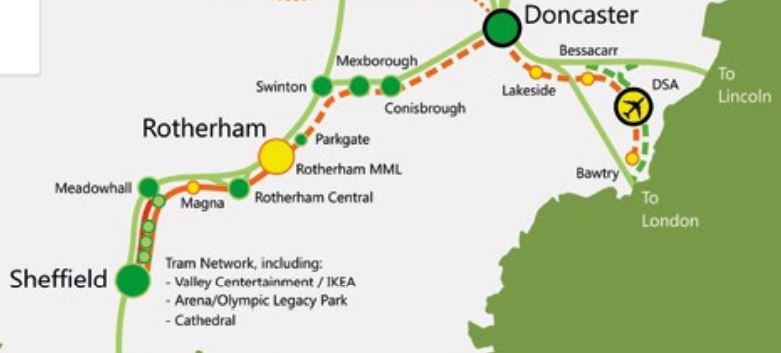
Doncaster and Doncaster Sheffield Airport are connected to the current end of the tram-train route at Rotherham Parkgate.
This OpenRailwayMap shows the rail lines between Rotherham Parkgate and Doncaster.
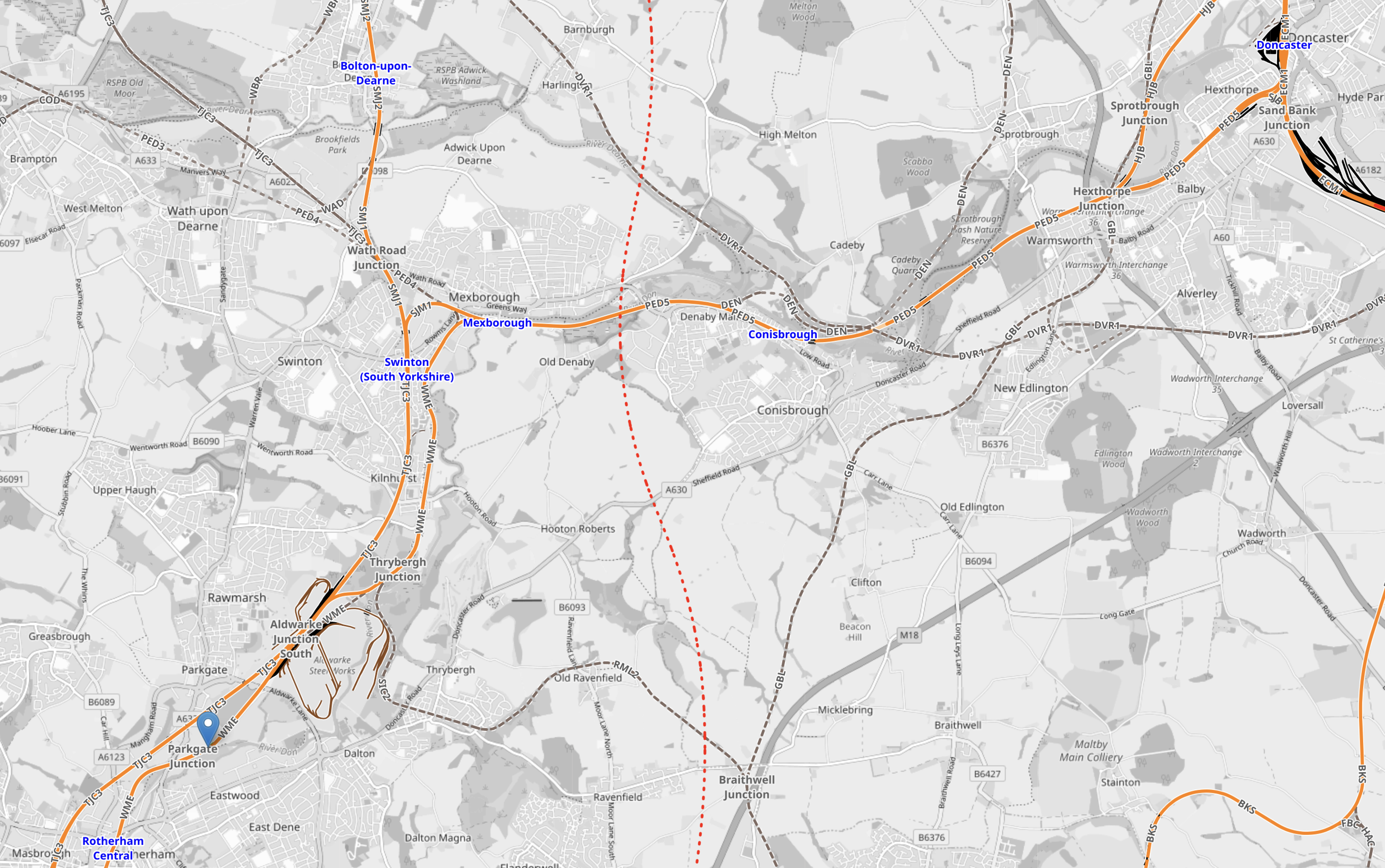
Note.
- Doncaster station is in the North-East corner of the map.
- Rotherham Central station is in the South-West corner of the map.
- The blue arrow in the South-West corner indicates Rotherham Parkgate tram stop.
- Swinton, Mexborough and Conisbrough stations can be picked out.
- The dotted red line running North-South across the map is the route of the ill-fated Eastern Leg of High Speed Two.
It is a simple application of tram-train technology to connect Doncaster station and Doncaster Sheffield Airport to the Sheffield Supertram.
With all the comings and goings on the East Coast Main Line at Doncaster station, I believe that the tram-train connection to Sheffield and Rotherham is essential.
The Cities Of Bradford, Doncaster, Leeds, Sheffield and Wakefield Can Have a High-Frequency Rail Connection
Consider.
- Four stations are all step-free with a bridge or subway served by lifts.
- Bradford Forster Square station has level access to the platforms from the street.
- The rail lines between the five stations are electrified, with the exception of Sheffield and Doncaster.
- Services between the cities are run by CrossCountry Trains, Grand Central Trains, Hull Trains, LNER and Northern Trains.
- Most maximum speeds are not unduly slow.
Consequently the five cities can have a high-frequency rail connection in excess of four tph.
Could this be the basis of a Five-Cities Metro?
Open Access Services
There are six open access services running on the East Coast Main Line.
- Grand Central Trains – King’s Cross-Bradford Interchange via Peterborough, Doncaster, Pontefract Monkhill, Wakefield Kirkgate, Mirfield, Brighouse, Halifax and Low Moor – 4 tpd
- Grand Central Trains – King’s Cross-Sunderland via Peterborough, York, Thirsk, Northallerton, Eaglescliffe and Hartlepool – 6 tpd
- Hull Trains – King’s Cross-Hull via Stevenage, Grantham, Retford, Doncaster, Selby, Howden, Brough – 4 tpd
- Hull Trains – King’s Cross-Beverley via Stevenage, Grantham, Retford, Doncaster, Selby, Howden, Brough, Hull and Cottingham – 2 tpd
- Lumo – King’s Cross-Edinbugh via Stevenage, Newcastle and Morpeth – 5 tpd
- Lumo – King’s Cross-Glasgow Queen Street via Stevenage, Newcastle, Morpeth, Edinburgh and Falkirk High – 2 tpd
Note.
- tpd is trains per day.
- All seem to serve an exclusive area, except Lumo.
- In a couple of years, all could be using Hitachi trains.
- I suspect some services will swap their diesel generators for batteries.
Battery-power would allow some services to be zero-carbon, even when using the GNGE diversion.
An Extreme Day Out – Bradford Forster Square Station
It seems to be the fashion to go and visit somewhere far away in a day. So why not?
For my first trip in this vein, I decided on the spur of the moment to go to Bradford Forster Square station.
Why Did I Choose Bradford Forster Square Station?
There are three main reasons.
- A new platform has just opened at the station to handle the longest LNER trains.
- LNER are now running a seven trains per day (tpd) service via Leeds.
- I wanted to see how LNER’s walk-up ticketing performed on the route.
In addition, I wanted to see how the service performed, now that Bradford is this year’s UK City of Culture.
King’s Cross To Bradford Forster Square Station For £43.00 With A Railcard
I just missed the 11:03, so I booked the 13:03 for £43.00 with my Senior Railcard, from one of the numerous ticket machines in King’s Cross.
The train arrived on time in two hours 47 minutes for the 199.4 miles, which was an average speed of 72 mph.
In What Will Be The Fastest Times Possible Between London King’s Cross And Leeds?, I predicted this.
I wouldn’t be surprised to see with full digital signalling and a 125 mph average between London King’s Cross and Leeds.
- 125 mph Base Time – 89 minutes.
- Four Acceleration/Deceleration sections at 6 minutes each – 24 minutes.
- Three Dwell Times at 2 minutes each – 6 minutes
This would mean a total time of one hour and 59 minutes.
As my Bradford service took two hours and 28 minutes between London King’s Cross And Leeds, that would mean, that a time close to two hours and fifteen minutes could be possible between London King’s Cross and Bradford Forster Square stations.
There Weren’t Many Passengers Between Leeds And Bradford Forster Square Stations
These pictures show the nearly empty train and the small numbers, who alighted at Bradford Forster Square station.
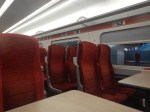
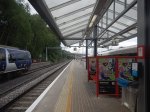
But I don’t think three in the afternoon is a time, when many passengers will need to go between Leeds and Bradford Forster Square stations.
Bradford Forster Square Station
I described that station, with its new Platform 0 in Bradford Forster Square Station – 20th May 2025, where I said the station needed these additions.
The station needs a few additions, like a proper coffee shop, a better shop, ticket machines and toilets.
But it’s not been open very long.
Bradford Forster Square Station To King’s Cross For £25.70 With A Railcard
I bought this ticket from a Yorkshire Lass in the Ticket Office.
There Weren’t Many Passengers Between Bradford Forster Square And King’s Cross Stations
Only about a dozen passengers boarded the train at Bradford Forster Square and some got out at Leeds.
In fact the train wasn’t very busy all the way to London with perhaps twenty passengers in my carriage, when we arrived in King’s Cross.
Will This Service Develop Into A Two-Hourly London King’s Cross And Leeds Or Bradford Forster Square Service With A Trans-Yorkshire Service Tacked On?
Currently, it is the following.
- An express service between King’s Cross and Leeds with stops at Peterborough, Doncaster and Wakefield Westgate.
- An express service between King’s Cross and Bradford Forster Square with stops at Peterborough, Doncaster, Wakefield Westgate and Leeds.
- A local service between Doncaster and Bradford Forster Square with stops at Wakefield Westgate and Leeds.
- Additional calls on some services are at Stevenage, Grantham, Retford and Shipley.
In addition the following would be possible.
- Pairs of trains could split at Leeds, with one train going to Bradford Forster Square and the other train to somewhere like Harrogate, Huddersfield or Skipton.
- Additional stops could be added between Leeds and Bradford Forster Square without slowing services between Leeds and King’s Cross.
But then where does this fit with LNER buying ten CAF tri-mode trains?
Surely they would get better flexibility, if they’d bought more Azumas, which could run on the electrification all the way to Bradford Forster Square, Huddersfield and Skipton. If some had batteries, they could run all the way to Harrogate.
LNER’s Disabled-Unfriendly Refreshments System
I am not disabled, but I only have one fully-working hand, as the school bully broke my left humerus and I have difficulty doing certain things with my left hand, due to the quality of the care I received in Highlands Hospital in Winchmore Hill.
Having a left-sided stroke didn’t help either.
One of the things, I can’t do is take pictures on my mobile phone, so I always carry a proper camera. Because of the injury, I have also never read a QR code with my phone.
On LNER’s trains to get a drink, you either have to order it by reading a QR code or walking to the buffet.
As on the train going North, the buffet was closed, I went thirsty.
In future, if I have a choice of trains, I’ll choose one with a trolly service.
Are The CAF Tri-Mode Trains Part Of A Plan To Drive Open Access Operators Out Of Yorkshire?
This is possibly the only scenario that makes sense.
The ten-car tri-mode trains would be used to take over Grand Central’s services to Bradford Interchange and Sunderland, and Hull Trains services to Hull.
After Monday, LNER are now running more daily services to Bradford Forster Square, than Grand Central are to Bradford Interchange.
If like my return to London on Tuesday, you can buy a walk-up ticket on LNER, then why would you travel on Grand Central.
Conclusion
£68.70 is not a bad price for what is in effect a walk-up day return to Bradford Forster Square.
I’ve just looked how much, I would be charged for an advance ticket on Friday, using the trains I used on Tuesday.
I could get a ticket for £25.70 going North and £28.95 going South or a total of £54.65. All are with my Senior Railcard.
But it does look to me, that LNER and the Government are trying to drive Grand Central off the Bradford route.
If I am right and Hull Trains and Lumo will be next in LNER’s sights, then what was Starmer and other Government ministers doing at the launch of orders for new trains for Grand Central, Hull Trains and Lumo?
Improving Trains Between London And Bradford
Current Services Between London And Bradford
LNER services run between Kings Cross and Bradford Forster Square stations.
- Two trains per day (tpd) run between Bradford and London in the early morning.
- Two tpd run between London and Bradford in the evening.
- Trains take two and three-quarter hours.
- Stops are at Shipley, Leeds, Wakefield Westgate, Doncaster, Retford Grantham and Stevenage.
- Trains seem to be generally a pair of five-car Class 801 trains.
Note.
- Trains reverse at Leeds.
- The timetable seems a bit lopsided, as there is no early morning train to Bradford or an evening one to London.
- Harrogate gets a one train per two hours (tp2h) service to and from London.
The timetable could do with an improvement.
Grand Central services run between Kings Cross and Bradford Interchange stations.
- Four tpd run between Bradford and London.
- Four tpd run between London and Bradford.
- Trains take three and a quarter hours.
- Stops are at Pontefract Monkhill, Wakefield Kirkgate, Mirfield, Brighouse, Halifax and Low Moor
- Trains are five-car Class 180 trains, which have seen better days.
Note.
- The timetable seems a bit lopsided, as there is no early morning train to Bradford or an evening one to London.
The timetable and the trains could do with an improvement.
LNER’s New Ticketing And Nine-Ten Car Trains
LNER have introduced the selling of Advanced Tickets from machines or the Booking Office as late as five minutes before the train leaves.
- My last three trips from Leeds to London cost me £33.55, £33.75 and £33.55 with my Senior Railcard.
- All were bought less than ten minutes before the train left.
- In two of the journeys, I spread out in two seats
- Trains were either a pair of five-car Class 801 trains or a nine-car InterCity 225.
I took these pictures after my last return from Leeds on Tuesday.
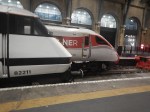

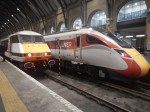
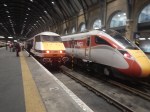
Note.
- Two of the three trains I’ve taken lately have arrived 3-4 minutes early.
- Not a great increase, but I do wonder if LNER are seeing what is possible with the new digital signalling.
- The British Rail era; InterCity 225 seems to hold its own against the new Hitachi train.
I wouldn’t be surprised that LNER intend to both run high-capacity trains between London and Leeds and fill them by competitive pricing.
A Grand Central Train Failure On Tuesday
This was my journey to Bradford on Tuesday,
- I was supposed to take the 1057 Grand Central service to Bradford Interchange, where it was timed to arrive at 1400.
- But the train didn’t run and we were all advised to get on the 1103 to Leeds and change at Doncaster.
- We arrived at Doncaster in Platform 4, a minute late at 1240 and got straight on a Grand Central train in the opposite Platform 6.
- We left Doncaster at 1251, which was sixteen minutes late.
- But we arrived in Bradford Interchange more or less on time at 1401.
Despite leaving six minutes late from Kings Cross and changing trains at Doncaster, we arrived at Bradford on time.
Battery-Electric Trains Between London and Bradford Interchange
I feel that my journey on Tuesday indicated.
- Electric trains between London and Doncaster can easily meet the current timetable.
- The Grand Central train went between Doncaster and Bradford Interchange was sixteen minutes faster than the timetable.
I wouldn’t be surprised that London and Bradford Interchange could be a few minutes under three hours.
Consider.
- It has been said that between Bradford Interchange and Leeds will be electrified.
- Bradford Interchange and Doncaster does not have electrification, but is only 52 miles.
- Electrification of Bradford Interchange station, will allow battery-electric trains to be charged in around 10-12 minutes.
- Most inter-city battery-electric trains have a battery range of at least eighty miles.
- Digital signalling is being installed between London and Doncaster to allow 140 mph running and more trains in the timetable.
I believe that a battery-electric train with sufficient range, charging South of Doncaster and at Bradford Interchange could go between London and Bradford Interchange in 5-10 minutes under three hours.
Bradford Interchange and all the other stations North of Doncaster on the route could probably also have a one tp2h service to and from London and the South.
Splitting And Joining Of Trains
Consider.
- Pairs of the Hitachi Class 801 trains have the ability to split and join en route, during a station stop extended by a few minutes.
- Platforms are long enough to handle splitting and joining at Doncaster, Leeds and York.
- Currently, three services to and from London go past Leeds; Bradford Forster Square, Harrogate and Skipton. All these services reverse in Leeds station, when they pass through.
- The reversing in Leeds station takes about 8-9 minutes.
- The track between Leeds and Bradford Forster Square is electrified.
- Leeds and Harrogate is not electrified and is 19.3 miles.
- The track between Leeds and Skipton is electrified.
- Bradford Forster Square has a service of two tpd.
- Harrogate has a service of one tp2h.
- Skipton has a service of one tpd.
In the Wikipedia entry for LNER, this is said.
From December 2019, LNER introduced a Harrogate to London service six times a day. LNER expected to introduce two-hourly services to Bradford and a daily service to Huddersfield by May 2020 when more Azuma trains had been introduced, however the latter has not yet been introduced.
Note.
- The Huddersfield service would have to reverse in Leeds station, like those to Bradford Forster Square, Harrogate and Skipton.
- Leeds and Huddersfield is not electrified and is 17.1 miles.
- Leeds and Huddersfield is being electrified.
Could LNER’s plan be to give Bradford Forster Square, Harrogate, Huddersfield and Skipton stations a two-hourly service , as the Wikipedia extract indicated, they intend to do for Bradford?
- All trains enter and leave Leeds to and from the West.
- Pairs of five-car trains would split and join at Leeds.
- Bradford Forster Square and Skipton services would be served by electric trains.
- Harrogate and Huddersfield services would be served by bi-mode or battery-electric trains.
- Horsforth, Keighley and Shipley could also get a one tp2h service to London.
It looks like services via Leeds could be much improved.
In a two-hour period the Leeds area will have the following trains to and from London Kings Cross.
- Two trains between London and Leeds via Peterborough, Doncaster and Wakefield Westgate
- One train between London and Bradford Forster Square via Stevenage, Grantham, Retford (Bradford-bound only), Doncaster, Wakefield Westgate, Leeds and Shipley.
- One train between London and Harrogate via Stevenage, Grantham, Doncaster, Wakefield Westgate, Leeds and Horsforth
- One train between London and Huddersfield via Stevenage, Grantham, Doncaster, Wakefield Westgate and Leeds
- One train between London and Skipton via Peterborough, Newark Northgate, Doncaster, Wakefield Westgate, Leeds, Shipley (London-bound only) and Keighley.
Note.
- Stops between London and Leeds would be adjusted to satisfy passenger numbers.
- Currently, there are a total of four trains in a two hour period.
- Six trains will be fitted in by having two London and Leeds trains and two pairs of five-car trains, that joined and split at Leeds.
There is still only four train paths needed in a two hour period between London and Leeds.
Digital Signalling Between London And Doncaster
The East Coast Digital Programme has its own web site, which gives this introduction to the programme.
The East Coast Digital Programme is delivering the next generation of train travel – creating a better performing East Coast Main Line for passengers and everyone else who uses and depends on it.
As part of the programme, traditional lineside signals will be removed and replaced with state-of the art digital signalling to improve the reliability of the train service.
The new technology continuously communicates with each train, providing signalling information directly to a computer screen in the driver’s cab. It boosts reliability, reduces carbon emissions and provides a more punctual service for customers.
In the first stage, digital signalling will be introduced on the Northern City Line, between Finsbury Park and Moorgate. It will then be progressively rolled out on the southern section of the East Coast Main Line (between London King’s Cross and the Stoke Tunnels, near Grantham).
It is expected that the first trains to operate on the East Coast Main Line using digital signalling technology will run in 2025, with all improvements expected to be completed by the end of the decade.
As a result of this programme, the East Coast Main Line will be GB’s first intercity mainline to be upgraded to digital. It lays the foundation for further improvements across the network, creating a more efficient railway fit for the future.
There is also a video.
Benefits of digital signalling will include.
- 140 mph running instead of 125 mph.
- An increase in the number of train paths.
- Trains will be able to be run closer together.
As a Graduate Control Engineer, I also believe that digital signalling will enable better control of trains through bottlenecks.
- Could ERTMS And ETCS Solve The Newark Crossing Problem?
- Is There An ERTMS-based Solution To The Digswell Viaduct?
A computer solution would surely be more affordable than some massive civil engineering.
What Will Be The Fastest Times Possible Between London King’s Cross And Leeds?
I put my thoughts in What Will Be The Fastest Times Possible Between London King’s Cross And Leeds?.
Conclusion
The original High Speed Two specification gave a time of one hour and twenty-one minutes between Euston and Leeds.
I suspect that time will be approached before 2040.
Could Class 777 Trains Create A Metro Centred On Preston?
Preston station is a major station on the West Coast Main Line, that will be served by High Speed Two.
- Electric long distance services to and from Birmingham, Carlisle, Liverpool, London Euston, Manchester, Edinburgh and Glasgow serve the station.
- Electric and diesel local services fan out from the station to Barrow-in-Furness, Blackburn, Blackpool, Burnley, Colne, Liverpool, Manchester and Ormskirk.
- Other local services could be developed.
Could the local services be turned into a zero-carbon Metro centred on Preston station, that would possibly use a version of Merseyrail’s Class 777 trains?
The Routes
These routes could be part of the Metro.
Preston And Barrow-in-Furness
Consider.
- This route is 55.8 miles long.
- The service calls at Lancaster, Carnforth, Silverdale, Arnside, Grange-over-Sands, Kents Bank, Cark, Ulverston, Dalton and Roose
- The route is electrified between Preston and Carnforth.
- 28.1 miles of the route are without electrification.
Northern use Class 195 diesel trains on this route.
Preston And Blackpool North
Consider.
- This route is 17.5 miles long.
- The service calls at Kirkham & Wesham, Poulton-le-Fylde and Layton
- The route is fully-electrified.
Northern use Class 195, 319 and 331 trains on this route.
Preston And Blackpool South
Consider.
- This route is 19.9 miles long.
- The service calls at Salwick, Kirkham & Wesham, Moss Side, Lytham, Ansdell & Fairhaven, St Annes-on-the-Sea, Squires Gate and Blackpool Pleasure Beach
- The route is electrified between Preston and Kirkham & Wesham
- 12.1 miles of the route are without electrification.
Northern use diesel trains on this route.
Preston And Colne
Consider.
- This route is 29.1 miles long.
- The service calls at Lostock Hall, Bamber Bridge, Pleasington, Cherry Tree, Mill Hill, Blackburn, Rishton, Church & Oswaldtwistle, Accrington, Huncoat, Hapton, Rose Grove, Burnley Barracks, Burnley Central, Brierfield and Nelson.
- Colne is 165 metres above sea level.
- The route is not electrified.
Northern use diesel trains on this route.
This route could also be extended to Skipton in Yorkshire, which is something that was promised by Government a few years ago.
The extension to Skipton could be another 15 miles.
Preston And Fleetwood
Consider.
- This route is 20.9 miles long.
- The service could call at Salwick, Kirkham & Wesham and Poulton-le-Fylde
- The route is electrified between Preston and Poulton-le-Fylde
- This route would need to be reinstated.
6.6 miles of the route are without electrification.
Preston And Liverpool Lime Street via St. Helens
Consider.
- This route is 35.2 miles long.
- The service calls at Huyton, St Helens Central, Wigan North Western, Euxton Balshaw Lane and Leyland
- The route is fully-electrified.
Northern use Class 319 and 331 trains on this route.
Preston And Manchester Airport
Consider.
- This route is 35.2 miles long.
- The service calls at Heald Green, Manchester Piccadilly, Manchester Oxford Road, Deansgate, Salford Crescent, Bolton, Lostock, Horwich Parkway, Blackrod, Adlington (1tph), Chorley, Buckshaw Parkway and Leyland
- The route is fully-electrified.
Northern use Class 195 and 331 trains on this route.
Preston And Ormskirk
Consider.
- This route is 15.3 miles long.
- The service calls at Burscough Junction, Rufford and Croston.
- The route is not electrified.
Merseyrail have their eyes on this route.
Preston And Windermere
Consider.
- This route is 50.3 miles long.
- The service calls at Lancaster, Carnforth, Oxenholme Lake District, Kendal, Burneside and Staveley
- The route is electrified between Preston and Oxenholme Lake District.
- 10.2 miles of the route are without electrification.
Northern use Class 195 diesel trains on this route.
Class 777 Trains
Consider.
- According to Stadler’s specification for the Class 777 IPEMU, the battery-equipped Class 777 trains have a range of 55 km or 34.2 miles.
- But, according to New Merseyrail Train Runs 135km On Battery, these trains have done 135 km or 83.9 miles.
- As there is no third-rail electrification at Preston, but lots of 25 KVAC overhead electrification, the version of the Class 777 train for 25 KVAC overhead will need to be used.
- There is no way that any third-rail electrification can be installed.
One comment to my post; The Stadler Data Sheet For A Class 777 IPEMU, suggests that batteries can’t be used with the 25 KVAC variant of the Class 777 due to lack of space.
I will use a starting point for the Class 777 IPEMU, that can access 25 KVAC has a range of 40 miles, which is just under half of the demonstrated maximum range of the current trains.
Class 331 Trains With Batteries
CAF have proposed a battery-electric version of their Class 331 train.
The closely-related Class 195 diesel trains and Class 331 trains already work some of the routes through Preston.
In Thoughts On CAF’s Battery-Electric Class 331 Trains, I estimated the range of these trains and reckoned that they would be between 35 and 70 miles.
The South Wales Valley Lines Solution
In The Greening Of The Valleys, I describe how the South Wales Metro will use a mix of trains.
- Stadler Citylink tram-trains for local routes.
- Stadler FLIRTs for routes on the main lines.
So could a Metro centred on Preston be based on the same principle?
I’ll look at each line in order.
Preston And Barrow-in-Furness
Consider.
- This route is 55.8 miles long.
- 28.1 miles of the route are without electrification.
- Northern use Class 195 diesel trains on this route.
A Class 331 with a battery range of sixty miles could work this route, charging the batteries between Preston and Carnforth.
Preston And Blackpool North
Any train that could use 25 KVAC electrification could use this route.
Preston And Blackpool South
Consider.
- This route is 19.9 miles long.
- 12.1 miles of the route are without electrification.
- Northern use diesel trains on this route.
A Class 777 with a battery range of 24.2 miles could work this route, charging the batteries between Preston and Kirkham & Wesham.
Preston And Colne
Consider.
- This route is 29.1 miles long.
- Colne is 165 metres above sea level.
- The route is not electrified.
- Northern use diesel trains on this route.
A Class 777 with a battery range of 30 miles could work this route, charging the batteries at Preston and Colne.
It might be prudent to electrify the single track line between Gannow Junction and Colne, so that trains have enough power to climb the hill to Colne and reach Colne with a full battery.
The extension to Skipton would require a range of 30 miles or just fifteen miles, if the 25 KVAC at Skipton was used to recharge the trains.
Preston And Fleetwood
Consider.
- This route is 20.9 miles long.
- 6.6 miles of the route are without electrification.
A Class 777 with a battery range of 13.2 miles could work this route, charging the batteries between Preston and Poulton-le-Fylde.
Preston And Liverpool Lime Street via St. Helens
Any train that could use 25 KVAC electrification could use this route.
Preston And Manchester Airport
Any train that could use 25 KVAC electrification could use this route.
Preston And Ormskirk
Consider.
- This route is 15.3 miles long.
- The route is not electrified.
A Class 777 with a battery range of 30.6 miles could work this route.
Trains would charge on their home network.
Preston And Windermere
Consider.
- This route is 50.3 miles long.
- 10.2 miles of the route are without electrification.
- Northern use Class 195 diesel trains on this route.
A Class 331 with a battery range of 20.4 miles could work this route, charging the batteries between Preston and Oxenholme Lake District.
Electrification Between Preston and Skipton Via Colne
Earlier when discussing the service to Colne and Slopton, I said this.
It might be prudent to electrify the single track line between Gannow Junction and Colne.
But surely, as this would mean, that virtually the whole route between The West Coast Main Line at Preston and the East Coast Main Line would be electrified, it would be sensible to electrify between Preston and Gannow Junction.
If this electrification were to be made continuous, this would mean the following.
- There would be a fully-electrified line between Blackpool and Leeds, which could be worked by Class 331 trains.
- There could be a valuable diversion route to help, whilst the main transPennine routes were upgraded.
- Class 777 trains with batteries would only be needed on the Blackpool South and Fleetwood routes from Preston.
The battery range needed would be just 24.2 miles to handle the longer Blackpool South route.
Beeching Reversal – Restoration Of A Daily Train Service On The Keighley & Worth Valley Railway
This is one of the Beeching Reversal projects that the Government and Network Rail are proposing to reverse some of the Beeching cuts.
The route starts at Keighley station, which is shown in this Google Map.

Keighley station is effectively a double station.
- The Northern pair of platforms are the electrified Airedale Line, which runs between Leeds and Bradford Forster Square stations in the East to Skipton station in the North-West.
- Curving up from the South is the Keighley and Worth Valley Railway, which runs through the Worth Valley to Oxenhope station.
The basic plan appears to be to run daily passenger services on the heritage railway between Keighley and Oxenhope via Haworth.
But there is a lot more than meets the eye.
Commuter Use
The Wikipedia entry of the Keighley and Worth Valley Railway has a section called Commuter Use, where this is said.
On weekends – in particular Saturday mornings, local residents who live in Oxenhope, Haworth, Oakworth and Ingrow catch the early morning diesel service to Keighley, returning later on steam hauled services. During the weekday outside of the summer months, locals instead use the local bus services.
It then says that studies have been done to investigate the railway’s use as a commuter route.
Heritage Use
There are attractions in the area to attract everybody.
In addition to the major centres of Leeds and Bradford, these stations are worth a visit for the sites they serve.
Haworth for the Brontes
Saltaire for the World Heritage Site of Salts Mill and the Hockneys.
Skipton for the Settle and Carlisle Railway.
LNER To Skipton
LNER run a single daily service to Skipton, that calls at Keighley and Shipley and it is rumoured on Wikipedia, that they would like to run more services.
My feeling, is that the company wants to run pairs of five-car Class 800 or Class 801 trains to Leeds, where they will split and go on to places like Bradford, Harrogate, Huddersfield and Skipton.
Skipton And Colne
This project appears to be a favourite of Governments, as I suspect it solves problems across the North. I last wrote about it in May this year in Colne – Skipton Reopening Moves Closer.
Short Breaks In Yorkshire
Is Yprkshire and Leeds and Bradford in particular, making a bit for the short break market?
It all fits!
What Needs To Be Added To The Keighley And Worth Valley Railway?
If the railway is going to run a regular commuter or tourist service on the route between Keighley and Oxenhope, the following issues must be covered.
Rolling Stock
The railway has an extensive collection of rolling stock, which include a couple of diesel multiple units, that should be able to handle the service.
I would think, that if they wanted something more modern with a heritage feel, that a battery electric version of one of Vivarail’s Class 230 trains would fit the bill. They could run using Vivarail’s Pop-up Metro concept.
Stations
The stations on the railway seem to be in good condition, but I’m sure to handle commuters for Leeds and Bradford, there may be some updating required.
Ticketing
There must be through ticketing.
Conclusion
I don’t feel that this would be the most expensive of schemes, as the major expense of an interchange station between the Keighley and Worth Valley Railway and the Airedale Line is already built.
Colne – Skipton Reopening Moves Closer
The title of this post, is the same as that of this article on the Railway Gazette.
This is the introductory paragraph.
Rail minister Chris Heaton-Harris has confirmed that investigations have been commissioned into the proposed reinstatement of the 19·3 km Colne – Skipton ‘missing link’ connecting east Lancashire and west Yorkshire.
Investigations will look into.
- Capital costs
- Passenger demand forecasts
- Service options.
- Gauge enhancement measures necessary to increase rail freight capacity on TransPennine routes including between Accrington and Todmorden stations.
- Proposals for a rail freight terminal on the site of the demolished Huncoat power station near Accrington.
This sounds more than a simple proposal to reopen the route between Skipton and Colne stations.
These are a few of my thoughts.
The Rail Route Between Preston And Skipton
The rail route between Preston on the West Coast Main Line and Skipton can be summarised as follows.
- Preston and Rose Grove via Huncoat – double-track – electrification at Preston
- Rose Grove and Colne – single-track
- Colne and Skipton – to be reinstated – electrification at Skipton
Colne and Skipton might not be the easiest route to reinstate, as a dual carriageway has been built across the route to the North of Colne station.
Could Colne And Skipton Be Double-Track All The Way?
Consider.
- The new section between Skipton and Colne could be built with single or double tracks.
- The section between Rose Grove and Colne stations was built as a double-track and singled in 1971. British Rail’s accountants strike again!
- The single-track section includes the Bank Top Viaduct, in the centre of Burnley.
- Trains currently take twenty-one minutes between Rose Grove and Colne stations.
This picture shows Bank Top Viaduct.
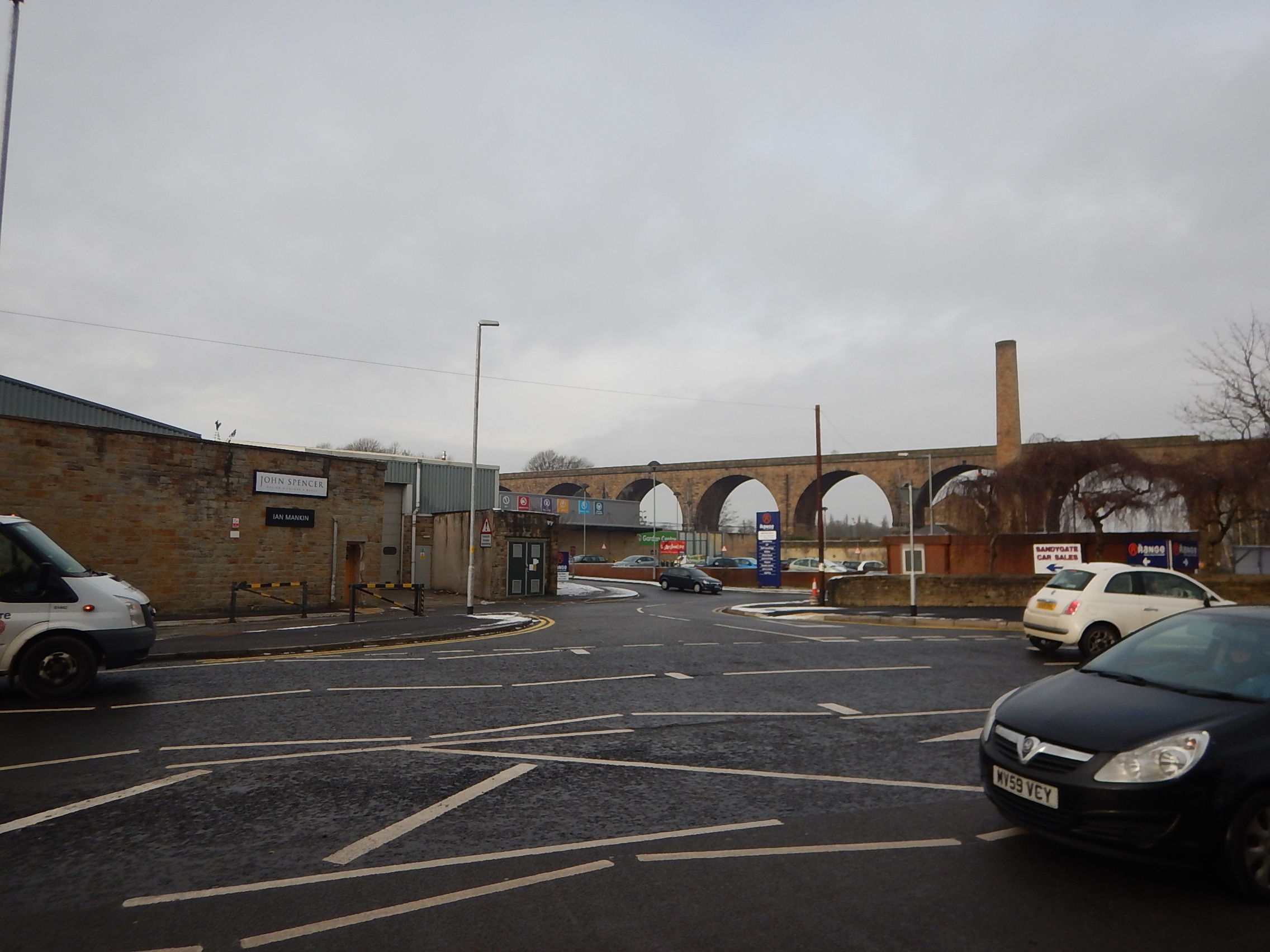
I think the viaduct could be key to whether the route is double-track all the way.
- If the redoubling can be performed at a reasonable cost, then that will be the way to go, as it might be possible to squeeze up to three trains per hour (tph) between Skipton and Rose Grove via Colne.
- If on the other hand, doubling is too difficult or expensive, I estimate that no more than two tph would be possible.
For both solutions, there will need to be double track or a long passing loop, between Skipton and Colne.
Could Colne And Skipton Be Electrified?
Consider.
- Preston is a fully-electrified station on the West Coast Main Line.
- Skipton is a fully-electrified station with electric trains to and from Leeds.
- Full electrification would create an electrified route between Leeds and Blackpool, Liverpool and Preston.
- It could be a useful diversion route for electric passenger trains across the Pennines, when their are engineering works on the Huddersfield Line or due to the building of Northern Powerhouse Rail.
- Electrification of the route, would allow electric haulage of freight trains to and from the proposed Huncoat Rail Freight Terminal.
- Electrification of the Calder Valley Line between Preston and Leeds is always being proposed.
- Electrication of Bank Top Viaduct could be tricky!
It should also be noted that this article on Rail Magazine was published on May 12th, 2020 and is entitled Electrification Key to Decarbonisation – Government. Views in Government about electrification have changed, so this might affect the decision to electrify the route.
The power is already there at both ends and electrification systems with low visual intrusion could be used.
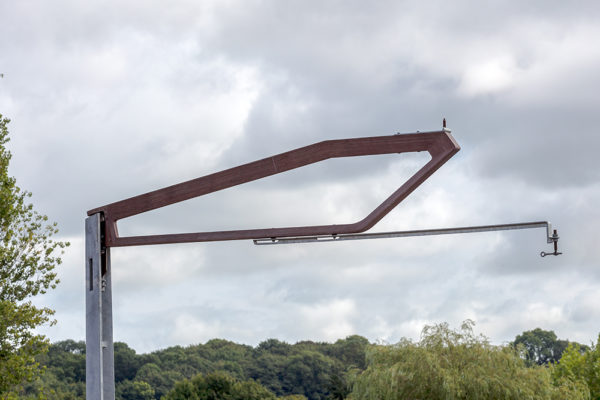
On the other hand, some might consider electrification of the route inappropriate.
Could Colne And Skipton Be Partially Electrified?
Consider.
- I estimate that the distance between Preston and Skipton will be 41 miles.
- If Blackpool North station were the final destination, there would be 34 miles (2 x 17) to charge the batteries.
- If Liverpool Lime Street station were the final destination, there would be 70 miles (2 x 35) to charge the batteries.
- If Leeds station were the final destination, there would be 52 miles (2 x 26) to charge the batteries.
- Manufacturers’ estimates of distances, indicate that battery electric trains could cover up to 65 miles on battery power.
As both ends of the route are electrified and trains would run extra miles under the wires, it would seem likely that a battery electric train could run between Preston and Skipton, without needing a charge en route.
Drax Group And Colne And Skipton Reinstatement
Drax power station uses Flue Gas Desulphurisation. Wikipedia says this about the process at Drax.
All six units are served by an independent wet limestone-gypsum flue gas desulphurisation (FGD) plant, which was installed between 1988 and 1996. This diverts gases from the boilers and passes them through a limestone slurry, which removes at least 90% of the sulphur dioxide (SO2). This is equivalent to removing over 250,000 tonnes of SO2 each year. The process requires 10,000 tonnes of limestone a week, sourced from Tunstead Quarry in Derbyshire. A byproduct of the process is gypsum, with 15,000 tonnes produced each week. This goes to be used in the manufacture of plasterboard. The gypsum is sold exclusively to British Gypsum, and it is transported by rail to their plant at Kirkby Thore (on the Settle-Carlisle Line).
The gypsum trains go through Skipton to access the Settle-Carlisle Line.
Drax power station is part-fuelled with biomass, which comes from all over the place including the United States via the Port of Liverpool.
It is no surprise that Drax Group are in favour of the Colne and Skipton reinstatement, as it would give them a new route between Drax and the Port of Liverpool.
This press release from Drax Group gives more details including this paragraph.
It will have a direct impact on improving our supply chain at Drax, allowing freight trains to travel much more quickly to the power station in North Yorkshire – reducing journey times from the Port of Liverpool to less than three hours, a journey which can take up to nine hours at the moment.
Trains will avoid the busy Huddersfield Line and Manchester Victoria station.
Drax’s statement would appear to be a powerful reason to reinstate Colne and Skipton.
These smart new or refurbished wagons, used by Drax to move woodchip should be much faster than the typical 20-30 mph freight speed of TransPennine routes.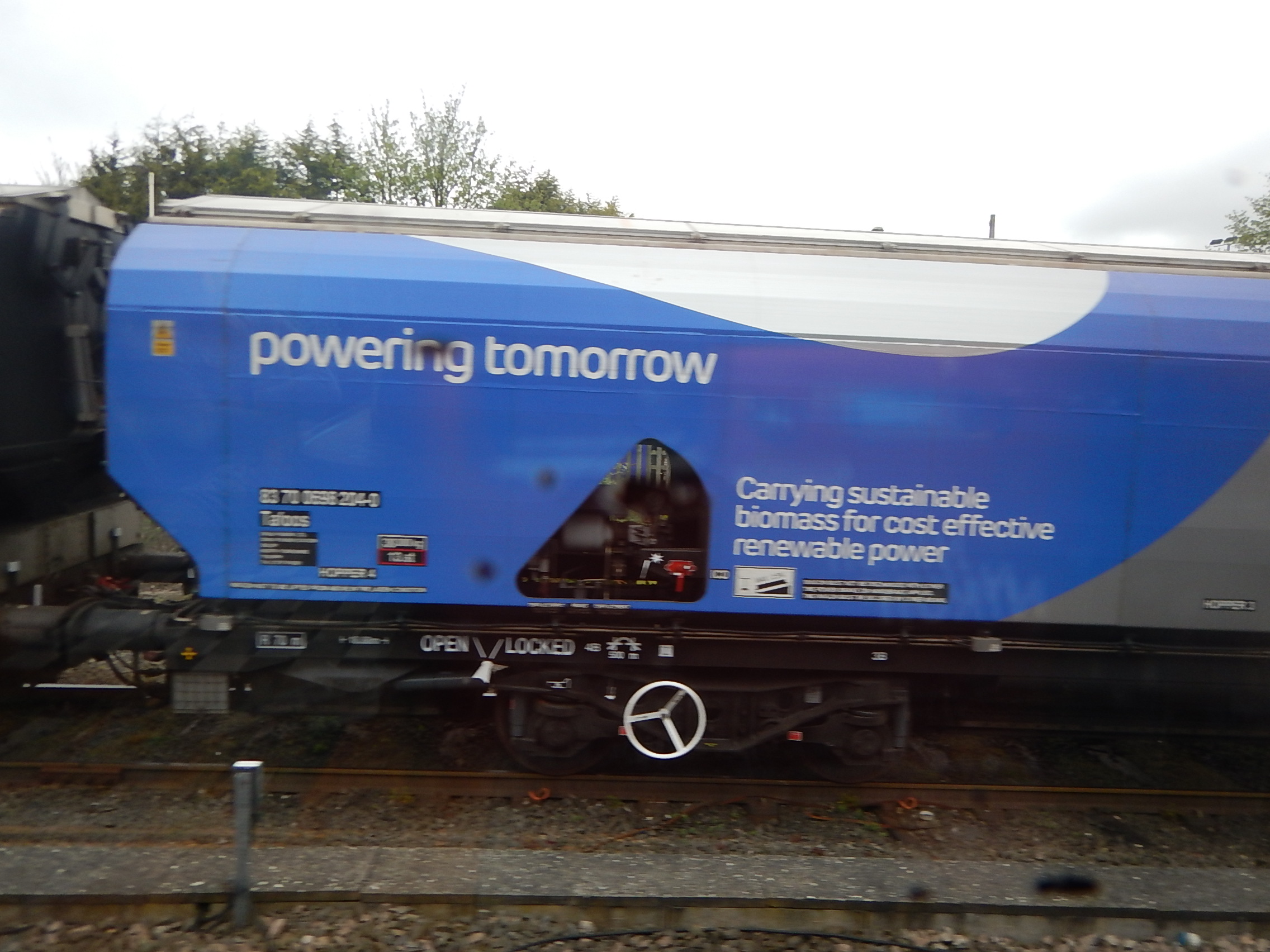
This page on the Drax web site, is entitled This train isn’t like any other in the UK, and it gives more details about the wagons.
- They were custom-designed and built in the last few years.
- The roofs open automatically for loading.
- A twenty-five wagon train can be loaded in 37 minutes.
- A full train can carry between 1,700 and 1,800 tonnes of biomass.
- Each train can unload in forty minutes.
- They are the largest wagons on UK railways by a margin of 30 %.
- Each wagon is nineteen metres long and can carry over seventy tonnes of biomass.
- Approximately 14 trains per day arrive at Drax, bringing 20,000 tonnes of biomass.
I suspect to minimise journey times, Drax would like to see a fully electrified route between Preston and Skipton and a new double-track route between Colne and Skipton.
The Huncoat Rail Freight Terminal
This Google Map shows the position of the former Huncoat power station.
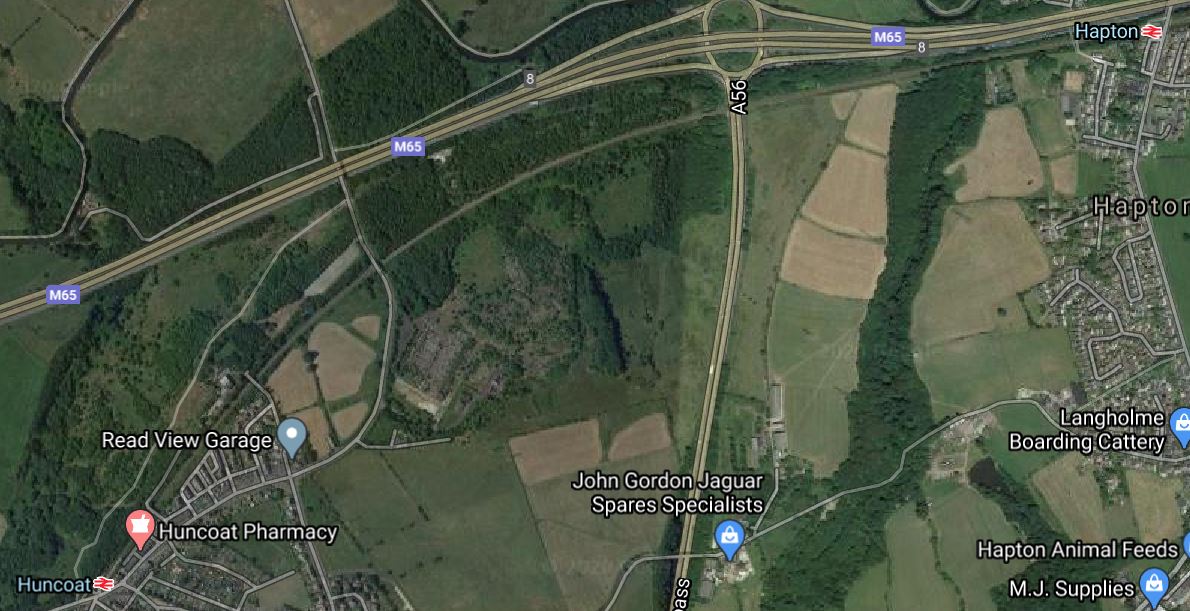
Note.
- Hapton station in the North-East corner of the map.
- Huncoat station in the South-West corner of the map.
- The East Lancashire Line running between the two stations.
- The M65 running across the top of the map.
- The A56 or Accrington bypass running North-South from the motorway junction at the top of the map.
Huncoat power station appears to have been in the South West corner of the rough-looking area, South of the M65 and the railway and West of the A56.
There is no Wikipedia entry for the demolished power station, but this page on The View From The North has some details and pictures.
It does appear to be a well connected site for a Rail Freight Terminal.
- There could be a direct connection to the motorway network.
- There is space for a connection with the East Lancashire Line, that would allow trains to access the interchange from both directions.
- Trains could go West to the Port of Liverpool and the West Coast Main Line via Preston.
- Trains could go East to Leeds and Yorkshire and on to the East Coast ports of Felixstowe, Hull, Immingham and Teesport.
- If the East Lancashire Line were to be electrified, electric haulage could be used.
The Rail Freight Terminal could be bigger than a hundred hectares.
Gauge Enhancement On TransPennine Routes Including Between Accrington And Todmorden
Consider
- Most freight trains passing through Hebden Bridge station use the route via Rochdale and Todmorden to get to and from Liverpool and the West.
- Few if any use the East Lancashire Line via Accrington.
- Some passenger trains do take the Accrington route.
- There are five tunnels between Accrington and the Todmorden Curve.
- The building of the Huncoat Rail Freight Terminal, must mean that trains between the Rail Freight Terminal and Leeds and the East would need to use the Calder Valley Line as far as the Todmorden Curve. or the East Lancashire Line to Colne for the new route.
As freight trains rarely seem to use the East Lancashire Line to the East of Accrington could it be that this section of track needs gauge enhancement?
But if this gauge enhancement were to be completed, that could give two routes between Huncoat Rail Freight Terminal and the East, for the largest freight trains.
Thoughts On The Project Management
It would appear that there are a series of sub-projects to be done.
- Perform gauge enhancement and route improvement on the East Lancashire Line between Rose Grove and Colne. This would include any doubling of the route, if that were to be done.
- Start building the link between Skipton and Colne.
- Start building the Huncoat Rail Freight Terminal.
- Finish building the link between Skipton and Colne.
- Start passenger and freight services between Skipton and Colne.
- Finish building the Huncoat Rail Freight Terminal.
- Perform gauge enhancement on the Calder Valley Line between Accrington and Todmorden.
My objectives would be.
- Open the Skipton and Colne route as a TransPennine diversion, as early as possible.
- Upgrade the East Lancashire Line between Rose Grove and Colne with minimum disruption.
- Open the Huncoat Rail Freight Terminal as early as possible.
- Create multiple freight routes to and from Huncoat Rail Freight Terminal.
Electrification would be a future aspiration.
Whither Drax?
Drax Gtroup and their flagship power station have a major environmental problem in that the power station is a large emitter of carbon dioxide.
They also run a lot of diesel locomotive hauled trains carrying biomass, fly ash, gypsum, limestone and other materials to and from Drax power station, which is on the Drax branch of the Pontefract Line.
- The Pontefract Line was built to serve the coalfields in the area.
- It runs between Leeds and Hull via Pontefract and Goole.
- It is not electrified, but it connects to the electrification at Leeds.
- In the East is has good connections to Cleethorpes, Goole, Grimsby, Hull and Immingham.
- The Port of Immingham is a major port, that is used by Drax to import biomass, which is hauled to the power station by diesel locomotives.
- The route between Drax and Immingham has been improved recently, by the addition of the North Doncaster chord.
- High Speed Two will run alongside the Pontefract Line on its approach to Leeds.
- Freight trains between Drax and Skipton use an electrified diversion South of Leeds via Armley, that avoids the need for freight trains to pass through Leeds station.
I can see that in a more favourable climate for electrification, that electrification of the Pontefract Line would be recommended.
Given, the environmental record of Drax, which is both good and bad, I would suspect they would like to see electrification of the Pontefract Line, as it would create a lower carbon route for biomass trains between Immingham and the power station.
A New Electrified TransPennine Route For Passengers And Freight
I sense that a grander plan might exist behind all my thoughts.
If the following routes were to be electrified.
- Preston and Skipton
- The Pontefract Line between Leeds and Hull.
- Knottingley and Immingham via Thorne
Hull and Liverpool would be connected for passenger electric trains and Liverpool and Immingham would be connected for freight.
Drax could also be on an electrified branch and they could say, they were hauling all their trains using renewable electricity. Marketing and environment are always important
LNER Expands To Huddersfield
This press release from LNER is entitled LNER Announces Direct Services Between Huddersfield And London.
These are the introductory paragraphs.
LNER is proud to announce new Azuma services will be introduced between Huddersfield and London King’s Cross from Monday 18 May 2020.
The daily weekday service in each direction will be LNER’s first direct link between the West Yorkshire market town and the capital.
They will also connect nearby Dewsbury directly with London King’s Cross, after more than a generation of no direct services between Huddersfield and London.
The timetable will be as follows.
The new southbound service will depart from Huddersfield at 05:50 and Dewsbury at 06:01. The Azuma service will arrive in Leeds at 06:16, where it will couple to another five-car Azuma to form the 06:40 Leeds to London King’s Cross service, which will arrive in the capital at 08:51 on weekdays.
The evening northbound service will depart from London King’s Cross at 18:03 and will be formed of two five-car Azuma trains, which will split in Leeds, with one train continuing to Skipton and the other to Dewsbury, arriving at 20:45 and then Huddersfield at 20:58.
Joining and splitting is definitely being brought to Yorkshire by LNER.
I wonder, if there will be a London to Huddersfield service in the reverse direction in a few months.
Exploring Skipton Station
Skipton station is more than just the terminus of the Airedale Line from Leeds and Bradford Forster Square stations.
It is the Eastern gateway to the iconic Settle and Carlisle Railway, that after suffering temporary closures in 2015-16 because of Storm Desmond and some of the most challenging reconstruction in recent years, the line is now ready to play its part as one of England’s most memorable tourist attractions.
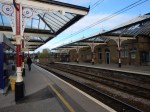
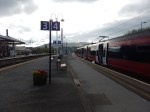
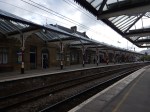
These pictures show the station and the lines towards Settle.
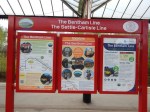
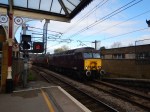
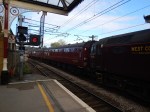
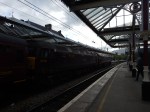
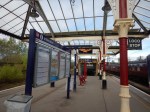

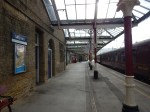
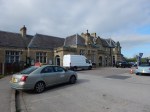
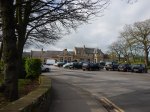
But Skipton and its station can get more important.
Under Future in the Wikipedia entry for the station, these improvements are mentioned.
More Virgin Services To London
Virgin Train’s new Class 800/801 trains are more flexible than the current trains working to Leeds.
- Five and nine car Class 801 electric trains.
- Five and nine car Class 800 electro-diesel trains.
I think we will see two five car trains joining together to form ten-car trains, as this will make better use of the capacity of the railway.
So could a five-car train from Skipton connect with a five-car train from Harrogate and become a ten-car train from Leeds to London?
I suspect the answer is yes, despite the fact that the Harrogate Line is not electrified.
More Capacity On The Airedale Line
This is needed and could be by allowing six instead of four car trains or increased frequencies.
The length increase to six-cars would be necessary for the Class 800/801 to run to Skipton.
More Trains To Carlisle Via Settle
After all the money spent on this line, I can see the line made to work hard to pay back the cost.
More Trains To Morecambe via Lancaster
If one line gets more trains, why not the other?
It also needs better trains than the Class 150 train, I saw going to Morecambe.
Skipton To Colne
SELRAP have been lobbying to reopen the rail link between Skipton and Colne.
There are problems with reopening the line, especially around Colne.
But I think it is one of those projects, that if that keen hill-walker and Prime Minister; Theresa May said go, it would happen.
It certainly, isn’t a crazy project.
From Bradford To Skipton
I took the train from Bradford Forster Square station to Skipton station.
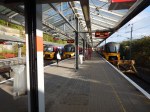



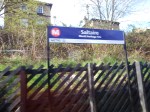

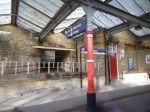


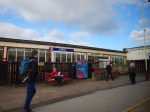
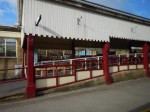
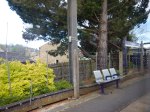
It is a route on which there are interesting things to see,
Saltaire
Everything must come second to the World Heritage Site at Saltaire.
Shipley Station
Shipley station is an unusual concept in that the station is built in the middle of a triangular junction.
This Google Map shows the station
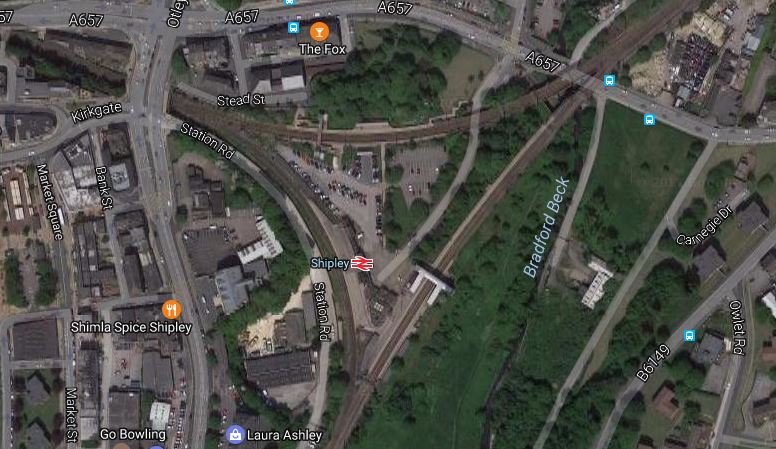
It has five platforms and four lifts.
Keighley Station
Keighley station is the interchange with the Keithley and Worth Valley Railway, which is a heritage railway running steam and vintage diesel trains.
There is a section called Commuter Use in the Wikipedia entry for the Keithley and Worth Valley Railway.
This is said.
As a privately owned heritage railway, the line does not specifically serve commuters; however, a study by Ove Arup & Partners funded by Metro looked at the feasibility of a daily commuter service between Oxenhope and Keighley in 2009.[16] After the first stage of the study was released, Metro stated concerns about a lack of funding and available rolling stock, meaning that services are unlikely to run in the short to medium term
Given that we live in an era of innovative rolling stock, why not run a battery train between Keithley and Haworth?
Kirkstall Forge Station
Kirkstall Forge station has recently reopened, after being closed in 1905.
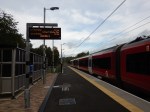
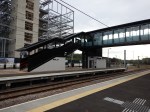
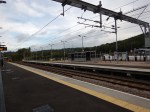
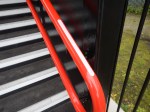
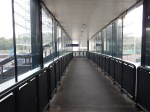
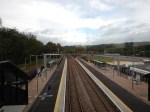
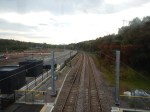
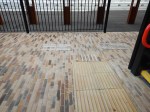
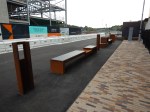
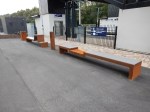
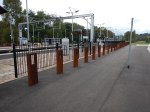
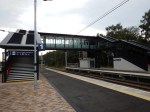
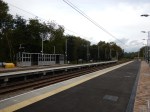
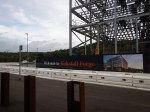
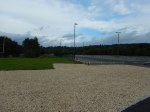
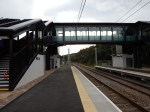
It is certainly an impressive new station and one of the best new stations I’ve seen.
There are certainly some nice touches.
- A covered bridge with glass sides to give good views.
- Nice finishes.
- I liked the crash barriers and seats made out of steel, to emphasise the station’s history.
- The Braille signs on the handrails. Something I first saw in Italy and wrote about in A Nice Touch On The Milan Underground.
At present, it doesn’t seem that busy and trains are not very numerous, but as the development gets underway in the area and the car parks fill up, this station could get very busy.
Some of the trains are going to and from Skipton, on the Airedale Line. If you read the Future section for that station’s Wikipedia entry, you get the impression that lots of things will happen at Skipton.
- Direct London trains to Skipton are on the cards and a stop at Kirkstall Forge would be ideal for West Leeds and those that live on the Wharfedale Line to Ilkley, which also call at Kirkstall Forge.
- But surely, Skipton is one of those places that is a jumping off point for the Pennines and also the Settle-Carlisle Line.
- In addition, if plans to connect Skipton to Colne to connect Lancashire and Yorkshire through the Pennines come to fruition, Kirkstall Force could be the station, where passengers drive to get their train to the other side.
I don’t think you can accuse Network Rail and Metro of building a station at Kirkstall Forge, that doesn’t have future proofing.
It will be interesting to go in perhaps five years and see how this station has developed.
 The Anonymous Widower