Treasures Found On HS2 Route Stored In Secret Warehouse
The title of this post is the same as that of this article on the BBC.
This is the sub-heading.
Treasures unearthed by hundreds of archaeologists during the ongoing construction of the controversial HS2 train line have been shown exclusively to the BBC.
These three paragraphs add detail to the story.
The 450,000 objects, which are being held in a secret warehouse, include a possible Roman gladiator’s tag, a hand axe that may be more than 40,000 years old and 19th Century gold dentures.
It is an “unprecedented” amount and array of items, which will yield new insights into Britain’s past, says the Centre for British Archaeology.
Major building developments in the UK need land to be assessed by archaeologists as part of the planning process, to protect heritage sites.
Crossrail also collected a lot of artefacts in an archaeology programme, that I wrote about in Bison to Bedlam or How To Make Friends.
Typing “TransPennine Route Archaeology” into Google AI gave this answer.
AI Overview
Archaeological investigations for the Trans-Pennine upgrades are split into two major, parallel projects: the A66 Northern Trans-Pennine road project and the Transpennine Route Upgrade (TRU) rail project. Both have revealed significant historical, archaeological, and industrial remains.
A66 Northern Trans-Pennine Upgrade (Road)
As part of the A66 upgrade between Penrith and Scotch Corner, Oxford Cotswold Archaeology (OCA) is conducting extensive excavations.
Key Finds: Archaeologists have identified prehistoric settlements, Neolithic stone axes, and evidence of a 60-meter-wide posthole structure.
Roman Discovery: A major Roman vicus (settlement) and the original Roman road have been uncovered, revealing a “grid of Roman field systems and ditches” near Brough.
Locations: Key sites include Brougham, Brough, Kirkby Thore, and Crackenthorpe.
Significance: These findings illustrate the area’s long-distance connection, trade, and culture from prehistoric through Roman times.
Transpennine Route Upgrade (Rail)
This project, involving Network Rail and ASWYAS (Archaeological Services WYAS), is upgrading the railway between Manchester, Huddersfield, Leeds, and York.
172-Year-Old Railway Siding: A mid-19th-century railway siding was uncovered at Hillhouse Sidings in Huddersfield, revealing two turntables and brick-built engine sheds.
Roman Settlement (Ravensthorpe): Excavations at Ravensthorpe (for a new station) uncovered a large, hexagonal-shaped feature thought to be an Iron Age or Roman-British enclosure, featuring ceramics, glass, and animal bones.
Mirfield Viaduct: An investigation of the Grade II-listed Mirfield Viaduct (built 1836-1839) was conducted to record its structure before upgrade works.It could be a very large exhibition in the North, if High Speed Two and the two Transpennine Route Upgrades were combined in a single exhibition.
I asked Google AI, what is the largest exhibition centre in Yorkshire and received this answer.
The largest exhibition sites in Yorkshire are concentrated in Harrogate, anchored by the Great Yorkshire Event Centre and the Harrogate Convention Centre. These venues offer a combined total of over 10,000 square meters of exhibition space, accommodating major national events, conferences, and large-scale outdoor exhibitions.
I suspect Leeds, Manchester and Sheffield could have other ideas.
Rail Agreement Signed ‘Subject To Value For Money’
The title of this post, is the same as that of this article on the BBC.
This is the sub heading.
An agreement to reopen a regional rail line has been signed by the transport secretary, subject to the assurance that it delivers good value for money.
These three paragraphs add detail to the story.
Further development work on the Leamside Line, which runs from Pelaw in Gateshead to Tursdale in County Durham, is set to progress as part of the Northern Powerhouse Rail (NPR) initiative.
Regional politicians said the line could provide train links for 100,000 people in the north-east of England, after it closed to passengers in the 1960s.
The document stated the government would ensure resources were available for the Leamside Line reopening “subject to agreement of that business case and assurance that this delivers good value for money”.
Note.
- There is an excellent map in the BBC article.
- It looks like there will be at least five new or refurbished stations at Ferryhill, Sincliffe, Belmont, West Rainton and Penshaw.
- Belmont appears to have an alternative name of Durham Parkway, so will it be a Park-and-Ride for the area?
- There will be an alternative path for freight trains between Newcastle and York.
- In New Direct Rail Link To Seaham: How This Picturesque Seaside Town Will Connect To London Starting December 2025, I described Seaham’s new link to London, courtesy of Grand Central Trains.
- In Arriva Group Invests In New Battery Hybrid Train Fleet In Boost To UK Rail Industry, I talked about Grand Central’s new trains, which should be in service by 2028 to Seaham and Sunderland.
- It was in June 2020, that I wrote about Boris Johnson making a speech about the Leamside Line in Boris Johnson Backs Station Opening Which Could See Metro Link To County Durham.
This important link has been a long time coming.
Will The Rail Improvements Between London and The North East Create More Tourism?
Consider.
- The digital signalling will create more paths for trains between London and the North East.
- Journey times will come down to generally below three hours.
- There is a lot of excellent walking in the area.
- The North-East doesn’t just host top-class football and athletics.
- A trip could be combined with a day-trip to Edinburgh, Glasgow or the Scottish Borders.
- I have met Americans, who’ve started their holiday in Europe, in Edinburgh and worked their way down via York and London to Paris by train, and then flown back non-stop to the United States.
As I’ve spent a couple of enjoyable weekends in Newcastle and Sunderland, I don’t see why the area can’t attract tourists.
Should The East Coast Main Line Be Renamed?
Consider.
- It is one of the oldest long-distance main lines in the world.
- It links two of the UK’s capitals.
- It is 331 miles long, which is covered in four and a half hours.
- There are some of the world’s best hotels at either end.
- There is good shopping at either end.
- There is no Trump hotel in London or Edinburgh.
Perhaps, it should be called High Speed East Coast?
New Direct Rail Link To Seaham: How This Picturesque Seaside Town Will Connect To London Starting December 2025
The title of this post is the same as that of this article on Travel and Tour World.
This is the first paragraph.
Starting December 2025, the picturesque seaside town of Seaham in County Durham will become even more accessible with a new direct rail link to London. This marks an exciting chapter in the town’s history, as Seaham’s first direct rail service will make it easier for tourists and business travelers alike to visit this charming coastal destination. Known for its stunning clifftop vistas, rocky beaches, and no fewer than 10 fish and chip shops, Seaham is already a popular spot for day-trippers, and this new rail service will only add to its appeal.
This section in the Wikipedia entry for Seaham station, gives the current rail services from the town.
As of the May 2021 timetable change, the station is served by an hourly service between Newcastle and Middlesbrough. Most trains continue to Hexham (or Carlisle on Sunday) and Nunthorpe. Two trains per day (three on Sunday) continue to Whitby. All services are operated by Northern Trains.
With Grand Central trains, serving Seaham four times per day in each direction, Seaham could be a very convenient place to explore the North-East of England.
If the timing of the services is right, Seaham could also become popular with visiting football fans at Middlesbrough, Newcastle and Sunderland, wanting to combine an away match with a weekend away.
This Google Map shows the town.
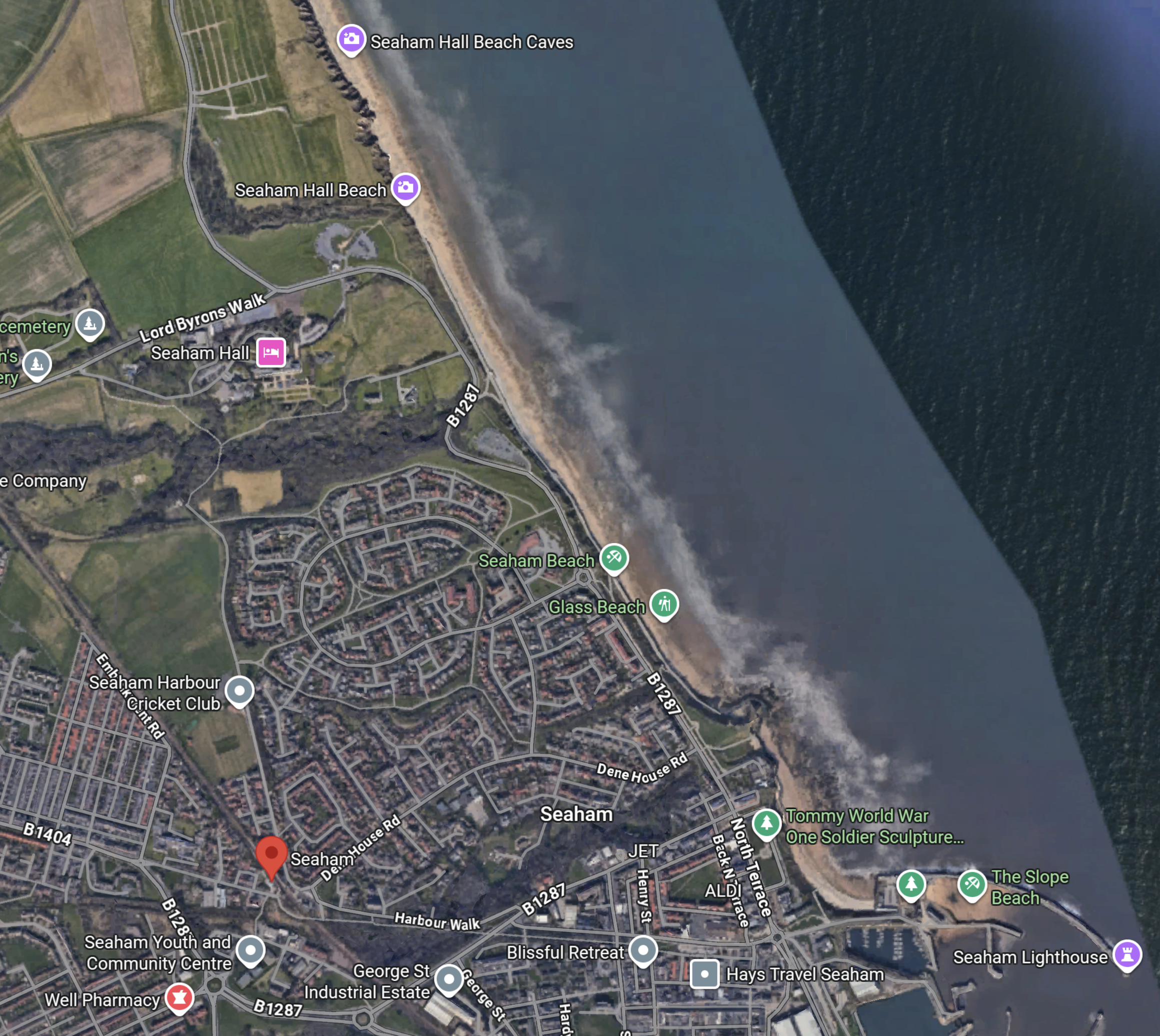
Note.
- The station is indicated by the red arrow.
- Beaches stretch along the town.
- There is a port with a lighthouse.
- There is even a 5-star hotel; Seaham Hall on Lord Byron’s Walk. The hotel has 21 suites and a spa.
- I can certainly see the hotel having a zero-carbon mini-bus meeting all eight Grand Central Trains.
I don’t think Grand Central Trains will be short of passengers on this route. Especially as from 2028, they will serving the town with new Hitachi battery-electric trains.
Conclusion
How many other towns in the UK could benefit from a four trains per day service to London?
Eden Project Morecambe Revealed In New Images
The title of this post, is the same as that of this article on the BBC.
This is the sub-heading.
New images of what the long-awaited ecotourism attraction Eden Project Morecambe will look like have been released.
These three paragraphs add more detail.
The shell-inspired structure, sister site to the original Eden Project in Cornwall, is due to open in late 2028 and is expected to attract thousands of people to the Lancashire town.
CGI images, by architects Grimshaw, show how the design will look on the edge of Morecambe Bay promenade.
The project team said the structure would be “instantly recognisable” as an “emblem of sustainability” with a “deep connection to place” and complimenting heritage landmarks nearby.
The BBC article contains a selection of stunning images.
I have never been to the original Eden Project in Cornwall, as I don’t drive and it is difficult to get to by train.
But Morecambe from Euston is an easy sub-three hours train journey and not much over an hour from Liverpool and Manchester.
So the Eden Project Morecambe will be much easier to get to and will surely bring in the visitors.
But it needs a better train between Lancaster and Morecambe than this.
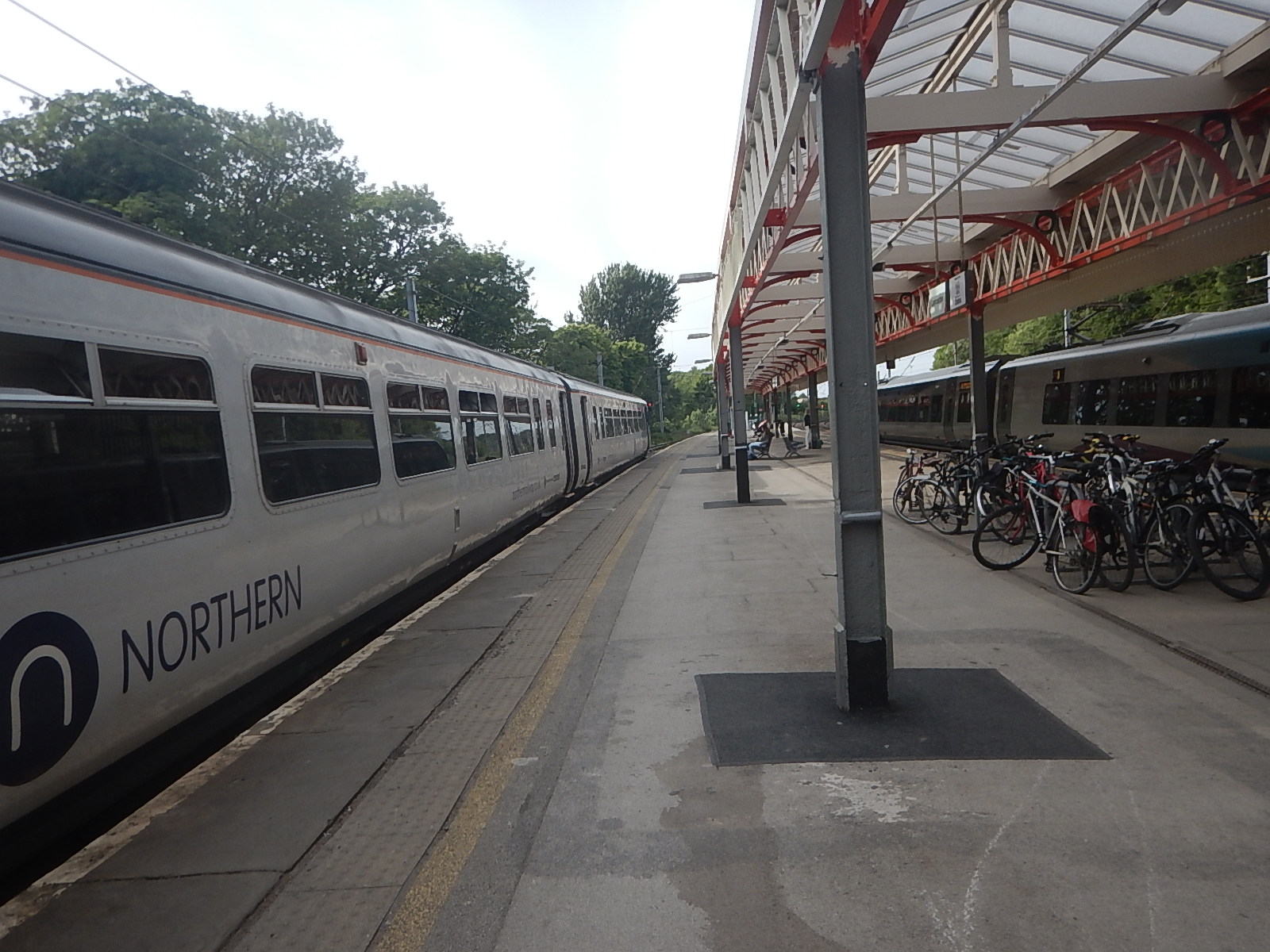
Note.
- The train is a British Rail-era Class 156 diesel train, that was built in the late 1980s.
- A diesel train to an eco-project is probably not the right image.
- If they get all the visitors by rail, that I think they will, a two-car train will probably not have enough capacity.
- The platform appears to be electrified and be around 70-80 metres long.
- The Lancaster and Morecambe service is less than five miles.
But I believe, that this platform could be used to charge a battery-electric train through a pantograph.
This train would then be able to trundle silently all day between Lancaster and Morecambe stations.
Lancaster Station – 23rd May 2025
I finally got to Lancaster station today, after my failure that I wrote about in An Annoying Day.
I took these pictures.
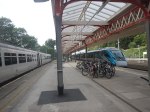
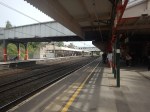
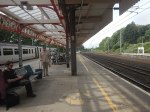
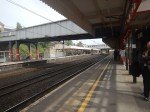
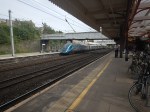
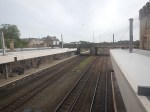
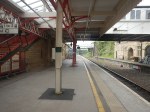
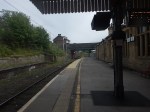
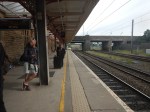
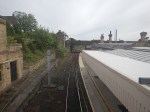
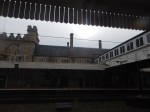
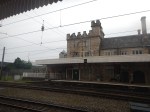
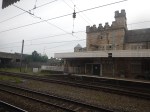
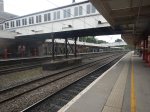
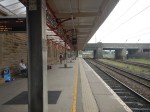
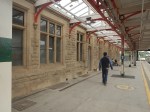
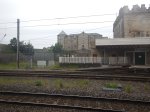
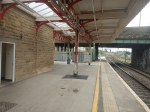
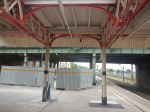
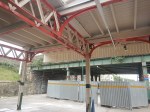
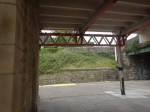
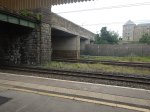
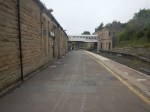
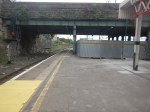
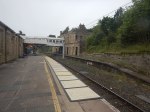
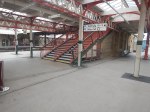
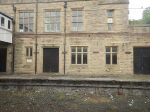
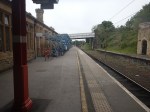
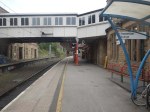
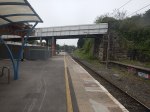
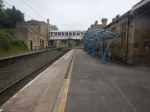
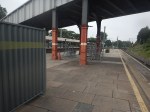
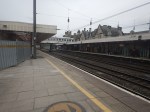
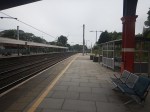
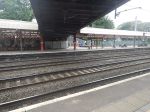
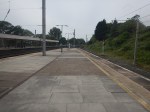
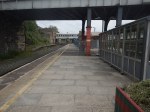
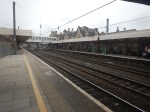
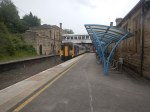
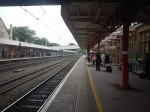
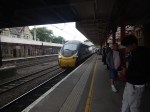
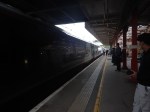
I shall deal with the features of the station in separate sub-sections.
The Original High Speed Two Schedule Through Lancaster Station
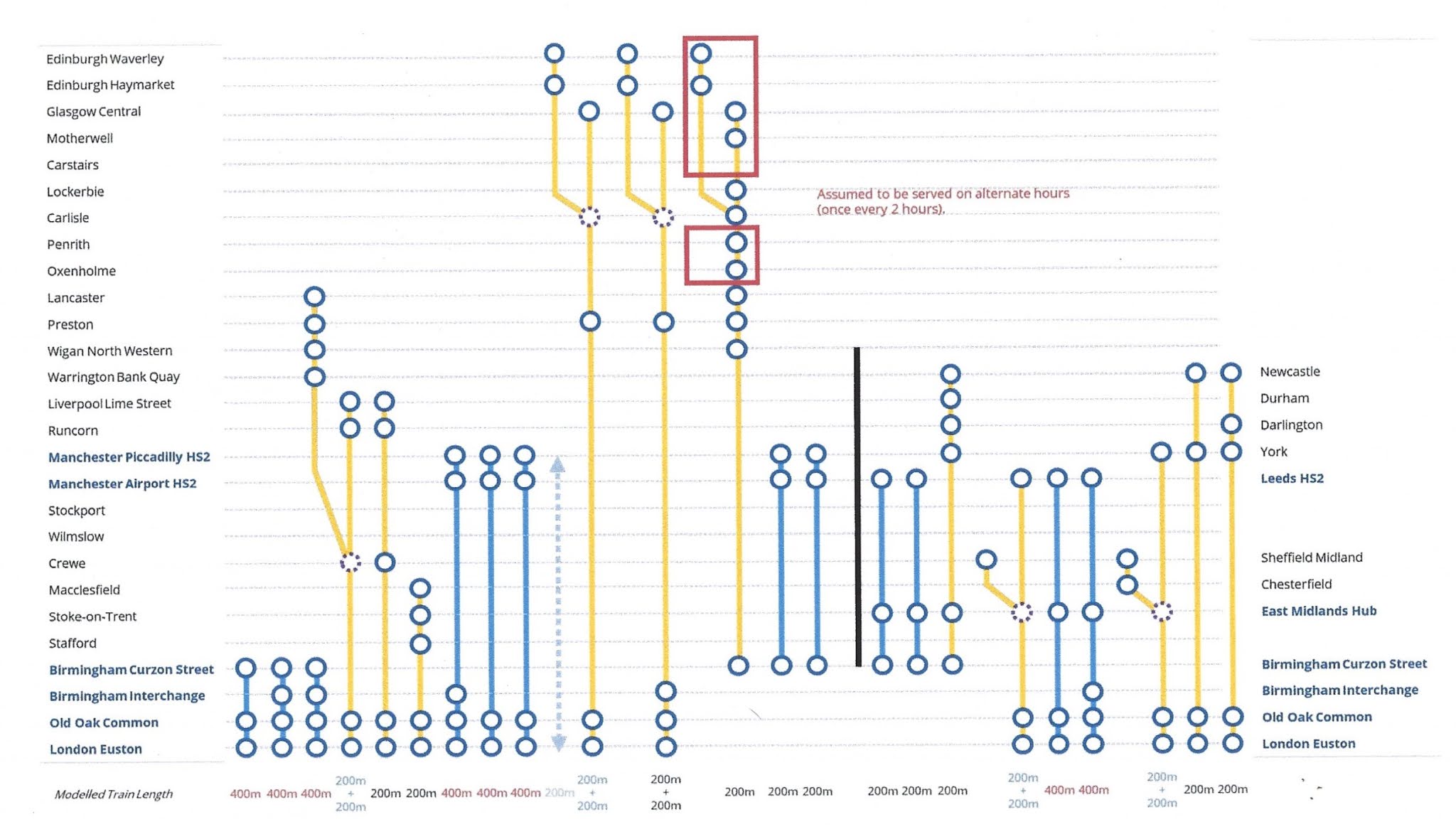
This diagram shows High Speed Two services, as they were originally envisaged before Phase 2 was discontinued.
Note.
- Trains to the left of the vertical black line are Phase 1 and those to the right are Phase 2.
- Full-Size trains are shown in blue.
- Classic-Compatible trains are shown in yellow.
- Blue circles are shown, where trains stop.
- The dotted circles are where trains split and join.
- In the red boxes routes alternate every hour.
Click on the diagram to enlarge it.
If I look at the trains counting from the left of the diagram, I see the following trains passing or terminating at Lancaster station.
- Train 4 is a pair of classic-compatible trains, that split and join at Crewe, with one train going to Lancaster and the other to Liverpool Lime Street.
- Trains 10 and 11 are pairs of classic-compatible trains going between London and Scotland.
- Train 12 is a single classic-compatible train going between Birmingham and Scotland.
Only the Lancaster portion of Train 4 stops in Lancaster station.
The Track Layout
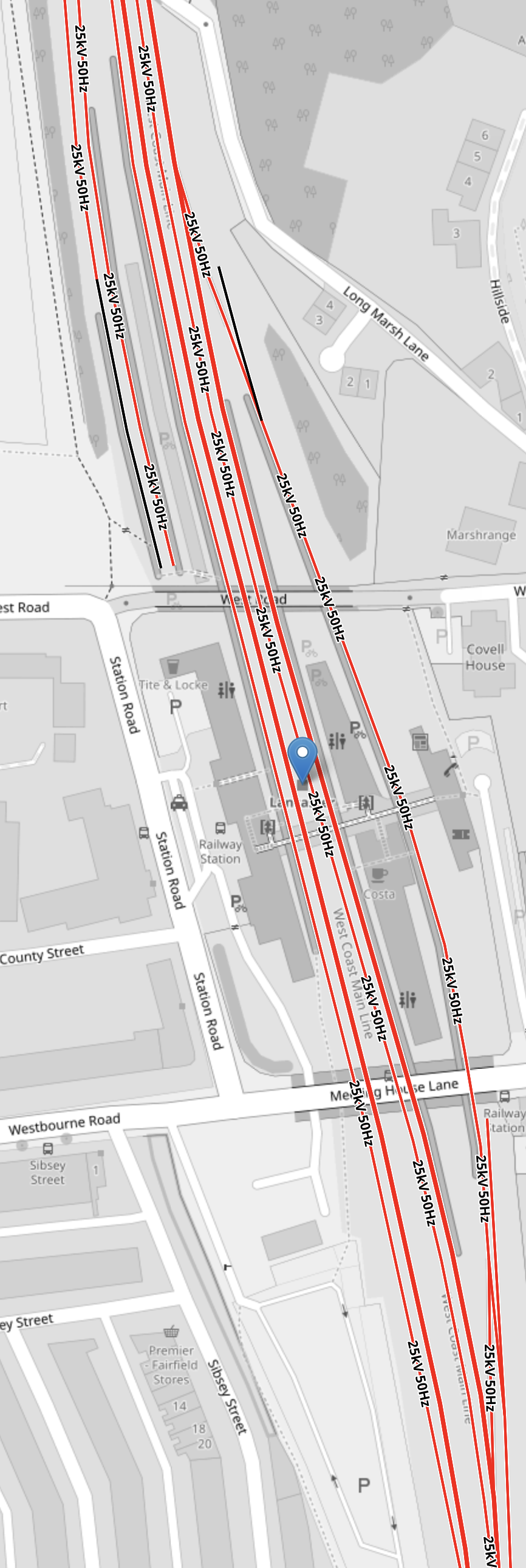
This OpenRailwayMap shows the track layout through the station.
Note.
- Tracks shown in red are electrified and tracks in black or not.
- In the North-West corner of the map the two bay platforms 1 and 2, that are used for local services can be seen.
- Platform 3 is a long platform on the Western side of the station, which is generally for Northbound through stopping trains, that can take 265 metre long eleven-car Class 390 trains.
- Paired with the track through Platform 3, there is a Northbound avoiding line, that allows faster trains to overtake trains stopped in the station.
- Platform 4 is a long platform on the Western side of the island platform on the Eastern side of the station, which is generally for Southbound through stopping trains, that can take 265 metre long eleven-car Class 390 trains.
- Paired with the track through Platform 4, there is a Southbound avoiding line, that allows faster trains to overtake trains stopped in the station.
- Platform 5 is a long platform on the Eastern side of the island platform on the Eastern side of the station, that is over two hundred metres long.
- All through tracks have a 75 mph maximum speed, except for Platform 5, which is just 30 mph.
Click on the diagram to enlarge it.
How Will High Speed Two Operate At Lancaster Station?
I would expect that the three High Speed Two services to and from Scotland will go through Lancaster station on the avoiding lines, which will mean that each avoiding line will handle one High Speed Two classic-compatible train every twenty minutes.
The train, that terminates at Lancaster has a few options.
- It could terminate from London in any of platforms 3, 4 or 5.
- It could leave for London from any of the platforms 3, 4 or 5.
Note.
- All three platforms are long enough to accept a single High Speed Two classic-compatible train, which is only 200 metres long.
- There would probably need to be some works to the tracks so that trains could terminate in platforms 4 or 5.
- There might need to be some works to the tracks so that trains could leave from London from platform 3.
The logical way to terminate the train would probably for the train to arrive and leave in Platform 5, but then this would need improvements to the tracks and also to the passenger footbridge across the tracks.
Eden Project Morecambe And The Morecambe Branch
In a few years time, both the Eden Project Morecambe and High Speed Two will be open and I suspect, a day out could be to take High Speed Two to Lancaster and the local train to Morecambe for a day at the Eden Project Morecambe.
This paragraph from the Eden Project Morecambe web site, describes the current status of the project.
Eden Project Morecambe, previously known as Eden Project North, has been awarded £50m in the second round of the UK Government’s Levelling Up Fund. The funding allows the project to move into its next phase and begin the process of finalising the remaining funds required from private and philanthropic sources identified as part of the bidding process.
I had intended to take a train to Morecambe to have a look round, but the train, that I would have needed to catch to get back to London at a reasonable hour, didn’t run due to lack of train crew.
As High Speed Two will provide connections at Lancaster to Birmingham, Carlisle, Crewe, Edinburgh, Glasgow, London, Preston, Warrington and Wigan and other trains will provide connections to Leeds, Liverpool and Manchester, the Eden Project Morecambe will be well connected to those who might like to visit by rail.
A day out with the kids, could involve a trip on High Speed One to Lancaster, a trip on a battery-electric shuttle train to Morecambe and a day out at the Eden Project Morecambe.
The Eden Project Morecambe could be a big money earner for High Speed Two and other rail companies.
I would envisage, that you would be able to buy an All-in-One ticket to the Eden Project Morecambe, which included your rail tickets.
The Passenger Footbridge
There is a lift on the Southbound side, but on the Northbound and bay platform side, there are only steps.
If substantial numbers of passengers visit the station and need to cross the tracks on the footbridge, as you would from arriving in Platforms 4 or 5 and wanting to go to Eden Project Morecambe, the footbridge is totally inadequate.
Lancaster Station Architecture
Lancaster station is Grade II Listed and you can see why from the pictures.
Work appears to be ongoing to refurbish the station.
The stonework appeared immaculate and very much High Speed Two-ready.

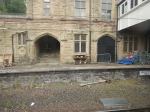
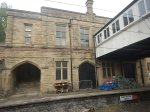
These picture shows part of the Costa coffee shop.
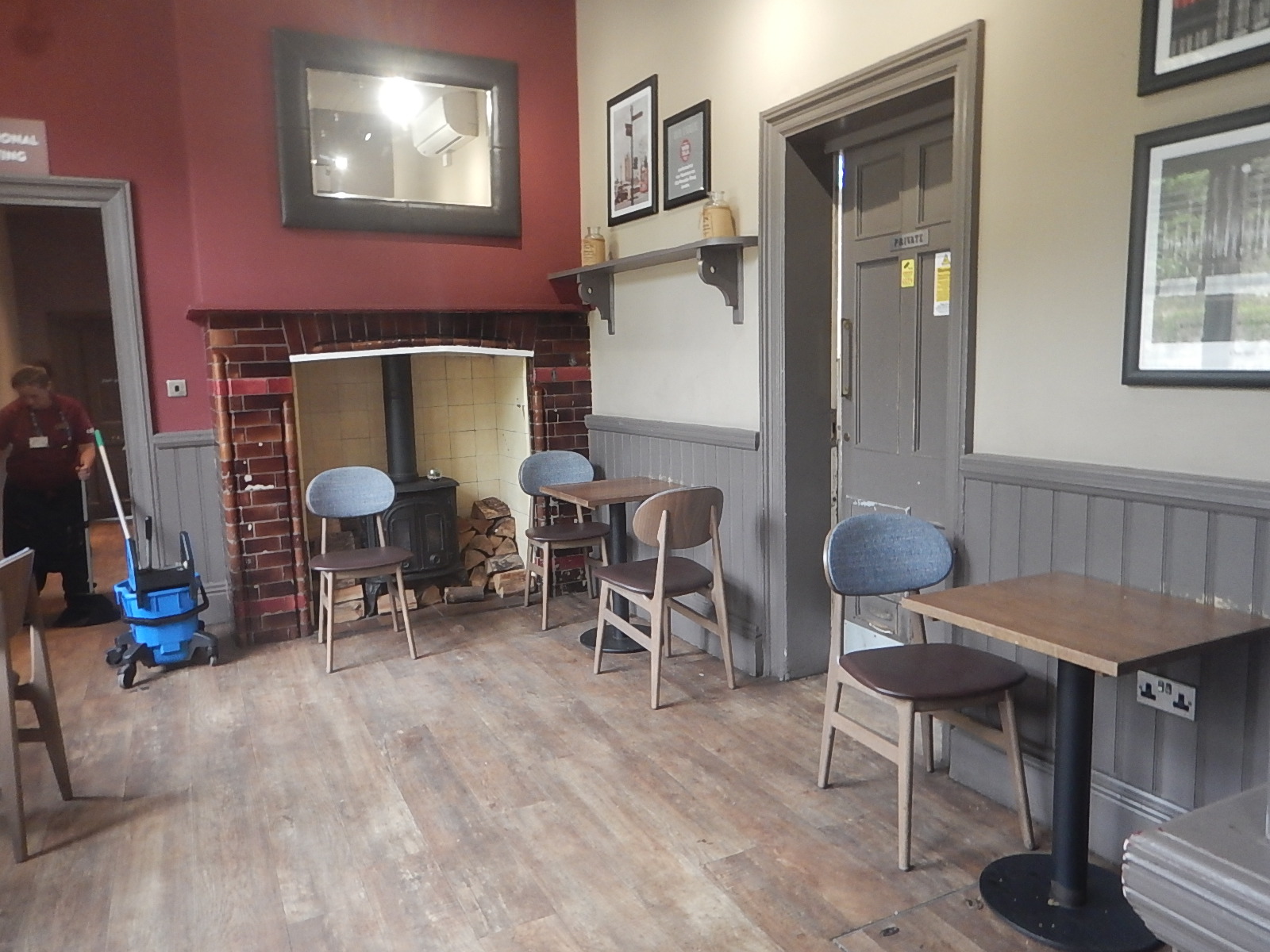
It was not what I expected.
Cameron Bridge Station – 15th May 2025
I took these pictures yesterday at the new Cameron Bridge station yesterday on the Levenmouth Rail Link.
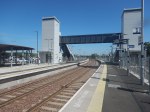
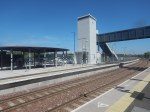
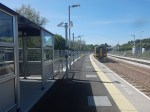
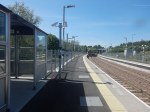
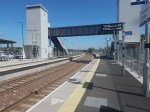
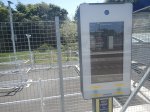
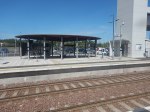
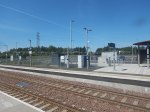
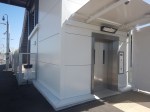
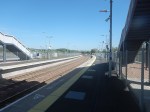
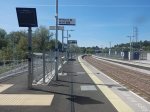
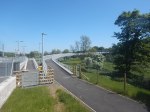
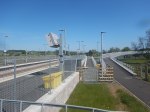
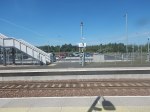
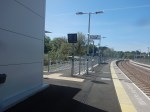
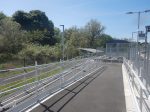
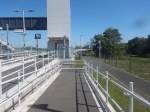
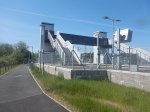
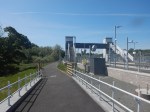
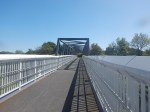
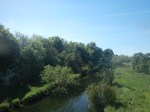
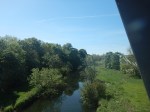
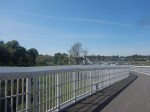
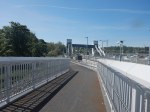
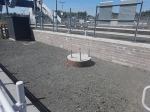
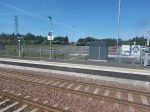
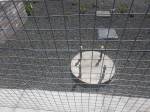
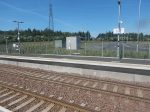

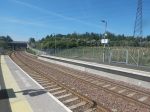
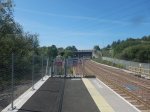
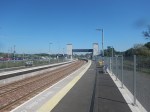
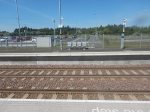
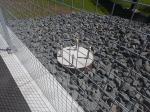
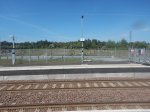
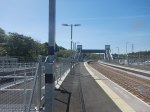
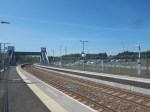
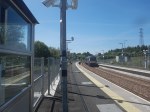
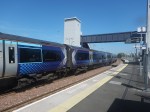
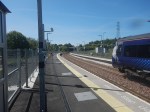
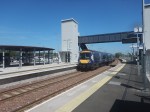
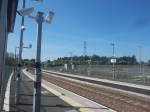
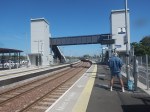
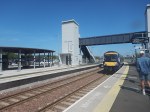
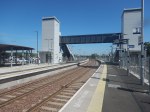
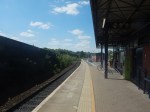
Note.
- The station has a car-park on the coming-home-from Edinburgh platform.
- There is a bridge over the River Leven, that appears to lead to new housing.
- The step-free bridge appears to be used by local residents to cross the railway.
- There appears to be a walking route for the nearby factory, which distills Scotland’s national spirit.
But as the pictures show the station has some unusual features for a small station with one train per hour (tph).
Parking
This extract from the Internet describes the parking.
A car park is available for customers with 125 spaces, including Electric Vehicle (EV) charging and blue badge spaces, as well as a drop off/pick up area and motorcycle parking.
They certainly seem to be expecting lots of commuters to Edinburgh, which is 34.5 miles away over the river.
Long Platforms
As the pictures with the three-car Class 170 train show the platforms are long.
I estimate that the platforms could take a pair of four-car Class 385 trains and almost take a nine-car Class 800 or 802 train.
Is this wishful thinking or prudent future-proofing as extending platforms can be a much more difficult exercise, than building them in the first place.
Perhaps, plans include a lot of housing, a major educational establishment, a sports stadium or some large factories to add to the distillery and long trains will be needed to serve the station.
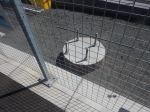
Electrification Foundations
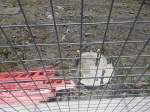
What surprised me, is that the station has been fitted out with the foundations for electrification gantries. There are five pairs all with four strong bolts to support the gantries over the track. This gallery shows some of the foundations.
But what also surprised me was that at no other place on the route between Edinburgh and Leven, were any electrification works visible, except where the electrification is completed between Edinburgh and Edinburgh Gateway.
I estimate that the distance between Cameron Bridge and Edinburgh Gateway is about thirty-seven miles as the train travels, which should be in range of one of ScotRail’s Hitachi Class 385 trains, that had been fitted with batteries.
- The trains would charge their batteries on the run between Edinburgh Waverley and Edinburgh Gateway stations.
- The trains would run between Edinburgh Gateway and Cameron Bridge stations on battery power. The eight intermediate stations would not have to suffer diesel trains.
- The trains would put up the pantograph at Cameron Bridge station and charge the batteries on a short length of overhead wires that will be erected there on both platforms.
- The train would run to Leven station on battery power, where it would reverse, as it does now and then return to Cameron Bridge station.
- At Cameron Bridge station, it could even pick up more charge if needed.
Note.
- The only new electrification needed would be to electrify both lines in Cameron Bridge station.
- Supposedly, Hitachi do a nice line in short lengths of electrification and all the electrical gubbins that support them.
- Because of the large distillery, Cameron Bridge is not short of electricity, with a large grid connection visible at the Edinburgh end of the station.
- No electrification will be needed over the Forth Rail Bridge, to the delight of the Heritage Taliban.
Whoever gets the contract to supply the battery-electric trains and the partial electrification, will be supplying trains that will cross one of most famous railway bridges in the world.
I also predict, that this short rail link between Edinburgh Waverley and Leven will become a tourist attraction and bring prosperity to the area.
Electrifying The Fife Circle
This OpenRailwayMap shows the whole Fife Circle Line.
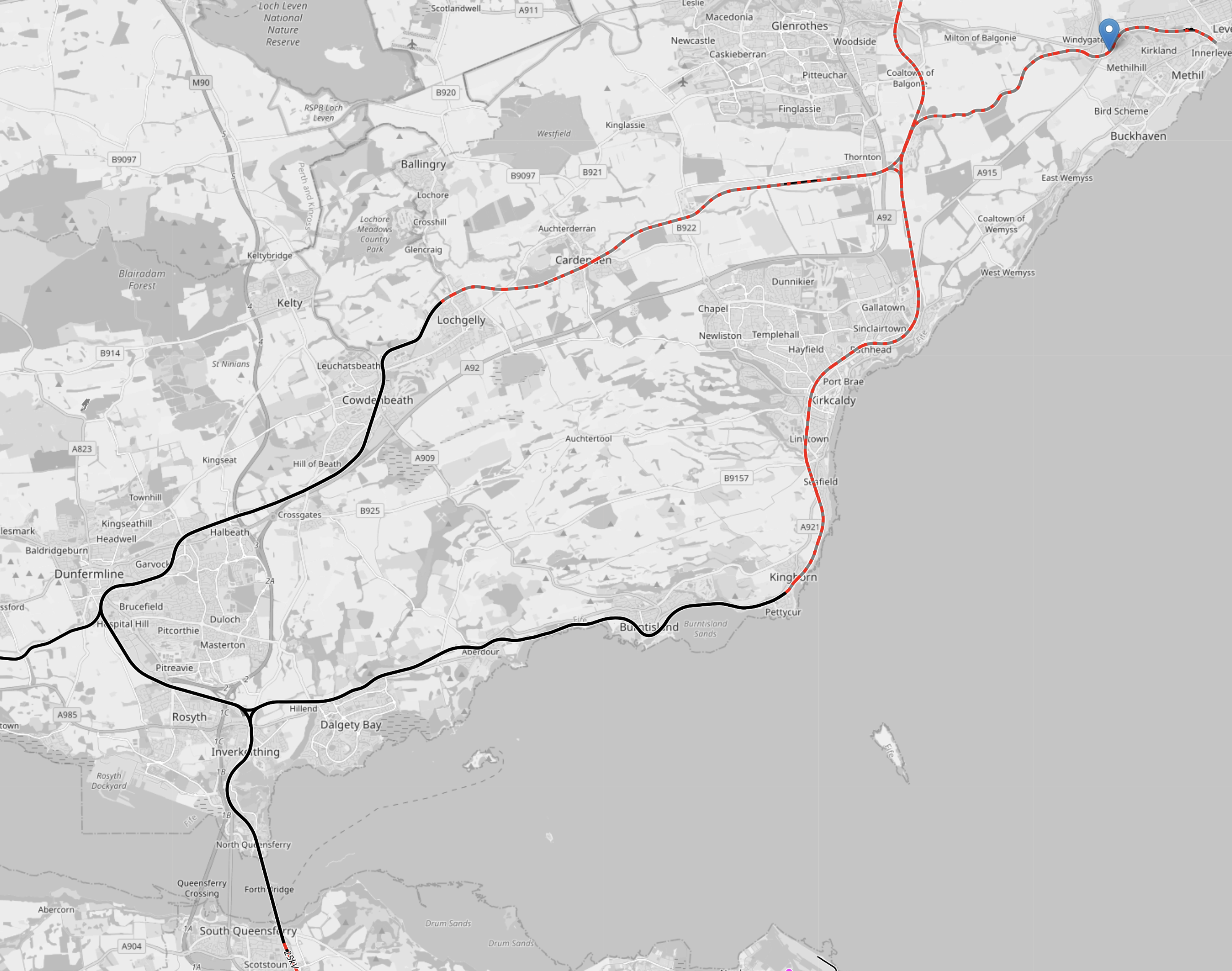
Note.
- Lines shown in red are electrifield, whilst those shown in black are not and lines shown in dotted red-and-black are to be electrified.
- Cameron Bridge is marked by the blue arrow, with Leven to its East on the coast.
- The Forth Rail Bridge over the Forth of Forth is at the bottom of the map.
- To the North of the bridge, the line splits and connects to the large circular railway, which is the Fife Circle Line.
- Some trains after crossing the Forth Rail Bridge,come up the East coast via Kirkcaldy to terminate at Leven or Glenrothes with Thornton.
- Other trains from Edinburgh take the Western side of the Fife Circle via Rosyth and Cowdenbeath to Glenrothes with Thornton.
This second Open RailwayMap shows the Fife Circle Line between Cameron Bridge and Glenrothes with Thornton.
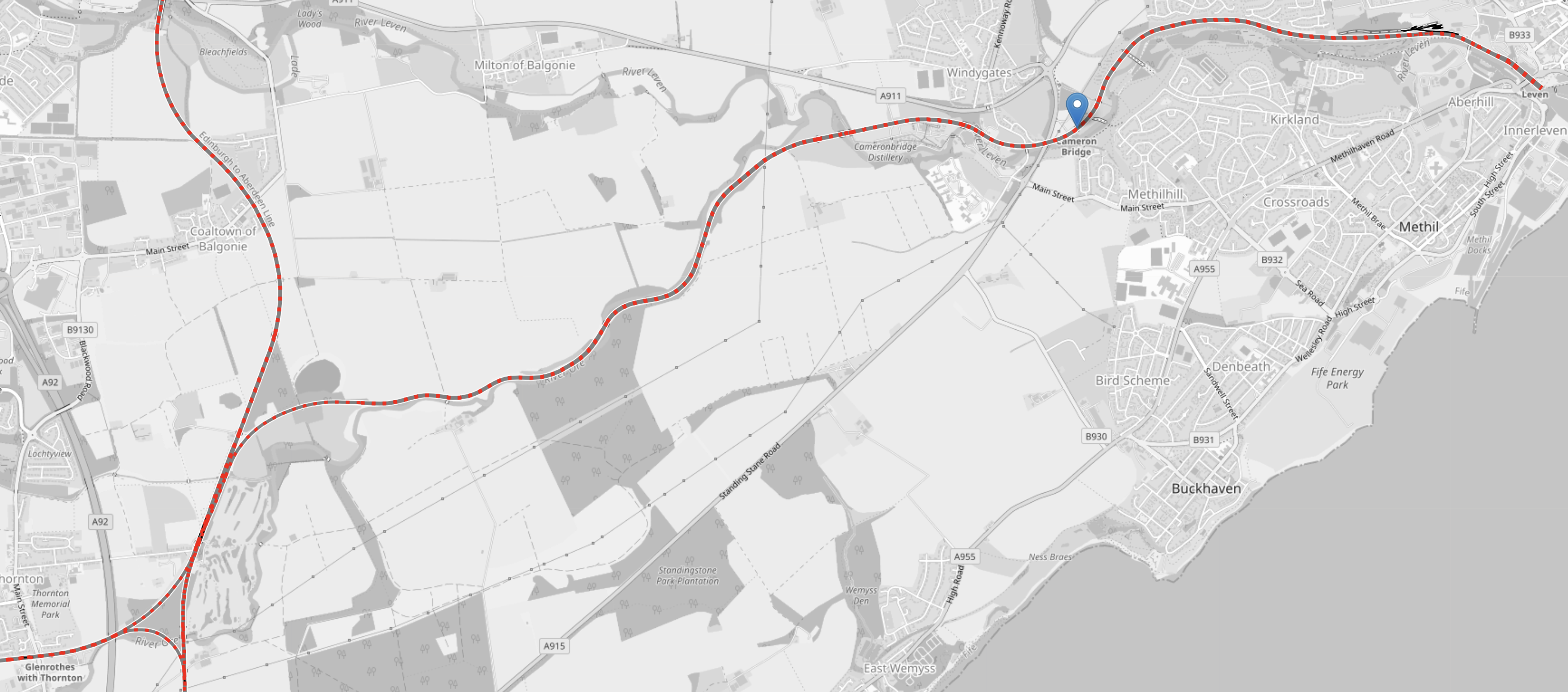
Note.
- As before, lines shown in red are electrifield, whilst those shown in black are not and lines shown in dotted red-and-black are to be electrified.
- Cameron Bridge is marked by the blue arrow, with Leven to its East on the coast.
- Glenrothes with Thornton station is in the South-Western corner of the map.
- It might even be possible for all trains to terminate on the Levenmouth Rail Link as Leven station has two platforms.
- If that is the case, the four tph would make full use of the two long platforms at Leven and Cameron Bridge stations, with the only electrification on the Fife Circle Line at Cameron Bridge station.
This is partial electrification with none of the complexity of full electrication, but with all the power it needs from the electrical connection of a large distillery.
The Wikipedia entry for the Fife Circle Line says this about the electrification.
The £55 million first phase, to electrify 65 miles (104 km) of Fife Circle track, between Haymarket and Dalmeny, for use by battery electric multiple units, was begun by Scottish Powerlines in June 2022 and is due to be completed by December 2024, although this project has been delayed and is expected to completed by December 2025. Further phases will electrify the lines between Kinghorn, Thornton, Ladybank and Lochgelly. This will allow the Fife Circle services to be operated by battery electric multiple units whilst minimising capital expenditure on infrastructure, in particular avoiding the major expense of electrifying the Forth Bridge. Complete electrification would be possible at some future date. The partial electrification was due to be completed by December 2025 but there has been some slippage in these target dates.
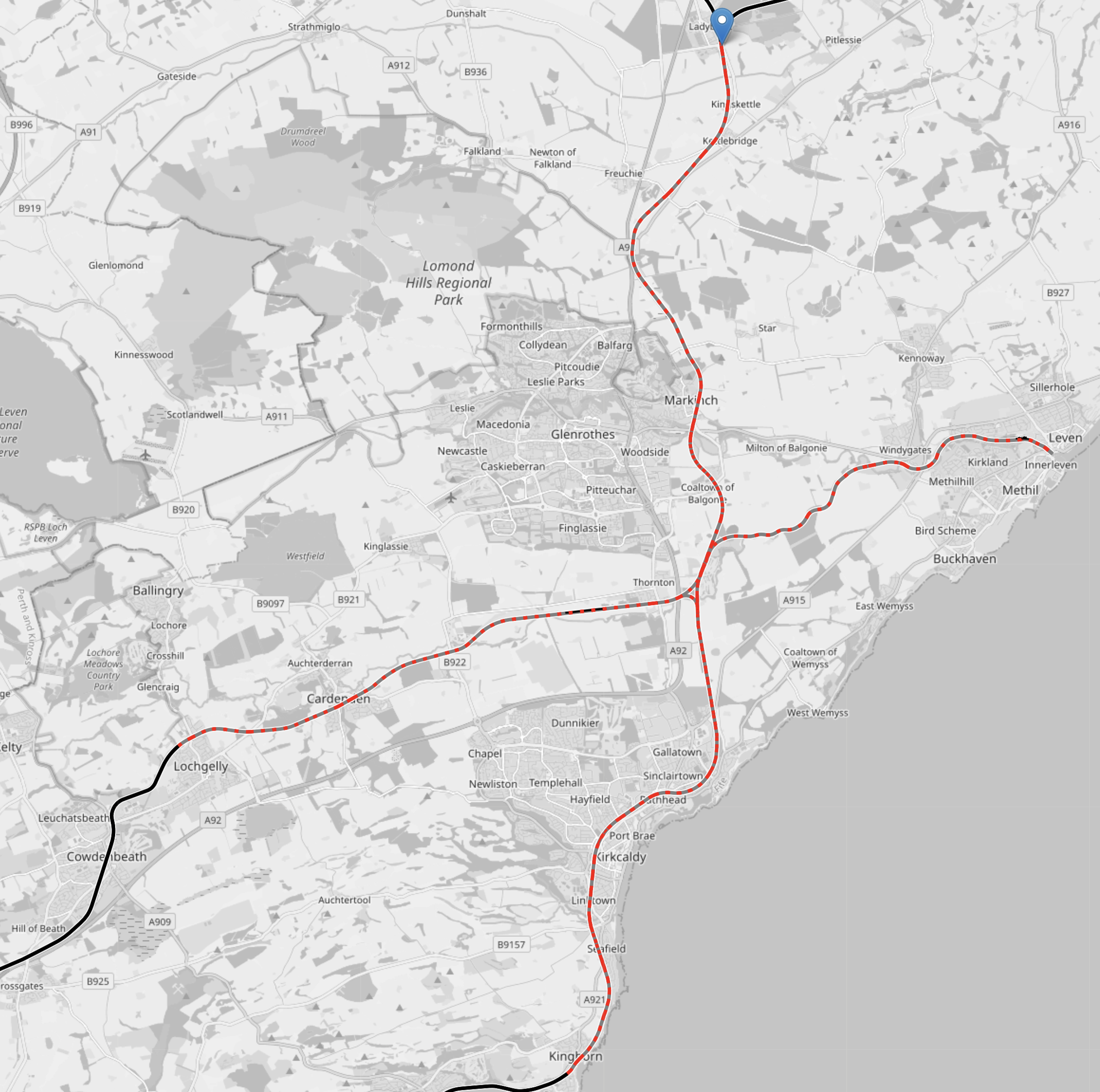
This OpenRailwayMap shows Kinghorn, Thornton, Ladybank and Lochgelly.
Note.
- Lines shown in red are electrifield, whilst those shown in black are not and lines shown in dotted red-and-black are to be electrified.
- Ladybank is at the top of the map indicated by a blue arrow.
- Kinghorn is at the bottom of the map on the coast.
- Ladybank and Kinghorn are connected by a section of the Aberdeen and Edinburgh Line.
- Glenrothes and Thornton are to the West of this line.
- The Levenmouth Rail Link runs to the East.
- Lochgelly and Cowdenbeath are on the West side of the map.
From what I saw yesterday, I wouldn’t be surprised if the amount of electrification to be performed has been cut back and more reliance is to be placed on on-board batteries.
Class 385 Battery-Electric Trains
The Wikipedia entry for Class 385 trains, says this about battery-electric versions.
During early 2019, Hitachi held a series of discussions with the Scottish Government on the development of a variant of the Class 385, a battery electric multiple unit (BEMU) that would be capable of running on unelectrified sections of line along a route. The installation of batteries was reportedly described as being a relatively straightforward alteration to make; an underfloor battery unit, dependent upon size, would be able to power a trainset over distances of 20 to 60 miles (30 to 100 km). The proposal drew upon Hitachi’s existing experience with battery trains operated in Japan, and had been motivated by a recommendation from the rail decarbonisation task force which advocated that such measures be implemented.
A range on batteries of sixty miles would cover the less than forty miles between Edinburgh Gateway and Ladybank.
I suspect that a range of sixty miles would bridge the gap between Edinburgh Gateway and Perth or Dundee.
Does this mean, that I think it could?
If Hitachi’s testing of their battery-electric Class 802 trains have shown phenomenal distances, then this would fit with the distances shown by Stadler’s Class 777 trains in New Merseyrail Train Runs 135km On Battery.
This leads me to believe that battery-equipped ScotRail Class 385 trains and LNER Class 800 trains are able to electrify the North of Scotland, with a few strategic charging stations like the one at Cameron Bridge station.
Council’s Boost To Aln Valley Railway Expansion Plan
The title of this post is the same as that of this news item from Northumberland County Council.
This is the body of the news item.
Northumberland County Council has agreed to assist the Aln Valley Railway in Alnwick to extend its rail line and expand its tourism offer in the town.
The county council has agreed to repair and adopt a bridge which is crucial to the expansion plans of the Aln Valley Railway Trust which is working towards the ultimate aim of extending the track from Alnwick to Alnmouth Station.
The Trust is wanting to continue laying track past Eden Hill Bridge which is currently owned by The Historic Railways Estate (part of Highways England). However, the Estate won’t allow the passage of trains under the bridge as it would impose maintenance obligations and costs onto them.
To overcome this hurdle and assist the popular tourist attraction , the county council, as the highways authority, has agreed adopt the bridge which has an unclassified road (U3203) running over it and to repair the bridge so that it can then give consent to the railway to lay track and ultimately operate trains under the bridge.
To bring this masonry arch bridge up to adoptable standards will cost in the region of £255k. One of the main areas of work that is needed is to install a waterproofing concrete overslab to eliminate the current water ingress. Extensive repointing together with masonry repair works are also needed on the bridge arch.
There is a Wikipedia entry for the Alnwick Branch Line, where this is the first paragraph.
The Alnwick branch line is a partly closed railway line in Northumberland, northern England. A heritage railway currently operates along one mile of the line, which originally ran from Alnmouth railway station, on the East Coast Main Line, to the town of Alnwick, a distance of 2+3⁄4 miles (4.4 km).
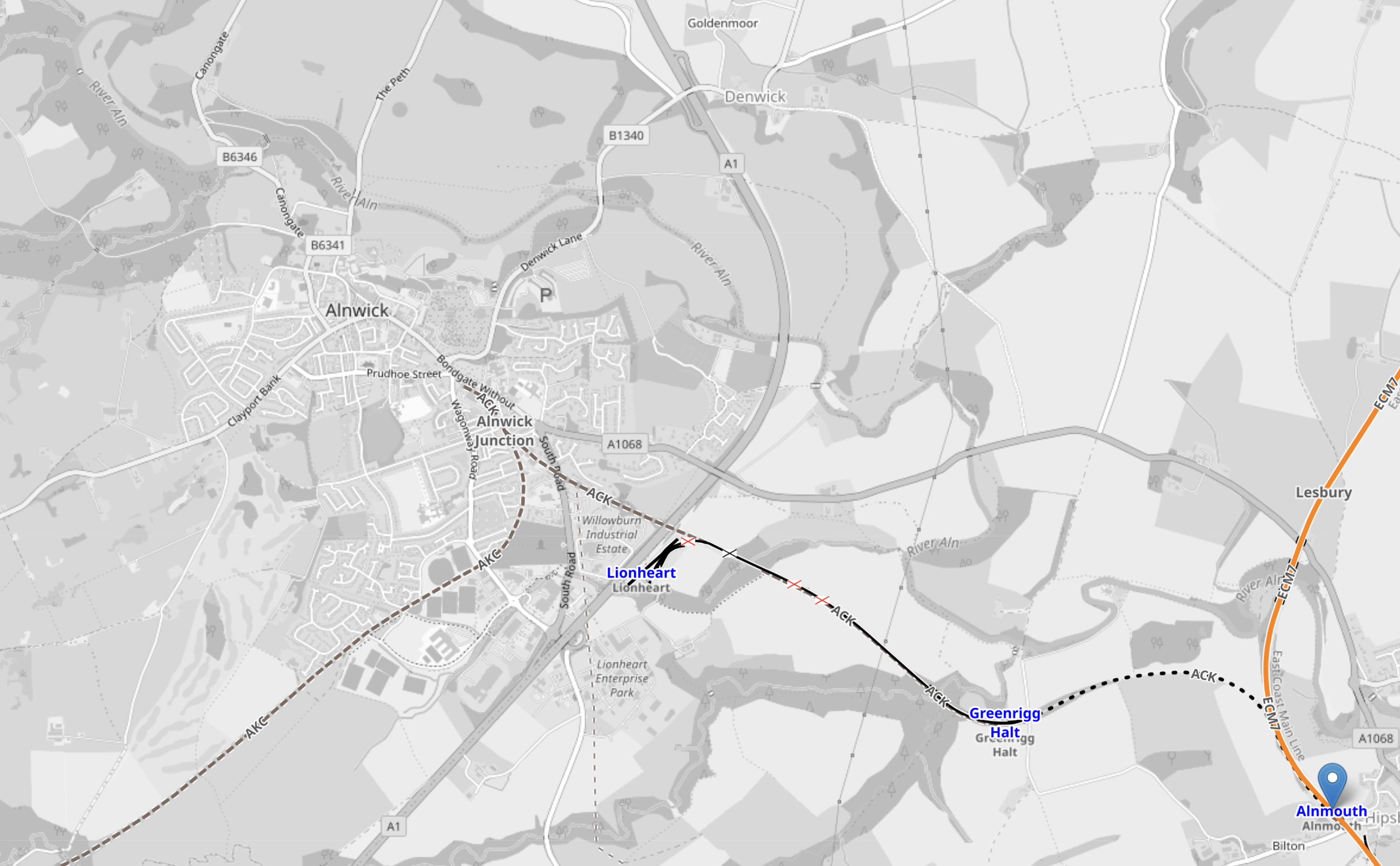
This OpenRailwayMap shows the route of the Alnwick Branch Line between Alnmouth and Alnwick.
Note.
The blue arrow in the South-East corner of the map indicates Alnmouth station.
The orange line curving through Alnmouth station is the electrified East Coast Main Line between Newcastle and Scotland.
The dotted line curving away North-West from the East Coast Main Line is the route of the AlnwickBranch Line, which leads to Alnwick in the North-West of the map.
The blue text indicates the the two stations of the Aln Valley Railway.
Greenrigg Halt is nearest to the East Coast Main Line and Lionheart is nearest to the town.
The road encircling the town of Alnwick is the A1 Alnwick By-Pass.
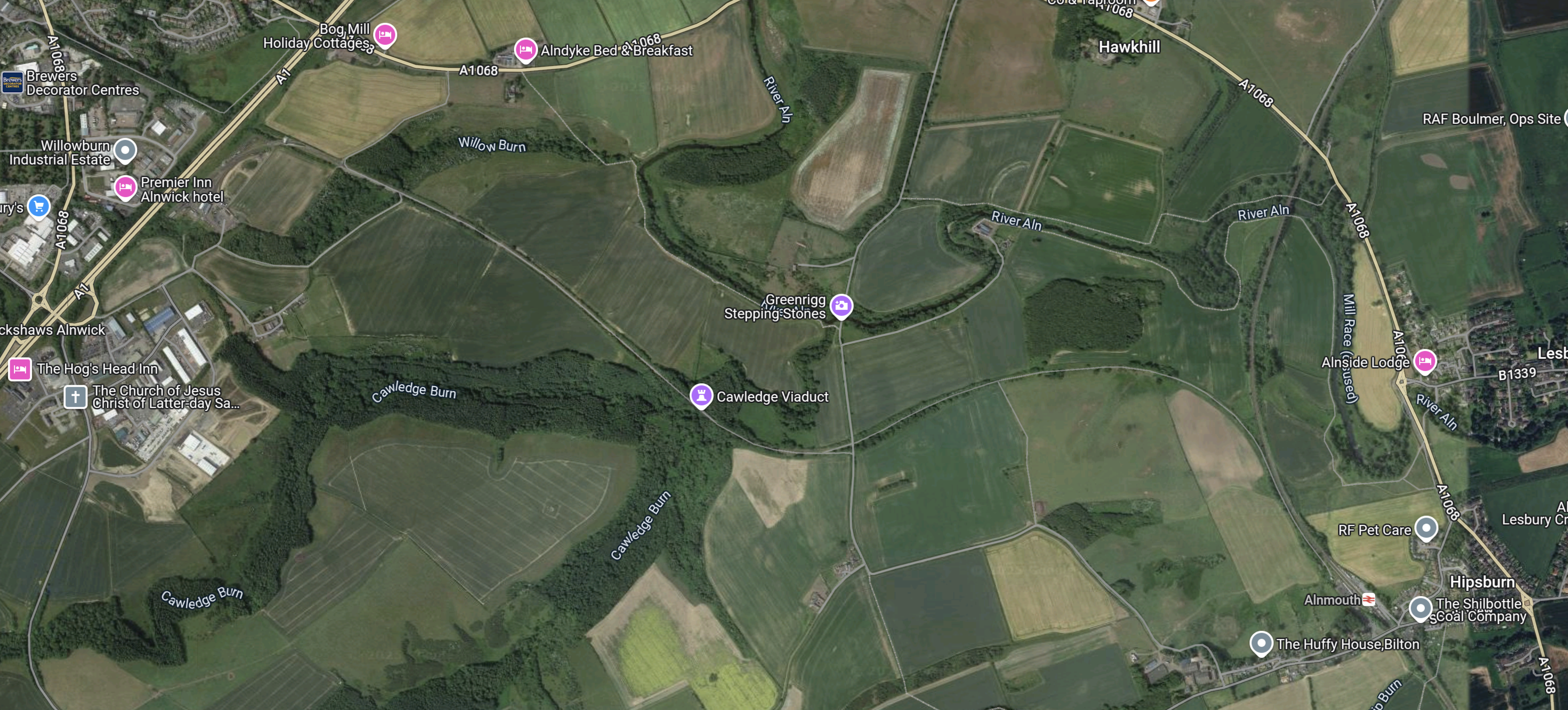
This Google Map shows the area between Alnmouth station and Alnwick.
Note.
- Alnmouth and its station is in the South-East corner of the map.
- Alnwick is in the North-West corner of the map.
- The A1 crosses the North-West corner of the map.
- The line of the Alnwick Branch Line can be picked out crossing the map diagonally.
Click on the map to show it to a larger scale.
The Wikipedia entry for Alnmouth station says this about the ambitions of the Aln Valley Railway to connect to the East Coast Main Line.
The Aln Valley heritage railway has long-term ambitions of extending its running line to Alnmouth station[10] from its current terminus at Greenrigg Halt.
This picture shows a Stadler RS-ZERO.
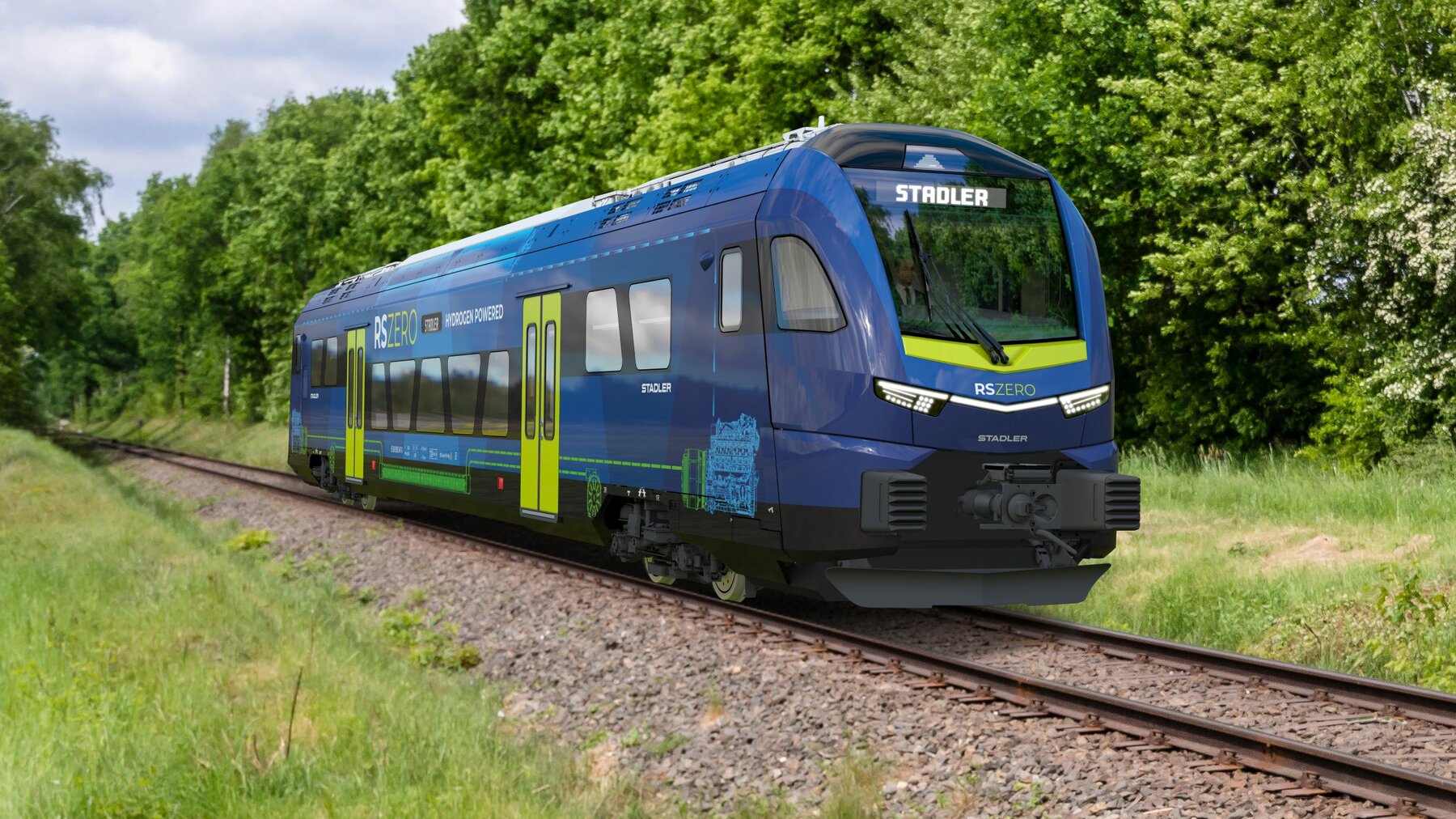
Could one of these powered by hydrogen shuttle between Alnmouth station and Alnwick? Probably, but it’s not powered by steam!
Hydrogen-Powered Trains To Be Introduced In Northern Italy
The title of this post, is the same as that of this article on Fuel Cell Works.
These three paragraphs introduce the project.
Residents and visitors to Valcamonica, an Alpine region in northern Italy, will be able to ride hydrogen-powered trains from next year.
The pioneering project, the first of its kind in Italy and supported by an investment of 367 million euros ($396 million), marks a significant adoption of hydrogen fuel for a rail line, despite the high production and operational costs.
The region currently uses polluting diesel trains, which will be replaced by 14 zero-emission hydrogen-powered trains made in Italy by a unit of French group Alstom
The trains will run on the Brescia–Edolo railway, which has this Wikipedia entry.
This OpenRailwayMap shows the Northern part of the railway.
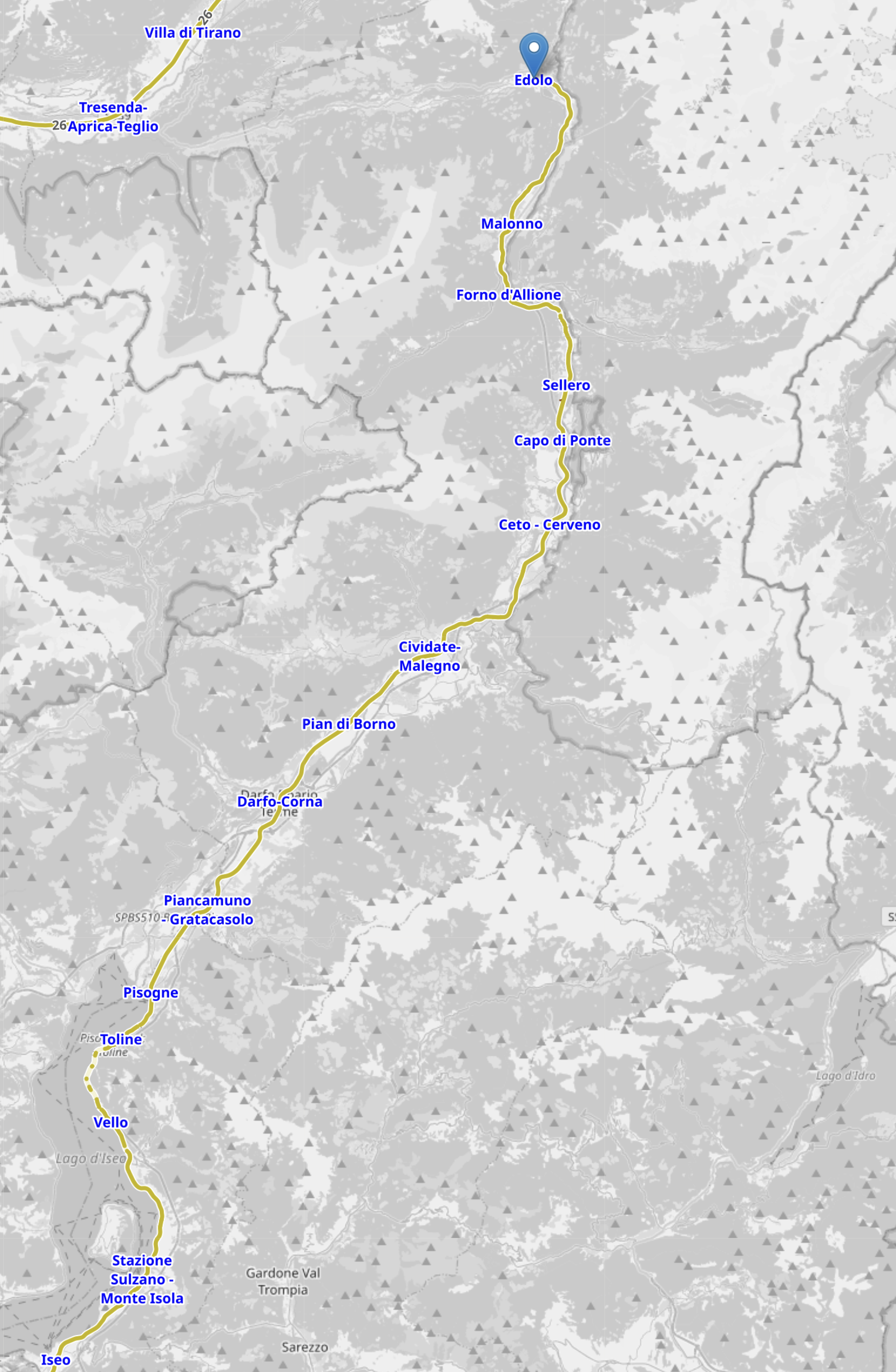
Note.
- Edolo station is indicated by the blue arrow at the top of the map.
- The Brescia–Edolo railway is indicated by the yellow line.
- Stations are indicated by blue lettering.
- Iseo is the station in the South-West corner of the map.
- Click the map to show it to a larger scale.
This second OpenRailwayMap shows the Southern part of the railway to the same scale.
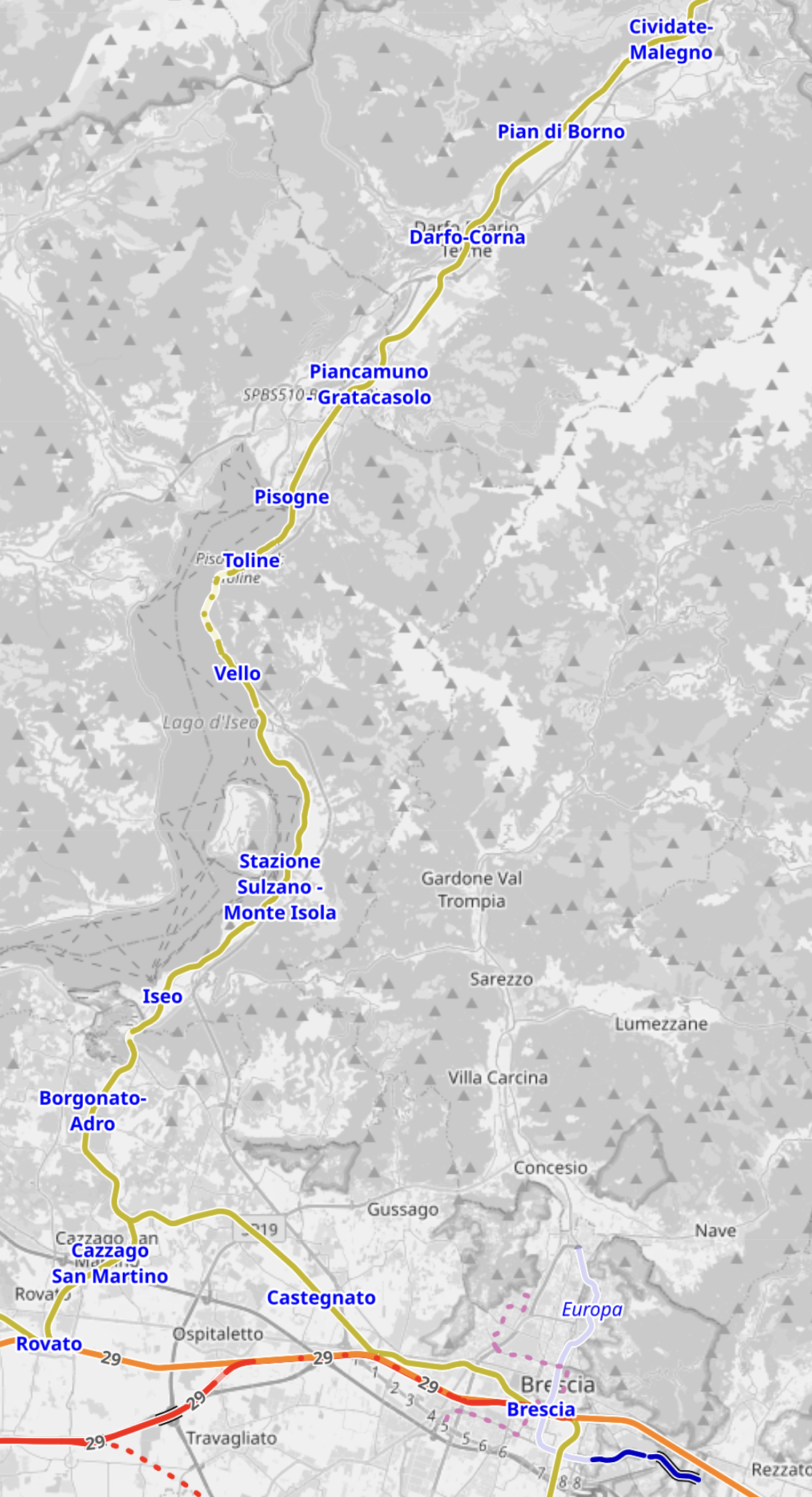
Note.
- The Brescia–Edolo railway is indicated by the yellow line.
- The Venice-Milan railway is indiated by the orange line across the bottom of the map.
- Stations are indicated by blue lettering.
- Iseo station is in the South-West corner of the map.
- Brescia station is in the South-East corner of the map on the Venice-Milan railway.
- Click the map to show it to a larger scale.
It looks to me, that the Brescia–Edolo railway could be a day-out if you were having a holiday in Milan, Venice or Verona.
- The railway is a single track railway.
- It appears to go through the mountains.
- Currently, it is diesel powered, but I suspect running hydrogen trains on the route will turn it into a major tourist attraction.
Could other rail routes attract visitors, by going for zero-carbon traction using hydrogen?
In the UK, these are surely six of many possibilities.
- Settle and Carlisle
- Marshlink Line
- Mid-Cornwall Metro
- Norwich and Sheringham
- Sheffield and Huddersfield
- Mid-Cornwall Metro
- Uckfield Branch
Infrastructure costs would just need a hydrogen supply to be arranged.
Conclusion
You can always trust the Italians to use a stylish solution.
Is This The Ultimate Tourist Bus?
This picture clipped from the Wrightbus web site, shows one of their latest products – An open-top electric tourist bus.
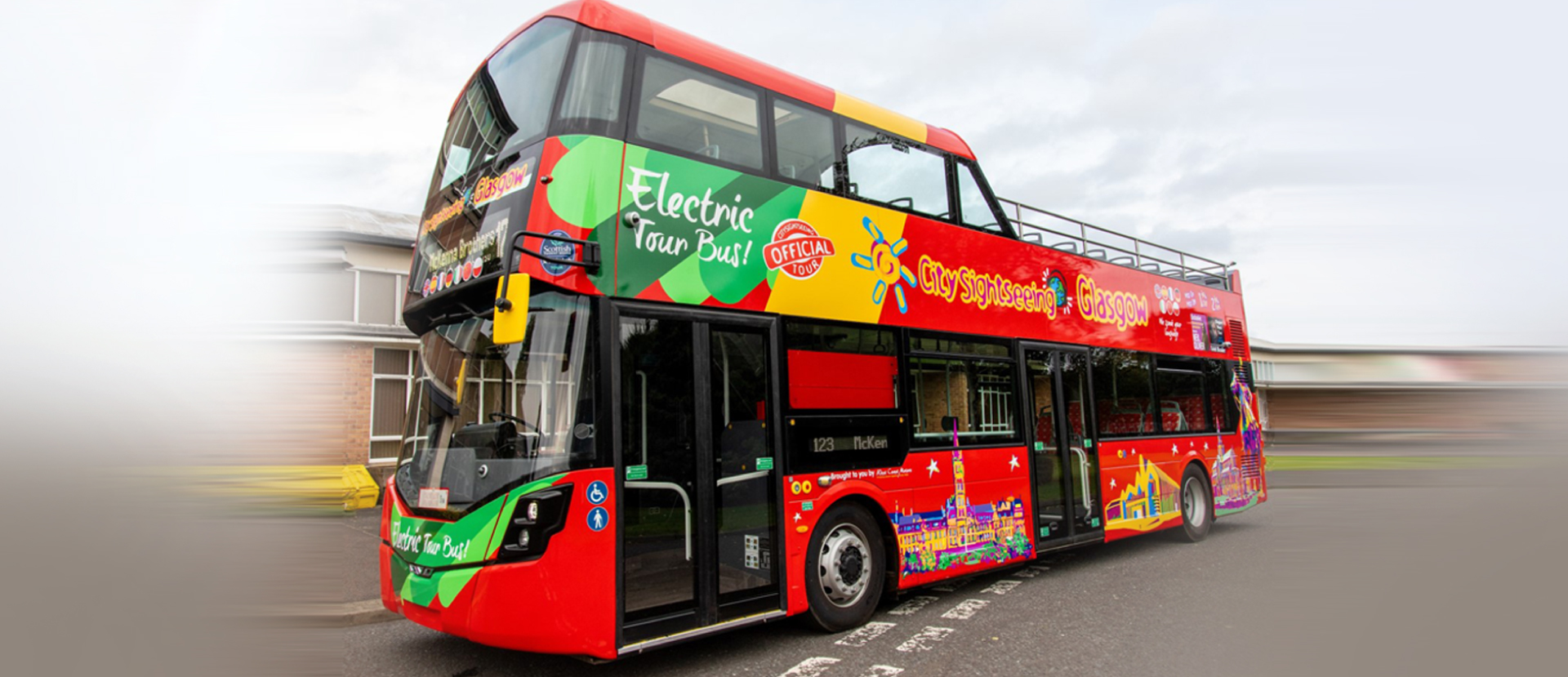
It appears to be running in Glasgow.
But if I was in charge of tourism, I’d get a hydrogen-powered version, as that would surely attract the punters.
Slow Tourism Train Operator Launches First Service
Tyhe title of this post, is the same as that of this article on Railway Gazette.
These are the first two paragraphs.
FS Group’s recently formed tourist train business FS Treni Turistici Italiani has launched its first service.
Branded Espresso Cadore, the overnight service between Roma Termini and Calalzo-Pieve di Cadore-Cortina will run every Friday night until mid-February. On arrival, a connecting bus takes passengers to Cortina d’Ampezzo in 45 min. The return train departs on Sundays, arriving at Roma Termini on Monday morning.
It is surely an interesting concept and I believe it could work on several routes in the UK.
- Settle and Carlisle would be an obvious route.
- Cumbrian Coast Line.
- Bristol and Oxford, which I wrote about in Leisure Market Boom? GWR’s Vision For Direct Bristol-Oxford Services.
There must also be a couple of routes in Scotland and Wales.
As the three routes, I named are electrified at both ends, there is a possibility that they could be run by quiet battery-electric trains.
 The Anonymous Widower