Job Sharing
I found this little story on the Railway Gazette web site.
Leasing company Porterbrook has jointly appointed Helen Simpson and Chandra Morbey to the role of Innovation & Projects Director as a job-share; they will report to Director of Engineering Services Jason Groombridge. Both have been involved with the development of Porterbrook’s Innovation Hub and the Hydro Flex fuel-cell multiple-unit demonstrator.
I’ve always thought job-sharing is a good idea, but rarely do you see it formally announced.
Perhaps, Porterbrook are making a statement about their policy towards job-sharing?
Will Abellio East Midlands Railway Go Flirting?
Abellio take over the East Midlands franchise in a few days and it will be renamed to East Midlands Railway.
It has already disclosed that it will have three divisions.
- EMR Intercity for long distance services from London St Pancras
- EMR Regional for local services
- EMR Electrics for the London St Pancras to Corby service
It has also confirmed it has ordered thirty-three AT-300 trains for EMR Intercity.
Wikipedia also shows, that the following trains will be transferred to East Midlands Railway.
- Nine Class 156 trains from Greater Anglia.
- Twenty-one Class 360 trains from Greater Anglia.
- Five Class 170 trains from ScotRail
- Four Class 180 trains from Hull Trains
The first three fleets will come from Abellio-run franchises and the last will be released fairly soon, as Hull Trains new fleet is arriving.
Looking at the EMR Regional fleet it will comprise.
- 21 – Class 153 trains
- 24 – Class 156 trains
- 26 – Class 158 trains
- 5 – Class 170 trains
Consider.
- Many probably feel that the Class 153 trains are inadequate.
- Except for the Class 170 trains, these trains are around thirty years old.
- Some of the Class 156 trains, which will be transferred from Greater Anglia, are currently being replaced with brand-new Class 755 trains.
- Abellio are going through extensive fleet replacement exercises in ScotRail, Greater Anglia and West Midlands Trains.
The EMR Regional routes, that they will run are a mixed bunch.
This page on the Department for Transport web site is an interactive map of the Abellio’s promises for East Midlands Railway.
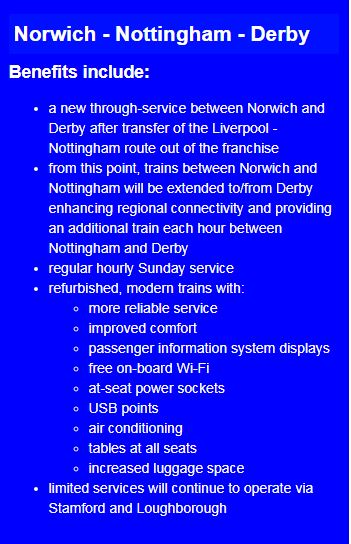
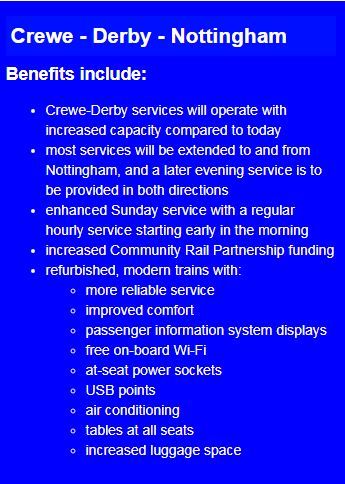
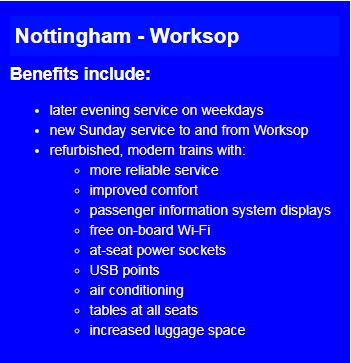
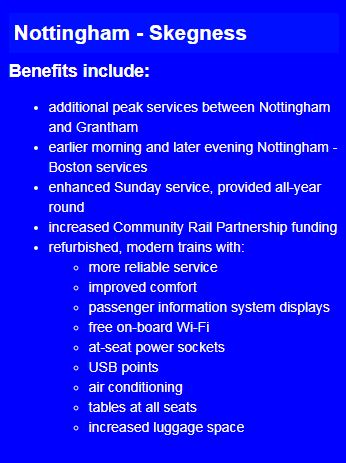
Digging out the blurb for each route shows the following.
Norwich – Nottingham – Derby
Crewe – Derby – Nottingham
Matlock – Derby – Nottingham

Nottingham – Lincoln – Grimsby

Nottingham – Worksop
Nottingham – Skegness
Leicester – Nottingham
 Peterborough – Lincoln – Doncaster

Barton-On-Humber – Cleethorpes

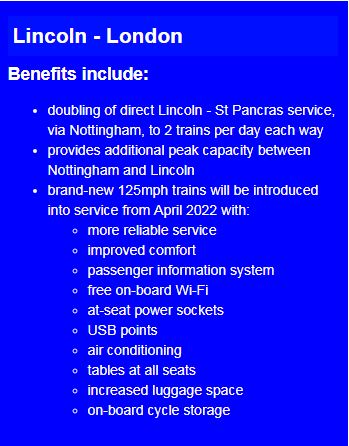
Lincoln – London
London – Oakham – Melton Mowbray

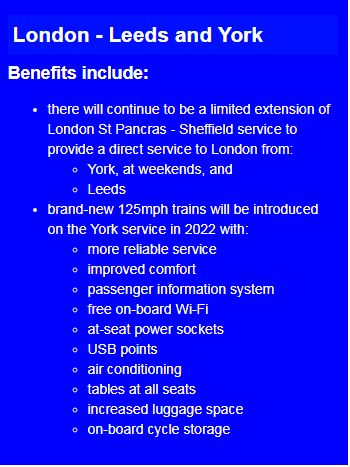
London- Leeds – York
Newark North Gate – Lincoln

I have come to a few conclusions.
The Fleet Is Not Being Expanded Enough To Retire The Class 153 Trains
Consider.
- There are twenty-one Class 153 trains.
- Five Class 170 trains and nine Class 156 trains are being added to the fleet.
Surely, this means that some Class 153 trains will be retained.
Perhaps, the remaining Class 153 trains, will be reorganised into two-car trains to increase capacity.
Extended Services Will Be Run Using New Bi-Mode AT-300 Trains
Services to Leeds and York, Oakham and Melton Mowbray and Lincoln would appear to be run by the new AT-300 trains that have been ordeed from Hitachi.
I’ve no problem with that,but there are three developments that may effect passenger numbers.
- There is a lot of housing development in the Corby, Oakham and Melton Mowbray area.
- There is a very large renewable energy sector developing in North Lincolnshire.
- Sheffield are proposing to add new stations between Sheffield and Leeds, at Rotherham and Barnsley Dearne Valley.
Does the proposed service pattern take this fully into account?
In a way it doesn’t matter, as the worst that could happen, is that East Midlands Railway will need to increase the fleet size by a small number of trains.
Hopefully, they’ll just need to get Hitachi to build the trains!
Most Regional Services Will Be Run By Refurbished Modern Trains
Most services will be run by refurbished modern trains with the following features.
- More reliable service
- Improved comfort
- Passenger information system
- Free on-board wi-fi
- At-seat power sockets
- USB points
- Air-conditioning
- Tables at all seats
- Increased luggage space
Can East Midlands Railway Refurbish Their Augmented Fleet To Meet Their Required Standards?
Consider.
- The Class 170 trains are relatively recent and were built to a high standard, so can probably meet EMR’s standard.
- The Class 158 trains are thirty years old and were built to a high standard, so they might be able to be upgraded to EMR’s standard.
- The Class 156 trains are thirty years old and noisy and old-fashioned, so will need a lot of work to bring them up to EMR’s standard.
- The Class 153 trains are thirty years old and only one car, so would probably be best retired or reduced to an auxiliary role like a bicycle car.
- Only the Class 170 and Class 158 trains can be high standard trains.
- All trains are diesel and only the Class 170 trains are possibly planned to be upgraded to more economical diesel hybrid trains
One additional option might be to refurbish some of the Class 222 trains, when they are replaced by the new Hitachi AT-300 trains on main line services, so they were suitable for the longer regional routes.
Will East Midlands Railway Replace The Fleet?
In their three other franchises in the UK; Greater Anglia, ScotRail and West Midlands Trains, Abellio have opted for replacement of all or a substantial part of the fleet.
So will the same action be taken at East Midlands Railway?
The company could do a lot worse, than invest in a fleet of Class 755 trains like Greater Anglia.
- They could be a mix of lengths, so each route could have a train with capacity for the traffic.
- The trains may be capable of 125 mph running on the Midland Main Line and the East Coast Main Line.
- The interiors meet the company’s requirements.
- The trains could use electrification , where it exists.
- The trains could be fast enough to cover for the AT-300 trains.
- Abellio Greater Anglia will soon have a large knowledge base for the trains.
The clincher could be, that as electrification increases, the trains could fit batteries and generate less carbon.
Conclusion
I wouldn’t be surprised to see Abellio East Midlands Railway buy a fleet of Class 755 trains for their EMR Regional services.
Baden-Württemberg Backs Battery Mireos
The title of this post, is the same as that of this article on Railway Gazette.
This is the first paragraph.
The Land of Baden-Württemberg has decided to order a fleet of 20 Mireo battery-electric multiple units from Siemens Mobility to operate the Netz 8 Ortenau package of regional lines, the state government announced on August 2.
Routes to be operated include.
- The electrified line between Offenburg and Freudenstadt/Hornberg
- Rench Valley Railway between Appenweier and Bad Griesbach – 29.1 km.
- , Acher Valley Railway between Achern and Ottenhöfen. – 10.4 km.
- Harmersbach Valley Railway between Biberach and Oberharmersbach-Riersbach – 10.6 km.
Reading about the area, it could be a nice place to go for an explore.
But it also could be the sort of area, that is ideal for battery-electric trains.
Germany Is Going Green In Local Rail Services
There have been other stories of hydrogen and battery-electric trains in Germany.
- Battery Answer To Schleswig-Holstein’s Diesel Replacement Question
- World’s Largest Fleet Of Fuel Cell Trains’ Ordered
- My First Ride In An Alstom Coradia iLint
- Bombardier Introduces Talent 3 Battery-Operated Train
- Flirt Akku Battery Multiple-Unit Unveiled
- Alpha Trains Commits To Hybrid Retrofit For Diesel Fleet
Manufacturers involved include Alstom, Bombardier, Rolls-Royce MTU, Siemens and Stadler.
Who will win the battle of zero-carbon technologies?
My money is on a new design of train, that is built specifically around battery or hydrogen technology.
- I’m sure Bombardier’s Aventras use battery technology, as an integral part of their excellent design.
- Stadler’s launch of the Class 755 train, shows they’ve got a top-of-the-range platform on which to install battery or hydrogen power.
Will Siemens battery-powered Mireo be another challenger.
My First Rides In A Class 755 Train
Today, I had my first rides in a Class 755 train. I use rides, as it was three separate timetabled journeys.
- 12:36 – Norwich to Great Yarmouth
- 13:17 – Great Yarmouth to Norwich
- 14:05 – Norwich to Lowestoft
But it was only one train!
Although, I did see at least one other train in service.
These are my observations.
The Overall Style
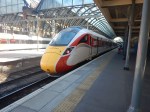
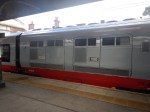
These are a few pictures of the outside of the train.
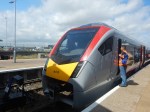
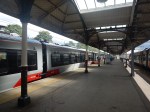
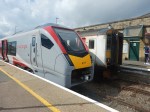
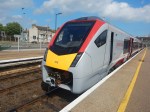
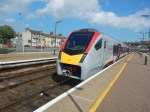
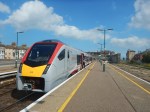
The train certainly looks impressive from the front, but then it has a similar profile to a Bombardier Aventra or a member of Hitachi’s Class 800 family of trains.
The open nose is reminiscent of front-engined Formula One racing cars of the 1950s, with an added sloping front to apply downforce.
I would suspect that the similarity of the trains is driven by good aerodynamic design.

If all the current Formula One cars were painted the same colour, could you tell the apart?
Trains seem to be going the same way. Only Siemens Class 700/707/717 design doesn’t seem to be rounded and smooth.
The PowerPack
The unique feature of these bi-mode trains is the diesel PowerPack in the middle of the train.
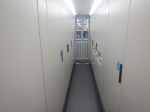
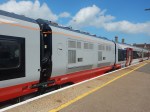
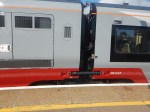
Stadler first used a PowerPack in the GTW, which I described in The Train Station At The Northern End Of The Netherlands.
- GTWs date from 1998.
- Over five hundred GTWs have been built.
- You see GTWs in several countries in Europe.
- GTWs have a maximum speed of between 115 and 140 kph.
The concept of the train with a PowerPack is certainly well-proven.
I have deliberately ridden for perhaps twenty seconds in the corridor through the PowerPack on both trains! Although I didn’t measure it with a sound meter, I’m fairly certain, that the more modern Class 755 train is better insulated against the noise of the engines.
But you would expect that with progress!
There could be another significant difference between the bi-mode Flirt and the GTW. This picture shows the connection between the PowerPack and the next car.
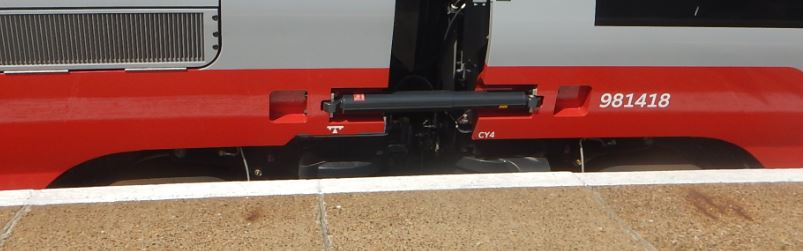
It looks like it could be a damper to improve the performance of the train on curves. It is not visible on this picture of a GTW PowerPack.
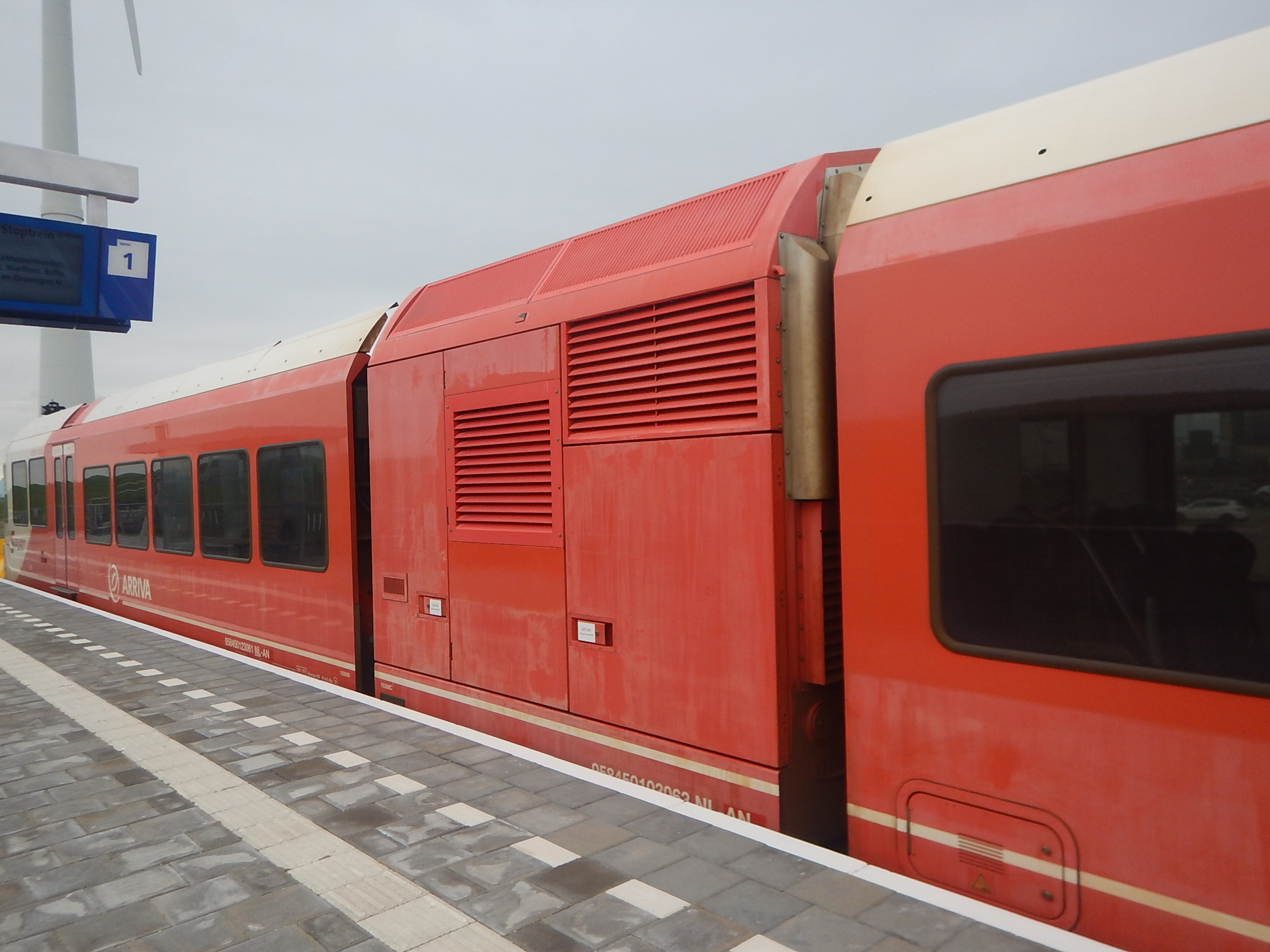
As an engineer, this says to me, that Stadler have taken tremendous care to make the unusual concept of the PowerPack work perfectly.
Train Power On Diesel
Consider.
- This four-car Class 755 train has installed diesel power of 1920 kW.
- At 100 mph, the train will travel a mile in thirty-six seconds.
- In that time, 19.2 kWh would be generated by the engines at full-power.
This means that a maximum power of 4.6 kWh per vehicle mile is available, when running on diesel power.
In How Much Power Is Needed To Run A Train At 125 mph?, I answered the question in the title of the post.
This was my conclusion in that post.
I know this was a rather rough and ready calculation, but I can draw two conclusions.
- Trains running at 125 mph seem to need between three and five kWh per vehicle mile.
- The forty year old InterCity 125 has an efficient energy use, even if the engines are working flat out to maintain full speed.
The only explanation for the latter is that Terry Miller and his team, got the aerodynamics, dynamics and structures of the InterCity 125 almost perfect. And this was all before computer-aided-design became commonplace.
In future for the energy use of a train running at 125 mph, I shall use a figure of three kWh per vehicle mile.
These figures leave me convinced that the design of the Class 755 train can deliver enough power to sustain the train at 125 mph, when running on diesel power
Obviously, as the maximum speed in East Anglia, is only the 100 mph of the Great Eastern Main Line, they won’t be doing these speeds in the service of Greater Anglia.
I also had a quick word with a driver and one of my questions, was could the train design be good for 125 mph? He didn’t say no!
This 125 mph capability could be useful for Greater Anglia’s sister company; Abellio East Midlands Trains, where 125 mph running is possible, on some routes with and without electrification.
With respect to the Greater Anglia application, I wonder how many engines will be used on various routes? Many of the routes without electrification are almost without gradients, so I can see for large sections of the routes, some engines will just be heavy passengers.
I’ve read somewhere, that the train’s computer evens out use between engines, so I suspect, it gives the driver the power he requires, in the most efficient way possible.
Remember that these Greater Anglia Class 755 trains, are the first bi-mode Stadler Flirts to go into service, so the most efficient operating philosophy has probably not been fully developed.
Train Weight
These pictures show the plates on the train giving the details of each car.
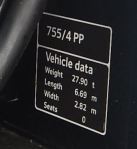
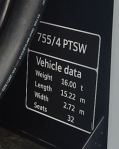
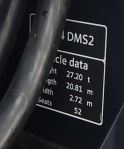
I only photographed one side of the train and I will assume that the other two cars are similar. They won’t be exactly the same, as this intermediate car has a fully-accessible toilet.
The weight of each car is as follows.
- PowerPack – PP – 27.9 tonnes
- Intermediate Car – PTSW – 16.0 tonnes
- Driving Car – DMS2 – 27.2 tonnes
Adding these up gives a train weight of 114.3 tonnes.
Note that the formation of the train is DMS+PTS+PP+PYSW+DMS2, which means that heavier and lighter cars alternate along the train.
Train Length
The previous pictures give the length of each car is as follows.
- PowerPack – PP – 6.69 metres
- Intermediate Car – PTSW – 15.22 metres
- Driving Car – DMS2 – 20.81 metres
Adding these up gives a train length of 78.75 metres.
This is very convenient as it fits within British Rail’s traditional limit for a four-car multiple unit like a Class 319 train.
Train Width
The previous pictures give the width of each car is as follows.
- PowerPack – PP – 2.82 metres
- Intermediate Car – PTSW – 2.72 metres
- Driving Car – DMS2 – 2.72 metres
The PowerPack is wider than the other cars and it is actually wider than the 2.69 metres of the Class 170 train, that the Class 755 train will replace. However, Greater Anglia’s electric Class 321 trains also have a width of 2.82 metres.
It looks to me, that Stadler have designed the PowerPack to the largest size that the UK rail network can accept.
The other cars are narrower by ten centimetres, which is probably a compromise between fitting platforms, aerodynamics and the needs of articulation.
Seats
The previous pictures give the number of seats in each car as follows.
- PowerPack – PP – 0
- Intermediate Car – PTSW – 32
- Driving Car – DMS2 – 52
This gives a total of 168 seats. Wikipedia gives 229.
Perhaps the car without the toilet has more or Wikipedia’s figure includes standees.
Kinetic Energy Of The Train
I will use my standard calculation.
The basic train weight is 114.3 tonnes.
If each of the 229 passengers weighs 90 kg with Baggage, bikes and buggies, this gives a passenger weight of 20.34 tonnes.
This gives a total weight of 134.64 tonnes.
Using Omni’s Kinetic Energy Calculator gives these figures for the Kinetic energy.
- 60 mph – 13.5 kWh
- 100 mph – 37.4 kWh
- 125 mph – 58.4 kWh
If we are talking about the Greater Anglia C;lass 755 train, which will be limited to 100 mph, this leads me to believe, that by replacing one diesel engine with a plug compatible battery of sufficient size, the following is possible.
- On all routes, regenerative braking will be available under both diesel and electric power.
- Some shorter routes could be run on battery power, with charging using existing electrification.
- Depot and other short movements could be performed under battery power.
The South Wales Metro has already ordered tri-mode Flirts, that look like Class 755 trains.
InterCity Quality For Rural Routes
The title of this section is a quote from the Managing Director of Greater Anglia; Jamie Burles about the Class 755 trains in this article on Rail Magazine.
This is the complete paragraph.
Burles said of the Class 755s: “These will be the most reliable regional train in the UK by a country mile – they had better be. They will be InterCity quality for rural routes, and will exceed expectations.”
I shall bear that quote in mind in the next few sections.
Seats And Tables
The seats are better than some I could name.
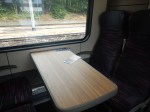
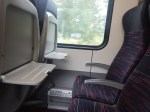
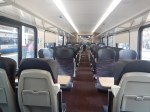
The seats are actually on two levels, as some are over the bogies. However |Stadler seem to managed to keep the floor flat and you step-up into the seats, as you do in some seats on a London New Routemaster bus.
Seat-Back Tables
I particular liked the seat-back tables, which weren’t the usual flimsy plastic, but something a lot more solid.
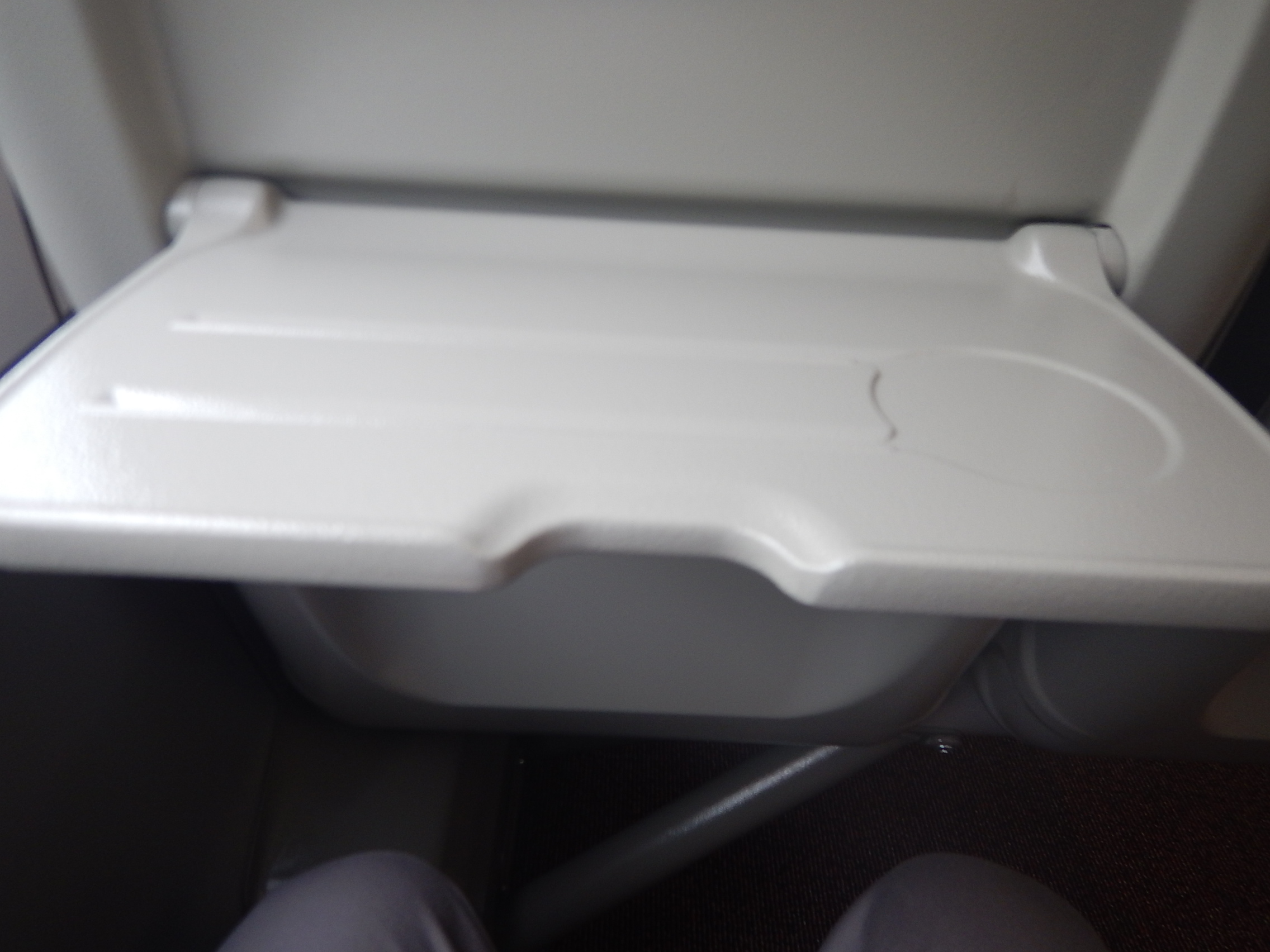
They are possibly made out of aluminium or a high class engineering plastic. You’d certainly be able to put a coffee on them, without getting it dumped in your lap.
It is the sort of quality you might get on an airliner, flown by an airline with a reputation for good customer service.
Step-Free Access
Stadler are the experts, when it comes to getting between the train and the platform, without a step. As I travel around Europe, you see little gap fillers emerge from trains built by Stadler, which have now arrived in East Anglia.
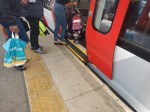
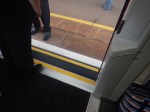
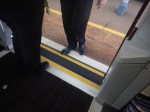

There was a slight problem at Great Yarmouth with a wheelchair, but it was probably something that can be easily sorted.
Some platforms may need to be adjusted.
Big Windows
The train has been designed with large windows, that are generally aligned with the seats.
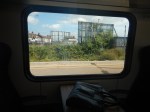
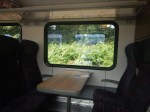
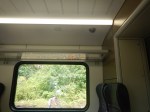
There is no excuse for windows not aligning with most of the seats, as you find on some fleets of trains.
Low Flat Floor
The train has been designed around a low, flat floor.
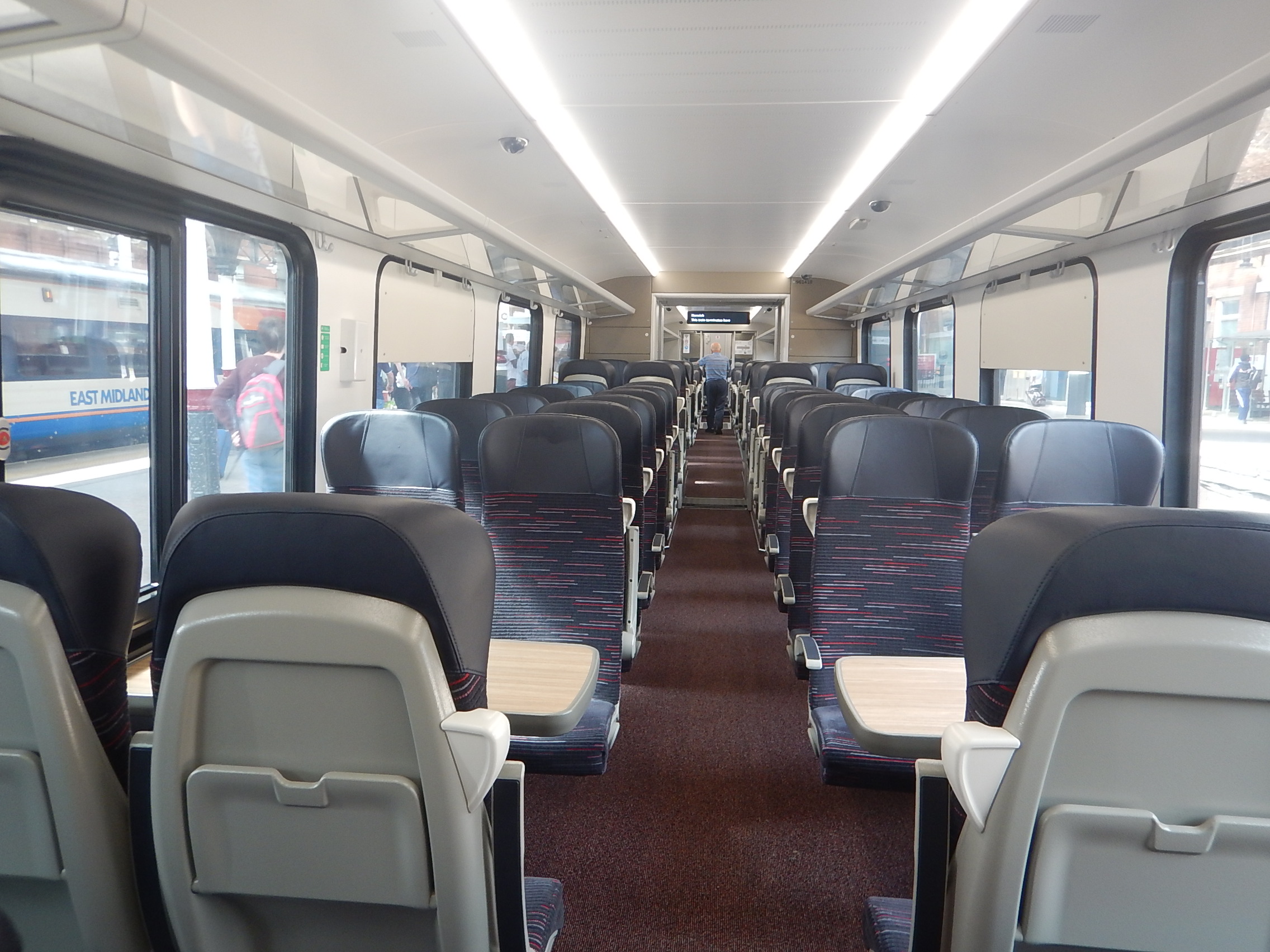
The floor also improves the step-free access and gives more usable height inside the train.
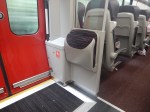
Litter Bins
The train has well-engineered litter bins in between the seats and in the lobbies.
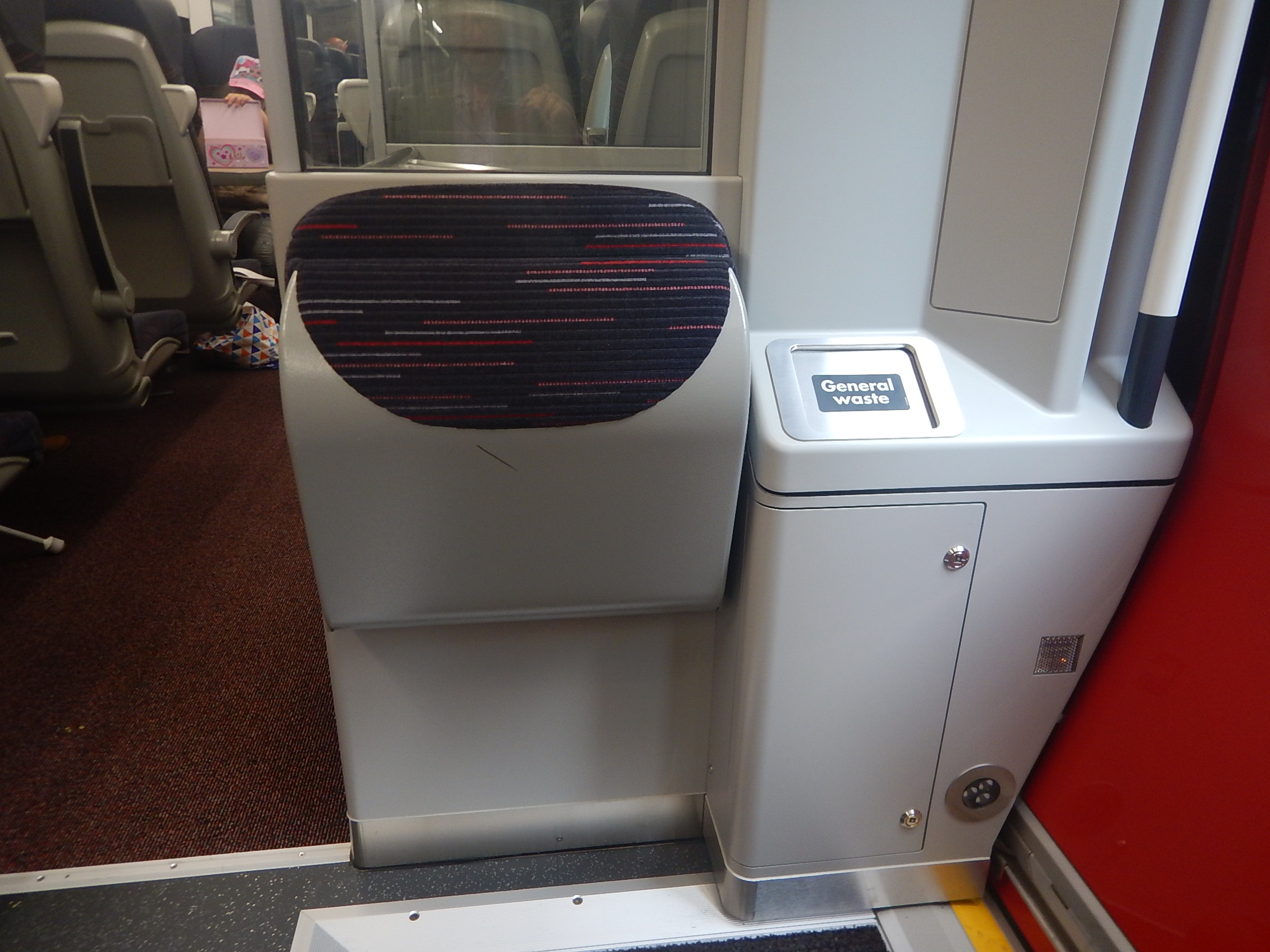
This bin is in the lobby, next to a comfortable tip-up seat.
Too many trains seem to be built without bins these days and the litter just gets thrown on the floor.
Conclusion
It is certainly a better class of rural train and I think it fulfils Jamie Burles’ ambition of InterCity Quality For Rural Routes.
But then services between Cambridge, Ipswich and Norwich are as important to East Anglia, as services between Hull, Leeds and Sheffield are to Yorkshire.
They are all services that can take a substantial part of an hour, so treating passengers well, might lure them out of their cars and off crowded roads.
In My First Ride In A Class 331 Train, I wrote about Northern’s new Class 331 trains.
If I was going to give the Greater Anglia train a score of eight out of ten, I’d give the Class 331 train, no more than two out of ten.
The Heaviest Freight Train Running In The UK
This is a paragraph from an article on Railway Gazette, which is entitled World Rail Freight News Round-Up.
Genesee & Wyoming subsidiary Freightliner has successfully operated a 4 624 tonne ‘jumbo train’ of aggregates from Merehead in Somerset to Acton in London, which it described as ‘the heaviest freight train currently running in the UK’. This was a trial run ahead of Freightliner taking over the haulage contract for the Mendip Rail joint venture of Hanson UK and Aggregate Industries. As the contract envisages the movement of 8 million tonnes/year, G&W’s Bulk Commercial Director for the UK/Europe Region, David Israel said ‘it was crucial that we tested the maximum haulage capability using one of our powerful Class 70 locomotives’
That is some train for the UK!
A few figures and calculations.
- Compare the weight of 4,624 tonnes with that of a nine-car 125 mph Class 800 train, which is just 438 tonnes.
- Fully loaded with 90 Kg passengers a Class 800 train weighs 494 tonnes.
- The Class 70 locomotive that is mentioned in the paragraph has a power of 2,750 kW and a weight of 129 tonnes.
- Travelling at 125 mph, the full passenger train has an energy of 214 kWh.
- Travelling at 41 mph, the freight train has an energy of 215 kWh
The stone train at 41 mph has a similar kinetic energy to a Class 800 train at 125 mph.
Rail Passengers Can Now Get From Farnworth To London In Two And A Half Hours
The title of this post is the same as that on this article on This Is Lancashire.
It may seem to be a bit of a parochial story for those near Farnworth station in Greater Manchester, but it is a problem that sffects many rail passengers all over the UK.
From Farnworth, the quickest way to London, is not the obvious one to go to Manchester Piccadilly.
This may involve changes of trains and busy trains in the Manchester Rush Hour.
Locals find a better way, is to take a train the other way and catch a train from Wigan North Western., where the hardest thing is to decide, whether you want a coffee, as you walk across the platform to catch the London train.
The on-line timetable now has been fixed to offer this route in addition.
These computer-knows-best routes crop up everywhere.
If I want to get to Victoria station from the bus stop around the corner, the best way is to catch a 30 bus to Highbury & Isligton station. There is a walk through the everlasting road-works at the station and a long walk in a tunnel to get to the platform, but it works.
However, the recommended route is to take a 38 bus to Essex Road station and then go out of London, by one stop to Highbury & Islington station.
This route has three problems.
- There is a double-crossing of busy roads at Essex Road station.
- Essex Road station was last cleaned and given a makeover, when King George was on the throne.
- The interchange at Highbury & Islington station is not for the unfit or anybody with a baggagge, bike or buggy
Only a computer working without human help, could design such a bad route.
As at Farnworth and with me in London, local knowledge is everything.
Sorting Out Manchester’s Routes
Northern Trains may have been thinking about passengers getting to the less busy stations.
They have introduced three new services that connect the West Coast Main Line and Greater Manchester.
- Wigan North Western and Alderly Edge
- Wigan North Western and Stalybridge
- Chester and Leeds via Warrington Bank Quay, Manchester Victoria, Rochdale, Hebden Bridge, Halifax and Bradford.
The latter route is an interesting one, as not only does it offer some good journey possibilities, but it is a scenic route through the Pennines.
The Painted Hall At Greenwich
The Painted Hall at Greenwich is now fully restored.
I went on Saturday and these are some of the pictures I took.














We had an excellent guide, who explained the imagery of the painting.
Much of it is aimed against the French and today, it can almost be considered to have a Brexit theme.
So has this philosophy about Europe and mainly the French been passed down the generations from the time of William and Mary?
The older I get, the more I realise that some of my personal philosophy on how I live and treat others has a Jewish slant.
Has it all come down from my sole Jewish ancestor, who arrived in this country from the Baltic in around 1800?
.
Just Look How The Port Of Felixstowe Has Grown
This article on Rail Engineer is entitled Felixstowe Branch Line Capacity Enhancement Goes Live.
This is the introductory paragraph.
Funded by the Strategic Freight Network, with a contribution from Hutchinson Ports UK (HP-UK), a £60.4 million investment to create a new 1.4km loop on the Felixstowe branch line in Suffolk was successfully brought into service on 29 May 2019, on time and on budget. It facilitates an increase from 33 to 47 freight train paths a day in each direction on this key artery, carrying the highest freight tonnage in the country and serving the largest container port in the UK.
High Speed Two it is not, but if you read the article, you’ll see that a substantial amount of work has been done, involving track, footbridges, level crossings and signalling.
I can remember the Port of Felixstowe, when it was a just a small basin, with the Little Ships Hotel, a couple of warehouses and the giant seaplane crane. A couple of times, I used the Harwich Ferry to cross the harbour to Harwich on the Brightlingsea.
In some ways Felixstowe has come a long way in those sixty years.
With the increase in capacity on the Felixstowe Branch Line, the rail link can handle the container traffic through the Port better!
Note this about trains between Ipswich and Felixstowe.
- 47 freight trains per day between Ipswich and Felixstowe is roughly two trains per hour (tph) in both directions.
- The current passenger service is one tph.
- In addition, there is an hourly Ipswich and Lowestoft train, which shares track between Ipswich and Westerfield Junction.
- The new Class 755 trains are faster and will have shorter dwell times than the current trains.
Between Ipswich and Westerfield, there are four tph.
- The route is double-track.
- Not all trains stop at Westerfield
- The level-crossing at Westerfield station has been improved and is now is a Manually Controlled Barrier with CCTV
- The signalling has been improved and moved to Colchester Power Signal Box.
Between Westerfield and Felixstowe, there are three tph.
- The route is single track with loops to the East of Derby Road and the West of Trimley stations.
- The level crossings have been improved and three have been converted to Manually Cntrolled Barriers.
- The signalling has been improved and moved to Colchester Power Signal Box..
It looks to my untrained eye, that these service pattern are possible.
So what will happen in the future?
In the next few sections, I talk about the future.
Could More Passenger Trains Be Run To Felixstowe And Lowestoft?
I suspect here, that the limiting factor will be platform capacity at Ipswich station.
Ipswich station will have at least four tph running between Stowmarket and Colchester (3 x London and Norwich and 1 x Peterborough and Colchester), that will use Plstform 2 at Ipswich station. I suspect that this means Lowestoft and Felixstowe trains will have to share the Bay Platform 1.
With good signalling and precision driving, I suspect that the single platform could handle 2 tph to both Felixstowe and Lowestoft.
There would only ever be one train in Platform 1 at Ipswich station, unlike now, where two trains share. The new Class 755 trains will be just too long.
Could Two tph Be Run Between Ipswich And Felixstowe?
The current timetable is as follows.
- Leaves Ipswich at XX:58 and arrives Felixstowe at XX:24
- Leaves Felixstowe at XX:28 and arrives Ipswich at XX::54
Note.
- The clock-face nature of the timetable.
- Both journeys are 26 minutes
- There is four minutes for the driver to change ends and have a break.
This service would need two trains and if there’s one thing that Abellio Greater Anglia aren’t short of, it’s three-car Cl;ass 755 trains.
If the trains had the branch to themselves, there could be a two tph service between Ipswich and Felixstowe.
But they have to share it with freight trains running at two tph.
This would mean the following.
- Five tph between Ipswich and Westerfield
- Four tph between Westerfield and Felixstowe.
As two tph between Ipswich and Felixstowe is likely to be on Greater Anglia’s wish list, I suspect the new track layout was designed with this service in mind.
Currently, there is one or two cars per hour between Ipswich and Felixstowe, but a two tph service would mean a minimum of six cars per hour or a massive increase in capacity.
Could Two tph Be Run Between Ipswich And Lowestoft?
The current timetable between Ipswich and Lowestoft stations is as follows.
- An almost clock-face hourly service in both directions.
- A journey time of just under one-and-a-half hours.
- There are nine stops on the route.
- There are several minutes for the driver to change ends and have a break.
When the new Class 755 trains are working the route, the following will apply.
- The Class 755 trains are faster and have a shorter dwell time in stations.
- There will be four London and Lowestoft services per day.
I think it is true to say, that journey times will be reduced.
I suspect that the following could be possible.
- A journey time of perhaps one hour and twenty minutes.
- Trains would leave Lowestoft at XX:07
- Trains would leave Ipswich at XX:37
This or something like it, would be an acceptable clockface timetable.
I strongly believe that an improved service will be possible between Ipswich and Lowestoft.
- I feel that two tph between Ipswich and Lowestoft might be difficult to achieve without extra works on the track.
- Extra capacity can be added by using four-car Class 755 trains on the route.
- Faster services will certainly be introduced, as the train’s faster speed and shorter dwell times will knock several minutes from the journey.
I also think, that it may be possible to introduce a second service on the Southern section of the route, which runs to perhaps Leiston or even Aldeburgh. This would give the busier Southern section of the route two tph.
So Platform 1 at Ipswich station could see the following trains.
- Two tph Ipswich and Felixstowe
- One tph Ipswich and Lowestoft
- One tph Ipswich and Leiston/Aldeburgh
I believe that timetabling of the route would not be a difficult task!
Four Trains Per Day Between Lowestoft and London
The London and Lowestoft service could be arranged as follows.
- Lowestoft station has three platforms., so one could be reserved for the London service.
- If the last service arrived back late or the first service needed to leave early, the dedicated platform could be used for overnight stabling.
- When running between Ipswich and Lowestoft it would take over, one of the Ipswich and Lowestoft paths.
- The trains will stop at all stations between Ipswich and Lowstoft, as there will be jealousy between users.
- It would call in the through platforms 2 and 3 at Ipswich station..
- The trains would make as few calls as possible South of Ipswich, as the Lowestoft train will be a fourth fast London service in the hour.
No new infrastructure would be required.
Could London And Lowestoft Services Be A Dedicated Shuttle Train?
This may have marketing advantages, as the train could have its own livery and perhaps a buffet or a catering trolley.
If you assume that the working day for a train is 0600-2400, then this means the following.
- A round trip must be performed in four and a half hours.
- A London and Lowestoft time of two hours and fifteen minutes,.
- The journey time would include the turnround time at the destination.
As Ipswich and London times of an hour are possible with a 100 mph trains, like the Class 755 train, Ipswich and Lowestoft would have to be run in a time as close to an hour as possible.
Consider.
- The only trains on the East Suffolk Line will be Class 755 trains between Ipswich and Lowestoft.
- Class 755 trains may be able to stop at stations in under a minute.
- Line speed could possibly be increased, as the route appears reasonably straight
- Some level crossings could probably be removed.
- The current average speed on the line is around 35 mph.
I also suspect that Greater Anglia have run tests with the current Class 170 trains, which are 100 mph trains to determine what times are possible.
I wouldn’t be surprised if using a single shuttle train to run the four trains per day between London and Lowestoft, is possible.
- Services could leave Lowestoft at 06:00, 10:30, 15:00 and 19:30
- Services could leave Liverpool Street at 08:15, 12:45, 17:15 and 21:45
The last service would arrive back in Lowestoft at midnight.
Tram-Trains Between Ipswich And Felixstowe
This report on the East-West Rail web site is entitled Eastern Section Prospectus and gives full details of their proposals for the Eastern section of the East-West Rail Link.
This is said in the report.
Introduction of a tram-train service on the Felixstowe branch, with doubling between Derby Road and Felixstowe and street running through
Ipswich.
It is also said, that there will be a frequency of four tph between Ipswich and Felixstowe.
It looks like the plan is to fully-double the branch line to the East of Derby Road station.
To the West of Derby Road, the line is mainly single track until it joins the East Suffolk Line close to Westerfield station.
The problem is that the single-track railway goes over the over the Spring Road Viaduct. Rebuilding the viaduct to add the second track, would be something that everybody would want to totally avoid, as how would the containers from forty-seven freight trains per day in both directions, be moved in and out of the Port of Felixstowe?
If the capacity can’t be increased, the demand will have to be reduced.
A Possible Tram-Train Proposal
The East West Rail report is proposing that the 1-2 tph passenger service between Ipswich and Felixstowe should be replaced by a four tph tram-train service.
- The tram-train service would start at Ipswich station, running as a tram.
- It would probably meander through Ipswich, serving places like Portman Road, the Town Centre< Christchurch Park, the new housing in the North, Ipswich Hospital and the Retail Parks in the East.
- If Ipswich gets a new Northern Ring Road, the tram-trains, might run on the original by-pass, that goes past Ipswich Hospital.
- It would then join the double-track section of the Felixstowe Branch Line on the Eastern outskirts of the town.
- Extra stops might be built between Ipswich and Felixstowe.
- At Felixstowe station, the tram-trains could revert to tram mode and might even go as far as the sea-front, using battery-power.
There are a lot of possibilities to give Ipswich and Felixstowe, one of the best local transport links in the world.
There will be some collateral benefits.
- Extra freight trains can probably be squeezed through.
- Ipswich Hospital will get the updated transport links, that it badly needs.
- Road traffic would be reduced.
I also believe that the tram-train could be added to the Felixstowe Branch Line without disrupting trains, freight or passengers.
Electrification
I can remember reports from the 1960s, which said that felt the Felixstowe Branch Line would be electrified.
- With a frequency of four tph, the route would surely be electrified for the tram-trains.
- It would probably be electrified at 25 KVAC, so that freight trains could take advantage.
- When street running in Ipswich and Felizstowe,, 750 VDC electrfication or battery-power could be used.
There would be no extra electrification needed to enable all freight trains going via London to be electric-hauled.
Freight Locomotives
I think it likely, that increasingly, we’ll see Class 93 locomotives and other electro diesel locomotives with a Last Mile capability taking freight trains into and out of the Port of Felixstowe.
These new breed of 110 mph locomotives will be able to take maximum-length freight trains on routes to, from and through London, but a new locomotive will be needed to take trains across East Anglia to Ely and Pryrtborough and then on to the Midlands and the Notth.
Conclusion
The Port of Felixstowe and the railways connecting it to the rest of the UK have come a long way in sixty years and they will expand more in the next decade or two!
Drax Secures £500,000 For Innovative Fuel Cell Carbon Capture Study
The title of this post, is the same as that of an article on the Drax web site, that was published in June 2019.
This is the first paragraph.
Drax Group will explore the feasibility of using molten carbonate fuel cells as a technology for capturing carbon dioxide (CO2) having secured £500,000 of funding from the UK Government.
These objectives are listed.
- Fuel cell FEED study to assess the feasibility of building a second carbon capture pilot at Drax Power Station will help position the UK as a world leader in the fight against climate change
- The technology used will produce power at the same time as capturing carbon dioxide from Drax’s flue gases.
- Neighbouring horticultural site will use the CO2 to improve yields and demonstrate how businesses working together in clusters can deliver climate solutions
I am glad to see, that the Government is supporting initiatives like this.
The Drax Paradox
I have seen strawberries in a supermarket, labelled as coming from a farm at Drax in Yorkshire.
Were they grown using carbon dioxide from the power station?
They probably weren’t labelled as organic, but can you grow organic strawberries in a carbon-dioxide-rich atmosphere and label them as Organic?
Conclusion
I don’t think these and other technologies will lead to any massive revival of coal-fired power stations, as mining coal is a very disruptive and dangerous process compared to extracting gas or growing bio-mass.
But I do think that they are needed for application to the following plants, that produce a lot of carbon dioxide.
- Gas-fired power stations.
- Biomass power stations.
- Cement-making
- Steel-making
The two last processes are probably the most important, as improvement in renewable energy generation, should make the first two redundant.
Aberthaw Power Station Set To Close, Risking 170 Jobs
The title of this post is the same as that pf this article on the BBC.
This is first two paragraphs.
Wales’ last coal-fired power station looks set to close in March due to “market conditions”, putting about 170 jobs at risk.
RWE said it was proposing closing the 1.56-megawatt Aberthaw B Power Station in Vale of Glamorgan on 31 March.
Read the section called Oerations in the Wikipedia entry for Aberthaw power station.
This is a sentence from that section.
Coal now mainly comes from the Ffos-y-fran Land Reclamation Scheme in Merthyr Tydfil.
I may be very much against, the burning of coal for the generation of electricity or heat, but surely an exception should be made, when it is part of a process to clear up the considerable mess left by coal mining. As Aberthaw power station can use the Welsh coal in conjunction with bio-mass, perhaps there could be an argument to mothball one of the later coal-fired power stations.
Carbon Capture And Storage or a sensible use for the carbon dioxide, will be developed within the next ten years and in conjunction with one of the more modern coal-fired power stations, it could be used to help clean up the detritus of coal mining.
If nothing else, we could plant a lot of trees on the sites being reclaimed.
Bare in mind, that carbon dioxide produced by a coal-fired power station or cement factory is all in one place and can probably be collected using well-established engineering processes. On the other hand try collecting the carbon dioxide produced by a large fleet of diesel trucks.
 The Anonymous Widower