Cheltenham Football Stadium’s New Solar Array To Provide Over 25% Of Power
The title of this post, is the same as that of this article on Solar Power Portal.
These five paragraphs describe the installation.
Cotswold Energy Group (CEG) has completed the installation of a solar array at Cheltenham football stadium with an annual power generation capacity of 77MWh.
The £90,000 renewable energy project saw 213 solar photovoltaic (PV) panels placed on the south and east-facing stands of the stadium and is expected to yield annual energy savings of £21,000, and a full return of investment in no more than four years.
These returns rise to £650,000 over a 20-year period.
The football club did not provide the capacity of the solar PV installation. However, the solar array will provide more than 25% of the stadium’s power and, alongside other energy saving measures such as the installation of LED floodlights, 30% of the stadium will be powered by renewable energy.
The project was made possible by low-interest load granted by Cheltenham Borough Council to Cheltenham Town Football Club (CTFC), as well as contributions received from shareholders.
Note.
- There is a full return in investment in no more than four years.
- Returns rise to £650,000 over a 20-year period.
- The club has also installed LED floodlights.
- The council and shareholders appeared to have contributed.
- There is no mention of a battery. Surely, a small one would help to spread out the energy during the day.
There must be lots of sports stadia, that could do something similar.
Counter-Terror Officers Investigate Ulez Camera Explosion
The title of this post, is the same as that of this article on the BBC.
This is the sub-heading.
Metropolitan Police counter-terrorism officers are investigating an incident where a Ulez camera was blown up using a “low-sophistication improvised explosive device” (IED).
These two paragraphs introduce the story.
The explosion happened at about 18:45 GMT on Wednesday in Sidcup, south-east London, damaging vehicles and property.
The Met has said it is treating the blast as a “deliberate act”, but not terrorism at this stage.
It also appears that the camera had been cut down earlier and then someone blew it up.
I am 76 and I know several of my generation, who experimented with explosives. One, who was an American, blew his hand off.
But speaking to my children, none said they had experimented.
Is it, that my generation was born closer to World War II?
I don’t drive so ULEZs and Low Traffic Neighborhoods don’t bother me, but if some blow-up cameras and deface the signs, they must bother others.
I can’t help feeling that Sadiq Khan is introducing policies, that some violently object to!
I doubt that is a sensible policy, both practically or politically.
Crown Estate Details Round 5 Plans
The title of this post, is the same as that of this article on offshoreWIND.biz.
This is the sub-heading.
The Crown Estate has revealed details of a new leasing round, known as Round 5, for three commercial-scale floating wind projects in the Celtic Sea.
These are the first two paragraphs, which outline the three initial projects.
Located off the coast of South Wales and South West England, the sites will have a combined capacity of up to 4.5 GW, enough to supply four million homes with renewable energy.
The new wind farms are expected to be the first phase of commercial development in the region, with the UK Government confirming as part of its Autumn Statement in November its intention to unlock space for up to a further 12 GW of capacity in the Celtic Sea.
It looks like there could be another 7.5 GW available.
These four paragraphs indicate that the Crown Estate. expect the developers to to develop the local infratructure.
New details about the Round 5 auction include upfront investment in important workstreams to de-risk the process for developers and accelerate the deployment of projects.
This includes a multi-million-pound programme of marine surveys to better understand the physical and environmental properties around the locations of the new wind farms, as well as carrying out a Plan-Level Habitats Regulations Assessment early on in the process.
An Information Memorandum published today, on 7th December, also includes details of a series of contractual commitments for developers to create positive social and environmental impacts, focused on skills and training, tackling inequalities in employment, environmental benefits, and working with local communities.
In addition, bidders will be required to demonstrate commitments for the timely access to the port infrastructure needed to develop their projects, the Crown Estate said.
But it also appears that the Crown Estate are doing their bit by carrying out marine surveys.
Conclusion
It looks like the Crown Estate are making thing easier for developers, so that they increase the interest in Celtic Sea wind farms.
We’ll see if the strategy is successful, when contracts are awarded.
Vertical Farming Consortium Secures UK Government Funding To Advance Low-Emission Food Production Using Energy Storage
The title of this post, is the same as that of this article on Renewable Energy Magazine.
This is the sub-heading.
A consortium of four British companies, comprising UK Urban AgriTech (UKUAT), Intelligent Growth Solutions Ltd, RheEnergise and James Hutton Institute has received a grant from the UK Government to advance the development of low-carbon and low-cost food production by co-locating renewable energy with vertical farms.
These paragraphs outline the project.
The V-FAST consortium’s £488,000 project will explore how co-locating RheEnergise’s HD Hydro Energy Storage system with vertical farms can support a low-emission route to growing protein-rich crops in a controlled environment.
Last year, V-FAST – Vertical Farming And Storage Technologies – started investigating sites in Scotland’s Central Belt for the location of Scotland’s next generation of hectare+ scale vertical farms, powered by 100 percent renewables and using RheEnergise’s High-Density Hydro energy storage system. These farms would provide locally produced fresh foods (salads and fruits) to over 60 percent of the Scottish population and help meet the Scottish Government’s ambitions to produce more homegrown fruit and vegetables. These site investigations in Scotland continue.
Now, with the Innovate UK and BBSRC funding as part of the Novel Low Emission Food Production Systems competition, V-FAST will broaden the area for its site feasibility studies to across the UK, using GIS to identify and rate suitable locations for vertical farms that are co-located with renewables and High-Density Hydro energy storage. As part of the project, V-FAST will also undertake crop trials to establish optimal climate recipes in terms of their energy efficiency relative to produce metrics (e.g. protein per kWh or kg of CO2e).
It certainly sounds unusual to pair vertical farming with energy storage, but if it works, why knock it?
RheEnergise’s HD Hydro Energy Storage system is effectively pumped storage hydroelectricity using a fluid with a specific gravity of 2.5.
So instead of needing mountains to store energy, it can use medium-sized hills.
The Wikipedia entry for vertical farming, introduces the concept like this.
Vertical farming is the practice of growing crops in vertically stacked layers. It often incorporates controlled-environment agriculture, which aims to optimize plant growth, and soilless farming techniques such as hydroponics, aquaponics, and aeroponics. Some common choices of structures to house vertical farming systems include buildings, shipping containers, tunnels, and abandoned mine shafts.
As both HD Hydro Energy Storage system and vertical farming seem to need some form of vertical space, can colocation be advantageous in terms of cost?
Wikipedia also says that vertical farms also face large energy demands due to the use of supplementary light like LEDs.
So could V-FAST be an unusal marriage made in heaven of plant science and energy storage?
Hertford North Station – 6th December 2023
I went to Hertford North station this morning and took these pictures.







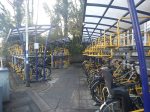
















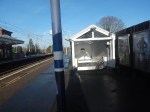


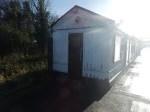
Note.
- Getting to Platform 1 is not easy.
- There would appear to be no obvious place for a lift.
- The traditional signals are still working.
- There is a cafe/shop in the station.
With some sympathetic refurbishment, it could be an excellent station.
I have some thoughts.
Digital Signalling
The digital signalling is currently being rolled out on the Northern City Line.
- The Class 717 train seemed to be running faster than I can remember.
- Had Network Rail been weeding the signals, as there only seemed to be one between each pair of stations?
- Currently, Moorgate and Welwyn Garden City takes around 50-53 minutes.
- Currently, Moorgate and Stevenage takes around 66-67 minutes.
- The average speed between Moorgate and Stevenage is only about 32 mph, which is slow for an 85 mph train.
Could the digital signalling find more time between Hertford North and Stevenage reduce the journey time to something less than an hour?
Trains For Current Schedule
I estimate that the current off-peak schedule of two trains per hour (tph) needs nine trains.
So as there are extra trains in the peak, the fleet of twenty-five Class 717 trains should be enough to be able to run the extra peak trains.
Could Four Trains Per Hour Be Run On Both Routes?
Four tph on both routes, would need something like eighteen trains, which leaves seven spare trains.
Fashion Companies Pledge To Invest In Bangladesh First Offshore Wind Project
The title of this post, is the same as that of this article on offshoreWIND.biz.
This is the sub-heading.
Fashion companies, BESTSELLER and H&M Group have pledged to invest in the first utility-scale offshore wind project off the coast of Bangladesh, which is being developed by Copenhagen Infrastructure Partners (CIP) together with local partner Summit Power.
These four paragraphs give a lot more detail.
The announcement was made Tuesday at the ongoing COP28 in Dubai.
The 500 MW offshore wind project, which is in early-stage development, could significantly increase the availability of renewable energy in one of the fashion industry’s most important manufacturing countries, said the non-profit organisation Global Fashion Agenda (GFA).
More than 70 per cent of the fashion industry’s GHG emissions come from upstream activities and current operations predominantly rely on non-renewable energy sources, such as petroleum, gas, oil, and coal, said GFA.
To ensure and accelerate decarbonisation, GFA is advocating collective investments by fashion brands in new renewable energy generation.
This would appear to be one of those circular stories, where a lot of parties benefit.
- There will be less greenhouse gas emissions from manufacturing in Bangladesh.
- Jobs will be created in the renewable energy industry in Bangladesh.
- The fashion industry gets product with a smaller carbon footprint.
- The fashion industry gets a safe investment for its spare cash, that improves their product.
It might also create an industry in Bangladesh, that makes steel structures for the world’s offshore wind industry.
But consider.
- As of June 2022, Bangladesh had 25.7 GW of electricity generation.
- Much of Bangladesh’s electricity is generated by gas.
- Bangladesh is aiming for a 7 % growth rate so will need a lot more electricity.
500 MW is literally a drop in the ocean.
This Goggle Map shows most of Bangladesh and the location of the wind farm, by Cox’s Bazar, which is marked by a red arrow.
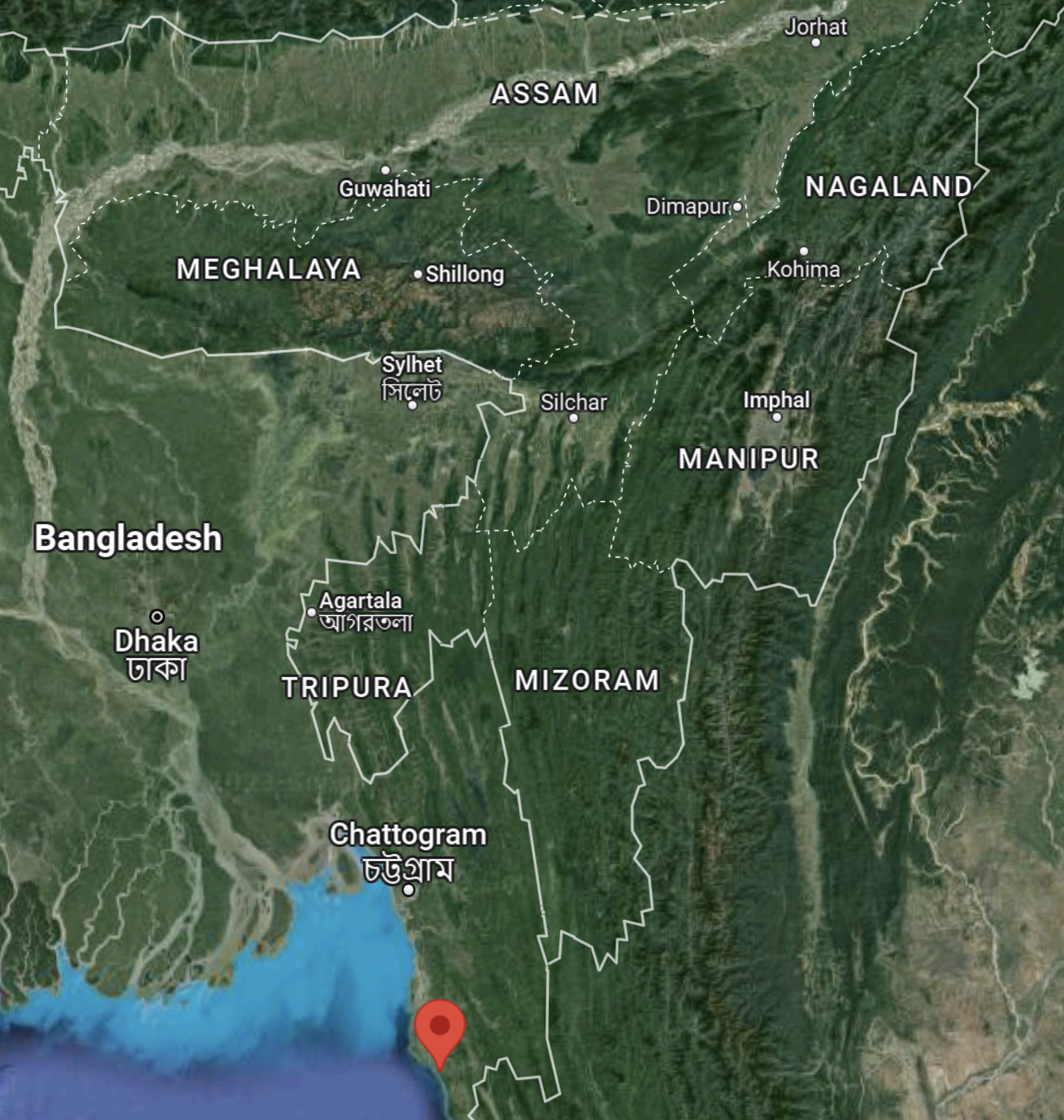
I shall be interesting to see how this and other similar projects develop.
New Mobile Rail Charging Facility For Long Marston
The title of this post, is the same as that of this article from Rail Technology Magazine.
This is the sub-heading.
Porterbrook has signed a £1.7 million deal with Siemens Mobility to purchase an innovative Rail Charging Converter (RCC) for its Long Marston Rail Innovation Centre. The cutting-edge technology will make battery charging and 25kV power supply possible in areas of the UK railway where overhead line equipment is not currently available.
This first paragraph describes the system.
The RCC is a modular and containerised system that uses power electronics to provide a fully compliant, standard connection between the modern three-wire electricity grid and the single-wire railway. It essentially reduces the electrification infrastructure needed by being able to plug into existing power cables and deliver the ideal power supply for trains.
These two paragraphs describe how the RCC was designed and funded, and how it will be used in the future.
The original development of the RCC was supported by the Department for Transport through Innovate UK’s First of a Kind programme. The team will install the novel charging solution at Long Marston, enabling the charging of trains with batteries, fed from existing standard local power supply cables.
Compatible with all overhead line equipment powered trains, the small, low-cost design of the RCC enables the removal of diesel passenger train operation on routes without continuous electrification.
I suspect we’ll see other manufacturers like Hitachi ABB Power Grids and Furrer+Frey launch similar products.
This page gives full details of the award to Siemens Mobility.
Project Title: 25kV Battery Train Charging Station Demonstration
Lead Organisation: Siemens Mobility Ltd.
Project Grant: £59,910
Public Description:
The UK rail industry is committed to decarbonisation, including the removal of diesel trains by 2040.
Replacing diesel trains with electric, hydrogen or battery bi-mode rolling stock provides faster, smoother and more reliable journeys, as well as eliminating local pollution and greatly reducing carbon dioxide.
To enable clean, green electric bi-mode operation without continuous electrification requires enhancement of the power supply to existing electrification and novel charging facilities to support bi-mode trains.
No small, low-cost solution is currently available for charging facilities that are compatible with standard UK trains and locally available power supplies and space.
Siemens Mobility, working with ROSCO, TOCs and Network Rail, will deliver a novel AC charging solution enabling simple installation of small, low-cost rapid charging facilities fed from existing standard local power supply cables.
Compatible with all OLE-powered trains, the novel design enables the removal of diesel passenger train operation on non-electrified routes across the UK, while minimising land requirements and modifications required to existing station structures.
£59,910 seems to be good value for the helping with the design of a universal charging system for 25 KVAC battery-electric trains in the UK.
I have a few thoughts.
Will The Rail Charging Converter (RCC) Charge Third Rail Trains?
As new third-rail systems are effectively systems non grata, I suspect that third-rail trains will be charged by fitting a pantograph and the appropriate electrical gubbins.
Most modern third-rail electrical multiple units have a roof that is ready for a pantograph and can be converted into dual-voltage trains.
What Trains Will Be Able To Be Charged Using An RCC?
I suspect it will be any train with a battery, a pantograph and the appropriate electrical gubbins.
Battery-electric trains that could have a pantograph include.
- Alstom Electrostar and Aventra
- CAF Civity
- Hitachi Class 385 train
- Hitachi Class 800 train
- Siemens Desiro and Mireo
- Stadler Class 777 train
- Stadler Flirt and Akku
- Vivarail Class 230 train
I suspect it could charge all trains in the UK, where batteries have been proposed to be added.
What Is Meant By Mobile?
I suspect transportable and temporary would be a better description.
This gallery show Felixstowe station and a Class 755 train, which can be fitted with batteries.



Suppose that testing was to be done at Felixstowe of a battery-electric Class 755 train.
- The containerised electrical system would be placed somewhere convenient.
- A short length of overhead wire would be erected in the platform.
- The system would then be connected together and to the electrical supply.
- After testing, it could be used to charge a train.
It would be very convenient for operation of the railway, if it could be installed and taken out overnight.
Conclusion
It looks a well-designed system.
RWE’s Welsh Offshore Wind Project Powers Ahead
The title of this post, is the same as that of this article on offshoreWIND.biz.
This is the sub-heading.
Natural Resources Wales has awarded marine licences for RWE’s Awel y Môr offshore wind project off the North Wales Coast.
These two paragraphs outline the project.
The offshore wind farm, which could power more than half of Wales’ homes, has secured all of its necessary planning approvals with the award of its marine licences from Natural Resources Wales, RWE said.
The marine licences have been awarded on behalf of Welsh Government ministers following the granting of a Development Consent Order in September.
With all the wind action in the East, we tend to forget that the Liverpool Bay area has a lot of wind.
- Awel y Môr – 500 MW – Before 2030
- Barrow – 90 MW – 2006
- Burbo Bank – 90 MW – 2007
- Burbo Bank Extension – 258 MW – 2017
- Gwynt y Môr – 576 MW – 2015
- Mona – 1500 MW – 2029
- Morecambe – 480 MW – 2028
- Morgan – 1500 MW – 2029
- North Hoyle – 60 MW – 2003
- Ormonde – 150 MW – 2012
- Rhyl Flats – 90 MW – 2009
- Walney – 367 MW – 2010
- Walney Extension – 659 MW – 2018
- West Of Duddon Sands – 389 MW – 2014
Note.
- This is a total of 6709 MW to be delivered before 2030.
- All the wind farms have fixed foundations.
- RWE have an interest in three of the Welsh wind farms.
The Times today has this article which is entitled Energy Minnow Sees Pathway To Irish Sea Gasfield Via London IPO, where these are the first three paragraphs.
An energy minnow that is seeking to develop a gasfield in the Irish Sea is planning to list on Aim, the junior London stock exchange, in an attempt to buck the downturn in initial public offerings.
EnergyPathways has announced its intention to float, seeking to raise at least £2 million.
It owns the rights to Marram, a small gasfield discovered in 1993 about 20 miles offshore from Blackpool. It is seeking permission from the government for its plan to develop the field in the Irish Sea quickly by connecting it with existing infrastructure that serves the already-producing gasfields in Morecambe Bay. It aims to be producing gas as soon as 2025.
This gasfield should produce enough gas until the large Liverpool Bay wind farms come on stream at the end of the decade.
Masdar To Invest In Iberdrola’s 1.4 GW East Anglia Offshore Wind Project
The title of this post, is the same as that of this article on offshoreWIND.biz.
This is the sub-heading.
Iberdrola and Masdar have signed a strategic partnership agreement to evaluate the joint development of offshore wind and green hydrogen projects in Germany, the UK, and the US, which also includes an investment in Iberdrola’s 1.4 GW East Anglia 3 offshore wind project in the UK.
These first two paragraphs outline the del.
After the parties’ successful co-investment in the Baltic Eagle offshore wind farm in Germany, the new milestone of this alliance will be to achieve a further co-investment concerning the 1.4 GW East Anglia 3 offshore wind project in the UK, said the companies.
According to the partners, the deal has been under negotiation for the last few months and could be signed by the end of the first quarter of 2024. Masdar’s stake in the wind farm could be 49 per cent.
This deal appears to be very similar to Masdar’s deal with RWE, that I wrote about in RWE Partners With Masdar For 3 GW Dogger Bank South Offshore Wind Projects.
- The Iberdrola deal involves the 1.4 GW East Anglia 3 wind farm, which has a Contract for Difference at £37.35 £/MWh and is scheduled to be completed by 2026.
- The RWE deal involves the 3 GW Dogger Bank South wind farm, which doesn’t have a Contract for Difference and is scheduled to be completed by 2031.
- Both deals are done with wind farm developers, who have a long track record.
- Both wind farms are the latest to be built in mature clusters of wind farms, so there is a lot of production and maintenance data available.
I suspect, that many capable engineers and accountants can give an accurate prediction of the cash flow from these wind farms.
I will expect that we’ll see more deals like this, where high quality wind farms are sold to foreign energy companies with lots of money.
Just over five years ago, I wrote World’s Largest Wind Farm Attracts Huge Backing From Insurance Giant, which described how and why Aviva were investing in the Hornsea 1 wind farm.
Conclusion
It appears that Masdar are doing the same as Aviva and usind wind farms as a safe investment for lots of money.
RWE Partners With Masdar For 3 GW Dogger Bank South Offshore Wind Projects
The title of this post, is the same as that of this article on offshoreWIND.biz.
This is the sub-heading.
RWE has signed an agreement with UAE’s Masdar as a partner for its 3 GW Dogger Bank South (DBS) offshore wind projects in the UK.
These three paragraphs outline the deal.
The partners acknowledged the signing of the new partnership during a ceremony at COP28 in Dubai.
Masdar will acquire a 49 per cent stake in the landmark renewables projects while RWE, with a 51 per cent share, will remain in charge of development, construction, and operation throughout the life cycle of the projects.
RWE’s proposed DBS offshore wind project is made up of two offshore wind farms, Dogger Bank South East and Dogger Bank South West (DBS East and DBS West), each 1.5 GW, which are located over 100 kilometres offshore in the shallow area of the North Sea known as Dogger Bank.
Note.
- Masdar is an energy company headquartered in Abu Dubai.
- The Chairman of Masdar is President of COP28.
Does this deal indicate that wind farms are good investments for those individuals, companies and organisations with money?
 The Anonymous Widower