Run Larger, Multi-Site Offshore Wind Tenders, French Energy Commission Recommends To Gov’t
The title of this post, is the same as that of this article on offshoreWIND.biz.
This is the sub-heading.
The French Energy Regulatory Commission (CRE) has recommended that the government conducts larger offshore wind tenders, inviting bids for several sites. This is according to the latest update from CRE, which has now published specifications for the country’s AO5 tender for a floating wind farm in southern Brittany.
Looking at the building of large numbers of wind turbines and their fixed or floating foundations, I am drawn to the conclusion, that it might be better if all were as identical as possible.
I should also note, that we were very successful selling Artemis project management systems in France. Our manager in the country, said it was because all the country’s top managers had been to the same schools and universities and passed the best solutions around themselves.
So perhaps a standard solution appeals to the French psyche?
In the UK, BP are currently designing and planning these fixed foundation wind farms.
- Mona – 1500 MW – 35 m. depth – 30 km. offshore
- Morgan – 1500 MW – 35 m. depth – 30 km. offshore
- Morven – 2907 MW – 65-75 m. depth – 60 km. offshore
Given that Mona and Morgan are in the Irish Sea and Morven is North-East of Aberdeen, I wouldn’t be surprised to find that BP treat these three projects as two separate 3 GW projects, which could share the same turbine design and fixed foundation designs, that were very similar.
I’m sure BP would save money, if they used a similar design philosophy on all three projects.
Stackable Floating Wind Platform Gets DNV Approval
The title of this post, is the same as that of this article on offshoreWIND.biz.
This is the sub-heading.
DNV has awarded Bassoe Technology an Approval in Principle (AiP) for a 17 MW D-Floater floating wind foundation, designed to withstand extreme 50-year typhoon conditions in the South China Sea.
I wrote about this technology in An Elegant Solution.
This visualisation shows five D-floaters being transported on a ship.
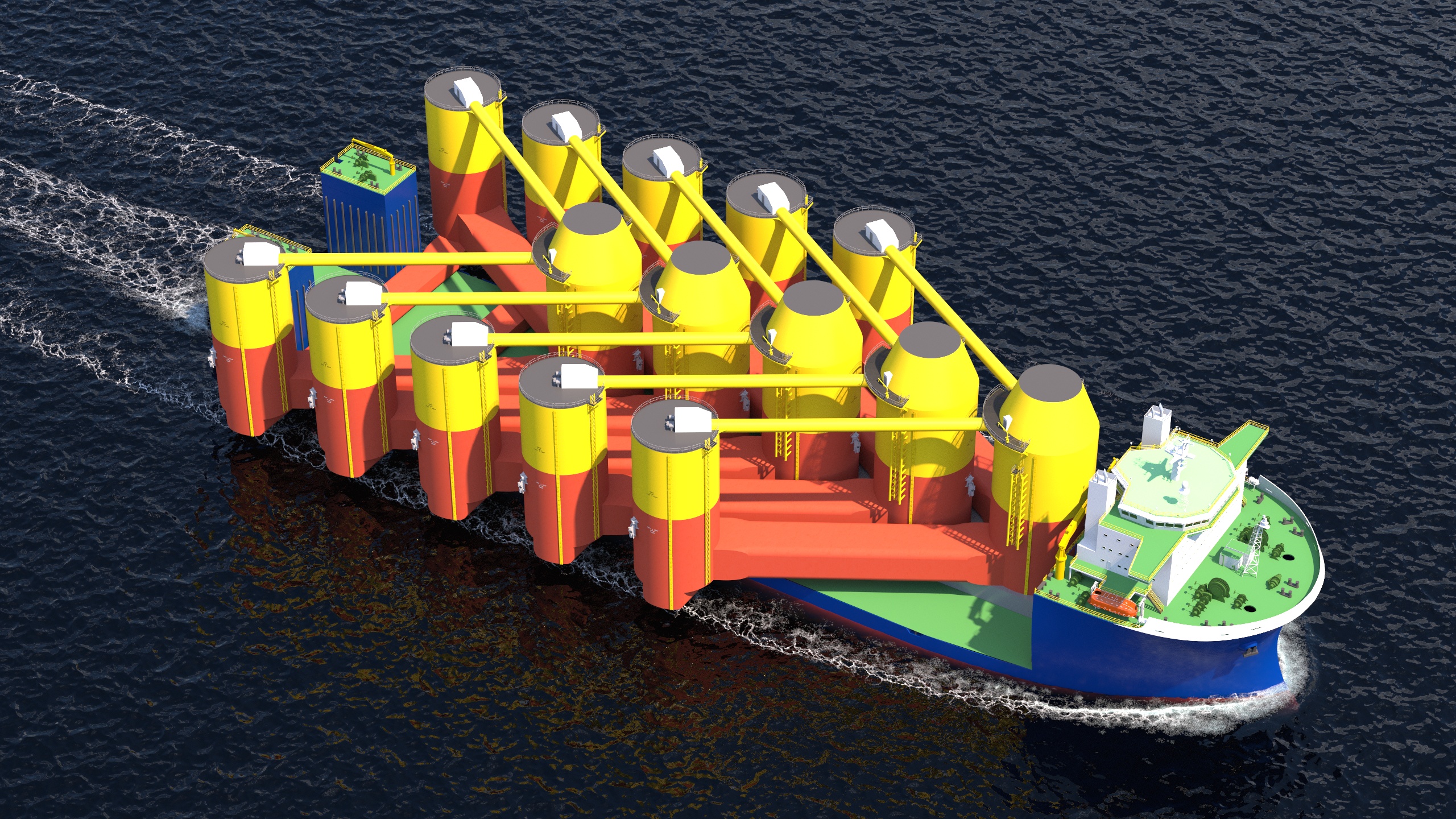
DNV Approval makes it more likely that the design will be deployed in the near future.
Ofgem’s New Net-Zero Mandate To Speed Up ‘Glacial Pace’ Of Realising Grid Connections
The title of this post, is the same as that of this article on offshoreWIND.biz.
This is the sub-heading.
The UK government will amend the Energy Security Bill to include a statutory net-zero duty for Ofgem, which the British energy regulator will be required to apply and document in decision-making. According to RenewableUK, this will speed up the realisation of grid connections and help unlock at least GBP 15 billion of investment in offshore wind alone by the end of the decade.
I feel, that this must be a good thing.
More Trains To Carmarthen
The last time, I looked at the number of GWR trains to Carmarthen its Wikipedia entry, it was just a couple.
Today, one train per hour (tph) is shown between London Paddington and Swansea, with this supplementary information.
- 7 trains per day continue to Carmarthen, calling at Gowerton (limited), Llanelli, Pembrey & Burry Port, Kidwelly (limited) and Ferryside (limited)
- On Summer Saturdays, 2 trains per day run to Pembroke Dock, calling at all stations between Carmarthen and Pembroke Dock
In Regulator Approves New Grand Union Train Service From Carmarthen To London Paddington, I talked about the plans of Grand Union Trains to run five trains per day (tpd) between London Paddington and Carmarthen.
This would appear to give a total of twelve tpd between London Paddington and Carmarthen.
This page on the Crown Estate web site is entitled Celtic Sea Floating Offshore Wind, where this is said.
The Government has set an ambition to deliver up to 5GW of floating wind by 2030, with rapid expansion anticipated thereafter.
At The Crown Estate, we are committed to helping the UK achieve its net zero ambitions. To support this, we are excited to deliver a new leasing opportunity in the Celtic Sea for the first generation of commercial-scale floating offshore windfarms – unlocking up to 4GW of new clean energy capacity by 2035, kick-starting industry in the region, and providing power to almost four million homes.
We will be inviting full commercial scale projects up to 1GW, which may be developed in a phased or ‘stepping stone’ approach. Recognising the need to develop the UK supply chain and supporting infrastructure for this nascent technology, this approach is deliberately intended to provide opportunities for growth and investment. This will also facilitate the co-ordination of the necessary infrastructure, such as ports and grid connections, all of which are key to the sustainable development of the UK floating wind sector over the long term.
This leasing opportunity will provide the foundation for greater capacity in the future and help establish an exciting new industrial sector for the UK, creating opportunities for significant new investment in jobs, skills and infrastructure for the communities onshore.
It appears to me, that Great Western Railway and Grand Union Trains both believe that there will be large increase in demand for rail travel between London Paddington and Carmarthen and also along the South Wales Coast.
Grand Union Trains are also proposing the building of a new parkway station at Parc Felindre North of Swansea.
But then this area of South Wales and the Celtic Sea, has the four things needed for the development of up to 5 GW of offshore wind; a lot of wind, a large area of empty sea, steel and deep water ports to assemble all the floating wind turbines.
A Zero-Carbon High Speed Railway Between London Paddington And Carmarthen
Consider.
- The Great Western Railway between London Paddington and Carmarthen is 222.5 miles and trains take around three hours and fifty minutes, which is an average speed of 58 mph.
- Between Bristol Parkway and Reading stations, the operating speed is 125 mph.
- In South Wales, the operating speed is generally between 70 and 100 mph.
- Only the 77.4 miles between Cardiff Central and Carmarthen via Swansea is not electrified.
There is probably scope to increase the operating speed using digital signalling and by improving the track.
I would suspect that a time between London Paddington and Carmarthen of under three-and-a-half hours is possible.
The Range Of Battery-Electric Trains
Hitachi have not been specific about the zero-carbon range of their Intercity Tri-Mode Battery Train, which is described in this Hitachi infographic.

In Stadler FLIRT Akku Battery Train Demonstrates 185km Range, I talk about Stadler’s record-braking Battery-electric; Akku, which covered 185 km or 115 miles.
I suspect that Hitachi’s engineers and those at their battery suppliers; Turntide Technology will be ultra-competitive, so I wouldn’t be surprised that the zero-carbon range of the Hitachi train is very competitive to the Stadler FLIRT Akku.
A hundred mile range would allow electric services to be run on these routes.
- Cardiff and Carmarthen – 77.4 miles
- Chippenham and Bristol Temple Meads and return – 48.8 miles
- Chippenham and Bristol Western-super-Mare and return – 86.9 miles
- Swindon and Cheltenham Spa and return – 86.5 miles
- East Coast Main Line and Hull and return – 72.2 miles
- Plymouth and Penzance – 79.5 miles
- Taunton and Newbury – 89.6 miles
- York and Scarborough and return – 84.1 miles
I am fairly sure that Hitachi will aim for at least a hundred mile battery range for their Intercity Tri-Mode Battery Train.
- This would be competitive with other train manufacturers like Stadler and Siemens.
- They would handle a lot of important routes.
- With development they could probably handle Edinburgh and Inverness.
I can’t wait to have a ride.
Fast Train Washer Is Client For Centre Of Rail Excellence
The title of this post, is the same as that of a small article in Rail Magazine.
This is the first paragraph.
The Orange Train Wash (OTW), which aims to clean a train carriage every 22 seconds while using just 1 % of the water of conventional equipment is one of the first commercial clients at the new £400 million Global Centre Of Rail Excellence in South Wales.
Note.
- This is the home page of the company’s web site.
- It has impeccable environmental credentials.
I also think, it has other applications.
Key Mainline Testing Undertaken In Bi Modal Hydrogen Train Project
The title of this post, is the same as that of this article on Rail Technology Magazine.
This is a key paragraph.
In the test, lithium-titanate batteries and the hydrogen fuel cells have been retro-fitted to a CAF Civia Class 463 commuter electric unit train. This then has the ability to create a hybrid powertrain which can run on electrified lines alongside standard lines.
This paragraph describes some of the testing.
The new power system has been integrated into the existing vehicle’s traction system and the current tests on the mainline follow closed track testing and static testing at CAF’s plant in Zaragoza. The mainline testing has taken place across lines in Zaragoza, Madrid and Galicia but the crucial test run for the new unit was on the Zaragoza-Canfranc line where it ran in both electric mode on the electrified line before switching to hybrid mode, combining the fuel from hydrogen fuel cells and batteries where needed.
It sounds like this is a better specified hydrogen-powered train than Alstom’s iLint.
Could Hull Station Be Electrified?
I took these pictures, as I passed through Hull station yesterday.
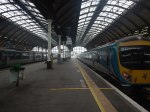
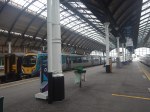
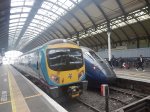
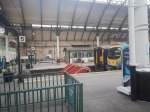




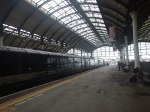
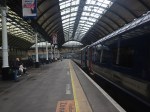

It appears that Hull station has a similar Victorian roof to Liverpool Lime Street and London Paddington, so I suspect the answer is yes.
These pictures show the platforms and overhead electrification at Liverpool Lime Street station, since the recent remodelling.


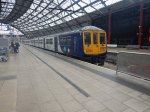
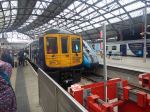


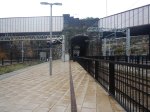




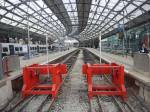
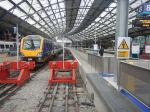

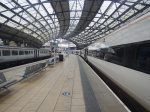

The electrification seems to be very traditional, with lots of steel gantries over the tracks.
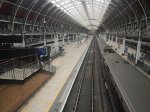
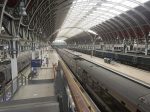
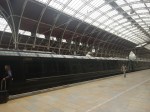
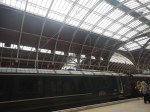
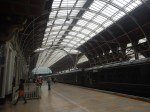
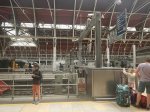
These pictures show the platforms and overhead electrification at London Paddington station.
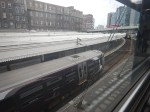
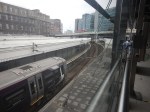
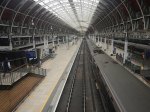



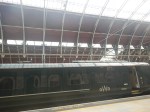
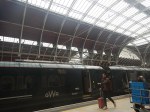


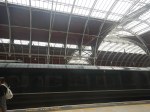

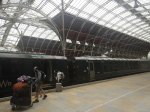

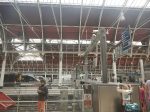
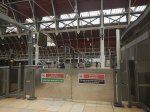
Note.
- The roof seems to have extra tie-bars reaching across.
- The wires seem to be hung from the roof.
- At the end of the platform they are fixed to large arch supports.
- Because Liverpool Lime Street’s electrification is newer than Paddington’s, it seems to have much more professional look.
After looking at the electrification in Liverpool Lime Street and Paddington, I believe that Hull station could be successfully electrified.
This map from OpenRailwayMap shows the platform layout at Hull station.
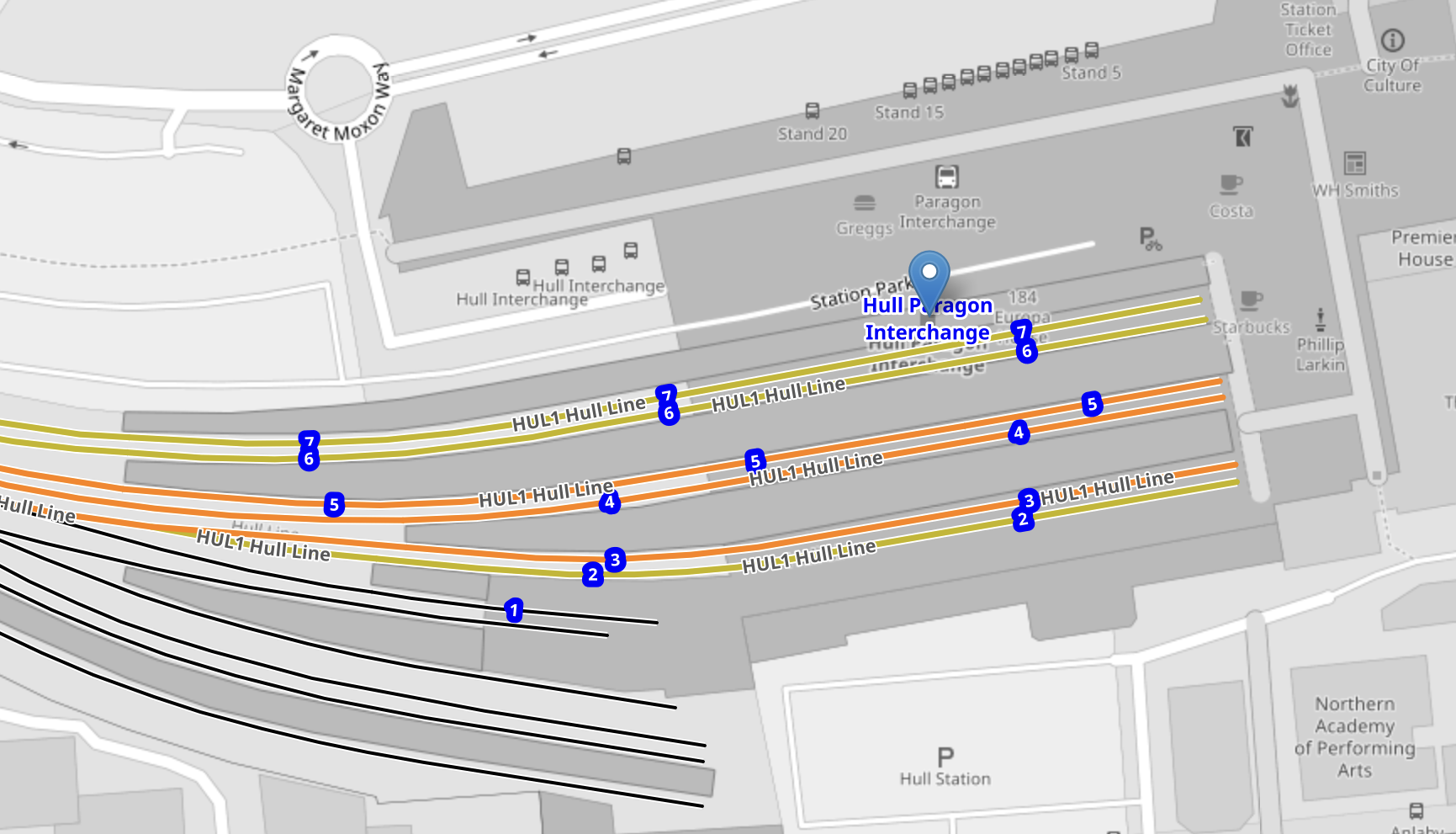
Note.
- Yesterday, my trains arrived in and left from Platform 7, which is the Northern-most platform.
- Other pictures in this blog show Hull Trains’s London service in Platform 7.
- Yesterday all Class 802 trains to and from London run by Hull Trains and LNER used Platform 7.
- I have been told by station staff, that Platform 7 can take a nine-car LNER Azuma.
- In Ten-Car Hull Trains, I talk about ten-car Class 802 trains running to and from Hull.
- Platform 7 or another platform at Hull station must be able to handle a ten-car train, which means that Hull station can handle a train, that is 260 metres long.
Looking at the station map, I believe that Hull station’s capacity for long express trains, is on a par with that of Liverpool Lime Street station.
I could see both stations handling two trains per hour (tph) across the Pennines and to and from London, with if necessary trains being formed of a pair of five-car trains.
How Many Services From Hull Station Can Be Run With Battery Trains?
Hull Trains service between London and Beverley travels for 44.5 miles on unelectrified track between Temple Hirst junction and Beverley.
Typically Hull Trains services wait in Hull station for the following times.
- Going between London King’s Cross and Beverley – Between ten and fifteen minutes.
- Returning to London King’s Cross – Upwards of twenty-five minutes.
I believe these waits in Hull station would mean that.
- A train going North to Beverley will have a battery containing enough electricity to get the train to Beverley and back, which is a distance of 16.7 miles.
- A train going South from Hull will have a battery containing enough electricity to get the train to Temple Hirst junction, which is a distance of 36.1 miles.
I believe that Hull Trains are currently working a timetable, that has been designed for operation by trains with a range on batteries of around fifty miles, provided there is electrification in at least one platform at Hull station to charge the trains.
It is also interesting to look at LNER’s two services that serve Hull.
- The 0700 to London, is scheduled to arrive at Hull station at 0635 from stabling at Doncaster and waits up to twenty-five minutes before leaving for London.
- The 2004 from London, is scheduled to arrive at Hull station at 2004 and waits up to twenty-five minutes before going South to overnight stabling in Doncaster.
It looks like LNER’s two trains follow Hull Trains rules.
- They use Platform 7 in Hull station.
- Trains going South have up to twenty-five minutes in the station.
It appears to me, that both Hull Trains and LNER are running a timetable, that would allow their services to be run using trains with a battery that had a range of around fifty miles, that could be fully-charged at Hull station before going South.
TransPennine Express run an hourly service to Liverpool Lime Street via Leeds and Manchester Victoria.
According to OpenRailwayMap’s map of electrification, when the TransPennine Upgrade is complete, the only section of the route without electrification will be the 42.1 miles between Hull and Micklefield.
As TransPennineExpress have some of the same Class 802 trains as Hull Trains, if there were at least two electrified platforms in Hull station, then Hull and Liverpool services could be run by battery-electric trains, with a similar specification to those of Hull Trains.
Northern Trains run an hourly service to Halifax via Leeds.
According to OpenRailwayMap’s map of electrification, , the only sections of the route without electrification will be the 42.1 miles between Hull and Micklefield and the 17.5 miles between Leeds and Halifax.
As Leeds and Micklefield is timetabled for seventeen minutes, I suspect this would be enough time to fully charge a battery-electric version of CAF’s Class 331 train and with charging in Hull station, then this route could be electrified.
Northern Trains also run other services, but because the Goole swing bridge is closed, I can’t get all the distances without electrification from Hull.
Ones I can find are.
- Beverley – 16.7 miles for return trip.
- Bridlington – 31.1 miles
- Doncaster – 40.8 miles
- Micklefield – 42.1 miles
- Scarborough – 53.8 miles
- Sheffield – 59.4 miles
- Temple Hirst – 36.1 miles
- York – 41.1 miles – Hull and Church Fenton
Note.
- York and Doncaster are electrified.
- Bridlington and Scarborough have suitable platforms where 25 KVAC overhead electrification could be installed to charge trains.
- Sheffield and Doncaster is only 18.6 miles and this may be the way to electrify between Sheffield and Hull.
- In The Data Sheet For Hitachi Battery Electric Trains, I state that Hitachi’s battery-electric trains have a range of 43.5 miles
It looks if enough platforms are electrified at Hull, all current services from the city could be run by battery-electric trains.
Conclusion
I believe that by electrifying Hull station, that Hull could have a station consistent with the HumberZero philosophy, with battery-electric trains running hither and thither, handling all rail traffic to and from the City.
Did I See The UK’s Hydrogen-Powered Future In Hull Today?
I went from London to Hull today on Hull Trains for £50.80 return (with my Senior Railcard) to see SSE’s presentation for their Aldbrough Pathfinder Hydrogen project, which will feature a 35 MW green hydrogen electrolyser and 320 GWh of hydrogen storage in the thick layers of salt under East Yorkshire.
- Green electricity would come mainly from the part-SSE owned 8 GW Dogger Bank wind farm complex.
- According to their web site, Meld Energy are planning a 100 MW electrolyser, which would produce 13,400 tonnes of hydrogen per year.
Every large helps!
- It should be noted that the thick layers of salt stretch all the way to Germany, and as drilling and storage technology improves, the amount of hydrogen storage available will increase.
- I was also impressed by the ambition, competence and enthusiasm, of the SSE engineers that I met.
- As has been pointed out, HiiROC, who have backing from Centrica, Hyundai, Kia and others, are also in Hull!
I believe, that I saw our hydrogen-powered future in Hull today!
We need more hydrogen mega-projects like these! Perhaps in Aberdeen, Clydeside, Freeport East, Isle of Grain, Merseyside, Milford Haven and Teesside?
Government Agrees To Fund £200m Cambridge South Station
The title of this post, is the same as that of this article on the BBC.
This is the sub-heading.
The government has agreed to fully fund a new £200m railway station.
These are a few points.
- Work has already started.
- The station is next to the city’s Biomedical Campus and Addenbrooke’s Hospital.
- Cambridge South station will be on the East West Railway.
It is expected to be open within two years.
I have a few thoughts.
Services At Cambridge South Station
In a typical hour, it seems the following trains go through the proposed site of Cambridge South station.
- 2 tph – Greater Anglia – Liverpool Street and Cambridge North via Tottenham Hale, Cheshunt, Broxbourne, Roydon (1tph), Harlow Town, Harlow Mill (1tph), Sawbridgeworth (1tph), Bishop’s Stortford, Stansted Mountfitchet (1tph), Elsenham (1tph), Newport (1tph), Audley End, Great Chesterford (1tph), Whittlesford Parkway, Shelford (1tph) and Cambridge.
- 1 tph – Greater Anglia -Norwich and Stansted Airport via Wymondham, Spooner Row (1tpd), Attleborough, Eccles Road (1tpd), Harling Road (1tpd), Thetford, Brandon, Shippea Hill (1tpd), Ely, Cambridge North, Cambridge, Whittlesford Parkway and Audley End
- 1 tph – Great Northern – King’s Cross and Ely via Cambridge, Cambridge North and Waterbeach.
- 1 tph – Great Northern – King’s Cross and King’s Lynn via Cambridge, Cambridge North, Waterbeach, Ely, Littleport, Downham Market and Watlington.
- 1 tph – Great Northern – King’s Cross and Cambridge via Finsbury Park, Alexandra Palace, Potters Bar, Hatfield, Welwyn Garden City, Welwyn North, Knebworth, Stevenage, Hitchin, Letchworth Garden City, Baldock, Royston, Meldreth, Shepreth and Foxton.
- 2 tph – Thameslink – Cambridge and Brighton via Royston, Ashwell & Morden, Baldock, Letchworth Garden City, Hitchin, Stevenage, Finsbury Park, St Pancras International, Farringdon, City Thameslink, London Blackfriars, London Bridge, East Croydon, Gatwick Airport, Three Bridges, Haywards Heath and Burgess Hill
- 1 tp2h – CrossCountry – Birmingham New Street and Stansted Airport via Coleshill Parkway, Nuneaton, Leicester, Melton Mowbray, Oakham, Stamford, Peterborough, March, Ely and Cambridge.
Note.
- tph is trains per hour.
- tp2h is trains per two hours.
This gives a base frequency through Cambridge South, Cambridge and Cambridge North of 8.5 tph.
Could some services be extended to Cambridge South or Stansted Airport?
- 1 tph – Greater Anglia – Ipswich and Cambridge via Needham Market, Stowmarket, Elmswell, Thurston, Bury St Edmunds, Kennett (1tp2h), Newmarket and Dullingham (1tp2h).
- 1 tp2h – CrossCountry – Birmingham New Street and Cambridge via Coleshill Parkway, Nuneaton, Leicester, Melton Mowbray, Oakham, Stamford, Peterborough, March and Ely.
These two trains would gives frequencies of.
- Cambridge South – 10 tph
- Cambridge – 10 tph
- Cambridge North – 9 tph
I have assumed these services would terminate at Cambridge South.
There could also be some new services.
1 tph – Greater Anglia – Wisbech and Cambridge via March, Ely and Waterbeach, Cambridge North and Cambridge.
1 tph – East West Railway – Oxford and Great Yarmouth via Oxford Parkway, Bicester Village, Winsford, Bletchley, Bedford, Tempsford, Cambourne, Cambridge, Cambridge North, Ely, Brandon, Thetford, Attleborough, Wymondham and Norwich.
1 tph – East West Railway – Oxford and Manningtree via Oxford Parkway, Bicester Village, Winsford, Bletchley, Bedford, Tempsford, Cambourne, Cambridge, Newmarket, Bury St. Edmunds, Stowmarket, Needham Market and Ipswich.
These three trains would gives frequencies of.
- Cambridge South – 13 tph
- Cambridge – 13 tph
- Cambridge North – 11 tph
I have assumed these services would terminate at Cambridge South.
The A14 Parkway Station
The A14 Parkway station is a proposal from the East West Railway.
- It would be just to the East of Chippenham junction and would be served by both Greater Anglia’s services between Ipswich and Cambridge and Ipswich and Peterborough.
- It would also be close to the major road junction, where the A11 and the A14 meet.
- It would be a Park-and-Ride station.
I believe it could be a major factor in cutting road mileage in East Anglia, as drivers going to Cambridge from Ipswich, Norwich, a large area of North-East East Anglia and North Essex could find that using the A14 Parkway station an easier and faster route. But the A14 Parkway would need a frequent service to the soon-to-be-three main Cambridge stations.
A Soham and Cambridge service could reverse at the A14 Parkway station or by careful timetabling, passengers would be able to change trains in a minute or two.
A Soham and Cambridge service, that terminated at Cambridge South, would give an extra train between Cambridge South and Newmarket and these frequencies at the three Cambridge stations.
- Cambridge South – 13 tph
- Cambridge – 14 tph
- Cambridge North – 12 tph
There would be a minimum interval of no more than five minutes between trains, if you wanted to hop between any of the three Cambridge stations.
Frequencies between Cambridge station and other main stations in the area would be as follows.
- A14 Parkway – 2 tph
- Attleborough – 2 tph
- Bishop’s Stortford – 2 tph
- Bletchley – 2 tph
- Bury St. Edmunds – 2 tph
- Ely – 6 tph
- Great Yarmouth – 1 tph
- Harlow Town – 2 tph
- Hitchin – 3 tph
- Ipswich – 2 tph
- King’s Lynn – 1 tph
- Letchworth Garden City – 3 tph
- Manningtree – 1 tph
- March – 1 tph
- Needham Market – 2 tph
- Newmarket – 2 tph
- Norwich – 2 tph
- Peterborough – 1 tph
- Royston – 3 tph
- Soham – 1 tph
- Stansted Airport – 2 tph
- Stevenage – 3 tph
- Stowmarket – 2 tph
- Thetford – 2 tph
- Wisbech – 1 tph
- Wymondham – 2 tph
Looking at this list, I think that the timetable needs reinforcing, to perhaps Colchester, Haverhill, March, Peterborough, Soham and Sudbury.
But these services will help.
- 1 tph – Greater Anglia – Ipswich and Peterborough via Stowmarket, Bury St Edmunds, Soham, Ely, Manea, March and Whittlesea.
- 1 tph – East Midlands Railway – Liverpool and Norwich via Liverpool South Parkway, Widnes, Warrington Central, Manchester Oxford Road, Manchester Piccadilly, Stockport, Sheffield, Chesterfield, Alfreton, Nottingham, Grantham, Peterborough, Ely and Thetford
But I can’t help feeling that the Stour Valley Railway needs to be reopened.
 The Anonymous Widower