Ørsted Joins Global Offshore Wind Alliance
The title of this post, is the same as that of this article on offshoreWIND.biz.
This is the sub-heading.
Ørsted has become the first energy company to join the Global Offshore Wind Alliance (GOWA) to support a faster deployment of offshore wind and create a global community of action.
These two paragraphs outline GOWA.
GOWA is a new global organisation that brings together governments, the private sector, international organisations, and other stakeholders to accelerate the deployment of offshore wind power.
The alliance was launched last year at COP27 by the International Renewable Energy Agency (IRENA), the Global Wind Energy Council (GWEC), and the Danish government.
For more information look at the GOWA web-site.
Would It Be Possible For The Bakerloo And Watford DC Lines To Use The Same Trains? – 6th March 2023 Update
These two lines are very different.
- The Bakerloo Line is a classic London Underground Line with 25 stations and services run by 1972 Stock trains.
- The Watford DC Line is part of the London Overground with 19 stations and services run by Class 710 trains.
Ten stations are shared between the lines, of which only one; Queen’s Park offers level boarding.
The Shared Stations
The nine shared stations often have considerable steps up and down, as at Willesden Junction station, which is shown in Train-Platform Interface On Platform 1 At Willesden Junction.
I am rather pleased and pleasantly surprised, that there are not more accidents at the shared stations, but using the line must be a nightmare for wheelchair users, buggy pushes and large case draggers.
If Transport for London proposed building a line like this, they would have to launch it at the Hammersmith Apollo, where comedians perform.
The One Train Type Solution
To my mind, there is only one solution. The two services must use the same type of trains.
These are a few thoughts on the trains.
Trains Would Be Underground-Sized
As the trains will have to work through the existing tunnels to Elephant & Castle station, the trains would have to be compatible with the tunnels and therefore sized for the Underground.
I suspect they would be a version of the New Tube for London, that are currently being built by Siemens for the Piccadilly Line.
New Tube For London And Class 710 Train Compared
This Siemens infographic summarises the New Tube For London.
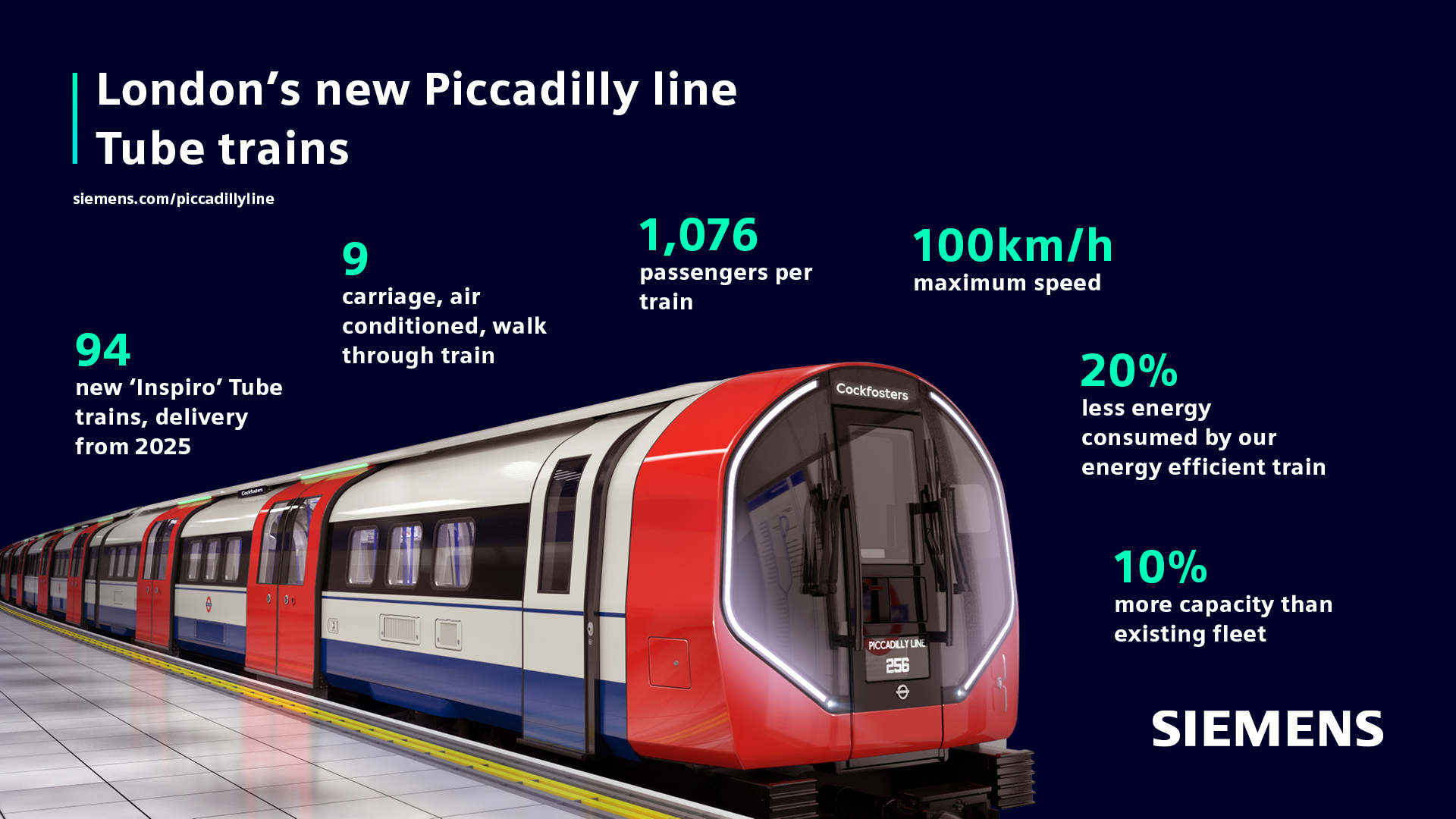
These figures are from Wikipedia.
- Cars – NTFL – 9 – 710 – 4
- Car Length – NTFL – 12.6 metres – 710 – 20 metres
- Train Length – NTFL – 113.4 metres – 710 – 80 metres
- Seated Passengers – NTFL – 268 – 710 – 189
- Total Passengers – NTFL – 1076 – 710 – 678
- Passenger Density – NTFL – 9.5 per metre – 710 – 8.2 per metre
- Speed – NTFL – 62 mph – 710 – 75 mph
Note.
- The figures for the Class 710 train are for a four-car train.
- The passenger density and speed are closer than I thought they’d be.
- I’m sure Siemens can design a longer and/or faster train if required for the Euston service.
I feel that the New Tube for London design could be adjusted , so that it could work the Watford DC service.
Platform Modifications
I suspect that the New Tube for London will be lower than the Class 710 train and all platforms would need to be lowered to fit the new trains.
I would also suspect that it would be easier to lower platforms, than modify them, so that they had dual-height sections to satisfy two classes of train.
It should be noted that the New Tube for London has shorter cars than the sixteen metre 1972 Stock trains currently used on the line, so there will be smaller gaps at stations with curved platforms like Waterloo.
I believe that with one class of train, all of the stations on the Bakerloo and Watford DC Lines could be made step-free between train and platform.
Platform Height On Platform 9 At Euston
I took these pictures on Platform 9 at Euston station.
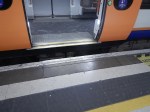
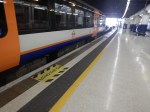
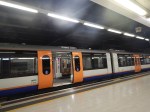
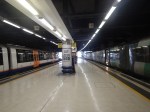
Note that it is rather a high step into the train and there is a large gap.
But if say, a modern London Underground train from say the Victoria Line pulled into the platform would it be a better fit?
Platform Height At Kilburn High Road Station
These pictures show Kilburn High Road station.
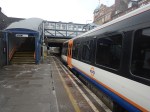
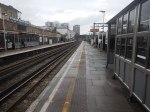
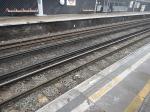
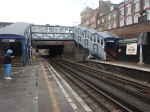
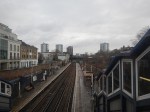
I should have taken more pictures, but the step between the platform and train is similar to Platform 9 at Euston.
Platform Height At South Hampstead Station
These pictures show South Hampstead station.
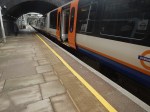
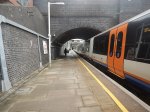
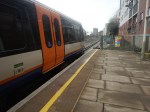
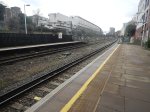
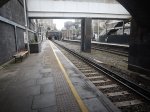
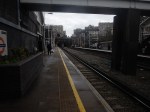
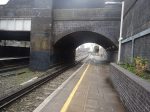
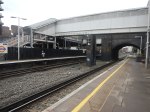
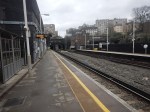
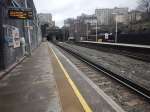
I should have taken more pictures, but again the step between the platform and train is similar to Platform 9 at Euston.
Were The Platforms At Euston, South Hampstead And Kilburn High Road Built For Another Class Of Train?
This Wikipedia entry is for the London Underground Watford Joint Stock train, where this is said.
The Watford Joint Tube Stock was built for the service to Watford along both the Bakerloo tube and the London North Western Railway. As a result, the cars were owned by both the Underground and the London North Western Railway. To be able to operate on both lines, the car floors were 4+1⁄2 inches (110 mm) higher than other tube cars. This was a compromise height between the platform heights on the two lines.
The cars were ordered in 1914, but construction was delayed by The First World War. As a result, the first cars were not delivered until early 1920.
Note.
- The Wikipedia entry has links to some images of which this is one.
- They must have been rather cramped trains if they were built for deep tunnels and had a floor that was 110 mm higher, than other tube trains.
It certainly appears to be possible to design a train, that would fit both lines.
But would it fit modern regulations and give full step-free access?
Queen’s Park And Euston
This map from cartometro.com, shows the route between Queen’s Park and Euston stations.
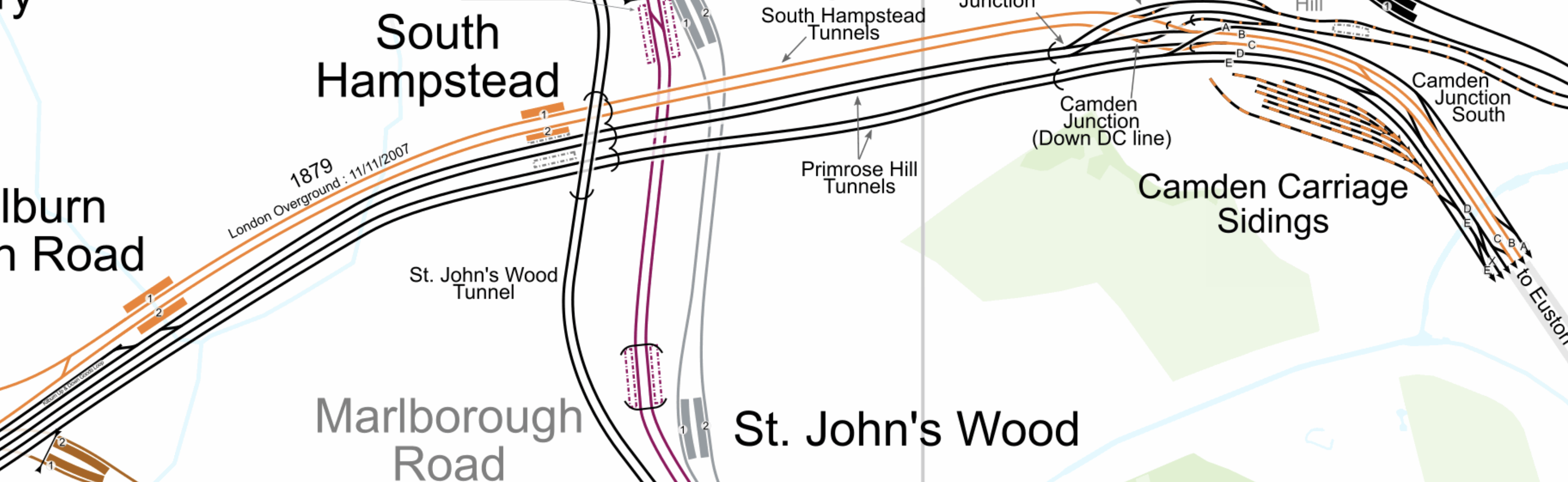
Note.
- The Watford DC Line is shown in orange.
- Queen’s Park station is to the West of Kilburn High Road station.
- It appears that Watford DC Line trains always use Platform 9 at Euston station.
The route seems to be a self-contained third-rail electrified line into Euston station.
On the subject of electrification between Queen’s Park and Euston stations, there would appear to be a choice between the third-rail system and London Underground’s four-rail system.
But it is rumoured that the New Tube for London will have a battery capability.
As Euston and Queen’s Park stations are only 3.7 miles apart, perhaps the choice would be to use battery power into Euston station, which would remove electrified rails from Euston?
How Many Trains Could Run Into Euston?
Currently, four trains per hour (tph) run into Euston.
It is generally accepted that six tph can use a single platform. But would this be enough?
I suppose there is the possibility of tunnelling under Euston station to a pair of terminal platforms.
In that case the current platform could be used by other services.
Southern’s Milton Keynes And Clapham Junction Service
This service wouldn’t be affected as it uses the fast lines between Willesden and Watford Junction.
Advantages Of One Train Type On The Bakerloo And Watford DC Lines
I can think of these advantages.
- Step-free access between train and platform, should be achieved.
- A unified fleet.
- A higher frequency between Euston and Willesden Junction stations.
- Higher frequency where needed.
- If trains had a battery capability, Euston could be free of third-rail electrification.
As only one type of train will be using the Watford DC line between Euston and Watford Junction, this could result in operational efficiencies.
Linking Of The Bakerloo And Abbey Lines
This could be the biggest advantage of all.
This map from cartometro shows the lines at Watford Junction station.
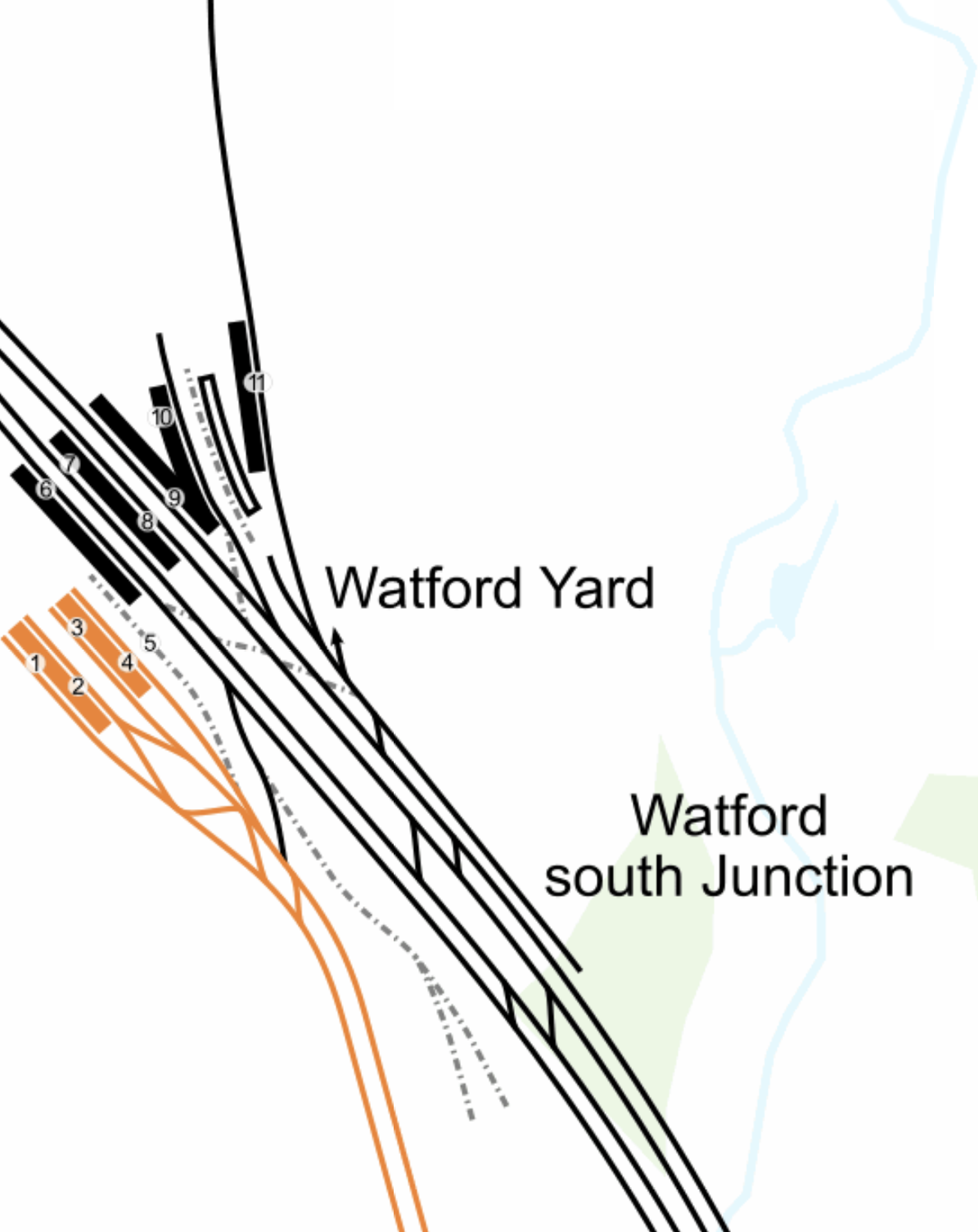
Note.
- The orange lines are the current Watford DC Line services of the London Overground, terminating in platforms 1 to 4 of Watford Junction station.
- These lines would be taken over by the unified Bakerloo/Watford DC Line services, running nine-car New Tubes For London.
- The next station to the South is Watford High Street.
- The West Coast Main Line goes through the station and uses platforms 5 to 10.
- At the North of the station is Platform 11 on the Abbey Line which leads roughly North East to St. Albans.
Look at how the Abbey Line is more or less in line with the twin-tracks of the Watford DC Line.
Recently, during the Bank Station Upgrade, a 488 metre long single track tunnel was built to divert the Southbound Northern Line.
This tunnel was not dug with a tunnel boring machine, but traditionally by hand, using men, picks, shovels and I suspect a few small machines.
I believe, that a similar technique could be used to dig a tunnel, to connect the Abbey Line and the Watford DC Line.
- It would only be single-track
- It would probably be less than 500 metres long.
- It would connect to the Abbey Line to the South of Platform 11.
- It would be deep-level tube-sized.
- It might be dug by hyperTunnel.
- Geography wouldn’t allow the tunnel to terminate in the Watford DC Line platforms at Watford Junction station.
But where would the terminal be on the Southern side of the West Coast Main Line?
This map from OpenRailwayMap, shows the two routes between Watford Junction and Bushey stations.

Note.
- Watford Junction station is at the top of the map.
- The orange line is the West Coast Main Line.
- The yellow line looping to the West of the West Coast Main Line is the double-track Watford DC Line.
- Bushey station is at the bottom of the map, where the two rail lines meet.
- Watford High Street station is in the middle of the map on the Watford DC Line.
The new service could certainly take the Watford DC Line as far as Watford High Street station.
- The station is close to the centre of Watford, the hospital and Vicarage Road stadium.
- But there is no space for a terminal platform.
This second OpenRailwayMap shows the disused railways to the West of Watford High Street station.
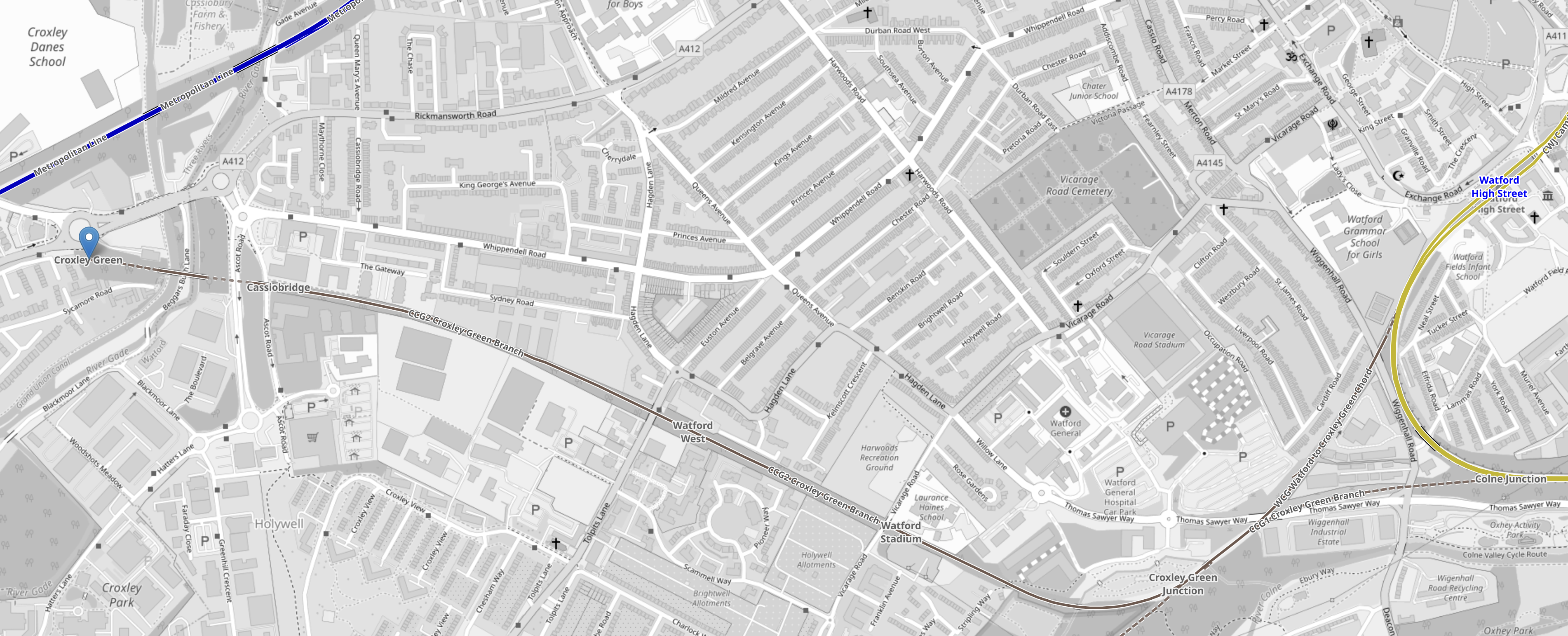
Note.
- The yellow loop at the East of the map is the Watford DC Line.
- Watford High Street station is on this loop.
- There is a triangular junction, that connects the former Croxley Green branch to the Watford DC Line.
- The terminus at Croxley Green station is marked by a blue arrow.
- There used to be intermediate stations at Cassiobridge, Watford West and Watford Stadium.
- This route was used for the failed attempt to build the Croxley Rail Link.
But could a Western extension of the Abbey Line be built?
- It would terminate at either Croxley Green or Cassiobridge.
- There would be intermediate stations at Watford West, Watford Stadium and Watford High Street.
- There would be two tph.
- Trains would be nine-car New Tubes For London.
- The current Abbey Line is 6.4 miles and would be run using battery power, with possible charging at St. Albans Abbey station.
- The tunnel under the West Coast Main Line would be run on battery power.
- The Western extension from Watford High Street station would be run using battery power, with possible charging at the Western end.
I believe, an extended Abbey Line could be a viable alternative to the ill-fated Croxley Rail Link.
- I have used battery power, as I doubt Health and Safety would allow any new third-rail electrification.
- I have used nine-car New Tubes For London for the extended Abbey Line, as their small cross-section would allow a smaller tunnel and they would be certified for running in tunnels.
- Some platforms on the Abbey Line would need to be lengthened, but these would be the only modifications, other than the possible installation of the charging system.
- The extended Abbey Line would serve Watford Hospital and Vicarage Road.
The capacity of the extended Abbey Line would be substantially more than the current line.
Conclusion
A common fleet used by the Bakerloo and Watford DC Line would appear to give advantages and it has been done successfully before.
But what the Bakerloo Line, the Watford DC Line, the Abbey Line and the Bakerloo Line Extension need is a good dose of holistic design.
Green Light For Orkney Transmission Link
The title of this post, is the same as that of this news item from SSE.
These three paragraphs outline the project.
SSE’s Transmission business, SSEN Transmission, has welcomed today’s publication by Ofgem in which the energy regulator has provisionally approved long awaited and much needed plans to provide a subsea electricity transmission link to Orkney.
The Orkney Islands are home to some of the world’s greatest resources of renewable electricity, from established onshore wind, to emerging marine technologies, where Orkney is at the forefront of global developments in marine energy generation.
Following significant growth in small-scale renewable electricity generation in Orkney, the local electricity network has long been at full capacity and no new electricity generation can connect without significant reinforcements.
This paragraph describes the scope of the project.
SSEN Transmission’s proposed solution would enable the connection of up to 220MW of new renewable electricity and consists of a new substation at Finstown in Orkney, and around 57km of subsea cable, connecting to a new substation at Dounreay in Caithness.
200 MW seems a good return for a substation and forty miles of cable.
Thoughts On Watford DC Line Electrification At Euston Station
I was in Euston station this morning and took these pictures of the electrification on Platform 9.
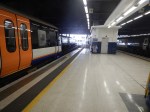
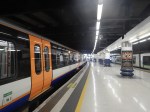
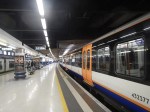
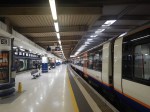
Note.
- Watford DC Line trains usually use Platform 9.
- The first two pictures show the 750 DC third rail electrification.
- The last three pictures show the 25 KVAC overhead electrification.
- The train is a five-car Class 710/3 train, which is a dual-voltage train.
The train’s pantograph was in the down position, as far as I could see.
This Google Map shows the ends of Platforms 6 to 11 at the station.

Note.
- The platforms have their numbers painted on the end.
- The train in the top-left corner of the image is in Platform 5.
- Platforms 9 and 10 appear to be fitted with 750 VDC third-rail electrification.
- All Platforms also seem to have 25KVAC overhead electrification.
So platforms 9 and 10 appear to be able to handle trains which need either form of electrification. When I took the first set of pictures, there was a Class 350 train in Platform 10.
These dual voltage platforms 9 and 10, may help with the operation of the station.
I have some questions.
Do TfL Intend To Increase Watford DC Line Services?
Currently, the services on the Watford DC Line are as follows.
- Four trains per hour (tph) between Euston and Watford Junction stations.
- In the last few weeks, I’ve seen both four-car Class 378 and five-car Class 701 trains on the route.
- All trains that work the route appear to be dual voltage.
This TfL infographic illustrates their plans.
It says Watford and Euston would be run by five-car trains at a frequency of four tph.
TfL have ordered six five-car Class 701/3 trains for the Watford DC service.
Will The Watford DC Platforms Be Moved In The Euston High Speed Two Rebuild?
The operation of the Watford DC Line works well at present, but as Euston station is going through a major rebuild for High Speed Two, the platforms could be moved or rebuilt.
Would Health and Safety object to laying third-rail electrification and insist that Watford DC services used 25 KVAC to access Euston?
They could do this, as all trains running on the Watford DC Line are dual-voltage trains.
Would Removing Third-Rail Electrification From Euston Station Improve Safety?
Health and Safety would say it did and as the trains are dual-voltage, they could transition at Queen’s Park or South Hampstead stations.
An Alternative To Changing The Electrification
The distance between Euston and Queen’s Park stations is just under four miles.
In Will London Overground Fit On-board Energy Storage To Class 378 Trains?, I asked whether it would be worthwhile.
I finished with these two sentences.
I have no idea how much electricity would be saved by regenerative braking on the London Overground, but various applications of regenerative braking technology talk of electricity savings of between ten and twenty percent.
I think it is only a matter of time before the technology is proven to be sufficiently reliable and the numbers add up correctly for the Class 378 trains to be fitted with on-board energy storage.
What would be the advantages from fitting on-board energy storage?
- There would be the savings of electricity by the use of regenerative braking to the batteries.
- Trains could be rescued from the Thames Tunnel, if there was a power failure.
- Hotel power would be maintained, if there was a power failure.
- Trains can be moved in depots and sidings without power.
- Trains would be able to move in the event of cable theft.
- The battery would probably have sufficient capacity to move the train into and out of Euston.
There could be a saving in train operating costs and safety would be improved.
Universal Hydrogen And Railway Locomotives
On the product page of the Universal Hydrogen web site, there is a section, which is entitled Other Transportation Applications, where this is said.
Our lightweight, aviation-grade modular hydrogen capsules can be used in a wide range of transportation applications where weight, safety, and speed of refueling are important. We are working with partners in automotive, heavy equipment, maritime, and railroad domains. If you have an application that can benefit from our global modular green hydrogen distribution network, please get in touch!
I believe that the railway locomotive of the future will be hydrogen-electric. And so do some of the UK’s rail freight companies, judging, by some of their press releases.
- It would have an electric transmission. like most locomotives today, such as the UK’s Class 66, Class 68, Class 70, Class 88, Class 93 and the upcoming Class 99 locomotives.
- It will be able to use 25 KVAC overhead electrification, where it exists.
- Hydrogen-power will be used, where there is no electrification.
The lowest-carbon of the locomotives, that I listed, will probably be the Class 99 locomotive.
- Thirty have been ordered by GB Railfreight, from Swiss company; Stadler.
- The locomotives will be built at Valencia in Spain.
- It will have up to 6 MW, when running using electrification.
- It will have up to 1.6 MW, when running using a Cummins diesel, with a rating of 2,150 hp.
- Because a proportion of UK freight routes are electrified, it is likely that these locomotives will substantially reduce carbon emissions for many locomotive-hauled operations.
It should be noted that Cummins are heavily into hydrogen and their philosophy seems to embrace families of engines, which are identical below the cylinder head gasket, but with appropriate cylinder heads and fuel systems, they can run on diesel, natural gas or hydrogen.
I wouldn’t be surprised to find out that the Class 99 locomotive will have a diesel engine, that has a hydrogen-powered sibling under development at Cummins.
With perhaps a power on hydrogen of about 2.5 MW, these zero-carbon locomotives would be able to handle upwards of ninety percent of all heavy freight trains in the UK.
These are further thoughts.
Alternatives To Cummins Hydrogen Internal Combustion Engines
There are two main alternatives, in addition to similar engines from companies like Caterpillar, JCB, Rolls-Royce mtu and others.
- Fuel cells
- Gas-turbine engines.
Note.
- Universal Hydrogen and others have fuel cells, that can probably deliver 2.5 MW.
- Universal Hydrogen use Plug Power fuel cells.
- Rolls-Royce have developed a 2.5 MW electrical generator, based on the engine in a Super Hercules, that is about the size of a typical beer-keg. I wrote about this generator in What Does 2.5 MW Look Like?.
Cummins may be in the pole position with Stadler, but there are interesting ideas out there!
Cummins have also indicated, they will build hydrogen internal combustion engines at Darlington in the UK.
Would One Of Universal Hydrogen’s Hydrogen Capsules Fit In A Railway Locomotive?
These are various widths.
- Class 66 locomotive – 2.63 metres.
- ATR72 airliner – 2.57 metres.
- DHC Dash-8 airliner – 2.52 metres
- Class 43 power car – 2.74 metres
I suspect that even if it was a bit smaller a hydrogen capsule could be made for a UK locomotive.
How Big Is The Market?
The UK has around five hundred diesel railway locomotives.
Universal Hydrogen Successfully Completes First Flight Of Hydrogen Regional Airliner
The title of this post, is the same as that of this article on Hydrogen Central.
These two paragraphs outline the story.
Universal Hydrogen successfully completes first flight of hydrogen regional airliner.
Universal Hydrogen Co., this morning flew a 40-passenger regional airliner using hydrogen fuel cell propulsion. The airplane, nicknamed Lightning McClean, took off at 8:41am PST from Grant County International Airport (KMWH) and flew for 15 minutes, reaching an altitude of 3,500 MSL. The flight, conducted under an FAA Special Airworthiness Certificate, was the first in a two-year flight test campaign expected to culminate in 2025 with entry into passenger service of ATR 72 regional aircraft converted to run on hydrogen.
Other details from the article include.
- Connect Airlines are the North American launch customer, who have ordered 75 aircraft conversions.
- Amelia are the European launch customer.
- Universal Hydrogen has an order book, totaling 247 aircraft conversions from 16 customers worldwide.
- For the test flight, only one engine was replaced by a hydrogen fuel cell powered electric motor.
- Deliveries will start in 2025.
The article finishes with two paragraphs about Universal Hydrogen.
Universal Hydrogen is building a hydrogen logistics network to fuel the future of aviation, today. Hydrogen is the ideal fuel for flight and will power aviation’s new golden age, where planes are powered by renewables and emit nothing but water. The company’s modular hydrogen capsules move over the existing freight network from production directly to the airplane anywhere in the world.
Universal Hydrogen is also working to certify a powertrain conversion kit to retrofit existing regional aircraft to fly on hydrogen. The company has gathered the world’s leading aviation and hydrogen talent to give the industry the option of clean flight, forever.
The company also has an unusual web site.
I like the company and its design, operating and marketing philosophies.
Wrightbus: Ballymena Company Gets Order For 117 Buses
The title of this post, is the same as that of this article on the BBC.
This is the sub-heading.
County Antrim firm Wrightbus has secured a £25.3m order to build 117 zero-emission buses for use in England
And this is the first paragraph.
Operated by First Bus, the vehicles will be used in Yorkshire, Norfolk, Portsmouth and Hampshire.
They don’t say, whether the buses are battery or hydrogen powered.
TfL Considers Replacing Over Half Of London Overground Trains Within The Next 4 Years
The title of this post, is the same as that of this article on MyLondon.
This is the sub-heading.
The trains were specially built for the dimensions of the Overground network
This paragraph outlines, why the trains may be replaced.
The 57 Class 378 ‘Capitalstar’ trains which provide the majority of services on London Overground could disappear as soon as June 2027, as Transport for London (TfL) officials decide what to do with them as their leases expire. The five carriage walkthrough trains have helped revolutionise the Overground network, being built to special dimensions to fit the unique profile of the suburban routes they run on – notably the East London line, where trains use the narrow single-bore Thames Tunnels.
Note.
- The Class 378 trains, which I use regularly, still seem to be performing well!
- They could do with a lick of paint and a tidying up in places.
- Would it be too much to ask for power sockets and wi-fi?
- The other London Overground trains, the Class 710 trains can’t run through the Thames Tunnel on the East London Line, as they have no means to evacuate passengers in the tunnel in an emergency.
- More Class 378 trains are needed for the East London Line to increase services, but these can be obtained by transferring trains from the North London Line and replacing those with new Class 710 trains.
I live near the two Dalston stations on the London Overground and the thing we need most is more capacity.
I have some thoughts on London Overground’s future trains.
Increased Services On The Current Network
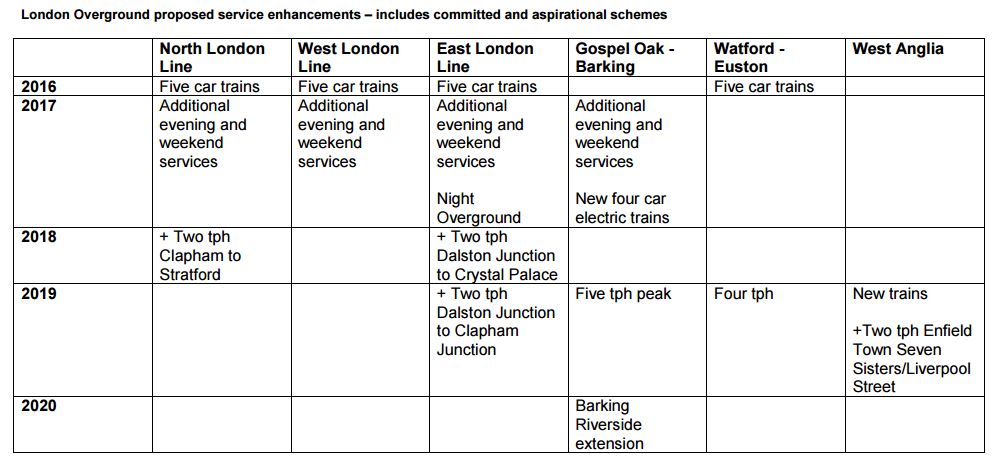
Plans exist to increase the frequency on various London Overground services and this graphic sums up what was planned a few years ago.
Note the extra two trains per hour (tph) between the following stations.
- Clapham Junction and Stratford
- Dalston Junction and Crystal Palace
- Dalston Junction and Clapham Junction
- Enfield Town and Liverpool St. via Seven Sisters
I think only Route 1 services have been increased.
I know signalling updates are holding up the extra trains on the East London Line, but are more trains needed to fully implement the extra services?
- Routes 2 and 3 services will need Class 378 trains because of the tunnel and these would be transferred from the North London Line.
- Route 4 would need Class 710 trains, as the service already uses them.
So there may be a need for more Class 710 trains.
West London Orbital Railway
The graphic doesn’t mention the West London Orbital Railway.
- There would be two routes between West Hampstead and Hounslow and Hendon and Kew Bridge using the Dudding Hill Line.
- The tracks already exist.
- Some new platforms and stations would be needed.
- The route would probably need improved signalling.
- Four tph on both routes would probably be possible.
- The West London Orbital Railway would connect to the Great Western Railway, the North London and Elizabeth Lines and High Speed Two at Old Oak Common station.
I believe it could be run by battery-electric versions of either the Class 378 or Class 710 trains. This would avoid electrification.
As some commentators have suggested that the West London Orbital Railway and the Gospel Oak and Barking Line would be connected, I would expect that new battery-electric Class 710 trains would be used.
Adding On-board Energy Storage To The Class 378 Trains
In Will London Overground Fit On-board Energy Storage To Class 378 Trains?, I asked whether it would be worthwhile.
I finished with these two sentences.
I have no idea how much electricity would be saved by regenerative braking on the London Overground, but various applications of regenerative braking technology talk of electricity savings of between ten and twenty percent.
I think it is only a matter of time before the technology is proven to be sufficiently reliable and the numbers add up correctly for the Class 378 trains to be fitted with on-board energy storage.
What would be the advantages from fitting on-board energy storage?
- There would be the savings of electricity by the use of regenerative braking to the batteries.
- Trains could be rescued from the Thames Tunnel, if there was a power failure.
- Hotel power would be maintained, if there was a power failure.
- Trains can be moved in depots and sidings without power.
- Trains would be able to move in the event of cable theft.
- Short route extensions might be possible.
- Could battery power be used to serve Euston during the rebuilding process for High Speed Two?
- Do Network Rail want to remove third-rail electrification from Euston station for safety or cost reasons?
There could be a saving in train operating costs.
We know the trains are coming up for a new lease.
Suppose the leasing company fitted them with new batteries and some other customer-friendly improvements like new seat covers, better displays, litter bins, power sockets and wi-fi.
- The leasing company would be able to charge more, as they have added value to the trains.
- TfL would be saving money due to less of an electricity bill.
- The passenger numbers might increase due to the extra customer-friendly features.
- Electrification might be removed from places where theft is a problem.
- Third-rail electrification could be removed from Euston station. It’s only 2.8 miles to South Hampstead station, where third-rail electrification already exists.
Get it right and passengers, TfL, Network Rail and the leasing company would all be winners.
TfL’s First Brand New £8million DLR Train Trashed And Covered In Graffiti At London Depot
The title of this post, is the same as that of this article on MyLondon.
This is the sub-heading.
Not a single passenger has even been able to ride the new train yet, but it has already been entirely tagged with graffiti
This is so sickening.
Transport for London, must have known the train was a target after what happened to Merseyrail’s first Class 777 train whilst it was parked up in Tonbridge on the way to Liverpool, according to this article in the Liverpool Echo.
It should be noted that Liverpool’s trains, don’t suffer from these morons in the city and even their forty-year-old Class 508 trains are untouched.
Conclusion
Where were the Police?
 The Anonymous Widower
