Ireland’s First Green Hydrogen Project To Come On Stream ‘In Weeks’
The title of this post, is the same as that of this article on the Irish Times.
This is the first two paragraphs.
Belfast is set to receive Ireland’s first hydrogen-powered double-decker buses in coming weeks using fuel coming from wind energy generated in nearby north Antrim.
The initiative is the first “green hydrogen” project on the island of Ireland and the first step to decarbonise Northern Ireland’s public transport by 2040, according to Mark Welsh, energy services manager with Energia, which is generating the hydrogen at its wind farm near Ballymena.
Green hydrogen is produced by an electrolyser powered by renewable electricity.
The article gives a good summary of the use of hydrogen in Ireland in the future.
But isn’t all hydrogen created and used on the island of Ireland green?
Plans For £45m Scottish Green Hydrogen Production Plant Revealed
The title of this post, is the same as that of this article on H2 View.
This is the opening paragraph.
UK-built hydrogen buses powered by Scottish-made green hydrogen, transporting COP26 delegates around Glasgow in 2021: that’s the vision of a new £45m project unveiled today (3rd Nov).
Some details of the plant are also given.
- It will be built at Lesmahagow.
- It will be co-located with wind turbines and solar panels.
- It will have an initial capacity of 9 MW, with a possible increase to 20 MW.
- It will produce 800 tonnes of hydrogen per annum.
- The company behind it, is called Hy2Go
It sounds like the electrolyser is the one mentioned in Green Hydrogen For Scotland, which was announced in a press release from ITM Power.
Although, that electrolyser may be situated at Whitelee Wind Farm, which is a few miles closer to the coast.
Will Scotland Have Two Electrolysers To the South Of Glasgow?
Consider.
- Whitelee is the UK’s largest onshore wind farm with a capacity of 539 MW.
- It is planned to install a large battery at Whitelee. See Super Battery Plan To Boost UK’s Biggest Onshore Windfarm on this page on the Scottish Power web site.
- Lesmahagow’s turbines and solar panels have not been installed yet.
- Much of the wind power in the South of Scotland and the North of England is mainly onshore, rather than onshore.
- The location of the Lesmahagow electrolyser will be close to the M74.
- The location of the Whitelee electrolyser will be close to the M77.
- There is a good motorway network linking the electrolysers’ to the major cities in the South of Scotland and the North of England.
- Newcastle might be a bit difficult to supply, but that may receive hydrogen from Teesside or the Humber.
Perhaps, the economics of onshore wind, with electrolysers nearby, makes for an affordable source of plentiful green hydrogen.
I would expect that if Scotland built two large electrolysers South of Glasgow, they wouldn’t have too much trouble using the hydrogen to reduce the country’s and the North of England’s carbon footprint.
Have These Two Projects Merged?
Consider.
- The Lesmahagow site is stated in the article to possibly have two electrolysers with a total capacity of 20 MW.
- The Lesmahagow site is in an excellent position close to a junction to the M74 motorway, with easy access to Edinburgh, Glasgow and England.
- The Lesmahagow site could probably have a pipeline to a hydrogen filling station for trucks and other vehicles on the M74.
- The Whitelee wind farm is huge.
- Lesmahagow and Whitelee are about twenty miles apart.
- More wind turbines might be possible between the two sites.
- There must also be a high-capacity grid connection at Whitelee.
Combining the two projects could have advantages.
- There could be cost savings on the infrastructure.
- It might be easier to add more wind turbines.
There may be time savings to be made, so that hydrogen is available for COP26.
Conclusion
Scotland is making a bold green statement for COP26.
A network of very large hydrogen electrolysers is stating to emerge.
- Glasgow – Lesmahagow.
- Herne Bay for London and the South East – Planning permission has been obtained.
- Humber – In planning
- Runcorn for North West England – Existing supply
- Teesside – Existing supply
Joe Bamford’s dream of thousands of hydrogen-powered buses, is beginning to become a reality.
Talks Take Place Over Plans To Reopen Railway Line Between Lichfield And The National Memorial Arboretum
The title of this post, is the same as that of this article on Lichfield Live.
The title is a good summary of what happened between the local MP, the Chief Executive of the West Midlands Rail Executive and the Chief Executive of the National Memorial Arboretum.
This map shows the National Memorial Arboretum.
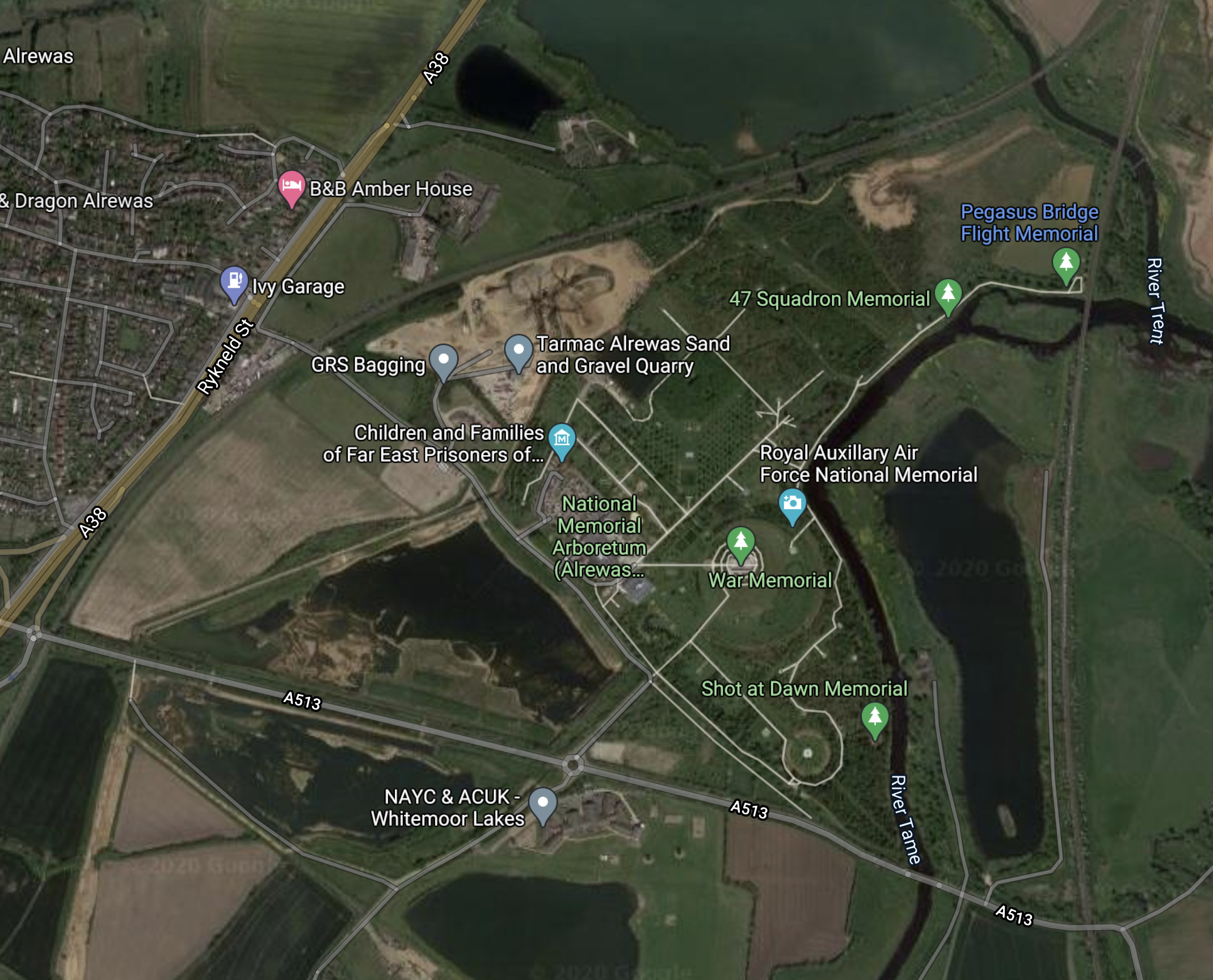
Note.
- The village of Alrewas is to the North West of the arboretum.
- The Burton and Lichfield line lies between the village and the arboretum.
- The station will go on this line.
The article also gives details of the station.
- It would initially be a simple single-platform station.
- Trains would not be electric.
- if successful, a two-platform station would be built.
- This station would be connected to the village by a footbridge over the A38.
- Many visitors would be able to walk to the arboretum, but an environmentally-friendly shuttle would be provided.
One of those at the talks is quoted as calling the station; National Memorial Arboretum at Alrewas.
A Train Service To National Memorial Arboretum at Alrewas
Currently, there is an electric train service to the high-level platform at Lichfield Trent Valley station, which is shown in this picture.

Note.
- The service runs with a frequency of two trains per hour (tph) across the City of Birmingham to either Redditch or Bromsgrove.
- The trains are being replaced with new Class 730 trains.
- Lichfield Trent Valley and Alrewas are about six miles apart.
- Lichfield Trent Valley and Burton-on-Trent are less than fifteen miles apart.
As the new Class 730 trains are Aventras, there is the possibility, that battery electric versions could be created.
Because of the distances involved, extending this route to the National Memorial Arboretum at Alrewas or even Burton-on-Trent, using battery electric trains is a very feasible proposition.
No new infrastructure, except for the new station at National Memorial Arboretum at Alrewas would be needed.
Conclusion
This is a very sensible proposal and I can’t understand, why when the National Memorial Arboretum was first proposed, that this rail service wasn’t built at the same time.
Greener And Brighter Stations Across Hampshire And Surrey
The title of this post. is the same as that of this article on Rail Technology Magazine.
These are the first two paragraphs.
Network Rail hope to save 25% in electricity by rewiring and relighting their Wessex Route stations.
Worcester Park and Andover stations are two of the latest stations to be rewired, forming part of the drive to replace old and inefficient electrical equipment and incandescent lights at 32 stations in Hampshire and Surrey.
As Worcester Park station is Freedom Pass territory, I went to have a look.
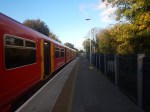

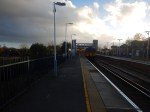
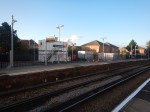

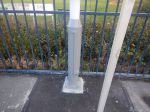

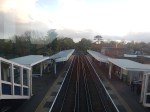
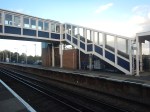
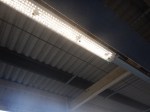
Note.
- It appears that all the original light fittings have been updated with some form of LED conversion.
- The LEDs are clearly visible in some of the pictures.
The whole project is called Rewire and Relight and is due to be finished in 2024.
Conclusion
I suspect Network Rail can apply these techniques to a lot more places, than just 32 stations in Hampshire and Surrey.
Crossrail 2 Falls Victim To £1.8bn TfL Bailout
The title of this post, is the same as that of this article on the Construction Enquirer.
It appears that one of the conditions of the bailout of Transport for London, is that ongoing consultancy on Crossrail 2, will be scrapped.
As someone, who lives in an area, that will benefit enormously from Crossrail 2, I still feel that this is a good idea, as for the last few years, the transport system in East London has coped well and other improvements already in the pipeline, will keep things going until the economy recovers from the covids and a rathional decision can be made about Crossrail 2.
Police Shut Down Illegal Halloween Parties And A Christening
The title of this post is the same as that of this article on the Evening Standard.
This is the opening paragraph.
Police were called to break up 11 illegal lockdown parties in the capital over the Halloween weekend – including a 1,000 people rave in East London.
The police were also called to a Christening, where a £10,000 fixed-penalty notice was handed out.
When will people learn that Careless Meeting Costs Lives.
Perhaps we should avoid the two R-words; rave and religion to keep the all important R-number down.
Bristol Illegal Rave Attended By 700 People
The title of this post, is the same as that of this article on the BBC.
This is the sub-title.
Police say they were attacked as they tried to break up an illegal rave at a warehouse near Bristol.
Let’s hope it gives lots of work for criminal defence solicitors.
Boost for Liverpool’s Baltic Triangle Area As A Further £1.5m Invested By Combined Authority In New Railway Station Scheme
The title of this post, is the same as that of this story on the Liverpool City Region web site.
These three opening paragraphs give most of the details of the story.
Liverpool’s Baltic Triangle area has been given a big boost as plans to build a new station have moved to the next stage thanks to a £1.5m investment by the Liverpool City Region Combined Authority
Metro Mayor Steve Rotheram has pledged to build a new station on the site of the former St James station, which closed in 1917, which would be located in one of the fastest growing areas of the city, near to the former Cains Brewery.
Those proposals for the station on the Merseyrail network are a step closer thanks to two new developments – an agreement with Network Rail, worth £1.2m, to start the next stage of the design process, and the purchase of a plot of land adjacent to the railway cutting off Stanhope Street for £300k, protecting a potential future site for the new station ticket office building.
As Liverpool St. James station, closed over a hundred years ago, this must be one of the longest times to reopen a station, anywhere in the world.
This Google Map shows the location of the proposed station.
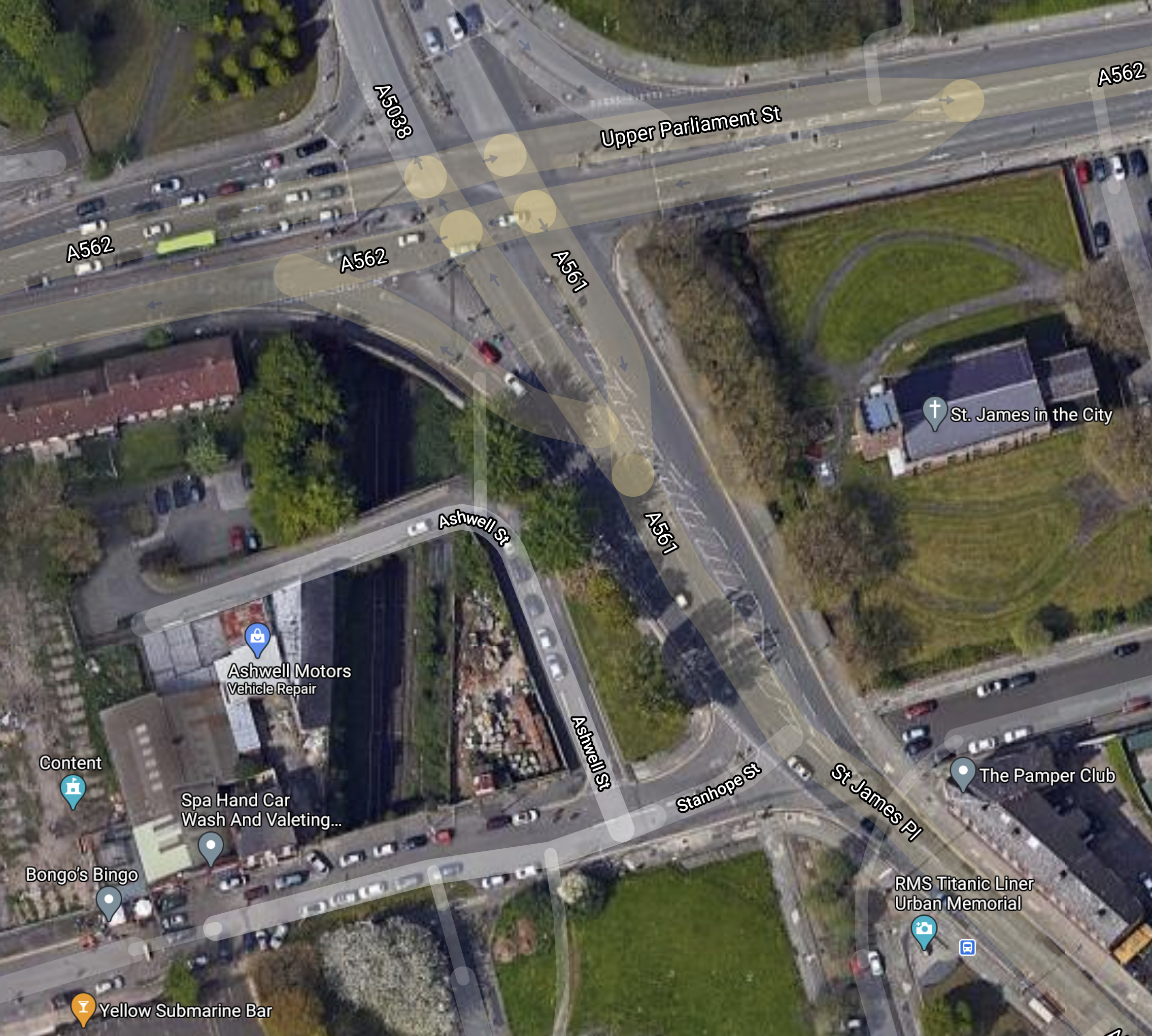
Note.
- The deep dark cutting going under the major road junction, where Upper Parliament Street and the A571 cross.
- The square of roads formed mainly by Ashwell Street, with Stanhope Street in the South, above the cutting.
- Contained in the cutting is Merseyrail’s Northern Line on which the station will be built.
- I also suspect, that the triangular plot of land on the East side of the tracks, is the one mentioned in the extract. It could easily be the place for a ticket office with lifts to the platforms.
Only Liverpudlians would choose to build a station at the bottom of a deep hole.
But then they don’t think like others!
I have a few thoughts and questions.
Will It Be Dark On The Platforms?
This was one of my first thoughts, as there’s nothing worse than a dark station. I also wonder, if one of the reasons the station closed was lack of passengers caused by the darkness.
This picture taken from the story, shows the cutting from the bottom.
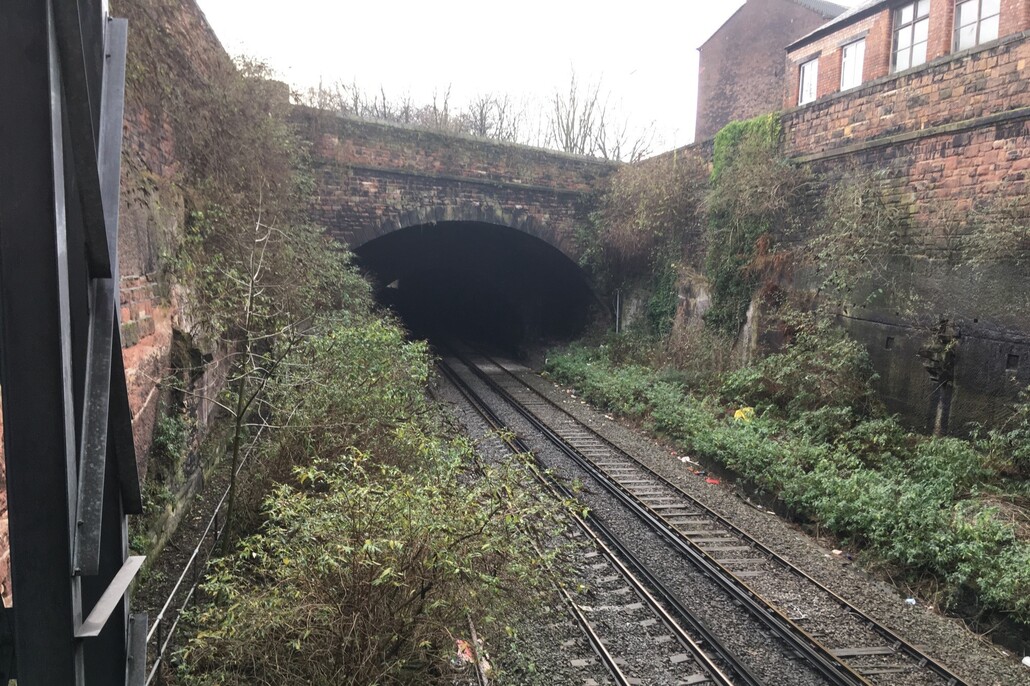
Note.
- Aligning this picture with the map, Liverpool Central is behind us and Hunts Cross is through the tunnel.
- Perhaps on a good day more light gets into the cutting.
I suspect that modern lighting on the platforms could solve the problem.
It appears that the station opened in 1874 and closed in 1917, but the lines through the station were not electrified until 1983.
So as the station must have been served by steam-hauled trains, during its brief opening at the turn of the Nineteenth Century, it must have had a terrible atmosphere on the platforms.
Hopefully, the only smell, that will emanate from the new Class 777 trains, will be one of newness.
What Is On The Triangular Plot?
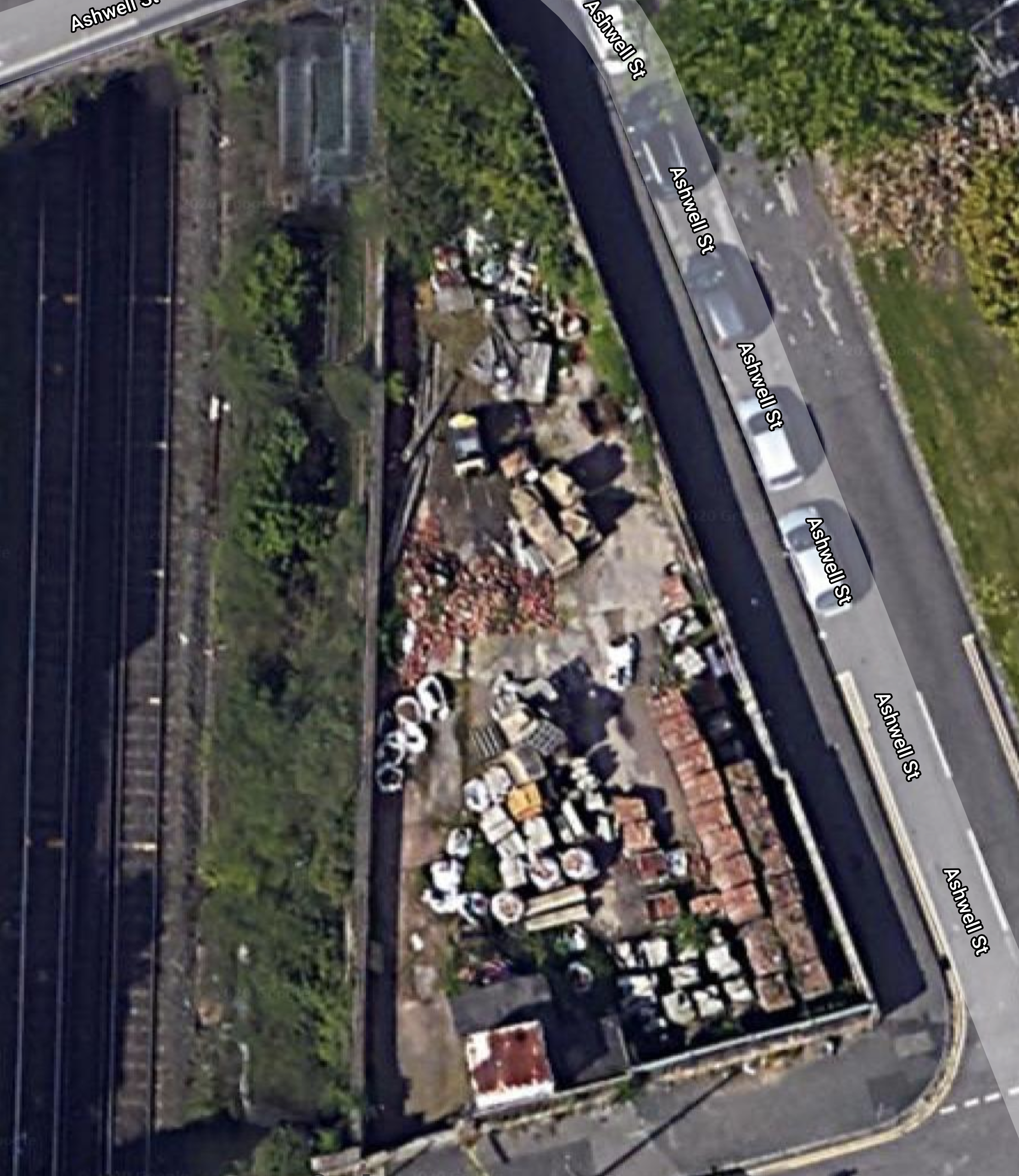
This Google Map shows the triangular plot of land, that could be used for the ticket office.
Note.
- It looks very much to be a builder’s yard or a store for building materials, as I can definitely make out packs of bricks and bags of aggregate.
- As there appears to be a steel staircase down to the tracks at the top of the image, it might even be something to do with Network Rail.
- The steel staircase is visible in the picture of the tracks.
- The plot certainly doesn’t contain any buildings of architectural merit.
- I also can’t see a pond, which might contain newts or other protected wildlife.
It would appear to be an ideal site for a station building, with all the necessary facilities.
More Information And Pictures Of The Former Station
This page on the Disused Stations web site, gives extra information to Wikipedia about the station and has some interesting pictures.
How Will The Platforms Be Accessed?
It is a long way for steps, as especially as new stations are generally built step-free.
Merseyrail already have a pair of almost identical stations; Kirkdale and Wavertree Technology Park, which both opened in 2000.
These pictures show Kirkdale station.
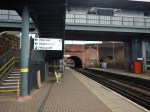
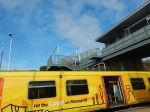

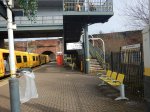
I suspect, platform access at Liverpool St. James station of a similar design could be devised.
- The simplest design would surely be to put a bridge across the tracks from the ticket office, which had a large lift on both sides of the tracks direct to the platforms.
- Stairs from such a bridge could probably be added, but they would be long and complicated.
- It might need a two-stage process with lifts taking passengers down to a bridge over the trains and then stairs and more lifts or ramps to the platforms.
At least, as the line is electrified for third-rail, I doubt clearance will be needed for overhead wires.
Could The Station Have An Island Platform?
One of the comments suggested this. In addition, one picture on the Disused Stations web site appears to show three tracks through the station site.
So this could be an interesting possibility.
Conclusion
I think that we might see a very innovative design here, given Merseyrail’s past record.
Mitsubishi Power Receives Order For First Solid Oxide Fuel Cell In Europe
The title of this post is the same as that of this article on Fuel Cells Works.
A fuel cell converts a fuel like hydrogen or natural gas directly into heat and electricity, so what is a solid state fuel cell?
Wikipedia has an entry for solid state fuel cell, that appears to be professionally written.
The entry sums up their advantages and disadvantages in this sentence.
Advantages of this class of fuel cells include high combined heat and power efficiency, long-term stability, fuel flexibility, low emissions, and relatively low cost. The largest disadvantage is the high operating temperature which results in longer start-up times and mechanical and chemical compatibility issues.
They sound to be a tricky engineering challenge.
Dereliction On Teesside – 28th October 2020
The Tees Valley Line between Middlesbrough and Redcar is lined with derelict steel works.
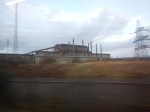
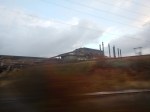
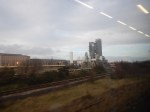
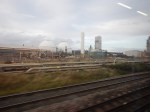
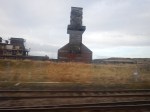
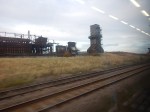
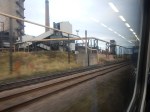
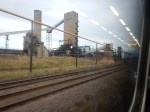
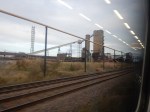
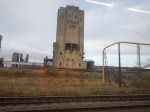
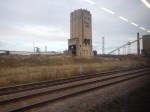
I don’t think there’s an area of such industrial dereliction, in the UK.
 The Anonymous Widower