Toyota Fuel Cell Buses Expected To Be Big Seller Of Hydrogen At 2020 Tokyo Olympics
The title of this post is the same as that of this article on Hydrogen Fuel News.
This is the first paragraph.
Toyota fuel cell buses are likely to be the clean transportation to take center stage at the upcoming Summer Olympic Games in Tokyo. The Japanese automaker intends to roll out 100 of these buses at the event to shuttle visitors between venues.
It would appear to be an exercise to publicise their technology.
If you read the Wikipedia entry for hydrogen fuel cell buses, no-one has yet built and deployed a fleet as large as Toyota’s for the Olympics.
The UK has two major deployments of hydrogen fuel cell double deck buses, under development, that I wrote about in the following posts.
- London To Have World-First Hydrogen-Powered Double-Decker Buses
- New Facility To Power Liverpool’s Buses With Hydrogen
In 2012, I went to a lecture about the New Routemaster Bus at the Institute of Mechanical Engineers, which I wrote about in The Development of the New Bus for London.
Wrightbus had obviously done their research and I got the impression, that designers can put heavy and bulky components all over the place in a modern double-decker bus.
On the New Routemaster components are placedas follows.
- The single traction motor is under the floor.
- The battery is under the front stairs.
- The Cummins diesel engine is half-way up the back stairs.
As the New Routemaster is based on a specially-designed chassis and not a standard one from Volvo or Mercedes, I wonder if to be successful, a hydrogen-powered bus needs a custom-designed chassis, to properly accommodate the various components.
- Traction motor
- Hydrogen tank
- Hydrogen fuel cell
- Battery
It certainly looks like Toyota have gone down this route. But then they can afford to for the Tokyo Olympics.
Could A White LEVC TX Electric Taxi Be A 21st Century Wedding Car?
I took these pictures of a white LEVC TX electric taxi at St. Pancras station.

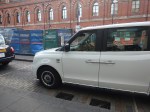


A few minutes later, I got into a more common black one and asked the driver.
He said, he was very pleased with his new vehicle and he suspected some had been used as wedding cars.
Progress At Syon Lane Station – 18th September 2019
The builders are now digging on both platforms at Syon Lane station.


The posters at the station give the impression that brick towers might be built.
But it looks to my untrained eye, that the foundations being dug don’t appear to be deep enough.
Waiting at the station for my train, I wondered, if they are going to put a set of stairs and a life on both platforms to give step-free access to the existing road bridge.
- The towers would be shorter and height costs money.
- There would be no need to build and lift in an additional bridge, as pedestrians would use the existing pavement.
- It might be possible to do all the work without closing the railway.
- This would meet all the step-free regulations.
There certainly seems to be no work going on further down the platform, where it appeared some trees were cleared.
It’ll all come clear in a few weeks and I suspect it will meet the generally high standards of Network Rail.
Climate change: Offshore Wind Expands At Record Low Price
The title of this post, is the same as that of this article on BBC News.
These are the first paragraphs.
A record amount of new offshore wind power has been announced in the UK – at record low prices.
The new projects will power more than seven million homes for as little as £39.65 per megawatt hour.
Compare this price with the £92.50 per MWh for the nuclear Hinckley Point C.
Note that all prices are in 2012 prices.
I have no argument with the engineering of nuclear power stations, but they do have issues that must be addressed.
- They shouldn’t be built in possible earthquake zones.
- They have a very high cost.
- They can be an eyesore in parts of the UK.
But they do provide a good power zero-carbon baseload, once they are constructed.
Dogger Bank Wind Farm
The Dogger Bank Wind Farm would appear to be the centrepiece of the energy developments South of the Scottish Border.
It will be three separate 1.2 gigawatt wind farms developed on the relatively shallow seas around the Dogger Bank.
- Creyke Beck A
- Creyke Beck B
- Teesside A
Wikipedia says this about the first two wind farms.
They would connect to the existing Creyke Beck substation near Cottingham, in the East Riding of Yorkshire.[6] The two sites lie 131 kilometres (81 mi) from the East Yorkshire coast.
Both have an area of around two hundred square miles.
Teeside A is further North and would be connected to a substation near Redcar.
North Sea Wind Power Hub
The three fields I’ve listed are all in UK waters and according to Wikipedia will or could be joined by more wind farms in the same area.
But just across the maritime border between the United Kingdom and the European Union, Denmark, Germany and The Netherlands have plans to develop the North Sea Wind Power Hub.
Wikipedia introduces the project like this.
North Sea Wind Power Hub is a proposed energy island complex to be built in the middle of the North Sea as part of a European system for sustainable electricity. One or more “Power Link” artificial islands will be created at the northeast end of the Dogger Bank, a relatively shallow area in the North Sea, just outside the continental shelf of the United Kingdom and near the point where the borders between the territorial waters of Netherlands, Germany, and Denmark come together. Dutch, German, and Danish electrical grid operators are cooperating in this project to help develop a cluster of offshore wind parks with a capacity of several gigawatts, with interconnections to the North Sea countries. Undersea cables will make international trade in electricity possible.
These points are also made.
- Six square mile islands will be built surrounded by thousands of wind turbines.
- The Dutch have estimated that 110 gigawatts of wind power could be produced at the Dogger Bank location.
- We are not a member of the consortium, but it is hoped that Norway, Belgium and the UK will join.
- The Dutch have suggested converting some of the electricity produced to hydrogen.
- Completion date is set for 2050.
I am excited by this project.
We may not be part of the North Sea Wind Power Hub consortium and in a month or so, we may or may not be part of the European Union, but today’s announcement of new wind power projects in our section of the Dogger Bank is effectively a substantial marker, that compliments the European plan.
Consider.
- We are putting 3.6 GW of wind turbines on the Dogger Bank.
- We are connecting it to the UK electricity grid. at Creyke Beck.
- It would be easy to create another bi-directional electricity interconnector between the UK’s planned and the EU’s possible wind farms.
This is the sort of project that works, whether Brexit happens or doesn’t!
Six Scottish Wind Farms
.There is also a second article on the BBC, which is entitled Six Scottish Wind Farms Awarded Contracts.
These are the first paragraphs.
Six Scottish wind farm projects are set to go ahead after being awarded UK government contracts to sell the electricity they would produce.
The schemes include Forthwind and SSE Renewables’ Seagreen Phase 1, which are both proposed for the Firth of Forth.
Four onshore wind farms – Muaitheabhal and Druim Leathann in Lewis and Hesta Head and Costa Head in Orkney – have also secured contracts.
All farms are expected to be built by 2025 and provide enough energy for 265,000 homes.
Price Summary For Offshore Wind
This page on Offshore Wind gives the strike prices for the six offshore wind farms.
Creyke Bank A – £39.65 per MWh – 1200 MW
Creyke Bank B – £41.61 per MWh – 1200 MW
Teeside A – £41.61 per MWh – 1200 MW
Teeside B (Sophia) – £41.65 per MWh – 1400 MW
Forthwind – £39.65 per MWh – 12 MW
Seagreen Phase 1 – £41.61 per MWh – 454 MW
The size of each farm is also given.
Conclusion
The lights will stay on and we will need to develop more energy storage.
Amazon Will Order 100,000 Electric Vans To Hit Carbon-Neutral Pledge
The title of this post is the same as that of this article on The Times.
A few points from the article.
- The vans will be from a start-up company called Rivian, in which Ford has invested half a billion dollars.
- Delivery will be within five years.
- Amazon aims to be carbon-neutral by 20140.
- Some of the vans will be used in the UK.
Apparently, Jeff Bezos made the announcement close to the White House.
Hopefully, this excellent policy will cause a few ripples.
- Will it encourage other van users to look at using electric vans?
- Will it push other vehicle manufacturers to develop zero-carbon vans?
- Will it help to reduce pollution in cities?
Because major companies are a bit like sheep, the announcement of Amazon and Rivian could start a major change.
Did We Lose The Plot On Electric Delivery Vehicles?
When I was growing up, milk was delivered daily in an electric milk float.
I am also old enough to remember the Harrods electric delivery vehicles, which were actually built by the store in the basement.
This page on the National Motor Museum gives a picture and a few details.
Amazon seem to be going back to the future!
Who will be next?
South Wales Metro: Lack Of Toilets Tram-Trains ‘Dehumanising’
The title of this post is the same as that on this article on the BBC.
This is the first two paragraphs.
he lack of toilets on new tram-trains that will serve the south Wales valleys has been branded “dehumanising”.
Trams proposed for the new £738m south Wales rail network upgrade, planned for 2022, will not have toilets on board.
This toilet issue was raised with Crossrail and I wrote about it in 2015, in Do Crossrail Trains Need Toilets?.
Now that the Crossrail trains have been running for some time, toilet issues don’t seem to be raised.
Could Merseyrail’s Class 777 Trains Run As Tram-Trains On The Manchester Metrolink?
Look at the main dimensions of the Stadler Class 777 train destined for Merseyrail and the current M5000 tram of the Manchester Metrolink. I have also added the dimensions of the Stadler Class 399 tram-train, that is running on the Sheffield Supertram network.
Class 777 train
- Width – 2.82 metres
- Height – 3.82 metres
- Floor Height – 0.96 metres
- Overall Length – 64.98 metres
- Capacity – 190 seats and 302 standing – 492 total
- Operating Speed – 75 mph
M5000
- Width – 2.65 metres
- Height – 3.67 metres
- Floor Height – 0.90 metres
- Overall Length – 28.4 metres
- Double Length – 56.8 ,metres
- Capacity – 60 or 66 seats and 146 standing – 206 or 212 total
- Operating Speed – 50 mph
Class 399 tram-train
- Width – 2.65 metres
- Height – 3.72 metres
- Floor Height – 0.425 metres
- Overall Length – 37.2 metres
- Capacity – 96 seats and 140 standing – 236 total
- Operating Speed – 62 mph
Note.
- Vehicle width and height could probably be incorporated on the same track
- The floor heights of the Class 777 train and the M5000 are surprisingly close,
- The floor height of the low-floor Class 399 tram-train is lower and wouldn’t allow step-free access from platform to tram on the Metrolink network.
- A double M5000 and a Class 777 train have similar lengths.
- A double M5000 has 86% of the capacity of a Class 777 train.
A Class 777 train looks to be able to go anywhere that a double M5000 tram can go and be able to give the same quality of passenger access.
Can double M5000 trams use the whole of the Metrolink network?
Power Supply
Around Manchester and Liverpool there are the following types of electrification.
- 25 KVAC overhead – Connecting major cities and on the West Coast Main Line.
- 750 VDC overhead – Manchester Metrolink
- 750 VDC third-rail – Merseyrail
In the future it is intended that Class 777 trains will be able to handle.
- 25 KVAC overhead
- 750 VDC third-rail
It should also be noted that Class 399 tram-trains, which are also built by Stadler can handle.
- 25 KVAC overhead
- 750 VDC overhead
I wouldn’t be surprised to find, that Stadler can produce a Class 777 train, that could handle these voltages.
- 25 KVAC overhead
- 750 VDC overhead
- 750 VDC third-rail
It’s all about the electrical systems on the train, but Stadler probably have the solutions in their boxes of tricks.
I very much feel it would possible for a version of a Class 777 train with an additional battery to do the following.
- Run as a train on the Merseyrail network. using 750 VDC third-rail.
- Run as a train between Otmskirk and Preston using a mixture of battery power and 25 KVAC overhead.
- Run as a train between Kirkby and Wigan using the battery.
- Run as a double tram on the Manchester Metrolink using 750 VDC overhead.
- Run as a tram-train to extend the Manchester Metrolink using a mixture of battery power and 25 KVAC overhead.
Class 777 trains might even be able to run on the Sheffield Supertram network. But they might be too long and would not be able to provide step-free access from platform to tram, without modification of trains and/or platforms.
Poasible Routes
Just about anywhere a Manchester Metrolink M5000 tram or a four-car electric or diesel multiple unit can run.
Thjis article on Railway Gazette is entitled Battery Trial Planned For New EMU Fleet.
This is the first sentence.
The sixth of the 52 four-car 750 V DC third rail electric multiple-units which Stadler is to supply for Merseyrail services around Liverpool is to be fitted with a 5 tonne battery to test the business case for energy storage.
A five tonne battery will soon be able to have a capacity of 500 kWh, which should be able to give the train a range of fifty miles on battery power.
This would more than cover the thirty miles without electrification between Altrincham and Chester, where the battery could be recharged.
Conclusion
I am in no doubt that Merseyrail’s Class 777 trains, could run as tram-trains on the Manchester Metrolink.
But then, Stadler don’t do ordinary and obvious!.
Why should they?
There must also be an advantage to Manchester Metrolink and Merseyrail, if they were using the same or similar vehicles for their public transport networks.
Rutland: England’s Only County Without A McDonald’s
The title of this post, is the same as that of this article on the BBC.
This is the first paragraph.
The picturesque county of Rutland boasts a Michelin-star restaurant, dozens of gourmet eateries and regular farmers’ markets – but what it doesn’t have is anywhere to pick up a Big Mac. This may all be about to change.
And the change seems to be creating an almighty row in the county.
I only have one use for McDonalds.
A couple of times, I’ve been stuck in a town or city centre and hungrily looking for a gluten-free snack.
So I’ve bought a small portion of chips and an orange juice.
McDonalds chips are gluten-free, unlike many other fast-food joints, which coat them in wheat.
The Chilling Power Of Drones And Software
This article on the BBC is entitled Saudi Oil Attacks: Images Show Detail Of Damage.
Read this article and then say, that drones can’t be used to create death ad destruction or merely havoc, like flight disruption at a major airport.
Consider.
- Automation is such, that drones can now be launched on a fire-and-forget basis.
- You can’t jam an autonomous drone!
- There is nothing to stop a top quality programmer creating evil software.
- Much of the software, used for evil purposes, is probably also used to write business, research, engineering, scientific, educational and other types of software.
- The genie is well and truly out of the bottle!
14/09/2019 will become a notorious date in history.
Isle of Wight Line’s Future Secured With £26m Investment
The title of this post, is the same as that of this article on the Railway Gazette.
This is the first paragraph.
Investment of £26m to secure the future of the 13·7 km line between Ryde and Shanklin on the Isle of Wight was announced on September 16. This includes infrastructure modernisation and replacement of the life-expired fleet of small profile ex-London Underground trains which date back to 1938.
A few more details.
Infrastructure
Improvements will include.
- The track will be renewed and the electrical systems will be modernised to improve reliability and ride.
- A passing loop will be installed at Brading.
- South Western Railway will improve the important stations.
The track improvements will allow a half-hourly service to link up with the ferries to the mainland.
Rolling Stock
These Class 483 trains will be replaced.
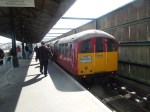
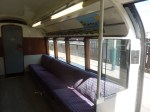
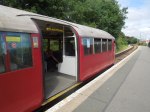

They will be replayed by trains similar to these.
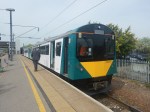
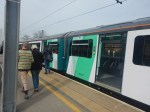
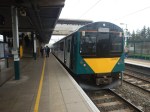
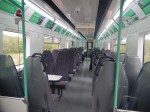
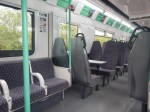
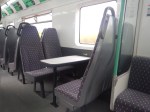
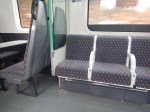
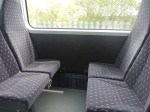
The pictures show Class 230 trains, which are diesel-electric versions of the electric Class 484 trains that will be used on the Island Line.
- Both trains are two car sets, which will work in pairs.
- The new trains will have a capacity of 172 seats, as opposed to the 84 seats of the current stock.
- The speed of the new trains is 60 mph, as opposed to the 45 mph of the current stock.
- It would appear that the new fleet includes a spare train, which should improve reliability.
The extra speed and the passing loop at Brading will enable the half-hourly timetable.
In Battery Class 230 Train Demonstration At Bo’ness And Kinneil Railway, I describe a ride in a battery/electric version of the Class 230 train.
The noise levels were very low and I suspect the Class 484 train will be a quiet ride.
Conclusion
There may be better and much more expensive solutions, but this is a practical one, that is affordable, with little risk.
I also think that £26million to secure the island Line for upwards of a dozen years, is not a bad investment.
 The Anonymous Widower